
Robin S Webber
This transcript was generated by AI and may contain errors. It is provided to assist those who may not be able to listen to the message.
Well, I'd like to give the title of my message right up front to all of you. That way, you won't wonder what I'm talking about, even though I'll mention my SPS in a few minutes down the line, because I'm going to be talking about some tough tidings for a while at the beginning of this message. But I want you to know that there is very, very good news that's going to follow along in this message, and you are actually a part of that good news. And that's what God wants us all to hear and to listen to and to be a part of on this day. So right off the top, I'm going to give you my message, and it is simply this—your role. Your role in God's new normal. A lot of us have heard that term in this age of COVID. We've heard that term, the new normal. And something did begin to occur four or five months ago now. And in one sense, in this world and in this time, I don't know if we're actually going to be returning to that. Something occurred five months ago, and it's not only because of a virus, but it's many, many, many factors that are affecting individuals, families, communities, nations, and the entire globe. Sometimes you and I are worried about our restrictions or our limitations right now in the age of COVID. And yet to recognize that this is something that—this pandemic is something that is being experienced around the world, and in some ways more dramatically than even what has occurred in some of our bigger cities here in the United States—all of New York City or others. But we often talk about this new normal that we're going through. And when we talk about the new normal, we ask ourselves then in response, well, when is it going to be that we can go back to what is normal? When can we go back to the old normal, the old way of being? When things were good and it wasn't that long ago, when you think about it, you know, we're talking about the first week of March when everything began to change here in the United States. When I talk about going back to the old normal, when I talk about going back to the old normal, we think of a time when there'll be no mask, no mask, no social distancing.
Unemployment, employment will hopefully begin to become enhanced. We think of our young people being able to go back to school. We also think of the simple life pleasures of being able to dine in in restaurants rather than simply take out. Now, when I say this, some of these things would make us seem very, very spoiled. And to that degree, we are in America to recognize the many, many blessings that we do have, but also to recognize that as Americans, our lives have slowly been boxed in. So we want to go back to the good old days, the good old days of the first week of March, when the economy was roaring, when unemployment was down at historic lows, when we could meet together in church, when we could meet together with our families, when we could go to work to the office, even though I think some of us are enjoying that pause of being on the freeways and being at home, and sometimes you find you actually get more done at home than being in an office. But we might long for what we call the good old days. And that's a phrase that we often use. I think, humanly, multiple generations have used that. They talk about a time that is now past, a time that they reflect on with good memories, and they say, let's go back to the good old days. I have often used that in speaking to you when I think of the times of my youth back in the late 50s and into the 60s, and I teasingly talk about how, to a degree, life was much simpler then, and there is a certain truth in that. And so sometimes we long for the familiar. We long for when life was simpler, when we think perhaps life was better. And some of those that are younger now will say the same thing. They'll say, well, I'll never say that. I'll never be like my parents. Oh, yes, you will. You'll say the same thing in years to come. Oh, I remember the good old days. But here's the question I want to put before all of us. We use that phrase, and probably people have been using that since the time of Babylon and Rome, and the Byzantine Empire, and on and on and on. They'll say, oh, I remember the good old days. But being an inhabitant of earth, and being on this world, and being in history now, when were really the good old days? When were really the good old days? Have there really been the good old days since the Garden of Eden? Since the Garden of Eden, when we recognize that God Himself placed man and woman in paradise. In paradise. And they didn't even have to pay for a hotel.
They didn't even have to pay for a meal. It was all around them. All they had to do was go pick it. And they were not suffering. There was no illness. There was no disease. There was no pain. There was nothing, nothing but the two of them, and a God that had made them, that wanted to be with them, wanted to have a family relationship, wanted to have an intimacy with them, to look them in the eye, and for them to look at Him, and to have a mutual love affair, and to be able to walk, and to be able to talk in the Garden. But we recognize what happened. Mankind, both man and woman in their own way, rejected. Rejected God. Turned their back on Him. And decided to go a different way. They, in that sense, rejected the Kingdom of God. They rejected the Kingdom of God. And ever since then, there's a statement that I like to kind of put out there for all of you to hold on to. And we're going to build upon it for a few minutes. And I'll let the Bible do the talking. But to recognize that rejecting the Kingdom of God is not marginal to human nature. It is actually central to human nature. It's central.
And what Adam and Eve did is what every human generation has done. And to imagine that, since Eden, that the world, if you want to think about it this way for a moment, has been dysfunctional.
When you don't have that Father, when you don't have God in the picture to anchor things, you're going to swerve back and forth through the different situations of life. Think of, for a moment, getting into a car, and the car takes off, and you look over, and there's nobody behind the wheel. There's nobody driving.
But the car is taken off. There's nobody with their hands guiding and directing the path of life in front of you. Well, that's a little bit what happened at Eden.
Adam and Eve decided to do their thing, push God off his pedestal. The one that had created them, and they decided to be their own God, with a small g, a God and a goddess. They would do what they want, and they would make their own rules. And how did that work out? But it's not only Adam and Eve. We're living today in a world that, do I know, do I dare say has gone, for lack of a better word, crazy. We see society out of control at so many different levels, and we've always got to go back and say, why? What is the root cause? What is happening? What is happening in America today? That was not happening in America yesterday, or yester-month, or yester-year, or yester-decade. I'd like you to join me, if you would, for a moment in the book of Romans. In Romans, Paul's epistle to the Romans, says, join me in Romans 1 and verse 20. For every cause there is an effect. And in Romans 1 and verse 20, it says this, For since the creation of the world, his invisible attributes are clearly seen, being understood by the things that are made even as eternal power in Godhead, so that they are without excuse. Because although they knew God, because although they knew God, they did not glorify him as God, and were not thankful, but became futile in their thoughts, and their foolish hearts were darkened. And professing to be wise, they became fools, and changed the glory of the incorruptible God into an image made like corruptible man, and birds, and four-footed animals, and creeping things. So God gave them over, notice, to unclean us in the lust of their hearts, and to dishonor themselves. They did not acknowledge God. They did not give thanks to God. They took God out of the picture. And it says right here, interesting, it says, They changed that glory that should only go to God, who is incorruptible, into the image of like corruptible man. And that's what's happening today in our communities and in America, where religion is dissipating. Where while we still have in God, we trust on our cones still for the moment, we recognize what is being instructed to our young people, and sin over the airwaves, sin over the radio waves, the television waves, the social media, is humanism, is secularism, is evolution.
In other words, that there are beings that are living on earth that just happened, just happened, that there was not intelligent design, that there was not a creator.
That it was an accident by different lights and different matters, different amoebas coming together to to boom, create life. Evolution leaves us, basically, friends, with this thought, that we live life accidentally, by accident, when there's not a God that is involved. Someone that has his hands on the wheels of this universe and has called us for a purpose, a purpose beyond simply evolving from a chimpanzee or a gorilla, a purpose that is so great that we're going to be talking about it in the course of this message. But that's where we're at today. And what has occurred over the last 50 or 60 years as we've taken God out of the classroom and focused on humanism, focused on secularism? Join me again, if you would. Let's go to 2 Timothy 3, and let's look at a mirror of ourselves, the time that we are living in. In 2 Timothy 3, I'm thinking of the thought, if we could, in verse 1.
And tell me if this doesn't sound like today, but know this, that in the last days perilous times will come for men will be lovers of themselves, lovers of money, posters, proud, blasphemers. You can't help but go into a store and hear the name of God again and again and again, taken out of context, taken out of worship, taken out of praise, just as a filler word in a store on the street. Disobedient to parents.
Where are the parents of all of those kids that are rioting today in our cities? Unthankful, unholy, unloving, unforgiving, brutal.
Brutal.
The other night, watching the news, watching Portland, Oregon.
And seeing that picture of somebody having their jaw knocked in, like in a soccer game.
Or other pictures that we've seen in the months.
Going back to the incident that started a lot of this scenario that's been occurring. Brutality.
Despisers of good. Traders. Headstrong.
Americans? Headstrong. Hottie. Lovers of pleasure rather than lovers of God. And having a form of godliness but denying its power. And it says from such people, turn away. And it says from such people, turn away.
We live in a world right now that is swaying back and forth. The prophet Isaiah said long ago, the way of peace, the way of peace, they do not know.
Remember what I said earlier about Adam and Eve? And you know, it's so easy to talk about them. It's always easier to project on somebody else rather than ourselves. But we, until God began to work with us by His love and by His grace, by His interruption and by His intervention, we were there. We were with them. And to recognize that our relationship with God was dependent upon His intervention. Because as it says in Proverbs 14, 12, there is a way which seems right to a man, but the end thereof leads to death. Nobody signs up for death.
Nobody takes a 400-level class in college or university on being a failure. But there's a way which seems right. But the end thereof leads to death.
And so here we are, even in the age of COVID, and even as we come up to an election season and partisan divides and dreams and hopes and putting all of our marbles in one corner on one man or this or that, as civilization is swaying back and forth, as society is coming unravelled and people no longer talk to one another because you're in this party or you're in that party or you agree with me or you don't agree with me. And whoever might become elected in November might get better for a little bit. Might? I'm not sure. We'll find out. But to recognize that I go back and I think of ancient Israel and ancient Judah. There'd be a good king, then there'd be a bad king. There'd be a good king, there'd be a bad king. There'd be a good king, but there'd be a bad king. And everybody was hoping that the good king was going to save them, you know. But over here in the Psalms, join me if you would in Psalms 146.
Psalms 146, verse 3 says this, Do not put your trust in princes, nor in a son of man in whom there is no help. His spirit departs, and returns to his earth, and that very day his plans perish.
And we'll come and men will go. But the trajectory, dear friends, is that there needs to be an intervention. There needs to be an interruption in our national history from an outward source. There needs to be an interruption in our world civilization from an outside source. This world very much is like ancient Babylon. That handwriting that is on the wall, many, many, ticot, you are some. You have been weighed in the balance, and been found wanting.
That's the world we live in. Just giving it to you straight, not pulling any punches.
Oh yes, there can be a ripple effect. It might go up a little bit, might go down. But brethren, we are running out of time. You say, well, how do you know that? Well, I'm not saying it's today or tomorrow. I'm not setting dates. But we do know that it says in the Olivet Prophecy that unless Jesus Christ intervened, unless Jesus Christ intervened, what would happen?
That verse has not changed. Now that's where we are. That is the plain truth. Those are the facts. I did not make them up. But I've got good news for you, too, today. Good news! And I want to share it with you. I want you to go through the book of Habakkuk for a moment, okay? And Habakkuk and my Bible are on page 1083. I hope that helps you. On page 1083.
Always do that with Habakkuk. You've heard my story about Habakkuk before. I hope that you can find it in a moment. It's over there by Zephaniah, if that helps you at all. But look at Habakkuk 2, and we're going to look at verse 14. You know, it's interesting. We always thought that the prophets of old, the messengers of God of old, were always on a kind of like a rocky mountain and or out in the desert on a sand dune. But have you ever thought of the men of old actually being on the shores of the of the of the Mediterranean, walking up and down the coastline, looking out at the expanse of the Mediterranean to where it was right to the horizon, and all of that water, all of that blue before them.
Must have been very refreshing coming out of the desert and out of a semi-arid climate.
Some of us can feel for that right now. We'd love to be on the coast of Orange County or San Diego County and feeling that ocean breeze. But Habakkuk must have been feeling that ocean breeze because, and he must have seen, he must have seen the ocean because he mentions this. You can't talk about what you haven't seen. For the earth will be filled with the knowledge of the glory of the Lord as the waters cover the sea. He speaks of a time that is not yet, not now, but in the future when the entire earth is going to be saturated with the knowledge of the glory of the Lord as the waters cover the sea. Well, what knowledge is that? Knowledge is right here. It's right here in this book. It's the knowledge about salvation. It's the knowledge about God's grace to his creation, man and woman. It's the knowledge of how we can come to God in faith. It's the knowledge of how, as we respond to God, that we can abide in his ways, that we can follow the one that says, I am the way, I am the truth, I am the life. Now, He's...Habakkuk's not the only one. It says that, join me if you would in Isaiah 9. Join me if you would in Isaiah 9.
In Isaiah 9...and excuse me, Isaiah 11 verse 9. Come with me, please. It says this. Yes. Isaiah must have seen that same motion where it says, at the bottom of the verse, For the earth shall be full of the knowledge of the Lord as the waters cover the sea. A bottom line of existence spiritually, mentally, emotionally, and physically is simply this. For every cause there is an effect. One plus one really does equal two. And when the word of God saturates the world in the future, things are going to happen.
Notice what it says up here in verse 6. The wolf also shall dwell with the lamb. The leopard shall lie down with the young goat. The calf and the young lion and the fatling together. And the little child shall lead them. And the cow and the bear shall graze. And their young one shall lie down together. And the lion shall eat straw like the ox. And the nursing child shall play by the cobra's hole. And the winged child shall put his hand in the viper's den.
Any takers today? Any takers today? We've got vipers right out here about 100 feet behind our house. I haven't been putting my hand down any holes recently. Oh you of little faith! No, not today. But this is what the work is talking about. A world that's going to come together. A world that is going to be at peace. And not only little babies, and not only animals, but those that are made in God's image.
Men and women and races and ethnic groups. Everybody joined in together in a oneness that as much as we can think about it, it's even better than that when God comes and restores this earth. I want to talk about that. We pray, thy kingdom come, thy will be done. That's what our master taught us to pray. Thy kingdom come, thy will be done on earth as it is in heaven. Now stay with me on that one. On earth as it is in heaven. God sees heaven and earth coming together. He doesn't see the saints escaping to heaven and leaving the bad bad earth.
God is going to bring heaven. He's going to redeem the earth. He's bringing his son to this earth. And earth and heaven are in that sense in the first stage, especially during the millennium, we're going to become one. And then as that proceeds, it's even to become more intimate and more seamless, as more are called into the family of God. So here's my question or here's my statement again. I want to talk about your role now in God's new normal.
Your role now in God's new normal. In Mark 1, 14 through 15, Mark 1, 14 through 15, says that Jesus came into Galilee preaching the gospel and proclaiming, repent, repent, and believe. Jesus came to this earth. The word became incarnate, became flesh, became us, came to this earth, and as a herald made a proclamation. He said, the time is now. The kingdom of God is at hand. And not only in hand like this, but in his persona, in his image on earth, him being on earth.
That he said, now is the inauguration. This is the beginning. This is the beginning. This is the inauguration. This is where it starts. And those that hear my voice and respond begin to have that kingdom of God experience. He says, repent. That means get a mind that fits. A mind that fits what is being brought to this earth, that I'm starting here and that I'm starting now. Jesus later on would ask a question. You can jot down the verse if you want to.
Matthew 16 verse 15. Because he would begin to move through that land. And even to his dear followers, he would say, who do you say that I am? And that question is out to you and me today. Whatever we are going through right now, the question keeps coming back to those that are following him. Who do you say that I am? I see a lot of names on this screen today. Thank God. And good to be here as a family.
But the question is always before us on Monday and Tuesday and Wednesday morning, noon and night. By what we do or by what we don't do or by what we hope to do but recognize by our own human weakness, we aren't always able to muster up, and yet we want to follow him. And that question comes to us. It echoes in our head. It resonates in our heart. Who do you say that I am?
And if our answers match, then follow me. So let me look at this. Who do you say that I am? Here we are today with a lot of slogans that are out there. Different slogans.
Black Lives Matter. All lives matter. Blue lives matter. But I've got to come back to when looking at the Bible.
I can only come up with one conclusion of the good news of the gospel.
And it comes back to this. That all lives matter. All lives matter. Because of the life that was given.
The sacrifice that was offered on the altar of Golcotha.
When Christ was dying and his father was watching, he wasn't wondering or looking at what we looked like on the outside, or how man saw us. But he was looking and understood what was inside of us.
And as Paul had said, that all had come short of the glory of God.
All had come short of the glory of God. And therefore, that Son of God gave himself. That's beautiful. And he was resurrected. Later he ascended. And later he was exalted.
And he's bringing his kingdom back to this earth. For some of you that are newer to our church community is to recognize this. That we don't paint pictures on ceilings and just look at pictures.
Like the cathedrals of Europe. We really do believe in our heart of hearts and are firmly placed in that belief that Jesus not only came, but he is coming back to this earth. It is what we look for. It's what we long for. And he's bringing a kingdom with us. He's bringing a kingdom with him.
Now let's remember something. There's four parts to a kingdom. I know this sounds... You've got this one down. Okay. And you've heard it before. Okay. But you know what? How did you do with it on Tuesday last week? Or how did you deal with it on Wednesday night as you were less than Christ-like? How did you deal with it on Friday in a rush? And you weren't everything that you ought to have been? And that little phrase did not ever come to your mind. What would Jesus do? You just did it.
Just remember there's a purpose that's being worked out here below. So let's remember a few things here. That God is in the process of spiritually creating a new line of rulers and teachers to assist Him. To assist Him. Kings and priests that are going to reign with Him. Revelation 5 and verse 10. In a kingdom. Join me if you would for a moment in Daniel 2.44.
Daniel 2.44 says this, And in the day of these kings, the God of heaven will set up a kingdom. It doesn't say He's going to set up a cloud. He's not going to set up an orchestra of harps. He is setting up a kingdom which shall never be destroyed, and the kingdom shall not be left to other people. And it shall break in pieces and consume all of these kingdoms, and it shall stand forever. God is in the kingdom business. God is in the family business within that kingdom, and we have been invited into that kingdom and into that family. And so much so that those that are being called now and are following that call are being called to be with God. Literally. Literally. With Him. When you look at the book of Revelation, that those that are being called now, those that are first fruits, are being called to be right with Him. And there'll be no going out. There'll be no coming in. Kings and priests. Does God need kings and priests? No, He could do it all Himself, but He wants relationship, and He wants to do what only He can do and allow us to do what we can do. So here we go again. Number one, king. Number one is king. Who's going to be the king? It's going to be Christ. Number two, the subjects. Well, we're the subject right now. The kingdom has come into our lives. So that means that we have voluntarily made ourselves the subject. Number three, the laws. Every kingdom has laws. There's a king, there are subjects, and there are laws. What are the laws? It's right here. It's in this Bible. And number four, most importantly, is the territory. And the territory that is being worked on right now is our life, and to put it more bluntly, our hearts, which are the foundation of everything that we do, because out of the heart comes our motivations.
And God is calling us to be a special people, not because of who we are, but because of who He is. Join me if you would, in 1 Peter, for just a second. Would you please, in 1 Peter 2, verse 9.
1 Peter 2, 9. I want you to realize I am not saying this, I'm just quoting from the Bible, but you are now a chosen generation. You're a royal priesthood, a holy nation. We just haven't been called to be good or very good, but we've been called to be holy, which can only be done through God's Spirit, which can only be done by that new mind, that new heart that God gives us to be His own special people, that you may proclaim the praises of Him who called you out of darkness into His marvelous light. That's your destiny. That's my destiny. That's God's desire for each and every one of us, something that we could never have dreamed of.
This God invites us now to live that kingdom experience with a new heart, a new mind, and a new spirit. He started it. It all begins with Him.
But here's the point. When that kingdom comes, it says in Isaiah 2, it says that the people will go up. The people are going to go up to Jerusalem, Isaiah 2, 1-3, and it says that they will be taught God's ways. That's what priests do. They teach. And then it says, and then we will walk in His past.
Let's understand something. We cannot teach effectively what we have not experienced ourselves. And that's why we're going through what we're going through right now in this life, is to become a spirit of experience.
I know just a little brief point. My suffering has been very limited in this lifetime, but when somebody walks walking funny, like they've got bad knees, and I go over and they tell me they're about to have a knee operation, and having had a knee operation, boy, do we know how to bond? We're talking. We're connecting. You know, just like this. We're connecting. We're into it. And I can be kind of one that comes along and helps them and give them advice, looking at what I went through in my rear view. And what about all the things that we can go through now as we in this lifetime and in this world are striving to please and to honor our Father? And what we're going to be able to share, just like what Sandy was talking about, regarding prayer, beseeching God, understanding God, and understanding His desire for us to connect with Him. One of the things that are talked about—remember four parts of a kingdom. Number one is a king. Number two are subjects. And number three is the law. I want to talk about that for a moment. It says that—remember in Habakkuk and Isaiah, it says that the law and the Word of God is going to spread around this world saturated, just like the waters cover the world right now. I have a question for you. I knew you thought I might ask that, or say that. I have a question for you. How saturated are you with God's law now so that you can teach it in the wonderful world tomorrow? You know, it's very interesting to me to put in Mark 12. You know, it's interesting today that a number of people think that Christ came to do away with the law, or sideline—well, at least didn't do away with all of it, but sidelined a part of it. But notice what it says in Mark 12.
Now, this is also in Matthew, but I like this because I think here that Jesus addresses this in a very full-hearted manner, especially as one that, as a Jew, would have started with this when it comes to dealing with God. I'm going to go up here to verse 28. Then one of the scribes came, and having heard them reasoning together, perceiving that he had answered them well, asked him, which is the first commandment? Which is the first commandment of all? And Jesus answered the first of all the commandments, says, Hear, O Israel, the Lord our God, the Lord is one, and you shall love the Lord your God, personal your God, with all your heart, with all your soul, with all your mind, and with all your strength, and this is the first commandment. And the second, like it, is this. You shall love your neighbor as yourself, and there is no other commandment greater than these. But the first and the great commandment is where it begins with God. In the beginning, God. It starts with God. He's our life. So the scribe said to him, Well said, Teacher, you have spoken the truth, for there is one God, and there is no other but hate, and to love him with all the heart, with all the understanding, with all the soul, and with all the strength, and to love one's neighbor as oneself, is more than, notice, all the whole burnt offerings and sacrifices. It's not what man sees you doing on the outside. It's not external religion.
It's not fig leaf religion.
It's internal, from the inside out, more than all the whole burnt offerings and sacrifices. Not what you're doing, but what God is doing through you, and then your response, not by merely offering of old a lamb, or a goat, or a turtle dove, but yourself, your heart. You're sacrificing your heart. You're sacrificing your existence, and you are giving it over to your sovereign, whose son died for you, and you're giving yourself. Notice what it says. Now, when Jesus saw that he'd answered wisely, he said to him, you are not far from the kingdom of God. He's saying, you got it, buddy. You get it.
Here's somebody that I can work with. You are not far from the kingdom of God. Now, he was not far from the king of God because, well, the king of that kingdom is right in front of him, and wherever Christ is, the kingdom experience has come. For those that do put God first, and love their neighbor as himself, they're on the way to being a part of that administration. That's God's invitation to us, and that is our role now, our role now, in preparing for God's new normal that he is going to bring as he brings back the Garden of Eden. And that new normal is never going to change. It's ultimately going to be forever. So, with all that stated for just a moment, let me ask you a few questions, okay? Let's just go down. Are you with me? I'm just going to talk to you here for a few minutes. We can't be more than we are, and we cannot teach what we have not experienced or learned ourselves and practiced. And we cannot rule over others—stay with me—we cannot rule righteously over others until we learn to be ruled ourselves. And we cannot learn to be ruled ourselves, of and by ourselves, until we allow Christ to rule over us. It's three-fold. I'm going to repeat it one more time. This is essential. God is offering us an opportunity to be a part of His realm of kings and priests in assisting Him, not in the leadership and the vein of this world to take and to, it's all about me. No, it's going to be about God the Father and Christ, but we're going to extend from that and share that love and share their word and share their example and their way of being. So, we can't rule over others until we first are ruled, unlike Adam and Eve, did not choose to be ruled. And we cannot be ruled until we allow Jesus Christ to rule and to reign in our hearts. By our hearts, that's not just proverbial little fancy prosaic talk. The heart is the engine of our motives. The heart guides us. We can give up a lot, but what God wants is our heart. He doesn't want our externals. He doesn't want to see what everybody else sees, because He already sees what our heart is like, and He wants to see us, as Paul says in Romans 12 and verse 1, to be a living sacrifice, holy and acceptable. So, we're going to teach the Word of God. We're going to teach the commands of God in the future, and I think they are going to be there in the wonderful world tomorrow. So, let's just go down that list for a moment, just to familiarize ourselves. It won't be really long, but let's just go down there. Let's take kind of a reality check and see how we're doing. The first commandment says this, that we are to have no other gods before us, no other gods, no other gods. It's not a moldable choice. We don't even get moldable choice. The Bible itself says that in the beginning, the four great words of Scripture, everything in the Bible follows off of those first four words. In the beginning God. And that's why it's there. When you look at the Genesis account, Genesis 1 is never designed to be a science manual. It's designed to tell Israel, this new people, that the God that has delivered them, the God that has delivered them, is the God that was before all of Egypt, and everything that Egypt worshiped, because Egypt worshiped nature, the sun, the moon, the stars, the rivers, the river Nile. They worshiped a god-king, Pharaoh. But Genesis 1 says, before all of that, before the stars, before the sun, before the moon, in the beginning God.
Interesting.
God is sovereign. A real important question to ask ourselves, and I'm seeing myself in this screen. It's a long time to look at yourself in the mirror, but that seeing myself in the screen is simply this. In the morning, when we wake up, by what we do in our heart, in our mind, and in our output.
Our thoughts go in, in the beginning, God. Is that where the sentences of our life begin?
They should. They always don't.
And we have a merciful, heavenly Father. But wonder if we took every thought into captivity, as Paul says, bring every thought into captivity. Every thought. Not every other thought. Not like, well, soup plantation no longer exists. It went out of business. But it used to be you could, you know, go down the lines. You could have the carriage, you could have the beans, but if you wanted to skip the broccoli, you know. No. Every thought into captivity, to give it to God, to God's glory, to God's praise, that you might glorify Him, and that we might be a blessing to others. By how our relationships would be different with Him, with our spouses, with our children, whether at home or adult or grandchildren, our co-workers that don't know God.
If we just simply said everything that we did, we started at this foundational point, in the beginning God.
That's what God wanted to do with ancient Israel, and He wants to do that with the Israel of God today. God needs fear. When you think of in the beginning God, God becomes our first thought, not our afterthought, not our individual of last resort when nothing else is working. We as a little God, the small g, have done this, and done that, and done this, and then we see there is a way which seems right to a man. It doesn't always necessarily immediately wind up in death, but the results are not good. And then some God wants our total allegiance, our total devotion.
He wants all of us. He doesn't want half of us. He doesn't want a quarter of us. He doesn't want half of our heart. He wants a united heart, a whole heart, as David talked about. That's what we're going to teach people. But we start now. What about number two, where it says, no graven images. You shall not make any graven images. Neither shall you bow down to them.
Neither shall you bow down to them. What's this talking about? Now here in the western world we don't necessarily have a lot of big monuments or images to some God.
So there's a couple things happening here. God is just basically telling us as His children, don't limit me. Remember that old folk country song, Don't Fence Me In? Don't Fence Me In? I was about to break out in two, but I won't. Okay. What God is basically just saying here is don't box me in. Your senses cannot handle me. Your touch, your feel, your smell, your eyesight, etc. It's your hearing. Don't box me in. Don't try to make me over into your image. Because your thoughts are not my thoughts to begin with. Your ways are not my ways. Don't box me in.
I found in my life, I think I could say the same for Susie who's right up above me upstairs, we're beginning to add a few decades to our life, and I thought I had God pretty well figured out when I was about age 25.
But you know what? The longer I live, the longer I live.
I recognize I'm not here to make God over into my image. I'm here by God's grace and by the tooling of his spirit to be made over into his image. In some ways, I know a lot less about God today than I thought I did when I was a young man. But when you go through that, you kind of come to recognize that God is much greater. He becomes bigger. He does not become smaller. We're not to box him in. Let God be God. Sometimes I find it very interesting to talk to people, and they've got God all figured out, and they've got all the details, and it's like a big jigsaw puzzle, and I just kind of smile. I was there one time. I gave all the jigsaw puzzle pieces over to God. He gives us a lot to consider. He gives us a framework. But a little bit like Job by chapter 42, I've kind of come to understand there are things too wonderful, too much that God is echoing in for me in his time and in his way. That doesn't lessen God. That makes him greater. Because Job just said at the very end, he said, there are things that are so grand and so wonderful that I just can't comprehend them. I thought I had them all down. I'm going to give my jigsaw puzzle pieces my life over to your hands and allow you to make me into your image rather than the other way around. Let's go to number three here in just a second. Let me go real quickly here. To not take God's name in vain. To not take God's name in vain.
We've been given an incredible, incredible honor to bear the name of God the Father and Jesus Christ.
Back in the book of Numbers, talking to the covenant people, talking about how to bless the people. At the very end, you know, Lord be gracious to you, Lord smile upon you, etc. Number six, about 23-24, it says, and you shall put my name on them.
My name on them. It's all said, and with their surrender to me, you will put my name on them. You know, later on in the book of Philippians 3, you might shout that down in Philippians 3, verse 13, where Paul's saying that the whole, whole family of God is named under the name of the Father. God places his name on us. And to recognize then that we are to bear that name with honor. You know, so often we say, no, we hear somebody use a cuss word, and God's name, unfortunately, it gets linked with that. Yes, that is also taking God's name for naught or nothing. But you know, to call ourselves the disciple of Jesus Christ, and then to live as a Christless Christian, to not abide by this manifesto, this constitution of the kingdom, the Ten Commandments, we're taking God's name in vain. When we consider all of the great Hebrew names that are mentioned in the Old Testament concerning God, I've got them right here for a moment. When I, when you go down the different names, just think this through. Jehovah, Makata Shechem, the Lord who sanctifies, Jehovah, Nisei, the Lord is my banner, Jehovah, Rapha, the Lord who heals, Jehovah, O Rohi, the Lord is my shepherd, Jehovah, Sabioth, the Lord of Hosts, the Lord of Armies, Jehovah, Shalom, the Lord is peace, Jehovah, Shema, the Lord is there, the Lord is my companion, Jehovah, Tzitzit, Kanu, the Lord our righteousness, YAH, I am the one who is self-existent, the one Yahweh. Christ died.
Somebody that did not need to die, of him by himself. The worst thing that Jesus ever did was be perfect. I think that went through for a moment. And yet he died. That we might be redeemed and accepted before God the Father and come into union with him and to bear his name.
We have a role right now in preparing for the new normal that God is going to bring to this room. What about the aspect of remember the Sabbath day? Remember the Sabbath day to keep it holy. Remember the Sabbath day to keep it holy.
Part of Christianity looks at the Ten Commandments as the Ten Suggestions.
A part of Christianity looks at the Nine Commandments and then chooses when to have their own Sabbath. It's not going to have their Sabbath at all. Recently, Susan brought my attention about somebody said, well, we all need to have a Sabbath. And that individual who happens to be a minister decided that Tuesday would work to be his Sabbath.
What? Really? The Sabbath commandment in Exodus 20 says that the you shall remember the Sabbath day to keep it holy. Six days shall not work, but on the seventh day you shall not labor. Interesting. But there's a purpose beyond that. There's a purpose behind that. When you go back to the Genesis account in Genesis 1 and Genesis 2, God had completed his physical creation. He did not need rest, but then he hallowed the Sabbath day. That hallowing of the Sabbath day was ultimately to show that there was a greater work yet to achieve and to be done by the Father through Christ. And that was a spiritual creation. The Sabbath, as God himself said in Exodus 31, 13, that the Sabbath is a sign between me and thee throughout all generations. The Sabbath is the GPS. It tells us what God has done, a physical creation, and we rejoice. It tells us what God is now doing in the present, that he is in the process of a spiritual creation, of those of flesh, that he's placed his spirit in, and is training them and is preparing them and companioning with them, coming alongside of them to prepare them to be kings and priests and a holy people unto him, not only in the future but now. And it also shows that there's a time that this entire creation in the future is going to come to rest when Jesus Christ comes back. Every week that we come up to the seventh day, thus we remember what God has done, what God is doing in us today, and what he will yet have in store for all of humanity, that this world is finally going to come to rest.
The creation groans, as it says in Hebrews, and it's going to come to rest. And you and I have a part in that now. Interesting.
Are we honoring God's name by honoring his Sabbath day, by keeping it holy, by observing it? How can we teach that if we are not doing that? How can we teach others to rejoice in the Sabbath day if we just bump into it and fall into it, rather than preparing for it to glorify God and to honor him, and to come together as we can to open up the Word of God when we can, to have it expressed to us? And even under the Sabbath day comes the aspect of keeping the biblical festivals, not the ones that man has chosen, laced with paganism, laced and syncretized with rituals of people that don't know God, to call that which is evil good, to call that which is an abomination holy, and then to say, but it feels so good, it's so wonderful.
God shows us as our ruler, as one who is our sovereign, and one that rules over our hearts, he tells us how to worship him. How to worship him? Not as we necessarily want to, or we've designed, or let's let's design, no, God has the design. And when we come together, it's for a purpose.
It's for a purpose. We open up our hearts, we open up the Word of God, we sing praises to him on his holy days, and on his Sabbath day, which is a holy day. And we turn to the Word of God, and we look at the entire book from beginning to end, from beginning to end, because it is these words that are going to cover the entire world. But it doesn't do any good if it covers the entire world if we don't drink it in and soak it up and saturate ourselves and come to peace ourselves.
Number five, we're to honor our parents.
Number one, this is a bridge commandment that we honor our heavenly Father by everything that we do. We are not our own person. We are his child. And one thing today, by all lives matter, is simply this. All of us have different mothers, but we all have one heavenly Father.
We are all one. God is colorblind.
The only color that he sees is red, because when he sees red, he remembers his son's blood.
That atones for us, is propitiation for us, and redeems us by covering us and removing the judgment from our sin. And when we say, Father, forgive us, we have a Father that forgives us. And as we honor him, we honor our parents that gave us life, the great life to give her above, and the life that is given to us by our mother and by our Father. What about number six? You shall not murder. You shall not murder. That's how it is mentioned. That's how it is mentioned in the Hebrew.
And as we know in the sermon of the Mount, that murder can be in the mind.
We can point a gun at somebody in our mind.
We can have ill thoughts about somebody. We could remove somebody. We can hate somebody and sit on that like a hot iron.
On an ironing board, and just melt through our heart because that individual is renting space in our mind and our heart rent-free. And it's costing us everything because of our anger and because of the spirit of murder. The spirit of murder.
All life is precious.
We look at a world a day that calls good evil. All lives matter. Even the unborn.
The unborn.
But in a humanistic and a secular society in which they simply think of evolution, life is an accident to try to juggle with each generation forward.
It's to recognize the amount of life that's lost every year of little ones that are growing up in the image of God. God will not hold those people guiltless, or a nation, or nations.
That murder. The innocent.
What about number seven? You shall not commit adultery.
We live in a world that is abandoning the marital covenant.
We live in a world that is saturated with social media and inter- call that entertainment. That's maybe the old movie that's no it's not entertainment. We live in a world that is like Saun and like Gamora, and our minds and our hearts have got to be pure. Our minds and our hearts have got to be focused on our mates because we know what it says in Sermon on the Mount. That God is looking at our minds. He's looking at our hearts. And we made a commitment at marriage to be faithful to the wife, to the husband of our youth, and to bond with them. It's a covenant. It's not a contract. Contracts, lawyers come after contracts. Contracts are made to be broken. In covenants, there's no small print to deal with. Covenants are from the heart. There's twice in our life as Christians that we make covenant. One is with God, the other is with our mate. We, more than ever, as disciples of Christ and as a collective people of God, have got to hold up the institution of marriage. We have not been called to hold up the institution of self, what self wants. We have been called to hold up the institution of marriage, because that's what we're going to teach in God's new normal. Imagine when a husband and a wife stay together, and the children see Daddy and Mommy together, loving one another, and the family is all together, and it's not another man in your life. It's not another woman in your life. It's not like a merry-go-round and who's next. Who Mommy brings home now? Who Daddy brings home now?
Susie and I have had an incredible blessing. Marriage is challenging. Marriage is not for sissies. Marriage has mountain peak experiences. It has plateaus. It has valleys. Sometimes it can have deserts, and you don't see an oasis in sight. But because you have made a commitment before God—because not just the two of you. God is the third partner. Jesus Christ is the third partner of your relationship. Like that song, He will see you through. If we surrender to Him, and if we allow Him to rule our hearts as men in marriage, as women in marriage, the friends say, Viva la differente. There are differences. It's been married that knows that. And yours truly here is still working on His differences after 47 years of marriage.
I know Susie is too. I know you are too out there because you love God.
And we have a role to fulfill looking forward. Number eight, you shall not steal. You shall not steal. How are we doing with that one?
Number nine, you shall not bear false witness. You shall not bear false witness.
Our tongues begin with our heart. Bearing false witness is not only what you say, but by what you don't say, whether it's to your mate, whether it's to your children, whether it's to your employers, whether it's to your pastor, whether it's to your parents. It's not only what you say, it's what you don't say. Jeremiah 48 verse 10 says, Curse it as He who draws the sword deceitfully, and curse it as He who does not draw it at all. So it's not only what you've done, but it's what you've not done in bringing forth truth, when truth is needed to bring forth. These are things that we're going to be teaching people.
You know, there are certain cultures that are just, I mean, we are all given to untruths, havetruths, white lies, just out-outlying, but there are some cultures that are just steeped in it. They lie so much that every lie becomes a fact. Remember Paul talking to Titus about the Cretans? They're just liars! Their own wise men, their own poets of old, eight centuries before, said the Cretans are liars. The world is full of lies. It's full of fake news, and not just political parties. We, as people, can give off fake news about ourselves.
We are to bear true witness if we're going to be followers of Jesus Christ. Number 10. You shall not covet.
Can you imagine what the wonderful world tomorrow is going to be like without advertisements plastered in front of you, plastered on billboards, plastered on social media, plastered in newspapers, making us feel like somehow we have to keep up the Smiths and the Joneses? If only I had this, if only I had that, if only I had this, and there's never enough.
And then you have everything, but then you don't have your mate. You don't have your children, and you don't have any money in your pocket, because you had to have everything and you now have nothing. Brethren, I'm going to conclude here. We have been called. We have been called to be a holy people. The kingdom of God is coming, and you have been called now, now to prepare for God's new normal. Let's be about our Father's business. Not tomorrow, but starting now.
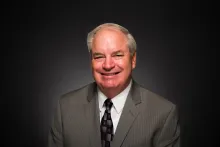
Robin Webber was born in Chicago, Illinois, in 1951, but has lived most of his life in California. He has been a part of the Church of God community since 1963. He attended Ambassador College in Pasadena from 1969-1973. He majored in theology and history.
Mr. Webber's interest remains in the study of history, socio-economics and literature. Over the years, he has offered his services to museums as a docent to share his enthusiasm and passions regarding these areas of expertise.
When time permits, he loves to go mountain biking on nearby ranch land and meet his wife as she hikes toward him.
