

Robin S Webber
This transcript was generated by AI and may contain errors. It is provided to assist those who may not be able to listen to the message.
The following message was given by Mr. Robin Weber on July 31, 2010, in the United Church of God at Redlands.
Join me if you would. Let's turn to the book of Exodus. And I'd like to draw your attention to the book of Exodus and chapter 20.
As we turn here, many of us might know that this is where the Ten Commandments are recorded.
And I would like to begin this message by rehearsing the first three commandments.
Let's read them together. That means I'll read, and you'll follow along as far as what I read. But it says, And God spoke all of these words, and he said, I am the Lord your God, who brought you out of the land of Egypt, and out of the house of bondage.
You shall have no other gods before me.
You shall not make for yourself a carved image, any likeness of anything that is in heaven above, or that is in the earth beneath, or even that which is under the water, under the earth. You shall not bow down to them nor serve them. For I, the Lord your God, am a jealous God, visiting the iniquity of the fathers upon the children to the third and the fourth generations of those who hate me, but showing mercy to thousands to those who love me and keep my commandments.
You shall not take the name of the Lord your God in vain, for the Lord will not hold him guiltless, who takes his name in vain.
Let's understand what we've just read. They are the first three commandments of ten, and they basically tell us three specific items in short form.
Number one, we are not to worship any other gods. We are to worship God only.
Number two, we are not to craft or to make items to substitute for God.
Number three, we are not to take the name of God in vain.
When we go through this, we recognize that there is only one God, and there is only one that can truly supply all of our answers. He is limitless. He is boundless. He is the one.
Always is. Always will be. He is the one that, as mentioned here, that brought Israel out of Egypt. He is alone the deliverer God. He alone is the one that can bring answers to our lives. We read these things. We know them. We have memorized them. Some of you have probably memorized them in short form. Some of you have probably, at one time or another, memorized them in long form. We know that they are in the book. But today, we are going to take it from simply being in the book and bringing it into our lives. We know these things. We want to do it, but then we hit the real pavement of life, and sometimes things can fall apart. When we look at the first commandment, where it says in verse 3, you shall have no other gods before me.
And then you go to the second, where it says, don't make anything with your own hands or by your own guys or by your own craft. We say, well, we know that. We don't set up idols. I don't have any statues in my garden. I don't have any statues in my bedroom, in my praying spot. I don't have a big Buddha landed on top of my house. So what's the problem? And where are you going, Mr. Weber?
Let's go back and understand it says, you shall have no other gods before me. Oftentimes, when we go through this, again, we think of the gods of antiquity, and we are abhorrent of any thought that we might worship those gods or bow down to them. But today, I want to introduce to you two other gods. Perhaps two other gods that we worship and that we make time for, and that we devote ourselves to more than the true God. I want to introduce you to the twin idols of worry and fear.
The twin idols of worry and fear. Now, I'm going to ask some questions in the course of this message.
And they are questions that will solicit an answer from you. Because worship is what you put your time and you put your energy and what we put our flow of energy into. Worship is what dominates our time, where we think it is worth us putting our time. Well, you say, yeah, but I don't put a value on worry and or on fear. I can appreciate that and I understand that. But to say you don't put a value on it, and yet that is where we go and that is where we linger, and that is what dominates our time and dominates our thoughts, tells the true story. Not only that, but when we go to the aspect of the second commandment, you shall not make for yourself a carved image, any likeness of anything that is above and above and goes on down the line. Basically says, don't make any image of anything that's down here below. We would never, never think of carving an idol out of wood or stone or gold or ivory. We would never think of whittling away on a piece of wood to make the great bird god. We would never think of making some kind of tiki god. We wouldn't think of putting our time there and doing that because, well, after all, excuse me, we're Christians.
But I have a question to ask you again. How much time do we take in nurturing and molding and shaping and securing and patting and hugging and loving our worries and our fears?
What you devote your time to is what you are. We have been called then, if you go to the third commandment where it says, don't take the name of the Lord your God in vain. Oftentimes, unfortunately, many people mistake what this commandment is about. They think it's about don't take the name of God and couple it with some foul word. God, and I'll let you fill in the blank.
A lot of people think it's just dealing with swearing. That's not the strength of what the commandment is about. Allow me to introduce it. It's about a covenant relationship. You see, in antiquity, a name was more than just simply a John Hancock and or a signature. It wasn't just something that you scribbled on a piece of paper. A name conveyed the whole stature, the whole being, the entirety of the the entity that was behind it. You and I, as a covenant people under the new covenant, have been blessed with the name. God says, I will put my name on them. They have accepted my son, his life, his death, and his resurrection. And because they have, that's you, that's me, I'm going to give them familyhood. They are going to be my children. They are going to have my name to live up to. Now, when we look at the commandments in this way, we ask ourselves then, if God who delivered us says, I want your worship solely and completely in full sacred dedication, and I do not want you to spend your time with your hands and your hearts and your mind and your imagination creating doubts and worries. And I want you to remember that you're a covenant people. Why then do we worry? And why then do we have fears? I'll share why. You're out there saying, why don't you tell us why? Because we're still in this human tent, and God is not yet done with us. The good news I want to share with you on this Sabbath afternoon is God is still at work, and he loves you, and he wants you to understand, number one, how to worship him only, how not to substitute anything for him, and number three, to live up to the covenant name that he has placed upon us. How do we come to understand that? Well, I want to take you to a story because otherwise we all know the commandments. We've memorized them. We can write them out. We can rehearse them, but until we put them into life, they are just recipes.
They're just so much information, and what we have to do is we have to live it, and we learn it by experience. I'd like to take you to a story about real people that had real challenges, that worshipped and came to understand a real God. Come with me if you would, and let's link a story with the commandments to make the commandments come alive, not just for yesteryear, but for today in our lives so that we can go out of here today a different and a, shall I say, a transformed people.
Because when we simply read the Ten Commandments, the Decalogue, and exit us, that's information. If we stay at information and we do not move to transformation, then we are of all people most miserable. Because, and it's always if we come up to the drinking fountain but have not drunk. So join me if you will. Let's go to 1 Samuel 17. Let's talk about real people who faced a real challenge and had a real God to help them. As we do, we join a people that are a covenant people.
They are people that were under the old covenant. They are the very same people that God said, I am the Lord your God, which brought you out of the land of Egypt, and you shall have no other gods before me. But we're going to bump into this story, and in the introduction, we're going to find that they had a problem. They were worshipping the twin idols of fear and of worry. Let's join the story in chapter 17 and verse 1. Now the Philistines gathered their armies together to battle and were gathered at Sukkot, which belongs to Judah. And they encamped between Sukkot and Isaiah in Ephesh, Deimim. And Saul and the men of Israel gathered together, and they camped into the valley of Elah and drew up in battle array against the Philistines.
Now that valley of Elah, maybe you say, well, where is that? I have never been there before.
But before we go a few more minutes, you are going to recognize, friends, that most likely today, all of us to one degree or another are in that valley of Elah. The Philistines stood on a mountainside, and Israel stood on a mountain on the other side with a valley between them. That is the Valley of Elah. For those of you that would like to stay in the story and come to understand where I'm going, let's call this by a new name, MEWI, so that we can personalize it with you. We are talking about the Valley of Decision. The Valley of Elah represents the Valley of Decision in each and every one of our lives as to whether or not we will not simply know, but we will live by the Ten Commandments, that we will have no other God before us, that we will not craft and shape and mold our own fears and our own mistrust and our own worries, and that we will maintain that covenant name and relationship that God alone has granted us.
Let's go a little bit further. A champion went out from the camp of the Philistines named Goliath from Gath, whose height was six cubits and a span, and he had a bronze helmet on his head, and he was armed with a coat of mail, and the weight of the coat was five thousand shuckles of bronze, and he had a bronze armor on his legs and a bronze javelin between his shoulders. And now the staff of the spear was like a weaver's beam, and his iron spearhead weighed six hundred shuckles, and a shield-bearer went before him. And then he stood and cried out to the army of Israel and said to them, Why have you come out to line up for battle? You know, why are you even wasting your time? Why are you even going through the motions? Isn't that interesting how Goliath, as an agent of Satan against the covenant people, always asks bad questions, always puts in digs, always wants to de-level us, to bring us down, to weaken us. He's basically saying, Why are you even standing there? Why are you coming out? Am I not a Philistine and you, the servants of Saul, choose a man for yourself and let him come down to me. And if he is able to fight with me and kill me, then we will be your servants. But if I prevail against him and kill him, then you shall be our servants and serve us. And the Philistine said, I defy the armies of Israel this day. Give me a man that we may fight together. Let's understand some things that are going on here. Number one, you and I on this afternoon have entered a valley of decision. We probably have out here, perhaps, 60 to 70 people this afternoon. Each of you, each of you, myself included, have a valley of decision that perhaps we're looking down into, even right now, this very moment. And we are held back from entering that because of our worship of the twin idols, of fear and of worry.
And it looks very, very big to us, very gigantic to us. We all have giants in our life, and they're not always named Goliath. I know I read the story of this, and I always go back, and you see the shekels, and you see the different measurements of old, and everybody kind of goes, how big was that dude anyway? You know, and you can get into commentaries, and they'll say, well, one commentary say it was nine and a half feet tall, the other say it was eight and a half feet tall, another one will say this or that. Let me tell you something, friends. I'm just a build... I'm a shade under 6'1".
I haven't start to shrink yet. That's probably next year. But that anything over 6'1 is gigantic to me. Anything bigger than me is a giant, and maybe that's the same with you. So I don't really worry about that. The challenge that we have when people so often go, and they will measure, and they'll go all through all the commentaries and try to figure out how tall Goliath was, they're taking the wrong tape measure.
Because God was not concerned about how big Goliath was. He was more concerned about the size of the heart of the Covenant people. And I think that's an issue that is still here today in 2010.
It is not the size of that which lies before us. It is not the largess of the fears and the worries that so easily confront us and make us stay up on the ledge, not into the valley. But it is the size of our heart. How we measure the first and the second and the third commandment. And not only maintain them for information, but have them transform us as a people. Let's take it a step further. And when Saul and Israel heard these words of the Philistine, they were dismayed.
And they were greatly afraid. Dismayed and greatly afraid. They had fear. They were worried. They were the very the very Covenant people that just 250-300 years before God had wrought the greatest miracles that had ever occurred to bring their ancestors out of Egypt. And that story was told and told and told and told. But a story is not really alive in our heart until we ourselves have experienced it. And we have been delivered. And we have had our own exodus. And we recognize that God alone is sovereign and that we don't worship any other. What is challenging here, and I want to bring it right up in the front of this message, which I hope will be a message of great encouragement to all of us today, brethren, is this. That verse 11 basically is very human, but not very biblical. Let me share something with you. You might just want to jot it down as an aside. Do you realize that in Holy Scripture that it says over 350 times, don't be afraid.
350 times. Let me share something with you. May I? That's when you're supposed to not. I can share something with you, okay? We've often said that when God says something just once, that's pretty important to take a hold of. And our Father above, who loves us, even when we don't understand it or how He is molding us, says 350 times, my child, my daughter, my son, do not be afraid. Now, why does He say it 350 times? Because you know, and I know as human beings, we don't get it the first 349 times. Why is that? Why is that? Because, well, we're still in this human tent. He's not done with us.
He's still shaping us. He's still molding us. And Christ says at His right hand, Father, I've been down there. I know what they're going through.
Be patient. Continue to mold them. Continue to work with them. They keep on saying something to you, Father, that lets you know that they're still on the team. They keep on talking to you.
And they say in Jesus' name. So, Father, if they're saying that, they're still coming back.
They want the education. They want the love. Stay with them. It's going to be all right.
Now, David was the son of an Ephratite of Bethlehem Judah. Now, David's introduced. His name was Jesse, and who had eight sons. And the man was old, advanced in years in the days of Saul. And the three oldest sons of Jesse had gone to follow Saul to the battle. The names of his three sons who went to the battle were Ehab, the firstborn, next to them Abinadab, and the third was Shema. And David was the youngest, and the three oldest followed Saul. But David occasionally went and returned from Saul to feed the father's sheep at Bethlehem. And the Philistine drew near and presented himself forty days. Now, this is really interesting. Forty days.
Morning and evening. Now, I know we that are three thousand years on the other side of this can sometimes say, well, this is the covenant people. These were the same people whose ancestors had been delivered by God. These are the same people that had been ruled by the judges. These are the same people that had the Ten Commandments. What's going on here? Forty days and forty nights. I want to ask you a question. In the Valley of Decision that you're confronting right now, how long have you been holding on to that private fear? How long have you been holding on to that private worry? Forty days? Forty months? Forty years? It's very interesting that it's says, Goliath, this giant issue that was in the life of Israel, came out in the morning and it took him a minute bedtime. Came out in the morning, came out at night. How often do all of us at one time or another carry our worries, carry our doubts, carry our fears? We wake up with them, we go to bed with them. Our worries and our fears tuck us into bed just as much as Goliath's voice tucked Israel into bed 3,000 years ago. And when it says the Philistine drew near, we know that in this human condition fear and worry and doubt is always just a thought away and it draws near.
Then Jesse said to his son David, take now for your brothers and an ephah of this dried grain and ten loaves and run to your brothers at the camp and carry carry these ten cheeses to the captain of their thousand and see your brothers fair and bring back news of them. You know, when I was reading this this morning, I had to kind of have a smile on my face. Jesse was a wise old man. He said, while you're there, why don't you butter up your brother's commanding officer, take him a little cheese, kind of like taking an apple to the teacher. You know, some things don't change over 3,000 years. Now Saul and they all, the men of Israel, were in the valley of Elah. Let's again call it the Valley of Decision. And not theirs alone, but our decisions today. And they were fighting with the Philistines. So David rose early in the morning and left the sheep of the keeper and took the things and went in as Jesse had commanded him.
And he came to the camp as the army was going out to the fight and shouting for the battle.
For Israel and the Philistines had drawn up in battle array, army against army. Now this is very interesting and I'd like to describe a little bit of the historical significance of this.
One of my pastimes, and many of you know this, is that I am a amateur history major and that history is my first love and I read a lot about the past. Sometimes what we tend to do is we tend to think that army A came up against army B. Army A did not like army B. They kind of, you know, and then they ran into one another.
That's not how warfare occurred in ancient times. It's not too uncommon. The 40 days is a little long, but oftentimes major armies would come up against one another, say 10 to 20 to 50, to 100,000 sometimes. 100,000 would have been a very, very big army and didn't really see those massive armies, frankly, till about 300 to 400 years ago. But they would line up. You know, you ever seen Braveheart? Who's seen Braveheart? Now I know what you're watching. Okay, okay, but it's relevant. So we kind of see that. They kind of muster.
They kind of do this. They bang the shields and off they go. And of course, if I'd been the English and seeing the Scots coming over the hill on me painted in blue, I probably would have gone the other way, especially than wearing those kilts. I would have already lost the battle as they came. But normally what happened is, armies would come out and they might be lined up for a mile to two to three miles long, thousands and thousands of men.
And they would come out during the day and they would stand and they would chant and they would roar in an orchestrated systematic roar. They would bang their shields. And in that army, as long as it was, sometimes a mile to two to three miles long, you can kind of imagine that if it's a great army, that army would go back and forth. They would begin to probe. They would not necessarily all attack at once, thousands against thousands, but there'd be kind of a forward movement and a backward movement.
There was a probing back and forth. It was a test of wills to wear down the other side, to frighten the other side, to make the other side doubt themselves. And this would go on and on and there'd be this chanting and there'd be this low moaning that would go higher and higher and higher in the screech. And they would call out to their gods. I'm sure that on the one side, I am sure that the Israelites probably claimed the name of Jehovah and said, and I say, Jehovah, Jehovah are banner, God are banner, and they probably even used the name of God as a rallying cry.
But they weren't going down into the valley of decision. It's one thing to use God's name. Are you with me? It's one thing to know God's name and it's another to believe in God's name. Remember what it says in the Gospels, that there's going to come a time when Jesus Christ is going to say, you cried out, Lord, Lord, Lord, Lord. But you're going to come up to me in another day and you're going to say, I'm going to say to you, you said that, but I just simply don't know you.
See, it's one thing to know the third commandment. You shall not take the name of the Lord your God in vain. It's another to live in it and to believe in it. And there was this probing that was going on, just like our enemy, our spiritual adversary. Satan doesn't always just attack at once. He, a lion will normally go after the prey that is slowed down, the animal that is weakened, the little one that is lame, the one that is asleep.
It doesn't all happen at once. So you find this battle scene going on. And David, in verse 22, left his supplies in the hand of the supply keeper, ran to the army, and came and greeted his brothers. And then as he talked with them, there was the champion, the Philistine of Gath, Goliath by name, coming up from the armies of the Philistines.
And he spoke according to the same words. And so David heard them. And the men of Israel, when they saw the man fled from him and were dreadfully afraid, flight, running away. So the men of Israel said, Have you seen this man who has come up? Surely he has come up to defy Israel, and it shall be that the man who kills him, the king, with great riches, will give him his daughter, and give his father's house exemption from taxes in Israel.
Verse 25 tells us something very, very important. Israel was not motivated at this point by the all-living, the all-loving, and the all-powerful God that cannot be bound. They were on sensory overload.
All they could see is that which was before them. All they could see is that which is around them.
They were in that sense. They had the mind and a heart of a mirror, of self-reflection.
And all they saw was themselves, and they saw the frame of that giant, and it paralyzed them. I want to share something with you. Dear friends, fear, doubt, and worry paralyzes, numbs, stops God's activity and work in us.
That's why God's given us 1 Samuel 17 to show us the way.
Then David spoke to the men who stood by him, saying, What shall be done for the man who kills this Philistine and takes away the reproach from Israel? For who is this uncircumcised Philistine that he should defy the armies of the living God?
This is an amazing verse. Let's focus on it for a moment. David tells us something about David. If you want to stay with me for a moment and share with me the point that I want to make, here's what I want to share with you that maybe all of us need a greater supply of today. David had desire, desire to serve God. And his desire is what drove him. Not his fears, not his worries, and not his doubts.
And he had an ability, a spiritual sense of bringing everything down to a common denominator.
Most people would look up, they'd look out. No matter how tall Goliath was said, they'd just say, he's big. Do you notice what David said? He said that he is a Philistine and he is uncircumcised. And that he defies the living God.
David recognized that the covenant people had been sanctified for sacred use. And that they were not simply to worship an artifact of old. That the revelation that came through Moses was not just simply lost in Sinai. That God was not just simply in a museum or in a Bible, but he was the living God. I want to share something with you. You might go through your Bible and just do a Bible study and show how often the term the living God shows up. It's normally mentioned by people that were activated to serve God, that were not entrapped with fears or doubt or trust. God was living. God was vibrant. God was in the midst of them as much as that burning fire that led them out or that pillar of fire. He's the living God. He's basically saying, here's a Philistine. He's uncircumcised. That which is apart from the camp of Israel, that which is in covenant with God, that which God has set apart. Guys, don't you get it?
What are our giants today? What is holding us back from moving into the valley of our decision?
Maybe we ought to think, friends, of bringing things down to a common denominator, recognizing that God has called us. Not because of who we are, but what He is. That He is living.
That He has set us apart. When we recognize that we worship Him who is living, the one that's mentioned in the first commandment, that begins to put a handle on our fears and our worries and our doubts, and we can begin to deal with them. And the people answered in this manner, saying, So it shall be done to the man who kills him. Now, Elab, his oldest brother, heard when he spoke to the men, and Elab's anger was aroused against David, and he said, Why did you come down here? And with whom have you left the few sheep in the wilderness? I know your pride. I know your insolence of your heart, for you have come down to see the battle. And David said, What have I done now? Is there not a cause? And then he answered from him towards another and said the same thing, and these people answered him as the first ones did. See, what David did... are you with me?
What David did, everybody was on the ledge of worry, doubt, shaping and molding those twin idols of fear and of worry. You know, that takes a lot of energy. It takes a lot of energy and a lot of time to keep your idols of fear and worry intact and up on the pedestal of your life. David came along. God working in him said, I see through this thing. That big dude over there. He's a Philistine. He's uncircumcised. He's not a part of God's people. I worship the living God.
I'm going to give you some God talk. He's coming down. How often have we done that, where we come up to somebody in church? And people in church, what they want to do is rather than talk about the living God, they want to talk about their problems. They want to talk about their worries, 40 days and 40 nights. Same old story. Same old story. It's like it's on the rewind button, and it's stuck. They're going back, and they're going back, and they're going back, and they're going back, and they're going back. Susan and I used to live next to somebody in Pasadena, and the lady had challenges, and sometimes she would blank out, unfortunately, in her apartment, and her window door would be open. And I'll never forget the song that was always playing. It was an old Frank Sinatra song, over and over and over again. I won't sing it for you. I won't break out here and sing. But it's like it's just over and over. We keep going. I won't go into it. Anyway, and here she was. She'd be laid out flat, unconscious, just the 45 going again and again.
I have a question for you today, friends, and I'm your friend. I'm only bringing this up because I'm your friend in Christ. And if I didn't bring this up, who's going to bring it up to you?
How many of us are like that 45 record going around and around and around, over and over and over again? Rather than recognizing that a gracious, loving God has given us an opportunity to honor Him through observing the Ten Commandments. Ten Commandments that are not just simply to be recited or written in the Bible, but are to be written in our hearts and in our minds and manifested by our transformed lives that show the action that we really believe what God is doing in us. David came along and instead of saying, oh, poor you, oh, let's sit down. You've been here for 40 days, 40 nights. Oh! David said, we worship a living God. Let's start talking about God's story rather than our story. And what's interesting, he turned around and said the exact same thing. See, David was filled with the purpose of God. He had that desire. And then he turned from him, and then verse 30 went, Now when the words which David spoke were heard, they reported them to Saul and he sent for him. Then David said to Saul, let no man's heart fail because of him.
Your servant will go out and fight with this Philistine. And Saul said to David, you are not able to go against this Philistine to fight with him, for you're a youth and he's a man of war, trained from his youth. But David said to Saul, your servant used to keep his father's sheep. And when a lion or a bear came, bear, did I say a bear? A bear?
Bear sounds better than the bear.
And he took a lamb out of the flock. And I went out after it and struck it and delivered the lamb from its mouth. And when it rose against me, I caught it by the beard. I love this. This was a hands-on guy. He just grabbed him by the beard, struck and killed him. Now your servant has killed both the lion and the bear. And this uncircumcised Philistine will be like one of them seeing he has to find the army's notice of the living God. Now, how does this harken back to the commandments? The difficulty is at times when we learn the commandments in Sabbath school, or maybe some of us learned them back in Sunday school days, is simply this. You shall have no other gods before me. That's in short form. That is not the commandment, is it? The commandment says, I am the Lord your God, which brought you out of the land of Egypt, out of the house of bondage.
Because of this, this expresses my identity, this shares with you my nature, you shall have no other gods before me. God's revelation from Sinai was a reminder of what he had done for people. People of the Covenant. Am I speaking to the right audience today?
Or am I speaking to spiritual Gentiles? I think I'm speaking to people of the Covenant.
People of the Covenant will remember what God has done for them. In fact, the Holy Spirit is given to us. It says in John that the Holy Spirit will bring into remembrance, right?
Those things which God has given to us. Join me if you would. Hebrews 10 verse 32.
Hebrews 10 verse 32.
But recall the former days in which after you were illuminated or given light, you endured a great struggle with sufferings. God says, remember, don't live simply in the moment. If we live simply in the moment, we will divorce ourselves from the countless blessings that God has placed upon us. Why am I saying that, friends? Because when we are worshipping the twin idols of fear and of doubt, we are living in the moment.
And it is worship of false gods. Fear and doubt are no less than substitute religion.
For what God above, the one that gave his son, the one whose life was precious, the one who lived the perfect life, died the death of ignominy and is now raised in glory. When we live simply in the minute, we divorce ourselves from the stretch of God's works through eternity. David remembered the lion and the bear. And I ask you today as you stand on the valley of your decision, and perhaps you are afraid to venture down and to confront the giant that is in your life. Be illuminated. Look back. Remember where you started in Orange County or San Diego County or out here along Route 66. Maybe you're from back on the East Coast, wherever God began to work with your mind, work with your heart. And as you surrendered to God, and he began to sometimes do little things in a big way, and sometimes he took on big things and major miracles, whatever he did. Line up those blessings. Line up those miracles. I know personally as a Christian, I know in my heart of hearts that God intervened in my life. He intervened in my life at age 16. I should be dead. I was divinely healed. I know I was. I had spinal meningitis. They gave me up for dead. I did not know if I would see the morning. A man of God came over and anointed me.
I should have been dead. I did not go to a hospital at that time if you want to rehearse church history, and that's not to dismiss people going to hospital today. I'm just saying you want to know about a bona fide miracle. I went to bed 16 years old, not knowing if I would wake up in the morning.
I woke up in the morning about five o'clock, and I'll never forget it. I probably told you the story before, but I know God's angel that delivered the message that I was alive. It was a mockingbird. Have you ever heard a mockingbird at five o'clock in the morning when you're trying to sleep and it's outside your window? But it was the happiest sound that I ever heard in my life. My eyes were not even open, but I knew that I was alive. Since that time, oh, I was all boy and I was in high school, etc., etc. I'm all man. I'm a human being, and I make mistakes. But since that time, I have dedicated my life because of God's intervention, because of his illumination in my life.
It was not a bear, thank God. It was not a lion, thank you, Lord. It was a disease that is very fatal. God healed me, I remembered. I don't always read. I'm not always looking forward in the future of what God is going to do for me because God has already done enough for me. He's already intervened in my life. Has he intervened in your life? God has already revealed to me that he loves me so much that he gave a part of himself, his son, that he did not have to do.
And yet, we go back and we linger at the altar of fear and worry and doubt.
Let's learn more from the story of David and Goliath.
So Saul clothed David with his own armor and a bronze helmet on his head. He also clothed him with a coat of mail. And David fastened his sword to his armor and tried to walk, for he had not tested them. And David said to Saul, I cannot walk with these, for I have not tested them.
So David took them off. David basically just said, this is not me. This isn't me.
And it's not about me. It's about what God is doing inside of me, where he's given me this desire. He's given me this discernment that at the end of the day, it's not going to be me winning the battle by what I know or by what I do or how much information overload I put into myself and or by taking all that the world has to offer and take all the wisdom of the world and all the books of the world and all the learning of the world and all the pop psychology of the world. This is going to be different. This is going to be to God's glory so that when it is all said and done, you will know that it is not of man, but it is of God. So often, brethren, we substitute the ways of this world, the helps of this world.
We try to clothe ourselves with what man has to offer rather than what we have to offer to God, which is just simply our heart. Even a ruined heart. Christ is no stranger to ruined hearts.
When we think of the stories of Christ, it is Christ as a babe that entered a very dark and a very smelly place. It is called a manger. He knows what it is like to go into dark and into smelly places. Even at the end of his life, he once again, being corporal, was again put into a grave and into a dark spot. It is not that Christ cannot enter the darkest heart and make it live. It is whether or not we will give our lives over. It is a matter of whether or not we will give ourselves over. It is a matter of whether or not we will share ourselves, divorce ourselves from all of our good opinions, all of our personal strengths, and recognize that it's not about us, that we are here for one purpose, and that is to glorify God. Then he took his staff in his hand, and he chose for himself five smooth stones from the brook, and put them in a shepherd's bag and in a pouch, which he had, and his sling was in his hand. And he drew near to the Philistine.
Five stones, not just one. He was going to keep on firing away.
No, sometimes what people do, you want to look at this for a second, is that, you know, a lot of people, they'll do this, they say, well, I've got this one slingshot, I've got this one rock.
We'll work for the Lord. Oh, I missed. God must want me dead.
Big deal that dead. Here I gave God a full motion. Look, I missed by 50 feet.
God wants me dead. It wasn't David's attitude.
See, David not only had great desire, he had discernment. He recognized that God does his part as we give ourselves fully and keep on firing on all cylinders, not on our power, but his power.
I've always said when I look at this story that if David had missed with all five stones, he would have still kept moving towards that giant. He would have taken the sling and tried to strangle Goliath. For he was the Lord's man on that day in the Valley of Decision.
You too, in 2010, in Mentone, in Beaumont, in Moreno Valley, and may I dare throw in Indian Wells, La Quinta. We are all the Lord's men and women, and we must use all the resources at hand that God gives us, whether it be the stone of prayer, whether it be the stone of Bible study, whether it be the stone of meditation, whether it be the stone of fasting, whether it be the stone of going to a wise brother or sister in the Lord and gaining wisdom, gaining experience from their talks.
We have those five stones, but we just need to pick up on them.
And when the Philistine looked about and saw he disdained him, for he was only a youth, ruddy and good-looking. So the Philistine said to David, am I a dog that you come to me with sticks? And the Philistine cursed David by his gods. And the Philistine said to David, come to me, and I will give your flesh to the birds of the air and of the beast of the field. And then David said to the Philistine, you come to me with a sword, with a spear, and with a javelin. But I come to you in the name, third commandment, I come to you in the name of the Lord of Host, the God of the armies of Israel, whom you've defied. This is not about me. So often, because we are shrouded with fears and doubts, that we take it personally, that it's about us. And we leave the most important person out of the equation, the Living God, the Lord of Host of the armies of Israel. David said, this is not about me. This is about glorifying God. This day, the Lord will deliver you into my hand, and I will strike you, and I'm going to take your head from you. We're going to have some surgery out here today. And this day, I will give the carcass to the camp of the Philistines, to the birds of the air, and the wild beasts of the earth, that all the earth may know that there is a God in Israel. David was not a Roman looking for a triumph going through the gates of Rome. This was not about him. Notice the direction and the inflection of his heart, and his mind, and his soul. It was all about glorifying and extending that there is a God. Isn't that what we're supposed to be doing as friends and brethren in the church?
Is helping people to remember that there's somebody here to help them, and to point up rather than down? Isn't that what we're ought to be doing instead of just... Oh, you poor thing! You pitiful creature! What a life you've had!
No wonder you've been up above the valley of decision for 40 days! I have my ledges that I linger on sometimes. Please understand.
But I've got a very good helper in my wife that doesn't let me linger too long.
And she reminds me so often in my ministry over 35 years, it's not about me.
And it's about what God is doing through me and for me, even as at times He, oh my, whittles so hard on Robin. Maybe it's because of my choleric personality that the harder the personality, the sharper the edge. Ouch! But we all need to be that wife and that friend and that saint.
We all need to be that person. Oh yes, please understand.
Life can be oh so disappointing. Life can be filled with fear and worry.
That's what God tells us how many times? 350 times, don't be afraid. Get up. You worship the living God. I want to tell each and every one of you today, from the front row to the back row, that you stand because of the prayer that was given today and because you've dedicated your life for sacred use. You stand and you serve before the living God. And when you understand that, and it's not just a commandment in black and white in the Bible, but that you are to worship the Lord your God alone, that you are not to substitute anything for His power and His wisdom and His love. Nothing is to feed on you but the understanding and the revelation of God. Nothing should distract your time away from God but for a while because the magnet of God's Spirit takes you back that your energy and your life and your devotion, your entire being, your living sacrifice, is dedicated and directed towards sacred use as a vessel towards God. And just to remind you, when you forget that you have His name placed upon you, a name to live up to. Let's finish the story. So it was when the Philistine arose and came and drew nearer to meet David that David hurried and ran toward the army to meet the Philistine.
That's why it's so nice to just read the Bible through. Have you ever seen movies about David and Goliath? And here's kind of like this. Here's Goliath.
Of course, if I was that big, I'd walk that fast.
So, and David kind of comes out 17 or 18 years old.
A little bit more confident that I've got a little bit, no, kind of a little bit more, you know, he's ready to go. But have you ever noted, look what it says here, when you take the Bible and read the story rather than read them. So it says, he was hurrying and he was running towards the army to meet the Philistine. Why? He had desire. He had discernment. He brought it down to the common denominator. He was on fire for God. He recognized it wasn't about him. What's happening in your marriage? What's happening on your job? What's happening at school? What's happening in the church? What's happening in the organization? What's happening in that big battlefield between the lobes of your ears and your mind? Are we paralyzed? Are we stymied? Are we stuck in the quicksand of human nature? Are we bowing down to the altar of doubt and worry and fear?
David was on the run. He knew that God was on his side. Then David put his hand into his bag, took out a stone, slung it, struck the Philistine in his forehead so that the stone sank.
I like saying that. Sank! God embed it in his forehead so that the stone stank and it sank in his forehead and he fell on his face to the earth. Have you ever noticed that?
On his face he went kaploop this way.
So David prevailed over the Philistine with a sling and a stone and stuck the Philistine and killed him. But there was no sword in the hand of David. Therefore David ran and stood over the Philistine, took his sword, drew it out of the sheath, and killed him, cut his head off.
Cut it off! David wasn't like this. What have I done? No, when the stone got in his hand, no, when the stone got embedded into the hat, and you know there is this kapoom, oh no!
What have I done? You know, the Society for the Prevention of Cruelty to Giants, it's going to come after me? Oh no! I want to share something with you, which is a very serious point.
Sometimes you and I have lived with our fears and our doubts and our worries for so long, we wouldn't know what to do without them. Because just like a pet cat, pet rapids, pet dogs, we feed them in the morning. We feed them at night. We put a leash on them and take a walk with them to the office, to the school, to church. We've lived with our worries so long that they've become a part of us. And then when God asked us to glorify him, to make him the Lord of our life, which means then that's going to crowd out those fears and those doubts and those worries, we go, I don't know if I can do that.
Because then what's happened is we recognize that we've become secure in our insecurity.
We've lived with this life of paralysis for so long. We don't know how to live or to love before the living God, to be released, to be free in Christ so that we can glorify God. We can encourage our brethren. Notice the encouragement that happened here at the end. Now the men of Israel and Judah arose and shouted and pursued the Philistines as far as the entrance of the Valley. When we worship God, when we don't supplement ourselves to a substitute religion, when we honor His name, it's explosive. It's not just information. It's transformation. It not only affects us. We're talking about when people notice in our lives that the love of the Father is filled in us, when the life of Christ is in us, when the Holy Spirit is being exercised in us, by us, through us, and out of us. We are not only going to be dealing with an informational society, we are going to be dealing with a transformational society. There are people that are going to be running and leaping and jumping and on the move to show that there is a God in Israel. Today, I brought you a story. Join me now back in Exodus 20. We'll complete the thought.
Verses are neat, but they are best understood through stories.
We go out this week with a tremendous challenge, brethren, and that is to rid ourselves of idols, the twin idols, of fear and of worry. I want to read to you one more time God's instruction to a covenant people. Read along with me as I read to you. And God spoke all of these words, saying, I am the Lord your God, who brought you out of the land of Egypt, out of the house of bondage.
You shall have no other gods before me. You shall not make for yourself a carved image, any likeness of anything that is in heaven above, or that is in the earth beneath, or that is in the water under the earth. You shall not bow down to them or serve them, for I the Lord your God am a jealous God, visiting the iniquity of the fathers upon the children to the third and the fourth generations of those who hate me, but showing mercy to thousands, to those who love me and keep my commandments.
You shall not take the name of the Lord your God in vain, for the Lord will not hold him guiltless, who takes his name in vain. Let's go out now from this assembly and live and love and learn from God by the ballads that he brings into our life to show him that we truly believe it.
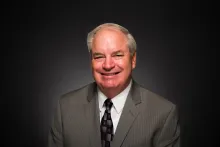
Robin Webber was born in Chicago, Illinois, in 1951, but has lived most of his life in California. He has been a part of the Church of God community since 1963. He attended Ambassador College in Pasadena from 1969-1973. He majored in theology and history.
Mr. Webber's interest remains in the study of history, socio-economics and literature. Over the years, he has offered his services to museums as a docent to share his enthusiasm and passions regarding these areas of expertise.
When time permits, he loves to go mountain biking on nearby ranch land and meet his wife as she hikes toward him.
