

Don Ward
This transcript was generated by AI and may contain errors. It is provided to assist those who may not be able to listen to the message.
For those of you who may not have been here in the past or visiting whatever, we take one Sabbath each month and we have Bible study, and we are covering the general epistles. We have concluded the book of James, so now we start the epistle by Peter, 1 Peter. I'm going to be trying something eventually today that I haven't tried in the past of putting things on the screen. You may not can read it. This is sort of an experiment here. And also, it might give you some insight with regard to your own Bible study. I'm going to put up e-sword eventually, hopefully. e-sword is a free download, so it's free, and it's a wonderful Bible study program. So you just put in your search engine, get e-sword, and it is a marvelous tool to help you in your Bible study. Last week, we gave a sermon on the apostle of hope, Peter, the apostle Peter. The apostle Peter surely was the apostle of hope, living his life, knowing that in the end, no matter how faithful he was, that he would be crucified. And according to tradition, he was crucified. We might call the apostle Peter the apostle of hope and grace, because Peter writes a lot about hope and grace. Remember, I told you that in 1 Corinthians 13 and verse 13, where it says, now abides these three faith, hope, charity, that James writes about faith, and Peter writes about hope, and also grace is included there, and the apostle John writes about love. It's called the apostle of love. So it's like 1 Corinthians 13, 13 gives you sort of an outline of the general epistles and then concludes with Jude, which the principal theme there of Jude is to earnestly strive for the faith once delivered. So the general epistles is taken up with faith and hope and love. Remember what we said about hope, that hope springs from faith. Faith is the springboard to all things, and it is given in order of, in 1 Corinthians 13, 13, of the sequence of the way it goes. Because I have faith, I know and know that I know that God, who is promised, cannot lie, I have hope. That hope has a firm foundation, in fact. And then, if I live by faith and hope, the outcome is going to be the love of God shed abroad in our hearts through the Holy Spirit, as it says in Romans 5 and verse 5.
I want to talk now a bit more about the apostle Peter in the personal sense. The apostle Peter is mentioned more than any other apostle in the Gospels and in Acts.
Basically, the first 15 chapters of the book of Acts is taken up with events surrounding the apostle Peter. Of course, you have the exception there in Acts chapter 9 of the conversion of Paul. There are some about Paul in those first 15 chapters, but most of it is about Peter, James, and John, and all the great things that they accomplish through God and His Spirit. Because the information is so plentiful about Peter, we know a great deal about his character. He's probably the last person you might have picked to be an apostle, especially one of the leading ones. He was quick, especially in the early years during Christ's earthly ministry, to put his foot in his mouth. So he was quite bold. He was outspoken.
He was a person of great courage, but yet at one critical time, he was a coward. Remember that Jesus said that, I will be forsaken, I'll be alone, I'm paraphrasing. And Peter says, oh, you know, you'll never be left alone. I'll never do anything to leave you. And Jesus said unto him, before the cock crows three times, you're going to deny me three times. And so he did. And Peter was the one in the last chapter of John that says, well, it looked like he was the one paraphrasing again.
But let's go fishing. Let's sort of forget about all this stuff. And then Jesus appeared to them, and we know the rest of the story there. Peter was a native of Bethsaida. He had a home in Capernaum. So evidently he was a well-to-do businessman in the fishing industry with James and John.
Now, I have scriptural references for all of this, but I'm not going to... He was also married. That's given in Matthew 8.14. Simon, as his name was originally, met Christ while fishing at Bethany. And Christ immediately gave him the surname Peter and the Greek name or Aramaic name Cephas or stone. It means rock. So in Aramaic Cephas, Greek name Petra, small rock. So Christ called him Peter, which in English translation from Cephas or from Cephas be Peter in English. It was a name prophetic of Peter's eventual moral and spiritual strength because indeed he was a rock in the early church. He's described as energetic, enthusiastic, impulsive, impetuous, and a natural-born leader.
With regard to leadership, psychologists have identified three broad types of, if you want to call it, leadership personalities or personalities. And we all fall within this at some range are the dominant personalities. And Peter had a dominant personality. From the dominant personalities, you generally get your leaders. Then you have people with middle dominance, and then you have people with low dominance.
During World War II, the Germans in their concentration camps found out right away that the way to keep down trouble was to isolate the high dominant people. If you isolate the high dominant people, you're probably not going to have a rebellion. And so in the course of human relationships, sometimes a high dominant person, say a high dominant woman, marries a low dominance man, and there you have you might have little problems. You might even have little problems if high dominance marries high dominance, because who's going to be in charge?
Well, the Bible settles that. It says, this is 1 Corinthians 11 verses 1 and 2, that be it known to everyone, once again our paraphrase, but it's be accurate, that I would have you know that God is ahead of Christ, Christ is ahead of man, and man is ahead of woman.
So we know what the authority structure of the Bible is. It's clearly given. We know that the Father is the principal one. Jesus Christ is subservient to his Father, came to do his Father's will, and we are subservient to God and Christ.
Peter, though he had a great deal of what we would call maybe flaws or faults, but see, with any of us, our strongest point is also potentially our weakest point. And though Peter was bold and dominant and all of that, he oftentimes stuck his foot in his mouth, and eventually he learned better. Apparently he had the right attitude. He could take correction one time. Christ even said to Peter, get behind me Satan. I wonder how we would respond if Christ were to say that to us.
In today's world, almost no one can take correction. I mean, that's an archaic word. Everybody is doing all right. After Christ's resurrection, Peter preached the first inspired sermon in Pentecost. He had become the lead apostle. Even his shadow passing over people resulted in them being healed. After Paul received instruction in Arabia, he went to Peter.
That's recorded in Galatians 1. Though Peter became known as the apostle to the Jews, he was also the first to open up the gospel to the Gentiles, as in Acts chapter 10, when he went to the house of Cornelius.
Peter spent the first 12 years of his church life after conversion in the environs of Judea as the apostle to the Jews. Then eventually he went to Babylon. Of course, a large contingent of Jews, Israelites, remained in that area of the world. After the Jews were transported, or Israel was transported to that area of the world, to Assyria and to Babylon, which is basically the same geographic area, and many of them remained in Babylon.
If you'll notice in the last verse or so of 1 Peter, if you haven't turned to 1 Peter, let's go to 1 Peter chapter 5. In this case, 1 Peter chapter 5, verse 13, the church that is at Babylon. Now, some go so far to say, well, Babylon is a metaphor for Rome, so therefore Peter was in Rome. But there is no historical record other than that of the Catholic Church. The Catholic Church contends that Peter was in Rome and was crucified in Rome, and that his bones were eventually taken to Britain. In fact, there was a legend, I guess you would call it, whatever tradition that his bones were taken to Britain in the environs of the campus there, Bricket Wood.
But there is no record that Peter was ever in Rome. You know, Paul writes the epistle to the Romans. He never mentions Peter. Now, Peter in 2 Peter does mention Paul, and apparently they were quite close in some ways. The church that is at Babylon, and it is Babylon, which is modern-day Iraq, elected together with you, salutes you, and so does Mark as my son. See, Mark was with Paul a lot of the time, and he was also with Peter some of the time. So Mark was like a messenger, a carrier that would send some of these letters back in 2. Remember Paul writing in 2 Timothy, chapter 4, talks about Mark. He concludes with, Greet you one another with a kiss of charity with love, agape, peace be with you all that are in Christ. Now, you look at verse 12. Now, the scholars make big to do about the literary value of 1 Peter. 1 Peter is written in impeccable Greek. It is one of the most eloquent pieces of literature ever penned. And some say, well, how could this ignorant fisherman write such a beautiful letter as this? Now, one theory is, you look at this verse 12, but on the other hand, Peter was inspired by the Holy Spirit, and he perhaps dictated this to Sylvanas here, as we see. But Peter, on the day of Pentecost, stood up and preached the wonderful sermon that he preached there by Sylvanas, a faithful brother, unto you, as I suppose I have written briefly. He says, by Sylvanas, and he might have been a like-his-tonographer. There's another word for that as well. Exhorting and testifying that this is the true grace of God wherein you stand. So, written from Babylon, the dating of this epistle is generally given between 62 and 64 A.D.
It was during the time of Nero's reign of terror in Rome, in about the time that the Apostle Paul was put to death. The society at that time was much like the society of our day. You read about all the things of Nero. What his lifestyle really couldn't repeat in mixed company. If you got down, he was probably a homosexual and had young boys around him and so on.
So don't be deceived by thinking they were worse because they had deaths in the arenas. Satan uses different cloaks at different times.
So, let's go now to the first chapter of Peter. Of Peter. First Peter.
The first chapter of First Peter, and I'm going to bring this east sword up. I don't know if this is going to work at all or not. I can't even find the thing on this. When they do this, put it on the screen up here. All these icons go in different places. There it is. Of course, we don't have to have that. I hope you turn in your Bible and that you take some notes in your Bible or also if you have pen and paper.
Did you know? I know I didn't know that.
So, we get to First Peter chapter 1 and verse 1.
The main theme here of this epistle, through hope in God's grace, endure trials and go on to perfection.
The summary of prayer. Once again, I want to go back to chapter 5. So, we're saying that the main theme here, through hope and grace, endure trials and go on to perfection. Look at First Peter chapter 5 verse 10.
And now we go back to chapter 1.
This epistle is one of the richest pieces of literature ever penned.
As I mentioned earlier, it is noted for its eloquence and impeccable Greek. The epistle digs deeply into one of the most profound theological questions of all times. Not just one, but some of the most profound theological questions of all times. I would substitute theological questions for spiritual understandings.
If you really understand what's contained in the first epistle of Peter, then you have more understanding in the spiritual sense than most people, and not just from a gnostic point of view. It's a gold mine of spiritual understanding, but you have to dig for the gold. Just a cursory reading might not bring this out. So, the precious nuggets of spiritual understanding are contained here that can mean the difference between life and death.
And the spiritual understandings that are contained in this epistle are sobering to contemplate when you really understand the full significance of it. So, chapter 1, verse 1, Peter, an apostle of Jesus Christ, the word apostle in the narrowest sense means one cent, but Peter, of course, is one of the original 12 in the book of Revelation.
In chapter 21, it talks about the New Jerusalem and that there are 12 gates and the names of the 12 apostles.
An apostle of Jesus Christ, Christ meaning the anointed one, to the strangers. In this word, strangers, it means an alien, one living alongside.
And the word here is parepadiamos, and it's an alien living alongside. I don't know how this looks up there on the screen. You can see it down low. Parepadiamos, an alien alongside.
Now, there is discussion with regard to is Peter writing just to the Jews that are scattered? The word scattered is diaspora. The diaspora, of course, as we had already mentioned, Israel was taken captive into Assyria, and then later Judah was taken captive into that same area when Babylon ruled that area. But the Jews had become scattered all over the Mediterranean world, which there were Jews in Rome. And Paul attempted to visit the synagogues, especially to the west, in Asia Minor, all the way to Greece. And some say that Paul even went to Spain and perhaps even Britain, but we're not involved with that right now. He names these various provinces that are in Asia Minor. Pontus, Galatia, Cappadocia, Asia, that's Asia Minor, and Bithynia.
So it's the strangers here, the aliens living alongside. Some translations have pilgrims, and you hold your place there and you look at 1 Peter chapter 2 and verse 9.
"...you are a chosen generation, a royal priesthood, a holy nation." See, the church, and Peter was the one who made it plain that the Gentiles would also be included in the holy nation, in the church of God, in the Israel of God.
So this epistle is written to Christians, whether they be Jew or Gentile, I would say that it has more of a Jewish flavor, perhaps, than a Gentile, but you are a chosen generation, a royal priesthood, and a holy nation. It's one of the few places in the Bible where the church is called a holy nation or a nation. A purchased people that you should show forth the praises of him who has called you out of darkness into his marvelous light.
Now, there is much from verses 10 and 11 that we'll need to discuss, which we're not going to do at the present time.
Now, verse 2.
Verse 2. Elect, eklechthos, chosen. Now, this is quite sobering, what we're about to see with regard to this.
Elect according to the foreknowledge, the foreknowledge of who of God the Father. See, God the Father with foreknowledge. It's pretty sobering to realize that God the Father with foreknowledge called you.
Elect according to the foreknowledge of God the Father. The word for the foreknowledge is prognosis, from which we get prognosis, which has to do with the future, predicting the future with the foreknowledge of God the Father through sanctification of the Spirit. Now, I want to spend a little more time on this foreknowledge, the foreknowledge of the Father. This time, I want to look at Romans chapter 8. You would turn to Romans 8 and verse 29.
Romans 8 and verse 29. Notice what Romans 8 and verse 29 says, for whom he did foreknow. For whom he did foreknow. So we've just read here from 1 Peter chapter 1 and verse 2, elect chosen according to the foreknowledge of the Father. We're reading here from Romans 8 and verse 29. For whom he did foreknow. He also did predestinate.
Now, predestination, we're not getting into that as a long doctrine with regard to Calvinism, but I'll do a brief summary. Calvinism taught that God had predestinated only certain ones to be saved. Now, it's easily refuted simply. God is not a respecter of persons. It says that in the book of Numbers and other places in the Bible. Secondly, 2 Peter chapter 3 verse 9, not willing that any should perish, but that all should come to repentance.
You see, the God of the Jews only. No, not of just the Jews, but of the nations also. That's in Romans chapter 3. So, but this part about whom he is electing, choosing to be firstfruits, this is very sobering to contemplate. Elect according to the foreknowledge of God. Romans 8, 29, for whom he did foreknow. He also did predestinate to be conformed to the image of his son, that he might be the firstborn among many brethren.
Now, continuing in Romans 8 and verse 30. In Romans 8 and verse 30, Moreover, whom he did predestinate them he also called, and whom he called them he also justified, and whom he justified them he also glorified. Now, see, that's the context of this often quoted Romans 8, 31.
For what shall we say then to these things, if God be for us, if God is so involved in our lives that he did this, if God be for us, who can be against us?
He that spared not his own son. So it tells, this is what God did.
He that spared not his own son, but delivered him up for us all, how shall he not with him also freely give us all things? Who shall lay anything to the charge of God as an elect? The ones that God has chosen it is God that justifies.
And he goes on to talk about who will be able to separate us from the love of Christ. I think we take our our calling and election too lightly. Now, in 2 Peter, Peter brings out that you have to make your calling and election sure. So just because you are elected and predestined to be called at this time does not mean you haven't made and that you are going to make it unless... Now we go to 2 Peter chapter 1. 2 Peter chapter 1.
In 2 Peter chapter 1.
In verse 10, wherefore the rather brethren give diligence to make your calling and election sure.
Just because you've been called elected, predestined to be called at this time. God did foreknow you. How sobering is that?
But wherefore the rather brethren give diligence to make your calling and election sure. For you do these things, you shall never fall. Of course, the things that are listed above, which we will be when we get to that 2 Peter, we'll spend a lot more time on. Elect according... Now we're back in 1 Peter 1 verse 2. Elect according to the foreknowledge of God. Let that... Does that... I mean, how far back? 2 Peter 2 verse 2.
Where as you have the John 6.44, no man can come to the Father, to Jesus. No man can come to Christ unless the Father draw him. Now this part. For knowledge of God the Father through sanctification of the Spirit. It's only been in recent times that I think I begin to understand this word sanctification. Sanctifies, sanctification, and holy. These words, and we're going to talk about them, but I'll put them out here right now. The word holy... The word sanctification, the word sanctify, or sanctified, are all from the same root as holy.
And in fact, as we shall see, the word that a lot of times in the New Testament you'll see the word saint. It's also in the Old Testament as well. The Greek word for saint is holy. The Greek word that is used for holy. Now let's look at this first, and now we're going... and then we're going to draw something together. You look at 1 Peter 1.13. Now I want, in the interest of time, verse 15. But as he which is called you is holy, so he foreknew you, he called you, make your calling and election sure.
But as he which is called you is holy, so be you holy in all manner of conduct.
Because it is written, be you holy for I am holy.
The Greek word for holy is hagios. H-A-G-I-O-S. Hageos. Now you look here in verse 2 again, sanctification.
And you notice that this word is derived from hageos. It is hageosmos, purity, holiness, sanctification. Sanctification of the Spirit.
Then the word saint. Let's look at a scripture or two that uses the word saint. Look at Romans chapter 1 and verse 7. Of course, we'll be coming back time after time to 1 Peter 1. Look at Romans chapter 1 verse 7. I said that the Greek word that is translated saint or saints is the same one that is in 1 Peter 1.15 and 1.16. Be you holy for I am holy. So the saints are referred to as that which is holy. In Romans 1.7, to all that be in Rome, beloved of God, call to be saints. Call to be holy. Hageos.
Grace to you and peace from God our Father and the Lord Jesus Christ. Now let's go to Ephesians chapter 1. Paul uses saints several times or the word hageos or hageos in Ephesians.
In Ephesians chapter 1 and verse 1, in some of these salutations at the beginning of the epistle, Paul uses this word of greeting the saints. So what would be another translation for hageos in the plural sense where it has saints? It would be simply holy ones.
Paul, an apostle of Jesus Christ by the will of God to the hageos, the holy ones, which are at Ephesus and to the faithful in Christ Jesus. Verse 15, Wherefore also after I heard of your faith in the Lord Jesus and love unto all the hageos, holy ones, saints.
Verse 18, the eyes of your understanding being enlightened, that you may know what is the hope of his calling and what the riches of the glory of his inheritance in the holy ones, hageos, the saints.
And then sanctify is hagiadzo. Sanctify or sanctified both have the same Greek word and it's spelled h-a-g-i-a-z-o. So all of these words, hagios, which is translated holy or saints, hagiosmos is translated sanctification, and sanctify or sanctified is hagiadzo.
So we look at Ephesians 5 verse 26, where Paul uses hagiadzo.
This is an interesting one.
Ephesians 5, 26, that he might sanctify hagiadzo and cleanse it with a washing of water by the Word. In other words, you clean it up, you make it pure, you make it holy, that he might present it to himself, a glorious church, not having spot or wrinkle or any such thing, but that it should be holy, pure, undefiled, without any blemish, that it might be holy and without blemish.
See, so the Word of God is, see, are you washed? There's the old song, are you washed in the blood? Well, the blood is necessary because it is also a part of the sanctification, but are you washed in the water of the Word? You look at Hebrews chapter 10.
Hebrews chapter 10.
In Hebrews chapter 10, let us draw near with a true heart and full assurance of faith, having our hearts sprinkle with an evil conscience and our bodies washed with pure water.
So the Word of God, the blood of Jesus Christ, and the Holy Spirit play a role in the sanctifying and the sanctification. But there's something deeper with regard to this sanctification. We go back here to 1 Peter 1-2 through sanctification of the Spirit. So each person who is chosen, who is baptized and receives the Holy Spirit, now they have abiding within them the very essence of God, the Holy Spirit.
Now the word Spirit, the Greek word pneuma that's translated Spirit, can just simply mean breath. But you put Holy Spirit in front of it, then God is holy. So the sanctification that you are set apart when you receive the very essence of God within you, the sanctification by the Holy Spirit, now steps leading up to that, that through the blood of Christ we are also sanctified. And part of the sanctification process of being made pure and whole is washing by the water of the Word.
Now there's another Greek word that is translated Holy. Look at 2 Timothy 3 and verse 15. 2 Timothy 3 and verse 15.
I told you that you have to plunge the depths here of what's here. You can't just gloss over this and not realize what's being spoken of in 2 Timothy.
This is a memory scripture. 3 and verse 15. I think it's 2, but yes, it's 2, not 3. 2 Timothy 2.15.
Study to show yourself to prove unto God a workman that needeth not to be ashamed, rightly dividing the word of truth, and then in... I want to go from there to verse 15 of chapter 3.
And that from a child you have known the holy scriptures. Now the word holy here, you'll notice that it's not capitalized in the King James translation. The word holy here is the Greek word, Heros, H-E-I-R-O-S, and it means sacred. It's only used twice in the New Testament. So here's the summary of this. Holy things have God's active presence within them. We're sanctified by the blood of Christ in that we come into a relationship with God and are viewed as sinless so that we can receive the Holy Spirit. And once we receive the Holy Spirit, we have received the sanctification. It can mean also setting apart, consecrated, for special service. So we have that very essence of God abiding in us. So holy things have God's active presence in them. Sacred things point to a higher reality, point to God.
And the scriptures, of course, point to God. The holy scriptures, which are able to make you wise into salvation through faith, which is in Christ Jesus. Here in 2 Timothy 3.15, where it says, holy scriptures, it should be translated sacred scriptures. Now, with regard to the scriptures, if you're going to use that word, heteros, it should be sacred. But on the other hand, the scriptures are holy. Once again, the scriptures are holy because the scriptures have God's active presence within them. John 6.63, the flesh profits nothing. It is the spirit that quickens. The words I speak, they are spirit, and they are life. So the scriptures are holy. They have God's active presence within them.
So to me, it is really sobering and just something I have, frankly, I've meditated on this for hours off and on for the past couple of days, this calling of God foreknows and this sanctification through the Holy Spirit. So we read the last part of verse 2.
Sanctification of the Spirit unto obedience. See, what the Holy Spirit and the Word of God provides a new conscience, a new knowing within.
We have our old conscience according to the flesh, and then upon being called, repenting, being baptized, exercising faith in the sacrifice of Christ. I got that one out of order. I'll go back. Repenting, exercising faith in the sacrifice of Christ, being baptized and receiving the Holy Spirit. Now you're at the sanctification, and you are to be holy. Be you holy as I am holy. And the word for saints is the same word as translated holy. It is the Greek word hagios. And a better translation would be to the holy ones. Instead of saints to the holy ones, they have God's active presence within them. They are sanctified. They have achieved sanctification of the Spirit unto obedience.
Now when you receive the Holy Spirit and you become a new person, new and you have a new mind within you. The old mind that struggles is still there. Now we want to go to pick out one scripture or so out of Hebrews chapter 10. Hebrews chapter 10 with regard to the word conscience. And I'm connecting this with obedience. What do you obey? You obey the word of the Spirit. And through your washing of the water of the word and your adherence to that, the sanctification process continues in the purifying so that you become as Christ is. In Hebrews chapter 10, what? Chapter 9, sorry. Chapter 9 verse 13, For the blood of bulls and of goats and the ashes of an heifer sprinkling the unclean sanctifies to the purifying of the flesh. What that did was to make them ceremonially clean. It did not give them a new conscience, per se. Remember it says in the Old Testament, O that there was such a heart in them. For if the blood of bulls and of goats and the ashes of an heifer sprinkling the unclean sanctifies to the purifying of the flesh. They could remain ceremonially clean. They could remain within the fellowship and enter into the congregation. How much more shall the blood of Christ, who through the eternal Spirit offered himself without spot to God, purge your conscience from dead works to serve the living God? Now you have a new knowing, a new mind within you, and the purpose of that is to serve the living God. Now we go to Romans chapter 8.
Romans 7 and 8 helped me to maintain sanity because of the new mind. How does it? Romans 7. Paul talks about the warfare that is going on between the mind of the flesh and the mind of the spirit. The mind of the flesh is always going to be there, and it wars against the mind of the spirit. The mind of the spirit is this new conscience, the new mind, the new knowing within yourself of what is right and what is wrong.
And you look at verse 24 of Romans 7. O wretched man that I am, who shall deliver me from the body of this death, I thank God through Jesus Christ our Lord. So then with the mind, this new mind, this new conscience, this conscience has been purged from dead works.
And one of the things that repentance is supposed to do, as in Hebrews 6, is to repent of dead works. So then with the mind I myself serve the law of God, but with the flesh, the law of sin. It's always there. It doesn't mean that it's okay to serve the law of the flesh. It's there, and there's a war. Now you look at chapter 8, verse 1. There is therefore now no judgment, crema, to them which are in Christ Jesus, who walk not after the flesh, but after the Spirit. So this new mind that is within, if you walk after that.
Because you look at verses 7 and 8, well let's read 6, for to be carnally minded is death, but to be spiritually minded is life and peace, because a carnal mind is enmity against God, for it is not subject to the law of God, neither indeed can be, but it can be ruled over the new mind, the new knowing within. As in verse 13, Romans 8, 13, For if you live after the flesh, you shall die. But if you through the Spirit do mortify, put to death the deeds of the body, you shall live. For as many as are led by the Spirit of God, they are the sons of God. So this 1 Peter 1, 2 has all of this and more in it. So we go back there to the 1 Peter 1 and verse 2. 2.
3. Elect according to the foreknowledge of God the Father, through sanctification of the Spirit unto obedience this new mind, and sprinkling of the blood of Jesus Christ. See, if we sin after we are baptized, after we have gone through sanctification, we may still sin. And we come before the throne of God, and that same blood that made it possible for our sins to be forgiven on initial repentance is still the blood that covers our sins, and sprinkling of the blood of Jesus Christ. Grace unto you, cateres, divine favor, and peace be multiplied. And this peace has a wide range of prosperity, rest, everything is well. It's not just, you know, it's the whole range of rest and prosperity, and everything is all right.
Grace unto you, and everything is well, be multiplied. Let that all sink in. I mean, that's a lot.
Blessed be the God and Father of our Lord Jesus Christ. This word, blessed, here has a connotation of a posture that you might be in of. In view of this, I mean, it's just, what shall we say? But we can fall prostrate before Him.
We can praise Him of our Lord Jesus Christ, which according to His abundant mercy, hath begotten us again.
Hath begotten us again. This word, begotten again, remember the word, ganal, where in John 3, Jesus says you have to be born again, and the word there, born, is ganal. And Jesus Christ talks about, of course, Nicodemus says, well, how can a man enter into his mother's womb a second time and be born? And Jesus explains, we're not talking about that begettle, that birth, we're talking about new life from above. And so this word, you spell ganal, G-E-N-N-A-O, and you put A-N-A in front of it, and you have enag enau, enag enau. It means, again, to be born again, to bear again. But it means, when it is the action of the Father, the Father is the one who begets us. In this case, it is, we are begotten, as it says here, who has begotten us again. Our earthly fathers begat us, and we went through physical birth. But now we have been begotten again with the very essence of God unto a lively, lively hope, a living hope. Peter likes to use the word lively or living. And notice the evidence for this lively hope. Why do we have a lively, lively hope or a living hope? We have a lively hope or a living hope by the resurrection of Jesus Christ from the dead, because Jesus Christ has been resurrected, because He lives. We have a living hope, as it says in Romans 5 and 10, having been justified by the death of His Son, we shall be saved by His life. And we have Jesus Christ seated at the right hand of the Father, whoever lives to make intercession for us. So we have a living hope by the resurrection of Jesus Christ from the dead to an inheritance incorruptible and undefiled, and that faith's not a way reserved in heaven for you.
So there is this reward. A crown of life is laid up in store for each one who dies in the faith or who remains faithful and is alive when Jesus Christ returns. If you look at 2 Timothy 4, the Apostle Paul speaks of this crown of life, this reward, that is laid up in store for each one of us. In 2 Timothy 4, Paul writing to the young evangelist, admonishing him to keep the faith to be bold, 2 Timothy 4, verse 5, But watch you in all things, endure afflictions, do the work of an evangelist, make foolproof of your ministry, for I am now ready to be offered the time of my departures at hand. I have fought a good fight. I have finished my course. I have kept the faith. Henceforth, there is laid up for me a crown of righteousness, which the Lord, the righteous judge, shall give me at that day, and not to me only, but to all of them that love is appearing. So, the Apostle Peter writes of this, that we have an inheritance, a crown of life. And it's that point when we are resurrected that we take on immortality, and we become also immortal, as Jesus Christ is immortal, who are kept by the power of God through faith unto salvation, ready to be revealed in the last time.
We have been sealed by the Holy Spirit, and God has the power to keep us, if we make our calling and election sure. Okay, we're going to end it right there. That's where we'll take it up next time in our Bible study in December. I encourage you to dig into this epistle, into 1 Peter, and you begin to get, hopefully you begin to get the idea of what's here. It is a gold mine. It is a treasure trove. It is so rich in all of the... and it's amazing how that you can bring all of these things, if you plunge the depth of what's there, into focus in studying it.
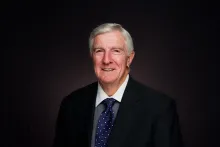
Before his retirement in 2021, Dr. Donald Ward pastored churches in Texas and Louisiana, and taught at Ambassador Bible College in Cincinnati, Ohio. He has also served as chairman of the Council of Elders of the United Church of God. He holds a BS degree; a BA in theology; a MS degree; a doctor’s degree in education from East Texas State University; and has completed 18 hours of graduate theology from SMU.
