

Robin S Webber
We all know the story of God's focus on the sparrow that touches the earth, but how much do we take that to heart and make it our living reality in being God's witnesses in our day with everything happening around us? We may not have a known biblical name like Moses, David or Daniel, but never underestimate the impact on others of "keep on looking UP, showing up, and coming alongside others" to be a heavenly tool of encouragement to others, as well as to our Heavenly Father and Christ.
This transcript was generated by AI and may contain errors. It is provided to assist those who may not be able to listen to the message.
Well, we want to welcome everybody today, and we certainly want to welcome those that are joining us today. And hopefully the message that I'm going to be sharing today will hopefully be a blessing. Not only today, but maybe the months, the years ahead for those that might hear this message. It's a message that is not going to be so much preaching.
It's not going to be so much teaching, at least in all caps. I just want to share something with many of you that have been veterans of this way of life, and been in this way of life for years and years and years. And when it's all been said and done, he said, has it really been worth it?
Is this what it's all about? And being a recycled teenager myself in my eighth decade of moving forward, things that are crossing my mind with the life that I've lived, the life that I'm yet to experience, the life with you today, right here in Surfaces, and you all being out there. And that's what I want to share with you today. I'd like to begin by sharing a part of a piece of prose by Walt Whitman, written about 1892.
And it's very meaningful to me. I've got it on my desk because it continues always to be a reminder to me what I need to be about. It's called, Oh Me, Oh Life. And in that, Walt Whitman says, Oh Me, Oh Life, of the questions of these recurring. What good? What good? With the cities filled with the faithless. With the trains filled with the foolish. What good amidst these? Oh Me, Oh My Life.
And then he says and writes, Answer, answer, that you are. That you exist. That you have an identity. And that the powerful play might go on. And that you might be able to contribute a verse. And that's what we're going to be talking about today, is how we as disciples of Jesus Christ can contribute a verse as the powerful play. Not play, but purpose and plan of God moves forward.
And in this time, and in this moment, our human moment, that we might contribute a verse. In so doing, sometimes we learn from the Scriptures, but we are sometimes cowered into a corner by the Scriptures. Because we read of such individuals as, well, Moses, and or David, and or as Bob brought up, Elijah. And just with those three, and we can name many more big names in the Bible, who am I to contribute anything?
What would God want from me? How could I help those that I come into contact with? What should I be about? What would my verse look like? Would God even really care? That's what I'd like to talk about today. Because sometimes we wonder, with all those names that I've just mentioned, and we could add all sorts of other names, like a John, as Mr.
Gardinhire brought out, or a Peter, what we call the biggies of Scripture. So who am I? Who even knows my name outside of God? How can I even begin to contribute? And let's answer some of those questions today as we just share time together and talk about this. Another writer, one that you're perhaps even more familiar with, except if you went to English journalism with Whitman, Shakespeare, Shakespeare in his play As You Like It, said this, All the world is a stage, and the men and the women are mere players, and they are known by their entrances and by their exits.
We're going to talk about some entrances today, and we're going to talk about some exits, as the play, as the plan, the purpose of God moves forward, and how we enter that plan, how we enter that purpose, and how perchance we exit. And in that, still looking up. I remember many, many years ago, probably one of the first things I always remember from Pasadena days, and if not before, when my mom and I were right over here in La Mesa, listening to radio to a station out of Mexico with a gentleman named Herbert W. Armstrong at the time. And Mr. Armstrong would say that on radio, but I also remember growing up in Pasadena later and hearing them all the time.
He'd say, Brethren, there's a purpose being worked out here below. Now, when he said that, you really believed it, you know? He said, Winston Churchill, who has been mentioned and granted the title as the most significant man of the first half century, says, there's a purpose that is being worked out here below. So, in a sense, there was that double echo. That has always stayed with me for nearly 60 years, that there is a purpose that is being worked out here below.
And you and I have been invited to be a part of that, to be able to contribute a verse. And that's very important. Join me if you would in 2 Peter. In 2 Peter. Then I'll introduce the title of this message. 2 Peter. We're going to do a Peter on you today, okay?
Here's what he says in his second epistle, chapter 1, verse 12. Sounds like I'm talking to the same audience, whether here or whether those that are listening are going to be listening to the future. You know the revelation of God. It's not a stranger to any of us, but we need to be reminded of it.
Being reminded, repetition is the best form of education. So, the title of my message is simply this. The spiritual power and purpose. The spiritual power and purpose of your presence. You are present today. You are reporting for duty. Sounds like army talk. Well, we are, in a sense, also in God's army. We're also his children. We're also his flock. But you're here. And we're going to be talking a lot in this message. We're going to be using different veins of it. Susan heard a little bit of this last week, honey. It's expanded and more defined than last week. To recognize the point of power, of presence. Not only here today, but in different avenues that we have to travel down in our lives. I want to share something with you today. I've been ministering now, being an elder, for 50 years on Feast of Trumpets this year. 50 years. And a pastor for many of those years.
The one thing that has probably impressed me more than anything else when it comes to meeting people, and in my moving through the Church of God community, I've met everybody from top to bottom, in between. But what has really impacted me more than anything else is seeing people out here in San Diego, in Redlands, I think back to auditorium PM days, East PM days, Garden Grove days, Los Angeles days, Bakersfield days, every place where I've pastored. What has impressed me more is sometimes seeing people in the seats showing up every Sabbath.
At times they're older. You know such people. And they're not actually here today. You would know who I'm talking about in our own congregation to a degree. They can't move much. They don't talk much. But being present, showing up, speaks volumes. Speaks volumes. Does to me. See, you're all looking at me right now, and I'm just one person, you're looking at me. I see everything every time. I skipped as a teacher and noticed that kids always think that the teacher's not really seeing them what they're doing. In class time, you see everything. And you even see the notes going back and forth between the boys and the girls. You just see everything. And when you're up here, you're seeing me. I wish you could see something nicer. But I'm seeing each and every one of you, and I'm watching you. I'm watching your eyes. I'm watching your body language. As I often tell people that, you know, don't go off your notes. The most important notes of a message are the eyes of the people in front of you. Because they will tell you when they've got it. It's time to move on. Don't go to point three. You solved it in point one and two. As we might say in California talk, it's over, baby. Just wrap it up. They've got it. But I've got all these notes. Have you ever had people up there? So they're just eating corn on the cob. They're going to go through all those notes, all ten pages of notes. And they're reading this rather than reading the eyes of people. The most important notes to a speaker is to read the eyes of your audience. With that stated, not only are senior citizens that show up, they're in their 80s, they're in their 90s sometimes, but people that are disabled. Don't like to use that word. Disabled physically, at least. I remember we have a couple that were in Redlands. If their name were Charlie and Barbara, Barbara may actually be listening today.
Wonderful couple. Charlie was a Vietnam veteran. For we that are of that age, you know what our men and some of our ladies that were over there fighting, experienced with Agent Orange. And what would happen many, many years later?
Barbara and Charlie, when they first came to church, Barbara already had MS.
And that's continued to expand to where she cannot be in bed. That means she is in bed constantly. And has the loving care of her family helping her. We've been to her home. Charlie, on the other hand, because of Agent Orange, he thought he was going to have one leg amputated, but he had to have both legs amputated.
I can see them back here. For those of you who have been to Redlands, I can see them. They always sat in the back row towards the end. Charlie in his wheelchair. And Barbara is sitting as best as she could comfortably. Tammy knows Barbara, you know, who I'm talking about. Oh, and by the way, they came in a van because of the wheelchair and getting set up. That was, however it was, electric. There was no, you know, I don't know what freeway they were on. I don't know if I'd want to be on there, but they were in this van. They would not miss services.
Charlie never spoke behind a microphone, which could have been interesting if you know Charlie. Tammy's laughing. Susan knows.
Barbara never did special music.
But just being there, spoke volumes. They were contributing a verse in their own way of just showing up a presence.
The most important sermon any of us will ever give is not what we say, not even necessarily what we preach or teach, but what we practice. Not only as we come to services, but every day of our lives as we witness to people at the supermarket, as we witness as what kind of a neighbor we are in the cul-de-sac. We live in a cul-de-sac, wherever you might live. The spiritual example of such a life speaks volumes. And it can be contagious, and it's meant to be. It's contagious if we catch on and allow it to develop in us, and not just go through the motions. Sometimes I can be in services, even in God's one true church. Just say that with fun. And I see people come, they sit, they stand up, and they go. It's like a ritual. They come, they sit, time to go, there, and leave. They've done their duty.
That's not contributing a verse. That's not contributing a verse. That's not what family is about.
One sure thing is that God knows their name. Not everybody that has contributed a verse in the Bible, we don't know all of their names. We don't know the names of certain people. Allow me to share something with you. They've been recorded, but we don't know their name. I want my name up. I want to have my footprint, my heartprint, right there at Grauman's Theatre on Hollywood Boulevard. I want to sink it in, let everybody know. Just think about this for a moment, and you'll know some of the stories that I'm going to share here. The boy with the bread and the fish. Remember the young lad that came up and was presented by Andrew. He reported for duty. He was present. And he brought what he brought. He brought his lunch, some fish and some loaves. And what he did bring, he gave his little. And with that little, Jesus Christ made everything. An incredible lesson for all of us to always learn. We'll just give God our little. God will take our little and magnify it to his glory. What about the woman with the issue of blood? Remember the one I've never spoken on her before, where she's moving through the crowd. She's going there. She wants to grab the tassel on Rabbi. She's maneuvering in, right? We don't know her name.
But she was present. We know Gerias's name, who I think was the ruler of the synagogue. Gerias's name is mentioned. There's a wonderful miracle there, but we don't know the name of the woman. But God knows her name. We think of, again, the thief on the cross. The thief on the cross. And I know how would you like to speak? That's our common parlance for the good thief on the cross. Now, it's better than the bad thief on the cross, but the word is still there, right? Thief. But he's the good thief on the cross. The last one who was present. Imagine the encouragement that Jesus received as he's being jeered at, ridiculed, mocked by his own people, that he came to save. And yet the one that is up in the air, six or seven or eight feet above the ground, says, you don't deserve to be here.
We, my buddy over there and I, we do deserve to be here. Do me a favor. Remember me when you come into your kingdom.
But we don't know his name. Interesting. What about the women on the bank of the river in Philippi? Big news. Fox News Alert. Gospel is going over to Greece. Going over to what today wasn't then, but today what we call Europe. And where does it start? Paul is directed to Philippi. And there's a bunch of ladies that are out on a river. And that is take off for the gospel and the teaching. Only one out of that group of ladies is mentioned. There is Lydia of Thyataria, right? But all the others were there. They were all contributing a verse. They all showed up. And most likely they were the core of what developed into that church that Paul just, you know, he just had this love affair with Philippi. You know, it's like our children. We have many, many children. We love them all, right? Equally. We always explain that. We have three daughters, and sometimes one of them will say, well, you know I am your number one daughter. Or then the granddaughters, you know who is number one. I'll say yes in birth order, but okay. When you have children, you love them all equally. We would all jump off the cliff for our children. Period. The dog, the cat? No. Children? Yes. And to recognize then that this is what was started. And sometimes you recognize that sometimes I've showed up enough. Jot down Luke 2. I'll send you my notes. Luke 2. In Luke 2, it talks about two people that you know of. There's Simeon and Anna. How many of you know Simeon and Anna out of Luke 2? Can I see a show of hands? Simeon? Oh, Susan, you're the only one that raised your hand. Who are Simeon and Anna?
Yeah?
See? She actually got it. Thank you, honey. Appreciate that.
Okay. They were around the temple, and they were old, old, old. And yet they kept showing up, waiting for Messiah. Can you imagine their presence and recognizing and magnifying the miracle that had just occurred with the Christ child as he's taken for purification in the different rites at that time? He's in the temple. And Simeon talks about what he's going to be like. And Anna is overwhelmed that she is still alive. You know, sometimes we say, do I need to keep on showing up? Is there anything else new that I'm going to learn in this life? Think about it for a moment. If you think you've kind of said, you know, you've kind of put your homework away, your heart work away, let's remember that God only began dealing with a Brahm when he was 75. Hello? That makes me feel good. I'm not 75 yet. But that's when he started dealing with the Brahm. And well, okay, what about Moses? You know, Moses was on the run until he was 80. Until he met somebody up on the mountain in the burning bush, right? 80. As Abraham Lincoln would say, four score.
And if you want to cop on that, what about Noah? When God started dealing with Noah, Noah was 480 years old.
480 years old. And he says, big guy down there, we're going to do something together. I want you to build a boat. He's 480 years of age. What new thing does God still have in store for us that we might be able to contribute a verse?
To keep on living. To keep on growing. And that doesn't mean in the sense of not appreciating where we're at, perhaps physically. Perhaps the challenges that we're bearing that nobody else knows about. I understand that. But to keep on showing up. As I've always said with the example of Michel, Hananai, and Ezraiah in Babylon, it's one thing to take a stand. It's another thing to keep on standing. But it's another thing to keep on standing when nobody else is standing. This is what we've been called to and to understand.
One thing too is another example, and I'll just share this with you. When it comes to being present, on the voyage to Rome, Acts 27, Acts 28, many miracles are occurring. As Paul is trying to break the deadlock between going from Caesarea up to Jerusalem, Caesarea up to Jerusalem, he says, I appeal to Caesar. Okay, you appeal to Caesar, to Caesar you will go. So the deadlock is broken. They put them on a voyage to Rome. Miracle after miracle is occurring. Some of the bigger ones, you think of the shipwreck. You think of the healing of the governor's son.
Oh, thank you. Did that float down from heaven? Thank you, Vicki. Okay. Is that the snake bite on Malta? But the thing that... It's always impressed me as I've taught the book of Acts and done the voyage to Rome sermon. The thing that overwhelms me the most, I'll share a story with you after this, is that miracles of snake bite healings, shipwrecks he saved, boat goes down, everybody remains alive, the healing of the governor's son, but God saved the best miracle for last. Because finally Paul landed on the Italian peninsula, and he's working his way up to Rome. He's going to go up to Rome to be on trial. Join me if you would in Acts 28.
Acts 28.
And notice what it says here, picking up the thought in verse 11. After three months we sailed an Alexandrian ship whose figurehead was the twin brothers, which had wintered at the island. And landing at Syracuse, that would have been in Sicily, we stayed three days. From there we circled around and reached Regium, and after one day the south wind blew, and the next day we came to Pudioli. Now notice this verse 14. Now this is where it intensifies. Where we found brethren, and were invited to stay with them seven days, we found brethren.
Not governors, not snakes, not gigantic episodes that would be incredible to watch, you know, on a cinema scope of a ship going down, but nobody drowning. No, it's the brethren. Staying with them. And so we went towards Rome. Now this is just, this is one of these intersections of love towards God, and love towards one another, and why we're a family. And notice what it says here. And from there, excuse me, and it says in verse 15, and from there, when the brethren heard about us, they came to meet us as far as Api Forum and the three ends. Now notice this, at climaxes, at crescendos, and when Paul saw them, he thanked God and took courage.
Simple word, brethren. They were present. They showed up. They were there. Doesn't mean Paul was going to do a jailbreak. No, he knew this was a part of the Gospel, going to Rome, that he was going to be on trial. You know, with the shipwreck, he was put on their shipwreck, you know, he was healed from the serpent's bite, but he was still going. None of that was delayed. There were interventions by God on the voyage to Rome, but it never meant that he wasn't going to go to Rome. He was going to go to Rome. And at the end, he's in Italy. He's in a foreign area, and the brethren come out to meet him. Can you imagine that? It's like, you know, have you ever been away from people, and you're in an airport, and you finally get to meet them? It used to be easier before 20 years ago to have family come and see you at the gate. See you off the gate, see you at the gate. Now they've got you somewhere else. But that, and the embrace of the Spirit, the embrace of the knowing that you believe in the same Son of God that was given to us, and the embrace that they would know that, as Jesus himself said, he never said that it would be easy. It would be worth it. And it being a family in the church, being fellow saints of God, being present, speaks volumes. Never underestimate your presence here today. And I realize that sometimes that we're not able to be proud. We are challenged physically, perhaps hormonally with the ladies, perhaps whatever it might be. We're not able to be here as often as we like, but never underestimate that. But beyond that, let's understand something. Even when you're not able to be here, and we have a lot of people here that are listening right now, and they're not able to be here physically present. But I know that they're present right there.
And that reminds me of what it says in John 4, 20-24, where Jesus is speaking to the Samaritan woman. He says, there is going to come a time when we neither... Jesus is talking to her, there's coming a time when we will neither worship on this mountain or you worship on your mountain, but those that God is calling are going to worship Him in spirit and in truth. Even if we're not here in a physical building, today we're in the temple of God. It's called the Sabbath day. It's a temple in time. And you that are watching, you that are hearing this in the future, and maybe you can't come to services anymore. God knows right where you are, and He knows your name. And we are encouraged that you're listening. I'm encouraged sometimes when I see the number of people that are listening to our ministers here, and ministers in other congregations. And maybe they can't be a part of a congregation, especially these days because of time and distance, but they are nonetheless showing up before God. This build upon that thought for a moment. Join me if you would in... Join me if you would for a moment in Hebrews 4.14. Remember how I mentioned you always watch the people's eyes? And you know where you're at, and they've got it? And it's time to move on. I just skipped two pages of notes for you, so I wouldn't press your conversion with a three-hour sermon. Okay? So here we go. Let's go to Hebrews 4, which will serve us well as we begin to wind up.
Hebrews 4. Let's notice what it says here. Pardon me.
Verse 14. Seeing then that we have a great High Priest who has passed through the heavens, Jesus the Son of God, let us hold fast.
Let us hold fast.
I'm looking at something I can hold fast. I always like descriptions. Let us hold fast. If I could walk today, I would go down. You see that pillar right there in front of me? That pillar right there. That means you hold fast. You don't let go.
You embrace it for all your heart's worth, because you've given it to God, and God gave His Son to die for a moment that you and I might serve and love and live with Him for eternity. It says, let us hold fast our confession. And that is our confession, that Jesus is Lord. That Jesus is the one that His Father said, This is my Son. I think we sang to that today, Joel. This is my Son in whom I am well pleased. For we do not have a high priest who cannot sympathize with our weakness, but was in all points tempted as we, yet without sin. Let us therefore, that's a note, there's the downbeat, the drumbeat, therefore, with all of this said, wake up, alert, get this, therefore, come boldly to the throne of grace, that we may obtain mercy. And find grace to help in time of need. That's just the beginning. Now we're going to add something else. Join me, if you would, in Hebrews 10, verse 9. In Hebrews 10 and verse 9...
No, excuse me, Hebrews 9, verse 14. Hebrews 9, verse 14.
Maybe that's not the word I want. Excuse me a second. I'm looking here.
One second. Okay, yeah, here we go. It's actually Hebrews 10, verse 19. I was right the first time. Okay, Hebrews 10, verse 19. Let's all take a deep breath. Here we go. Therefore, brethren, having boldness to enter the holiest by the blood of Jesus, noticed by a new and a living way which He consecrated for us, through the veil that is His flesh, and having a high priest over the house of God, let us draw near with a true heart in full assurance of faith, having our hearts sprinkled from an evil conscience, and our bodies washed with pure water.
And let us hold fast the confession of our hope without wavering, for He who promised us is faithful. That is an invitation. To what? To come into the presence of God in His throne. And you can read about what that throne is like in Revelation. Jesus Christ is at His right hand. You have the twenty-four elders. You have the seven spirits. You have this. You have that. You have the sea of glass, that sea of crystal.
And we are invited to show up and to be present. Now, I know what that means to you and means to me. And, oh my, we should be thankful forever and ever. But have you ever thought what that means to God the Father and Jesus Christ, that you do present yourself present? And maybe some of us have been away from that throne room a little bit too long and not showing up. But when we show up and we come before that throne room and we petition God, we share ourselves with God, we talk to God, and then we say in Jesus' name, do you know what that does for both of them?
The encouragement that you have responded to the call that God gives us to begin with, but that you've recognized that call is only made possible from the Father by His Son and what His Son did. It's very interesting, on the last night of Jesus' earthly life, in John 17, and we go over it again and again and again, every New Testament Passover, and it says that they might be one as we might be one, that as you and I are one, that they might be one, and you and you and them and them and me, and swirl it all around together and we're one.
But three times in John 17 it says, These that have believed that you sent me. You read it yourself, John 17, homework time, artwork time. These that believe that you sent me, that I really am Messiah, that I made myself present on earth. I made myself to tent, to canoe, to dwell on earth, that you allowed me, Father, to put my skin into the game for our purpose, for those that are made in our image and our likeness. Just thinking out loud, not trying to do Jesus thinking for him, the risen Christ. But I've got to say that when we do take up that offer in the book of Hebrews, and we do come before our Father, and we do use His name, there's kind of a tug.
There's kind of a tug. And Jesus looks at the Father, and the Father looks at the Son, and says, they've taken up the invitation to boldly come, because of what we boldly did, which is unthought in human history, because it's outside of time and space what was done. And what you did, my Son, presence can even encourage God the Father and Jesus Christ. I want you to think that through. You're not taking up their time. When you share your faith, when you share your resolve, that you've hit the payload of everything that God desires, and you keep on coming back, don't underestimate that.
Embrace it. When you think of it that way, it adds meat to the bone of the Gospel and our relationship, that we can be moved by God, and we can be moved by the example of the Son, and yet also we can move them by our faithfulness, by our obedience, and most of all, our love for them. Presence. And when we do that, that's going to spill over to everybody else, because when you go to Hebrews 10, at the end of it says, verse 24, And let us consider one another in order to stir up love and good works, and not forsaking the assembling of ourselves together, as is the manner of some.
Now, this is written 30 years after Jesus' time. Hebrews is probably written around 65 to 70 AD. As is the manner of some, but exhorting one another, and so much the more as you see the day approaching. Now, we often use this in relationship to Leviticus 23.1, where it talks about the Sabbath being a Moab, being an assembly, being showing up. You've been asked to show up. Absolutely. And there is a command in that sense to come to where God has in that sense appointed His name.
I'm also adding what I said about out of the book of John, for those that cannot make it to services, but to recognize that it's encouraging to be here. It's encouraging to see each and every one of you. I want you to know as your pastor, I do not take any of you for granted at all. And our Father above does not take you for granted. I see people that have stories, challenges, aches, hopes that have not come about, and yet they keep on showing up. And that's moving.
I know many of your stories, as you know, and many of the stories of all the people in Southern California over the years. And yet to see them walking through this door, because there was a time when God's will was made present, no man can come unto me unless first God the Father draw him, Jesus' words.
And they heard that call, and they responded, and the rest is history. God knows our names. In Malachi 3 verse 16 it says that there's a book of remembrance. In John 10 about verses 3 or 4 it says that Jesus is our shepherd, and he knows the name of those that are in the flock.
What did God say in number 6 where he says, you know what the blessing? The Lord bless you and the Lord keep you. You know what the last blessing in that line of blessings is? And at the end, put my name. God not only knows our name, but we also need to remember whose name is on us. It is that seal. God knows that we've turned our life over to him, that we are his property, that we are to do his will.
He knows exactly where we are. How exactly can God be? I'm going to share this thought with you and conclude. We all know the story of Jesus. We're talking about the sparrows. Because I'm a robin, so I love bird stories. And Jesus is trying to explain, don't you know that two sparrows are sold for this? What you don't realize is that between the story in one account and the story in another Gospel account, it's not four sparrows that are sold. In the Jewish marketplace, to use a phrase, and I used to work in Fairfax District and used to go to the Garment District downtown LA, any time you go into a store, it's always such a deal.
How can you pass this up? You used to go down to the Garment District on Spring Street, an old part of downtown, that's where the big skyscrapers are today. But as a Garment District, go into a Jewish store, and whatever you put on, looks great. Even though I'm like a size 42, and this thing would be like a size 60, wonderful, looks good, such a deal. So what would happen in the marketplaces in Jerusalem is somebody's starting to go away.
Somebody's starting to go away, and the merchant's not going to make his deal. So what he would do, he would throw in a fifth sparrow, the sparrow that nobody wanted, the sparrow that nobody wanted, that wasn't pretty to the eyes. He says, here, take this one as well, and that would seal the deal. This turkey up here, who's named Robin, I'm that fifth sparrow that God's had mercy on all my life.
And so are you, that we might be present before his throne, and return to him the same love that he's given to us. That as we're encouraged by his love and turn, he is encouraged in our faith and our belief in him, and that then we share that with others as he would, as we come to services, that we come in grace and in love and encouragement. And perhaps, at times, even as we catch up with one another, but also to remember the aspect that, talk about him. Share him. Share what he's done in your life this week as we're present together. Let others know that it's not about you. It's not just about you. It's about him and his son. And if we do that, as the powerful play goes on, and we might say with those recurring questions, with what's going on in the world right now, with those faithless cities, with those people running back and forth, what good amidst these, O me, O life? Answer. You have been called by God the Father. You have accepted Jesus Christ as your Lord and your Savior and your Master. You have given your life away to God and you belong to him.
And you share that not only by what you say, but what you are. Because you exist. And you have a name. Because we worship the name above all names. Let's keep on showing up. Okay? Let's keep on being present. Let's be staying in touch with one another at times when we see people that aren't here. Give them a call. Let them know that we understand you weren't present today. How are you doing?
Let's be a family. And all of those out there watching down through the weeks, the months, the years sometimes, you are a part of God's family. We are one.
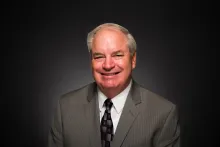
Robin Webber was born in Chicago, Illinois, in 1951, but has lived most of his life in California. He has been a part of the Church of God community since 1963. He attended Ambassador College in Pasadena from 1969-1973. He majored in theology and history.
Mr. Webber's interest remains in the study of history, socio-economics and literature. Over the years, he has offered his services to museums as a docent to share his enthusiasm and passions regarding these areas of expertise.
When time permits, he loves to go mountain biking on nearby ranch land and meet his wife as she hikes toward him.
