
Roy Holladay
This transcript was generated by AI and may contain errors. It is provided to assist those who may not be able to listen to the message.
Well, the old year of God's calendar ended at sundown on Monday, and the new year began. We have some cold wintery weather there with the thirteenth month of God's calendar, and this pushes the holy days this year later than they were last year. We are now in the fifth day of the new year of God's calendar. It's a beautiful time of the year, and it's the time of the spring holy days. Spring holy days always come at a beautiful time of the year. The weather begins to warm, colorful blossoms, new buds on trees, the all-new blossoms were so beautiful this morning, driving up to Roanoke, the red buds, and all the physical creation is preparing to make some new growth and to bear fruit. We also have learned a lesson from that. We are to be taking on some new growth as well and bearing fruit. Many of us have kept the Passover and the Feast of Unleavened Bread for many years. And what can you learn this year that you know it all already, right? Wrong. We don't know it all already. No matter how many years we have been keeping the Passover and the Feast of Unleavened Bread, this year we are to learn some new things. We're to put up some new growth. We are to bear some new fruit in our lives.
And we should learn new things that help us to grow. You're keeping these days do make us different, and they do make a difference. You might think that's wonderful. Am I any different person because I'm keeping the Sabbath instead of Sunday? Yes, you are. You're different. You're led by God in spirit as you do this. You're keeping the Sabbath in spirit and in truth. It's making a difference in you and in your life. What about the Holy Days? It's keeping the Holy Days, making you any different than if you were keeping Christmas and Easter like other people? Yes, it is. Because you're obeying God and serving Him, it is making a difference in your life. It is making you a different person. You're led by God's spirit. Yes, it does make a difference. In the world of lifetime, God's righteous character is perfected in us, and His law is written upon our hearts and minds. We do this over a lifetime. Little by little, God's righteousness is being perfected in us. A brother in the Passover is on Sunday 9th, April 17th. We begin our service at 8 o'clock that night. The next night will be the night much observed in the beginning of the seven days of the Feast of Unleavened Great. We have services on the first high day, in the afternoon, and two services on the final day. Today, we're going to really focus a lot on the Passover, but we certainly do not want to leave out Feast of Unleavened Bread preparation. Let's read over in Leviticus chapter 23 a few Old Testament verses, Exodus 23 and then Exodus 12 after that. Let's begin in Exodus chapter 23 and read a few verses about the Passover and about the Feast of Unleavened Bread. God gave these holy days to ancient Israel. One question that we want to answer, are they for us today? Many people think they're ceremonial. First of all, there is a mention of the Sabbath day as a weekly festival of God and holy conversation. In Leviticus 23 and verse 3, six days' work can be done. The Sabbath day is a weekly festival of God. It's a solemn day of solemn rest, and it's a holy convocation. And no work is to be done on this day, because we all know that. And we keep God's Sabbath day faithfully week by week. But then in verse 4, we come to the seven annual holy days that come up during the year.
In verse 4, these are the feasts or the festivals of the Lord's holy convocations, which you shall proclaim at there are twenty times. On the 14th day of the first month at twilight is the Lord's Passover. Did you know there's only one time that you can really keep the New Testament Passover? It's on the 14th day of the first month. You can't do it any other time and be keeping the Passover, not the true Passover. People do foot washing, and they take bread and wine at other times. Of course, their wine is normally grape juice. They do that at other times of the year, times they choose. But God has chosen the 14th day of the first month of His calendar.
That's the only time that is acceptable for the true Passover. The 14th day of the first month at twilight is the Lord's Passover. On the 15th day of the same month is the Feast of Unleavened Bread. Seven days you must eat unleavened bread. On the first day, a holy convocation. No customary work. It's a high day. It's a holy day. You know when God leads the person to His truth, and even before, as a part of their repentance, as a part of their conversion, He leads them to see that they are to keep the Sabbath each week, and they are to keep the holy days of God also.
So the first day is the holy convocation. No work, because it's an annual Sabbath. They offered this offering in those days, the Levites did. On the 5th day, the 7th day shall be a holy convocation and no customary work. Let's go back now to Exodus 12. This is when the Israelites were still in the land of Egypt. This is when God first gave to them the Passover and the Feast of Unleavened Bread. Yes, they began to, they kept the first Passover in Egypt. They began to keep the Feast of Unleavened Bread in Egypt as well. God gave them instructions. You know, we've read this, most of us have many times. They were to choose a lamb on the 10th day of the month. Verse 5, the lamb was to be without blinish. Verse 6, the lamb was kept until the 14th day. Oh, that's the day of the Passover then. Then they would kill it, and they would roast the lamb and have a Passover meal that night. And then the next morning they would burn anything that remained. And so the Israelites did that. We know that they were to put blood up on the doorposts. And that night, if the blood was found on the doorposts, and they were spared death by the Lord when He passed over to kill the firstborn. And all the firstborn of the Egyptians were killed, but the Israelites were spared because of the blood. When that blood was on the doorposts, then God just passed right over that house. There was no death in that house. The blood of the lamb protected the people in that house. But we see that we know the symbolism already. We have the blood of Christ over our lives, and God passes over our sins too. And the death penalty is removed from us. There's rich symbolism here. Of course, we know that lamb that they killed for the Passover was a type of the lamb of God, the true lamb of God, the lamb that is what the capital held, the lamb of God. What God also gave the Israelites instruction about the seven days of unleavened bread, verse 15. Seven days you shall eat unleavened bread. On the first day they would have leaven removed out of their home. Verse 16, the first day was a holy convocation, the seventh day was a holy convocation, and no work was done on these two high days, the first and the last days of unleavened bread. In verse 19, for seven days no leaven shall be found in your houses. Whoever eats what is leavened, that same person shall be cut off. In verse 20, you shall eat nothing leavened in all your habitations. You shall eat unleavened bread. I know my first feast of unleavened bread was in 1959. I just had arrived at Ambassador College in 1958 that summer, my freshman year at Ambassador College, fresh out of high school, and I learned about this feast of unleavened bread. And the first time I'd ever heard of anything like that, I'd not even heard of that before. I had to do some studying into the holy days. So I was introduced to the feast of unleavened bread. You know, a lot of people have never heard of it before. Had you, before the Church of God, maybe some of you had heard of it, and maybe some of you had not even heard of it. Some people don't even even know how to pronounce the word. They call it unleavened bread. But instead of unleavened bread. So I had to learn all about the feast of unleavened bread, and I remember that very well, my very first one. Seven days eating the unleavened bread, the bread that has no yeast and no baking powder, no baking soda. That's what it means.
Unleavened bread has no yeast and baking powder and baking soda. Now that doesn't mean that we put out non-food items. Sometimes people ask, well, what about toothpaste that has baking powder or baking soda in it? You don't have to worry about that. Toothpaste is not the feast of unleavened toothpaste or cleansers. Sometimes a cleanser might have baking soda in it. But the key is non-food items you don't have to worry about. But just the food items that we eat that is to be unleavened is not to have yeast and baking powder and baking soda. And so those days we put that out. And in ancient Israel, their homes were free. The land was free even because everybody was doing it. But what about today? What if your mate doesn't want to keep the feast of unleavened bread? Well, let them eat their regular bread. We don't try to impose upon them our beliefs. We don't force them. If you have a mate that wants to eat the regular bread or maybe grown children that live at home who want to eat the regular bread, then let them do it. You know, we're not trying to enforce them. But you yourself would eat only the unleavened bread during those seven days. Well, the question comes down to should we be keeping these days today? Before we answer that question, and while we're here in Exodus 12, I want to have us read a couple of verses about one other thing that we do. What is this night to be much preserved? Night to be much remembered, some people might call it. Well, in verse 40, let's read about that and what we do by custom in the Church of God. In Exodus 12 and verse 40, the sojourn of Israel in Egypt, 430 years. In the very first and very same day, the arm of the Lord went out from the land of Egypt. Verse 42 now, there's a night of solemn observance to the Lord for bringing them out of the land of Egypt. This is that night of the Lord, a solemn observance for all the children of Israel throughout their generations. And so, this night that is being talked about here would be the night after the Passover night. Let's get the correct flow of events. The Israelites, at the beginning of the 14th, would have slain their Passover land, put the blood up on the door posts, the beginning of the 14th. It would be the same time that Jesus would institute, would eat the Passover and institute the bread and the wine and do foot washing that very same night, the beginning of the 14th. Now, they were to burn what remained. Catch that verse back in verse 10.
You shall let none of it remain till morning, and what remains of it till morning you shall burn with fire. So, the next morning, anything that was left over from the Passover meal, they would burn.
Now, in verse 22, the latter part of verse 22, it says, none of you shall go out of the door of his house until morning. To present that shows that they did leave Egypt on the same night that they ate the Passover meal. Some people believe that. No, they ate the Passover meal. They put the blood up on the door posts. They stayed in their homes that night until the next morning, when they burned what remained of the Passover meal. And then they prepared for their journey to leave Egypt. And it was the following night, which would be the start of unleavened seven days of unleavened bread, that they began to journey out of Egypt. So, they just began to leave at night. But it was the night following the Passover. So, one about 24 hours later, after the Passover, that they would have started leaving Egypt. And that night that they began to leave is what we're talking about, the night to be much observed. It is the start of the feast of unleavened bread. And we observed that night, not as everybody meeting together, like in a holy convocation. But God has led us to recommend that we get together, two or three families, or in a group. I believe here we're going to have 25 people or so get together for a meal that night and fellowship with one another. Many times we talk about how God began to lead us out of the world. Sometimes we've even had ones to get up and mention how God called them. How they began to leave this world, to leave Egypt, you might say. Egypt is like the type of the world. And how God called us into his church and began to lead us out of the world. So, it's the nicest night to do that.
Even if it's not done formally, it's good to talk about it some informally. And it's good to remember there was a time God began to lead us out of Egypt to work into his church. So, the night to be much observed will be then that night that we have this special meal one night after the Passover.
Well, what about, let's get to that question, what about the New Testament church? Should we be even keeping the holy days of God? Well, turn to 1 Corinthians chapter 5, unless we have a couple of verses here. Here we have a Gentile church that was observing, keeping the Feast of Unleavened Bread. And I don't know how you can read this, otherwise they were keeping the Feast of Unleavened Bread. 1 Corinthians chapter 5 and verse 6, your glorying is not good. Brother glorying is the opposite of the Feast of Unleavened Bread. The Feast of Unleavened Bread pictures being not puffed up, not glorying, not having pride and vanity and self-righteousness. It affects humility, a broken spirit, and poor in or lowly in heart and mind. Your glorying is not good. Do you not know that a little leaven leavens the whole lot? That's true physically, and it's also true spiritually. Doesn't take a lot of spiritual leaven to leaven the whole lot, just as it doesn't take much physical leaven. Verse 7, therefore, purge out the old leaven that you may be a new one, since you truly are unleavened. For indeed Christ, our Passover, was sacrificed for us. Passover and the Feast of Unleavened Bread are connected. They're right together. There's a connection between them.
Verse 8, therefore, let us keep the feast. What feast could that be? Let us keep the feast, not with the old leaven. The older, we could say physical leaven. Yeast and baking powder and baking powder, nor with the leaven, the spiritual leaven, of malice and wickedness. And that's what the physical leaven is a symbol of, the leaven of malice and wickedness of sin, but with the unleavened bread of sincerity and truth. And so, that's what God wants. He wants us to have that unleavened bread, one of the spiritual lessons from keeping the feast of unleavened bread.
And so, this year we have an opportunity to grow more deeply in understanding what that unleavened bread represents. It represents the holiness and the righteousness of Almighty God. It pictures God's laws they read upon our hearts and minds.
Putting out sin, and all of us have to continue to fight against that. You know, there's anyone here that doesn't realize that you have to continue to fight every day.
We have to fight against sin, because sin has always tried to beset us. As it says in Hebrews 12, sin so easily besets us. Your wrong attitudes, wrong thoughts, and wrong actions. Sin is always coming at us. The world is always coming at us. Satan is always trying to get through. And so, we do that every day we fight against sin and strive to put sin out, put it down, and put it out. And take on more of the holiness and the righteousness of God. We're going to have sermons that explain more about the Feast of Unleavened Bread. So, I won't get quite as much into that today. But, brethren, I might trust to now devote the majority of the rest of this sermon to work the Passover. I'd like to go back from the Feast of Unleavened Bread to the Passover. Passover is the next festival of God. One week from tomorrow night, eight days away.
And we need to be thinking about it more deeply in the days ahead. On that night, we will, first of all, read a few verses. And then, before too long, we'll turn to John 13. Please turn to John 13 now. And we will read about the foot washing. This is something Jesus did on the Passover night. And instituted this as something that should be done on that night. We... He poured water into a basin, it says, in verse 5. And verse 1, it was the Passover when this happened. That night before he died, he poured water into a basin and began to wash the disciples' feet and to wipe them with a towel that he was girding. So, Jesus washed feet.
In verse 12, when he had washed their feet and taken his garments, he sat down and said, Do you know what I've done to you? You call me teacher and Lord, and you say, Well, for so I am. If I then your Lord and teacher have washed your feet, you also ought to wash one another's feet.
But then this is something we ought to do, and we ought to do it on the Passover night, same time Jesus did it. It's a very beginning portion of our Passover service, to wash feet. Jesus said, I've given you an example that you should do as I have done to you. We are going to follow that example that night and obey the instruction about washing feet. I want to read at this time what Mr. Luecker, our president, wrote about foot washing and Christ's life service.
He said, The foot washing ceremony is an important part of the New Testament Passover. Jesus washed the disciples' feet, and he quotes the verses that we just read. As an example, washing the dirtiest feet of arriving guests—this would really help us today—people wore sandals, we had dusty streets, maybe not paved, where people came to visit us, and their feet were dusty, and we would have someone then. It was the duty of a lovely household servant normally to wash the feet.
And yet Christ, the prophesied Savior of the world, the Son of God, humbled himself to set an example of love and service for his disciples and for us today. And so later he said that, A new commandment I give, that you love one another, as I have loved you, that you love one another. You know, Jesus just wrote—how did he love people?
He just rolled up his sleeves, and anybody that needed help, he says, I will. And anytime somebody wanted him to heal them or do something for them, I'll come. He was just a servant to mankind. And that's really what the foot washing shows, that we follow that example of service that Christ had. This Christ-like attitude of deep, godly love and sincere humility is what we're all striving to emulate. This can only be accomplished as we yield our hearts and minds to God and let Christ live in us by the power of the Holy Spirit.
Christ-like service is the motto chosen by the Council of Elders to help us focus and work together in the ministry and membership for the development of Christ-like service at every level of our church and work. Okay, we want to think about that a lot more in our congregation here.
How can we promote Christ-like service in the Greensboro congregation? We want to think about that. We'll be writing and speaking more about it as time goes by, Mr. Luecker says. We genuinely want to encourage, promote, and inspire greater spiritual growth in all of us in becoming more like our Savior, Jesus Christ. He sets the example for us, and so we need to follow that example. This coming Passover and foot-washing service, let us remember the great sacrifice of Christ and a perfect example of love and humility and service and re-identicate our lives to God in Christ-like service.
So Christ-like service, we want to do a lot more thinking about that. The Passover, that's what it represents, following that example of Jesus Christ, humbling ourselves to serve a man, serving others, looking out for others, not the self. What about the bread? Then we come back from the foot-washing and we have, before too long, when we read verses, before too long, there's a prayer set, and we have the breaking of the bread and passing it around. What does that bread represent?
Well, let's go to Matthew 8 and verse 16. Matthew 8 and verse 16. When evening had come, they brought to have many who were demon-possessed, who cast out the spirits of the word and healed all that were sick. That it might be fulfilled, which was spoken by Isaiah the prophet, saying, He himself took our infirmances and bore our sicknesses. Rather than the, it is through the painful death of Christ that we are able to be healed both physically and mentally and emotionally and in spiritual ways. So, it is made possible through the suffering of Christ. Turn to Matthew 27. Matthew 27 and verse 22.
Jesus suffered a painful death. That broken bread represents the suffering that he experienced before he died. He suffered hours and hours before he died. Notice in Matthew 27 and verse 22, Pilate said to the Jews, to the mob, What then shall I do with Jesus who's called Christ? They said, Let him be crucified. The governor said, Why? What evil was he done? And they cried out all the more, saying, Let him be crucified. And Pilate saw he could not prevail, but rather that a tomb mole was rising. This crowd was, mob was getting out of control. He took water and washed his hands before the multitude, saying, I am innocent of the blood of this just person. You seem to it. And all the people said, His blood's beyond us and on our children. Then he released Burevis to them. And when he had scourged Jesus, he delivered him to be crucified. You know, the Roman scourging was called the halfway death. Strips of leather were tied onto a stick.
And at the end of each strip of leather was a piece of metal, maybe a piece of bone or something solid. And then when this was brought forward, many of these strips of leather was metal at the end of each one. It was biked into the flesh of the victim. Jesus suffered that scourging called the halfway death. And those jagged pieces of metal crashed against his skin and flesh. It opened up the flesh and the blood vessels. Isaiah 52 would even indicate that it may have been difficult to recognize Jesus Christ after the scourging, after the medium that he went through. Then the victim was led off to the place where he would be crucified. And he was thrust down to the safe of the cross. The crucifixion, the Roman crucifixion, was the most brutal death for the worst offenders of the law. And this was the ones who were the most evil, like murderers, thieves, rapists. Heavy, heavy square nails were driven into the wrist, each of the wrists, and also into the arch of each foot. The victim would feel the agony of the nails tearing through his flesh and nerves. Most of us kind of cringe when we go to a dentist and have him dead in our teeth. But think about what Jesus went through. There was nothing deadening the pain. The nails were driven into his wrists and the arches of each foot. Then when the victim was hoisted up and just safe, or the cross came down with a thud, before too long the victim realized, as he was hanging there, that he couldn't breathe. He couldn't get his breath. And so he would push up from his feet. Very painful to push up, but he had to do it to get his breath. And then that would become too painful after a while on the feet, and he would let go. And then before too long, he realized he couldn't breathe. So he'd push up again.
Jesus went through six hours of this, struggling on the cross. Six hours of pain and suffering. That's what the broken bread represents. And then we need to realize what we are doing when we take the broken bread. It represents the pain and the suffering Jesus went through. And he was suffering in our stead, our physical and spiritual healing. And he's a high priest that understands.
He understands what it's like. He's been through all the witnesses and the pains that we go through.
So let's remember what the broken bread represents. Think about it, as the minister at the Passover service takes the cover off of the bread and has a prayer, and then begins to break the bread. Think about the scourging of Christ and hanging up on the stake and the pain that he went through. What about the wine? Then after the taking of the broken bread, we'll have verses about the wine. What does that represent? It represents the blood of Christ. Let us in John chapter 19 and verse 34. We'll begin in verse 31. John chapter 19 and verse 31, because it was the preparation day that the bodies should not remain on the cross, on the Sabbath. That Sabbath was a high day. The preparation day was on a Wednesday, and the Sabbath day, a high day, was on a Thursday. For the Jews asked Pilate that the legs of these who had been crucified would be broken, but they might be taken away. The Jews did not want the bodies to be up on the stake or cross on the high days. They're high days. Actually, the first day of God's high day, the first day of unleavened bread. Well, then the soldiers came and broke the legs of the first and the other who was crucified. But when they came to Jesus, they saw that he was already dead, and they did not break his legs. But one of the soldiers pierced, or maybe better understood, had already pierced his side with a spear, and immediately blood and water came out. Now, that's how Jesus died. He died with a spear that was thrust into his side, and his blood came pouring out. And it is that blood that covers our sins, by which we are forgiven. That's all that's mentioned in many verses, that it is through the blood of Christ, pouring out of his life, that our sins are forgiven.
Who's to blame? To blame the Roman soldiers? Blame the Jews? What about blame all of us? All of mankind, because that is why Jesus Christ had to suffer and die.
I want us to think about something for a little bit now, but many times, I don't know if we have have this perspective, but I think it is a very important perspective for us to have as we come through the Passover. You know, there's a lot of ancient planning that went on for the Passover. There's one verse that says that God had eternal life for mankind in mind before time began. That is Titus 1 and verse 2. It said, before time began, before the earth and the sun then were made. Time as we know it began with the sun and the earth and the moon being created. Those three bodies interacting with each other creates time as we know it. So before this, God began to envision a family. And as a part of that family, there would be the Passover. There would be provision for forgiveness of sin. Let's turn to Revelation 13 and verse 8.
So this thing that we are going to do on Passover 9, commemoration of the death of Christ, goes back a long time. It's good to think about that and realize that this is some ancient planning for this event, the death of Christ. Revelation 13 and verse 8.
All who dwell on the earth shall worship him, whose names have not been written in the book of life of the Lamb slain from the foundation of the world. So we believe that God has this in mind, that there will be a Lamb that would be slain. That planning goes back from the foundation of the world. Let's go to 1 Peter chapter 1. And we find a similar passage. 1 Peter chapter 1 and verse 18. Knowing that you were not redeemed, that is our price for our death penalty, you were not redeemed with corruptible things like silver or gold from your aimless conduct received by tradition from your fathers, but with the precious blood of Christ as of a Lamb without finish and without spot. That's how our price was paid. He indeed was foreordained before the foundation of the world, but was manifest in these last times for you. So this goes back again to the foundation of the world. And so there's a lot of planning that went on. God and the Word. You know, in John 1 we read about God and the Word. We read that the Word was God and was with God. Well, there was a lot of planning going on. Then in verse 14 of John 1 we read that the Word became flesh and the dwelt among us. And so, you know, this was planned by God that the Word would become flesh. He would be the Lamb of God. The Lamb of God. You know, we need to place that the sacrifice of the Lamb of God did not happen right after Adam and Eve sinned. But God laid the foundation for this sacrifice. What did God wait 4,000 years? Sacrifices of animals, abled sacrificed animals, Abraham sacrificed animals. The lee sites then came on the same day. They sacrificed animals. The people themselves killed their own Passover lambs and had a meal. That lamb was a type of Christ. The Lamb of God. You know, God was setting the stage for the coming of the true Lamb of God.
During this time, there were prophecies of the Lamb of God that come from Abraham's seed.
The Lamb of God would come from the tribe of Judah. The Lamb of God would come from the city of Bethlehem in Judah. And in the 70-week prophecy, Daniel even told when it would happen after the rebuilding of the wall in Jerusalem in the time of the Persian Empire counting forward. When the Messiah would come, the Lamb would be betrayed for 30 pieces of silver. A lot of prophecies about the Lamb of God. And also, in Isaiah 53 and Psalm 22, you might read from there later, detailed prophecies of the suffering of the Lamb were given. So, you know, 4,000 years, God laid the foundation for the Lamb of God to come. Suddenly, He did come. He was born of the Virgin Mary, and He was God with us. He was God, and yet He was human. Think of that. The only one that could ever be both God and man was Jesus Christ. He was man. He was human. And yet, He was also God. God in His flesh, Emmanuel. Something our minds have a bit of difficulty fully grasping. For this was the Lamb of God. It would be the one that would be sacrificed for the sins of mankind. That is in John chapter 1. Finally, it came time for the Lamb of God to come right out into the open to get a public ministry for three and a half years. And if He is of that four and a half year ministry, He would be He would be slain. The supreme sacrifice would be made. John chapter 1, verse 29.
Jesus was around 30 years of age. The time came for Him to come out into the open, begin His ministry. And then three and a half years later, for the supreme sacrifice to be made. In verse 29, John saw Jesus coming, and he said to hold, this is John the Baptist, to hold the Lamb of God who takes away the sin of the world. That Lamb that was slain from the foundation of the world. The Lamb of God. Which God being is this the Lamb of? The Lamb of God the Father, right?
This is the Lamb of God the Father. We want to answer the question, where is the Father on Pass overnight? Should we just focus on Jesus and leave the Father out? No, we don't want to do that. This, which we are commemorating, is the death of the Lamb of God the Father. The sacrifice the Father has made for the sins of humanity. The Lamb of God. And in verse 36, looking at Jesus as He walked, He said, Behold the Lamb of God. Yet where is the Father on Passover 9? How does He sit into the Passover? Well, He's conducting there. He's conducted the sacrifice that we are commemorating. And that was His Lamb, the Lamb of God that was placed up on the altar. Remember John 3, verse 16? God so loved the world that He gave His only begotten Son. Who is that God? That's the Father. God's peace Father so loved the world that He gave His only begotten Son, Jesus Christ. But we don't want to leave the Father out of the Passover. He plays the preeminent role. We need to certainly recognize the role that God the Father plays Passover 9. Just the Father. Let's just notice a few verses. Acts chapter 2. Father is very much directing like the president of a business, the one at the very top level where you can't get any higher. The Father conducts the operation that is going on in the creation of a family of the family. The Father conducts it at the very highest level, above the level of Christ.
In Acts chapter 2, verse 34, David did not ascend to the heavens, Peter said, but he says himself, the Lord says to my Lord, well, we have two different Lords here. Who's the first Lord and who's the second one? The Lord, that means the Father, said to my Lord, that will be Christ. Said it by right hand, till I make your enemies your footstool. Even there, you see, who is making, who's in charge, who's really working it out? The highest Lord, the Father, is saying to the next Lord, Jesus Christ, said it by right hand, till I make your enemies your footstool. He will send Jesus Christ back. And the commission to put down all authority and rule and bring everything under in subjection, the Father will certainly be working to bring that about. Verse 36, let all the house of Israel know, assuredly, that God has made this Jesus, God, notice again it's God, the Father. God the Father has made this Jesus, and you crucified both Lord and Christ. You know, the world believes the Father out of things a whole lot. We want to make sure we don't make that mistake. Don't believe the Father out. He's the one that is directing at the highest level everything that is going on. But he has delegated a lot of things, we're given a lot of authority to Christ, and there's no doubt about that. But he still is directing at the highest level. In Acts chapter 4, we notice it again, the Father's preeminent role at the highest level.
In Acts chapter 4, verse 10, let it be known to you all and all the people of Israel that by the name of Jesus Christ of Nazareth, whom you crucified, whom God raised from the dead, by him this man stands here, whole before you, and before you whole. This is the stone which was rejected by new builders and has become the chief cornerstone. Nor is there salvation in any other, for there is no other name under heaven given among men by which we must be saved. But again, who gave the name? Who gave the name? Well, it says we just read that God the Father made Jesus the Lord and Savior and Lord and Christ. So, in Christ means the Savior, the Anointed One, the Anointed Savior of mankind. Turn to Philippians 2 that makes it very clear that the Father gave Jesus this power and this authority and this name to be the Anointed Savior of mankind. In Philippians 2, verse 9, is Lord, but notice it does add this to the glory of God the Father.
That is one of the very top level, let's not leave him out of the Passover.
All that is going on, the way that God is working out his purpose, is to the glory of God the Father.
So, the Father is very much a part of the Passover. Passover pictures, the Father sacrificing his son in a very literal sense. The Father, you know, we can figuratively think of someone building an altar like Abraham did. Remember Genesis 22, Abraham, God said, go sacrifice that son that you love, your only son, Isaac.
It doesn't say that Abraham questioned God.
It says he gathered up some wood and all that would be needed for making such a sacrifice, and he headed out. Isaac, I mean, pardon me, Abraham and Isaac, and a few of them in.
They headed out three days journey toward this place where God said that Abraham was to make the sacrifice of his son. Well, they got to the place and Abraham told the men that went with him, you stay here, and Isaac and I will go a bit further and we'll worship and sacrifice. Everybody says he's Isaac, except for Abraham and Isaac. They went forward and Isaac, he came to look around and he said, we got the wood, everything we need for the sacrifice. Where's the animal? And Abraham said, well, God will provide. So, they got to the place and Abraham built the altar, put the wood, and then he took a rope and began to tie the rope around Isaac and bound him, and then took him and put him up on the altar. During this, about this time, Isaac began to realize there's no indication that Isaac resisted, and then there was Isaac bound on the altar, put the wood down the boat, and then Abraham was going to bring the knife up and kill his son, and it was like a match. He was starting to fire his son. And Abraham, it says in the New Testament, several of God has promised it would be true. It would be true, Isaac. He's able to raise him up. That's the kind of faith and commitment that Abraham had. And they will know that God stopped him about the time just before he was to come down with that knife and kill his son. We know we've always believed that that is a type of God and Father and Jesus Christ. Abraham and Isaac are a type of the Father and Christ. And the emphasis there is on Abraham. You know, Isaac certainly you have to say there's no indication of him resisting. He was willing. But certainly he focuses on Abraham, maybe in the same way, the focus of Passover is on our Father. He took Jesus Christ, the ram of his Lamb. He bound him, we're talking figures, if we, bound him, put him up on the altar, and he left the sacrifice continued. God the Father did not stop the sacrifice. He did stop it for Abraham, but he did not stop the sacrifice of his son, because it was to me, it was planned. It was in the plan of God, the Father, and the Word that it would go that way. So, you know, we need to certainly then realize the preeminent role that our Father plays when he fits on the Passover night. And he just mentioned that the Passover is a good time to certainly have the right perspective of the unique and different roles of the Father and Son. The Father and the Son are two different God beings. One was God the Father, or God, it's called God in John 1, the other is called the Word. Two different God beings living together in harmony, but they have very different roles down through history. And Jesus, when he was here, said, My Father is greater than me. The Father has that preeminent role. But, in terms of the Father, he's given much authority and power to Jesus Christ. One verse says he's given all judgment to the Son to execute all judgment on the earth, because he is the Son of Man. You've got to ponder that sometimes. That God the Father is given to Christ all judgment, the executing of all judgment on the earth, because he is the Son of Man, because he was human, because he understands what is life to be human, in a way that the Father doesn't.
Jesus has been given the power to execute all judgment on the earth. Another verse says that after he has executed all judgment upon human beings, then he will then, at the end of God's plan with humanity, turn everything over to the Father. And, of course, Revelation 21 brings up that the Father is going to come to the earth at that point. That's after God's plan with mankind is complete. That's in the light of fire. That's the new heavens and the new earth. So, God the Father has given all power and authority to execute judgment directly on the earth like a chief executive officer to Jesus Christ, because he's been human, because he knows what it's like to be human, because he's the Son of Man, he says. He understands what it's like.
So, you know, those are all some good things that we can think about this Passover. The unique and different roles of God the Father in Jesus Christ. And, as we get down to pray before the Passover, we can say, thank you, Father, that you were willing to have a land that you offered. The sins of humanity can be forgiven. My own sins and the sins of all others can be forgiven. Thank you. I think we can turn to Jesus Christ at the right hand of God and say thank you, Christ, for being willing. I think we can thank both God, our Father, and Jesus Christ for being willing to make such a sacrifice. All these are good things to think about, brethren. We should grow deeper in them. If we don't grow any deeper in understanding the Passover this year, then it's in vain. God wants us to grow deeper in our understanding every year of the Passover and the other holy days as well. In conclusion, this afternoon, I want to give you four passages of Scripture that would be good to read between now and Passover. Turn, first of all, number one, to Psalm 22. Psalm 22. We'll read these passages very quickly, and I'd like to ask you to read them and ponder them in the days ahead. I think it will help you and me to be more prepared for the Passover when it does come just eight days away. Psalm 22 and verse 1, words that Jesus spoke on the cross, My God, my God, why have you forsaken me? Why are you so far from helping me and from the words of Mike Roman skipping down to verse 7? All those who see me laugh me to scorn. They shoot off the lip, they shake the head, saying, He trusted in the Lord, but I'll rescue him. Let them deliver him, since he delights in him. These are things that were fulfilled when Jesus was crucified. In verse 14, what was going through the mind of Jesus Christ as he hung on the cross, no better place in the Bible to read the thoughts of his mind. Then right here, verse 14, I am poured out like water. All my bones are out of joint. Maybe from the jolting of the stake of the cross, as he was brought upright and crucified. All my bones are out of joint. My heart is like wax.
It has knocked you within me. My strength has dried up like a pot-shrew. My tongue clangs to my jaws, so dry. You have brought me to the dust of death. Dogs have surrounded me. The assembly of the wicked have enclosed me. They pierced my hands and my feet. I can count all my bones from the scratching of the beam. They look and stare at me. They divide my garments among them, and from my clothing they cast lights. These are all prophecies that occurred and happened to Jesus Christ. The second passage, rather than reason, has been under those verses in Psalm 22. For the second passage, turn to Isaiah 52 and 53. Isaiah 52 and 53. We'll read a couple of verses in Isaiah 52 first of all. Beginning in verse 13, The holy conservative shall deal prudently. He shall be exalted and extolled and be very high. Just as many were astonished at you, so his visage, for that being discouraging, his appearance was marred more than any man, and his form more than the sons of men. So shall he sprinkle many nations. Kings shall shut their mouths with him. Every human being will have his mouth shut. He realizes his sin and the need for the sacrifice of Christ. For what has not been told them they shall see, and what they have not heard, they shall consider. Who has believed our report? To whom has the arm of the Lord been revealed? In chapter 53 now. He shall grow up before him as a tender plant, as a root of dry ground. He knows no form or accompliness, and when we see him, there is no beauty that we should desire him.
He is talking about Jesus Christ in his human form. He is despised and rejected by men. A man of sorrow or margin, says pain, is acquainted with grief, sickness, and we hid, as it were, our faces from him. He was despised, and we did not esteem him. Surely he had borne our griefs and carried our sorrows, yet we esteemed him stricken. Smithened by God! The God and Father allowed it to happen and afflicted. He was wounded for our transgressions. He was bruised for our iniquities. The chastisement for our peace was upon him, and by his strife we are healed.
All we like sheep have gone astray. We've turned everyone to his own way, and the Lord has laid on him the iniquity of us all. He was oppressed, and he was afflicted, but he opened not his mouth. Led as a lamb to the slaughter, and as a sheep before us, surest is silent. So he opened, but not his mouth. It's getting on down to verse 10. Yet it pleased the Lord. It pleased the Lord. Which Lord is this? It's the Father. It pleased the Father to bruise him. He has put him to grieve. The Father, in order that our sins may be forgiven, of this sacrifice had to be made. He has put him to grieve. When you make, the Father makes his soul an offering for sin. The Father laid the lamb upon the altar. Made his soul an offering for sin.
He shall see his seed, he shall prolong his days. And the pleasure of the Lord, again the Father, shall prosper in his hand. God's plan for it. Made possible, in fact, through the sacrifice of his lamb. He shall seize the travail of his soul and be satisfied by his knowledge. My righteous servant shall justify many, and he shall bear their iniquities. These are some verses to read and to ponder here before the Passover. Let's go to John 6 and verse 48 for the third passage of Scripture to read and think about before the Passover. In John chapter 6 and verse 48, I am the bread of life, Jesus said. Your Father is eighth the mannet in the wilderness and her dead. This is the bread which comes down from heaven, that a man may eat of it and not die. I am the living bread that came down from heaven. If anyone eats of this bread, he will live forever, and the bread that I give is my flesh. Notice the bread that I give is my flesh, which I give for the life of the world. Well, the Jewish quorum said, How can this man give us his flesh to eat?
In verse 53, Jesus said that most assuredly I say to you, unless you eat the flesh of the Son of Man and drink his blood, you have no life in you. He's talking about the sacrifice that would be made or the sense of man coming. He's also talking about that Christ would come and live his life within us. We have to eat the flesh of the Son of Man, of this bread of life. Drink his blood! There's no life otherwise. There's no hope. Whoever eats my flesh and drinks my blood has eternal life, and I will raise him up at the last day. My flesh is food indeed, and my blood is drink indeed. He who eats my flesh and drinks my blood abides in me, and I in him. As the living Father sent me, and I live because of the Father, so he who feeds on me will live because of me. The stith of bread which came down from heaven, not as your Father's ate the man and their dead. He who eats this bread will live forever. I'll tell you there's some we can do some deeper thinking on this passage and realize that our need for the Passover, sacrifice of Christ, and if there be no closest wife, except for the sacrifice of Christ, and then Christ coming to live within us. Yes, this is some very profound spiritual meat here. This is something to think about and to ponder. It's offensive to Jews that goes on to say that many of the Jews left following Jesus. They just liked everything they heard up to this point. They just liked the miracles. They liked his message. They liked Jesus. The hero's husbandates could not comprehend. Eats his flesh and drink his blood, and they left following him. Jesus asked his own disciples, will you leave? And Peter said, where can we go? You have the words to life. So they came to understand themselves later on. The final passage of Scripture, you know, brother, we are exhorted to examine ourselves. Paul admonished us in 1st Corinthians 11 to examine ourselves. Is there a checklist? You know, I guess we could have some things we could examine. Are we praying enough? I think we could ask many questions. Are we praying enough? Are we studying enough? Are we meditating enough? Are we walking with God every day in our advice? How are we doing? Imagine that most of us would feel that we can do better. No, I do. But how can we examine ourselves? You know, God's looking on our hearts, first and foremost of all. And there's one thing that we need, and that is a repentant heart and a humble heart. Want to read one final passage of Scripture that really portrays a heart that God would like for us to have as we come to this Passover. Let's go back to Luke chapter 7 and verse 36. Luke chapter 7 and verse 36.
Luke 7 and verse 36. One of the Pharisees asked him to eat with him. And he went to the Pharisee's house and sat down to eat. You know, Jesus was invited out to eat. He accepted. His Pharisee invited him. He went. They sat down to the menial. And a woman in the city who was a sinner.
She was a woman on the other side of the track, you might say. She was known to have made some mistakes. Maybe in... we can envision maybe in her morals. Maybe there were other ways, but known to be one that had made some mistakes. It was known. A woman in the city that was who was a sinner. When she knew that Jesus sat at the table in the Pharisee's house, brought an alabaster flask of fragrant oil and stood at his feet behind him weeping.
And she began to wash his feet with her tears and wipe them with the hair of her head. And kissed his feet and anointed them with the fragrant oil. You know what an attitude this woman had. You know, you... really tears come to your eyes. Just think about the attitude that she had to stoop down and weep and begin to wash his feet with her tears. I saw a lot of tears slowing down her teeth. To wash his feet with her tears and wipe them with the hair of her head. And kissed his feet and then anointed them with the fragrant oil. When the Pharisees that invited him saw this, he spoke to himself. He thought within himself, this man, Jesus, if he were a prophet, would know who or what manner of woman this is who is touching him. For she is a sinner. Now, this Pharisee just looked at himself as being a sinner. He was. In fact, he was one of the worst types because he was self-righteous. He couldn't see himself how wrong he was. And he needed the sacrifice of Christ just as much. But he didn't see it. So he thought of Jesus. What kind of prophet does he allow him to happen from this woman that's a sinner? You know, Jesus knew what this man was thinking. And he said, Simon, have something to say to you. He said, well, teachers, say on. There was a certain creditor that had two debtors, one owed five hundred denarii and the other fifty. When they had nothing with which to repay, he freely forgave him both. Tell me, therefore, which of them will love him more? Simon said, I suppose the one whom he forgave more. He said to him, you are rightly judged. And Jesus turned to the woman. He said to Simon, do you see this woman? I entered your house. You gave me no water for my feet. But she's washed my feet with her tears and wiped them with the hair of her head. She gave me no kiss, but this woman has not ceased to kiss my feet since the time I came in. You did not anoint my head with oil, but this woman has anointed my feet with fragrant oils. I say to you, her sins, which are many, are forgiven, for she loved much. But to whom little is forgiven, the same loves little. He said to her, your sins are forgiven. And the people marveled and wondered about that. Who is this who even forgives sins? He said to the woman, your faith has saved you. Go in peace. You wonder if this woman later may have become a member of God's church. She certainly had a wonderful attitude, didn't she? You know, that is the humble and repentant attitude that God is looking for. You can have a whole checklist and maybe that's okay to go through some of the things in our life. I think where we need to grow and improve and walk more closely with God. But the thing that God is looking at the most is our heart. A heart that is humble, a heart that is repentant.
You know, this woman would have no problem answering the question, please kill Jesus. She would quickly have responded if it was me. This woman had the attitude that we want to have on her Passover night. We are the ones responsible for the death of Christ. We need to see it more deeply each year. Now, we don't need a long checklist for examining ourselves for Passover. Just examine us. Just examine our hearts. Be sure we have the same attitude this woman has.
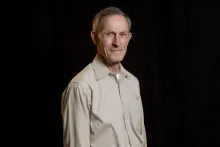
David Mills was born near Wallace, North Carolina, in 1939, where he grew up on a family farm. After high school he attended Ambassador College in Pasadena, California, and he graduated in 1962.
Since that time he has served as a minister of the Church in Washington, Florida, North Carolina, South Carolina, Oregon, West Virginia, and Virginia. He and his wife, Sandy, have been married since 1965 and they now live in Georgia.
David retired from the full-time ministry in 2015.
