

Roy Holladay
This transcript was generated by AI and may contain errors. It is provided to assist those who may not be able to listen to the message.
Well, this past Monday night at sunset, something happened. A new year on the sacred calendar began. And today we're in the fifth day of that new year. And what this means is that we are very close to the Passover and the Feast of Unleavened Bread just over a week away. Two weeks ago, we gave some things helping us to prepare for the Holy Days, showing that we, first of all, should, as Christians, be keeping God's Holy Days today, showing also that God has preserved the correct calendar so that we can be absolutely sure that we're keeping these days at the right time. And also, we showed many of the Old Testament prophecies last time, exciting prophecies that looked ahead to the first coming of Christ and the suffering and the sacrifice that He would make. Such prophecies as Psalm 22 and Isaiah 52, 53, and others. Well, today, brethren, I'd like to, first of all, cover some general questions about the Passover and Feast of Unleavened Bread.
And then we would like to zero in on the Passover itself and really get ready, begin to prepare for this most important event in the history of ever, and that is the death and the sacrifice of Jesus Christ. First of all, I might just mention that there's this controversy at times that comes up as to when should the Passover be?
Should it be on the 14th or should it be on the 15th? If you look at the calendar, the calendar on your wall that is published in the world, it probably will have Passover being this coming Tuesday. Well, this coming Tuesday is the 15th. Well, not this coming Tuesday, but a week from this coming Tuesday. That Tuesday, April the 15th is actually the 15th day of the first month, and the 14th day of the first month is on Monday.
And we believe the Passover is to be kept at the beginning of the 14th. Why is that? Well, in the Old Testament, the Passover is described as being on the 14th day of the month. For example, turn to Leviticus 23, and here it plainly states what day of the month the Passover is on.
It's not the 15th. It is on the 14th. Leviticus 23 and in verse 5, on the 14th day of the first month at twilight is the Lord's Passover. And so, it is the 14th day, not the 15th. Also, the Israelites. We may read this a bit later. In Exodus 12, they were to save up their Passover lambs when they were in Egypt. And then at twilight, on the 14th day, they were to slay their lambs and put the blood up on the doorposts.
It was on the 14th day. The day that Jesus Christ took the Passover in the New Testament, in the Gospels, and the night He instituted the bread and the wine was also on the 14th, at the beginning of the 14th, the same day on which He died.
He died on Passover day. And He took the bread and the wine the night before, at the very beginning of the 14th day. And there's one additional proof for the 14th, and that is that in secular history, there came to be what was called the quarto-deciman controversy. That word quarto-deciman means 14th.
And the controversy was with those who insisted upon keeping the Passover, the biblical Passover, on the 14th day of the month, instead of Easter, which the Roman church was insisting that everybody start keeping. But it wasn't the 15th controversy, was it? It was the 14th controversy.
And so that's a big proof also that the Passover should be on the 14th today. Yes, sometimes people get an idea that it should be on the 15th. I've even talked with a few down through the years. I think most of us, as members of God's church, are very convinced that it should be on the 14th, based upon verses in the Bible, as well as that bit of secular history, the quarto-deciman controversy. So yeah, the Passover should be on the 14th.
It is not on the 15th. The Old Testament lambs were killed at the beginning of the 14th, we believe. There's evidence for that. Because the Israelites were instructed to stay in their homes. They were to put the blood up on the doorposts and stay in their homes. They would have their lambs. They would eat the meal with bitter... the Passover lamb meal with bitter herbs. And they would stay in their houses until the next morning.
And the next morning they were to burn all that remained of the Passover meal. And then they prepared to leave Egypt on that Passover day, and they left the following night. The night that we call the night to be much observed, well, it's called also that in the Scriptures.
So the Old Testament Passover also was like the New Testament Passover at the beginning of the 14th day of the month. Other questions that sometimes come up about the Passover, why should only baptized members of the church take the Passover? Well, in the Old Testament, it was required that all of the males in a family be circumcised in order for that family to participate in the Passover.
In the New Testament, we know that physical circumcision is not required, but spiritual circumcision is required to be a part of God's church and to participate in the Passover. Let's go to Colossians chapter 2, and we have a verse here that shows when spiritual circumcision takes place. You know, it takes place when one repents and is baptized and has his sins blotted out, and these verses indicate that very well. Colossians chapter 2 and verse 11, verses 11 and 12. In Him you were also circumcised with the circumcision made without hands.
Brother, did you realize that all of us who have been baptized, who have repented of our sins and been baptized, that we have been circumcised, whether male or female, it doesn't matter, we have been circumcised with a circumcision made without hands. And what does it mean, a circumcision made without hands? Well, it goes on down to say, by putting off the body of the sins of the flesh. When does that take place? When one repents and requests and asks for forgiveness by the sacrifice of Christ, as it goes on to say, by the circumcision of Christ. The sacrifice of Christ, then, is what puts away that body of sins and blots them out.
And verse 12 shows that, of course, this happens at the time of baptism, baptized with Him in baptism, in which you also were raised with Him through faith in the working of God, who raised Him from the dead. So spiritual circumcision is that cutting away and blotting out of the sins of the past. And that takes place at the time of repentance and baptism. A spiritual circumcision made without hands takes place at the time, then, of baptism.
So we believe that one should wait until he is baptized to participate or partake in the Passover. At the same time, let me hasten to add that as we have young people that are coming along, that means they will not participate in the Passover service. But as our children get older, let's say around mid-teens, latter years of high school, we would encourage them to come to our Passover service to see what it is like. And also to prepare for their spiritual circumcision in the future.
We'd like, and we'd like for our parents to even discuss the Passover with their children, and encourage them, son, daughter, look forward to the time of your spiritual circumcision, when your sins will be blotted out. And you are welcome to...
our young people are welcome. You can let them know they're welcome to come to the Passover service to see what it's like, just not to participate in the bread, the wine, or the foot washing. So we should actually talk a bit more, I believe, with our children about the meaning of the Passover, and encourage them to look forward to the time of their spiritual circumcision. That is, their repentance and baptism, and becoming a part of the body of Christ, a part of the Church.
What about the second Passover? There are sometimes questions about that. What is this second Passover? Well, go to Numbers, Chapter 9, and in the Old Testament, we have here a situation that arose in ancient Israel. There were some people that were unclean, defiled by a dead body. Let's read about that in Chapter 9, and in verse 6, there were certain men who were defiled by the dead body of a man, so they could not keep the Passover on that day, on the 14th day of the first month.
So what did we do? They asked Moses. Moses said, Stand still. Look at verse 8. He did not say, Well, let me see. I'll try to figure this out on my own. He did not look to his own judgment, but to God. He said, Stand still, that I may hear what the Lord will command concerning you. And so God said to them, verse 10, Speak to the children of Israel, if any one of you or your posterity is unclean because of a dead body or way on a journey, he may still keep the Lord's Passover on the 14th day of the second month, same day of the month, but one month later, the second month, at twilight, then they may keep it with the unleavened bread and bitter herbs.
So the second Passover comes on the 14th day of the second month, and it is always 30 days after the first Passover, because the first month of the Hebrew calendar always has 30 days. It's exactly 30 days, always 30 days after the first Passover will be the date for the second Passover. So this year we are observing the first Passover, Sunday night, May 13.
The second Passover will be Tuesday night. Did I say May? I meant April, April 13. And then one month later, it will be Tuesday night, May 13, for the second Passover. What does Passover mean? Of course, we talk about that so much, and we want to talk about it more in the sermon just a bit later today. But in John 1, in verse 29, it just summarizes what it's all about. We would have no hope of life, eternal, of anything beyond this present life. We'd have no hope at all in the world without the sacrifice of Christ, because we all have sinned, and we all have come short of the glory of God.
We have brought upon ourselves the penalty of death. But in John 1, in verse 29, John saw Jesus coming toward him. The next day he saw Jesus coming toward him and said, Behold the Lamb of God.
And of course, that Passover Lamb represented was a type of the Lamb of God who takes away the sin of the world. And so it's through the sacrifice of Christ that our sins may be forgiven. More about that in just a few minutes. What about the Feast of Unleavened Bread? What is this all about? Is this something that Christians ought to be doing today? Yes, it is. And we'll certainly be showing proofs of that as we go along in the festival itself. But for seven days, God commanded the Israelites to put leaven out of their homes. Beginning on the very day after the Passover, beginning on the fifteenth day, the very next day after the Passover, they were to put away then leaven. And that's anything that causes bread to rise and be puffed up like yeast and baking soda, baking powder, potassium bicarbonate. And these agents then, and any products made with these agents, are to be put out. Now we don't teach that if your mate wants those things at home, and he's not a member of the church, that you should force him to keep the Feast of Unleavened Bread. But you yourself should certainly not eat anything that is leavened. Eat only the unleavened bread for seven days yourself. Of course, if your mate is willing to go along with the Feast and put these things out, that's fine. That's great. But it's not something we have to force upon mates that are not coming to the church. What about the night to be much observed? In Exodus 12, verses 40 through 42, you can read that later. We've turned to it many times. But the night the Israelites came out of Egypt. The very next night, after putting the blood up on their doorposts on the 14th, the very beginning of the 14th, they stayed in their homes that night. They would have been packed and prepared for their journey during the Passover Day. They spoiled the Egyptians, it says. And then that next night after the Passover, when the firstborn in Egypt were killed, that very next night they began their journey out of Egypt. And it is a night to be much observed, it says in Exodus 12, and verses 40 to 42. This special night we observe with brethren, with a meal and warm fellowship together. And we remember our exodus that we're making out of this world. And when we begin making this exodus to be different than the world, as we at the same time remember the exodus of the Israelites out of physical slavery in Egypt. So it is a night, a very special night, and what a wonderful way to begin the seven days of the Feast of Unleavened Bread. What do these days mean, the seven days of unleavened bread? Turn to 1 Corinthians chapter 5. I don't think we'll find a better verse in the Bible to describe the meaning of the Feast of Unleavened Bread in just a couple of verses anyway. And these verses are talking about the Feast of Unleavened Bread and the meaning of the Feast as well. 1 Corinthians chapter 5 and verse 7. Therefore purge out the old leaven that you may be a new lump since you truly are unleavened. It appears that Paul wrote this during the days of unleavened bread. And he's telling these people to purge out the old leaven because they were keeping the feast. They were unleavened. For indeed Christ, our Passover, was sacrificed for us. And verse 8. Therefore let us keep the feast. What feast could it be, other than the Feast of Unleavened Bread? Let us keep the feast, not with the old leaven.
And that's talking about the physical leaven, isn't it? Not with the old physical leaven. Put out the yeast and baking soda, baking powder. We do keep that physical aspect of the feast.
Nor, he goes on to say, with the leaven, the spiritual leaven, of malice and wickedness, we're to put out what the leaven represents. Then the sin and evil and wickedness, any disobedience to God and His laws. But keep the feast with what the unleavened bread represents, the sincerity and the truth of God. And obedience to His laws. Well, we'll have a lot more, I'm sure, in sermons yet next weekend and during the feast about the Passover and the Feast of Unleavened Bread. But I just wanted to briefly bring out a few things about the Passover and the feast so that we can be getting ready for these days. God wants us to be ready for them. He doesn't want them to, you know, to just chance upon us and catch us unprepared. Please remember that on that Tuesday, April 15 and the following Monday, April 21, those are high days. No work is to be done on those days. They are holy convocation days. We do have then commanded meetings and we will be taking up an holy day offering on both days. We'll have one service on the first day and two services on the last day. So there are three services and I hope you'll be able to attend all three of them.
Well, today I'd like to spend the rest of our time, roughly about 40 minutes or so, on preparation for the Passover. We do need to be getting ready. I'm sure we've been doing some special study already and prayer and meditation. I have and I would imagine you have as well. And we do want to be prepared. We do want to grow. Wouldn't it be a shame to come to the sun setting on Monday, April 21st and have these days ending at that time and not have grown closer to God and more in the knowledge and understanding of His way of life? It would be a shame. But let's not let that happen. I'm convinced it won't if we will prepare and keep these days in spirit and in truth as God commands. Let's be getting ready. We are commemorating some very important things in God's plan of salvation. We know that the Passover itself is a commemoration of the death of Christ.
And what I'd like to do today is to spend a few minutes studying the life, the final days, I should say, the final days of the life of Jesus Christ. You know, in the Bible, we have four Gospels that describe the life of Christ in the flesh. Emmanuel, begin Matthew, Mark, Luke, and John. Four books of the Bible, each one very similar. Matthew, Mark, Luke, and John, the synoptic Gospels follow a similar pattern. John is very different than those three. But all three of the Gospels together give the story that God wants us to know about the life of Jesus. The Gospels comprise about 10%, roughly, of the Bible.
And, of course, there's much about the life of Jesus outside of the Gospels. The Gospels just focus on His life story in the flesh, His death, and His resurrection.
Do you know that about one-third of the Gospels focus on the final few days of the life of Christ?
Just narrowing it down to Matthew, Mark, Luke, and John, about a third. I mean, look at them. Look at Matthew sometime, Mark, and Luke, and John. In fact, almost half of John is on those final six days of the life of Christ and His resurrection. So it's amazing how much focus there is then, how much content there is on the final few days of the life of Jesus Christ, and then His death and His resurrection. And we're going to study those final six days of His life today. Let's begin in John 11. Let's quickly look at the final six days in the life of Jesus Christ before He died. In John 11, verse 55, is a good place to begin. The Passover of the Jews was near.
This is that Passover when Jesus would die, would be crucified. The Passover of the Jews was near, and many went from the country up to Jerusalem before the Passover to purify themselves.
You know, we today examine ourselves, don't we? We want to be pure and right before God, and so maybe there's some similarity here. Well, they sought Jesus, and they spoke among themselves as they stood in the temple. Do you think He will come to the feast? They were wondering about Jesus, and the chief priest and the scribes had given a commandment that if anyone knew where He was, He should report it because they wanted to apprehend Him. They wanted to seize Him, falsely accuse Him. They wanted to arrange for His death. And so here it is just before the Passover.
In chapter 12 and verse 1, chapter 12 and in verse 1, six days before the Passover, Jesus came to Bethany where Lazarus was, who had been dead, whom He had raised from the dead.
And there they made come a supper in verse 2. Well, the way I understand this is that Jesus would have come to Bethany then. Where was Bethany? Bethany was a small village just east of Jerusalem, maybe about three miles to the east of Jerusalem. So He came to Bethany where maybe Martha and Mary and Lazarus were, and that was six days before the Passover. Well, when was that? The Passover that year that Jesus died was on a Wednesday, as we all know. And of course, the world believes that Jesus was crucified on a Friday, but that would not allow for the three days and three nights that He gave us a sign. So Jesus was crucified on a Wednesday. If we back that up six days, we will come to the Thursday before. So Jesus came into Bethany six days before the Passover. That would have been a Thursday. And then Thursday night, He would have had that supper with Martha and Lazarus was there and Mary also. You know, just a side point is that the world actually understands these six days because it's clear here, isn't it, that six days before the Passover. And they think the Passover was on a Friday, so they think certain events that are described here would have been two days, actually, later than they were. Let's read on down and we'll see how this develops. That Jesus then was in the suburb of Jerusalem six days before the Passover, Thursday, Thursday night, before He would be crucified on the following Wednesday. Many of the, verse 9, many of the Jews knew that He was there and they came not for Jesus' sake only, but that they might also see Lazarus, whom He had raised from the dead. But the chief priests took counsel how they might put Lazarus to death because on account of Him, many of the Jews went away and believed on Jesus. Not only did the Jews want to kill Jesus, they wanted to kill Lazarus as well. Brother, there was some real wickedness in the hearts of these people, wasn't there?
Well, chapter 12 here, verse 12 now. The next day. All right, the next day would be the day after He came into, or came to Bethany. That would be a Friday, wouldn't it? The next day, a great multitude that had come to the feast when they heard that Jesus was coming to Jerusalem. Oh, so He had spent the night in Bethany after that supper meal. And the next morning, He's on His way into Jerusalem.
And people then took branches of palm trees and they went out to meet Him and cried out, saying, Hosanna, blessed is He who comes in the name of the Lord, the King of Israel. And Jesus, when He had found a young donkey, sat on it as it is written, Fear not, daughter of Zion, your King is coming, sitting on a donkey's coat. So we are aware of this situation where Jesus comes into Jerusalem. They put out the palm branches. He's riding on a coat. You know, the Jews were ready to proclaim Jesus, the King of Israel. They were ready for the Kingdom to be restored to the Kingdom and its greatness to be restored to Israel. And Hosanna, what does that mean? We've heard that many times. What does Hosanna mean? It means save, we pray. Yes, deliver us from Roman captivity.
Free us and restore the Kingdom to Israel. And they were ready to proclaim Jesus as the King. They saw all the miracles. They were convinced He was the One that could be the King of a restored Israel. What day of the week was this? Well, it was five days before the Passover. The Passover was on a Wednesday. It was actually on a Friday then, wasn't it? It was on the next day after He had come into Bethany. The world, the Protestant world, understands again the six days. And they put the palm branches when? Palm Sunday. And they're correct in being five days before when they think the Passover took place when Jesus died. They think He died on Friday. And five days before would be indeed a Sunday. However, they had the wrong day for the Passover. And therefore, they come up with the wrong day for the palm branches and writing into Jerusalem as well. So Jesus wrote into Jerusalem then on this Friday. And I would like for us to turn over to Mark's account. Mark gives a good day-by-day description of these events as they unfold during these six days. So let's turn over to Mark's account. Mark 11. Mark 11. We will notice in verses 1 through 11, 1 through 10 in a way that you have Mark's account of the palm branches, how Jesus wrote in on this cult. Verse 9, they said, Hosanna, bless is he who comes in the name of the Lord.
Blessed is the kingdom of our Father David that comes in the name of the Lord, Hosanna in the highest. These people were ready for the kingdom to be restored to Israel and the greatness of the kingdom. So, but it wasn't that time, was it? Jesus just came in. He fulfilled prophecies.
He wrote in on the cult, the donkey. He came on into Jerusalem. Verse 11. Mark 11. In verse 11, he went into Jerusalem and into the temple. So Jesus came right into the city. He went into the temple. By that time, it may very likely have been getting on into the afternoon sometime.
When he had looked around, and again, no time factor there, but he looked around at all things.
So maybe sometime was involved in looking around the temple area and its environs.
As the hour was already late, so it was getting on into the late afternoon then as he had looked around the temple area. And then what happened? He went out to Bethany with the twelve. So that would be Friday night after coming in, after the palm branches, after looking around the temple area, and then heading back out to Bethany with the twelve for Friday night. All right, now, verse 12. Now, the next day, well, that would be the Sabbath, wouldn't it? Jesus spent Friday night in Bethany with his disciples. The next day, when he came out from Bethany, he was hungry.
And so this fig tree incident, the fig tree that did not have fruit, which Jesus said that, let no one eat fruit again, which did happen. It dried up, they found the next day. So in verse 15, they came to Jerusalem. Well, this was on the Sabbath then that Jesus comes on into Jerusalem, and he began to drive out those who bought and sold in the temple. What did the Jews buy and sell? Well, they did sell some sacrificial animals for Sabbath sacrifices, and they were making big money on it, and Jesus chased them out. So he spent the Sabbath then again in Jerusalem, and he went into the temple. And it's very likely that he did some teaching on this day, but it's not recorded exactly what he said. In verse 19, when evening had come, he went out of the city. So that would be Saturday evening, as then the Sabbath came to an end, and Jesus went out of the city, and we would assume that he went back to Bethany for that night where he would spend the night. Now, verse 20, now in the morning. Okay, well this would be Sunday morning, and this would be then just, what, three days, the third day before the Passover, where he would die. In the morning, as they passed by, they saw the fig tree dried up from the roots. And Peter remembered, now, let me just mention that Jesus on this Sunday, we have a lot of things recorded in the Bible that he did on this day. And it covers many chapters. I'm not going to have a chance to read all of this, but I want to give you a little survey of what he did on this day, and also point out that this would be the final day of Jesus' public ministry. He would not come into Jerusalem and speak with the public with a message any more after this day. He had come in on Friday, the day of the palm branches. He had come into Jerusalem, and on both days he came into the temple area, also this Sunday. For three days he came into Jerusalem, and he came to the temple area. And on this Sunday, this would be the final day that he would be, in a sense, preaching a message to the public. He did say some things to his disciples and have time with them, but there's no indication that he would have any more public ministry after this day. Let's just notice a few of the things then that he did on this final day of his public ministry in Jerusalem around the temple area.
And we're on Sunday morning then, verse 20. Now in the morning, Sunday morning, they came in, they found the fig tree. Jesus talked about forgiveness in verses 25 and 26. In verse 27, they came again to Jerusalem, and as he was walking in the temple, the chief priest and the scribes and the elders came to him. And they said, by what authority are you doing these things? Who gave you this authority to do these things? And Jesus had to ask them a question which they could not answer, and therefore he did not answer their question. This happened. Maybe this was Sunday morning still. All right? Verse 12 and verse 1. He began to speak to them in parables, and he talked about this man that planted a vineyard, and he had servants to come to the vineyard, and they beat the servants and abused them. And he finally sent his son, and they killed his son, his beloved son, his only son. Well, guess what? He was giving a parable about the Pharisees and the Jews themselves who had killed the servants of God and who were about to kill the beloved son of God, Jesus Christ. In verse 12, they sought to lay hands on him, but they feared the people, for they knew that he had spoken the parable against them, so they left him and went away. Now the Pharisees came to him. They asked, is it lawful to pay taxes to Caesar? Beginning in verse 13. You can read that later. Again, that's on Sunday. We might be getting on to word late morning by now. The Sadducees come with a question about the resurrection in verse 18. Some of the Sadducees came and they didn't believe in the resurrection. They said this woman had seven husbands. They all died. Whose wife will she be in the resurrection? Jesus said they greatly erred about the resurrection because they neither married nor are given in marriage.
Then one of the scribes came to him and said, Master, what is the great commandment in the law?
And Jesus said, to love the Lord your God with all your heart and mind. The second one is like it, to love your neighbors yourself. Jesus saw that this man had a good attitude.
Actually told him in verse 34, you are not far from the kingdom of God.
After that, no one dared question him. Jesus is confronting at the temple area, he is confronting the Jewish leadership. Then beginning in verse 38, and in Mark's account it's just three verses, 38 through 40, Jesus said, Beware of the scribes and the Pharisees, hypocrites. Guess what? Mark's account has a whole chapter on this. You can read it in Mark chapter 23. He then saw the widow casting in her two mites in verse 41 and said she has put in more than all of the others who put in out of their abundance.
Then we come to Mark chapter 13. You know, I envision this now. We're getting on into the afternoon. Maybe possibly by this time it may be around the middle of the afternoon, and we have Mark chapter 13. What is Mark chapter 13? We call it quite often the Olivet prophecy.
It's the same as Matthew 24. The Olivet prophecy is the disciples said, Look at this temple, and Jesus said that not one stone would be left upon another. They asked Him, What will be the sign of your coming in the end of the world? Brethren, I think it is significant. The last of Jesus' public ministry was talking about His second coming in Matthew 24 and 25, in Mark chapter 13, and Luke chapter 21. The very final part of His public ministry was these prophecies about the Great Tribulation, well, about religious deception, wars and rumors of wars, these events leading to Great Tribulation, where man would be ready to destroy himself, and then would be the heavenly signs, and Jesus said He would return with great glory and power. Isn't that interesting? On the very final aspect of His public ministry, we have the Olivet prophecy.
And we don't have time to read that. Of course, Matthew adds something that Mark and Luke and John do not have. Of course, John doesn't have the Olivet prophecy at all. But Matthew has chapter 25, and chapter 25 is about the five wise and the five foolish virgins, also about the parable of the talents and about Jesus Christ returning and rewarding those who serve and obey Him. So, Matthew 25 also is a part of what Jesus would have given on that Sunday afternoon, probably later on in the day by this time. Okay, well, Jesus then, what did He do? He apparently went on back to Bethany. He left the city that night. And in Mark's account, let's read Mark chapter 14 and verse 1. By this time, we just have two days remaining until the Passover. Mark 14 and verse 1. After two days, it was the Passover and the Feast of Unleavened Bread.
And they were plotting then how they could take Him. It was all coming together that Jesus would be betrayed, arrested, and falsely accused and be put to death on the Passover day. Let's go to Matthew's account at this point, Matthew 26.
Again, there's a lot of study that you could do if you'd like on these final six days of Jesus leading up to the time of His death, which would be very, I would say, very enjoyable and very profitable Bible study. In Matthew 26 and verse 1, it came to pass when Jesus had finished all these sayings. And that is the end of the Olivet prophecy just mentioned in chapters 24 and 25. When He had finished all these sayings, He said to His disciples, You know that after two days is the Passover and the Son of Man will be delivered up to be crucified.
Just two days. All that remained would be would be Monday and then Tuesday and then Passover would begin Tuesday night. And so they begin the plot. And you can read about Jesus being in Bethany. Verse 6, when Jesus was in Bethany at the house of Simon the leper. So there's a pair that Jesus spent those final two days in Bethany. He did not go back into the city of Jerusalem until the night of the Passover, His last Passover suffered with His disciples.
You can read here about Judas Iscariot agreeing to betray Jesus in verse 14, Matthew 26 and verse 14. For 30 pieces of silver they gave Him and He began to seek an opportunity to betray Him.
And then finally, we have the preparation for the Passover mentioned beginning in verse 17. Jesus' disciples asked Him, where do you want us to prepare for you to eat the Passover? He said, well, go into the city. Jesus would go into the city one more time. It would be for this Passover. And of course, it would be also for His arrest and betrayal and arrest, arrest and scourging, beating and crucifixion. He said, go into the city. And they were to find this house and ask and let the person know that my time is at hand. I will keep the Passover at your house. So they went and they prepared the Passover. And that would have been on Tuesday. During the daytime, they would have been busy preparing that final Passover lamb, that meal that Jesus would partake of that night. Well, we come now to the final day in the life of Jesus Christ as a human being. In verse 20, when evening had come, when the sun had set, now the 14th day of the month had begun, He sat down with the twelve. He said, one of you will betray Me. That little episode, the next few verses. And so they ate this meal with the bitter herbs, the Old Testament Passover meal. Jesus said in Luke's account, with desire, I have desired to eat this Passover with you before I suffer. But as they were eating, look at verse 26, as they were eating, Jesus took bread, blessed it and broke it and gave it to the disciples and said, take eat, this is my body. And He took the cup and He said, drink from it, all of you, this is my blood of the new covenant, which is shed for many for the remission of sins. And so we know the story here, then I'm not going to go through a lot of the details on this final night and day in the life of Jesus Christ before He was crucified. You know the story, He had this meal then with His disciples, and then after the meal, what did Jesus do? Well, they sang a hymn, right? They sang a hymn just a few verses later, verse 30, they sang a hymn. But Jesus also did something else very significant that night. They took quite a bit of time. He instructed His disciples. He encouraged them. You can read it in John 13 through 17. John 13 through 17. Quite a few chapters bring out the instructions that Jesus gave to His disciples that night, the encouragement He gave to them.
And that must have gone on later, taking them later into the night. It may have been close to midnight by the time Jesus was finished giving instructions and encouragement to them.
Jesus knew this would be the final time that He would be with them. He must have lingered there as long as He could. He would not spend any time with them anymore. They had ate together. They had camped together. They had traveled together for three and a half years. And this night, He knew would be the final time He would be with them. So He gave them instructions. He gave them encouragement. We read a lot about it. We'll read some of that on the Pass overnight, John 13 through 17. After that what? Jesus went to the Garden of Gethsemane, which is near the Temple area, maybe just a few blocks away. And He prayed. He told His disciples to stay and to pray. They went to sleep. Jesus went a little distance. And He prayed, it says, for an hour. Luke's account says that He was in great agony. It says that His perspiration became like great, like drops of blood falling to the ground. And it says that an angel came to encourage Him. And He came and found His disciples sleeping. So He went back and prayed another time, praying the same thing, it says, in one of the accounts. So maybe another hour Jesus spent praying. Now these are the wee hours. That's like 12, 1, 2, 3 o'clock in the morning Jesus was praying. And then it says He went and prayed the third time as well. So possibly up to three hours or even more Jesus prayed to the Father. Finally, we know the story of how Judas Iscariot came with a band of people and they arrested Jesus Christ. He was actually, they beat on Him, they spat on Him, they took Him eventually to the high priest, and they found false accusers who could accuse Jesus. He was eventually taken to the Sanhedrin, the Jewish council. He was then taken to Pilate when the daybreak in the morning, or not too long after daybreak, He was taken to Pilate. Pilate heard that He was from Galilee, so Pilate sent Him over to Herod because he found nothing wrong with Jesus. Well Herod was eager to see Jesus, but Jesus didn't cooperate too well, so Herod dressed Jesus as a mock king and sent Him back to Pilate. Pilate was amused at that. Pilate questioned Jesus some more. He could find nothing wrong with Him, and He wanted to set Him free. And this is, what, around, oh, maybe somewhere in the range of maybe 7.30, 8 or 8.30 in the morning, probably around 7.30 or 8. He found nothing wrong.
His wife had warned Him, have nothing to do with this just man. She had been tormented by a dream that night. So Pilate had this scheme. Well, maybe if I have a way that I can let Jesus go free, do you want me to release Barapas, or do you want me to release Jesus? He believed that they would not want Barapas. Barapas was a notorious criminal. They would not want Him back to be set free.
But to his surprise, they hollered that released Barapas. And Pilate said, what do I do with Jesus? Crucify Him. Why? What has He done? And Pilate then washed his hands. He said, I'm innocent of the blood of this man. And the Jews said, let His blood be upon us and our children forever. And Pilate released Him to be crucified, first of all, scourging Him. The Roman soldiers scourged Jesus, and the Roman scourging was actually horrible. The Jewish beating was 39 stripes, or 40 stripes, minus one, 39 stripes. It was called the halfway death. But the Roman scourging was much more brutal. And their scourging involved pieces of bone and metal tied to the end of leather strips and put at the end of a long stick. And then this was brought forward onto the body of the victim. And often the victims passed out into unconsciousness and had to be awakened with cold water in their face. It's not revealed whether Jesus passed out or not. Then Jesus was led away to be crucified. And when they came to the spot, then He was nailed to that cross. And around 9 o'clock in the morning, the third hour, it says that He was crucified. And it was daylight. As people mopped and ridiculed, Jesus was in agonizing pain. He had to lift Him up from the nails in His ankles and feet in order to breathe. And that became unbearable on His feet and ankle area. And He let down, and then He began to be affixiated again. And this went on and on. What excruciating pain. It's just impossible for us to imagine those six hours that Jesus was on the cross.
From 12 o'clock noon until 3 o'clock in the afternoon, it was dark. And even the Roman soldier, the centurion watching Jesus after seeing all that went on, said, truly, this man was a just man. He was a man of God. Brethren, I'm just, Jesus did then at 3 o'clock in the afternoon, a Roman soldier came by. John's account brings this out and pierced Jesus in His side. And there are a couple of prophecies in the Old Testament that said He would be pierced and that the Jews would eventually look upon the one that they had pierced. And so Jesus died around 3 o'clock in the afternoon.
Well, I think studying these final last days in the life of Jesus Christ will hopefully help us to prepare for the Passover, the biggest day of all time. There's no other day that could begin to equal the Passover Day, 31 A.D., the most monumental event ever to occur. All so that the sins of mankind could be covered by that sacrifice. But do you and I feel the need for the Passover?
I hope that we do, because we need it desperately. We still do sin as members of the Church. Of course, all of our sins before baptism would have, they demanded our death, but our sins after baptism, would require death unless forgiven by the sacrifice of Christ. If that sacrifice cleanses us, let's read about it in a few verses. 1 John 1. Are we thankful? And did we see the need for that sacrifice? Well, Jesus Christ went through. I think it's good that we've been reminded of that very briefly. Although He went through, don't you think those final six days there must have been a lot of apprehension in the mind of Christ? What about those final two days in Bethany, where He did not come back into the city until the night just before the Passover meal? What must that have been like the last day or two? Jesus Himself said on the Passover night that His soul was troubled. He began to really register in a deeper way than ever what was about to happen.
It's good for us to be mindful of the price that had to be paid for our sins.
1 John 1. If we walk in the light as He is in the light, if we do strive to do what is right in God's sight, we have fellowship with one another. And the blood of Jesus Christ, His Son, cleanses us from all sin. That's what it took. It took the sacrifice that we have just described.
If we in the church even say that we have no sin, we deceive ourselves and the truth is not in us. We do sin. We sin in attitude. We sin in thought. We sin in word. We say things we wish we had not said or maybe do things that we should not have done. And if we don't see that, we're actually kidding ourselves. If we confess our sins, He is faithful and just to forgive us our sins and to cleanse us from all unrighteousness. So we do need to confess our sins. We need to admit them. If we say that we have not sinned, we may become a liar and His Word is not in us.
So each and every one of us need to take the passover in a very personal way. Apply it to yourself. It applies to every human being, of course, but just apply it to yourself. You need it. You need the passover. Do you see your need for it? In Romans chapter 3, a part of our preparation for the passover is to admit and to see that we do need the passover.
We need it very much. And we could never be in God's kingdom without it. In Romans chapter 3, in verse 19, now we know that whatever the law says, it says to those who are under the law, that every mouth may be stopped and all the world may become guilty before God.
Yes, we've all broken God's laws, and every mouth is stopped. Anybody here that can claim that they're righteous of their own, that they're justified of their own? Of course not. All the world becomes guilty before God. And verse 23 says that all have sinned and fall short of the glory of God, being justified freely by His grace through the redemption that is in Christ Jesus.
So we can have those sins forgiven, and we can be cleansed through Jesus Christ and His sacrifice. Verse 25, whom God set forth to be a propitiation by His blood through faith, to demonstrate His righteousness because of His forbearance. Because in His forbearance, God had passed over—there's that word, Passover—God had passed over the sins that were previously committed.
So yes, we stood guilty. Now we are set free. God wants us to examine ourselves before the Passover. Just two or three more verses in the sermon. 1 Corinthians 11. He does want us to examine ourselves. We've got about eight days to do that. And one of the big ways is to see that, indeed, we do need the Passover and to really appreciate what God has done. He first loved us, and we love Him for what He has done and what Jesus Christ has been willing to do. In 1 Corinthians 11, in verse 23, He talks about the bread and the undown, talks about the wine, which we take up the Passover service as symbols of the sacrifice of Christ. In verse 26, as often as you eat this bread and drink this cup, you proclaim the Lord's death until He comes.
And He goes on to warn that we do realize our need for the Passover and that we take it in a very appropriate and worthy manner. Verse 27, whoever eats this bread or drinks this cup of the Lord in an unworthy manner will be guilty of the body and blood of the Lord. We don't want to do that. But let a man examine himself, and so let him eat of that bread and drink of that cup.
And one of the great ways we can examine ourselves is just to see the need that we have for the Passover. The Passover then requires that we do examine ourselves. Do we need a long checklist?
No doubt we could come up with one. We could look at many things in our lives, and that may be okay. But the most important thing that God is looking for is that we see our need for the Passover and that we do have a humble and repentant heart. We should always come with a humble and repentant heart to the Passover. Of course, we should have a humble and repentant heart all the time. Let's read Psalm 51. God likes a humble and repentant heart.
He'll have a deep respect for it, and it's the kind of heart that we need.
Let's be sure that we have it at the Passover, but also all the time. Psalm 51 and verse 16, Verse 17, A broken spirit, You know, God will despise pride. He does despise self-righteousness, smugness when we think we're okay. But if we see our need and we ask forgiveness and we have a broken heart, a humble and repentant heart, that God will never despise. So the Passover, and all year long, we do need a humble and repentant heart. Final, final scripture is in Luke chapter 7. Luke chapter 7. God has inspired something to be in the Bible that really helps us to see the way to examine ourselves before the Passover. And it's very simple. In Luke chapter 7 and verse 36, Then one of the Pharisees asked him to eat with him. Jesus was invited out to a meal, and he went to the Pharisee's house and sat down to eat.
And behold, a woman in the city who was a sinner... Oh, but who isn't? A woman in the city who was a sinner, but this woman was known perhaps for having done some things that were not very nice or good.
Perhaps in the area of morality. But she was a sinner. When she knew that Jesus sat at the table in the Pharisee's house, brought an alabaster flask of fragrant oil and stood at his feet behind him weeping. Well, here's a humble and repentant attitude and heart. She stood behind him weeping, and she began to wash his feet with her tears and wiped them with the hair of her head.
She kissed his feet and anointed them with the fragrant oil.
But what an attitude! What a heart this woman had!
Well, in verse 39, when the Pharisee saw this, he spoke to himself, this man, if he were a prophet, would know who and what manner of woman this is who is touching him, for she is a sinner. Obviously, this Pharisee was not a sinner, right? He was up on this higher level in his own mind. He didn't see that he was a sinner. When Jesus answered and said to him, Simon, I have something to say to you. And he said, teacher, sayon, there was a certain creditor who had two debtors. One owed 500 denarii and the other just 50. When they had nothing to repay, he freely forgave them both. Tell me, therefore, which of them will love him more?
Simon answered and said, I suppose to one whom he forgave more. Jesus said, you rightly judged.
And he turned to the woman and said, Simon, do you see this woman?
I entered your house and you gave me no water for my feet. You know, water is not too hard to draw up from a well. But this woman, she's washed my feet with her tears and wiped them with the hair of her head. You gave me no kiss. It was traditional to kiss on the cheek. In the Middle East, it still is. You gave me no kiss on my cheek. But this woman has not ceased to kiss my feet, my dirty feet, since the time I came in. Well, he didn't have dirty there, but you know, the feet do get dirty.
She's not ceased to kiss my feet since I came in. You did not anoint my head with oil, but this woman has anointed my feet with fragrant oil. There's a contrast here in what she's doing and what Simon did not do. Verse 47, I say to you, her sins, which are many, are forgiven, for she loved much. But to whom little is forgiven, the same loves little. And he said to her, your sins are forgiven. Now, I wouldn't be surprised if this lady did not become a member of the New Testament church. She certainly had a humble and repentant heart. We'll find out one day.
Your sins are forgiven. Those who sat at the table began to say, who is this who even forgives sins? And he said to the woman, your faith saves you, go in peace. But verse 47 again, her sins, which are many, are forgiven, for she loved much. I wonder how do we look at our sins? Are we that one that owed the 50? How do you look at your sins? To send a little bit?
Or do you look at yourself as the one that has sinned much and your debt is large? If so, you will love much. You will love God and love the Passover much more. If our sins are the large amount, not the small amount, to whom little is forgiven, the same loves little. We don't really appreciate as we should. This woman had the humble and repentant attitude that we want.
She would have had no problem answering the question, who killed Jesus? She quickly responded, it was I. It was me. She had the attitude that we want to have at the Passover night, and all the time. Now, we don't really need a long checklist in examining ourselves for Passover.
Just examine your heart and be sure you have the same attitude this woman had.
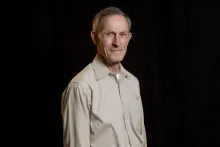
David Mills was born near Wallace, North Carolina, in 1939, where he grew up on a family farm. After high school he attended Ambassador College in Pasadena, California, and he graduated in 1962.
Since that time he has served as a minister of the Church in Washington, Florida, North Carolina, South Carolina, Oregon, West Virginia, and Virginia. He and his wife, Sandy, have been married since 1965 and they now live in Georgia.
David retired from the full-time ministry in 2015.
