
Robin S Webber
This transcript was generated by AI and may contain errors. It is provided to assist those who may not be able to listen to the message.
This is not really for me. This is going to be for you. If anybody falls asleep during services, I'm just going to throw out and wake you up. Okay. Looks good. One more prop. There it is. I'm an old-school teacher, so I've always got props all over the place.
Okay, there you go. You didn't see that. You know, this morning I was kind of thinking, what am I going to talk about? I had a couple of different subjects on my mind. I wanted to speak about this, and I wanted to speak about that. And I thought, how might we be able to bring this together? Here we are in a very important time of the year, and something very special happened during this time of the year.
And something has happened special to us today. We have a new chapter. So I thought, do I speak on this? Do I speak on that? Or somehow can I bring them all together? So I decided the third option, and that was somehow to bring them all together. So this message will go about five hours, so please put on your seatbelts and airbags and have them ready to be deployed. Here we are, and I just mentioned it during the announcements, that we have the upcoming fall festivals.
And they are coming up to remind us and to refresh us about the plan of God. A lot of it deals with the prophetic rise and fall of kingdoms. And at the end of the day, and the good story is, the establishment of the ageless kingdom of God under Jesus Christ. I'd like us to all open up our Bibles and join me, if you would, in Daniel 2. In Daniel 2, because this is kind of a way of bringing it all together of what is going to be occurring in the future, and what every Christian looks forward to.
And it says in Daniel 2 and verse 44, And in the days of the heaven will set up a kingdom which shall never be destroyed, and the kingdom shall not be left to other people. And it shall break in pieces and consume all of these kingdoms. And then it says, and it shall stand forever. Inasmuch as you saw that the stone was cut out of the mountain, without hands, and that it broke in pieces, the iron, the bronze, the clay, the silver, and the gold, the great God is known to the king.
What will come to pass after this? The dream is certain, and its interpretation is sure. I've often focused on this verse over the years because I think it says a lot in a little space. The one thing that has always fascinated me about this transitional moment between the kingdoms of this earth and the kingdom of God is a very specific phrase that we find in verse 44, where it says, and it shall not be left to other people.
Human hands and human hearts are no longer going to direct human history. When we consider this transitional verse about kingdoms, we recognize there are the kingdoms of this world, and yes, there are the kingdoms of God. There is a contrast. There are two mindsets.
The way people think, there are also two different hearts that are involved. It's not only what you think, but what we are. That's going to be very important towards the end of this message of what we are and how we come across and what is our motivation. To recognize that, ultimately, what we think and what we are, the motivations out of our heart create a lifestyle, a way of being. Two different lifestyles are in contrast here. Let's create a focus here because I'm going to build upon this.
It's going to be easy if you want to put this down. When we see these two kingdoms, one was born in Babylon. One was given birth out of Babylon. The other was given birth out of Bethlehem. One Babylon, one Bethlehem. The Babylonian mindset is perhaps best displayed by the words about King Nebuchadnezzar.
Just a few chapters over in Daniel 4. Notice what it says here in Daniel 4. Picking up the thought here, verse 28, All this came upon King Nebuchadnezzar, and at the end of twelve months he was walking about the royal palace of Babylon, which must have been splendiferous.
Must have been great. It's easier than saying that word. How do you spell splendiferous? G-R-E-A-T. Great. Must have been magnificent. We find that he's walking around this royal palace, and the king spoke saying, Is not this great Babylon that I have built for a royal dwelling by my mighty power, and for the honor of my majesty he must have had his chest all the way out just like a banny rooster just pounding it. And for the honor of my majesty, you know, today probably what he would have done, if he had a cell phone, he probably would have taken a selfie. Right here. This is Nebuchadnezzar, 575 B.C., coming at you. He would have taken a selfie. He was suffering from narcissism. It was all about him, the big my. And while the word was still in the king's mouth, a voice fell from heaven. King Nebuchadnezzar, to you it is spoken, the kingdom has departed from you. So here we have the original selfie put down in Scripture of a man that was consumed by who and what he was and what he had built in all of his possessions. That's one kingdom. Let's now visit the great personality of the other kingdom. Join me if you would in Philippians 2. In Philippians 2, and we pick up the thought, Paul's words, the apostle.
In Philippians 2, and let's pick up the thought in verse 5, and allow me to read from the Living Bible translation, where it says this, your attitude should be the same that Jesus Christ had. He made himself nothing, and he took the humble position of a slave.
How did he do that? Because he appeared in human form. Let's notice the contrast. Babylon, Nebuchadnezzar, Bethlehem, where Jesus was born on the other side. The contrast again on one side we have he that was from Babylon, pride and self. On the other, faith in God and humility. This is what we have. Now, let's bring this all together. And please remember, as we move along in this message, it's going to come down to what we are about in this room, and not only in this room, but everywhere we go in the course of the week. As we approach the fall festivals, to be able to understand Daniel 2.44 and 45, and about the events that happen in the future that the fall festivals outline, and what that Second Coming is all about, we first of all have to understand the First Coming. The First Coming of Jesus Christ, and learn the lessons. And not only that he came, here's the important point, please. How did he come? And what did he bring with him? Because if we don't understand the First Coming, we don't understand the Second Coming. It'd be like walking into a movie, which we've all done, where we've been running late. We walk into a movie, or maybe we turn a movie on the television at home, and we're halfway in. We're almost towards the end. You have to start from the beginning. You have to get the ground floor of what's going on. And that's what we want to do. We want to understand the story of how Jesus Christ came to this earth. Beyond that, may I? We want that story to become our story. We want that story to become our story. We want to not be, we were born in Babylon, as it were, but there is a rebirth. And that rebirth must be one that is born in Bethlehem. There is a tremendous difference, and we're going to find out as we go along. The title of my message is simply this. Bethlehem or Babylon? Your choice.
Bethlehem or Babylon? Your choice. Well, you say that's kind of cute, Mr. Weber. It kind of rhymes, has a kind of a thrill to it, kind of a ring. No. I want to share something with you, quite personally. That is the choice that we make every day in every way.
It is that important. It is the difference between the mind of Nebuchadnezzar and the mind of the beast, and the mind of the heart of our Lord and Savior. And we make that choice every day by every word, every thought, and every deed, and every action that we take. Whether it's in this room when we come together and assemble as a church, or whether it's in our homes, whether it's at the workplace, whether it's at school.
It all comes to play. Where we put down where we were born. Now, I was born in Berwyn, Illinois. How many of you know where Berwyn, Illinois is? See how famous it is. Okay. Now, I know some of you from Chicago away. I was born in Berwyn, Illinois. But I'd like to think that every day I'm striving to be born in Bethlehem, and have the attitudes that are so important surrounding that. And we're going to talk about that for a moment. To understand the birth story, we must begin in John 1. Join me if you would in John 1.
In John 1. 1. Because this is so fundamental as to what occurred here. And again, in this age, and I really like going to John 1, because we live in an age today where I'm okay, you're okay. All religions are relative. There's many, many pathways to heaven. I disagree. I absolutely disagree. Christianity is totally unique in the orb of religions. It is unique, and we're going to find out why. In John 1, verse 1, in the beginning was the Word, or the Logos. And the Word was with God, and the Word was God, and He was in the beginning with God.
So we find the one that was called the Word was God, was with God, and He was there in the beginning, and all things were made through Him. And without Him nothing was made that was made, and in Him was life, and the life was the light of men. And that light does shine in the darkness, and the darkness it did not comprehend it, as we will find in the Course of this Message. Now, when we first read John 1, 1-4, we come to an understanding here. An understanding that many, many other different religions have.
And that is a first cause. That this universe around us did not just happen. There was a force behind it. There was a deity. There was a God being a spiritual force. So far we're somewhat on a par with other religions, as it were, that there was this first cause or this first force. But that is then when we have to understand a little bit about that force and what it means.
And ultimately when it says that Jesus, where we are to have that attitude of that mind and what He surrendered to come down amongst us. That it says that when you look at it here that all things were made through Him and without Him nothing of that was made. Now we'll do a little bit of silent science and talk a little bit about Galileo. So thank you very much for the intro. We're going to go a little bit into the space because what I want to do a little bit.
You see this rubber band up here? Well, that's what your brain and your mind is going to be like in about one minute after I give you some facts. Okay? It really is a rubber band. Here you go, Julian. It really is real. Okay. And you can use that to stretch your mind. Okay. And to recognize this, that when you think about the size of the universe, the size of the universe is to understand. And you look at it and I see Lance's eyes and he knows more about the universe than most of us because he's always looking up there trying to take pictures of full moons.
But if you try to travel across the universe, just you, it would take 200 to 500 billion years because it keeps on expanding. 200 to 500 billion years to cross that, which we've kind of figured out that we know. Are you with me so far? 200 to 500 billion with a B. Now, how would we travel? We would be traveling at the speed of light. The speed of light is 186,000 miles per second. Well, what does that mean?
That means that in one second you would go around our globe seven times. So think that again. Speed of light is 186,000 miles per second. That means seven times around the globe. We've got that, so we've got kind of our marching orders. We know what the speed limit's going to be. But that would take us 200 to 500 billion years to get across the universe of that, which we know at this point.
Who's got my rubber band? Does that kind of stretch your mind a little bit? And to recognize that God and the Word beyond that are uncreated. We're just talking about time and space. So far, so good. Now, that's the macro world. Let's go to the macro world for a moment. That's why I brought up this glass of water. This glass of water has enough atoms in it.
I'm not saying A-D-A-M. I'm saying A-T-O-M. But it has enough atoms in it that it would take every human being. If you've got all the human beings on Earth counting one atom per second. Think of all the 7.6 billion people that are on Earth. It would take them 180 million years just to count the atoms that are in this glass of water. Where's my rubber band? Okay, just checking. Now, if you wanted to speed that up, they could count two atoms per second. It would only be 90 million years to get the job done.
What we need to understand is simply this. And it's kind of always interesting to be able to use some of these figures. And that is just to understand and to appreciate that the Word, the one that became Yeshua, the one that became Jesus, the one that is the Christ, the one that divorced Himself from that realm above and came down below, was that great and that powerful and that wonderful.
Many religions have a first cause. What changes Christianity now is, let's drop down to verse 14, please. Verse 14, and that Word, the Word, became flesh. He became flesh and He dwelt amongst us. The Creator became the creation, became the creation and dwelt amongst us. The word there is from the Greek, skanu. To dwell, it means to tabernacle. It means to tabernacle.
And He dwelt amongst us. And we beheld His glory and the glory as if the only begotten of the Father, full of grace and truth. And that's why every so often I love to talk about the story of Jesus' birth, especially during this time of year. Remembering that Jesus was not born in the dead of winter.
He was born in the autumn. And there's a significance to that. When you recognize the Feast of Trumpets, the blowing of the trumpets, it's about the sounding of the King coming back to this earth. And the Feast of Tabernacles, the very thought of tabernacling, the very thought of dwelling, the very thought of Revelation 21 when it says, God will come down and tabernacle. He will canoe. And He will dwell once again with His people and be amongst them. And they will walk and they will talk and it will be eaten, revisited.
It will be utopia and perfection. The Kingdom of God will be amongst us. And He will be our God. And we will be His people. How apropos then to talk about the birth of the King during this, the autumn season, and to understand some of the lessons that we can learn.
Not only that He did come, but how He entered. Join me if you would in Luke 2. In Luke 2, which is a wonderful story written by a wonderful man, Dr. Luke. And we're going to talk about Dr. Luke a little bit later. But in Luke 2, let's just begin the story here. This will be kind of our main text here. Luke 2, verse 1. And it came to pass in those days that a decree went out from Caesar Augustus that all of the world should be registered.
And that the census first took place while Corinius was governing Syria. So all went out to be registered, everyone to his own city. And Joseph also went up from Galilee, out of the city of Nazareth, into Judea, to the city of David, which is called Bethlehem, which literally means house of bread. And where else would the bread of life be born but the house of bread, which is interesting. Because he was of the house and the lineage of David, to be registered with Mary, his betrothed wife, who was with child.
So it was that while they were there, the days were completed for her to be delivered. Now, what do we gain from this story? You know, we see this very simple phrase here, chapter 2, verse 1. It kind of comes out of Tyndale, and kind of comes out of King James' thought, and it came to pass. Kind of things that happened in our life, they just seem like, oh, it came to pass. That's what happened at 3 o'clock today. That's what happened at 5 o'clock today. That's what happened at Tuesday.
And we don't understand everything that is behind that, how God is not only working his purpose out in the macro sense, thinking of the universe, but also in the micro sense and in the personal sense with each and every one of us, of accomplishing not only his will that Messiah would come, but accomplishing his purpose and his will in each and every one of us.
And it came to pass. What was to come to pass? Join me if you would in the book of Micah at the end of the Old Testament. In Micah, which is right before Nahum, which is on 641 of my Bible, Micah 5 and verse 8.
Oh, I don't want 5 8, I don't want 5 2. And this was written six, seven hundred years before, and it came to pass. But you Bethlehem, Ephratah, though you are little among the thousands of Judah, speaking of the villages and the small communities, yet out of you shall come forth to me the one to be the ruler in Israel, whose goings forth are from of old and from everlasting. Here we find that we have this Roman Caesar on the Tiber River, who controls the earth, and he's doing it basically so he can understand what taxes are going to come into Rome, or what armies need to go out to protect or watch over the Empire. So he's got one idea in mind, and yet God at the same time is moving history and moving the hearts of men, whether they are of him and for him or not of him or for him, by King Nebuchadnezzar. And he makes his decree, you are to go back to your village. There is going to be a census, and moves this young family of Joseph and Mary to Bethlehem from whence they come, so that this prophecy could be fulfilled. Now, earlier on, Will was in Galatians. Let's go back to Galatians for a second, because Paul also had a comment on this in the book of Galatians. And let's pick up the thought, if we could, in Galatians 4.
How God moves heaven and earth to serve and to do his purpose, that he might do his pleasure. Will, earlier on, was talking about the fullness of time. Notice what it says here. But when the fullness of the time had come, God sent forth his son, born of a woman, and yes, born under the law. In the fullness of time, Augustus Caesar declared that everybody is to go back home. This grand census of a quarter of a billion people spread across the Mediterranean basin. And not only that, though, Paul speaks about that in the fullness of time, when the time was right, when it was right, when all the spokes of the wheel came into play, that the gospel might be able to go out.
That there would be Roman roads. That there would be a Greek language, which was the Langua Franca of its day. That there would be Jewish synagogues scattered around the Mediterranean basin. That could be a springboard for the good news of the gospel. God knew exactly what he was doing. He called that shot 700 years ago and said, It's going to be in Bethlehem.
It's going to be in Bethlehem. It's not going to be in Haifa. It's not going to be in Jaffa. It's not going to be in another city. It's not going to be in Jerusalem. It's going to be in Bethlehem. A kind of out-of-the-way place. That is where the king is going to be. I'm trying to share all of this to encourage you, because sometimes we can think, Does God even know that I am here? Does God even know that I exist? Has he somehow lost track of me?
It's been a mighty long time, not 700 years, but maybe seven years. Is God's purpose still in store for me? And I say, indeed, yes, it is. Absolutely. Let's continue with some of the thought here, then, to realize this. Now, when all of this was happening, let's understand some of the players that we've come to know over the years that are in the birth story, whether it be a Joseph, whether it be a Mary, whether it be the shepherds, whether it be a Herod, whether it be later on when the wise men would come a couple years later and worship the king, the baby, the infant, Jesus.
Let's understand something. They didn't necessarily understand the whole gizmo of what was occurring. Just like in Hollywood, when you're an actor, you have a part, you have a role, and you are asked to perform that role. It might actually be at the end of the movie, but they shoot it first, which is always funny when you watch the trailers of what they do.
The music's not in the background. Perhaps the other actor that you're acting off is not in the movie yet. They didn't necessarily understand everything. They were moving through it. It would only be we that have the hindsight of what they did. What they did is what I want to share with you as we discuss Mary and Joseph. They didn't understand the grand scheme, but what they understood and what they did is they took God at His word and obeyed, step by step.
Very simple. We are not always going to understand everything that comes our way, whether it's in troublesome times or whether it's in quiet times. There had been a great quiet in the faith community of Israel for 400 years. There had been no sure word. There had not been the voice of God, but they called the voice of God from the time of Malachi forward. They had heard what the Jewish community called the voice of the angel, but they had not heard the voice of God.
All of a sudden, this God visits this young Jewish. She says at the end of the story, Let it be. Sometimes it's not knowing everything, and we're not going to know everything. We can sit down right here and join Job on a bench. We're not going to know everything. But if we have the faith of Christ, the faith of Jesus in us, and we yield ourselves to what God tells us to do step by step, do the small things. Do what is asked. Joseph and Mary were very common people, but they were the right people at the right time because they did the right thing in the right way. And just basically said, Yes, Lord, whatever will let it be. Let's look at verse 7 now back in Luke 2. In Luke 2.
And she, speaking of Mary, brought forth her firstborn son, and wrapped him in swaddling clothing and laid him in a manger because there was no room at the end. All of us that have had children, you're at a hospital, whether you've had the children in the hospital or you've had it at home with a midwife, you know the first thing they do, they kind of bundle up the baby.
Sometimes you just take a towel, like a little sausage, just kind of roll it up. And there's this little baby, because it has the little cute little pappus thing on it. It's in its swaddling clothes or swaddling towel. And it's just there, and your little eyes, you know, etc. Remember when I was just talking about how God, the Word, created everything? This universe, it takes 200 to 500 billion years to cross the speed of light, and that the Word could, in a sense, figuratively wrap His arms around all of that. And yet He divorced Himself from that aspect of divinity, came to this earth as a human being, to where His arms were basically bound in a towel, to start a process so that you and I could one day be in the kingdom of God.
And that He, in a sense, gave up everything, everything, that we might have something in the kingdom of God. And it's very interesting. It says here that not only that, that He was in this manger. Now, the one thing I want to kind of sometimes talk about that we get involved in was, well, what is a manger? I can tell you, say a manger is a trough. And I realize sometimes you will read things, well, he was in a manger, he was in a trough, he was in a stable, he was in a cave. He was in the backside of an old building off of an alley.
He was here and he was there. Can I tell you something, friends? Something I get more and more attuned to as I get older. It's kind of one of my basic matters of theology. I was not the fly on the wall. I wasn't there. And neither were you, and neither was anybody that's written. Look about it. What I do know is He divorced Himself from divinity. I know that He came into an unsettled atmosphere.
I know that Bethlehem probably did not have a Ramada, a Hilton, a Motel 6 where they leave the lights on. He did not have any of that. Wherever He was, it's not where He was from. That's what I know. That's what I need to take away from the story. And I need to understand that He did that for me and for you and for every human being that ever lived. I need to understand that He gave up everything above to come below so that you and I could have salvation. Now, we can discuss the others sometimes for hours and hours, and it makes interesting talk.
The jaws go up and down, but nobody's a fly on a wall. What I do know is He divorced Himself from divinity. And it says that there was no room in the end. And the reason why Luke inserted this, that there was no room in the end, it is a contrast from being born in Bethlehem, from being born in Babylon, which was another name also for Rome. This was in stark contrast from the Palace of the Caesars on the Capitoline Hill, or from the Palace of the Roman Governor in Antioch.
He was born there. And this point of entry was never lost on Luke, the writer, that there was no room at the end. Luke was a Gentile. He had been one who had been on the outside looking in, most likely perhaps a proselyte, one who could kind of come up to the synagogue but perhaps could not come in, a man that was moral in nature and appreciated the ways of Judaism. But because of his background, in a sense, he could come up to the water fountain but could not drink.
And there was no room in the end or no room in the synagogue for him. He was one that was looking from the outside in. And he understood in this story that when the Immanuel came to this earth, and he was denied because there was no room at the end, there became a story and a spirit of experience for him to draw upon. And that lack of room, that lack of room where there was no room at the end, would ultimately make room for those that were turned away and that they might enter into the kingdom of God.
What does this all mean to you and I? Jesus' entry into our human world should allow us on a daily basis to contemplate who we make room for. That's the takeaway. Jesus, his parents at where it was, Mary and Joseph were turned away. It should cause in our mind every day how wide is our door, how wide is our door.
And do we answer that door when we hear the knock? Join me if you would in Revelation 3 and verse 20. In Revelation 3 and verse 20, let's take a look here. It says this, Behold, I stand at the door and knock. No longer the infant Jesus, but the resurrected, ascended Christ. I stand at the door and knock.
If anyone hears my voice and opens the door, I will come into him and dine with him and he with me. How ready are we to hear that knock? Not just simply of Jesus' parents, but Jesus the Christ. And it's not always when it's convenient. Have you noticed? It never comes at, okay, I will be ready for that knock of God through Christ at three o'clock this afternoon. I will be prayed up and studied up and I will have fasted for at least an hour. So I will be prepared for anything that comes up.
No, it doesn't happen that way. Christianity is a constant. It never stops. Whether you're born in Bethlehem or born in Babylon is a choice that we have to make every day. Besides that and beyond that, let's say, okay, well, I'll be ready if Christ knocks. But what about the times when what we call the others come into our life? People that were not prepared for, people that we think, well, what are they knocking for?
What are they about? Where did they come from? What did Jesus say in Matthew 25? He said that if you have done it unto the least of these, the least of these, you have done it unto me. This is unequivocal math. I'm not good at math. I told somebody before services I'm not good at math. But this is not ethereal. This is not a big word problem. One plus one equals, hello? Two! If you have done it under the least of these or not done it under the least of these, you have done it unto me.
Big lessons coming out of the birth story. Big lessons coming out of the birth story. Another thing that I want to share with you as we go through this, then, is go back to Luke 2.
Now, it says, we're in the same country, shepherds living out in the fields, keeping watch over the flock by night. So the shepherds would be involved. We also know that there would be people in Jerusalem that would also be involved. And people that did not necessarily know at first where Jesus would enter, where God Himself would come into time and space.
Herod didn't know. His political advisors didn't know. We know later on in the story in the other gospels that they said, Hey, if you find them, by the way, let us know. They were in power, but they misread events of Christ's birth. They couldn't imagine that Messiah would come the way that He did, turned away, and then given birth in perhaps a back alley or a slider accommodation than would be expected. And to recognize what must have happened here, when a woman is to give birth, when a woman gives birth, she seeks ideal conditions. She seeks ideal conditions. Now, why does she seek ideal conditions along with her husband?
Well, that couple does that, not because out of a sense of confidence, but really out of a sense of concern and out of weakness. Not knowing what the future might bring in. It is something to be born. And yet, when Christ was born, He was born at best in some form, again, of an unsettling atmosphere. What I want to share with you is this occurred not because God was poor or scared, but because God was confident in carrying out His purpose. Confident that His purpose was going to be done.
As it says in the book of Isaiah, it says, I have declared the end from the beginning and the beginning from the end, and I will do my pleasure, and my purpose shall stand, and I will do it. Now, the leaders of that time, they misunderstood the signs, and they didn't know where He was. God had every confidence that when Joseph and Mary went into Bethlehem, it was going to be okay. And I want to share a really powerful verse with you. It's a beautiful verse.
It's one of my favorites in the Bible, and I'd like to share it with you. It's over in 2 Corinthians 8. It was one of Paul's themes throughout the Scriptures. In verse 9 of 2 Corinthians 8, That we might become rich. What did we learn from that story? The leaders didn't know where He was.
Why didn't they know where He was? What does it say in Isaiah 55? You can just jot it down. Isaiah 55, 7 through 9. It says, God's ways are not our ways. God's thoughts are not our thoughts. They certainly weren't Herod's. They certainly weren't His advisors. Or they would have eaten the wise men to meet the infant, Jesus. See, that's why this story is so important to go over year by year in the season that it is appropriated. And to learn these lessons.
Joseph and Mary had to walk through them step by step. We have an opportunity to see the whole movie and do reruns and watch it again and again and become better people. And thus, remove ourselves from being born in Babylon to having the mindset and the heart set of being born in Bethlehem. When you look at these shepherds, let's just read through for a moment.
The word says in Luke 2. You're there, I'm not, I'm sorry. Luke 2. In Luke 2, it says this. Now, there were in the same country shepherds living out in the fields, keeping watch over the flock by night. And behold, an angel of the Lord stood before them, and the glory of the Lord shone around them, and they were greatly afraid.
And then the angel said to them, Do not be afraid, for behold, I will bring you good tidings of great joy, which I will be to all people. For there is born to you this day in the city of David, his Savior, who is Christ the Lord. And this will be the sign to you, you will find a babe wrapped in swaddling clothes lying in a manger. And suddenly there was with the angel a multitude of the heavenly hosts praising God and saying, Glory to God in the highest, and on earth peace, good will towards us.
And so it was when the angels had gone away from them into heaven, and the shepherds said to one another, Let us now go to Bethlehem and see this thing that has come to pass, which the Lord has made known to us. And they came with haste, and found Mary and Joseph and the babe lying in a manger.
And now when they had seen him, they made widely known the saying, which was told them concerning the child. And all of those who heard it marveled at those things which were told them by the shepherds. But Mary kept all these things and pondered them in their heart. And then the shepherds returned, glorifying and praising God for all the things that they had heard and seen as it was with them. Now, why do we finish on this story about the shepherds? You say, I'm allergic to sheep.
You should be up where Bill and I live. There's lots of sheep. In fact, sometimes they stroll into our neighborhood. The shepherd's not doing his job. What does this have to do with you and me? Let's understand that in that day, in the social circle, in the cast that was, shepherds were basically on the lower rung. They were on the lower rung. Let's remember that even in Egypt, shepherds were despised.
And beyond that, the shepherds. And I know Mr. Smith, and he's watching me as I speak about shepherds, they are very courageous. And I know he just went through Psalm 23, and they are fantastic governed by themselves. But to recognize that in the social strata of that day, they were more or less at the bottom.
Isn't it amazing that before Herod knew, even before the wise men would come a couple of years later to visit the infant Jesus, that God revealed himself to the shepherds? Shepherds, common people, common people. Doesn't that kind of remind you of what Paul says in 1 Corinthians 2?
That God is not called the mighty of the world, that God is not called the Nobel laureates of the world, but he's called the weak things of the world, he's called the base things of the world. That no flesh should glory. That no flesh should glory, except glory in God. And he appeared to these shepherds. It's very interesting. Verse 16 says, they came in haste. Verse 17 says, they made the fact widely no one. Verse 20 says, they were praising God.
What God was doing was bigger than what they were doing. Now, sometimes we can get so set in our routines, because it's kind of interesting, recognizing that Bethlehem is just outside of Jerusalem. It's really a nursery for lambs, or was a nursery for lambs, for the temple sacrifices. Right? Just outside, to be a suburb today of Jerusalem. And that's where the shepherds were.
And they could think, well, I've been doing this all my life. My grandfather did this all my life before me, and my great-grandfather did this. And we just kind of get into this routine of life, even doing spiritual things or being accessory to spiritual things. And then all of a sudden God's Spirit, God's Word, comes into our life and agitates us, tells us in a positive sense, do something. Well, I've never done anything like that before.
How open are we? Like the shepherds? To God's Word, to God's instruction, even maybe some of the things that are being spoken about today in this message. I don't want to be born in Bethlehem. I'd rather stick around in Babylon. Well, that's all right. Just read Daniel 2.44. You know what's going to happen to Babylon. This is the mindset. This is the heartset. And you notice three things. They came in haste. When you hear something from God in a book, in the Bible, from these services, from somebody talking to one another in the seats, or you're on the phone with one another, or some of you ladies are going back and forth on email to one another, encouraging one another during the week, helping one another to see something, spurring one another on as mothers and sisters in Christ, and something comes out, you just say, well, that's coincidence.
Oh, that's so-and-so. Or do you take it to heart? Do you have hastiness towards what God is directing you to? Are you ready to spread that good news with others, those things that work out of the Scriptures, out of the Bible, and at the end of the day, do we give God glory? I want to conclude here. I'm going to share a story with you. Let's go to Matthew 13.31, before I share that story and we'll conclude.
Another parable he put forth to them, Matthew 13.31, saying, The kingdom of heaven is like a mustard seed which a man took, and sowed in his field, which indeed is the least of all the seeds, but when it is grown it is greater than the herbs and becomes a tree, so that the birds of the air come and nest in its branches. Another parable he spoke to them, the kingdom of heaven, is like leaven, which a woman took and hid in three measures of meal until it was all leavened. God does things differently than we do, and he starts very small. He starts with out-of-the-way places that nobody else would go to like Bethlehem.
He starts with a young Jewess who did not even have seed in her tummy, and took nothing and made it something, and the Savior came from her body, that he might not only be the Son of God, but that indeed he might be the Son of Man.
He gave the good news to shepherds. There was no herald other than an angel. There was nothing written, but these men, when God came into their life, acted and responded. They made a choice. I shared this with all of you today, brethren, and I said I'd put these two sermons together about what kind of a church are we going to be, and now, a year later, to come back home.
When I look at this message, and it's a type of message that I've given before, and perhaps you hear some of the rhythms, I look this morning as I reflected early on in the morning. I always come back to this, where is my birthplace? Where is my birthplace?
I know I was born in Babylon. I know that this world right now is apart from God. Babylon means confusion, and it's confronting God. And yet God grants every Christian a rebirth. And with that rebirth, with that new birth from above, we get to be able to put down, in a sense, I was born in Bethlehem.
This is what I want to be like. I want to be able to divorce myself from those things that I have always had that I thought were important, and to know that God's purpose and God's will for me, no matter what He does for me, no matter what He allows, is for my best. Like the Apostle Paul, I have not obtained. I know at times I've tripped back to Babylon this year, these 13 months since we've been gone from this room. That's not my goal. That's not my heart. At times, all of our human nature is stepping into the cow pies of Babylon.
That's why we have to go back and rehearse these stories constantly. I would like us, we that are not the church, but a part of that great church of God, that spiritual organism, and we that are here, that we could in a sense think of this as being in the spirit and the attitude of Bethlehem.
That we will, in all of these aisles, and in the coffee room, and in the entrances we come, or in the parking lots, that we will rather than fret about Babylon, or take selfies in how we say things, or the approach and the attitude that we speak things, that we can be a church that has love. The same love that the Word had when He said it was not anything to Him to be equal to God, but didn't hold on to it, but gave Himself away for you and for me.
And as we come into this fellowship, every Sabbath, and throughout the week as we talk to one another, that we give ourselves away. One person, one need, one deed at a time. And that our church, the United Church of God San Diego, can be known for its humility. That humility that is completely invested in this story.
When we have that love and when we have that humility, that makes our Christianity not only sound, but it makes it attractive. It makes it attractive to others. Because Jesus Himself said, no you're not, that you are to be the lights of the world. You show me a church that expresses love. You show me a church that is humble, person by person, where we move ourselves out of the way and allow God's Spirit to have that birthplace of Bethlehem in us. That attitude that was visited upon that spot. My, my. My, my. We will be God's agents and God's servants one to another. I want to just share one story with you and I'll conclude. I'd like to read this to you.
Sinners on this fact. This is by Phillips Brook. Phillips Brook was a man of the 19th century, a minister, writer out of Boston, speaking about the head of the church and the Lord of our life, Jesus the Christ. Here is a man who was born in an obscure village, the child of a peasant woman. He grew up in another obscure village. He worked in a carpenter shop until he was 30. And then for three years, he was an itinerant preacher. He never wrote a book. He never held an office. He never owned a home. He never had a family. He never went to college. He never traveled more than 200 miles from the place where he was born. He never did one of the things that usually accompany greatness. He had no credentials but himself. He had nothing to do with the world except the power of his divine manhood. While still a young man, the tide of popular opinion turned against him. He was turned over to his enemies. He went through the mockery of a trial, and it was nailed on a cross between two thieves. His executioners gambled for the only piece of property he had on earth while he was dying, his coat. And when he was dead, he was taken down and laid in a borrowed grave through the pity of a friend. And on the third day, he rose from the dead. Nineteen centuries have come and gone, and today he is the centerpiece of the human race and the leader of the column of progress. I am far within the mark when I say that all the armies that ever marched and all the navies that ever were built and all the parliaments that ever sat and all the kings that ever reigned put together have not affected the life of man on earth as powerfully as has that one solitary life. And the explanation? He is the Son of God. He is the risen Savior. Last night, Susie and I were talking and we were watching something, and this quote came up, and I'll leave you with this. Alexander, Caesar, and Hannibal conquered the world, but they had no friends. Jesus founded his empire upon love, and at this hour millions would die for him. He is one of the hearts of men. A task a conqueror could never do. Nebuchadnezzar, who represented in his fullness being born in Babylon, could conquer men, but they never loved him. They respected him, or they feared him, but they did not love him. The other individual born in Bethlehem, we know, you know, that you love him because of what he did. He did not think it was equal, necessarily needed to be equal with God. He did not grab on to divinity, but came in the form of a servant. He came in the Carnation and the First Coming. If we do not understand the events of the First Coming, if we do not abide in the attributes of the One that came, the Second Coming has no meaning. The Second Coming has no meaning. I hope you'll continue to read the story, year by year, because it's what God did for you and what God did for me. He gave us a shingle out there. He gave us something to hold on to, to say that, like our Master, we too can be born.
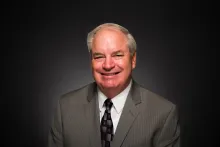
Robin Webber was born in Chicago, Illinois, in 1951, but has lived most of his life in California. He has been a part of the Church of God community since 1963. He attended Ambassador College in Pasadena from 1969-1973. He majored in theology and history.
Mr. Webber's interest remains in the study of history, socio-economics and literature. Over the years, he has offered his services to museums as a docent to share his enthusiasm and passions regarding these areas of expertise.
When time permits, he loves to go mountain biking on nearby ranch land and meet his wife as she hikes toward him.
