
Robin S Webber
This transcript was generated by AI and may contain errors. It is provided to assist those who may not be able to listen to the message.
I really appreciate the message that Mr. Velasquez did bring, because it kind of lets us know what is coming around the corner, and those are the autumn festivals. And I'd like to build upon that fine foundation that Mr. Velasquez offered us during the first message. These upcoming fall festivals are a time in which we focus upon the prophetic rise and the fall of kingdoms, and the ultimate establishment of, do I dare say, the ageless kingdom of Jesus Christ as Lord of Lords and King of Kings. You might put it this way, that autumn and or the fall is the season of kings and kingdoms. And that's what I'd like to address this afternoon. To share that thought, join me, if you would, in the book of Daniel, which speaks of kings and speaks of kingdoms, to anchor us in Scripture, the book of Daniel. And let's go to chapter 2. Daniel 2.
And Daniel is here in chapter 2, interpreting that famous dream that King Nebuchadnezzar had.
And in Daniel 2, verse 34, let's pick up the thought here as the interpretation begins. It says, speaking to the king, you watched while a stone was cut out without hands, which struck the image on its feet of iron and clay and broke them into pieces. So there is this imagery, remembering that Daniel is apocalyptic literature, so it's colorful.
There's imagery leading to a point that there is, again, think about this, a stone that is molded and cut without hands. This leads us then over to verse 44, which will climax this immediate moment, in which it says, And in the days of these kings the God of heaven will set up a kingdom which shall never be destroyed. And the angels shall not be left to other people, and the kingdom shall not be left to other people. And it shall break in pieces and consume all of these kingdoms, and it shall stand forever.
Now, verse 45, Inasmuch as you saw that the stone was cut out of the mountain, notice, without hands, and that it broke in pieces, the iron, the bronze, the clay, the silver, and the gold, the great God has made known to the king what will come to pass after this.
The dream is certain, and its interpretation is sure. Now, what is interesting as we look at the scripture for a moment and unpack it a little bit, it is simply this, is that we find that there is going to be a kingdom that arises that we notice in verse 44. It's not made with hands. It's not left to human beings. Hmm. And it's going to last forever. This is different. This is an interruption of human history as we know it. All of us, at one time or another, especially here in America, we go through a course normally in junior college or college, it's called Western Civilization, and we learn about the rise and the fall of kingdoms.
And we normally, in Western Civilization, I don't know how many of you are versed in Eastern Civilization, we'll leave that one alone right now, but Western Civilization, we normally think of the great empires, especially from the sixth century on. We have the Babylonian, Chaldean Empire, that then gives way to the Persian Empire, that then gives way to the Macedonian Grecian Empire, and then finally, finally, the big one comes, which is Rome. And then after the demise of Rome, I'd rather not say the fall of Rome, that's a whole historical point, but the demise of Rome, we notice the succession of kingdoms, empires, nation-states, multinational states that come and go over the last 1,500 years.
It's almost like a domino effect. There's always one after another. Now, with that said, let's think this through. What the Scripture is speaking to you and me about, and the revelation from the sovereign God through Daniel, about this dream to King Nebuchadnezzar, who is a type of the beast, is simply this. There's going to come a time when there is not going to be the rise or the fall of kingdoms. The story of history is that, and Dr.
Lewis will enjoy this, wherever there's a vacuum, there's always somebody that steps in. History is basically a field of vacuums that then, sooner or later, is going to be filled in. It just simply has to be filled in. The vacuum is going to be filled in because the kingdoms of this world are going to come down.
They're going to come to not under the return of Jesus Christ. And so we need to understand that. These kingdoms are coming down, and there's a reason why, which we're going to discuss in a moment. The good news is simply this. Human hands and hearts will no longer direct human history. I want you to think that through for a moment. Think of all of our current events, everything that's going on domestically and internationally. There is going to come a time if you believe in the sovereign God, if you believe that the word of God is his revelation, there's going to come a time when human hands and human hearts are no longer going to direct and or affect human history.
And there's a reason, because what the human heart and human hands are like apart from God. What's happening here? What's happening here? When we look at this, we recognize that ultimately what we look at in the book of Daniel is a contrast in Daniel 2 between two ways of life, two mindsets, two different hearts, two day-by-day lifestyles, and ultimately two different forms of leadership, two different ways of thinking, two different ways of being.
And this is the concept I'd like you to share with you. If you forget everything else for the next three hours, just joking, for the next few minutes, it's simply this. One mindset and one heart set is born in Babylon. You might want to jot that down if you're good students of the Scripture. One heart set and one mindset is born in Babylon. The other mindset, the other heart set is born in Bethlehem.
And that's going to be the title of this message. Bethlehem or Babylon? Your choice. And as we're going to come to find, it's a daily choice that is set before us. Let's talk about a moment about the Babylonian mindset. And it's perhaps best displayed again with Nebuchadnezzar. Join me if you would in Daniel 4. Let's turn over there just a page over. Daniel 4 and verse 28. And notice, this is the very famous scenario of one night and a full moon above him.
Most likely, Nebuchadnezzar is walking the great walls of Babylon. Herodotus, about 100 years later, informs us in his histories. And even if you cut Herodotus in half, it's still pretty interesting. That he says that in the 400 B.C.s, that the walls of Babylon were at least 100 feet high.
That's 10 stories. Are you with me? And beyond that, that the width of those walls were that you could run six chariots side by side on top of that.
Got that in your mind right now? Don't want to leave until you blink, okay? So these walls were impressive. Babylon, even by itself, humanly, was impressive. And then we find in verse 29, at the end of the 12th month, he was walking, that's Nebuchadnezzar, about the royal palace of Babylon. And the king spoke, saying, is not this great Babylon that I have built for a royal dwelling by my mighty power and for the honor of my majesty?
You can almost see the old Disney Snow White. Mirror, mirror on the wall. Who's the greatest ruler of them all?
Oh, it's me! And then it gets like this. Watch this. Don't want to miss it. All of a sudden, you know, it gets out his little instrument, like a lot of you have. And he takes the first selfie, right here. Wait, didn't get the whole... No, no, no, no, no, no, no.
To my power, to my glory, I, I, I, me, me, me, my, my, my. It says here, while the word was still in the king's mouth, a voice fell from heaven. King Nebuchadnezzar, to you it is spoken, the kingdom has departed from you. This was a type of the anti-type that would only come with the beast's power, that there would come a time when God, the sovereign God, would intervene in human history, would come through time and space and make his mark.
Here we have the heart set and the mindset of Babylon. Now, let's understand the mindset and the heart set, if we could, of Bethlehem. Join me if you would in Philippians 2. In Philippians 2, and there really is a difference, brethren, and a difference that you and I have been called out to live every day of our life as we give ourselves to God the Father and Jesus Christ. In Philippians 2, and actually what I'm going to do now that you're there in whatever translation you're using, I'm actually going to read through by the New Living Translation. This is the mindset, this is the heart set of Bethlehem. Verse 1, is there any encouragement from belonging to Christ? Is there any comfort from His love and fellowship together in the Spirit? Are your hearts tender? Hmm. Sympathetic? Then make me truly happy by agreeing wholeheartedly with each other, loving one another, and working together with one heart and purpose. Don't be selfish. Don't live to make a good impression on others. Be humble. Thinking of others is better than yourself.
Don't think about your own affairs, but be interested in others too and what they are doing. Your attitude should be the same that Jesus Christ had. And though He was God, He did not demand and cling to His rights as God. He made Himself nothing. He took the humble position of a slave and appeared in human form. And in human form, He obediently humbled Himself even further by dying a criminal's death on the cross.
Mindset. Heartset. A Babylon. Me, me, me. My, my, my. I, I, I.
The mindset, the heartset of one born in Bethlehem. Humility. Outflowing. Outgoing. Concerned towards others.
Now, why are we discussing this today?
As we approach the fall festivals, we must fully grasp that to understand the second coming of Christ. And this mindset and this heartset that He brings in fullness, we must first fully understand and embrace and absorb the first coming of Jesus Christ. And not merely that He came. Not merely that He came, but the most important thing, are you with me? Is how He came. How He introduced Himself. How He entered time and space in human history. For you, for me, and for others. Otherwise, it's like walking into a movie halfway. Have you ever done that? You paid full admission. You walked into the movie halfway. You didn't see the start. So you're having to catch up all along the way. It's interesting that we read in our own hymnal, page 185. In the beauty of the autumn, Christ was born across the sea with a glory in His bosom that transfigures you and me. That's from the Battle Hymn of the Republic. We entitle it in a church hymnal. My eyes have seen the glory.
What, what, what was that beauty that we are to see from this example that when He was born? It is during this time of the year, friends, and I want to bring you into remembrance of this. Right around the time of the Feast of Trumpets that Christ was born in Bethlehem. It was the arrival of a king in this autumn season of kings and kingdoms.
To enable this mind to be in you, which was in Jesus Christ, we need to understand this story. We need to embrace it. We need to internalize it. If we don't do that, if we're otherwise... Our edifice that we are developing to the glory of God is somehow going to be off kilter.
It's going to be off measure for you that are builders. I see John Lyons back here and others. Anybody knows that you spend most of your time on the foundation. The foundation of any edifice has got to be basically squared. You can't be more than an inch off. If you are more than an inch off, what's going to happen, builders? You're going to be fighting it the rest of the way up.
So it's better to kind of get your foundation set to know what it's about, to know what the kingdom of God is like, to know what that king is about when he arrived, rather than squaring off later on. I would suggest that historically that... and I choose my words carefully... I would suggest that historically our church culture is not sufficiently focused on this great story, the birth of Christ and how he came, basically because of what others have done to it, and or we safely edit it to our own comfortability zone, rather than taking it straight up.
Take it straight up. Take it straight on. Endorse it. Embrace it. Internalize it. Understand it. You see, unfortunately, other world religions have basically kidnapped one of the great, great stories, the foundational story of how God came to earth. And then they wrapped it up in pagan and extra-biblical wrapping. Well, what was kidnapped? We need to take right back. Because we are the people of God. We are Jesus' followers. We are here to do the Father's will. And if we don't understand how Christ came to this earth and the attitude and the humility by which he came, through time, through space, for you, for me...
we're not going to get it. When we embrace the story of the birth story of Christ, of which he was born during this time of the year, it will change you as an individual. It will change congregations. It will change church bodies. Ultimately, it will change the world one day when people understand how God came to this earth, through Immanuel, by a babe and a manger in Bethlehem. Because if we do not understand how he came to Bethlehem, how he was born in Bethlehem, we don't understand the training of a king.
We don't understand the molding of a king and why he is the king of the wonderful world tomorrow and the Lord of our life today. So again, before we go any further, allow me to give my title one more time. Bethlehem or Babylon? It's your choice. Join me, if you would, in John 1. In John 1, the Gospel thereof. In the beginning. That's going to be a very important phrase as we go along. In the beginning was the Word. And the Word was with God. And the Word was God.
He was in the beginning and he was with God. And the word was made through him. And without him nothing was made that was made. And in him, think about this, was life. Because both the one known as God in the Old Testament and the Word are sufficient to themselves. They have life inherent. And the light shines in the darkness and the darkness did not comprehend it. It's very interesting here. It says that the one, this Logos, the Word, that we now know as Jesus of Nazareth, born in Bethlehem, it says that he created all things.
Let's talk about that for a moment. It's always kind of fun to talk about creation a little bit, stretch the rubber band in our mind and let it snap a little bit. Let's talk about the creation that is around us. We know more about it, especially over the last 15 years with the Hubble Observatory, the telescope that reaches out into the vast universe as much as it can possibly absorb.
God created, and or the Word, let's be specific for a moment, the Word created this universe. And the universe, at least that we understand, it would take basically, it's estimated, and it would maybe a couple billion years off, it would take somewhere between 200 and 500 billion years to travel the universe as we understand it in 2018. I say, as we understand it now, watch out.
Try to be greater. Now that 200 to 500 billion years is predicated on how we travel, and that's at the speed of light. Speed of light is what? 186,000 miles per second. Now, we say, well, what does that mean? Well, let's think of the globe being 24,000 miles, okay? 24,000 miles in circumference. That would mean that in that amount of time, that was a, there you go, a snap, let's call that a second, that in that second, the speed of light, a light would travel seven times around the globe.
And that one second. Now, we're talking about the aspect that it would take, as I said before, 200 to 500 billion years to travel around at the speed of light. Now, that's the macro world that the word created. Now, let's talk about the micro world for a moment. He also created the world of atoms. So small that it would take the Earth's population about 180 million years to count the atoms in a cup of water, counting at, are you with me? Hope I haven't snapped your rubber band yet, at one second.
Now, if you're in a bit of a hurry, you could count at two per second, and it would only take Earth's population to count it, count those atoms in that glass of water 90 million years.
Macro world, micro world, my rubber band's getting snapped, actually, when I began. But I know this story.
How great is the word? He's greater than all of this. Greater than all of this that I've just discussed. Now, with that shared, many of man's religions have a belief in a creator, entity, what we might call, in our language today, in the 21st century, a first cause. What sets, what sets our way of life apart from others is found in verse 14. Join me if we drop down that column. And, in verse 14, and the word became flesh and dwelt among us, and we beheld as glory the glory as of the only begotten of the Father, full of grace and truth.
It says, this creator, this one that was offered by God the Father, as we know it today, to create for the Godhead. It says that he came to this and dwelt, and what is interesting in the word dwelt, if you want to dwelt, and this fits in with tabernacles, it means that he tabernacled. He tinted. He tinted. That's what we're going to be doing in your condo on the beach, believe it or not. You're going to be tinting. You know, I say that with a little smile.
He tinted. And back then, they really did tint when it went to tabernacles. Some of you tinted back in the early 60s in Booth City, back in Big Sandy days. It says that he scannued. That's the Greek. He tabernacled. He tinted. He came into this, are you with me? This temporary dwelling for a purpose and for a cause. And again, to understand this, then, this is what makes the difference of our life. Not just simply a first cause. There are other religions that have first causes. There are agnostics that believe in a first cause. You and I, as Christians, believe not only in a first cause creator, but a sovereign God that continues and desires to have our cause be His cause as we respond to His invitation.
But again, it's not that He entered into human history. It's how He came and how He tinted. With that spoken, join me if you would in the book of Luke. In the book of Luke, we find what we call the birth story. And this birth story is not only what happened in a few years BC, but what is happening in our life today because God is still in the process of intervening in human history and our, are you with me?
Our personal history. And it came to pass in verse 1, the famous words, in those days that a decree went out from Caesar Augustus, that all the world should be registered. And this census first took place while Quenarius was governing Syria. Syria had control over Palestine. So all went to be registered, everyone in His own city. And Joseph also went up from Galilee out of the city of Nazareth into Judea to the city of David, which is called Bethlehem, because he was the house and the lineage of David and to be registered with Mary, his betrothed wife, who was with child.
She was also of the line of David, different story, different gospel. Here we begin to understand the sovereign God. Join me if you would in Micah in the Old Testament. Keep your hand in Luke. In Micah, join me if you would there for a moment. Micah Nahum Habakkuk. So I'll let you find it. Micah 5 and verse 2. Nearly 700 years before this event, God called it through prophecy. Now Americans sometimes get astonished when Babe Ruth called his home run hit.
When the babe came to the plate, he pointed to the left field and kind of went like that, like it's going to go out and the babe delivered. That's why a candy bar is named after him. Okay? But here's God 700 years before. And what does he say in Micah 5 and verse 2? But you, Bethlehem, Ephraim, though you are little among the thousands of Judah, yet out of you shall come forth to me the one to be ruler in Israel, whose goings forth are from of old from everlasting.
God said that Messiah would come from Bethlehem. That's where he would be born. Now again, fascinating if we can just skip again. Let's go to the book of Galatians for a moment, then we'll go back to Luke. In the book of Galatians, Paul later on commented on this same sense. It's interesting when in Luke it just says, and now it came to pass. There was an expectation that something was coming and now it came to pass.
But in the book of Galatians, notice what it says here, Paul's writings. It says in verse 4, notice, we're going to put this all together. Are you with me? But when the fullness of the time had come, the fullness of time, not behind time, not ahead of time, but when the fullness of time had come, God sent forth his son, born of a woman and born under the law.
This story, what we call the Bursary story, magnifies what I call divine convergence. Divine convergence. Sovereign, intervening in time and space, intervening in human history, moving men, moving women, moving Caesars on the Tiber to make things happen over in the Middle East. To draw Joseph, to draw Mary away from Nazareth, which is the North Country. It's up in the Galilee. And to come down into Bethlehem in Judea.
It would be a time that beyond that would be the convergence of Roman roads, the Greek language, especially in the eastern part of the Roman Empire, and of course the diaspora of the Jewish synagogues that would so often be launch pads of the good news of the Gospel of Jesus Christ.
And the kingdom of God. Now, did Joseph and Mary and did Herod, did the shepherds, did later on a couple years later, did the wise men necessarily understand that all of this was happening in their time? Probably not. Not immediately. Other than the message of Gabriel. Let's understand the times because it's going to reflect on you and me. This time, between the time of Malachi and the time of the birth story, is basically called the time of quiet. After Malachi, there was no sure revelation. There was no sure word of what the Jewish community thought was what they called the voice of God. What they thought that they were basically experiencing was what they called, they say they called, it's interesting, they called it the voice of the angel. The voice of the angel. It seems, in a sense, we might call it a time of quiet. The one thing that we learn about times of quiet in the Bible is that people that are followers of God are people that continue even in times of quiet. And maybe to a degree, even in our time and in our church, it could possibly be a time of quiet. But to recognize that those that are followers of the God of Israel are those that do the right thing for the right reason on the right day and keep on putting one foot after another. To the point that when the revelation of God comes to them, just as it did with Boaz, no Boaz and Ruth were in a time of quiet, spiritually speaking. They lived in a time when every man was doing that, which was right in his own eyes, and yet there was a Boaz, there was a Ruth in that time of the Judges. And even in this time, the time of the Roman Empire, there was a good man. There was a wonderful young Jewish lady, maybe just in her teens, named Mary. And the voice of Gabriel came to her in Luke 1 in verse 38, which precedes this, and said that she was going to give birth to Messiah. And this is what would happen. And she said three words. Let it be.
When you understand what the angel of the Lord told Mary the verse before, join me if you would in Luke 1 now. In Luke 1. Notice here in Luke 1, verse 37. That's exactly what I want. Excuse me just a second. Yeah, Luke 1. Oh, I'm in Mark. That's the problem. Pardon me. Luke 1. In Luke 1, verse 37. For God, for with God, nothing will be impossible. My question is simply to this as we learn lessons from the birth story.
How do we exist as people of faith in a time of quiet? So often we would rather have lightning and thunder and earthquakes and wind. That would really let us know that God is our God, the God of all nature, nations. But that's not always how he works. Remember what he told Elijah. Not in the wind, not in the earthquake, not in the storm, but in a small, still voice. The people of God that understand that God is dealing with a macro world and a micro world, your world, my world, can count Adam's, not only that, but he can count the number of hairs on your head. He's having an easier and easier job with me every month. These are people of faith. These are people that God is ready to use. Like Mary. When we read Mary's comment about let it be, we come to understand something very, very important. And that is simply this. When we look at it... Eyes are trying to fall on this right now. Yeah. We can read the Scriptures, and when we go to the first four words of Scripture, Holy Scripture, God revealed. Because in the beginning, God. Are we all in agreement? This is not a test. I think we're all in agreement. I'm watching. We cannot at this point. Okay. In the beginning, God. And all the rest of Scripture follows that very beginning, doesn't it? Everything else follows those four incredible words. Those words are put there, inspired by God through Moses, that... Moses is leading people out of Egypt, and they were people that worshiped every critter on earth for every reason, for every season. And the creation account tells us that before there was even the created, there was that which is uncreated, that which was before the creation. In the beginning, God. That there was a sovereign, and this sovereign was greater than all the gods of Egypt. That this was not only a deliverer God, but this was a God of creation. In the beginning, God. What is interesting when you read Mary's comment, let it be. It tells me that in her life, and in every day, are you with me? Every day, her day began with, in the beginning, God. Converse to the Babylonian mindset, those that are born in Babylon. Because that mindset says this, are you with me? In the beginning, me. In the beginning, me. Now, I have a question, and I know that I'm speaking to the people of God and people of the book. But let's be honest with ourselves as we wake up in the morning as we have been rescued from this world, rescued from Babylon. How do we begin our days? Is it in the beginning, God?
Or is it in the beginning, me? For that foundation will set the rest of your day. And also recognizing that life is what's happening that we haven't planned for in a day or in an hour, in a moment. But when we have that foundation, the foundation of God in everything that we do, think and breathe.
We're going to match the words of Mary. Verse 7, Luke 2. When the Christ child was born, she brought forth her firstborn son and wrapped him in swaddling clothes and laid him in a manger because there was no room for them at the end. Here was this who was uncreated, the Word, who could in that figurative sense spiritually wrap his arm around that universe that we described. And now all of a sudden he's just wrapped up like a hot dog in swaddling cloth. I remember one time they took our third daughter. We had to be an emergency. She'd had an accident at Knott's Berry Farm and they took Amy, Amy who's now about 5'10 or 5'11. Remember, we raised him big. And she's the shortest. And so they took little Amy. She's only about a year and a half. She'd fallen out of... Everybody was taking pictures. They'd kind of dressed up with the Western clothing, you know, where you take the photo shoot and it's all in black and white. And you look like you're like 1885 up in Laramie, Wyoming. So little Amy, who has curiosity, kind of got up and over and she was on her little stroller. And man, did she hit the floor. I mean, this was years ago and I can still remember it. Poor little kid. I'm running into the restroom. People are, ah, what is that? They're running out of the restroom because so much blood was coming out. And we got her to the hospital and they took little Amy. She's only about a year and a half. And they just rolled her up in a towel. She was just like... She wasn't going anywhere. She was just like this. Just all eyes, you know, how babies and little ones can... What's next? That's how our Savior was. He who had created all things, all things, humbled Himself, emptied Himself, did not think it anything to cling to be God, and pented in this fashion.
Began young, began as a baby, in swaddling clothes. And laid Him in a manger because there was no room for them at the end. Now, when you read the term manger here, there's different terminologies for manger. A manger is normally thought to be a trough box which holds the livestock feed.
Now, it could have been underneath a residence, it could have been underneath some house, it could have been actually in some of the caves outside of Bethlehem where oftentimes they had stalls, and some of you have been to Bethlehem. We just don't know. None of us were the fly on the wall. I can only take the language that is here. He was placed in that which was a feed trough for animals, which tells me that there were animals around, and if there are animals around, that probably means that there were flies around. And this is the environment that he was born in. And it says, why was this happening? Because there was no room at the end.
Can we come in? No, we're filled up.
Can we come in? My wife has a child on the way.
No, not now.
Go away.
But all of this was for design, and all of this was for purpose. When Luke says that there was no room at the end, he got it. He's creating a variance of a word picture that here is Augustus on the Tiber, on the Palatine, in the palace for Caesar. He can be thinking of the Roman governor up in Syria, on the Arantes River, on a palace overlooking there.
But here is the king, here is the Messiah, here is the one that the father has sent to be the solution.
And he's laid in a manger, in a dingy spot, because there's no room at the end. Why is it important to understand, to embrace the birth story? As we come to understand about the Second Coming, the point of entry, you might want to jot that down for terminology, the point of entry was never lost on the author, Luke.
See, Luke was a Gentile. He was one who had, in that sense, perhaps even as a devout person, God-fear, proselytized, etc., had to basically be on the outside looking in. As much as he wanted to come in, there was always that separation.
So he understood what it meant to be outside where there's no room at the end. He understood it, and we need to understand with the entrance of Immanuel that there was no room at the end for a purpose, brethren. So that there could be room in eternity for each and every one of us that understand this story, and also look forward to a Second Coming. Let's understand the equation. Are you with me? There was no room at the end so that one day there could be room for you and for me in the kingdom of God.
Now, what's that mean to you and me at a personal level? Let's talk about it for a second. Paul put it this way in 2 Corinthians 8 and verse 9. It's short. I'll just share it with you. It's one of Paul's greatest themes and one thing that he goes back to again and again. And it's simply this. Speaking of Jesus, speaking of the Christ. He became poor. He became poor. He humbled himself. He let go. He became poor that you and I might become rich. Think that through. Isn't that a beautiful equation? That he became poor. He allowed himself to become poor. He did this willingly. It's not like think this scene up in heaven. It's not like here's God and here's the Word. And then the Word says, I don't think I'm going to go down. I don't think I'm going to start. And here's God pushing. No, you will go down. You will go down. You will go. No, go, go, go, go. Down, down. You said you would. No, that's not what happened. Now we're having a little fun here for a moment. He did it willingly. He did it perfectly.
This is the mindset and the heart set of Bethlehem. It changes people. It can change you. It can change me. It can change a congregation. It can change a worldwide church when we understand the humility.
And even those that kidnapped it, the great story, built palaces to themselves, took a lifestyle of the rich and the famous. This was not Christ. This was not Emmanuel. He became poor that we might become rich.
Jesus continues intrigue, brethren, today. And here's where I want to personalize it.
Not by Joseph, not by Mary, but by himself. He continues to knock at the door. Did you know that?
Revelation 3 and verse 20. Join me for a moment. Revelation 3 and verse 20. It's the very end of the message regarding the seven churches. And notice what it says here. Behold, I stand at the door and knock. And if anyone hears my voice, oh, doors are still being knocked on. Doors are still being knocked on.
If anyone hears my voice and opens the door, I will come into him and dine with him and he with me. Are we sensitive every day, we that are given the incredible privilege of saying with the Holy Spirit that is in us, of God the Father and Christ residing in us through the Spirit, that we are born in Bethlehem?
My birth certificate, my physical birth certificate says I was born in, and most of you will not know where this is other than the Helgies.
I was born in Berwyn, Illinois. You say what? It starts with a B, that's pretty good.
But I want to be born in Bethlehem. That's where my heart set. That's where my mindset wants to be.
Is it there right now? No. I have not yet obtained, but I do press ahead.
Towards the high mark of Christ and the humility by which he entered the human sphere and came through time and space.
I gave a sermon recently, it says, where Jesus says, if you've done it unto me, you've done it under the least of these, my brethren.
Those that are born with that spirit of Bethlehem in them, of humility, of awareness, of not in the beginning me, but in the beginning God, will have an extra sense about them, of recognizing that we need to make room for the others, room for people where it may not be convenient in our life.
Possessing what I'd like to call a manger mentality allows us to comprehend how, where, and when Christ chooses to enter our life. Let's talk about that for a moment. We're going to wrap this up pretty quickly.
Sometimes we wonder how God could ever love us or care for us, because we stink. We're dirty. We're unclean.
And we've been turned down by everybody else.
And that's why it's important to understand the birth story, so that we can ourselves say that we are likewise born in Bethlehem and not Babylon.
To recognize that when God came in the flesh, Emmanuel, God with us, he did not arrive at the Four Seasons. He did not arrive at the Biltmore. He did not arrive at... You want to put down where maybe you have stayed at one time or another in your life. Maybe once in your life, maybe some of you more often. He came to a dark spot. A smelly spot. As they say in Hebrew, a stinky spot. He came to Bethlehem and he came to us. We were in the dark.
We stank. As the old King James English says, especially in the story of Lazarus, we stinketh.
That does not hold off our Savior. That does not hold off Messiah. That does not hold off the heart-set and the mindset of Bethlehem. He knows how to enter those spots.
He knew how to be laid down in the manger. He knew how to lie in the dark. He knew how to take in the smells.
But also, he did not remain in the stall. He did not remain in the manger. He left that door and set his will to be the will of the Father. Whatever you ask, Father, I will do. And that's the same mindset and the birth-set that we have. We that are, shall I dare say, born in Bethlehem.
You see, for those that are born in Bethlehem, our citizenship is in heaven. Is it not? And at our rebirth, as we are mindful of what Jesus said to Nicodemus, are you with me? Can a man be born again? At our rebirth, when we receive that spirit of the Father and the Son, inviting, dwelling in us, that essence, we have a new DNA. We have a new way of looking. We say, no, I don't want to anymore recite what I used to recite. I didn't necessarily recite it. It's just what I was. It was my motives. It was my words. It was my deeds. It was my actions. In the beginning, me. I was walking along with Nebuchadnezzar on the walls of Babylon. Mirror, mirror on the wall. Guys, who's the greatest stud of all? Selfie. The very opposite of what you and I are living in today in modern-day Babylon. Just look at our culture. And of all people in Southern California, we are drowning in it. And it is affecting the people of God today, as much as the cultures of Ephesus, and Smyrna, and Thyatara, and Pergamos, and Laodicea, and Philadelphia. And I probably left out one, but you got the story. We cannot help but be affected by that, which we are around. But God says, I have confidence in you. But you've got to embrace that foundation of where I started. With my very own son. With my very own son. It's interesting that when we look at this, the humility that was Christ. Join me if you would. Could you please join me in James 4. And picking up the thought in verse 6. But He gives more grace. Therefore He says, God resists the proud, but He gives grace to the humble. God can't work with pride. No matter how much pride there is, God just simply is hands off. He can't deal with pride.
You can have reservoirs and reservoirs and reservoirs of pride in your heart stored up. But He can't use it. He can't use it now. He cannot use it in His Kingdom. When that trumpet does sound, and Christ does land on the Mount of Olives.
But humility? You give Him an ounce of humility, and He can go to town. He can make mountains out of molehills. Humility, the same humility that Jesus Christ shared in that point of entry of coming into Bethlehem.
Therefore submit to God, resist the devil, and He will flee from you. Depart near to God, and He will draw near to you. Clinge your hand, your sinners, and purify your hearts, you that are double-minded. That you that are double-minded. Can we talk? Christians can be double-minded. Even when the book of James twice tells us not to be double-minded. There is a word in the Greek language when it says double-minded. The word is dipsukos. That's where the word came where you call somebody adept, just joking. It's that dipsukos. And dipsukos in the Greek literally means two-brained.
Can you imagine going down the 210 freeway with four hands and two brains on the steering wheel?
When I was a little boy growing up in San Diego, I'd go to the reptile house. Some of you have been there at the reptile house in San Diego. And the first thing I would do is a six-year-old boy. I'd go and look at the two-headed snake. Remember, there was a blessing. This is not a lie. There really was a two-headed snake at the San Diego Zoo. Two heads. One going that way and one going that way and say, well, which way do you... No. Confusion. Confusion.
And what God is telling us in a sense with this message that I've just given you to this is, where are you going to stake it? Where are you going to put your spirit, your motivation, your words, your thoughts, your action? Are you going to remain born and stuck in Babylon with all that it brings? And it seems like, oh, it's going to last forever. It's in the sand dunes. It's come to naught. Are you going to be a citizen of heaven? Are you going to be born in Bethlehem by the way that you approach life? Hmm. I'm talking to myself. Please understand. How you approach life. Where is your citizenship?
We have been called to be lights. And to imagine when you run into an individual that recognizes that his beginning is with God rather than himself and me. There is an attractiveness. There is a beauty when it comes to the mindset and the heart side of Christ that attracts... No, when Christ walked through the Galilee, when he came down to Judea, when he walked through the alleys of Jerusalem, he was magnetic. All peoples were drawn to him. There was something about him that drew people. I suggest that if we want to serve our God, if we want to see growth spiritually in ourselves and in our church community, if we want to see the church of God, the body of Christ, grow around the world, we need to be a humble people. We need to embrace the birth story. For until we deal with the first coming, God's not going to be able to deal with the second coming. Because when Jesus comes back to this earth, and that trumpet does sound, you know what? He's going to be looking for people that look like him. He's going to be drawing up people that act like him. He's going to be immortalizing people that no longer cling to Babylon, but are willing to be in a stall, to be willing to be in a dark spot, to be willing to whatever is going to happen to you on this Monday, Tuesday, or Wednesday, or Thursday. And do I dare throw in Friday that you and your heart of hearts, as much as it might be challenging, you having the confidence that the sovereign God, the Creator Christ, is behind you as well, that you will say, let it be. I'll just share this personal note. I've been a minister now for nearly 45 years. I've been, in many ways, at the epicenter of so much activity in the Church of God, in Pasadena, in Cincinnati, and in your living rooms, and in hospital rooms when I come and visit you, and everything else in between. And I would only pray, and I would only hope, that more than ever, that we as a body of people will more than ever focus on this incredible story. And it's not a fable. It's not fiction. And it happened. For I do indeed believe that as we embrace the reality of what Messiah did for us and what His Father above allowed to occur for us, I truly do believe that we can be a different people. I believe that we can have an expanding spirit. I believe that humility is a power center to tap into. Not the way Babylon does, not the way this world does, but the way that Christ does, and the way that His Father does. It's kind of interesting that perhaps a couple years later, I'll finish with this thought, there were men that came from the east. It says that Christ by that time was an infant. And they brought three gifts. Because you don't come empty before a king. And He was indeed a king.
They brought gold. That's for a king. They brought frankincense. That is for that which is holy, that was used in the temple.
But they also brought myrrh. Myrrh was a fragrance and it was an ointment that was used at burials.
In the very beginning, with those gifts to the king, and to He that would become our high priest, and to Him that would become our sacrifice, it was all there in the beginning. And the story unfolded.
Which reminds us, as we bring together the first coming and the second coming, this simple thought, that before we bear a crown, we will bear a cross.
Before we bear a crown, we will bear a cross. For the servant can be no more, no less, than his master.
But with that good encouragement, I say, let it be. And I hope you say, let it be, just like Mary.
For indeed, Jesus was always brutally honest. And he never said that it would be easy.
But he did say, as you go out now into Babylon around us, and you have that mindset, that heart set, that birthplace of Bethlehem, it will indeed truly be worth it.
Look forward to seeing all of you after services.
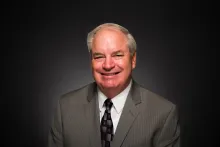
Robin Webber was born in Chicago, Illinois, in 1951, but has lived most of his life in California. He has been a part of the Church of God community since 1963. He attended Ambassador College in Pasadena from 1969-1973. He majored in theology and history.
Mr. Webber's interest remains in the study of history, socio-economics and literature. Over the years, he has offered his services to museums as a docent to share his enthusiasm and passions regarding these areas of expertise.
When time permits, he loves to go mountain biking on nearby ranch land and meet his wife as she hikes toward him.
