

Robin S Webber
This transcript was generated by AI and may contain errors. It is provided to assist those who may not be able to listen to the message.
Well, good afternoon. Love hearing that echo coming back. We're still working with my hometown congregation on that. They kind of forgot what we did six or seven years ago. It's not quite like Redlands or San Diego, but we love them anyway. I want to say hello to all of you. It's a delight for Susan and I to be able to be with all of you. Looking around, we want to welcome those that are visiting with us today. I'm glad to have you. I know we have some folks over from Arizona. Arizonans can never leave San Diego alone. They always want to come over here. Anyway, we are very glad to have you and others that are with us. We're going to be having more next week, and we'll talk about that in a moment. Lots occurred since I was last here. We were we. Sounds like the royal we. I was back in Ohio with others for the Council of Elders meetings that went very, very well, very possible. It's great to not only be in the same boat. It's not only great to simply be rowing in the same direction, but also rowing together. And things are going very, very well back there. Probably the one major thing that emerged from that that would be of interest to the general population, our membership, would be the decision that was made that in January we'll be rolling out a new format for the Good News magazine. It is going to maintain the title Good News. We did listen to our ministry and to the membership as a whole. They felt that that was a well-known title, something that encouraged them. We have maintained that. What we are going to be doing is we are going to be taking Good News and World News and Prophecy, and we're going to be putting them all together in one package in one magazine entitled The Good News. So that will be starting in January.
Basically, we will continue to be spotlighting current events, dealing with prophecy, about a third of the magazine, which is interesting when you consider the Bible being prophetic. About a third of the Good News will remain prophetic in nature, focusing on what's occurring with us today and where it is leading. There will be other emphasis on Christian living, how to be a Christian, the practicality, the applicability of day-by-day living. That will also be in there. We'll also be dealing with topics that are current in nature. We'll be dealing with science. If you want to put it this way, we're going to put the fullness of the Gospel expression in between two covers and have it all there. That's going to allow us to create a better focus for ourselves in presenting it. We have come to a determination at this point that we have so many writers that can only establish so much focus at this point. I think it's going to be good. The cost to the Church is going to be basically a wash, maybe a tad more, but basically a wash by bringing them both together. We're encouraged by it. Mr. Ashley will continue to be the editor of The Good News magazine.
He's going to continue to be assisted by Mr. McNeely, who is with World News and Prophecy magazine, etc., etc., working with that one-third of the Good News as a whole. We all understand what's coming. I'm excited about it. I think it's a good idea. That's going to be coming about. That's kind of a major. There's so many other things, but they will be coming out in the United News. Also, for those of you that have computers, I do believe the Council of Elders reports are now there on the computer if you so choose to read.
I am a bad boy. I've got to admit it. I left a part of what I want to bring down to you today at home. It's there at home somewhere. That is the updates and reminders for those of you that don't have computers. I was going to try to alleviate this, but now I have to kind of talk about it, but that's all right.
We'll talk about that to bring everybody on the board. I want to mention, did you look around and see what we call all the pretties today? Isn't that nice? I almost feel like I should be a high priest and have the jewels on me up here. I'm on the other side. All of these things, it's like they all have meaning now. Look over here. Isn't this great? It really brightens up everything.
The church should be a cheery spot. In fact, we're even going to have the old gray mare here, this pole in front of me. I believe it's going to be miraculously painted by next Sabbath. I know you all want to break out in applause. See, it's like I could be preaching the best sermon, and I'm looking right at that pole.
I mean, that's my focus right there, the pole. We thought we only had two poles in this church. Dennis and Linda. Dennis, that was a joke. You missed it. My humor only comes once a year, and you blow it, buddy.
It's gone. So, anyway, appreciate everybody that is stepping up. Thank you. Thank you. We are going to be having, in a sense, an open house next week. It's just like when you have company over, it kind of puts an onus on all of us to spruce up the house of God. We're looking forward to that. Thank you for all of those that are working behind the scenes. We appreciate it. Let's talk about next week, just for a moment, the Kingdom of God seminar. We do have visitors here today that are also in the Church of God community.
Maybe you'd like to be interested in what's happening here, and that is simply that. Next week and the week after, and I believe even the week after that, in this compacted period of time, we're going to be conducting what we call the Kingdom of God seminars.
At this point, we're at about 160 locations around the world, all doing this at the same time. We're going to be doing it here in San Diego next week. Then I will be up in Los Angeles next week, helping to conduct it up there. Then I will be in Redlands the following week with Mr. Sharp and Mr. Frank Fish. I think many of you know Frank up in Pasadena.
He'll be going up to Bakersfield and be helping up there with Mr. Reyes and Mr. Coelwell. I have to keep all these players in mind anymore. Mr. Coelwell will be helping my gray matter stay active these days with some of these things going on. Mr. Coelwell and Mrs. Coelwell will be over in Yuma. As is the case, so many of our servants are moving about sharing the good things of God.
It's even like today we have Mr. Helgi. For those who know Mr. Helgi, he's over in Redlands. He's serving there. A lot of things are happening. Let's talk about the Kingdom of God seminar, just because it was in the paper and I had it all out there so I didn't have to go through it, but I think it's good. We are going to be having a modified church service.
We'll have a couple of hymns that everybody knows that might be visiting with us. We'll be moving into the first presentation that will be presented by Mr. Smith and that will be more of a welcome and an intro and a framework of what the Kingdom of God is about. Then we're going to have the hymn choir sing in between. There will be no local announcements, just the hymn choir sing. Then we're going to be moving to the second presentation by Mr. Clark. Mr. Clark is going to be speaking why we need the Kingdom of God now.
Then we'll conclude with a hymn and then we would really appreciate it that if all of you could bring just light finger foods, we don't really want to have potluck items. We are going to be having a number of guests with us. Right now we have about 22 people registered to come. I have a sense that there may even be more coming that choose not to register online. As I said in the paper, some will register and not come, some won't register and come.
Of course, you are more than welcome to bring any family members or friends or folks that you think might profit from this. We always have an open house here in San Diego and all of our congregations. The very term open house is a little unique because God's house is always open. We'll be doing that.
Now, I do want to share something with you, too. Then we will be mentioning at the end of that seminar that we will have again a guest speaker the following week. Mr. John Garnett is going to be coming down and he'll be speaking and he's going to be speaking on a topic regarding, guess what, the kingdom of God. Now, we'll be having Bible chat group on September 17th and we will continue with our focus on the Gospels. This is good. But now, when we have our Bible studies midweek at home, our focus is going to be on Isaiah 2 until the feast.
So we're going to be sharing that with everybody that might come, that if they would like to be involved in a midweek Bible study in their area, we're going to continue discussing the kingdom of God. We're going to be going through Isaiah 2 again in an interactive manner. I would like the brethren to share what the words of Isaiah mean personally to them.
What does it mean when it says we're going to go up to the house of the Lord? What does it mean to be taught all of His ways and walk in them? No more war and all those fantastic verses that we need to always consider. Also, we will be having an invitation for those that, beyond this, want to hear about the kingdom of God and how it's going to come to this earth. They have an opportunity to go up to Escondido for seven days during the Feast of Tabernacles, and we'll have those maps out. So we're doing this in a very systematic manner.
Now, let's go back for just a second. I talked to you as a pastor and as one that has done this for many years, open houses and also traveling with World News and Prophecy. I think it's very important to understand this. We have many people that read the Good News magazine. People read magazines for all sorts of different reasons, don't they, just like you do?
And they pick up different things and they don't pick up different things. The folks that are coming next week are specifically interested in this topic. It is the kingdom of God that is drawing their attention. Just as much as you might go to a school or a lecture somewhere else, picture yourself. You're going to pick up what? Information. So these people are coming basically to hear messages regarding the kingdom of God.
They may not share all of the beliefs that we do. They may share a half. They may share none. They're really coming to what they sense as a lecture and to receive information that might be probable about them with the kingdom of God. So I say that because it's very important how we approach people then. Now, in all of this mix, some people are going to be coming for information.
They're going to come. They're going to go. They're going to say, because I know San Diego, this is a wonderful, warm group of people. This is neat. We may never see them again. If they have that and they profit, they know a little bit more about the kingdom of God. They go away thinking that we're a good Christian folk. This is wonderful. In all of this mix, there may be people that God is drawing to a fuller understanding of the Scripture. Are you with me? They may want to return. They may want to come to a Bible study or two.
So let's understand the balance of this. Let's welcome them at where they are at, not where we would want them necessarily to be. Let's keep open. Let's be wise as serpents, harmless as doves. Let's allow them to tell us their story. Share with them. I do that sloppin' as a pastor.
Sometimes people just start talking, and I cannot. Let them share where they're coming from, not where we think they should be by next Sabbath. That way, I think, we'll actually find that we may be seeing them more often. It's going to be a wonderful opportunity. I got to thinking about it. It's so neat that it's almost like doubling the feast experience. We go off to experience the Feast of Tabernacles for seven days plus one. Here we're having the Kingdom of God seminar.
We're going to be hearing why we need to have them. Sometimes that just has to be driven home, doesn't it? Then we're going to have Bible studies about Isaiah 2. Then this is just going to be an appetizer for the feast. This is really neat stuff, isn't it? I'm excited. There used to be an expression that we use. I don't want to use that expression out of the 60s. I don't want to do it myself.
I was going to say, I'm stoked. Anyway, I'm stoked. Anyway, but not that way. Anyway, for those that were in the 60s and baby boomers, you'll know what I mean. That had, like Sandy's message, a couple of different meanings. I will leave it with you. Let's go on then here. Let's talk real quickly. I want to mention the hymn choir. We're going to have a practice afterwards with Mr. Beatty. If you'd like to step up, we're going to sing one hymn.
I do want to mention one thing. We are going to be having a modified church service. We are a church. Many of the congregations are going to have simply what we call the seminar lecture routine.
I have always, in the years that you've joined me in open houses, I'd like to share that we are under no pretense that we are a church. That's what we are. We have something to offer. We have information to offer. As God takes that and inspires and transforms an individual, that's their business. We are going to run a modified church service. We are going to have that hymn. Now, let me see here a second hymn choir.
Number four on my list here that I want to share with you is that, oh, Feast Sign Up. The Feast of Tabernacles is coming. I didn't want to bother you earlier in the summer. As you know, I'm the coordinator for the Escondido Feast site. Not Uncle Sam, but Robin Needs You. Remember those little posters? Robin Needs You. We have a need for ushers.
We have a need for greeters, both men and women. We have a need for Spanish translators, if anybody would like to help there. We need you, if you're going to be here, to sign up, or I will fill your name in my own. How's that? No. Anyway, but it would be nice if you signed up, because many hands make a heavy load light. This is being announced throughout the Southwest today. Even in Tucson, it's being announced to help Robin Weber and Escondido.
We're going to do that. The sign-up list is back there. Also, really, really good news, and that is that penny jar is filling up, and it's going to even fill up more, because I've got coins in my pocket.
So do you. We're over $500 right now in that little penny jar to be able to help that secondary site in Kenya, and also to help our brethren in Jamaica to experience the Kingdom of God during the Feast of Tabernacles. So thank you for your help on that part. I think that's all I'm going to share. We're going to have an Elders and Deacons meeting about 45 minutes after church. I'd like to be able to spend the time in between visiting all of you. I hope God is prospering you in every way. I hope everything is going okay. We're all going through life's challenges.
Nobody's isolated from what's going on in life and affecting this nation or affecting us as human beings. I'm trying to do the very best that I can in a very limited fashion with God's help to pastor much of Southern California. That can only be done, brethren, and I continue to tell you this.
It can only be done with the help of all of you as the Elders, the Deacons, the Deaconesses, and the members caring for one another. That while it's a challenge, it is to this time that we have been prepared for 40 or 50 years. We don't have to wait to the millennium to do it. We are needing to help one another now, reaching out to one another, calling one another, writing one another, encouraging one another, listening to one another, and recognizing that we're all on this life journey together.
Maybe you're on a different train than I am. Same train? Life. So we need to reach out to one another. There's one thing just to simply know the Word of God.
It's another thing to share the Word of God by what you do, by how you reach out to others. We'll be talking about that a little bit in the message. I'm going to step aside for right now. Really good to see all of you today. We're going to have one more hymn, and then the second message. I really did make a comment. I thought Mr. Beatty offered us a wonderful presentation today, and used some Jewish wisdom at the end, and left the answer with us. Thank you very much. Let's all please stand and rise again, and turn to page 121 as the Dear.
As the dear beds for the water and the soul longs after you, you alone are my heart's desire, and I know to worship you. You alone are my strength, my shield, to you alone may my spirit heal. You alone are my heart's desire, and I know to worship you.
You are my friend, and you are my brother, even though you are a king.
I love you more than any other, so much more than any me. You alone are my strength, my shield, to you alone may my spirit heal. You alone are my heart's desire, and I know to worship you. I want you more than gold or silver, only you can satisfy.
You alone are the real joy giver, and the I who love my heart. You alone are my strength, my shield, to you alone may my spirit heal. You alone are my heart's desire, and I know to worship you.
Please be seated, Mr. Weber, for our main message. Isn't that a beautiful hymn? It's just gorgeous, gorgeous melody, beautiful words. An earnest student of the Bible will come to understand that the scriptures from beginning to end of this book are a contrast between two opposing systems. God made it pretty easy for us to understand it. Probably harder to do it, but to understand it. I'm glad there's not three, four, or five systems, but simply God, by his inspiration, shared with us a contrast between two opposing systems. Allow me to outline it for you for a moment to help you to understand where I'm going. We understand that on one side there's the God of creation versus the God of this age. We can continue with it that there was the tree of life versus the tree of good and evil. We can appreciate that those two trees represent two different ways. There's the way of give, and there's also the way of get. To take it a little bit further, there is Jerusalem that is above and Babylon that is below. There's a woman who flees into the wilderness, and there's a woman who rides the beast. We also can appreciate that there is Jesus Christ, the Son of God, verses in contrast to one who is called the Antichrist, the Son of Perdition. So you see where we're going before we proceed any further. That there in the Bible is basically a contrast between two different ways. Ultimately, it is the contrast between two mindsets, two spirits. You might say two styles of leadership. One was given birth in Babylon. One was given birth in Babylon. The other is given birth in Bethlehem. And that is the contrast that I want to set up today for us as we approach the kingdom of God seminars. The Babylonian mindset, perhaps, is best rendered by the words of Nebuchadnezzar found in Daniel 5 and in verse 30 as one day, one night, he's walking the walls of the city that he had built up. And Nebuchadnezzar basically says that it is not this great Babylon that I have built for a royal dwelling by my mighty power and for the honor of my majesty. Basically, very much like mire mire on the wall, who is the greatest emperor of them all? And he strutted around those walls like a mid-east rooster touting what he had done and what he was about.
This is in opposite contrast to the mindset of Bethlehem. And that's given substance, and that one I will turn to over in Philippians 2. Philippians 2 and verse 5. Let's go there for a second because this is the one that, frankly, we're going to build upon today in Philippians 2 and in verse 5. Let this mind, you might say, spirit, heart, leadership style, be in you, which was also in Christ Jesus, who, being in the form of God, did not consider it robbery to be equal with God, but made himself of no reputation, taking the form of a bondservant and coming in the likeness of men. It's even given more amplification in the New Living Translation when it says your attitude should be the same that Jesus Christ had. He made himself not He made himself nothing. He took the humble position of a slave and appeared in human form.
We can have no more startling contrast. Babylon, Nebuchadnezzar, Jesus Christ, Bethlehem.
Contrast. One is based on self, filled with pride. The other is based on God, filled with humility. As we approach the kingdom of God seminars as well as the fall festivals, we must firmly grasp what happened at the first coming before we can appreciate Jesus Christ's second coming. We must learn to understand and to embrace the lessons of one of the great stories that are found in the Bible, the story of Bethlehem, the story of where this mindset, this heart set, this leadership style came to earth and started from. So today, the title of my message is simply this, When the Fullness of Time Had Come. I'll give it more explanation as we go along why I give that title, When the Fullness of Time Had Come. And I want to underscore that title with a subtitle because that's what I'm really going to be getting at this afternoon.
And that is simply this, for us to prepare for the second coming, we learn the lessons of the first coming, and the lesson is this, how to possess a manger mentality. A manger mentality.
What do we learn from the birth of Christ? Given birth in Bethlehem, in a manger, underneath a house, in the side of a cliff, in a cave, wherever it was, there are incredible lessons for you and I to learn. We must learn these lessons now in humility if God is later on going to grant the body of Christ for the opportunity to be a kingdom of priests when, at the second coming. While his birthplace was in Bethlehem, that's not where it started. I'd like you to join me in John 1. Please join me, open our Bibles here, going to John 1, and let's understand a few things about the one that was given birth as a human being in Bethlehem.
John is writing this, probably 85 to 90 AD. He is no longer writing solely to a Jewish audience.
He is not speaking of a Davidic covenant or Messiah, but he's raising the subject to a level that the Hellenistic community might understand.
In the beginning was the Word, and the Word was with God, and the Word was God.
He was in the beginning with God. And all things were made through him, and without him nothing was made that was made. And him was life, and the life was in the light of men.
And the light shone in the darkness, and the darkness did not comprehend it.
We'll build upon that statement later, but it does tell us here this one that was with God from the very beginning. All things were created by him. Let's talk about that for a moment, so that we can maybe more fully appreciate what Jesus did when he came to Bethlehem.
Let's talk about the one that made the universe. It's always interesting to be able to talk about the universe, so I'm going to just tell you ahead of time to get ready for that rubber band in your mind to kind of be ready to snap. You know, when you think of the universe or you think of eternity, you know, you start stretching out, and then can't think about it anymore. But let's talk about it this way, that God, the one here known as the Word, created a universe that man has estimated as 200 to 500 billion years to be able to travel around. 200 to 500 billion years to just get around.
Now, that's just what they see right now, because they keep many people consider that the universe is continuing what? To expand. But right now, give or take a hundred, 200 billion, almost sounds like Washington, doesn't it? No, anyway. You take that 200 to 500 billion years just to get around. What? In your automobile? No. At the speed of light, 186,000 miles per second.
Now, you say, what is the speed of light? Let's do this. Let's all have fun for a moment. Church should be fun. Ready to snap your finger from what? On the count of one. Ready? One.
Okay, the speed of light. That means right there, that one second, light went around this globe seven times. That's the speed of light. Now, you take that seven times around the globe. You're traveling at that speed. It's going to take 200 to 500 million years, billion or billion, billion years to get around the earth. Now, that's just the macro sense of what's going on. Let's talk about the micro. Let's just talk about all of the atoms that are simply in one cup of water. One cup of water. If you took all of the earth's population counting those atoms that are in one cup of water, it would take 180 million years.
180 million years to count the atoms in that cup of water, counting one per second. What do we have on earth? 6.9 billion people? All counting one second, one atom per second. It would still take 180 million years. Now, beyond that, if you want to speed it up, count two atoms per second, and you're still dealing with what? 90 million years. Why am I sharing this with you? Just simply to snap the rubber band in your head? No, not at all. It is to go back to John 1, 1 through 3, to identify the greatness of the one that we're talking about greater than this universe, whether it be macro or micro in sense. Now, when you look at John 1, many, many of man's religions believe in a first cause. They believe in a deity that wound up the universe and, in a sense, let it go. But what sets the Christian faith apart is not John 1, 1 through 4, but let's go down the column to verse 14. Now we speak of Christianity as we understand it. Notice what it says. And the word became flesh and dwelt among us, and we beheld his glory, the glory as of the only begotten of the Father, full of grace and truth.
What sets Christianity apart is not just John 1, 1 through 3. It is what happens in verse 14 when it says that he came and dwelt amongst us. The word there in the Greek is skinu, which means to tint, which means to tabernacle, which just simply means to dwell. He became flesh.
Thus, what we need to understand now as we move to the story of Bethlehem is simply this. It's not just simply that he came and he entered human history. The one that drops down from John 1, 1 down to John 1, 14. It's not just simply that he came down. It's the how. It's the how he came down that gives us stepping stones to the Second Coming. We find that story in Luke 2. Join me over in Luke 2, the story of the birth of Christ.
One of the three great stories in Scripture, the birth, the resurrection, the Second Coming.
To not continue to go over the stories can create a tangent in our journey as Christians.
Can get us off the trail. Thus, these stories of the birth, the story of the resurrection, the understanding of the Second Coming allows a Christian, allows you and allows me to know our bearings day by day, moment by moment, challenge by challenge. In Luke 2, we find the story here. Luke 2, and picking up the thought in verse 1. One of those great sayings, and it came to pass in those days that a decree went out from Caesar Augustus that all the world should be registered. And this census first took place while Corinius was governing Syria.
So all went to be registered, everyone to his own city. And Joseph went up from Galilee out of the city of Nazareth into Judea to the city of David, which is called Bethlehem, because he was the house in the lineage of David. To be registered with Mary, his betrothed wife, who was with child.
So it was that while they were there, the days were completed for her to be delivered.
Very interesting. As Luke, the doctor, is taking the notes like writing out a prescription. He writes this famous phrase, and it came to pass. Very simply written, but to recognize God was behind this. God moved the mind of Caesar to fulfill the prophecy found in Micah 5 and verse 2, that out of Bethlehem would come Messiah, would come Savior. That which was written hundreds and hundreds of years ago to a specific people, at least at that time, God moved the mind of Caesar to call for this census so he could know how to tax the empire.
And thus, here were two people of the lineage of David, Joseph and Mary, way up in the hill country, way up in the Galilee, that would be drawn back down to Bethlehem, which is in Judea, which is on the outskirts of Jerusalem. Paul shares a unique thought, and this is where the title of my message comes today. Join me if you would in Galatians 4, verse 4.
But when the fullness of the time had come, God sent forth his son, born of a woman, born under the law. You see, God has a purpose, backed by a plan, backed by promises, and sustained by provisions. And he knows exactly what he's doing. He knows the timing. He's not only the creator of time, he's the master of time. And in the fullness of time this came about that Caesar Augustus called for this census. Christ would come. The gospel would be spread. It was what we might call divine convergence. Now, the reason why I'm mentioning all this is not just a story here about Jesus entering, but the same Father that sent him forth from heaven to earth is also working with you and me as his children. And the same divine convergence that he ushered in with the coming of Jesus Christ about them, he continues to do in our life. He knows exactly what we need daily and or he can move events around us to bring his purposes out in us. Here, this divine convergence, Christ comes at a time with the Roman Empire, where there are Roman roads, where there's the Greek language, where there are the synagogues of the Jewish diaspora that can be springboards for preaching the gospel, and Jesus Christ comes. Now, in this matter of divine convergence that's going from that city on the Tiber to that little town in Judea called Bethlehem, there's a lot of people in between. There's Joseph, there's Mary, there's the shepherds, there's Herod, there's the wise men.
Some of them got it, some of them didn't get it. Not all understood what they were doing. You see, there had been about 400 years of quiet from God. The Jews said they no longer heard the voice of God, but they heard the voice of the angel. It was a lower reading on the spiritual scale. They had not had what they considered divine revelation for 400 years since the time of Malachi. Thus, they were only hearing what they called the voice of the angel, not the voice of God. It had been very quiet, but life was moving on, and here was a man, Mary, Joseph, doing what they ought to do, and yet those same individuals were open, willing, and available to God to work His purpose.
And as we are coming up to this time of the year, as we once again celebrate the festivals of God, let's ask ourselves a question. Let's write it down. Am I open? Am I willing? And am I available?
Am I open? Am I willing? And am I available to be a part of God's plan all around me, even when I don't see it? God is doing things that we do not always see, but He's coming to a purpose to carry forth the gospel or to carry forth His purpose in us. If you wrote that down, let me say something. I would suggest then that you are on the first step of being willing, available, or open. If you didn't write it down, I think right now you're over in the parking lot.
But maybe by the end of this message, after I share this good news with you, you will be more willing, more available, and more open. That when God's Spirit is talking to us, whether out of the Scripture or out of a speaker, whoever that speaker is, and the Spirit of God prompts us, how quick are we to respond to what is being spoken? We're going to find that in the story of Christ and the bird's story. Let's notice verse 7 here. And she brought forth her firstborn son and wrapped him in the swollen clothing, laid him in a manger, because there was no room for them in the inn. Now, this is a fascinating story. So much here. You know, many of us have either had children, we have grandchildren, we have nieces, we've been to the hospital. We've seen the little babies all kind of, you know, wrapped up, you know, they're born. They come through that tumultuous birth canal, and the next thing that they know, they're they can't move, you know. Great! What a life! They're like this, you know, like a papoose.
Hi, I have arrived. I was born. And that's what they did also too. Back then, they put swaddling clothes, bound the baby, Jesus. The same one who had stretched out the stars, stretched out the universe, 200 to 500 billion years for you and me to be able to travel around at the speed of light, whose hand could reach from this galaxy to the next, his will is supreme, and what happens?
He manifests himself as a baby in, what? Humility. The same one, life inherent, becomes life in the womb of Mary and comes out. But what a wonderful story! This is great! God and the flesh has arrived, but we have a problem that says here there was no room in the end. Now, Luke, who's a Greek, is writing this, and this always caught Luke's fascination, because I'm sure Dr. Luke had perhaps delivered many, many children, recognized the seriousness of it. There's no room at the end. Here they come all the way down from the Galilee. They come to Bethlehem. Long journey. You know, there are no McDonald's. There are no Jack in the Boxes along the way, not even a subway. You know, there's no place where you can kind of get off the road. They've landed, probably pulling to Bethlehem late at night. There is no room at the end. No. We don't have any room for you.
You'll have to go somewhere else. We're full. Door closed. See, Luke understood this.
Luke had been a Gentile. Luke had been on the outside looking in. He had perhaps been a devout person, one that practiced Judaism, but because of perhaps not being circumcised, could only look into the window, into the synagogue. In other words, he could come up to the drinking fountain, but could not drink. Close, but not close enough. He knew what it was like as a Gentile among the people of God to be an outsider, aware there was no room. That's why this story in Luke has such meaning to Luke, has such meaning to you and me. At one time, all of us have been on the outside looking in and not chosen for this or for that. And here is the Son of God, the one that is mentioned by John, and there is no room at the end. That point of entry, consider that. That point of entry was never lost on Luke. His lack of room, speaking of Jesus Christ, ultimately would make room for all of us in the plan of God. I want you to think about that for a moment. His lack of room at Jerusalem, and that door closing on Joseph and Mary, allowed you and me to have room in the kingdom of God. For every cause, there is an effect.
You stand at the door every day, Monday, Tuesday, Wednesday, Thursday, and Friday. Tremendous lesson here. As we will be having people joining us next week, and maybe in Bible studies, and maybe in the future, or the person that you meet on Monday or Tuesday or Wednesday, how much room do you have for people in your life? Jesus said that if you've done it unto these, you have done it unto me. Very interesting. Possessing a manger mentality should allow us on a daily basis to contemplate who we make room for. Very, very important.
Another thought I'd like to share with you on this story. Let's fully grasp that Herod, and the political advisors, and the religious advisors that were there, being a Jewish court, people of the book, people that were in power, people that were in, do I dare say, the no, misread the events of Christ's birth. Ever thought about that?
Yeah, misread the events of Christ's birth. Why is that? If it's true.
When a man and a woman are about to have a child, what do they do? What do they do?
Do they go and they seek out the finest, safest, securest spot to have the baby?
Why do they do that? Do they do that out of confidence, or do they do that out of insecurity?
Think that through for a second. No, you know the answer. That baby's coming. Your wife goes, oh, it's coming! It's not like sitting up.
And you go to seek out the most secure spot you can.
When Jesus entered human history and his father sent him below, he did not seek out the most comfortable, secure, complete spot to be born. Not because he was not confident, but because God the Father and Jesus Christ were extremely confident of the mission, of the knowing, that this is how it had to be, that this is how it had to start. It had to start in a cave outside of Bethlehem or underneath a house or maybe out in a stable, out in a barn. We just don't frankly know, but I do know this. You wouldn't want to have your kid born there. And most likely, it was dark, stained, smelly, not nice. And yet God had every confidence that that's how the story would begin in a dark spot. Not even where there was sunlight, but that mustard seed of the kingdom spoken in Matthew 13 33 that starts so small, did not need the light of this earth, but the light of God's purpose and the light of God's love. And wherever God plants his sovereign will, wherever he puts his purpose, wherever he establishes his kingdom, wherever he puts his holy seed, the forces of this earth, the forces that might be troubling you today will not succeed, but his purpose in you will succeed. And is it not interesting that sometimes when we are troubled, when we are wondering where God, where Christ might be, and they come into our lives, and when does God enter our life? Well, God and Jesus Christ enter our life just like Christ entered Bethlehem. They enter into a spot that is dark. They enter into a spot that is remote. They enter into a spot that most like, are you with me? Is stinky and smelly because sin stinks.
Sin is repugnant to the nostrils of God and even affects those on earth adversely. Christ is no stranger to darkness and to places where nobody else will go or be born. Humble, possessing the manger mentality. So important why this story must be told. Because it is only when we match what God did in Christ at Bethlehem that we can be purveyors of this gospel of power, this gospel that speaks of kingdoms, this gospel that speaks of turning a world over.
But who is it about? Is it about us or is it about God? And we find that in the story of Christ. Let's go a little bit further here. We're going to wrap it up in a few minutes. It says here, notice, verse 8, Now there were in the same country shepherds living out in the fields, keeping watch over their flock by night. And behold, an angel of the Lord stood before them, and the glory of the Lord shone around them, and they were greatly afraid. And then the angel said to them, Don't be afraid. They're going to say, Who was? Yeah, you. Don't be afraid. And why?
I bring you good tidings of great joy, which will be to all people. For there is born to you this day in the city of David, a Savior who is Christ the Lord. Christ the Lord, the anointed king.
And this will be a sign to you. You will find a babe wrapped in the swaddling clothes, lying in a manger. And suddenly there was with an angel a multitude of the heavenly host, praising God and saying, Glory to God in the highest non-earth pace, goodwill toward men. So it was when the angels had gone away from them into heaven. Then the shepherd said to one another, Let us now go to Bethlehem and see this thing that has come to pass, which the Lord has made known to us. And they came with haste, found Mary, found Joseph, and the babe lying in a manger.
And now when they had seen him, they made widely known the saying, which was told them concerning this child. And all of those who heard it marveled at those things, which were told to them by the shepherds. I know all of us at one time or another have had the opportunity to read through this section of Luke. But there's so much to comprehend here and to understand that I'd like to share with you for a moment. Because again, it all deals with what we call this major mentality of humility.
The religious leaders didn't get it. They were looking for the Messiah in all the wrong places, just like the old country song, looking for Messiah in all the wrong places. They didn't know how God operates. They were looking for something grand. They were looking for something great. They were looking for something that they could humanly grab a hold of, something that would represent Rome or Antioch or at least the Hasmonean palace, the Herodian palace. That has Monaean. That was the Maccabees. The Herodian palace.
They would never think of Bethlehem, even though the prophecy said that. Okay, yeah.
And these were people of the book, people that knew the Word of God, read it so often, Michael 5 and verse 2, Jesus will be born in... not Jesus, but the Messiah will be born in Bethlehem.
The question is, I want to pose to you, and this is a question asked on this Sabbath as we go through the story, where are you looking for God's will to be performed and through who and where?
And are we looking in the right direction?
There are so many great lessons out of this that are applicable Monday, Tuesday and Wednesday.
We can either have it our way or begin to understand what God is doing, and how this whole kingdom of God starts with a seed of humility. Not pride, not arrogance, but humility.
Now why do I share this with you as your pastor, and as your friend, and as a Christian? We as people of the book need to be a humble people, a humble people with the revelation that God has given us. That is not to dismiss speaking with authority, and that authority comes from God, not by our intellect. That doesn't mean to be convicting, not to be convicting, not to be appreciative of the revelation that we have, but God's people need to be a humble people.
God cannot use somebody who's great in their own eyes, no matter how great they really are in their own eyes, or their human achievements. Can't use it. But he can take the smallest amount of humility as you spit the straw out of your mouth, possessing a major mentality. He can take the smallest amount of humility and turn it towards his purpose. That's the whole lesson that we have here.
This is the head of the church. This is how he came to earth. This is how he started, and his own would not receive him. But the shepherds did. Here's the power of the shepherd story. Shepherds, by and large, were despised in the Middle East. They were looked upon as being, are you with me? Shifty people. They were people that were always kind of on the move and no home, kind of people that lived in trailer parks, not mobile home estates. They were despised by the Egyptians, so much so that the Hebrews were put into slavery. And yet, I ask you this question. Who did God first reveal himself to in the Middle East by his angel?
Shepherds. The little people. The people that everybody else...
Is that not in a sense the spirit of Jubilee, where God says that I will take that which is a based and that which is low, and I will take those that are in the valleys, and I will lift them up to mountain top experiences. And the first one is to be able to proclaim that the word had entered into human history were shepherds. And notice how they did it. Three lessons that you can immediately begin to apply in your life. Number one, once they were told what to do, it says here, number one, they came in haste. They came in haste. Obedience does render blessings. They didn't do a Jonah.
They did not do a Jonah. They did exactly what they were told. The Word of God had come to them from an angel. This is simple, folks. It's going to be hard to do on Monday, Tuesdays, and Wednesdays. The Word of God came to them through an angel. And they said, yes, sir. They understood the source, and they did it. And there was a blessing. They were the first human eyes, other than the immediate family, to be able to see God in the flesh. Bottom line, this coming week, as the word prompts you, or God's Spirit prompts you, or you're in a conversation with somebody over the phone, and you hear something, bottom line, how quick will you be in haste to apply what God is prompting you to do? That's a big question. Are you ready? As I say that today, it will come your way, and you will be convicted of this. You will remember this.
There you go. Go through all the noises. The shepherds made haste. Number two, it says that they made it widely known. They made it widely known. Courage was theirs to make known what they had seen once they saw it. What God was doing was not an afterthought. It was their first thought.
That's important for us. Now, we're going to be striving to do that in a week from now with the kingdom of God seminars. But we can't just do that corporately or organizationally. That's something that we've got to do, also do individually. Each and every one of us is a witness for God the Father and Jesus Christ and this way of life.
Next week, people are going to come here that maybe we've never met and maybe we'll never meet again. But you have an opportunity with humble boldness, courage matched with wisdom and temperance to share what you know, to share your story, to share the blessings that God has given you to be able to see. See, God has not just called us to be lights that are put in a cave whose wax melts on one another in the darkness. That's not being a light, just huddling together together. Lights shine and sometimes light, are you with me? Sizzle. They make noise.
They talk. They share what God has done with them. The third thing that these shepherds did was they praised God. They were filled with praise upward to God what He was doing.
What He was doing was bigger than what they were doing.
Is that what we're doing on Mondays and Tuesdays and Wednesdays and Thursdays?
When we talk to people, is it about what God is doing? And thy kingdom come or I'm done in?
What is your conversation like as you talk to men, as you talk to women? Is it talking about what God is doing? See, we've been called to be witnesses. And witnesses does not always mean being up on a soapbox somewhere. It doesn't always mean being the preacher. But each and every one of us, by our tongue and by our conversation, are either saying, thy kingdom come and or I'm done in. You won't, like this. I know sometimes you smile when I do this, but you do it in your own home. I just do it in front of you. Oh man, you can't believe this, folks. This is horrible! Oh, woe is me! Can you believe that?
Unbelievable! That sounds like my father. Unbelievable!
Question. What is your tongue betraying or revealing? Thy kingdom come, and I'm a citizen of that heavenly kingdom now. I'm an ambassador of this way of life. I'm a child of God. My boss was born in Bethlehem, didn't come in a limo, came in a stable, but he didn't stay there, and neither am I. See, God meets us in the dark spots of our life, but he doesn't want us to stay there. When that light comes, he wants us to move out of the stable. He wants us to move out of the manger. He wants us to move out of the barnyard. He wants us to be going places, but he just simply wants us to remember where he found us, lest we ever forget. So I'm giving you some applicable homework assignments this week. Heartwork. How quickly will you respond to the voice of God in whatever form it comes to you this week? Maybe even as I'm speaking today. Number two, how widely known will you make knowing what has been revealed in your life? Not only by what you say, but by what you do. Number three, when people hear you, is it all about you, or is it about what God is doing with you? Let me come to conclusion. Simple. Going back to the beginning. Being born in Babylon, or being born in Bethlehem, is a choice made by you and me every day. You got it, folks?
Whether your birthplace is in Bethlehem, because now Christ lives in us, or whether you hail from Babylon, is a choice that you and I make every day. Frankly, in a sense, all of us at one time or another have to come to a point that we were all born in Babylon. That's where we started.
And we strutted walls of our own making, just like Neb. Now we're given an opportunity to be reborn with a new mindset at baptism. You and I, like Belshazzar, with the wall in front of us, saw where it says, you've been weighed in the balance, and you've been found wanting.
But unlike Belshazzar, we took God as word, and we cast ourselves in. And we were ransomed by the sacrifice of Jesus Christ, the one that was born in Bethlehem in humility.
At baptism, you and I have the same opportunity to do what Jesus Christ did when he came to Bethlehem, and that is to give up everything. To give up everything, not to hold on. It says that he did not hold on to God, but he let go. And that's what we do at baptism, when we decide that, in a sense, the birthplace is Bethlehem rather than Babylon. Let's conclude by going to Ephesians 4.
I always appreciate being able to share this kind of a message around this time, because it is in the autumn that Jesus Christ was born, mostly somewhere right at trumpets, to tabernacles, and all those meanings fit in when you think of the announcement of a king, or tabernacling as he did, dwelling in tent, coming in human form. Is it any wonder that Jesus was born at this time of the year? And we have all people are remiss if we do not take the great story, one of the three great stories of the New Testament, and learn from it. Because it is only by being humble and having that attitude and that mind in us that we are going to be able to preach the gospel of Jesus Christ and the kingdom of God. Before I go to Ephesians 4, just remember, this is an ongoing challenge for people of the book, people that say they're followers of Jesus. Remember the last night? The night before he was betrayed? We had issues at the at the table, the Passover table. We had people that were Jews that kind of got the Babylonian mindset. Who's going to be in charge? Lord, give it to me. Lord, give it to me. What's going to happen? What's going to happen? What's going to happen? Babylon can surround Bethlehem unless we're on guard. And Jesus had to chide them and set that example of the foot washing to take them back to Bethlehem rather than leave them in Babylon. Ephesians 4, verse 1, I therefore, the prisoner of the Lord, beseech you to walk worthy of the calling which you were called with all lowliness and gentleness, with long suffering, bearing with one another in love, endeavoring to keep the unity of the Spirit in the bond of peace. There's one body, one Spirit, just as you were called in one hope of your calling, one Lord, one faith, and one baptism, one God and Father of all who is above and through all and in you all. That's where we're at, brethren. Next week we begin the Kingdom of God seminar series. It's going to be not only for a Sabbath. We're going to do it again in January. We're probably going to do it again in next May. May I make a comment? It's going to become like just a pattern in the church. I want to share something with you. We are not stepping back. We are moving forward, but we cannot move forward based upon our own confidence or who we are.
Understand this. Jot this down, please. It's not just simply who you know.
It's not just simply what you know. It's not just simply what you do, but it's what you are.
Let me repeat that again, because I think this is where the Church of God is today.
And it is only when we develop all of these that we will be able to be the instruments for God, the Father, that He has elected us to be. As a Christian, it's not only who you know.
It's not only what you know. It's not simply what we do. It's what we are, because who we know, what we know, and what we do. But all of those have to have a transforming impact on us that we are going to properly be able to express the gospel of Jesus Christ and the Kingdom of God.
In an atmosphere of, yes, power, in the atmosphere of conviction, an atmosphere of jubilee, but underlined, underlined deeply with humility. The same that came to us 2,000 years ago, not in Babylon, but in Bethlehem.
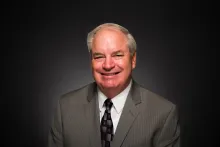
Robin Webber was born in Chicago, Illinois, in 1951, but has lived most of his life in California. He has been a part of the Church of God community since 1963. He attended Ambassador College in Pasadena from 1969-1973. He majored in theology and history.
Mr. Webber's interest remains in the study of history, socio-economics and literature. Over the years, he has offered his services to museums as a docent to share his enthusiasm and passions regarding these areas of expertise.
When time permits, he loves to go mountain biking on nearby ranch land and meet his wife as she hikes toward him.
