
Robin S Webber
This transcript was generated by AI and may contain errors. It is provided to assist those who may not be able to listen to the message.
Well, we want to welcome everybody back once again to the second session on this of what we're covering, which is understanding Babylon. When we left off last time in the first section of this message, we were dealing with Nebuchadnezzar II. We were dealing with Imperial Babylon during the sixth century BC, recognizing then that God was laying down many of the precedents and the principles that we're now going to build upon as we see this system continue into our present time and, yes, into the future. But we've noticed and we've laid some building blocks to understand how God deals with things and understand the great message, the good message that we have, is that God is in control. And when it's all said and done, He is going to be victorious over the system that is called Babylon. We discussed Babylon last time under Nebuchadnezzar II. We were dealing with the aspect that Cyrus came along.
The Babylonian Empire under the Chaldees was overthrown in 539 BC. We don't hear a lot about Babylon after that. Probably the one aspect of Babylon for students of history would be that Alexander the Great made that one of his main centers of activity during his time. In fact, it is interesting that Alexander the Great, who represents that third element of the image that was in Nebuchadnezzar's dream, which is demonstrated by the Macedonian Empire, that Alexander the Great, the founder of that Hellenistic age, did die in Babylon. That is interesting. Just kind of a historical side note that Alexander the Great, a part of that image in the dream of Nebuchadnezzar, actually did die in Babylon. But that was nearly 2300 years ago.
And that Babylon, as I mentioned earlier on in the first message, the first class, is basically under sand dunes on the east side of the Euphrates River.
But now, that Babylon, which is more than a city, if we only define Babylon by ruins in a particular geographical spot, we are not understanding that mystery that is called Babylon. We need to understand today that Babylon needs to be understood, may I say, spiritually.
Understanding it spiritually continues to unravel the mystery. And understand that her spiritual descendant is in the city of Rome. Her spiritual descendant, that culture, is in the city of Rome.
Well, whoa! You've made quite a quantum leap. One moment we're over in the land of the two rivers in Mesopotamia. We're dealing with the Bible. We're dealing with Babylon. And now you've got us on the Italian peninsula. But again, allow me to say this. Babylon, the system and the culture thereof, transcends any physical location but personifies a system that is opposed to God.
The reason why I mentioned that it is in Rome is to understand that this understanding was not lost on the first century Christians. Those Christians that came after Jesus Christ just 40 or 50 years after that. To understand that Babylon was Rome was loud and clear in their eyes, their ears, and in their hearts. They precisely understood that the book of Revelation specifically spoke to their moment in time. If you had been a Christian around 85 or 90 A.D. and that message begins to go around and out from Patmos, the message that is transcribed by John, because it's not the revelation of St. John, but it is the revelation of Jesus Christ.
Jesus Christ is laying out what is going to happen between then and when He finally comes back at His second coming in triumph. It speaks of a time. It speaks of persecution. It speaks of a beast power. It speaks of conflict between the governments of this world and the saints of Jesus Christ. And if you had been a Christian in Galatia or Bithynia or Atalia, or if you've been a Christian in any part of the empire and you lived under the reign of Domitian, you would have thought it was the worst time in human history. Domitian led the second great persecution of the Christians, the first having been under Nero. And now you have this gentleman, this man, this bestial individual, this Roman emperor named Domitian, who is even trying to seize after some of the remaining apostles. At that time, there was only one apostle that was still alive, and that was John, the same one that had been so very close to Jesus Christ. And it is that John that was thought that he was going to live longer than anybody else, but even Domitian tried to grab John, and by tradition tried to kill him, but was thwarted. Now that's just simply tradition.
But imagine if you had been there in 85 to 90 AD, and even one of those that had actually lived and touched the Christ is even persecuted. You would have thought that you were under the beast, under the system of Babylon. And that's exactly what they thought. They looked at Babylon as being Rome and coming out of Rome. It is interesting, and there's more to this than just simply what I'm mentioning out of the Bible.
It's interesting that it has been documented that by the second century AD, ancient Rome was becoming what is called an Oriental city, both in its ethnicity and in its religion. Now, when I use the term historically an Oriental city, you've got to recognize that at this time we're using the Mediterranean Sea as a center-paste. So what is Oriental back then is not necessarily what we would call Oriental or Asian today. When we think of the Orient today, we would be thinking of China or Japan, etc., etc. Back in that day and age, the Orient or that which was Oriental was considered that which was basically coming out of Mesopotamia and or the Levant, Syria, etc.
And by the second century AD, Rome was becoming an Oriental city, both again in its ethnicity and religion. It was often mentioned that the Orantes flowed through Rome. Well, what does that mean? The Orantes was the main river that actually came out of the mountains of Syria and flowed through Antioch, one of the great cities of the east. And so it was kind of an expression that the east was now in the west and that Rome was actually on the banks of the Orantes, which was in Syria.
How did this come about? With the rise and the fall of populations and also the drawing power of the imperial magnet of all that was Rome, there had literally been a migration westward of peoples throughout the centuries, especially after the time of the Roman Civil Wars and also the the Punic Wars with so many people having been decimated on the Italian Peninsula, they had to bring people in from afar.
They had to bring people in from the Greek world. And of course, the Greek world, which later on became the Hellenistic world under Alexander, a lot of those people were coming in from the east. So there was this migration of people. And let's go back to the time of Alexander the Great for a second.
Alexander had a worldview. And what Alexander did, this man from above Greece, north of Greece, and Macedon that had embraced Greek ways, tried to bring basically the first one world together. He tried to merge that, which was Babylonian and Persian, with the Greek world, so much so that he had a one grand festival of which he had all of his Macedonian officers marry the nobility of Persians.
He was trying to create an infusion between east and west. And this triangulation continued for many, many centuries afterwards. And that what we find was that Alexander was drawing Babylonish influence westward, so much so until Rome became what we might call the Third Babylon. Let's understand that Babylon, the city, was over on the banks of the Euphrates and Mesopotamia.
But that migration, or a large part of it, began to move towards the west and was in Antioch, one of the great cities of the Hellenistic world later on the Roman world. And then, as the population lowered on the Italian peninsula, more of those people came into the orb of Italy and into the capital city, Rome.
Allow me to read for just a moment a few excerpts from the decline and fall of the Roman Empire by Donald Kagan in a chapter entitled, Race Mixture in the Roman Empire. It's by a gentleman named Kenny Frank. And as the populace, enforced their demands upon the emperor for pain in sesences and or bread and circuses, so also they secured recognition for the externa sacra. That means the other religions, the other sacraments. One after another of the emperor's gained popularity with the rabble by erecting a shrine to some foreign bale or a statue of Isis.
Finally, in the third and fourth centuries, when even the aristocracy of Rome was almost completely foreign, these eastern cults, those of the Orient, rather than those of old Rome became the centers of patrician opposition to Christianity. In other words, the western invasion of the mystery cults is hardly a miraculous conversion of the even-tempered, practical-minded Indo-European to an orgiastic emotionalism foreign to its nature. Frank finishes with this thought, these religions came with their peoples. There was a migration of peoples, of cultures, of religion.
In other words, the people of the east, with that culture so permeated in the east of Babylon, grafted Babylon onto the Tiber. Now, allow me to say this, may I? I believe the impact of the people of the east not only affected pagan Rome, but the emerging Christian presence in the capital city of the empire as well, in the form of what we might call triangulation, that which was not necessarily Christian and or pagan, but what we might say the muddled middle that proceeds to this day.
Fascinating when you think about the Christianity that emerged out of Rome, that on one hand you have the adulation of Jesus Christ. And the adulation of Jesus Christ is clearly found in the Bible. But at the same time, you find in this mix the the adoration of a queen of heaven, which is nowhere found in the Bible. You can't find it. The adoration of a queen of heaven, even today, where there's thought that she is a what is called a co-regentrics, along with the father and along with the son. At the same time, you have the deification of a of a mother-son relationship. That was first dramatized by Nimrod and by his mother, Cimaramas. You find the co-opting of the biblical holy days that Jesus Christ and the early church worshipped upon with the holidays of the winter solstice of December, as well as the worship of Isis, otherwise known as Easter, that were grafted into the church. You also find the adulation of the priest-king mentality that first came into fruition in the city-states of Mesopotamia, which is the culture of Babylon. In Babylon, the city-states were basically theological states. They were run by the same individual that was basically what you might call a priest-king, and that you even find still today vested in a city-state within the boundaries of Rome.
It's called the Vatican, run by the bishop of Rome. It's this same spiritual system, now firmly planted in Rome, that co-opted the zeal of the early church for the return of Jesus Christ and His earthly kingdom. You know, it's very interesting when you think about it.
The last word that Jesus Christ gave to His apostles before He ascended was simply this, I am going away, but I am coming back. In fact, the angel said that as well. You men of Galilee, what are you doing staring at the sky? Don't worry about it.
As He went up, so He will come back. It was always the belief and the understanding of the early church from the days of Jesus Christ and the apostles that Jesus Christ, in what is called His appearing, that appearing would demand and would bring a literal kingdom of God to this earth. That was the understanding of the early church. We'll look at a little bit of that later on at the end of this message. What is interesting during this time of second and third and fourth century of triangulation between Christianity and the systems that were coming from the east, it is very interesting that the thought became implanted in the church.
I want you to hear this so that we can learn a little bit about history. There are certain books that have had tremendous and dynamic effect on world history. One of those was written by Augustine of Hippo. Augustine of Hippo, otherwise known as Saint Augustine in history, wrote a book called The City of Rome, or The City of God, which was about Rome. And basically what happened, Augustine was on the shores of North Africa. He's seeing the Roman Empire decimated and overrun by the Franks and by the Alimani and by the Goss and by the Vandals.
And it is this thought that he has that, aha, this is an epic time in history, and basically now the City of God Rome is going to transplant the ancient pagan city of Rome. In other words, as the Rome of the Caesars is going down and the Rome of the Pagans is going down, and now that Christianity is emerging in the empire after Constantine, thus, thus it must be that the government of God and the kingdom of God is now on this earth.
And who is to head that kingdom of God or that government of God other than the bishop of Rome? That was just then beginning that aspect of it. This created a tremendous divergence of movement in the Christian community that had always looked forward to the imminent and the dynamic and the little return of none other than Jesus Christ, not simply a man in his place between man and God and or establishing a religious system on this earth apart from Christ.
What a contrast when you think about that. What happened? And a contrast to what we see has emerged in this system of Babylon in the contrast to Jesus Christ and his example in the Bible.
When you think of the opulence of that system in that city-state that is now in Rome, that is theologically based, versus Jesus Christ, who came in a manger, who was born in hay, who didn't live in palaces, where it says that the son of man did not even have a place to lay his head, who did not enter on a litter, but basically or carried by man, but literally came into the city of Jerusalem on a foal, setting us an example of humility.
The clear statements of holy scripture repudiate what is sanctioned by this modern city-state, this religious system that is now in Rome, that is run by a vicar or a man that is between God and man. For a moment, I'd like to take you to a verse again that we started with in the other class in Revelation 17. In Revelation 17, let's go back here for a moment and pick up some thoughts, some understanding.
As we do, let's understand that the book of Revelation is not only a blueprint of biblical prophecy, but it is also a book of wisdom.
Often through the books of Revelation, it'll say, he that has wisdom. So it's not enough just simply to know the figures or to know dates or to know personalities. We must deal with the book of Revelation with wisdom. In Revelation 17 and verse 1, then one of the seven angels who had the seven bowls came and talked with me, saying to me, come, and I will show you the judgment of the great harlot, who sits on many waters, with whom the kings of the earth committed fornication, and the inhabitants of the earth were made drunk with the wine of her fornication.
Let's understand and look and notice that this Babylon is defined, amazingly, if I might say, somewhat shockingly, as a great whore, as a prostitute that fornicates, has relationships with temporal powers. When you notice this, it says, commit its fornication with the inhabitants of the earth and sits on many waters. It's very interesting when you notice a phrase in verse 1 of many waters, we realize that this is not dealing with a singular site or physical location, because the city of Babylon of antiquity did not sit on many waters. It sat on one river. So, therefore, we have to allow the Bible to define itself. Join me in verse 15 here, where the Bible says, then he said to me, the waters which you saw were where the harlot sits are peoples and multitudes and nations and tongues. So, what we see here, when you're looking at Revelation 17.1-2, you see this aspect of a harlot who is committing fornication. This is a woman.
In the Bible, a woman is normally translated as being a religious system and or a church.
This is a religious church system that is having relationships with the nations of this world.
Now, what's interesting here, and maybe you've never thought about this before, we're going to excavate here a little bit. It says that this person is fornicating and having relationships with the governments of this world.
It is very interesting that when you go back in the Bible, when Israel adopted foreign worship or worship outside of the Bible, God defined it as spiritual adultery.
I want you to think about this for a moment. When ancient Israel of old or Judah went outside of God's ways and began to backslide and become like the other nations or intertwined with the other nations, it was called spiritual adultery. You can just go to Ezekiel 16, where God talks about taking Israel and taking it from just being a little baby and nurturing it, and then it turned its back on God and committed fornication and adultery. With that thought, then, and allowing the Bible to be consistent—stay with me on this as students—for this specific Babylon to be considered a whore, it must claim to have a relationship with God. Think about it for a moment.
Ancient Israel could only be considered adulterous or fornicating with the nations around it, because it had knowledge of God or a glimmer of God or claimed relationship with God.
When it went away from that, it was called adulterous and or a whore. Thus, this system must in some way be claiming that it has some kind of relationship with God. It's very interesting that this city-state, this theological government that is surrounded by Rome, called the Vatican, claims to be the universal church with power over the sacraments of salvation and is the only religious city-state on earth that has embassies around the world.
Join me if you would in Revelation 13.
Join me in Revelation 13, and let's notice how this is going to play out in the future.
Perhaps our future, but if not so, the future.
In Revelation 13 and beginning in verse 11, the first part of Revelation 13 introduces a political system that is going to emerge, this resurrection that comes by that image that Nebuchadnezzar saw long ago in his dream that Daniel defined. And it talks about a world power arising, and it's called the beast. But in verse 11, it is of note that a secondary power and or a secondary beast is mentioned. Then I saw another beast. If there's another beast, that must mean there's another beast. You can't have another without another. Are you with me?
Or did I lose you? We're only counting two so far.
If there's another beast, that must mean there must be already one in play, and that's the one that has temporal power. Now there's another beast coming up out of the earth, and he had two horns like a lamb and spoke like a dragon. And he exercises all the authority of the first beast in his presence and causes the earth and those who dwell in it to worship the first beast whose deadly wound was healed. You know, it's very interesting that when you look over the ages between Christ and now, that so often that the church of Rome had relationships of installing or working alongside different powers. And you see this, that it's going to play out right into the future of supporting governments. And he, speaking of this beast, performs great signs so that he even makes fire come down from heaven on the earth and the sight of men. And he deceives those who dwell on the earth by those signs which he was granted to do in the sight of the beast, telling those who dwell on the earth to make an image to the beast who was wounded by the sword. Speaking of the different reincarnations of that Roman Empire of old, that it would be stabbed by a sword, but it would always come back like a phoenix and was wounded by the sword and lived. And the reason why it lives so often, friends, is because this other beast, this religious beast, needed it. That there's always been this symbiotic relationship between the governments of Europe and the church of Europe, that they've needed one another. They can't do it without the other. It's like they breathe life into one another, and if one's dead, they breathe life into the other one. But there are certain times when they are both breathing, to where they come onto the world scene and create problems. Verse 15, and he was granted power to give breath to the image of the beast, that the image of the beast should both speak and cause as many as would not worship the image of the beast to be killed.
In other words, that we recognize that this Babylon, this church system, actually has temporal powers given to persecute people that will not worship the way that it wants it to worship.
Fascinating. It is interesting. Join me, if you would, in Revelation 17, verse 6.
This system, this religious Babylonian system, has never been shy in thwarting the prosperity of God's saints. In Revelation 17, verse 6, speaking of this great whore, this Babylon the Great, this religious system that goes back to Babylon, that confronts God, that is mighty, but it's a might that is in place of God. Verse 6, I saw the woman drunk with the blood of the saints and with the blood of the martyrs of Jesus, and when I saw her I marveled with great amazement.
There has always been a confrontation between this system and the church that God nurtures and raises up. Join me, if you would, for a moment in Revelation 12.
In Revelation 12, in verse 1, Now a great sign appeared in heaven alone, and the earth was born, and the earth was born, and the earth was born, and the earth was born, and the earth was born, and the earth was born, and a great sign appeared in heaven, a woman clothed with the sun, and with the moon under her feet and on her head a garland of twelve stars.
And then, being with a child, she cried out in labor and in pain to give birth.
And another sign appeared in heaven, Behold, a great and fiery red dragon, having seven heads, and ten horns, and seven diadems on his head. What we see in the beginning verse is a woman. Remember, woman is the biblical terminology for a church and or a religious system. What is being mentioned in Revelation 12 and verse 1 is the woman that is nurtured and molded and created and established and built by God, that is bringing forth a child. But now there's this other system that comes into play. One with heads like a dragon, and the tail draws a third of the stars of heaven and throughout to the earth. And the dragon stood before the woman who was ready to give birth to devour her child as soon as it was born. And she bore a male child who was to rule all the nations. So there's this identification of what God is doing with the church, with ultimately the one that is Jesus Christ, who was to rule all the nations with a rod of iron, and her child was caught up to God and his throne. Speaking of the ascension of Jesus Christ. But then the woman fled into the wilderness where she has a place prepared by God that she should feed her there 1,260 days. And it goes on to talk about how this other system, this other system would persecute the woman. Verse 10, would be persecuted. So much so that in verse 17, the dragon was enraged with a woman, speaking of the church of God, and he went to make war with the rest of her offspring who keep the commandments from God and have the testimony of Jesus Christ. I have a question for you. What city is this group of people, this church linked with, this woman that has to go into the wilderness?
Remember what I said in the first message that if you look at the Bible, it's really the tale of two cities. I'll borrow that from Charles Dickens. A tale of two cities. It's about Jerusalem and it's about Babylon. And that's probably enough choice to make between because sometimes people have a choice, difficulty just making that choice. I would suggest that the city that these people are linked to is the one that is found in Galatians 4. Join me there for a moment in Galatians 4 and verse 26.
Paul speaking speaks of a city that is free, is liberating, is not bestial, does not put people in the bondage. But the Jerusalem above is free, which is the mother of us all. Who is that speaking about? Is that speaking about a physical organization? Is that speaking about some worldly church? No, it's not. It is speaking about the kingdom of God, which is now above and waiting to come down to this earth, which is represented by Jerusalem. It's not about anything other than God the Father and Jesus Christ and their kingdom, which is, how shall I put it, prepared, literally, to come to this earth. I would suggest that the church that we find the woman that we find in Revelation, this is the city that it is linked to. Not the other church, the one that's mentioned in Revelation 17, that has relationships with the King of the earth.
It is of note that this, may I say, Babylon-ish system that comes out of Italy, the history of this religious system, shows plainly that it's amazing that, and this is a church, has at times literally sent forth crusades.
Not simply against Turks and or Saracens, but against those within her grasp in Europe, whose only offense is that they worshiped Christ. I want to get this point to you. This is important as a teacher to students of the Bible. That here was a church.
The church is supposed to help people. Here is a church that initiated crusades, not just simply against the Muslim world of Turks and Saracens, but those that were within her grasp in Europe, whose only offense is, number one, they worshiped Christ alone and had no man between them and Christ.
And number two, took the Word of God as their sole authority. That the authority over the saints of God was the holy and the infallible Word of God that had been preserved down to that day. Now, what is interesting is this. It is of note that during the 12th and 13th centuries, that crusades literally came up out of Italy and out of France towards peoples that, I'll just use one example, the Albigensians that were literally almost destroyed because they had that kind of a belief. What is interesting is this, down to our day. It is of note to this day that the Roman church, with all of its apologies, may I say in an age of apologies, we are in the age of apology, has never apologized for the pope and or his decisions, for the decisions of the church, but only the actions of its parishioners. That's kind of interesting.
There has never been an official apology concerning the actions of a pope, pope and or the church. Only the actions of the parishioners.
Revelation 17, because I'm going to bring you to a point here. Revelation 17 and verse 18.
For God has put it into their hearts to fulfill his purpose, to be of one mind and to give their kingdoms to the beast until the words of God are fulfilled. And the woman, again that church, whom you saw is that great city which reigns over the kings of the earth.
This is again identifying that it would be out of Rome. When this was written in real time between 85 and 90 AD, this pins the what's that little expression on the donkey?
Puts it right on there, right on the dark board. For God has put into their hearts to fulfill his purpose to be of one mind and the woman, the system of Babylon whom you saw is that great city. There were many great cities in the empire. There was Athens, Antioch, Alexandria, Ephesus.
But there was only one great city in the empire, and that was Rome. Acts marks the spot of what God is talking about. You know, it's interesting with that thought about reigns over the kings of the earth. Throughout its history, this religious system that comes out of Rome has crowned and opposed kings, whether it be Sarlamine, whether it be Otto the Great, whether it be Napoleon.
Likewise, it has humbled and humiliated kings, such as Henry II, groveling at the snows of Kenosso, or set off crusades against people whose only sin, if it be sin at all, was that they would have no man between them and Jesus Christ and took God at his word, and the sole authority in their life was the Bible. And that the pathway to salvation was through Jesus Christ, and not the sacraments of an earthly church. And for that, those people had to die. You know, it's interesting when you go back to the history of this system, which is again opposed to God, but speaks of God, it was a system that literally could excommunicate kings. Kings of old were under the threat of excommunication, to where they could not take the sacraments of, quote-unquote, the church. Not only that, if that did not work, there was the interragum. The interragum was the last big card of the bishop of Rome, that if the ruler of a country did not meet satisfaction, he could place the whole country under interragum, which meant that the citizens of that king's kingdom could not take the sacraments of the church. Well, you would recognize what would happen then. Everything would break loose. This is that system that reigns over the kings of the earth. Where does that bring us today as we begin to conclude? Allow me to be candid and to be frank. Today's popes would never, never consider, of and by themselves, such actions as is in the history of that church. But the reality is, and the big story is simply this, the dogma of faith, the dogma of faith, the principles of that faith, of that system, of that woman, of that church, that created such historic events remains in place.
It has not moved. The dogma that created the situations that we read about, that at times that we are horrified over, still remains in place. This is not historical reckoning, but the present reality, which will affect the future.
Now, as I mentioned, as we begin to conclude, the reality of prophecy that is before us points to one more revival of that which is Babylon. For the average human being on earth, that can be a scary thought when we've thought of Nebuchadnezzar II, when we thought of a Roman emperor like Domitian, when we think of the great religious persecutions of the Middle Ages.
But the Bible points to that. It points to Babylon arising again to be mighty, to be alluring, to be controlling, to have an outward form of religiosity that at its core, though, is anti-God, anti-Christ, anti-Biblical.
Because Babylon is that which is opposed and confronts God and His covenant people. I'm trying to bring this up close and personal because you said, well, that's not nice to confront God. It doesn't only confront God. The reality of Babylon that I've tried to take you through systematically in the Bible, it is one that not only confronts God, the creator of heaven and earth, but it is a system that confronts covenant people. Whether it be Israel of old or the Israel of God today as outlined by the Apostle Paul, which is the church.
This system will not necessarily be called Babylon by newspapers.
You're not going to be able to read in the press enterprise or the Los Angeles Times. Babylon is on the rise.
Headline Babylon. No, because Babylon is what God calls it.
God calls things for what they are. He is the namor of events and he does not know political correctness.
And so he calls it Babylon. It's confusion. It is the gateway to the gods, which means it's opposite the true God.
And so this system is going to emerge. But I believe those that are saints of the most time, who are astute, who are aware, who are committed, who are ultimately courageous enough to follow Jesus Christ and to have the infallible word of God as the sole authority of their life are going to understand what is happening.
Revelation 14 and verse 12 is illuminating to this fact. Revelation 14 and verse 12. In this time of future persecution where it's going to climax, here's the patience of the saints.
Here are those, there are some that are going to be out there that are not going to bowl over, who keep the commandments of God and the faith.
And your Bible might read the testimony of Jesus Christ. We are going to be confronted with a choice.
We've been reading about a lot of other people's choices, which is always interesting, but then we have to talk about our choice, and they say it's no longer interesting. Now you're meddling.
Because we've talked so far about those that built the Tower of Babel, or we talk about those that built the sustaining walls of Babylon.
Or we might talk about those that succumbed maybe to the persecution of Domitian in the first century A.D. and or perhaps what happened to some people back in the Middle Ages.
What we have to recognize, friends, is simply this. The story of the Bible is about two gods, the God of heaven and earth, and the God of this age.
And they are represented by two trees, two trees which represent two diametrically different ways. One takes God at his word and obeys. The other does not take God at his word and wants to experiment.
Both of those two trees in those two ways have two different outcomes. But you have to lean on God because sometimes if you're not leaning on God it's going to look confusing.
Because oftentimes what Babylon represents the best of what mankind has come up with. It's not that it's totally evil. Remember it was a tree of what? Good and evil.
But then there's the tree of life. But ultimately those trees, those ways, those outcomes that are personified by two cities Jerusalem above Babylon below.
What we need to understand is there continues to be an admonition till the end of time towards the saints of God. Join me in Revelation 18 verse 4.
And this is fascinating. This was being spoken to the early church in first century AD, which is just but a type of that which has yet to come in all of its fullness.
The Bible, if I can say, if you're only beginning to read the Bible, understand prophecy. Prophecy is often what we may call dualistic. Type and anti-type.
I like to use the phrase geology when I travel and giving talks on prophecy. I like to use the term layered. Prophecy is layered just like a riverbed underneath with the the sediment of time building on top.
It's all a part of the same riverbank. It all is cohesive and together, but it fills up. There's a time when it's going to finally fill up the top and be layered that there's going to be the final manifestation of that greatest of conflicts between Babylon and that.
That system that was founded by Nimrod and the living Jesus Christ. Until that time, there's this warning.
And I heard another voice from heaven saying, come out of her, my people, lest you share in her sins and lest you receive of her plagues. For her sins have reached to heaven and God has remembered her iniquities, rendered to her just as she rendered to you, and repay her double according to her works in the cup, which she has mixed, mixed double for her.
What is this telling you and me as these words come to you either here in this room or you're hearing me on a CD or a tape? Let's understand that come out of her is spoken in the present tense. It's very important if you're just beginning to be a student of the Bible and a follower of Jesus Christ, that the Bible always speaks in the present tense.
God, in molding his disciples in all ages, always deals in the tense of now. Now is the time. Now is the way. Now has God visited you. Now you are hearing these words.
Manana, while a beautiful sound comes from a beautiful language, tomorrow is not God's way of dealing with people. It is now. It is now.
You know, it's very interesting. Oftentimes when you think about calamities or situations that happen in life, it's not what you know, but when you do it.
There are many people that know the what's, but they don't have the courage to step out before the door closes.
And God is saying here that the door is going to close on this system called Babylon once and forever.
And there's going to come a time when there is just going to be a thud and that this system is being measured just as much as ancient Babylon was measured when God inscribed on that wall, many, many teakle you farsome. Four little words with a mighty big meaning. You, speaking of that system of Babylon, you have been weighed in the balance and you have been measured.
You have been found wanting. And as is mentioned by Daniel that night, in that very night, the kingdom is going to come out from underneath you. You know, it's interesting when you look at that, that this system is going to fall. It's going to come down so rapidly, just like when...
That's why I want to take you through the systematic underpinnings of this system. Remember how Nebuchadnezzar was on the wall?
And he was walking around, saying, oh, mirror, mirror, on the wall. Who's the greatest emperor of them all? Me! Moi! He said, Moi! And French wasn't even invented yet. Me, of course! And even as those words were coming out, he became basically a werewolf and was put out to pasture.
Hairy, with long nails, and feeding on grass in one hour. That's given for a reason. Join me if you would in Revelation 18.
And let's pick up the rest of the story here.
In the measure... Did I say Revelation 18 verse 7?
In the measure that she glorified herself and lived luxuriously in the same measure give her torment and sorrow.
For she says in her heart, I said as a queen and I am no widow, and I will not see sorrow.
Well, where's that come out of?
Isaiah 14. Didn't we read that earlier about a prophecy? About the initial Babylon?
That prophecy is going to continue into our time, and perhaps even past our time, when God has that final confrontation with this system.
It is still suffering from the insidious disease of pride, self-will.
Therefore, her plagues will come.
Now, what I want to share with you briefly is to notice how rapidly he is.
In verse 8 it says, Therefore, her plagues will come in one day, death, mourning, and famine.
Join me then in verse 10.
Verse 10. Standing at a distance for fear of her torment, saying, Alas, alas, that great city Babylon, that mighty city, for in...
Notice, one hour her judgment has come. Then down again in verse 17.
For in one hour such great riches come to nothing.
Here's what I want to share with you.
This is all in God's time and not ours.
If you're like me, I'd like to have it all over right now.
But God, who not only created time, but is the master of timing, He's watching all of this.
And He's weighing not only this system of Babylon, but He's weighing your devotion and your interest in Him, in your reading of the Bible, and you having no man between you and Jesus Christ, and you being a saint of God, and you coming out of this system of materialism and self and pride.
There's more than just a worldly system being evaluated. We also are.
And there is such a thing as the patience of the saints that we wait.
And sometimes it can seem intolerable, just as in the book of Revelation, when there's that imagery that comes from underneath the throne of God and say, God, how long? How long? How long? We can't take it anymore. This Babylonian system is overrunning the earth.
And God says, just a little bit longer. It's under control. I know exactly what I'm going to do.
You and I have a calling that goes back into the ages. Just as Babylon has been around since the very beginning of the time, there have been individuals that have come out of Babylon from the beginning of time.
The call of, come out of her, my people, is a call that goes back to the book of Genesis.
A time of the man, a singular man, that walked out of the river civilizations of Mesopotamia and followed God and took God at his word.
It's the story of Abraham. Abraham was looking for a different kind of city than the ones that were in Babylonia.
One of the greatest lines that has ever been written or can be magnified in the Bible is found in Genesis 12.
We're going to begin to conclude. Just join me in Genesis 12. Notice this powerful story, because it can't be lost on 3000 years ago, because it's our story today.
Revelation 12, the Lord had said to Abram, get out of your country, from your family, from your father's house, to a land that I will show you.
I'll make you a great nation, and I will bless you, and make your name great, and you shall be a blessing.
Notice verse 4. Small sentence bespeaks volumes. So Abram departed. Abram took off, and he went.
Two of the boldest words in all of literature.
Allow me to read from Thomas Cahill his book, Gift of the Jews. It was written in 1998, and I like to quote from page 63. Because I think it captures the essence of what the saints of God must do in this day and age, and in future ages, to exercise, to move ourselves out of the Babylon of our day.
Quoting Cahill.
So Abram went. Two of the boldest words in all literature.
They signal a complete departure from everything that has gone before in the long evolution of cultural sensibility.
Out of Samur, civilized repository for the predictable, comes a man who doesn't know where he is going, but goes forth into the unknown wilderness under the promptings of his God.
Out of Mesopotamia, home of canny, self-serving merchants, who use their gods to ensure prosperity and favor, comes a wealthy caravan with no material goal.
Out of ancient humanity, which from the dim beginnings of its consciousness has read its eternal verities in the stars, comes a party traveling by no known compass. Out of the human race, which knows in its bones that all its strivings must end in death, comes a leader who says he has been given an impossible promise.
Out of mortal imagination comes a dream of something new, something better, something to happen, something in the future.
I think, I will add to Cahill, that I think that Abram had a God, and he had a compass, and he was headed in a direction. It's found in Hebrews 11, verse 13, speaking of the man Abram who later on became Abraham.
And even though he didn't gain it fully in his lifetime, having died in faith, and not having received the promises, but having seen them afar off, they were certainly assured of them and embraced them, and confessed that they were strangers and pilgrims on the earth.
For those who say such things declare plainly that they seek a homeland, and truly if they had called to mind that country from which they had come out, they would have opportunity to return.
But now they desire a better, that is a heavenly country. Therefore God is not ashamed to be called their God, for he has prepared a city for them.
I suggest to you that that city is Jerusalem, which is above, that is going to come back to this earth under the auspices of the second coming of Jesus Christ.
Where does that leave you, and where does that leave me then? Let's understand that Babylon is the story of Christian responsibility.
To be vigilant, to be prepared to extract ourselves from the grips of society in whatever age or whatever stage we meet Babylon.
Because it's a virulent that is there at all times. It will come, it will go, it will be smaller, it will be bigger, it will impact the earth more or less.
But at whatever age, at whatever stage, the saints of God must be vigilant and must come out of it.
Two cities, Babylon and the heavenly Jerusalem, remind you and me, and here I want you to think about this for a moment.
Because this is more than dealing with those people in second or third century Rome that co-walked it and triangulated it.
Let's remember the story of the Bible is about choices, and choices have consequences.
The power of prophecy, friends, is simply this. There are only two choices. You are either going to be a citizen of Jerusalem or you're going to be a citizen of Babylon.
How many of you want a third choice?
There are no third choices.
Choices have consequences.
There is no triangulation at the judgment seat.
You either show God by your actions, by your heart, by your words, by your coming out of this system that you want to be like a brom and journey towards that city, or you say, I'm settling for Babylon.
Ultimately, Babylon is the story of God's victory.
His control over all things and all dominions and all powers, be it in heaven or on earth, no matter how great they are, no matter how horrific they are, no matter how long their reign goes, it will come to an end as God interrupts human history.
What then do we say as we come up to the end of two classes? Simply this.
Babylon is not to be feared.
But understood. And thus, the series of these messages.
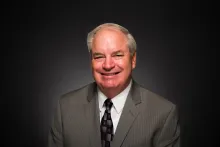
Robin Webber was born in Chicago, Illinois, in 1951, but has lived most of his life in California. He has been a part of the Church of God community since 1963. He attended Ambassador College in Pasadena from 1969-1973. He majored in theology and history.
Mr. Webber's interest remains in the study of history, socio-economics and literature. Over the years, he has offered his services to museums as a docent to share his enthusiasm and passions regarding these areas of expertise.
When time permits, he loves to go mountain biking on nearby ranch land and meet his wife as she hikes toward him.
