
Robin S Webber
This transcript was generated by AI and may contain errors. It is provided to assist those who may not be able to listen to the message.
I was in a meeting yesterday morning. The meeting was about 7 a.m. because it was from the home office at 10 a.m. And a question came up about why should people come into our congregation and into our midst? And or any congregation around the world that has this name behind it? And I basically came back with three points because people will approach and they will move towards something that has a value. Has a value to them. And so I was asked what value do people have when they come in through that doorway and sit amongst us and hear what we have to say, whether it be a Mr.
Kozer and or myself. I actually offered three points and I'd like to share them with you very quickly, which will launch into the message that I want to share with you because it does incorporate one of those values. When people come through those doors, number one, there is a value. And that value is that we direct people towards God Almighty and His plan of salvation. We direct people towards God Almighty and His plan of salvation. Number two, people that come through that door are taught and are shared how Jesus Christ Himself practiced His Father's will on this earth when He lived.
Number three, that people that come through that door, the value that we look at is that they then are surrounded by people of like heart and like mind to encourage them and to guide them and to be with them, to come up alongside of them as they move towards God's purpose of salvation, as they try to practice the walk of Jesus Christ in their life and to recognize that they are not alone and that God uses people and that oftentimes people are God's touch upon those that He is calling to motivate them.
And I want to actually give this message based upon a value that is very important, one that God values and one that we value, because our purpose and our reason of being as an instrument in the body of Christ is to direct people towards God and to help them understand His plan of salvation. And that today is about baptism. And I want to talk about that because we have a number of people that have come into our midst of recent date and throughout this year that have perhaps never heard a message on baptism.
And it's something that God values very, very much. And that's why I want to bring it to you. But it's not only going to be those that are new that have not perhaps considered their baptism, but it's also to we that are in this room that have been baptized.
And I think we're going to kind of find that there's a mutual meeting point that this message will be of importance to both peoples. Baptism is a wonderful moment. Baptism is a wonderful moment. Why is baptism the act thereof, that event in one person's life, a wonderful moment? I'd like to give you three elements of that to launch forward. Number one is that God accepts new members into his family. God accepts new members into his family.
Number two, I'm going to change my glasses here. I can see better now. He places his name upon them. God literally places his name upon those that are baptized. And it's not just as John Henry, it's not just as John Hancock. That's how we think about it in our Western minds. But there's more to a name when you understand what it means biblically. Number three, then, he grants his life-giving spirit. He grants his life-giving spirit to those that are baptized.
But it comes through this seminal event. Baptism is a very teaching moment. It's a snapshot in time. And, again, not only for those that are to be baptized or those that are considering baptism, but it's really for all of us that, in a sense, as we go back to think of those moments. It's like taking out the family scrapbook day by day or maybe on the Sabbath day to reflect where all of this began and how God began to work with you in El Cajon or La Mesa or up in Sanitas or down in Chula Vista, wherever you were, or back in Chicago at that time.
And to recognize that when you gave your life to God Almighty and surrendered yourself, and in that sense gave your life away, that God might be able to live in you. What is baptism? What is baptism? Baptism is an event. It is an activity. It's an outward expression of an inward intent that demonstrably portrays, in one sense, a necessary ending of not only what, but what you are apart from God and the beginning of God's new life in you. It's a transition period.
Something has to go before something comes in. I notice sometimes in hearing people, counsel people for baptism, and or at a baptismal ceremony, people will often say, Well, have you repented of your sins? And that is a part of baptism. But that is the activity. That is not necessarily going to the base, and that is of what we are, not what we did, but what we are. That human nature that is apart from God, that carnal mind which is enmity towards God, as Paul says in Romans 8-7.
And so we come to this moment. So what's really wonderful about baptism is it's a new beginning with Jesus Christ as the Lord of our life. There's a necessary ending, and there's a new beginning. It's an outward expression of an inward intent. So today let's focus on baptism and discuss this core experience of the Christian experience.
And as I go through this, I do want to emphasize to our entire audience that it's not only the doorway to salvation, but it should be an ongoing anchor in our life to keep us steady through the storms of life. You know, we're in the month of November, and I was baptized in the month of November. I was baptized on November 6th. Very interestingly, it was seven years apart from the day that my mother was baptized. So it's kind of interesting. We used to call up one another and say, do you remember? And do you remember where you were when you were baptized? I remember where Susan was when she was baptized because I was there. And she actually got baptized before I did, and that she was baptized on Waverly Drive in Pasadena in Mr. David Antion's swimming pool. Mr. Antion had been her childhood pastor out of Akron. And so I think I was there. I think my mom might have been there. I'm not trying to remember, but it was a very special event. God wants us to remember that event and how special it was, whether it was in a swimming pool or the garden hires Jacuzzi, or in a river, or in an ocean, or in one of those old galvanized metal troughs that used to be in one of those Midwestern deacons' basements. It wasn't the container. It was the water. It wasn't even the water. It was the heart that was submerged under the water that you gave your life away that Christ might begin to dwell and to reign as Master of your heart. So let's talk a little bit about baptism today. It's that important. Let's turn to Acts 2 and verse 38 and get a feel of baptism, because I know a number of you have come in, and some of you are considering baptism. So I really wanted to address this today while I'm here. Acts 2.38 is kind of that seminal scripture about baptism. I'd like to draw your attention to it and why it is important. In Acts 2, and let's pick up the thought in verse 36.
This is after Peter has really preached a sermon. It's what we might call a real barn burner. And all of the Jews that were in Jerusalem that had witnessed Jesus coming in and going through, and they were saying, Hosanna, Hosanna. Then many of them turned their back on him, and then the Romans crucified him. And they had been in the crowd, many of them saying, Crucify him, and crucify him.
And then they came through Peter's message, come to recognize that they had crucified and put on a tree, the Messiah, the one that had been longed for and hoped for in the prophecies of old. And then verse 36, Therefore let all the house of Israel know assuredly that God has made this Jesus, whom you crucified, both Lord and Christ, both King and Messiah anointed. Now when they heard this, they were cut in their heart and said to Peter and the rest of the apostles, Men and brethren, what shall we do? They were cut to the quick. In a sense, in that moment when they recognized who and what they were and who and what they had done to Messiah, they were devastated. Hope was cut off just as much as when you read Ezekiel 37 about those bones rattling in that valley and hope being cut off. And that's where baptism enters. That's where it begins. They didn't know what to do. And this, brethren of San Diego, is perhaps a verse that we need to look upon as a congregation and as persons within this congregation to understand what Christianity is about. It's about being dealers in hope when there is no hope. Dealers in faith when only fear abounds. Notice what happens as we move to the next verse. Then Peter said to them, Those that were hopeless and helpless and lost, In their own deeds, then Peter said to them, Repent, and let every one of you be baptized in the name of Jesus Christ, for the remission of sins, and you shall receive the gift of the Holy Spirit. How incredible! How wonderful! That in this clarion moment of Scripture where hope is lost, hope is given. Where we are confronted with darkness, light enters. Where there is no future, a new future begins. Have you ever thought about your baptism that way? That's what baptism is. Where there is darkness, there is light. Where there is no hope, there is hope. Where there is no future other than the grave. A new life begins at baptism. And God gives us a gift. A gift. We do not have the money to purchase it. We do not have the thoughts to create it. We do not have the imagination to consider it. It comes out of not nowhere, but God's throne room. And it comes through this initial act of baptism. Baptism is at the forefront of Christian history. Baptism is at the forefront of the individual Christian experience. Experience in Christianity without baptism is like being given a beautiful new car, handed the keys, you put it in, and it goes nowhere. Baptism is essential. Baptism is, indeed, necessary to come closer and to understand what God is all about. With that said, then, does it really matter? Does it really matter whether you are baptized or not?
I say it does. I know many people at times are baptized as babies. We call it being Christened. Others are baptized when they are younger. I remember being baptized in the Lutheran Church when I was 11 years old. And the only thing I was really worrying about was everybody was going to find out my middle name. Something about boys don't always want their middle names to be known by the masses. I think I was focusing more on my middle name of Scott. Than I was Christ at age 11.
Maybe that's why in our church we have adult baptism to where people really understand why they are being baptized and into whose name they are being baptized. Some of you may be considering baptism today, and I encourage you wholeheartedly to consider that.
And I, or one of the elders, all of the elders, would love to be a part of that. Some of you may not have been baptized having grown up in the church, having grown up in this way of life, having grown up doing this and doing that, and doing this and doing that, which is in the Bible, and doing everything other than giving your whole and surrendering yourself to God the Father and to Jesus Christ.
You grew up in the church. You keep the Sabbath. You keep the Biblical festivals. You don't keep Christmas. You don't do this. You don't do this. You don't do that. You do this. You do this. You do this. Sometimes we mistake Christianity for what we do or what we don't do, and we have the do list and we have the don't list. What God wants us to do is to surrender unconditionally our lives into His love by faith and to experience His grace, and the dos and the don'ts will come after that. You will understand that. God will open up His word to you. But first of all, you have to unconditionally surrender.
But at other times, we grow up in this way of life. We get caught up in all the dos and the don'ts, and we do everything other than the do, the biggest do, which is to surrender. Put our agenda out and put God's agenda in and say, I surrender. God Almighty, allow your presence, allow your spirit, allow your life. You alone have life inherent.
I ask that you give me your gift. And I realize that before I receive that life, I've got to give my life away, as it were, figuratively. Some of us may be running from baptism. Some of us look around and say, well, look at that person. They're in the congregation. They're baptized. You've got to be kidding me. Look what it did for them. Not that any of you have ever said that, I know.
Or some of you, because of your experience with organized religion, say, forget it. It'll just be you and me, God. But God says that to receive His Holy Spirit, you've got to be baptized. And who said that baptism has anything to do with organized religion? I want you to think about that for a moment. Baptism does not have anything to do with organized religion.
It has everything to do with the call of God the Father, and you receiving that call, and you acting upon that, and then making your determination where you are hearing God's Word and where you see that activity in spirit and truth being preached and using God's Holy Spirit and trying the spirits to understand whose doors you ought to walk into. Some of you might be saying, yeah, but I don't know if I have it in me.
I don't know if I can spiritually succeed once I commit. I wonder if I commit and something goes south. That's why, and some of you may not realize that it's interesting. Can I share something with you? That's why so many people in the second or third century A.D. did not get baptized until they almost died. That's where the term deathbed confession comes in. They did not confess until they were just about to die, just in case they send and cut themselves off from God. That's why Constantine, along with its other challenging episodes, did not get baptized until the end of his death.
That was a very common practice in the Christian world at that time. I ask you a question, may I? Can we kind of interact here for a moment? With that thought, that you would wait to be baptized until you're almost dead, because what kind of God are you worshiping if you think he's up there keeping score?
What kind of a God are we worshiping if we think, oh, there's Rock. Got him! Right at the end of his life. He's out! Just like baseball. He's out! Do we kind of view God like an umpire? Or do we look at God as our Heavenly Father? This is what keeps people—can we talk?— this is what keeps people from being baptized, because they're thinking of what they're doing, or where they're going to fail, rather than what God has done and purposed in himself through His calling, through His Son and giving us a spirit, that He has everything behind us to create His spiritual success, to perform His will in us, to allow His life to live in us, that we were not called accidentally, but by purpose, to succeed and to be in that picture of His Kingdom.
So I ask a question, because I know a lot of you are baptized. But how do we approach our God? Do we approach Him through faith?
Or fear?
Do we look at Him as a loving Heavenly Father with His arms stretched out? Or do we look at Him like that umpire down there in downtown San Diego, behind the home plate? You're out, buddy! Only you can fill those questions in with your answers. You know, it's kind of interesting how you view God as how you treat others. How you view God and how you frame God in your mind and your heart is how you do treat others. Your image of God conforms in your mind and how you stretch out your judgments and your thoughts about others. No matter all of our different approaches on the subject of baptism, here's what I want to share with you.
God has only one approach to us, and that is He wants us to be a part of His family. He wants us to be a part of His family. God, from the very beginning, wanted Adam and Eve to be a part of the family, offer them everything, put the tree of life right in the middle of the Garden of Eden. But they rejected it. And because of that, a whole purpose and a whole plan had to go into motion, that God might redeem humanity. Redeem humanity, back to Himself.
That very word redemption, that comes from redeem, the word redeem was a Greek word that was used of an individual that was a criminal or a gladiator or a slave that in no way by any means could buy his own freedom. He didn't have anything in the bank account because he didn't have even a checkbook. There was no way possible humanly to redeem oneself. It had to come from somewhere else. And that's why the word redemption, when we use the word redemption in our language as Christians, where we talk about being redeemed, that means making that which was not making it good, giving something that had no worth and giving it worth.
And I think you know whose worth I am talking about. Let's pick up the thought then here. I'm going to go a little bit further. Just a little bit for some of you that may not know what the Bible says about baptism and how it begins. You thought maybe that you came through those doors because you found us on a web page or you saw the Beyond Today program or picked up the Good News magazine and said, there's a church I can believe in.
That's one I want to join. Can I make a comment? You don't join the body of Christ. You are put into that body by somebody who is loving and wonderful. It's called God the Father. Let's look at a very important scripture in this regard.
John 644. John 644. In John 644, we begin to understand the different roles of those that are in the family of God. That is the Godhead. And we notice John 644, this clarion scripture. No one, this is Jesus speaking in your Bible. It's probably in red ink. No one can come to me, this is Christ, unless the Father who has sent me draws him. And I will raise him up at the last day.
Now, sometimes when God says something once, it's very important, but when He doubles it, it's interesting. John 665. Notice what it says. He said, therefore, I have said to you that no one can come to me unless it has been granted to him by my Father.
Show me if you would for a moment over in Romans 8. Romans 8. And I'm actually looking for the verse that I'm looking for. It wasn't in my... Oh, verse 14. Romans 8, verse 14. Notice what it says here. For as many as are led by the Spirit of God, these are the sons of God. That's fascinating. You know, to recognize that God at times is working before us. He's working around us. He's working above us. And His Spirit, even if it is not even in us at that time, is still active and guiding and directing our steps and working with our minds. And sometimes it can go back not just from having opened your Bible or gone to the Internet and found where the United Church of God is or watching the Beyond Today program.
I recognize, and Susan and I talk about it often, we recognize that God was working and guiding and directing us by His Spirit when we were 11 or 12 years old. And it was not in this flock. It began elsewhere. But God was working and moving us to that time and to that place and expanding our understanding.
Susan and I have this conversation oftentimes where she grew up in Ohio and where she was attending. And it was not a Church of God community at that time. And I told you where I was baptized, but God was beginning nonetheless to direct and to work with my mind and my heart. And then I remember when I came into the Church of God community when I was 12 years old, I'd grown up in one place and had learned to love God and to learn to love Jesus Christ.
But when I came into the Church of God community, I began a greater understanding of what God the Father and Jesus Christ are actually doing. And what they would have me to do is I have this time and space on this earth. And so, wow!
Sometimes we get caught in the moment thinking, I have arrived when God has been working with us sometimes for 20, 30, and 40 years beforehand to bring us to this moment. It's God the Father that calls. Now sometimes people say, yeah, but why did it take so late? Why is God calling me now when I'm 40 or 50 or 60 or I'm... I'll let you fill in the blanks. Why?
Just ask Job. Sometimes it takes a while. Some of us are just hard nuts to crack. And God alone has his purposes of why and what decade. Always remember what it says in Job 42 and verse 5, where Job finally says, I've heard of you by the hearing of the ear, but now my eye sees you.
God didn't even begin working with Moses till he was 80 years of age. Didn't begin working with Abraham, Abram, until he was an octogenarian. And he didn't even teach Noah how to build a boat until he was 480 years of age. So you're doing pretty well. If you're worrying about why God is calling you now to baptism at age, and I'll let you fill in the blanks. Let's take another thought here, and let's go to Romans 5.
God the Father has his role. He is the one that calls. He is that ultimate sire of the universe. But then God the Son is the one who died by which we might be reconciled. Let's notice Romans 5 and verse 6, which is so poignant in this regard. In Romans 5. Let's pick up the thought here. Verse 6, For when we were still without strength, in due time Christ died for the ungodly. For scarcely for a righteous man will one die. Yet perhaps for a good man someone would even dare to die.
I mean, God's Spirit is really having Paul notch this through. But God demonstrates his own love. Not our love, not what our thoughts are. Let's get our mind off ourselves, and that's a task in itself. But it says his own love towards us, and that while we were still sinners, Christ died for us. That love of God. Much more than having now been justified by his blood, we shall be saved from wrath through him. For if when we were enemies we were reconciled to God through the death of his Son, much more having been reconciled, we shall be saved by his life.
And not only that, but we also rejoice in God through our Lord Jesus Christ, through whom we now receive the reconciliation. Notice verse 8. In verse 8 it says, God demonstrates. It's like a tapestry. He unmanifold. It is unfolded and just kind of keeps on going. He manifests this love, which is not of this earth, towards us, while we were still sinners.
I'd like to address that point for a moment. It raises an important point. We often suffer from the human misapprehension that we need to wait. We need to wait till we are right with God, till we're more perfect, till we're more Godlike. And so we keep on pushing it off, because we're looking at ourselves rather than looking at God's love. I'm not talking about a cheap grace, please understand.
But we tend to put the focus on ourselves and what we're not doing, rather than the focus on God and what he is doing. Baptism is not for the sinless. It is for sinners.
It's not for the perfect. It is for the fallen. It is not for those who, through some part of a self-achievement course, towards a worthy goal, wait and wait and wait until they, hear me, they get it right. When we try to go through that self-achievement course on our own until we get it right, we are already building the house of legalism, and what we are doing rather than what God is doing. Do you hear me? I had that mistake. I made that mistake in my own life. That's why Susan got baptized before I did.
She was 19. I got baptized when I was 19 and a half. Because at the time I thought, I wonder if I fail. I wonder if somehow, because I grew up reading Fox's Book of Martyrs as I went to bed at night. What wonderful nighttime reading. And I thought, what happens if persecution comes and I am the one that has led to the stake, like the old Sandal and Toga movies out of the 50s and 60s, Demetrius and the Gladiator, the robe, Quo Vadis.
This is the way. And I thought, I wonder if I am at the stake and wonder if I recant. I wonder if I say, I don't know Jesus Christ. That confession is good for the soul. And I thought, I wonder if I do that. Because growing up I'd heard that the preacher would read, If you deny me, I will deny you.
If you do not confess me before men, I will not confess. Oh, no, this is horrible. And I thought, oh my, can I, can I, can I, can I? And I got stuck on the pronoun of I rather than the word of God and God's promises. That if God is calling me, and you may have a similar situation or different vein today, where you are looking at what you are doing rather than what God can do for you, I got stuck on, oh, woe is me. And that really pushed me off for a while.
And then I remembered God's promises. God says, don't worry about it. Now, I have not been drugged before a magistrate yet, you know, like the apostles were, and like it says in Luke or whatever. But then I just remembered God's promise. He said, I will put my thoughts, and I will put my words in your mouth, and you don't need to worry about it. That was my big breakthrough in life, and that's how I've always operated in faith towards God ever since.
Just simply that God's not only calling me for His purpose, but that He gives promises and He gives provisions to make those purposes happen. I took God at His word. That's what we do when we're baptized. We take God at His word. We take that in faith that we have been called of God, the Father. We take it in faith that God gave His only begotten Son, this pure and beautiful and wonderful sacrifice that allows us to be redeemed and restored and be able to come into God's presence.
What a fantastic thing that is and how wonderful that is. But before you gain that new identity, we must die figuratively in the outward flesh and also in the inward man and give, as it were, the keys of our life over to God and allow Him to dwell on us, to rule our hearts, to rule our minds. That's very important. I want to share some thoughts as we begin to conclude, and that is simply this. Why then be baptized? And what is, shall I call it, as Mr. Kozer brought out, what does the Bible have to say about baptism? Allow me to give you a few thoughts here. Number one, why then be baptized? Because without being baptized, we have a challenge.
I'll bring that up in the third point. Number one, Jesus Christ. Number one, Jesus Christ was baptized. Jesus Christ was baptized. And the first thing that Jesus tells the disciple of His, and the last thing that He says to a disciple, as He did to Peter, is to follow Me. It makes it simple. I'm glad it's not a whole paragraph. It would make my Christian life more complicated. He just said, follow Me. Whatever Jesus Christ does, I want to do.
Jesus Christ was baptized. Join me if you would in Matthew 3 and verse 16. Let's take a look here for a moment right out of your Bible. Let's notice how Jesus Christ was baptized. In Matthew 3 verse 16, when He had been baptized, so He was baptized, Jesus came up immediately from the water. And behold, the heavens were open to Him. And He saw the Spirit of God as sinning like a dove, and it lit upon Him. It says that He came up out of the water. Jesus Christ was immersed in His role.
The biblical example of baptism is by immersion. In fact, that's the word baptismal. It means to be immersed. And there is a reason. Maybe we can discuss this after services in our chat with the messengers. When you look at Romans 6, when you look at Colossians 2, that baptism is likened unto a burial. Sometimes little babies are christened, but it's real hard to be buried in a drop of water.
And there's a term for that out of the Greek. Sometimes people, well, meaning it's not a drop of water, but they have a sprinkling or they have a dash of water. One word is kaio, the other is ritizo. It's all Greek to me, but the Greek that we want to remember is baptizo. That means to be immersed. Why is that? When we take somebody and we put them into the water, they are being buried. It is significant.
It is an outward expression of an inward intent that you have given your life away. You have died that Jesus Christ might live in you. Now, as it brings out in Colossians and Romans, as you are buried, it also then says that you are raised to life. So please understand this for you that are students of the Bible. You might want to jot this down.
Baptism not only represents a burial, it represents resurrection. Not the ultimate resurrection, but it does represent resurrection to a new life, to a new creation. Very important. I was baptized because my Lord and my Savior, Jesus Christ, was baptized. He set the example. He validated the role of his cousin John. He was also in that sense preparing as a priest, and priests of old were anointed and they were washed before they went into service.
And you and I are being called to be priests under Jesus Christ in the wonderful world tomorrow. Point number two, we cannot receive the Holy Spirit until we are baptized. That was made clear in Acts 2.38. Repent. We need to repent. We need to recognize who and what we were apart from God before his Spirit began to work with us. We need to be baptized. And then it says that you will receive the Holy Spirit. Biblical baptism not only consists of being fully immersed in water, but by receiving the laying on of hands. Join me, if you would, for a moment in Acts 8, in Acts 8.14. And notice this example right out of Scripture.
If I can make an example here. This is what we talked about in baptismal counseling. Baptism really consists of two different acts within baptism. One is what we call the baptism of water. The baptism of water. The baptism of repentance. Like and under the baptism of John, down there in the Jordan. That was the baptism that was there before Jesus Christ came along. But then what we have is that second act within the baptismal ceremony to where those that have been commissioned as servants of Jesus Christ lay hands upon those individuals that have been immersed. That they might receive the gift of the Holy Spirit. You can also look at 2 Timothy 1, 7, and 8 about that, where Paul reminds Timothy that he received the Holy Spirit by the laying on of hands.
Point number 3, and this is essential. We cannot receive life unless we have the Spirit of Christ. And that Spirit of Christ can only come through baptism. Join me if you would in Romans 8. In Romans 8. Let's go right to the Bible and allow the Bible to speak to us. In Romans 8. And let's pick up the thought in verse 8.
So then those who are in the flesh, they can't please God. They can look pretty on the outside, but they can't please God. But you are not in the flesh, but in the Spirit. If indeed the Spirit of God dwells in you. Now how does it dwell in you? It dwells in you when you repent and you are baptized and you receive that Spirit by immersion and by the hands.
But the Spirit dwells in you. Now if anyone does not have the Spirit of Christ, he is not his. And if Christ is in you, the body is dead because of sin, but the Spirit is life because of righteousness. But if the Spirit of him who raised Jesus from the dead dwells in you, he who raised Christ from the dead will also give life to your mortal bodies through his Spirit who dwells in you. To ultimately receive eternal life, which is the gift of God.
No measure of human works can achieve that or buy that. You must have the Spirit of Christ in you. That Spirit of Christ, if we have the time, is synonymous with the Holy Spirit in the Scriptures. This makes it plain, then, that baptism and that act, and not only the act, but the motivation and the attitude within us that leads us up to that event, which is merely an outward expression of an inward intent, is essential.
Now, one thing I wanted to mention to you before as we begin to conclude is simply this. Sometimes people will say, well, you know, I've just had so much foowee-dooey with organized religion and with men getting between me and God. I'm sure you've talked to people like that before. When you walk through that door and you value what we are teaching and what we are preaching here, you have to understand how we deal with baptism.
Because, again, there's a value here that our role as an instrument in the body of Christ is to guide and to direct people to God the Father and Jesus Christ and their plan of salvation, not be short stops. We're not playing baseball. This is about salvation. Thus, when an individual is baptized, allow me to share with some of you that are newer how we baptize people.
We will baptize them. We will immerse them in water. We will ask them, have you repented of all of your sins? Have you repented not only what you have done, but what you are apart from God? They will normally say, yes. I've never had anybody say no at that point. But if they did, that's the end of the baptism. Then I will ask this, have you accepted Jesus Christ as your personal Savior?
And they will come back and they will say, yes. And then I will say, because you have repented of all of your sins and because you have accepted Jesus Christ as your Lord and as your personal Savior, I am therefore, as His servant, not going to baptize you into any sect, creed, and or organization of this earth. But I'm going to baptize you in the name of the Father, in the name of the Son, and the Holy Spirit, for the remission of all of your sins.
And then just to make sure, I'll ask, do you fully understand what I have asked and what you have said? They'll say, yes. I'll say, amen. That means so be it. And we will baptize them and we will lay hands on them. In other words, let's understand something that when I, as a minister of Jesus Christ, or one of our elders, baptize you, we do not baptize you and make you a united Christian.
We baptize you into the name of God the Father, God the Son, and the Holy Spirit for the remission of your sins. You are, at that time then, while you are baptized individually, as Paul brings out in Corinthians, you are placed in this, what we call this, new creation. No longer made of the dust, but made of the Spirit. You are that new creation, as Paul brings out in Corinthians. And that is your responsibility then to look to God the Father, to look to Jesus Christ. Yes, God willing, hopefully, that you do respect the servants of God, but at the same time to recognize that none of us can play shortstop with your communication and with your life before God.
Thus, let's remember something, okay, friends, today? And that is simply this, that baptism is not simply the doorway to salvation, but it is the anchor of all of us that have been baptized for 10, 20, 30, 40 years and more. It's that anchor, it's that pivot point. It is the beginning of every thought and every action that we do.
When I think of baptism, my baptism immediately then engenders how I relate with our God and His Son. It engenders as to how I respond and treat my dear wife, Susan, and to make sure that I do treat her dear. I didn't say perfectly, she knows that. But it is my thought, this is my pivot point, for any of you that are old ballplayers, see that move right there? Ballplayers. There's a pivot point, there's a pivot point of where you're going to make your play. Baptism is the pivot point of the rest of our life. Baptism betrays a necessary ending of the old man and the beginning of the new creation. We're going to talk about this more when we have chat with the messengers. We're going to do that, let's plan to do that at 10 after 4 this afternoon. Mr. Kozer and I, we're going to be right here. If nobody comes in, we'll just talk to ourselves. But if some of you want to expand upon a very important subject that he brought up, and to talk more about baptism, we'll be here at 10 after 4. God bless each and every one of you, and it's wonderful to see all of you out there today.
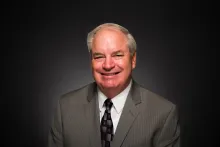
Robin Webber was born in Chicago, Illinois, in 1951, but has lived most of his life in California. He has been a part of the Church of God community since 1963. He attended Ambassador College in Pasadena from 1969-1973. He majored in theology and history.
Mr. Webber's interest remains in the study of history, socio-economics and literature. Over the years, he has offered his services to museums as a docent to share his enthusiasm and passions regarding these areas of expertise.
When time permits, he loves to go mountain biking on nearby ranch land and meet his wife as she hikes toward him.
