
Robin S Webber
This transcript was generated by AI and may contain errors. It is provided to assist those who may not be able to listen to the message.
Well, thank you very much, Nancy. And good to see Mihah here. Welcome home, Mihah. Mihah's back from—I presume you're still on winter break.
And for those of you that are visiting us, Mihah goes to a musical conservatory back in New England, and she's back here for winter break. And I also wanted to mention, unless I am remiss, there's some people here that were not always able to see Mrs. Kemp, Sr.
How's that? Mrs. Kemp, Sr. Not to Arlene, but on law. We're very happy to have Mrs. Kemp with us today. And very nice to—I see Mrs. Reeves back there. Hello, Mrs. Reeves. It's good to have you. And we also have Richard back here. I haven't seen Richard in a long time. See what happens when we have a baptism? Everybody comes out. We should do this every week. And we're going to be doing it again in about a month.
And so we want to welcome those that are with us today from other Church of God communities, and as well those that might be visiting with us. We'll look forward—we're going to have a potluck afterwards, and we're going to have the baptism after church. So I hope you all stick around.
Well, today we're going to be baptizing ISIS. I think all of us realize it's a special moment for Redlands going back 17 years. And remember when Prisha was just a very, very young mother, and there was this little baby, as I remember, didn't have much hair on her head at the time. She was just a very young little baby, but amazing what's happened over 17 years.
And they're still sitting together on the front row. They weren't on the front row back in those days, as I remember they were back in the lobby, taking care of ISIS. But we were going to have other baptisms, but as I mentioned in the announcements, we're not going to have those today. But that's well and fine, because I'm still going to be speaking about baptism to all of you today. We're going to be speaking to ISIS. I had mentioned, though, some time ago I'd like to get together with ISIS before we baptized her. Mr. Gary Antion has been working with ISIS back in Cincinnati.
Didn't have an opportunity to do that. So ISIS, we have to do this now in front of everybody and talk about baptism with you and with everybody else and with those that are about to be baptized, those that are considering baptism, because some of you are here considering baptism.
And some of you have not considered baptism at all. And we need to talk about that as well. It's going to be a very special moment today. Today, God is going to accept ISIS as a member of His family and with His name set upon you and His seal set upon you and His life-giving Spirit set upon you as He will to each of you that are ultimately going to be baptized.
It's a, again, it's a very, very special moment. It's a snapshot moment. I always remember going to Disneyland when I used to go to Disneyland. I've not been there for many a year, but I remember where you'd go around the bend and there'd be that Kodak sign saying, here is where you want to take the picture. It might be a picture of the Matterhorn or the picture of the Fantasy Castle.
It was saying, you want to stand right here and you want to take this all in. This is the snapshot that you want to remember of your experience. Well, that's what baptism is like. It's a Kodak moment. It's a moment for all of us also as well, not only for ISIS, but for all of us here that have been baptized, whether it was 10, 20, 30, and or even 40 years ago, to take out our family scrapbook and look at those pictures again and remember what our own baptism meant and what it also means to us today.
To begin this message, I'd like to direct your attention to the book of Acts. Join me if you would, the book of Acts, Acts 2. Let's get right into this matter of baptism because it is right there at the beginning of what Jesus founded, and that is the church, the body of Christ. In Acts 2, and let's pick up the thought if we could, in verse 36. This is after the first sermon, the first big message of the New Testament church, after the Holy Spirit had come, and Peter had shared the story of what and who Christ is, and yes, indeed, what the men around Him had done.
They had ultimately come to the understanding that when it was all said and done, they got it. They had killed Messiah. They had killed the Son of God. And then verse 36 comes, therefore let all the house of Israel know assuredly that God has made this Jesus whom you crucified, both Lord and Christ. Now, when they heard this, they were cut to the heart. And said to Peter and the rest of the apostles, men and brethren, what shall we do? And then Peter said to them, repent, and let every one of you be baptized in the name of Jesus Christ for the remission of your sins.
And you shall receive the gift of the Holy Spirit. For the promise is to you and to your children and to all who are afar off. And that can be taken both geographically or in time for a way that would be afar off now in the 21st century.
As many as the Lord our God will call. Now, we're going to touch on that last statement later on that God does the calling. But here we have it.
The answer to where they were at was to repent, to be baptized, and to receive the Holy Spirit. Now, why is this important for all of us? This is a clarion moment of Scripture where hope is lost, hope is given, where we are confronted with darkness, a light emerges, where there is no future, where you've been slammed up against a wall. A new future begins, and it begins at baptism.
Now, why did I turn to Acts 2? Because baptism is at the forefront of Christian history. It is also at the forefront of the individual Christian experience. Experiencing Christianity without baptism is like being presented a beautiful new car without a key. You open the door, seems to be a comfortable ride, but you're not going anywhere. It is essential having relationship with God to progress, to be baptized. Sometimes people don't understand that.
Sometimes people ask, well, does it really matter whether you are baptized or not? Now, I want to address this for a moment before we move further because a number of people have a number of, do I dare say, notions or perspectives, questions about baptism, things that have shaped them, their past or what they have viewed that shapes maybe why they are not baptized. Some of you may have considered baptism being, in a sense, no big deal. Sometimes people that have grown up in the church, they know the truth. They believe in God. They have no difficult understanding that it is God's Word, and they've always in that sense been law observant. They are a moral abiding person, and they say to themselves, isn't that enough? I'll get around to it someday.
Some unknowingly, perhaps unwittingly, treat baptism like it's an elective course, rather than admission to the greatest adventure in life that can be imaginable. You cannot skip over baptism.
Baptism is not like going through the soup plantation, and you take a little bit of this, and you take a little bit of that, and then, uh-oh, there's the broccoli, and you skip over it. Baptism is not broccoli. It's a part of the main meal that God wants us to understand.
Another view. Some of us have been running away from baptism. Sometimes we look around and say, well, if this person's baptized, or if this person's baptized, they say they're baptized. If they're baptized, then forget it. There must be something wrong with this experience. Or, after what I've experienced in organized religion, why would I want to be a part of any organization? Well, that's a very fair question. I thoroughly agree with you. Absolutely. But who says that baptism has anything to do with organized religion, or corporate religion? For it does not. Baptism is an individual action before God Almighty. We'll talk about that as we go along.
Or, I don't know if I can spiritually succeed. I'm not good at committing. And no, you can't.
Of and by yourself, you cannot succeed at baptism. And that sometimes holds people back.
You can't succeed at baptism. You can't succeed at the spiritual life unless you have the Spirit of God residing in you. It is designed such. We can't keep the ways of God by the letter and by the Spirit, especially, of and by ourselves. This was a tremendous lesson that I had to learn early on.
I was baptized at age 19. I wanted to be baptized at age 18. Susan had been baptized. I thought about baptism. I was at Ambassador College at the time, which was a religious institution. Seems like everybody else was getting baptized. Maybe if I just fall in, it would take. I know, they're just teasing.
But I had issues, as we say today. I didn't know that word back then, but now today people have issues. People have had an issue, and the issue was this, that I had seen too many of those old 1950-1960 Bible movies, you know, where they send the Christians into the the Colosseum, not alone, but with the lions. And they would try to make the stars of the show recant.
And I thought, oh my, my, my, I would look at these movies. I thought, oh, how glorious, how wonderful, how brave these people are, and they are true to the end. And, you know, then the music would begin, and the clouds would open up. And it's a typical 1955-60 movie, The Robe, Demetrius, and the Gladiators, Sign of the Cross, Quo Vadis, all of you. Oh, you're all younger than that. None of you are nodding. Okay, now if you know those movies. But anyway, the lions were there, and the Romans. And I thought, oh my, you know, when I first came into the Church of God community, I heard this, this, this, this statement right in the Bible that, if you deny me, I will deny you. If you do not profess me, then, oh no, wonder if somehow, and of course, I'd read Fox's Book of Martyrs. That's not good reading when you're going to bed at night. I'd read Fox's Book of Martyrs. I thought, oh no, I could never do that. I don't know if I could take that much pain. I don't know if I could be that courageous as those people were. See, I was thinking too much. You know who I was thinking about? I was thinking about me. I was thinking about what I was going to do. I was considering my insufficiency in this theater of the mind that was rolling as a, as a young man. And it was then when I was struck that it's not about me. It's all about God. And God says he gives promises that he will put the words in my mouth. I don't need to come up with them. It doesn't mean that I don't study the word. Does it mean that I don't prepare myself? But I was thinking too much of what I was going to do. And I was not thinking that God said, I will take your burden. I will make a light. I will be your God. I will be your champion. And I will be your buckler.
As soon as that came to me, the lights came on. And I was baptized. Because I came to a point of recognizing there was still too much me in 19-year-old Robin Weber. Well, I've got some confessions here. There's still too much me in 61-year-old Robin Weber. But it was a start. It was a beginning.
Because baptism leads to a journey that never finishes. We're always growing. It's never ending. It's kind of like I know with ISIS down here right now with just having graduated from high school. We call it graduation. But that's why they called it commencement. Because it's really, as we know that are older, whether it's in high school, whether it's in college, you're not ending, even though in your mind you think you're ending something, you're just beginning. And that's what baptism is. It's the beginning of a wonderful and fantastic journey. So we need to understand that.
Some of us need to further consider our baptism, those that have been baptized. And that's why I'm addressing this again today and unlock its potential. Baptism is not just something that we did in the past. It is to be an anchor. It is to be a mooring in our spiritual life.
It always goes back to that deliberate decision that we made in our lives, in that water, that we made a value statement. It's the GPS that always brings us back to our relationship with God. And we're going to witness that today because ISIS would like to have all of her church family there, with her. And as we go through that, as she goes through that alone before God, we're going to be able to understand that all ourselves again, what the compact, what the covenant meant.
Before we go any further about baptism, let's ask a question. And this is probably germane to the rest of the discussion. What is God doing? What is God doing down here below? Well, we need to go back to Genesis 1, verse 26. Join me if you would there, please. Genesis 1, 26. Let's understand what God is doing. In Genesis 1, verse 26, we come to find that then God said, let us make man in our image according to our likeness and let them have dominion over the fish of the sea and over the birds of the air and over the cattle and over all the earth and over every creeping thing that creeps on the earth. Notice now, verse 27, so God created.
Created. Man, we're not an accident. We are not the descendants of lovesick amoeba in some slimy pond back before time, which had a photosynthetic moment of energizing light that came upon them, that gave them life. Because then you have to ask your question, well, where did the light come from? Who turned on the switch? You keep on going back far enough, you have to understand somebody had to turn on the switch. So God created man in his own image. In the image of God, he created him male and female, and he created them and he blessed them. And God said to them, be fruitful, multiply, fill the earth, subdue it. God was in that sense saying, I've created you to, in a sense, become like me. And I'm going to give you this earth.
It's going to be sanctuary. I've created it. Everything I've created is good. It's very good. And I'm going to have you in my place, as it were, have dominion over this creation.
And to understand that you are here for a very specific purpose. And that was when you go to Genesis 2, it says that here that he offered right in the middle of that garden, the tree of life. And that tree of life would have offered this special creation. Number one, a right relationship with its maker. Number two, a right relationship with its fellow man. And number three, a right relationship with the world that God had given man and woman to have dominion over. All of this would have created what? Just one word, harmony. And harmony that would lead to blessing. Harmony and blessing that ultimately would mean that Adam and Eve were designed ultimately to worship God by how they lived and by what they did. And to bring this to point, he offered them the tree of life. And that tree of life was in the midst of the garden. And that tree of life did not have a moat around it, had no barbed wire around it, had no alligators in the moat. It was open to humanity. Here is the tree of life. It's in the middle. It is yours. You are my creation. We know what transpires in Genesis 2 and then in Genesis 3, where the man and the woman bit into more than forbidden fruit, but bit into the first lie.
What is the first lie that was ever spawned? You're immortal. Of and by yourself, you have life. You're immortal. You shall not surely die. And they partook of that fruit of the tree of good and evil, the tree of experimentation, the tree of doing your own thing, thinking that they would become like God. And we recognize, then, that they were removed from Eden. And God had to put into play and put into plan a way back to Eden, a way of redemption, a way of making good of that which man and woman perpetrated by their very own choice. From the very beginning, God had a purpose to solidify this. Join me if you would in Ephesians. What did they give up? What would that tree of life produced? You see, when we're baptized, Isis, and to all of you there in Redlands Day, when we're baptized, we're partaking of the tree of life.
We're saying that we've done the tree of good and evil thing, and we've come to recognize that it's not everything that's cooked up to be. In fact, God says it's the way of death.
We're going to do something that Adam and Eve did not do. What did they reject? What was God willing to offer to this special creation? Well, we find that over in Ephesians 3 and verse 14. Join me here. For this reason I bow my knees to the Father of our Lord Jesus Christ. I worship God from whom the whole family in heaven and earth is named. Now, this is very important. I mentioned this at the beginning of the message about baptism that Isis today, when she is baptized, she is going to take on the name of God. That's more than a signature, like a John Hancock. That's how we think of it in our Western world. But in the Hebraic mind and in the mind of the Mediterranean basin, a name was meaning everything that is behind that name. Not just letters, but nature and attributes and promises and provisions, purpose and design, hopes and dreams to take on the name of God from whom the whole family in heaven and earth is named. That He would grant you according to the riches of His glory to be strengthened with might through His Spirit in the inner man. And that Christ might dwell in your heart through faith that you being rooted and grounded in love may be able to comprehend with all the saints what is the width and length and depth and height to know the love of Christ which passes knowledge that you may be filled with all the fullness of God. Now, when you look at that, this is countered with what Adam and Eve did.
They felt that they were being robbed. They believed that God was somehow holding out on them.
They believed that they had been left out of the loop of opportunity. And therefore, are you with me? They had to take matters into their own hands. Now, I know none of you have ever done that out there at all. God must be asleep. The Bible says He neither slumbers nor sleeps, but this time He is.
So God's not looking. God's not acting. God's not happening for me. So I'm going to do it myself. I'm going to take all to me. Nobody understands. Nobody cares.
I think we know. And we realize that we've had to come out of that world because that's based upon what the eye sees. What is being spoken here that God gives us through baptism and by the granting of God's Holy Spirit, our eyes and our heart to see when the facts don't compute on the ground. And we remember what God promised that He would give to us as His children.
Furthermore, what did they reject? Come with me to Hebrews 2. Hebrews 2.
Notice what it says here in Hebrews 2. And let's pick up the thought if we could in verse 10.
For both he who sanctifies and those who are being sanctified or set apart are all of one.
For which reason he is not ashamed to call them brethren, saying, I will declare your name to my brethren in the midst of the assembly. I will sing praise to you. It says that we are set apart are all one. It's interesting that the NIV now in the United Church of God we normally use as our standard text in church the New King James Version. But sometimes you go to a different translation to get a different feel. It says where it says all of one. The NIV says all the same family. See, people don't understand that sometimes that they think that God is creating. Well, we don't know what He's creating, but it must be good. Maybe we're supposed to be angels. Maybe we're supposed to be angelic beings with harps and being on a cloud or whatnot. No, God is in the process from the beginning of time of establishing a family made in His image and likeness named after Him, immortal children of God above the angels. And for those that are the first fruits of God, incredible opportunity to be a part of that realm and the dynamism and the energy and the productivity of all that God is, much more than simply singing in a heavenly choir. And therefore, we see that we can be all part of that family. Now, how does God accomplish this? Because once Adam and Eve were going out the door, He immediately, from the very beginning, gave that first promise in Genesis 3.15, that from the seed of the woman would come the answer to stomp on the head of the snake. Oh, yes, the seed of the woman would be bitten at, and there would be a momentary injury, but it would be the snake's head that would be crushed from the very beginning in Genesis 3.15. Even as Adam and Eve were being exited out of the garden by the carabin, the promise was there, away back to what God offered. Now, how does that work today?
John 6, verse 44. Join me if you would there. In Isis, if you're still over there on my left, you're going to join what everybody else—I'm supposed to be talking to Isis, but you're all involved because I didn't get into that counseling with her. In John 6, in verse 44, let's understand something. No man can come unto me unless the Father who sent me draws him, and I will raise him up at the last day. That can also be found in John 6, 65. Sometimes when God says something once, it's important. When he says it twice, take note. Thus we come to understand it's not whosoever will. It's not about joining a church or a corporation or some biblical society that agrees like you do. Oh, people do do that, and I don't think they go anywhere. God calls people. God calls people. This is prerogative that God the Father Himself keeps to Himself. There is much that He gives to the Son, and rightfully so. But the calling of those that are going to be in His family says that no one can come to me unless first God the Father call Him. And that's a personal invitation. That's something I want to share with you, may I?
And that is that God's calling is individual. It's individual. God doesn't have grandchildren or great-grandchildren. Now today we have Perisha over here and her daughter, Isis. Perisha was called many years ago, but I want you to understand Isis, and for those of you that are contemplating baptism, it's not because you're married to somebody. It's not because you belong to somebody. At the end of the day, you alone are called. What are you called to? That's a good question. You are called not only to look at the tree of life. You're not called just to simply know it's the tree of life, but you are called to ultimately walk up and to embrace the tree of life. And that God owns it, and He is sharing it with you. That's your responsibility. That's your responsibility. And not only to embrace it for a moment at a baptismal pool, but to embrace it the rest of your life and to remember what you promised before God Almighty at that baptismal pool, which we'll go over a little bit later. So we need to understand that. What else is accomplished? God does the calling. His son, Jesus, if we want to put it this way, did the dying. He was the sacrifice. And it's through His death that we're called. Join me, if you would, in Romans 5.
In Romans 5, and let's pick up the thought if we could in verse 6, because this is going to be very important for us to understand, because sometimes it holds people off from being baptized. In Romans 5 and verse 6, for when we were still without strength in due time, Christ died for the ungodly. For scarcely for a righteous man will one die, yet perhaps for a good man someone would even dare to die. But God demonstrated His own love. This is the demonstration. When people say, well, how do I know that God loves me? How do I know that? Show me! This is the demonstration right here. But God demonstrates His own love towards us, and that while we were still sinners, Christ died for us. He is the gift that we alone by our actions could not purchase, much more than having been justified to buy His blood, we shall be saved from wrath through Him. For if when we were enemies we were reconciled to God through the death of His Son, much more having been reconciled, we shall be saved by His life. And not only that, but we also rejoice in God through our Lord Jesus Christ, through whom now we have received the reconciliation.
That reconciliation means we begin to experience what God designed man and woman to experience at Eden. We begin to rejoin. We begin to become a part of that family again as we partake of the tree of life. What's very important as we go through Romans 5, and it's cardinal to sometimes why people do not get baptized, is because they don't think they're ready, and they don't think they're good enough. That's how I was. I didn't think I was ready. I did not think I was good enough.
I was thinking about me. Sometimes what people do at baptism, we have this human misapprehension that we need to wait until we are right with God. And if we do this, and if we do this, and if we do this, and if we do this, and if we do this, and if we do this, and we go through a whole lot of different hoops, sometimes of our own making, not only biblical making, but our own making, if we go through all of these hoops, then we're accepted. There's no amount of hopes that you can go through to be accepted, to be justified. That is where the sacrifice of Jesus Christ comes in. We can't be more perfect. There's only the Godhead that is perfect. Baptism, here's what I want to share with you. Baptism is not for the sinless.
It is for sinners. It is not for the perfect. It is for the fallen, for those who know who and what they are. Now, as I say this, please understand this does not remove personal responsibility of responding to the instructions of the Bible. Absolutely not. But to understand, if we are just trying to do that on our own and live by that alone, we are of all people most miserable. That's the whole comment that Paul made. That's why Jesus Christ had to come. That's why God gives us His Holy Spirit. Some of us, perhaps at times, again, focus on ourselves rather than what God is doing. Baptism is not to put water on God beings, but to put it on human beings and those that are sinners. Baptism is for Samson, between the pillars. Baptism is for Jacob's that have been wrestling with God all of their life. Baptism is for the good thief that's on the cross that all of a sudden begins to recognize in that sense who He is and who He is standing by. Baptism is for those that are like the prodigal son who understand that they are in the mire of life and need help. Now, conversely, sometimes there are people that don't think that they need help. They don't understand that Jesus Christ did not come to this earth to make good men better, but to allow men that are dead, dead men walking, to live for the first time. So this pendulum swings back and forth. What is very interesting is that baptism is the beginning of something beautiful, and I'd like to share that with you. Join me if you would in 2 Corinthians 5. In 2 Corinthians 5 and verse 17. In 2 Corinthians 5 and verse 17, Lewis, which says, Therefore, if anyone is in Christ, he is new creation.
Old things have passed away, and behold, all things have become new. New is one of God's favorite words to use in the entire Bible. You find a lot of that word mentioned in the book of Isaiah. Isaiah is known as the prophet with the new mind, the new name, the new song, the new Jerusalem, and on and on and on. Paul uses it a lot, too. It says that we are new if we are in Christ. What does it mean to be in Christ? Well, our young friend here, Isis, is in a moment out of moment, but soon, is going to be baptized. She becomes a new creation when God's Holy Spirit combines with that human spirit that is inside of her, where she says she no longer wants to be herself. She wants to be a new creation. What are the keys that unlock that? The keys are simply the two questions that we'll be asking, and all of you will hear it. First question is, ask the baptism. Was asked at your baptism? We'll probably be asked at your baptism in the future, and that is simply this. Have you accepted Jesus Christ as your Lord and as your Savior? Have you accepted Jesus Christ as your Lord and your Savior? Now, that's not just one sentence, because if you've read the Word, you recognize what it means to accept Christ. That means you accept the perfect life that He lived. You accept the ignominious death that He suffered. You accept the fact and belief that He was resurrected from the grave and that there is no stone too heavy. And if He was resurrected from the grave, that promises to you, that promises to me. And in our life, for God's purpose to be in our life, there is no stone that is too heavy.
And to recognize, then, that He is now at the right hand of God, that He was not only resurrected from the dead, others have been resurrected from the dead. You know that in the Bible. But He ascended. There's the difference. He ascended. Plus, He was perfect. And now He's at the right hand of God as your Advocate. Have you accepted Jesus Christ? Now, I'm not going to say that all at the pool. That's why I'm saying it right here. But that's why we go back to the very roots and the foundation in this snapshot moment of being baptized and what it meant. And then we ask, once you've accepted that, then you have to understand who you are and have you repented of your sins and who and what you are apart from God. Not only that you will sin, but to understand the factory. Not only understand the product, but understand the human plant from which it comes, as Mr. Marchbanks mentioned, that the carnal mind is enmity against God. Romans 8 and verse 7. Well, what do you mean? I've never shook my fist at God.
The mind that is enmity at God is sometimes a clever mind, and it doesn't shake its fist at God. It just kind of goes like this quietly. Not for me. No way. I'm going to do my own thing. Emmity sprouts in many, many, many different fashions. Join me, if you would, in Colossians 2 and verse 11. Let's take another look at a verse here. Colossians 2 and verse 11.
Speaking about this process of baptism, In him you were also circumcised with the circumcision made without hands by putting off the body of the sins of the flesh by the circumcision of Christ, and buried with him in baptism, in which you also were raised with him through faith in the working of God who raised him from the dead. Now, this is very powerful for us to understand that the metaphors are dynamic. It speaks about circumcision, which is what God had allotted Israel, and that was the crafting and the molding of the male organ as a sign of compact and covenant with him. But that was on the outside. That was on the outside. God is saying here there's a different circumcision. I'm going deeper. This is not going to be simply external. This is not about the outer man or the outer person, but I'm going to go deep. I'm going to go inward. This is not going to be by the good Levite and or by the guy that did all the circumcisions in the village. That's New Year Grandpappy, New Year Pappy, and New Year Uncles and circumcise them. This is different. You are now going to be designed and molded and crafted by God Almighty, your Father, and He's going to go to work. It's not your work. Notice what it says here, if you would, in the words here, that it says that let my eyes fall upon it here if I can. I'm looking for it.
Well, my eyes aren't falling on it right now, but anyway, at that point. The other point I want to share about verse 11 is simply verse 12, are buried with Him in baptism. Baptism pictures two things.
Sometimes we only think of it as one. I'd like to allow it to be two. If you'll notice verse 12, we are buried with Him in baptism, and then it says we are raised with Him through faith in the working of God. Thus, a little bit later, when we're over here at the baptismal pool, when we put Isis down into the water—we'll keep her down about five minutes—a lot of sin going on down there. No, no, gotta get it all clean. That's a burial. That's the watery grave, and that is a volunteer expression. It's an outward expression of an inward intent that you have said before our Father above and His Christ that I die to myself. Now, that's pretty tough for a 19-year-old kid to do, but God's called you now, and you're going to have a long ride, but you've got to remember today. And the point is this, that you don't stay down there. Sometimes people just stay down there. God doesn't work in a vacuum. Then, as Isis—and she will come up—when I bring Isis up out of the water, that is a type of resurrection. It's a sense of the resurrection. The old person is put down. The new person is raised up. Your sins are buried, which reminds us that when we have repented before God Almighty, our sins are buried. It's like He takes them out to the the deepest part of the ocean, deepest part of the ocean, and He drops them down there, like in the Mariana's trench, all 36,838 feet. I think that's what it was last time I looked, if not close. It's down there. And He drops them down there. Deep, deep, deep, deep, deep, deep, deep, deep, deep, deep, oh boy, I'm glad they're deep. But then He does one more thing. Then He plants a sign on there.
No fishing allowed. Nobody can go and raise it up like the Titanic.
Most importantly, you can't go back, because sometimes we are our own worst enemies, aren't we, dear friends, here in Redlands. We want to go back. We do not feel as if we've been fully forgiven. But that's the whole reason why 1 John the Epistle thereof says that His sacrifice cleanses all sin, all sin, all sin, deep. See, Terry here today. Terry's made a lifetime, yeah, you.
Terry's made a lifetime, hello? Terry's made a lifetime of cleaning carpets. Not the same carpet. He goes from house to house. But anyway, you know the difference between a surface cleaning and a deep cleaning. And you have to really get down in there. Well, that's what God, that's what the permeation of Jesus' blood does. That covenant, that Yom Kippur, that covering, that it covers, and it sinks, and it permeates. It's done. It's over. We're clean. We're spotless. Just as much as some of you ladies, I know Susan always enjoyed this when you, when you, on a summer day where you go out when we used to have clothes lines, and you put your sheets on a clothesline, let the sun do its thing, and the wind is blowing, and the sun does its thing, and those sheets are just white, white, white. They're beautiful. They're spotless.
You pick them up, and you know, and smell the downy or whatever's in it, you know, and take it, and it's clean. And that's exactly what's going to happen here in a few minutes for you, Isis, and for each and every one of you that will accept the Lord Jesus Christ, repent of your sins, and have confidence. Why then do we in the Church of God community baptize the way that we do? Let's talk about that for a moment. We baptize by immersion because Jesus Christ was immersed in the River Jordan. He came to his cousin John. John said, Behold, here comes the Lamb of God. And it says that they went down into the water. We strive to follow Jesus Christ. You know, here we have 2,000 years of history between us. Sometimes it's looking through a fog, but there are things that are in the Bible that are pretty loud, and we want to do things just as much to resemble what Jesus Christ did. It's very interesting. Jot this down. Look at it later, Acts 1-2. It says that talking about the recording of what Jesus both taught and did, he practiced what he preached. And we'll say, well, but I thought he was the perfect Lamb of God. Why did he need to be baptized? He baptized to set us an example. He was baptized to validate the ministry of his cousin, John the Baptist. He was baptized because in that sense he came to this earth as our Savior, but came to this earth to qualify to be our high priest. And what did high priests have to do as a part of the ceremony in performing the ceremonies for God, for people? And that was to be washed. That was to be cleansed. So there's a typology there. There's a typology beyond that that we are again in training now to become a kingdom of priests before our God. So the analogies go on there. We notice again the book of Pentecost. We see that an individual needs to be baptized. Here's something that I want to share with you. How important is baptism? Join me if you would in Romans 8 as we begin to wrap up here. Romans 8.
Let's pick up the thought if we could in verse 9.
But you are not in the flesh, but in the Spirit. If indeed the Spirit of God dwells in you, now if anyone does not have the Spirit of Christ, he is not his. And if Christ is in you, the body is dead because of sin. But the Spirit is life because of righteousness. Verse 11. But if the Spirit of him who raised Jesus from the dead dwells in you, he who raised Christ from the dead will also give life to your mortal bodies through his Spirit who dwells in you. Now it's very important. There is a difference between the flesh and there is a difference between living in the Spirit and having the Spirit of God in us. That's very essential. And the way that we understand through the Bible that you receive the Spirit and therefore a life from him who has life inherent is through baptism. Now, some concluding thoughts. Share it with Isis. Share it with all of you.
Some will say, well, I've noticed that when others are baptized, they're still sinning. So why even start down that trail?
No people, you know, they don't just kind of go like this. No one, they see somebody sinning.
You go, you know, yeah, they said they were Christian.
Holy rollers. We're not, if you're visiting, we're not holy rollers. I'm just saying people out there, I will say that. What's this mean? Bottom line, before baptism, those same individuals were running towards sin. After baptism, people are running away from sin. But there's one thing in common. Whether running towards or running away from, you'll still stumble. And that is where the confidence comes that you are already in compact. You are in covenant through blood, through the blood of Jesus Christ. And God knows your heart. And Jesus Christ, who's at the right hand of God, is our advocate, is our heavenly attorney, as it were, meting out our case before God, saying, God, I've been down there. And I know, I know them. I've been there. I've been through the challenges, the mental challenges, the emotional challenges. Our high priest is always in action. He is never asleep. He is always going for it. And then sometimes what happened is, Satan, the accuser, the brethren will come up and say, God, did you miss what they did? Did you see that?
And God will say, well, Jesus, did you see that? And Jesus will say, Father, I am not here to say that they did not do that. But did you hear the rest of the story?
Did you hear their prayer? Do you remember the covenant that they made with you at baptism?
I'm not saying that they didn't sin. I'm saying, my blood remains to cover them as they accept it, believe it, and understand it. Father, forgive them. Father, pardon them. They are your children.
Here's one thing I want to share with you and understand. Christianity is not about keeping score of our stumbles. That's not what God, our God, the God I worship, the God that I teach, I preach and share with people around the nation about. God is not up there keeping score.
But He does expect us to keep faith with a God who called us, loves us, and allowed His Son to die for us. See, what's about to happen for you, Isis, and for those that are going to be baptized in the very near future, and are considering baptism. And I want to share a thought with you about that. If you're considering baptism, you don't have to simply solely counsel with me. Mr. Sharp would be more than happy to counsel with you. Mr. Barr would be more than happy to counsel with you. But here's what we're doing today. Join me if you wouldn't Psalm 23. Good way to conclude a message. Always go to Psalm 23.
Here's what we do at baptism. Here's what you're going to be doing, Isis. Jan and Nancy will be doing here shortly. Next time, Susie and I are back in about a month. Those of you that will join them then. This is basically what you're saying. The Lord is my shepherd. I shall not want.
Been there, done that. I know I can't shepherd myself. I now know that the Lord is my shepherd.
He has a purpose for my life. He has a plan that backs that purpose. He has promises that back those purposes and provisions to carry them out. I want to be forgiven.
I need your spirit, O Father above. And then he says, this will be the journey. Jesus said, follow me. And Psalm 23 really talks about all the different chapters of life.
There are times when he'll make us to lie down in green pastures.
There's times when he will lead us beside the still waters. And there are times that he will restore our soul. And there are times that he will lead us in the paths of righteousness for his name's sake.
There are times when we'll feel apart from God. We feel that God has gone to sleep.
God doesn't understand. God somehow is punishing us. There are times that we don't necessarily wish in our life. Yea, though I walk through the valley of the shadow of death, it says I will fear no evil. For it is when the shepherd takes the sheep from the low land to the high land and goes through the crevices and goes through the high places, that even though if the sheep don't even understand it is then and then alone that the shepherd does his most intimate, careful, skillful, deliberate work that perhaps even the sheep don't understand, to move them from the low land to the mesa up above and goes ahead to prepare a table that is laid not only before sheep but before Christians that have given their life to God. Because you prepare a table before me in the presence of my enemies, you anoint my head with oil and my cup runneth over.
Surely goodness and mercy shall follow me all the days of my life. The goodness and the mercy that we need is what God sees that we need. Shall follow me all the days of my life and I will dwell in the house of the Lord forever. So we see Isis and we see congregation that God never promised us a rose garden. He did promise a kingdom. Jesus never said that it would be easy. You've heard me say this before. You know what's coming. Jesus never said that it would be easy. He did say that it would be worth it. It would be worth it. I hope this has been illuminating for all of us today, those that are about to be baptized, those that go back and think about what you said 10, 20, 30 months or 30 years ago. It holds the same. God hasn't moved. We grow in grace and knowledge. We go up. We go down. We grow in love. I remember when I was baptized, I was 19 years of age, a little bit just like Isis over here. Susan and I were about the same. And at that time, we were motivated and provoked to be baptized. We thought it was the right thing. I remember the first time that I told God that I love Him and I still love Him. I hope you can sense that and understand how much I love God, but it's grown over the years. I remember the first time I told Susan that I loved her. We were all of, I bear not say with some of the younger people here, we were 19. I remember the first time I mentioned that I loved my wife. I was 19. I'm 61 years old now. How shallow it was for me to say that at 19, not really fully understanding love. But you have to start somewhere, don't you? And it grows and it develops as you go through the hurdles, the challenges, the chapters, and the stories of life. Well, my love story to my wife is the same as our love story towards our God and His love story towards us. It's not something that is designed to stay stagnant, but with experience. As we go through those verses in Psalm 23, it expands and expands. That's so much I want to share a thought with you at the end. Something that I pray that I'm coming to, that I love our God, not simply for what He promises, but just simply for who He is. That I don't have any expectations of God in the future, because He already took me and has brought me into this process of salvation. He owes me nothing.
He owes me nothing. I know He wants to give His children everything, but He owes me nothing, and I love Him for who He is. He wouldn't have to do one more thing. That's agape. That's agape.
Now, I look forward to the kingdom, but He doesn't have to give it to me. He's already given me Himself. When you come to that thought, when you come to that understanding, God says, wow, they've got it, because that's exactly what God did for us. He gave Himself.
Hope you'll think about it today, brethren. What a rich and tremendous blessing the ceremony of baptism is that we're about to partake of in just a few minutes.
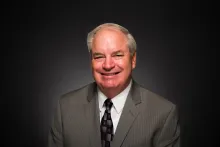
Robin Webber was born in Chicago, Illinois, in 1951, but has lived most of his life in California. He has been a part of the Church of God community since 1963. He attended Ambassador College in Pasadena from 1969-1973. He majored in theology and history.
Mr. Webber's interest remains in the study of history, socio-economics and literature. Over the years, he has offered his services to museums as a docent to share his enthusiasm and passions regarding these areas of expertise.
When time permits, he loves to go mountain biking on nearby ranch land and meet his wife as she hikes toward him.
