
Roy Holladay
This transcript was generated by AI and may contain errors. It is provided to assist those who may not be able to listen to the message.
I think most of us tend to remember something the first time that it happens to us. Do you remember the time when you had your first car? What it was? I remember very vividly. Norm and I got married, were given the keys to a Chevy Impala, and told to go to Pittsburgh. Off we went. It was a white Chevy, black interior, and no air conditioning. I remember driving across the country through the deserts. We couldn't wait to put enough miles in that car to get another one so that we would have some air conditioning. What about your first apartment? If you got married, where did you first live? We had an apartment in the Pittsburgh area. It cost us, I think, $80 a month. It's a few years ago. It was a five-room apartment, very nice place, but you couldn't touch that today, not anywhere near $80. What about the first house that you owned? I think our first home that we owned was in San Antonio, Texas. We certainly remember our first grandson, David William, and when he was born, the complications and problems surrounding his birth. What about your first garden?
You might say, first garden. I don't think most of us would stop to think about our first garden. As many of you realize, I grew up not too far from here. We used to have large gardens every year. We ate out of that garden all summer. We can, like crazy, and ate it all winter. It was always a joy when you plant a garden to be able to see the first tomatoes, the first beans, the first cucumbers, or squash, or whatever it might be. Do you remember the first fruits? First fruits is a term that is used in the Bible or in the scriptures, and it simply means the first fruits that are produced. First tomato that comes on the vine is the first fruit. First beans are whatever it might be. Those are the first fruits. The first vegetable, the first of a particular crop that has been produced. Now, what we find in the Bible, God is preparing the first fruits, that's us, for a purpose, for a reason. We want to take a look at that because it has to do with why all of us are sitting here today and why God has called us. This festival coming up tonight at sunset, the sunset tomorrow evening, is called, we know Pentecost, it's called the feast also of first fruits. It's called the Feast of Harvest, and it does have to do with our being first fruits to God. Let's go back to the book of Ephesians chapter 1. Ephesians, the first chapter, beginning in verse 7. Ephesians chapter 1 verse 7.
And let's read here. It says in him we have redemption through his blood, the forgiveness of sins according to the riches of his grace, which he made to abound toward us in all wisdom and prudence, having made known unto us the mystery of his will. So God has revealed something to us that he has hidden from the rest of the world, and that is the mystery.
The word mystery means simply hidden. So the hidden truths of his will, his purpose, he's made known to us according to the good pleasure which he purposed in himself. Now, God has not planned at this time to reveal to the majority of mankind his way of life. The majority of people are blinded, as the Bible says. The majority are deceived, do not understand, but God has called some. You and I are part of the Son.
God has called to reveal his plan and his purpose. And as verse 10 says, that in the dispensation of the fullness of times, he might gather together in one all things in Christ, both which are in heaven, in which are on earth in him. He says, In him also we have obtained an inheritance, being predestined according to the purpose of him who works all things according to the counsel of his will.
God has a purpose for every one of us sitting here today and standing here today. God has a reason for us being here. And that purpose is according to God's will. We're not here against the will of God. We're here because of the will of God, because God has called us and chosen us and placed us here. He has an inheritance in store for each one of us.
I want you to notice verse 12 says that we are the ones, notice, who first trusted in him, are in Christ. That we who first trust in Christ should be to the praise of his glory. We are the first ones to understand, put our trust, our faith, our confidence in God himself. The rest will have an opportunity later, but not now. So God has called us, and as we read here in verse 13 and 14, In him you also trusted. After you heard the word of truth, the gospel of your salvation, which also had me believe you were sealed with the Holy Spirit of promise.
So God has given us his spirit. He sealed us. The Holy Spirit is guaranteed to us as part of our inheritance. And as it goes on to say, who is the guarantee, verse 14, of our inheritance? The fact that you have God's Holy Spirit is an absolute guarantee of eternal life that God will give you in the future of your inheritance.
The word here in the Greek means an earnest. It's talking about not just a down payment, but earnest money that is put down on something that you purchase. When you buy a house, you put earnest money down. Maybe you sign a contract, you put a thousand dollars down.
That's earnest money. And that locks you in as far as that contract is concerned. When God gives us his spirit, it locks us in. Number one is his children. We become his sons and daughters because we now have been begotten by him. But it is also a guarantee that you and I will be given eternal life as long as we remain faithful to God. Now let's go back to Exodus chapter 23. You'll remember here in Exodus 20, God gave the Ten Commandments to Israel.
In chapter 21, 22, 23, God gave the terms of the covenant, the laws that would be involved in the covenant. And in chapter 24, he entered into a covenant with Israel. And they said, well, all that you've commanded us, we will do. But I want you to notice what God revealed to Israel. And he gave to them beginning in verse 14.
God says three times, you shall keep a feast to me in the year. Three different basic times of the year. You shall keep the feast of unleavened bread. And he goes on to, well, let's read the rest of it. It says, you shall eat unleavened bread seven days as I commanded you at the time appointed, the month of Abib. For in it you came out of Egypt. None of you shall appear before me empty.
And then in verse 16, and the feast of harvest. That's the festival that we will be observing here tomorrow. Feast of harvest. The firstfruits of your labors, which you have sown in the field. And then the feast of end gathering. That's at the end of the year.
When you have gathered in the fruit of your labors from the field, three times in the year all of your mail shall appear before the Lord your God. So here we find that this is called the feast of harvest. The first harvest season in Palestine is very similar to what we have here in this country. In the spring you find is what is called the first or the early harvest. And that was the early harvest season. That's when the firstfruits were harvested. And let's notice though, dropping down to verse 19.
God goes on to say here in verse 19, the first of the firstfruits of your land you shall bring into the house or into the house of the Lord your God. You shall not boil a young goat in its mother's milk. And so you find the word first here in the Hebrew means the beginning, the best, and the chief. There are two different words used for firsts in the Old Testament. One means first, the first ones produced. The other means the best or the chief ones were to be brought. The first or the best or the chief would actually be describing Jesus Christ. As we will see as we go through this sermon, Jesus Christ is called the first of the firstfruits. He is the best. He will have the highest reward, the highest position in the family of God. He will be under the Father for all eternity. Let's go back to Leviticus chapter 23. You should be able to remember these. Leviticus 23, Exodus 23, they correspond to one another.
In Leviticus 23, beginning in verse 9, we see another picture of Jesus Christ during the Holy Day season. Beginning here in verse 9, the Lord spoke to Moses, saying, Speak to the children of Israel, and say to them, When you come into the land which I give to you, and reap its harvest, you shall bring a sheave of the firstfruits of your harvest to the priest. Now, I want you to notice this wasn't all of the firstfruits, but only a sheave of the firstfruits. And he shall wave the sheave before the Lord to be accepted on your behalf. On the day after the Sabbath, the priest shall wave it. This is talking about the weekly Sabbath during the days of Unleavened Bread. The day after the weekly Sabbath, this sheave that would have been a Sunday, was to be waved before God. The sheave of the firstfruits, again, picture Jesus Christ as the first one to be resurrected from the dead, according to God's purpose and plan, and to appear before the Father and to be accepted of the Father. And we know that Jesus Christ went to his Father, returned, he was accepted by him. Now, in verse 15, it says, "...you shall count for yourself from the day after the Sabbath," this is the weekly Sabbath, during the days of Unleavened Bread, from the day that you brought the sheave of the wave offering, "...seven Sabbaths shall be completed." So they were to count seven Sabbaths, and then count 50 days to the day after the seventh Sabbath. So you have seven Sabbaths, seven times seven is 49, the next day, which would be always on a Sunday, would be the 50th day. Then you shall offer a new grain offering to the Lord. So here we are told to count 50. The Greek word for Pentecost means the 50th.
We used to say that Pentecost meant count 50, and it does not. It just simply means the 50th. And the implication is the 50th what? Well, the 50th day. Pentecost is a Greek word that refers to the 50th day, which is the feast of harvest or the feast of first fruits. Now in verse 17, let's notice what was to be done. It says, "...you shall bring from your dwelling two wave loaves of two tents of Nephath, and they shall be a fine flower, and they shall be baked with leaven. They are the first fruits to the Lord." So on the day of Pentecost in ancient Israel, they would take two wave loaves. These would be loaves that have been baked, and you find here they had leavening in them. Now, specifically in the Old Testament, in the offerings that were offered up, especially the grain offerings, which this is one of, there was not to be honey or leavening used in those offerings. Leavening, we realize, is a type of sin. So here are two loaves that are waved before God that imply that they have sin within them. What did these two loaves picture? Well, one of them pictured Old Testament Israel. The other one represents the church. Let's go over to Jeremiah chapter 2, book of Jeremiah chapter 2 and verse 3, and you'll notice in the book of Jeremiah what God says about Israel, physical Israel, the nation of Israel. It says, Israel was holiness to the Lord, the first fruits of His increase. Israel was the first nation that God chose in the Old Testament during that period of time. They were supposed to be an example to all other nations around them. They were the first ones that God was going to work through. And if they had set the right example, obeyed God, kept His law, then the other nations would come and ask them, why don't you have famine? Why don't you have floods? Why don't you have sickness? Why don't you have an army? And they would say, because we obey God, we keep His laws and His commandments. And they would have been like a magnet or a light that would have attracted the nations. And so they failed to do that. Now, in James chapter 1 and verse 18, let's notice about the New Testament example.
James, Jacob's favorite book here, James 1.18 says of his own will, He brought us forth by the word of truth that we might be a kind of first-fruits of his creatures. So you and I today, the New Testament church, we are referred to in the Bible as spiritual Israel. We are the spiritual Israel of God. We are the church of the firstfruits. Notice how the New Revised Standard Version translates this. Verse 18, in the fulfillment of His own purpose, He gave us birth by the word of truth so that we would become a kind of first-fruits of His creatures. So we are those that God is dealing with first. Now, what an awesome responsibility and calling that is to be among the first to be able to trust in God, to know the true God, to have His way of life revealed to us. You see, God revealed His way of life to ancient Israel, but instead of them setting the right example, they copied the nations around them. They worshiped Baal and the other gods around them, and instead of obeying God. Now, God has called us, and He's corrected the problem that had with ancient Israel. That is, He's given us His Spirit to be able to obey Him. And you and I have been called today as first-fruits. We find that there are examples in the Bible of the lives of what many in the Bible refer to as first-fruits that are recorded in the Scriptures, and they are there for us to learn from. Back up here to chapter 12 in the book of Hebrews.
Hebrews chapter 12, beginning in verse 22. Hebrews chapter 12, beginning in verse 22.
We read, but you have come to Mount Zion, to the city of the living God, to the heavenly Jerusalem, to an inervable company of angels, to the general assembly of the church of the first-born. Now, here's another term that is used of the church today, that we are the church of the first-born, who are registered in heaven. Now, notice we're not in heaven, but they are registered. Names are written in heaven in the book of life. And you come to the God, the judge of all the spirits of just men made perfect. Now, verse 23 is one of the most comforting scriptures that I know of, because it says that the spirits of just men have been perfected. When we die, the Bible says our spirit returns to God. And we find that there have been those who have gone before who have died, that their spirit has returned to God, and that the spirit of just men, those who obeyed God, have been made perfect. So, it shows that it is possible for us to go through this process of growth and development, and to be perfected, and to one day be in God's family. So, we find that we've been registered in heaven. Others have made it into the kingdom. They have been perfected. They are awaiting the resurrection, immortality, and eternal life.
Now, brethren, what motivated these individuals, these men and women, to obey God, to remain faithful, not to quit, not to give up, not to throw the towel in? Why did they hang in there? Because you find they were just as human as you and I are.
When you read in the Bible, and you read about the servants of God, sometimes they almost take on mystical proportions, because you read about the deeds and what God did through them. But when you read that they were people just like us, that they had to live and endure, overcome in a society that God called them to live in, let's notice in James chapter 5.
James 5 and verse 17. I'll read this out of the King James Version. We read that Elias was a man subject to life passions as we are. And he prayed earnestly that it might not rain, and rain not on the earth by the space three years, six months.
New King James Version says this, Elijah was a man with a nature like ours.
You're just like us. Now look around at us, and we all know our frailties, our weaknesses, our lacks. Elijah was the same way. New Revised Standard Version says, Elijah was a human being like us. Everyone whom God has called down through the ages has been a human being just like us.
We're all alike in that way, and yet we find that they have it made. The Bible says that their names are registered, and our names are registered, but there are spirits that have been made perfect. Let's look at some of the examples for the firstfruits who've gone before us, and let's see what was it that motivated them. What was it that turned them on, that kept them going? Hebrews 11.
Not having to turn very far. Here, Hebrews 11, we'll begin in verse 8 with the example of Abraham.
We read, By faith Abraham obeyed when he was called to go out into a place which he would receive as an inheritance, and he went out not knowing where he was going.
God said, Go! He went. Abraham obeyed. Why? Because he had faith. That's why.
Remember in verse 6 here, it says, Without faith, it's impossible to please him. So if you and I are going to obey God, we must have faith.
Now in verse 9, By faith he dwelt in the land of promise, as in a foreign country, dwelling in tents with Isaac and Jacob, the heirs with him of the same promise. So God had given him a promise, and they sojourned. They were sojourners. They were heirs of the promise that God had made to them. For, verse 10 says, He waited for the city which has foundations, whose builder and maker is God. What city was that? Was the New Jerusalem?
Now we don't read anywhere in the Old Testament, the book of Genesis, about Abraham, where God sat down and talked to him about the New Jerusalem, where God talked to him about the new heavens and the new earth. But undoubtedly, he did. Why? Because it says, He waited for the city. He knew it was going to come. It hasn't come yet, but he knew that it was absolutely as sure as the sun rising and the sun setting that it was going to happen because God had told him so.
Now, going on here in verse 13, you notice these all died.
Abraham came. He died. Isaac came along. He died. Jacob came along. He died. Rebecca died. Rachel died. Sarah died. Enoch died. Noah died. They all died. But notice, they died how? In faith.
They didn't die without faith, but in faith. They died believing, trusting in God, because the word implies more than just belief. It implies a trust, a confidence. They died in faith, not having received the promises, but having seen them afar off. So, they saw off into the future. They were assured of them, and they embraced them and confessed that they were strangers in pilgrims on the earth. So, they didn't receive the promises they will in the future. Do you notice a formula mentioned here? The formula goes something like this. They could see the future. They could see the promise that God made. They could see the reward that God had prepared for them as part of the first roots.
Brethren, you and I must do the same thing. What kept them motivated? Well, they waited for a city. They waited for the future. They knew it was coming. You and I must keep the big picture in front of us. And what is it that helps us to keep that picture shining bright before us? The picture can become so dark. Have you ever had a painting before that you hang up and because of the sunlight and all striking it after a while it fades?
And it's not as sharp and crisp as it should be? Well, that can happen to us. But if you want the picture to stay crisp, sharp, it is done so by faith. Faith is the lens that we view everything through. It's the glasses that we see. We behold the future. You can talk about the future and a lot of people do. And yet, they don't have faith. And so, therefore, it becomes cloudy, it becomes vague. And it's not something that really is there, sharp in their minds. Do we see the future like we would like to? Do we think about it? Sleep it. Talk about it. Eat it, so to speak. Keep it in front of us so that it never, never fades away. You'll notice here in verse 13, it says, they were assured of this.
Word assured in the Greek means to be persuaded. They were persuaded of it. It means to induce one by words to believe, to be induced, to have faith in a thing, to listen to it, to obey, to comply with, to trust, to have confidence. They believe God. They trusted God. They knew if God said it, it would happen. Now, one thing that Abraham, Isaac, Jacob, Noah, Anak did not have, you know what it was?
Was this book. They didn't have a Bible. They didn't have one page of the Bible. The Bible didn't come along until Moses began to write the book of Genesis. The first five books of the Bible were written down. All they had was God appearing to them on a rare occasion and saying, look, I want you to leave over here, go over there, and if you do so, let me explain what it's going to lead to. Here are my commandments, and I want you to obey me. And they said, yes, sir. Yes, Lord. And they were willing to do it. They didn't have the scriptures to read every day. They didn't have the Bible to ponder, look at. They didn't have the book of Revelation, chapter 21 and 22. They didn't have the prophecies of the Bible. They just had a brief encounter with God and what God told them. And they believed Him. You and I must do the same. And we have something that we can read every day, which are the scriptures. And you'll notice in verse 13 also, it says, they embrace them. Whatever those promises were, whatever God said, they embrace them. The word means to greet or to salute. Westward Study of the Bible gives this explanation. It quotes Vincent, saying Vincent offers this translation to having seen them from afar and greeted them. They saw off in the distance. And I'm sure God had told them that this isn't going to happen in your lifetime. It's going to be in the future. And He adds this comment, as seamen wave to their greetings to a country seen far off on horizon of which they cannot land.
What if you're out sailing on the seven seas and you come close to an island or you come close to someplace, but that's not where you're going to stop. Your destination is over here. And you see the land.
Now, you can wave, you can point it out, there it is. Or maybe it's something you're going to come back to, but you're not able to land. That's exactly the way this word is. You embrace it. You see it. You can wave at it, but you don't have it yet. They confess that they were strangers and pilgrims on this earth. And isn't that what the Feast of Tabernacles pictures of? We're strangers, pilgrims on this earth. The present is not our real reward. If we're looking that we're going to receive our ultimate reward now, we're going to miss out. Our reward comes in the future. Notice in verse 14 through 16. It says, those who say such things declare plainly that they seek a homeland. And truly, if they had called to mind that country from which they'd come out, they would have had opportunity to return. But now they desire better. That is a heavenly country. Therefore, God is not afraid to be called their God, for He has prepared a city for them. The book of Revelation reveals that that city is going to come down from God out of heaven to this earth. This earth will be remade. There'll be a new earth, a new heaven, and there will be the new Jerusalem, 1500 miles square, that God will give to the bride and Christ to live in. And, brethren, that will be our base of operation for all eternity. And God, the Father Himself, will come to the earth. Let's turn over here to, well, let's, actually, the same chapter here, verse 24.
Let's look at the example of Moses and what motivated him.
Verse 24 says, by faith, so again, all of these examples always start by faith, by faith, by faith, faith and seeing the future. By faith, Moses, when he became of age, refused to be called the son of Pharaoh's daughter, choosing rather to suffer afflictions with the people of God, than to enjoy the passing pleasure of sin. A seeming the reproach of Christ's greater riches than the treasures of Egypt, for he looked to the reward. Even when he was still in Egypt, before he fled, the Bible says he looked to the reward. By faith, he forsook Egypt, not fearing the wrath of the king, for he endured as seeing him who is invisible.
Rather than he endured, because he could see what God had promised to him. Let me read verse 26 here. Out of the New International Version, it says he regarded disgrace for the sake of Christ as greater value than the treasures of Egypt, because he was looking ahead to his reward. He looked ahead, and you and I must do the same. We must look ahead. We are living in very troublesome times. We are living in an age when the prophecies of the Bible about what is going to happen to the nation of Israel at the end time are beginning to unfold right before our eyes. We have a nation that has lost its way, lost its moral compass. It is economically coming apart. We find that any way you want to look at this country is disintegrating, and it's, you know, whether it happens immediately or God allows us to go on for a little while, we are entering into our death throes as a nation, and we're headed in the wrong direction. We need to realize that you and I are going to have to keep our eyes focused on the reward because if the economy collapses and, you know, not just, you know, they say the unemployment rate is about 10 percent, it's actually more like 16, 17, 18 percent or more in some places, we will see many who are unemployed. And we're going to have to have faith to trust God, faith to rely upon Him, and to look to the future. See, faith, if we have faith, faith is translated into something. Faith is translated into obedience. Faith is the motivation for obedience. Faith gives us the power to obey. Without faith, it's impossible to please Him. Why? Because you will not obey. You will not carry through. It is the faith that helps us. Back up to verse 4, Hebrews 11 and verse 4. We read here that Abel offered a sacrifice to God. Verse 4 says, By faith, Abel offered to God a more excellent sacrifice than Cain, through which he obtained witness that he was righteous. God testifying of his gifts.
So it wasn't just once that he offered a sacrifice. He had offered up, apparently, many, and through it, being dead, still speaks. Now, if you'll remember, Abel offered up an animal. It's a sacrifice. How did he know that you should take the life of an animal, shed its blood, when he looked forward to Jesus Christ's sacrifice? He understood that his sacrifice pictured becoming Messiah, that he would die for our sins. So you see the theme with all of the servants of God, that God gave them a glimpse of the future.
They in no way had the same broad picture that we do right here in the Bible, chapter after chapter, book after book of the Bible that we can read about the millennium, about the white throne judgment, about the kingdom of God. We have the four Gospels. The very heart and meat of the four Gospels is the good news of the coming kingdom of God. And what that kingdom is going to be like. And so we have that. They did not have the Bibles, as I said, as we do. So we have all of this that we can use to look forward to the future. Let's go over here to the book of Jude. In the book of Jude, we find about someone that you read not too much about in the Old Testament. Book of Jude, beginning here in verse 14. You read about Enoch.
It says, now Enoch, the seventh from Adam, prophesied about these men. Now what men? Well, talking here about those who are morally corrupt and bankrupt, the evil, wicked ones, who sometimes come into our midst. It says, now Enoch, the seventh from Adam, prophesied about these men, also saying, behold, the Lord comes with ten thousand of his saints.
Now we don't read back in the book of Genesis anything about this. All it says is, Enoch walked with God and he was not, because God took him or translated him. And yet here he understood, as the book of Jude records, that there was going to be a second coming of Jesus Christ, a coming in which the resurrection would take place, and he would come with ten thousands of his saints to execute judgment on all and to convict all who are ungodly, among them of all of their ungodly deeds, which they have committed in an ungodly way. So he knew what was godly, what was ungodly, what was the right way, and what was not the right way.
And it says, of all of the harsh things which ungodly sinners has spoken against him. So Enoch understood about Christ coming back to the earth to punish the wicked, set up his kingdom. He had faith in God's promises. He saw the future. He had a glimpse of what was going to take place. Notice the promise that God has made to the firstfruits. Back here in chapter 13 in the book of Hebrews. Hebrews chapter 13, and we will read in verse 14.
Hebrews 13-14.
It says, for here we have no continuing city. You and I are sojourners and pilgrims. We don't have a continuous city. But we seek the one to come. You and I must likewise be motivated in the same way to seek the same thing that the patriarchs did. The men of faith recorded in Hebrews 11. The New Jerusalem, the coming kingdom of God. We read back here in 2 Timothy chapter 4 and verse 8.
2 Timothy chapter 4 and verse 18. 2 Timothy 4.18 says, For the Lord will deliver me from every evil work and preserve me for his heavenly kingdom. To him be glory forever and ever. God has been preparing a heavenly kingdom for us.
Now, that doesn't mean that we go to heaven. People read those scriptures. But it is a responsibility, duties, a city that God is preparing that will come to this earth. Because God is going to set up his government on this earth. In Matthew chapter 25 and verse 34, we find the same thing mentioned. Matthew chapter 25 and verse 34.
It says, The king will say to those on his right hand, Come you, blessed my father, inherit the kingdom prepared for you. So we find that God is in the process of preparing for us a kingdom from the foundation of the world. So from the very beginning, God has been working on this plan of salvation that he's going to extend to all mankind. And he has been preparing a kingdom for us. God has been preparing positions for us in that kingdom. I think I read this to you the other day, but back up to Matthew chapter 20. Matthew 20 verse 21.
Mrs. Zebedee had come to Christ, asked if her two sons. One could sit on his right hand, one on the left. And in verse 23, he said, You will indeed drink my cup and be baptized with my baptism that I am baptized with, but to sit on my right hand and on my left is not mine to give. But it is for those for whom it has been prepared by my Father.
It is the Father who is preparing each one of us for positions of rulership in his kingdom.
Abraham, Isaac, and Jacob will rule right under Christ. Christ is under the Father. And you find the twelve apostles are going to be over the twelve tribes. Many of us will be over cities. Many others will be given various responsibilities. So why have we been called into the church today, brethren? We've been called to prepare us for the future, to prepare us to rule in the coming kingdom of God. The first roots have been called to be an example, to be a light, to preach the gospel to this world, to support and pray for the work of God, to be actively involved in it locally and nationally worldwide as we have the opportunity. We've been called to be prepared for positions of service in the kingdom. Too often people think of it as positions of rulership. Because we think of kings. We think of kings today. And we don't stop and think of it as positions of service to help and to serve.
I was struck. I don't know how often you go back and reread some of the old literature we have. But from the mystery of the ages, something that Mr. Armstrong had written about the first fruits. On page 332 of the volume I have of the mystery of the ages, I want you to notice something that Mr. Armstrong said. It says, Now we come to a revealed insight into the wonderful planning, prepared and planning, preparing and organizing of the perfect government of God. The function of the church is not merely to convert first fruits, not merely so that we would be converted, not merely to bring about salvation to those specially called out of the world into the church, but to prepare and train them for positions of leadership in the kingdom when salvation will be open to all living. You and I are being trained for special positions. On page 333, he says, But in sending a man to six thousand years of being cut off from God, he reserved the prerogative of calling for special service and contact with God, such as he should choose for his purpose. During this day, God is prepared for his own millennial civilization in all of its phases, its governmental, educational, religious, his whole civilization. So God is preparing for every facet of rulership in the world tomorrow. On page 232, he goes on to say, And what then was to be the church? As pictured by the third of God's annual holy days are festivals. It was to provide the first actual harvest of mortal humans. That's the day of Pentecost, feast of first fruits, feast of harvest, being translated into Spirit-composed God beings. Again, the church is the instrumentality prepared to be used with and under Christ in completing God's wonderful purpose of saving humanity and reproducing himself. Then finally, on page 351, he says, The very purpose of the church of this present time is to provide God's training school, our teacher's college, to train in spiritual knowledge, education, and godly character, to supply all of the positions at the beginning of the wonderful 1000-year reign of Christ on earth.
So you and I today are going through training. It's like we're in college. We're being prepared. We're being trained. Nothing that we go through, none of the trials that we face, everything that we are confronted with, are there to help us to grow, to be trained, to be prepared, to assume positions. The first fruits have been called to be a part of the family of God, and God wants us to constantly be aware of our future and the calling and service that we have. In 2 Peter chapter 1 beginning in verse 2, I want you to notice the difference in the two loaves. I mentioned that there were two loaves weighed on the day of Pentecost, anciently.
Both had leavening in them. One was ancient Israel, but ancient Israel did not have God's Spirit. The New Testament Israel, New Testament Church, has God's Spirit.
In verse 2 it says, You may be partakers of the divine nature, having escaped the corruption that is in the world through lust. And so God gives us the faith that we need. He gives us the strength that we need, the power that we need. Let's notice in verse 10 here. It says, Therefore, brethren, be even more diligent to make your calling and election sure, for if you do these things you will never stumble. I don't have time in this sermon to go back and read, but you need to read verses 5 through 9, because he gives a sequence of events that we need to be practicing. And he says, look, if you do these things you'll never stumble, you never have to worry. In verse 11, soul and entrance will be supplied to you, abundantly into the everlasting kingdom of our Lord and Savior Jesus Christ. So you and I will be given an entrance. The door will be open, and we will hear, well done, good and faithful servant, enter, and we will enter into that kingdom. Now, you and I, let's notice in chapter 3 of 2 Peter, you and I are looking forward to something.
2 Peter 3, verse 11, says, Therefore, since all these things will be dissolved, talking about the physical, the heavens and the earth, what manner of person ought you to be in holy conduct and godliness, looking for and hastening the coming of the day of God, because of which the heavens will dissolve, being on fire, and the elements will melt with fervent heat? Nevertheless, we, according to his promise, look for what? For the new heavens and the new earth, in which righteousness dwells. You and I look forward to the same promise, till the time of the new heavens and the new earth. When righteousness will dwell, Satan and his demons will be cast off into outward darkness.
Everyone who has refused to accept the calling of God will have been destroyed, burned up in the lake of fire. Only those who have remained faithful will be there, and we will all be born into that very family. God will have prepared us to be a part of his family. In 2 Corinthians chapter 5, we don't read that often, but let's notice in 2 Corinthians chapter 5, beginning in verse 1, that you and I are being prepared for something.
Since we know chapter 5 verse 1, 2 Corinthians, we know that if our earthly house, this tent, is destroyed, this physical body that we have, we have a building from God, a house not made with hands, eternal in the heavens. That God is going to give us a spirit body. For in this we groan earnestly desiring to be clothed with our habitation, which is from heaven. If indeed, having been clothed, we shall not be found naked. For we who are in this tent groan being burdened, not because we want to be unclothed, not because you just want to die, but further clothed, that mortality may be swallowed up by life. See, that's what we're looking for. This mortal body would put on eternal life. In verse 5, now he who has prepared us for this very thing is God, who has also given us the spirit as a guarantee. God is in the process of preparing us to be clothed with immortality, as it says here with this very thing. We are being worked with by God, developed by God, having his character developed in us. So we find in verse 6, we are always confident knowing that while we're at home in the body, we're absent from the Lord, for we walk by faith. See, faith is again connected with this, not by sight.
We are confident, yes, well, please rather, to be absent from the Lord and to be present with the Lord. So you'll find as long as we are physical, we're not present with the Lord. Physical human beings cannot be present with God, only those who are spirit beings are capable. So rather than we have one who went before us, and that's Jesus Christ. Let's go back to chapter 15 of 1 Corinthians. 1 Corinthians chapter 15 beginning in verse 20.
1 Corinthians 15, 20. Now Christ is risen from the dead. He's been made alive and has become the first fruits of those who have fallen asleep. He's called the first of the first fruits. Verse 23, each one in his own order, Christ the first fruit. Afterwards, those that are Christ that is coming. That's talking about us. Then comes the end. So, brethren, Christ was the first to be made immortal. He has shown that it can be done. That not only can it be done, but he has been resurrected. And that God is able to complete his plan and give us eternal life. Acts 26 verse 23 summarizes it this way. That the Christ, Paul talking here about the message that he taught, he recounts his conversion here. That the Christ who would suffer, that he would be the first to rise from the dead and will proclaim light to the Jewish people and to the Gentiles. So, Christ has gone before us. So, brethren, we are the first fruits. Christ is the first of the first fruits. He was that she that was cut from the ground that was waved before God, that was accepted of God. And it shows that the plan of salvation was completed in him and also be completed in us if we remain faithful. So, you and I today have been called according to God's purpose. God is preparing us as first fruits for positions of responsibility and service in his kingdom. We are the ones that are pictured by the Feast of Harvest, the first harvest that pictures the first fruits of salvation. We know that God will eventually extend salvation to all mankind. We have the example of others who've gone before us, and they will likewise be a part of that first resurrection. They were motivated by faith, and they looked forward to the future, to the reward. They saw it. They had a glimpse of it. They were inspired to do the work that God called them to do in their generation. Each one did what God called him to do in his generation. You and I have been called in this generation to do a work, and we must be faithful. Brethren, they could see the future. We of all people should see the future.
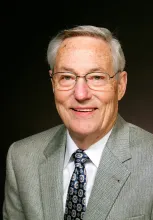
At the time of his retirement in 2016, Roy Holladay was serving the Operation Manager for Ministerial and Member Services of the United Church of God. Mr. and Mrs. Holladay have served in Pittsburgh, Akron, Toledo, Wheeling, Charleston, Uniontown, San Antonio, Austin, Corpus Christi, Uvalde, the Rio Grand Valley, Richmond, Norfolk, Arlington, Hinsdale, Chicago North, St. Petersburg, New Port Richey, Fort Myers, Miami, West Palm Beach, Big Sandy, Texarkana, Chattanooga and Rome congregations.
Roy Holladay was instrumental in the founding of the United Church of God, serving on the transitional board and later on the Council of Elders for nine years (acting as chairman for four-plus years). Mr. Holladay was the United Church of God president for three years (May 2002-July 2005). Over the years he was an instructor at Ambassador Bible College and was a festival coordinator for nine years.
