

Robin S Webber
This transcript was generated by AI and may contain errors. It is provided to assist those who may not be able to listen to the message.
Thank you very much. Let's move right into then the message because we're here to open up the Word of God and to be able to understand His will and His purpose in our lives. I'd like to begin by sharing a story with you if you will allow me to do so, and I think that it'll allow us all then hopefully to come to point by the end of this message. In the forest of northern Europe and Asia lives a little animal. It's called the ermine. He's best known for his snow-white fur.
Instinctively, this small creature takes a particular peculiar pride in that oh-so-glossy coat of his. He protects it at all costs against anything that would soil it. Unfortunately, fur hunters take cruel advantage of the ermine in this respect. They do not set a snare to catch him, but instead they find his home, which is usually a cleft in a rock or a hollow in a tree, and they daub the entrance and the interior with filth. Then the dog starts to chase. Frightened, the ermine flees for his home. He finds it covered within and without with uncleanliness, and so rather than soil that white fur, he faces the yelping dogs and meets his death while preserving his purity. Again, why? To the ermine, purity is dearer than life. What can we learn this afternoon from this story about the ermine? We've plainly heard what this devoted creature did in sacrificing himself to maintain an outward purity, but now allow me to ask you what steps are you willing to take to dwell with inner purity? And that is being holy before God, not only on the outside as an ermine, but on the inside as a child of God. Let's come to understand that purity and holiness are really the same thing. Thus, let's ask ourselves, how important is it to be holy? Well, that word is actually the reverberating undercurrent of all of Scripture. It echoes down from time and memorial. From the beginning of establishing a covenant with ancient Israel, God made something very clear. Join me if you would. Let's open up our Bibles. We're here in church. This is the written Word of God revealed to us by the Living Word of God. Leviticus 11, verse 44. Leviticus 11, verse 44. God is speaking to a covenant people, and He says this, For I am the LORD your God, and you shall therefore consecrate yourself, and you shall be holy. For I am holy, neither shall you defile yourself with any creeping thing that creeps on the earth.
For I am the LORD who brings you up out of the land of Egypt to be your God. You shall therefore be holy, for I am holy. God sets forth something very simple. And you might want to jot it down if you're taking notes, and that's simply this. We not only worship a loving God and a great God, but we worship a God that has expectations. Are you with me? Expectations for you and me, for His investment in us, out of our faith responsiveness to Him, He desires a holy people. Not only like the Erman on the outside, but on the inside as well. This is our God. This is what He desires. The Hebrew word there is kadash. It means set apart. Now, it's very interesting that there's two parts of setting apart. God says, I am holy. Thus, God sets Himself apart from all that is in the creation, He who is uncreated, He sets Himself apart and He says, I am holy. They say, well, I've got that part of the equation. But then God says that you are to be holy. You are to also likewise, as I am, God speaking, you too are to be kadash, or set apart. Later, the Apostle Peter, a purveyor of the New Covenant, echoed this ageless sentiment. Join me if you would in 1 Peter. In 1 Peter 1, and let's pick up the thought in verse 15. Pistol of Peter chapter 1 verse 15. But as He who called you as holy, you also be holy, notice, in all your conduct. That is what you do. Not only what you know, but what you do and what you are, because it is written, Be holy for I am holy. So, this answers a couple questions for us here on this, the second high day, Days of Unleavened Bread, 2013. What makes God, God? What makes God, God? It is, He is holy. He has set apart above all that is. Number two, He has a standard regarding those that He sets apart. A standard. No, that's kind of hard in this day and age, because from what I'm reading and what I'm experiencing sometimes, that at times standards are coming down because, well, we don't want to offend anybody. I'm okay, you're okay, everybody's a winner, everybody gets a medal, everybody gets a crown, everybody's, as we say back in the 60s, everybody's cool. It's okay. We don't want to offend anybody. We don't want to leave anybody behind. No saint left behind. What does God say here? Notice what it says. Verse 15. You also be holy in all your conduct. Our Father above has expectations, and He gives us an ability to measure those expectations through the example of Jesus Christ. Now, one thing that is very important about being holy and worshiping one who is holy, and so sometimes you wonder, well, where do I start? And if I get to going, wonder if the rules change. Have you ever noticed that? Playing with people, playing cards, or playing perch, or am I the only one? You know, all of a sudden the game's not going too well, and all of a sudden the rules change for the other person. I guess I'm the only one. I must work out on tough tables, and it's not at Las Vegas. It's in our own living room sometimes. Anyway, God doesn't change the rules. Are you with me? God doesn't change the rules. His standards are always. His standard never changes. That which is Hagios in the Greek, we talked about Kaddash in the Hebrew being set apart, He who is Hagios. You've heard of Hagia Sophia, the large church that was in Constantinople, holy wisdom, Hagia being holy. His standards never change, and it isn't supposed to, because the standards that He sets for us are what He is about, like God. It emanates from Him, and we are to live as if we belong to Him because we do.
You know, it's very interesting during this festival in Love and Bread. We go from Passover to the feast days, and we need to recognize that in one sense, if we use the typology out of the Old Testament, we recognize that Israel was called out of slavery, liberated in a sense from slavery, from that bondage. And they thought, wow, this is really cool. This is really neat. We're going to be free. We can do our own thing. And that's kind of how people are when they have a heavy cloak on them or burden on them for years. You know, you take that off, and they spring up like an old shack in the box. They're ready to take off and do something. But then what God did is, because He said, hey, this is kind of neat. We're free, and we've got this food program, but we've got across the sea. It's called the land of milk and honey. We're going to be supplied. This is going to be neat. And that's all they thought about, is that they thought of the land of milk and honey. But what God told Moses is, He said, when you bring the people out of Egypt, Exodus 3 verse 11, they shall serve Me on this mountain. Israel was not called just to have a good time picking grapes in Canaan. They were called and set apart to serve and to worship God, and to give Him His worthship. That's what worship means. Worthship, the one that was a God that brought them out of the land of Egypt. You and I likewise have been brought out of this spiritual Egypt. And thus we come into a covenant relationship with God, not just simply to pick grapes and to dip into the honey of the Word, but that God has expectations as to how we are to live before Him in everything we do, every thought, every word, and every deed. Hmm, that's tough. That's harder than you have when you go to soup plantation. We were just at the sizzler, and you can kind of pick and choose, you know? You can skip over the broccoli. You can skip over the kabonza beans. Kabonza bean stock just went down on the market. You can make your pick and choice, but when it comes to God, He says, this is what I've laid out for you. I am holy. Therefore, you are to be holy in all that you do, in your mind, in your heart, as to how you extend your hands, as to how you speak with your tongue, as to whether or not your feet pursue peace, or they run to mischief. God has a purpose. We have in one sense, abandoned by His liberation, one form of servitude, and we are now in servitude to God Almighty.
We have a service to render. Now, let's take this a step further, then, and understand, then, what it means to be holy as God is holy. I'd like to tell you a little bit about God's holiness for a moment on this holy day, called the second high day of Unleavened Bread. Join me, if you would, in Isaiah 46 and verse 9. Isaiah 46 and verse 9. This is God's self-disclosure about Himself.
In Isaiah 46 and verse 9, Remember the former thing of old, for I am God. And there is none like me, declaring the end from the beginning and from ancient times the things that are not yet done, saying, My counsel shall stand, and I will do all my pleasure, calling a bird of prey from the east, the man who executes my counsel from a far country. Indeed, I have spoken it, and I will also bring it to pass. I have purposed it, and will also do it. That's what makes Him God. All of us sometimes have plans. All of us sometimes have dreams. Sometimes we might call them schemes. All of us might lay out a strategic purpose statement and have all the boxes so neatly aligned to follow to come up with the product. But it is only God that delivers. We have many politicians, both to the left and to the right, and those that you wonder what they believe in between. And they all want to do their best, and they all have a plan. But, you know, what we say about politicians that we can say in church. We know what we say about politicians. Promises, promises, promises. But when will they ever deliver? When God states His purpose, when He offers His covenant people a promise, He says He's going to do it.
And He does it. You can bank on it. You can give your life for that. And you are during this Passover season and the days of Unleavened Bread. This is God. Let's talk a little bit further about God's holiness. God's holiness is just simply beyond comparison. It is just simply set apart. The God of the Old Covenant and now the New is holy. He sets the standard for morality. Unlike other gods, down through the ages, He isn't warlike. He's not bloodthirsty. He's not promiscuous and thought or word or deed. He's not adulterous. He's not spiteful.
What does that mean to us? He's a God of mercy. He's a God of justice. Everything comes out square. Everything is plumbed. For all of us followers. He doesn't ask of others what He doesn't ask of Himself. You know, sometimes in this day and age, and please listen, kids, that are out there, you go to school and I know that even in this nation that was founded on the Christian Judeo-ethic, now, you know, I'm okay, you're okay, we have to talk about this religion and that religion and do comparative religion, whether it's in junior high or high school. And, you know, there are many, many routes to Nirvana or there are many roads to heaven, as it were. No, no, no, not at all. And that's why you and I are here today. The Apostle Peter said there is only one name under heaven by which mankind can be saved. And it is by that name, which was God's grace and personification, Jesus of Nazareth, that we learn something about Christianity that is totally unique, set apart, and holy, and that it is only in Christianity that the deity sacrificed Himself. That God the Father allowed the Word to become the flesh, to become Jesus of Nazareth. And yet God, Son of God, Son of Man, didn't have a sacrifice brought to Him, but ultimately sacrificed Himself. This is what makes God holy. This is what makes God different. This is why we love Him, why we adore Him, and why we worship Him. Join me in Psalm 86, verse 4.
Again, considering God is beyond compare to all the gods as the prose of the Old Testament puts it. Psalm 86, verse 4. Rejoice the soul of your servant. For to you, O Lord, I lift my soul. For you, Lord, are good, and you are ready to forgive your abundant in mercy to all of those who call upon you. Give air, O Lord, to my prayer and attend to the voice of my supplications, and in the day of my trouble I will call upon you. For you will answer me.
God awaits us. Before that son that I just spoke of died, Jesus of Nazareth, He described His Father as a heavenly Father, one that is desirous and waiting for the wayward son to return. We find that in Luke 15, the story of the prodigal son.
We find in that story that here is one being described that is perfect, that is holy, and yet is willing to embrace one that comes back, to forgive one that comes back. And I realize that in any given Sabbath service, any given Holy Day, there are sometimes people that have been away from God and have been away from the community of God, and they're back. And God wants to restore you because He's holy and He loves you. And just as much as that prodigal son, He's willing to put shoes on your feet, a cloak on your back, and give you a ring of dignity to restore us, to restore you. In fact, all of us that we remember during the Passover, we are all recipients of God's grace. None of us deserve that. Humanity doesn't deserve that. Humanity was placed into paradise. It was called Eden.
And that very, very special creation that God shaped out of the clay of Eden, and later on, the woman was taken out of the man that... Just imagine being in that world that was sublime and in that sense perfect. And God said, you're going to be my special creation. I'm going to be your God, and I'm going to be your people. Of course, you know, Adam and Eve looking around, there were no other people, so they knew that He was talking to them. He said, you're going to be mine, and I'm going to look into your face, and you're going to look into my face, and we're going to have a relationship. And I'm going to teach you, and I'm going to mentor you. I'm going to allow you to understand how to have a relationship with the Holy. I'm going to have you... the ability to work with one another, and by my Spirit be kindly one to another as a man and as a woman and as a married couple, and there's a garden that surrounds you. You're not only going to, in a sense, name the animals, you're going to keep them. You're not only going to be granted a garden, you're going to learn how to keep it. And all of this is going to work together.
That's what God wanted. That's what God wanted. But you know, and I know the rest of the story, the father Adam and mother Eve rejected the holiness of God, and God had to remove them from that garden. He had to set up carobim, carobim to guard man because sin had entered into humanity, and a route had to be established, a return for humanity to come back to God, and that is Jesus Christ. Again, another aspect of God's holiness. God can't be known apart from His holiness. Join me in Psalm 93. In Psalm 93, God cannot be known apart from His holiness. There's no way that you can separate holiness from God. We find that in Psalm 93 and verse 4, The Lord on high is mightier than the noise of many waters, than the mighty waves of the sea. Your testimonies are very sure. Holiness adorns your house, O Lord, forever. The key to God's eternal reign is His holiness. God's glory is not only in His strength, but also in His perfect moral character. God never does anything that is not morally perfect. His perfect means always justifies a perfect end. Now, I hope I'm stretching your mind a little bit here. I'm using words like perfection and like holiness, but don't you want to know about the God that you've come to worship today? Don't you want to have trust and confidence in something beyond what is around in this world of what you can taste and touch and feel? Sometimes you have great confidence in a large, large, large piece of hot apple pie with three scoops of vanilla ice cream on it with cinnamon sauce because it looks good. But you can also have confidence that you're going to have a really bad stomach ache probably about three in the morning with nightmares to go along with it because you've eaten too much. God doesn't do that to us.
When God gives us good, it's good. When God says something is holy, it's holy. You know, we were out with the sucklings having a lunch today. I did not have broccoli. You know what I think about broccoli sometimes. I do it now. But we were talking about just the aspect of God's holiness as revealed in the Old Testament. And it's only man that calls it old. That which is in the Old Testament is as new as forever because it's the mind and the heart and the love of God put into action. I know what my wife always says, what part of God's law don't you like, anyway? Romans 7 in verse 14 says that the law is spiritual. The law is spiritual. And if it's spiritual, it comes from God and therefore it is holy. Here's another thing I want to share with you. God's holiness cannot tolerate sin. God's holiness cannot tolerate sin. Sin not only offends but separates us from God. Isaiah 59, 1 in verse 2 says that our sins just literally do cut us off from God. Now, you and I are covenant people and we've accepted the blood of Jesus Christ as that yom kippur, that covering that God gives us. And so we will stumble, absolutely. We're still in these, do I dare say, human tents with human nature flaps and we will mistake. But we can come back to God through Christ and know that we are in that state before Him of relationship. Now, if you're practicing sin, not just stumbling in sin, but practicing in sin, and maybe some of us out here today have unfortunately got into the habit of practicing sin, a lifestyle and a way of life of a pattern apart from God, today is the day to come to grasp with that and to recognize and to remind you, and I'm here as God's servant to remind you, God is holy. And He says, therefore you be holy in all manner of conduct. Oh, sure, we're going to stumble. Sure, we're going to fall. We're going to say something that we're going to regret later. We treated somebody less than Jesus Christ would have treated them. Perhaps this happened, perhaps that happened. And that's a part of even the human Christian condition. And we can go to God and say, you know, like what Mr. Garnet does all the time during the days of 11 Brad, have Brad, or, you know, I'm just sorry, John. No, is that... I won't tell you what I did on Friday morning. Anyway, it tasted good, but I just shouldn't have had it during this week.
But it was a really good... I've got to share this with you, I'm sorry. And I was going to do good. I was going up to Denny's memorial service, but I was... when you're in Ontario, you have to leave at unearthly, ungodly hours. It was very, very early, and, you know, I always... you know how I like coffee. So I grabbed a cup of coffee, you know, with coffee, I usually grab, you know, a roll. Well, you know what happened? I grabbed the roll. It was good. I just should not have had it during this week. And it was about three hours later, I went...
And this thing didn't even fall off the tree of good and evil. It was in a coffee shop.
And I thought, you know, but here's... you know, I love the days. Just practical lessons, when even if you think you're out and about doing something good, but if you're busy, busy, busy, and you're not focused about this way of life, what's going to happen? You're not thinking things are going to happen. So I'm sure you... you can line up right over here, and we'll start having stories from all of you, unless you think your pastor is the only one that does this. But your pastor, as well as your elder, we're all learning these little valuable object lessons during the days of 11 Brad. God's holiness is multi-dimensional, and it's available to His followers wherever and whenever and whoever they are, whether big or small, it is always available. Join me in Revelation 4. Revelation 4.
Let's notice Revelation 4 and verse 1. And after these things I looked, and behold, a door standing open in the... I don't know if I want to read all of Revelation 4 and verse 1. Let's see where I want to go here. I'll read it. And after these things I looked, and behold, a door standing open in heaven, and the first voice which I heard was like a trumpet speaking with me, saying, Come up here, and I will show you things which must take place after this.
And immediately I was in the Spirit, and behold, a throne sat in heaven, and one sat on the throne. And he who sat there was like a jasper in a sardius stone in appearance, and there was a rainbow around the throne.
That rainbow is again a picture of God's faithfulness in appearance like an emerald. And around the throne were twenty-four thrones, and on the throne I saw twenty-four elders sitting clothed in white robes, and they had crowns of gold in on their head.
And from the throne proceeded lightnings, and thunders, and voices, and seven lamps of fire were burning before the throne, which are the seven spirits. But before the throne was a sea of glass like crystal, and in the midst of the throne and around the throne were four living creatures full of eyes in front and in back.
And the first living creature was like a lion, the second living creature like a calf, the third living creature had a face like a man, and the fourth living creature was like a flying eagle. And the four living creatures, each having six wings, were full of eyes around and within, and they do not rest day or night. You know, you see these examples of these faces that are on beings that are before the throne of God.
You know, you just look at it, those facial forms manifest the attributes of God's holiness, the lion, majesty, and power, the ox, faithfulness, the man, intelligence, and the eagle, sovereignty over all. And look what they're saying, holy, holy, holy, Lord God Almighty, who was and is and is to come.
And whenever the living creatures give glory and honor and thanks to Him who sits on the throne, who lives forever and ever, the twenty-four elders fall down before Him who sits on the throne and worship Him, who lives forever and ever and cast their crowns before the throne, saying, You are worthy, O Lord, to receive glory and honor and power for You created all things, and by Your will they exist and were created. And speaking of humanity, we were created for a purpose to worship God, and we as Christians were called out for a purpose to emulate the example of Jesus Christ. I want to lead you to a scripture.
Join me if you would in Ephesians 2. In Ephesians 2, and let's pick up the thought in verse 8. You know, so often we sometimes have heard the phrase in John 5, 17, 18, and there, My Father works and so do I. Well, I have a question for you. Who are they working on? Join me if you would in Ephesians 2. And let's pick up the thought in verse 8. This is the work of God the Father and Jesus Christ.
For by grace you have been saved through faith. And that not of ourselves, yourselves, it is the gift of God. Not of works, lest anyone should boast. For we are His workmanship created in Christ Jesus for good works. Now works don't save us. We heard that message loud and clear this morning from both of our morning speakers. Oh, but to recognize because God has offered salvation to us and because He gave His Son for us, are you with me? And we have faith in that Father and we have that faith in that gift that He gave us of an obedient life, of a death of humility, of a glorious resurrection.
But beyond that, as Mr. Garnet was talking about this morning, something that we think about with the wave sheep offering is simply this. There have been others that were resurrected, but they died. It is in that wave sheep offering, friends, that separates the Holy Servant of God as defined in the Bible, Jesus Christ.
He ascended. He is the... think this through for a moment. So often, that's what's interesting about the wave sheep, is so often, and rightfully so, we focus on the life, the death, and the resurrection. It's almost like a rhythm on an anvil.
But what about the ascension? What about the ascension? The ascension is incredible. Because now the Lamb of God, that sacrifice that God gave to us, is right before Him. And not only that, but He serves forever, once and forever, always, as our High Priest.
Have you ever gotten in trouble and you said, boy, I wish I had a good lawyer. Where's Helgi when I need him?
No, not today, Ralph. It's the high day. No working. Okay, so he raised his hand.
We have an advocate.
And we have one that has been in the same jam of life as you and I have been. He knows exactly what we're going through because he has been there. He knows the squeeze plays of human nature. He knows the weight of discouragement. He knows what lonely feels like.
And then when we're on knee and when we give our time to God and we say, Father, in Jesus' name, He's up there in that holy tabernacle, in the throne room of God, receiving that as the High Priest forever and taking our petition before God as our High Priest.
You know, it's kind of interesting. Susan brought out something to me last night. And that is just simply that, that when you think of the High Priest of old, they, on their breastplate, that, you know, God designed it. Remember how God designed the breastplate of the priests that would serve them, especially the High Priest? He had all the tribes of Israel on his breast. God is really neat, you know. He thinks these things out. He had all of the breastplates, not all the bread, but he had all the emblems of the different stones and the different emblems. So that when the High Priest came into the holy place and then would go beyond that veil into the most holy place, it's as if he were bringing the people, all people. Nobody left out.
They were at that moment of kapoor. They were able to be, in that sense, the presence of God. And as the High Priest had sacrificed for himself, he then atoned for the people before the merciful and the good God as he sprinkled the blood around the mercy seat. And all of Israel came before the... You see, that's what Jesus Christ is doing today for you and me. Did you realize that? That when we pray and we recognize that perhaps we have not taken seriously, that God says, Be holy because I am holy. And then when it comes to us, even like maybe today, as I'm talking to you, and to recognize that, well, Jesus takes all of the names of all of the people that he died for and that have faith in him, that he is the sacrifice and he is the atoning element. He is the gift of God, that he takes our names. He is the High Priest. That's... You know, he's working for you. He's working for me. And in the sense that he is the Savior and he's also the High Priest. And he doesn't take the blood of somebody else, but he takes his own blood. Have you ever done that? Taken your own blood? Moved it? No? He takes his own blood and gives it. Now, with all of that, that is the Holy God and that is the Holy Servant of of God, Jesus Christ. Therefore, then what do we do? Join me in 2 Timothy, because we're to be holy as well. And let's finish up on that. 2 Timothy, some steps that you and I need to consider.
2 Timothy 2. This will help us establish the equation of holiness that we need to work on. 2 Timothy 2, verse 19. Nevertheless, the solid foundation of God stands, having this seal, the Lord knows those who are His. And let everyone who names the name of Christ depart from iniquity.
Doesn't say, hang around. Doesn't say to play with it. Doesn't say to feed it. It doesn't say, put it in a cage and watch it grow. It says to depart from iniquity. But in a great house there are not only vessels of gold and silver, but also of wood and clay, some for honor and some for dishonor. Therefore, if anyone cleanses himself from the latter, he will be a vessel of honor, sanctified and useful for the Master, prepared for every good work. 3 Flee also youthful lust, but pursue righteousness, faith, love, peace with those who call on the Lord out of notice, like the ermine, a pure heart. As we turn here, we notice our responsibility as people under the New Covenant and people on our journey and our way to a greater promised land even than Canaan. It's called eternity. It's called the Kingdom of God. It's called being in the presence of God. We go back to our friends back in Egypt. God gave the Passover to the Israelites because they could not release themselves from the bondage of sin. You see, God had to do what only God can do. Are you with me? There are just certain things that only God can do. And then, after He did what only He could do to bring down the greatest empire that had ever yet been, then He had expectations of His people. They had to leave Egypt. Then they got caught at a dead end. They were up against the Red Sea, traditionally done on this day, last evening, and this day, traditionally Israel left and went through the Red Sea. Now, there was no drain on the Red Sea. They couldn't pull the plug and have the water go down in the Red Sea. God had to do what only He could do. Are you with me? He had to open up the Red Sea. And maybe some of you right now are needing a proverbial or figurative Red Sea opened up in your life because you feel that you've come to a dead end in your life and you're trapped.
Learn the lesson of the Days of Unleavened Bread. God will do what only God can do because He is holy. And He will open up that Red Sea. But then, like Israel of old, you have to walk through. You have to walk through. You have to get wet. And then you have to pursue. You have to run to that sure shore of freedom on the other side as you cast away the servitude of sin for the service to God Almighty. Now, what is interesting in this matter of holy, there's three things that are mentioned here in this set of verses I've just read. Number one is to depart from iniquity. Many people start that process of being holy. They will depart from iniquity. That means to leave sin. They will even, step number two, cleanse themselves. To be clean. They will leave, in a sense, their old and unholy way. They'll leave it behind. They will even take that step to where they flee from sin. Now, all of this is good. To depart, to cleanse, and to flee.
But as a congregation, let's learn the lesson of being holy. All of us that are in the Church of God culture have heard so often about the word repent. That repent means to turn around, right?
To turn around and go the other way. The difficulty is sometimes we turn around, but we don't then go the other way. And walk, and talk, and think, and have the motives that Jesus Christ exhibited during his life. Because notice what it says here. It says, pursue righteousness. Pursue righteousness. This involves motion, and energy, and forethought, and desire on your part. You see, it's kind of interesting, the analogy of the Ehrman. All analogies, are you with me? Analogies break down. We know that the that Ehrman, poor Ehrman, felt sorry for that Ehrman. Herman the Ehrman. But it wouldn't go into that stinky, filthy hole again that the hunters had loused up for him. But you see, therein lies the difference between the Ehrman and you and me, where God found us. He found us in a stinky, dark place of our life.
Before God's grace began to work with us, and as it says in Romans 8 14, before his spirit began to lead us, we were quite content. Being in the dark, being in the stinky, being in the culture of this modern-day Egypt, we kind of got used to the status quo.
Never having that hope. We just thought this is how it was. It's kind of very interesting that that is why God allowed his son to be born in a place that wasn't too neat, young folks. There were no Motel 6s in Bethlehem. Jesus and, excuse me, Joseph and Mary were most likely in a place that you and I would have passed up. It was probably dark. It was probably cold. It might even have been stinky, because back in those days, people oftentimes either had the animals underneath the house or in the house. And I'm not talking about a parakeet. And this is where God and the flesh entered humanity. Not in palaces, not in Holmby Hills, off Sunset Boulevard, not at Pacific Palisades, but in the last place that you would think that God would place his dear son.
So he understands noise. He understands darkness. He understands what it is to perhaps be in an environment that stinks. And thus this set him up for his mission work in each and every one of us, that he enters the dark places of our life, the dark spots in our heart. And Christ is used to that. Christ knows dark spots. Christ knows where to be alone and go to work to fulfill his Father's mission. Christ even sacrificed himself to be in the darkest of spots, which is a sepulchre, and with a stone that is closed upon him that supposedly no man could get through, that was even guarded by guards. And yet this is the great lesson of why you and I are here today, because you and I are here as people of faith, people of covenant with God, that God so loved the world that he gave his only begotten Son, that whosoever might believe in him might be saved and not perish. And a part of that was that on a day, as was mentioned here this morning with the wave sheaf and with the ascension, but before that, that there was a stone that was rolled away. And that is just the very essence of Christianity, that when God has a purpose, because he is holy and his purpose will stand, that there is nothing that is going to thwart his purpose. Not two soldiers, not the Roman Empire, not religious critics, not yours or my sins before they were redeemed through his blood, but that God had a purpose and that stone was rolled away and the light entered and we know that Jesus Christ was raised from the dead and went out. Now, with that, what does that mean to you and me on this day? What stone do you think is too heavy that God cannot remove in your life? It's just a very simple question. I know some of you, because I know most of your stories, and if not, I'll probably hear them sooner or later. What stone in your life seems so heavy? What stone in your life seems so heavy that it cannot be rolled away?
And perhaps it's the stone that you've put in place because of your sin, because of your iniquity, perhaps because even practicing sin when God has freed us from the clutches of sin. Therefore, then, we need to depart, we need to cleanse ourselves, we need to flee that which is about us, and also we need to pursue righteousness. I want to talk about that for just a moment as we wrap up here. I'll do better when I find my glasses, and that is simply this. Join me, if you would, in 2 Corinthians 5 and verse 7. In 2 Corinthians 5 and verse...
I think it's what I want. One second here. 2 Corinthians 2. Let's see if I find it here. Maybe I'll find it here.
Yeah, 2 Corinthians 5 verse 17. Pardon me. Therefore, if anyone is in Christ, he is a new creation. Old things have passed away, and behold, all things become new. We are a new creation. We are members of the body of Christ. The first creation was made out of dust, and thus came Adam and later Eve. God is now working with a spiritual creation. It's called the body of Christ, and not only that, it's a creation that's a family. It's a creation that has citizenship, and not only that, but it's a creation that is an edifice for God's Spirit to dwell in. How special is that? How special is that? You see, allow me to leave one thought with you, because I'm not probably going to see you for a couple of weeks again, but I want you to remember this. One of the first things that I heard when I was a young lad coming to the Church of God community back in 1963 is that we don't go to church. We are the church. Did any of you hear that too when you first came? We don't go to church. The church is not a building. The church oven by itself is not an organization. The church is the ecclesia. It's the separated ones. It's the holy ones that have been given a commission by the holy God, and thus we are to be holy in all of our conduct. If we are—hear me, please—if we are members of the body of Christ, thus then Jesus is the head of our life. That second Moses, that greater Moses, that delivers us from more than simply a land of Egypt, but from spiritual Egypt, that leads us to more than simply the promised land, but towards eternity, to recognize if He is our head and if He is the Lord of our life. Therefore, then whatever our hands do, do what? His bidding. Are you ready to do that as you leave this room, as we've gone through this exercise of the festival in love and bread, that whatever you do with your hands, they are the Lord's hands. Wherever your feet guide you, they are the feet of Jesus Christ. They do His walking. They do His bidding. They guide your footsteps to where Jesus would feel comfortable to be in. Your arms, do they reach? Do they reach out to those that Jesus Christ Himself reached out to in His ministry? And most of the people that Jesus Christ reached out into His ministry were not the well-heeled people. Have you ever noticed that when you read the book of Luke?
They were the people that were left off the plate of life. Lepers, Samaritans, women with issues of blood, Gentiles, those that nobody else had room for, time for, and yet the Holy Servant of God, Jesus Christ, made time for them. Why do I share this with you? It's 2013.
Some of us have been in the way for 30, 40, or 50 years, and do we just go through this exercise and put out the leaven? Or are we partaking of that greater heavenly leaven of Jesus Christ that is placed inside of us? He is the substance. Every festival of God is Christ-centered and is seamless towards one end for you and I to receive, and that Jesus Christ is the gift of God Almighty, our Heavenly Father, and that He is the personification of God, that we are to emulate, that is to be the Lord of our life. It's very interesting. The sucklings and ourselves were talking with one another as we crunched carrots and had some lettuce, and it's very interesting. I'll leave this with you because this can allow you to pursue righteousness. Arthur was mentioning that he had been talking with a neighbor about the name of God, and he was defining what it was. What does Jesus Christ mean? What does Jesus Christ mean? Allow me to expand upon that equation. For some of you who are new to the Word and new to this way of life, what does it mean that you and I are to be holy as God is holy and follow the Holy Servant Jesus Christ? Jesus Christ is given the name the Lord Jesus Christ. They are all fancy Greek words that I'm going to kind of define for you real quickly, and they are the ingredients, then, of your ability to live an unleavened life beyond the days of 11 bread. Number one, he is the Lord. That is a word that was synonymous with Caesar at that time. That means that he is the king of our life. We're no longer king.
We're no longer the rooster. For you, ladies, we're no longer the chief hen.
Lord, king, ruler of all of our actions, not only our actions, but the motivations behind those actions. He is Jesus, Yeshua, meaning salvation has come. Salvation, Savior, He is Yeshua. Your unleavened actions or your leavened actions as you proceed from this room today will tell you as to whether or not you believe that or not.
He is Christ. Christ means anointed, one that was preset to be the Messiah. We heard Mr. Suckling use the word Messiah in the prayer. The one that would come, the one that would come with Jubilee, the one that would right the wrongs, level the playing field, open the door, the one that would be the door as you and I rehearsed during the Passover. In this sense, in this building, there are many doors. In the tabernacle of old, there was only one door. There is only one entrance into the tabernacle, only one entrance. You say, what happened? They run out of curtain? No, there is only one entrance. As John was bringing out this morning with the aspect of the wave sheath being a presupposition towards the future of the ascension of Jesus Christ, there is only one door in the tabernacle in the wilderness to signify that there was only one door, the door. I am the door. I am the door. There is only one way, and it is narrow, but it is available to those that will accept it today.
With what I have shared with you today, with what Mr. Garnett, Mr. Salcedo shared with you this morning, Mr. Brown, in dealing with human relationships between brothers and sisters, you and I have a marvelous opportunity, brethren, because, as was read to you the other night in the readings that we have at Passover, there is a reason why we are kept in this world.
The ermine, Herman the ermine, didn't want to go back into that hole because it was dark and it was stinky, but God the Father chose that we remain in this dark and stinky world. See, all analogies break down. And why did He choose that we would stay in this dark and stinky world? Why... beam me up, Scotty! Come on, come on, God. I'm ready to go. I want... I want out of here. I want your best up there, so that we would be a witness. We talk about in the United Church of God going on this television station or going on that television station or doing this with the Good News magazine or or doing something with the internet or moving this person here or moving that person there. Those are board decisions that I'm involved with. Those are decisions that the administration is involved with. But the greatest witness, do I dare say to each and every one of you, Rosalie, Lincoln, others that are in this room, Arthur, Cindy, Robert, David, the greatest witness that we have is in our own households and in our own homes and in our own communities that when people see the life of Jesus Christ living in us and that we believe in that life that our Father above is given glory and honor and praise and that's why we are down here and the kingdom hasn't come in its fullness yet. That by our actions we testify that we bear witness that we believe that God sent His Son and it was enough and that that Son is up there saying, look my dear brothers, look my dear sisters down here, you be holy as my Father is holy. As I gave you the example to be holy, join me. I will declare your generation. I will bring your names before my Father. Hang in there. The best is yet to come. I'm simply speaking from my heart today to those that I love and I love each and every one of you. I am your pastor or I have been your pastor or I may be your pastor yet, we'll find out, but I'm just speaking as Robin to all of you today. I'm just simply one Christian that's on a journey. This is what allows me to wake up in the morning. This is what allows me to tackle the things that come in my life at this stage in my life. This was what allows me to keep on going. You know, so many of you older ones have seen Suzy and I grow up and you remember the Robin that was?
And the Robin that is as a grandfather that's now 61. And I remember you too, but I will tell you till the day I die, simply this one thought, be you holy, be you holy as God is holy. That'll be the message. That'll be the cause. Let's depart this, the Festival in Love and Bread, with a resonance inside of us, knowing that God's Spirit will never guide us to where His grace cannot keep us. May God's blessings be on each and every one of you. So good to see all of our garden grow brethren here today. You're so very special to all of us. You were so good to Susan and I all those years that we were down there. And you know the best thing is that for Garden Grove and ourselves, I don't have to be pastor and you don't have to be members. We just get to be friends. Friends in Christ, right, Lincoln? You always used to write that to me. And so good to see that smile on your face still. God's blessings on each and every one of you. Let us part in peace and let us practice the lessons of this, the Feast of Unleavened Bread.
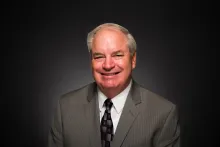
Robin Webber was born in Chicago, Illinois, in 1951, but has lived most of his life in California. He has been a part of the Church of God community since 1963. He attended Ambassador College in Pasadena from 1969-1973. He majored in theology and history.
Mr. Webber's interest remains in the study of history, socio-economics and literature. Over the years, he has offered his services to museums as a docent to share his enthusiasm and passions regarding these areas of expertise.
When time permits, he loves to go mountain biking on nearby ranch land and meet his wife as she hikes toward him.
