

Robin S Webber
This transcript was generated by AI and may contain errors. It is provided to assist those who may not be able to listen to the message.
Praise to God, talking about Him being everywhere, never apart from Him. What a beautiful and wonderful message on this festival day. I thought I'd use just the main mic rather than the remote mic because it's really hard putting that on, and you never want to have an IQ test in front of 100 people.
It's not a good way of doing it. So if I start wandering from the mic, here's what you do. You have my permission. You can just all start going back like that. I'm good with sign language, okay? I'd like to begin this second message, first of all, by looking at the clock, and so that way we'll know where we're at. I'd like to bring a story to you, and I hope that it will have meaning. I may repeat it at the end of the message.
I may not. If we've gotten enough of the message, then it won't be repeated. In the forests of northern Europe and Asia, a little animal lives there, and it's called an ermine. I think all of us have heard that word at one time or another. The ermine is best known for his snow-white fur. Instinctively, this small creature takes a peculiar pride, especially for an animal, takes a peculiar pride in his glossy coat.
And he protects it against everything at all costs that might soil it. Well, fur hunters take cool advantage of the ermine in this respect. They do not set a snare to catch the little fella, but instead they find his home, which is usually in the cleft of a rock or in the hollow of an old tree, and then they daub the entrance and also the interior with filth. And then the dogs start the chase, while the little fella, who's frightened, flees towards his home. But as he gets to that which is familiar in that he's taken care of so much, he finds his home covered within and without with uncleanliness and filth and soiled.
That would tarnish his white fur, and so he doesn't go inside. But rather, he turns and he faces the yelping dogs and meets his death while preserving his purity. Why? Why? Again, to the ermine purity is dearer than life. What might we learn from this story from the furry little fella? Here we've come to understand that the sacrifice of a creature that will maintain its own outward purity and will maintain that at all cost. But now allow me to ask you a question and bring all of you in on this afternoon.
What steps are you willing to take to sustain the inner purity and be holy before God? Because after all, purity and holiness are really one in the same. And I have a question for you this afternoon, friends. How important is it for you to be holy? Are you comfortable with that term? Do you like being referred to by being holy? I don't know how many of you have recently gone in to try to get a job and you've got the application in front of you and you mention your qualifications.
And of course, you know always the one that will really go over big is, I am holy. I don't know how many of you have used that recently. But God wants us, you and me, in that sense, to be holy. And holiness actually reverberates throughout the Bible. From the very beginning of establishing a covenant with ancient Israel, God said, join me there for a moment because it's kind of interesting the way that he put it, in Leviticus 11, right in the books of the law, Leviticus 11 and verse 44. For I am the Lord your God. God always builds the foundation by declaring His name.
And there's a relationship happening here. He says, I'm going to be your God. And then he says, you shall therefore consecrate. That means set yourself apart. You shall consecrate yourselves and you shall be holy. Why? For I am holy. Neither shall you. Then it goes on talking about abstaining from coming into context with certain things. And then again in verse 45, for I am the Lord who brings you up out of the land of Egypt to be your God. You shall therefore be holy. Why? For I am holy. It's almost like an echo that's going back and forth. You shall be holy because I am holy. But this is not just simply lost in the sands of Sinai.
We actually find it over in the New Testament. Join me if you would. First Peter, welcome you to open up your Bible this afternoon. And again, notice this anthem that goes throughout all of the Holy Scripture. In 1 Peter 1 and verse 15, here's a purveyor of the New Covenant, the Apostle Peter. And he goes right back to basics, brethren, because God never changes.
His standards are always the same. In 1 Peter 1 and verse 15, But as he who called you as holy, you also be holy in all of your conduct, because it is written, Be holy, for I am holy. Again, there's two things that are happening in these verses, both in the book of Leviticus and in 1 Peter.
Kind of bookend effects between the Old Testament and the New Testament, holding up what God desires. We find that, number one, it is declared what makes God God. What makes God God? Well, God is holy. But beyond that, it also shares with us his desired standard regarding those that he sets apart.
And the standard never changes. It isn't supposed to. That's what makes God God. He does not change. He is the same yesterday, today, and forever. And we live today for God. We are a holy people. And we'll go into Scriptures in a little bit about reminding us of our calling.
And when we partook of the bread, and as we partook of the wine about a week ago now, we were saying one thing in that statement of partaking of the bread and wine. God, you indeed are holy. And we renewed that covenant that as God is holy, we desired with the sacrifice of Christ in place that we, too, wanted to be holy. The Passover of the New Covenant and the Days of Unleavened Bread are designed to bring us into full connection with these two concepts. That God is holy, and that we are to be holy. They fit together just like a glove. God says, I am holy, therefore you take this walk before me, and you are to be holy. And no one ever said that the walk is easy. Join me if you would back in verse 13 of 1 Peter. Let's gain an understanding of how the Passover and the Days of Unleavened Bread together resonate and echo this mantra of the Scripture of, I am holy, therefore you be holy. It says, therefore gird up the loins of your mind. It doesn't say pull up your jeans. That'd be easier. It says, gird up, strengthen, bring together the loins of your mind, and be sober. That doesn't mean to be a sour puss, but to walk with purpose. To have a life that has gravity and meaning to it, and rest your hope fully upon grace. That is to be brought to you at the revelation of Jesus Christ as obedient children, and not conforming yourself to the former lust as was in your ignorance. As we've been discussing that last message that I gave, when we talk about conform, that is different than transform. Even the Greek bears that out. In other words, what Peter is saying is, don't be pushed in by the external forces that want to mold and to shape you because of the atmosphere that you're in. Whether it be in San Ysidro, or whether it be in Apple Valley, or whether it be in San Diego, or whether it be in Redlands, or whether it's in Indian Wells. Don't be formed. Don't be pushed in like an auto wreck when it's colliding with another auto. Don't be formed and dented by that outward world. Remember what's going on here.
Remember that a Christian operates not from the outside in, but from the inside out. Then it says, but as he who called you is holy, you also be holy because it is written. And if you call on the Father who, without partiality, judges according to each one's work, conduct yourself throughout the time of your stay here in the deepest respect. Fear makes you think like you're in a horror movie. That's not what's being talked about here. But in the deepest conveyance of respect and understanding what God has done. Knowing that you were not redeemed with corruptible things like silver or gold, or from some aimless conduct.
Something that doesn't come to anything. It's often been said that most people in life aim at absolutely nothing. And you know what? They hit it every time.
God called us out of that. Called us with a purpose. Gave us a direction. Gave us an understanding of what's going on down here below.
And notice what it says.
And all this was made possible with the precious blood of Christ. As of a lamb without blemish and without spot. And he was foreordained before the foundation of the world that was manifest in these last times for you. Who through him believed in God.
Who raised him from the dead and gave him glory so that your faith and your hope are in God. And thus, since you are purified, your souls in obeying the truth through the Spirit, in sincere love of the brethren, love one another fervently with a pure heart. A holy heart. One that is no longer soiled.
Having been born again. Having had that spiritual experience.
That God has visited us. And brought us an invitation to be holy as he is holy. Not of corruptible seed, but incorruptible. Through the word of God which lives and abides forever.
So when we see this, I am holy, therefore you be holy. As we look through 1 Peter, we begin to understand and see how understanding that he is holy. But now with that in place, and during these days of 11 bread, and now this is a springboard moving forward.
Into the rest of the year, we too are to be holy for what God has done for us. I like to talk about that a little bit. I like to just break it down into two parts. God says I am holy. I like to talk a little bit about how and why God is holy. Have you ever thought about that for a moment? Let's discuss that. And then we're going to go to the next point. How then are we to be holy in response to his being holy and truly believing in that?
Join me, if you would, in Isaiah 46. In Isaiah 46, and let's look at this for a moment to understand who, again, we are actually worshiping before today. Isaiah 46 and verse 9. Remember the former things of old? For I am God, and there is no other. And I am God, and there is none like me. God's basically saying, I am original. Everything else is an imitation. How and why can God say that? How and why is God holy? Allow me to bring you to the first point. God's holiness is beyond comparison. That's why you and I are here today. God's holiness is beyond comparison. The God of the Old Covenant and now the New is holy. Why is that? He sets the standard for morality. Unlike other gods, especially those who have been worshipped or created by man over the thousands of years, He is not warlike. He is not bloodthirsty. He is not promiscuous. He is not adulterous. He is not spiteful. In that sense, just think that for a moment. Aren't you glad that you worship a God above that isn't having a bad day and taking it out on you? God is not spiteful. Rather, He is a God of justice. He is a God of incredible mercy. And He is one that Scripture shows us, and the words of Jesus tell us, that He has incredible care for each and every one of His followers. God is neat. He is beyond comparison. He doesn't ask of others what He does not ask of Himself. God sacrificed no one else other than Himself by offering His Son. And before that same Son died, He described His Father as the one that waits at the door, looking out, hoping, waiting, that even when we fall, even when we trip, even when we, to use an old term, backslide, go down, if but for a while, come to our senses, He is at the door. He is looking afar. He sees the one coming home. He wants to run out. He wants to embrace. He wants to welcome back. And now put on desk duty with Fred Richardson or Harry Wiedenhof. But gives them the ring, gives them the shoes, gives them the cloak, and says, I'm not only going to forgive you, I'm going to restore you. I'm bringing you all the way back because I want to have a relationship with you. Yeah, a perfect being that embraces the unembraceable. Once the unembraceable begins to understand their role in the restoration. God says, I am holy. Therefore, you be holy. Sound like anybody you know? Sound like your actions during the days of Unleavened Bread? Are you neat, like I just described our God? Are those descriptions and attributes that fit you? That you're striving to obtain? That you're praying to God that you can be a part of and that you can exhibit before others? Let's go to another point about God. That makes God holy. This is kind of interesting. God cannot be known apart from His holiness. That kind of makes sense. But let's explore it a little bit more. God cannot be known apart from His holiness. Join me if you would in Psalm 93. I'm sure Psalm 95 is really good, too. But anyway, Psalm 93. Let's notice verse 4.
The Lord on high is mightier than the noise of many waters, than the mighty waves of the sea. So, in a sense, this extols the sovereignty and the majesty and the might of God. But then notice what it says. Your testimonies are very sure, and holiness adorns your house, O Lord, forever. The key that opens the door to God's kingdom and exhibits His eternal reign is His holiness. These verses tell us that God's glory isn't only in His strength of which He has, but also His perfect moral character, His purity, just like the code of that ermine. Think about it for a moment. Maybe you haven't thought about this for a while. Just kind of put 1 plus 1 equals 2 together. God can never do anything that is morally imperfect. God can never do anything that isn't morally perfect. Let's put it this way and tie it together. His perfect means always justifies and ensures a perfect end. Think about that for a moment. Sometimes down here below we say, well, the means justifies the end. And we don't really want to do that, and we don't want to think about it until we need to. And then we use bad English to make a point, and we do it. Thinking that somehow we can short-circuit and get this while going there. God never, ever deviates from His Word, from His law, from His grace for you and for me. Aren't you glad? You think about that. Aren't you glad that God is holy? Know what that means? You can trust Him with your life. Because what you see is what you get. And what you know about God is what He is, for indeed He is holy. He settles for nothing less, and thus assures us that we can trust Him. God says, I am holy, therefore you be holy. Just a point to kind of keep you in the game here. People trust you? Are you trustworthy? Do you break? Do you bend? I'm not talking about on the good days, I'm talking about the tough ones. And where all of a sudden the means does justify the end. Where all of a sudden we want one plus three to equal two. Rather than recognizing what the Bible does, Bible math just simply goes this way. One plus one equals two. Never changes. God is the same yesterday, today, and forever. God says, I am holy, therefore you be holy. Another unique thing of what makes God holy and why He can say, I am holy, is that God's holiness cannot tolerate sin. Sin not only offends, but it separates others from God. Interesting. Separates us. Join me, if you would, in Isaiah 59. In Isaiah 59, and let's take a look at verse 1.
Pick up the thought in verse 1.
Sin in us as if it doesn't matter, as if we're just having a bad hair day. He plainly says that sin cuts Him off and isolates Him from even those whom He loves. Until they pray the prayer of repentance. God says, I am holy, therefore you be holy. These days, leading to the Passover and during the Feast of Unleavened Bread, we contemplate this coming together of God being holy and we being holy, and bringing it together. Recognizing because God is and what He has given us through His Son, He sets the pathway for us to move forward in a new mindset, in a new heart set that works from the inside out. That resonates in us, lives in us so deeply, and anchored in us by the life, the death, and that resurrection of Jesus Christ. That man and the external pressures of this life should not, thus cannot, un-lodge that from us, that we want to be like our Father who is above. Another facet of holiness. God's holiness is multi-dimensional and is available to His followers in whatever they need, whether it be big or small, and it is always available. Let me show you what I mean. Revelation 4, join me there for a moment. In Revelation 4, and let's pick up the thought in verse 6, we're moving right into the throne of God, and we've come to that aspect as we're moving left to right through the throne room of God, we come up to these four living creatures, each having six wings, were full of eyes, around and within, and they do not rest, day or night, saying, Holy, Holy, Holy, Lord God Almighty, who was and is and is to come. I just want to just say always. Another way of saying it is, God's always holy, always working for us on our behalf. And whenever the living creatures give glory and honor and thanks to Him who sits on the throne, who is what? Who is holy? Who lives for and ever? Then notice, there kind of becomes, you know, who's ever been to the ballpark recently? Who can still afford the ballpark out there? Anybody? But you ever get into one of those human waves? You know, everybody kind of goes up like this. Well, this is an angel wave that's happening in heaven. You know how somebody in the ballpark always starts it? It has to go all the way around. You know, you see this thing going all the way around along with the beach ball that's out there. There's always one person with the beach ball. But anyway, you see this wave. Well, think about this for a moment. There is this angel wave, the spiritual wave that goes through heaven. That is one level, one realm of angels extols how holy God is like the living creatures. Then all of a sudden the 24 elders get into it. Then others get into it. And there's just this anthem of holiness that's occurring up there. Here we find spiritual beings, these four living creatures, that extol and lead others in worship regarding God's holiness. I don't know if you ever thought about it before, but when you look at these four living creatures, they actually, their facial forms manifest the attributes of the composite of what makes God holy. Here you find a lion that represents the majesty and the power of God's holiness. You have the ox which represents the faithfulness of God's holiness. You have the face of a man that represents the intelligence, the wisdom of God. You have the picture of the eagle that represents the, in a sense, the sovereignty of God.
And therefore, then you understand what God's holiness is all about. But notice something here. Down below, as they go through this chant of holiness, you are worthy, O Lord, to receive glory and honor and power, for you created all things, and by your will they exist, and they were created.
This is telling us that such holiness that's extolled in heaven above now is to be ultimately known and received by everyone. All things that live in heaven and in earth, all creatures that do exist, are to acknowledge it. With that, though, and with that excitement that it is going to spread down here below, let's understand something on this, the Days of Unleavened Bread. God has chosen you in covenant relationship as a member of a body of Christ that you might be aware, that you might receive, and that you might respond to such holiness here and now on this day. That's very important to understand. And that's going to move us now into the next part of the message as to how we are to be holy. Because God makes things holy. God, at the very beginning of time in the book of Genesis, took a day. Not six days, but one day. He set it apart. He said, blessed is the Sabbath. He consecrated it. He blessed it. He set it apart, and He put His presence. He put His essence into that day. He set it apart. It's like He drew a line around it. He says, the other six days, they're yours. This day, it's mine. And I want you to treat it differently. Out in the wilderness, during the time of Moses, Moses came up the mountain. There was a burning bush. God said, take off your sandals, Moses. For on the ground that you walk is holy. That ground that's surrounded, the burning bush. Now, what was that ground made out of? Was it made out of kryptonite? Was Moses walking on a gravel carpet of green? I don't think so. I don't think that soil was probably any different than the other soil. Other than God at that time set it apart and made it holy. Well, you know what? God does His best work, not just with days on a calendar and or with a bush, 8,000 feet up in the mountains of Sinai, but with you and me. Join me if you would in 1 Peter 2. 1 Peter 2. And notice what God says here in 1 Peter 2 and verse 9.
You are a chosen generation, a royal priesthood, a holy nation. You're special that you may proclaim the praises of Him who called you out of darkness into His marvelous light. Now, that doesn't mean there's anything special about us.
We don't glow in the dark. We don't walk on a green carpet of kryptonite. No, no, no. God tells us exactly where we come from. We were nothing. Who were once not a people, but are now the people of God, who had not obtained mercy, but now have obtained mercy. Therefore, beloved, I beg you, as sojourners and pilgrims abstain from fleshly lust, which war against the soul, having your conduct honorable among the Gentiles, that when they speak against you as evildoers, they may by your good works, which they observe, glorify God in the day of visitation. God is in the process, friends, of calling us to be holy in an unholy world and to show forth His praises as the language is here.
That's just another way of saying, I the Holy God have chosen you. Therefore, your walk is to be holy. But there is... are you with me? There is a difference here. All analogies break down. Let's bring back our friend, the ermine, at this time. Remember that little thing? What was that thing in SeaWorld where the little otter used to come? Remember that little... what was that show that was in the... none of you have ever been to SeaWorld. Aren't half you in San Diego? There was that little otter that used to come out on cue.
What was the name of that? Seymour! I can tell that this portion of the service was not blessed by that prayer in the beginning. We're not going anywhere. We're going to pause. We're going to go back. Let's just talk about the ermine. The point is this. That ermine would not go into an area that was soiled or tarnished or unclean. And there's a lesson to learn from that. But let's understand. You and I worship a God who sent the Son, who found us in uncleanliness, who dared from his throne to come down into our world, go through the whole of eternity, come into our world, and found us in the dark, found us in the filth, found us soiled.
And we believe that report. And we believe that he is holy. And we believe that his Father is holy. And thus, because of that belief, we want to walk and talk and be like them. This is the incredible difference. And they say, you are to be holy. Join me if you would in Hebrews 10. Hebrews 10 is interesting. Sometimes we can get a little frustrated and say, you know what?
I don't know if I'm up to this thing called holiness. I know God is holy. And I want to worship him. But that's only one side of the equation out of Leviticus and out of 1 Peter. And sometimes we can get frustrated. And we can see that even as we have accepted God the Father's invitation into his kingdom existence, even as we've accepted Jesus Christ and all that he is, we can become downtrodden.
We can get on ourselves and say, there it goes. I am not yet perfect. Maybe this verse helps a little bit of understanding that God is holy and what our walk is to be holy. Hebrews 10. Join me there if you would for a moment. Let's pick up the thought in verse 11. And every priest stands ministering daily and offering repeatedly the same sacrifices which can never take away sins.
But this man, after he had offered one sacrifice for sin forever, sat down at the right hand of God. And from that time, waiting till his enemies are made for his footstool. Now notice verse 14. For by one offering he has perfected forever those who are being sanctified. Another way of putting this, which would be allowable, is simply this. For by one offering, meaning Jesus Christ, he has perfected forever those who are being called to be holy.
Because that's exactly what it means. It means to be consecrated. It means to be set apart for God's purpose and God's presence. And yet, even when we say that, we can become frustrated humanly that we're not perfect yet. But here's the point I want to share with you.
Our job description to be holy isn't necessarily synonymous with divine perfection at this point. Let's go a little bit deeper, understand what this verse is telling us. So therefore, then we can focus on the walk that is before us. Let's appreciate this.
At this point, we've been made perfect, and yet we are to be made holy. Notice this. Verse 14, for by one offering he has perfected forever those who are being sanctified. It says we're perfect, but at the same time it says we're still in the being staged. What does that mean? Let me explain it to you. Let's appreciate that through the death and the resurrection, Christ once and for all made his believers perfect in God's sight.
When we have come to God in prayer and we have repented, and we've said, Father, forgive us. We want to walk this walk. We want to be holy as you are holy, and yet we have stumbled again. Stumbled again.
While God hears us, he's not looking at our perfection because we're not perfect. But at his right hand, as mentioned here, is the one who is perfect. And thus, as he is perfect and has taken those penalties upon him, and that he is forever the Lamb, the slain Lamb of God, God accepts our repentance. But at the same time as we are made perfect in our Savior and in our high priest in the heavenly throne, there's still a role here. We are to be made holy. What does that mean? How is that accomplished? Join me, if you would, in 2 Timothy 2. In 2 Timothy 2, we discover an answer as to how to walk the walk. Beginning in verse 19. Nevertheless, the solid foundation of God stands. Those who are His... Excuse me. Nevertheless, the solid foundation of God stands. Having this seal, the Lord knows those who are His, and let everyone who names the name of Christ depart from iniquity.
The first thing that we've got to do is we've got to depart from iniquity. That means to leave, just as we've been going through the example of Israel being Egypt during this week. That's the first part. That's an action verb. That's something that is never, never completed in that sense. We must always be in the continuum of departing, of recognizing what we need to exit from. We also see, but in a great house, there are not only vessels of gold and silver, but also of wood and clay, some for honor and some for dishonor.
Therefore, if anyone cleanses himself from the latter, he will be a vessel for honor, sanctified, and useful for the Master, prepared for every good work. The first thing that we have to do, then, is we have to depart. We have to leave the sin behind just as much as Lot and his family left Sodom, not looking back and leaving. But just leaving something and moving away from something is not enough.
We must also cleanse ourselves from the latter, and this is important. We cleanse ourselves by not only leaving where we're from, but leaving those ways behind and asking for God's forgiveness and strength and the conviction of his Spirit to convict us to stay withdrawn from those things that spite our holy walk before God. Then notice what it says in verse 22. Flee also, another action verb, action words, depart, cleanse. Flee also, youthful, lost. Sometimes you just got to get out of there.
Just got to move it. Just got to get away. Basically what God is saying, whatever it takes, do it. And you won't be alone. You've got my Spirit, you've got the example of my Son, and you've got my approval. Get out of dodge. Move it. Do it. Oftentimes people do this, and they think they're on the road. They're ready to go. Therefore, they're being holy. But simply to depart, simply to ask forgiveness, and simply to remove yourself from something that might be pulling you back is not being holy.
How disappointing. No, it's not enough. Next, notice something. Maybe you've never seen this before. It's kind of neat. It just kind of leaps out of there. It says, but pursue righteousness. Pursue righteousness. Chase after God's example. When you pursue something, how many of you ever saw Butch Cassidy in the Sundance kit? That's it? I can't use that example either. I'm being shot down today.
Good. But there's this case where they were on the run, and they were moving, and you know what? They just could not shake that posse. They'd go over hills. They'd go over dales. They'd go up mountains. Here are a couple con men that thought that they'd been up against the best. Get out the binoculars.
Sure enough. There's that posse. It's almost like the guy was saying, what did I do to this guy in another life? You won't leave me alone. Pursuing diligence, movement, and action. This is the key. Flee also youthful us, but pursue righteousness. God cannot work in a vacuum. God can't work in a vacuum. God still has to see the action within us to pursue, to go after, with vigor.
Just like today when Mr. Gartenhauer was talking about the pursuit of their walk. My teeth almost dropped out. Those that do drop out. Some don't. Some do. When Bob was saying that he and Sheila walk six miles in one hour, I thought, man, they're on the hunt. They must be after the ermine. You don't have to do that anymore. Just do the ermine's pull. You don't have to do all that running. No.
I thought, wow, they are on the move. They are on the pursuit. They have a goal. They're doing it for what is the reason why they are doing it? Well, I'll let you ask them after services. But why are we doing what we're doing by being holy, by being in pursuit of the righteousness? It's because we've come in belief and understanding that God is holy, that He's honorable, that He doesn't change, that He's always there. And this same God that has made the millions and the trillions of stars above and is beyond all of that and deals with numbers that we can't even begin to wrap our mind around and the rubber band snaps, yet deals with each and every one of us one-on-one.
And He says, I want to know what your heart is like before me, individually wrapped, not in a solar system of human beings, not in a galaxy of personalities, but just what about you? As the prophet said, speaking of God, Heaven is my throne, Earth is my footstool, but to this man will I look, to him that is contrite, humble, and trembles, that means has deep respect at my word.
The mistake that some people make, friends, stay with me for a moment, as we will conclude here in about five minutes, so stay there with me, simply this. What a lot of people do, and where they lack in being holy, it's kind of a two-way thing, some people start, they depart, they cleanse, they flee, but that's not walking the walk of being holy, because God doesn't operate in a vacuum. We must replace that which is evil with the good. Out goes the bad air, in comes the good. I'm going to let you read Colossians 2, Colossians 3 on your own. We don't need to go there right now. That'll tell you what to do. On the other side, what certain people do is, they move right to pursuing righteousness. They're really cool with that. That's neat. I want to be like Christ. I want to please God the Father. And they're very sincere in what they're doing. They're pursuing righteousness, but they have not gone through the steps of departing, of cleansing, and exiting, and fleeing.
They have not yet gone to God and prayed that prayer of repentance, acknowledged who God is above, as sovereign and holy.
And therefore, they've missed that part of the equation. And they're just ready to pursue.
As God sets us apart before Him to walk the walk, we must set apart in our mind the two halves of being holy and the walk of holiness.
The first half is to what? Depart. To cleanse. Deflate. To remove ourselves from the issue and repent of the issue at hand.
Then we, in being holy, set apart with God's help and His Spirit convicting us that pursuit of righteousness. And that's exactly where we are during this, the days of Unleavened Bread. Think this through for just a second. Interesting thought.
During Passover, God was extremely active. All you have to do is watch Charlton Heston in the Ten Commandments, or you can read it from Exodus 1 through Exodus 14.
Boy, God was doing a whole lot with the country of Egypt. God was very, very active. Israel was somewhat active, but in a sense passive.
God was laying that foundation, setting that seal. God was turning rivers of water to blood, frogs were leaping out, flies in the sky, cows dropping dead, sun going out, you name it.
God's activity was El Supremo. Israelites, paint your doorpost, kill a lamb, have a meal.
But it's very interesting then, and this is the interest of Passover and Unleavened Bread.
God is extremely active at Passover, setting Himself as our anchor for He alone is holy and He alone is perfect.
And He did the activity by calling us, by His grace, initiating the process from the beginning, inviting us into the family, and working with our hearts and with our minds.
So He is dominant at Passover. He is the anchor. He is the all and all for us, for you, for me.
But now, during the days of Unleavened Bread, we are to be active. We are not to be passive.
We just can't get by watching. For now, that new life is in us.
And as Bob was saying that this morning, that the cloud and the pillar of fire went before.
But that Shekinah presence is now inside of us, the I AM. He dwells in us. He set us apart. He says, I am holy, therefore you be holy.
Our heart, that naos heart, which represents the temple of God, God says, I want to set up shop inside of you.
You be mine. I'll be yours. We'll covenant.
And on this, the last day of Unleavened Bread, Israel had to do something. He had to walk through that sea.
There's nothing passive about walking through the Red Sea.
Brethren, as we move forward now in this year, I want to just cement in your mind, hopefully, where we can go as a congregation to glorify God.
Because it's not about us, it's all about Him.
Let us, in that sense, take a scripture and allow that to be our goal this year as a church circuit.
Redlands, San Diego.
And if nobody else joins you in this and forgets this message, that's well, that's fine. You won't.
Let us strive as we move out onto that sure shore of freedom on the other side of the Gulf that separated us from death to life, from slavery to freedom.
Let's make it our motto as a congregation, and all that we do, to emulate what it says in Leviticus and in Peter, I am holy, therefore you be holy. See you after church.
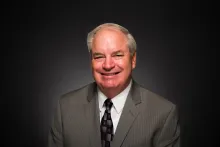
Robin Webber was born in Chicago, Illinois, in 1951, but has lived most of his life in California. He has been a part of the Church of God community since 1963. He attended Ambassador College in Pasadena from 1969-1973. He majored in theology and history.
Mr. Webber's interest remains in the study of history, socio-economics and literature. Over the years, he has offered his services to museums as a docent to share his enthusiasm and passions regarding these areas of expertise.
When time permits, he loves to go mountain biking on nearby ranch land and meet his wife as she hikes toward him.
