
Robin S Webber
This transcript was generated by AI and may contain errors. It is provided to assist those who may not be able to listen to the message.
I am looking forward to bringing you a message that is actually going to be in two parts. I would like to give you the title right up front. It's always important that you know that, as stewards of Jesus Christ, as to what we are bringing you on or in our messages on the Holy Sabbath day. The title of this message is simply this, and I hope it will intrigue you and invite you to enter into this message with me. It is simply entitled, Stepping into a New Year with Raw Christianity 101. We know what the term 101 means, especially when we're taking college courses. They are foundational. So again, to capture your attention, what is the title of this message? It's Stepping into a New Year, meaning a New Calendar Year, with Raw Christianity 101. Let's begin by anchoring ourselves in Holy Scripture and explore and unpack the prayerful GPS that Jesus Christ himself gave us on the last night of his life. Join me, if you would, please, in John 17, the Gospel thereof, John 17. Let's understand that on that evening, in that upper room, surrounded by his disciples and perhaps others that were in the room—certainly the disciples were there, others would have been in earshot—and listening to him, that he was not only speaking these words to his heavenly Father, but he was addressing them to you and to me today, today, here in January 2021. And all that in the future will hear and respond and heed and understand and become a disciple of Jesus Christ and a child of our heavenly Father. We notice in John 17, verse 20, beginning, it says, I do not pray for these alone, but also for those who will believe in me through their words. The words that he was saying that night were to move beyond the hearts and the minds of the people that were before him, and beyond those walls, and beyond those days, and those years ahead, and down to our time. It's always incredible to me when I read verse 20 that this is Jesus literally praying for you and me, we that are here in Arizona or Nevada or Southern California, or wherever you might be as this message reaches out to you. He had your heart, he had your name, he had your existence in his mind when he was giving this prayer. Notice what he speaks about then, and what his earnest desire is, that there would be those that would come along and believe in him through those that would pass these words on. And what were the words? That they all may be one, as you, Father, are in me, and I in you, that they also may be one in us, that the world may believe that you sent me.
There's a lot of you and me and us, but it's all connected into this. What I would like to share with you, and you might want to jot down in your notes, this seamless unity, this sacred oneness that you and I have been called to, along with all of those that have proceeded us down these last 2,000 years. Why? That the world may believe that you sent me. The oneness, the oneness that we exhibit with the Father and with the Son bear a witness, a living witness, that what? That the God of this universe sent his Son, who became Jesus of Nazareth, and that he is Messiah, that he is Lord, that he is Christ, that he is King, and how we come together in unity is a testimony. It is literally a witness by what exudes out of us and the connectiveness with God and Christ and with one—oh, and here's the tough part—and with one another bears witness that something occurred, something occurred in our lives and is happening down here below. So we take a look at this, and we understand it, and that the bearing witness that is mentioned here as we go along is a witness to, as Bob was mentioning in his message about blessing God, it's a blessing back to God that when we have this unity, that we accept his Son, that we are acknowledging that he's the Father. That it's a blessing to him that it was worth it, that it is worth it in our lives, and it's a blessing to and a witness to one another that are in the body of Christ. It's an encouragement when we're united with one another, and it's also a witness to the world around us that there is something incredibly unique that is happening here. What makes this person and or these people pick? There's something different about them, something really unique. Let's continue to read this. Notice what it says, that, and the glory which you gave me, I have given them that they may be one, just as we are one.
One is a big number in God's mathematics. I in them, okay, you in me, that they may be made perfect and one. And that, again, notice what it says here, that the world may know that you have sent me. Our oneness with God and our oneness with Christ and and and our oneness with one another is a witness that the world might know that you sent me and have loved them as you have loved me. Father, I desire that they also whom you have you have given me may be with me where I am, that they may behold my glory which you have given me, that you loved me before the foundation of the world. Now, O righteous Father, the world has not known you, but I have known you, and these have known that you have sent me. And they and we know and have read Jesus' earnest desire on that last night of his human existence, that we might have what I would like to call this sacred oneness. A sacred oneness not only with the Father, as they have the oneness with one another, God the Father and God the Son, but that we in turn as the children of God and as disciples of Jesus Christ might have that sacred oneness. Question. Let's just focus on it for a moment. What does sacred oneness mean to you? What does sacred oneness mean to you? Have you ever really kind of just sat down and thought about that? Thought about what this means as this becomes a reality that comes out of the Scriptures and from a voice recorded long ago and words that are written down long ago, that it is something that is to, in a sense, dominate our desire in serving God to have the sacred oneness. Let's continue this thought for a moment and understand it. It's one matter to, again, hear this prayer that was given or to read it. It's another thing for us to say our own prayers and ask for God's blessing and ask for God's direction, but it's another thing then to go out the door and with God's help make it happen. What happens between when we pray and or when we've read this prayer and when we go out the door and we enter into the world around us? We know that the GPS, the directional that Jesus gave us that night, was, I want you to travel as one towards the kingdom of God.
Straight. But what happens is when we get out, like any GPS that you might have in your car, a GPS is good as far as giving you roads and turn left, turn right, do this, do that, but it doesn't always give us all of the dips along the way, all of the curves. It doesn't give us all of the speed bumps. It doesn't always necessarily give us all the heavy traffic that comes along, and that's what brings us sometimes down to a halt or down to a grind.
As we move into this message, I'm just going to throw some thoughts out for you because I hope this will move into your Mondays and Tuesdays and Wednesdays and Thursdays as we move into what is Raw Christianity 101, which really, to a large degree, moves towards having and experiencing and developing and growing in this sacred oneness, a few questions we need to ask that will always come up, that sometimes halt us or will move us forward.
The questions will be there for each of us, and have been there for 2,000 years, but here we go. Number one, first question. As Jesus asked Peter long ago, along with the other disciples listening, the first question is simply this, who do you say that I am? Who do you say that I am? Not 3rd or 4th century Greek philosophers or Greek theologians in Constantinople or Nicaea, but who do you say that I am? Up close and personal, who do you say that I am? Not somebody else that always goes to the individual, who do you say that I am? And that question is going to come to us every day and every way, as we weigh our motives, as we weigh our thoughts, as we weigh our words, as we weigh our actions that then become deeds, each step along the way.
Our elder brother, Jesus Christ, is there, and he's asking us through his spirit in us, who do you say that I am? Now, even as we might answer that one and be in step, as Jesus says, follow me and we're right behind him, the second question can create a deterrence to sacred oneness, and that is simply this, who are these people that you have placed me with? Who are they?
Who let them in? Where did they come from? Can I maybe join another section of the family? What's up? This is it. This is who you're calling. You want me here? What's going on? And we also need to recognize that's a part of it. So, again, now we're going to move into construction on some of these questions and some of these thoughts that I've raised as we go back to what my point is, and that is simply this, stepping into a new year with Raw Christianity 101. Now, the title is meant to capture your attention when I use especially the word raw, because raw kind of denotes something.
It's right down to the marrow. It's right down to the bone. And what we're talking about here is what is the essence of Christianity stripped bare to the bone, that God is wanting us to practice, that we're to experience and in turn daily practice in our spiritual journey to be complete in Christ. Now, what I hope to share in this two-part series are practical spiritual takeaways.
This isn't going to be high theory. We're going to break this down, and we are going to unpack it by just going through a couple of verses to understand it. But what we're going to kind of come to understand is that when God calls us, He just doesn't leave us alone. He's provided us an antidote, because I realize that sometimes we can be stalled on our spiritual journey. We can come to a dead end, and or we can be spinning our wheels just like a hamster in a cage going around and around without any movement, without bearing any fruit, without seeing the life of Christ in us.
And there is nothing more frustrating than being a Christless Christian, knowing but not doing, being near but being far, being invited up to the drinking fountain but never drinking ourselves the water that God through Christ has given us. Now, as we step into a new year, allow me to share something with you with some of the steps I'm going to give you, because it's going to be deep homework, deep hard work. We talk about New Year's, and so often we talk about New Year's resolutions. We're not talking about resolutions this afternoon.
I'm sorry. What we're talking about is resolve. Resolve, and I know they come off with the same Latin base, but there's a difference between resolutions and resolve. Allow me to explain it. Resolution is a noun. A resolution is. A resolution is a noun. It identifies something, but you can have a noun going around in your head, but until you have resolve, that means you roll up your sleeves, you roll up your heart, you give yourself to God.
You know it's going to be maybe a tough slide, but you're in it just like Bob is telling us about in the first message. You surrender yourself, and you give yourself to God, recognizing that the Almighty, uncreated God has interrupted coming through time and space to call you out of His love and out of His desire to mold you into the image of His Son.
My question is this. Are you tired of making resolutions, and are you willing to develop the spiritual resolve that comes by the Spirit of God? Well, that's where we're going. Let's go to Matthew 16 now.
Let's remove into the message. Matthew 16, 18. Come with me, please. Let's go to Matthew 16. Let's take a look here at something. This is where Jesus is talking to the disciples, and then we come to this point where—my eyes are focusing on it—excuse me for a second. Yeah, here we go. In Matthew 16 and verse 18, notice what it says. And I also say to you that you are Peter, addressing Peter, and on this rock I will build my church, and the gates of Hades, the gates of the grave, shall not prevail against it.
In other words, what God sent Christ to this earth to establish, which is a church, will be on the offense, not on the defense. And no matter what happens, that ultimately that gate of death will be crashed through, will be overcome, and the body of Christ will advance. Let's understand something, first of all, that's very important here. Let's break this down and unpack this verse. Number one, it says, I will build my church.
Jesus was sent and continues to be involved and oversee the building of what he calls definitely my church. If you'll notice the letters there, they're capitalized. And why?
The church belongs to Christ. God the Father has given it in his stead to take care of. And he says, I will build. He didn't say it's already built. Okay, it's still in development. Just as we are the living timber and the wood and the building material, we're still being molded and we're still being shaped. And I will build my church. Now let's understand the word church for some of you that are new to the word and just beginning to understand the Bible. He's not talking about a physical edifice. The church out of the Greek means it comes from the word ecclesia. And ecclesia means those that are called out, those that are separated. It is talking about human beings that God is calling to be immortal children in his family.
So we're not talking about the standard church that has four walls. God transcends that. His purpose is to transcend any building of man. He's talking about the body of Christ. He calls it a body. The church, the body, is synonymous. It's a spiritual organism.
So we have to think big. We have to think wide and not be boxed in. 2 Corinthians 5 verse 17. Join me here as we develop a scriptural ladder to a point here. In 2 Corinthians 5 and verse 17.
2 Corinthians 5, 17. Pardon me.
There we go. Notice what is mentioned here. Speaking of what God is doing to recognize that creation is not over. In 2 Corinthians 5, almost there. In 2 Corinthians 5 and verse 17, notice what says, Therefore, if anyone is in Christ, not on the outside, but is in, framed around, abiding, surrounded by Christ, he is a new creation. Old things have passed away. Behold, all things have become new. That means different. That doesn't just mean new and improved. And the price goes up. The price has been paid. It is the very sacrifice, the very blood of Jesus Christ that allows us to go to the next step of being new and improved as God the Father calls us and we're molded into that image. What is being stated here? It says, Behold! Behold! Whoa! Wake up! Pinch yourself! Behold! I create all things new. What is being spoken here is that what God is doing is creating a new man. He's creating a new woman. He's creating a new kind of human being. Oh, yeah. And he's also creating a new kind of community of new human beings, of new men and women that are not only united with God the Father and Jesus Christ, as they are united and are welcome to unite with them but unite with others. That's what we need to understand.
Now, with that, we know that the first man, Adam, was made out of clay in that physical creation. Let's talk about some of the clay that God is using today and that spiritual creation that he is creating right now in you and me because he's not done with me and he's not done with you. He's still creating. What's going on here and what kind of a community has he put together and why did Jesus give that prayer that they might be one? You know, when you go to antiquity and you read Paul's epistles, you kind of recognize that the world was different but it's not as different as we might think of with our world. Paul was a man that had traveled the world of antiquity and that world was very cosmopolitan. It had all sorts of different jigsaw puzzle pieces that didn't seem to necessarily match, just left to you or to me. We probably would not strike the church the way that Jesus Christ did or does as he is building his church. Let's just think about the world that might have come into play in a church in Ephesus or Lystra or Iconium or Antioch of Pisidia or in Antioch. What were those churches made of? Stay with me in a second. Just hear this out for a second. You know, how unique and how many jigsaw puzzles they were. They were not made out of cardboard. They were flesh, they were blood, they had a past, they had a present. God was giving them a future, but wow, what a group! Think of what might have been in one of those home churches, because the church started out in homes and sometimes in a larger city like Rome or like Antioch and or like Ephesus. It could have been in different homes, but they were all to come become one. Think of everybody that was maybe in what we call sitting in the chairs. We would have had people that were Greek. They were Jewish. They were Roman. There were people that were of the conquering race. There were people that were basically all the rest were of conquered people. The James tells us that there were rich, that there were poor. We know that there were men. We know that there were women. We know that there were slaves. We know that there were slave owners, all meeting together in church. Hello? Really different from our time. You talk about challenging. We know the story of Philemononissimus. There were meat-eaters. There were vegetarians. There were singles. There were married. There were people who could speak in tongues. There were people that had no interest in speaking in tongues. There were people that were piteful followers of various teachers. I'm a Peter. I'm a Paul. I'm a Papalos. Those that were really uppity-up made the claim, well, I'm of Christ, just to hush everybody else down. There were people that were pharisaical. There were people that were libertine. There were people who—hear me out, please—that they were sitting there and or they were not sitting there because of the other people that were showing up that if they're invited, I'm going to stay home. And they missed out on everything that day and age because there was no zoom. Our lives are not that much different with the clay that God is bringing together, this dust that He's now making a new creation out of called the body of Christ, of being a new man, of being a new way of being a woman, of being a new way of being a human being, and this new community called the body of Christ. What gives? The early church had the same problems we confront here and now. Members could not or would not detach themselves from the world they lived in and or they would not extricate themselves from their personal idol of self, the personal idol of self, which we're going to be getting to in a few minutes.
What would bring this jigsaw puzzle together? How would God do it? How are we to do it now as we become more personal about our heart work and our homework assignments? Join me if you would in 2 Corinthians 11. In 2 Corinthians 11, let's pick up the thought if we could in verse 3.
But I fear, lest somehow as the serpent deceived Eve by his craftiness, so your minds may be corrupted from notice the simplicity that is in Jesus Christ.
The simplicity. In other words, and that's what takes me back to what I want to discuss with you in this message and the next message, the raw essence, the bare bones of what Christianity 101 is all about. I remember years ago, I heard it many times when I was in the past few days, we talked about people that would major in the major. We would talk about people, excuse me, back up, we would talk about people that majored in the minors. Their whole energy, their whole interest were in things that they missed the mark. They were off target. Were some of the things that they were studying or trying to incorporate? Were they intriguing? Yeah. Okay. Were they interesting? Yeah. But they weren't spiritually life-sustaining. A lot of it just dealt with the brain and knowledge, and the brain is going to go to the grave. It's our heart, and it's our surrendered existence of that surrendered heart that God is really interested in. Let's turn to the book of Ephesians. Bob started there. We're going to keep on going in the book of Ephesians. Let's get a few thoughts here about Christianity 101 and how we can be about our Father's business in developing that sacred romance, that seamless spiritual unity, and come to understand the needle that threads that all together. As we go to Ephesians—and let's pick up the thought here in chapter 4 and verse 1—Paul is the author of Ephesians. He's writing from prison, most likely from Rome. This is what I want to share with you is that Ephesians—you may or may not know this— it's classified as a prison epistle. Paul is writing this either from a prison and or minimally from house imprisonment. He might have even been bound to another individual, a Roman soldier, so he wouldn't flee. So he was, in a sense, imprisoned. His world had come down and shrunk. He wasn't distracted with a lot of this or that that's out there that could have distracted him, or could have distracted you or does distract you and me today from the raw Christianity of 101 of what God really wants us to center on as we move forward into this new calendar year with real resolve. Sometimes everything has to be stripped away, and everything was stripped away. And sometimes when everything is taken off the desk, you just see things a lot clearer. And so he has this message of clarity to those that this epistle is going to go to, not just merely to the Ephesians, these were circular letters that were going to go out to the body of Christ. And he's saying, you know, this is what I want you to get, please. As a senior citizen in God's way of life, this is what he's looking for. He's not looking to simply do an invention of your life story here, or add a comma, or take out a letter. This is a story. This is your living story where you need to come down to just rock basics. These are the building blocks of where you need to go. Stick with them. This is where your resolve and the energy of God's Spirit needs to be in you.
Longfellow, an American poet, long ago said this, Every arrow that flies feels the pull of the earth, so that if you would hit the target, then aim your bow high. The gravity will pull it down. The gravity of our human nature can pull us down, and we don't want that. Ephesians 4, verse 1, some basics now. Notice what it says, I therefore, the prisoner of the Lord, beseech you to walk worthy of the calling with which you were called. Let's break that down. Let's unpack that for a moment. I, therefore, the prisoner of the Lord. It's very interesting that there's a double entente here when it comes to the phrase prisoner of the Lord. Yes, he was in prison, and he was in prison for preaching the gospel. But there's also another meaning that can be ascribed here, that he is the prisoner of Christ himself. He is the slave. He is the servant. He is locked into serving this one that called him on the road of Damascus. This is where his life begins, and this is where it ends. This is what it revolves around. This is his sole allegiance, and that he is a prisoner. And not merely of Rome, even though Rome thought he had as a prisoner, he is a prisoner of Jesus Christ. He's chained to him and bound to the calling that God has given him. And it says, I beseech you, and I earnestly appeal to you. The beseeching phrase here, it's a call that demands action. When you're beseeching somebody, you've kind of seen over the horizon, and you know what's coming, so you're giving them an action item. I beseech you to walk worthy of the calling with which you were called. There's two different kinds of walk. There's walking with God, and there's walking in and with this world. And Ephesians 2, just a couple of chapters over, it talks about this, where Paul's reminding the people that read this epistle that they once walked, Ephesians 2 and verse 2, they walked according to the course of this world. So they were walking, but they were walking towards death. And then Jesus said, follow me, and follow behind me. He's walking just towards life. And so he knows that it says here that you walked at one time this way, but now walk worthy. Let's think about the word worthy. Worthy is, if something is worthy, that means you have placed a value on it. A value has been ascribed. A cost tag, a sales tag, has been put on there, at least virtually in your mind. If something is important to you, if something is worthy, you're going to sacrifice. You're going to put your entire being into it. You're not simply going to make a resolution. You're going to have resolve. Deep down in your bones, abiding in your heart, with the Spirit of God thriving in you, because you know that you cannot do it in your own way or in your own wake, that you too are a prisoner of the Lord Jesus Christ, but a different kind of prisoner than this world. Notice in what says, of the calling with which you were called. There's a calling, and you can read about that calling in the Bible, like in Ephesians 2. But it's your calling. He makes it personal by using it twice. A calling that—notice what it says—of which you were called.
You can put your name down here, if you're daring enough. Write this down, My Calling. Robin, My Calling. What's your name? You put it down. This is My Calling. Now, notice what it says. Now we're going to go down to what we do once we understand what the calling demands of us and are resolved to be like Jesus Christ. That will then bring us to this seamless unity that is so important to God. But it just doesn't happen by wishful thinking. It does not happen just simply by prayer. It will take every aspect of our being to surrender ourselves to God. Let's just go down it very quickly here. Notice what it says here. Number one—and it's interesting that it's number one that is brought out—it says with all lowliness, all lowliness. Guess what? What is the starting blocks of imbibing of this sacred oneness, this unity that God wants? It's lowliness. It's humility. Humility comes first. Lowliness comes first. Just like in the Beatitudes, comes first. Blessed are the poor and spirit.
Isn't that interesting? Thirty years later, Paul's writing this down. It's the same thing that Jesus was talking about. Now, what's interesting, when you go to the Greek root—this is fairly interesting. I hope it will be interesting to you. There was no word for what Paul was speaking about in the Greek language. The Greeks looked down upon the lowly—so much for their democratic polis or state. They looked down upon the lowly. They thought it was not a virtue worth even having a word. The early church had to find a word that was talking about what God wanted we, this new creation, to have. The Greeks deemed it unworthy, slavish, non-desirable.
Here's what it speaks to. Hear me, please, as these words come to you. Ask yourself, is this where I am on January 2, 2021? Am I resolved to do something about it?
It speaks of a self-knowledge. I think that knowledge actually comes from God, but then it's in us. It speaks of a self-knowledge of our unworthiness in comparison to God. It speaks of, ultimately, a true knowledge of self.
And the Greeks would have thought that was humiliating, but a Christian embraces the reality that we are nothing apart from God. As we move forward, as children of the Most High and as disciples of Jesus Christ, can we say that our thoughts and our words and our actions demonstrate that we are no longer drama beings, that it's not about me, me, me, me, me, me, me, me, or I am not, or that we've humbled ourselves, that we see ourselves through what we already know. Somebody once asked, was Job ever converted?
And the answer was yes, but it took 42 chapters. And it came to him in Job 42 in verse 5, where he said, I've heard of you by the hearing of the eye, but now my eye, the eye of the heart, sees you.
And Job was a man who was an incredible individual, and he did worship the Most High. But God was taking him to a point of not merely knowing about God, but knowing about himself, knowing that he was nothing apart from God. How many chapters does it take us in our life? Is it going to take 42 chapters? Or can we come to accept that now that we are nothing?
And a recognize in a society that wants the big I and the big me, that we are nothing, nothing apart from God. You know, really interesting stories sometimes. If you ever written something to somebody and write it out, is to see how many times you use the word I, I this, I that, I this, I that, I just circle. Just interesting. And please understand, we have to use the pronoun I in the English language, and there is a time to use it. But sometimes we find ourselves, all we're talking about is I. All we're talking about is me. And we're not giving the glory and the credit that Bob was talking to us about to God Almighty and blessing him, that we have been blessed. So that in turn, we bless God and we get ourselves out of the story and let God be that way. Remember the story of Nebuchadnezzar walking the walls of Babylon one night of Sothephathor hopping in power. Oh, look at this is so great. Oh, mighty Babylon. Look at these walls that I built. And this is so fantastic. Me, me, me, me. I've done this and I've done that.
A part of the unity.
That will come about is when you recognize that there's still some I and there's still some me inside of you, that you have not uncovered that you need to dig deeper and give to God and say it's not about me. You will recognize where people are coming from by the words that come out of their mouth. As to how filled up they are with self.
And it's kind of interesting that self itself is a four-letter word and should in a sense. And we do want to have identity. Don't mistake that.
God's given us identity and he wants variety in his kingdom family. But how much of self, how much of I, how much of me have we squeezed out and allowed the life and the existence of Jesus Christ to predominate in us? Let's go a little bit further here. It says, with, notice all loneliness and with gentleness. Let's talk about gentleness for a moment and being able to ultimately then have that sacred oneness. The word there, gentleness, in the Greek means to yield.
But beyond yield to have, as it was understood in the Hellenic community, was to have measured yielding. It was to have moderation between two extremes. And we see that even playing out in our nation right now with the way society is going, of extremes on the far right, extremes on the far left, and everybody in between is kind of getting extreme. God's called us to have a moderation between two extremes. In one sense, as a Christian, to be bold and yet to be humble. To be a bold and yet to be humble. And that's challenging to do. But with the God Spirit, we can do it. Remember, years ago, Bob Barron gave a message. Bob Barron gave a message talking about the Roman horseback riding. I don't think you've ever seen it. But Roman horseback riding, what they would do, there would actually be two horses just like this, and there'd be one man with one leg on one horse and one leg on the other horse. And he was holding the reins. And he was riding it on top of it. It's quite something to behold. Circus probably has that, et cetera. I think I've seen it before. And Mr. Barron brought out this message that that's how God wants us to be. One leg he wants to plant it on being bold. And Christians need, yes, to be bold with the understanding that we have been given. But also that other foot was to be humble. So that we're riding equally through the direction of God's Spirit how to be bold and how to be humble. Most of us have seen that movie of Ben Hur where he's long ago with Charlton Heston, still around, where he's selecting the horses for the chariot race. He's dealing with the Arabian horse dealer out in the desert, and he's picking the horses. But he doesn't pick horses with all of the same temperament and or the same strength. He takes one who's just a steady plotter. You need somebody to set the pace. You need somebody with some spunk. And then you needed a horse that's going to be there at the end to pull everybody through and just to kick into gear. You can get it going. Well, that's how God is creating the body of Christ. He's creating individuals, not just one person, one personality, one background. He's bringing us all together through his wisdom and through his love, and we have to learn how to have that oneness amongst us to appreciate what God brings into the body of Christ. If we don't, we'll be divided.
We'll be divided. If we don't appreciate what God is bringing in and the diversity of gifts that people have and understand that we can come to appreciate it. Join me if you would in Matthew 11.25. In Matthew 11.25, this is Jesus who compiles both of these. Matthew 11.
Let's take a note here what it says here. Actually, verse 28. Come to me, all you who labor and are heavy laden, and I will give you rest. Take my yoke upon you and learn from me. Learn from me.
Allow me to guide you. Take my yoke upon you. For I am not as gentle, and I am lowly in heart, and you will find rest in your souls. We will find rest by applying the examples of Jesus Christ that we find in the Gospels. By His example of being bold and yet being humble, Jesus was humble enough to to pick up little children and embrace them in His arms and love them and keep them and bless them. They weren't a bother to Him. He was humble enough to go up and touch Samaritans or lepers or those with diseases. He was humble enough as the Son of Man to say, ultimately, it's not about me at this point, but I'm here reflecting and representing and pointing to my Father above. I'm about His business, and yet He was also bold enough to call demons out of people. He was bold enough to turn over tables in the temple courtyard.
We learn from Him by reading the Gospels. This coming year, to understand the oneness that God has, I encourage you to read the Gospels, because that's the only way that we can learn about Jesus Christ and what He's like. Let's go to point number three, long suffering. I'm going to go real quickly here. Long suffering. What is long suffering? Long suffering is patience on steroids.
It's not just patience. It's patience on steroids. It's patience with commas. Patience, comma, patience, comma, patience, comma, waiting on the Lord, comma, waiting on the Lord, more, comma, and never, never giving up, knowing that our God above is called you for a purpose, and that He said that to His Son that He would never leave us alone, and that no matter what happens, that we can have that patience to know that we know in our heart of hearts of what God has in store for us ahead.
Very interesting that this epistle was written during the time of Rome.
Rome was interesting as far as empires and as far as the people.
Rome conquered the world. Took them a while, but it was very interesting that Rome lost a lot of battles getting there. The one thing about Rome was they could lose battles and battles and battles, and yet always wind up winning the war. When Hannibal came over the Alps and began coming down the Italian peninsula, whether it was at Lake Trasimen or whether it was at the famous Battle of Cana, the Romans would send out troops. One of those battles, they actually lost 50,000 men. Another one of those battles, they lost 30,000 men, but they did not give up.
Hannibal could win many a battle, but he could never conquer Rome. Hannibal could go up and down the whole Italian peninsula, but he never, never was able to take Rome. The Romans would never give up. Now, the Romans are a type of the beast kingdom, and you and I have been called to be a part of the kingdom of God and the king of that kingdom that our Father has appointed Jesus Christ, that at his lowest ever as a human being being nailed to the cross. As it says in Hebrews 12, for the joy that was set before him, he endured the cross.
Mankind was jumping up and down. They thought they got rid of one more Jew that proclaimed himself Messiah. Jesus never gave up. Jesus had his eye and his heart linked in oneness. Whatever is affecting you today, dear brethren, brothers and sisters in Christ, you look up. Don't look around. Do not look down. You look up, and whatever cross that you're bearing today, you recognize that not the happiness, but the inner joy, the inner assurance, the inner knowing that of whatever you're going through. And I know some of you are going through a whole lot more than COVID right now. COVID is enough. You know that you're not alone, and you recognize that God is linked with you in whatever you are going through.
And if he even means to death that he has a kingdom prepared for you.
Long suffering can also mean to be patient with others. We want God to be patient with us. God wants us also in long suffering to be patient with others. Understanding, you know, when you major in the majors, and you think of the great themes of Scripture, one of the great things of Scripture that identifies the Bible—it's a book of law, it's a book of love, it's a book of prophecy—it's also the book of return. God always desires His people to return to Him. The book of Ezekiel, the book of Jeremiah, return, return. Oh, if only you would return, return. The story of the prodigal son returning.
And we want that for ourselves, but we, if we're going to have this sacred oneness that God desires that Jesus prayed for, we have to have that patience. We need to have that love. We need to have that cross bearing for others to allow them to be patient with us.
In God's time, to be able to return and for us to embrace them. When we understand what sacred oneness is about, it is not our job to choose the family of God. It is our responsibility, our love mission, to accept them and to embrace them. Love them. That's what we need to do. Again, you notice what it says here as we go back down through Ephesians, where it says that we are to be bearing with one another in love. Bearing with one another in love.
Again, the Greeks were devoid of this word love. Love in your Bible will say agape. They didn't have that word. There wasn't a word in their vocabulary again as the gospel of Jesus Christ came into the world of antiquity. They had to find another word to describe what God was doing. Just jot down 1 John 3 and verse 1 and verse 2, where it says, Behold what manner of love that God has demonstrated. That word demonstrate means that he's pulled out like a vast tapestry for us to notice what manner of love. It's not from around here. It did not exist. It didn't exist until God demonstrated it through what he did for us through his Son. As we heard Bob speak today and or as we heard Charles in his opening prayer, that's the love that we need to have. It's cross-bearing. It's cross-bearing as much as Simon of Cyrene bore the cross, bore the cross-bore, bough bar of that wooden instrument of death and took it for the Christ. That we are to be cross-bearers. We are to lift the weight off of other people. We are with the Holy Spirit inside of us, which means to come alongside Paracletus, one who comes alongside as the Holy Spirit comes alongside of us, to bring that sacred oneness together that Jesus prayed for. We need to be cross-bearers. Being a cross-bearer is also being a kingdom-bringer as it comes into your life and as you come into it in your path and as it comes into your sphere of influence. That leads us into this last point that says here in Ephesians 4. Let's just focus on it. I'm going to wind up here in five minutes. Ephesians 4. Let's pick up the thought here. Ephesians 4. It says, endearing to keep the unity of the Spirit in the bond of peace. O keeping. God has given us a Spirit, and we worship Him in Spirit and in truth, this new creation, this new man, this new woman. We are to, again, notice to keep it in the bond of peace. We look at 2,000 years of human Christianity. Allow me to make this up close and personal. 2,000 years of Christianity down from the time of Galilee, men and women that have been called of God, or men that have rallied around the name of Christ, at times have done Him a disservice. They have split families. They have split congregations, maybe even home churches, back in the time of Paul and Peter. We recognize that Christianity itself became split over who is Christ. Who do you say that I am, the age-old question?
The Greeks got a hold of that, and it's never been quite the same.
We've had those same issues in our church community in my lifetime. Far too many. There were individuals that did not have that humility, that lowliness of spirit, did not have the gentleness, but remained extreme.
This is not about the world right now. God will do that. This is dealing with us. We've got our own homework. We've got our own heart work. Some of the issues that we've had over these years, even of recent date, even in recent date, have separated families, have caused hurt to families, have caused hurt to our wives and to our women that desire connections with one another.
There's a lot of things. We can know Greek, we can know Hebrew, we can chart prophetic dates. Fine. Have at it. Some have done that. How's it working so far? This is the raw essence of Christianity 101. This is the bone that you and I are to gnaw on every day, to rid ourselves of ourselves, and to continue to give ourselves over to God and dedicate and devote ourselves to the sacred oneness that Jesus Christ prayed for to his Father on that night of nights long ago. Jesus said that I would leave my peace with you, and he does, because it's his example. It's his life that's now living in us. He said, my peace I give to you, not as the world gives, but I give to you.
And it's a peace that is not absent of conflict, and it's not absent of people.
If it were, maybe Christianity would be easier if it was just God, Christ, you and me, or throw me out and just you, because you have to come into contact with me. But that's not what our, our, the direct object of our conversion is to be visited out upon people and how we deal with them.
Allow me to conclude by reading something from William Barkley, his commentary from Ephesians. Peace may be defined as right relationships between man and man.
This oneness, this peace, these right relationships can be preserved only in one way.
One way. We're going to find next time I speak to you that one is a big number, just as much as it was in John 17. But now here's Barkley commenting in one way, not two ways, not three ways, okay? Just boils it down, brings it down to the bone. Raw Christianity, one way, get ready. So long as self is at the center of things, this oneness can never fully exist. In a society where self-predominates, men cannot be other than a disintegrated collection of individualists and warring units. But when self dies and Christ springs to life within our hearts, then comes the peace, then comes the oneness, which is the great hallmark of the true church, which is that spiritual organism called the body of Christ. That's what we've been called to. We've been called to this fellowship of the Spirit, this intimacy. A fellowship, which is mentioned, the fellowship, it's a oneness, a canonia, it's a oneness. It's an intimacy of such a connection that it's just utterly incredible.
And Paul speaks of the fellowship of the Spirit, not of the fellowship of knowledge, not the fellowship of loose connections that don't amount to a hill of beams when God has called us with the greatest calling that he's ever given a human being because of his great love.
Next time, we will unpack the next three verses, just three verses, with seven, seven elements of one, not two, not three. God is very simple. There's a simplicity, which is in Jesus Christ. I hope that you'll be here in two weeks as we bring this to you because the foundation has been laid. We have gone into the undergirding of the foundation of what is requested and needed by us as we surrender who we are and allow Christ to live in us. Now we're going to build upon that. The foundation has been laid with this message. Next time goes up the superstructure to the glory of God.
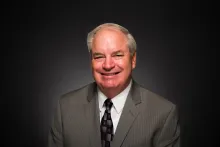
Robin Webber was born in Chicago, Illinois, in 1951, but has lived most of his life in California. He has been a part of the Church of God community since 1963. He attended Ambassador College in Pasadena from 1969-1973. He majored in theology and history.
Mr. Webber's interest remains in the study of history, socio-economics and literature. Over the years, he has offered his services to museums as a docent to share his enthusiasm and passions regarding these areas of expertise.
When time permits, he loves to go mountain biking on nearby ranch land and meet his wife as she hikes toward him.
