

Steve Shafer
This sermon was given at the Wisconsin Dells, Wisconsin 2009 Feast site.
This transcript was generated by AI and may contain errors. It is provided to assist those who may not be able to listen to the message.
Well, good morning, everyone. Good morning. Very, very enjoyable during the orchestra here, especially if you're sitting back there right next to the drummers. You can really get a feel of the beat of the music. Very, very enjoyable. Very much enjoyed meeting here at the end of the West Cots and Nails. I remember years of knocking away. Of course, thanks to Mr. Welsh, we all know how exciting time we've been having here at the beat. But, of course, a really shocking aspect of that was that Mrs. Shafer was there also. But, no, it's been a number of years since we've actually been here at the Dells. This was our science site for many years, and then I think around 2001 or 2002 we were reassigned to Northern Kentucky, Lexington, Louisville, Northern Kentucky area, which has been our science site for the past five or six years. So it's really nice to once again have this as our science site and be back here at the Dells. It's been a very, very enjoyable feast. The weather's been a little cool. I had to get frost off the windshield this morning, but it has been a very, very enjoyable feast. Sometimes when you're young, you might have an event in your life that occurred that is still very vivid in your memory. We all have those memories. Something had happened that still stands out in our mind. Such event happened to me when I was 14 years old. I was 14 years old when I attended my first funeral service.
It was a funeral service of my great-grandmother, who was born actually back in 1855, and died in 1955, just short of her 100th birthday, and I was 14 years old when she died. So I actually had an opportunity to really get to know my great-grandmother. It's just out of curiosity. How many of you here, not just knew them or saw them once or twice, but how many of you actually had a relationship with a great-grandparent? Well, quite a few of you. Quite a few. I thought that was a great privilege because I knew her for 9 or 10 years of conscious knowledge, where I was able to have a relationship with her.
But she died in 1955 out in the state of Washington, where she's buried. She's buried there in Seattle. But she was born, as I said, in 1855.
And although I knew her quite well and I spent a lot of time with her, one thing I really regret looking back now, I never asked her about her family. You know, when you're a young kid, you don't think about that too much. You don't think about asking, what was it like back in the 1850s? She was actually born in Ohio.
What was that like? What was your husband like? What were your parents like? How many brothers and sisters did you have?
I didn't really know her parents' names. We don't even have a record of her parents' names. I have a record of her husband's family, but we didn't have a record of her parents' names, or if she has any brothers or sisters. All I knew was that she was born as Mary Robbins in the small town of Fletcher, Ohio, in 1855. Fletcher, Ohio is a really small community. It's like about 2,000 people to dance on, about four or five blocks long. It's located about five miles due east of Pickway, Ohio. Pickway is right on I-75 as you travel from Flint to Cincinnati, so we go through there quite often.
Last year, as we were going to the feast down there in Ohio, Northern Kentucky, I decided to maybe take a little excursion and go over to Fletcher, Ohio just to see the town where my grandmother was born.
In 1875, she got married just shy of her 20th birthday. Just before she returned 20, she got married to an Elias H. Randolph. He was the first of eight sons. He was born in 1851, right in the same area.
And he died in 1906.
They'd been married just over 30 years when he died. Married just over 30 years, then she remained a widow for the next 49 years. 49 years a widow.
Fletcher, as I said, is a small town. We drove through there. As we were driving through there, we kind of looked to the north and we saw about a block off the main street. There was a little old cemetery there. So we went up to the cemetery to walk through it. I thought, well, I wonder if there's any robins here, buried here in the cemetery, or maybe Randolph's.
So my wife and I walked through the cemetery. We're looking for the name of Robins or Randolph. It was a very old cemetery. Most of the grave markers were actually dated to the early and mid-1850s, about the time of my great-grandmother. Actually, it was interesting because many of the grave markers had obviously been redone. They were very large grave markers, kind of ornate, and obviously had been redone by a family member. They weren't 150 years old.
Didn't really find anything on the way down. It was a beautiful day on the way back when the feast, so we decided to go over there and walk to the cemetery again. I was walking in one area, and my wife was walking in another area about maybe 20 yards away, and suddenly my wife called out to me and she said, I think I may have found something.
When I arrived where she was standing, there were two large, rather ornate grave markers. One had the names of a husband and wife on them. The other one was obviously their daughter, who was born in 1858, three years after my great-grandmother.
But next to those two large grave markers, lying flat on the ground, about the size of a large brick, there was a small plain gravestone. This is one my wife noticed. Small plain gravestone was barely legible because it hadn't been redone. It was the original gravestone, but you could barely read it.
It was very worn, but still legible.
When I read the name on that gravestone, my heart leaped and tears began wailing up in my eyes. The name on that little gray gravestone was Elias H. Randolph. Born 1851, died 1906.
It was the gravestone of my great-great-grandfather, Keek's husband. We called her Keek. Keek was her name that we told my great-mother when we went by. So when he had died, Keek had buried him in her parents' family pot.
So I looked again at the other two large grave markers there.
The names on those markers, because obviously they were Keek's parents and Keek's younger sister. So now I knew the names of her parents. My great-great-grandfather, Keek's father, was Alvernus Robbins, who was born in 1832 and died in 1913. Keek's mother, my great-great-grandmother, was Sarah Robbins, born in 1929 and died in 1920. 1829, I say 1929. 1829 died in 1920. And that was the year when my great-grandmother moved out to the state of Washington with her daughter, her son-in-law, and their little boy, who was my father.
Keek's younger sister that was buried next to them there was Lena Robbins, born in 1858 and died in 1942. Apparently she never married. Now they all died long, long before I was born.
I, of course, never knew them. So I was surprised at how finding my great-grandfather's grave and finding the names of my great-great-grandparents, Keek's parents, how much that impacted me emotionally. It had a great impact on me, mostly, to be standing there over their graves.
On the graves of family members who had lived and died many, many years before I was born, but whose DNA is in my blood.
As I stood there, I thought about the meaning of this last great day.
And the most impact it's going to have on everyone who's in that second resurrection, when this day becomes a reality. And what the impact's going to be is they all find themselves standing there, resurrected back to life, standing before a great white throne, standing before the judgment seat of Jesus Christ. When this day is fulfilled, what will go through their minds? Well, we can only imagine what might be going through their minds when that day happens, when it's fulfilled. Undoubtedly, many questions will be going through their minds, such as, where am I?
What happened?
What's that great white throne out there in the distance? Is that God sitting on that throne?
Do you mean God does really exist? God is real?
Is that Jesus Christ at His right hand?
Do you mean Christ really did live and die and was resurrected back to life? And He really is at the right hand of the Father in Heaven?
Do you mean that He really was God in the flesh?
Do you mean that God's Word is really true after all?
Then they might think, well, what's going to happen next? And as they think back on their life, they might think, well, will I be condemned?
Again, we can only imagine many questions that will be going through their minds.
How will those in that resurrection be judged?
Another thing, what will this day, when this day is fulfilled, what will this day mean to God the Father and Jesus Christ?
What emotional impact will it have on them?
That's what we want to take a look at this morning as we look at the meaning of this last great holy day in God's plan of salvation. The title I have for my sermon here this morning is, Behold, I Make All Things New.
When did Christ first commit Himself to die for mankind?
Well, Christ Himself revealed the answer to that question to John's record in Revelation 13.8, where Christ revealed that just prior to His return, all who dwell on the earth will worship Satan, all who dwell on the earth will worship Satan, whose names have not been written in the book of life of the Lamb slain from the foundation of the world. So Christ made the commitment to come in the flesh and to die for mankind before God even breathed into Adam the first breath of life. He made that commitment, and He was slain from the foundation of the world.
Of course, Adam was created by and through Jesus Christ. John 1.3 plainly tells us where it says, All things were made through Him, through Jesus Christ, and without Him nothing was made that was made. Did Christ then allow Satan to come on the scene, to deceive Eve, and to allow Satan to lead Adam and Eve into sin? Even though He knew, if He allowed Satan to do that, that He would have to lay His life on the line, and He would have to die for mankind in order to pay the penalty for that sin. Yes, He did, didn't He? Is Christ aware that since that time, Satan has deceived the whole world, and led the whole world into sin?
Does He prevent mankind from coming to know the truth? Well, of course Christ knows that. God the Father and Christ know that. That was all part of their plan from the very beginning.
Let me ask this. Does God want all men to be saved? Does He want all men to be saved? Let's turn to 1 Timothy 2.
We all know the answer, but let's read it. 1 Timothy 2, beginning in verse 1. Again, we've read this many times. This really applies to the meaning of this day. 1 Timothy 2, verse 1. Therefore, I exhort, first of all, Paul says, that supplication, prayers, intercessions, and giving of thanks be made for all men. Pray for all men. Not just our brethren, but pray for all men, especially for kings, and all who are in authority, that we may lead a quiet and peaceable life, and all godliness, and all reverence. For this is good and acceptable in the sight of God our Savior, who desires all men to be saved and to come to the knowledge of the truth.
But if the whole world is deceived, as Revelation 12.9 tells us, then how can all men be saved and come to the knowledge of the truth? Unless God has a day of salvation for those individuals who have been deceived.
How much does God love the people of the world?
Even all those who have been deceived. Again, the Bible makes it very clear how much God loves the world. Let's turn there and read it. John 3, verse 16.
Again, because this will tell us, when you understand these, when you look at these scriptures and think about them, we can come to understand how much God is looking forward to the fulfillment of this day.
John 3, verse 16. For God so loved the world, that He gave His only begotten Son, that whoever believes in Him should not perish but have everlasting life.
And of course, God committed His only Son to die for mankind back from the foundation of the world. And Christ made that commitment as well at that time. You look down on the world today and you see all the things that are happening and there's a lot of things to condemn.
It's not a very pleasant world we live in today. A lot of hatred, a lot of violence, a lot of killings. A lot of things to be condemned. But does God want to condemn the world?
Or does God want to save the world? Verse 17. God did not send His Son into the world to condemn the world, but that the world through Him might be saved.
God, through Christ, wants to save the world.
He desires all men to be saved and to come to the knowledge of the truth.
How does Christ feel toward those who rejected Him?
How does He feel against those who did not believe in Him?
How does He feel toward all those individuals?
Does Christ want to condemn them? Or does He want to save them?
Does He still want to gather them in? Does He still want to gather them in and give them an opportunity to come to repentance? Let's turn to Matthew 23.
Read what Christ Himself says here. Something very interesting, because He's in the city of Jerusalem.
He knows it's not going to be very long before He's going to be condemned by all those, by most of the people there in Jerusalem, especially by the religious leaders.
And He knows He's going to be condemned, and He's going to be, have to suffer a terribly humiliating death, and a terribly painful death. But notice what He says here in Matthew 23, verse 37. He says, Oh, Jerusalem, Jerusalem, here is a city that God wants to be the center of His kingdom in the future.
He says, Oh, Jerusalem, Jerusalem, the one who kills the prophets, and stones, those who are sent to her, and of course He knew He was going to be the prophet, next prophet that was going to be killed. He wasn't going to be stoned. He was going to suffer much worse faith than that. But then He said, the latter part of verse 37, He says, How often I wanted to gather your children together, how often I wanted to gather them in?
Because He desires all men to be saved and come to the knowledge of the truth. How often I wanted to gather your children together as a hen gathers her chicks under her wing?
But you were not willing. Their heart was hardened. You were not willing. They were too much under the influence of Satan.
Verse 38, Because of that, your house is left to you desolate.
And the joy of those people at that time, they died with their house being left to them desolate.
Will they ever see Christ again? Will they be given an opportunity to repent?
What does Christ Himself tell us? Verse 39, For I say to you, You should see Me no more until, until you say, Blessed is He who comes in the name of the Eternal.
In other words, you see Me no more until you come to repentance. Do you have a change of heart? Change of attitude? But Christ, you're in any case, they will be given that opportunity.
You will see Me no more until you say, Blessed is He who comes in the name of the Eternal.
We'll all some day stand before the judgment seat of Jesus Christ. The Bible gives us the answer to that very plainly in Romans 14, verse 10. If you turn there, Romans 14, we just look at that one verse, Romans 14, verse 10, where plainly He tells us, Well, why do you judge your brother? That's a good question. Why do we? Why do we judge our brothers?
Or why do you show contempt to your brother? Why do we look down on others and look on ourselves sometimes, maybe even better than somebody else?
For we all shall stand before the judgment seat of Christ. Every single one of us is going to have to stand before the judgment seat of Christ. Why? Because there is no other name under heaven given among men, whereby we must be saved. Acts 4, verse 12.
You know, all Christians today, this is unique. God's Church has a unique understanding because almost all of Christendom believes that today is the only day of salvation. You're either saved today or you're lost forever, that one must accept Christ today in this lifetime or be forever condemned. How does it make sense if you stop and think about it? Why would God allow Satan to deceive the whole world and thus prevent the world from coming to the knowledge of the truth so that he could be saved? When God's very desire is for all men to be saved and come to the knowledge of the truth, it doesn't make any sense. And of course, it's not true. This day we're now observing is a day which will astonish mankind.
It's a day which will reveal how great our God is and how awesome our God is. And all mankind is going to come to understand that and see that when this day is fulfilled. Because this is the day when God's greatest desire is going to be fulfilled. You know the thing that really amazes me about this particular Holy Day, it kind of sets it apart from all other feasts and holy days. You can get some meaning of the other feasts and holy days from both the Old Testament and the New Testament, but you can get very little meaning of this day from the Old Testament. Now you've got Ezekiel 37, Mr. Doud covered that and went through that, but there's nothing really there to associate that event with this particular day and connect it together.
The true meaning of this Holy Day is primarily derived from the New Testament. This is a New Testament Holy Day, if you will.
It's interesting to ask, what does this day mean to the Jews? They call it Sabot Azzeret. Eighth-day Sabbath. Seventh of the eighth day. I have a book at home. It's called Tapestry of Jewish Time written by a Jewish rabbi. It goes through everything the Jews observe and brings out the meaning.
But it's interesting when he gets to this particular day here, because even Jews observe it do not know what it means.
They don't really know why they observe it. In fact, in that particular book, they call it a Holy Day in search of a cause.
A Holy Day in search of a cause. In search of meaning and purpose. They don't have the New Testament, therefore they don't understand the meaning of this day.
You know, in the Old Testament, it's actually only mentioned in four places in the entire Old Testament. It's mentioned in Leviticus 23, verses 36 and 39. It's mentioned again in Numbers 29, verse 35. And then again in 2 Chronicles 7, verse 9, where Solomon is rededicating the temple. And then finally in Nehemiah 8, verse 18.
And in all four places, it's simply called the Eighth Day. That's all.
The Eighth Day, following the seven-day piece of tabernacles on which there was to be a solemn or a sacred assembly, on which there was also to be a holy convocation.
That's really about all the Old Testament has to say about this particular day.
And there are really no historical events in the Old Testament that are, were told about that occurred on this exact day to give it meaning. The other holy days you got events to tie in, but not this day. There's really no event that specifically ties in clearly with this particular day. Thus, the Jews do not know why God has have them observe it. They don't really know why they observe it. They really have no idea what it means. Again, they call it a holy day in search of a cause.
Yet this holy day has almost unimaginable meaning and purpose. Because when this day is fulfilled, the world will literally stand in awe as they come face to face with their awesome God and Creator, with God the Father, with Jesus Christ. As they stand before His great white throne, beginning of the eighth millennial day, as assembly of the rest of the dead, whose lives are sacred to God. It's interesting, it's called an eighth-day sacred assembly. You know, every life is sacred to God because God wants all men to be saved. He wants all men to come to acknowledge the truth.
It's also interesting what it says in 2 Peter that with God, one day is a thousand years. Let's turn there. 2 Peter 3 verse 8. 2 Peter 3 verse 8, where Peter writes, But, beloved, do not forget this one thing, that with the Lord one day is a thousand years, and a thousand years has one day. Then Peter added this, which also ties in directly to the meaning of this day, in verse 9. The Lord is not slack concerning His promise, as some count slackness, but is long suffering toward us, extremely patient. Very long suffering. Why is He so long suffering? Why is He so patient? Because He's not willing that any should perish, but that all should come to repentance.
God is not willing that any should perish, but that all should come to repentance. And yet, as we know, millions and even billions of people have already perished without coming to repentance, without really knowing Jesus Christ, the true Jesus Christ.
Will the eighth millennial day be their opportunity to come to repentance? Let's take a look at the resurrection of the rest of the day. Let's turn to Revelation 19 to start with. Revelation chapter 19. To get the time setting, let's first read verse 11.
Verse 16, and He has on His robe and on His thigh a name written, King of kings and Lord of lords.
This obviously takes place at Christ's return, at the beginning of the seventh millennial day, when the world will be given a millennial seventh-day rest. Millennial day rest from war, from deception, and from the influence of Satan.
Revelation 20, verse 1.
And He cast him into the bottomless pit and shut him up and set a seal on him, so that he should see the nations no more until a thousand years were finished. But after these things, he must be released for a little while. And I saw thrones, and they said on them, and judgment was committed to them. And then I saw the souls of those who had been beheaded for their witness to Jesus and for the word of God, who had not worshiped the beast nor his image, and had not received his mark on their foreheads or on their hands. And they lived and they reigned with Christ for a thousand years. Again, to bring a thousand year's rest from war and from Satan's influence.
What will happen when this seventh one-year old day ends?
When it's finished. Revelation 20, verse 5. But the rest of the dead live not till the thousand years were finished. When that thousand years are finished, the rest of the dead are going to live again. At the end of the seventh millennial day, and beginning of the eighth millennial day, beginning of the eighth day, if you will, the rest of the dead will live again.
Now we finally have a great historical event that occurs at the beginning of the eighth day. And what an event it is. It is the resurrection of the rest of the dead. All those who died, not having repented, not having known the true God of the true Jesus Christ, who died under Satan's deception, never have an opportunity to be saved and come to the knowledge of the truth. Just prior to their resurrection back to physical life, as vividly portrayed by Ezekiel 37, as Mr. Dowd covered in his sermon a few days ago, Satan, just prior to that, Satan is going to be permanently removed, as verses 7 to 10 tell us here in Revelation 20. Satan is going to be removed, so before this takes place, Satan will be gone.
Then comes the resurrection of the rest of the dead at the very beginning of the eighth one-year-old day. All those whose lives are still sacred to God, because God wants to save them and He wants them to be a part of His family as well. But yet they've never had their opportunity to understand the knowledge of the truth. It's going to include everyone who never knew God. It will include millions of children who died before they ever reached adulthood. It will include millions of unknown soldiers, or soldiers known only to God, who died on countless battlefields over 6,000 years, the world over. All those who died in World Wars I and II in the 20th century, in Vietnam and Korea, who are dying now in Iraq and Afghanistan. It will include thousands of mothers who died in childbirth, who were never able to suckle their children.
It will include thousands of children who died in their mother's arms. It will include all those who went down in ships who were buried to sea in watery graves, like all those who went down with a Titanic. It will include all the rest of the dead who did not live again until the thousand years were finished, until the beginning of the eighth one-year day.
What happens when the resurrection of the rest of the dead takes place? Revelation 20, verse 11.
Then I saw a great white throne, and him who sat on it, from whose face the earth and the heaven fled away, and there was no place for them. And I saw the dead, small and great, standing before God.
Now, can we begin to imagine what this scene is going to be like?
You know, I'm sure many of them would have been atheists or agnostics, like maybe Richard Dawkins? He'll be there. Now they are suddenly standing before God and before the throne of God in all its glory, standing before a great and glorious white throne.
Mothers are now there holding their babies who had died in their arms. Only now those babies are alive.
Yes. Standing next to their fathers and mothers will be sons who died in battle, who they had lost in warfare. But now they're standing there alive. Can you imagine what that would be like?
Daughters who had been lost will be there, and Natalie Holloway will be standing there next to her mother. Husbands will be reunited with their wives, and wives united with their husbands who they had once buried. My great-grandmother, Keek, will be reunited with her husband, Elias, even though they are now buried 2,000 miles apart from one another. And Keek will be reunited with their parents and with her sister. Isn't it going to be exciting to be there? I can't wait to be there to finally get to meet them and introduce myself to them. Again, can we even begin to imagine the emotional impact that's going to have on all of us as well as all of them? All made possible by the death and the resurrection of Jesus Christ. And by the love of God for mankind.
Millions who will be standing there will have died from various diseases, and they will wonder, why didn't God heal them? The relatives will wonder, why didn't God heal them? Now they will stand there completely healed. Their strength will be renewed. Their health will be restored. Their minds will be cleansed.
As they come to realize what had happened to them and who they were now standing before, some may be a little bit worried about what's going to happen next. Because they will come to realize they are now standing before the judgment seat of Jesus Christ, who is going to be their final judge. And they will know that Christ is the one who will determine their fate. And like the Samaritan woman who met Jesus at the well, they will come to realize that Christ will know all things they ever did. John 4, verse 29.
Just part of that incident, Christ meeting the Samaritan woman at the well, in John 3, verses 19-20, Christ said, Men love darkness rather than light because their deeds were evil. For everyone practicing evil hates the light and does not come to the light lest his deeds be exposed.
Now everyone who is standing there in that great white throne judgment, and they are standing before the throne of God, they are going to know everything they ever did is now known by that God. That everything they did is now exposed. That all their deeds are now exposed. And to be wondering what's going to happen next.
Some will wonder, is this the end? Am I going to be condemned? Many will know they deserve to be condemned. Some will wonder, well, we're going to be divided into two groups, kind of like the Germans did to the Jews at the concentration camps in World War II. Will they be separated as to who will live and who will die? Or in their minds, maybe who's going to go to heaven and who's going to go to hell?
No, that's not what happens next. Revelation 20, verse 12, I saw the dead, small and gray standing before God. And what happened next is the books, the books were opened. In the Greek, it is the books. The Biblion or the Biblos were opened. The books of the Bible will be opened to their understanding for the first time. Because God desires all men to come to the knowledge of the truth. He wants to give everyone that opportunity.
He desires that all come to repentance, and He desires for all men to be saved. And God is not willing that any should perish.
So the books of the Bible are open to their understanding. That will open up another book to them.
It will open up the book of life. And another book was opened, which is the book of life.
They will now have the opportunity to repent, to come to repentance, so they can receive God's Holy Spirit. So their names can then be written into God's book of eternal life. And the dead were judged according to their works by the things which were written in the books of the Bible. They're going to be judged by God's Word, and now they apply God's Word in their life.
And the seed gave up the dead who were in it, and death and Hades delivered up the dead who were in them, and they were judged each according to His works. How is that judgment going to be carried out?
Is it going to be more tolerable for some than for others?
Let's go to Matthew 11. Let's go to Matthew 11.
Matthew 11, teaching of Jesus Christ Himself, very interesting, what he says. Matthew 11, verse 20.
Then He began to rebuke the cities in which most of His mighty works had been done, because they did not repent.
Verse 21, He said, Woe to you, Corazin. Woe to you, Beceda. For if the mighty works which were done in you had been done entire in Sidon, they would have repented, long ago, in sackcloth and ashes.
Well, if God desires all men to repent, and they would have repented if they'd had the opportunity, then God obviously is going to give them that opportunity. Otherwise, God would not be a fair and just and loving God. Will they be given that opportunity? Will those who died in Tyre and Sidon get to see the mighty works of God so they can be given the opportunity to repent in sackcloth and ashes? Verse 22, But I say to you, it will be more tolerable for the men of Tyre and Sidon in the day of judgment than for you.
Now, this clearly indicates from the mouth of Christ Himself that all those individuals will be resurrected back to life in this judgment. It will take place at the beginning of the eighth day, or on the last great day, as we call it.
But this can be more tolerable for some than for others. Verse 23, And you, Capernaum, who were exalted to heaven, you will be brought down to Hades. For if the mighty works which were done and you had been done in Sodom, it would have remained, I should say, until this day. But I say to you that it shall be more tolerable for the land of Sodom in the day of judgment than for you. Those people that Christ was talking to there at that time rejected Him. At that time Jesus answered and said, I thank you, Father, Lord of heaven and earth, that you have hidden these things from the wise and prudent, and you revealed them unto babes.
But this raises an interesting question. Why will it be more tolerable for those of Tyre and Sidon and for those of Sodom, of all things? Why will it be more tolerable for them than for those of Corazon, Bessaeda, and Capernaum?
Well, you have to assume that because when they are all resurrected back to physical life, those of Sodom and Tyre and Sidon, they're going to know what sinners they were.
They're going to know they did not deserve to be resurrected back to life and be given an opportunity to be saved.
They know they're only going to have that opportunity by the great grace and mercy and love of God, because they will know they were sinners who didn't deserve a new lease on life.
But those who were self-righteous and very judgmental are going to find it more difficult to come to repentance when that time comes. In the Day of Judgment, when everyone will have their minds open to be judged by their works, those who know they were sinners will be more readily come to repentance than those who thought they were right and were very judgmental and were self-righteous. So it's going to be more tolerable for those who really knew what a mess they made of their lives. It will be more tolerable for those people than for those who thought they were righteous.
But again, how will this judgment be carried out? Well, we don't need to guess.
Christ himself demonstrated how this judgment is going to be carried out.
And he demonstrated that on this very day, as we now understand it. Let's turn there and read it for ourselves. Go to John 7. See, what kind of a judgment will this eighth day bring? What kind of judgment will take place on this last great day in God's plan of salvation?
What will those standing before God have to look forward to when the books of the Bible are opened, when they stand before God and before Jesus Christ? Will they face a God of condemnation? Or will they face a God of love, mercy, and forgiveness?
John 7, verse 37.
On the last day, that great day of the feast, Jesus stood and cried out, saying, If anyone thirst, let him come to me and drink.
Now, every reference in the Old Testament to the Feast of Tabernacles was to observe the Feast of Tabernacles for seven days.
Israel was even told to only dwell in booze for seven days. Leviticus 23, verse 42.
And historical records indicate that that is what the Jews did. They dwelled in booze for seven days, and in the afternoon, that seventh day, they would move out of their booze and go back into their permanent dwelling. A lot of times, the booze were on their housetops or right next to their houses, and at the end of the seventh day, they would actually move out of their booze, and they would go back into their homes for the eighth day, because they were only instructed to live in booze for seven days.
We should actually make that eighth day a very distinct and separate feast day. But also, Nehemiah 818, the seventh day of the Feast of Tabernacles, was referred to as the last day, with the eighth day being, again, a separate feast day. Now, in 2002, we put out a study paper on the last great day. I just want to read to you the concluding statement from that study paper in regards to John 737.
Quote, in interpreting John 737, scriptural and historical evidence points to the seventh day of the Feast of Tabernacles as the last day, that great day of the feast, and not primarily to the eighth day. Now, as we're saying, the conclusion they came to was that John 737 is talking about the seventh and last day of the Feast of Tabernacles, and they go through why at that time it was called the last great day of the feast. It was called the great day of the feast because a certain tradition the Jews had incorporated into that day, the ceremonies they had.
But with that in mind, let's continue reading here, see what we can learn. John 7, verse 53, we'll go right to the end of the chapter. And at the end of that seventh day, that last day of the feast, it says, everyone went to his own house. They all went home. Which is consistent with what the Jews did at the conclusion of the seven-day Feast of Tabernacles, as the eighth day was about to begin at sunset.
They would leave their temporary dwellings and go back into their homes. John 8, verse 1, but Jesus went to the Mount of Olives, undoubtedly to pray and to meditate and probably to prepare for the eighth day, what we very appropriately call the last great day in God's plan of salvation. When God will set out to fill his desire for all men to be saved, and for all men to come to the knowledge of the truth.
So if our understanding is now correct, the events then recorded from John 8-1, on through John 10, verse 21, all occurred on this day, on this eighth day, on this last great day, as we now call it, we're now observing. If that is correct, then what happened on this day is recorded here in John 8, 9, and 10, reveals how Christ is going to judge mankind when this day is fulfilled.
And we demonstrate how Christ will judge those who come up in the resurrection of the rest of the dead. John 8, verse 2, now early in the morning he came into the temple, he came back to the temple. And all the people came to him. They all returned. Why? Why did he go back to the temple? Why did all the people come back to the temple there as well? Because, well, obviously, if it was the eighth day, they were observing that day.
It was a holy convocation. And he sat down and he taught them. Because that's what you do on a holy day, you teach. Especially Christ, he's the teacher. And he sat down and taught them. So why did Christ return to the temple? Why did he sit down to teach them? Why did all the people come back there? Why did all the people return to the temple the next day to be taught? Well, very likely because it was the eighth day in which there was to be a sacred or solemn assembly and a holy convocation.
John 8, verse 3, then describes in Pharisees, brought him a woman caught in adultery. And when they had said her in the midst, they said to him, teacher, this woman was caught in adultery. She was caught in the very act. Now Moses and the law commanded us that such should be stoned. What do you say? You know, all those who stand before God in the white throne judgment will know they are guilty. They're going to know they've all been caught in the act, if you will, that all their sins are now known. They're all exposed. They will come to realize they have now, in essence, been caught in the very act of whatever they did in the past.
Even the sins they thought they had done in secret. But there undoubtedly will be some finger pointing. Some will see those who sinned against them, or they'll see those who sinned against someone they loved. And they will look at that person, and say, that person should be condemned. What will Christ say? How will Christ deal with that? When someone looks at someone and says, hey, I know you're the one that did this to my son or daughter, to me, or whatever.
John 8, verse 6. This they said, testing him, that they might have something in which to accuse him. But Jesus stooped down, He rode on the ground with His finger, as though He did not hear. So when they continued asking Him, He raised Himself up and said to them, He who was without sin among you, let Him throw the first stone. Some of the white throne gentlemen will come face to face with their murderer. You know, Mr.
Fay, in his opening message last Sabbath, a week ago, he mentioned about Jesus Christ, when He created Adam or God when He created Adam, and looked down there over Him, and here He was with the body on the ground, and what did Adam see when He first opened His eyes? He saw probably the face of God. But in that white throne judgment, some are going to look over there, and they're going to see the last face they ever saw. They're going to see the face of the person who took their life. Others will face those who terribly wronged them, who persecuted them.
But this is not a time for revenge. It's not a time to get even. Those who did such things may deserve to be stoned and put to death, but they will have already died. So Christ will simply say, He was without sin among you. Let Him cast the first stone. Verse 8, and again He stooped down on the ground for those who heard it. Then those who heard it, being convicted by their conscience, went out one by one, beginning with the oldest, even to the last.
And when Jesus was left alone, and the woman standing in the midst, He was left alone with her, but they left everyone, even to the very last. Everyone who comes up from the white throne, judgment, will now know they deserve the first death, that they deserve to die because of their sins, and they'll realize it's only because of God's great love and mercy and forgiveness that they have been granted a new lease on life.
So then Jesus was left alone, and the woman was standing there in the midst with Him. Verse 10, and when Jesus had raised Himself up and saw the no one, but the woman, He said to her, Woman, where are your accusers? Where are those accusers of yours? Has no one condemned you? And she said, No one, Lord. And He said to her, Neither do I condemn you. Go and sin no more. That is how Christ will judge those who are resurrected, with the rest of the dead when the books of the Bible are open to their understanding. They're not going to face a God of condemnation. They're going to face a God of love, mercy, and forgiveness. Who will say, Neither do I condemn you, but go now, apply God's word in your life, and sin no more.
What else did Christ teach on this eighth day, on this last great day? John 8, verse 12. Mr. Myers mentioned this verse in his sermon a while ago. When Jesus spoke to them again, saying, Then Jesus spoke to them again, saying, I am the light of the world. He who follows me shall not walk in darkness, but have the light of life. And of course, when this day is fulfilled, Christ will literally be the light of the world. Satan's going to be gone and put away forever. He will be cast into outer darkness, and He will become darkness. People will then truly be able to follow Christ and have the light of life with no interference from Satan. Interesting, another verse that Mr. Myers used in his sermon was Ephesians 5.14, that tells us, awake you who sleep, arise from the dead, and Christ will give you light. That's exactly what's going to happen when this day is fulfilled. They're going to wake from their sleep, they're going to rise from the dead, and there's going to be no more Satan, so Christ will give them light. And people will then truly be able to follow Christ and have the light of life with no interference from Satan.
What else did Christ teach on this particular day, on this eighth day? John 8, verse 32, and you shall know the truth, and the truth shall make you free. That's exactly what's going to happen on this day. They're all going to have their minds open to the truth so they can know the truth, and they can be set free from Satan's deception from their sins. All of our resurrection on the last great day will now, for the first time, have the opportunity to know the truth, because Satan will no longer be around to see them. Verse 34, then Jesus answered them and said, Most assuredly I say to you, whoever commits sin is a slave to sin. And a slave does not abide in a house forever, but a son abides forever. Therefore the son makes you free, you shall be free indeed. On the last great day, Christ will extend mercy and forgiveness to all who repent so they can be freed from the consequences of sin, and so they can have the opportunity to abide in God's house forever. You know, I stopped when I was thinking about this, and why did God instruct... I'll speculate a little bit on this, but why did God instruct Israel to only dwell and boost for seven days during the Feast of Tabernacles? Why not on the eighth day? Boost to... pictures temporary dwellings. Now, when those residents are in the eighth day, we're still going to have few physical bodies, they're still going to have a temporary dwelling, but there is no more temporary after the eighth day comes to bat. Everything there is... you're right on the verge of stepping into eternity. This will be their time for salvation. There's no more future temporary dwellings. Now, you're right on the verge of stepping into eternity when the eighth day comes.
Now we come to the last verse, this chapter, which tells us that Jesus then went out of the temple. Still the eighth day. What event happens next? John 9, verse 1. Now, as Jesus passed by, he saw a man who was blind from birth. As he comes out of the temple, on the... still in this eighth day, he sees this man who was born blind.
This man was born blind. You know, everyone in the resurrection of the rest of the dead was born blind spiritually. Where all of us were. We were all born blind, spiritually speaking. Whose fault was that? That the fault was the fault of our parents? Verse 2, when the disciples asked him, Well, Rabbi, who sinned? This man or his parents that he was born blind.
And Jesus answered, Neither this man nor his parents sinned, But the works of God should be revealed in him. In verse 6, when he said these things, he spit on the ground and made clay with the saliva, And he anointed his eyes with the blind man with the clay. And he said to him, Go wash in the pool of Siloam. So he went and washed, and he came back, seeing. This man had been born blind.
Everyone in the resurrection of the rest of the dead was born blind spiritually. As all of us were. On the last great day, the works of God will be revealed in billions of people. He is born blind. The works of God might be revealed. Think of that. The last great demon. All those people who spiritually were born blind, they could not understand. They couldn't see. They'd been deceived. And they're really going to see the works of God displayed when their eyes were opened. And they were brought back to life.
They'll be healed in spiritual blindness. So they can be spiritually cleansed and have their eyes anointed. So they can understand the truth for the first time.
One thing that's very interesting here is, was this day a Sabbath day. John 9, verse 14. Now it was a Sabbath day when Jesus made the clay and opened his eyes.
Verse 16. Therefore some of the Pharisees said, well this man is not from God because he doesn't keep the Sabbath.
Now is the eighth day it would have been an annual Sabbath, of course. But this indicates it was also a weekly Sabbath. That's what it indicates. Very interestingly, in 30 AD, this would have been the Feast of Tabernacles, an eighth day prior to when Christ died. And we all believe that Christ died in Passover 31 AD. Interestingly, in 30 AD, in the year prior to when we believe that Christ died, the Feast of Tabernacles on an eighth day went from Sabbath to Sabbath, Saturday to Saturday, like we've observed it this year.
Now Christ later caught up with a man he had healed, who had been cast out and ridiculed by the Pharisees, who refused to believe. Let's read that, John 9, verse 35. Jesus heard that they had cast him out, the Pharisees had, and when he had found him, he said to him, Well, do you believe in the Son of God? And he answered, and said, Well, who is he, Lord? Who is he that I may believe? Help me understand who he is. And Jesus said to him, verse 37, You have both seen him, and it is he who is talking with you. Then he said, verse 38, Lord, I believe, and you worshiped him. That's going to happen to the vast majority of those resurrected on the last great day. They will come to know the true Christ, and they will come to believe. They will believe on him, and will come to worship him in sincerity and in truth. Verse 39, and Jesus said, For judgment I have come into this world, that those who do not see may see, and that those who may see may be made blind. In that last phrase, Christ is referring to those who halted the attitude of the Pharisees, who refused to believe because they refused to let go of their self-righteousness. They refused to admit that they had been wrong. Then Christ taught this on this eighth day. It's very interesting. Still on the eighth day, I'll go up to verse 21. John 10, verse 1, Most assuredly I say to you, He who does not enter the sheep will fall by the door, but climbs up some other way, the same as a thief and a robber. But he who enters by the door is the shepherd of the sheep. To him the doorkeeper opens, and the sheep hear his voice, and he calls his own sheep by name and leads them out. And when he brings out his own sheep, he goes before them, and the sheep follow him, for they know his voice.
And yet they will by no means follow a stranger, but will flee from him, for they do not know the voice of strangers.
Verse 14, think of this, this is Christ saying this on the eighth day.
I am the good shepherd, and I know my sheep, and I am known by my own.
As the Father knows me, even so I know the Father, and I lay down my life for the sheep, because he'd already done that, and he's laid down his life for all the sheep, for all of us, and for all those future sheep. And then he says in verse 16, interesting, when you think about this being said on the last great day, Another sheep I have, which are not of this fold, them I must bring, and they will hear my voice, and there will be one flock and one shepherd. On the last great day, Christ will bring in all those sheep who are not of the true fold, and they will hear and understand Christ's voice, and there will be one flock and one shepherd. You know, we all look forward with great anticipation to the fulfillment of this day. It's going to be a very highly emotional experience for all of us. It's going to be a highly emotional experience for me to meet Keke's husbands, to meet her parents, to meet her sister, to introduce myself to them, to relate how Evelyn discovered their graves and how that impacted me emotionally at that particular time.
Plus, we will all have hundreds of other great, great, great, great, great grandparents to get to know and to meet. We're part of our family going way back to several generations.
But as much as all of us look forward to the fulfillment of this day, I thank God the Father and Jesus Christ look forward to it even more than we do. When this day is fulfilled, Christ will be able to have a personal relationship with everyone that he suffered and died for.
He will see the fruits of his supreme sacrifice as millions, if not billions, respond to God's love, mercy, and forgiveness and to the removal of their sins so they can have an opportunity for a new beginning.
Can we even begin to imagine the joy of God the Father and Jesus Christ as they look out from their throne when this occurs, and they look out from their throne, they see these billions of people now brought back to life.
What impact will that have on them?
Whose lives they've just now restored as they see the joy, as they see their... as God the Father and Jesus Christ see their desire for all men to be saved and come to the knowledge of the truth about to be realized. After all they've gone through, for all the pain, the sacrifices, and so on, the patience, the long suffering.
And they see all the people who restored to life on this last great day There's one particular psalm that I think really sums up the meaning of this day. I'd like to turn to that particular psalm now.
As we begin to conclude, let's go to Psalm 103. I think this particular psalm of David really sums up the meaning of this last great day.
Psalm 103. Let's read verses 1 through 14. Psalm 103, verse 1. Bless the Eternal on my soul, and all that's within me. Bless his holy name. Bless the Eternal on my soul, and forget not all his benefits. Who forgives all your iniquities. Who heals all your diseases. Who redeems your life from destruction. Who crowns you with loving kindness and tender mercies. Who satisfies your mouth with good things, so that your youth is renewed like the eagles. All of their lives are going to be renewed to be like youth again. Even those who died in old age. No matter what they died of, cancer, whatever. Their youth is going to be renewed like the eagles. And they're going to be healed. Verse 6. The Lord has accused righteousness, and just as for all who are oppressed, He has made known His ways to Moses, the Hizaxah children of Israel. The Lord is merciful and gracious, slow to anger, and abounding in mercy. He will not always strive with us, nor will He keep His anger forever. He has not dealt with us according to our sins.
He has not punished us according to our iniquities. For the heavens are high above the earth. So great is His mercy toward those who fear Him. As far as the east is from the west, so far as He removed our transgressions from us. As a father pities His children, so the Lord pities those who fear Him. For He knows our frame. He remembers that we are but dust.
All those in the resurrection of the last great day will someday, I think, maybe sing this song. With tears in their eyes, with a deep love for God in their hearts. Because when this day is fulfilled, God will begin to create all things new. Let's conclude with Revelation 21.
Revelation 21. Read verses 1 through 5. Revelation 21. Revelation 21. Now I saw a new heaven and new earth, for the first heaven and the first earth had passed away. Also there was no more sea. Then I, John, saw the holy city, the new Jerusalem, coming down out of heaven from God, prepared as a bride adorned for her husband. And I heard a loud voice from heaven, saying, Behold, the tabernacle of God is with men, and He will dwell with them, and they shall be His people. They shall be a part of His family, and God Himself will be with them, and He will be their God. And God will wipe away every tear from their eyes, because there will be no more death. There will be no more sorrow, no more crying, no more sorrow, no more pain, for the former things have passed away. And then He who sat on the throne, on the great white throne, He said, Behold, I make all things new. When this last great day is fulfilled, this saying will become a reality. Behold, I make all things new.
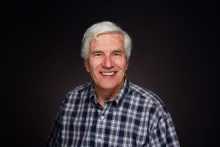
Steve Shafer was born and raised in Seattle. He graduated from Queen Anne High School in 1959 and later graduated from Ambassador College, Big Sandy, Texas in 1967, receiving a degree in Theology. He has been an ordained Elder of the Church of God for 34 years and has pastored congregations in Michigan and Washington State. He and his wife Evelyn have been married for over 48 years and have three children and ten grandchildren.
