

Don Ward
This transcript was generated by AI and may contain errors. It is provided to assist those who may not be able to listen to the message.
We are going to start today or tonight in Isaiah 8 and verse 14. In Isaiah 8 and verse 14, one of the things that we want to achieve and continually talk about is the beautiful unity of the Bible, how it is woven together as a beautiful tapestry with here a little there a little, making a complete picture. There are so many things in the book of Isaiah that allows us to fill in the details as it is presented in the New Testament as well as in the Old Testament. The Old Testament being the forerunner, the the type, and the New Testament, the anotype. So in Isaiah 8.14, and he shall be a sanctuary. God was a sanctuary. He dwelt in the Holy of Holies in the temple in the wilderness. Remember when they raised up the temple in the wilderness that it was so bright that Moses could not stay there. He had to come out in his face, shown as the Son. When he came out, when Solomon's temple was dedicated, God's glory filled that temple. You can read that in 2 Chronicles chapter 5. But when the restoration temple was dedicated, and you can read about this in Ezra chapter 6, the glory of God did not fill that sanctuary, that temple, the restoration temple. So the glory of God had filled the tabernacle in the wilderness, which was later pitched at Shiloh in Ephraim. And the glory of God filled Solomon's temple. But when the restoration temple was dedicated, the glory of God did not fill that temple. That temple pointed toward the greater reality that was to come in the temple of God that God is building today. So let's look at Hebrews chapter 8 and verse 1. Where is the sanctuary today, and what is the sanctuary where God is dwelling? Paul writes in Hebrews chapter 8 and verse 1, Now the things which we have spoken, this is the sum. We have such a high priest who is set on the right hand of the throne of the majesty in the heavens. So Jesus Christ is seated at the right hand of the Father and the Holy of Holies in the temple in the heavens, a minister of the sanctuary of the true tabernacle, which the Lord pitched and not man. Today, of course, we are the temple of God, as it says in verse Corinthians 3 and verse 16. Know, you know, that you are the temple of God. Now notice how we are to be in God and in Christ through the Holy Spirit in John chapter 17.
In John 17, we have the prayer that Jesus offered on the night that he was betrayed, and then the mock trial and the many things that he communicated to the apostles that evening and this prayer in John 8 and verse 20. Neither pray I for these alone, but for them also which shall be believe on me through their word, that they all may be one in you, that they may all be one in you, Father, as you are in me and I in you. So what Jesus Christ is praying is we shall see here that God is now our sanctuary. He is our dwelling place. We dwell in him and he dwells in us. And that's one of the main things that Jesus Christ prayed for on that evening in his prayer in John 17.
I in you that they also may be one in us, that the world may believe that you have sent me. Verse 22, in the glory which you gave me, I've given them that they may be one even as we are one. We have received the presence of God in our very being. We have been begotten by the Spirit of God in our being. We will be glorified at the resurrection. If you look at John 17 and verse 5, Jesus prayed on that evening, and now, Father, glorify you of me with your own self with the glory, which I had with you before the world began. So Jesus Christ gave up his glory, but not his divinity when he was made flesh and dwelt among us. Now we are able through the Holy Spirit to dwell in God and Christ, and for God and Christ to dwell in us. God is our sanctuary. We are in him. Continuing in verse 23, I in them you in me that they may be made perfect in one, and that the world may know that you have sent me, and you have loved them as you have loved me. Notice that you may love them as you have loved me. Father, I will that they also whom you have given me be with me where I am, that they may behold my glory which you have given me, for you love me before the foundation of the world.
So this great prayer that Jesus prayed that God is now our sanctuary, our dwelling place. And so we continue now in Isaiah 8 14, and he shall be for a sanctuary. Remember in the Old Testament he was in the tabernacle, he was in Solomon's temple, he was not in the restoration temple, the restoration temple pointed toward the greater reality that would come with Jesus Christ in the time that we just read about in Hebrews 8 verses 1 through 3, and then also in John 17. But for a stone of stumbling and for a rock of offense to both the houses of Israel, to both Judah and Israel, for a zen and for a snare to the inhabitants thereof, the stone of stumbling and a rock of offense, let's look at that. One of the great scriptures that you ought to have in your memory bank, if you don't have it, you can write it down and memorize it beginning tonight, is Isaiah 28 16. And this beautiful picture of how Jesus Christ came to his own. You might say, well, it's not so beautiful. He came to his own and his own received him not. But to them who received him, he gave him power to become the sons of God. Now look at Isaiah 28 and verse 16. Isaiah 28 16. Therefore thus says the Lord, Behold, I lay in Zion. Remember that the church, the Zion is a type of the church. You have come to Mount Zion, not to Mount Sinai. I lay in Zion for a foundation, a stone, a tried stone, precious cornerstone, a sure foundation, he that believes shall not make haste. It is interesting to note that even David knew about this stone and this cornerstone. I'm reading now from Psalm 118.22, which you can write down. We're talking about the stone of stumbling, the rock of offense, how that Jesus Christ is that. It's amazing that in Psalm 118 verse 22 that David knew about this stone. And here's what Psalm 118 verse 22 says. The stone which the builders refused has become the headstone of the corner. So now we go to 1 Peter chapter 1. 1 Peter chapter 1 and verse 6. In 1 Peter chapter 1 and verse 6. We're in you greatly rejoiced now for a season that need be you're in manifold temptations, that the trial of your faith being much more precious than of gold that perishes, though it be tried with fire, might be found under praise and honor and glory at the appearing of Christ, whom having not seen you love and whom now you see him not yet believing you rejoice with joy and full of glory. So that was fulfilled in Jesus Christ. Now we go back and pick up the verses that lead up to this, the verses that lead up to it, which shows us clearly that Jesus Christ is that rock of stumbling and a stone of offense to those who did not believe. In 1 Peter chapter 1 and verse 3, Blessed be the God of the Father of our Lord Jesus Christ, which also according to his abundant mercy has begotten us again.
Agana ganao begotten us again, as he says in verse 23, that we are begotten of I want you to look at verse 23, 1 Peter 1.23. See where it says, being born again, the same Greek word that is translated begotten again, which it should be translated verse 23, being begotten again, not of corruptible seed.
Like in the human realm, when one has begotten the seed of man enters, the sperm of man enters the egg of the woman to fertilize it and to bring forth into engender life. So God's incorruptible seed, his spirit, being begotten again, you can look at the Greek word, it's we're born again. It's the same word that is translated begotten us again in verse 3, being begotten again, not of corruptible seed, but of incorruptible by the word of God, which lives and abides forever.
So now continuing here in verse 3, have begotten us again that to a living hope by the resurrection of Jesus from the dead. You know, Jesus told the disciples in John 8 that it was necessary for him to die, because if he didn't die and go away, the Holy Spirit would not be sent. And so it was necessary that he die and go away. The Holy Spirit proceeds from the Father, but Jesus Christ plays a role in it. To an inheritance incorruptible and undefiled and that fades not away, reserved in heaven for you, who are kept by the power of God through faith under salvation, ready to be revealed in the last time. Wherein you greatly rejoice, though now for a season, if need be, you are in manifold temptations. So Jesus Christ became this rock of offense and stone of stumbling to the nation of Israel for those that did not receive him. So we look now at 1 Peter chapter 1 verses 18 through 23. We're in 1 Peter 1, 1 Peter 1 verse 18.
Where as much as you know that you were not redeemed with corruptible things as silver and gold from your vain conduct, received by tradition from your fathers, but with the precious blood of Christ, as a lamb without blemish, without spot, who was verily foreordained. The great word for foreordained is progenosco. It means to know beforehand, before the foundation of the world was made manifest in these last times, who by him do believe in God that raised him up from the dead and gave him glory, that your faith and hope might be in God. Seeing you have purified your souls and obeying the truth through the Spirit unto unfeigned love, unfeigned love of the brethren, see that you love one another with a pure heart, fervently, no ulterior motive, not for any kind of gain, but because of unfeigned love for the brethren.
Now we continue in chapter two.
Remember we quoted Isaiah chapter 28 and verse 16.
If it be you have tasted that the glory is gracious to you, coming as unto a living stone, disallowed indeed of men. So Jesus Christ metaphorically is called a stone, disallowed of men, but chosen of God and precious. You as living stones are built up a spiritual house. So that sanctuary that we talked about, God is now our sanctuary. We dwell in Him, He dwells in us, a holy priesthood to offer up spiritual sacrifices, acceptable to God by Jesus Christ, wherefore also it is contained in the Scripture. And here the Apostle Peter quotes Isaiah 28.16. Behold, I lay in Zion a cheap corner stone, he lacked precious, and he that believes on him shall not be confounded, but you therefore which believe he is precious, but unto them which be disobedient the stone which the builders disallowed, the same is made the head of the corner. So remember, you can write in your margin right there, Psalm 118 verse 22 says, the stone which the builders refused has become the headstone of the corner. God is our sanctuary.
Now we go back to Isaiah chapter 8 and verse 14. You see, there's just so much to understand to say that God is our, He shall be a sanctuary. Well, how will He be a sanctuary? We go to the New Testament. We see a stone of stumbling and a rock of offense to both the houses of Israel. So we see that He came to His own, His own received Him not, but to them who received them, He gave Him power to become the sons of God. Perhaps we should turn to that scripture. It is in John chapter 1 and we'll start in verse 10. In John chapter 1 and verse 10, John 1 verse 10. He was in the world that is Jesus Christ. The world was made by Him. See, God is the creator through Jesus Christ, and virtually anything you can say about God is, you can say about Jesus Christ. But of course, God has the ultimate authority. He was in the world and the world was made by Him and the world knew Him not. He came unto His own. His own received Him not. See, He became a rock of offense and a stone of stumbling. But as many as received Him, to them gave He power to become the sons of God, even to them that believe on His name.
So you see how much is contained there, just contained there, just and it goes on there for offense to both houses of Israel, for a gin and for a snare to the inhabitants of Jerusalem. So He came to His own. His own received Him not. So He became a gin and a snare. They wound up trying to kill Him. They wound up saying away with Him, crucify Him, release unto us Barabbas release unto us a murderer and crucify the Son of God. Now continue in verse 15, and many among them shall stumble and fall and be broken and be snared and be taken. And so it was with the house of Israel. And you read in Romans chapter 11 how that a veil is now on Israel and that veil is going to eventually be taken away, but mainly that veil won't be taken away totally until the time of the Great Tribulation. And then they'll look on Him whom they have pierced and they'll begin to mourn and repent. At that time, your reference there is Zechariah 12 verse 10, they shall lick on Him whom they pierced and they shall mourn each house apart. And Isaiah 8 16 now bind up the testimony, the record, the witness, seal the law among my disciples. And Jesus Christ has sealed each one of us who has the Holy Spirit with His very Spirit. If you look at Ephesians chapter 1, I don't have this in any notes. I know it's in Ephesians 1 and my eye may not fall on it, but you can look at it if I don't see it immediately when I turn there, that we are sealed by the Holy Spirit in Ephesians chapter 1 verse 13, whom also you have trusted after that you heard the word of truth, the gospel of your salvation, and whom also after that you received, you are sealed with the Holy Spirit of promise, which is the earnest. It's the down payment. We have the down payment. We have the earnestness of the Spirit, which is the earnest of our inheritance until the redemption of the purchased possession and to the praise of His glory. Of course, we will receive the full inheritance when we are resurrected from the dead and become glorious radiant spirit beings in the kingdom of God. Bind up the testimony. Seal the law among my disciples. And so the disciples of God, it says in Romans chapter 3, it asks the rhetorical question in Romans chapter 3, we don't have time. Well, we could take time. It would take us maybe two or three years to get through the book of Isaiah, maybe not even then. But to jump off in every place where in the New Testament there is a follow-up that the oracles of God were committed to the Jews. It says in Romans 3, then what advantage does the Jew have? Under them were committed the oracles of God. They were given the responsibility of canonizing, preserving, and then canonizing the Old Testament.
And then basically the canonization of the New Testament fell upon the apostles.
And some of the books that are in the New Testament canon were not canonized officially in what we call the official Bible. Today, the Texas Receptus, the King James Version, and other translations of the Bible were not totally canonized until some and all the apostles were dead.
So bind up the testimony, seal the law among my disciples, and I will wait upon the eternal that hides his face from the house of Jacob. So, house of Jacob here, when you see that house of Jacob, it generally refers to all 12 tribes, and I will look for him. Behold, I and the children whom the Lord have given me are for signs and for wonders in Israel from the Lord of hosts who dwells in Mount Zion. So, similar to what we talked about, God dwells in each one of us. God himself dwells in Zion, will dwell, and I should say will dwell in Zion, in the millennium. Okay, let's rehearse once again God's dwelling place, His sanctuary. His sanctuary was the tabernacle in the wilderness, which was eventually pitched at Shiloh. Shiloh was destroyed, and so was the tabernacle, but the Ark of the Covenant was preserved and was brought into the city of David, which is Zion, and Solomon built a temple on Mount Moriah, what we call the Temple Mount today, and they brought the Ark of the Covenant into that temple, and the glory of God filled that temple. So, God dwelled in that temple made by hands, His Shekinah glory, as the Jews call it, S-H-E-K-I-N-A-H, the Shekinah or Shekinah glory, dwelt in that temple, and God's presence was among them. But then, when the Babylonians came and destroyed the temple and burned it, they took many of the prescient instruments, but the Ark of the Covenant disappeared at that time and has not been found since. At least, apparently, it has not been found. There have been movies and various things said and written about it, but no one has been able to declare, definitely, that I know about that the Ark of the Covenant has been recovered. There are many different theories about it. Some say that Jeremiah hid it under the Temple Mount. Some say that it was taken to Ethiopia, where there was a contingent of Jews, and there are various theories about where it was taken.
Continuing now with God dwelling in Mount Zion in Isaiah 24 and verse 23. You would turn there, Isaiah 24 verse 23. We're going to look. There are so many scriptures about Zion. We should always keep in mind the scripture in Hebrews chapter 12 verses 22, 23, 24, along in there where it says that you have come to the Mount Zion, the city of the living God, the church and general assembly of the firstborn. In Isaiah 24 and 23, then the moon shall be confounded and the sun is shamed when the Lord of hosts shall reign in Mount Zion. So that's in the millennium. God, Christ is going to dwell in Mount Zion. He shall reign in Mount Zion and in Jerusalem and before his ancients gloriously.
Now notice this about the moon shall be confounded, the sun is shamed, and all of that when he reigns before his ancients gloriously. The children of Israel are for science which dwells in Mount Zion. We know from Revelation 6, when the sixth seal is open, which introduces the seal that's open just before the trumpet plagues come in the seventh seal and before the seventh seal the sealing of the 144,000.
Behold, I and the Lord and the Lord have given me are for signs and for wonders in Israel from the Lord of hosts which dwells in Mount Zion. We too are going to dwell in Mount Zion notice what we have read that says, then the moon shall be confounded, the sun a shame when the Lord of hosts shall reign in Mount Zion and in Jerusalem and before his ancients gloriously. Then we look at verse, you look at Joel chapter 2. Let's look at Joel 2, 26, and 27. Joel 2, 26, 27. And Joel 2, 27, and you shall know that I am in the midst of Israel and that I am the Lord your God and none else, and my people shall never be ashamed. See, this is in the millennium, and it shall come to pass after that I will pour out my Spirit upon all flesh and your sons and your daughters shall prophesy, your old men shall dream dreams, your young men shall see visions. Now, the apostle Peter quoted this verse in his inspired sermon on the day of Pentecost, 31 A.D., when the Holy Spirit was sent to the New Covenant Church. When the New Covenant Church began, Peter quoted this verse that I just read, Joel 2, 28, and upon the servants and upon the handmaids and those days will I pour out my Spirit. And of course, there was a type of that on the day of Pentecost, a greater type of that is coming in the millennial time where God's Word is going to permeate the entire earth. And of course, his Spirit will be so abundant at that time.
And I will show wonders in the heavens and in the earth, blood and fire and pillars of smoke. So, many, many scriptures talks about how God loves Zion. In fact, in Psalm 87, I've covered this two or three times in the sermons here in East Texas, but we'll look at it again. In Psalm 87, we see that we are born in Zion. Now, when the resurrection takes place and the dead in Christ are raised, there are going to be people scattered all over the face of the earth. Now, I've talked about visiting Jerusalem, standing on the Temple Mount and looking over to the Mount of Olives, and seeing those little white tombstones. Sort of looks like little white stones. I asked the guy, what are those? And he said, those are tombstones of the Jews. They want to be buried there so they can get a head start on the resurrection, because it is from Zion that the resurrection takes place. We want to look at Psalm 87.
In verse 1, his foundation is in the holy mountains. The Lord loves the gates of Zion more than the dwellings of Jacob. So Jacob represents Israel in the flesh.
The gates of Zion represents those that are in the spiritual dwelling. Glorious things are spoken of you, O City of God. And of course, that wonderful hymn, Glorious Things of Thee, are spoken of those Zion City of our God. Well, this is the Psalm from which those words are taken.
I will make mention of Rahab and Babylon to them that know me. Behold, Philistea and Tyre, with Ethiopia, this man was born there. This man was born there. Where? In Zion. He was born in Zion at the resurrection of the dead. There are people who have been burned alive. There are people who have been cremated after they were dead. There are people who are buried all over the face of the earth. They are going to be resurrected. It says in 1 Thessalonians 4, We which are alive and remain, shall not precede those who are dead.
So the dead in Christ shall rise first, be caught up in the air, and then we'll be caught up in the air, and so shall we ever be with the Lord.
So continuing here, where it says, this man was born there, and in Zion it shall be said, this and that man was born in her, and the highest himself shall establish her. The Lord shall count when he writes up the people that this man was born there. Where? Zion, as well as the singers, as the players on instruments, shall be there. All my springs are in you. Springs represent what it represents. The Spirit of God. The Spirit of God is in Zion. It is in the Church of God. It is in God's dwelling place today that is in each one of us. Now eventually, Christ is going to dwell in Zion, as it says in Scripture. There are many other places I would encourage you to do a word study of Zion. So we're going to continue here in Isaiah 8 and verse 19. Isaiah 8 and verse 19. They shall say unto you, seek unto them that have familiar spirits. So they're going to be, of course, gainsayers, even in the millennium, and they will pay the price. Of course, we are told not to seek after those that have a familiar spirit as a demonic spirit. And there are necromancers. Now a necromancer is one who claims that they can communicate with the dead. We cannot communicate with the dead. The dead are in their graves. The Scripture says the dead knows not anything. The dead knows nothing.
And when they shall say unto you, seek unto them that have familiar spirits, and unto the wizards that peep and that mutter, should not a people seek unto their God for the living to the dead. It's worded awkwardly. Why would you seek? Why would the living seek to the dead? The dead know not anything. To the law and the testimony. If they speak not according to this word, it is because there is no light in them. Of course, that is a living Scripture that we use time after time after time. It is going to be, of course, so very, very true more and more in the millennium when the Word of God goes forth to all the nations. Several times I have quoted 1 John 2,4, for people who want to talk about is the law done away with or what the New Covenant did or didn't do with regard to the law. 1 John 2,4 says that if they say that they know me and keep not my commandments, they are liars and the truth are not in them. They are liars and the truth is not in them. So to the law and the testimony, if they speak not according to this word, it is because there is no light in them. So the great criterion, the great benchmark, the great criterion whereby you judge truth from error is the law and the testimony. And they shall pass through it heartily, be steadfast and hungry, and it shall come to pass when they shall be hungry, they shall fret themselves and curse their king and their God and look upward. And once again, there are going to be those gain-sayers in that time, in the millennium, even. And then verse 22, and they shall look into the earth and behold trouble and darkness and dimness of anguish, and they shall be driven to darkness. Of course, when the world is filled with the knowledge of God, there will be no excuse to be in darkness. Now, the prophecy, this prophecy, continues in the next chapter. And this next chapter is a Messianic chapter, one of the great Messianic chapters of all time, and it is the basis to a large degree for Handel's Messiah in Isaiah 9 and verse 1. Because I said that really there should be no chapter break. Notice that the conjunction here that joined it nevertheless, in spite of the darkness, and that darkness was upon humankind until Jesus Christ came. But even after Jesus Christ came, the darkness did not disappear from the minds of so many people. That in hearing they did not hear, in seeing they did not see, as did the days of Isaiah when he was told to go prophesy. And God said, they will hear, and they won't listen, they won't respond, they will see, and they won't do anything.
Nevertheless, the dimness shall not be such as was in her vexation, when at the first he lightly afflicted the land of Zebulon, the land of Napoli, and afterward did more grievously afflict her by the way of the sea, beyond Jordan in the Galilee of the nations. The Galilee of the nations, the Galilee was a place in which there were a lot of pagan activity and people who had mixed with the Samaritans.
So, it was called Galilee of the nations or of the Gentiles because it was surrounded by the type of people that I just said. They intermingled with the Jews in this region, this region around Galilee. Remember what one of, I believe it was, Nathaniel who said, can any good thing come out of Nazareth when they said, we have found the Lord, let's go follow him. Solomon had given this region in and around Galilee to Hiram, king of Tyre. In fact, according to 1 Kings 9 and verse 2, the Lord appeared, of course, to Solomon and communicated with him. Solomon had great favor with God as long as he obeyed him. Hiram was awarded and rewarded greatly because he furnished a lot of the, not only the material for the building of the temple, Solomon's temple, but also the workmen that built the temple. Adjacent to this region of Galilee were the kind of, they were called countries at that time, very small entities, Phoenicia, Tyre, Sidon, and the people naturally would mingle, especially with those that are involved with trade and commerce. So we get that expression, Galilee of the nations. And Galilee was a place that was frowned upon and the Jews, it was like, oh, it was like, don't go there. Sort of like someone might say, well, don't go down south or wherever, because there are evil people down there.
In verse 2, the people that walked in darkness have seen a great light. And this is a messianic prophecy. This begins, of course, the prophecy begins right here. The people that walked in darkness, verse 1, have seen a great light. They that dwell in the land of the shadow of death upon them hath a light shine. Of course, everyone had the death penalty upon them until Jesus Christ came and made it possible for the death penalty to be removed through his propituary sacrifice where he went in our stead. You multiply the nation and not increase the joy. Now, this verse here, this phrase, not increase the joy, the Masorites and other Bible scholars take exception to this translation here, not increase the joy. And we're going to read here what it says. The Masorites here, they read in the margin, to it, you have multiplied the nations and to it the joy. In other words, the Messiah, the one that came and multiplied the nations to it and brought joy. What kind of joy did they bring? They joy before you according to the joy and harvest. Of course, there was great rejoicing in Israel in the time of the harvest. And of course, that was the time of the Feast of Tabernacles of Well, and as men rejoice when they divide the spoil. Now, I'm going to also read what it says here. 11 manuscripts, two of them ancient, have this reading for this verse. This reading is followed by the Caldip paraphrase in Syriac and the Arabic. The Septuagint seems also to have so understood it. So also it is in the margin. And so the connection demands, and unquestionably, the correct reading is, it should then read, you have increased it. And in other words, you have increased it, the nation, you have increased the joy of the nation. And that's what Messiah does. He increases the joy of the nations. Once again, the Masoretic, and we talk about the Masoretic text as being the oldest one. So the Masoretic text has it to it instead of not increased. It would seem paradoxical to you because the Messiah brings joy.
Where you have broken the yoke of his burden, that is, the yoke. And this could be looked at in various ways. It could be looked at the yoke that was upon Israel at one time, the Assyrian. Of course, the yoke is going to return upon Israel and the nations in the time of the Great Tribulation. Where you have broken the yoke of his burden and the staff of his shoulder, the rod of his oppressor, as in the day of Midian. So it is through Jesus Christ that we can be set pre-totally.
For every battle of the warrior is with confused noise and garments rolled in blood, but this shall be with burning and with fuel of fire. And so Christ comes with fire. I'm reading now from Psalm 50 and verse 3. Psalm 50 and verse 3. I don't know if you've ever thought about the book of Psalms. The book of Psalms is very much dedicated to prophecy. There's a lot of prophecy in the book of Psalms. In Psalm 50 and verse 3, I'm reading, our God shall come and shall not keep silence. A fire shall devour before him, and it shall be very tempestuous round about him. See, that was a prophecy of the Psalms written some 3000 years ago. Psalm 68, verse 2. I'm reading now Psalm 68 and verse 2. A smoke is driven away, so drive them away as wax melts before the fire. So let the wicked perish at the presence of God.
In Psalm 97 verse 3, a fire goes before him and burns up his enemies round about him.
And so many other verses talk about. In 2 Peter chapter 3, it talks about, and the elements being on fire shall melt with fervent heat. So fire represents judgment. Fire represents judgment in the Bible. And so in view of this, the conjunction here, the linking of this to this prophecy, this first five verses, of this great light has shown. And this is what he's going to do. It's because of this, for unto us a child is born, unto us a son is given, and the government shall be upon his shoulder. And he shall be called Wonderful Counselor, the Mighty God. This is one of the few places in which, I guess you can look on it two different ways, few places, or really, there's quite a few, quite a number of places, where Jesus Christ is called the Mighty God.
This is very important. You're understanding what I've said so far. And we got harkened back to the analogy I talked about last time, where God the Father is like a great composer. He's the Mozart. He is the Beethoven. He writes the great composition. Then he gives it to the conductor, the one who set it in motion, to Jesus Christ. Jesus Christ is God also.
And so here's a place where the Son is called the Mighty God.
And we'll talk about the everlasting Father in just a moment. So the Mighty God of the ages, and of course John 1.1 says, and in the beginning was the Word, and the Word was with God, and the Word was God.
Romans 9 and verse 5, Whose are the fathers, and of whom, as concerning the flesh, Christ came, who is over all, God bless forever. Amen.
In John 20 and verse 28, and Thomas answered and said on him, My Lord and my God. So there's quite a few places where Jesus Christ is referred to as God. I think this one, of all of the places, this is the one you should really key in on. Not to say that the others are less important, but this has so much in it. This one verse is 1 Timothy 3.16.
1 Timothy 3.16, and without controversy, great is the mystery of godliness. God was manifest in the flesh. And Jesus Christ says to Philip, he said, Philip, I've been so long with you, and you don't know if you've seen me, you have seen the Father. In Hebrews chapter 1 verses 1, 2, and 3, verses verse 3, especially says that Jesus Christ is a stamped image of the Father. This verse here is saying, God was manifest in the flesh, justified in the spirit, seen of angels, preached unto the nations, believed on in the world, and received up into glory. This is one of the most fulfilled verses in the whole Bible. Maybe I shouldn't use the word fulfill, one of the fullest verses in the Bible because it captures so much. So much.
In Hebrews 1.8 says, but unto the Son, he says, your throne, O God, is forever and ever a scepter of righteousness, is a scepter of your kingdom. So the kingdom, in most places, is called the kingdom of God, but it is also called the kingdom of Christ. So just about anything that you can say of the Father can be said of Christ. And now we have this phrase that a lot of people ask about back now to Isaiah 9.6, the mighty God, the everlasting Father.
The everlasting Father here doesn't mean that Jesus Christ is the Father. He is not the one that begets us. The Chaldean translation renders this the man abiding forever, the Father of the future age, the Father of the everlasting age, and literally, he is the Father of eternity, and so is God the Father. In other words, this one, this Father, Father represents strength, and one who is strong. He is intelligent. He's knowledgeable.
He's glorious. He is filled with goodness. He's the Father of peace. He's wonderful. He's counselor. He's all of that, and He forever will take care of His people. But He is not the one who begets us. We are begotten of the Father. The Father is the one who begets us. Jesus Christ was begotten by the Father. Time after time, Jesus Christ states that the Father sent Him, the famous John 3.16, where God so loved the world that He gave His only begotten Son, that whosoever believes Him in Him should not perish, but have everlasting life.
Jesus was brought to birth at the resurrection, and we will go through the same process of begettle and birth as Jesus did. See, Jesus introduced a new order of being, a born-again, a born Son of God. And we're going to be born sons and daughters of God. So now let's quickly rehearse what we should know here in James 1.17. We'll go over time just a bit tonight. In James 1.17, which we don't want to break away right at this point, in James 1.17, every good gift, every perfect gift, is from above and comes down from the Father of lights, with whom is no wearableness neither shadow of turning.
Of His own will begat He us with the word of truth, that we should be a kind of firstfruits of His creation. Now we go to 1 Peter chapter 2. I Peter chapter 2. No, I'm sorry. It's 1 Peter chapter 1 and verse 2. 1 Peter chapter 1 verse 2. Elect according to the foreknowledge of God, to know beforehand, and I don't want to get sidetracked by predestination at this time, but I'm reading what the Scripture says.
Elect according to the foreknowledge of God, the Father, through sanctification of the Spirit, unto obedience and sprinkling to the blood of Jesus Christ, grace unto you, and peace be multiplied, blessed be the God and Father of our Lord Jesus Christ, which according to His abundant mercy has, and we read this correctly, Agnii Ganau has begotten us again, correct translation, to a living hope by the resurrection of Jesus Christ from the dead. And then verse 23, being begotten again, not of corruptible seed, but of incorruptible by the Word of God, which lives and abides forever.
Now we go to Romans chapter 1 and verse 1. Romans 1 and verse 1, we talk about Jesus Christ being raised from the dead, the firstborn among many brethren. In Romans 1 and verse 1, Paul, a servant of Jesus Christ, called to be an apostle, separated unto the gospel of God, which he had promised before his prophets in the Holy Scripture, concerning his Son Jesus Christ, our Lord, which was made of the seed of David according to the flesh.
So he was a descendant of David according to the flesh, and declared to be the Son of God with power, according to the Spirit of holiness, by the resurrection from the dead. He was begotten Son of God, and he became the born Son of God. Now we go to Romans 8.11, and Romans 8.11 applies to us what I said, that we go through the same process. Romans 8.11, you should have it memorized, and you should memorize Romans 8.11.
But if the Spirit of him that raised up Jesus from the dead dwell in you, he that raised up Christ from the dead shall also quicken your, make alive your mortal bodies, by his Spirit that dwells in you. Verse 29, for whom he did foreknow, he also did predestinate to be conformed to the image of his Son. Of course, we read from 1 Peter 1, 2, where he says, elect the foreknowledge of God, that he might be the first born among the brethren, more of whom he did predestinate them he also called, and whom he called them he also justified, and whom he justified them he also glorified. We know that God is not a respecter of persons, and predestination has to do with the way by which we can become sons and daughters of God.
Not willing that any should perish, but that all should come to repentance, is what is written in 2 Peter 3 verse 9. So, we will break off there for this evening.
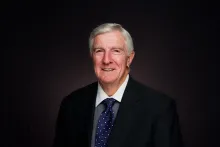
Before his retirement in 2021, Dr. Donald Ward pastored churches in Texas and Louisiana, and taught at Ambassador Bible College in Cincinnati, Ohio. He has also served as chairman of the Council of Elders of the United Church of God. He holds a BS degree; a BA in theology; a MS degree; a doctor’s degree in education from East Texas State University; and has completed 18 hours of graduate theology from SMU.
