
Don Ward
This transcript was generated by AI and may contain errors. It is provided to assist those who may not be able to listen to the message.
My wife said the title today is too long, and I had to read it twice. The Gospel of John, What It Reveals About Christ and Passover. It's not very long. The Gospel of John, What It Reveals About Christ and Passover. The Gospel of John is one of the literary works that has been acclaimed by critics all over the world for centuries. It's one of the greatest literary works of all times. It is written on an eighth grade level with a style of simplicity and elegance that is matchless. But more importantly, it is the most revelatory book in the Bible regarding the role of Jesus in God and Christ's awesome plan of salvation for humankind. The role of Christ in God and Christ's awesome plan of salvation. In the Gospel of John, and in the interest of time, we won't be turning to each one of these scriptures. In the Gospel of John, and by the way, you need to read the Gospel of John in Passover preparation because it centers on Passover preparation and the Passover. In fact, the last 10 chapters are almost totally devoted to Passover in that period of time that Christ spent with the apostles after his resurrection. In the Gospel of John, Christ is revealed as the Word. He is revealed as the light and life. I am the light and life of the world, he says. He is revealed as the Lamb of God, the Lamb of God which takes away the sins of the world. He is revealed as the only begotten Son of God. And we can all quote John 3 16, for God so loved the world that he gave his only begotten Son, that whosoever believes in him should not perish but have everlasting life. He is revealed as the bridegroom. He is revealed as the true bread. He is revealed as the bread of God. He's revealed as the bread of life. He's revealed as the living bread. He's revealed as the truth and the light. He's revealed as the Son of Man. He's revealed as the door of the sheepfold. He's revealed as the Good Shepherd. Revealed as the Son of God. Jesus Christ himself says he is the Son of God. He's revealed as a resurrection and life. He's revealed as Lord and Master.
The Gospel of John affirms the eternity and pre-existence of Jesus Christ.
Now, all of those things are in the Gospel of John and, of course, much more. So we'll be doing as much of an analysis of all those things as we can in the time allotted for the sermon. Let's turn to John 1 and verse 1, a verse that probably all of us could quote, In the beginning was the Word, the Word was with God, and the Word was God.
That verse shows at least three things. In the beginning was the Word, and the Greek word, therefore, was is equivalent to the English verb to be, en, in English spelling of it, means to exist. In the beginning was the Word, means existence. And the Word was with God, showing relationship. They're both co-eternal and co-essential, that is, of the same essence. And the Word was God, showing identity. So you have existence, relationship, and identity in that one verse. Verse 2, he was in the beginning with God. Of course, there is no beginning in the sense of a beginning point. We know that from Hebrews chapter 7 verses 1 through 3, where it says, Without Father, without Mother, without descent, without beginning or end of days, is this one Melchizedek. And Jesus Christ, of course, fulfills the eternal role of Melchizedek.
In verse 10, we pick it up again, John 1.10, He was in the world, and the world was made through him, and the world did not know him. He came to his own, and his own did not receive him. Of course, as the nation did not receive him, there were many among the Jews, even rulers, who did receive him. But as a whole, they rejected him, and as we shall see, they crucified him. But as many as received him, to them he gave the right, the power, to become children of God, to those who believe in his name, who were born not of blood. And as we heard in the sermon at the spiritual birth, and the Gospel of John talks about two births, especially John chapter 3 talks about being born again, Nicodemus asking the question, who were born not of blood, nor of the will of the flesh, nor the will of man, but of God? Jesus Christ is first born from the dead, as Revelation 1.5. And then in Romans 8.29, it says he was the first born among many brethren, and there are many more to follow, those who die in the faith. In verse 14, And the word became flesh and dwelt among us, and we beheld his glory, the glory as of the only begotten of the Father, full of grace and truth. This identification of who is the Son of God is necessary to show that he is uniquely qualified to die for the sins of the world. No one else could qualify for this role of paying for the sins of the world. He is the Son of God. That Jesus is the Son of God is affirmed by himself and many others in this gospel.
However, there's a great gulf between intellectual ascent to the truth and the internalization of truth. For example, in James 2, verse 19, it says, The devils believe and tremble. The devils believe and tremble. You'll read throughout the gospels that the demons recognize Jesus Christ, at one point saying, Have you come to torment us before the time? So the devils, the demons, know that God exists, that Jesus Christ is the Son of God, but they will not obey. And so in James 2, 20, it says, But will you know, O vain man, that faith without works is dead? So you can have intellectual ascent to the truth. And there are so many people when people are asked on the street, Do you believe in God? And it's said that over 70 percent of the American populace will say, Yes, I believe in God. Intellectual ascent to the truth. But you can check the parking lot of United Methodist versus Lowe's on Sunday morning. You probably see more at Lowe's than at United Methodist, just picking a denomination. Some thought that John the Baptist was the Messiah. But of course, John the Baptist was not the Messiah. Here we should note the prophecy concerning John the Baptist, who was to prepare the way. Look at Malachi 3, verse 1. Some thought that John the Baptist was the promised Messiah. And we'll see in just a moment that John the Baptist clarifies this. But here is what was prophesied with regard to John the Baptist, this prophecy, and one in Isaiah, about the boys crying in the wilderness. In Malachi 3.1, Behold, I send my messenger, my Malek, and he will prepare the way before me. And that messenger is John the Baptist. And the Lord, whom you seek, will suddenly come to his temple, even the messenger of the covenant, and that is Jesus Christ, in whom you delight. Behold, he is coming, says the Lord of Hosts. Now we go back there to John 1, verse 15, where we left off. As I said, some thought that John the Baptist was the Messiah. So we start reading in verse 15. John bore witness of him and cried out, saying, This was he of whom I said, He who comes after me is preferred before me, for he was before me. Of course, once again, the eternity of Jesus Christ established several times in this gospel, and of his fullness we have all received in grace for grace. For the law was given through Moses, but grace and truth came through Jesus Christ. No one has seen God at any time, the only begotten son who is in the bosom of the Father. He has declared him. Now this is the testimony, the Matoria, that Greek word there for testimony, is in the Greek Matoria. It can mean testimony, it can mean record, it can mean witness. Now this is the witness of the testimony of John when the Jews sent priests and Levites from Jerusalem to ask him, Who are you? So they came down from Jerusalem to see John the Baptist, who was baptizing in the River Jordan. He was out preaching in the Judean wilderness, and he was under a Nazarite vow, eating wild locusts and honey.
He confessed and did not deny, but confessed, I am not the Christ.
And they asked him, What then are you Elijah? He said, I am not. Of course, later on Jesus did say that John the Baptist, if you believe John the Baptist, that he was the Elijah that was to come. I'm not turning to read that. It's in Matthew in two different places. Are you that prophet? Now what does that mean? That refers to Deuteronomy 1815. You could put in your margin Deuteronomy 1815, where it says that God told Moses that he would raise up a prophet like unto him, him shall you hear. He's referenced again, that is, that prophet, and the prophecy is referenced again in Acts chapter 3. Are you that prophet? And he answered, No. Then they said to him, Who are you? That we may give an answer to those who sent us. What do you say about yourself?
He said, I am the voice of one crying in the wilderness. Make straight the path of the Lord. So here he's quoting from Isaiah's prophecy concerning John the Baptist. Two main prophecies in the Old Testament prophesying of John the Baptist. This is from Isaiah 42 verse 1, other concerning the prophet Isaiah. Now those who were sent from the Pharisees, and they asked him, saying, Why then do you baptize if you're not the Christ, the anointed one, or the Messiah, nor Elijah, nor the prophet? Of course, the prophet and Christ are one and the same. John answered them, saying, I baptize with water, but there stands one among you whom you do not know. It is he who comes after me as preferred before me, whose sandal strap I am not worthy to lose. I'm not worthy to even untie his shoes. He is so much greater than I am. John the Baptist knew his role. He fulfilled his role perfectly, and you know what happened to him.
John the Baptist's head was cut off because he told the truth. He told Herod, the woman that you're now living with, she is not your wife, and he suffered the consequences. These things were done in Bethabarbara beyond Jordan, where John was baptized. The next day, John saw Jesus coming toward him and said, Behold, the Lamb of God who takes away the sins of the world.
This is he of whom I said, After me comes a man who is preferred before me, for he was before me, once again showing his eternity. I did not know him, but he should be revealed to Israel. Therefore, I came baptizing with water.
John bore witness, saying, I saw the Spirit. One of the main missions of John was to identify who the Messiah really was. So John says, I saw the Spirit descending from heaven like a dove, and he remained upon him, or it remained upon him. I did not know him, but he who sent me, and we read Malachi 3.1, that it was prophesied that he would come, that is, John the Baptist would come. But he who sent me to baptize with water said to me, Upon whom you see the Spirit descending and remaining on him, this is he who baptizes with the Holy Spirit. So here was one of the great identifying signs that God had given to John the Baptist, whereby he could identify Jesus Christ. And I have seen and testified that this is the Son of God.
Again, the next day, with two of his disciples present and looking at Jesus as he walked, he said, Behold the Lamb of God. And so the Gospel of Luke, ho your place right there, and we are going to look at Luke briefly, chapter one. The angel Gabriel came to Zechariah, Zechariah in Elizabeth. Zechariah was a priest. Zechariah is the father of John the Baptist. He was a priest serving in his order. His wife's name was Elizabeth, and Elizabeth was well stricken in years. They were both past the age of childbearing, but the angel comes and promises them that they are going to have a child. Verse 13, the angel said to him, Do not be afraid, Zechariah, for your prayers heard, and your wife Elizabeth will bear you a son, and you shall call his name John. And you will have joy and gladness, and many will rejoice at his birth, for he will be great in the sight of the Lord, and shall drink neither wine nor strong drink. He was under a Nazarite vow. He will also be filled with the Holy Spirit, even from his mother's womb, and he will turn many of the children of Israel to the Lord their God. He will also go before him in the presence and power of Elijah to turn the hearts of the fathers to the children, and the disobedient to the wisdom of the just to make ready a people prepared for the Lord. So John the Baptist was in that role of preparing a people for the first coming of Jesus Christ. One of our duties now is, and part of our motto is, that preaching the gospel and preparing a people, preparing a people for the second coming of Jesus Christ.
So John sets the record straight as we have read with regard to who is the Messiah. Now we go back to chapter 1. We left off there with verse 35 and 36. Once again, John 1, 36, and looking at Jesus as he walked, he said, Behold the Lamb of God. And it already said in verse 29, the Lamb of God, which takes away the sins of the world. Now notice in verse 41, the disciples identified Jesus as the prophesied Messiah. So this is John 1, 41. In John 41, he says, We have found the Messiah, which is translated the Christ, meaning the anointed one. And then also in verse 49, he is further identified.
Nathaniel answered and said to him, Rabbi, you are the Son of God. You are the King of Israel. And in verse 45, Philip found Nathan and said to him, We have found him of whom Moses in the law and also the prophets wrote, and of course that would be that prophecy in Deuteronomy 1815, of that prophet, that prophet of whom Moses wrote in the law, Jesus of Nazareth, the son of Joseph. So his earthly father is identified. So chapter 1 of John shows that Jesus is the Son of God, the prophesied Messiah, the one who would take away the sins of the world. When you really get down into it, you begin to analyze this as chapter 1. If you were to really master every part of chapter 1, you would have a much deeper understanding of the role of Jesus Christ and the plan of salvation from his existence and eternity to the role that he plays and will play in taking away the sins of the world. Since he is the Son of God, he is the only one who was qualified to redeem Israel, and for that matter all of humankind, from their sins. After the first chapter of John, this Gospel account by John basically centers on the four Passovers in Christ's earthly ministry, and also in chapter 7, the Feast of Tabernacles is highlighted as well. One of the most notable aspects of John's Gospel are the events surrounding the Passover seasons of Jesus' ministry and the great miracles he performed before or during the Passover season. Each of these miracles have significant or has significant spiritual application. So let's turn now and look at John 2.1. On John 2.1, on the third day there was a wedding in Cana of Galilee, and the mother of Jesus was there. Now both Jesus and his disciples were invited to the wedding, and when they ran out of wine, the mother of Jesus said to him, they have no wine. And Jesus said to her, Woman, what does your concern have to do with me? My hour has not yet come. It is not yet time for me to be revealed of what my role is. But she implored him, and he finally agreed to accommodate her wish there of what she was saying.
Verse 5, His mother said to the servants, whatever he says, do you do it. Now there were six water pots of stone, according to the manner of purification of the Jews, containing 20 or 30 gallons of peace. Jesus said to them, Fill the water pots with water, and they lifted them up to the brim. And He said to them, Draw some of it out now, and take it to the master of the feast. And they took it. When the master of the feast had tasted the water that was made wine, did not know where it came from, but the servants who had drawn the water knew, the master of the feast called the bridegroom. Of course, here is an earthly bridegroom, and Jesus Christ is the bridegroom of the great wedding ceremony that is going to take place after the resurrection. And He said to him, Every man at the beginning sets out the good wine, and when the guests have well drunk, then the inferior, you have the good wine, you've kept the good wine until now. This beginning of signs Jesus did in Cain of Galilee, and manifested His glory, and His disciples believed in Him. So let's look at the symbols here of wine and water for just a moment.
We know from verse 13 that the Passover season was upon them. We'll read verse 12 first. After this, He went down to Capernaum. He, His mother, His brothers, and His disciples, and they did not stay there many days. Now the Passover of the Jews was at hand, and Jesus went up to Jerusalem. So this turning the water into wine was performed there before the Passover.
First of all, what does the water, or what does water, represent? It can represent in Scripture. If you turn to John, you know your place there, if you turn to John 7 in verse 37, this event took place at the Feast of Tabernacles, John 7 in verse 37.
On the last day, that great day of the feast, Jesus stood and cried out, saying, if anyone thirsts, let him come to me and drink. He who believes in me, as the Scripture said, out of his heart will flow rivers of living water. But he spoke concerning the Spirit, whom those believing in him would receive for the Holy Spirit was not yet sent. And so we see that water can represent the Holy Spirit. And Jesus said, out of my belly or out of my body shall flow rivers of living water. Now, the wine, surely we know what the wine represents, but let's look at Luke, continuing to hold your place there. We'll look at Luke 22 in verse 20. We will, of course, be reading this on Passover evening at the service. Luke chapter 20 in verse 22, and Luke 22 in verse 20. I'm trying to use this new Bible, and the pages are very thin and difficult to turn. I can see the print better. I haven't had my glasses changed longer than Mr. Bauman, I think.
In Luke 22 in verse 20, likewise he also took the cup after supper, saying, This cup is the new covenant in my blood which is shed for you. That cup that they drink of the wine represents the life blood that was shed for you, the very blood of Jesus Christ. You look at verse 18, for I say unto you, I will not drink of the fruit of the vine until the kingdom of God comes. So he took the bread and blessed it and broke it and gave it to him, and said, Do this in remembrance of me. And then they drank of the cup. The sacrifice of Jesus Christ, the official teaching of the United Church of God, is a complete sacrifice. It is not divided into two parts, both body and blood. Why? Look at John 6. John chapter 6. We read this recently. In John chapter 6 verse 51, many of those things that we set up front about Jesus we'll be covering in detail. I am the living bread. This is John 651. I am the living bread. Now how could he be the living bread? Well, John 6.63 gives you the answer. The words that I speak, they are spirit and they are life. They are alive. The Spirit of God is equated with the Word of God and life. I am the living bread which came down from heaven. If anyone eats of this bread, he will live forever. And the bread that I shall give is my flesh, and I shall give for the life of the world. I give my flesh for the life of the world. The Jews, therefore, quarreled among themselves, saying, How can this man give us his flesh to eat? Then Jesus said to them, Most assuredly I say to you, Unless you eat the flesh of the Son of Man and drink his blood, you shall have no life in you. Whosoever eats my flesh and drinks my blood, we know that the wine that we drink is symbolic of his blood.
He turned the water into wine, and you have to have the blood of Jesus Christ to cover your sins and reconcile you to God before God will beget you with his spirit. We'll see more about that in just a moment. Whosoever eats my flesh, drinks my blood, has eternal life, and I will raise him up at the last day. For my flesh is food indeed, my blood is drink indeed. He who eats my flesh and drinks my blood abides in me, and I in him. As a living Father sent me, and I live because of the Father, so he who feeds on me will live because of me. Now we go back to chapter 2 where we left off. The Feast of the Passover was in hand. He goes up to Jerusalem. He's performed this great miracle before going there of the water into wine. So we'll read 13 again.
Now the Passover of the Jews was at hand, and Jesus went up to Jerusalem, and he found in the temple. You see the temple, and we'll go back in history just a bit here, the first dwelling place, sanctuary, that was made for God was the tabernacle in the wilderness. When the tabernacle in the wilderness was raised up, the glory of God filled that tabernacle, so much so that Moses was blinded by it. When Solomon's temple was dedicated, the same thing took place. The glory of God filled it. Now David built a tabernacle on Mount Zion, and remember Mount Zion is symbolic of the church. It doesn't say whether or not the glory of God filled that tabernacle on Mount Zion. Then the Jews, after the Babylonian captivity, built what is called the second temple, or the Restoration Temple, and it was dedicated in 515 BC. The record of that dedication is given in Ezra chapter 6, beginning verse 15. There's no record there that the glory of God filled that temple, but that temple pointed toward the spiritual temple that was to come. So here in this physical temple, they had made it into a den of thieves, as Jesus calls it, and the Passover season was at hand, and so that temple needed to be cleansed. And in like manner, our spiritual temple needs to be cleaned cleansed before we take the Passover. And he found in the temple, this is John 2.14, those who sold oxen and sheep and doves and the money changers doing business, he made a whip of cords. He drove them all out of the temple with the sheep and the oxen and poured out the changers' money, overturned the tables. He said to those who sold doves, take these things away. Do not make my father's house a house of merchandise.
Today we are the temple of God. 1 Corinthians 3.16, know you not that you are the temple of God. Then his disciples remembered that it was written, "'Zeal for your house has eaten me up.' So the Jews answered and said to him, "'What sign do you show us, since you do these things?' Jesus answered and said to them, "'Destroy this temple in three days, I will raise it up.'" Now, some people get from this verse that Jesus Christ resurrected himself. Jesus Christ did not resurrect himself. Romans 8.11 makes it very clear if he was not really dead, he didn't really die for the sins of the world. Before Jesus Christ died, he said to the Father, "'Father, into your hands, commend I you my spirit. My life, essence, is in your hands.' And it was up to the Father to resurrect him from the dead, which he did." Now, hold your place here. Look at Romans 8.11. We'll read that verse. Every person in the church of God should just be immediately able to quote this verse in Romans 8 and verse 11. Romans 8.11, "'But if the Spirit of him who raised Jesus from the dead dwells in you, he who raised Christ from the dead will also give life to your mortal bodies through his Spirit, which dwells in you.'" Time after time in the New Testament, it says that the Father raised Jesus from the dead.
Verse 20 back in chapter 2, "'Then the Jews said it was taken forty-six years to build this temple, and will you raise it up in three days? He was speaking the temple of his body. Therefore, when he had risen from the dead, his disciples remembered that he said this to them, and they believed the Scripture and the Word which Jesus had said. Now, when he was in Jerusalem at the Passover, during the feast, many believed in his name when they saw the signs which he did. But Jesus did not commit himself to them because he knew all men, and had no need that anyone should testify of man, for he knew what was in man.'" The miracle at the wedding celebration that Jesus performed, of course, Jesus Christ, is the bridegroom in the spiritual sense. The marriage supper of the Lamb will be one of the greatest celebrations in the history of the universe. Christ is the true bridegroom, and we notice in John chapter 3, John chapter 3 and verse 35. In John 3 and verse 35, "'The Father loves the Son and has given all things in his hand. He who believes in the Son has everlasting life, and he who does not believe the Son shall not see life but the wrath of God abides in him.'" Now we also go back to verse 31.
John 3, 31, "'He who comes from above is above all. He who is of the earth is earthly and speaks of the earth. He who comes from heaven is above all. And what he has seen and heard that he testifies, and no one receives his testimony. He who has received his testimony has certified that God is true. For he whom God has sent speaks the words of God, for God does not give the Spirit by measure. The Father loves the Son and has given all things into his hand.'" Jesus Christ is the true bridegroom. Now we will go to Revelation chapter 19 and verse 6.
Of course, this first miracle you have many symbols that are there. The water, the wine, the bridegroom, the wedding ceremony, and we are all looking for this time. When we as newborn babes at the resurrection, you were asked the question, what will be the first thing that you'll say when you are born in the Spirit, a resurrected Spirit being? What do you think you're going to say? I think I might say, thank you, Father. Thank you, our Lord Jesus Christ.
It's hard to know exactly what you'll say at that time. In verse 6 in Revelation 19, and I heard as a word the voice of a great multitude, the sound of many waters, the sound of mighty thundering, saying, Alleluia, for the Lord God reigns. The same person that wrote the Gospel of John wrote the book of Revelation. Of course, John received the Revelation from Jesus Christ, who received it from the Father. That's Revelation 1.1. Let us be glad and rejoice and give him glory, for the marriage of the Lamb has come, and his wife has made herself ready, and to her was granted to be arrayed in fine linen, clean and bright, for the fine linen is the righteousness of the saints. And he said unto me, Right, blessed are those who are called to the marriage supper of the Lamb. And he said to me, These are the true sayings of God.
So, as we have seen from Jesus chasing the money changers out of the temple, we must cleanse our temple to receive the Holy Spirit. For, as we have noted, your body is the temple of the Holy Spirit. In fact, one of the principal purposes of Passover and the Feast of Unleavened Bread, of course, is to prepare you for Pentecost. Remember, after that Passover, they kept with Jesus Christ, and the days of Unleavened Bread, they were told to tarry there in Jerusalem until they received power from on high, the Holy Spirit came upon them on the day of Pentecost. Of course, Peter preached on that day, and 3,000 souls were added. So, we need to cleanse the temple before taking the Passover and also in preparation for Pentecost.
One of the principal purposes of Passover and the Feast of Unleavened Bread, as we've said, is to prepare for Pentecost. You look at Romans chapter 5. Romans chapter 5. This is a summary, really, of what is necessary to receive the Holy Spirit, coupled with Acts 2.38. On the day of Pentecost, after Peter had preached, what did they ask him? Well, in Acts 2.37, he says, and they were pricked to their heart, and they said, men and brethren, what shall we do? What was Peter's response? Peter said, repent, be baptized everyone in the name of Jesus, and you shall receive the gift of the Holy Spirit. It is a gift, but it is conditional. You have to repent. You have to exercise faith in the sacrifice of Christ. In Romans 5 and verse 6, For when we were still without strength, in due time, Christ died for the ungodly. Behold the Lamb of God, which takes away the sins of the world. John the Baptist cried out in John 1.29, For scarcely for a righteous man will one die, yet perhaps I'm having this trouble every time with those pages sticking. Perhaps for a good man, some would even dare to die. But God demonstrates his own love toward us, and that while we were yet sinners, Christ died for us, much more than being now justified by his blood, the wine, symbolizing, we shall be saved from wrath through him. How so? For when we were enemies, we were reconciled to God through the death of his Son, much more having been reconciled, we shall be saved by his life. The Spirit of God and Christ comes into us.
And so, Passover and Unleavened Bread paved the way for the receiving of the Holy Spirit.
It's absolutely astounding about how much the apostles understood and didn't understand and look at John 20 in verse 10. You probably read this a thousand times, but maybe you read right over it, as I've read over it many times, but it really struck me this time.
Remember that here we are at this point. We'll come back to this also the fourth Passover a little later, that the apostles had been with Jesus Christ for three and a half years.
Apparently, day and night, they were like itinerant preachers going around the nation around Judea preaching the kingdom of God. And we look at John 20 in verse 9, "'For as yet they did not know the scripture, that he must rise again from the dead.'" See, this is the morning they went to the tomb to bring the precious spices to anoint the body of Jesus Christ. They went to the tomb. The tomb was empty, and they were like panic, panic-stricken because of it, because they didn't know that he was to be resurrected according to this verse. "'For as yet they knew not the scripture, that he must rise again from the dead.' Then the disciples went away again to their own homes, and Mary stood outside by the tomb weeping, and as she wept, she stooped down and looked into the tomb, and she saw two angels in white sitting, one at the head and the other at the feet where the body of Jesus had lain. Then they said to her, "'Woman, why are you weeping?' She said to them, "'Because they have taken away my Lord, and I don't know where they have laid him.' She didn't assume resurrection. She didn't understand it either." Now, when she had said this, she turned around and saw Jesus standing there and did not know that it was Jesus. And Jesus said to her, "'Woman, why are you weeping? Whom are you seeking?' She is supposing him to be a gardener. Said to him, "'Sir, if you have carried him away, tell me where you are leading, and I will take him away.' And Jesus said to her, "'Mary,' she turned and said to him, "'Rabboni,' which is to say, teacher.' And Jesus said to her, "'Do not cling to me, for I have not yet ascended to my Father, but go to my brethren and say to them, I am ascending to my Father and your Father, and to my God and your God.' And the sacrifice of Jesus Christ was presented before the Father." Now, later in that day, they did touch him.
We can quickly note this scripture in Hebrews chapter 9 back when we were having deep doctrinal discussions in the early 90s. Some tried to make fun of, well, did he really take a trip to the throne of God and return the same day?
In John chapter 9, and not John, Hebrews chapter 9, remember that the book of Hebrews compares and contrasts the elements of the Old Covenant with the elements of the New Covenant. In Hebrews chapter 9, we have a discussion of the sacrifices and the superiority of the sacrifice of Christ, even with wet fingers. I don't think I'm separated at this time.
In Hebrews chapter 9, verse 23, therefore it was necessary that the copies of the things in the heavens should be purified with these, but the heavenly things themselves with better sacrifices than these. In other words, the pattern of things were sprinkled with sacrifices of the blood of bulls and goats, but the heaven itself must be purified with things better than these. For Christ has not entered into the holy place made with hands, which are copies of the true, but into heaven itself now to appear in the presence of God for us. Not that He should offer Himself often as a high priest enters the holy place every year with the blood of another. So Jesus Christ told Mary, don't touch me. I'm not yet ascended to my Father, but go tell your brethren to meet me in a certain place, which they did, and when they did, they touched His feet.
When did the apostles really begin to, quote, get it? In Luke 24 and verse 44, this is after Jesus's resurrection, and after He appeared to them, this is probably His last appearance to them. If not, it's near the last appearance. In Luke 24 and verse 44, you see, you can sit in church for many years. Here are the apostles. How could this be that they were with Him three and a half years and they finally, apparently, understood that He was going to be crucified and not realize that He's going to be resurrected?
In Luke 24 verse 44, then He said to them, These are the words which I spoke to you, what I was yet with you, that's before the crucifixion and resurrection, that all things must be fulfilled, which were written in the law of Moses, the prophets, and the psalms concerning Me. And He opened their understanding that they might comprehend the Scriptures. Then He said to them, Thus it is written, and thus it was necessary for the Christ to suffer and to rise from the dead the third day.
And that repentance and remission of sin should be preached in His name to all nations, beginning at Jerusalem. And you are witnesses of these things. Behold, I send the promise of my Father upon you, but wait in the city of Jerusalem until you are endued with power from on high. And He led them out as far as Bethany, and He lifted up His hands and blessed them. So this was just before the ascension, if we read this in strict chronological order.
So, we have to make sure that our temple is cleansed. Now, we look at John 5 and the second Passover. The second Passover of Christ's earthly ministry, and this Passover surrounding it in John chapter 5, a man was healed. John chapter 5 verse 1 after this was a feast of the Jews. It doesn't say Passover, but the context and the events that surround it, and basically all commentators agree as well, that it was the feast of the Passover.
And Jesus went up to Jerusalem. Now, there is in Jerusalem by the sheep gate a pool, which is called in Hebrew, the seidah, having five porches. And in these lay a great multitude of sick people, blind, lame, paralyzed, waiting for the moving of the waters. Because once a year an angel came down and stirred the waters, and if you could get in the water while it was being stirred, then you would be healed. And this person was never able to get into it in time. And so Jesus passed by. He saw this man in verse 11. He answered them, He who made me well said to me, Take up your bed and walk.
Then they asked him, Who is this man who said to you, Take up your bed and walk? But the one who was healed did not know who he was, for Jesus had withdrawn a multitude being in that place. After Jesus found him in the temple and said to him, See, you have been made well. Sin no more, lest the worst thing come upon you.
Here we see that Jesus Christ has the power to forgive sin, and also that through him you can be made whole in every sense of the word. You can be made whole physically and spiritually. So this miracle shows that through Christ, the whole body. And I know when I anoint people, I talk about, through the sacrifice of Christ, we can be made whole in every sense of the word, both physically and spiritually. You have to eat and drink of his flesh and drink of his blood. We read it from John chapter 6. And when you take the Passover, it is the bread and the wine, the sacrifice not divided.
And now we come to the third Passover in chapter 6, the third Passover of Jesus' earthly ministry. Now, after these things, Jesus went over the Sea of Galilee, which is the Sea of Tiberius. Then a great multitude followed him because they saw his signs, which he performed on those who were diseased. And Jesus went up to the mountain, and there he sat with his disciples. Now the Passover, a feast of the Jews, was at hand. And Jesus saw the great multitude and was concerned about how were they going to be fed. And so, another great miracle where he had blessed that which was there, and they were able to feed the multitudes and take up several baskets of fragments that were left over.
So this shows that Jesus Christ is the Bread of Life. In John chapter 6, verse 34.
Let's start in John 6.32. Then Jesus said to them, Most surely I say to you, Moses did not give you the bread from heaven, but my Father gives you the true bread from heaven. For the bread of God is he who comes down from heaven and gives life to the world. Then they said to him, Lord, give us this bread always. And Jesus said to them, I am the bread of life. He who comes to me shall never hunger, and he who believes in me shall never thirst. But I said to you that you have seen me, and yet do not believe. So Jesus makes it clear that he is the bread of life. Verse 48, the clearest statement, I am the bread of life. This is the one bread, verse 50, which comes down from heaven, and one may eat of it and not die. We've read those verses about eating the Passover and drinking the cup.
Now we come to the fourth Passover of Jesus Christ in John chapter 11, the fourth Passover during his earthly ministry. We'll read a verse up front showing the context. Before this Passover took place, Jesus had raised Lazarus from the dead.
In John 11 and verse 55, and the Passover of the Jews was near, and many went from the country up to Jerusalem before the Passover to purify themselves. So even in Old Testament times, before the New Covenant Passover was implemented, they went through a preparation period before taking a Passover. Then they saw Jesus and spoke among themselves as they stood in the temple, what do you think that he will not come to the feast? Of course, many of them had come to the feast hoping to get a glimpse of Jesus and also of Lazarus. So earlier in this chapter, chapter 11, there is the account of Jesus Christ resurrecting Lazarus from the dead. So look at verse 11. Now a certain man was sick, Lazarus, at Bethany, the town of Mary, and her sister Martha. Now Bethany is just a few miles out of Jerusalem, very near to Jerusalem. And so they sent for Jesus to come, but he tarried because he knew it would be an opportunity for them to witness his power and what he had been called to. In verse 9, Jesus answered, Are there not twelve hours in the day? If anyone walks in the day, he does not stumble because he sees the light of the world. But if anyone walks in the night, he swumbles because the light is not in him. These things he said, and after that he said to them, Our friend Lazarus sleeps, but I go that I may wake him. Those who were there thought, well, he's literally asleep as we know sleep, but he was talking about the fact that he was dead. In verse 17, so when Jesus came, he found that he had already been in the tomb that is Lazarus for four days. Now Bethany was near Jerusalem about two miles away, and many of the Jews had joined the women around Martha and Mary to comfort them concerning their brothers. So they were crying and carrying on, and thus is the context of the, say, the shortest verse in the Bible where it says that Jesus wept, and then Jesus did raise Lazarus from the dead. Verse 43, now when he had said these things, he cried with the loud voice, Lazarus, come forth! And he who had died came out bound hand and foot with grave clothes, and his face was wrapped with a cloth. And Jesus said to them, loose him and let him go. And Jesus has said in this chapter that he is the resurrection in the life. And here he's not talking necessarily about the resurrection into spiritual birth, but giving new life. If anyone believes on me, then they will have life everlasting.
Now continuing in chapter 12, then six days before the Passover, Jesus came to Bethany, where Lazarus, who had been dead, whom he had raised from the dead, there they made him a supper and Martha served, but Lazarus was one of those who sat at the table with him. And this is the account of Mary took a pound of very costly oil and spiked nard and anointed the feet of Jesus. Verse 3, and Judas, the one who betrayed him, who was the treasurer, took exception and talked about this could have been sold and given to the poor. In context with this, look at verse 9, Now great many of the Jews knew that he was there, and they came not for Jesus' sake only, but they might see Lazarus, whom he raised from the dead. But the chief priests plotted to put Lazarus to death also because on account of him, many of the Jews went away and believed in Jesus. The next day, a great multitude that had come to the feast when they heard that Jesus was coming to Jerusalem. So this is the poem Sabbath, what the world calls the poem Sunday, in which they took branches of palm trees and went out to meet him and cried out, Hosanna, blessed is he who comes in the name of the Lord, the king of Israel. Then Jesus, when he had found a young donkey, said on it, as it is written, Fear not, daughter of Zion, behold your king is coming, sitting on a donkey's coat. His disciples did not understand these things at first, but when Jesus was glorified, then they remembered that these things were written about him and that they had done these things to him. So, of course, when Jesus Christ comes again in the picture that is given in Revelation chapter 9, he comes on a great white horse, and those who are with him are clothed in fine linen and white, and the armies of heaven come, not meek and lowly, riding on a donkey, but on a great white horse, and the kingdoms of this world become the kingdoms of God and his Christ, as it says in Revelation 11.15. Now the fourth Passover in chapter 13. Now before the Feast of the Passover, when Jesus knew that his hour had come, that he should depart from the world to see, depart from the world to the Father, having loved his own who were in the world, he loved them to the end. And supper being ended, he began to wash their feet, and when he came to Peter, verse 6, Peter said, are you going to wash my feet? And Jesus said, what I'm doing you do not understand, but you will know hereafter. What is the meaning of this? And Simon Peter said in verse 9, Lord, not my feet, but also my hands and my hand, because Jesus has said in verse 8, Jesus answered, said, if I do not wash, you have no part with me. The foot washing is a ceremony that symbolizes humility and laying down one's life for the brethren. And Jesus took on the lowliest role of a servant and washed the apostle's feet. You see, if Jesus had not been willing to give his life, which was symbolized by him washing their feet, Peter would have no part with him, and neither would we. So when we wash feet, we are in essence saying that we are willing to lay down our lives for the brethren. I hope we understand that. You see, continuing with what Jesus said in verse 14, John 13-14, if I then, your Lord and Master, wash your feet, you also ought to wash one another's feet. And we have had people and papers written that, well, foot washing should not be a part of Passover. Well, it was here, and it has great symbolism.
If I don't do this, you have no part with me. In other words, if I don't carry through with what this represents, your sins will be still upon you, and the wages of sin is death.
So then Peter said, well, wash all of me, not just part of me.
So continuing here, Jesus speaking, verse 15, for I've given you an example that you should do as I've done to you. Most assuredly I say to you, a servant is not greater than his master, nor is he who is sent greater than he who sent him. If you know these things, blessed are you. If you do them. Now you look at John 15 and verse 13, John 15, 13, greater love has no man than this than to lay down one's life for his friends. And so when we watch feet, we're saying that we are willing to lay down our lives for the brethren. So as we come to Passover, I hope we will keep these four Passovers in mind in the events that surround these four Passovers, and the fact that there were some who were bold and confessed Jesus Christ openly. Nicodemus came by night for fear of the Jews. Joseph of Armathea came secretly to Pilate yet his body. Many of the chief rulers believed secretly but not openly, but there were those, some, who openly confessed and believed. And you know the story of Peter, even Peter, on the night that he was betrayed and the mock trial was taking place, and they confronted Peter, and Peter denied the Lord three times. And so in our lives in the spiritual sense, we have to be willing not only to believe, but we also have to internalize. The devils believe and tremble, but will you know vain man, faith without works is dead. So what about you and me? Are we ready to make full confession and never deny God, Christ, and the truth? God expects us not only to make full confession, but to live the courage of our convictions. Of course, thankfully, after Jesus opened the minds and hearts of the apostles, they did live the courage of their convictions, and according to secular history, all of the apostles died in martyrdom. In fact, God even told Peter that he would be crucified upside down, and Peter lived his life knowing that he would only get out of this life through crucifixion. He is the apostle of hope. So through God and Christ in us, we can take the Passover with a clear conscience, with our spiritual houses gleaming in the righteousness of God and Christ, who have cleansed us of all unrighteousness.
If God be for us, who can be against us?
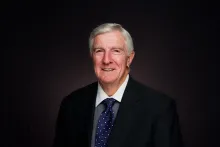
Before his retirement in 2021, Dr. Donald Ward pastored churches in Texas and Louisiana, and taught at Ambassador Bible College in Cincinnati, Ohio. He has also served as chairman of the Council of Elders of the United Church of God. He holds a BS degree; a BA in theology; a MS degree; a doctor’s degree in education from East Texas State University; and has completed 18 hours of graduate theology from SMU.
