
Don Ward
This transcript was generated by AI and may contain errors. It is provided to assist those who may not be able to listen to the message.
The title today is The Covenant of Sacrifice. The Covenant of Sacrifice and the subtitle is The Difference Between Clay and Sponge.
The Covenant of Sacrifice, subtitle The Difference Between Clay and Sponge. Do you know what the Covenant of Sacrifice is? When did you enter into the Covenant of Sacrifice? What are the elements of the Covenant of Sacrifice? And do we really understand what the elements of the Covenant of Sacrifice really mean? When Christ returns, He's going to gather the saints together, those who have made a covenant of sacrifice with Him. This is described in Psalm 50. If you would, turn to Psalm 50. There are many important prophecies in the book of Psalms that we seldom hear about, seldom read, and surely not very often preached about. In Psalm 50, in verse 1, the mighty God, even the Eternal, has spoken and called the earth from the rising of the sun, and they're going down thereof. Out of Zion, symbolic of the church, Hebrews 1222, you have come to the city of the living God, to the Mount Zion, to the church and assembly of the Firstborn. Out of Zion, the perfection of beauty God has shined, our God shall come and shall not keep silence. So, describing the Second Coming of Jesus Christ, A fire shall devour before him, and it shall be very tempestuous round about him. He shall call to the heavens from above and to the earth, that he may judge his people. Gather my saints together unto me, those that have made a covenant with me, by sacrifice. Hence the title, The Covenant of Sacrifice, the Difference between Clay and Sponge. Those that have made a covenant with me, by sacrifice, and the heaven shall declare his righteousness. For God is judge himself. Here, O my people, and I will speak of Israel, and I will testify against you, I am God, even your God. Then this song goes on to describe some of the key elements that God is going to judge his people by.
What is the covenant of sacrifice? The covenant of sacrifice is made when you totally surrender your life to God in Christ. Notice it once again, when you totally emphasis on totally underlying, bold, all cats, when you totally surrender to God in Christ. The elements of this covenant of sacrifice include repentance, faith in the sacrifice of Christ for the remission of sin and baptism. After taking these steps, God will give you his Spirit and continue his work in you. This involves coming to realize that you are bought with a price and that you are not your own. Let's go now to 1 Corinthians chapter 6. You are bought with a price and you are not your own. I dare say that very few of us have come to the death of our being in which we really understand the covenant of sacrifice and all its implications and all its elements, and what it really means to totally surrender to God in Christ, our very being. We don't hear much about it with regard to our preaching, and today we hopefully can explore some of this in depth and come maybe to a better understanding of what it really means. I don't claim that I have reached that point. I hope to reach that point of total surrender, submission, and service to God and Christ, each member of the body of Christ, and the world extended. That's why we are here. That's why we've been called to a large degree. In 1 Corinthians 6, 19, what know you not that your body is the temple of the Holy Spirit? So that means that God dwells in each one of us, each person that has his Spirit, God dwells in us. The very essence of God, the Holy Spirit. God is Spirit. The Holy Spirit which is in you, which you have of God, and you are not your own. Coming to realize that we're not our own and that our steps are to be directed by God in Christ and his word and his Spirit.
It has to do with giving up self and self-will, for you are bought with a price. Of course, that price was the very life of Jesus Christ who died for our sins. Therefore glorify God in your body and in your spirit, which are God's. So do we really understand and have we really internalize what this means? Baptism is symbolic of our total surrender to God in Christ. It symbolizes giving up self and being crucified with Christ. Now we turn back a few pages to Romans chapter 6, what I would call the baptism chapter. In Romans chapter 6, let me say this again, baptism is symbolic of our total surrender to God in Christ. It symbolizes giving up self and being crucified with Christ. In Romans chapter 6 verse 3, "...know ye not that so many of us, as were baptized into Christ, were baptized into his death." So going under the water, symbolizing crucifixion, death of the old man, death to sin and death. Therefore, we are buried with him by baptism into death. That like as Christ was raised up from the dead by the glory of the Father, even so, we should also walk in newness of life. And of course, baptism has two aspects. Under the water, giving up the old man, sin and death, to remain buried in the watery grave of baptism, and then raised in newness of life to live the resurrected life.
Verse 5, "...for if we have been planted together in the likeness of his death, we shall be also in the likeness of his resurrection." Of course, there is a dublion tandry there, a double meaning, double play on words. We're to live the resurrected life, and of course, in resurrection, "...we shall be as he is, for we shall see him as he is, we shall be like him, knowing this, that our old man is crucified with him, that the body of sin might be destroyed, that henceforth we should not serve sin, for he that is dead is freed from sin, that old man is in the watery grave." Now, if we be dead with Christ, we believe that we shall also live with him, knowing that Christ being raised from the dead, the dead dies no more, death hath no more dominion over him.
For in that he died, he died unto sin once, but in that he lives, he lives unto God. Likewise, just like he did, reckon you also yourselves to be dead, indeed unto sin, but alive unto God through Jesus Christ our Lord. Let not sin, therefore reign in your mortal body, that you should obey it in the lust thereof.
And the chapter goes on talking about to whom you yield yourselves service to obey his servants you are, whether of sin unto death or righteousness unto life. So we are supposed to live the resurrected life and be living sacrifices. Don't forget the title, The Covenant of Sacrifice. Now we turn forward to Romans chapter 12. Romans chapter 12. In Romans chapter 12 and verse 1, I beseech you therefore, brethren, by the mercies of God, that you present your bodies a living sacrifice. We're dead to sin. Sin has been buried in the watery grave. We're raised to newness of life. But of course, the old man is still there. Our job is to keep the old man in that watery grave and to live that resurrected life.
I beseech you that you present your bodies a living sacrifice, wholly acceptable unto God, which is your reasonable service. I mean, in just the view of everything that has been done, you're bought with a price. You're not your own. You have made a profession that you are going to surrender, submit, and serve God. Be not conformed to this world, but be you transformed by the renewing of your mind, that you may prove what is that good and acceptable and perfect will of God. There are many elements of faith involved in fulfilling the covenant of sacrifice and becoming a living sacrifice and being a living sacrifice. Go to Hebrews 11 and verse 6.
As we have brought out on numerous occasions, the first article of faith is to believe that God exists, but there is something that goes hand in glove with this, which is very important to understand and always keep in mind. Basically, summarized is that God always has our best interests at heart. He's looking out for us years in advance, and who knows how early in our lives that he started working with us and behind the scenes working things out for us because he knew that he was going to call us at this time, at this age, and give us an opportunity, the great opportunity, the opportunity that very few people have, that is to be among the first fruits in the kingdom of God.
Hebrews 11 and 6. But without faith, it is impossible to please him. For he that comes to God must believe that he is, that God exists, believe that he is, and that he is a rewarder of them that diligently seek him. He always has our best interests at heart. He's looking out for us. This involves coming to understand, believe, and internalize Romans 8.28.
Now, all of these steps are sequential in coming to this understanding about this covenant of sacrifice and the total meaning of it. And not that we can perhaps know the total meaning, but come to a better understanding of it. So we go to Romans 8.28 and read it. Romans 8.28.
So there are many elements of faith involved in fulfilling the covenant of sacrifice and becoming a living sacrifice. It involves coming to understand, believe, and internalize Romans 8.28. Romans 8.28.
And we know that all things work together for good to them that love God, to them that are called according to his purpose.
In the metaphoric sense, a description of this is given in Romans 8.36. This being, this in this case, representing this surrender, submission, service, this total sacrifice, this living sacrifice. There's some degree in the metaphoric sense it is summarized by this Romans 8.36. As it is written, for your sake, we are killed all the day long. We are accounted as sheep for the slaughter. So it's coming to the point to realize, understand, and internalize that anything that I get above death is a gift. Now, as we have brought out on many occasions, receiving the gift is conditional, and many things are required on our part. In other words, if you come to this point where you are counted as sheep for the slaughter, you come to the point that you are perfectly at peace with God and self, regardless as to what might happen to you. For you know and you know that you know that all things work together for good to those who love God and are called according to his purpose. So you begin to have this kind of peace that surpasses all understanding. You have great contentment, and you have peace. And you begin to enjoy that great liberty that God has called you to.
In other words, you come to the point that whether you live or die, you trust in the providence of God and that he always has your best interests at heart. You must become as clay in the Master Potter's hands. Now remember the title again, The Covenant of Sacrifice, the subtitle, The Difference Between Clay and Sponge. I have two things here.
This representing the clay, it's not really clay, but it is a good substitute for the time, and I have sponge. On the one hand, clay, I'd rather have clay in the right hand. On the one hand, clay, on the other hand, a sponge. Clay in and of itself is not that valuable. It takes on great value and is really indicative of the character of people under the hand of the Master Potter. In other words, until the Master Potter gets a hold of the clay, it's not worth much. And it takes a lot of work for the clay to become a beautiful artifact or vase or whatever it might be in the Master Potter's hand.
There are three essential properties that make clay different from dirt. These are plasticity, porosity, porosity, P-R-O-S-I-T-Y, porosity, and vitrification or vitrify. Placicity has to do with the ability to hold its form while at the same time pliable enough to be involved and moved by the Potter's hands. So the plasticity, you can squeeze it, and you let go, and it stays where it was, where it is. And of course, you can take the clay and you can roll it in your hands, and you can bring it back to the original shape. So plasticity, be able to be moved by the Potter's hands. This is plasticity. It is determined by the size and shape of the very fine grains or particles of clay called platelets, like your blood has platelets in it. Platelets are rather microscopic. It's that slippery, slick stuff that keeps the hemoglobin from clotting and keeping your blood from clotting.
Porosity, clay has to dry without cracking.
And so porosity has to do with being able to have the water evaporate out of it, and it becomes dry but not cracked. And so in trials and difficulties, can we come to the point where we can be dried out, as it were, and not cracked? And then it has to have vitrify or vitrification. Vitrification is a process of becoming glass-like. Although clay products never become absolutely vitrified or glass-like, it is necessary that the clay become hard for almost vitrified at a reasonable temperature. Any substance will melt at some temperature. Most materials tend to become soft and deform before they melt. The ability of clay to hold its shape and not sag or slump in the primary melting stages sets it apart from other materials. A sly pot will melt like a pancake if it's fired too high. Knowing when the clay particles have melted enough to be on the verge of distortion isn't as important as learning the use of a potter's wheel.
So God knows exactly what he's doing, and he doesn't take us to the point where we melt.
Archaeologists can determine, to a large degree, a lot of things about the culture of a people, even the character to some degree of a civilization from its pottery, which is made of clay. Due to its ability to receive an impression when moist and retain the same when dry, clay was used for sealing fine wine and for keeping valuable records. In fact, the Dead Sea Scrolls were in large measure preserved due to clay jars, which they were found. So let's compare clay and sponge and ask the question, are you sponge in the Master Potter's hands or are you clay? Well, as we have noted, you can take clay and it conforms to every bit of pressure that is applied to it. You can make it into all kinds of different shapes and faces and so on. Whereas you can easily squeeze sponge and it conforms to every bit of pressure that is applied to it. But as soon as you release your grip, it goes back to its original shape. Goes back the way it was. So you can readily see that you can take a piece of sponge and squeeze it into your own hands and hold it and it seems to be soft and malleable and pliable. And as long as force is applied, that is the case, but as soon as the force is released, it goes back to its original shape. Here it's almost like nothing but then let go. But not so here. It stays. Clay maintains its shape that was given by the Potter. So when you hear God's word preached or when you are reading or studying, do you resist or second-guess? Some people even second-guess God. Some people second-guess God in trials and difficulties. Some absorb what is being said and may be stimulated or yielded or shaped like this sponge for a few fleeting seconds or moments, but soon go back to whatever it was or whatever they were as soon as it's released. There are countless hundreds of people who sit in church services, Sabbath after Sabbath as a sponge. There are sponges wet today, dry tomorrow. They have a little or no permanent qualities, just depends on the externals. We don't want to be one that just depends on the externals. Some have a teach me if you dare attitude, and I don't care what you say, my mind is made up. Don't confuse me with the facts. They live their life the same way they've not changed since they were put under the water. They don't understand the covenant of sacrifice. They don't understand total surrender. They don't understand what it means to be counted as sheep for the slaughter. Each one of us can ask ourselves if we have internalized Isaiah 64.8. Let's go there. Isaiah 64 and verse 8. And Isaiah 64 and verse 8. But now, O Lord, you art our father. We are the clay. We are the clay.
You are Potter, and we are all the work of your hand. And can we say that? We are the work of your hand. Each one of us can ask ourselves if we are striving against our Maker.
Notice Isaiah 29 verse 15. Isaiah 29 verse 15. Paul quotes this in Romans 9, similar to this in Isaiah 29 verse 15.
Woe unto them that seek deep to hide their counsel from the eternal, and their works are in the dark, and they say, Who sees us and who knows us? Surely your turning of things upside down shall be esteemed as a potter's clay. For shall the works say of him that made it? He made me not. I mean, we were made from the dust of the earth. 16 basic elements.
Or shall one thing formed say of him that formed it? He had no understanding. Now we go to Isaiah 45 verse 5.
This is an essence. If you have this attitude saying to him that formed it, you didn't make me striving against our Maker, striving against the potter. See, the clay does not strive against the potter. The clay is totally submissive.
The clay surrenders totally to the hands of the potter. In Isaiah 45 verse 5, I am the eternal, there is none else. There is no God beside me. I girded you, even though you have not known me, that they may know from the rising of the sun and from the west that there is none beside me. I am the eternal, there is none else. I form the light, create darkness. I make peace, create evil. This create evil is rea in the Hebrew, and it means calamity, upset, upheaval. It does not mean sin. God never creates sin. And I've heard ministers in the church try to skirt around that, explain. All you have to do is look at the meaning of the word I create evil. The word evil is spelled r-a, rea, long-a, and it means that God allows or creates calamity, upset, noisome hurt, that kind of thing, but not sin. Drop down you heavens from above and let the skies pour down righteousness, let the earth open, let them bring forth salvation, deliverance, and let righteousness spring up together. I, the eternal, have created it. Woe unto them that strive with his maker! Let the pot-shard strive with the pot-shards of the earth. Shall the clay say to him that fashioned it, Why make you, or your work? He has no hands. Woe unto them that says unto his father, Why beget you, or to the woman? Why have you brought me forth? Why did you engender me? Why did you give me birth? Thus says the eternal, the Holy One of Israel, in his maker, asked me of the things to come concerning my sons, and concerning the work of my hands, command you me. I have made the earth and created man upon it. I even my hands have stretched out the heavens, and all their hosts have I commanded." So God is the great Master Potter. God the Father has called each one of us to be clay in his hands, to become a new creation. Becoming clay in the Master Potter's hands can be equated with childlike humility, as described in Matthew 18. Let's go there, Matthew 18. Once again, becoming clay in the Master Potter's hands can be equated with the childlike attitude described in Matthew 18. We could equate it with humility. In Matthew 18, verse 1, a common theme in the Bible, and among the apostles, at the same time came the disciples unto Jesus, saying, Who is the greatest in the kingdom of heaven? God is not interested in who is the greatest. He is interested in who is becoming most like him and Jesus Christ. And Jesus called a little child unto him, and said him in the midst of them, and said, Barely I say unto you, except you be converted, and become as little children, you shall not enter in the kingdom of heaven. Whosoever therefore shall humble himself as this little child, the same is greatest in the kingdom of heaven. Becoming that soft, malleable, pliable clay in the Master Potter's hands, totally surrendered, totally submitting to and serving God. Whoso shall receive one such little one in my name receives me. But whoso shall offend one of these little ones which believes in me, it were better for him that a millstone were hanged about his neck and that he were drowned in the depth of the sea. It would be better if he did not exist. What are the physical characteristics of little children? Their joints are loose. Their bones are flexible. They can take a fall. You might think, well, it would surely break some brittle bones. But they get up, shake it off, maybe cry a little, and go on. They can relax. They can sleep like a baby.
What is the mindset and attitude of a little child? They are fearful, would play with snakes if permitted. They're not worried and anxious over the cares of life. They're eager to learn. They're willing to be taught, willing to be molded. They aren't uptight. They aren't striving with their maker. God wants us to be flexible, malleable, pliable, so we can be molded, so we can grow. If there is not some flexibility, there's no room for growth. You're set, just like this plastic bottle. There is no room for growth. God wants us to have an open mind, be enthusiastic about learning his way. He wants us to have a perfectly teachable heart, yet he wants us to prove all things, hold fast to that which is good, not be tossed to and fro by every wind of doctrine. And at the same time, he wants us to grow in grace and knowledge and not cling to fables. There's this perfect balance that Jesus Christ had. There are deeper spiritual understandings that we need to come to when it comes to really understanding the covenant of sacrifice. We have read the scriptures. It states, we're bought with a price. We're not our own. And since none of us are perfect, God chastens every son that he loves. And as Paul writes in Hebrews 12, if you are without chastisement, then are you illegitimate and not sons?
We can read the first two or three verses of John 15. God prunes every vine that it might bring forth more fruit. We read in Ecclesiastes 9 verse 11. I returned and saw under the sun that the race is not to the swift, nor the battle to the strong, neither yet bred to the wise, nor yet riches to men of understanding, nor yet favor to men of skill. But time and chance happens to them all, rich and poor, bond and free, time and chance. Time and chance happens to the people of God. God has not placed a bubble around us, and we can be at the wrong place at the wrong time. Now oftentimes, and probably everybody in this room can recount when an angel intervened on our behalf, and it seemed like we were going to meet with sudden and sure calamity, and somehow it just like it passed away. Whatever it was, maybe it was the vehicle coming head on toward us, or that we pulled out in front of somebody else. We didn't see them, but somehow it seems they just were able to go right by, and so on it goes. Let's note the words of the Apostle Paul in Acts 14 verses 20 through 23.
Acts 14 verse 20. Acts 14 verse 20.
Acts 14 verse 20. How be it as the disciples stood around about, he rose up and came into the city. The next day he departed with Barnabas to Derby. And when they had preached the gospel to that city and had taught many, they returned again to Lystra and to Iconium in Antioch, confirming the souls of the disciples, exhorting them to continue in the faith, and that we must through much tribulation enter into the kingdom of God. And when they had ordained them elders in every church and had prayed with fasting, they commended them to the Lord on whom they believed. You know, it reminds me of the old Lynn Anderson song, I beg your pardon, I never promised you a rose garden. Once again, Paul says that we must through much tribulation enter into the kingdom of God.
It's not an easy journey, and one of the greatest areas of concern, and I would say areas of misunderstanding that has existed in the church and continues to exist to this day, centers on affliction and healing. Apparently, we don't understand what we've explained above about being bought with a price. We are bought with a price. We are to become clay, be clay, in the Master Potter's hands.
We are to be counted as sheep for the slaughter, totally surrendering our total being and will to the will of God. I call this package surrender, submit, serve the 3S package. You're bought with a price. You're not your own. Many are the afflictions of the righteous.
And understand that God does not view life and death as we do.
The so-called faith healers have turned healing into a sideshow to draw followers out for themselves. If one of the many splinter organizations that claim to be the true Church of God were to suddenly begin to experience miraculous healings, some people would immediately be drawn to them. They would flock there. Or if they claim they have some new great understanding of prophecy, oh, let's go there. They really understand.
You know, we tend to forget.
Notice here 1 Corinthians 13, 1 through 3.
This understanding, of course, is one of the most critical of all. In all of this, with regard to understanding prophecy, being healed, and so many different things, which we shall see here in the next few minutes, in 1 Corinthians 13, what is the title of the sermon? The Covenant of Sacrifice, the Difference Between Clay and Sponge. Though I speak with the tongues of men and of angels, in other words, I have great spiritual gifts, and have not charity or gopé, spiritual love. God is love. If I'm not becoming as God is, that is love, I am become as sounding brass or a tinkling cymbal. I'm just making a loud noise. And though I have the gift of prophecy, understand all mysteries. I know who the beast is. I know when Jesus Christ is coming again, down to the very second, in all knowledge. And though I have all faith, everybody I know in is healed, so that I could remove mountains and have not charity, I am nothing. And though I bestow all my goods to feed the poor, and though I give my body to be burned, and have not charity, it profits me nothing. God is interested in what you are becoming. Are you like the clay that can be molded and shaped after his own ways, so that you can be conformed to the image of his dear son? Let's notice the words of Jesus in Luke 16 verse 27. Luke 16, 27, this is toward the conclusion of the parable of Lazarus and the rich man. Of course, the rich man wanted to send someone to send back to the relatives, so that if they receive one from the dead, see this great miracle, this great sign, if this great miracle, this great sign, even raising them from the dead, if someone came back from the dead, oh, they would believe, they would change. What did Jesus say? In Luke 16 and verse 27, He said, I pray you therefore, Father, that you would send him to my Father's house, where I have five brethren, that he may testify unto them, lest they also come into this place of torment. Abraham said unto him, They have Moses and the prophets, let them hear them. And he said, No, Father Abraham, but if one went unto them from the dead, they will repent. And he said unto them, If they hear not Moses and the prophets, neither will they be persuaded, though one rose from the dead. During his earthly ministry, Jesus performed many miracles of healing, casting out demons. We would probably be accurate in saying that none of these people had entered into the covenant of sacrifice with God in Christ. Jesus had not yet been crucified. He had not yet been resurrected. He had not yet ascended back to the Father.
Perhaps he went back in 2 for 40 days and 49, but that ascension that's recorded in Acts chapter 2 had not taken place.
And the Holy Spirit had not been sent. He told Peter, you know, Christ was talking to the disciples and said, I'm going to be crucified. Peter said, Oh, we never let that happen to you. And Christ said, Get behind me, Peter. You are of Satan the devil. And at one point he told Peter, you know, Peter, Satan is desired to sift you as sand, something like that. And he said, But I prayed for you, and when you are converted, strengthen the brethren. So even the apostles were not converted along the way. It was later. You read those last several verses there in Luke 24, the last chapter of Luke, where it says, And he opened the eyes of their understanding, and he taught them more perfectly the way in what it was all about. And they came to understand, and they were there on the day of Pentecost and all of that. In the early days of the Church, the apostles went forth healing the sick in the name of Jesus. And very few of these people had entered into the covenant of sacrifice with God in Christ. These miraculous healings provided a strong witness to the veracity of their teachings about Jesus and the path to salvation, to eternal life.
Now let's note the words of the apostle Paul in 1 Corinthians 14 verse 22. The Corinthians were a people that were hung up on spiritual gifts and signs, miracles, as it were, that kind of thing, miraculously speaking in a different language. Paul said in chapter 1, I thank God that you come behind in no gift. And he says in chapter 13, which we've read the first three verses of, I show you a more excellent way. That's the way to become as God is. In chapter 14 he comes back. Verse 1, follow after charity, desire spiritual gifts, but rather that you may prophesy. Now notice here in 1 Corinthians 14 verse 22, Wherefore tongues, languages, Glissalia, are for a sign, not to them that believe, it's not for those that believe, but not to them that believe, but to them that believe not. But prophesy serves not for them that believe not, but for them which believe, inspired preaching and teaching. We tend to forget the role of our High Priest Jesus Christ, the righteous, who sits on the right hand of God making intercession for us. We have people who say and apparently believe such statements as, if we had enough faith, we would have numerous miraculous healings in the Church. Faith is surely a part of it.
You have to pray in faith and believe with all your heart. But the answer to your prayer may be no. You may say, well, I prayed and prayed, but I never got an answer. Yes, you got an answer. The answer is no.
We say that God knows what He's doing, and we say that we pray according to God's will, yet we tend to lose faith or blame God if the answer is no.
Our High Priest is not negligent in his role as mediator and intercessor of the New Covenant.
Let's go to Hebrews 2. We'll read some passages here in Hebrews, hopefully to demonstrate, illustrate, and understand them that I really hope we can come to. It answers so many questions. If we can come to really understand what the covenant of sacrifice means and being a living sacrifice, in Hebrews 2, verse 17, Wherefore in all things that behooved him to be made like unto his brethren, that he might be a merciful and faithful High Priest in things pertaining to God to make reconciliation for the sins of the people, or in that he himself has suffered being tempted, tested, tried, he is able to succor them that are tested, tempted, tried. Those who have distressed tribulation. Hebrews chapter 4, verse 14. Hebrews 4, verse 14. Seeing then that we have a great High Priest that has passed into the heavens, Jesus, the Son of God, let us hold fast our profession. Hebrews 4, 15. For we have not an High Priest which cannot be touched with the feelings of our infirmities, but was in all points tempted like as we are, yet without sin. Let us therefore come boldly unto the throne of grace that we may obtain mercy and find grace to help in time of need. Now, Hebrews 7, 25. A prayer that should basically be uttered before we close our eyes and sleep every night. Or this scripture quoted. Hebrews 7, 25. Wherefore he is able also to save them to the uttermost that come unto him, that come unto God by him, seeing he ever lives to make intercession for them. He's able to save them to the uttermost, seeing that he ever lives to make intercession for them. Now you look at verse 1 of chapter 8. Now the things which we have spoken, this is the song. We have such an high priest who is set on the right hand of the throne of the majesty in the heavens a minister of the sanctuary. We are that sanctuary, the temple of God, and of the true tabernacle, which the eternal pitched and not man.
Now note the words. This is where we really want to get to, and to a large degree, where the river meets the road in understanding with regard to praying for the sick, having faith in so many different things. Romans 8, 26. We have read here about our high priest, our intercessor. He's able to save them to the uttermost, seeing he ever lives to make intercession for them. Sometimes we just discount that.
In Romans 8, 26, likewise the Spirit is under the direction of God and Christ. The Spirit is not out there as something a person freelancing on its own. God is Spirit. The Holy Spirit is under the direction of God and Christ. This says in Genesis 1, the Spirit of God moved on in the face of the waters. He sends forth His Spirit, and they are created. Likewise, the Spirit also helps our infirmities. For we know not what we should pray for as we ought, but the Spirit itself makes intercession for us with groanings which cannot be uttered. He that searches the hearts knows what is the mind of the Spirit because He makes intercession for the saints according to the will of God. So when you are in trial and trouble and distress and you cry out unto God, your high priest makes intercessions for you according to the will of God. Has your high priest lost faith? Jesus Christ the righteous prays for us according to the will of the Father. So in peril, persecution, affliction, sickness, tribulation, our high priest intercedes for us according to the will of the Father. Our high priest has never wavered in faith. One might say, well, this person was a very obedient child, and yet he-she died at a very early age. I just don't understand it because I thought God said that if you obey your parents, long shall be your life upon the earth. But there are other factors that come into play. Once you enter into that covenant of sacrifice with God, you place your hands, you clay, made of the dust of the ground, in the hands of the Master Potter to mold me, shape me, make me after you your way. We are now the work of your hands, and we have been shaped and molded on the Master Potter's wheel.
The Master Potter does not make mistakes. A fine pottery and especially ceramics is a fine art. It takes a great deal of skill and patience and education to be able to do it. Some might say we followed all the instructions regarding prayer and healing. We fasted, we prayed, we believed, yet our petition was denied. That is very often the case, but it does not mean that God did not hear our prayers. It does not mean that our high priests did not intercede for us according the will of the Father. If he did fail, then what about all these scriptures that we just read? But some might say, well, what is the point of praying if God already has his will set? God allows us to be tried and tested all along the way to see how we will respond. It is not the trial that makes the man or woman, it is our response to the trial that makes the man or woman. We could look at Hezekiah 2 Kings 20. Hezekiah is one of the most famous stories in the Bible, accounts with regard to healing. In 2 Kings 20, in those days Hezekiah was sick unto death. The prophet Isaiah, the son of Amaz, came to him and sent him to him. Thus saith the Lord, set your house in order, for you shall die and not live. Now God was the one that told Isaiah to go to Hezekiah and deliver this message.
This shows that prayer can change things, but at the same time, see, God is watching Hezekiah. He is trying to determine exactly what's in his heart, and he does find out what's in our hearts. Verse 2, Then he turned his face to the wall, prayed unto the eternal, saying, I beseech you, O eternal, remember now how I have walked before you in truth with a perfect heart, and have done that which is right in your sight. Hezekiah wept sore, and it came to pass before Isaiah was gone out in the middle court, that the word of the eternal came unto him, saying, Turn again, go back, tell Hezekiah, the captain of my people, the king. Thus, as the eternal God of David and father, I have heard your prayer, I have seen your tears, behold, I will heal you on the third day, and you shall go into the house of the eternal. And I'll add 15 years to your life. That doesn't happen in every case. Now with Hezekiah, now we go to 2 Chronicles chapter 32, and we find out what happened with Hezekiah.
There was an ambassador that came from Babylon to visit Hezekiah the king. His fame had spread throughout the Mediterranean world, and when this ambassador came, Hezekiah showed, this ambassador from Babylon, Hezekiah showed him all the vessels in the temple and all the fine things and all of that, which was a mistake. God doesn't want us flouting our things and being puffed up in vain before the world. This couple verses here in 2 Chronicles gives us great insight to what happened to Hezekiah.
Hezekiah 32 verse 22, Thus the eternal saved Hezekiah and the inhabitants of Jerusalem from the hand of Sennacherib, the king of Assyria, and from the hand of all other, and guided them on every side. And many brought gifts unto the eternal to Jerusalem and presents to Hezekiah, king of Judah, so that he was magnified in the sight of all nations from thenceforth. In those days Hezekiah was sick unto death. And we just read about that in 2 Kings. And he spoke unto the Lord, and the Lord gave him a sign about the sundial going backwards. Verse 25 is the kicker.
But Hezekiah rendered not again according to the benefit done unto him. For his heart was lifted up. Therefore there was wrath upon him upon Judah and Jerusalem. Not withstanding Hezekiah humbled himself for the pride of his heart, both he and the inhabitants of Jerusalem, so that the wrath of the eternal came not upon him in the days of Hezekiah. See, even after God intervened, Hezekiah forgot that he was clay in the potter's hand. And his heart was lifted up. But because of what he had done, God honored him in that he didn't bring it to pass during his day. But Nebuchadnezzar and his armies did come. They took away the vessels in the temple. In Daniel chapter 5, first few verses, you read about great feasts that Belteshazzar held. And they were drinking their wine and all of that out of the vessels. They took out of the temple in Jerusalem.
God allows us to be tried and tested all along the way.
If we didn't have trials, probably our prayer life would lag in several cases. God wants us to come to the understanding that Job eventually came to in his great trial, that in all of God's actions, God is just. God is just.
God can make you into a vessel of honor, or you can become a vessel of dishonor. So, as we sit here today, do we have a humble, contrite heart like the little children that Jesus described in Matthew 18? Or do you feel that situation and circumstances in life are against you and that everyone is out to get you, and that you had better do it to the other guy before he does it to you? Of course, if you feel this way, you're not clay in the Master Potter's hands. Once again, circumstances do not make the man or the woman, but they reveal the inside. So we must come to understand what God the Father, the Master Potter, and Jesus Christ, our priests are attempting to do with us.
They are trying to develop in you and me, mold us and make us with the same mind, heart, and character as Jesus Christ. So how do we view affliction when it comes? Trials in whatever form they come may not be the result of sin. It may be that God is pruning you. It may be that God is wanting to see the contents of your heart. He wants you to judge yourself and understand that if you entered into that covenant of sacrifice, to understand about your high priest, that you totally surrender. The lesson is to realize that God is refining each one of us. He's not punishing us just to be punishing us. God wants us to judge ourselves and examine ourselves so he won't have to do it. But if he does, and sometimes he does, it is for our best interest. He always has our best interest at heart. So if a person does not come to self-knowledge, self-judgment, they'd probably be better off dead than to be stunted spiritually. So if you have this heart that is pliable, malleable, if you're like the clay in the master's potter's hand, if you have that childlike attitude, like Jesus Christ, the supreme example of surrender, submission, and service. Philippians 2, please. Philippians chapter 2. Philippians chapter 2, coming to this point.
The very Son of God. Philippians 2 verse 5.
So, brethren, have we entered into that covenant of sacrifice? Do we really understand it? Do we know and know that we know the role of our high priest? And can we have that peace of mind that passes all understanding? If we really understand that covenant of sacrifice, we will know the difference between clay and sponge. All things work together for good for those who are called according to his purpose, who love God and are called according to his purpose. So each one of us must ask ourselves, am I clay? May I be applicable in the Master's hand? Or am I sponge?
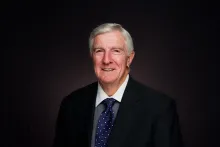
Before his retirement in 2021, Dr. Donald Ward pastored churches in Texas and Louisiana, and taught at Ambassador Bible College in Cincinnati, Ohio. He has also served as chairman of the Council of Elders of the United Church of God. He holds a BS degree; a BA in theology; a MS degree; a doctor’s degree in education from East Texas State University; and has completed 18 hours of graduate theology from SMU.
