
Robin S Webber
This transcript was generated by AI and may contain errors. It is provided to assist those who may not be able to listen to the message.
80. I'd like to begin the message this afternoon by asking you a question. I think to a degree it'll build upon the message that Mr. Miller brought before me. Simple question is simply this. How do you see who and what God is? How do you see who and what God is? Because how we see God and how we see who He is and that understanding will proceed our decisions. They will either make them crystal clear or we will have a blurred witness to this world that is around us. Allow me to take it a step further. Allow me to put it another way. It's simply this. Who or what are you bowing down to that is thwarting your witness? Who or what are you bowing down to that is thwarting your witness? I'd like to bring you into clarity with what we're talking about here in a focus with a story that comes out of the Old Testament. Then we're going to build upon it. But there's a marvelous example of three men in Daniel 3. That'll make it easy. Three men in Daniel 3 who stand out for all time because they stood up for God and for His law when everybody else was bowing down. Allow me to repeat that because that's going to be the basis of what I'm going to build upon this afternoon. Three men that stood up when everybody else was bowing down. And what they stood up was not for themselves, but they were standing up for God. And they were standing up for God's law that we're going to focus on later. And by doing that, they were able to see beyond the flames that were in front of them. They were able to live a life of clarity and directness. They did not bend their knee. Their minds and their spirit were not broken because of who and how and what they perceived that God was. I think by now the messages that I gave before the Feast and during the Feast, turn Escondido, is right now I feel that God's Spirit is prompting me to share with the brethren how important it is to have spiritual and moral clarity in this world that is around us. And God does show us the way in Scripture and at times gives us examples. It's easy to read a commandment. It's easy in a sense to hear a principle. But when you see it come into effect, it's even more powerful. And that's why God gives us the story of Michelle Hananiah and Azariah, commonly known as Meshach, Shadrach, and Abednego, back there in Daniel 3. Join me if you would for a moment. Let's pick up the story in Daniel 3. Take a look at it for a moment because their story is really our story. They were a part of a covenant people. We, too, are a part of a covenant people. Let's remember something that a covenant is more than just simply a contract. A covenant is something that is bonded by blood and bonded by the identity of the one that's called us into that covenant relationship.
Daniel 3. We have the story here where in verse 1 we notice, Nebuchadnezzar the king made an image of gold whose height was 60 cubits and its width 6 cubits. And he set it up in the plain of Dura in the province of Babylon. Let's drop down to verse 3. So the satraps, the administrators, the governors, the counselors, the treasurers, the judges, the magistrates, and all the officials of the provinces gathered together. In other words, all the bigwigs, all the bureaucracy was all there.
And they were gathered together for the dedication of the image that King Nebuchadnezzar had set up. Giant statue. Giant statue. Set up. And they stood before the image that Nebuchadnezzar had set up. Now, let's understand something.
Let's make this relevant. This was not Mr. and Mrs. Miller on a tour bus getting off 1000 years after this statue had been erected and looking at it as a historical artifact. This was party time. This was big time. This was the opening dedication. This was the groundbreaking moment, as it were. And here we are. And then we come down to verse 11. Because the commandment went out, Whoever does not fall down and worship shall be cast in the midst of a burning fiery furnace.
They were to lie prostrate, as it were, which was very much an eastern-oriental manner of worship. Whether it be towards a god or whether it be towards a god-priest king, it was a manner of showing adoration. But we notice something that further down here, that we notice the story then develop of Meshach, Shadrach, and Abednego, where it says that they were not going to bow down at all. Verse 16, Shadrach, Meshach, and Abednego answered and said to the king, O Nebuchadnezzar, we have no need to answer you in this manner.
Don't even have to go there. This is not multiple choice. This is not ABC. This is not going down the soup plantation line and figuring out what's going to be on your plate. The decision had already been made. They said, we don't have to go there.
If that is the case, our God, whom we serve, is able to deliver us from the burning fiery furnace, and He will deliver us from your hand, O king. But if not, let it be known to you, O king, that we do not serve your gods, nor will we worship the gold image which you have set up. Now, let's think this through for a moment. Let's bring our lives and intertwine them with Neshael, Hannah, and I at Azariah for a second.
Let's make this relevant to all of us. This week, maybe even beginning tonight, you are going to have a decision as to how you will obey God and how you will keep His law and keep the commandments. May I say something, friends? It is coming. The decision will be there. As to whether or not you stand up on your feet for God and for His law, or in some way bow down to something that is idolatrous.
Oh, it may not look 70 feet high or 80 feet high. It may not look like a Buddha from Cambodia or from Thailand. It may not be 500 feet long like some of those great Buddhas are over in the Orient.
But there will be something there that will try to rob you of your devotion and your dedication of understanding who and what God is and why you do not bow down. What could happen to you tonight or Sunday, Monday, or Tuesday, and sometimes trials do come on Thursdays, is you could be a little bit like Meshach, Shadrach, and Abednego. There's a wonderful commentary out of the Life Application Bible series that kind of puts in your mind maybe some of the things that they could have gone through to say, well, you know, this just isn't really all that bad.
Allow me to give you a few. Because what can happen when you start using human reasoning, it can blur and it can thwart your vision of God. And not only this is what I want to share with you today, whether I get it right or wrong, and this is simply this. Sometimes we just think about ourselves. And what you're going to learn in this story about Meshach, Shadrach, and Abednego, it wasn't just about them. Number one, it was about God, and their vision and their clarity of purpose was a powerful witness to others. And we're going to conclude with that point in a moment.
But here's what they could have said out of Life Application Bible. Well, we'll bow down, but we're not actually worshipping the idol. Number two, we are an idol worshipper. But for this one time, then we'll repent, and of course, God is forgiven, God will be forgiven.
Number three, the king has absolute power. We must obey him. Certainly God will understand. Number four, you know, the mind can really keep the points coming here. The king appointed us. We owe it to him. Number five, this is a foreign land. So it would be offensive if we didn't heed the customs of the realm. Number six, our own ancestors set idols up in the temple. This isn't half as bad. Number seven, we're not hurting anybody.
Number eight, if we get killed, probably only worse people will take our place. Now, you think about that for a moment. You go through this list. It's pretty comprehensive. But have we ever gone down that slide of obscurity, of diminishing our witness for God? That we understand him, and he knows that we understand his role. And also, it blurs any opportunity for us to be a witness to others that are watching our example in our neighborhood, in our families, and at work.
Fortunately, their vision was not blurred. They didn't allow human reasoning to mold their God. And I want to share a thought with you, please. May I? That is so often what we do. Being in this human realm, we allow human reasoning to mold our God after our image, to make it easier for us to do our thing. Here's something that you want to think about. Their spiritual character fashioned a monument, which outlasted whatever was on the plains of Durod.
We don't know what that image looked like exactly. You can take another Babylonian, Chaldean monument and say it might have looked like that. You don't know. But what we do know exactly is the image that they set. One of obeying God, one of obeying God's law, one of standing up when everybody else was bowing down, and what an impact they made. You see, here's a bottom line I want to share with you, and you might want to jot it down to help you this coming week.
That's simply this. They obeyed God and left the consequences to Him. So often we think of the consequences and get it ahead of the obeying. Our role as disciples of God the Father and Jesus Christ is to obey their will to keep their commandments. And God will take care of the consequences. Now, that doesn't mean that as they were gathered up and they were taken to those flames, that their knees weren't shaking.
Sometimes we, to be very blunt, God doesn't call supermen. Our knees might be shaking, but our hearts are firm. If our hearts are firm, we will have a walk that is worthy of God. But if our hearts aren't firm, if we don't know the stories of the Bible, if we don't know why God gives us the Ten Commandments, we will not have the strength to endure those challenges. I do want to show you something here.
Just turn the page and come with me for a moment in Daniel 3 because of what they did. And many of you know the whole story and how the fire got stoked up. And even the men that came in to help them, to move them in, the guards were actually burned. But then we know that here was, as they went in, that there was this fourth being that was in the flames with them.
And Nebuchadnezzar saw that. He said in verse 24, Did we not cast three men bound into the midst of the fire? They answered and said to the king, True, O God, I see four men loose walking in the midst of the fire. They're not hurt. The form of the fourth is like the Son of God. Perhaps it was what we call a theophany or a God appearing. We'll leave it at that. But here's the point. Those men were not going to break one of the commandments of God. And they left the consequences to God. They said whether God saves or not, this is not the issue. We will leave the consequences to God. We're going to obey the commandments of God.
And we're going to center on that commandment in a moment. Now notice what it says here. Because of their spiritual and because of their moral clarity. Notice verse 28. After Nebuchadnezzar witnessed all that. Blessed be the God of Shadrach, Meshach, and Abednego, who sent his angel, delivered his servants, who trusted him. They have frustrated the king's word and yielded their bodies, that they should not serve nor worship any God except their own God.
Therefore I make a decree that any people, nation or language, which speaks anything against the God of Shadrach, Meshach, and Abednego, they shall be cut in pieces. And their houses shall be made asheep, because there is no other God who can deliver like this. And then they were promoted. They didn't know this was going to occur. All they knew was there was a God in heaven. He had given them the Ten Commandments, and their job was to obey.
And what they did is they left the consequences, the God, to allow him to take care of them. And the rest is history. What do we learn from all of this? Here's the point I'd like to make to you today.
How can you be a witness like Meshach, Shadrach, and Abednego? I think something that's really powerful here that we need to talk about, friends, is simply this. Nothing happens when we're just simply middle of the road. When we bring light and darkness together and try to create a different color, God has not called us to go down the middle. The middle may be convenient, but there's no witness there. When we blur the lines, when we try to straddle and have our feet on both sides of the river, one on the sure shore of the heavenly Jerusalem and the other on the saggy shore of Babylon, nobody gets anything.
We don't get anything. God does gain praise by the way that we live, and nobody recognizes the difference of what is going on. That's why it is so important to understand the power of the Ten Commandments. That's what I want to talk a little bit about this afternoon. We're going to focus on the second commandment. I want to talk about its purpose, and I'd like to talk about its meaning.
We're going to move from the courtyard of Babylon, and we're going to go right to the altar of our own hearts and see what lies in there. Make sure that we're not bowing down to any images that are not worthy of our life's devotion. Join me if you would for a moment. Exodus 20. Let's go right to the Decalogue here. Exodus 20. Pick up the thought in verse 4.
Actually, I'm going to walk that back, and I'm going to go right to verse 1. Exodus 20. One of the challenges—and I think you've heard this before, being members of the Church of God community— one of the challenges that we have sometimes when we just teach our young people and relearn ourselves the short form of the Ten Commandments, we lose a lot. We really lose a lot. Growing up where I didn't pass the Dean of Heaven, having the opportunity to go to Imperial schools, we had to learn what we call the whole enchilada, and we had to know it word by word.
Thank God. Notice what it says here. God spoke all these words, saying, I am the Lord your God, who brought you out of the land of Egypt, out of the house of bondage. That is an identifying phrase of who rescued them from bondage. It was no other God. Therefore, you shall have no other gods before me. So God, number one, identifies Himself and says that He's not going to share our life with others, that His is private space. His alone is the dominion that we will move towards. Now we go to the next point.
You shall not make for yourself a carved image, any likeness of anything that is in heaven above, or that is in the earth beneath, or that is in the water under the earth. Now notice verse 5, because this is where Meshach, Shadrach, and Abednego come in. You shall not bow down to them, nor serve them. For I, the Lord your God, am a jealous God, visiting the iniquity of the fathers upon the children of the third and the fourth generation of those that hate me, but showing mercy to thousands to those who love me, and keep my commandments.
Now this verse has several implications. We'll hopefully cover them in the course of this message. Let's understand something. Sometimes this set of verse is misunderstood. It does not condemn art. It does not condemn sculpture. But it does condemn their use in worship to bow down or to serve them. Now that's very important, friends, to understand why and why God puts this second commandment in the Decalogue. The instant a man sets up any representation of God, he denies what is essential to God. I want you to think that through for a moment.
I'm not just going to tell you something we're going to build towards that, so that you understand the power behind these commandments. The instant a man sets up any representation of God, he denies what is essential to God. God is all-powerful. He's all-wise.
He's all-love. You can use phrases that are fancier. He is omnipotent. He is omniscient. He is omnipresent. That means he is everywhere. He is all-knowing. He is all-powerful. That's his nature. And it is his nature, then, that facilitates his greatest attribute. He is love. And when you set up any representation, you automatically limit who and what God is. When a man erects a mental or physical image, he limits his own thoughts. He limits his own worship towards a God who will not be limited.
What does that mean? You can't put God on a leash. You can't simply make him a pet rock. You can't simply put him in your pocket at all. You can't limit him. There are some very certain reasons why this is important. Scripture, join me, if you would, in Exodus 3. Exodus 3 and verse 14, because God gives certain self-disclosures about himself. That means God shares with us personally by his own words who and what he is.
In Exodus 3 and verse 14, in his conversation with Moses, Moses is saying, Who am I going to tell Pharaoh that is sending me? Because, you know what? They have all sorts of gods in Egypt, all gods for all reasons and all seasons. They haven't missed a one. They worship the sun.
They worship the moon. They worship cats. They worship alligators. They worship bulls. So, who are you? And God said to Moses, tell him this, I am who I am. And he said, Thus you shall say to the children of Israel, I am has sent me to you. God is just basically saying, He is. There is no beginning. There is no end. He is outside the realm of time and space.
He does not operate in the same boat, the same oars that you and I do. Comes from a completely different place. Isaiah 57, 15. Isaiah 57. These are just good little scriptural nuggets to place in our mind on a Sabbath afternoon. Isaiah 57, verse 15. For thus says the high and the lofty one, who inhabits eternity, whose name is holy. God inhabits eternity. Eternity is in a realm that is outside of time and space, outside of this physical creation that you and I have been created in, placed in, kept in.
God is in a simply different realm than you or I. Join me in another verse, just to cement the point here. Isaiah 46, verse 9. Remember the former things of old, for I am God, and there is no other I am God, and there is none like me. There is none like him because he does inhabit eternity.
He is outside of time and space. He is uncreated. You just have to sometimes pause. I gave a whole message on this during the feast as to what is eternity. Because we are so used to time and space, which create motion, and we operate in this world of straw.
And sometimes what we want to do is we want to anthropomorphize God, which is a lot of syllables that just simply make us want to make God into our image, rather than allowing God to make us into his image. And therein lies the whole biblical difference.
And why God gave us the first and, yes, the second commandment to specifically tell us not to bow down to idols. This is very important, and is very relevant even in the 21st century. I'll show you in a few minutes.
God's uniqueness is so grand and so intimate that he does simply not want it pampered with. He says, don't trespass this. If I'm going to have a covenant relationship with you, and I'm going to reveal myself to you, and be personal, and to be intimate, and to be in covenant with you, there are things that you will not be able to do. That's just a part of the deal. Right up front. And one of that is, you'll have no other gods before me.
Number two, you will not be an idol worshipper. You will not denigrate me by bringing me down into time and space and into the world of mud and brick and straw. For I am God, I am holy, and I inhabit the lofty places. We need to understand that. God gave us the second commandment as a safeguard for success to ensure faithfulness and oneness with the Almighty God and an unlimited future.
And also, I want to share something with you. Very important. It kind of struck me this morning. The second commandment is not just simply for me. It's not just a part of my deal with God, my covenant with God. Let's shut this down if you want to be a student of the Scripture. The second commandment is so that you can be a witness to others.
You can be a witness to others. You can be spiritually and morally clear as to who you serve and that you are fully devoted to God Almighty. I'll make a comment, may I, in the 21st century, because any time you have a church of God, whether it be back in Philadelphia, Laodicea, Thyatara, take your choice out of Revelation 2 or 3, or the church today, our witness can be blurred by the idols that are around us, by the pressures that are on us, by the things that we come into our life that we tolerate, that take up our time and strangle our devotion and remove us from God Almighty.
I want to ask you a question. We're going to come back to it. It won't be the first time I ask it, and that's simply this. Do you have an idol in your life? Do you have an idol in your life that you're using all the different reasoning that we shared out of the life application Bible that is affecting your witness to others, to your mate, to your children? It's really interesting when you go through the Second Commandment and just take it word by word.
That's why it's so good just to go through Scripture sometimes. Commandments have generational impact. It just doesn't settle on us. It settles on our children. It settles on our grandchildren. It settles on our great-grandchildren. I'll share something with you. Our children know what our idols are. They know where our sacrifice is. They know where we put our time. They know where we put our energy. They know where we put our money. They know what we're devoted to.
They know the first thing that comes out of our mouth. And might I dare say on the very positive side, our children also know that many of us here are followers of God the Father and Jesus Christ. They do know that God's love, God's love, God's grace, God's mercy, God's joy is also that which can come out of our mouth. But what are we sharing? Have you ever noticed that children aren't dumb? They pick it up pretty quickly as to what is important to us, and that's important to consider for a moment.
It's very interesting that the God who made the universe said, Don't entrap me in anything that's physical. That was a real stumbling block for the rule of antiquity. You know, when people like Pompey the Great or later on Titus of the Flavian house would come, and they'd come into Jerusalem, and the first thing they wanted to do is go to that temple, and they'd go up into the temple courtyard, and they'd go right into the temple, and then they'd go...
Something is driving these Jews crazy. They're the only people in the empire. They are a pain in the neck. I thought I was going to say something, didn't you? Pain in the neck? What drives them? There must be something behind that curtain? There's an idol! There's a really neat Buddha! Or there's a really golden Jupiter or Athena.
Just the box. Just the box, you know, just the law. Nothing. Because the Jews, well, they had their faults. And while they diminished their witness, they did obey the second commandment. There was no idol. What do people say about us? And at times, people say, what makes them tick? Because we are a faithful people, and we keep the Ten Commandments. Number two says, you shall not bow down to a graven image. Why should we as members of this congregation consider this about the second commandment? Do you realize, or maybe you haven't thought about it for a while, that some really smart, intelligent, talented beings, what we might call with-it people? I know Mr. Miller just read about the week of the world, but, you know, we also have some with-it people. We have the week of the world people, and there are some with-it people within the week of the world people. But there are some really with-it beings that have been caught up in idolatry. Let's go to Ezekiel 28 for a second. Ezekiel 28. This is the story of Lucifer. If ever there was a, what do we dare call it, a with-it spiritual creation, Lucifer was it. But we find out that he had some problems. Verse 17, Your heart was filled because your beauty. You corrupted your wisdom for the sake of your splendor. I cast you to the ground. I laid you before kings, that they might gaze at you. You defiled your sanctuaries by the multitude of your iniquities, by the iniquity of your trading. Therefore I brought fire from your midst, and it devoured you. And I turned you to ashes upon the earth in the sight of all who saw you. And all you among the people are astonished at you. You have become a horror, and shall be no more for ever. What happened to Lucifer? He started bowing down to himself. He started worshipping his beauty. Now, beauty of and by itself is but an instrument, and it's but a tool. Beauty does not make something right or wrong. There are many beautiful things that are in the creation. But he began to worship his own beauty. He began to worship his own wisdom apart from God. Well, I say, yeah, but he's a spirit being. Well, let me take you to another story to show why we have to have this safeguard, friends. Let's go to 1 Kings. 1 Kings 11. Here is another, what we call, with it, individual. In fact, some people have said he's the wisest man that ever lived. 1 Kings 11. Now, I don't know how wise a guy can be by having 300 women under the same roof. Guys and gals. I'm still being trained, and I just have one. We look at 1 Kings 11. Speaking of Solomon, he had 700 wives, princes, and 300 concubines, and his wives turned away his heart. For it was so when Solomon was old that his wives turned his heart after other gods, and his heart was not loyal to the Lord his God, as was the heart of his father David. David had a lot of issues. He was a bloody man, but he never did the idol thing. For it was so when Solomon was old that I read that for in those verse 5. Now, think about this. You always think of Solomon building the temple. For Solomon went after, notice, Asheroth, the goddess of the Sidonians, and after Milchom, the abomination of the Ammonites, Solomon did evil in the sight of the Lord, as did not fully follow the Lord, as did his father David. Now, notice verse 7. I want to share something with you. Solomon was a covenant individual. Notice this. Solomon built. He then subcontracted out. Here's the man said, God, I'm just a child among the people. I need your help. I need your understanding.
Same Solomon built pimples for idols.
And he did likewise for all of his foreign wives, who burned incense and sacrificed their gods. So the Lord became angry with Solomon because his heart had turned from the Lord God of Israel, who had appeared to him twice, and had commanded him concerning this thing that he should not go after other gods, but he did not keep what the Lord had commanded. Now, why is this so important? It is important for Solomon because Solomon was in a covenant relationship. But also, it was doubly important because remember, why did God set Israel in the midst of the way of the sea? Why did he put them between Egypt and Babylon?
Why did he do that? Now, when you think about back in the time of Moses, that each of those plagues was specifically designated to highlight the inferiority of one of the idols of Egypt, and thus it became decimated in a plague during that time of rescue. Each one of those plagues specifically took on one of the gods or goddesses of Egypt. So God did it there. But then God moved the children of Israel and he put them right in Canaan. Canaan was like a double Egypt. It was double Egypt. God's all over the place. Every place. God put his people there. Why did he put his people there? So that they would be, what, a witness. Book of Deuteronomy. I'm going to put you right here so that all the nations of this earth will say, Wow, who are these folks? And who is their God? But you can only do that when you have spiritual and moral clarity. And that lesson is upon the Israel of God today under the new covenant and in this world. God never takes his people and puts them on the North Pole or the South Pole. Have you noticed that? He always puts them in the midst of the world. Jesus, on that last evening of his temporal life, said, Father, I'm not asking you to take them out. I'm asking you to keep them. All of us would like to say, Lord, like Scotty, beam me up. I'm ready to go. I'm out of here. Help me exit Babylon. Christ said, Father, you keep them. Why are we being kept? The commandments, brethren, are not simply for us. They are to be a tool of witness to those around us so that they can establish the difference between the light and the darkness. And that second commandment is as powerful today as it was 2,000 years ago. I have a question for you.
What are you worshipping again? Let me bring it back and make it worthwhile. What are we worshipping?
As I said before, the image of our God is carved and chiseled by what we sacrifice for. Where we spend our time, where we spend our energy, where we spend our imagination, where we spend our money. Basically, what life forces are spent on. Let's jot some things that can become idols. You might want to jot this down. This may not be your idol. Your idol may not be my idol. One man's meat is another man's poison. I understand that. It might be your job. It might be your job.
It might be climbing up the ladder of success for decades and decades to get up to the top, only to find that when you climb the ladder of success, that you'll notice that, you know what, it's leaning against the wrong building. And there's nobody holding the ladder because you have what? You've kicked them all off the ladder, making your way up. Because you had to be your own God. It might be a savings account. It might be an IRA. Am I saying IRAs are wrong? No. Am I saying savings accounts are wrong? No. They are instruments. But if that's where you put your salvation, and if that's where you spend your bowing time thinking that that's going to save you, just look around the world today, friends. From Europe to America. Those prophecies are coming to pass. There's going to come a time when people are going to be wheelbarrows of money that aren't going to be worth a hoot. It's coming.
Your mate. My wife. I can call her the American Idol. I'm just choosing. No. Our wives, our spouses, our mates can be an idol. Can take away our time, our energy, and our sacrifice.
Please understand, mates and spouses are incredible. But they are a byproduct, and the blessing comes from putting God first and bowing to nothing else other than Him.
I know at times, to be frank, that people have made pastors, ministers, idols. Being one, I don't know why. But they have. Only to find that their mortal God has warts and bumps like all of you do, and has to go through this life like you do. And that's why David said in the Psalms, Do not put your trust in the sons of men. And yet we do. Because we want something, the whole point of idolatry is this. We want something that we can touch, that we can taste, that we can feel, that's in our world, that we can make over, that we can have contact with. Saying that what God has supplied is not sufficient.
Sports can be an idol. Ask your wives. Spend more time before the television than you do on your knees. Watching a football game. Is football bad? No, I'm not saying that.
Sometimes people can make their heritage an idol. Their heritage. They think that somehow that their flesh is better than my flesh because they've gone into a family tree and they're related to so-and-so. The last time I knew it, all men have died. So that's not really helping, is it? But, you know, they get a line of thinking that they're in a pedigree.
And when we do that, that can become a form of idol worship. Well, you know, I'm of this person, or I'm of that person, or I'm of that line. Listen, I'm a history major. There is no pure line around here. And you know what better example to show that than the line of Jesus Christ? Who had harlots, who had scallywags, who had people that ran from God and yet returned, who had in their line children of prostitutes, and yet sometimes people will make family heritage an idol. Something to bow down to. Sometimes people can make a pet doctrine, a pet doctrine, an idol. That's all they talk about. They talk about this one little verse in the Bible more than the whole realm of God's explanation of grace and love and mercy. And you know that when they're coming down... Can we talk? And you know that when they come down the hallway, you know, it's like a dog in a leash, you know? It's coming. You know what they're going... Have you met that person before? You know what's coming because that's all inclusive in their mind. This is all that they can talk about. This is an idol.
A goal of wanting to be recognized in the church, to be something in the church, can be an idol. That somehow you want a position. Can be an idol.
Can destroy a life. Can destroy your effectiveness as a witness for Jesus Christ of humility. People want to be something in the church when you recognize that the head of the church started in a manger. Not a real good career path. But because these same people either stuck on themselves, like Lucifer had that problem, or because they have a pet doctrine that they feel everybody needs to know, those can become idols. And you spend your time genuflecting and going back and forth rather than giving God glory and God praise. I want to show you something really interesting, can I? We'll talk about a few idols. Join me at the end of 1 John. I want to show you something here just to kind of get this concept in your mind today. 1 John.
And you know, we could spend hours and hours. I think I've basically made the thought here today that maybe you'll consider some of this. Here is 1 John, which is an incredible epistle on showing the need to obey the will of God the Father, that He wants us to abide in Christ, that He wants us to abide in one another, and that as we abide in one another, we abide in Christ, and therefore we abide in God, and it goes back and forth. It's a wonderful, wonderful treatise. But have you ever noticed the last words of 1 John 5, 21? Sometimes, epistles in the Bible, and now to you, O lovely brethren, O to you, may the glory, the grace, the d-n-n-n-n, kind of builds up into the clouds in its magnificent literature. 1 John, as magnificent as it is, is blunt at the end. Having shown everything that God wants, we in Him, He in us, we in Christ, Christ in us, we in one another, that makes it all complete. 1 John 5, 21. Little children, keep yourselves from idols. Do not spend your time and your energy and your efforts bowing down to anything less than God's love and God's will, and that our worship be direct and intimate and personal with Him. I want to share a thought with you here. That's simply this.
When it comes to the subject of the second commandment, it's not our responsibility to fashion God, but it's our calling to allow God to fashion us. Let's think about that for a moment as we bring this home.
Join me, and I think, actually, we're going to go to Scripture because I think it makes it even more powerful when we go to Scripture. Isaiah 64. Join me there, please. Isaiah 64, verse 8.
Because this really tells you why the second commandment is there. Good Scripture.
But now, O Lord, You are our Father. We are the clay. You are the potter. And all we are the work of Your hand.
This is a beautiful line out of the book of Isaiah that makes clear what the whole second commandment is about. God is in the process of fashioning us. Lovingly, carefully, caringly, molding us, shaping us, conforming us into the image of Jesus Christ. How different than the ways of this world where we try to make God into our image. You know, we can even do that as a covenant people. I want you to think about idolatry for a moment. Let's take you back for a second. Remember our friends out in the wilderness. They got a little nervous out there. Moses had been up at the top of the mountain for near 40 days. So they went to Aaron. Who's Aaron? He's the minister guy. He says, we've got a problem down here in Houston. There's been no touchdown by Moses. We're getting lonely. Make unto us what? Make unto us something that we're familiar with. Make unto us a golden calf. Something that we can see. Something that we can feel. Something that we can gather around. Something that can be a materialistic compass that we can therefore know our direction. I want to share a thought with you, and you can do this for homework. We're not going to go through there right now because we want to conclude in about two minutes here. Simply this. What is fascinating about that story of the golden calf is simply this. It was described as a feast to the eternal.
Here were a people that had been called to be a realm of priests. People that had been given the Ten Commandments. People that had been told that your rescue is from on high, the one that brought you out of the land of Egypt. And he said, you don't bow down to anything. The reason I'm bringing this up, friends, is simply this. Even with it people, with it beings like a Lucifer, like a Solomon, even people that have been called into covenant like Israel, can lose their moral clarity. Can try to play both ends against the middle. And the point that I'm sharing with you, and for you to just simply focus on your time and your energy and where you're sacrificing simply this. And this is what really struck me this morning as I was going over these notes. It's really not about me. It's not about me. Now I have a responsibility to obey God. But if I am not obeying God like Michelle, Han, and I, and Azariah did, I not only lose salvation, but I also lose the opportunity to witness. Now you and I may never have the opportunity to witness to somebody like Nebuchadnezzar. But every day, by our motion and by our energy and by our devotion, and by being people of covenant, people that have spiritual and moral clarity. And those Ten Commandments are becoming clearer and clearer to me as I grow older how powerful they are, how beautiful they are. And they are our curbs that God has placed in our life to keep us straight towards His kingdom and towards our ability to be a witness in this world that's growing ever darker. I hope that these few words today are just simply about the aspect of idols.
And standing up when everybody else is bowing down will be something that you can take home and build upon now during this week. And just to simply remember the beauty and the power of those simple words that come out of Exodus 20, you shall not make unto you any graven images. Don't bring me down. Don't lower me. Don't lower me. Esteem me. Honor me. Understand who I am and who you are because I've caught you to be my witness.
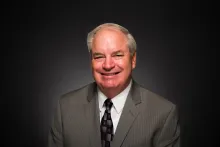
Robin Webber was born in Chicago, Illinois, in 1951, but has lived most of his life in California. He has been a part of the Church of God community since 1963. He attended Ambassador College in Pasadena from 1969-1973. He majored in theology and history.
Mr. Webber's interest remains in the study of history, socio-economics and literature. Over the years, he has offered his services to museums as a docent to share his enthusiasm and passions regarding these areas of expertise.
When time permits, he loves to go mountain biking on nearby ranch land and meet his wife as she hikes toward him.
