

Robin S Webber
This transcript was generated by AI and may contain errors. It is provided to assist those who may not be able to listen to the message.
Thank you very much, Karen. Appreciate that. I welcome all of you to open up God's Word with me, and if you would please turn to 1 Thessalonians 5. And let's pick up God's thoughts beginning in verse 16.
It is here towards the end of 1 Thessalonians that Paul is writing to a church that has concerns. And wonders if it is alone. He is wondering if Christianity is everything that it was cracked up to be. And perhaps even that they themselves have been left behind. And then there are these short, clipped verses. Boom, boom, and boom. And I would like to share them as a preamble to where I'd like to take you next. It simply says this, rejoice always.
Pray without ceasing. And in everything give thanks. For this is the will of God in Christ Jesus for you. Now you know and I know that as human beings we are to be a grateful people. It's been said that a thankful people are a growing people. A thankful nation is a growing nation. And indeed we know that we ought to say thanks. Our parents, our grandparents, teach us to say thank you after a meal or when a stranger gives us something. Okay, Johnny, okay, Janie, say thank you. And that is well and fine. And we know we are to be thankful. But the power of the scripture says this, that we are to pray without ceasing and in everything give thanks. A question for you today, audience here in the Los Angeles congregation. How do we do that? Does God really, really mean that we are to give thanks for everything? Or is it just a run-on scripture that really doesn't mean anything at all?
It does mean something. And sometimes what we need to do is take the scripture and go to another set of scriptures to allow that set of scriptures to blow the air into what these verses mean. And that would be my hope today as we now turn to the book of Ephesians. The book of Ephesians. The book of Ephesians has often been called the queen of the Epistles. If there is a king, perhaps that might be the Epistle of Romans, but it is called the queen of the Epistles. It is the spirit leading Paul into a world of wonder and excitement and awe in which he can't stop talking about it.
And because he can't stop talking about it, and because the initial part of Ephesians is about giving God thanks and praise, I'd like to give you the title of today's message if you'd like to jot it down. It is simply called breathless gratitude. Breathless gratitude. And in just a few minutes, you'll come to understand why we call it by that name. Join me if we would as we begin in verse 1.
It is an interesting introduction, and this will be my text for today. We will just center on Ephesians chapter 1. We will probably not go anywhere else, so there will be no spiritual whiplash or crashing of pages today. So if you're there, we can begin, because I think there's a very powerful and a very beautiful thing that the Holy Spirit brings to us through the Apostle Paul.
Notice verse 1. Paul says that I'm an apostle of Jesus Christ, and it is by the will of God. It's very interesting that as Paul uses these titles and talks about God's purpose, it is not to trump himself up or to blow himself up and say, do you know that I am an apostle? I am one sent bearing authority? That is not the tone of what the book of Ephesians is all about at all.
He says, though, that I am this apostle. An apostle in ancient times, in the world of the diaspora of the dispersed ones, the Jewish community, the synagogue, an apostle comes from a Greek word, apostolus, which was one that was sent from synagogue to synagogue with a message and with an authority that conveyed decisions. But he is no longer working for that group. Now he is no longer an apostle for the Sanhedrin.
He's not just an apostle for a synagogue. He's now an apostle of Jesus Christ, and it is by the will of God. I know oftentimes we look at these introductory statements that are in the epistles and we say, well, Paul puts his credentials right up front. Here in fear, this is it. This is the word of God. But the book of Ephesians does not entreat us so. For Paul does not come in a demanding mode, but as we will see that he comes in the mode of knocking on our door with a message from God, and that those that truly want to worship God and understand God and grow with God's Spirit are going to be able to receive.
Actually, when you look at verse 1, he's just astonished because of his past, because of who he was, that God can even use him. Paul, an apostle of Jesus Christ by the will of God. To the saints who are in Ephesus and faithful in Christ Jesus. He does not say the Ephesian saints, for God is not localized in whom he is working. But he speaks of the saints that are in Ephesus and that are faithful in Jesus Christ.
It's very interesting the words that come out of here to the saints. What is it to be a saint? Is it something that is of yore? Is it something of yesteryear? Is it something that is an antiquity? Or am I addressing the saints of God today? Saints are people that are holy. They are set apart. They are chosen of God. To be very simple about the words of the Bible, a saint, which comes off of a Greek word, is basically meant to be those that are reserved and set apart and chosen for the sacred.
For the sacred. To serve that which is divine. Not only are they saints, but also they are faithful. They are loyal. They are trusting. They have living faith. And notice where the faith is placed in Christ Jesus. Then he moves to verse 2, grace to you and peace from God our Father and the Lord Jesus Christ. As with any epistle, Paul always puts these two up front.
He says, grace and peace. These are gifts of God. And more than that, it is the purpose of God and how God works. Grace is probably the most overused and most misunderstood word in the New Testament. And yet it's beautiful. And it's wonderful. It speaks of God's initiative. It speaks of God's invitation. It speaks of God's continuing involvement in our lives. Grace to you and peace from God our Father and our Lord Jesus Christ. Can I share something with you on this Sabbath day? May I? I've often found people that are not at peace, people that are troubled, people that are wondering why they have no peace or people will not give them peace. It is not the peace that they don't understand. It's the grace that they don't understand. Because when you understand God's grace and what he is doing and what he is working, then you can give thanks for all things, just as the Apostle Paul said over in 1 Thessalonians 5, 16 through 18. Then notice verse 3, as we conclude the intro, blessed be the God and Father of our Lord Jesus Christ, who has blessed us with spiritual blessing in the heavenly places in Christ Jesus. Here we are on Thanksgiving weekend when you and I have probably overloaded on turkey and dressing and mashed potatoes and sweet potatoes and four pieces of pumpkin pie and more white on that pumpkin pie than there is, that means whipped cream, snow on Mount Everest, and we say as Americans that we are thankful.
I always look forward to that meal, but I'm not quite as thankful afterwards because of how my tummy feels and what I've done to myself again. And maybe that's why God gives us more thanksgivings to learn balance and moderation on that day. But nonetheless, what's being talked about here are spiritual blessings in heavenly places in Christ. It's interesting that it speaks of eternal blessings in different places, not at Wells Fargo, not at Citicore, not Citibank, not down here on earth. It is not speaking of new homes, money in the bank, brand new truck, bigger truck, redder truck, newer truck. It's not talking about anything earthly, but it's talking to those that are chosen for salvation, those that are adopted as the children of God, those that have forgiveness, those that have spiritual insights, those that have been given the key to revelation, those that have been given the wisdom of practical Christianity, of how to follow in the footsteps of Jesus Christ. It is to this that the Apostle Paul speaks, we are blessed. May the God and the Father of our Lord Jesus Christ, who has blessed us, who has blessed us, who has blessed us, it comes from Him, it moves from Him, and the blessings are ours if we'll only understand it. Now, so far, we've only covered three verses. Are you with me? So far, so good. But there is a commonality here, and I'd like to share this with you. You may want to jot it down in your notes. There is a link and there is a key that ties all three of these verses into play for us to understand of that which is about to follow, which is breathless gratitude. It is simply this. The author is linked to Christ. He's an apostle of Jesus Christ. The readers are linked to Christ, for they are the saints and who are faithful in Jesus Christ. And the message itself, the message of the blessing of God the Father and of our Lord Jesus Christ, and all of these spiritual blessings that are in Him with the capital H, is linked to Christ. Thus, what we recognize is something that is important. Are you with me? And it is simply this. There is a seamlessness to Paul's joy that he's about to share with us. And it's about looking at the Father's will through the lens of Christ. And this is going to be very important in understanding breathless gratitude. For what you and I are about to impart upon, if you'll look down at your Bible right now, this is your interactive portion. Put your left finger—we'll see how you do on directions—put your left finger on verse 3. Are you with me? Just do it. It's fun. This is a test.
And then put your right finger on verse 14.
You are a very quick audience, I can tell. What you need to understand in Greek is that it is one sentence and one thought without interruption.
The Greek conveys—and what happens, I want to share with you. How is it that Paul could write in everything, give thanks? We find it in the book of Ephesians. We find it in this breathless gratitude that takes no interruption and takes no breath and no punctuation in exploring and exclaiming and proclaiming the blessings that God gives those that are called and chosen and faithful. Here it is, the Apostle Paul, a man that has done everything for God. Turned his back on his world, gone all around the Mediterranean basin.
He is not using the bully pulpit to explain these things to you and me on this day. He is not high up in a pulpit, as in the ancient Protestant world where the speaker would look down on the audience. Rather, he is in a probably a subterranean cell. He is in prison. He may be shackled or he may be bound in a house imprisonment to a Roman guard. It is not with the highness of look who I am or look what I have done, but even where I am in prison, even what man has done to me, I can give this breathless gratitude for knowing this and internalizing this and holding on to this, whether in life or death, in illness, as we talked about during the announcements, and or in disappointment or in joy and those happier parts and those happier chapters of life. In everything, give thanks. Let's read breathless gratitude. Blessed be the God and Father of our Lord Jesus Christ, who has blessed us with every spiritual blessing and the heavenly places in Christ, just as he chose us in him. Who's him? In Jesus Christ, before the foundation of the world. Oh, my friends, God's love affair for us and in us and others is not just something that just happened. He has purposed to be present in you and have relationship with you from the foundation of the earth.
That we should be holy and without blame before him in love.
I'm here to remind you, as one Christian to another today, friends, just as we read the scriptures, that we have been called to be holy. You and I have been destined, not because of who we are, but because of what he is, the Father. That we have been called to be in a sacred state. We are reserved vessels in his service. We are not our own. We serve not our own purpose. He chose us. Is it not? Can I ask you a quick question? Can we talk? Is it not neat to be chosen?
I am chosen of God. I've been chosen by human beings, too.
Susie, 37 years ago, chose to be my wife. She chose me to be her husband. You know, I was really nervous. Was she going to say yes or no? She said, yes, I was chosen. That everybody else was going to be set aside, and we were going to live life together until death do us part. Do you remember what it was like when you were in elementary school and you were kind of lined up and you were choosing teams? Remember how they used to choose teams? You know, you're on my team. You're on my team. You're on my team. You know, we all kind of figured out who were the best ballplayers, and we recognized we didn't know how to play ball at all and where you'd be in the lineup. The last thing a kid wants to do is to be the last one on the line.
Look to the left. There's nobody there. You look to the right. There's nobody that you're at. You have not been chosen.
I don't know about you gals, but for a guy that is really incredibly embarrassing, if not humiliating, don't they recognize that I am Kobe Bryant? I'm not.
Beyond the laughter is the point, brethren. Oh, so serious.
That you and I, by God's grace, by His initiative that stems from Him, all stems from God, all move, all movement, all divineness, all energy moves from God, and He selected you and me. He did not keep us on that line. It was not because of what we were, but because of what He is, and He chose us in Him before the foundation of the world, that we should be holy and without blame, that in Christ, as it says before Him in love, that when God looks at us, we are without blame. We are without spot because of what Jesus Christ has done, that we have been made right, that we are in a state of righteousness, because of what God the Father chose to perform through the Christ for you and for me, without blame, before Him in love. And having predestinated us to adoption as sons by Jesus Christ to Himself according to the good pleasure of His will. Sometimes people get hung up on the word predestinated or predestination. What that really means simply is to mark out beforehand, to determine before, to before be ordained to a specific situation, that God set us apart.
God foreknew. He knew what His overall purpose was going to be, to bring many sons to glory, to make man his image and after his likeness, not only physically but only spiritually, but then He also predestined. He selected those to, in that sense, today be firstfruits. Again, not because of who we are, but again because of what He is. And He selected us to adoption as sons by Jesus Christ Himself according to the pleasure of His will. It's very interesting. If you go into the commentaries, it basically states that this is a mistranslation.
It's a mistranslation when it says adoption. Adoption does not fully describe the process of what God is performing and doing and how He has chosen to do it. We know that God places His Spirit, He places Himself in us. We are, in that sense, begotten. That is the overwhelming phraseology, the word, the concept, as if in the birth process. That's made right in the Revised Standard Edition. But let us not lose sight of what adoption means before to be begotten describes the process of what God is doing. But adoption, in a sense, describes the, as it were, the dignity of the relationship between us and God. And I think that's where these translators got in there, that God is doing many things. It's just like when you have a jewel, you have a diamond, you've got to look through it in many facets. And we understand the process as much as we can understand it as begotten, that we are the sons of God, that there is truly, as we understand through the Epistles, God in us. But the adoption speaks of the dignity of the relationship. Allow me to share something with you when it comes to adoption and how it would have been understood by the Roman world of Paul's time. Adoption, in that sense, is very much, you might say, even in the Mediterranean Basin culture, especially in the Italian culture of that time, it was called patriapotestus.
Simply this, you might want to jot it down, it was called the power of the Father. The power of the Father. In Latin society, the Father was everything, the power of the Father. And the Father was absolute in a Roman family. When adoption did occur, it was complete. And it was really complete indeed. What happened was the person that was adopted had all the rights of a legitimate birth child. All the rights in this new family, but it also lost all of its rights in the old family. All debts, all obligations were forgiven and forgotten. Fascinating. They were dismissed. They were never to be connected again with that individual.
What does that mean to you and me? So God has, because of this relationship of adoption, has released us from the world of sin. How many of you ever saw the movie Ben Hur? How many of you are old enough to remember it? Live on DVD. Remember young Judah Ben Hur? When he's in the galleys, rowing away, always to be there. And then they go into the sea battle. You all with me? Go into the sea battle. And we know what happens. He gets unchained only in Hollywood, I understand. But he gets unchained and then winds up rescuing the admiral. Remember, the admiral of the Roman fleet, remember Charlton Heston and Jack Hawkins are on that raft together. And Jack Hawkins wants to commit suicide because he thinks he's lost the battle. And Judah Ben Hur has a scuffle with him on that raft. Saves him. The admiral comes onto one of the galleys and says, Admiral, you have had a victory! Can't believe it. He puts his arm around Judah Ben Hur, otherwise known to you and me as Charlton Heston. And they begin to walk. They begin to become a father and a son. And remember how the ring is put on Judah Ben Hur in the movie. And he goes from being a Jewish prisoner on a galley to becoming the son of a Roman admiral. With all the prestige, with all the honor, with all the bearing of a Roman. Well, brethren, we too were shipwrecked. And we were not going anywhere. And God the Father above, giving us a spiritual blessing in heavenly places, has elected to call us, elected in that sense, to beget us with his spirit, and elevate us into the relationship that can be measured by adoption in the Roman world, that our old life is past. No matter what we have done, no matter who we were, it is all forgiven through the prism of the sacrifice and the life and the death of Jesus Christ. In him, no, to the praise of the glory, verse 6, of his grace by which he made us accepted and the beloved. We became accepted. Our sins no longer made us stink.
We were drawn near to God's throne. We were, in that sense, through the redemptive process, granted acceptance, and the righteousness of God came upon us, and we could be his children. In him, we have redemption through his blood, the forgiveness of sins according to the riches of his grace. Sometimes I realize that all of this can sound like so much Bible talk, and let's put it in real life terms. Redemption was a term that was used back in the Latin world, the Roman world, of people that could never get out of the hole by themselves. It was used about people that were in a hopeless state, whether it be a gladiator, whether it be a criminal, whether it be a slave. It was about somebody that could never ever buy their freedom, of and by itself, of and by themselves, that had to come from somewhere else.
What do I mean by that? Allow me to make it a little bit more practical, please. Have you ever seen a drowning person save themselves? Yes. Who's a lifeguard out here? Can I see a show of hands? I see one or two. RJ, Anna. I've seen them lifeguard. They're good.
You've never seen somebody in that sense that is flailing out in the water, take their hand, take their hair, pull them so... Don't want to lose too much more, Susie. Almost lost more. Pull themselves up out of the water and put themselves on shore.
The arm of rescue, the delivering tool, must come to someone else other than the drowning individual. The scripture tells you and me, friends, that we were drowning in sin. In a world that was hostile and in confrontation to God. And yet he called us. He redesed us. He gives us spiritual blessings. He allows us to experience his grace, understand his love, and be redeemed through the death of a son.
The forgiveness of sins. You and I, we hear this word oftentimes, especially in our Judeo-Christian society of forgiveness. And whether we fully believe it or not, I think we have an academic understanding of a time. But forgiveness was a word that was lost on antiquity in the world that Christianity came to. Forgiveness was not something known in other religions. Forgiveness speaks of love. Of God. And when the Apostle Paul and Silas and Timothy were going out, they were speaking are you with me? They were speaking to a world that was in despair, especially in the first century A.D. They spoke and were speaking to individuals that dreaded life and dreaded their gods. They did not worship loving gods. Whether you study Norse mythology, Roman mythology, Egyptian mythology, Greek mythology, Babylonian theology, the gods never loved. The gods could never be pleased. They could only be, what? Uphused. By more virgins, by more bullocks, by more slaves being slaughtered and ritual right. And there was never enough.
The world was dark when Christianity came in the first century A.D. No hope. And it was dark as that cell that Paul was in.
And yet he was able to say in everything, give thanks, for indeed it is the will of God. To you, my fellow Christians today, I'm sharing with you what the will of God is and what He is purposing and what He is working towards, which He made in verse 8 to abound towards us in all wisdom and prudence. Wisdom and prudence are two different things. Wisdom comes from the Greek word of Sophia, of the divine, of wisdom, of that which is revealed by God. And prudence is, in the Greek, a more practical sense of day-by-day living. Kind of gives us the prudence of being able to internalize the proverbs on Monday, Tuesday, Wednesday, and Thursday, and Friday. I remember years and years ago, I heard an old black lady in an accent. She just said, my momma done taught me. She said, you read the proverbs by day and you read the psalms by night. Proverbs to show you how to walk during the day and psalms at night to comfort you. I just overheard her say that, but it's always stayed with me. But it's impacted me because I realize that God has given you and me both the divine and the practical to be able to walk like Jesus Christ walked. You know, I write a column. Maybe you've read it. It's called, This is the way. Walk you in it. It is part of the wisdom of God, and it is also a part of the prudence of God that we try to incorporate in that column when I do write it. Because all of us are going through it together. Sometimes people write me and say, Mr. Weber, I really appreciate that column. I'll tell you about the ones that are appreciative, not the other ones. Just teasing. Because it sounds like you're going through what I'm going through. It seems like you've been thinking or you've been in that lonely spot of despair and then seen the light. And I say, thank you. Yes, I have.
It's not my light. It's not the light at Motel 6 that's left on. But it's the spiritual blessings from the heavenly places that should allow me and should allow you for the rest of our lives to be able to, in everything, give thanks. Notice what it says then in verse 9, having made known to us the mystery of his will according to his good pleasure, which he purposed in himself. Of course he had to purpose it in himself, friends. Of course, for there is no higher. And he set about a purpose. And according to his pleasure, that will... When you talk about the mystery of his will, mystery is used in the Greek, not in the sense of a riddle that can never be solved or resolved or understood. It is used in the sense of disclosure over a period of time to those that it is revealed to. The mystery of his will, according to his good pleasure, which he purposed in himself. What is God's good pleasure?
God's good pleasure was that he says, he speaks of the beloved up here, that he gave his only son, that we might have life and that we might have be able to have relationship with him. If God did that to his own family above, and that was his good pleasure, why am I worrying down here? Are you worried today about something in your life that's not going right? That maybe you think God's locked outside of the room of your life?
When he said that his will and his good pleasure and recognizing what that was about and what he did for you and for me, that in the dispensation of the fullness of the times, he might gather together and one all things in Christ, both which are in heaven and which are on earth in him. It's very interesting that at this time it seems as if Paul was imprisoned in Rome. And you and I know the old expression that all roads lead to where? To Rome. Rome was the very hub from which all spokes went out. Per chance, just simply a thought, in the revelation that seemingly that Paul gave Paul while in prison, that launches this breathless gratitude, that here he was in the center of empire, the center of man's power, of taking from others as the Romans did, and was able to turn that around and then began to think that this is the mystery of God, that at that certain time, that fullness of everything, he is going to gather one in all things in Christ, both which are in heaven and on earth in him. The Jewish mind, are you with me? The Jewish mind at that time thought of heaven and earth in the sense of realms and dominions. There were not only realms and dominions and level of society on earth, but there were realms and dominions of God's good kingdom, much less that of Satan and the demon world. And what Paul began to see, the fullness, the purpose of God that comes through sacrifice and his love, was ultimately going to bring everything in together.
All things were going to come together by the Father's pleasure through Christ. Everything, everything!
Am I talking to the right audience?
To recognize that sometimes, brethren, the grandness of the Scripture should lighten our darkest day, to recognize that nothing is outside of the dominion of God to bring through the door of Jesus Christ into his perfect will.
Nothing. Nothing.
You say, well, Mr. Weber, but I've got something. You said nothing. There's always one in the crowd. But I've got something. You may feel that you have something. But what does the Apostle Paul say in 2 Corinthians 4 and 6, 18? He says, you might think that your burden is heavy.
Consider it light. Paul says in Corinthians that you might feel that your burden is going to last or seemingly lasting forever. Paul says, forget it. It's temporary. You say, but you don't understand. This is permanent. Paul says, no, it's passing. How does he know that? Why does he say that? Because he says, look above and understand what God is doing. But we are but a part of that sentence and that story and that majesty and that will. And you and I have been chosen to maintain faithfulness to God in this gratitude of blessing. In him we have obtained an inheritance being predestined according to the purpose of him who works all things according to the counsel of his will.
Everything. And a Christian can have confidence in challenging situations that God is totally committed and working constructively, actively towards that fulfillment. I want to share something. Are you with me? Look at verse 11. According to the purpose of him. That's speaking of the father who works all things according to the counsel of his will. I want to share something with you with the impression of a 12 year old boy who came into this way of life in San Diego, California. I had been to other churches early on in my life and I had heard about the love of God and I had heard about the love of Christ. But I had never in that sense heard about the work of God.
And I remember very early on, back in Long Beach days with David, John Hill, and Mr. Coons and others, that they would get up and they would go to John 5, 17 through 18. You can jot that down. We're not going to turn there. But they say, quoting Christ, my father works and so do I.
I've never heard that before. I didn't hear that from my pastor who had the voice like Orson Welles.
And to talk about the love of God is wonderful. That's not to be misspoken or mistaken. And I don't want it to mean that. But love is not just a feeling. Love is not just a feeling. It's an action. And it takes work and it takes sacrifice.
And I thought, God is up there forever, working for us, and belaboring on our part. As it says in Philippians 1, 6 through 7, if God has begun a good work in us, he's going to see it right through to the end.
Oh, no, no, no, no, no. Paul was not up in his bully pulpit, speaking as ice or simply with the heart of stone as one that had not felt the wounds. He knocks on our door today and says, I am in solidarity with you. Open that door. Understand the breathless gratitude that each and every one of us ought to have before our Maker. That we who first trusted in Christ should be to the praise of his glory. In him you also trusted after you heard the word of truth, the gospel of your salvation, in whom also, having believed, you were sealed with the Holy Spirit of promise. It's very interesting when you look at verses 12 and verses 13, the we that is being spoken there, at least as the commentaries bring it out, is basically speaking of the house of Israel and or the Jews. That we who first trusted as the gospel began out of Jerusalem and then later to Samaria, there's a there's a weakness to it, if I can use bad English to make a point, who first trust in Christ. That we are to be a praise. We are to be that sweet-smelling savor going up to God. In him you, that you there, is speaking now of the Gentiles. You also trusted after you heard the word of truth, the gospel of your salvation, in whom also having believed, you, the Gentiles, also were sealed with the Holy Spirit of promise. Who is the guarantee? Now notice this.
Who is the guarantee of our inheritance? In Christ there is no division. There are no walls. There are no barriers. This is spoken to a world that is in disunity and in disruption. And God the Father through the Spirit gives Paul this word, a new society, a new world, a new heart, with a new spirit of promise that seals us. Know when you seal something and you put a stamp on it, it tells you who it's from, and we have been sealed by God.
This is an anthem of unity.
This is a praise of breathless gratitude to God for that new world to come. I have a question for you as we begin to conclude. Questions are good because they beg your answer.
Is this your world?
Is this how you feel as a member in the body of Christ?
Do you just come to church to hear another sermonette or another sermon?
Pass the time, go through ritual, man up, man down, special music?
Or do you understand that the revelation of God has been given to you today by a servant of Jesus Christ?
Is this going to convict your heart of the world of amazement and wonder that God has called us to?
Is our world just simply going to be pat verses? Rejoice, give thanks, always?
Or do we have the spiritual substance? Do we have the fertile soil to allow Christ?
To grow in us, as our Father would will.
As your pastor in the days, the weeks, the months to come, brethren, I will not be here to entertain you.
I will not be here to simply titillate you.
My role as a pastor is threefold. One is to inform, another is to inspire, and another is to help you to allow God's Holy Spirit to transform you into this world that God revealed to Paul in that dark cell in Rome. A world in which all walls disappear, where disunity evaporates.
Where barriers melt before the love and the power and the Spirit of God Almighty, who chose you from the foundation of the earth. And to recognize that this high calling, he does not leave us alone, he does give us that seal of his Spirit, he gives us that guarantee, and he gives us that power of that Spirit to be able to make this happen.
Join me if you would as we conclude. Come with me. Let's open the door of 1 Thessalonians once again. 1 Thessalonians 5 and verse 16.
Rejoice always.
Pray without ceasing.
In everything give thanks, for this is the will of God and Christ Jesus for you. When people come into our beloved congregation here in Los Angeles, they should not hear about our woes unless they are spoken in the framework of hope.
They should not hear about our divisions unless in the framework of God's Word towards solutions through Christ. They should hear, they should see, they should experience a joyful people.
A joyful people are not just giddy, they're not just happy. Joy is having a smile on your heart even when the world around you is coming down around you on every corner. They should see us as a praying congregation as we prayed and we reached out to God's throne today for those that are less fortunate on this Thanksgiving weekend. To pray for those that have served us over these years. As your pastor, I'm going to lead you to be a praying congregation. A praying congregation is a growing congregation. A praying congregation is thinking of God and thinking of others rather than thinking of how we think the work of God ought to be run. God has called us to pray. People that come into our midst, a sacred assembly of saints, when they see you and me being able to give thanks in everything, it will mean so much more than just simply reading another booklet.
Understanding more Greek.
Watching one more program. All of these are well and good. And you know, my heart and your heart is in that to preach and to teach the gospel. But the gospel is cheap, or we have cheapened it if we do not live it in our heart and in our mind and in the seamlessness of our activity that comes through bringing it all together as God the Father willed through the life and through the death and the resurrection of Jesus Christ. You show me a congregation that is speaking about his life being active in our congregation. You show me a congregation that honors his death by how they talk and how they walk and how they communicate between one another. And you show me a congregation that has living, dynamic faith that Jesus is raised from the dead and is now glorified as the exalted son of God on his throne and is our judge and is our master and all has been brought underneath his feet. And we speak about that at church and people come in amongst us or people that are hungry for that, thirsty for that, starving for that, because they've been getting junk food about other people's lives that they're not responsible for. But if you and I, are you with me? If we center on that precious life that the Father calls the beloved, there is nothing at all that is impossible for this congregation not to glorify and praise God every time that we are together and people will experience it. They will live it. They will come back. They will say, like Archimedes Eureka, I have found it. I have found the congregation that has breathless gratitude and they are so excited that they don't even pause talking about their God. Doesn't that sound like the kind of congregation that God wants us to be, to grow up into, to experience, to glorify Him, to praise Him? Doesn't everything else seem like really small in comparison, unworthy of our life's devotion? It's time to get on the page of Ephesians 1. Let's join God.
Let's join Jesus Christ. Let's join the Apostle Paul.
Let's join together to create a world and a society, one without walls, and looking up. A breathless gratitude. What a beautiful gift God has given us in Ephesians 1.
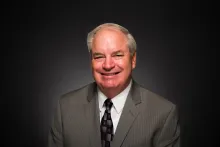
Robin Webber was born in Chicago, Illinois, in 1951, but has lived most of his life in California. He has been a part of the Church of God community since 1963. He attended Ambassador College in Pasadena from 1969-1973. He majored in theology and history.
Mr. Webber's interest remains in the study of history, socio-economics and literature. Over the years, he has offered his services to museums as a docent to share his enthusiasm and passions regarding these areas of expertise.
When time permits, he loves to go mountain biking on nearby ranch land and meet his wife as she hikes toward him.
