
Robin S Webber
This transcript was generated by AI and may contain errors. It is provided to assist those who may not be able to listen to the message.
Well, here we are at the beginning of a calendar year. A couple of weeks ago, there were very well-meaning and very sincere individuals that made resolutions, and were probably able to keep them for a day or two before they forgot what they resolved to do. I'd kind of like to build upon that today because all of us do at times these different markers in the year, whether it be the spring festivals or whether it be the turning of a calendar man-made year.
We make resolutions. I heard somebody a couple of weeks ago when I gave this message somewhere else, they said they'd come to the determination that the resolution that they had decided to make was never to make resolutions again because they couldn't keep them. But we're going to build on something that I hope that there will be a certain amount of resolve in each and every one of our hearts today. Perhaps you did not know what you prayed for, but this is what's coming along with pork prophecy.
And that is simply, I want you to be a people of resolve. And I want you to be able to be a people of resolve towards something very important. And I'll just put it right out there so you'll know exactly what I'm speaking about.
And that is about resolving to praise God, resolving to praise God, and to make that a deep spiritual goal and practice this year. Here we are at what we might call poetically the gate of the year.
We're in January, as far as a man-made year. And you don't know, and I do not know, what is going to face us tonight, tomorrow, next week. We can think of a year in our path through it, very much you may think of the sense of the 23rd Psalm. This year, there are going to be green pastures, and we enjoy the green pastures.
There are going to be times where we're able to be tranquil and have a period of time where there are still waters. There are times throughout all of us that we do seek to walk down those paths of righteousness for His name's sake. But whether it be the still waters, whether it be the green pasture, whether it be the paths of righteousness, and trying to stay on that mark, we recognize that there are sometimes things that are beyond our human control or our human awareness that God might allow into our lives.
And we've got to be ready for that. That also is a part of the experience. A part of the experience is not only to understand the consistency of the truth that Mr. Lusenheit talked about, but the consistency of the spirit that we have to have and maintain as a people, no matter where God chooses to lead us. I'd like to acquaint you with a verse here in 1 Thessalonians. If you'll join me there, please. 1 Thessalonians 5. This will kind of be the hallmark verse. This will be the foundation, because when our foundation is correct and we spend time with it, and it's the right foundation, then everything that kind of goes up like in a building, that you spend time on the foundation, that's where the time, the energy, and the money goes into the foundation, then everything that goes up from that is going to be more solid and stayed.
It tells us here in 1 Thessalonians 5, it says this in verse 16, Rejoice always. Rejoice always. And of course, rejoice is just an expansion. It's an expression of having a joy that becomes allowed and expressive in our life. Rejoice always. Don't let anybody snatch God's joy and purpose and consistent love in our heart away from us. It says, Pray without ceasing. And then notice verse 18, now comes the real homework assignment. Notice, In everything, in everything, give thanks, for this is the will of God. Is it God's will that everything somehow bad happened to us?
No, that's not God's will of Him by itself, but that we will give thanks, that we will recognize that no matter what we go through in 2019, we are not alone. We are not alone. It is the will of God in Christ Jesus. How important it is it, friends, to be able to give thanks and all things? I'd like to share a brief story with you. And it's a story about a man that stumbled into a barn late one night. And that barn, and this is a story, please understand, so stay with me. The barn is where Satan kept his seeds ready to be sown in the human heart.
And on finding the seeds of discouragement, it was interesting that the man that stumbled into the barn found that there were more seeds of discouragement in the sacks on the floor than any other of the seeds. And because the bottom line was, those seeds grew anywhere and everywhere. They weren't hard to grow. And when Satan was questioned, he reluctantly admitted that there was one place in which they could never seem to thrive. And where is that, asked the man. And Satan replied, sadly, he said simply this, that it was in the heart of an individual that was thankful and grateful. Now, let's put on our seatbelts as we go into 2019. Let's not be Pollyannish.
Let's be spiritually realistic. Let's recognize that there are many things that are going to be occurring in our life that are, well, like mountaintop experiences that are beautiful. There are going to be days that are just like plateaus. Just plateaus, nothing, you know, just kind of flat and even. It's like kind of like when, you know, when I used to pick up the kids from school and I'd say, well, what did you learn today in school? They'd say nothing. So I'm not sending to school and paying for it that you learn nothing. But there are just certain nothing days, just days. Nice. Your wife smiles at you. Your husband smiles back, you know, back and forth, and kids are happy, and you're able to watch your favorite television program at night without the television going kablank. And there are just kind of days like that. But there's other days that we're going to need to be aware of this. I like to draw your attention using the entirety of the Bible. Let's go to the Old Testament here. Let's go to Psalm 86 to anchor us. Psalm 86, and to understand what we need to learn here from the Word of God. In Psalm 86 and in verse 10, it tells us this, For you are great and do wondrous things. You alone are God. Then it says, Teach me your way, O Lord, and I will walk in your truth. And then it says, notice, and unite my heart to fear your name. Unite my heart. Basically, what's not being spoken here is that our heart can be undivided. Our heart can be separated. Sometimes our heart can be indifferent or forget the promises of God, what He has promised to us. It says, Unite my heart to fear your name, and I will praise you, O Lord my God, with all of my heart, and I will glorify your name forevermore. Notice again, let me emphasize, I will praise you. O Lord, you're not just talking to anybody, O Lord, you're talking to God, my God, and I'll do it with all of my heart. Now, that's what we want to do. I think why we came to services today is to learn about God. We don't wake up in the morning and say, Well, I'll kind of praise God with half of my heart. I'll give Him a quarter or nothing. No, that's not our goal. But what happens is, you know, what happens in our life is things develop that we're not prepared for. If you notice, that's usually what life is about. Things are happening that you haven't planned for. That what happens is, well, we know that God will not be late. That's what the Scripture tells us. That's what the pastor told us. That's what the Elder Sharp told us. God will not be late. But what happens is our human nature arrives early, and then we get into trouble. And we fall back to that man that cries out in the book of Mark, the man that had the son. And he said, Lord, I believe. It's never our belief that gets us in trouble, is it? I believe. Help thou my unbelief.
So that's what we want to do this afternoon, brethren. I want to encourage you and to stoke up your belief towards God by this year. Henceforth, learning and being resolved to praising God, no matter what comes our way. And I'm going to share a story with you at the end that I didn't share last week because Susan and I had an opportunity to practice what we preached. It kind of happens after a fortnight, and I'll try to share that at the end of the story. Notice what it says here, teach me your way. So we're going to be taught how to praise God. What does it mean to praise God? Praise, praise, praise, praise. Da, da, da, da, da, da. What do we do? What does it mean to praise God? Do we have to kind of do a goal post like this, or do we kind of do the television antenna like this, or do we just go praise? How important is praise, though? In Isaiah 6, God created a whole order of spiritual beings called the seraphim. You've heard of the seraphim? They are like the ones that cover the throne. You know what they do? One of the reasons why they exist forever is to praise God. You go to Isaiah 6, and all they do is, holy, holy, holy. What do they do again? Holy, holy. There's this rumble that comes out of the throne of heaven. They seraphim, and all they do is they praise God to set an example for us to be resolved to praise God. But we're going to actually teach this. Let's go to the book of Ephesians. You join me in Ephesians. Ephesians is a beautiful, beautiful epistle. It's a gift from God planted in the New Testament.
I'm going to share a backdrop, and I'm going to add a point later on, that when we go to the book of Ephesians, we need to recognize something. Remember, it says to rejoice always, and in all things give thanks. Let's be reminded that the book of Ephesians is a prison epistle. It's a prison epistle. Paul is writing this while he is incarcerated, while life is squeezing him in, and in a sense he is bound in his existence. And yet, what he holds in his heart and who he knows, recognizing that his position before the throne of God trumps his condition on the ground. Can you remember that? That it's not only the Apostle Paul, but that you and I, as those that are called out, that our position before the throne of God trumps whatever condition we have on the ground. This is a prison epistle. Prisons, by the way, I don't have time, prisons are never nice, and they really weren't nice back in antiquity. So let's pick this thought up now. Here's Paul, a prisoner, and he's reaching out to others. And there's a point in this that when you praise God, it extends you to other people. You might want to jot that down right now. You can remind me if I don't finish up with that. When we praise God and we begin by praising God with understanding, it begins to stretch to other people. It just doesn't stay with you and God. It begins to expand and spills over on other people and your care for them. Let's look at this. Paul, an apostle, we're just going to go through the first chapter because this teaches us how to praise and to also recognize this gives us the words that we need. Sometimes if you ever just want to praise God, you can go to the Psalms because those are basically praises to God.
Even when David is in kind of a dumpy mood to begin a psalm, you always find out that by the end, he's extolling God. Right? You ever notice that? Man, this guy is like manic depressive. This guy is bipolar. I go to a psalm and he's wanting to kill himself and he's wanting to kill his enemies and he's wanting God to kill everybody. And by the end, he's saying praise God because you get into that motion. You get into that exercise of praising God. Let's notice this. Paul, an apostle of Jesus Christ by the will of God. Let's understand these are words of praise. Paul, an apostle of Jesus Christ by the will of God. To the saints who are in Ephesus and faithful in Jesus Christ. Grace to you and peace from God, our Father and the Lord Jesus Christ. Let's understand what is being spoken and let's bring it all together. Here's Paul. He says, an apostle of Jesus Christ. He ties in immediately to the great individual that has come into his life. And it's by the will of God. So you see immediately that Paul connects the Christ with the Father. It's the only man that tries to separate them. And so you notice here, he says an apostle. I want to share something to you. May I? That's when you're supposed to nod. Okay. When I was a young man growing up in the church and minister would get up or when I was in Ambassador College and I hear some lecture, he says, Paul had to just state his credentials right up front. He's in charge. I am an apostle. I have been ordained by God. I am the man of God. So listen up, as they say in the Marine Corps. This is not what the commentaries tell us about what Paul is saying here.
And this is where the praise comes in. Really what Paul is stating is this. At one time, I was a messenger for the Sanhedrin. I was a messenger for another group of people. But now, by the will of God through Jesus Christ, God had mercy on me and he has given me of all people and everything that I did. I am humbled, humbled by the thought that God would choose me to expound the message of Christ and for others to understand the will of God. Praise begins, if you want to jot this down, please, praise begins in a position of humility, of recognizing that we are nothing apart from God and what God has done for us. Then he says to the saints who are in Ephesus and they're faithful in Christ Jesus. The word there are saints comes from the term haggios. It means to the holy people.
There's others besides me, is what Paul is saying. You are holy.
In Ephesus, it's actually considered to be an inclusion later on. It's not really in Ephesus. This was probably a circular letter that was going throughout Asia Minor. But that's neat for you and me today because sometimes, this is for the Ephesians or this is for the Colossians or this is for the... No, this is almost a circular letter and a direct letter to you and me today to learn how to praise God. To the saints, to the holy people who are in red lands and are faithful. The term there, the Greek is testos in Christ Jesus. Those that they're holy, they're set apart, and they have this trusting, living faith in the Son of God and that God the Father sent. This was the great faith of the first century. Sometimes with faith, we can add a rolodex of doctrines or a rolodex of understanding or practice. The faith that is being mentioned here is the same faith that Jesus Christ mentioned in his closing prayer in John 17. Father, you bless these men that are around me this night in this room. And all of those that will come that believe that you sent me, that you, God the Father, sent me, Yeshua, Jesus of Nazareth, that I am the one, that I am the answer, that I am the door. Now, what is interesting in all of this, when you notice the first verse, and then, oh, let's go to the second verse, verse 2. Grace to you and peace from God our Father and the Lord Jesus Christ. Grace and peace. This is just Paul opening up. Grace and peace. Charis and Shalom were the two great greetings of the ancient world, and they were both blessings. Did you know that?
They're both blessings. Charis, gift, may you be gifted. In the Greek tongue, it would have been gifts to you. May you be gifted. May you have that blessed life. And in the other hand was Shalom. Shalom meaning peace, but it's not a peace where, oh, I hope everything's going all right in your day and that nothing ever troubles you. It's not the peace that's being talked about in the Bible. The peace that's being talked about here, the blessing of Shalom is that may God grant you the wherewithal. May God grant you the blessing that as challenge and trial and tribulation come upon you, that you will have the wisdom and His endurance in you to see it through. It's a blessing of strength and fortitude, of wisdom and prudence of what's coming your way. Now let's slow to something. Then we're going to go on. Paul, in a sense, is opening up, I don't deserve this. You have made me an apostle, a bringer of your message, and it's your will. I'm overwhelmed. You have chosen me. You've chosen me. You could have chosen anybody else. There are so many more qualified individuals that did not spit on your people, that did not put your people in prison, did not create terror and havoc, and yet you've chosen me. Praise always begins with humility and to recognize the holy state that we've been called into. What you notice here, stay with me. Paul, an apostle of Jesus Christ. First line. Then let's go to the second line, to the saints and faithful in Christ Jesus. Grace to you and peace from God our Father and the Lord Jesus Christ. The common denominator here is that linkage to Jesus Christ, and that's exactly how God the Father wants it. Bill spoke about consistency. There is a dynamic consistency in the Bible. There's a dynamic consistency, and you see it here. Then notice what it says here. Then he opens up. Bless it in verse 3. Be the God and the Father of our Lord Jesus Christ. He's actually, in a sense, doing a communal collective blessing towards God. Bless you, Father. Bless God the Father of our Lord Jesus Christ, who has blessed us with every spiritual blessing in the heavenly places in Christ. Now, this is the key to praise and understanding why we are to give God thanks in every... You ready? That word again. Sorry. In. What's the word? Just have fun on the count of three. We are to give God thanks. One, two, three. In. In everything. Are you sure? In. Everything. More sermon to come. Okay, I can tell. We've got to work this up here. Who has blessed us with every spiritual blessing. Doesn't say has blessed us with a bank account. Does not say that has blessed us with a full freezer of giraffe.
Does not say that it has blessed us that we have a coffee, you know, we've got a coffee stain on our new suit. Let's notice what the scriptures are about. The scriptures themselves are not always about one plus one equals two. That's not how God operates. That's how we want it to operate. Sometimes historically, that's even how we've looked at it in the Church of God. One plus one equals two. If I do this, I get that. If I do this, I get that. But that's not God's math.
It's not God's math. Sometimes it's one plus zero, and we have to wait on them. And it might become three, it might become four, it might become five. What we notice here is blessed who has blessed us in every spiritual blessing. The Bible is about spiritual blessings. It's not about fleeing the wrath to come.
It's not about having a full sack of potatoes at home in your cellar. It's about being called out of this world. It's about giving the gift of salvation. It's about knowing God the Father and Jesus Christ, and that we are never alone, no matter what comes up in our lifetime. One of Paul's favorite themes was that Christ, who was rich, was made poor. That we that are poor might become rich.
Did you hear me? Christ, who is rich, and he was in heavenly places, is the word, he became poor. That we that are poor and that we're out of hope might become rich. Interesting. Why is it then, brethren, I ask you as a family of Christians, why then do we sometimes live like spiritual bakers?
When God has called us to be rich with the heavenly blessings that he has in store for us, that are all here as we praise God and we ask for his intervention in our life. Not only when times are good, but when times are bad in the heavenly places in Christ. But as he chose us in him before the foundation of the world, that we should be holy and without blame before him in love. You notice and without blame that God, your grace came upon me, your choice, your forbearing in calling me, that you have called me to live a life of consistency. You know, this word that Bill uses, consistency, is very important. Of consistency. To be without spot. To be without spot. To be in that sense, that living sacrifice. And notice, having predestined or to mark out ahead of time us to the adoption as sons by Jesus Christ to himself according to the good pleasure of his will. The word adoption is a very unique word and you have to understand it in the Latin sense, the Roman sense of the first century when it was being used.
Adoption, there's a term in the Latin culture, it's called patria potestis. That means the rule of the father. And you think of the Italian culture, all people that are Italian stay with me, okay? So it's all going to work out all right. Five of our granddaughters or grandkids are half Italians, so we love Italians. But we think traditionally the godfather, the rule of the father, the rule of the patriarch, the rule of the strong one. And what the father said goes, and when he makes a decision, that's it. And we need to understand the term adoption in the sense that God made a decision to bring us into his family. In the Roman world, when an individual was adopted, they took on a new name, they took on a new name, they took on a new life.
Their old life was forgotten, their old name was forgotten, and Romans by the first century were doing a lot of adopting. They were not having their own children, so they were doing a lot of adopting. But once an individual was adopted, their old life did not in that sense exist. And just like that, the story of the prodigal son where, you know, when the son comes back, the father says, bring out the cloak, bring out the ring, bring out the sandals. He was lost, but now he's found. There's a newness of life he's restored. And that's exactly here. You know, we think of the movie Ben Hur, for those of you that are a little bit older, remember Chuck Heston playing a Jew that had been Hur. And remember how he saves the admiral in the great sea battle. The admiral is about to commit suicide because he thinks that the battle has been lost. And Ben Hur drags him onto the raft, and the guy's about to kill himself, and Ben Hur holds him back and says, no, the day is yours. Your fleet has won. And of course, in that admiral then, if you remember, adopts Judah Ben Hur as a Roman. He becomes a Roman, and he has a new name, and he has title, and he has prestige. This is what is being worked out here below that. It says, it says, an adoption, and that there are no more deaths to the praise of the glory of his, the praise of the glory of his grace. This is what the engine, and the energy, and the dynamism, and the choice comes from God. That's what grace is. It starts with him and continues to be sustained by him. Brethren, can we get excited about this? Huh? Or do we just come here to be kind of quiet today, to recognize what God has done for us, and that his energy, and his love, that outflowing, outgoing concern away from self, has landed on us. In him we have redemption.
That's something to praise God about. In him we are free. Here we are, Martin Luther King's birthday, free. Free at last. Redemption means we're free. It means that our status has changed. We could not change it in ourself. Back in ancient times, a gladiator, a slave, they could not buy their freedom. They didn't have the bucks to do it. It had to come from somewhere else. They were redeemed. That's what it means. They were purchased. Their freedom was purchased when they could not purchase it themselves. This is something we just think about as we come up to Passover. Give it a quick thought, or to recognize that we were down the scroll hole of death, one-way trip, and that God, by his grace and his favor, intervened, which he made to abound towards us in all wisdom, and having made known to us the mystery of his will according to his good pleasure, which he purposed in himself, that in the dispensation of the fullness of the times, he might gather together in one, all things, in Christ, both which are in heaven and which are on earth in him. You know, we look around today and we see the problems in our nation. We see the problems in our county. We see the problems in our state. We see the problems in our nation. We see the problem in our alliances, and it just seems like things aren't working. And here's a great hope that we can praise God, and we say, God, we know that there is going to come a time when you are ready in that dispensation, because you not only created time, but you are the master of timing, and you know when it's going to come, that you are going to gather together in one, all things, in Christ. Think of this way. Stay with me. Christ is the spiritual gravity. He is that hole in the door that everything is going to come through, both that is in heaven and earth. Paul, at this point, is praising God, probably while he's writing, or maybe it's being scribed, because a Jew would normally raise his hands like this. That's what Jews do. That's their culture. That's what they would do. He is so excited. He sees something that continues to develop. There's a continuity to it. See, the scriptures. Are you with me? They're one book. They're one story between two covers. It's an expanding story. Initially, the story went to a covenant people called Israel. They were a people. They were the twelve tribes. But what Paul sees here is that the magnitude of the sacrifice of God's Son now creates for a new reality of a oneness, not yet quite known, hinted at the scriptures, but that Jew and Gentile are going to come together. But then he starts seeing that there is more that is going to come together than just simply what's here on earth. Heaven and earth are going to, in that sense, become one through God. You think of how divided today our nation is between red and blue, young and old, progressive and conservative. You just fill in the rest of the words that you want to, much less this world and all the challenges are going on. Can we praise God? Can we get excited and recognize that it's like it's already happened in his mind. We just have to work out the details in our life and let him work out the details in the world. In him we have obtained notice and inheritance, being predestined according to the purpose of him. Notice who works all things according to the counsel of his will, that we who first trusted in Christ should be to notice the praise of his glory.
You know, the greatest form of praise is not even merely what you offer up to God as you begin your prayer. The greatest praise that we can give God is to practice what we praise, is to practice what we praise and live it like we mean it. That what God is doing as we praise God, we recognize in that that comes back to us as the direct object of his purpose and his will and his attention and energy to the praise of his glory. In him you also trusted after you heard the word of the truth of the gospel of your salvation, in whom also having believed you were sealed with the Holy Spirit of promise, who is the guarantee of our inheritance until the redemption of the purchased possession to the praise of his glory. Now let's unpack this for a moment so you know what we're praising God for. We are praising God because he's made a promise that his spirit would come upon this earth and he delivered. He touched down here and there during the Old Testament times with kings and prophets and individuals. But then in 31 A.D. at Pentecost, he began to pour his spirit out in a mighty way amongst people that went around the world. And so we recognize that it's the Holy Spirit of promise. God said that it would come, and it did. We also notice that it's the guarantee of our inheritance. Do we ever... Here I go for you there. I'm going to walk a little bit today. You've got to do it.
It says that we are the guarantee. That the Holy Spirit is the guarantee. The Old King King says that it is the earnest, the earnest of the promise. You know, when we go to buy a house, or let's reverse. Have you ever sold a house and people come to your house? Oh honey, look at this. You just got to see this over here. Unbelievable. We're already here. And look, we can put this here, we can put that here, and now we'll put a fan up here, and then go to the next room. You know, it's like these programs that they have on reality television today, you know, where they do everything. But it's happening in your house, and they're all excited, you know, to do this. Oh, I can see the couch right here, and this and that, and you're planning it, and you think, wow, they really want the time from today. And they say, we'll call you.
But they never call back. Are we the only ones that ever had that misfortune? Yeah, the coffee, the rumbas are going, it's all good. You know, talk is cheap.
Until the money is put down on the table, that earnest money, that guarantee that shows true interest. Not all of it, not all of it, but the true interest. Then we've got a relationship. And that is what God is saying right here, that He has put the earnest, He has put the down payment, He has put a portion of His essence and the essence of Jesus Christ in us today. It is deposited. It is real. It is more real than that sun that is going to rise and set.
Today and tomorrow, He has put Himself in us until the redemption of the purchased possession to the praise of His glory. And He is going to do it. And notice that until the purchased possession. It's going to happen. When God says that He's going to do something, when He's going to bless something, there is nothing that can pull Him apart from His Word. He's going to fulfill it.
Now, stay with me a second. I'm just so excited talking about all of this. This is what it's about, brethren. This is the big story. This is the big stuff. This is the booster. This is the booster rocket. We can worry about eating giraffe later, okay? This is the booster rocket. This is what should make our life different. When we praise God and when we recognize the great fundamental actions of He through Christ in our life, we will be able to rejoice through all things. Yes, we will. Then it begins to transform us and we begin to think about others, because the first 14 verses here are really one thought. It's all commas and semicolons.
Paul is just pouring out the praise to God, teaching others, teaching you and me two thousand years later, of not just saying, praise, praise, praise, which then can just become a vain chant, but to fill it with literal spiritual stuffing and promises that he wants us to know. But then it spills out to others. Notice when we start praising God and we get into link with God and relationship with God and recognize what He's doing with us, we then want it for others. Notice verse 15. Now it spills over to the bread and therefore, I also, after I heard of your faith in the Lord Jesus and your love for all the saints, do not cease to give thanks for you, making mention of you in my prayers, that the God of our Lord Jesus Christ, the Father of glory, may give to you the spirit of wisdom, a wisdom that is spiritually realistic.
Recognizing that a sense that this lifetime is, I think what frustrates Christians sometimes is that we tend to make this life, or the end of our life, or situation the goal post. This lifetime, this physical life, I'm still human, is we're just passing through. We're passing through.
This isn't it. This is not real life. This is life, but it's not real life. The real life is eternal life with God the Father and Jesus Christ. That He can grant you the spirit of wisdom. That is the wisdom there is Sophia in the Greek. That means holy wisdom, revelation that comes from above, and revelation in the knowledge of Him, and that the eyes of your understanding, being enlightened, that you may know what is the hope of His calling. What are the riches of the glory of His inheritance in the saints? And what is the exceeding greatness of His power towards us who believe according to the working of His mighty power? Sometimes we can look around and see where things are today, or we can look at people in the body of Christ. We can look at people in our own heart, rather than congregation, and say, what is that person in front of me doing?
Why are they here? Who dropped them in?
Why do they keep on coming? They don't quite seem to be with it, or get it. Why don't we take a hint from the teaching of Paul, and his praising and praying? Let us ask that the body of Christ, whoever and wherever they might be, for God alone knows who are His, that the eyes of their understanding, as it is being muted and dulled by humanism and secularism today. The eyes of their understanding might be enlightened. Father, open up their eyes, that they may know what is the hope of His calling. There is a calling. You don't join the church. That's one of the first things I learned when I was 12 years old, when I was singing those white Armstrong hymns that Dave was leading us in. I remember the first thing he said, you don't join this church. Well, no, you don't join the church. It's a calling. You just don't put your coat on a coat rack and say, I belong here. No. God calls. It doesn't stem from us. It does not begin with us. It doesn't begin with our intellect that somehow knows some of the thoughts that Bill brought up today about the Sabbath or cleaning and clean foods. It's not like we're bright. It's a revelation. Do you remember sometimes years ago, decades ago, sitting down with your relatives and saying, it says, right here, I'm listening to this individual on the radio, or I just got this booklet, and it says, right here, right here, you, don't, or right here, right? No, right? No. No. You're not here because of your intellect or your goodness or what you brought to the game. It's by God's grace.
Of all people, it's by God's grace that I'm able to speak to you today.
It's a revelation, and sometimes we forget it, and then we get frustrated with our family members because they just don't get it. It's a revelation, brethren. It's a revelation, and we need to praise God about that, and we need to specifically, especially for some of our our own people that are in the church that are at a certain level, so that God will continue to open their eyes to to widen their scope, to widen their understanding of the scriptures and the calling. There's three things here that we recognize that we need to specifically pray for our brethren. Are you ready? You want to jot it down if you would be so kind? We want to remind them about the hope of their calling. Let us pray for the body of Christ. We want a galvanized, mature, growing body of people wherever they are. Pray that they grow in the hope of his calling to be overwhelmed and astonished as the Apostle Paul was.
To also then understand the inheritance that lies before them. It says right here, and the riches of the glory of his inheritance, that there is a crown that is awaiting them. There is a kingdom that is awaiting them, but you do not gain a crown without first bearing thorns. There is this life that we must go through. And then notice, and what is the exceeding greatness of his power towards us who believe according to the working of his mighty power? Notice Paul always associated the power of God with what God the Father did through Jesus Christ at the resurrection, which he worked in Christ when he raised him from the dead and seated him at the right hand of the heavenly places, far above all principality and power and might and dominion and every name that is named, not only in this age but also that which is to come. And he has put all things under his feet and given him to be the head over all things to the church, which is his body, the fullness of him who fits all in. Brethren, when we are praising God and he gives us the material to praise him by, and that praise then changes our heart as we're praising God and we begin praying for others, praying for others, not praying on people but praying for people. That kind of love begins to energize a family, begins to energize a congregation, begins to energize a people. You know, it's interesting that here was Paul, he was in prison. In Ephesians, and you're there, I'm going to turn over there, I was looking at some notes. In Ephesians, I want to share a thought with you. Are you with me? I'm going to wrap this up. In Ephesians 3, I want you to notice something. This is how it works. In all things give thanks. In Ephesians 3, 1, For this reason I Paul, the prisoner of Christ Jesus for you Gentiles. Did you notice friends with a careful reading on a short verse that he did not say that I am a prisoner of Rome? He was not Rome's prisoner.
He was, notice, the prisoner of Jesus Christ. Oh, he just kind of thought that'd be nice to say, be holy for a moment. Now, join me in chapter 4, verse 1. I therefore, the prisoner of the Lord, beseech you to walk worthy of the calling which you were called. I therefore, notice the prisoner of the Lord. I'm not Caesar's captive. There's a purpose being worked out here below, and I am frustrated as all. Get out! Being incarcerated when I could be in Laodicea or Colossae, or I could be in Miletus, or I could be wherever, and here I am. You know, Paul was just a bundle of energy, and he's incarcerated, but it was for a purpose that he might praise God and share with you to me today whatever we are going through to give thanks. Where are we? About four days ago, I got a phone call from our second daughter, Julie. Some of you know Julie. Where's she at? She's right there. Oh, she's back. Is that... and it was somewhat stunning news. I'm not going to go into all the news. It was very stunning. Our son-in-law recently had an accident. It was a... he has a Harley Davis motorcycle, and it goes back and forth to work in Pasadena on it, and I'm sure we've all seen it one time or another where, you know, the freeways are jammed in LA, and then somebody gets tired and just jerks out over the double yellow line, gets into the speed lane because they've gone impatient, and we're only about one impatient behind them, so please understand. You know what I'm saying. And George went right into that car. He had a horrible accident.
Anyway, Julie called and said that tomorrow morning, George has got to go in for another observation. It is not looking good.
George had already had a certain amount of amputation.
It could have been far more extensive. He said, thank you Julie, and again, that night Susan and I... this is how it works. It's the price. I'm not a perfect practitioner of it, but you know, when you preach on something, it's actually a come-home proof through the message. And Susan and I prayed about it, and because we knew that George was going to be looked at the next morning, determinations were going to be made as to how much of him might be left.
And so I just said, you know, and praying, Father... and he is our Father. Let's praise alone, isn't it? Just when you start our Father. I said, Father, here we are at night, and we are your people, and we remember what you did for your people of old. We remember in olden times that when your people were back up against a wall, didn't know where to climb. That all night long, that wind blew over the Red Sea. You know the story, the wind blew all night long. That a path might be ready for the people of Israel the next day to cross over to freedom. Freedom! That's what this is all about, is freedom. And so I said that we pray that this might be the cause tonight, and that you will intervene. But, and this is where it goes, and praising God for everything, and in all things give thanks, I said, but if you choose to deliver differently than our human hope, is that we will also praise you, and that for your purposes, perhaps this will bind our family even closer together in a unique way that we would not have chosen. But we will be there with you, and we will be there for them. You put in God's hands, you commit yourself to God. Just as Jesus said in his last words on the cross, which again was a form of praise, into your hands I commit my spirit. And he died afterwards. He didn't rip his hands off the cross with the nails. He died. But he said, into your hands I commit your, one way or the other, I'm going to commit because I know that I am not alone, that there is a calling, that there is an inheritance, and that there is the power that you have to make things happen. 9 o'clock the next morning, I got a phone call from Julie.
He said, hi, this is Julie. You know how long five seconds is when the other person's been telling you what's happening? Yes. And for at least this moment, at this time, God has answered our prayers. There's still a whole lot of hard work to go ahead.
Doesn't always answer all of our prayers in this day. But there's a purpose that's being worked out here below, that we will be with him through thick and through thin, and that we'll commit ourselves to God and praise. Brother, here's what I want to conclude with. Can we make a commitment? Can we make a resolve that more than ever, in 2019, we can know about the Sabbath day. We can go to Hebrews 4 and verse 9 and know that the word there is, sapitis mos appalapatos, a technical observance of the Sabbath. That's head knowledge.
Can we break out? Can we move up? And can we expand? And can we praise God and thank God for entering our life, not leaving us alone, and to commit that praise to him. And then you watch as you commit praise to God and give him thanks and everything. It is a living spiritual law. It will spill over into the prayer life and your concern and your love and your active prayer for other people. I have no doubt, so exciting to see it happen and to recognize that you can be a part of that and grow in that. Here's what I want to conclude with. Whatever comes your way, whatever comes your way, like the Apostle Paul, I want you to remember this, that your position before the throne of God trumps any condition that you will meet on the ground.
And remember that blessing of old, that when God said to the sons of Aaron, this is how you will bless my people, that your countenance will be upon them, that you will smile upon them, and that at the end, always remind them that you said, I will do it. Let's have that confidence in our praise and our prayer to God.
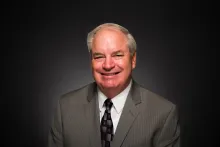
Robin Webber was born in Chicago, Illinois, in 1951, but has lived most of his life in California. He has been a part of the Church of God community since 1963. He attended Ambassador College in Pasadena from 1969-1973. He majored in theology and history.
Mr. Webber's interest remains in the study of history, socio-economics and literature. Over the years, he has offered his services to museums as a docent to share his enthusiasm and passions regarding these areas of expertise.
When time permits, he loves to go mountain biking on nearby ranch land and meet his wife as she hikes toward him.
