

Robin S Webber
This transcript was generated by AI and may contain errors. It is provided to assist those who may not be able to listen to the message.
I would like to say thank you to the ladies for that beautiful piece of music. It's one of my favorites. Very melodic, very beautiful, very uplifting, beautiful praise to God doing our our special Sabbath music. Today we go into the second part of our ongoing series out of the book of Ephesians, and the title of the series is God's Will for the Body of Christ. If you haven't had an opportunity to hear the first message, I hope you'll take advantage of that. It is appearing on our local home page that you can access. With that stated, I have a question for you this afternoon. It's not complex. It's actually very simple, and it is simply this. How do you picture yourself? How do you picture yourself? Now, I have my driver's license here, and that's how I was pictured about five years ago. No, five years ago. And all of us carry a photo idea of ourselves, but that's not what I'm talking about in regards to God's will for the body of Christ. All of us carry a picture of ourselves. It is a life-sculpted portrait of ourselves, and it's a picture that speaks volumes as we will come to see. I want to share a thought with you here. If you'll look up for a moment, I brought a prop being an old teacher. There's a picture here. There's a frame. Actually, there is no picture, but there's a frame up here. And that's going to be very important as we move through this message today because you and you alone are going to be able to fill in the portrait that is surrounded by this framework. You not only have a picture of yourself, how you see yourself, how you think about yourself, how you carry yourself, how you relate with others, but I have news for you this afternoon. There are three others that also have a picture of you, and maybe you would like to know who they are. Allow me to share the first one that has a picture of you. This world has a picture of you. It's one that portrays you as the pinnacle of the animal kingdom. It's one that says you are a part of a long line of accidental life, stemming from the swamps of long ago and headed for a unknown future.
This picture, this existence, is not nourished by design, but you are left subject to the forces of nature and your own internal passions that drive you in this lone moment of which you experience the survival of the fittest, the survival of self. After all, self is all important. It's a world in which you become your own God, you worship your own self at your own private altar, and you create your own rules for yourself. And when those rules don't work, you create new rules to sustain the self, to preserve the self. One comment I want to make to you is simply this. This is the picture that the world offers to you. There is no God in this picture. Allow me to share another thought with you, somebody else that has a picture of you, and that is Satan. Satan also has a picture of you. Now we're talking about serious identity theft, but he does have a picture of you, and it's not a pretty sight. And actually, it's very ugly and uglier once you get the picture, because you look at it, and if you want to look up here for a moment, friends, looking into this framework, there is no picture at all. It's blank. That's right, because in Satan's eyes, you shouldn't exist. He doesn't want your picture around. And for you, there is no solution in his book. There is no rescue at hand in his world of touch, taste, feel, see, and pride. No picture. You don't exist in his book. He doesn't want to look at you. He does not want to think about you. His work. God has a work. Satan has a work. His work is to eradicate your identity and your existence. Third individual that has your picture. God also has a picture of you. And I have some very, very good news for you this afternoon. It's full of imagery. It's full of color. It's full of hope. And it's full of salvation for you, and not only you, because this picture is not predicated upon survival of the fittest. For there is none fit before him, but there is salvation for you and for others. And also, with an assured destiny, that's hard to wrap our minds around as much as Mr. Ruday's just tried to get us there. But nonetheless, it's there in full color. Now, one more question before we move forward. My question is, which one does your picture, the one that you carry around, match?
The world?
Satans? Or gods? That's what we're here to talk about. It's often said that a picture is worth a thousand words. And I would suggest, can we talk for a moment, that the portrait that you carry of yourself has been shared with countless relatives, countless friends, and countless co-workers. A picture is worth a thousand words. And how do we go through Monday and Tuesday and Wednesday and Thursday and Friday, and yes, even God's Holy Sabbath Day, in describing ourselves and sharing the portrait with others as to how we see ourselves? Our words match the portrait that we carry. It's just a matter of whose. The worlds, satans, or gods. And we have an opportunity, and we make a choice as to which portrait we will identify with. I would suggest that the first two cases, that of the world and that of Satan, is grand identity theft. I would suggest the one that we want to center upon is the one that God has and the way that God sees us. And that's why God gives us the book of Ephesians to give us a portrait of the body of Christ and his will for that body of Christ. And not only how he sees it, but also, dear friends, how we should convey ourselves and our own personal responsibility as to the words that we share with others to give God glory. With these thoughts in the mind, let's see how it works. A portrait. Join me if you would for a moment in Ephesians. We're going to skip ahead a couple of chapters. We're going to spend most of the time in Ephesians 4 today, but let's just look at Ephesians 4 for a moment. Excuse me, let's go to Ephesians 3. We're skipping ahead too much. Ephesians 3. I want to show you how it works. A portrait and an identity. And as to who you will place. Want to look up here for a moment? As to what portrait you not only carry in your heart and your mind, but also the portrait that you share with others because God has visited your life. In other words, friends, what are we putting in here? What are we putting in here? To show God, to show others, so that we can reflect what the body of Christ is all about. In Ephesians 3, let's pick up the thought in verse 1. Ephesians 3 in verse 1. For this reason, I, Paul, the prisoner of Jesus Christ for you Gentiles. Now, this is a very clear case of identity. Notice, friends, he does not say that I am the captive of the empire. He does not say that I am the prisoner of Rome or the fugitive that is under Caesar's thumb. Notice his identity. It is very straightforward. The portrait is right out there. For this reason, I, Paul, the prisoner of Jesus Christ. As a member of the body of Christ, his identity is sealed. And it is before him. It is in him. And he shares it with the Ephesians. Join me now a chapter over in chapter 4 in verse 1. I, therefore, the prisoner of the Lord. Paul had probably dictated this maybe hours later, maybe days later, when perhaps there was a scribe in there. And he was reciting what he wanted written to the Ephesians. But his identity had not been lost on him. He had not, in that sense, changed pictures out of the framework of the portrait. It remained the same. And notice what he says here. I, therefore, the prisoner of the Lord, beseech you to walk worthy of the calling with which you were called. Worthy of the calling.
To beseech you, to encourage you. And that's what Ephesians is about, to this scattered body around the Mediterranean basin in the first century A.D. And he wanted to encourage them to understand what God was doing for them. And that encouragement comes down to our day. What calling? To be members of the body of Christ. To understand, to embrace, to internalize, and to express the will of God in all circumstances. Paul never, ever allowed spiritual identity theft. I think that's important enough, brethren, that I want to share it again with you. Because we are going to be moving through the book of Ephesians probably for months ahead. So let's understand something very important. Because when we're dealing with being a part of this mosaic that God lays out to give him glory, this body, the spiritual body of Christ, God is calling us here, as he's calling people around the world, not just simply for information. So let's understand something. To effectively be a member of the body of Christ, here we go again, we must understand it, we must embrace it, we need to understand how to internalize it, and then to express it. Because it's not just simply private property for ourselves. As Herbert W. Armstrong said 40 or 50 years ago, we have not been called for personal salvation alone. There's a reason that moves from us up to God and out to others as to what God is revealing to us, and the identity that he gives us. Let's understand that Paul built this on the fact of, again, Ephesians 1. We mentioned this last week, but let's go to it again to delay some framework before we move forward. Because Paul, here he is. He is in prison. He is in prison. But he looks at being in prison as not being apart from the will of God. It is God's will. He is God's prisoner. It's not fun being chained or linked to a Roman soldier, and maybe in a less than worthy domicile, hut, house, whatever. And yet Paul is writing this, which theologians call a prison epistle, because he does write it from being captive. And yet Paul sees a society, this body of Christ, that knows no walls, has no bounds, has no dimensions, because it's a spiritual organism known but to God, to those that keep his commandments and have the faith of Jesus Christ. Verse 19, and what is the exceeding greatness of his power towards us who believe, according to the working of his mighty power, which he worked in Christ when he raised him from the dead and seated him at his right hand in the heavenly places, far above all principality and power and might and dominion, and every name that is named not only in this age, but also in that which is to come. And he's put all things under his feet and gave him to be head over all things to the church, which is his body and the fullness of him who fills all in all. Now before we move into new territory today, I want to remind you, friends, what I mentioned to you two weeks ago, a comment by William Barkley, the Scottish commentator, and he raises this regarding Jesus Christ being the head of the spiritual body and thus what is our role. William Barkley, hear me out. William Barkley writes, if Jesus Christ is the head of the body, then that makes us the hands to do Christ's work, the feet to run his errands, and the mouth to speak on his behalf. The mouth to speak on his behalf. Now here's the point I want to share with you. Simply put, a picture is worth a thousand words. What is your mouth, which is but an extension of our heart, expressing daily about our calling and about our role in the body of Christ? You can't have it two ways.
That's how Satan operates. That's what Adam and Eve wanted. The portrait that God shares in the book of Ephesians, the portrait, the identity that the Father gives us in Christ. If we are truly going to be representative of the body of Christ to one another and to the world and to reflect God's glory back up to him, our words must match the identity, or we have no identity at all, and we're fumbling around here in this framework that's in front of you. Today, we're going to look at the opening of this epistle, Ephesians, regarding the will of God for the body of Christ, and we're going to gain two important lessons in maintaining our identity. Are you with me? Do you want to maintain the identity that God has in store for us and has given us? You either do or you don't. Now let's hear this out. I'm going to give you the points ahead of time. We're going to mention them again at the end. Number one, first key, our position before God in Christ. Our position before God in Christ trumps any condition on the ground. Any condition on the ground, including yours. Just ask Paul. He'll give you the answer in Ephesians 3, 1, and Ephesians 4, verse 1. Simply put, that's how it works. Point number two, the power of praising God, the power of praising God, preserves not only our spiritual identity, but serves others just as the words of Paul are about to serve us. The power of praise. So let's go to Ephesians 1, verse 1. Don't know how far we'll get. I'm hoping to get down to verse 13 today. We'll see.
Or verse 12. Let's understand again. Paul is addressing the church, the ecclesia, the called-out ones, those that have been separated for the Father in Christ. To him, there is no distance, even though he is spread out on the other end of the empire.
As a man would look at it, he is cloistered in a house. As a man would look at it, he is bound to a burly Latin Roman soldier. But Paul's identity is that he's not bound. And Paul's identity is that there is nothing that is going to occur to him apart from the will of God, because he holds that identity that God has given him near and dear.
Paul, an apostle of Jesus Christ, is blessed by the will of God. In this one verse, we begin to understand that to Paul, his identity had changed. As to even his name, as to even who he has been sent forth by, to even who he serves. He's no longer Saul. He's no longer the Jew from Tarsus. But now, because of what happened at Damascus, he's taken on this new name. And it's the name that is given to him after Jesus Christ speaks to him.
I'm Paul, and I'm an apostle of Jesus Christ. That is always near, and that is always dear, and that identifies what Paul is going to be speaking about. And it's by the will of God. So thus, we bring in the element of God the Father. An apostle was one that was a representative that went from synagogue to synagogue in the Jewish diaspora. It's a Greek word. And they were commissioned, and they were sent forth with an important message that kept the lines of communication between the synagogues connected. And he had, at one time, been a part of that system.
At one time, he had conveyed the tenets of Judaism. He had even in that sense gone from Jerusalem, and he was on his way up to Antioch as one that was an apostle with one that had a message and one that had a commission. There was a time when he had originally been sent out by the Sanhedrin with authority to convey decisions over people's life and death. Now he says, I'm no longer that kind of an apostle. I have a new identity. And the one that has commissioned me and the one that has sent me forward is Jesus Christ. And that is by the will of God the Father. Now notice how he opens up here and says something profound.
He says, to the saints who are in Ephesus and are faithful in Christ Jesus. He addresses not the Ephesian saints, but for this matter of the gospel and the body of Christ is not just something that is colloquial, localized, or private property. But he does identify that God is working in that area to the saints who are in Ephesus and are faithful in Christ Jesus.
Two things are happening here. He says, to the saints. And I want to dwell on that for a moment, friends, because sometimes I think we minimize what God is saying. Sometimes we just remember that old song, Oh, when the saints come marching in and I'm not going to sing anymore because I'm going to go flat. Oh, when the saints come marching in, you know. But we don't understand what how God sees us. And I want to share a thought with you if you want to jot it down and just we'll come back to it later.
God sees things ahead of time. God looks at things differently than we do. He sees in the future and sees the outcome of what we're doing as we hold our identity as members of the body of Christ, near and dear and precious. And he calls the saints. The word there comes out of the Greek. It's haggos. H-A-G-O-S. That means those that are holy, those that are set apart, those that are chosen of God, those that are, let's put this word down, sacred.
Sacred. Which I think elevates the whole identity of what God is doing with us. Let's remember that in times of yore, that God called Israel out of the nations of antiquity and made them a first fruit nation. He separated them from amongst the nations. Said, I'll be your God, you'll be my people. You be holy as I am holy. He also from that group also separated another group of people.
They're called Levites. They're called Levites. And they were to be about the religious functions of Israel. But even out of the Levites, he then separated again another people of the house of Aaron to be priests, to deal with the sacred things of God.
I want to share a thought with you, one Christian to another, one that reads the Bible, and you read the Bible. I think at times that we perhaps limit, because that's what we do humanly, we limit what God has in store for us. Sometimes we think, well, if I can only get here to there, I'll be all right.
And we only look in the moment, or we only look at perhaps the lowest common denominator rather than how God wants to lift us up and the identity, the portrait that He has in His framework for us. It's very interesting. Oftentimes we can go to Revelation 5 and verse 10, and it'll talk about being a kingdom, that God is going to make us a kingdom of kings and of priests. It's very interesting when you consider all of that, how God looks at that and what He is prepared to do.
It's very interesting when you use different translations of the Bible, that it speaks not only of being kings and priests, but it speaks of being a kingdom of priests. In other words, a realm of those involved with the sacred.
You can find that in the New Revised Version. You can find that in the New Century Version. You can find that in the Good News Bible. You can find that in the New Living Translation. That a consideration is that we're not just simply going to be kings and priests, but we're going to be a realm.
We're going to be a kingdom of priests, serving God. That when that trumpet sounds and that a part of our reward and a part of our destiny is that we are literally going to be and continue to be involved in the sacred. We're not simply going to be simply Peace Corps members in the millennium, hot flashing around like a fireman. I want to share a thought with you. Join me if you would in Revelation 3. Revelation 3. Sometimes we unwittingly lower what God has in store for us and why He's calling us saints, why He's calling us holy and separated unto Him for a purpose.
And what is the will for the body of Christ? Behold, verse 11, I come quickly, hold fast what you have, that no one may take your crown, and he who overcomes I will make him a pillar in the temple of my God. In the temple of my God. Right in the midst of that which is sacred. And it says, and he shall go out no more.
God is calling us, brethren, to be a part of that which is holy and sacred. And to have this incredible opportunity to be right at the centerpiece of His kingdom, to be there to serve God. And because He is holy and because we have striven, striven to be as holy as we possibly can in this human flesh that God is going to reward us with that.
You talk about identity, brethren. We're not just simply going to be Peace Corps members down in Kenya, bringing Kenya back to God.
We are, as first fruits of God, called to be a realm of priests, called to perform that which is sacred. There can be no greater identity. And that is why now those words and those concepts and that reality has got to sink into us. Notice what it says here, to the saints who are in Ephesus and those that are faithful, faithful in Christ Jesus. The faithfulness there is those that speaks to those that trust and that have faith. I think it speaks more to that because Paul was familiar with the writings of John. Join me, if you would, for a moment in John 15. John 15. John 15. This faithfulness comes right out of the Gospels itself. The faithfulness that is offered within our identity package as to how we are to glorify God. Where in John 15, when it says, I am the true vine and my father is in the vine dresser. Every branch in me that does not bear fruit he takes away and every branch that bears fruit, he prunes that it may bear more fruit. You're already clean because the word which I have spoken to you. Verse 4, abide in me and I in you and as the branch cannot bear fruit of itself unless it abides in the vine neither can you unless you abide in me. There's this aspect of faithfulness of the branch into the vine. The vine being Jesus Christ. That vehicle that God the Father has given us to imbibe of.
For without me could do nothing. Verse 7, if you abide in me and my words abide in you, you will ask what you desire and it shall be done for you. By this my Father is glorified that you bear much fruit and so you will be my disciples. I think one of the reasons, brethren, at times when we have limited returns in our Christian walk is because we don't understand or we've limited ourselves to simply being seed carriers rather than bearing much fruit. You think about that concept for a moment. When God called you 20 months ago or 20 years ago or decades ago, God did not just simply call you to carry a seed and then bury it.
Tamper it down.
Keep it safe. You know the parable of the man that buries his pound. As members of the body of Christ, you and I have been commissioned with the same identity as the Apostle Paul who while in prison did not allow his condition to trump his position before God the Father and Jesus Christ. And you know and I know that when we're in this human flesh at times that's exactly what we do. We let the externals, we allow the externals to melt us like so much jello out on the 210 freeway at noon in July.
Brother and I'm here to tell you something out of the Word of God. God has called you and me to the sacred. And the way that we imbibe in that is for our branch to be in the vine and to be sunk into the gift that God has given us, Jesus Christ. Notice then what it says here in verse 2, grace to you and peace from God our Father and the Lord Jesus Christ. It's very interesting the expressions that Paul uses here. He says, grace and peace. It's his favorite way of greeting the churches and it's very interesting. Maybe you've never understood this before, but he basically takes the two great greetings of the world of antiquity and combines them together. In the Greek world, Greeks would welcome one another or say hello to one another by the word charis. C-H-A-R-I-S, charis. May beauty be yours. May your life be charmed. May your life be gifted. And thus, as you walk in life, may you walk in beauty, may you walk in charm, may you walk in grace and favor. And of course, Paul is using that in the sense because of the gift that God has given us of unmerited pardon and forgiveness. And that he foresaw this and made it happen that we might be able to experience. This says grace to you. And then he says, and peace. In the Jewish world, in the Jewish world, the Jews would welcome one another by saying shalom. And then they would bid one another farewell by saying shalom. Peace. Peace. What does that mean to the Jew? We have to understand the culture. That when a Jew says peace, he's not saying in a greeting or in a farewell, oh, may you live in a life that has no problems. All right. That's the one I wanted. Been so much easier. The Jew did not look at life as being absent of conflict. But the Jew in expressing this would say peace and shalom. The embrace of all that God is. And that even if you are in unpeaceful times and the externals are crowding in around you, that nonetheless may God's peace. The same peace that Paul talked about. A peace that passeth understanding. A realm that was spoken of by Mr. Rudage that is better than the facts that are on the ground for the moment. And that our position before God the Father and Jesus Christ trumps any external condition. And when we understand that and when we accept that, we will express that. I have a question for you, friends. The question for you is simply not to embarrass you because we're all in this human condition. But how have your words been this week?
What have you conveyed to your mate, to your children, to your coworkers, to your brethren? Shalom.
Does your life manifest shalom?
Or do we have this picture that we don't have a life of destiny, but we merely swim in a realm of survival of the fittest? Shalom. How do you view yourself?
When is the last time? And can we talk? The human condition is not an easy condition to be in, or you know that and I know that. Some of us have tremendous challenges. We have emotions. We have health issues. We have job issues. We have marriage issues. We have child-wearing issues. We have teenager issues. And for those of you that are having teenager issues, remember in about five to ten years, those same people are going to be your best friends. Just hang in there.
But we have these issues. But are we living them apart from God and our identity towards the Father in Christ? Are we on that island by ourselves? Or do we have the company of God's purpose and destiny in store for us?
The portrait, the portrait that you carry of yourself is worth a thousand words and not more. And your words define and or betray the portrait that you have of yourself. God has called us to a beautiful life. And that beautiful life is not given to us simply for salvation, but to convey God's beauty and grace to others. That they might notice the light in a dark world. That they might notice the light in a dark school. That they might notice the light in a dark office. That they might notice the light in a family that for the moment has been darkened.
Verse 3, Blessed be the God and the Father of our Lord at Jesus Christ, who has blessed us with every spiritual blessing in the heavenly places in Christ. You know, sometimes people want to separate the epistles of Paul from the Gospels. That's bad theology. It's not good religion. Here we find Paul moving into the rhythm of the Lord's Prayer, as we call it, in Matthew 6. Our Father, which art in heaven, hallowed be thy name. Thy kingdom come, thy will be done in earth as it is in heaven. And now the Apostle Paul is going to flush it out. I want to share something with you. If you look at verse 3, and you go down to verse 12, the commentaries will tell you that is basically one thought. It's a gatling gun. I hate to use a negative expression, but it comes to mind. It's one roll-on after another of praise to God. Let's read it together for a moment. Blessed be the God and the Father of our Lord Jesus Christ. So thus, he who is ultimately omnipotent, omniscient, and omnipresent, and beyond that all loving is given praise, who has blessed us with every spiritual blessing in the heavenly places in Christ.
You notice that Paul's language isn't in P.S. The rats here in Rome are like really big, and I've run out of food for them in my cell, and why can't those guards even bring me a blanket?
His mind is before God's throne, and it stays there. Who has blessed us with every spiritual blessing? God never said that we were not going to have challenges in this lifetime. At times, though, we tend to trump the world of time and space with the eternity that Mr. Rudeige talked about, and we don't recognize that we are just simply passing through.
And he says every spiritual blessing in the heavenly places and in Christ, who is in that heavenly places. Paul's thought is here that he worships one that has been resurrected, in whom no stone is too heavy to be not turned. That is the one that was in that grave which was empty or emptied, and now is at the right hand of God. Incredibly optimistic. And when you understand the power of what Paul is saying here, you no longer live a life with mirrors, but a life of windows. I find that even in the community of the body of Christ, we have individuals that's just simply gaze at a window of their own self-reflection, their own self-reflection, and they can't take their eyes off themselves, rather than living a spiritual life of windows, of looking out, of looking up, of seeing that there is no stone too heavy that can't be rolled away. And to understand that the very basics of the body of Christ is that the head of the church is one that owns two worlds. He that was alive became dead, is alive again, now in the heavenly places. Is it any wonder that Paul could say, I am a prisoner of the Lord? Rome can't hold me down.
Rome can't hold me down. I am not imprisoned because of Rome, and nothing is apart from God's will.
Just as He has chosen us and Him from the foundation of the world, that we should be holy and without blame before Him in love. And again, we recognize that we've been selected. We are a chosen people, and God foreordained that. But He's called us to be holy as He is holy. And it says to be without blame before Him. And He tells us how in love that is by exercising agape, by exercising outflowing, outgoing concern away from self. If we are stuck in a world of mirrors, of which we only see ourselves, we cannot be exercising the agape that is being spoken about here, which is outflowing, outgoing concern away from self. Having predestined us to adoption as sons by Jesus Christ to Himself according to the good pleasure of His will. Now, it's very interesting to just simply take one verse in Scripture without the contextual force of the Bible can take us away from all the meanings that might be here. We understand that He destined us to be His sons, to the one that was begotten, and that God does put His seed in us through the Holy Spirit. The adoption that is being spoken of here, though, speaks not to the process, but to the dignity of the relationship, to the dignity of the relationship, to what the Latins called the potistas potreus. That is the power of the Father. That in a machismo culture, in that Latin culture, the Father was everything. Some of you still know that, maybe, that come out of a Latin culture, the power of the Father, the Patriarch, and that when one in the Roman Empire would be adopted and brought into a family, they no longer existed as that old person. They no longer had rights or privilege or say in that which they had been adopted out of. But the dignity that God gave them, the dignity that God gave them, was the dignity of full embrace in the new family. That they had full privilege, that they had full access. And when you consider the different words that God uses here, the privilege that we have, the privilege of grace, of peace, of love. In verse 6, where it says, He has made us accepted in the beloved, love it, the privilege of acceptance. In Him we have redemption, verse 7, through His blood, and the forgiveness of sins according to the riches of His grace. Forgiveness was not an understanding of antiquity. You were not forgiven by the deity of old. You could only placate them. You could only placate them. You could keep them at bay. But you could never please them. The sacrifices could never end. Your sins were always in that sense. Your mortality was in that sense always before you.
And Paul came to the understanding of recognizing that when God forgives, because now it was not just simply a partial Lamb of old, but the Lamb of God, He understood forgiveness. And forgiveness then that was not only His, but His to share with others. Verse 8, which He made to abound towards us in all wisdom and prudence. All wisdom. That is hagia. That is spiritual wisdom. God's revelation. The opening of the scriptures to us, which is the mind of God in ink, that He's given us spiritual understanding. And not only spiritual understanding, but He's also given us prudence. That means practical wisdom. There's a time to read the book of Ephesians, and there's a time to read the book of Proverbs. Just good old life experiences. A practical, how do you get along with people? And how do you live this life day by day? Now notice verse 9. And having made known to us the mystery of His will, according to His good pleasure, which He purposed in Himself.
It was very interesting that when we think of God, it is not only His will, His will is not just simply duty or destiny, but He pleasures in it. It makes Him happy. It makes Him purposeful in Himself. That in the dispensation of the fullness of the times, He might gather together in one all things in Christ, both which are in heaven and which are on earth in Him. And in Him also we have obtained an inheritance, being predestined according to the purpose of Him, who works all things according to the counsel of His will. The will of God can be known. Sometimes we will say, well, what is the will of God? We covered this last time. There is no finer definition in all the Scriptures as to what the will of God is. It says it right here. Having made known to us the mystery, the mystery there is not like the mysteries that you read where you have to wait till the last page to find out who done it. The word there in the Greek is mysterion. That means that mystery is one that is opened up, seal by seal, as it were, like in the book of Revelation. There's an unfolding. There's an ongoing opening to what God is doing. And it says here that in the dispensation, that is in God's timing, as it is His will and His pleasure, when that fullness of time comes. Not the turning of, as we understand it, the turning of a watch, and we watch the hand go around. I know none of you are doing that right now with that hand on that watch back there, but it's not about the hand going around like on a clock or on a watch, but it is the fruition where God is not only simply the Master, excuse me, God is not only the creator of time, but He is the Master of timing. And when the time is right, He is going to bring this out. See, here's the situation that we need to understand as members of the Body of Christ. Because at times we can understand and we can appreciate the macro view of what God is performing and doing, His purpose and His pleasure. And we know that, you know, there is going to come a time when Jesus Christ is going to come back to this earth. And we read those scriptures where it's just going to be at that time, especially right before man does it to himself. And it says, unless there was, you know, unless he intervened, there would be no flesh saved. And you and I can understand that. And we say, Lord, hasten that day. We need You to come. But we have that macro view of God, but we also have to have the micro view of God, of what He is doing in our life today. And that as God can deal with the nations and the empires of this world, not only in this year, in this month, or in this event, but oftentimes the events leading up for centuries to a point that He makes perfect in His time, I have something to tell you, friends, that nothing in your life is wasted. And there is a purpose and there is a reason for it. Just as it says in Romans 8, 28, that all things, doesn't say all things are good. Are you with me? We're all nodding at that one. But all things work together for good.
And while we might have an informational macro view of prophecy and the intervention of God's realm into human society, I implore you, friends, to consider this week God's intervention in your micro society, in your life. Because if He can bring all the forces of the universe and all the forces of history together that His will might be supreme, He can bring all that is in your life to His glory and to His purpose. Now, let's conclude here, and I have a point or two. Notice what it says, that we who first trusted in Christ should be to the praise of His glory. I want to conclude here with just some thoughts here. Paul was able to maintain his identity as a member of the body of Christ using these two keys. Again, number one, he maintained that his position in God's will, as shown in Ephesians 1, trumps any condition on the ground. He never narrowed his horizons to the immediate surroundings, but kept the eyes of his heart glued to God's picture for him.
Paul's framework was always before him, and the picture that he had there was not self-imposed, but God-given. He knew that God had a purpose, and he pleasured in it, as did his son, Jesus Christ, and that God promised him every spiritual blessing to see forward his purpose. Now, this goes to what Helmut said. We need to see the present in the light of eternity. We need to see the present in the light of eternity, and from the starting blocks of our Heavenly Father's calling. If you want to give a prayer to the body of Christ, I think one of the most important prayers that we can be praying right now is, Father, allow your people around this world, around this world, to see the present in the light of eternity. I speak to too many people that simply have their foot stuck in the mud of the present. When we say that we worship a God of eternity, I'm not saying that to disparage, but if you want to make your prayer life rich for yourself and for others, and to follow the example of the Apostle Paul in Ephesians 1, as to what is the will of God for the body of Christ, it is simply that. Pray the prayer that God will bless that sacred body around this world to see their present in the light of eternity. Number two, simple point. Paul maintained his identity by praising God, praising God, rather than raising all of the issues. You can either praise God, or you can raise all the issues. Now, when I say that, I'm not saying to be a Pollyanna. We must deal with the issues in life, but praise comes first. Got me? Praise comes first. Just two verses will conclude. Psalms 9. Psalms 9. Because I think, again, remember that Paul was a good Jew who had become a follower of Jesus Christ. He knew the Psalms. And in Psalms 9, in verse 1, notice what it says. Psalms 9, verse 1. I will praise you, O Lord, with my whole heart.
And I will tell of all of your marvelous works, and I will be glad and rejoice in you, and I will sing praise to your name almost high. The Apostle Paul does that in Ephesians 1, verses 3 through verses 12, with his whole heart and sharing with others all that God has done. Hebrews 13, verse 15. Final verse today. Hebrews 13, verse 15. Therefore, by him let us continually offer the sacrifice of praise to God. That is the fruit of our lips, giving thanks to his name.
When we praise God, even when our external conditions humanly, like Blake, we are sacrificing to him. We are sacrificing to him as much as an Israelite of old, sacrificed a bullock or a turtledove. Our words, as members of the body of Christ, the praise that we give him by extolling his role in our life, and thus our identity is a sacrifice. And God says, they gots it. They get it. I am holy and they're being holy, and they are a part of the body of Christ. Our homework and our heart work for this coming week, brethren, or the coming two weeks till I see you again, is simply this. To ask yourself, number one, whose portrait am I carrying? Whose portrait am I carrying? The world's Satan's? My own little wretched picture of where I only look at myself in the mirror?
Or am I looking at the portrait that God shows us by the Apostle Paul in Ephesians 1, a portrait that, frankly, has no framework, no boundaries, but one that expands and expands and expands to God's glory. What are we going to cover next time? Looking forward to bringing it to you next time. Next time, we will focus on the spiritual glue that holds the body of Christ together, the spiritual glue that holds the body of Christ together. And we'll be covering that as we conclude Ephesians 1 and move into Ephesians 2. So please do now read ahead for these coming two weeks. See you at the potluck this evening.
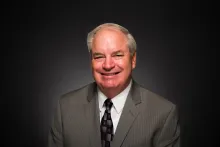
Robin Webber was born in Chicago, Illinois, in 1951, but has lived most of his life in California. He has been a part of the Church of God community since 1963. He attended Ambassador College in Pasadena from 1969-1973. He majored in theology and history.
Mr. Webber's interest remains in the study of history, socio-economics and literature. Over the years, he has offered his services to museums as a docent to share his enthusiasm and passions regarding these areas of expertise.
When time permits, he loves to go mountain biking on nearby ranch land and meet his wife as she hikes toward him.
