
Robin S Webber
This transcript was generated by AI and may contain errors. It is provided to assist those who may not be able to listen to the message.
I'm so thrilled to be here with you again. It's a wonderful time for my wife. We have been married 50 years. 50 years ago, I married up. Susan is a Buckeye. For Susan, we are back home. We are in the Promised Land. We are glad to be here with all of you.
I think I mentioned this last year that we started coming down here about 49 years ago. The first time I came back to Susie's home. We'd come down here because, for the Leimbach family, she was a Leimbach before she became a Weber. We would come down here because her family lives about an hour and a half north of here, about 30 miles west of Cleveland, below the lake.
This is their backyard. When the Dutchmen went up about 30 years ago, 35 years ago, we'd park and then we'd look over that valley. It was stunning then, and it's still stunning. Then, to now be in a hotel next door and look down in that valley, it's just amazing. I think it's a great time to look at what time brings your way, especially when you are involved in God's way of life. Listen, I'm going to look at this clock a moment. Is that on West Coast time that I'm used to?
That sounded like gallows laughter. Let me get my notes here so I can see them a little bit with this light. Is this actually a light? No. Yes. No. It says yes. Good. Okay. Interesting. Well, it's good to be able to laugh some.
I did want to mention just for a moment, we oftentimes end with this on the eighth day towards the end. I just wanted to say thank you very much to John and Susan Miller, who have taken a large part of their life. I think all of us know John's a pretty busy guy to begin with.
I think he was born busy. And even as a recycled teenager, he's still busy. But why don't we just give them a nice round of applause for everything that they've done for us? If John's awake, he's thinking. And if he's wrong, Susan will tell him. Okay. Anyway. Well, we are here really, as John said. I really like what you said, John, just for a moment. That in this day of automation and computers, I want to tell you something.
I'll be doing this a little bit. We are going to open up the Word of God. There is nothing like just opening up this book for the next seven days plus one. There is power. There is power when you open up this book. And in this world of everything that's virtual or whatever, sometimes you just have to have the tangibility of opening up the book and just holding it open. When I sometimes will be speaking, I'll just lift up the Bible like this, because I am in awe of the men and the women that, down through the centuries, transcribed it for us, whether the Jews of old, of Byzantine monk up in the cliffs of Mount Athos and Greece, and or those that later on, like a tendaele, were burnt at the stake, that you and I might be able to have the Word of God open up to us.
So when we open up this book, we think of the men, we think of the women, we think of the martyrs. And they may not completely believe like you and I might in the Word of God, but as John was mentioning, they gave their lives. They gave their lives that we might have this Word. Never, never take it for granted when you open up a Bible.
It is just so precious. Another thought that's not in my notes, but Susan and I have been talking about the last three or four days. On atonement, we didn't have a choir. I oftentimes will bring in YouTube music on atonement. And to recognize we are here before the Holy. And we're going to be hearing about the Holy things from a Holy God for a holy purpose for a holy people the next seven or eight days. I'll just be very frank. In this day and age, with everything, the culture going down and down and down, we've forgotten what holy is.
We have forgotten what it is like to come before the very presence of the uncreated, the awe, the majesty. I was thinking about the aspect of... We played on the day of atonement. We were playing it the last couple mornings, just Susie and me. We were playing Holy Art Thou by Handel. And it's classical. It goes back to the Baroque era, you know, 1730, 1740. We played it in Redlands, east of LA. We played it in our Redlands congregation. And, man, did they have a speaker system.
And, I mean, you just... You not only just dropped your jaw, but you bent your knee when you really recognized what you and I have been called to. When God has summoned us to come up and to meet before Him, in a world that is more and more not postmodern but pre-Christian, and has no understanding of the God of the universe, and then recognize that you and I have been summoned to appear before Him, not before John Miller, not before Robin Weber, not before this person or that person, that God has invited us to come before Him, but to recognize that when we come through that door, when we come through that door, that we come before the God of the universe.
And that's the ultimate fellowship. Sometimes people will say, well, what does eternity mean to you? What is eternity? I remember as a young man, I used to measure eternity kind of in a mathematical or non-mathematical sense and use all sorts of analogies. But Jesus Himself said that you might have eternal life and that you might know God the Father and myself. Eternity is a relationship with God the Father and Jesus Christ forever, never broken up again.
And that's why we're here as His children to learn about Him. It's just something I've been amusing on my mind. Susan and I live out in California, and all the whiz and the wham and the coming and the going and the crush of people and the crush of traffic and the culture of California. Do I dare say that? I've loved living in California. But when John mentioned that I was a Californian, I thought I immediately have to get up here and say, no, I'm not moving to Ohio.
You don't need one more Californian. But I can be anointed for it. Maybe John after services, okay? Anyway, let's get into the message. But maybe that was just the message, and I can sit down now that we have appeared before God. This afternoon, I would like to ask you several questions of each of you. I'm not going to leave anybody behind. We're all in this together. I'm an old school teacher, so we're going to get you all together. And what I want to do in asking these questions is not only to engage your mind, but most importantly, to engage your heart.
That's what we always go for. That's what Jesus Christ always went for. It was not only just the heart of the matter, but that the heart might become like His. Here are the questions I would like to begin asking you. What is your personal sukkah going to be built upon during this festival? What is your personal tent? What is your personal dwelling going to be built upon during these next seven days? Now, the next question is this. Further, what is it going to look like when you take it home? What's it going to look like?
Now, we're in a sukkah right now. We are in this tent. We are in this temporary building. We can think of ourselves. We look at this, and it already has size and shape. I wonder if each day during the feast this began to expand and expand and be different than when we first entered. We saw it growing, developing, getting bigger.
What about your personal tent? What about your personal tabernacle? The temporary dwelling here? Sometimes people say, I said, what are you going to build upon? Now, some of you might say, here we are at the Feast of Tabernacles. Weber just asked me, what am I going to build upon? Right now, I'm out here on the grass. I'm in an RV, so I'm on grass. I'm staying in a hotel up here in Walnut Creek or somewhere else, and that hotel is on concrete.
We're not talking about that kind of foundation. We're talking about something much, much more important as to what we're going to be building upon. So, we need to take a look at that. We're talking literally about your flesh and blood tabernacle.
I'd like you to join me, if you would, over to 2 Peter 2 to begin this message. It's written by another recycled teenager. He was a spiritual senior citizen. It might have been about my age when he was writing this. It's in 2 Peter 2. Excuse me, 2 Peter 1. Pardon me, 2 Peter 1, verse 10.
Therefore, brethren, be even more diligent to make your calling and election, your selection, your election, by the uncreated, by the Father through Jesus Christ, to make your call and election sure. For if you do these things, you will never stumble. For so an entrance will be supplied to you abundantly into the everlasting kingdom of our Lord and our Savior Jesus Christ. And for this reason, I will not be negligent to remind you always of these things. Though you know and are established in the present truth, even though you're in the know, even though you've been received the truth, as we call it, in our culture, there's something beyond that.
Yes, I think it is right, as long as I am in this—here's Peter talking about himself—in this tent to stir you up by reminding you, knowing that shortly I must put off my tent, just as our Lord Jesus Christ showed me. Moreover, I will be careful to ensure that you will always have a reminder of these things after my decease. So today, as we open up on this foundational day of the Feast of Tabernacles, Mr. Miller has brought to your attention the who, the what, the where, the when, the why, the how, as any good reporter, as any good correspondent, would share with each and every one of you.
I want to continue to build upon that this afternoon, in so much that, again, what a joy!
What a thrill! And the astonishment, as a human being, that we have been in touch with the divine, that God has given us these markers during the entire year. And they have meaning. They have purpose. They jolt us out of this world that we are in.
I live in a world in California that worships humanism, that worships a culture that is anti-Bible, that, as Mr. Miller was mentioning, is teaching our children the exact opposite of the person, the exact opposite of the truths of the Bible, that God made man, He made woman, He made the family.
And sometimes you just can kind of be in that smog of L.A. and California, and you're breathing in those fumes. But that smog and that fog of disinformation is now spread around the world. And God says, for seven times in the year, you will come together. And you will come before Me, as David said, stand still and know that I am God. There really is a purpose. There is really a who, a what, a when, a why, and a how.
To stop. Just to stop. To stop in a world that does not stop.
Am I talking to the right crowd? Am I the only one living in this existence? And to come before a God who created spiritual beings called the Seraphim, that stand by His side, stand by His throne. And you know what their full-time job is? You go to Isaiah 6. They're up there saying, Holy, Holy, Holy. The world around us, in general, does not produce holy. It can produce good things. It can produce very good things.
In the creation story in Genesis 1 and 2, it speaks that for the first five days of creation, God said, it is good.
On the sixth day, when He made man and woman, He said, Now, that is very good. But it was only on the seventh day, when He blessed the Sabbath and put His presence into it, that that became holy. That that would be a hint, that would be a finger pointing to the future, when there would no longer be a physical creation, but that He would be in the process of a spiritual creation. That's why we're here today, on this day, at the opening of the Feast of Tabernacles, to understand the spiritual creation that God has given us. I'd like to give you the title of my message. Simply put, Building Your Sukkah. And we're going to be building one. We have our little festival education prop out here that we're going to be building tomorrow. We did it last year. Practice makes perfect. If not perfect, John, at least everybody's involved, like you said. I was listening to your announcements. Building Your Sukkah on the Rock. Now, what does that mean? It is my purpose in mind to stir you to action as much as Peter did with that first generation body of Christ. And there are three steps that we're going to take together in the next few minutes. Here's what we're going to do as we consider building your Sukkah on this foundation. Number one, I'm going to encourage you to be open. Open is number one. These are the footsteps to spiritual growth and involvement in making God's Spirit really fully focused and happen in you in these next seven days. Number one, be open to God's direction. That's not a metaphor. That is a reality. Be prepared to have God interrupt. I love that word. To interrupt our lives. Not just when we were first baptized, because you're supposed to grow in the grace and the knowledge of our Lord and Savior, Jesus Christ. Be open to His direction. Uh-oh, here comes the next one. Be open to His correction.
Now you're meddling. I'm speaking to myself. And be open to His encouragement. Be open to His encouragement. When You are down, allow His Spirit to lift you up day by day. A lot of us anymore, I've been in this way of life for 60 years, as has my wife, we're not kids anymore.
We could say with a smile that we recycle teenagers, but none of you are smiling back, so that's not going to work anymore.
But, but, His encouragement. Number two, after openness, be spiritually available. Be spiritually available. I'm not just talking about setting up tables and pots and pans and building, which is a very important part, and some of you just have incredible gifts on that. Even our young lady that's behind the sound booth here, she's wonderful, fantastic. We watched her last year. We all have those manual gifts, and those need to be a part of the feast. But be spiritually available and sensitive. Be sensitive to the interruption and the prompting of God's Holy Spirit, like this.
This is the way. Turn around and or stop. This is the way. Walk you in it. Number three, be willing, be willing to submit to the authority of God's Word, the Holy Scripture, and to recognize then to be cognizant of it, to submit yourself to the authority of that Scripture. Beyond your human reasoning, beyond your self-justification, and beyond our own home-grown self-righteousness.
That actually came off from Herbert Armstrong about 45 years ago in a graduation ceremony when he defined what human nature is. He said it's like an apple pie. You can cut it down into three ways. Simply this, self-justification, human reasoning, and self-righteousness.
Let's think about that for a second. Join me, if you will, in Leviticus 23. Let's pick up the thought in verse 39, please. Also, on the fifteenth day of the seventh month, when you have gathered in the fruit of the land, you shall keep the feast of the Lord, the eternal, for seven days. And on the first day there shall be a Sabbath rest, and on the eighth day shall be a Sabbath rest. So we recognize immediately even what we've read. It's not our feast. It's a feast. It's God's feast. It's not Moses' feast. It's not man's feast. God does everything for a purpose. And you shall take for yourselves on the first day the fruit of beautiful trees, branches of palms, trees, the boughs of leafy trees, and willows of the brook. Now notice verse 41. And you shall keep it as a feast to the Lord for seven days in the year, and it shall be a statute forever in your generations. And you shall celebrate it in the seventh month, and you shall dwell in booths, or temporary dwellings, for seven days. All who are native Israelites shall dwell in the booths. Now why all of this? Why did God ask ancient Israel to do this year in and year out, even as they crossed the Jordan, over into what we call the Promised Land? Question, please. Why does the spiritual Israel of God, why does the spiritual Israel of God, why does the body of Christ, why do new covenant Christians come? God's command to keep this festival, which would seem to have been lost in the sands of Sinai. But there's a reason. It says that your generation may know that I made the children of Israel dwell in booths. Notice, when I brought them out of the land of Egypt, I am the Lord your God. Moses was a tool. Moses was a human vessel. But Moses did not cross the river for a purpose. And we know the rest of the story about Moses and striking the rock. That's a whole other part. But at the end of the day, God was going to create a point. It was not Moses. It was not Miriam. It was not Aaron. This was not what God did with the people who were not a people that were locked into slavery, had no future in front of them, only death at the hands of Pharaoh's servants. And he liberated them. He moved them through the wilderness. He opened the Red Sea. He alone would be Savior. He alone would be deliverer. But we forget that at times. And so God said, you know what? You're going to have a homework assignment every year. To remember, it's not about you. It's about me. And as you focus on me, please understand the you is going to come along and the you is going to have a responsibility. They're going to have a life. But always remember who is the engine of deliverance.
When we put the you and the me out of our lives, and we put Jesus Christ and God the Father center focus, I'll tell you, brethren, things happen. It is so exciting. Is it always easy in this world? No, but it will happen. Join me if you would, then. I'd like to go to Isaiah 40, because we're really going to stay in Isaiah 40 now. In Isaiah 40.
I'd like to pick up these thoughts.
The reason why I'm going to be showing Isaiah 40, and we're going to go through some very specific steps, is simply this.
Year in and year out, we can come to the feast. I have just felt the Spirit of God here. There has been such joy already in the fellowship that John talks about. In seeing one another after another year, and to be able to share time again together. I can't minimize that.
The people of God are very dutiful. They will come up to the festivals. In that sense, we long for them. We look forward to them. I say this without being blasphemous. God knows we need them. That's what I want to remind you about. God knows that we need to be here. We need restoration. We need to get out of the smog of man's civilization. We need to get out of the forest of the tree of good and evil. For these seven days, plus one, be able to hug the tree of life, and be able to partake of the fruit of that tree of life. That alone tells you, wow, what a God we have. He knows more what we need than we know what we need for ourselves. I recognize that then. I'm going to share, then. Stay with me if you look at your notes. The three things that we're going to be looking at, starting today, are we open?
Are we willing? And are we available? That's not just going to be to each and every one of us as we reach out, even starting with a nice lunch or dinner afterwards. But are we going to be open and willing and available with our fellowship with God? The one thing that we want to recognize is simply this. God doesn't want us just to go through the motions. He doesn't want us just to go through the motions. He wants us to move closer to Him. This phase, don't put it off. Remember what John said about to think that this is the best feast yet as it may be our last? I'm going to share something with you. Can we talk? That's when you're supposed to nod. Boom, boom. That's all you do. This is not boom, boom.
We are together in a sacred assembly, and you and I will never be in this moment again. As loving brethren, as spiritual family, as Robin talking to all of you and you listening, listening to John, some of us, I'm not trying to be what we call in Hebrew a party pooper, but some of us may not be here next year. And I'm talking about being in another feast site. This may be, with this assembly, the last time that you'll keep the feast. And to recognize how precious time is, it says that the aspect teaches us to number our days. Teaches to number our days. Most of us might go 3 score and 10, and I'm just a little bit above that by two years.
God doesn't owe me anything anymore. He's been wonderful to me. He's been wonderful to my wife. 4 score and 10 if I reason of heart? Yeah, I hope so. But, now is the time of salvation. When you go through the Scripture, it's always pounding, as John would say. Now, now is the time of your visitation. Now is the time of salvation. You know, when you look at these festivals, you might want to jot down these figures on your pad, or etc. The Feast of Tabernacles represents 1000 years. Each day of the Feast is 143 years. You might want to jot that down. The kids will have fun. Each day of the Feast is 143 years in representation. Each hour represents 6 years. I'm sure you've heard messages and sermons that sometimes seem like 6 hours. But, so we're already about 80 years into the Feast of Tabernacles, if we use that chart from last night. You say, where did the time go? But just think about this, that you still have 920 years to do something about this Feast of Tabernacles. Herbert Armstrong used to say that it would take 3 human generations for things to begin to happen in the wonderful world tomorrow. Let's not wait 75 years. Let's get to going right now. Commit yourself, you and myself, that are in the hands and the heart of God to really make a difference. Don't go through the motions. As a speaker, I've been in many congregations, you see people, and they go, ooh! Amen. Let's go get the coffee. God has not called us to just go through the motions here in Walnut Creek. He is the potter. He wants to mold us. How does He want to mold us? How does He want to make His time available? How does He want you to, as people come to you, they see something different. They see something bright. They see something light. They see a person of love. They see a person of sensitivity. They see something different in the world around us.
Here we go. Let's look at Isaiah 40. Comfort. Isaiah 41. Comfort, yes, comfort my temple. Says your God. Speak comfort to Jerusalem and cry out to her, that her warfare has ended, that her iniquity has pardoned, for she has received from the Lord's hand double all of her sins. The voice of one crying in the wilderness, prepare the way of the Lord. Make straight in the desert a highway to our God. Every valley shall be exalted, every mountain and hill brought low, and the crooked places shall be made straight, and the rough places smooth, the glory of the Lord shall be revealed, and all flesh shall see it together. I just had a reading, but we're going to go back on that for a moment. Notice what it says with Israel, who were a covenant people that departed.
What I want to share with all of you, and I see you as a bright, cheery church group. I speak in front of bright, cheery groups all the time. But I realize also that some of you that are out here, perhaps in this audience, have returned for the very first time to this way of life during this feast, right here in Walnut Creek.
Some of you have been steady. You show up for services. You do your dutyfulness. But you've been distanced from God for one reason or another. I want to share something with you. I worship the God of return. Don't you? I worship the Father that is always on the front porch with the lights on. I remember as a dad, we have three daughters, I remember sometimes somehow they missed the ten o'clock curfew.
And pops would be waiting at the door. 12.30. One o'clock. Good girls. Not too often.
And as I waited at the door, their mother would be restless as well. Because we love our children. We love our girls. They're all now in their forties. That's the God that we worship. Sometimes we will have feelings and anxieties during the year. Where is God?
I worship a God. I think you worship a God. You just need to be reminded on this opening day that we worship a God that is like the rock Gibraltar. It is always there at the gate of the Mediterranean, and more so. Have that faith. Have that confidence as the feast begins. Our God is the God of return. This world needs to return, and some of us more so. God has not called us to be stuck between Babylon and the heavenly Jerusalem. There are no three choices in the book of Revelation. There are no three choices now, in this time. God has called us to be wholehearted. God has called us to focus on Him. During this festival, I have a question for you as we turn to 2 Corinthians 4-4. Join me if you would there, please. 2 Corinthians 4-4.
This God of return, who has maybe touched your heart to be here this feast. Notice what it says here in verse 2, And peace from God our Father and the Lord Jesus Christ. Blessed be the God and the Father of our Lord Jesus Christ, the Father of mercies, and God of all comfort.
Who comforts us in all our tribulation, that we may be able to comfort those who are in any trouble, with the comfort with which you yourselves are comforted by God. Here is my encouragement to you, my dear fellow brethren and sisters in Christ. During this festival, underneath this tent and underneath heaven above, prepare. As God says, comfort ye, comfort ye people, be an agent of comfort. Be sensitive. You know, we can be in a crowd like this, but I can feel loneliness at times. I see people that are alone, they're sitting by themselves. They don't have family with them.
They're here out of sheer courage. Maybe they're here for the first time, and they don't know what reception they're going to get when they come home. Be an agent of comfort. Get to know your people. Get to know your brethren. Ask God every morning during this Feast of Tabernacles, Father direct—this is normally Susan's in my prayer—Father, direct our steps. Guide our footpath. Help us to meet the people that you want us to meet this day, that we might be an agent of your touch. And allow us, Susie and me, to come into contact with those that we need to hear from. That can help us. That can motivate us. It's what we call a boathr. A twofer. Two ways. Then, then, rise from your prayer, come to services, and follow God's footsteps in meeting people that have that need. Here's one thing I want to share with you. I can already—trust me, 60 years in of this—what happens, we come and we start sitting in the same place, right? I mean, you know, that's it. It's like comfortable shoes. We're right there. I'm going to challenge each and every one of you, other than Mr. and Mrs. Miller, because we need to know where they are at all times. And what I want to encourage you to do is move every day to a different table. Now, that stretches you too much. You can move to the table in front of you and or the table behind you. Or even the table beside you. You don't have to go from the front row to the back row. But be a people that are on the move. Plant yourself in just a new section and say, I didn't know these people existed. Well, they didn't know you existed either.
Might as well get acquainted during this, the Feast of Tabernacles, saying we're going to be spending eternity together. But I'm going to tell you something. If you will just follow this brief little suggestion.
Your festival is going to change. Your festival is going to change. You are going to be an agent of comfort. You know, in verse 3 it says, to prepare the way of the Lord. These feast days are designed to prepare us for sacred service. As a kingdom of priests, Revelation 5 and verse 10, there's others, under Jesus Christ. Now, they bring us into alignment. Bottom line is, we are not just simply on a spiritual vacation. We are on a holy vocation. There's a difference between a spiritual vacation and a holy vocation. And it's more than just one letter. Now, that doesn't mean that God doesn't want to have abundant life, and to be able to do this and to do that, that we're not sometimes able to do in the course of the year. But you put your focus on the spiritual, and God will make all the joy and all the fun things happen on the side. If you do the other, you're just going through the motions. We're on a pilgrimage. We're on a pilgrimage. You and I have the joy and the invitation to travel towards eternity. Don't just simply get stuck in the here and the now. Okay? Are you with me? Is this resonating? Do you want this to be the best feast yet? Remember that you are about your Father's vocation that He has invited you to. Not just a vacation. That will make all the world in the difference. You know, it says in verse 3, Make straight in the desert a highway for our God. Even God's chosen covenant people can get off course, whether Israel of old or the Israel of God, the body of Christ today. You know, when you think about it, what should have taken Israel just maybe 40 to 50 days ago from where they were up to what was become the Promised Land took 40 years. Took 40 years. A lot of time, a lot of travel. Most of them became bones in the wilderness. I have a question for you.
As you came to this feast, was our life like a wilderness? Were we dried out? Were we lost? Had we lost our directional? Were we spiritually dehydrated? Let's be honest about it. We were wandering here and there, bumping on both sides of the road of life. Here's what you need to do. As John said, this word is something else. Join me if you would in Matthew 7.13.
In Matthew 7, the words of Jesus Himself.
Matthew 7, verse 13. Enter by the narrow gate, for wide is the gate, and broad is the way that leads to destruction. And there are many that go into it, because narrow is the gate, and difficult in the way which leads to life. And there are few who find life. Brethren, as a pastor, dealing with people's lives and being in the midst of congregations, we, as the people of God, more than ever, need to be a holy people before a holy God for a holy purpose, and not be distracted by this world. We need to be straight arrows. If your life has been going around in circles, and circles, and circles, and circles, and circles, and circles, and circles. That can be very much a human condition. During this Feast of Tabernacles, you ask God to help you become straight in His way of life. Not dipping into this world, and dipping into the Bible, but allowing the Bible to be your world, to allow the Bible to be your terra firma to stand on, to allow Jesus Christ, the rock, of whom there is no other foundation to be your hero, to be your champion.
Scripture says in Revelation, come out of her, my people, and do not be partakers of her sins.
That's why we're going through this exercise, that can galvanize you to go back into the world that we came from, and to be different. I'd like to just mention Daniel 1 and verse 8 for a second. In Daniel 1 and 8, the world that he was in, we often say that Daniel was a spiritual survivor of Babylon. He actually came up before the beast, King Nebuchadnezzar. He was being groomed, just like our youngsters are being groomed today in the education system of this world. His name was changed. His clothing was changed. His environment was changed. Everything was being changed and changed. And then there came a point, he said, no! No! Further! Am I going to be changed? I'm not going to partake of the King's meal, whatever that meal might have been, and there are multiple pages of commentaries. But we know it was not the practice of the Jews of that time. It was not a holy meal. And he said, no. And then Daniel, the very person, said, he purposed in his heart. His heart was anchored in the kingdom of God. He was a covenant individual.
Brethren, brothers, sisters, family, you ask God to anchor you in His Scripture and in His Spirit during this feast. Be anchored. We're going to have trials, probably bigger than even the tree, sorry John, that fell on the hay wagon, which was bad enough for you. But we're going to face trial during this time, during the feast, personal trial. Around the world we heard about Mr. Lambert, great guy. We'll keep him in our prayers. Trials. Be anchored. You do not find your values in trial.
You take your values into the trial with you.
David did not come up against Goliath and say, oh, I'd better go get five stones. First Samuel 1740 says he was at the brook and he picked up five stones. And then he went and faced a giant and he said, you're coming down, buddy. Who do you think you are, you uncircumcised Gentile, that you are mocking the God? And that is not going to be by me, but that God is going to bring you down that day.
Can we get ahold of this during the Feast of Tabernacles? Don't let this go by.
We're going to have to be in fighting form, brethren, just to be... What's happened the last decade in civilization is mind-boggling. There is a tsunami of Satan's culture coming our way. We're going to have to buck up and we're going to have to keep on looking up to be survivors. That's a new Weberism. We're going to have to buck up and we have to keep on looking up. You know, Viktor Frankl, who was an Austrian psychologist, a Jew, during the war, was in a concentration camp, I believe it was Auschwitz. He took notes. He was commenting out of Ecclesiastes that the battle does not go to the big, the strong, the brave. He said, there were many men that were of greater stature, perhaps even greater ability, but it was amazing who came through that experience.
It was the person that had something to live for. That had something to live for. That had a purpose beyond that which was coming his way.
Are you with me? And that is what made all the difference. That's what we are about. That's what's going on. I had about two more pages of notes, but we'll save that. I'll be coming back up again.
Brother and I have been in this way of life, by God's blessing, Susie, myself, for 60 years since we were... ...tweens.
If you're thinking about, this is it, wake up and smell God's coffee. He's got something so incredible for us.
We try to describe it. God gives us enough to know about Him. The glory and the honor that He has before us. We just don't have the equipment to handle it right now. It is going to be so incredible. That's what we're going to be a part of during this feast. I'm going to conclude with one scripture. Join me if you would in 1 Corinthians 3.
In 1 Corinthians 3.
And let's pick up the thought if we could. In verse 11. And let us dedicate ourselves that this is what we're going to build by God's grace. Not by our might, nor by His power, but by His Spirit, the foundation that we are going to dwell upon. Not only the next seven days plus one, but let's make a commitment this afternoon that this is going to be our stand. This is what we are going to stand on. For it is no other foundation can anyone lay than that which is laid, which is Jesus Christ.
Now, if anyone builds on this foundation with gold, silver, precious stones, wood, hay, straw, each one's works will become clear. For the day will declare it because it will be revealed by fire, and the fire will test each one's work of what sort it is.
So, brethren, as John mentioned, we are here to preach and to learn about the Kingdom of God. But I want to expand upon that just for a moment, speaking as the United Church of God, one of the founding members of the United Church of God back in 1995, our mission statement says this, that we in the United Church of God, and I realize we have others that are not in the United Church of God today, but I'm just sharing this with you to give you the fullness of what our mission statement is, that we preach the gospel of Jesus Christ and the Kingdom of God. They are the same coin with the two sides. He is the King of that Kingdom. But there's something that God the Father wants us to really clue in on and to recognize that Jesus Christ Himself is good news. And the Kingdom of God that John mentioned is good news. He is the King of that Kingdom. But we decided about 28 years ago that we were going to front-load the gift of God the Father as to who is the centerpiece of every holy day that comes along. And that is Jesus Christ and the Kingdom of God, that same Jesus that John talked about who came into Galilee preaching the gospel of the Kingdom. And He said, repent and believe the gospel. I've got good news. We've heard that in the first message. So He said, repent. He said, get a mind that fits it, because this isn't going to do what you've got right now. Get a mind that fits it. And believe the gospel. Tuck that in your heart. Stand on the foundation of Jesus Christ. Lift our prayers up to God during the Feast of Tabernacles 2023. Be ready. Are you with me, friends? Be ready for Him to interrupt you in love, to intervene in love, as we offer ourselves, as John said, as a living sacrifice before the Lord. As the potter above, the great Master of Potter, to be clay in His hands. Susie and I look forward to seeing each and every one of you during the Feast. I'll be coming back to you in a couple of days.
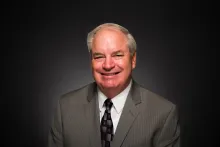
Robin Webber was born in Chicago, Illinois, in 1951, but has lived most of his life in California. He has been a part of the Church of God community since 1963. He attended Ambassador College in Pasadena from 1969-1973. He majored in theology and history.
Mr. Webber's interest remains in the study of history, socio-economics and literature. Over the years, he has offered his services to museums as a docent to share his enthusiasm and passions regarding these areas of expertise.
When time permits, he loves to go mountain biking on nearby ranch land and meet his wife as she hikes toward him.
