
Don Ward
This transcript was generated by AI and may contain errors. It is provided to assist those who may not be able to listen to the message.
Last Sabbath, Dr. Baker started on the theme of sacrifice at Thanksgiving. I want to continue on the theme of sacrifice. Sacrifice is not necessarily the favorite word of a lot of people. We'll title the sermon today the Covenant of Sacrifice. Do you know what the Covenant of Sacrifice is? Is the Covenant of Sacrifice mentioned by that term in the Bible? When did you enter into the Covenant of Sacrifice? And what are the elements of the Covenant of Sacrifice? And do you really understand the elements of all of this, the Covenant of Sacrifice? When Christ returns, He is going to gather together those who have made a Covenant of Sacrifice with Him. Let's read that, and this is the place where you find this term, Covenant of Sacrifice. In Psalm 50 and verse 1, we shall begin. Psalm 50 and verse 1, The mighty God, even the Eternal, hath spoken, and called the earth from the rising of the sun and the going down thereof, out of Zion, the perfection of beauty. Remember Hebrews 12 verse 22-23 says, You have come to the church of the living God, to Mount Zion, to the city of the living God, to the general assembly of the church of the firstborn. Out of Zion, the perfection of beauty, God hath shined. Our God shall come and shall not keep silent. A fire shall devour before Him, and it shall be very tempestuous around about Him. He shall call to the heavens from above and to the earth, that He may judge His people. Gather my saints together unto me, gather my saints together unto me, those that have made a Covenant with me by sacrifice. Hence the title, The Covenant of Sacrifice. And the heaven shall declare His righteousness, for God is judge. Hear only people, and I will speak of Israel, and I will testify against you. I am God, even your God. What is the Covenant of Sacrifice? When is the Covenant of Sacrifice made? The Covenant of Sacrifice is made when you totally surrender your life to God and Christ, to the Word and truth of God. The Covenant of Sacrifice includes several elements. The elements include repentance, faith in the sacrifice of Christ for the mission of sin, and then baptism. Baptism is what you might call the seal of the Covenant of Sacrifice.
The old man is sacrificed and symbolically put to death in the watery grave of baptism. You're raised a new person, having covenanted, entered into a covenant with God and Christ, that you will mortify the deeds of the flesh and live the resurrected life. After taking these steps, God will give you His Spirit and continue to work in you. Look at Philippians 2 and verse 13. God will work in you. God and Christ, as we have quoted many times, John 14, 23, that we, both of us, will make our abode in you. So God and Christ, through the Holy Spirit, live within us. The sacrifice of Christ reconciled us to the Father so that we're no longer counted enemies and we can receive God's Spirit. In Philippians 2 13, for it is God who works in you both to will and to do His good pleasure.
Fulfilling this covenant of sacrifice involves coming to realize that you're bought with a price and that you are not your own. Let's look now at 1st Corinthians 6 and verse 19. 1st Corinthians 6 and verse 19, which you'll see very clearly here, that we are bought with a price that we're not our own. See the great choice that humankind's face.
You're either going to be ruled by God or you're going to be ruled by Satan and his minions. You're either going to be a slave of God and Jesus Christ or you're going to be a slave of Satan in his way. There are two broad ways and that will not change. It's from the Garden of Eden to the present time and it always shall be humankind must decide whether they're going to be ruled with God by God or by Satan the devil in his minions.
In 1st Corinthians 6 and verse 19, what know you not that your body is a temple of the Holy Spirit which is in you which you have of God and you are not your own? For you are bought with a price therefore glorify God in your body and your spirit which are God's. So we must choose to be the bond servant of God and Christ or choose to be the bond servant of Satan the devil.
Do we really understand and internalize what that means? You publicly enter into the covenant of sacrifice when you are baptized. Baptism, as we've already mentioned, is symbolic of your total surrender to God and Christ. It symbolizes giving up self and being crucified with Christ.
So now we look at Romans chapter 6 which we call the baptism chapter in Romans chapter 6. What shall we say then shall we continue in sin that grace may abound? Of course that is in view of the preceding verse there in chapter 5 where a lot of people get the idea that the law is done away with and the obedience is not required. But Paul says shall we then continue in sin that grace may abound?
God forbid! It is the strongest negative that you can put forth. God forbid! No way, no how. How shall we then that are dead to sin live any longer there in? Know you not that as many of us as were baptized into Jesus Christ were baptized into his death. You are symbolically putting to death the old man, the old person, the person that is subject to sin and death. Therefore we are buried with him by baptism into death that like his Christ was raised up from the dead by the glory of the Father.
Many places, of course, in the New Testament it says that the Father raised Jesus Christ from the dead. Jesus Christ did not raise himself, if he raised himself he would not have been totally dead. By the glory of the Father, even so, we also should walk in newness of life. For if we have been planted together in the likeness of his death, we shall be also in the likeness of his resurrection. Jesus Christ is the firstborn from the dead, as it says in Revelation 1 and verse 5. The firstborn among many brethren, as it says in Romans 8 and verse 29. He is the first of the firstfruits, as it talks about in 1 Corinthians 15.
He is now a glorious radiant life-giving spirit being, sitting at the right hand of the Father, making intercession for us. And we too are going to be glorious radiant spirit beings in resurrection. But now, in this life, we are to live the resurrected life, a new life. Knowing this, that our old man is crucified with him, that the body of sin might be destroyed, and henceforth we should not serve sin. For he that is dead is freed from sin.
Now, if we be dead with Christ, we believe that we shall also live with him, knowing that Christ being raised from the dead dies no more. Death had no more dominion over him. For in that he died, he died unto sin once, but he that lives, he lives unto God. Likewise, reckon you also yourselves to be dead indeed unto sin, but alive unto God through Jesus Christ our Lord. When I'm counseling one for baptism, I draw a line, a sort of a wavy line, draw a stick man under the water, and then say, this is what you're doing at baptism.
This is the old man, this stick man, and then I draw little curves up of this stick man trying to bring his head up out of the water. And then this new man that's come up out of the water says, no, you're not getting up.
You're not getting up. You remain crucified. You remain under the water, in the watery grave of baptism. And that brings to mind, of course, Romans 8 13, if you mortify the deeds of the flesh, you shall live. So verse 12, let not sin, therefore reign in your mortal body, that we should obey it in the lust thereof. And then what I was talking about with regard to sin, you look at verse 16, and who will you be ruled by?
You're either going to be ruled by Satan in his way or by God in his way. Know you not that to whom you yield your self-service you obey his servants, you are to whom you obey, whether of sin unto death or obedience unto righteousness.
So this bearing of the old man, as I said, there are many elements of faith involved in fulfilling the covenant of sacrifice and becoming a living sacrifice. Now you look at Romans chapter 12, forward just a few pages, and Paul then beseeches us to become living sacrifices. The first 11 chapters of Romans written by Paul basically brings you up through repentance, faith in God, baptism, resurrection. I'll go back and start again. Brings you up to repentance, faith in God, baptism, laying out of hands, resurrection, judgment, going on to perfection. Basically from chapter 12 to the end of the chapter focuses on becoming a living sacrifice and keeping the old man buried, being a living sacrifice. So Paul starts chapter 12, I beseech you therefore, therefore meaning in view of what we have said in the past, that now you have repented, you have exercised faith in the sacrifice of Christ, you have been baptized, you have received the laying on of hands, you have come up out of the water to grave, you're to live the resurrected life. Judgment is now on the house of God.
I beseech you therefore, brethren, by the mercies of God, that you present your bodies a living sacrifice, wholly acceptable unto God, which is your reasonable service. And be not conformed to this world, but be you transformed by the renewing of your mind that you may prove what is that good and acceptable and perfect will of God.
This involves coming to understand and believe the various elements of the covenant of sacrifice. You look at Romans 8 and 28 in verse 28. Romans 8, 28. And we know that all things were together for good to them that love God. Sometimes we leave out to them that love God. So what is the love of God? Verse John 5.3, for this is the love of God that we should keep his commandments, and his commandments are not grievous.
So if you're really following God, believing and trusting in Him, living by faith, as we shall read in a moment, then all things work together for good to those who love God and are called according to His purpose. Now look at Hebrews chapter 12, verse 6. I call this verse here. I start fundamentals of theology class with what is the first article of faith, and the first article of faith. Remember, it's fundamentals of theology. If you're going to study theology, it's difficult to study theology if you don't believe God exists. Now there are a lot of atheists who might take a course in theology, but they have no faith because we'll notice what this says.
Verse 6, I want chapter 11. I said 12. Turn back, please, to 11.6. But without faith, it is impossible to please God. Of course, in years past, we've written booklets on proofs of God's existence, and we talk about proofs of God's existence. And to me, nothing else makes sense. If God doesn't exist, nothing makes sense to me. So there are proofs, and there are scriptures, of course, internal evidence from the Bible, that you can quote with regard to proofs of God's existence. But there's also, when all is said and done, a dimension, an element of faith in the abstract sense that you believe, without faith, it is impossible to please Him, for He that comes to God must believe that He is.
That is, that God exists. Does God exist? The Bible makes the assumption that God exists, and that He is a rewarder of them that diligently seek Him. A rewarder of them that diligently seek Him. What does the providence of God mean? In common language, it means that God always has your best interest at heart. In other words, He is a rewarder of those who diligently seek Him. He has your best interest at heart all the time.
In the metaphoric sense, a description of this gift is given in Romans 8 and verse 36. With regard to God always having our best interest at heart, we can want to go to Romans 8 36. Romans 8 is one of the richest chapters in the whole Bible. It is, if you master Romans, first eight chapters of Romans, you have mastered a lot.
In Romans 8 36, we remember the story of Joseph sold into slavery, and his brothers come to buy the grain, and they are afraid of what retribution that Joseph might give them, that he might lash out against them and punish them for selling him into slavery.
Of course, you know, it turned out that God was using Joseph all the way. And finally, when they did speak and began to converse, that Joseph said, don't be afraid, you didn't send me here, but God sent me here to preserve posterity.
So God was working out a plan all the way through Joseph from the time of his being the dreamer back in the days of being at home with his brothers. They came to despise him and sold him into slavery, and then winds up that he becomes their great benefactor. Joseph had this attitude. We'll start here before the key verse that we want to read. We'll start in Romans 8.31. What shall we say then to these things?
If God be for us, who can be against us? He that spared not his own son, but delivered him up for us all, how shall he not with him also freely give us all things? Who shall lay anything to the charge of God's elect? It is God that justifies. Who is he that condemns? It is Christ that died, yea, rather, that is risen again. Who is even at the right hand of God, who makes intercession for us. Who shall separate us from the love of Christ? Shall tribulation, distress, or persecution, or famine, or nakedness, or peril, or sword, for it is written, for your sake, we are killed all the day long.
We are accounted as sheep for the slaughter. One way to summarize this is that anything that we get above death is a gift, because the wages of sin is death, and all of sin, and come short of the glory of God, and therefore all have the death penalty on their head. But to come to that point to where you let everything go, and you are counted as sheep for the slaughter, as Christ did when he prayed, nevertheless, your will be done.
So we must come to the point to become as clay in the Master Potter's hands. That means you have totally surrendered, and you offer no resistance to the Potter's hands. You're now in the Potter's hands, to will and to do his good pleasure. A little bit about clay. Clay in and of itself is not that valuable. It takes on great value, though, when it is in the Potter's hand. A Master Potter can mold it and shape it and make it into beautiful pottery. It is said that the character of a people under the hand of the Master Potter will reflect the character, and to a large degree, the culture of a people.
Of course, when archaeologists are excavating an area, they take great care to preserve the pottery, to put the pieces back together. So you can tell a lot about a people and their civilization just from its pottery, due to its ability to receive an impression. When moisture is put upon it and retain that moisture, returning its shape, rather, when it's dry.
So it is slightly wet, and you can mold it, you can shape it into different ways. I have a piece of dough here that I, the Master Potter, put together, and when I squeeze this down, it stays just like that. And clay will do the same thing, but it's on the Potter's wheel, and it spends a lot of time on the Potter's wheel. And it takes the shape and the form of the Master Potter's hand and the wheel upon which it is being refined.
So due to its ability to receive an impression when it is moist and retain that impression when dry. Clay was useful for sealing fine wine and for keeping valuable records. For example, the preservation of the Dead Sea Scrolls was in large measure due to the clay jars in which they were found, because it preserved them almost perfectly. They were kept dry, and oxygen and moisture could not get to them.
Now, we can compare clay and sponge and ask the question, am I sponge in the Master Potter's hand, or am I clay? We saw that with clay, it retains the impression. Of course, with sponge, you can squeeze it together, and as long as you hold it, it stays there. But as soon as you let it go, it's back the same way. So we can ask ourselves, am I sponge or am I clay? So a sponge, as long as force is being applied, remains in place, whereas clay maintains its shape that was given to it by the Master Potter. When you hear God's Word preached, or when you're reading or studying the Word of God, do you resist or second-guess? Probably don't second-guess God, I would hopefully not. Do you second-guess the minister? Well, we should prove everything. We are admonished. And so many years in the church, we said and have said, don't believe me, believe your Bible. And when it comes to judgment time, I'm not going to stand for you, and you're not going to stand for me. You're going to stand for you and you only. This is very clear in Ezekiel 14 and also Ezekiel 18. You will give an account yourself. Are you like clay, on the other hand, in the potter's hand? Or are you like a sponge? You absorb what is being said, and you may even be stimulated or yielded or shaped or humble for a few fleeting seconds or minutes. But as soon as you're challenged by the storms of life, you return to your old comfort zone and resist the hands of the master potter. Hundreds of people sit in church services, Sabbath after Sabbath, as a sponge. They are sponges, wet today, dry tomorrow. They have little or no permanent qualities.
What they are just depends on the externals.
They have teach me if you dare attitude, and if I don't care what you say, my mind is made up.
Don't confuse me with the facts. They live their life the same way they've not changed since they were put under the water. So we must ask ourselves, do I really understand the covenant of sacrifice?
Have I totally surrendered?
Do I count myself as a sheep for the slaughter? Each one of us can ask ourselves these questions. Let's turn to Isaiah now, 64, and ask ourselves if we have internalized Isaiah 64 in verse 8. And Isaiah 64 in verse 8.
But now, O Lord, you aren't our Father. You aren't our Father.
You're the one that begets us to a new life.
You aren't our Father, and we aren't the clay. And you are Potter, and we are all the work of your hand.
Have we internalized that?
Look at Isaiah 29 in verse 15. Isaiah 29 in verse 15. Back a few pages. Isaiah 29 verse 15.
Woe unto them that seek deep to hide their counsel from the eternal, and their works are in the dark. And they say, Who sees us and who knows us? Of course, that all-seeing eye of God, God's presence pervades the universe. No matter where you go, God's Spirit is there. Surely your turning of things upside down shall be esteemed as a Potter's clay. For shall the works say of him that made it, He made me not.
Do we think that we are here because of us? Of course, we say even the atheists know that they're not here because of themselves. They believe that they are here as a result of some evolution. Or shall the thing framed say of him that framed it, He had no understanding.
We never want to fall into that pit. Now look at Isaiah 45 and verse 9. Isaiah 45 and verse 9.
Isaiah 45 and verse 9.
Woe unto them that strives with his Maker. Woe unto them that strives with his Maker.
Kicking against the pricks of God, the Apostle Paul tried that for quite a long time until he was struck down on the road to Damascus.
Woe unto them that strives with his Maker. Let the pot-shirt strive with the pot-shirt of the earth.
Shall the clay say to him that fashioned it what maketh you or your work?
He hath no hands. Woe unto him that says unto his Father, What begat you or to the woman? What have you brought forth?
Thus says the Eternal, the Holy One of Israel and his Maker, Ask me of things to come concerning my sons, and concerning the work of my hands, Command you me. I have made the earth and created man upon it, and even my hands have stretched out the heavens, and all their hosts have I commanded.
God the Father has called us to be clay in his hands and in the hands of Christ, and to become a new creation. If any man be in Christ, he is a new creation.
Becoming clay in the Master Potter's hand can be equated with a childlike humility.
Let's look at Matthew 18. Matthew 18 verse 1.
Very strong language in this with regard to what we have to become. In Matthew 18.1, at the same time came the disciples unto Jesus, saying, Who is the greatest in the kingdom of heaven? And Jesus called a little child unto him, and said him in the midst of them, and said, Barely I say unto you, except you be converted, and become as little children you shall not enter into the kingdom of heaven.
If you don't have this attitude of total surrender, this covenant of sacrifice of giving up self, whosoever therefore shall humble himself as this little child, the same is greatest in the kingdom of heaven. And whoso shall receive one such little child in my name receives me.
But whoso shall offend one of these little ones which believe in me were better for him, that a millstone were hung on his neck, and that he was drowned in the depth of the sea.
So what are the physical characteristics of a little child? Joints are loose, pliable, flexible.
They can do this. No, really they can't, but neither can you. But it shows flexibility.
His joints are loose, flexible. The bones are flexible. They can take a fall, and they won't break like people do when they get a little older and their bones become brittle. They can relax and just, as we say, sleep like a baby. So what is the mindset? They're not fearful.
They would play with snakes if you would let them. They're not worried and anxious over the cares of this life. They're eager to learn. They're willing to be taught, willing to be molded, they aren't uptight, they aren't striving with their maker. So God wants us to be flexible, malleable, pliable, so we can be molded, so we can grow. God wants us to have a perfectly teachable heart and be enthusiastic about learning His way. He wants us to have this desire to learn and to dig deeper into the gold mine that is contained in the Word of God. Let's look at James 1.21.
As we're turning there, I'll just rehearse a little bit about whom shall he teach knowledge, quoting from Isaiah 28 verse 9. It says, whom shall he teach knowledge, whom shall he make to understand? Those that are drawn from the breast and weaned from the milk, line upon line, precept upon precept. Here a little, there a little.
So God wants us to be in this frame of mind, as in James 1.21, drawn from the breast, weaned from the milk, wherefore lay apart all filthiness and superfluity of naughtiness and receive with meekness, and the great word for meekness is prautes, p-r-a-u-t-e-s, and it's hard to translate that into English. It can mean a perfectly teachable heart, one that is not resistant.
One is like the clay in the master potter's hand, one that is not striving with his maker, and receive with meekness a perfectly teachable heart, the engrafted word, which is able to save your soul, your life essence. Yes, he wants us to prove all things, hold fast that which is good, and not be tossed about by every wind of doctrine.
And at the same time, he wants us to grow in grace and knowledge, and not cling to fables.
So there are deeper spiritual understandings that we need to come to when it comes to really understanding the covenant of sacrifice. We, as ministers, need to give sermons that challenge all of us to dig deeper into the scriptures and grow in grace and knowledge. If you would, turn to 2 Timothy chapter 4. I wonder if you reflect back on this week, I know this week was a different kind of week because many were traveling and, of course, Thanksgiving and all of that. But just as you reflect back on any week of your life, did you really study the Bible in death, or did you just read a few verses, or did you not read it at all? Paul is largely admonishing the young evangelist Timothy here, but it applies obviously to us today the word of God as a living word. I charge you therefore before God in Christ and the Lord Jesus, who shall judge the quick and dead at his appearing in his kingdom. Preach the word, be instant, end season, out of season, reprove, rebuke, exhort with all long suffering and doctrine. That word reprove is a l'encho, it means to convict. We heard a sermonette, a wonderful sermonette on that, the steps to conviction. That's one of the great things that's missing in our culture, society today.
Conviction, for the time will come when they will not endure sound doctrine, but after their own lusts shall they heed to themselves teachers having itching ears, listening to what I want to listen to, to people that agree with me.
I don't want to hear much about sacrifice, but sacrifice is the thing that whereby God comes to really know us.
And they shall turn away their ears from the truth, and they shall be turned unto fables.
So we as ministers need to give sermons that challenge all of us to dig deeper into the scriptures, to grow in grace and knowledge.
We have read the scripture that we are bought with a price, we're not our own.
Since none of us are perfect and God chastens every son that he loves, note what the Apostle Paul writes in Hebrews 12. So we begin now to go into some of the ways that we're tested as to whether or not we are going to be a living sacrifice.
In Hebrews 12, beginning verse 5, Hebrews 12, And you have forgotten the exhortation which speaks unto us as children, My son despises not you the chastening of the Lord, nor faint when you are rebuked of him, for whom I love, for whom he loves, for whom the Lord loves, he chastens, and scourges every son whom he receives. If you endure chastening, God deals with you as with sons, but for what son is he whom the Father chastens not? But if you are without chastisement, whereof all are partakers, then are you illegitimate and not sons? So God steps in at times, if we refuse to judge ourselves, he will step in.
And we may have trials and tribulations. We read in John 15 that God prunes every vine that it might bring forth much fruit. I mean, even when you are doing, quote, well, God may step in and prune the vine. Why? So that you might be more fruitful. We read in Ecclesiastes 9-11, quoting here, I returned and saw under the sun that the race is not to the swift, nor the battle to the strong, neither yet bred to the wise, nor yet riches to men of understanding, or yet favor to men of skill.
But chime and chance happens to them all. You can be in the wrong place at the wrong time and have to suffer the consequences. See, in John 15, it's not necessarily because you are needing chastisement that the vine is pruned.
In time and chance, it's not necessarily because you have done something wrong. So from these passages, we can conclude that every trial that comes in us is not necessarily chastisement.
It could be that God is pruning us and giving us an opportunity to grow so that we can be more fruitful. It might be the result of time and chance. Wrong place, wrong time.
But whatever the situation or the circumstances, whether it is God's chastisement, whether it is He's pruning us to bear more fruit, or whether it's time and chance, no matter what the situation or circumstance, what does He expect us to do? Are we to remain a living sacrifice?
Let's turn to Acts 14. We're going to get down now to some, as they say, nitty-gritty.
You know, I think about the life of the Apostle Paul when my light afflictions come along, whether it be hips or knees or shoulders, or all of the above. I've had attention paid to all three and more, and many of you have. But compared to what the Apostle Paul went through, compared to what Christ went through, in fact, Paul writes in Hebrews 12, the light affliction. But notice this one. This is Acts 14 and verse 19. We start Acts 14 verse 19.
And there came certain Jews from Antioch and Iconium, who persuaded the people, and having stone Paul, drew him out of the city, supposing he had been dead. They left him for dead.
How be it as the disciples stood round about him, he rose up and came into the city, and the next day he departed with Barnabas to Derbe. And when they had preached the gospel to that city, and had taught many, they returned again to Lystra and to Brethren and Antioch.
Now, you can read about the many things that Paul suffered three times. He had the whip laid on him in the deep for a day and a night without food. It just goes on and on and on. Of all of the things that he suffered, but he continued fulfilling the covenant of sacrifice.
He says, you know, I'm willing to depart and be with the Lord, but it's better that I remain with you, confirming the souls of the disciples, exhorting them to continue in the faith, and that through much tribulation enter into the kingdom of God.
There are so many examples in the Bible of that kind of sacrifice.
Paul writes in 2 Timothy 3, 12, all that will live godly in Christ Jesus shall suffer persecution.
We just read here in verse 22 that we must, through much tribulation, enter into the kingdom of God.
One of the greatest areas of concern, and I would say areas of misunderstanding, that has existed in the church and continues to exist in this day, centers on affliction and healing, and how to fulfill this covenant of sacrifice. Apparently, we don't understand what we have explained about being brought, bought with a price, becoming clay in the Master Potter's hands, being counted as sheep for the slaughter, totally surrendering our total being to the will of God, left for dead. What does he do? Get up and continue what he was doing.
I call this package the 3S package. Oftentimes, I've talked about the 3Cs, conviction, commitment, and courage, but this is surrender, submission, and service. You're bought with a price. You're not your own. You understand that many are the afflictions of the righteous.
God does not view life and death as we do. The so-called faith healers have turned healing into a sideshow to draw followers to themselves.
And what I'm about to say, I believe you will agree, but I hope not.
Well, actually, I'd hope it wouldn't be this way.
At this moment, if one of the many splinter organizations that claim to be the true Church of God were suddenly to experience miraculous healings, just about everybody that came would be healed, people would immediately be drawn to them. Oh, this is where God is working.
Now, let's see what Christ says. Look at Luke 16 in verse 25.
I remember that in the old days, we had an evangelist who came here, who said, now, we need to do this, we need to do that, mainly in the physical realm.
Don't drink those Coca-colas. Don't eat this. Don't do that.
And we'll begin to have miraculous healings, and everybody will know that God is really working here.
Of course, this is the parable of Lazarus and the rich man that we're about to read, and we're not going to take a lot of time in the background. Verse 19, there was a certain rich man, which was clothed in purple and fine linen and fared sumptuously every day. He died, and he was not a good person. He was waiting for the flames of Guyhenna, and he saw them licking up. And as he saw them, he cried out, or he besieged. We look at verse 23, and in hell he lifted up his eyes, being in torments and seeing Abraham afar off in Lazarus and his bosom. And he cried and said, Father Abraham, have mercy on us and send Lazarus, that he may dip the tip of his finger in water and cool my tongue, for I am tormented in this flame.
Of course, he was going to be burned up. He was not going to be tormented forever, but before he was thrown in, imagine they're just ready to be thrown in the lake of fire. But Abraham said, Son, remember that in your lifetime you received your good things and likewise Lazarus evil things, but now he is comforted and you are tormented.
And beside all this, between us and you there's a great gulf fixed so that no one could pass from here to there. That great gulf is the gulf between physical life and eternal life.
There's only one way to transcend that gulf. Neither can they pass to us that would come from there, or neither could they come from there. Then he said, I pray you therefore, Father, that you would send him to my Father's house. For I have five brethren that he may testify unto them, but they also come unto this place of torment. Abraham said unto him, they have Moses and the prophets, let them hear them. And he said, No, Father Abraham, if one went from the dead, they will repent. And he said unto him, Christ speaking, if they hear not, Moses and the prophets, neither will they be persuaded, though one be raised from the dead.
Oh yes, miraculous healings are wonderful, and we all rejoice in it.
And during Christ's earthly ministry, Jesus performed many miracles of healing and casting out of demons. But I venture to say none of these people had entered the covenant of sacrifice with God and Christ.
Jesus had not yet been crucified, resurrected. The Holy Spirit of Begettle had not been sent from the Father. In the early days of the Church, the apostles went forth healing the sick in the name of Jesus. Many of these people had not entered in the covenant of sacrifice with God and Christ. These miraculous healings provided a strong witness to the veracity of their teachings about Jesus and the path to eternal life, showing that he was indeed the Messiah.
Now let's turn to the words of the Apostle Paul in 1 Corinthians 14, 22 with regard to gifts and miracles. You remember that 1 Corinthians 12 is about spiritual gifts.
1 Corinthians 13, an inset chapter about the more excellent way. Then he returns to gifts and signs in chapter 14. Then he gives this somewhat of a summary verse with regard to that. In 1 Corinthians 22, wherefore tongues, this miraculous speaking of tongues, are for a sign, not to them that believe, but to them that believe not, but prophesying serves not for them that believe not, but for them which believe.
See, oftentimes when we're coming into the faith, we have more miracles and miraculous healings than we do when we are in the faith and being tried and tested. I remember times when I was visiting this area back in the very early 70s, I was not even ordained. I would go out on Sunday afternoons and there were fine sick people and anoint them. I know I walked in the house of a little child and their parents were beside themselves. He was burning with fever. I would say maybe 18 to 20 months old and anointed him with anointed cloth and within minutes fever was gone. Many miraculous healings oftentimes in our beginning days, not to say that they don't happen later because they do. One of the things that we tend to forget the role of our high priests, Jesus Christ the righteous, who sits on the right hand of God, whoever lives to make intercession for us. Look at Hebrews 7. This is one of the most encouraging scriptures in the whole Bible.
I try to remember this every night before I go to sleep. I don't do it every night because different thoughts carry me in a different direction sometimes.
Wherefore, he, Christ, is able also to save them to the uttermost that come unto God by him, seeing he ever lives to make intercession for them. He is our high priest. He is our intercessor. We have people who say and apparently believe such statements as, if we had enough faith, we would have numerous healings in the church. And you must pray. Obviously, you have to pray in faith and to believe with your whole heart.
But still, the answer to your prayer may be no. We say that God knows what he is doing and say that we pray according to his will, yet tend to lose faith or blame God if the answer is no.
Our high priest is not negligent in his role as our mediator and our intercessor, as we have just read. He ever lives to make intercession for us. Look again there. We have verse 25 in chapter 7. Look at Hebrews 8-1. Now the things which we have spoken, this is the sum.
We have such a high priest who has said on the right hand of the throne of the majesty in the heavens, minister of the sanctuary and of the true tabernacle which the Lord pitched and not man.
He is always on the job. He has suffered as we have suffered.
He can identify with us. Now back in Romans chapter 8. Romans chapter 8. Let's really get into it in Romans 8 and verse 26.
Likewise, the Spirit also helps our infirmities. The Spirit of God. Now don't get the notion that the Holy Spirit is out there freelancing on its own. The Holy Spirit is under the direction of God in Christ. Likewise, the Spirit also helps our infirmities for we know not what we should pray for as we ought. But the Spirit itself makes intercession for us with groanings which cannot be uttered and he that searches the heart knows what is the mind of the Spirit because he makes intercession for the saints according to the will of God. Jesus Christ, our high priest, prays for us according to the will of God. So in peril, persecution, affliction, sickness, and tribulation, our high priest intercedes for us according to the will of God, according to the Scripture. Our high priest has not wavered in his faith. I've told this story in this area many times because it happened here around 1980-81, somewhere along in there, when an elder here, Mr. Pyle's son Joe, was in the death throes of terminal cancer. He had melanoma and a big tumor spiraled out his ear. It looks like a hornet's nest almost with a stench that would cause you to gag when you walked into the room. And Mr. Pyle said, you know, Joe has been an obedient child, and God says, long shall be your days upon the earth. And so God has the healing. And I said, Mr. Pyle, I do not agree with you because he has entered into the covenant of sacrifice with God in Christ. He has said to the master potter, not your will be done, but my will.
By your will, I meant not Joe's will, but the will of God.
He has entered into the covenant of sacrifice, as we all have.
And so we are agreeing when we enter into that covenant of sacrifice that whatever he does with us, we're going to remain faithful. Our high priest is not wavered in his faith. And one might well say, this person was a very obedient child, and yet he, she died at an early age. I just don't understand it. I thought God said that if we obey our parents, long shall be our life upon the earth. But there are other factors that come into play, as we have noted. Once you enter into the covenant of sacrifice with God, you place your life in the hands of the master potter. The master potter does not make mistakes.
Sometimes even the physical master potter, his hand will slip, and the wheel will make a mark, and he'll have to start over or throw it away. Or some might say that we followed all the instructions regarding prayer and healing. We fasted, we prayed, we believed, yet our petition was denied. We've had that happen in recent times, and people go through that in their grief.
That is sometimes the case, but it does not mean that God did not hear our prayers. It did not mean that our high priest did not intercede for us according to the will of the Father. In fact, we were promised that he ever lives, and I read the Scripture, that he ever lives to make intercession for us. But some might say that what is the point in praying if God already has his will set?
God allows us to be tried and tested all along the way to see how we will respond. It is not the trial that makes the man, but it is the response to the trial that makes. So God tries and tests us to see how we will respond. In some cases, our prayer life lags until we have a big trial. And God wants us to come to the understanding that Job eventually came to in great trial. That is, God is just in all his actions. God can make us into a vessel of honor, or you can become a vessel of dishonor.
A lot of people just say, well, if that's the way they're going to be in a church, I'm leaving. So as you sit here today in your heart, are you humble, contrite, like a little child, or is it hard? All of us had better pray continually for God to give us a heart of clay.
It would be sad, and sad to be, in the situation that Esau found himself in, when he sought repentance, forgiveness bitterly, and could not find it.
Because a root of bitterness sprang up in him to the gory, that he just could not let it go. So, do we feel that the situation, circumstance, and life is against us?
That everyone is out to get us, and that we had better do to the other guy before he does it to us?
If we feel that way, we don't have a childlike attitude.
Circumstances do not make a man, but they do reveal what is in the heart of man.
This little poem here, I ask God to take away my habit. God said, No, it is not for me to take away, but for you to give up.
I ask God to make my handicapped child whole. God said, No, his spirit is whole, his body is only temporary. I ask God to grant me patience. God said, No, patience is a byproduct of tribulations. It isn't granted, it is learned. I ask God to give me happiness. God said, No, I give you blessing. Happiness is up to you. I ask God to spare me pain. God said, No, suffering draws you apart from worldly cares and brings you closer to me.
I ask God to make my spirit grow. God said, No, you must grow on your own, but I will prune you to make you more fruitful. I ask God for all things that I might enjoy life. God said, No, I will give you life so that you may enjoy all things. I ask God to help me love others as much as He loves me. God says, Ah, you finally get the point.
There are countless thousands of people sick because in their minds their sickness or affliction is their righteousness. They are missed the point. See, the affliction is for a purpose.
It is not to stay there into glory in it. It is to learn. Look at Psalm 119, verse 67.
Psalm 119, verse 67.
Psalm 119, verse 67.
Before I was afflicted, I went astray, but now have I kept your word.
You are good and do good. Teach me your statues, the proud afford to lie against me.
But I will keep your precepts with my whole heart. Their heart is as fat as grease, but I delight in your law. It is good for me that I have been afflicted, that I might learn your statues. God desires that we voluntarily judge ourselves as we live the life of a living sacrifice so that He doesn't have to step in and chase in us. He doesn't have to step in and judge us and to bring us to the point, hopefully, of introspection and repentance. In 1 Corinthians 11, and this is in conjunction with a Passover, we generally read it at this time. Verse 28, Let a man examine himself, and so let him eat of that bread and drink of that cup. For he that eats and drinks unworthily, the Greek word is an axios, and it means irreverently, eats and drinks judgment to himself, not discerning the Lord's body. For this cause many are weak and sickly among you and many sleep. Why? They did not examine themselves. They drank the cup irreverently. They did not discern the Lord's body. For if we would judge ourselves, we should not be judged. And that is what God wants us to do voluntarily. See, Job learned that lesson the hard way.
Finally, he came to understand that God has to be justified and mankind has to be judged in all things. That God is just in everything that he does. But when we are judged, we are chasing of the Lord that we should not be judged with the world. So God wants us to judge ourselves and examine ourselves so he won't have to do it. If he does have to intervene, it is for our benefit.
Sometimes sickness is a method for humbling us. However, some people are not humble through sickness, so they have to be dealt with in other ways. If a person does not come to self-knowledge and self-judgment, they would probably be better off dead. And God would rather see us dead than miss out on his kingdom. Now, you know that Jesus Christ was tried, and it says through suffering, he learned obedience. In other words, he was tested, tried to the point of death to see if he would recant. Would he call for a legion of angels as he could have, as he said he could?
Or would he remain faithful unto death? And so must we. Christ set the supreme example, surrender, submission, and service. He gave up his glory. He took on the form of a man.
He died the ignominious death of death on the stake, so that we might live, for the joy that was set before him. So we're going to close with this perspective of being clay in the Master Potter's hand. We'll give somewhat of a description of what we just said. It only took an hour and 12 minutes.
It is being like a child in attitude and spirit. It is coming to realize that, by yourself, you are just a piece of clay.
But with God, you can do all things through Jesus Christ who strengthens you.
It is coming to see that, without God and Christ, you will not live forever.
It is coming to see that the way of this world is vanity and striving after wind. It is coming to see that what you can contribute to the success of others is what really counts in life. It is being able to rule your own spirit. It is coming to the point where you give God credit for everything. Paul's statement, I count all but lost for Christ and the cross.
It is coming to see God as a loving Father and yielding yourself to Him just as clay does to the potter, so you can be molded and made into the image of His dear Son.
It is internalizing Romans 8.28. All things work together for good to those who love God and are called according to His purpose. It is being content with your situation and position in life, yet deeply desiring to grow in grace and knowledge.
Each one of us must ask ourselves, am I clay or am I a sponge?
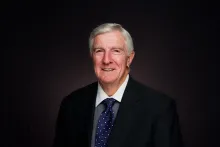
Before his retirement in 2021, Dr. Donald Ward pastored churches in Texas and Louisiana, and taught at Ambassador Bible College in Cincinnati, Ohio. He has also served as chairman of the Council of Elders of the United Church of God. He holds a BS degree; a BA in theology; a MS degree; a doctor’s degree in education from East Texas State University; and has completed 18 hours of graduate theology from SMU.
