
Don Ward
This transcript was generated by AI and may contain errors. It is provided to assist those who may not be able to listen to the message.
If you would turn to Psalm 50. I've given a version of this sermon before here, I think, within the past two or three years. But in view of what we have been facing here for quite a long time, we'll continue to face as we grow older. And I begin to think about all the men and women that I've known in this area and in the church at large through the years.
So many have passed off the scene, and of course we look forward to that time of the resurrection. We fall asleep. The next waking moment in resurrection, reunited with loved ones that have gone before. And the fact that we have so many people that have had sickness and trials, and whatever the trial might be, whether it be sickness, financial, or any other trial that you want to name.
In view of all that, in preparation for Passover, a sermon of this type, it is suitable for young and old. A very young, if you could come to understand and embrace the purpose of human existence. Why were you born? Why are you here? What is life all about? And don't let the glimmer, the glamour, the glitz of this present evil age shroud your vision so that you do not come to see and to understand what life is all about.
In Psalm 50, verse 1, the mighty God, even the Eternal, has spoken and called the earth from rising in the sun and going down thereof. Out of Zion, the perfection of beauty, God has shined. Of course, Zion, as I've told you many times, is a literal physical place south of the Temple Mount, where David had pitched his tabernacle.
Zion is also called the City of David. But it's symbolic of the Church, as in Hebrews 12, verses 22 and 23. Out of Zion, the perfection of beauty, God, has shined. For God shall come and shall not keep silence. A fire shall devour before him. So this is what we talk about, a coming of Jesus Christ, setting up at the Kingdom of God. And it shall be very tempestuous round about him.
He shall call to the heavens from above and to the earth, that he may judge his people. Gather my saints together unto me those that have made a covenant with me by sacrifice. Do you know what the covenant of sacrifice is? When did you enter into the covenant of sacrifice? A covenant is a binding agreement made by two parties. The terms and conditions of the covenant are clearly defined, what each party agrees to do. And then, also, the consequences for breaking the covenant are also defined and delineated.
So what are the elements of the covenant of sacrifice, and do we really understand what the elements of the covenant of sacrifice means? So as we have read here, when Christ comes again, he's going to gather together those who have made a covenant of sacrifice with him. And how do we fulfill the covenant of sacrifice?
Look at Romans 12. In Romans 12, Paul writes, I beseech you therefore, I mean, with all my being, I beseech you therefore, brethren, by the mercies of God that you present your bodies, a living sacrifice. It seems sort of paradoxical that on the one hand you make a covenant of sacrifice, and then on the other hand you're to be a living sacrifice, not a dead one, wholly acceptable unto God, which is your reasonable service. The covenant of sacrifice is made when you totally surrender your life to God and Christ.
When you come to understand what the purpose of human existence really is, that you were born to rule and reign with God and Jesus Christ in the kingdom of God forever, and that there is a great transcendental purpose for human existence. So the elements of this covenant include repentance, faith in the sacrifice of Christ, for the remission of sin and baptism, and then you agree, what I call the three S's, that you will surrender your total being, you will surrender to God and Christ, you will submit to them and serve them. After taking these steps, God will give you His Spirit and continue His work in you.
So this involves coming to realize that we are bought with a price, that we are not our own. Somehow the world has come to believe that they don't owe their existence to God, to any kind of divine plan or creator God, that we're here by an evolutionary process, it just sort of came to be. So look at 1 Corinthians, forward there, a few pages. 1 Corinthians 6, verse 19. 1 Corinthians 6, verse 19. What? Know you not that your body is the temple of the Holy Spirit, which is in you, that you have of God, and you are not your own, for you are bought with a price.
Of course, that price was the life of the Son of God, Jesus Christ. Therefore glorify God in your body and in your spirit, which are Gods. Your body and your spirit, the Holy Spirit, are Gods. Do we really understand and internalize what this really means? Baptism is symbolic of your total surrender to God in Christ. It symbolizes giving up self, being crucified with Christ. You turn back to Romans again, chapter 6. In Romans 6, you read into Romans 6 from 5. There really should be no chapter break. We read here, I think, last week.
What shall we say then? Shall we continue in sin, that grace may abound? That's the idea that some get, we're saved by grace. Yes, we're saved by grace. It is through grace that we even exist. It's through grace that there is a plan of salvation. It is through grace that God sent His Son. But at the same time, there is an obligation on our parts, and we must be active participants. What shall we say then? Shall we continue in sin, that grace may abound? God forbid! How shall we that are dead to sin live any longer therein? Know ye not that as many of us as were baptized into Jesus Christ were baptized into His death.
Therefore we are buried with Him by baptism unto death. So this entering into this covenant of sacrifice. Now under the terms of the Old Covenant, when they entered into that covenant, they sacrificed animals, cut them in parts, and you had parts on either side, and the people walked between the parts of the animals and sacrificed, and they entered into the terms of the Old Covenant. Today we enter into the terms of the New Covenant through repentance, faith, baptism, in which we're saying, we're going to sacrifice ourselves.
We're going to give up self and become a living sacrifice. Now with those sacrifices, of course they killed the animals and cut them in parts, and they walked in between. But we're to be living sacrifices, but having given up the old self to live, putting it to death, baptizing His death, and then raised to newness of life. Verse 4, Therefore we are bared with Him by baptism into death, that like as Christ was raised up from the dead by the glory of the Father, even so we also should walk in newness of life.
So we're supposed to live the resurrected life as living sacrifices, and there are many elements of faith involved in fulfilling the covenant of sacrifice, and being a living sacrifice. Now I want us to turn to Hebrews 11.6. Once again, we're going to emphasize the last part of this verse more today. In Hebrews 11 verse 6, the first article of faith is to believe that God exists, as we note here. Hebrews 11.6 But without faith it is impossible to please Him, for He that comes to God must believe that He is, and that He is a rewarder of those who diligently seek Him.
He is a rewarder of those who diligently seek Him. Now will it necessarily be in this life? No, it may not be in this life. But Paul writes in 1 Corinthians 4 that every good thing that we have done, I'm loosely paraphrasing, but it captures the essence of what he writes there, that every good thing that we have ever done, when that time comes, we shall receive reward from Christ. So don't think that your good deeds, or whatever it is that you're doing, is swept under the rug by Him.
Oh, we will forget, humans will forget, and sometimes it's your values based on what have you done for me lately. But God never forgets. But at the same time, we have to endure to the end. Last evening, in talking with Mrs.
Carlisle, she almost every time, she remembers back this sermon I gave quite a long time ago. In fact, I gave it here once since I've been back here in the recent three and a half, four years, of ho to the end of the road. And one of the things she said last night, sort of chuckling, I want to ho to the end of the road. And she knew I knew what that meant.
So this involves this, his rewarder of those who diligently seek Him. Look at Romans 8, verse 28, coming to understand and internalize this. Don't let this go over your head, the setting of the backdrop for many other things that we'll be discussing in this sermon, having to do with what life is all about, why we're here, the covenant of sacrifice, the elements that are involved in it.
So you have to believe that God exists and He has your best interest in heart, regardless of the situation of the circumstance. In Romans 8, 28, And we know that all things work together for good to them that love God, to them that love God.
Now, the love of God is defined in 1 John 5.3, for this is the love of God that we should keep His commandments, and His commandments are not grievous to them that love God, to them who are called according to His purpose. We know that all things work together for good to them that love God and that are called according to His purpose.
In the metaphoric sense, the description of what is involved in the covenant of sacrifice is given in verse 36 here in Romans 8. Look at Romans 8, 36. For it is written, For your sake we are killed all the day long, we are accounted a sheep for the slaughter. I mean, the internalization of this, that we are bought with a price, we're not our own. That in one sense we are as good as dead.
The wages of sin is death, but the gift of God is eternal life through Jesus Christ our Lord. So we understand, if we come to understand that anything that I get above death is a gift. Because if I got what I deserve, I deserve death. All have sinned and come short of the glory of God and wages of sin is death. So it's a simple logic. We have to come to the point that we are perfectly at peace with God and self, regardless of what may happen to us.
You have made peace with God, and now, if you can internalize this, I know I struggle with it. You're counted as sheep for the slaughter. Anything I get above death is a gift. You made peace with God through your repentance, faith, baptism. You received God's Spirit. So when we were enemies of God, we were reconciled to God by the death of his son. We shall be saved by his life. So we have made peace with God, and now, we can have the peace of God, which surpasseth all understanding, to come to that point.
Occasionally, I think I sort of reach it, in which it's like a great load is lifted off the shoulders. And you somewhat internalize, and oftentimes it slips away, come and learn of me, for my yoke is easy, and my burden is light. Cast all your care on me, for I care for you. And sometimes, we can come to that point. We have to come to the point that whether we live or die, you and I must come to the point that we trust in the providence of God.
Now, providence means looking out for your best interests in advance. The providence of God, looking out for your interests in advance. Whether you live or die, or whether I live or die, God has our best interests at heart. And we're going to die. Even if we are alive when Christ comes, we'll be changed, and this physical existence will end. The average age for men now is around 77, and the average age for women is about 82 or 83.
That's average. So many of us have reached the average, or about to reach the average. So what lies before us? We know what it is. It's going to come. And whether we live or die, we need to internalize this covenant of sacrifice. By analogy, we must come, become as clay in the Master Potter's hand.
Now, clay in and of itself is not that valuable. I didn't bring clay here today, but I brought some dough that I made a mess in making. And I thought I'd put it up here. I don't see it. I guess Jimmy ate it, but... Well, anyhow... No, don't bring it out of my briefcase. That's where it is. But we're familiar with clay and play dough and all of that. You can mold it. You can shape it. You can push it one way or the other, and it stays there.
Clay in and of itself doesn't have a lot of value, but it takes on great value, and it's really indicative of the character of people and even a civilization under the hands of a potter. They had an article this past week in the Tyler paper about this man and his wife up in Pine Mills. They're where 49 and 14 intersect. They even went to England and studied for a few years, and this fire-killed pottery that they're producing there, some very beautiful pieces.
So due to its ability to receive an impression when moist and retain the same when dry, clay was useful for sealing fine wine, for keeping valuable records, and the Dead Sea Scrolls that are made so much of in the religious world was to a large degree preserved in clay jars. Now, on the other hand, we can compare clay to sponge and ask the question, are we clay in the master's potter's hand, or are we a sponge?
You can take clay in your hand, you can mold it and shape it, whatever shape you put it in, it stays there. With a sponge, you can take that thing, you can squeeze it, yeah, it absorbs water, but then you can squeeze the water out immediately, which you cannot do with clay. So you can readily see that you can take a piece of sponge, squeeze it into your hands, hold it, and it seems to be really soft and malleable.
As long as force is being applied to it, we want to be clay, to be molded in shape. But as soon as the force is off the sponge, it goes back to its original shape, whereas the clay maintains its shape, the shape that was given to it by the potter. So when you hear God's Word preached, or when you are reading or studying, do you resist?
Do you second-guess the minister, or do you have a perfectly teachable heart and search the Scriptures daily whether or not these things be true? There are people who are sponges who soak up what you say, and they may be even stimulated to yield or be shaped or humble for a few fleeting seconds or minutes. But then it's quickly gone. Hundreds of people said in church services, Sabbath after Sabbath, as a sponge, they are sponges, wet today, dry tomorrow, they have little or no permanent qualities, just depends on the externals.
And some said as a rock. No matter what is said or how it is said, no matter the appeal, whether it be to the intellect or to the emotions, it bounces off them like pouring water on a rock. And that's the attitude and frame of mind that so many young people come to, because they have been captured to some degree by this world, and they don't understand the purpose of human existence.
And that's why in our Sabbath school, our teen Bible studies, and everything we do, we want to try to emphasize the relationship with God, to believe that He exists, and that we're not caught up with the prevailing spirit of the times. What would you say is the prevailing spirit of the times? I would say it is a time of cynicism and narcissism.
And I would say that the prophecy that Peter gives in 2 Peter, if you'll turn there, summarizes it quite well. A time of cynicism and narcissism. Cynicism that everybody is free prey for you to expose everything you possibly can about them. There is nothing sacred. And so we have this explosion, and we've had it for decades now, of beginning with national tatler to the various things you see on the newsstands when you check out the grocery store, all of those little tidbits of intriguing knowledge, if you just knew. And the contrast of the newscast today is compared to 50 years ago when I used to hear Gabriel Heater come on with the news from around the world. There is no comparison. It is basically the latest news about a celebrity. In 2 Peter 2, verse 8, He accused of Sodomizing a person, and the adults here know what that means. And so Sodom and Gomorrah dates back to biblical times and the days of Lot and Lot vexed his soul and tried to get them to turn. Eventually, God delivered Lot from Sodom. Verse 9, The Lord knows how to deliver the godly out of temptations or trials, and to reserve the unjust into the day of judgment to be punished. But chiefly them that walk after the flesh and the lust of uncleanness and despise government, presumptuous are they, seph, willed, they are not afraid to speak evil of dignities. Sentences, nobody is right, everybody is wrong, you can't trust anybody. Everybody is out for his own. You say, well, that's pretty much the way it is today. And to some degree, that's true. But yet at the same time, there is what the Bible says about how we are to respond, and especially to those who do have our best interests at heart. And God always has our best interests at heart. Whereas angels, which are greater in power and might, bring not railing accusation against them before the eternal. It is Satan, as in Revelation 12.10 that is before the throne of God, the slanderer, slandering people day and night. But these as natural, brute beasts, made to be taken and destroyed, speak evil of the things that they understand not, and shall utterly perish in their own corruption. And they shall receive the reward of unrighteousness, as they count it pleasure to riot in the daytime. It's 24-7 now. Spots they are, and blemishes, supporting themselves with their own deceivings while they feast with you. And so this prevailing spare of the times, they have the teach me if you dare attitude, and I don't care what you say, my mind is made up. I've heard it all, I know it all. Do you think you can reach me with this antiquated religious stuff? While we know better, I don't see how anyone who has average intelligence or walking around since, really, could have come to embrace the notion that human life is a result of some kind of evolutionary process. Or even the formation of the earth itself, and the intricacies that are involved in it.
You can talk about, in one way, it's more difficult to believe that the creation of the universe was by some big bang. And of course, with all of this, you still have to have matter existing in the first place, in the laws of physics in tech, and then you could go on and on from there. See, what has happened with our people, this has to do with coming to understand why you exist and why you're here. Whether you're young or old, people don't know who they are. You know, one of the big things that's advertised today is to protect yourself against identity theft. Identity theft is one of the fastest growing crimes in America, and so goes the ad. And maybe it is. But the kind of identity theft that basically everybody has fallen for is that they have lost their identity with regard to who they are in the eyes of God. The less of the flesh, the less of the eyes, the pride of life.
All of that, and Satan the devil have stolen their identity. They don't understand. Here's the critical understanding. That you were made in the image of God for a great transcendental purpose. And here we have a religion that claims to be revealed from Allah through Mohammed. That goes out and kills innocent people, cutting off their heads, and committing all kind of atrocities. And at the same time saying that, oh, if you commit murder in the name of Jihad, if you really fight the holy war, and you're killed, you're a martyr, you'll go immediately to paradise and be accommodated by 72 virgins. Who somehow miraculously, I guess, appear on the scene. I mean, come on! Do you have a mind? Do people have a mind? Yes, the identity has been stolen. Look at James chapter 3. I don't have this in my notes, but it comes into my head. In James chapter 3 verse 8, No wonder Christ said in Matthew 5 that if you call your brother your fool, you're in danger of hellfire. Those who are made in the image of God with the potential of eventually being on the God plane. And yet, some would go out and just randomly kill innocent people. Yes, it's not just in the Islamic world, but people here have lost their identity. They don't understand that they were created in the image of God. They don't, surely don't understand the covenant of sacrifice. They don't understand total surrender. They don't understand what it means to be counted as sheep for the slaughter. Each one of us can ask ourselves if we have internalized Isaiah 64. 8. Let's turn there and read it. Isaiah 64 and verse 8. You know, this, what I'm saying here today is not because I'm saying it or anything like that.
The words and the message, everything is contained in this sermon probably needs to be repeated every month, not just once every few years. In Isaiah 64 and verse 8.
But now, O Lord, you are our Father, and we are the clay, and you are Potter, and we are the work of your hand. We have totally surrendered, submitted, and we are serving you. We're not cynical. We're not narcissistic. We are serving you.
Each one of us can ask ourselves if we're striving against our Maker. Turn back to Isaiah 29. You know, I have seen how many hundreds of young people have I seen come to college or in high school. I've been involved in education for over 50 years, even before I came to the church. How many hundreds of students have I seen? Yea, even thousands who come, and in reality they are opposing themselves.
They are against themselves by what they do. In Isaiah 29, verse 15, One to them that seek deep to hide their counsel from the Eternal, and their works are in the dark, and they say, Who sees us, and who knows us? Surely your turning of things upside down shall be esteemed as a Potter's clave. For shall the work say of him that made it? He made me not. We were made from the dust to the ground. Are we going to say to God, You didn't make us? Yea, we just sort of came to be. We're free to do whatever we want to do.
Or shall the thing frame say of him that framed it? He had no understanding.
Would we dare say that to God? Well, the whole world is basically saying that to God today. Look at Isaiah 45, verse 5.
Isaiah might be one of the most neglected books in the whole Bible. It is a gold mine of information, both in how to live and also in a prophetic sense. In Isaiah 45, verse 5, I am the Eternal, there is none else, there is no God beside me. I girded you, though you have not known me, that they may know from the rising of the sun and from the west, and there is none beside me. That's from east to west, rising in the east, going down in the west. I am the Eternal, there is none else. I form light and create darkness. I make peace and create rea. Now, that word there, we have even had ministers in the Church of God get this wrong. The word for translated evil here is R-A-A in English, rea, and it means calamity upset. It doesn't mean that God is responsible for evil in the sense of lawlessness or how we might think of evil. That God does allow calamity upset. I am the Eternal, do all these things. I do all these things. Drop down your heavens from above and let the skies pour down righteousness. Let the earth open and let them bring forth salvation. Let righteousness spring up together. I am the Eternal, I have created it. Here's our key verse, verse 9, in what we're talking about today. Woe to them that strive with his Maker!
Let the pot-shared strive with the pot-shared of the earth. Shall the clay say to him that fashioned it, Why did you make me? Or your work? He has no hands. Woe unto him that says unto his Father, What begets you? Or to the woman, What have you brought forth? Thus, as the Eternal, the Holy One of Israel, and his Maker, asked me of the things to come concerning my sons and concerning the work of my hands. Command you me. I have made the earth and created man upon it. I, even my hands, have stretched out the heavens, and all their hosts have I commanded.
You see, that is what God has done for humankind, and they don't realize it. God the Father has called us to be clay in his hands and to become a new creation.
Becoming clay in the Master of Potter's hands can be equated with a childlike attitude of Matthew 6. We read this, the blessing of the little children, each year after the second Sabbath after the Feast of Tabernacles. Little children have joints that are loose, bones that are flexible. They can relax, they can sleep. They're not fearful. They would play with snakes that are permitted. They're not worried and anxious over the cares of this life. They're eager to learn. They're willing to be taught, willing to be molded. They aren't uptight. They are not striving with their Maker. But, oh, let us come to where we can use human reasoning. As we heard in the sermon, Ed and Boy, we can really get with it. We can really strive against our Maker then because we've got it all figured out. Now, God wants us to be flexible, malleable, pliable, so we can be molded, so we can grow. God wants us to have a perfectly teachable heart, to be enthusiastic about learning. Can I learn one more little speck of the truth of God that will enable me to more accurately and completely understand who He is, what He is, and what He is doing here on earth? Yes, He wants us to prove all things, hold fast that which is good, not be tossed to and fro by every wind of doctrine. And at the same time, He wants us to grow in grace and knowledge and not cling to fables.
There are deeper spiritual understandings that we need to come to when it comes to really understanding the covenant of sacrifice. And some of the things that we've talked about that are going on in this world, we must not let them drag us down. And we must not permit our children to be caught up by the spirit of the times.
Yes, we are bought with a price we're not our own. Since none of us are perfect, God chases every son that He loves. And Paul writes in Hebrews 12, if you're without chastisement, then you are not sons, you are illegitimate. So we can expect that at times in our lives that God is going to step in and He's going to chase in us. He wants us to voluntarily judge ourselves so that He doesn't have to step in, just like any parent with their children.
We read in John 15, God prunes every vine that it brings forth more fruit. Let's turn to Ecclesiastes 9. Perhaps we should turn to all of those scriptures, Hebrews 12. I think we're coming back there later. God chases every son that He loves. John 15, He prunes every vine that it might bring forth more fruit. Oftentimes we get to thinking, well, what has He or she done that they are in this terrible fix? They must really be sinners above all people on the face of the earth. Look what's happened to them. I'd say it's more often that God is chasing us or that He is pruning us so we can bring forth more fruit. In Ecclesiastes 9 and verse 11, I returned and saw unto the Son that the race is not to the swift, nor the battle to the strong, neither yet bred to the wise, nor yet riches to men of understanding, nor yet favored to men of skill. But time and chance happens to them all. Sometimes it's because of time and chance that we have a trial or difficulty.
I mean, I am one of the... I mean, I've got great manual dexterity. Not many people can do what I can do with my hands, but I'm one of the biggest clutches in the world. I mean, if you want to make a mess, I can turn over the tea, I can spill soup on the stove, which I did this week. I can do all of that and more.
It's like I'm trying to be careful, but I mess up. It's time and chance, in a sense. You're in the wrong place at the wrong time, but then it is a trial for you.
Let's look at Acts 14.
Now we get more into the heart and core of this covenant of sacrifice, of being a living sacrifice. Getting down more and more, as we shall do as we go along here, to the nitty-gritty, as they say, in Acts 14, verse 20. How be it as the disciples stood around about him, he rose up and came into the city, and the next day he departed with Barnabas to Derby. And when they had preached the gospel in that city and had taught many, they returned to Lystra and Iconium in Antioch, confirming the souls of the disciples. And of course, that's what we try to do. Each Sabbath here is to confirm your life being in the faith, that you're grounded, founded, you are a tree planted by the riverside, that you cannot be moved, confirming the souls of the disciples, exhorting them to continue in the faith, and that they must, through much tribulation, enter into the kingdom of God.
You might be reminded of the old Lynn Anderson song, I beg your pardon, I never promised you a rose garden. And one of the greatest areas of concern, and I would say areas of misunderstanding, that has existed in the church and continues to exist to this day, centers on affliction and healing. We were talking about some of that there at the table before services began today. Apparently, we don't understand completely as we should what we have talked about above. We were bought with a price. We were to become clay in the Master Potter's hands. We were to be counted as sheep for the slaughter, totally surrendering our total being to the will of God. Surrender, submit, serve.
And as we have just read here, many are the afflictions of the righteous, and God does not view life in the same way that we do. He's looking years in advance. He wants us in His family. He wants us in the kingdom. Now, the so-called faith healers have turned healing into a sideshow to draw followers to themselves. And at this moment, one of the many splinter organizations that claim to be the true Church of God, the one and only true Church of God, which United does not claim that there are not converted people in other organizations, there may be. God is the ultimate judge. But at the same time, if we were suddenly to experience miraculous healings, some people would be immediately drawn to them. All that must be where God is working. Now, let's note the words of Jesus in Luke 16. What we're treading on here now might be ground, say, where angels fear to tread. In Luke 16, the story of Lazarus and the rich man, and the rich man, is now in the grave, and he is viewing the flames that are laughing up. He wants a drop of water to quench the thirst in his parched tongue.
And he implores here that one be sent back to his kinsmen to warn them. So we pick it up in Luke 16, 27.
Then he said, I pray you therefore, Father, that you would send him to my Father's house. For I have five brothers that he may testify unto them lest they come into this place of torment. So he's about to be thrown into a fire. Not where he'd be tormented forever and ever, but where he'll be ashes under the feet of the righteous. And Abraham said unto him, They have Moses and the prophets let them hear them. And he said, No, Father Abraham, but if one went unto them from the dead, they will repent. And he said unto them, If they hear not Moses and the prophets, neither will they be persuaded through the one rose from the dead. You can have a great national calamity as 9-11, and church attendance will pick up around the nation and even in Europe for a few months. And then it's back, and usually even worse than it was before. Who could have ever dreamed that we would be where we are morally in this country today? The exponential explosion of not just sliding toward Sodom and Gomorrah, but wallowing in the pits thereof. Of what we are seeing today. During his earthly ministry, Jesus performed many miracles of healings and casting out demons. We would be correct in saying that none of these people, none of these people that were healed during Jesus' ministry, had entered into the covenant of sacrifice with God and Christ, even the apostles. After the resurrection, they thought it was over, even after the resurrection. Finally, Christ got them cornered and opened the eyes of their understanding so that they might understand the plan and purpose of God.
And just before he ascended, they asked him, will you restore the kingdom to Israel at this time?
Apparently, not really realizing that the kingdom is a spiritual kingdom. And he told them to wait there in Jerusalem for the Holy Spirit, and that they would be preaching the gospel beginning at Judea to Sumerian to the othermost parts of the world.
Yet after Christ ascended, and they waited for the fulfillment of the promise of the Holy Spirit, there were only 120 people present. He had healed hundreds, probably thousands. He had cast out demons.
Jesus had now been crucified, resurrected, appeared to them off and on for 40 days. But even the apostles had to have special attention, have the eyes of their understanding opened, to bring them to understand the plan and purpose of God. In the early days of the Church, the apostles went forth healing the sick in the name of Jesus. Almost none of these people had entered into the covenant of sacrifice with God in Christ. These miraculous healings provided a strong witness to the veracity of their teachings about Jesus and the path to eternal life. Now, let's notice 1 Corinthians 14, 22. Bringing you as you're turning there, bringing you a little of the background, so listen carefully. 1 Corinthians 12 deals with spiritual gifts. 9 different spiritual gifts are enumerated there in 1 Corinthians 12. And then 1 Corinthians 13 is an inset describing the more excellent way that you become love as God is love. And then, returning to spiritual gifts in chapter 14, verse 1, follow after charity, agape, spiritual love, desire, spiritual gifts, but rather that you may prophesy, for he that speaks in an unknown language speaks not unto men, but unto God, for no man understands him, how be it in the Spirit he speaks mysteries. But he that prophesies speaks unto men to edification, exhortation, and comfort. See, that should be the three principle reasons for spiritual gifts in the use of them.
To exhort, to comfort, to edify, and if you have a gift, music, speaking, serving, whatever it is. But notice here's the main point I want to get to in this verse 22.
Wherefore languages are for a sign, not to them that believe, but to them that believe not. But prophesying, inspired preaching, teaching, serves not for them that believe not, but for them which believe.
So miracles, to a large degree, are for those who believe not. And it gets their attention oftentimes, hoping that they would enter into the covenant of sacrifice. We tend to forget the role of our high priest, Jesus Christ the righteous, sits on the right hand of the Father, making intercession for us. We have people who say and apparently believe such statements as, if we had enough faith, we would have numerous miracles, healings in the Church. But as we have noted above, only 120 of the disciples waited in the upper room for the promise of the Holy Spirit after there had been hundreds, even thousands healed, demons cast out and all of that. Christ is crucified, even resurrected, and yet, 120. Where were the thousands that he had healed and cast demons out of? Where was the multitude that ate the fishes and ate the loaves of bread? They'd not enter into the covenant of sacrifice. After you enter into the covenant of sacrifice, you must pray in faith and believe with all your heart. But the answer to your prayer may be no.
We say that God knows what he is doing and say that we pray according to God's will, yet we tend to lose faith and blame God if the answer is no. I think that we tend to forget that we even have a high priest that ever lives to make intercession for us. I want us to note now these scriptures in Hebrews that we be reminded of this, and as we culminate this little section here in Hebrews and Romans, to understand more clearly, hopefully, and to be reminded and depend upon our high priest in Hebrews 2.17. Wherefore, in all things, it behooved him to be made like unto his brethren that he might be merciful and faithful high priest in things pertaining to God to make reconciliation for the sins of the people. For in that he himself had suffered being tempted, tested, tried, he is able to succor them that are tempted, tested, tried. So do we immediately look to God and the high priest? Now Hebrews 4. Hebrews 4, verse 14. Seeing then that we have a great high priest that is passed in the heavens, Jesus the Son of God, let us hold fast our profession. For we have not an high priest which cannot be touched with the feelings of our infirmities, but was in all points tempted, tested, tried, like as we are, yet without sin. Let us therefore come boldly unto the throne of grace that we may obtain mercy and find grace to help in time of need. I am convinced that I have been a recipient of grace to vine favor in so many situations I don't even know about, and so have you probably. Well, I know you have been. Because with all of the things, you look at the history of the Church of God for the past hundred years or so, and all of the things that have transpired. And for you to be sitting here today, most of you with full knowledge of many of these things, and to still keep the big picture burning brightly in your minds, and to understand what life is all about, well, you must have been given grace on many occasions. In Hebrews 7.24, but this one, speaking of Jesus Christ, you see that that man is in italics, the old King James, but this one, the one after the Order of Melchizedek, the subject of this chapter, but this one, because he continues ever, has an unchangeable priesthood, wherefore he is able also to save them to the outermost that come unto God by him, seeing he ever lives to make intercession for us. Our High Priest, Jesus Christ the Righteous, prays for us according to the will of the Father. Do you believe that? Look at Romans 8. I came to this understanding years ago and gave some sermons along this line in the Big Sandy Church back in the 70s, late 70s, early 80s. In Romans, I don't know what I said, Romans 8 and verse 26, Likewise, the Spirit also helps our infirmities. Of course, Jesus Christ is that Spirit. The Holy Spirit is not out there freelancing on its own. I John 4 says that we... Not I John 4, I John 2 verses 1 through 3 talk about the Advocate, the patocletos, that we have with the Father. Likewise, the Spirit also helps our infirmities. For we know not what we should pray for, as we ought. But the Spirit itself makes intercession for us with groanings which cannot be uttered. And he that searches the heart knows what is the mind of the Spirit, because he makes intercession for the saints according to the will of God.
And we pray our prayers while your will be done. He makes intercession for us according to the will of God. And we know that all things work together for good unto them that love God to them who are called according to His purpose. So in peril, persecution, affliction, sickness, tribulation, our high priest is interceding for us according to the will of the Father. Our high priest is never wavered in faith. We may wave, but he does not. He never has, he never will. One might say, well, this person was a very obedient child, and yet he, she died at such an early age. I just don't understand it. I thought God said that if we obey our parents, long shall be our life upon the earth. Well, we encountered this here in the Big Sandy Church in the early 80s, somewhere around 81, 82, in which Joe Pyle, the son of Norville Pyle, an elder here, at that time I was pastor, he was my associate, and Joe, newly married, around a long 21, 22 years of age, came down with the most awful-looking melanoma canter you've ever seen. A little speck came up on his face and spiraled out his ear, looked almost like a ragged hornet's nest with a stench that you couldn't believe. And so one day, Mr. Pyle said to me, he said, well, Don, Joe just has to be healed because God has promised that if you obey your parents, long will be your days on the earth. And I said, well, Mr. Pyle, I'm sorry, but I don't agree with you. And then I explained about entering into the covenant of sacrifice, that once you enter into the covenant of sacrifice, regardless of your age, you have said, I am the clay, you are the potter, mow me, make me, shape me after your will and after your way. He didn't like that too much that day, but he came back in two or three days and he said, I now understand what you said.
You know, we fasted, we prayed, and all of that when he died. You see, there are other factors that come into play once you enter into the covenant of sacrifice with God. You place your life in the hands of the master potter. The master potter does not make mistakes. All the potters of this world, they make mistakes and they discard, and maybe you can buy seconds at a discount place. If we become an unfit vessel, it is not because the master potter left us on the potter's wheel too long or took us off too soon. Or some might say that we followed all the instructions regarding prayer, fasting for healing, we fasted, we prayed, we believed, yet our prayers, our petition was denied. And that is very often the case. But it does not mean that God did not hear our prayers. It does not mean that our high priests did not intercede for us according to the will of the Father. If you didn't, then what about the Scriptures we just read? But some might say, what is the point in praying if God already has his mind made up and his will is set? Well, there are many examples in the Bible where God changed his mind based on fervent prayer. And it says in James, the effectual fervent prayer of a righteous man availeth much, and it gives the example of Elijah who prayed that it had not rained for three months. You know, later on, though, we find Elijah trembling and running for his life because Jezebel said he was going to kill him. So even Elijah had his weak moments. It says that we are that Elijah was a man subject to like passions as we are. Elijah was human just as we are. We look at some of these Bible characters and think, oh, well, you know, they were just on a different plane and a different planet. But that's not the case. We are the apple of God's eye at this moment. God is looking at us. He is counting on us.
So there are many examples in the Bible where God changed his mind based on fervent prayer. The classic example is Moses interceding on behalf of Israel after the spies came out with an evil report. God said, I'm going to wipe out Israel and I'm only going to leave you, Moses, Joshua, and Caleb. Start all over. And Moses turned his face to God and prayed. And he did some, I guess you would call, interceding, appealing to God's wisdom and rationality when he said, well, what would the other nations think? They'll say, well, this God was not able to do what he said he was going to do and bring them into the land. And you know the rest of the story. God allows us to be tried and tested all along the way to see how we will respond. It's not the trial that makes the man or woman but our response to the trial. In some cases, our prayer life lags until we have a big trial. God wants us to always come to the understanding that Job eventually came to in his great trial, and that is, God is always just in whatever he allows us to go through. He never slumbers, he never sleeps, he's always on the job, and so is our high priest, our intercessor.
Our obedience to God must not be based on, to use a legal term, quid pro quo. In other words, I'll do good to you if you'll do good to me. In other words, I obey so I'll be blessed. God wants us to come to understand who we are in relationship to him. That I obey because I know who he is and what he is, and what my responsibility is toward him, because he gave me life, and he has promised me eternal life. Moreover, I have totally surrendered myself to him, and I am in his hands, and he knows what he is doing. And of course, God can make us into vessels of honor, or we can become a vessel of dishonor.
I hope none of us ever become vessels of dishonor. You look at 2 Timothy 2, 20, 2 Timothy 2, 20, and sometimes you just wonder, and you grieve in your heart, and you think, why? Why would you turn away from the precious promises of eternal life and oppose yourself? In 2 Timothy 2, verse 20, We are in a great house. We are in the church of God, the temple of God. There are not only vessels of gold and of silver, but also of wood and of earth, some to honor and some to dishonor. If a man therefore perch himself from these, he shall be a vessel unto honor, sanctified, fitting for the Master's use, and prepared unto every good work. Verse 23, You will learn questions of void knowing that they do gender strives, and the servant of the Lord must not strive, but be gentle unto all men apt to teach, patient in meekness instructing those who oppose themselves. You oppose yourself when you do not understand what life is all about and what it means to enter into this covenant of sacrifice. God's goal is to create holy righteous character in each one of us, to mold us, to make us a vessel of honor in his house, to live forever. So how do you view affliction? Regardless as to the form that it comes in, whether it be someone accusing you falsely, selling you into slavery, as Joseph's brothers did to him, saying bad things about you behind your back, your child is sick, you are sick, a close friend dies, a relative dies, or whatever the affliction or trial or chastisement. Or whatever you want to call it. Trials in whatever form may or may not be the result of sin, but if God be for you, who can be against you? So when the pruning process or the chastisement or the trial occurs, it is only natural that we examine ourselves and humble ourselves to determine, am I sinning? And as we come up to the memorial of the death of the one who bought us with a price, we do examine ourselves. But it may be that it is not because of sinning that God is in the process of humbling us, refining us, pruning us so that we can bear more fruit. Remember, Christ was without sin, yet he learned obedience through the things which he suffered. We have to fight, we have to hold to the end of the road. He that endures to the end, the same shall be saved. There have been people who turned away at the last moment. There are people, examples in the Bible, who got off to a great start. I used to have a sign in the locker room that said, Good starters are many, good finishers are few. Solomon, see, he failed the test. The converted person is afflicted that he might be brought to self-knowledge and self-judgment. Afflictions are usually not punishment for sin, but for pruning and refinement so that we can perform greater service.
So as we enter this season, this Passover season, I hope that we will keep all these things in mind and much more. So now let's summarize what it means to honor the covenant of sacrifice. The covenant of sacrifice that we described at the beginning, repentance, faith, baptism, laying on of hands. So let's summarize what it means to honor the covenant of sacrifice we made and what it means to be clay in the Master Potter's hand. It is being like a child in attitude and spirit. It is continuing and coming to realize that of and by yourselves you are just a piece of clay. But with God you can do all things through Christ who strengthens you. It is coming to see that without Christ you will not live forever. It is coming to see that the way of this world is vanity and striving after wind. It is coming to see that what you can contribute to the success of others is what life is really all about and what really counts. My old high school principal used to say, The only lasting good you'll ever get out of life is what you do for others. It is being able to rule your own spirit. It is coming to the point where you give God credit for everything good. Paul's statement, I count all but loss for Christ and the cross. It is coming to see God as a loving Father and yielding yourselves to Him, just as clay does to the potter, so we can be molded and made into the image of His dear Son. It is internalizing Romans 8.28, All things work together for good to those who love God and are called according to His purpose. It is being content with your situation and position in life. We are where we are, and we must make the most of it. So, let's each one of us ask ourselves, do I really understand what this life is all about, and do I understand what it means to make a covenant with God by sacrifice?
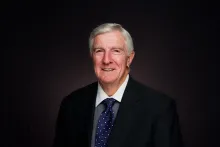
Before his retirement in 2021, Dr. Donald Ward pastored churches in Texas and Louisiana, and taught at Ambassador Bible College in Cincinnati, Ohio. He has also served as chairman of the Council of Elders of the United Church of God. He holds a BS degree; a BA in theology; a MS degree; a doctor’s degree in education from East Texas State University; and has completed 18 hours of graduate theology from SMU.
