
David Mills
This sermon was given at the Panama City Beach, Florida 2015 Feast site.
This transcript was generated by AI and may contain errors. It is provided to assist those who may not be able to listen to the message.
Well, beautiful, beautiful special music. Good afternoon, everyone. Dearly beloved brethren, what a wonderful time we have had. How good and how pleasant it has been, brethren, dwelling together in unity. I've never seen such fellowship, such love and unity at this feast. And God is very pleased to see His children around the world keeping the feast. You know, the feast has ended in many places of the world. Of course, in Africa, in Europe, just a few hours ago. And before that, in the Philippines and New Zealand and Australia, some of those are now into their morning cup of coffee tomorrow morning. So, here at Panama City Beach, the feast will be ending in just a few hours. This has been the first feast for my wife and me here at Panama City Beach. It has really been wonderful, dwelling by the seaside with brethren walking on the shoreline and just being in this beautiful, beautiful area. My wife and I have been able, three of the last six years, to be in Africa for the feast in Zambia, Malawi and Zimbabwe. And it's quite an experience to go to those countries. They are very poor, but the brethren there are the salt of the earth. They are the poor, rich in faith. We would not exchange anything for the experience of having been there to be with them and be able to just fellowship and get to know them. As I mentioned, many of them are very, very poor. Some of them have no electricity. There are only two or three vehicles that are driven to a feast site. They all either walk or take public transportation. But the brethren there are so excited to have someone come from the United States. They just appreciate it so deeply. You could actually transfer to Zambia. I noticed in the festival brochure, but Mr. Dean there describes the area as being a bit rough. But it would be quite an experience if you ever wanted to do it.
So here we are.
The Holy Days for 2015 are coming to an end.
And what a marvelous plan and purpose they have portrayed.
Remember Passover back on Thursday night, April the 2nd. We washed feet. We took bread and wine.
And then after that, the seven days of the Feast of Unleavened Bread. And a little bit later, near the end of May, we had Pentecost.
And then the Feast of Trumpets, just three weeks ago.
The Day of Atonement.
And then the Feast of Tabernacles.
And this final last great day.
Where God will grant a heart of flesh that is able to repent and provide a new spirit for all of mankind during the millennium and during the Second Resurrection period.
What a marvelous purpose we have portrayed. And I would say that if anyone is not familiar with the material that is in our booklet, God's Holy Day Plan, then please be sure to get a copy of it. Because this booklet has a chapter for each of the Holy Days, which thoroughly explains the meaning of each one. Be sure that you read this booklet and understand the material in it if you have not done so.
What a marvelous way to accomplish God's purpose. We heard more about that this morning.
Who would ever have done it this way?
To let things go so wrong for 6,000 years and then turn things around to be so right in the end. We do indeed stand amazed at God's wisdom and God's plan.
We marvel the way He is accomplishing His purpose. We all feel excited, don't we, and inspired as the feast ends. I don't think I have ever been to a feast in all these years. I've attended that I feel more excited and more inspired than at this one. The ministers have done such a great job in explaining, expounding God's Word. How can we maintain the excitement and the inspiration as we go home?
How can we do that during the fall and winter months just ahead?
Can we avoid a post-feast letdown? I'm going to say, yes, we can. We can maintain this inspiration that we feel now.
We can avoid a post-feast letdown.
I'd like for us to consider three simple points, and yet they are profound, and how we may maintain the excitement that we feel here as we go back to our homes. Let's get to the first point.
Where were you in 1977?
Thirty-eight years ago.
You know, many of us were not even on the scene yet. But in 1977, our country launched Voyagers 1 and 2. And the purpose was to send spacecraft out into our solar system to explore our planets and find out more information about them.
Voyagers Voyager 1 and Voyager 2 were launched traveling.
They traveled at about 35,000 miles an hour.
During the 1980s, they explored the outer planets of Jupiter, Saturn, Uranus, and Neptune.
In 2004, 27 years after launch, Voyagers crossed a boundary where the solar winds began to slow.
They were under less influence of the sun.
But now, 38 years after launch, it is just now that Voyagers, about 12 billion miles from the Earth, have reached a point where they are leaving our solar system and entering interstellar space, where the solar winds stop and magnetic fields shift to that of deeper space.
They still transmit data to NASA, but in about five or ten years, they will lose power.
But they will continue their journey, and in about 200,000 years, they will come close to another star.
You know, why do I briefly tell the story of Voyagers 1 and 2?
How does it connect with us here?
You know, we marvel at the size of our solar system. This is just our solar system, our star, that these spacecraft, for 38 years, traveling out at 35,000 miles an hour, are just now beginning to reach the outer limits of the influence of our sun.
We marvel at that.
But you know, we marvel at every aspect of God's creation. And it's like King David said in Psalm 19, the heavens declare the glory of God.
But everything declares the glory of God.
It goes on to say in Psalm 19 that there's no speech or language where their voice is not heard. The stars, the sun, the moon, they all are speaking, but they're not, they're speaking silently to everyone.
Everyone can look up and see the heavens. They silently beckon to mankind and cry out, there is a Creator God. There's someone that brought all of this into being.
And He has a big purpose for mankind.
What have we been doing here these eight days? We've been getting to know this great Creator God better, to learn and to learn what His purpose is, and to discover what we need to be doing about it.
And we're excited. I am, and you are.
And how can we keep this excitement as we depart and head home? I'd like to keep my excitement, and I'm sure you would yours.
The first point that I'd like to point out is that to maintain our festival excitement, we must walk closely with God.
We must walk closely with God as we head on into the fall and the winter months. Let's turn to Genesis 6, verse 9. We have someone that lived in similar times as we live in, a corrupt age and time that God was about to destroy the time of Noah and the great flood.
And so in Genesis 6, verse 9, we read about Noah, who was a just man, perfect in his generations. And it goes on to say that Noah walked with God. Noah walked with God.
We live in a similar time today, and we need to also walk with God. What does it mean to walk with God? It means to obey God and to do his will, and strive to do what is pleasing in his sight. It means to obey his commandments.
It means to yield ourselves to him and strive to find out what he wants us to do and to seek his will, not our will.
It means to be, to walk with God means to be a person after God's own heart.
We read that King David was a man after God's own heart.
There's no reason why King David has to be the only man after God's own heart. We know that David was not perfect. He made many mistakes.
No doubt his most serious sin was with Bathsheba, where he had her husband killed and after committing adultery with his wife.
But when David really saw his sin, he said six very beautiful words. I have sinned against the Lord. He did not try to do anything. He did not try to cover it up.
He confessed his sin.
And God, of course, put it away.
You can read his heartfelt repentance in Psalm 51, a very moving Psalm of how David felt so remorseful about what he had done once he really saw it for what it was.
But just like King David, we are not perfect. We do sin, and we fall short of the glory of God.
And yet, each of us can be a person after God's own heart. There's no reason why we can't be.
So how about it? You know, men, are you a man after God's own heart? Ladies, are you a woman after God's own heart? Young people. And we do have many very fine young people that come to this festival site. And it's been a pleasure to see them interact and fellowship with one another and enjoy the feast. But young people, 12, 14, 16, or younger than 12, you can also be a person, a young person, after God's own heart.
Each of us here can be seeking to walk daily with God and be a person after God's own heart.
Will we do it as we return home after the feast? Will we walk more closely with God than ever before? And in these evil times that we're living in? And what we're seeing is just the beginning of sorrows. Things will get much worse in the days ahead.
And we need to be close to our God and to be walking with Him as never before. Doing what is right, loving mercy, and walking humbly with God, as it says in Micah 6. I want to give you a few ways that we all can... things we can do that will help us to walk more closely with God this fall and winter. Daily prayer is an absolute must every day. King David, the man after God's own heart, said that he would get down and pray evening, morning, and noon. You read that in Psalm 55 and verse 17. And Daniel, when it was against the law even, got down as he had been doing all along and prayed three times a day. You read that in Daniel 6 and verse 10. So, yeah, spend time every day, and I mean on your knees. Of course, we should pray without ceasing in our hearts and minds as we go through the day, but I'm talking about getting down upon our knees. It would be just ideal. I have not perfected yet in my life getting down three times every day. I like to keep working on that, but I know that getting down more evening, morning, and noon would help me to walk more closely with God. And I think it would all of us. Much of the time that we get down upon our knees could be spent in just thanking God.
Mr. Herbert Armstrong said near the end of his life to the ministry that he spent most of his prayer time thanking God, just giving thanks to God. And often when we read the pears, which are, read the Psalms, which are prayers, we notice that they are actually Psalms of thanksgiving. For example, in Psalm 100, let's just turn and read this Psalm, a few verses anyway. It's a Psalm of thanksgiving. Psalm 100, just a few verses out of this Psalm. Verse 1, Make a joyful noise to the Lord, all you lands, serve the Lord with gladness.
Come before his presence with singing. And verse 4, Enter into his gates with thanksgiving, and into his courts with praise. Be thankful to him and bless his name. So we do need to give thanks to God, and much of our prayer time, too, can be spent in just saying, Thank you, Father. Another thing that we can do, and even every day would be ideal, would be Bible study and meditation.
To walk more closely with God will require reading and meditating on God's Word. Every day again would be the ideal. If you miss a day, then get back to the following day. Don't let too many days go by. You don't open your Bible and read. Psalm 1 brings out, Blessed is the man that delights in God's law and meditates on it day and night. And Joshua 1 brings out that by reading and meditating daily on God's law, we make our way prosperous. Things work out.
There is success. So certainly, daily prayer and daily Bible reading and meditation are very important. Attending Sabbath services will help us to walk more closely with God. Attending Sabbath services, hopefully every Sabbath. If you're at all able, you get up and you don't feel good physically but have nothing contagious, then why not go on to church?
You'll probably feel better than if you stay home. So to walk more closely with God after the feast, we need to attend Sabbath services regularly. And the book of Hebrews warns us not to forsake the assembling of ourselves together. And even more as we see the day approaching—and we do see that day approaching— I've sensed here that there's a sense of urgency greater than at previous festivals. I think it was there somewhat last year and even more this year because events are happening in the world.
We see shootings, mass shootings, like the school in Oregon. We see weather like has happened now in South Carolina. We see prophecy being fulfilled right before our eyes. And I believe it is having an impact upon us and giving us a greater sense of urgency of the times that we are living in.
So we do see the day approaching. We need to make sure that we then attend services every Sabbath, if at all possible. And when we come, come with joy. Come ready to sing. Come ready to fellowship. I look back at Psalm 95, and this describes the type of approach we need to have toward Sabbath services.
And of course, these holy days here as well. Psalm 95 in verse 1, O come, let us sing to the Lord. Let us shout joyfully to the rock of our salvation. Let us come before His presence with thanksgiving. Let us shout joyfully to Him with Psalms. For the Lord is the great God and the great King above all gods He is.
In His hand are the deep places of the earth. The heights of the hills are His also. The sea, this beautiful sea of water, the gulf, is His, for He made it. And His hands formed the dry land.
O come, let us worship and bow down. This is the attitude, the spirit of humility and seeking to worship God and to honor Him that we want to have as we come to services. Come, let us worship and bow down. Let us kneel before the Lord our Maker, for He is God and we are the people of His pasture and the sheep of His hand. So by all means, do strive to come to the weekly Holy Convocation every week if you possibly can. And I know that some do put out a lot of effort.
We have some in our area there in Georgia that drive about two hours each way to be able to come. And are there every Sabbath. Be planning for the Holy Days. This is going to help us to walk more closely with God. Get a 2016 calendar before too long. And the first thing that I do always is to, with a red pen, mark in the Passover, the Feast of Unleavened Bread, and the other Holy Days.
Begin to look ahead to 2016. Do you know that they pass over next year? This year it was April the 2nd. Next year the Passover will be Thursday night, April 21.
That's because this year has an extra month. This in the Hebrew calendar, it has the 13th month, and that puts the Holy Days next year later on the Roman calendar. So Passover, Thursday night, April the 21st. And guess what? The first day of the Feast of Tabernacles on the Roman calendar, this time next year, will yet be in the future, Monday, October the 17th. So the Feast of Tabernacles will be quite a bit later in 2016. But that's part of drawing close to God and worshipping Him and walking with Him during the fall and winter months just ahead.
You know, something else we can do. We don't have to wait until Passover, a few weeks before Passover, to do this. We can have continuous self-examination of ourselves as we head on into the fall and the winter months, examining ourselves on ways that we can walk more closely with God, examining our hearts and minds, how we can be a man after God's own heart, reading some of those Psalms and saying, how can I have this kind of heart set? Because we want that same kind of attitude and heart that King David wrote about. Continuous self-examination, like David, who said, search me, O God, to see if there is any wicked way in me. You know, we don't want any wicked way, do we? We don't want to be wrong. I remember Mr. Armstrong, a few years before his death, talking to the ministry that you men, if you see any area where we're coming up short, where we're wrong, let me know. He said, we don't want to be wrong. We want to be right. And I believe we all individually want to be the same way. We don't want any wicked way in us. And we can ask God to help us to see anything that needs yet to be changed in us. We want to be right with God.
God wants to walk with us. And I believe that we all want to walk with Him.
God wants a warm and close relationship with us. He's a personal God and a Father to us all.
Our relationship with God may be, I believe, best summed up by two words, which are found, these two words are only found in three verses in all of the Bible. And there are two words that were first spoken by Jesus Christ on the night before He died, when He was facing the biggest trial you could imagine. He knew the scourging, how difficult that would be. He knew how painful it would be, the hideous death on the cross. And as He prayed, He used these two words, which sum up the relationship we should have with our Heavenly Father. Let's turn to Mark 14, in verse 36, and we'll see what those two words are. Mark 14, in verse 36.
Let's begin, actually, in verse 32. They came to a place which was named Gethsemane, and He said to His disciples, Sit here while I pray. And He took Peter, James, and John with Him, and He began to be troubled and deeply distressed. And He said to them, My soul is exceedingly sorrowful even to death. Stay here and watch. And He went a little farther and fell on the ground and prayed that if it were possible, the hour might pass from Him. And He said, and here are those two words, Abba, Father. Abba, Father. Abba is the Aramaic for Father. This just means Father, Father. Father, Father, all things are possible for You. Take this cup away from Me, nevertheless, not what I will, but what You will. Abba, Father, Father, which means Father, Father is a very intimate expression. It shows a close, warm relationship. And you know, each and every one of us, hopefully, has a good degree of that relationship, but can we grow in it a close, warm, intimate relationship with our Father? This fall and this winter, I would encourage all of us to think about that, and often in your prayers, even to say, Abba, Father. And especially if you're facing a trial, a difficulty of some type, then you can cry out to our Father and say, Abba, Father, I need help. Help me, Father. Abba, Father. Remember that expression. The Apostle Paul later uses it in two places in Romans 8 and Galatians 4 as the cry of sonship. Abba, Father, is the cry of sonship.
And that's what, of course, we are to become and are the sons of Almighty God.
So this fall and winter, as we go home after the feast, can we maintain our excitement and enthusiasm? We cannot do it without a close relationship with God. That's what we've had here.
We've been in His presence, and we have to, as we go home then, certainly walk with Him more closely than ever before in our lives and be a person that is indeed a man, a woman, a young person after God's own heart, and one with an Abba, Father relationship. And with God's help, we can and we will. So let's maintain that enthusiasm. Walk more closely with God than ever before. Let's get to the second point now. The second way we can maintain our enthusiasm as we, and our excitement as we head home, what would it be like to be the only person on the earth to understand the truth? The only one in the church, what would that be like? No one else to talk to, no one else to meet with for Sabbath services, Holy Day services. There was a man of God, Elijah, who felt that way. He was the only one that God let him know there were 7,000 who had not bowed to Baal. But the second point is, do we thank God for our brethren? It would be very lonesome to be the only person on earth who believed. But we are not alone. We have beloved brothers and sisters, and we're strengthened by holy convocations and holy conversations with them.
We are encouraged by warm fellowship. I'm so encouraged by all the fellowship we've had here, and strengthened by it. So the second thing that we can do to carry the excitement of this feast home with us this fall and winter is to walk more closely with our brethren.
In 1 Peter 3 and verse 8, we are told to love as brothers. I have brothers, three brothers, two sisters, one deceased. But we come from a family that grew up on a farm, and we bonded together, working in the fields on the farm. We've always been close, and always will be, and they'll always be very, very special to me. Very special.
And so God, that's the way it should be in families, and God wants us in His church to love as brothers, because we are indeed brothers and sisters. We have the same spiritual heavenly Father. We are truly and literally brothers and sisters, and we are to love as brothers.
Peter also says in 1 Peter 4 and verse 8 to have fervent love. That's the kind of love we need to have for each other. And I do believe that we have that kind of love, a fervent love for one another. Mr. Herbert Armstrong made a statement when I was a freshman at Ambassador College that you come to love the brethren even more than your own family members who are not in the church. Well, I came from a close family. I did not agree with that when I first heard it as a freshman, but later have come to see that that is true. You come to be closer to brethren and even to your own physical family members. Brethren, thank God for everyone that is here. Thank God for spiritual brethren. Work hard to develop close relationships with each one, including ones that we may not relate to as easily as others, including ones that maybe has even offended us. God wants them and his family. We also should and must and should strive to mend any fences if there has been anyone that has offended.
We also need to work toward unity, and we have a great unity. Keep working at it, all speaking the same thing. No divisions among us, as Paul wrote in 1 Corinthians chapter 1, perfectly joined together in the same mind and judgment. Let's work hard to keep the unity of the spirit in the bond of peace and love. Remember Psalm 133, how good and how pleasant for brethren to dwell together in unity. And we've had that here. I've seen no division, no one pulling in a different direction. Everybody pulling together how good and how pleasant that is. Our relationship is close and warm.
We're friends and we're more. We're brothers and sisters, sons and daughters of the same heavenly Father. And our relationship is to be close and to be intimate. Let's go to Philippians chapter 1. This intimacy, the closeness, is very well expressed by the Apostle Paul toward the church in Philippi.
In Philippians chapter 1 and verses 3 through 8. Philippians chapter 1 and verses 3 through 8. I thank my God, he says, upon every remembrance of you. I want you to notice the the affection that Paul felt toward the brethren in Philippi. I thank my God upon every remembrance of you. Always in every prayer of mine making requests for you all with joy. I guess we could say for y'all there. Maybe Paul was a southerner. For y'all with joy, for your fellowship in the gospel from the first day until now, being confident of this very thing that he who has begun a good work in you will complete it until the day of Jesus Christ. Just as it is right for me to think this of you of y'all because I have you in my heart. I want you to just notice that expression. I have you in my heart. Brethren, we have each other in our hearts too, don't we?
We do. I have you in my heart. Inasmuch as both in my chains and in the defense and confirmation of the gospel, you all are partakers with me of grace. For God is my witness how greatly I long for you all with the affection of Jesus Christ. So that's the relationship we want with each other.
We want to be in each other's heart. That's where it has to be. Look at Philippians chapter 4 and verse 1. Philippians 4 and verse 1. And notice how affectionate the apostle Paul wrote about his relationship with the Philippians. Therefore, my beloved, my beloved and longed for brethren, my joy and crown so stand fast in the Lord is not done yet. I'm showing affection. Beloved.
And that's the way, that's the relationship we want. Close, warm, loving, loving every brother and every sister. There's not a single person that ever has lived that that guy would not like to have in his family. There should not be a single one that we would not want to be there either.
If we have any relationship, friction, or problems, then pray about that. Pray about it. Ask God to help you to have that close and warm and loving relationship. Let's go to Colossians chapter 3 and read just a few verses more. Colossians chapter 3 and verse 12. Some good verses on our relationship with one another. Therefore, as the elect of God. That's what we are. Holy and beloved. Let us again, he is so affectionate in the way he expresses his relationship and viewpoint toward the brethren. Holy and beloved. Put on tender mercies. You can do some good meditating about that. Tender mercies. Kindness. Humbleness of mind. Meekness. Long suffering. Bearing with one another. You know, there is a bit of that, isn't there? We're not perfect. I'm not. You're not. Bearing with one another. And forgiving one another if anyone has a complaint against another.
Even as Christ forgave us, so you also must do. And above all these things, put on love, which is the bond of perfection. So, brethren, let's determine this fall and winter to walk more closely with our beloved brethren. Not just brethren, beloved brethren who are in our hearts. Come early and stay late at church services. Spend extra time together. Create extra time together. Visit the sick and the elderly. If we are to carry home the excitement of this feast, walk more closely with God than ever before in your life in an Abba-Father-type relationship.
And walk more closely and intimately with beloved brethren as well.
Let's go to the third and final point.
What would it be like to have nothing to do? No work? You might think it'd be fun, but actually, it'd be pretty boring before too long, wouldn't it? You had nothing to accomplish.
Because idleness is not really fun. It would be very boring.
My mom always said, as I was growing up, that idleness was the devil's workshop, and she made sure that we weren't in there, the devil's workshop, growing up on the family farm.
But God has work for us to do. To work hard also as a church. We have work to do. Isn't that great? Christ did not begin a church and then give it nothing to do.
Just sit around to do nothing. The third way we can carry back the excitement of this feast is to have our hearts in the work of God. Let's consider the work God has given the church to do, and it's our privilege to be a part of it. What is God's work? In John 6 and verse 29, we read, This is the work of God, that you believe in Him whom He sent. God's work actually is bringing many sons to glory. That's what it's all about. Bringing many sons to glory. Ultimately, we know billions and billions, in fact, many, even billions of sons to glory. So, we are privileged to be a part of that work. This is not indeed the day that God is extending His salvation to everyone, as we heard very well this morning, but He will ultimately do that. What is God's work today that He wants us to be busy doing and to have our hearts in? Jesus said in Matthew 28, Go and make disciples of all nations, baptizing them and teaching them to observe all things I've commanded you. So, that's our commission. That's our job. Mark 16 puts it this way, Go into all the world and preach the gospel to everyone.
And Luke 24 puts it this way, preach repentance and remission of sins to all nations, beginning at Jerusalem. In Acts chapter 1 and verse 8, it says, You shall be witnesses of Me in Jerusalem, Judea, and to the end of the earth. Jesus also said in the Olivet prophecy, This gospel of the kingdom shall be preached in all the world as a witness to all nations, and then the end shall come, a special commission given to the church in our time. But we notice that it is as a witness, it is not to convert the world. I tell you, God has opened in our time powerful doors. I didn't go back to get the exact year, but I believe it was around 1920, that almost 100 years ago that the first commercial or public radio station began. As I remember, it was in Pittsburgh, Pennsylvania, where that happened. And you know, it wasn't but about a decade later that Mr. Armstrong began to use that powerful door in the early 1930s to preach the gospel of the kingdom of God. And before too long, that was up in the northwest where he began, but before too long, he began to use powerful stations out of Mexico that reached all of the heartland of the United States and in fact reached all the way to eastern North Carolina where I was born and grew up.
And my grandfather heard Mr. Armstrong, I believe it would have been about 1945, and received a Plain Truth magazine while Mr. Armstrong was still in Oregon before beginning in Pasadena and the founding of Ambassador College. And I have at home a Plain Truth magazine.
I think it's about eight pages long, mail from Eugene, Oregon, the March 1946 issue.
I'll always hang on to that one. But the church, the point is that the church began to preach the gospel out into the world on radio, later on television, of course using the printed page, the printing press already had made print affordable to send out booklets and articles and magazines. And I think most of us are very familiar with the scope of the church and the work of the church in the 1950s and 60s and 70s and 80s, all the way until the death of Mr. Armstrong.
But you know that same work continues today. In some ways we are preaching the gospel even more powerfully when you consider the internet. The internet which is pervasive all over the world. People do indeed connect with our message on the internet. We of course have the Good News magazine, booklets and other literature, the Yondoday television program, and personal appearance campaigns. But you know, only as a witness. Jesus did not say, he did not give the as the work of the church, go out and convert the world. No, go out and preach the message as a witness. He did indicate that some would believe and they would be baptized and then they would be taught. But that he clearly indicated that it was mainly as a witness to the vast majority. Preach of the gospel everyone, to everyone is a witness. And he said, you shall be my witnesses to the end of the earth. There are two major ways that then we in our work witness the message, the gospel of the kingdom of God. We do it collectively. And through God's Spirit, we are a part of a work that is out of all proportion to our size. And I'm very happy about that. And I know we all are.
We are preaching the message out into the world. And what an honor and privilege it is to help proclaim the Good News of the gospel to the world. Of course, let's continue to pray that God will open doors to preach the mystery of the gospel, as Paul put it in Colossians 4. And also pray for God's ministers to know how to speak and write the Word. So we are witnesses collectively. We all join together. And we pray we have our tithes and our offerings. I'm very happy that my tithes and offerings have been a part of preaching the gospel as a witness to the world. But you know, we also witness individually. Our lives are a witness of the gospel. Jesus said in Matthew 5 and verse 14 through 16 that you are the light of the world. He said, to let your light so shine that they may see your good works and glorify your Father in heaven. So our life is a witness of the kingdom of God. To who? To your family members. It may be to your mate, or it may be to parents, it may be to children or cousins, uncles and aunts, to neighbors who know about what you do and believe, to people on the job, to your boss. And Jesus said, let your light so shine that they may see your good works and glorify your Father in heaven. Let me ask you, how many people are glorifying God because of your example now? When you think about it, not very many. What if they were that way? All of your relatives before too long began to be a part of the church. They began to glorify God and all your neighbors also and your boss, they'd all begin coming to church. But no, it didn't mean, Jesus didn't mean that they would necessarily glorify God right away. Peter makes that clear to us in 1 Peter chapter 2.
Let's read this verse that helps us to understand when our relatives and neighbors and friends who see our example will glorify God. That's 1 Peter chapter 2 and verse 12. Well, verse 11, Beloved, I beg you, as sojourners and pilgrims, abstain from fleshly lust that war against the soul, having your conduct honorable among the Gentiles, that when they speak against you as evildoers, they may by your good works which they observe, glorify God, but when? In the day of visitation. So just think about that. You're preaching the gospel individually to your family members. They see what you're doing, keeping the Sabbath, keeping the Holy Days, other things that we do. And they don't just start glorifying God right away. They might, even as indicated here, might speak against you as an evildoer. But they still do see your example, your family members and neighbors and others.
And your witness of the gospel is going to bear fruit in the future. It is going to, those who see your example are going to glorify God in their day of visitation. And for many, that will be in the Second Resurrection right after the millennium.
So let's not be discouraged at all. The work we are doing collectively, we're not bearing a whole lot of fruit as far as big numbers, but we are witnessing, witnessing, witnessing to the world collectively. Down through the years and decades, millions and millions and millions have heard this message. You have not yet responded to it, but will respond to it in the future. When you think about it in your lifetime, you add up all your relatives. Some families can add up pretty good numbers there. All of your neighbors, co-workers, and others that know about your way of life and what you do. In your lifetime, over the years, you may have literally dozens, scores, maybe 100 or 200 people or even more that know about your belief. And yet, they don't act on it at this time. But you've been a witness to them by your example, by letting your light shine. So, and sometimes they don't agree with that light right away.
That certainly does happen. They may even speak against you as an evil doer, but let's not be discouraged. This is not the day for them to be converted. Their day comes later. One quick verse over in Isaiah 55 that I think bears on this, and that is that our labor, what we have done in preaching the gospel to the world collectively and individually, will not be in vain. It will not return void, as it says here. That's Isaiah 55 and verse 10. Isaiah 55 and verse 10, as the rain comes down and the snow from heaven, and do not return there, but water the earth and make it bring forth and bud, that it may give seed to the sower and bread to the eater. Look at verse 11, so shall my word be that goes forth from my mouth. It shall not return to me void. Brother and our witness to the world, whether collectively or individually, is not going to return void. It shall not return to me void, but it shall accomplish what I please. It shall prosper in the thing for which I sent it. One day, people in a day of understanding are going to understand this way of life that we live, which they don't necessarily agree with right now. That time is coming. Our work is not in vain. Let us not be discouraged. Let's keep preaching the message. Let's keep setting the example. Always remember, we have the one product, if I can put it in business terminology, that the world needs. People yearn and crave for meaning and purpose.
We have it. The world needs hope and good news. We have that too. Everyone wants to be happy.
We can show them the way. Brother, I'm excited about the product that we publish out into the world.
Are you? I believe we are. Let's keep our heart in the work of God. So as we go back from this Feast of Tabernacles and Last Great Day, we can carry the excitement of the feast with us. We can take it with us this fall and winter. Will we walk more closely with God? Will we grow and develop more as a person after God's own heart? In an Abba-Father relationship, close, warm, and intimate? Will we walk more closely with brethren, beloved brethren who are in our hearts and minds?
Will we keep our heart in the work of God, collectively and individually, helping even to turn up the light and proclaim the praises of Him that has called us out of darkness into His marvelous light? I believe we will. We can carry the excitement of the feast back. There need not be a post-feast letdown. If we walk with God, draw close to beloved brethren and keep our hearts in the work of God. I'd like to conclude with a tribute to the host of this feast, God our Father. Just listen, reading from the Psalms, Bless the Lord, O my soul, and all that is within me, bless His holy name. Bless the Lord, O my soul, and forget not all His benefits. Who forgives all your iniquities, who heals all your diseases? From Psalm 103. Another one, Bless the Lord, O my soul, O Lord my God, you are very great. You are clothed with honor and majesty, who laid the foundations of the earth, who causes the grass to grow for cattle and vegetation for the service of man, that he may bring forth food from the earth and wine that makes glad the heart of man and bread that strengthens man's heart. From Psalm 104. Another one, I will lift up my eyes to the hills. From whence comes my help? My help comes from the Lord, who made heaven and earth. The Lord is your keeper. The Lord shall preserve you from all evil. The Lord shall preserve your going out and your going in from this time forth and even forevermore. And he certainly will guide us in the days ahead. We have dark and evil days ahead. We need not fear as we walk with God and strive to do what is pleasing in his sight. Nothing will happen to us unless he allows it.
And only what he may allow. From Psalm 138 we read, I will praise you with my whole heart. I will worship toward your holy temple and praise your name for your loving kindness and your truth, for great is the glory of the Lord. Though the Lord is on high, yet he regards the lowly, but the proud he knows from afar. The Lord will perfect that which concerns me. Your mercy, O Lord, endures forever. Do not forsake the works of your hands.
Brethren, the Psalms help us to have the mindset of Abba Father and a person that is truly after God's own heart. It would be good to read the Psalms with that in mind. Have that mind to set and that heart set. Dearly, beloved brethren, it's time to say goodbye. It's been wonderful feasting together. Just remember then to walk with God this fall and winter. Certainly walk more closely with Him, more closely with our beloved brethren, and keep our hearts in the work of God. Do travel safely on your way home, and may God's richest blessing be upon you all.
Godspeed until we meet again.
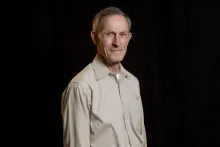
David Mills was born near Wallace, North Carolina, in 1939, where he grew up on a family farm. After high school he attended Ambassador College in Pasadena, California, and he graduated in 1962.
Since that time he has served as a minister of the Church in Washington, Florida, North Carolina, South Carolina, Oregon, West Virginia, and Virginia. He and his wife, Sandy, have been married since 1965 and they now live in Georgia.
David retired from the full-time ministry in 2015.
