
David Mills
This transcript was generated by AI and may contain errors. It is provided to assist those who may not be able to listen to the message.
Well, how good and how wonderful it was at the Feast of Tabernacles, brethren, dwelling together in unity, wonderful days that we had together at our festival site. And don't you think that our Heavenly Father was pleased to see His children around the world keeping His feast? Now, some did need to keep the feast at home, but they were able to watch services every day. It's not quite the same, but with the COVID virus going around, then we had a good number of brethren that did it that way. But we hope you had a joyous, wonderful Feast of Tabernacles. And so the holy days for 2021 have come to an end. Passover, remember that? Back in March, we actually kept Passover in our homes. And the night to be much observed the next night, remember that? We went right on through the Feast of Unleavened Bread, then Pentecost, Feast of Trumpets, Day of Atonement, and now Feast of Tabernacles, and Eighth Day. And what a marvelous purpose and plan we have portrayed in the holy days. So we feel excited. We feel inspired. I know I do. I came back physically a little bit and needed some rest. I was a little bit tired, but spiritually up on a high. Renewed. Refreshed. Often we've heard coming back and that there is a post-Feast letdown. Can we avoid a post-Feast letdown? That's what I'd like for us to think about this morning. Yes, we can keep the inspiration of the Feast as we go on forward. We don't need to lose it. We don't need to have some kind of letdown after the Feast. And so I'd like to give us three simple points, which we already know, but they will serve as good reminders to all of us as we go on forward. Three simple points on keeping our excitement, keeping our focus, and our enthusiasm as we go on forward after the Feast. So the title of this message is, Going on Forward After the Feast. Very simple. Going on forward. Because that's what God wants us to do. He wants us to always be marching on forward. Number one is to walk closely with God. What were we doing at the Feast of Tabernacles? We were getting to know our Great Creator God. This ties in with the first message. Getting to know our Great Creator God and learn more about His purpose and discover what we need to do. So if we are to maintain our festival excitement, we must walk closely with God. In Genesis 6 and verse 9, we won't turn to that, but we read that Noah was a righteous man upright, that he walked with God. Noah walked with God. He was blameless, it says. He was a man of integrity. He feared God and obeyed God's commandments. When you read about the instruction for building the art, it brings out how God gave Noah certain instructions, and then it says, and Noah did what God told him to do. He just obeyed God right down the line.
To walk with God, then, means to obey God's laws. It means to seek God's will, not our own.
It means to be like King David, a man after God's own heart. We know that David was not perfect, far from it. He made very serious mistakes. We sometimes kind of shake our head that he could fall for Bathsheba. But, you know, the more we come to see ourselves, the more we know that we fall short. And here David went out one night. He saw this woman, beautiful. She was taking a bath. There she was. And he lost, he fell to lust. He gave in to lust for her. Made a very serious mistake. Ended up trying to cover it, having the husband put to death, finally having to face up to what he had done. And then, when he really saw what he had done, when he really saw his sin and admitted it, then he said those six beautiful words that we should say when we sin. I have sinned against the Lord, he told Nathan the prophet. I have sinned against the Lord. Those are beautiful words. And they're words that we have to repeat, too. I'm convinced that all of us do sin, hopefully not after that magnetube, and in other ways we do sin. And the six beautiful words we should say as well, I have sinned against the Lord. And when we have that kind of heartfelt repentance, God is so merciful and forgiving. You know, we can be a person after God's own heart. We can be like Noah and walk with God. We can be like King David, a man after God's own heart. Men, are you a man after God's own heart? Women, ladies, are you a woman after God's own heart? Young people, are you also a person, a young person, after God's own heart?
So, I want to give us some ways that we can walk with God as we go forward after the feast. And walk with Him more closely than ever before. Because this ties right in with the first message, coming to know the true God. And you know, having Him come to know us, it works both ways.
We don't want what Jesus mentioned in the Sermon on the Mount.
Depart from me, you wicked. I never knew you. So, not only must we come to know God, God, in turn, has to come to know us as well, doesn't He? And so, we have to let Him know that our heart is to serve Him, to do His will, to obey Him, and to live that way of life, day by day. So, how can we go forward after the feast, walking more closely with God?
I'll give you six ways that will are very basic. Number one is prayer. Prayer. And let's put another word in with that daily prayer. I don't know if you have developed the habit. I know I did not until I was at Ambassador College as a student, where we were encouraged to develop the habit of prayer. But if you develop the habit of daily prayer, now I have to admit there are some days when I wake up and other things are coming at me and I forget to pray for a while and the day goes by and it's later on in the day. It's always very good to get the day started out with prayer, and not later on. And then to, well, we have examples in the Bible. Let's turn to those two examples in the Bible of praying, getting down and praying three times a day. You know where they are? You know, who are the ones that we have examples? Who are those two men? Daniel is one.
And okay, let's go to Psalm 55 verse 17. Psalm 55 verse 17. We'll get that first one right here.
Psalm 55 and verse 17. And you'll notice in the small print at the beginning of this of this psalm, the very small print, this is a contemplation of David. Okay, what was David going to do? Verse 17. Psalm 55 and verse 17. Evening and morning and at noon. So that's three times a day, right? I will pray and cry aloud, and he shall hear my voice. So David is one of them. And then Daniel, yes, you're absolutely right. Let's turn to Daniel chapter 6.
Daniel chapter 6. And let's read in verse 10. Here was this plot that the people had to get rid of Daniel, and they backfired on them. They were going to anyone that would offer a petition, pray to any other being except the king would be cast into the den of lions. Well, verse 10. When Daniel knew that the writing was signed, he went home and in his upper room with his windows open toward Jerusalem, he knelt down on his knees three times that day and prayed and gave thanks before his God, as was his custom since early days. So he had been doing this a long time.
Now, what about you? If you knew that it was against the law to pray to anyone else, make any petition, anyone else outside of the king, would you maybe go to a closet with the doors closed? Daniel was not intimidated.
He just left everything like it had been all along. The windows were open. He prayed like he always had. Of course, he was thrown into the lions' den, we know that God delivered him. So, you know, it's important then to develop that habit of prayer. I hope that we have done that. And whether it's three times a day, two times a day, or four times a day, you know that you do pray and maybe in more than once, let's put it that at least, at least more than once. And you can spend much of your time in prayer just thanking God.
Herbert Armstrong made a comment late in his life that most of his prayer time was just thanking God. Because if you don't have anything to pray about, you do have a lot to pray about, don't you? We all do, thanking God. Okay, so that certainly is a way of walking closely with God. A second point on walking closely with God is regular Bible study and meditation. Psalm 1, we're not going to have time to turn to all of these scriptures. We've turned to them before, but Psalm 1 mentions that the man will be blessed who delights in God's law and meditates on it day and night.
And, of course, to know God's law means to read it. Joshua 1 also brings out about meditation, reading and meditating daily on God's law, and by doing so, we make our way prosperous. So, regular Bible study, regular meditation is very important. It would be even good to open this book often during the week, even every day, and read from it. I know we get very busy, but try to find a bit of time in there, maybe if it's no more than 10 or 15 minutes, to open the Bible and to study and read and meditate on God's Word. Regular Bible study and meditation.
Number three, a third way of walking more closely with God. And this is probably the most neglected one of all, but it is very important. I know that I can do better in this department, and that is fasting. Fasting. We will need to fast occasionally. Let's just put it this way. How often? Several times a year between one day of atonement and another. I would say several times a year. Let's just leave it at that and let each of us, when we begin to not be as close to God as we should be, or maybe have a special problem that we're facing. Fasting is a powerful tool because fasting is denying the flesh.
And we know we have to fight against the flesh. The flesh works against the spirit, Galatians 5, and the spirit works against the flesh. They're in Galatians 5. So fasting is denying the fleshly nature. And the apostle Paul wrote in 2 Corinthians 12 that when he was weak, then he was strong. We are stronger when we are fasting than when we're not fasting because we're drawing close to God. We're walking more closely with him. Paul had this thorn in the flesh.
He has God to take it away. God said that his strength was made perfect in weakness. So God's strength is made stronger in us when we fast. So I believe that we do need several times a year, maybe every couple of months or so, but you know we don't do it by rote schedule or anything like that. It's not some kind of ritual, but it's when we'd need to draw closer to God or have a special need for his help.
That's number three, then. Prayer number one, Bible study meditation number two, fasting number three. All these things will help us to walk more closely with God. There are things we know. This is not new, but it still is a good exhortation for me and for you. Okay, number four, as far as walking close to God, attend Sabbath services as often as you can. I know that, you know, our attendance has been affected by COVID, and if you have COVID or any other contagious disease, you know, you don't need to come and spread that to others.
But are there times that you could come, you just maybe don't feel quite up to par? Are there times you could come and don't? I believe it is important.
The Sabbath is just a longer day. It's not the same when you don't have the fellowship with brethren. So attend Sabbath services as often as you can. I know that with gasoline prices going up, that may be a problem. Maybe some pooling of rides probably already going on.
Maybe some sacrifice here and there, but do come to services as often as you can. It will help you to walk more closely with God as we proceed after the feast.
The book of Hebrews does warn us not to forsake the assembling of ourselves together. So do the best you can to be here. It'd be nice to have a star by your name as far as Sabbath attendance. Every week, it'd be nice. Number four, then, is attend Sabbath services as often as you can. Number five, be planning for the holy days in 2022. Guess what? This year is an intercalary year, which means this year on the sacred calendar, if you were to look at the sacred calendar, will have an extra month at the end of it. It will have a 13th month.
The months that is when you study the calendar, it is very so very very irregular.
A month of a true new moon, a true month, is about 29 and a half days.
And so the calendar normally has 29 days, 30 days, 29 rotates in that manner, sometimes maybe having two that are right together, 30 and then 30. But this year will have an extra month. You know, when a year has an extra month as this year, that throws the holy days next year later. This year, if you'll remember, Passover came very early in March. Next year, Passover comes on Thursday 9, April 14th, and so the extra month throws Passover later on the Roman calendar next year.
First day of the Feast of Tabernacles will be Monday, October 10. We won't even be there next year on the Roman calendar. We won't even be there yet. So get you a 2022 calendar right in the Holy Days. I write them in red. The Holy Days are already marked on my 2022 calendar in red.
So get your calendar and be planning for the Holy Days for next year. And that will certainly help you to be prepared for them when they come along. And that's a part of walking more closely with God to keep His Holy Days. Number six, as far as walking closely with God, is to do continuous self-examination. We should be the one that is critiquing ourselves the most. How am I doing?
We had a very good sermon in Jekyll about how God is judging us. And it was informative to me. I had not thought about it even though I knew that judgment is a process. And God is not looking at one little act here or one little act there that may happen to us. He is looking at us as a whole. How are we doing in His school, you might say? Are we making progress? It's like King David. God didn't judge him just for that one big mistake he made. His whole life had been praising God, doing what was right. But here He did let down there. So God, if you fail or flunk one trial or situation, He's not going to judge you just on that alone. He's going to judge you on the overall effect of your life. Very good sermon on that. We should be critiquing ourselves and examining ourselves. We should be like King David who said, Search me, O God, to see if there is any wicked way in me. You know, we all should feel just that very same way that God would search us because we don't want any wicked way in us. So these six points can help us then. Regular daily prayer, regular Bible study and meditation, fasting, attending Sabbath services, often as we can, planning for the holy days next year, continuous self-examination. These things can help us.
You know, one final comment or two about the first thing we can do then in order to go on forward after the feast, and that is to walk closely with God. One final thought is this, that God is a personal God, and we need to grow in that realization that He wants to be close to us, and that our relationship is very close and intimate with God.
There are three verses in the Bible that have the expression, Abba Father. I want to read the first one where it's found. Let's go to Mark 14, 36. Mark chapter 14 and verse 36. And this is where Jesus was praying in the garden just before on the night when He would be betrayed and He would be crucified the next day. Mark 14 and verse 36. And you can read in the verses how He was praying in the garden. Verse 32 on down. And verse 35, He went a little farther. He fell on the ground and prayed that if it were possible, the hour might pass from Him. Verse 36, He said, Abba Father.
This is the first time that this expression is found in the Bible. Abba Father, all things are possible for You. Take this cup away from Me. Nevertheless, not what I will, but what You will.
So Jesus was really feeling what He was about to face. And I don't think any of us can begin to imagine because He knew there would be the scourging. He knew there would be the crucifixion, and it would be painful and horrible. But He said, Abba Father. You know, that expression is intimate. That expression is close. It shows that God, this expression is used by the Apostle Paul, Romans 8.15. You'll find it in Romans 8.15. And also in Galatians 4 and verse 6.
Galatians 4 and verse 6. So three times in the Bible this expression is used.
Abba Father. And it shows a close, warm, intimate relationship with our Father. Do you feel that you have a close, warm relationship, or do you think you might be able to grow to even have a closer and a warmer relationship? Well, I think most of us, I think, will feel that we could grow in that realization. And so this fall and winter, why not use Abba Father often in your prayers and think about it? So as we go forward after this great feast, if we are to maintain our enthusiasm and excitement, we must walk closely with God. Maybe more closely than ever before.
Okay, the second big point on how we can go on forward after the feast and keep up our excitement, the second big point is walk closely with our brethren. Walk closely with our brethren.
More important than we may know, how would you like to be the only person on earth that understood the truth? The only one in the church? Wouldn't that be hard if nobody else? Well, think about it. You'd have no one to talk to, no one to fellowship with. There'd be no need to have a Sabbath service because there would not be anybody here but you.
Do we thank God for our brethren? We are not alone. We are beloved brothers and sisters, and we are strengthened by holy convocations. We are encouraged by a warm fellowship.
This is the highlight of the week. It's just not the same, is it, when you stay home?
You miss the fellowship we have before services and after services, and you miss that warm fellowship that we enjoy. So if we are to carry the excitement of the feast as we go forward, we must walk closely with our brethren as well. Let's go to a couple of verses. 1 Peter chapter 3. 1 Peter chapter 3 and verse 8. 1 Peter chapter 3 and verse 8. Here we read, Finally, all of you be of one mind, having compassion for one another. Love as brothers. Be tenderhearted. Be courteous. Love as brothers. I have brothers, three brothers, two sisters, one sister is deceased. You know, brothers and sisters have a special relationship.
They have a blood connection. They are the same blood, the same mother, father and mother. And in the church, we have the same spiritual father. That connects us as spiritual brothers and sisters then. And we are to love as brothers. There's a special love there for brothers and sisters when there is a blood relationship. But there's even a deeper connection when there's a spiritual. We have the same spiritual father, our heavenly father. So we should strive to develop close relationships. Speak the same thing. Have no divisions. Be perfectly joined together. How good and how pleasant when brethren dwell together in unity. I want you to notice how the Apostle Paul says it so well. Philippians, the book of Philippians chapter 1 and verse 3.
We'll read a few verses down, and he captures that closeness that we want to strive for in the church as spiritual brothers and sisters. Philippians 1 and verse 3, I thank my God upon every remembrance of you. He just couldn't think of anything else itself. Thank you, God, for these Philippian brethren every time he thought about them. Always in every prayer of mine, making requests for you all with joy. And we'll skip on down just verse 7. Just as it is right for me to think this of you all, and that is this expression, because I have you in my heart. It says it so well, doesn't it?
I have you in my heart, inasmuch as both in my chains and in defense and confirmation of the gospel, you all are partakers with me of grace. For God is my witness, verse 8, God is my witness, how greatly I long for you all with the affection of Jesus Christ. I greatly long for you all. And notice also Philippians 4 and verse 1, the expression of closeness here, the close loving relationship of brethren. Chapter 4 and verse 1, Therefore my beloved and longed four brethren, my joy and crown, so stand fast in the Lord, beloved, well, how can you get more intimate and closer than the Apostle Paul felt to the Philippian brethren? So let's determine this fall and winter to walk closely with our beloved brethren here. Let's have each other in our heart. Let's, as he said, long for to be with each other. So if we are to carry on the excitement of the feast, number one, walk closely with God. And number two, walk closely also and intimately with beloved brethren. Okay, number three, if we are to carry on the excitement of the feast, number three is to keep our hearts in the work of God. Keep our hearts in the work of God. I believe we have to do that if we are to go on forward. You know, what would it be like if we had no work to do? How would you like to have nothing to do around your house? No job? No nothing? Wouldn't that be kind of boring? You know, idleness is not fun. Idleness is boring. My mother always said, and maybe yours did too, idleness is the devil's workshop. Well, I'll tell you what, there was no devil's workshop around the farm where I grew up. They always found plenty for me to do on the family farm. Well, God expects us to work and to work hard on our jobs, to work hard also in the church. And so this third way that we can carry the excitement of the feast is to keep our hearts in the things of God, in the work of God. God's work is the salvation of mankind. God's work is bringing many sons to glory. And God's work is a work that Jesus gave, a commission he gave to the church. We have turned to these verses many times, but in the last chapter of each of the Gospels, Jesus said, go out and make disciples. Preach the Gospel to everybody. Preach repentance or remission of sins. Feed my sheep. You know, the Sabbath service is certainly a big aspect of that. There are many ways the church is feeding the sheep, but certainly Sabbath services is a very important one. So, in the first chapter of Acts, Jesus said that you'll be my witnesses to the end of the earth. But notice that it is a witness. It's not to convert everyone. And you know, God has opened powerful doors. I've always been excited about this aspect. Preaching the Gospel on radio. Do you know radio? The first radio station, I believe, was around 1920.
The first commercial radio station. And I believe it was up in the Pittsburgh area. By the 1930s, there were many radio stations, and Mr. Herbert Armstrong began walking into open doors or preaching the Gospel. I remember hearing Mr. Armstrong on radio in the late 1940s and in the 1950s, and he kept it right on until his death in 1985, also transitioning over to television. Today, we carry on the same work. We have the Beyond Today program, TV program. We have Beyond Today magazine, booklets and articles. And it's exciting. We're on the Internet.
But you notice that Jesus did not say it would be to convert the world. He said it was to be a witness. To be a witness. Not to convert the world. We many times are disappointed that we don't have bigger numbers. We'd like to see bigger numbers. We'd like to see new faces. Well, we would like to see new faces coming here, and I hope we do. It's not going to be big numbers, but we should pray that God will open doors to preach the Gospel.
If you want to look at the collagion, it's 4-1-3 later on. We pray that God will also inspire his speakers and ministers how to speak and how to write. We're also witnesses individually, the way that we live our life. We are witnesses, which one day will cause people to realize and recognize what we are doing and glorify God. There are scriptures in Matthew 5. You can look up this later. We'll turn to them right now, but look at them later.
Matthew 5, verses 14-16. We are to let our light so shine that people see our good works, and they will glorify our Father. But how many are going to glorify our Father now?
I know it's going to be later. In a day of visitation, Peter adds that in 1 Peter 2, verse 12. How many family members and neighbors see your light today? Think of that. Some of us come from pretty good-sized families, all of our families. They pretty well know that we keep the Sabbath. That's letting your light shine. They may not agree with you right now. They see you leaving going to the Feast of Tabernacles. Oh, you're letting your light shine. They may not agree with that either. They see you not keeping Christmas and Easter. You're letting your light shine. They may not agree with you at this time, but later on they will glorify God. Think about that. In your lifetime, in your family, and on the job, in your neighborhood, people that know you, you will witness God's way of life. I believe to hundreds and hundreds of people in your lifetime.
And they will not glorify God yet, but they will in a day of visitation. So we do proclaim the Gospel. We do the work of God by our personal example as well, individually. And we do also work together as a church collectively to preach the message out into the world.
There is a scripture that says God's Word will not return void. You'll find that scripture in Isaiah 55. You can look it up. So the message we preach as a church collectively preaching the Gospel beyond today TV, beyond today magazine, booklets, articles, internet, all that is going to... it will not return void. And the life that you live, relatives, neighbors, and others see that example. It's not going to return void. So you, hundreds of people that you have known you in the way of life that you're living, one day they will recognize the truth and glorify God.
So let's always remember, let's not be discouraged. Just because we are small, there's a scripture that says that. Remember, Zachariah 4, 6, despise not the day of small things. So let us realize that our work is not in vain.
Our work, we should not be discouraged at all. Always remember, we have the one product the world needs. We have the one product the world needs. People yearn for meaning and purpose.
We have it. God's given it to us. The world needs hope and good news. We have it. God's given that to us as well. Everyone wants to be happy. We can show them the way. God has shown us.
So, I ask you the question, are you excited about our product? The message we proclaim to the world. I hope that we are. If we are to carry on the excitement of the feast, I believe we must keep our hearts in the work of God. So, can we avoid post-feast letdown?
Can we carry the excitement of the feast on forward this fall and winter? And the answer is yes.
If we walk more closely with God, if we walk more closely with our brethren, and if we keep our hearts in the work of God.
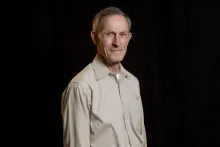
David Mills was born near Wallace, North Carolina, in 1939, where he grew up on a family farm. After high school he attended Ambassador College in Pasadena, California, and he graduated in 1962.
Since that time he has served as a minister of the Church in Washington, Florida, North Carolina, South Carolina, Oregon, West Virginia, and Virginia. He and his wife, Sandy, have been married since 1965 and they now live in Georgia.
David retired from the full-time ministry in 2015.
