
David Mills
This transcript was generated by AI and may contain errors. It is provided to assist those who may not be able to listen to the message.
What a marvelous and wonderful fall festival season we have had in less than a month. A month ago, we were not even yet to the Feast of Trumpets, but we observed that on September 17, and then we moved on to the Day of Atonement. And then we went to our festival sites for seven days, the Feast of Tabernacles, and then the last great day. Exciting events picturing the return of Jesus Christ, Satan being bound and man reconciled to God. And then the wonderful 1,000 years when Christ and the saints will be reigning on the earth. And then an exciting final day of salvation for billions and billions who have never understood. Now we're back from the Feast, and where do we go from here? That's a natural question that we should ask ourselves. And it's good to have that perspective as we look back at the Feast. What do we do? What should we do now to go on forward?
Well, we certainly have been given a lot, haven't we? When we consider all of the spiritual food and fellowship that we have had, and certainly God expects us to grow from all of this. And as we go on forward, to go on forward stronger spiritually, He has given us a high calling.
And along with that calling, there's a very big responsibility. So what will we do with the much that we have been given? Think about this. In just five months and 11 days, on March the 24th of 2013, we will sit down for the Passover, just over five months away. Before too long, October will slip on by, and we'll be into November. And we'll be on regular time for a while. And then December and January, those cold months, February will slip on by.
Before you know it, we'll be into March and back on daylight saving time again. And then two weeks after daylight saving time starts, we'll have the Passover service Sunday night, March the 24th. How should we use these five months ahead? So that when we keep the Passover, we can say that we have made spiritual progress.
I want us to think about that today. As we look ahead for these next months during the fall and winter season, we ponder what is going to happen in the world. We see events that are unfolding. Just today, I was hearing news about all the suffering that is... and you hear it almost every day yourself if you're listening to the news about the suffering that is going on in Syria, the bloodshed that is going on.
Hundreds of thousands of people have fled the country into Turkey and Lebanon and Jordan. Some of them are just camping out in the desert. Others are living in temporary quarters with those that will help them. So it's a sad situation.
What's going to develop in Syria? It's a big issue on the world scene. What about in Afghanistan and Iraq? All the bloodshed in those areas. I believe it was a car bomb that killed about a dozen or so people in Afghanistan. So we hear about things like that going on all the time. What's going to happen in that part of the world? What about Iran? Is Iran going to get nuclear weapons? It's felt that they are certainly on their way to producing nuclear weapons. We know that nations, some of those nations in the Middle East, if they got that kind of power, they would not be reluctant to use it to their own advantage.
Even they're not afraid to commit suicide in order to destroy the enemy. So what lies ahead as far as in the Middle East? We also wonder what lies ahead in Europe. Are we close to the time of the end of this age where these events are going to be fulfilled very quickly? One comment that came back to me that someone overheard was, will this be our last feast that we will observe, be able to keep in this manner?
Well, you know, I don't know that we, the church, certainly is not prepared to go that far. We simply don't know. Things would have to speed along rather rapidly if that were to be the case, but we did not rule out that possibility. Things could happen rather quickly. But you think about this, a lot has to happen also.
Ten nations must unite in Europe and come together. The European Union is now being awarded the Nobel Peace Prize for their efforts at peace in Europe, the area where two world wars devastated that continent in the previous century. And so it's felt now that they have gone then to a lot of effort to have peace on the European continent. So they're being given that peace award. So, but you know, how quickly could events force the European Union to form a United States of Europe? And ten nations are prophesied, prophecies in Daniel 2, Daniel 7, Revelation 13, and Revelation 17.
I think we are well aware of those prophecies, and we won't turn to them right now. But ten nations are going to unite out of that system, which is the final resurrection of the Roman Empire, the Holy Roman Empire. Think about a lot of things have to happen over in Europe then. You have to have a strong man. There has to be something that compels and forces these nations to come together politically and, of course, economically they are together, except their economic currency is very much in trouble right now, the euro.
But all that could also change. But those ten nations have to come together politically and militarily. And there has to be a strong man called the Beast in the book of Revelation, a strong, powerful, political, military leader who will combine with one that is called the False Prophet in the book of Revelation, one that is doing signs and wonders and miracles. And so all of this has to come together in Europe. Are we quite there yet?
Events could force that to happen rather quickly, or it could take a little while for that to develop. And ultimately, there is to be one called the King of the North. That would also be the military leader, the Beast of Revelation, who will rise up. And the King of the...there's to rise in the Middle East, maybe out of this Arab Spring and all the problems that we see in the Middle East, there is to be a King of the South described in Revelation, chapter 11. So that has to come about also. So in Europe and in the Middle East, there have to be certain events to happen that will fulfill Bible prophecies. The King of the South, will that be out of Egypt? We don't know. The ancient King of the South was out of Egypt, but it will be somewhere in the Arab world. We have felt that maybe some type of confederation even of the Islamic world in the Middle East, and with a strong leader known then in the Bible, or called in the Bible, the King of the South.
Meanwhile, in the United States, here we are. Our economy kind of struggles along, and people are having trouble really finding jobs. We're in an election year, and so we'll have to see how that goes and what kind of effect that has upon our nation. So we know, you know, as far as we are concerned, we strive to stay out of the political arena as far as Democrat or Republican. We're, you know, we're kingdom of God. Our vote is for Jesus Christ. He's our candidate, and we know that whichever party wins, they're not really going to begin to be able to enforce our platform. The biblical principles, no matter who gets in office, the nation is too far along the ways of abortion and also gay marriage and things like this. Even if the candidate's opposed it, it's not going to change the direction the nation is going socially. So how are things going to develop in our own country, our own economy, our own social issues? We'll have to keep a close eye on that as well because we know that it's leading toward the time of Jacob's trouble. So as we look into these fall and winter months, we will keep an eye on world events in Europe, in the Middle East, and in our own country, and the rest of the world, and see how things come along. We certainly do want to stay abreast of what is happening, and the church will certainly do that. We will be watchful of world events. But I want us today to especially think about the church and about ourselves individually. God has given us a holy calling. Much has been given to us. What should we be busy doing these next five months before we come to the spring holy days, the spring of the year?
After the feast is a good time to see where we are and where we need to go. And I think we need a sense of urgency about these times that we're living in. I noticed that at the feast, in talking with the brethren and also in the messages, I believe there's a growing sense of urgency on the part of all of us because we see things happening in the world that fulfill Bible prophecy. And we see that we're coming closer to the end of this age, and that does cause us to have a sense of urgency, which is good. We need it. First of all, I'd like for us to look at ourselves individually, and then we'll look at ourselves also collectively as a church.
If we want to grow and if we want to come to the Passover, having grown spiritually, there are things that we must be doing every day. And I want to bring out some of those tools that certainly we've emphasized down through the years. Number one is prayer. Prayer, personal prayer, is time that we spend on our knees just one-on-one. Nobody else, not our mate, the one closest to us in this life, not any family members.
No one else. Prayer is just one-on-one between us and God. We're talking about various things, needs, maybe making confession of shortcomings, giving thanks. Every day we should pray without fail. 1 Thessalonians 5, 17. Let's turn to that. You don't want to hurt to turn to some of these verses that we have read before and that we aren't familiar with, and yet we just emphasize how important they are. In 1 Thessalonians 5 and verse 17, very short little verse, three words, pray without ceasing. And we believe that means that we should continually be in an attitude of prayer. How many times a day can you pray? Mr. Herbert Armstrong was asked that question, and his answer was hundreds. You know, all through the day ask for God's help. Give God thanks as you are driving down the road, working on the job. Whatever you're doing, you can give God thanks. You can ask Him for help continually in an attitude of prayer, praying without ceasing. But also this could be applied that every day we ought to get down upon our knees and pray.
And the Bible brings out that two men got down upon their knees, two men of God got down upon their knees three times a day. Let's read that. I know we may have read this before, but probably maybe not recently. In Psalm 55 and verse 17, Psalm 55 and verse 17, well, let's begin in verse 16. David here said, As for me, I will call upon God, and the Lord will save me, evening and morning and at noon, three different times during the day, evening, morning and noon. I will pray and cry aloud, and He shall hear my voice. You know, when we cry aloud, see this is putting your heart into it, isn't it? I will pray and cry aloud. David was putting his heart into his prayers, and he knew that God would hear. So we too, when we pray fervently, God will hear our prayers. Let's notice also in Daniel 6 and verse 10, one other servant of God that prayed three times a day.
Daniel 6 and verse 10. And this is that chapter where Daniel is thrown into the lions den. There was this law that these men were able to get the king to sign, that nobody was to petition any God or anybody or man for 30 days except the king. So the king signed it.
But notice in verse 10, Daniel 6 and verse 10, when Daniel knew that the writing was signed, he went home and in his upper room with his windows open to word heaven, he knelt down on his knees three times that day and prayed and gave thanks before his God, as was his custom since early days. So you know, Daniel didn't let it affect him when it was against the law. Think of this too. Here was this old man. He had prayed since early days this way.
He was over in Babylon or in far east of Jerusalem. But he knelt toward the southwest, toward where Jerusalem was. He could have gone to a closet, couldn't he? He could have done it secretly so that those men would not know. He didn't even worry about that. He knew it was against the law to do what he was doing. But he just got down. He said he wasn't going to change what he had been doing at this time in his life. He just went. The windows were open. People, they caught him doing it. And of course, he was thrown into the lions den. So certainly a good example of one that was determined to pray to God. And he prayed three times every day. Not bad examples here, as we're able to do it, to get down upon our knees more than one time a day, even more than two would be very good to follow the example of David and Daniel. Let's go to Luke chapter 18. The main thing is that we do pray every day. Get down upon our knees and make our petitions to God. Make our requests to be made known to him.
Give him thanks for all that he has done for us.
I remember as we're turning there to Luke 18 in verse 1 that Mr. Herbert Armstrong, in the last years of his life, he was telling the ministers that he spent most of his time in prayer just giving thanks to God. I've always remembered that. It's been many years ago that he said that, but it's stuck in my mind that it's very important that we spend much of our time just thanking God. What do we have to thank Him for? Everything, spiritually and physically. So it's not bad, is it, to spend a lot of our time just thanking God. That's worshiping Him. That's praising Him. Instead of, always give me this, give me that. It's okay to make our petitions, the things that we need, and certainly our confession of our shortcomings, but to spend much of our time just thanking God certainly is very good. Luke 18 in verse 1, he spoke a parable to them that men always ought to pray. Pray without ceasing, as Paul put it, and not lose heart, not give up, not become discouraged about praying. He said that there was in a certain city a judge who did not fear God nor regard man. Now, there was a widow in that city, and she came to him saying, avenge me of my adversary. And he would not for a while, but afterward he said within himself, though I do not fear God nor regard man, yet because this widow troubles me, this widow was bothering him, I will avenge her lest by her continual coming she weary me. The Lord said, hear what the unjust judge said, and shall God not avenge his own elect, who cry out day and night to him? It shows that God's people are crying out to God day and night for help and praying to him. Though he bears along with them, sometimes God will delay a while, or bear along with us. I tell you, he will speed the he will avenge them speedily.
Nevertheless, when the Son of Man comes, will he find really find faith on the earth? This kind of persistent faith that leads us to fervent prayer and closeness to God. Well, let's hope and pray that he does. So, in the months ahead, this fall and winter, let's make sure that we do pray without ceasing, pray hundreds of times every day, stay in continual communication with God, and certainly get down upon our knees as well, even following the good example of David and Daniel. The second thing, if we'd like to grow spiritually, is to read and study our Bibles often, even every day, as much as possible. Let's go to Matthew 4 and verse 4.
When we read our Bibles, we are reading things that God has inspired, and we are nourished spiritually by these things. It's always good in Bible study to dig in a little bit deeper. Maybe look up some of the original language, the Hebrew or the Greek, or maybe read a commentary and do just a bit deeper research. As we dig deeper, we come to understand more deeply it's exciting. Our Bible study takes on real meaning and purpose. In Matthew 4 and verse 4, he said, Jesus said, it is written, man shall not live by bread alone, but by every word that proceeds from the mouth of God. We have right here in the Bible, then, those words. This is a big book, and we never exhaust it. I think God has a purpose in that. Guess what? As a minister, I've given sermons for decades and decades, but there's so much in the Bible yet that can be spoken about. We can never exhaust it. The same thing is true in our Bible study. We can never come to the bottom as far as understanding everything. There's always more that we can understand and learn. So the Bible is a big book, and God wants us to certainly study these words. Let's go to 2 Timothy 3, beginning in verse 15. We see what the Bible study will do for us. It will help us. It will nourish us, and it will strengthen the inner man.
We might read that verse in just a moment, too. We need that nourishment, that spiritual nourishment, every day. 2 Timothy 3, verse 15. From childhood, Paul is here writing to Timothy, and this is near the end of his life around 67 AD. So Timothy, from a child, had learned from his mother, and I believe his grandmother, from childhood you have known the Holy Scriptures. So probably Timothy may have been in his 30s or 40s at this point in his life.
He had known the Holy Scriptures as a child. That's nice. We want to certainly teach our children also the Holy Scriptures, and as they get older, they can begin to learn them on their own.
But the Holy Scriptures, which are able to make you wise for salvation through faith that is in Jesus Christ. So these Scriptures then lead the way to eternal life in God's kingdom.
All Scripture is given by inspiration of God and is profitable for doctrine, the true teachings. That's what doctrine means, the teachings or the truth of the Bible. For reproof and correction, the Scriptures do reprove and correct. And for instruction in righteousness, that the man of God may be complete, thoroughly equipped for every good work.
I tell you, if we don't know what to read or study, just start going through a book. Go through the Psalms if you've not done that recently. Go through one of the Gospels. Go through one of Paul's writings. And just to read a chapter or two each day will help us to grow spiritually. So if we want to grow these next five months, try to read and study God's Word often. Even every day would be ideal. 2 Corinthians 4 and verse 16. 2 Corinthians 4 and verse 16. This shows that we need this nourishment every day. I need it and you need it. And we will benefit if we will read our Bible and also pray daily. 2 Corinthians 4 and verse 16. Therefore we do not lose heart.
No, there are problems. And this chapter Paul has been describing all the problems they've been facing. In fact, in this book he begins with that. And he says we do not lose heart. We don't get discouraged even though our outward man is perishing. Yet the inward man is being renewed day by day. So day by day we need that nourishment that comes from Bible study and prayer. And there's one other thing that we need to do continually and daily and that is meditation.
Meditation is pondering, thinking things over. It's the application of God's law. Thinking, well how does God's law apply to this? Let's read a verse or two on meditation. Psalm 1. Psalm 1 and verses 1 and 2.
And my margin here in the New King James translation for meditates says, ponders by taking to himself. So we ponder these things. We think about them and try to figure out why things... well when things are going right, maybe it's good to think about that. And... but when things are going wrong, it's also good to ponder about that.
And why are they going wrong? So if you're having problems in one direction or another in your life, what... why is that happening? What if there's a... what if there's a husband-wife argument that comes up and things get heated? You know, it's smart to back away from that and meditate. What happened? Many times when you think about it, there's over something that is very small.
Something that really doesn't matter that much. And so it's good to meditate. It's good to say, well, you know, this is what happened. And apply God's law to it. And maybe see how you can avoid that happening in the future. Also, you can meditate on what needs to be done now. Sometimes a little bit of time will do it. Sitting down, reasoning and talking a little bit more. Let's go to Joshua chapter 1, also on meditation. So meditation is... helps us in applying the laws of God to situations that come up in our lives. So Joshua chapter 1 and verse 6, Be strong and of good courage. The Israelites were not coming into the land. They were told to be strong. Verse 7, Be strong and very courageous. Verse 8, This book of the law shall not depart from your mouth, but you shall meditate in it day and night, that you may observe to do according to all that is written in it. So we are to meditate. How does this law of God apply? The way of life He wants us to live. And we are to meditate on the application of God's law and ponder it. And He goes on to say that then you will make your way prosperous, and then you will have good success. Have I not commanded you? Be strong and of good courage. Do not be afraid nor be dismayed, for the Lord your God is with you wherever you go. You know, brethren, that applies to each and every one of us. As we meditate and think about God's laws and their application, and we then strive to apply God's law and the way we live our lives, why God's way works, and it makes our way prosperous, and we will have good success. You know, the big proof that the Bible is true is that it works. What other religious work of any other religion really works in every aspect of human life. This, no other book, applies to every aspect of human life like the Bible. You can go to Buddhism, Hinduism, Islam, or wherever you want to go. And none of them give that way of life that will work for human success. So God has written the Bible. Of course, it is a book, a guidebook, that leads us to success and makes our way prosperous.
So meditation, prayer every day without ceasing, and reading our Bible, and studying, and understanding God's Word, and then meditating on it, and how it applies to our lives. All very important every day. We'll grow if we'll pray, study, and meditate daily. There's something else that we do periodically that will help us, and that's fasting. Every now and then we all need to do it. And we should fast several times, I will say, between now and the day of atonement. We should. In order to draw close to God. It's kind of like your vehicle. You know, you need periodic maintenance, and the oil needs to be changed. Maybe the tires need to be rotated and balanced.
I know that, you know, every vehicle comes with an instruction on just when that maintenance is to take place, the regular maintenance, so that the vehicle continues to function properly. And fasting is just something we need periodically in order to function properly, spiritually.
To draw close to God, things just begin to work out when we fast. The best chapter in the Bible, I'm not going to turn to it now on fasting. You can read it later. The best chapter describing what fasting is and what it can do is Isaiah 58. We've read it many, many times. Today, I'd like to maybe go to the second best chapter, I think, and that'd be Joel 2, the book of Joel in the Minor Prophets, and chapter 2 and verse 12. This whole chapter has quite a bit about fasting and all the benefits of fasting. I believe even in chapter 1, there may be some mention of fasting as well and drawing close to God. But in chapter 2 and in verse 12, now therefore says the Lord, turn to me with all your heart. That's what we do when we fast. We turn to God with all our heart because we want to please Him. We want to obey Him. We know we're human and we fall short of it. We say things, do things, maybe have attitudes or shortcomings. We don't like that. We'd like to just obey God perfectly, but we know that we fall short like the Apostle Paul and we say, oh, wretched man that I am. But then when we fast, we turn to Him with all of our heart. With fasting, it goes on to say, with weeping and with mourning.
Surrender your heart and not your garments. It was a customary thing to tear their garments. Well, God says, tear your heart instead of your garment. Return to the Lord your God. For He is gracious and merciful, slow to anger and of great kindness, and He relents from doing harm. So God is merciful. If He weren't merciful, there'd be no hope for us because we do fall short. We say things, do things, think things, fall into attitudes that we have to repent of. So fasting is a way that helps to keep us in line. It helps to keep us humble. It helps to keep us in a repentant frame of mind. One that is willing to change, one that is willing to be taught, one that is childlike. We need fasting. So how often should we fast? You know, we cannot say, set the first of each month and fast.
That would become rather pharisaical, the Pharisee who said, I fast twice in the week. He was boasting about that. We don't think that fasting twice in a week is necessary, but certainly we have felt that every month or so, maybe every month, month and a half, or what, you know, certainly more than just the day of atonement. Probably several times every year to have a day of fasting will help us to stay close to God and stay humble and teachable and growing spiritually. If we do that, then if we pray and study and meditate daily and then fast periodically, guess what? We will grow. In these five months between now and Passover, we will grow spiritually. That's what we should do. You know, something else that is very important in personal growth is regular attendance at church. As much as possible, let's go to Luke 4 in verse 16. Our Savior set a good example of regular attendance to hear God's Word read. In fact, He did the reading here in this chapter in Luke 4 and verse 16.
So He came to Nazareth where He had been brought up, and as His custom was, He went into the synagogue on the Sabbath day. Notice, as His custom was, Jesus had a habit of going to the synagogue on the Sabbath where God's words were read from the Old Testament. And He stood up in this case and read, and He read from the book of Isaiah, chapter 61. You can read that later. But Jesus did go to hear God's Word read, and He expounded. He read and expounded on God's Word Himself here in Luke 4. Let's go to Hebrews chapter 10. So it is important that we follow that example. The Sabbath is a holy convocation, and we will grow spiritually by coming to services as much as possible. I know there's sickness. I know that some are not able. Even some of those listening in by telephone are not able physically. But you know, they would love to be here if they were physically able to be here. They love nothing more than to be here each Sabbath. So all of us that are able to be here should strive to be here every Sabbath as much as possible. In Hebrews chapter 10 and verse 23, let us hold fast the confession of our hope without wavering. Some of these in this book were wavering and neglecting such great salvation. So hold fast without wavering, for He who promised is faithful. And let us consider one another in order to stir up love and good works. Let's do that. Let's help to stir each other up to love, a greater love and good works. In verse 25, not forsaking the assembling of ourselves together. This certainly seems to be referring to coming for Sabbath services, assembling of ourselves together as is the manner of some, but exhorting one another and so much the more as you see the day approaching. So certainly it's very important for personal growth that we come to services as often as we possibly can. What about the Holy Days? Same thing. You know, I just recently purchased, well before the feast, I purchased a 2013 calendar. Have the Holy Days all marked off. That's the first thing I do when I get a calendar. I know the Sabbath is taken, but the Holy Days, I mark them when they will be the Passover service and the night to be much observed. The first day of the Feast of Unleavened Bread. The last day of the Feast of Unleavened Bread. Interestingly, the Passover and the Feast of Unleavened Bread all come in the month of March, except the last day of Unleavened Bread, which comes on April the 1st. So Holy Days will be earlier next year. Then I mark Pentecost and also the Feast of Trumpets and Day of Atonement and Feast of Tabernacles. So they're all marked in red. They stand out. And I'm ready now. We got to make some plans. We got to see what meetings we want to combine, what meetings we need to have locally. We have halls to reserve where we can have those meetings. We will begin making our plans even right away. We'll be doing some discussion on it maybe as early as two weeks away. And I'd like to get the halls, begin to reserve the halls that we need to have our services.
So, you know, all of this is very important that we keep the Sabbath and the Holy Days and come to worship God so that we can grow spiritually. You know, something else we do need, and that maybe goes along with fasting, and that is a humble and repentant attitude always. Let's go to 1 John 1 and verse 7, read a few verses. We always need to be repentant and ask God to forgive us because we fall short. And we have that law of sin that is at work in our members. And like the Apostle Paul, we feel, oh wretched man that I am, because we do fall short when we see our human nature at work. And maybe some of the attitudes or thoughts that sometimes we might have. 1 John chapter 1 and verse 7, if we walk in the light, as He is in the light, we have fellowship with one another, and the blood of Jesus Christ His Son cleanses us from all sin. If we say we have no sin, if anybody thinks he doesn't have any, we deceive ourselves, and the truth is not in us. We do have sin, and we need to always recognize that and let it draw us close to God in repentance and seeking His help. If we confess our sins, He is faithful and just to forgive us our sins and cleanse us from all unrighteousness. If we say we've not sinned, we make Him a liar. His word is not in us. My little children, these things are right to you that you may not sin. We should keep fighting against sin and putting it out. But if anyone sins, we have an advocate with the Father, Jesus Christ the righteous, and He is the propitiation for our sins. He is the one that makes the payment in our stead, and not ours only, but for the whole world. So we always want to certainly ask God to forgive us of our shortcomings and our sins. If we do these things, I think we will be growing in these next five months between now and the Passover.
What about the church as a whole? Collectively. We have a job to do, don't we? We have work to do, and we're doing it together shoulder to shoulder. We've always not thought that any one person or the ministry is doing the work of the church, but we all are doing it together as a church and as a work. And we're preaching the gospel to the world. Let's go to Matthew 28, and we have the commission given to the church. And we're all a part of this commission. I've always been made to feel a part of it, and not only as a minister, but also as a member of the church, they're made to feel a part of the commission that Christ gave the church. In Matthew 28, in verse 18, Jesus came and spoke to them, saying, All authority has been given to me in heaven and on earth. Go therefore and make disciples of all the nations, baptizing them in the name of the Father, and of the Son, and of the Holy Spirit, teaching them to observe all things I've commanded you. And, lo, I'm with you always, even to the end of the age. So here's what God wants us to be busy doing, our kingdom of God Bible seminars. But you know, even before that, what do we do? We preach the gospel on television, and also in our magazine, the Good News, in our booklets, on the Internet. We preach the gospel of the kingdom of God. And that's what Jesus said, Matthew 24 and verse 14, in the Olivet prophecy, that we preach this Good News about God's kingdom that is coming, and that humans can be a part of, they can enter this kingdom. We preach it to the world, the message that Jesus brought. Well, you're turning there in Matthew 24, verse 14.
Isn't this a wonderful issue of the Good News magazine? It's about the kingdom of God.
Article after article, the first four or five articles are about the kingdom of God. I was reading one of them last night where Mr. Lucre, he wrote the article, brings out a lot about how God called him. And here he was, he was going along just fine. He got a football scholarship. He came up in Michigan. He got a football scholarship to Delaware. So he went there four years, got, was seeking this engineering degree, got into ROTC. And once became interested in him, they said, boy, you have great potential in the Army. He was going along just fine, but he had this injury that happened his last year.
And so he was turned down as far as his promising career in the military. So he ended up going to California on a job there, and he wanted to find a church. And one of his co-workers said, well, why don't you come to a Bible study with me? I think you'll like it. It was one of our Bible studies. So he came, and he liked it. And before too long, he was convicted that he should apply for Ambassador College. And he went to Ambassador College for three years. And the rest is history. He's a minister, very long-time minister of God's church and now our church president. I knew Mr. Lucre back in college. Remember him coming in. I'd been there a year or two when he came. So we go back together a long time. But you know, the article was about God's kingdom and how we're all called to be a part of it. And that's what really turns us on. So that's the message that we're preaching to the world, and we want to be excited about it. It's an exciting message. Matthew 24 in verse 14 says, This Gospel, the Gospel Jesus was preaching, the Gospel of the Kingdom of God will be preached in all the world as a witness to all nations, and then the end will come.
Brethren, we have felt that the work of Mr. Armstrong and the work we continue to do is that message of preaching the Gospel to the world. And the two witnesses will conclude this work in a very powerful manner, with miracles backing them up.
So what should we be busy doing as a church? Simple. Preach the Gospel. Make disciples. We do have new ones that God calls to the church. Make them welcome and help them to become a member of the family of God. So, Colossians chapter 4, let's be praying about it. Every day, pray that God will bless His work. Let's not even let a day go by without asking God to bless our president and our Council of Elders and our home office in Cincinnati, our magazine and our booklets and our television program. Well, you can break it down to different ways that we are preaching the Gospel. Colossians chapter 4 and verse 2, continue earnestly in prayer, being vigilant in it with thanksgiving. So prayer helps us to be vigilant. That means to be watchful, to be urgent about what we're doing. Meanwhile, praying also for us, the ministry that God would open to us a door for the Word, to speak the mystery of Christ, for which I am also in chains.
Verse 4, how often do we ask God to inspire the writers of articles for the good news? Those articles have to be written. They don't just happen. Words don't automatically appear on a page. They have to be thought out, worked at. We can pray that God will bless those articles. How often do we pray that God will bless the three men that are hosting the Beyond Today television program, that He will bless them? Verse 4 says that we should do that, that I may make it manifest as I ought to speak, that it can be done in the way that God wants it done and the way it should be done.
Let's go to Revelation 3. We've always felt that this is a special message for our time.
I believe that we still do, that the work of God is walking through open doors to preach the Gospel.
In Revelation 3 and verse 7, to the angel of the church in Philadelphia write, these things says, He who is holy, He who is true, He who has the key of David, He who opens, and no one shuts, and shuts and no one opens. What is this about opening and shutting? It's not said to any other church. It is said to this church, though.
So what is being opened? You know, when Mr. Armstrong began to do the work back in the 1930s, the printing press had been going for a few hundreds of years, but mass printing of magazines and literature was really coming to the fore by that time. Were the Plain Truth magazine, all the booklets that would be published. These could be published economically. Also, did you know, radio was really in its... had developed very recently. I believe the first station for radio, the first commercial station anyway, was in the early 1920s. And I believe it was in Pittsburgh where that took place around 1922, if I remember correctly. You know, that was only about a decade before Mr. Armstrong began to speak out on radio in Eugene, Oregon, in Portland, Oregon, in Seattle, in the Pacific Northwest. Radio only, commercial radio, only came on the scene about a decade before. But this door was open when it needed to be open. And then television, of course, developed in the 30s and 40s, and especially after World War II, everybody had a television set in his home after that, before too long. So that open door of television. Then the Internet more recently, a very powerful tool that we're using as well. So look at these open doors. That's what this is talking about. We're using them as God opens them to us. In verse 8, he says, I know your works, something we've had to stand up for because people say you're saved by grace alone and don't have to do anything. And God says, faith without works is dead.
I know your works. See, I've set before you an open door and no one can shut it. For you have a little strife. I've kept my word and have not denied my name. And we do strive to keep God's word. We're not going to compromise with the word of God. I remember Mr. Armstrong again, shaking his head, all of you can leave if you want to the truth. But he says, I'm going to stick to God's word. He was not going to deny God's word. So that's where we want to be also. So brethren, what do we do? We preach the gospel collectively to the world. Certainly our tithes and offerings do play a role. Our prayers do play a role. Our encouragement. We talk to any of those directly writing articles or doing the programs. I know that they're encouraged by it.
Remember, too, that we preach the message by the very kind of life that we live. How many people might you know in your lifetime who do not become members of the church? And some of them you know well, like family members, uncles and aunts, cousins, brothers and sisters, maybe parents, maybe children. And how many neighbors are there that know you? That know you well enough to know you do some different things. You go to church on Saturday and you keep Holy Days during the year and you don't keep Christmas and Easter. Over a lifetime, there are probably quite a few hundreds of people that come to know you pretty well and the kind of person that you are in some of these things that you're doing. So we're preaching the gospel to them. They may not understand it yet, but notice in 1 Peter 2, we're preaching the message simply by the way we live our lives.
So the kindness, being a good neighbor, being a good relative to all of your relatives, being a good fellow co-worker to ones you work with is important. We can let our light really shine and they can say, well, this person, I like the way he conducts himself. So we need to really set a very good example for everyone that we come in contact with. 1 Peter 2 and verse 9, you are a chosen generation. Let's see who we are. God's chosen us. He selected us. Hand picked us. A royal priesthood. Royal means a king and priesthood means a priest.
King and priest. Church and state combined. When God's kingdom is set up, a holy nation, his own special people are purchased or acquired people. And why? The last part of verse 9 tells us why. That you may proclaim the praises of him who called you out of darkness into his marvelous light. Do you know we are proclaiming the praises of God by the way we live our lives, even if others don't understand it at the present time, even if they disagree with it. Because notice as we go on down verse 10, who once were not a people but are now the people of God. Think about that. We would never... Would we ever have been here together like this? No.
Only because God called us. We're now the people of God who had not obtained mercy, but now have obtained mercy. Beloved, I beg you, as sojourners and pilgrims, that's also what we are. Just pilgrims, strangers and pilgrims on this earth, abstained from fleshly lusts which war against the soul. Having your conduct honorable among the Gentiles, all those we come in contact with, you might say, that are not in God's church, that when they speak against you as evildoers, they may not agree with our way of life, but that they may, by your good works which they observe, glorify God.
Not here and now, necessarily at all, but in the day of visitation. When God opens their mind, it may be the second resurrection when that takes place. So we've preached the gospel to a lot of people over a lifetime who observe the way of life that we live. So as a church, then, let's preach, all of us. We're all of us preaching the gospel by our example. What about our local congregations? As we look ahead the next five months, let's set some goals.
We certainly do want to talk about the 2013 Holy Day plans for our four churches. We want to make social plans also. We want to make plans for our youth classes and activities.
Maybe look at our jobs and responsibilities and duties. What about men's and ladies' clubs and training and development as men and women? We know that the men, according to the scriptures, are to do the speaking at services and be the song leaders and to do the opening and closing prayers or verses that bring that out. But men are not born knowing how to do this.
These are things that have to be learned. That means the church has a responsibility to provide instruction. We want to step that up and do special training for our men. Also, in the ladies' clubs, there's training there for the ladies. Think about it. Over the years, we've had Ambassador College. Now we have ABC. We've had spokesman clubs and women's clubs. We do now have some men's and women's clubs. But all these programs were for training men and women for service.
For service in the church and at home and on the job and in the communities, too.
I've heard many people say, well, my training in the spokesman club helped me on my job. I've heard some even say, well, it helped me to actually become a better worker and be given greater responsibilities with greater income, even. So, you know, that's not the ultimate motive, but it's just good that it works out as a blessing in that way as well. But most of, you know, all of our leaders in the church do need training and further development.
We tell our men who speak not to be satisfied with themselves where they are. We'd like for them to improve. Our men who are opening and closing in prayer. Don't be satisfied. You can improve and grow. We don't want you to be satisfied to look at yourself and think you cannot improve and grow. So we want to have programs that will help our men to do that. So, locally, we have work to do. Let's turn to 2 Timothy 2. There's an important principle that is brought out here that we are applying when we pass on training to those who will serve in the future.
Notice in 2 Timothy chapter 2 and verse 1, you therefore my son, you know, look at this. Here's the Apostle Paul. He's way up in his 60s somewhere, probably. He's very close to his martyrdom.
Timothy was probably around his 30s or 40s, and Paul considered him like a son. You therefore, my son, be strong in the grace that is in Christ Jesus. And the things that you have heard from me among many witnesses, commit these to faithful men who will be able to teach others also. How many generations of leadership are there here? Well, the Apostle Paul is number one, right?
The things you've heard from me among many witnesses. The U there would be Timothy. Paul passed it on to Timothy. That's number two. So Paul is number one, the first level. The second level is Timothy. Paul passed it on to him. Alright, Timothy was to then commit these things to faithful men. There's a third level, who then in turn will be able to teach others also. There's a fourth level of passing on instructions in leadership. You might say four generations in this one verse. The Apostle Paul taught Timothy. Timothy was to teach faithful men, and they then would teach other faithful men. Do notice the word faithful, and whether men or women, we want to apply this to men or women, we certainly want faithfulness in all that we, in all of our service in God's church. Well, brethren, it's just five months then before Passover, a little bit over. And let us then, coming back from the Feast of Tabernacles, set a goal to grow spiritually, individually. I've shown you how we can do it. It's the old-time, proven way. There's just no other way than prayer and study and meditation and fasting and regular church attendance and keeping the holy days. Certainly, faithfulness in tithing matters. That's important.
And growing and making progress in our shortcomings. So, let's grow these next five months. As we do, let's have our hearts in the work of God and doing the work He's chosen us to do.
Let's set some goals for ourselves and our local congregation here. We'll discuss that further in a couple of weeks when we display our festival memories and pictures. We want to discuss ways or things we'd like to do in our local congregation in the year 2013. Let you conclude by turning to John 4. Let's just go forward then in doing the work of God. Have our hearts in it. Let's have a sense of urgency. I think we do have that. Let's make sure we maintain it, increase it even, because of the times that we're living in. John 4, verse 31.
His disciples urged Him saying, Rabbi, eat. He said to them, Jesus was a master at taking something that was directed at Him from a physical perspective and turning it into something spiritual. That's what we find here. Rabbi, eat. He said to them, I have food to eat, of which you do not know. So He turns this physical food into something spiritual. His disciples said to one another, Has anyone brought Him something or anything to eat?
So Jesus explained what He meant. He said to them, My food is to do the will of Him who sent Me and to finish His work. That has to be one of the outstanding verses in the Bible, because we certainly want to follow Jesus and let that be our food. That which really consumes us, that which excites us, that which really turns us on, is to do the will of our Father and to finish the work He's given to us to do. And He goes on down to say in verse 35, Do you not say there are still four months and then comes the harvest? I say to you, lift up your eyes and look at the fields. They're already white for harvest. Maybe Jesus was thinking of everyone, and they're not at this present time, but ultimately, everyone will be in God's harvest. And already there's some whitening, you might say, there's calling of the first fruits. In verse 36, He who reaps, receives wages and gathers fruit for eternal life. So let's get up there and get busy doing God's work, reaping and sowing, gathering fruit for eternal life, that both He who sows and He who reaps may rejoice together. For in this the saying is true, one sows and another reaps. That doesn't really matter, just as long as we keep harvesting. I sent you to reap that for which you have not labored, others have labored, and you have entered into their labors. But it's all a part of the harvest, isn't it? So yes, there's much for us to be thinking about as we return from an exciting feast of tabernacles. We have been given much during the fall holy days. Let's grow, let's serve more, let's have that sense of urgency that we need in these times.
Let's go forward after the feast, busy about our Father's business.
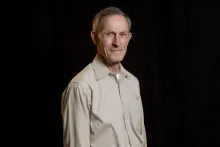
David Mills was born near Wallace, North Carolina, in 1939, where he grew up on a family farm. After high school he attended Ambassador College in Pasadena, California, and he graduated in 1962.
Since that time he has served as a minister of the Church in Washington, Florida, North Carolina, South Carolina, Oregon, West Virginia, and Virginia. He and his wife, Sandy, have been married since 1965 and they now live in Georgia.
David retired from the full-time ministry in 2015.
