

Robin S Webber
This transcript was generated by AI and may contain errors. It is provided to assist those who may not be able to listen to the message.
I have a message that I want to bring to you today. We just have come out of the spring festivals, and I want to build upon that and want to be able to address some of the topics that Julian brought out in the first message today. As we do move forward, and we are moving forward from the days of 11 Bread, we are on an ongoing spiritual pilgrimage. We are on a spiritual exodus out of this world towards the sure kingdom of God, that kingdom of God which ultimately is an eternity.
But as we begin to launch out of the spring festivals, it's time what I would call a reality check. It's time for a tune-up and to double-check our God-installed spiritual GPS before proceeding any further. What a blessing that we do have the festivals of God and the Holy Days that accompany them.
And to always remember that each of these Holy Days, each of these festivals, it's not just merely an event. It's also an experience that continues off of that. The festival, the high day itself, is but a diving board that plunges us into the rest of God's plan. As we come out of these days, and thinking back to the days when, Brad, I am sure that all of us sincerely desired to purge out the old leaven. And that word purge is interesting. Purge. You know, you just don't say purge. You say purge. We all desire to purge out the old leaven and put on the new.
But here's the question that I want to begin this message with. Okay, are you with me? Reality check time? And it's simply this. What happens when sin opens and comes right back at us? Blows in right through the door of our life when we have purposefully and boldly, seemingly, slammed the door on sin. And then it pops up again.
And it pops up again. And again, in an area that we thought was completely sealed off. Anybody that has heard any number of days when leavened bread messages, be it a sermonette, split sermon, sermon, at one time or another, we all go through the epistles, and we are to put out, and we are to put on.
We're all there. We have kind of that rhythm. It's like a two-step. Put out and put on. But now I'm going to take you to the third step. Put out, put on, but what happens when it pops up? Ooh, the minister didn't cover that one. Well, that's why we're going to give this message today. What happens when the sin that so easily besets us pops up again? And that's what we want to talk about today.
And because we want to understand how we do move forward on this journey, this exodus, this pilgrimage, that the one true God has asked us to be a part of and to be able to. You ever read that scripture and it says that we are to love God with all of our heart, all of our mind, and all of our soul, and that's our desire. But then we get stuck in this human tent. And that's one of the purposes of this message today, is to share with you how we can further glorify God by putting sin out of our lives after the New Testament Passover, after the days of Unleavened Bread for any given year, to not just simply put out, put on, but to understand that it will pop up again, even in New Covenant Christians.
Let's appreciate then with that thought, are you with me? To recognize that we are not the first covenant people that have experienced what we might call a spiritual U-turn. You know, we think we're marching out of Egypt like this, and then somehow what is it with our human nature that we do a U-turn? You ever see those signs where it says, you know, it's like this and you can't U-turn? You go, but I need to. I need to go. And you go, but sometimes spiritually, we don't go the sign that God says, and we make our U-turns.
Join me if you would in Acts 7. Acts 7, breaking into a thought, this is the Deacon Stephen's defense before the Sanhedrin, and he shares something about a covenant people, that same God that you and I worship, the God that said, I will be your God and you will be my people, gave them an opportunity for a new lease on life. Let's see what happened here in Acts 7, verse 35. Then Moses, Stephen speaking, going back to the beginning, then Moses, whom they rejected, saying, who made you a ruler and a judge?
Is the one God sent to be a ruler and delivered by the hand of the angel who appeared to him in the bush? He brought them, speaking of this God, he brought them out after he had shown wonders and signs in the land of Egypt and in the Red Sea, and in the wilderness 40 years. This is that Moses, who said to the children of Israel, the Lord your God will raise up for you a prophet like me from your brethren. Him you shall hear, speaking of the Christ. This is he who was in the congregation in the wilderness with the angel who spoke to him on Mount Sinai and with our fathers, the one who received the living oracles to give to us. Now, verse 39, whom our fathers would not obey but reject it, and in their hearts they made a U-turn. God gave them a new lease on life, gave them freedom from slavery. But it says here, and in their hearts they turned back to Egypt. That was the first covenant people. What we need to recognize to a degree is that there are similarities and there are differences between the Israel of old and what God calls the spiritual Israel of today in Galatians 6 16. Just as of old, he wanted to be their God and he wanted them to be his people. And they said, you will be our God and we will be your people. But there was a breakdown.
They lost the GPS. To understand all of this, then, is to recognize that in Hebrews 10 verse 19, you can just jot that one down for now. We need to recognize that during the days of 11, we came to understand that we have been called to a new and a living way in Christ.
Our deliverer, that second Moses, that greater Moses, the Passover, and we need to take a really big dose of spiritual reality and realize what remains that are not his ways, but still remain our ways. And that's what I want to talk about today. Sometimes people say, well, Mr. Weber, you don't talk about sin enough. Well, we're going to talk about sin today just to satisfy everybody. We're going to talk about sin and to recognize that in Scripture and in God's mind and in God's heart, sin is a four-letter word. Think about that for a moment.
He doesn't want us to have it up to be a part of us. So I want to talk about that. Let's go to Hebrews 12 and verse 1. In Hebrews 12, the epistle thereof and the author of Hebrews tells us this in verse 1, regarding sin, regarding that which pops up even when we've given our lives to God the Father and Jesus Christ. Therefore, we also, since we are surrounded by so great a cloud of witnesses, understand he's not talking to Israel of old, he's talking to the Israel of God in that first century and to you and to me today. Let us lay aside every weight and the sin which notice so easily ensnares us and let us run with endurance the race that is set before us. Now, notice what it says here. It says that ensnares us, that word when you look at it, ensnares it means that we can be trapped by it. It can snatch us. It can come up against us. And to look at that, God called his people to make progress and progress towards it. When that sin which so easily ensnares us comes up, what does it block? What progress does it stop? Right here, verse 2. Looking unto Jesus, the author and the finisher of our faith, who, for the joy that was set before him, endured the cross, despising the shame, and sat at the right hand of the throne of God.
Sin can block our progress and it can diminish that vision of what Julian brought out in the first message about what God did for us through Christ. So here's what we're going to do today.
Seat belts on. Be ready to follow me because we're going to go kind of quickly. But here's what we're going to do. I'd rather you just kind of listen. You don't have to write all the notes. This would be basically what I'm going to give you is what I would call a note taker's delight because we are going to break down and break down and break down and break down and break down things. Then we're going to build up and build up and give you some specific takeaways. I'd rather you get what I'm going to be talking about. I'll be happy to send out my notes. They're all right here. But I just kind of want you to understand where we're going. So what we're going to be doing today, the SPS is simply this. Challenging the sin that so easily ensnares us. That's what we're going to be dealing with. I'm going to give it three points. And these three points are going to be very, very important for us to take in because what we learn during the Days of Unleavened Bread is this. Here we go. Number one, that we renewed our focus on our Heavenly Father's calling, which Julian just brought out. That's why God gives us the Holy Days to renew our focus, to get it straight, to cut out the distractions, and have a Holy Day where we put the world on the outside and we allow God to come into our insides and understand and embrace and internalize and to express the love of God. Number two, to frame a new future in Christ. To frame a new future in Christ who became sin for us, that we might be able to approach that heavenly throne. And number three, then, and yes, then, to be able to face ourselves. And whatever sin that you're still tackling, whatever is below the floor of your human tent that you don't think anybody knows, but God does know and He wants you to confess it and to admit it and allow Him to work with you on that, is to recognize, then, that this message is for you to encourage you and to, yes, encourage me to deal with that which should not be in God's holy temple.
Three points. Number one, are you ready? Number one, God has planted His chosen people in this world to confront sin. God has chosen you to be in this world and at this time to confront sin.
Always has and always will. That's how He deals with His elect. That's how He deals with His chosen covenant people, whether it be Israel of old or whether it be the Israel of today. And this is not some strange trek that God is playing on us here. He said, oh God, you know, just bring your kingdom. What is this all about? You know, just like Star Trek. Beam me up, Scotty.
I'm ready. I'm out of here. Done. But that's not how God operates.
And He hasn't done it to you alone. Sometimes we're frustrated. A little bit like Paul, you know, he says, you know, I'd rather be with you, but I need to be, you know, going back and forth and to recognize then how do I know that this is God's modus operandi? The Bible clearly tells me so. I was actually by the old church yesterday that I grew up in, a little Baptist church up there in Emerald Hills. And well, I used to learn this little ditty, you know, the for the Bible tells me so. So that to recognize that the Bible tells me that this is how our great and loving God works. He did it with the Brahm. He did it with ancient Israel, and He did it with the disciples. And that's a big question that I want to answer. When the great I am rescued Israel and offered them a land of promise, where was that? Where was the land of promise? Now, let's be silly for a moment to get the point. Did God say to the 12 tribes that were not a people, that became a people, said, I've got just the neatest spot for you. I'm going to put you up in the North Pole, and you can be up there with all the polar bears. No. Did He say, I'm going to put you down in the South Pole, and you can be swimming down there with, if you make it, no cold, and you can be down there with all the penguins, because the penguins won't contaminate you unless you nest with them at night. No. Where did God put His people? The land of promise, the land of opportunity, was smack dab in what is called the way of the sea, that land between Mesopotamia on the East and Egypt on the West. In other words, He put them in the epicenter. Are you with me? He put them in the epicenter of all humanity and the great river valley civilizations of old. He put them there.
And to recognize that beyond that, then the way of the sea, that actual way of the sea between Egypt and the Southwest and Mesopotamia over in the East, He put them in Canaan. Now, I want you to understand what Canaan was like. Canaan was like Egypt on steroids. Canaan was double Egypt just in microcosm. A god-god here and a god-goddess there, here a goddess, there a goddess, everywhere a goddess, everywhere an idol. These were not nice people. These were pagans, and this is where God put them. And then on top of that, after He puts them there, He says, and you shall not be like them. Oh, thank you. Okay, we're surrounded. You know, kind of like Custer, we're surrounded. And then He says, and you shall not be like them. Why? Let's understand what's going on. You know, just like a reporter, who, where, when, what, when, how. Okay, the who that started this process and started the process of where you are today, the who that started this process is God. So let's get the who. The who is God. Number two, where is the where? The where was right smack dab in the middle of a swarm of carnality called Canaan. And for a specific purpose, the specific purpose was that the one true God might be revealed and might be manifested by a chosen people, that light might come into the darkness. Why have you been called simply for personal salvation? No. We have been called to witness for God that light might come into the darkness, wherever that darkness might be. That darkness may be in your neighborhood, that darkness may be in your school, that darkness might be in your workplace, that darkness might be in our interpersonal relationships, and a family. That darkness, at times, can kind of at times come into congregations. And you've been called to be a witness and to be a light of the one true God. Why were you called? You were called to be a witness. And why? That God might be glorified. It's not just about us. Why is it in humanity so much often? We make it all about us. It starts with God. It starts with God. God will take care of us when we are His witnesses and when we glorify Him by not being like them, but in our day and age being like Jesus Christ. Now, why did this have to happen? Because, and why did He put them in the middle? Because that society represented sinfulness. And He put them in the middle of those people to help us and help them appreciate how God views that which is opposed to them. And there are forces that are opposed to the one true God. I'm going to keep on hammering those three words today. The one true God. There are forces that are opposed. It is God that is true. Jesus Himself said, I am the way. I am the truth. I am the life. Today, what do we have? This is my truth. Everybody's got their dreams. It's like, you know, I used to be there, but here's my wallet. Now, here's my truth. This is my truth.
How's that working for society today? For everybody has their own individualistic, personal truth. I've got my truth. Truth comes from God. Truth comes from the Creator. The simple message of the Sermon on the Mount. Let's go to Matthew 6 for just a second. Matthew 6.
And Matthew 6, and let's pick up in verse 7, please. In Matthew 6 verse 7, And when you pray, do not use vain repetitions as the heathen do. The vain repetitions there is not just repeating a word. After all, you go to Ezekiel 6, and the seraphim are saying, Holy, holy, holy. They do that for eternity. This is talking about how the pagans prayed, how the pagans chanted in unintelligible language that was smoke and mirrors. He says, And when you do pray, do not use vain repetitions as the heathen do, for they think that they will be heard for their many words. Therefore, do not be like them.
Make a difference. Not your difference, not my difference, but God's difference. God's ways difference.
For your Father knows the things that you have need of before you ask Him.
The raw reality of Jesus' prayer on his last night of humanity tells us why you are and why I am where we are today. Join me if you would in John 17. In John 17, let's pick up the thought here, and join me if you would. Come along. Let's open up our Bibles. It's the Sabbath day. That's why we're here. What a blessing we have the Bibles in our lap. John 17 in verse 21, where it says this, I do not pray that you should take them out of the world. I do not pray that you should take them out of the world, but that you should keep them from the evil one. They are not of the world, just as I am not of the world. So don't take them out of the world. Scotty, be me up. I've done enough. It's all over. Done. Done, done, like done. No. Sanctify them by your truth. Your word is truth. And as you sent me into the world, notice, Jesus, the one that was the word, could have stayed up there. He came down here to be what? A witness and to be a light to a darkened world. As you sent me into the world, I also have sent them to the North Pole. I've sent them to the South. No, I have sent them into the world. As for their sake, I sanctify myself that they also may be sanctified by the truth. Now, notice verse 20. This is our come-along Scripture in the 21st century. I do not pray for these alone, but also for those who will believe in me through their word. If you're daring enough and you want to add to your inspired margins, you can just say, this is about me. Jesus saw us that night in that upper room. He recognized that there would be disciples down through the ages that he would send out in the world, that they might be his witness of light and that we might be able to glorify our Father. And what were they to share? Again, the who is God, the who is Christ, and they defined the laboratory of where the Canaan experience begins of being a new creation. We all would like to be a new creation just like all of us would like to lose weight or gain muscles, whatever your choice is, wherever you are in life right now. Sometimes it can all happen in one year or one decade. But to recognize that this is the laboratory. It is the world and it's for a purpose. And why have you been called for simply personal salvation? No! You have been called to be a witness by your lifestyle, Jesus' lifestyle in you, that the world might know that the Father sent him. And they recognize that there's something different about you when you're here in this laboratory called the world. Let's go to point number two.
Let's define and appreciate what sin is and why it so easily ensnares us.
Just what is sin and what is it that it can so easily ensnare us? Long ago, back in past Nenadays, there was a minister certainly esteemed and respected this older gentleman, and he just kind of put it out like this. He said, there must be something about human nature that we like, or we would have gotten rid of it a long time ago.
There must be something about human nature that we like, or we would have gotten rid of it a long time ago. Let's unpack that now. By unpacking, I'm going to give you some sub-points to number two. Number two, we're defining sin and why it so easily ensnares us. Point two, A. Sinful behavior often begins as a delightful and fun action. Surprise! Sinful behavior often begins as a delightful and fun action. Just ask Eve, right? Mother Eve, back in Genesis 3, 6 through 7, Satan tried to make Eve think that sin is good, that it's pleasant, that it's pretty, and that it is desirable. And having the knowledge of good and evil must be a sure cure for the boredom of perfection that God was desiring. To be humanly honest, thinking of the serpent, thinking of the adversary, and Eden, to be humanly honest, it wasn't a hard sales job to Eve who was in the flesh.
Sin on the surface looks delightful, expedient, immediate, and at times fun.
Let's take this down another notch. People usually choose wrong things for themselves long term because they are convinced that they are good, at least for the moment.
What we might just call the momentary pleasures. Sin does not immediately appear as being ugly, and the humanly pleasant sins, humanly pleasant sins, I didn't say sin is pleasant, the humanly pleasant sins normally are invested and wrapped in some form of sensuality, of taste, of touch, of smell, of sight, or simply to possess, to grab for ourselves, and the most attractive and the hardest to avoid are the sins of sensuality. Because there is an immediate human self-gratification, but not all that glitters is gold. And to put it bluntly, we simply don't look under the hood. We don't look under the hood. So we're going to look under the hood a little bit more. Here's an action. As we proceed from the renewal of the New Covenant at Passover, we must prepare our hearts and our minds that the sin that so easily besets us will be attractive in the moment that it lurks. Sin humanly. I'm being very honest. I'm a Christian. I've been a Christian for over half a century. Sin is attractive, humanly speaking. And it seems immediate, and you can put it right in your pocket and walk away. But it doesn't work that way as a Christian. We can't always prevent such temptation, but there is a way of escape. Remember what God says in 1 Corinthians 10-13? You can jot that down, that he will always make a way of escape. And it's all right here in this book, which we're going to bring out in the minutes ahead, because it will appear attractive.
Let's go to point 2b. Sinful behavior is rarely obvious at first. Sinful behavior is rarely obvious at first. Again, let's go back and consider what Mother Eve did. She looked, she took, she ate, and she gave. She looked, she took, she ate, and she said, isn't this good? And she gave to somebody else. Bottom line, action item. Gird up. Here's the armor. Simply this. The battle is often lost in confronting sin and allowing it to ensnare us at the first look and our reaction.
I didn't just say the first look, because a lot comes into our windshield in life, doesn't it?
Things that you're not asking for, but it comes at the first look and our reaction. Are we becoming ensnare to sin because we haven't learned that looking and pondering is the first step towards sin?
We would become ensnare less often if we did follow the Apostle Paul's advice to Timothy, to flee temptation. Get up, get out, and get going. To flee, not to linger.
What happens when you linger? Think of Joseph and Potiphar's wife. I think he lingered a little bit because she got ahold of his cloak. Think that one through. The Great Lesson One of the lessons to meet the Great Lesson, other than defining sin, is what to do of coming out of Egypt and not returning. And it's simply this. The Great Lesson of the days of 11, Brad, is when God is intervening in our life, we are to make haste. I think to make haste is one of the great, great bumper stickers that a Christian needs to plaster on their heart, to make haste away from sin and to make haste towards God and the example of Jesus Christ.
I'm going to break it down further. Point 2c. Sins affect spreads. Sins affect spreads inwardly and to others.
After Eve sinned, she involved Adam in wrongdoing. It spreads. When we do something wrong, we often try to relieve our guilt by involving someone else.
We want an accomplice to come along with us. Simply put, misery loves company.
And it's like toxic waste that spills into a river and pretty soon it begins to spread.
We need to learn to recognize and confess our sins to God before you are attempted to pollute others. That's a bold statement. When we know we are not acting like the God-man that walked to this earth, Jesus Christ, when we're not acting like Him, we're not pleasing God. There's a separation. We're walking a different way. We're making a U-turn to Egypt. And when we recognize that, we need to confess it, we need to admit it, and don't have somebody else involved.
We can even talk about this and just talk about others. Have you ever been with a bunch of people and they start talking about somebody? They're breaking and trespassing. The person is not even there and they're talking about them. And they've broken into somebody's life without their permission. And then somebody says, well, now that you bring that up, let me tell you what I think about that person. And then pretty soon you can have two or three people talking about somebody, and they're not even invited into the party of which they're the star. That's wrong.
Should not be in the body of Christ. The gossip, the slander, to talk about somebody else without them being present to be able to share their story. Again, one of the prime lessons that we have coming off of Unleavened Bread is the little, little 11-11 is the whole lump. Let me go a little bit further about how how sin spreads. The story of the Bible tells us sin often leads to more sin. Let's think about Bathsheba for a moment. We all know about Bathsheba, Bathsheba and David.
Second Samuel 11, if you want to jot it down. With everything that I've told you before, that sin often starts what? At the first look. And what is our reaction? Let's go back to Jerusalem, circa 950 BC. David is pacing the patio in his palace, mirror, mirror, on the wall.
Look at everything that I built. And he's looking around. And he sees Bathsheba.
Bathsheba is down there bathing on top of another roof. Bottom line, follow. You know, remember when we used to paint by dots when we were kids? I don't know if they still do that, or your kids doing painting by... Okay, good. You paint it by dots. So we're going to go by dots. David went from looking, dot, to lusting, dot, to possessing, dot, to trying to cover up his sin by murdering an innocent party, the woman's husband who is loyal to him, dot. His sin spread beyond himself and encompassed a nation, dot. And those had been loyal to him, dot. And ultimately came about with the death of a newborn, dot, dot. And what we have is a car... sin is like a carnal snowball. You know, you're up in the Rockies or the Sierras, and all of a sudden, you know, a little snow lets loose, and all of a sudden it starts picking up steam and keeps on going down, and pretty soon it's got pine cones in it, and pretty soon there's a squirrel, and then pretty soon there's a cross-eyed moose thing. What am I doing? The moose is in that, and rocks, and boulders, and then part of the forest comes down. But it started small, but it builds, and it develops momentum, and that's what sin does. That's why a little leaven leavens the whole lump, and it's not... it actually integrates and becomes a part of the host. And that's why it's so important that when sin comes our way, recognize what it is. The Bible tells us what sin is. Don't look, don't hold, don't touch, don't handle, make haste, move away from it, and give the battle to God. Get up, get out, get going, and don't bring anybody else along, because that will be the temptation with sin, is to bring somebody else in and to integrate the whole with what you started. Again, why don't we stop sin in its tracks? Thank you for asking that question. We think so often we want to make excuses. Think about this through a moment. When God asked Adam, hello, where are you? Hello, hello.
Yeah, where are you? And Adam was hiding. When God asked Adam where he was, and then they finally got down to brass tacks. What did Adam do? And ladies, you will like this. The man blamed the woman.
Says it's the woman that you gave me. Now, who's he actually blaming? He's blaming God.
Adam blamed Eve. Then who did Eve blame? Eve blamed the serpent. And they both were all really blaming God. But think this through for a second. God held each and every one of them responsible for what they had done. When you go through Genesis 3 and you look, he deals with each of them individually, judiciously, specifically, as to what they had done. Which is important to understand. He went right down the batting order.
We make excuses rather than accepting what we've done. Because we think that we're going to be let off easier rather than recognize that it's going to be compounded. It works. God's ways work exactly opposite of the way we think. God's ways are not our ways. Something happens. We're human beings. We're in these human tents. We make a sin. And so we try to cover it up, which we'll talk about in a moment. And we think at times that sin will always stay small and hidden. David couldn't hide. Neither could Moses. Think about it when he was murdered that man. And he thought that he might be able to cover it up and it might go away when he tried to be a judge between the people. But someone saw it and he had to flee. And during this time of pilgrimages, we come out of Egypt and Israel's marching towards the Promised Land. We have this story of Achan. And Achan thought, you know what? Achan was one of the first cover-up jobs in the Bible. Achan took something that God said he was not to take. So what does he do? He puts it underneath his tent. He puts it underneath the cover. And because he did that, one man and sin spreads. And it always affects others. There's no such thing as a victimless sin. And it will, like a stone being thrown into a pond, there will be the ripple-out effect. And his entire family ultimately died because of his lust after something that God said was not his. We can also see the story of the New Testament Achan and the story of Ananias and Sapphira. And when they sinned, Ananias, as the man, as the head of that family, should have set the example. He could have given what he had to give, but he made it more so that everybody might think more highly of him. And then his wife, when confronted, she had an opportunity. She did not. Sin will always spread. You cannot cover sin. Numbers 32, where it says that your sins cannot be hidden. Let me go to point 2d here.
Such sins can become a habit. Such sins can become a habit. Sin is habitual. Just look at Abraham.
As he became comfortable with lying to save his skin, as he pawned his wife off as a sister. How would you like that, ladies? How would you like your man? Can I say, your man? Okay. When your man, all of a sudden, when the pressure is on, oh, she's my sister.
Susan's not here. That would not go over big with sweet Susan. Trust me. Not going to happen. Not going to happen here. Trust me. Okay. Anything is possible, but I wouldn't want to see Susan's face. First, he did it with Pharaoh. You'd think that would be enough. He got out of there, you know, with his hide on, but then he does it with Abimelech. He's a, this is a twofer. He's a two-timer. He did it with Pharaoh. He did it with Abimelech. Now, what you need to understand, though, it can also become a family. Sin can become a family way. It can get into the DNA. Isaac, the son of promise, later on did the same thing with his wife. Well, who taught you how to do that, oh, daddy? You see how important it is to cut off sin with God's help and with the sacrifice of Jesus Christ at the beginning line? It has no good results. It has no good results. And nothing can be hidden from God. And it actually begins to permeate us. Sin leaves its mark. We talk about the mark that was put upon Cain. Sin can change us from the inside out. I want to go to point number three, allowing God to help you break the snare of sin. How can God help us? That's important to understand. Number one, just be open with God regarding our sins. I need to be open as a Christian, as a disciple of Jesus Christ regarding my sins. And we will continue to sin.
We're in this human tent. God gets that. It's no surprise to Him. He's not happy when we do. Please understand that. But He recognizes He's up there and we're still down here in this human tent. And we will stumble and we will sin. You've heard me so often, but it makes it very clear about the little boy and the mama. And the boy said, well, Mommy, you're going to get baptized.
Why are you going to get baptized if you're going to sin after you're baptized?
And the mother looks to him and says, go find your mother. No, it is. I am the mother. He says, simply this. He says, before baptism, I was running toward sin. After baptism, I'm running away from sin, but I'm still going to stumble both ways.
Now, we need to recognize that doesn't take you and me off the hook. It just helps us to realize the terrain that we're traveling in this pilgrimage towards the kingdom and to be wary of that, that the possibility of stumbling is always there and to recognize that. Be open with God regarding our sins. Join me if you wouldn't, Psalm 139. In Psalm 139, and let's pick up the thought in verse 23.
In Psalm 139, verse 23, Search me, O God, and know my heart. Try me and know my anxieties. Sin can be stressful. It can make us anxious and see if there's in any wicked way in me and lead me in the way everlasting. Be open with God.
David asked God to walk right, unlike Adam, unlike Eve, and to explore his life and to his thoughts. You know, it's kind of interesting when you go through the books of the law and you read through the Bible. The sacrifices of old—stay with me on this for a moment. Maybe you've never heard this. There's a sacrifice for what you did and commit it knowingly. There is also a sacrifice for that which you committed unknowingly. And then there was a sacrifice for something that you didn't even know about. God just covers it all, recognizing who we are. If we don't ask, how can God respond? If God doesn't enter our life, how can we know what is wrong? You see, with these days of 11 bread that we've just gone through with the Passover, we've hit Beach Head. We're on the beach. My dad made three landings during World War II on the government tour in the Solomon Islands. And the Marines would go in and they would establish a beachhead. Right? Plant the flag. And that's what we did at the New Testament Passover.
We established Beach Head again with our God and with His Christ. And we planted the flag and said, we're renewing the covenant. But we've got to recognize we're just at the beach.
There's more valleys to go through. There's more mountains to go up. But what we recognize when we covenant with God in the festival of Passover, we know that what is ahead of us, we're not alone. We're not alone.
And God is not down on us simply because we sin. He is up for us to pull us out of our sin and to show us the way. There's nothing that we can do that will surprise our Father above. And certainly Jesus Christ has been down here amongst us. And we need to understand that and to hold on to that.
Point B, just confess your sins. Confess. I believe Paul used this verse a couple of weeks ago. Just let's go over to the epistle of 1 John for just a second.
In 1 John 1, and pick up a thought in verse 9. If we confess, if there's a possibility you might not, but if you are God's child and disciple of Jesus Christ, you will, if we confess our sins, He is faithful.
He doesn't eliminate us. He says, that's enough.
No, He says, if we confess, He is faithful and He is just to forgive us our sins and to cleanse us from all unrighteousness. God cleanses better than you ladies do. You ever seen a man try to cleanse a house or to clean up a house?
So when I try to clean up a house, just go away, go away. And I'm trying to be a loving husband and I'm, you know, like this and doing that. And just go away, go away. You know, you ladies, you know how to do deep dirt. You know what deep dirt is? Men kind of are like certain. They really, they're loving. Men are loving creatures. Please understand that, ladies. They really do love all of you and they want to pitch in, but we just, we don't have it. Okay? And, but I want to share something with you and I see some of you smiling, especially the ladies. God beats you at cleaning because He cleanses us with the blood of Christ. And He goes so deep that there's not a spot.
And He cleanses us from whatever we've done.
Isn't that beautiful? Isn't that wonderful? That's so cool. That's Hebrew for cool.
And it recognizes what our God does for us. Amazing.
But first of all, we have to confess our sins.
What are you holding back that you're living with, that's dragging you down, that weight that so easily besets us, that you need to lay aside based upon what the Bible tells you to do?
That you don't think anybody knows other than God the Father and Jesus Christ.
You need to confess.
The way you confess is, first of all, is to admit. You have to admit before you confess.
You have to admit before you can make it very simple. You have to admit.
You have to adjust as much as Nathan. And he pointed to David when David was an adult, and he says, he tells that wonderful story.
And David says, get that guy. And then Nathan goes, you're that man.
You are that man.
That's what we need to do, dear friends, fellow brethren, members of the pilgrimage. That when we sin, we have to admit that we are that person.
We are that person.
Admit it. Confess it. And believe that it can be forgiven.
Let's go to point C. Commit yourself. We're almost done. Commit yourself not to continue in sin. Make a commitment.
Make a commitment. We wouldn't be fully confessing our sins or experience.
A confession brings about if we plan to repeat that sin and just wanted to reprieve. You know, just kind of out on bail until next time.
You make a commitment. That's hard today. In this day and age. It used to be that when my dad taught me that when I shook hands with a man, that was my commitment. I didn't even need a contract.
And God did more than shook our hand. He gave us life.
Admit. Confess.
Believe. Commit.
Would we do that? Things begin to happen.
One other point. We should pray for future awareness that God grants us his eyes and ears. We heard that from Julian today.
We'll be discussing more of this as we move to Pentecost.
And if you're reminded what God does for us, John 16, 7-8. John 16, 7-8.
God says that he's given us his spirit. Jesus there says, I must go that the spirit might come and it will convict you.
Both of sin and righteousness. It's the Holy Spirit. It is that spirit of God the Father and Jesus Christ indwelling, imbibing, living, bubbling up if we allow it, that will convict us of sin.
And convict us. I'm going to say convict, it sounds like a bad word, but convict us of God's overwhelming love. Psalm 86 and verse 5, where it says God is good and he is ready to forgive. He's not like that bad boss that you don't like at work.
You make one mistake, bam! comes down on you.
God wants us to succeed. God wants us to be like his son, and that's why he gave us his son. Let's conclude by going to Romans 7. Romans 7.
Very quickly.
Romans 7 is one of the great chapters of Scripture.
And what Paul is doing here is it's one of the first autobiographical sketches of antiquity. It's autobiographical because he's sharing himself so often when he goes through the Scriptures other than David.
It's talking about individuals, but it doesn't really get into their mind. It doesn't really get into their spiritual psyche. It doesn't go down into what's really rattling in their cages. And here's this famous Scripture where Paul says, you know, everything that I want to do for you, God, I wind up not doing. And everything that I ought not be doing is exactly what I'm doing.
Oh, wait a minute. Didn't he give the New Testament? Didn't he help us? Didn't he give the New Testament Passover instructions? In 1 Corinthians 10, right? He's on the pilgrimage. He's on the journey. Same guy. But he's sharing himself that even as he's on that journey towards the kingdom, he's got issues that are still lurking and remaining inside of him. He's not perfect. And he lays us out to give us encouragement. And then he comes up to this in verse 23. But I see another law on my members warring against the law of my mind and bringing me into captivity to the law of sin, which is in my members. I gots it. It's in me. Okay? Oh, wretched man that I am.
And he asks this rhetorically, who will deliver me from this body of death?
I thank God through Jesus Christ our Lord.
So then with the mind, I myself serve the law of God, but with the flesh the law of sin. He winds up. Stay with me. He winds up with the exclamation mark of Jesus Christ.
That's where he leads to. That's where we always have to go. That's where our conclusion of our life, every thought, every word, every deed, every action, everything that we do is punctuated by the exclamation mark of Jesus Christ.
You say, well, who said to use that exclamation mark?
His father, his father, your father, and my father, that shows us the way to move away from being ensnared by sin. Let's continue the journey with spiritual realism.
Let's continue the journey knowing that we are not alone.
Let's encourage one another. Let's pick up one another along the way with those arms, those hands, those eyes that Julian talked about in his first message.
God has not just called us individually. He's put us in in this group of this incredible exodus.
This glorious, glorious spiritual pilgrimage that we have moving towards the kingdom of God in eternity. Let's be there for one another because, after all, our Father in heaven is always there for you and for me.
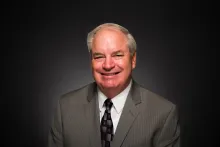
Robin Webber was born in Chicago, Illinois, in 1951, but has lived most of his life in California. He has been a part of the Church of God community since 1963. He attended Ambassador College in Pasadena from 1969-1973. He majored in theology and history.
Mr. Webber's interest remains in the study of history, socio-economics and literature. Over the years, he has offered his services to museums as a docent to share his enthusiasm and passions regarding these areas of expertise.
When time permits, he loves to go mountain biking on nearby ranch land and meet his wife as she hikes toward him.
