
Robin S Webber
This transcript was generated by AI and may contain errors. It is provided to assist those who may not be able to listen to the message.
Thank you, Mr. Star Wars, and thank you very much, David, for the Hoffertory music. And again, thank you very much for your confidence and faith towards our loving Heavenly Father with that offering, and also with the United Church of God will be able to do with that in the future. The dynamic spiritual resolution of every disciple of Jesus Christ during these days of Unleavened Bread can be found in 1 Corinthians 5. Let's open up our Bibles and turn to 1 Corinthians 5, and begin our message this afternoon by looking at verse 7, where we are given specific spiritual instruction. Paul uses a metaphor. Therefore, purge out the old leaven that you may be a new lump, since you truly are unleavened, for indeed Christ our Passover was sacrificed for us. Therefore, with that stated, let us keep the feast, not with the old leaven, nor with the leaven of malice and wickedness, but with the unleavened bread of sincerity and truth. I look at this audience. I see disciples of Jesus Christ. I see individuals that are sincere. And I do truly believe that all of us want to purge out the old leaven. That word purge does not just simply mean to set aside, but literally to totally cleanse. That's why when you go on a purge diet, that means to literally get rid of everything that is in there, that is an irritant that needs to come out. Purging is no halfway measure. So I think all of us truly want to purge out the old leaven and put in the new. But I have a question for you this afternoon, and that is simply this. With that stated, and that being our sincere desire, what happens when sin seems to blow right back in, where we have slammed the door shut and it pops up? And do I dare say in an area that we thought was now completely sealed off in our life? I'd like you to jot these words down, just three little short phrases, very simple, but this is what we're going to discuss today. We normally think when we consider the days of 11 bread to put out, to put on. To put out, to put on. But we're going to add to that today. To put out, to put on. But what happens when sin pops up? Put out, put on. That's our goal. That's our desire. With God Almighty's call. With the example of Jesus Christ. With the lead of the Spirit. But what happens? And why does it happen that even after the New Testament pass over, as we understand these days of 11 bread, that sin will continue to pop up in our life? It isn't the spiritual rhythm that we desire. But friends, can we talk? It is the spiritual reality, even in the life of a dedicated Christian. To live a new and a living way in Christ our Passover, we need to take a big dose of spiritual reality. And that's why I'm talking to you this afternoon as one Christian to another. We're going to get down, we're going to talk, and we're going to be very spiritually realistic about the path that lies ahead of us. That even when we have experienced God's grace towards us, even as we partake of the bread, and as we partake of the wine in our heart of hearts, and in our faithful heart, and our desire to serve God Almighty, and recognizing what Jesus Christ has done for us, dear friends, we will yet stumble. We will yet stumble. Let's just be blunt. Let's call it for what it is. We will, in that sense, sin. Why is that? Why is that if God's provided the Passover? Why is it if we go through this exercise called the Days of Unleavened Bread?
We need to recognize that that nuisance, that distraction, spiritually speaking, will still be there. Specifically, that leaven is called sin. This is going to be a sermon about sin. So please put on your seatbelts airbags deployed, because we're going to discuss, we're going to be personal about it, we're going to get down about it, and discuss it. Before we go any further, join me, if you would, in Hebrews 12 and verse 1. In Hebrews 12 and verse 1, let's notice what the author of Hebrews encourages towards. And realistic.
Allow me, if you would, for a moment to read that out of the Living Bible translation. Therefore, since we are surrounded by such a huge crowd of witnesses to the life of faith. Well, that almost sounds like here in this room today. Notice what it says.
A huge crowd of witnesses. I understand we have 88 people packed into this room today. I didn't say 88,000 like a football game, but 88 people. That's a large audience for San Diego. It's a great cloud of witnesses, and around the world as well today, at this service time.
It says, let us strip off every weight that slows us down, especially the sin that so easily hinders our progress. But I do actually appreciate the King James Version here, where it talks about that it so easily ensnares us. Let's break that word down for a moment and understand what it means to be ensnared. There's other words that we can use. Let's think about it for a moment. It ensnares us, and or entraps us. We might even say, it gets a grip on us. When you think of a snare, where you set one of those snares that are on a path in a forest, and that you think you're going down a nice path, and all of a sudden it snares you, or you get caught. You recognize what happens the more the struggle, the more that you get caught. Well, let's talk about that for a moment, and let's understand that. It says that it's a weight that we need to lay aside. I want to show you something here today, and I actually forgot to bring it up. I'm glad I have this roving mic, because I can come back here. Thank you. My lovely assistant just gave it to me. It's like a Las Vegas show. Thank you very much.
We will not cut her in half, like at a Las Vegas show.
We have the holy juice up here, chock full of nuts. It's a coffee can. The reason I brought this up here was that so often as Christians, what we tend to do because of our human nature, we like to kick the can down the road. Well, you say, well, Mr. Weber, that's a pretty big can. Well, the reason why, folks, to be very honest, we have some pretty big cans to kick around in our lives that we need to deal with.
Even as we have accepted God's grace, experienced God's grace, come to Him in faith, even as our lives have been covered in the blood of Jesus Christ, nonetheless, we are still in these human tents. And we have some business, homework, and hard work to deal with. Even as we put out and put on, sin will continue to pop up. And the reason I'm bringing this to you is one that loves you and is concerned about you, is that some of us need to deal with the cans that are in front of us and quit kicking them down the road.
It reminds me of what Mr. Harold Jackson said many, many years ago, a fine gentleman, he used to be up in Pasadena. He gave a message once. He was a man full of wisdom. And he once said, you know, there must be something about human nature that we like, or we would have gotten rid of it a long time ago. And he was talking to a house full of Christians. So let's talk about that this afternoon. Let's not kick the can down the road.
I want to give you three reasons why God has given us the Days of Unleavened Bread. This is going to be very short and very sweet, but we're going to build upon it. Number one, he gives us the Days of Unleavened Bread to focus on God. First and foremost, focus on God. Number two, to frame a new future in Jesus Christ. And number three, then, to face ourselves. If you start with number three, you're starting in the wrong batting order.
You focus on God. And then you recognize God's gift to humanity, Jesus Christ. That's the frame. That's the mold. That's the measure. That's where God wants us to move up to. With that in play, as with the Passover, now we come to the Days of Unleavened Bread, and, hello, we face ourselves. And, in all honesty, recognize that we have still not come up to that full measure of Jesus Christ. And therefore, then, we need to face ourselves.
And to that end, I want to offer you three points in challenging the sin that so easily ensnares us. That's the name of this message. Challenging the sin that so easily ensnares us, traps us, when we put off, when our whole desire is to put on. And yet sin pops up. What do we do?
Now, this is not going to be just simply ethereal. This is not going to be mystical. We're going to go through who, what, where, when, why, and how. So, I hope you're ready. Point number one, being spiritually realistic about why sin will yet come up in our life and our opportunity to deal with it or to confront it and or to surpass it is simply this.
Number one, God has planted His chosen people in this world to confront sin. God has planted His people into this world to confront sin. Once we are called, once we are baptized, we are not put into a vacuum. Sin will yet be at the door. Let's consider this for a moment because God always has and always will put His people in the midst of this world. This is not some strange trick that God is playing on us. How do I know that? You say, Mr. Weber, how do you know that?
Because the Bible tells me so. Let's consider for a moment when the great I AM rescued Israel and offered them a land of promise. Where was that land of promise? Was it with the Eskimos? Was it with the penguins? Up in one of the poles, one of the frigid regions, where even sin couldn't live, it would freeze to death. Where did God put His people once they were liberated? And once they said that you will be our God and we will be your people, He put them right in the middle between Egypt and Babylon.
Right in the middle, right in the way of the sea, right in the fertile crescent. And not only that, let's think about this for a moment. Here was, my map is going this way, here's Babylon and here's Egypt. And He put them right in the middle, but let's think of the intersection. What was in the intersection? The Canaanites! The Canaanites! A people that were utterly pagan, utterly godless. God didn't put His chosen people in the North Pole or the South Pole.
He put them in the middle of the sea. Have you ever asked why God has placed you where He has in your life? Do you think perhaps it's some cruel trick? No, that's the way God works. Notice in Deuteronomy 4. Why did God do this? And why does God continue to work with us after Passover during these days of Unleavened Bread? And as we move through the rest of the year, Deuteronomy 4, the pattern of understanding is right here. Therefore, speaking, let's start up in verse 5. Surely I have taught you the statutes and judgments, just as the Lord my God commanded me, that you should act according to them in the land which you go to possess.
Therefore, be careful to observe them, for this is your wisdom and your understanding in the sight of the peoples who will hear all of those statutes and say, Surely this great nation is a wise and an understanding people, for what great nation is there that has a God so near to it as the Lord our God is to us, for whatever reason we may call upon Him?
And what great nation is there that has such statutes and righteous judgments as are in all of this law, which I have set before you this day? Only take heed! Now, this is where you're going to go, folks. The who? It's me. God.
I am the one that is directing your footsteps, and I'm going to put you in the middle of the nations. But why? Only take heed to yourself and diligently keep yourself, lest you forget the things your eyes have seen, unless they depart from your heart all the days of your life, and you will teach them to your children and your grandchildren.
The reason why God put Israel in the midst of Babylon and Egypt, with a swarm of Canaanites around them, simply is this point. To give Him glory. To give Him glory.
And why is it that after we've partaken of the Passover, as we look so forward to these days of Unleavened Bread and the lessons that we're going to learn, why is it that God has just not sucked any opportunity for us to sin in the future? I'm going to give it to you right now. To give Him glory.
For you and I will be confronted with sin. We will be confronted with that. I didn't say we're going to sin, but we're going to be confronted in the laboratory, and with sin out there that so easily ensnares us. And there's one reason. That is to give God glory.
So often we think, oh wow, how did I get into this? This is horrible.
Woe is me.
And that's how the carnal mind, that's how the mind apart from the promises of God and the Scriptures of God thinks.
You and I are going to be challenged in La Mesa, and El Cajon, and in Santee, and Alpine, and in San Ysidro, in Mira Mesa, and yes, Walter, even in Fallbrook.
Fallbrook is not sin free. I've been there.
It's not Vegas, but there's human beings there.
We are going to be confronted. And as these, what do we call them? Obstacles? Or do we call them opportunities?
The carnal mind will think obstacle.
The spirit-led mind will think it's an opportunity to rise above my human nature and to give God glory.
To obey Him. Obey Him first.
In all faithfulness. And leave the consequences to Him.
Now, God did, when you think about that, why did God put ancient Israel right there in the thicket of all those people?
Because, you know, when they were in Canaan, that was a target-rich environment.
It always was, and it remained that way, even down at the time of the kings.
When you think of the Old Testament, we so often think of this term of Baal.
But, if you'll read the book, it often talks about, you did not do away with the bales.
It's amazing, after God rescued Israel and put them into this intersection of civilization, it was a target-rich environment.
A target-rich environment to honor God, to give God glory, and to do away with the bales.
And yet, you know the history of Israel.
From the time of the Judges on down to the kings, it's so often they did not.
They did not give God glory. They did not honor God.
And the reason why, when God allowed Israel to go into that land of promise and to destroy the Canaanites and to destroy the bales, was even for us today in this society to really recognize what sin is and that God does not tolerate sin, does not tolerate the worldliness that is opposed to godliness and to do away with it.
Now, what's very interesting, when we think about it, and I'm sure that it was read the other night, let's go to John 17 for a moment.
In John 17, we notice again, not only Israel of old, but Jesus himself.
In John 17, verse 15, talked about us today.
He said, I do not pray that you should take them out of the world, but that you should keep them from the evil one.
They are not of the world, just as I am not of the world.
Sanctify them by your truth. Your word is truth.
As you sent me into the world, I also have sent them to the North Pole.
That's not what the book says.
I have sent them into a swamp.
I sent them into the world.
I call them salt. I call them light.
They are to go into the darkness. Why? Why?
It goes back to what the whole Bible is about. It's not about us. It's about God.
And it's to give God glory, that we recognize what he has been doing in our life. For years, we've had a phrase in the Church of God community, that there is a purpose that is being worked out here below.
I want to expand on that purpose as we move through Passover, the Days of Unleavened Bread.
And as you go out into this world, and there will either be, depending on how your heart views it, either an obstacle or an opportunity, the purpose that you have, and why God has not put us in a sin-free society, is simply this.
To give him glory. To honor him.
And to allow him to understand that we put his ways above our human nature.
I want you to think about that, because I can tell you, it might even be happening right now, even as we're talking, or I'm talking, but you're talking in your mind, and you might have issues... that's the word today, issues.
You know, I live up by that valley, where you have the valley, and you're like, we have issues. Everybody's got issues today. Well, you might have an issue in your mind right now.
I have a question. Are you giving God glory? And are you giving God honor? Are you remembering that when you took that bread and you took that wine the other evening, that you said, I'm going to model myself after Jesus Christ? And Jesus Christ said, Father, forgive them, forgive them, for they know not what they do.
So this is how we move through the days of Unleavened Bread in this new lump. It's no longer about us. It's about honoring God, and it's about giving God glory, and that's why He allows the things to come towards us that do. Which takes us to the second point. Let's define and appreciate what sin is and why it so easily ensnares us. Why does it so easily ensnare us? Well, let's talk about it for a moment.
Number one, sinful behavior often begins as delightful. Seems delightful at least. Seems like it might be fun. Just ask Eve. Satan tried to make Eve think that sin is good, sin is pleasant and desirable. Fruit was good, pleasant to the eyes, desirable to make one wise.
It seemed that maybe having knowledge of both good and evil was a sure cure from the boredom of perfection that God was offering by the tree of life. So, therefore, Eve thought that she could straddle. I'll try to put my legs on both sides of the ditch here and see how long I can keep it going.
And it seemed fun. It seemed delightful. Frankly, humanly speaking, it wasn't much of a sales job. It wasn't hard for Lucifer to do that. But he did. So often, people usually choose the wrong things because they're convinced, at least for the moment, that they're okay. Here's one thing that I want to share with you, and some of you that are hearing these words for the first time at a festival, and that's simply this about sin. Sin does not always look like an armadillo. Sin does not look like a platypus. Sin, the tree of good and evil, does not necessarily look like a cactus.
Sin doesn't always appear ugly. It can look humanly pleasant. It can look, for the moment, beautiful. One thing that we want to recognize about sin, just like the tree of good and evil, it usually deals with sensuality to one degree or another. Taste, touch, smell, feel. It deals with the senses. All attractive. Sometimes those sensual things are the hardest to avoid. What's the action item that I'd like to encourage you with this coming year? Here it is. As we proceed from the renewal of the new covenant at Passover, we must prepare in our hearts and our minds that the sin that so easily besets us will appear attractive.
It will appear attractive. It will. These are beautiful flowers, so don't take it too personally whoever got them today. But sin can appear attractive on the outside until you look under the hood. What did your daddy teach you? Not all that glitters is gold. And if you're going to buy something, especially a vehicle, you better look under the hood and you better kick the tires. And so often in life, because we're moments of the creature and we're emotional, we pass that up and we don't look underneath the hood.
We only think about it for the moment. We think, oh, this is wonderful. That sin that so easily besets us. Now, we cannot always prevent temptation coming our way, but God says there's a way of escape. What are we going to do this coming year? What are we going to do this coming year? Let me share some thoughts with you. Safeguards. God's Spirit. God's Word. And God's people can help you make a stand. God, Spirit, God's Word, God's people. And that's why God gives us the Church. That's why God gives us people of like heart and like mind. And that's why it's important that you're not only here today, but you continue to be in this way.
You continue coming. And God, we continue to encourage one another to avoid sin. Make that commitment. Make that commitment now. This is not just rote. I'm sure that as we came up to the Days of Unleavened Bread, we said, God, teach us what we need to know. Give us your mind. Guide us by your Spirit. Some of you are here for the first time in many a week or many a month.
And I'm not just talking about one person. I'm just talking about you. So glad to have you. We are here every week. You need to be with God's people. You need to be with people of like mind and like heart and like Spirit and encourage one another. Because all of us have to go back out. I see that window out there. All of us have to go back out there today.
We're not going to be able to stay here at the North Pole. And we need to bond together. Here's another reason why sin can easily ensnare us. Sinful behavior is rarely obvious at first. Sin kind of sneaks up on you. It's not always obvious. It doesn't have a gong. It doesn't ring a doorbell and say, Here I am. Again, let's think about Eve for a moment back in the Garden of Eden. She looked. She took. She ate. And then she gave.
What did she give? She gave away the birthright. The inheritance that God wanted to have her and Adam to have then. Sinful behavior is rarely obvious at the first. Here's the point I want to get across to you right now. The battle in dealing with a sin that so easily ensnares us is often lost at the first look.
At that first glance. At that stare. Very important to understand. So often we don't recognize what we are dealing with. We need to ask God's Spirit to direct us and to guide our footsteps in that. Remember that as we go through this year. Now, is it wrong to look at something? No. To stare and to linger? Perhaps. Especially when it comes to sin. We know that in ancient Egypt that Joseph was vilified by Potiphar's wife. Trumped up charges. But the question we've got to ask, where was he?
Had he crossed the threshold? Had he lingered? We don't know. The Scripture is not allowed on that. But one thing that we do know is that the Bible tells us to flee.
To run. To go the other direction of those things that might trip in and snare us. Let's think of another point. Point 3. Sin's effect spreads. Sin's effect spreads both inwardly and to others.
I want you to think about this for a moment. After Eve sinned and took of the tree of good and evil, then she involved Adam in her wrongdoing. Why is that? Was Eve somehow peculiar? No, she's like all of us. Misery loves company. We want company. When we do something wrong, we often try to relieve our guilt by having others become involved.
Until it spills. The prime object lesson we are to learn during these days of 11 bread is that a little leaven leavens the whole lump. A little leaven leavens the whole lump. And to recognize that when we take an action apart from God's holy and righteous law, it is going to have an effect. It's going to have an effect on others, others that we love, others that we care about.
You cannot throw a stone into a pond without the ripple effect affecting every shore. The story of the Bible tells us that sin often leads to more sin. So that's why we have to understand as we see it coming down the way, we're going to understand that it's not going to look ugly, it's going to look humanly attractive. We have to deal with it from a distance and begin dealing with it.
Because we recognize the story the Bible tells us that sin often leads to more sin if we don't deal with it and give God glory right up front. When you think of the episode of Bathsheba, Bathsheba was the woman that was in Jerusalem. David was walking the palace one night and looked down. And to recognize that one thing led to another. David went from a looking to a lusting to possessing to trying to cover up his sin by the murder of a faithful servant, Uriah, that affected the battle, affected his nation, and even ultimately affected the loss of the life of the Son, Bathsheba and David.
Let's go back for a moment. Let's rewind. What am I saying? The story of the Bible tells us sin often leads to more sin. It gets complicated. It gets complicated. And with what God has done for us, He has given us the ultimate Passover of Jesus Christ and granted us the opportunity to have Christ living in us. We take that very seriously and say, we're going to deal with that this year.
We're not going to kick the can down the road anymore. We're not going to kick the can down the road anymore. I'm not going to be a hypocrite. I'm not going to be a phony Christian. Are you all right, Doug? Okay. I hadn't really been planning to do that, but it was fun. And I woke up the back row. But you know, I know, we all know, that's what we do.
We keep on putting it off. We keep on kicking the can down the road. Or we don't think anybody is going to notice. We forget what it says in Numbers 32, verse 23, 3-2-2-3. It's an easy one to remember.
The sins shall find you out. They will. Well, you say, God, that's not fair. But when you say, God, that's not fair, you're talking about the same God that gave His Son for us, has redeemed us. And through that redemption and restoration, created an acceptance and an approval in us, that we can come before that sea of glass, before that throne, with that rainbow behind it, with Jesus Christ at His right hand, with the seraphim saying, Holy, Holy, Holy, with the carabim floating around, with the 24 elders bowing down with their crowns, that's the God that we're dealing with.
That has redeemed us from this modern-day Canaan. And because He has done that, we said that we are going to strive with this Spirit to overcome the sin that so easily besets us. Here's one more thing I want to share with you before we go to the third point. Sin, if we don't deal with it, can ensnare us. And it can become habitual. It can even become a family way. I'm not going to turn to all the verses right now.
Some of you know them, and if not, you can go there later. But think about it for a moment, Abram. Abram was told in Genesis 12 that all the nations of the earth were going to be blessed through his seed.
Wow! Any of you had that phone call recently? That's something else. And it's within Genesis 12. After God is present and God gives him that promise, the same chapter is the chapter where Abram and Sarah go down to Egypt and he tries to pawn off his wife as his sister. Same chapter. Promise and spiritual confusion and sin all within the same chapter. Now, he not only did that once, but he had a bad habit. He did it again with Abimelech, the Philistine king of Garer. He tried to again pawn off Sarah as his sister. I know you women would just love having your husbands do that.
Well, maybe I didn't get much of a reaction. Maybe you want that. Okay, I'm just watching. But here's what I want to share with you. Maybe you've never thought about it before. I'll let you delve into the Bible. Years later, guess what? Isaac does the same thing. His son with the same guy, the Philistine in Garer. And it is right after God says, I'm going to covenant with you and I'm going to bless your seed.
I'm going to bless your family. And you're going to be my instrument. Within verses after that, he's doing the same thing as his daddy did with his wife. Hmm. Hmm. There are some things you just don't want to be like your daddy. Sin can become habitual.
Sin can become a pattern. It can become a family pattern, a broken laws to where you don't even know what you're doing. Now, why do I raise that up? Ancient history? No. You and I have just had covenant with God through the bread and the wine once again this year. You and I have said we understand that. And yet our chapter is still being written. Here's what I want to share with you. You might want to jot it down. Wherever God is, Satan isn't far behind. The sin that so easily ensnares us is coming down the road.
It doesn't look like a cactus. It's not always when we plan for it. You don't say, well, it is now 3, in case you're wondering how long this sermon is going. It is now 3.26, and at 3.30 I will be prayed up, fasted up, four minutes of fasting, read a verse. I will be ready to tackle and to deal with sin at 3.30 this afternoon.
That's not how it works, folks. That's not how it works, because sin is a snare. Even to those who are bent towards God, even those that have given their life to God, sin will still be nipping at our heels until the resurrection. You say, well, why? I've given myself to God. Remember, when you confront sin, when the objects of this world come to you, it is for one simple reason, to give God glory.
To rise above that, which looks so pleasant, which looks so good, which looks so wonderful, but you've looked into the Bible. You've looked under the hood. You recognize that you are not just simply trapped in time and space, but God has promised eternity to you and me, if we'll give Him glory. Which leads me then to what I'd like to conclude with here. And I'd like to just go to the third point.
That is, how to allow God to break the snare of sin. How do we allow God to break the snare of sin? Let's think about this for a moment.
And that is simply this. When we recognize what God has called us to, and what the Bible tells us to be careful of, when it says that a little leaven leavens the whole lump. This lesson that God gives us to a spiritual people for a purpose. Because when leaven or yeast begins working, it moves into that host subject so much, that ultimately it becomes almost like a new creation. It is no longer just a yeast, and it's no longer the other ingredients. It has become one, and it changes. That's why God says, be careful, a little leaven leavens the whole lump. And you don't always know where it's going. You know, you think of Adam and Eve. They did not necessarily know where it was going, but their natures changed. They hid from God.
Our actions can change us. There was a man whose name was Peter Banatelli. Have any of you ever heard of Peter Banatelli? I'll share Peter Banatelli with you. Peter Banatelli lived about 500 years ago. And at that time, Leonardo da Vinci lived. And Leonardo da Vinci was, at that time, painting that famous picture of the Last Supper.
Peter Banatelli was the man that he chose to picture as Christ. Interesting. But he didn't finish up the picture all at once. It took many, many, many, many, many years. And the last person that he had to picture and have somebody sit to pose was Judas Iscariot. Everybody else had been modeled for the painting. It was Judas Iscariot at the end. So he went out looking for a model. He went out looking for a model. And he was going through the streets of Rome. And all of a sudden, his eyes fell upon a man. And this man had shoulders that were curved over and bent down. His face was cragget. His face was hard. His eyes had an eeriness to them. And he said, that's my Judas. That's the man that I will use to picture this villain. So he took the man, took him to his studio. And as the man entered the studio, the man began to look around. And Leonardo looked over his shoulder and looked at the man and thought, well, what is going on? Because he noticed that the man was looking. And it's as if he had been there before. And then with a face, with sadness, he told Leonardo da Vinci, I was here 25 years ago. It's when you painted me as Christ. Sin has effects. And that's why God says a little leaven. It changes the lump to where you don't even recognize it. That's why this coming year, dear friends, I'm encouraging you to remember while we've gone through the Passover, while we have the newness of life in us, while we literally have Jesus Christ in us by that spirit, and we're given God's holy and righteous law. So be aware of what's out there, that sin will nip at our heels. Let me give you some points, because let's remember that when you think of leaven, leaven is not only indicative of sin, but join me for a moment in Matthew 13. I'll just take you there for a moment, because my points will be short on the other end. Matthew 13. Let's pick up the thought in verse 33. Another parable he spoke to them, The kingdom of heaven is like leaven. So often we think of leaven as being, mmm, not good. But the kingdom of heaven is also spoken of in the sense of leaven, which a woman took and hid in three measures of meal, till it was all leavened. Now, what I want to share with you in this thought, and the story that I just shared with you about Peter Benitelli, that story is gripping because it went one way. It went one way. It went from a man that posed for the subject of Christ to a man who, through the degeneration of life and sin upon him, took on the face of Judas. He'd go, oh boy, I don't want to go there. Well, neither do I. But I want to share something. Conversely, it can go the exact different way. When we utilize the leaven of the kingdom of heaven, when we consider the bread of life, when we consider the nutrients and the nutrition and the filling that the Bible offers from Genesis to Revelation, that can be reversed just as much as Saul to Paul.
It's not just downward. You and I have seen over the years folks that have come into this way of life. And they have not only been transformed outwardly. I've seen an outward transformation, but I have seen an inward transformation. God is drawing His Spirit in them, His picture in them. And we can do that as a body. Allow me to just share some thoughts as we go forward, as together as a congregation we move forward. Number one, as we move forward, be open with God regarding the sins that so easily ensnare us. Just be open. No use in hiding. Adam and Eve were beaten around the bushes. They were found. Moses tried to bury a body. He was found. Aitkin tried to take the treasure and put it underneath his tent. It was found. Don't play games with God. Open yourself up as His vessel. Notice the words of David in Psalm 139. In Psalm 139, and allow this to be our prayer. Psalm 139, verse 23. Psalm 139, verse 23. Pardon me. Search me, O God, and know my heart. Test me. Try me. And know my anxieties. And see if there is any wicked way in me. And lead me in the way everlasting. This is why David was a man after God's own heart. Even with everything that is in David's rolodex of horror stories. His heart, his desire was to open up to God. He said, Here I am. I'm right in the middle. There's nothing around me. Not like Adam and Eve hiding behind the tree with the fig leaves. David said, Here I am. You come inside of me. You work with me by your Spirit. And show me if there is anything in my life that is wicked. Can we pray that prayer during the days of Unleavened Bread? Even as the people of God, we are bent towards holiness. And we've given our ways to God. But nonetheless, say, God, show me something about me that you don't like. Show me. Share with me what I can't see.
When you and I go down to 15 or go out to 8 East, you know, and I know, that when we're in an automobile, there are just simple blind spots. Oh, I hate those! Don't you hate those blind spots? You know that there are blind spots on your vehicle. Ask God to show you the blind spots in your life. And that when they are... Are you with me? When they are shown by His Word, by His Spirit in you, by myself, by an elder, by a little lady, by a little child that comes up to Doug and says, next time you use the book of Galatians, put down the page number. I had that done to me once. It was a big lesson. I got lost looking for a Habakkuk, and a little kid came up and said, Mr. Webber? Yes, kid. Mr. Webber? Why didn't you write down the page number? Out of the mouth of babes. I thought of that, Doug, when you're looking for Galatians. You will never diminish the source of God's direction in showing you your blind spot. For if you do that, that is indeed one of your own blind spots of limiting who and where and when God is going to deal with you. Join me in Revelation 3. Revelation 3, 18. Revelation 3, verse 18. I counsel you to buy from me gold refined in the fire, that you may be rich, giving God glory, in other words, and white garments, that you may be clothed, that the shame of your nakedness may not be revealed, and anoint your eyes with eyesave, that you may see. As many as I love, I rebuke and chasten, and therefore be zealous and repent. Notice what it says, Behold, I stand at the door and knock. And if anyone hears my voice and opens the door, I will come into him and dine with him, and he with me. Let's not make God a stranger after Passover. Let's not make the Word of God a stranger after Passover. Let's not make the people of God a stranger after Passover. Let's experience the fullness of God so that we can come to understand our sins. Number two, simply, confess your sins. Confess your sins. Confession is as important as repentance. Put it right out there. God, I am a sinner. And when I consider what you've already done for me, and I desire to be bent towards righteousness, I really don't want to practice sin. That was not my intent, but I stumbled and fell. And I sinned. And when I do that, I recognize that I am taking the very sacrifice of Jesus Christ. Help me! Grab ahold of what we are apart from God and ask for his forgiveness.
Number three, I told you these would be simple, but they're profound. Commit yourself. Commit yourself not to continue in sin. Commit yourself. You know, you just...where's that can, Doug? Can I have it? Everybody out there is saying, who's next? I'm not saying that coffee is sin, yet. But you look at yourself, and you look at where you're at, and you commit yourself that we're not going to kick the can down the road anymore. Some of us know our weaknesses. Some of us have blind spots that we need to ask God to reveal to us during these days of Unleavened Bread. I will tell you something. I take God at his word that when I ask him something, I expect him to deliver. And I will pray that prayer if you will pray that prayer. That God will reveal to me and try me and test me and show me where I yet have holes in myself. Why? So that I can be saved? No. That I can give him glory. That I can give him glory. That I can be light in the darkness. That I can be salt. That I can season and be seasoned so that I can season others. It's not about me. If it's just about you and if it's just about me, we'll be kicking cans till the second coming.
It's all about God. Commit yourself not to continue in sin. Remember what Jesus said? We just covered this the other day, but I'll repeat it. The last words that were uttered by him on the cross. And please remember, when he was on the cross, his hands were nailed to wood. He couldn't move.
And he said, Father, I commit my spirit into your hands.
Are you ready, as we go during the days of Unleavened Bread, to pray that prayer? To ask God that by the example and the power of the Son and His Spirit and His Word, that you are going to be ever more committed to this journey. To the run. To the journey. No matter where it takes you. No matter if it's by the paths of righteousness or by the still waters or by the green pastures or even in the valley of death. Because all of us in this room, to one degree or another, are going to experience that this year. Where will you be? Will you remain committed to God Almighty to give Him glory?
That's my message to you today. I have the greatest news in the world that can be given to any human being. And that is simply this. That God so loved the world that He gave His only begotten Son. That whomsoever should believe on Him should not die, but should live. That God sent His Son into the world not to condemn that world, but that that world through Him might be saved. Even as I say that, we look at Hebrews 12. Let's go to Hebrews 12. Because even as that has all been transpired, we also need to be aware that while we are bent towards righteousness, while our desire is not to practice sin, we still have to confront that there is still going to be sin out there. That is, out there so much that it can ensnare us. We're going to play a song at the end, hopefully to encourage you in the journey. But as they're passing out the words, I'm going to read this one more time. Therefore, since we are surrounded by so great a cloud of witnesses, let us lay aside every weight and the sin which so easily ensnares us. And let us run with endurance the race that is set before us, looking unto Jesus, the author and the finisher of our faith, who for the joy that was set before him endured the cross, despising the shame, and has sat down at the right hand of God.
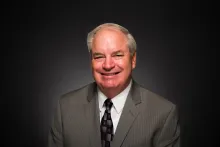
Robin Webber was born in Chicago, Illinois, in 1951, but has lived most of his life in California. He has been a part of the Church of God community since 1963. He attended Ambassador College in Pasadena from 1969-1973. He majored in theology and history.
Mr. Webber's interest remains in the study of history, socio-economics and literature. Over the years, he has offered his services to museums as a docent to share his enthusiasm and passions regarding these areas of expertise.
When time permits, he loves to go mountain biking on nearby ranch land and meet his wife as she hikes toward him.
