
Robin S Webber
This transcript was generated by AI and may contain errors. It is provided to assist those who may not be able to listen to the message.
I know all of us appreciate the beautiful musical message that David just offered us. Join me, if you would, on this message to turn over to 1 Corinthians 5. 1 Corinthians 5 and verse 7. It is the dynamic resolution that Paul spoke of, and I know that it is in each and every one of our hearts, especially during this, the days of Unleavened Bread. 1 Corinthians 5 and verse 6. Your glory is not good. Do not you know that the little leavened leavens the whole lump. Therefore purge out the old leaven that you may be a new lump, since you truly are unleavened. For indeed Christ our Passover was sacrificed for us. And then there is this joyous note, therefore let us keep the feast, not with the old leaven, or with the leaven of malice and wickedness, but with the unleavened bread of sincerity and truth. As I look at this audience, and knowing all of you, I sincerely believe that all of us want to put out the old and put on the new. But I have a question for you, and that is simply this. What happens when sin seems to blow right back in, when we have purposefully with full spiritual resolve, seemingly slammed the door on sin, and yet it pops up in an area that we thought was completely sealed off in our lives?
During these days, we so often turn to 1 Corinthians 5. We also tend to read Colossians 3, where it says to put off, and then it says to put on, then it says to put off, and then it says to put on. We really like that rhythm of put off and put on, but my question to all of you today is, what happens when it's like this? Put off and pop up. Put off and pop up.
We can't get to the put on. I don't think that's the spiritual rhythm that we would really hope for.
Well, to live anew in a living way, as the Bible expresses itself, in Christ our Passover, we need to take a big dose of spiritual reality on this weekly Sabbath and realize what remains in the way yet, and we'll continue to be there as a nuisance and as a distraction as long as you and I live in these physical tents. It's a four-letter word.
It's called sin.
Four-letter word. It's called sin.
Hebrews 12 and verse 1, let's go over there for a second. And as you do, because I'm going to be reading from the New King James Bible, but it's very interesting, in Hebrews 12.1, the living Bible translation speaks of an issue that so easily hinders our progress. The question is, what progress is being hindered? One word leads to another verse. The hindering of verse 2, of looking to Jesus, the author and finisher of our faith, and who for the joy that was set before him endured the cross, despising the shame, and has sat down at the right hand of the throne of God. Our sins can, indeed, hinder us from keeping that picture in our mind. But allow me to move from the living Bible translation, and let me render it from the New King James, which I think is a little bit more gripping. Therefore, we also, verse 1, since we are surrounded by so great a cloud of witness, let us lay aside every way, and the sin which so easily ensnares us, and let us run the race with endurance the race that is set before us. A couple of phrases that I would like to center upon for a moment in this verse. It talks about the sin that so easily ensnares us. When you move to the original Greek language, the terms there, you might want to jot these down, is the sin that entraps us, and or gets a grip, puts a squeeze on us. It's almost that here we are, the Christian walk, we're coming after off of renewing the covenant of the the new covenant with the Passover, and we're ready to walk down this beautiful road of life, priced as our anchor, the father above, observing the laws of God, expressing the love of God, and all of a sudden, there it is, the sin that so easily ensnares us, gets a grip, just like going down a road on a beautiful spring day, and you're enjoying the birds and the bees, and all of a sudden a dog jumps the fence and just grabs a hold of your ankle, and will not let go. I mean, that sucker's got teeth, and wants to bring you down to its size.
That is what sin is like, and it's a weight which the Bible says that we need to lay aside.
What I'd like to do today with all of you here in San Diego is to help you and help me not to kick the can down the road any further. You all remember kicking the can? There's a lot of issues that we kick the can with. Sin is something that we cannot kick the can with down the road. These days of Unleavened Bread are designed for three purposes. I'd like to share them with you. Number one is to focus on God. Number two is to face ourselves. And number three is to frame a new future in Christ. Face God, face ourselves, and frame a new future in Christ. To that end, I'd like to offer you three points in challenging the sin that so easily besets us. Now, while this is a theological issue, because sin certainly is, does have a biblical base and a theology to it, I'm hopefully going to make it simple for you. We're going to talk about who and what and where and when and why and how, and that's all going to come out in the course of this message. Allow me to give you point number one. Number one, God has planted His chosen people into this world to confront sin.
God has planted His chosen people into this world to confront sin. Always has, always will. This is not some strange trick that God is playing on us, whether it is of the chosen people of the Old Covenant and or the people of the New Covenant in this day and this age. You say, how do you know that, Mr. Weber? How do I know it? Just like the old song, the Bible tells me so. When the great I am rescued Israel and offered them a land of promise, question, where was that? Did God take slaves out of Egypt and transform them into Eskimos? Did He put them way, way, way, way, way up there into the North Pole? No. The land of promise was right smack dab in the way of the sea, right between Egypt and Babylon. But that's not enough just being between Egypt and Babylon. He put them in a place festered. I like saying that word. Fastered because it gets across the point festered with carnal inhabitants. They were called Canaanites. And what did God tell those chosen people that He'd scrubbed up from the mud of Egypt? He says, you shall not be like them. Rather, you are to represent Me for a specific purpose. And it wasn't even about them. Deuteronomy 4, verse 6 through 7. You can jot that down. You're familiar with it. God says, when you go into the land, I'm going to give you my laws, I'm going to give you my relationship, and then all the people around you are going to say, who are these folks? And who are they that they should have such a great law?
Have such a great God. It really didn't even settle with them. It was all about glorifying God.
God put that chosen people of old in a hot spot of carnality. Yes, to be challenged. But if you just stay with the challenge and don't understand why the challenge, then you miss the point.
They were to confront Canaan, and they were to live in the world and deal with Sun Sun for one specific purpose. Are you ready? To glorify God. Things didn't change. Things didn't change at all. The raw reality of Jesus' prayer on the last night of his human ministry, John 17. Join me if you would there for a moment. John 17. Let's notice something.
And let's pick up the thought if we could in verse 15. John 17, 15.
I do not pray that you should take them out of the world. What? Scotty, beam me up. I'm in the covenant. I've accepted the Christ. I've accepted the invitation of the Father. It's time to get out of here. No. Jesus specifically said, notice here, I do not pray that you should take them out of the world, but that you should keep them from the evil one. Well, that doesn't sound nice.
Who wants to be on a suicide mission, seemingly? But notice verse 20. And I do not pray for these alone, but also for those who will believe in me through their word. And what does this belief and what does this location ultimately produce? Verse 23. That I in them and you in me, that they may be perfect in one, and that the world may know that you have sent me and have loved them as you have loved me. It all goes back to God. Why did God, who is the who, put us here, where is the where, and for what purpose to deal with this sin that so easily ensnares us, for one purpose alone, that it might be to his glory? Now, I know right now in an audience is big, some of us are weighted down with the sin that so easily ensnares and besets us. And you might just be looking at that sin in the face, and all you see is your face in that sin, and it's just you and the sin, and it's getting lonely, and it's getting frustrating, and it's getting hard, and you say, is this why I was called? And you've got to recognize the purpose for dealing with the sin. It is to give God glory, because at the end of the day, we can't do it alone in these physical tents. Jesus defined the laboratory of conversion and of glorifying God. It's in this world, and Christ called us to be the penetrating elements of salt and light that would transform the life forces around us, and even be able to penetrate the sin that so easily besets us.
We have now come to understand the who and the where as to why this sin can so easily ensnare us. Number one, God Himself is the who. He placed us on this earth to confront, to be challenged with, and to deal with sin, and to overcome it, and to conquer it. Why? That it might be to His glory. Let's go to point number two, please. Let's define and appreciate what sin is and why it so easily ensnares us. Let's deal with the what and the whys. Long ago, I remember a minister back in Pasadena days that said something that always stuck with me. He said there must be something likable about human nature that we like, or we would have gotten rid of it a long time ago. I think that's a mouthful. Why is that? Under point number two of defining and appreciating what sin is, allow me to give you point A. Point A. Sinful behavior often begins as a delightful and a fun action. Oh, it's like the highest part of a roller coaster ride, and it is a who. We think that we're actually going places. Just ask Eve. In Genesis, where it all begins and it all starts in Genesis 3. Let's go over there for a second. Genesis 3, and let's take a peek at verse 6. Here's the serpent beguiling mother Eve, and notice what he says. Verse 5, so when the woman saw that the tree was good for food, that it was pleasant to the eyes, and a tree desirable to make one wise, she took of its fruit and ate, and that's all she wrote baby. That was it. Satan tried to make Eve think that sin is good, that it's pleasant, that it's desirable, that having a knowledge of the tree of good and evil seemed like a cure for the boredom of perfection, that Eden represented. Now, I don't quite know how you can get bored with perfection, but somehow Eve had an itch there. At the end of the day, Satan didn't have such a tough sales job, because that tree did look wonderful, and it did look fantastic. Sin often does look delightful, and fun, and liberating, and free. People usually choose wrong things, because they're convinced that they're at least good for at least themselves, and for the moment. As we move away from renewing the new covenant at the Passover, I'm giving you some action items here that I want you to be aware of to help you as a spiritual friend. Let's remember that sin does not initially appear ugly to us, and especially when it comes to the humanly pleasant sins that are normally invested in some form of sensuality, whether it be of taste, or touch, or smell, or just simply to possess. Thus, we grab them for ourselves.
Those are sometimes the hardest to avoid, but we've got to look under the hood.
I have a question for you. How many of you have ever bought a car?
Don't raise your hand up real quickly if you did this, without looking underneath the hood.
Because on a used car lot, they can really shine them up on the outside. You're always going to hopefully look under the hood, because you'll remember what your grandma or your mama taught you when you were young. That not all that glitters is gold. And that's one of the lessons that we want to learn during this, the Days of Unleavened Bread. As we proceed from our renewal of the New Covenant Passover, we must, and I do mean must, prepare our hearts and our minds that the sin so easily that besets us to remember that it will appear attractive.
Let's remember, friends, that the Tree of Good and Evil did not look like a saguaro cactus.
It didn't look like something sticking up on Highway 8 between here and Yuma.
It was beautiful. It was attractive. It was pleasant. Ladies, it was like that favorite plant or flower that you have on the outside of your kitchen window that you just love to look at that just makes you happy. That's what the Tree of Good and Evil was like on the outside but not the inside. Let's realize as we move from the Days of Unleavened Bread that we cannot always prevent such temptation and it will still be there for us, but that God provides a way of escape. Join me in 1 Corinthians 10, please. 1 Corinthians 10, verse 13. A promise. I love turning to the promises in the Bible. No temptation has overtaken you except such as is common in man, but God is faithful, who will not allow you to be tempted beyond what you are able, but with the temptation also make the way of it that you may be able to bear it. What are some of those ways of escape? Allow me to share some with you. You might want to jot them down and reflect on them as you begin to gird yourself up as we move towards that promised land as we move off of the Days of Unleavened Bread. Here are some of the ways. God's Spirit. God's Spirit is a way that God gives us. God's Word and the examples of those that have gone before us. And lastly, the people that God plants in our life and brings us into, such as this spiritual assembly. We are, as the body of Christ, we are God's eyes. We are His ears. We are His hands. We are the arms that reach out to others. Some of us are the spirit of experience in having confronted the sin that so easily entangles us that we want to share not just the problem but the remedy and to help somebody. That leads us to point B, under defining sin. Let's understand that sinful behavior is rarely obvious at first. Sinful behavior is rarely obvious at first. Again, consider what Eve did. She just looked at it, and then she took it, and then she ate it, and then we know the rest of the story she gave it to her husband.
This should remind us, if we truly appreciate the body of Christ, of which we partook of and symbol at the Passover, we need to recognize this. This is an awareness statement. The battle is often lost at the first look. At the first look. The question I have for you, and whatever you are wrestling with, and only you can put it out on the blank that is in your mind and your heart, and you can write it out because we're not here as a public confession, but are we becoming ensnared to sin because you have not learned that looking is the first step to sin. Not only looking, but putting the button on pause. We would probably become ensnared less often if we followed Paul's advice that he gave to young Timothy over in 2 Timothy 2 verse 22. You can just jot that down.
2 Timothy 2 verse 22. He said when it deals with youthful lust, and all of us, no matter how old we are, have that little 14 year old person inside of us, he said flee! Flee! He said get out of there!
Run! Don't stick around!
Think about Joseph back in Egypt.
While he got out of there with most of his clothes on, Potiphar's wife got a little bit of the garb who would lead you to maybe think that he lingered just a little bit too long.
What are we lingering on right now in our lives? Where are we where we have our feet on both sides of the... you didn't know that, but this is a threshold up here... on both sides of the threshold, thinking that we can have one foot in the door and one foot out and think that we can flee.
Let's deal with another aspect of sin. Let's make this point C. Sin's effect spreads both inwardly and to others. After Eve sinned, it's very interesting that she involved Adam in her wrongdoing. Why is that? When so often we do something wrong, we often try to relieve our guilt or titillate our conscience by involving someone else. Why is that? Why is that?
Well, we know that old expression. Misery loves company, and we want to get the heat, as it were, off of us. Just like toxic waste, that when there's a toxic waste spill, whether it's on a river and begins to flow all the way downstream, or where one of these big ocean liners with the oil in them go aground in some bay up in Alaska, and what starts out just as a small spill begins to ultimately engulf the entire bay. Action items that I'd like to give you today. There's a lot of action items in here. A lot of our brethren always say, well, give us something to do. I'm going to give you something to do today. Recognize and confess your sins to God before you are tempted to pollute others. Remember what I was talking about today? Dealing with the weeds, doing the hard work, doing the hard work, doing the work. Repent. Deal with it before there's a handoff, as much as that fruit went from Eve to Adam. Why is that so important during the days of the leavened bread? We already read it in 1 Corinthians 5, where it says, don't you know that a little leaven leavens the whole lump. And that's why we have to deal with it in a situation and in a position that we can deal with it. Under this point, let's understand something. The stories of the Bible just exude this thing about sin being like a little leavened leavening the whole lump, realizing that sin normally leads to more sin. Let's think that through. Let's think of the analogy that we use during these days of the leavened bread, a little leaven leavens the whole lump. Let's just go back and think about it for a moment with King David in the book of Samuel, David and his Escapade episode with Bathsheba. Let's think of how a little leaven begins to leaven the whole lump and begins to take over the entire chemistry of an individual and spills into others. David went from what? Looking to lusting, to possessing, to trying to cover up the sin by murdering an innocent party, none other than the woman's husband. And a sin that started with lust, midpoint was dealing with murder, ultimately affected other troops that were in his loyal army, affecting the nation, and ultimately affecting the death of an innocent, being the child of David and Bathsheba. David could have stopped all of this. If only he had read James, but it wasn't written yet. Join me if you would over in the book of James. Come with me, please. James, let's take a peek here, because I want to share a very vital point that we understand about this four-letter word called sin. We need to understand something very specific.
Let no one say, verse 13, he is tempted, I am tempted by God, for God can't be tempted by evil, nor does he himself tempt anyone. But each one is tempted, each one. That means we must take a responsibility on our own, because we're one of each. Each one is tempted when he is drawn away. That means a process drawn away by his own desires and enticed. Then when desire has conceived, it gives birth to sin, and sin when it is grown brings forth death. This is a profound scripture for you, and I understand something during these days of 11 bread. Sin is not fossilized. It is not in a sealed test tube. It is alive. Sin is something that is alive, and it has a life of its own.
But it brings death, just as the scripture says. Again, then, if we all know this, why don't we stop it? Because here's another point I'd like to share with you. So often we get into the excuses. We all like to make excuses. Let's think about this for a moment, going back to the original story about the original man, original woman, Mr. and Mrs. Sinner, otherwise known as Adam and Eve. When God asked Adam, what did Adam do? And some men still do that. He just blamed his wife. I don't want to start anything. I hope everybody's having a happy day. But what did Adam do? He said, it's her!
Basically, if you hadn't made her, I'd still be with you. It's all your fault, God, is really what he was saying. And then Eve blamed who? Blamed the serpent. But what is fascinating, maybe you've never thought about this before, when you go through the curse, you know, the curse in Genesis 3 that follows God deals with each of them in order. You might want to look at that in Genesis 3.
He deals with the serpent, then he deals with the woman, and then he deals with the man.
It's not just a, you're all cursed. First, no, he takes it apart. It starts right at the beginning with the serpent, then the woman, and then the man.
If we know all this, why then don't we deal with this weight and lay it aside, as the book of Hebrews says? Well, because we think that sin will always stay small and hidden, tiny, just mine.
My sin is not like a Great Dane, mine's more like a Chihuahua, and nobody will know about it. I only let it out at night anyway, when the neighbors are asleep.
But the story of the Bible is different. David couldn't hide his sin, it did not stay small. Moses could not hide his sin, he thought that he could murder a man, cover it up, and hide, but you know the rest of the story. Ultimately, he had to flee Egypt. Achan, 40 years later, disobeyed the rules of God, brought back a part of the treasure of Jericho that was to be dedicated to God, put it a mile deep underneath his tent, thinking nobody would know about it. But they didn't recognize the grand, great principle that God brings out in the Bible. I'd like you to jot down Numbers 32, verse 23. And it simply says this, your sins shall find you out.
All of us, perhaps to one degree or another, maybe not all, but most have maybe seen the movie Top Gun before. If you didn't like the Jets, maybe you ladies enjoyed Tom Cruise. I'm not sure. But anyway, we remember in the story, it was right here in Miramar, all the Jets flying over, and they've got the heat-seeking missiles. Sin is just like that heat-seeking missile that you're trying to get rid of.
It will sooner or later catch up with you. It is a law that is written in the Bible. That's why we need to challenge it now. Deal with it now. Not give it to somebody else. Not minimize its sin size, thinking it will always remain that way. But we need to deal with it during this time.
But sometimes we don't, because why? I'd like to give you another point. Sin can become habitual. Let's talk about that for a moment. Because when we don't deal with it, it takes a life on its own, and pretty soon it becomes just like a bad habit, even with nice people. Let's talk about it for a moment. Let's talk about Abraham, father of the faithful, neat guy, wonderful man, example in the Bible. And yet, what did he do in Genesis 12? In Genesis 12. Can any of you out there tell me the grand Scripture that comes out of Genesis 12?
We often allude to it. It says that the Lord came to Abram and he said, Depart and get out of the land. And Abram said, Yes, I will. And they said, Oh, I will then bless you, and I will do this. And God begins to work this relationship. This is a beautiful thing. They have a relationship with God and said, You are going to be blessed, and what's going to come out of you is going to bless humanity.
Wow! This is great. Within about five or six verses of that comes the sin that so easily ensnares him. He goes to Egypt. This is within five or six verses after that. And guess what he's doing? He's trying to pawn his wife off as his sister. Now, ladies, I'm looking at the women's eyes right now. How would you, like your husband, to pawn you off as just good old sis? Wouldn't work in my household. And yet, because he didn't deal with it, years later, he was in Canaan, he was with Abimelech.
Guess what happens? Because he hadn't gone for the roots and dealt with the sin that so easily ensnared him. He did it again to the Canaanite king. Oh, you like her? Great! She's just my sister. Now, some of you are laughing right now, but let's go a step further. Sometimes the leavening that moves into an individual, moves into a family, not only is a habit, but becomes a family way. Do you realize that Isaac did the same thing about 20 years after that?
And guess to who? The same man, Abimelech. You like Rebecca? She's just my sister. Do you see how sin that is not dealt with becomes habitual, becomes easier to do? And Isaac could have just said, I'm just like my dad. But that's not the way you want to be like your father. Sin can do that. And it becomes such a part of you that you no longer know what you're like. Now, the one unique thing about leavening is leavening is an outside agent that is moved into a host product.
But the chemistry that is within the leavening ultimately unites with the host product to where they are neither apart, they are neither too, but they become one and transform that which the yeast and the leavening has come into engagement with. To where a totally different, totally new product comes to form. Sometimes this is good, sometimes this is bad. I'd like to share a story with you and a powerful lesson about a new creature when sin is not dealt with. And then I've got some positives to end up with.
I'd like to share a story with you. When Leonardo da Vinci was painting his masterpiece, The Last Supper, he selected as the person to sit for the character of Christ, a young man, Peter Benitelli by name, connected with the Milan Cathedral as a chorister. Years passed before the great picture was completed, and when one character only, that of Judas Iscariot, was wanting, the great painter noticed a man in the streets of Rome, whom he selected as his model, with a shoulder far bent toward the ground, having an expression of cold, hardened, and evil.
The man seemed to afford the opportunity of a model terribly true to the artist's conception of what Judas Iscariot must have looked like. When in the studio, the proficate beggar looked around, as if recalling incidences of years gone by, finally he turned and with a look half sad, yet one which told how hard it was to realize the change which had taken place, he said, Maestro, I was in this studio 25 years ago, but it is then that I sat for Christ.
Sin can change something that is beautiful to something that is corruptible, not dealt with, it can expand, it can come back at you, it can affect not only you, but family ways. Allow me to move right to point number three. I had about three or four more other points that would have been interesting. I may not pass out my notes, but to keep this shorter, allow me to go to number three, some of what we call the good stuff now.
Allowing God in you to break the snare of sin. How to allow God in you. And that is what we come to understand during the Passover. That as we partake of that bread and as we partake of that wine, it is more than symbolic that when we accept the invitation of the Father and accept the life and the death and the resurrection of Jesus Christ, He literally dwells in us.
He dwells in our heart. He dwells in our temple as the book of Corinthians brings out. Just remember that during this specific festival called the Days of Unleavened Bread, the lessons of yeast are not only based as a warning, but based as an encouragement. Join me if you would in Matthew 13.33. Matthew 13.33. So often we think of yeast or leavening as a type of sin, and well, it is. But let's also recognize it serves dual purposes in the Bible.
Matthew 13.33. In another parable, He spoke to them, the kingdom of heaven. And that is a term that Matthew alone used, but for a purpose, is like leaven, which a woman took and hid in three measures of meal till it was all leavened. Let's understand that it is not only sin that that can expand and change the host, but also righteousness can also expand and change the host. We call it transformation, but it involves a choice as to what we will fill ourselves with. As we put off, deal with the pop-ups, and we put on. We say, yeah, but no, Mr. Weber, you describe all of those things, and it sounds like you got kind of in my mind, and you know exactly where I'm at today.
So how do I have a comeback? Well, that's just a part of the sadness of sin. It often creates feelings of separation and distance from God, and it causes us want to hide just like Mother Eve. I guess the only thing that I can really tell all of you, there's never any perfect time to admit our imperfections, because we tend to normally wait until we're perfect, and, well, that doesn't work.
The best time is now. The best time is today. The best time is as Samson did. A man who was given all the gifts of God and was a judge over Israel, who fooled around with the gifts of God, and was going to be brought out into the courtyard one more time to play the fool before who? The Canaanites. The Philistines. And it is in that moment, not in his perfection, but in his imperfection and in humility, simply gave that short, poignant, direct prayer that God, if in any way you can use me, then allow me to be used.
If, but for one more time. How do we do that? Number one, short points, powerful points, can change your life. Just be open with God regarding your sin that so easily ensnares you. Be open. Psalm 139, verses 23-24, I'll let you do some homework and some heart work on that. Psalm 139, verse 23, verse 24, David asked God to walk right into his life, opposite what Adam and Eve did. David was no longer willing to hide. He said, Here I am. And he opened up. He said, Search me. Explore my life. Notice my thoughts. Understand my motivation. Now, why is that so important for us?
If we don't ask God, how can God respond? And if God doesn't enter our lives, how can we then ever know what is wrong? Proverbs 16, verse 3, says, Commit your works to God, and he will establish your thinking. That's a promise. You're saying, Well, Mr. Weber, are you asking me to commit the sin that so easily ensnares me?
Yes! You've been working on it. That's a work. That fits the Scripture. Commit that work that is creating distance and feeling between you and God and cuts you off from exploring a wonderful and dynamic and meaningful relationship with God. Commit that to God. And it says, He will establish your thoughts. He'll come back and say, You know what Weber said in that message? You've got to deal with it. It's not going to stay small. It's going to get bigger. It's not going to die on its own, because it's got a life on its own. It will make you die. It's going to come after you just like a heat-seeking missile.
It will become a habit. It will become possibly a family way, passed down from generation to generation. Do you want to deal with it 100 years from now, 75 years from now? Or do you want to deal with it during this, the days of 11 bread? Point number two. What do you do then, once God begins to show you the way? Number two, confess your sins. Confession is a part of repentance. Join me if you would in 1 John 1. In 1 John 1, notice what the Bible says.
If we confess our sins, it will blow God away. No, it says if we confess our sins, He is faithful, and just to forgive us our sins, and to cleanse us from all unrighteousness.
Confession is a very important point when it comes to putting that weight aside. Put it right out there. When you attend Alcoholics Anonymous, and I have attended Alcoholics Anonymous, and for we that have not attended Alcoholics Anonymous, if you have not, most of us realize that there is a part of growth in that 12-step program, and the first part is confession, and it's humbling, and you're surrounded by people. All sorts of people that you thought, I don't know if I'd want them in the neighborhood with me, but then you recognize you is them. It's just that they come in a little bit different wallpaper. But God's not interested on the wallpaper on the outside. He's interested on what's on the ground floor of your life. And somebody gets up and says, I am an alcoholic. That's gutsy. But he's got to be gutsy in dealing with the sin that so easily ensnares you. Alcoholism is just one aspect, because all of us look at things that we have, and what we want to do at times is judge or rate where people are with what's affecting them, rather than recognizing that all that is short of the glory of God stinks and is not going to be in the kingdom of God. And we've got to deal with it now. But I don't want to deal with that. I don't know if I can deal with it. Why is God laying this on me? How did it get involved with this? Well, like it says, God does not tempt us. God doesn't put it there. But when it does come, because we are in this physical tent, because we are in this modern-day Canaan, God says, deal with it. And by the way, the way that you're going to deal with it is to give me glory.
There is glory. Okay.
You know what? The crazy glue is no longer working. I haven't done that for a long time.
But that's how you deal with it.
You say, I don't know if I can do this.
Why, God, why?
When, God, when? Why, God, why? I'm actually getting into my message on the second high day.
Why, God, why? When, God, when?
It's now. Why? To give God glory.
Because we can't do it on our own. Which takes us to more of the steps that I want to talk about.
Because when you confess, what you're doing is, how can God get ahold of you unless you get ahold of yourself first? If you don't get ahold of yourself and invite God into your life, He doesn't have an opportunity to get ahold of you. But when He does get ahold of you and offers you to work with you by His Spirit, through the example of Christ, through the stories in the Bible, through the support system of the brethren around you, watch out! Things are going to happen.
Point number three. We're almost done. Commit yourself not to continue and sin.
Make a commitment.
Because we wouldn't be fully confessing our sins and be able to know what that experience brings without committing.
We can't plan to repeat the sin just because we want to reprieve and we want to take some heat off.
We've got to get down to a commitment level.
And of course, that commitment comes by recognizing the price of sin which comes through the sacrifice of Jesus Christ Himself.
Now, sometimes we can become frustrated because seemingly we can go over and over and over and over again and it seems as if it's that one sin that's so easily ensnares us just like that dog grabbing onto the ankle bone and not letting go and we can kind of sometimes say, well, has God given up or depleted His forgiveness reserve for me?
Here's what I'd like to share with you. As we move days of Unleavened Bread and exit into the challenges that are going to be before you and me after this enriching time to be there.
Why? I know. Remember Genesis 12. God begins that covenant relationship with Abraham and within verses comes the challenge.
God renews that covenant relationship with Isaac 20 years later and within verses comes the challenge.
Passover, the days of Unleavened Bread, are designed not to scoot us out of this world but prepare us for the remainder of the world that we're in, the worldliness that we're going to face, the sin that's so easily ensnares us, and so that we can confess it, we can commit not to do it again, and we can give God the glory. Point number four, we conclude. We should pray for future awareness that God grants us His eyes and His ears by the convicting radar of His Holy Spirit.
It's going to be coming.
Remember what I said earlier. It's not the third look, the fourth look. It is that first look. Ask God through His Spirit to grant you the gift of spiritual ears, spiritual eyes, to look under the hood, to see things for what they are, to know that not all that glitters is gold, to ask for that Spirit that comes out of Isaiah 30 verse 21, that when you are tempted, and maybe you are on first look and you put it on pause, that God's Spirit will convict you by the words out of Isaiah 30-21, This is the way. Walk you in it. And sometimes what God will say is, Run! Not just walk. Run! Get out of there. This is not just about you. This is about your wife. This is about your children. This is about your grandchildren. This is about your congregation. This is about giving God glory.
Pray.
Commit. Confess. And ask. And the rest will be history in your life as to how you glorify God.
Well, with all of that said, it's time to go out and to challenge the sin that so easily ensnares us.
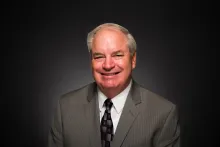
Robin Webber was born in Chicago, Illinois, in 1951, but has lived most of his life in California. He has been a part of the Church of God community since 1963. He attended Ambassador College in Pasadena from 1969-1973. He majored in theology and history.
Mr. Webber's interest remains in the study of history, socio-economics and literature. Over the years, he has offered his services to museums as a docent to share his enthusiasm and passions regarding these areas of expertise.
When time permits, he loves to go mountain biking on nearby ranch land and meet his wife as she hikes toward him.
