

Don Ward
This transcript was generated by AI and may contain errors. It is provided to assist those who may not be able to listen to the message.
Thank you very much. Very beautiful. As one of the main motivating forces in my life is to be there and to be reunited with those that have gone before. And sometimes, I think, especially last night, I was thinking how sad it would be if some that I've known through the years are not there. And that is one of the greatest burdens that sometimes all of us have to bear. And you think about little children. And this day got me into thinking about the first day that I walked into a service of the Worldwide Church of God. It was July of 1969, 46 years ago, that my wife and I, along with two daughters ages 11 and 6, walked into our first service of the Church of God in the Fieldhouse. Now, at that time, the Fieldhouse was not air conditioned, had that cement floor. And they say, if you say cement, you're from the South. It's a concrete floor made of cement. So we walked in. We were quite surprised to see quilts spread out and children on the floor with toys and coloring books. And I immediately thought, what a waste of time.
The children are being conditioned to believe that church services are not for them. I thought about my days in Sunday School and how much I had learned about God in the Bible. You can say, oh well, they didn't know the truth. No, they didn't know many of the elements, but they knew a lot about the Bible. And I remember as I was either somewhere around six years old when I stood up before the congregation and recited my memory verse of the day. And that memory verse was, I was glad when they said unto me, let us go into the house of the Lord.
I remember and remember beginning to pray to God at a very early age. And some of you have recounted the same experiences you had in your lives. In about 1971, I began to talk with Kermit Nelson and a few others about Sabbath School. In 1973, there was a change in deputy chancellors, and I talked with him and slowly we began to move toward a structured Sabbath School program.
Now this all began with one person, but I believe that God was with us and behind it. Of course, there was quite a bit of opposition in many different ways. Some said, well, Dr. Haye has said that it's pagan to have instruction of youth on the Sabbath. Well, I wonder that's why Christ was in the temple talking with the elders when he was 12. But of course, we know that's not true. In the first meeting with parents, it's held November 1975 in a classroom of Imperial schools, and I think it was January the 16th, 1976.
I know for sure it was January of 1976. We began Sabbath School ages 18 months. We began at 18 months through high school. The program was well received. The program eventually spread around the country. Of course, there have been many ups and downs since that time, many different formats and so on, but it continues to this day. That is, instruction of our youth and what better use of Sabbath time than to instruct our youth. How much do your children know about our Heavenly Father, about salvation, what He is working out here on earth with each one of us who are made in His image?
We are made in the image of God with faculties akin to God. We can think, we can reason, we can think about life after death. We can ask the question, is this life all there is to it? And through the years, the brethren have asked me how our youth programs could be improved. Now, the question of parental involvement is often a topic of discussion, and obviously you want the parents involved in instruction. If you leave instruction up to the church only, your children will be malnourished spiritually. We could ask each child here today, how much would you know about God and Christ apart from what you have learned from church attendance? How much, in other words, you could ask the question, how much have your parents taught you?
The thing that was up uppermost in Christ's mind before His ascension centered on feeding the sheep. Let's look at John 21 verse 15. John 21 verse 15. Christ, He had appeared to the disciples, this is at least the third time, this is where they were out in the boat, and they finally caught the fish when they did what He said to do, and they cooked the fish and they were eating, and Jesus Christ confronts Peter, John 21 and verse 15. So when Peter had dined, Jesus said to Simon, Peter, Simon, son of Jonah, do you love me more than these? And He said unto him, yes, Lord, you know that I love you.
He said unto them, unto him, well, feed my lambs. He said to him again the second time, Simon, son of Jonah, do you love me? He said unto him, yes, Lord, you know that I love you. He said unto him, feed my sheep. So we've gone from lambs to sheep.
He said unto him the third time, Simon, son of Jonah, do you love me? And Peter was grieved because he said unto him, the third time, do you love me? And he said unto him, Lord, you know all things. You know that I love you. And Jesus said unto him, feed my sheep. So at what age do you begin to feed sheep? What age do you begin to feed young people? What age do you begin to feed youth? You know, a lot of the studies I used to teach a course called Child Growth and Development.
A lot of the studies show that a lot of learning takes place in the womb. That some parents play classical music, read to their children in the womb, and they have shown through studies and follow-ups that these children do better in many aspects of life, especially when it comes to cognitive things and developing their talents than children who did not have the same exposure.
Now we look at 1 Peter chapter 5. Peter was given that admonition by Jesus Christ.
And now note Peter, his admonition to the younger ministers that was with him or who might read what he wrote.
In 1 Peter 5.1, the elders which are among you I exhort, who am also an elder and a witness of the sufferings of Christ, and also a partaker of the glory that shall be revealed. That means that he and James and John were on the mount of transfiguration when Christ was transfigured to some degree in his glory before their eyes. That's what that's about. Feed the flock of God which is among you, taking the oversight thereof, not by constraint but willingly, not by filthy lucre, but of a ready mind, neither being lords over God's heritage but being examples to the flock. And when the chief shepherd shall appear, you remember the sermon I gave on the three shepherds, there is the good, the great, and the chief shepherds, each one playing a role at a particular time. And when the chief shepherd shall appear, you shall receive a crown of glory that fades not away. So it is clear from Scripture that we are to feed the flock, and this, of course, is talking about feeding the flock spiritually. In discussions with parents through the years as to how they can be more involved in teaching children God's way, various suggestions, of course, have been made as to how parents could more actively support the efforts of those who work with their children. Some talked about how parents could help children with their memory work so they could learn the Ten Commandments, the Holy Days, and other information. And that's well and good, to help them to get their nose in the Bible, to memorize certain scriptures. Then someone brought up the relationship of knowledge to what we understand and do. Do we just memorize Scripture and leave it at that and say, oh well, my child can recite the Ten Commandments, all the books of the Old Testament, New Testament. I can't even do that, but he can. She can. Some commented on what their children had learned in Imperial schools. Recite the books of the Bible, the Ten Commandments, the Holy Days. And some could even tell you what they symbolized, that is, the Holy Days. Yet for some reason, it seems that most of the children did not seem to benefit all that much from having learned all the things that they learned.
Was it just head knowledge? Was it just memorization? They just did it because they sort of had to. Now, memorization is good if it is coupled with understanding. There are people who memorize much of the Bible, yet they do not understand the purpose and plan of God. Let's look at Proverbs chapter 2.
Proverbs, the book of wisdom. A lot of instruction to parents and to youth in Proverbs. So Proverbs chapter 2 is called a book of wisdom, for the most part, written by the wisest man who lived in the flesh, with the exception of Jesus Christ. In Proverbs chapter 2 verse 1, My son, if you will receive my words, hide your commandments with you so you need to know the Word of God and to hide the Word of God in your heart and with the aid of the Holy Spirit, you can have a new knowing within as we have talked about a new conscience, so that you incline your ear into wisdom or unto wisdom and apply your heart to understanding. Wisdom and understanding. So in the prayer and blessing the little children and the parents, we talked about wisdom and understanding. Yes, if you cry after knowledge, so knowledge is a part of it. Knowledge, wisdom, understanding, and lift up your voice for understanding. If you seek her as silver, now are we really seeking the wisdom and understanding of God? I know God gives spiritual gifts, but generally speaking, God does not just axiomatically, automatically zot things into your mind without your participation. So how do you come to be able to really have wisdom and understand the Word of God? Seems to me you have to follow this. If you seek her as silver and search for her as for hidden treasure, then shall you understand the fear of the Lord. Now it says in Proverbs 8 13, I believe it is, the fear of the Lord is the beginning of wisdom. The fear of the Lord has to do with, and can you teach a child to begin to understand that God is your Creator? God is the Creator, and that God has a great purpose for you, and God loves you, and God wants you to be in his family.
You shall understand the fear of the Lord and find the knowledge of God if you seek for her, so parents and children. For the Lord gives wisdom out of his mouth comes knowledge and understanding. He lays up wisdom for the righteous. He is a buckler to them that walk uprightly. He keeps the paths of judgment and preserves the way of his saints. Then shall you understand righteousness and judgment and equity. Yes, every good path. So the admonition here is to seek for it. This brings up one of the most important concepts in the course of human history in regard to learning and living what a person learns. That is the act of memorizing Scripture. It does not mean that a person will internalize the meaning of the Scripture, if that's all there is to it. You have to do far more than just memorize. But that is a step. Hide the Word of God in your heart. Now I'm going to quote from Psalm 119 verse 9, 10, 11, Your word have I hidden in my heart that I might not sin against you. Well, verse 9 says, How shall a young man cleanse his way? Then it says, By taking heed according to your word, your word have I hidden in my heart that I might not sin against you. So there is the effort on the part of the person. So you have to do more than just memorize.
It can be viewed as a requirement that was imposed upon you. I must do this in order to do what I want to do. I remember in the fifth grade, Mrs. I think Mete Moss, M-E-D-I-A, that was the name of our fifth grade teacher, you had to memorize the diacritical marks. The diacritical marks are those little marks over words in the dictionary that tells you how to pronounce the word. Before you could go out to recess to play, you had to memorize and recite to her the diacritical marks. Well, I couldn't do that today, but I did it that day.
But very few did, and probably none of us in here could. Maybe Dr. Erwiller could.
I mean, he's an English teacher, but I'm...
So many people view life from a perspective of, if I do these things, then I can do what I really want to do. I just get this out of the way, and then I can go play. I can do whatever it is that I want to do. They live for the weekend, then they go live it up on the weekend, and then repeat it over and over again, and then they wake up one day, and they're 50 years old, and now they have their first grandchild, and they wonder, where did time go? Maybe they're wondering, what is life all about? And many people have a very narrow view of education, of instruction. They view it somewhat like studying the traffic laws, so they can get a driver's license. I just studied this little book a little while, make at least, I don't know, 60 or 70, and I get my license. Whereas education should be viewed from the point of view of, this is what makes life worth living, to understand what life is all about, to understand the great questions of life. The world talks a great deal about freedom, about liberty.
Look at John chapter 5, what Jesus Christ said with regard to freedom. In John chapter 5, I said John 5, I do not know why I said John 5. I want John 8. In John chapter 8, we'll begin in 28, then said Jesus unto them, when you have lifted up the Son of Man, of course he would be crucified, lifted up, then shall you know that I am he, and that I do nothing of myself, but as my Father has taught me, I speak these things. Notice, as my Father has taught me. So the Father, according to this, taught Jesus Christ, and Jesus Christ was a great student and a good learner, and he learned these things, and he was an eager learner. He wanted to learn these things, and we're admonished to follow in his steps. As my Father had taught me, I speak these things, and he that sent me is with me. The Father has not left me alone, for I do always those things that please him. Meaning, if people can just get the vision of what life is about, and what happiness and joy and all of those things that we talk about are really about, then it's a whole different thing.
I mean, you can meet the great trials of life that come and go, and all of us are going to meet those trials at one time or another. We may have several red seas.
We may have several sicknesses to deal with. We may lose some of the ones that are closest to us. And of course, we talk last Sabbath about trials and overcoming. As he spoke these words, many believed on him. Then said Jesus to those Jews which believed on him, if you continue in my word, then are you my disciples indeed? In other words, you can't be just the flash in the pan, a one-time thing. Well, I've memorized this. It's all over. Memorization is one step, but then doing is something else. Notice this, and you shall know the truth, and the truth shall make you free. If you want to be free from fear, ignorant, superstition, and the dogmas of man, you know the world is in a quandary now.
NASA has got a lot of people thinking that they, that at any moment now, we're going to really discover that there are aliens out there, and we are the product of some kind of superior intelligence that live on another planet. After all, we know that there is water on Mars, and so-and-so has more moons than we thought they had, and the atmosphere of this planet is more like Earth than we thought, and a lot of people are projecting that in years to come there will be people living on Mars and other planets.
Well, I seriously doubt that. They answered him. I'm talking about in this age. I'm not talking about in the age to come. Who knows where all you may go after you are resurrected? They answered him. Now here, they answered him, we be Abraham's seed, and we were never in bondage to any man. They were in bondage to the Romans right then. How say you, you shall be made free. And Jesus answered to them, verily, verily, saying to you, whosoever commits sin is a servitude of sin. You talk about servitude. Spiritual servitude is the worst servitude of all servitude.
You can be in servitude in the physical sense, in the deepest, darkest dungeon you can imagine, and yet be free spiritually. And the servitude abides not in the house forever, but the sun abides ever. If the sun, therefore, shall make you free, you shall be free indeed. And when you come to that understanding of what life is all about, and what Jesus Christ has done for us, and what he can do and will do, and what God the Father will do in begetting us with his Spirit, then life takes on a whole new dimension.
It's a different world. So the Word of God is not to be viewed as something that is memorized and then ignored. If you continue in my Word, then shall you be my disciples, and you shall know the truth, and the truth shall make you free. The storing of God's Word in a person's heart and mind should not be disconnected from behavior and attitude.
So memorizing and our writing out Scripture is a step toward having it written on our inward parts as a part of your new conscience, the new knowing within. But you have to do more than that. So is learning memorizing or is memorizing learning to some degree?
It's both. Those of you who have dealt with people who have begun to lose their faculties to some degree in old age or that kind of thing, you begin to discover that when memory goes, basically learning goes. So they go hand in hand. If you would turn to Deuteronomy 17, the kings of Israel were required to copy out the law. I know back in the days when I first came across the World Tomorrow broadcast, I think the first one I picked up there in South Mississippi was coming out of XCG out of Mexico, and it was so refreshing in a way and challenging in another way that you began to just, I can't even explain, to have that veil, as it were, lifted off your eyes and to know and to see the things that are in Scripture.
And you send for the correspondence course, and you write out the longhand. The answers to all of those 50-something lessons. And the more ways see that through our sensory perception, the five senses, that is in conjunction with your cognitive ability to think and to reason and put two and two together, the more apt you are to retain it, learn it. So the kings of Israel were required to copy out the law. This is in Deuteronomy 17 verse 18, and it shall be when he sits upon the throne of his kingdom that he shall write him a copy of this law in a book out of that which is before the priests the Levites.
So the priests, the Levites, were to keep the book of the law. So it would be pure, undefiled, no one changing, slipping in this, that, or the other. The king was to copy that law out. And it shall be with him and he shall read therein all the days of his life that he may learn to fear the Lord his God to keep all the words of the law and these statues to do them that his heart be not lifted up above his brethren.
Of course, that's what we have today as leaders who think they know so much more than everybody else when really they don't know as much when it comes to the reality of life and what life is all about and all of those things. They have some kind of little, as it were, club among themselves where they talk about trying to make the world a better place without having any understanding really of how it can be done and that he turned not aside from the commandment to the right hand or to the left. To the end of that, he may prolong his days in his kingdom, he and his children, in the midst of Israel. Learning is categorized by the psychologists into three areas.
Cognitive is called domains, three domains of learning. Cognitive, that which has to do with mental function, head knowledge, as we say, ability to think, to reason, to remember, to put two and two together. The affective domain has to do with attitude and behavior. Do the things that are taught here on the Sabbath, preach, taught, have any affect on behavior? Do the things that we read in the Bible and we think about and read and talk about, do they have any affect on our behavior? Or is it just something we hear and all things continue as from the beginning?
Then there's the psychomotor domain that is learning physical skills. Now all of us have difficulty in translating what we know into constructive, positive action.
I've often said that the greatest challenge before the people of God is to bridge the gap between what they know and what they do. I really understand, I really wonder how well our children understand what God is all about, what the church is about, and what about us? Do we really understand what we are professing to understand? God has sought to have a relationship with us and to give us eternal life from the time that human beings were created. Go to Genesis chapter 2. In verse 7 you see the creation of Adam there and then later in chapter 2 that a rib was taken out of Adam and Eve was created. But in Genesis 2, 7, the Lord God formed man at the dust of the ground and breathed into his nostrils the breath of life. You know, you think about this and I have not thought about it much, but in so much of it seems like in reading the Psalms of the creation of the universe and the physical realm, it's God spoke and it was done. But when he created human beings, says he created them out of the dust of the ground. Exactly how you've probably heard that old song in which he talked about God getting in there and mixing up the mud and that kind of thing. I doubt he did that. But he formed man of the dust of the ground and breathed into his nostrils the breath of life and man became a living nayfish, a living being. He had life potential and he planted him in the Garden of Eden and out of the ground the Lord God made all the good things to grow, placed him in this perfect environment. But really what God wanted from Adam and Eve was their love, their affection, their devotion to look to him for the knowledge of good and evil. He wanted to have a relationship with them and he wanted them to eventually partake of the Tree of Life and gain eternal life.
But, of course, you know the story so well they disobeyed. They were cut off from the Tree of Life. When God brought Israel out of Egypt, he said to them a similar thing. If you will obey my voice, keep my commandments, then I will be your God and you shall be my people. And so it is with us today. God wants to be our God and he wants us to be his people. We really get excited about new knowledge, new plans, new programs, but we seem to have difficulty in implementing and following through and persevering with what we already know. Staying with it, persevering.
In the locker room, I would put up for the athletes, good starters are many, but good finishers are few. He that endures to the end, the same shall be saved. Hold to the end of the row. Don't give up. Stay with it. To some degree, we've been a people who are self-righteous in many ways and thought, I think at times, well, we're you know, we're better than you. We're not like those people out there. They don't know this and they don't know that. Just because God has called us into his marvelous light, does that make us better than anybody else? Or should that humble us? Look at Deuteronomy 9. Deuteronomy 9, here's God who instructed Moses to write this to the people. In Deuteronomy 9, and we'll begin in verse 4 here, Deuteronomy 9, verse 4, speak not you in your heart after that the Lord God has cast them out from before you, saying that is cast out the people in the promised land. He cast them out, as we shall see, because of their sins. That doesn't mean that God is unfair, that God has forgotten them, they will come up in second resurrection, they will have their opportunity for salvation. But God had made a promise to Abraham, Isaac, and Jacob that he was going to bless all the nations of the earth through the seed of Abraham, and that seed is Christ, and that all nations would be able to come into a relationship with him. So he didn't drive them out because of their righteousness, but you notice for my righteousness the Lord has brought me in to possess this land, but for the wickedness of these nations the Lord had driven them out before you. Because of their wickedness he drove them out, but not that they are forgotten forever, not for your righteousness or for the uprightness of your heart do you go to possess their land. But for the wickedness of these nations the Lord your God does drive them out from before you, and that he may perform the word which the Lord swore unto your fathers Abraham, Isaac, and Jacob. It's all about God keeping his word and bringing things to the point that every person can have this opportunity. Not all that long ago I saw a clip of the president in which he said well some people say I should govern the way that the Bible says to govern.
Well what do you want me to do? Do you want me to go back to the days when Israel was killing all those people when they went into the Promised Land? Is that what you want? Or what about if a person committed adultery and they were stoned?
Is that what you want? Is that the kind of government you want? Now what does this reveal? See it reveals and where the world is when they begin to look at the Bible and spiritual things. They don't go from the beginning of what God intended from the beginning of what life is to be about and what he has set before us. You want to pick out some area here that might make the truth, make God look bad. Then on the other hand turn around and say I'm a Christian. Oh yeah, I'm a Christian.
See which the Lord swear unto your fathers Abraham, Isaac, and Jacob. When God says he's going to do something, he's going to do it. Now can he ever change his mind? Yes, he can change his mind. As in the case of Hezekiah, he said, Hezekiah, you're going to die. Hezekiah turned his face to the wall, he repented, 15 years added to his life. Understand therefore that the Lord your God gives you not this good land to possess it for your righteousness, but for you are a stiff-neck people. Remember and forget not how you provoked the Lord your God to wrath in the wilderness. See, by the end of the third month on their trip to the Promised Land, they had tempted God ten times. From the day that you did depart out of the land of Egypt until you came into this place, you have been rebellious against the Lord. Also in Horeb you provoked the Lord to wrath so that the Lord was angry with you to have destroyed you. That's the golden calf incident. Moses went up to get the commandments written on stone. When I was gone up into the mount to receive the tables of stone, given the tables of the covenant which the Lord made with you, then I abode in the mount forty days and forty nights, did not eat bread nor drink water. And of course I'm not reading the rest of the story. The point is that we are not here, any of us, because of any of our righteousness. You look at Romans 3.23, I tell everybody and maybe talk a little bit more about this later in the sermon that began to counsel for baptism. Where do I start? You start with Romans. Master Romans. If you master Romans, you have mastered much of the New Testament. In chapter 1, the Gentiles taken to Tash, chapter 2, the Jews taken to Tash, chapter 3, God begins to summarize through Paul, and he comes down to this great summary verse, Romans 3.23, for all of sin and come short of the glory of God. And so we know that all of man's righteousness, there is none. You look at verse 10, as it is written, there is none righteous, no not one, and all of our righteousness is as filthy rags before God. Now each one of us can ask ourselves, himself, herself, am I self-righteous, or do I really understand where righteousness comes from? Never forget that God says very plainly, many are called, but few are chosen, and we have to make, as Peter says in 2 Peter, chapter 1, we have to make our calling an election sure. What I'm saying here is this, to have knowledge is good and necessary, but if you think, if I think, that we're better than the rest of mankind, if you think that knowledge alone is the essence of salvation, then we are both sadly mistaken, because there's much more to it. Perhaps that is why when Jesus began his earthly ministry, what did it center on? It did not center on world events. It did not center on prophecy. What did it center on?
Look at Mark chapter 1. Here's what it centered on, and so many people have come into the church because some way, what you call the hook, we are fishers of men. How do you get your attention? Well, you get people's attention through prophecy. What's going to happen in the future? So you watch a telecast. I watched one of the churches of God telecast this past Sunday morning.
It was copyright in 2013. Of course, the world scene has changed greatly. It wasn't by United. The world scene has changed greatly since 2013, believe you me.
ISIS was not on the scene in 2013. Refugees by the tens of thousands were not pouring into Europe at that time. The great banks of the world were not teetering on the brink of collapse, including the Dutch, the German Bundestag, as part of the great banks in Germany, or the great banks, JP Morgan and others in the US, teetering on the brink, virtually every major bank in the world. But what if you knew how all of that was going to turn out? That's not what is most important. So Christ didn't focus a lot at that point. Now eventually, in Matthew 24, when they asked him, well, what is the sign of your coming in the end of the age, then he laid it out to a large degree in Matthew 24 and 25. But here we see in Mark 1.14, now after that John was put in prison, Jesus came in a Galilee, preaching the gospel of the kingdom of God, and saying, the time is fulfilled, the kingdom of God is at hand. Repent you and believe the gospel, the good news! Here's how you enter into the kingdom of God. That's what it's about. And of course, we have turned to 1 Corinthians 13 many times in recent months, and if we understand all mysteries, all knowledge, have all faith, move mountains, give my body to be burned, and not have charity, it profits me, nothing. So Jesus Christ, his principle message was, repent, for the kingdom of God is at hand. The focus of the church for several decades has been on, do you know such and such? And I think in recent times, in recent times, we have begun to turn this around to some degree and teach and communicate accountability, both for the membership and for the children. Let's go to Ezekiel chapter 14. Now, we talked about the New Covenant last Sabbath, in which we talked about trials that come upon people and the difference between Old Covenant promises and New Covenant promises, and when you enter into the New Covenant, it is individually and specific, whereas the Old Covenant was basically a national covenant. But under the New Covenant, and even here in Ezekiel, it talks about that which is to come. So we pick it up here in Ezekiel 14 and verse 12, the Word of the Lord came unto me, saying, Son of man, when the land sins against me by trespassing grievously, then will I stretch out my hand upon it, and will break the staff of the bread thereof, will send famine upon it, and will cut off man and beast from it.
Though these three men, Noah, Daniel, and Job, were in it, they should deliver but their own souls by their righteousness, says the Lord God. If I cause noisome beasts to pass through the land, and they spoil it so that it be desolate, that no man may pass through because of the beast, though these three men were in it as I live. These are very strong words by God, says the Lord God, they shall deliver neither sons nor daughters, they only shall be delivered but the land shall be desolate. I mean, if we really read the Bible for what it really says, maybe we would learn what the proper fear and respect for God really is. Or if I bring a sword upon the land and say, sword go through the land so that I cut off man and beast from it, though these three men were in it as I live, says the Lord God, they should deliver neither sons nor daughters, but they only shall be delivered themselves. Or if I send pestilence into the land and pour out my fury upon it in blood to cut off it from man and beast, though Noah, Daniel, and Job were in it as I live, says the eternal God, well actually it's Adam and I, they shall deliver neither son nor daughter, they shall but deliver their own souls by their own, by their righteousness. So what does that mean? That means that we are each one individually accountable before God. You can know everything that the church teaches and yet miss the mark. The bottom line for all of us is we must repent and exercise faith in the sacrifice of Christ and to strive to live as He lived. Now this simplicity, repent, exercise faith in the sacrifice of Christ, strive to live as He lived, is that simple? That is so simple. But people really don't want that simplicity, as it were. The truth is, it seems that they're in search of some new exciting thing. That's where the carnal mind wants to go.
We have heard all of those dull, boring, repent sermons for ages. Give us something else. And so many parents and young people try to rationalize away the truth.
We hear people say, well, maybe they were never converted, so they will have another chance. Or some will say, maybe they were never called. The truth is, if a person has been convicted of the truth, they are accountable. If you know what is right and what is wrong, and if you go against it, you are accountable in the sight of God. We have not taught accountability as we should. And for years, we had children sleeping on the floor for years. And finally, there was a wake-up call there. But of course, that in and of itself doesn't solve any of all of the issues either. So we've just read what Ezekiel, under inspiration of the Holy Spirit, wrote about accountability. Though Noah, Daniel, and Job were in it, they would only save themselves. Now thankfully, some do return after going their own way. Why did they return? Because some way, somehow, down deep, this conviction that they once had is rekindled. And like the prodigal son who lived a profligate life and spent his inheritance, was out feeding the swine and trying to eke out a living, finally came to his senses and said, I will arise and go to my father. And so we need to have that understanding preached today. We need to arise and go to our father. Some say, well, the way is too difficult, the way is too tough, there are too many rules. God doesn't require all of these rules. But once a person is convicted, really there are no excuses. So the children who sit here each week, are they being called? I mean, we live in a virtual garden of Eden Tree of Life environment. Daniel and his friends, Daniel and his friends, they were taken into captivity from the land of Israel into Babylon. Here they are at the court of Nebuchadnezzar, at all of the finery and the food and whatever else, and the teaching of the Chaldeans. And they remained faithful. They went to graduate school in Babylon and remained faithful. And I know from experience, even in teaching and coaching in the public schools and colleges, that it can be done.
It can be done. It has been done. And I'm hoping that we will have a wake-up call throughout all of our church and church congregations. Are we going to live a vicarious experience following the fad of the moment? Or are we going to be examples and heroes ourselves and active participants in life? So much of the world, you watch these programs on television, these talk programs and the host, and they introduce the guests. It's all about glamorizing and glorifying the celebrities in the entertainment world. And when their name is announced and they make their appearance, you would think that God Himself had come into the room.
And so many people are living their lives vicariously. And one of the things we can do, we can make a difference, no matter who we are, where we are, from man of the prophetess, who for four decades for four score or so in the temple daily praying that she would see the Messiah. But it takes a lot more than just the form. So what can we do to move from the area of just knowing to the area of doing?
What can we do to have our children really understand what the plan of salvation and what the Church of God, the Israel of God are all about? I believe there are many things that we can do if we clearly get the vision. And I believe we have started doing them in this congregation. But we have to continue and we have to intensify our efforts. Where there is no vision, the people perish.
Judgment is on the house of God right now. Each one of us is being tried and tested individually and specifically in many different ways. Look at 1 Corinthians chapter 3, and it should be no surprise that we are being tried and tested in many different ways, individually and specifically, at this particular time.
In 1 Corinthians chapter 3, beginning verse 9, for we are laborers together with God, you are God's husbandry, you are God's building. We are living stones built up together as a holy temple. That's 1 Peter chapter 2 verse 5. You are God's labors together with God, you are God's husbandry, you are God's building. According to the grace of God divine favor, which is given unto me as a wise master builder, I've laid the foundation and another builds there upon, but let every man take heed how he builds there upon. For other foundation can no man lay than that which is, and that is Jesus Christ. Now if any man build upon the foundation gold, silver, precious stone, wood, hay, stubble, from the highest form to the lowest, with regard to value, every man's work shall be made manifest, for the day shall declare it because it shall be revealed by fire, and the fire shall try every man's work of what sort it is. Now first and foremost, this is written to the ministry. We are laboring as ministers to try to bring all of us into a position of maturity and going on to perfection, but it can also be applied individually and specifically and the greater responsibility of course is upon those who stand before people and teach and preach. They shall receive the greater judgment. Every man's work shall be made manifest, for the day shall declare it because it shall be revealed by fire, and the fire shall try every man's work of what sort it is. Now a great fire came, a great trial came upon the church beginning in the late 80s and the 90s especially. Not that that was the first. And if the ministry were to be judged by how many went and fell away and how many stayed, we'd be in pretty sad shape. If any man's work abide, which he is built thereupon, he shall receive a reward. If any man's work shall be burned, he shall suffer lost, but he himself shall be saved, yet so as by fire. In other words, he might get into the kingdom by what we call the skin of his teeth, but he is barely there. Know you not that you are the temple of God, and that the Spirit of God dwells in you. If any man defile the temple of God, him shall God destroy, for the temple of God is holy, which temple you are. Let no man deceive himself. If any man among you seems to be wise in this world, let him become a fool that he may be wise. More and more, I'm coming to see and believe that the fulfillment of Romans 14, 11, 12 is upon us right now. We are in a period in time of testing and trial. There's no great growth occurring in the churches of God, no matter what the organization is that you want to name. Now, there is some people still trying to get this one to move from here to there, and there to here, and that kind of thing.
And a lot of people who sort of shop around with regard to that kind of thing. Look at Romans 14, back a few pages, verse 11. Romans 14 and verse 11. The point I'm saying is that we are in a period of testing and trial. What sort of building material have we built on? Is it gold, silver, precious stone, or is it wood, hay, and stubble? In Romans 14, of course, God is going to make manifest what it is. I may not know. Others may not know. And there's always the time and generally the chance to repent and to change. This is Romans 14 and 11. I want to start in 9. Romans 14, 9.
For to this end Christ both died and rose again and revived, that he might be Lord both of the dead and the living. He's Lord of the dead because they're going to be resurrected. But why do you judge your brother, or why do you set at nothing your brother, for we shall all stand before the judgment seat of Christ. So get the mode out of your own eye before you judge, and then judge your righteous judgment. For it is written, as I live, says, the Lord every knee shall bow to me, and every tongue shall confess to God. So then every one of us shall give account of himself to God. That's a promise. That's the Word of God. It's going to happen. And it should be a very sobering thought in our minds.
So what does God expect from us? You know, I have taught junior high, I've taught high school, I've taught college, I've taught graduate students, I've coached junior high, high school, and college. I know what was taught, and I know what works and what doesn't. Now here are some of the most important things that a person needs to learn. You young people, the parents that are sitting out there, hard work. You have to work. Strive after her as you're searching for silver or for hidden treasure. We read in Proverbs 2. Sacrifice. You have to give up yourself.
You have to sacrifice. God wants us to become a living sacrifice, which is our reasonable service.
You have to have discipline, and the greatest discipline of all is to control your own being. To control your own being. I read a headline the other day before in an NFL game.
It said the first weekend in a long time that there are no NFL players in jail.
I mean, it's like, what shall we say about pro sports anymore?
Teach citizenship. Responsibility to God into your neighbor. Yes, scholarship. Be a student. Study.
Study to show yourself approved. Teamwork. Learn to work together for the common good, and yet at the same time, don't let others drag you down. Perseverance. Don't give up. Never quit.
Winners never quit, and quitters never win.
Endurance. Stay with it. Endure to the end. And this we need to practice these things and model and teach them. Of course, that is not an inclusive list. That's just sort of the tip of the iceberg, as it were, because those things are things that you teach, whether you're in the church or out of the church. I taught those things long before I was in the church and had those things taught to me long before God lifted the veil.
I still wonder what the missing dimension is with regard to having parents and children seeing the overall picture, the vision to really understand, really come to know what is right, to choose it, and to do it. And I believe it goes back to what we have been trying to emphasize from the inception of our youth instruction program here from this last time, the last division in the church. We started the new, as it were, in United in January of 2011, and that is to teach our children to have a relationship with God and to come to understand as much as we can about the great questions of life at an early age, and to realize and come to understand just what life is all about as much as we can.
You know, children are eager learners, and they're very malleable. When I held that little sleeping baby, she has quite the name, Tess Evelyn Grace Smith, and she was asleep.
And God tells us to become converted and have a perfectly teachable heart just as this little baby.
And as we read the Scripture, He says, unless you become converted as this little child, you shall in no wise enter into the kingdom of God. And of course, then, that means that we have to continually be fighting against this human nature in the pool, as we heard in the sermonette, to go the other way. So, brethren, we need to put the whole package together. We need to put form and substance. Yes, memorization is good, learning things, attending services, and all the things that go with it, that's good. But you have to have substance.
You have to have the essentials. You have to repent. You have to have faith in Christ.
And all of this should be connected with God's desire to have a relationship with us and bring us into His eternal family. So, brethren, we have great challenges before us.
I've tried to lay out a few things here that we can do, things that are like bedrock that need to be done. So, the challenges before us are great, but the promises are greater, and the assurances are greater from the Word of God. We have the absolute assurance of God before us, who can be against us. We are more than conquerors through Him who loved us and gave His life for us.
So, let's meet the challenges that are set before us, continue to fight the good fight of faith, and become converted like little children.
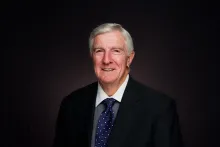
Before his retirement in 2021, Dr. Donald Ward pastored churches in Texas and Louisiana, and taught at Ambassador Bible College in Cincinnati, Ohio. He has also served as chairman of the Council of Elders of the United Church of God. He holds a BS degree; a BA in theology; a MS degree; a doctor’s degree in education from East Texas State University; and has completed 18 hours of graduate theology from SMU.
