
Paul Moody
This transcript was generated by AI and may contain errors. It is provided to assist those who may not be able to listen to the message.
Acts 15, verse 36 takes place within the context of the Apostle Paul preparing to embark on his second missionary journey. It says that after some days Paul said to Barnabas, Let us now go back and visit our brethren in every city where we have preached the word of the Lord, and let us see how they are doing. I have to admit that this passage came to my mind frequently as I was preparing to go on this trip to Nigeria, and actually why we were there as well. It's been three years since I was last there. I participated in the Challenger Program, and it's been because of Mr. Mickelson's other West African duties. It's been a year and a half since he's been to Nigeria, and two years since he's been to the Republic of Benin.
So the purpose of our trip was very much as described in Acts chapter 15. It was to visit the brethren, and to see how they are doing. Now, to this congregation in Spokane and to our congregations on the circuit that we have hooked up on the Cybercast, I'd just like to say thank you. Thank you on behalf of our brethren from Nigeria and Benin. Thank you for your willingness to serve them, and thank you for your willingness to share your pastor with them as well. We know it's all a sacrifice here on the local front when Mr.
Mickelson is gone. The number of trips he has to make to cover West Africa has increased over the years, and so it is a sacrifice on the local level, but he would not be able to do the things that he is doing if the congregations at home were not at peace, and were not stable as well. And so I would just say thank you. The brethren in Africa, thank you very much for the contributions that you make and sharing him with them as well.
Now, as most of you know, I maintained a travel blog while we were on our trip, and the purpose of that blog was mainly to let you see some of the sights that we were seeing, allow you to at least have a glimpse of what it's like to be a member of the Church of God in Africa, and to also hopefully put a face to some of the names that you've come to hear over the years.
And I got on a blog this morning and had checked it out because Sidari now has continued to keep up with it since I left, since he and Mr. Mickelson carried on to Ghana. And so there are a number of pictures, a number of videos, categories on there, and I would just invite you, if you haven't already checked out the blog, you can go to our spokan.ucg.org webpage and scroll down under the blog there, and there's a link to the West African blog.
Since my return, I've spent some time thinking about what it is I'd like to talk about today. And I actually started on a message early in the week and seemed like I was wrestling around with it and it wasn't quite going the direction I wanted it to. And basically I got up on Thursday and just hit delete on my computer and said, I need to start again. And to me it became apparent here a short time ago why I did that, because Mr.
Hearst's message ties in very well to what it is that I would like to talk about today. As I think about the places that we went on this trip and the people that we visited, I would have to say that what has emerged in my mind as significant is the importance of staying the course in this Christian life, the importance of staying the course. In this Christian life, brethren, we've committed ourselves to a particular course of action, and that action, if we endure until the end, will lead to eternal life and the Kingdom of God.
Now the month leading up to my trip in Africa was inspiring for me because of certain events that took place here on the local level. We had four baptisms in Spokane. We had one baptism in Kennewick as well. Five individuals committed their lives to running the course that leads to the Kingdom of God.
I had the opportunity to sit in on a few of those counseling sessions. I was able to be present for most of the baptisms. I just have to say it was a point in time that was encouraging to me, and I know a number of you as well, as we looked at the dedication and the sincerity of those individuals that had committed their life in that way. One of the key passages and scriptures that's typically referred to in the process of baptism counseling is found in Luke 14.
I would like to begin there this afternoon. If you'll follow me, please, to Luke 14, beginning in verse 25. The context of the passage here takes place during the ministry of Jesus Christ. Luke 14, beginning in verse 25, it says, Now great multitudes went with Christ, and he turned and he said to them, If anyone comes to me and does not hate his father and mother, wife and children, brothers and sisters, and yes, his own life also, he cannot be my disciple.
Now I'm sure that message of Christ was a bit of a turnoff to some of the people that were following him, those who didn't fully understand what it was he was saying. I'm sure that probably thinned the crowd down a little bit. You know, what are you talking about? Hate your family? How could that be the approach of the teacher that they thought they were following? Well, the word hate here is a comparative word, and it means to love less by comparison. What Christ is saying is that there is nothing that you can love more in this life than your calling, putting God first and pursuing this way of life.
Because there's nothing else that can come above that in your perspective, in your ambition, and in the way you live your life on a daily basis. Because if you put something ahead of God in Christ, at some point you will compromise to serve what it is that is most important to you.
Verse 27, he continued on and said, And whoever does not bear his cross and come after me cannot be my disciple.
So there will be trials, there will be struggles and issues that we face along this life that we never really planned for. But the fact is, they'll be before us. We'll have to take up those burdens and still continue to follow Christ. Verse 28, he says, For which of you, intending to build a tower, does not sit down first and count the cost?
Whether he has enough to finish it, Lest after he has laid the foundation and is not able to finish, all who see it begin to mock him, saying, This man began to build and who is not able to finish?
Or what king, going to make war against another king, does not sit down first and consider, whether he is able with ten thousand to meet him, who comes against him with twenty thousand, or else while the other is still a great way off, he sends a delegation and asks conditions of peace.
So likewise, whoever of you does not forsake all that he has, cannot be my disciple.
Counting the cost is deciding before the commitment is made whether you're going to be able to see the process through to completion. It's saying, Yes, I'm dedicated to this way of life. I will see it through no matter what. And before our baptism, you and I had to sit down, count the cost, and accept that we were committing to a total commitment, where nothing would come between us and Jesus Christ, as well as our relationship with God the Father.
Now, Hebrews 12 describes the race that we're running and the perspective that we should have as well. And in this life of following the example of Christ, it is very much a race.
Hebrews 12, beginning in verse 1, the words of the apostle Paul, Hebrews 12 verse 1, he says, Therefore, we also, since we are surrounded by so great a cloud of witnesses, those witnesses are the faithful individuals that have gone before us, who have run this course, who have finished successfully in a committed way of life. I read this passage now, and I think of art. He is a faithful witness, now that has set that example for us.
So therefore also, since we have been surrounded by so great a cloud of witnesses, let us lay aside every weight in the sin that so easily ensnares us, and let us run with endurance the race which is set before us, looking unto Jesus, the author and finisher of our faith, who for the joy that was set before him endured the cross, despising the shame, and had sat down at the right hand of the throne of God.
When I was counseling for baptism personally at the age of 19, I was a cross-country runner. And so for me, this concept of an endurance race was something that I could very much identify with.
But what maybe I didn't completely understand at the time was the nature of the difficulties that would have to be faced along the way. You know, as a cross-country runner, I basically had the ability to choose my course. I could determine where I was going to go run. I could determine the obstacles I would face. I could determine what weather I would go out and run in. You know, I didn't intentionally go out and intend to run through a bog for two miles of my race.
But in our calling before God, we don't get to necessarily choose where the race will take us.
And what are the obstacles that we'll face? Yes, there are choices, rather than that we can make that do affect the run. There are choices we make that affect how that course lays out before us.
Who we marry can have a big impact on our race and the obstacles we face. You know, will it be someone who is supportive, who has invested themselves in this way of life, or will it be someone who is an obstacle as we seek first the kingdom of God? So there are choices that we can make that does determine, in some sense, the struggle that we'll face in this race. But for the most part, we don't necessarily get to choose the course. But there are obstacles that are set before us, nonetheless. At baptism, we say, yes, I've counted the cost. And yes, I've committed myself to following through. But it's not often until... it's often when we get down the road aways, once we walk through this way of life for a number of years, it's at that time that we sometimes begin to experience obstacles and challenges that we never really planned for.
And the question then becomes, will we stay the course? Will we stay the course?
On the trip to Nigeria and Benin, I met individuals who are staying the course.
Some are enduring despite personal challenges. Some are enduring despite social pressures.
And frankly, some are enduring despite the greatest trials that they've ever faced in their life.
The first stop on our trip was in Lagos, Nigeria. That's where we flew into. Lagos is where Dari and his family live. It's where we have the largest congregation in Nigeria. And on our arrival, we pretty much hit the ground running. After a 24-hour trip in the plain, we landed on Friday afternoon. And we made our way to Dari Palace that evening. On the Sabbath, we kept morning services with the congregation in Lagos. Lagos is a city with a population of about 21 million people. And for me, that's a concept that's pretty hard for me to grasp, even having been there. But I will say that there are literally people everywhere you turn. In the midst of all that activity, there is a small group of people that dedicated themselves to serving God.
The Lagos congregation, as I said, is the largest in Nigeria. It averages 55 people on most Sabbaths. And if you take a look at the pictures that I have posted on the blog, what you'll notice is that about 60% of the congregation is in the age range of the mid-20s to late-30s.
There are also a number of teens and children as well. So it's a very young congregation by our standards. If you look at the picture, you'll notice very quickly there are simply very few older members of the Lagos congregation. Mr. Mickelson's explained the reason for that.
When Dari was ordained an elder, it frankly was an offense to some. It wasn't because of Dari as a person, but it was because of his age. Dari is in his 40s. In the culture of Nigeria and the tradition say that the oldest man is the one who must receive the honor, receive the recognition, even if he hasn't always been an honorable individual. And so to ordain Dari with the position of authority in the church basically flew in the face of that tradition. And there were a number of individuals who became offended, who were not willing to submit themselves to that authority and who walked away. So there are very few older people and Lagos as well as the congregation in Benin City are very much young congregations from that perspective. Staying the course in Nigeria in part means that they must come out of their culture and tradition. They must hate those things in order to follow Christ. And I use hate in the way in which Christ in the scripture used that word, hate. As Coleman, our deaconate or in O'Wary, has spoken about, he says, you must come out of your village and into the church. And for some, that was something that they weren't willing to do. That was an obstacle. That was a cost that maybe they thought was just a little too high.
There are a few individuals that remain steadfast, that remain faithful, and to see them there and to interact with them and see the support that they are to the congregations is a blessing.
For me, attending Savas services and legos was special because it gave me an opportunity to catch up with a number of the individuals that I spent time with on the calendar program. These were people that I became close friends with when I was over there before. And so it was an opportunity to catch up on our friendships and strengthen our relationships together. One example of a faithful member and an example of endurance that was brought to my attention involved a young woman in the church that I consider very much to be a personal friend. And she's a young adult in terms of age, but she's on the older end of that scale. She's an attractive young lady. She's very intelligent. She's spent a number of years pursuing higher education, and she's earned a professional degree. She's gainfully employed in her profession, and she's dedicated herself to living this way of life. Now for a young lady such as that, what do you think would be an important step and something for her to be considering in her life? I'll probably say marriage. Marriage, and that is the case. That is something that is very important to young people, obviously, in the Church of God. Now Daria has told me that she and along with some other ladies in the congregation are committed to not dating outside the church. And we have to understand what that means, because they're in a congregation of 55 people with maybe half a dozen individuals that would be available as perspective in that way. That is the largest of the congregations. There are two other smaller congregations in Nigeria, and these ladies refuse to run the risk of being unequally yoked together with someone by dating outside the church.
This friend of mine will not even go as far as to tell a man that she won't date him if he's not in the church, because she's not willing to run the risk that his interest in the church might not be sincere. And so, in one sense, that's a very high price. That's a very high cost that they're committed to walking through. In Nigeria, the woman's expected to submit to her husband's wishes. We might say, well, that doesn't seem out of the ordinary. That's the biblical example that we see. But you have to understand, over there, if she doesn't, he enforces it in ways that would not be tolerated here. And so, you can just imagine the trap that a woman could put herself in if she married a man who only attended church in order to catch her. And then his intentions and his actions changed once they were married. Dari told me that there are ladies in the congregations that accept the fact that they may never be married because of their commitment in this way.
That's a remarkable example of holding fast their convictions to staying the course, no matter what the cost. I think about that example often. I think about my friends in that congregation, and I pray that God will bless them and provide for them because of their dedication to him in that way.
Rather than when we commit our life to God through baptism, our life is no longer our home.
We take on the will of God. We take on the purpose of God in Christ and the way that we live.
We live our lives in service to them. That oftentimes means making hard decisions in this life. Galatians 2, verse 20 expresses this concept and it's important principle for us to understand.
Galatians 2, verse 20. Also, Paul accepted this principle in his own life.
Galatians 2, verse 20. Paul says, I have been crucified with Christ. He's saying, I've put to death the self, my needs, my desires, my wants, the things that I personally would like to pursue in this life. I've put to death so that I can live the life of my calling. So I can live the life in pursuit of the kingdom of God. He says, I've been crucified with Christ. It is no longer I who live, but Christ lives in me. In the life which I now live in the flesh, I live by faith in the Son of God, who loved me and gave himself for me. Our values must reflect the values of Christ in us. The decisions that we make on a daily basis must be the decisions that He would make.
Must be a reflection of His attitude in us. I've mentioned before that John chapter 3, verse 30, is my focus between now and Passover. The words of John the Baptist, speaking of Christ, he said, He must increase, but I must decrease.
And in the life of every one of us who have committed ourself to the calling of God, self must decrease. Our desires, our focus, our carnal natures must become less and less and less as we take on more of Jesus Christ. And His purpose and His desires in our life must abound.
Christ must increase. I must decrease. That means we often make sacrifices in the tough decisions in order to stay the course and the calling that we've received.
Now, on Sunday morning, Dari, Mr. Mickelson, and Yemecze, who is Dari's brother-in-law, and myself, we headed out on our trip to Benin City, which is a five-hour drive to the east of Nigeria. This is not the Republic of Benin, but Benin City within Nigeria. And for me, one of the highlights of the trip really was just getting out on the open road.
This trip was enjoyable in terms of the driving between the congregations and driving out to the areas that we did to visit the brethren. It's really on the open road that you get to see some of the exciting sights of Nigeria and see some of the things that you don't see on the road here in the United States. I posted a few interesting pictures on the blog. You know, you don't often just drive down the highway and see a van next to you with goats strapped down on the roof, but that's commonplace. We were stuck at one point in the traffic jam on our way to O'Arry, and there was an 18-wheeler sitting next to us, and we're sitting there going nowhere for a particular, oh, it's probably about a half an hour, and we glance over at this 18-wheeler, and the driver climbs out, and he walks around to the front of his truck and grabs that big hood, and he pulls it open and steps up on the wheel, and he reaches around the engine block, and he pulls out this big lot of newspaper. He goes and unlocks this newspaper, and in the middle of it, there's a chicken, and he's heating up his lunch for the day. And so, just, you know, for me, getting out on the open road was exciting. And it's, you know, it's like you get to experience the police roadblocks and all the other excitements of Nigeria. We arrived in Benid City in time to meet with most of the congregation for a Sunday evening Bible study. Mr. Mickelson presented the study which focused on the testing of our faith, and he explained that although we don't always understand why some trials occur in our life, we do need to understand that God is good, and His will is perfect. And that's a message that was very much needed in Benin. God is good, and His will is perfect. The message was very well received. Our former deacon in Benin City, Peter Alui, died several months ago. Our current deacon, Ralph Nduka, you'll recall Mr. Mickelson mentioning not long ago that Ralph's wife, Agnes, died suddenly. Ralph has four children living at home. He has one older teenage son, a younger teenage daughter, and two pre-teen daughters.
Ralph is a single parent trying to make his way now in Nigeria, raising a young family. It's probably safe to say that this is the greatest trial of his life. From my perspective, I would say that it would be easy for someone going through those circumstances to become angry.
This is we heard in the sermonette today. That could be so easy. We could question God, get out. God, why could You allow this to happen? How could this happen? We could become angry. The person could very easily become bitter. In fact, it could be offended at God, set that relationship off altogether.
While I was visiting with Ralph, he expressed to me that although he still doesn't understand why God allowed his life to die, he simply has to trust that God knows what is in his best interest, and God will work all things out for good in his life. I thought that was an incredible perspective. Ralph referenced Romans 8.28. I'd like to turn there. Romans chapter 8.
Verse 28. Very familiar passage to us, and yet sometimes I think it's hard for us to fully comprehend. Romans 8 verse 28 says, And we know that all things work together for good, to those who love God, to those who are the called according to his purpose. According to his purpose. I look at Ralph, and I think about his circumstance, and I can't even imagine what it's like to walk through the trial that he's walking through. Yet he's faithful.
He's kept a hopeful attitude, and he's kept a positive perspective in the midst of the greatest trial of his life. And he's our deacon. And in the middle of that, he's committed to serving God, and he's committed to serving his people. He is staying the course.
President, there's three basic principles that I like to share that I believe are essential for staying the course in the midst of trial, and even in the good times. Three principles. I'll keep them brief. Number one is you must never lose focus of the purpose and goal of your calling.
Never lose focus of the purpose and goal of your calling. In this life, no matter what we walk through, we need to keep the big picture in mind. We need to remember that God has called us to be sons and daughters in his family for all eternity, and he will see that purpose through.
Second Thessalonians 2, verse 13, if you'll follow me, please, you'll notice the principle here.
Notice the principle here. Second Thessalonians 2, verse 13.
Apostle Paul says, let me go back a chapter, Paul says, But we are bound to give thanks to God always for you, brethren, beloved by the Lord, because God from the beginning chose you for salvation through sanctification by the Spirit and belief in the truth. He says he chose you. It wasn't a mistake that you walked into the door and sat down and became a member of the family of God. He chose you. Verse 14, to which he called you by our gospel for the obtaining of the glory of our Lord Jesus Christ.
So God has called us for the purpose of obtaining glory, of becoming sons and daughters in his kingdom. You need to keep that vision firmly in mind. Verse 15, carrying on, says, Therefore, brethren, stand fast and hold the traditions which you were taught, whether by word or our epistle. And so the message is, don't give up on your calling.
Remember the words of God. Remember the truth that you embraced. Endure unto the end.
Remember what it is that destiny that God has set before you. That must be our constant focus.
The second point, brethren, in staying the course is we must remain close to God through exercising our spiritual disciplines. And by our spiritual disciplines, I'm talking about prayer, Bible study, fasting, and meditation. James 4, verse 8, says, Draw near to God, and he will draw near to you. And so we can't ever afford to find ourselves in a place where we're pushing God away, where we're resisting his presence in our life. As Mr. Hurst mentioned in the message today, we can't come to the point that we're angry with God.
Because when we allow those emotions to take hold, we cut ourselves off from allowing God's presence to work in our life. We need to seek God. We need to draw near to him. And in doing so, we'll receive the strength that helps us to stay the course. Third point is you and I must remain close to one another in the church as well. God created us to be relational beings. God is a family. He's creating a family in us. God is a relational being. We need to be relational beings as well. We need to engage in fellowship. We need to strengthen our relationships with one another because God created this body for each member to need the others in order to complete this race.
Hebrews 10 verse 24 tells us to consider one another in order to stir up love and good work.
So we need to build the bonds of relationship that will allow us to encourage one another, to uplift one another, and to help each other through the trials that we face.
Our visit to Benin City lasted for three days. And one of the blessings of this trip is that we actually had time to sit down and visit extensively with the brethren. We had opportunities to get together in their homes and share meals. We had opportunities for them to come and visit at our motel. And we went out to dinner with some as well. But having the time to simply sit down, it helped us to be able to develop relationships, to offer encouragement, and even give instruction where necessary. Now, on Wednesday afternoon, we set out on the next leg of our trip, which was to drive northeast to O'Wary. On our way out of town, we ran into a bit of excitement, or it might be more accurate to say excitement, ran into us. As we were heading out of O'Wary, we were sitting stopped because there was a cross street with traffic. And we were in the furthest lane to the left with a concrete barricade next to us. And a police vehicle came up beside us and decided it was half of us on the left, except there wasn't enough room.
And they sideswiped our van. Now, unfortunately, they were kind enough not to arrest us for simply being there. The fact is, they actually did offer to have our vehicle fixed, but we declined the offer because basically it would have tied up a couple of days having to stay in Benin to have it fixed. And, frankly, when the police offer to have your vehicle repaired, what it means is you go to a body shop and they threaten the body shop owners to fix your vehicle for free, or they're going to create trouble.
And so, for us, it just seemed like a better option to continue on with our journey and not to already address it later. So, we headed for Owari and spent most of the day traveling there. We traveled through open country and past-by family farms and went through small villages on the way. I've posted up some videos of that to the blog, if you'd like to look at it. We checked into our hotel in Owari on Wednesday evening and when we went to dinner, we decided it would be a good idea to have our room sprayed for mosquitoes.
They seemed to think that it was a good place to hang out and so we had that sprayed and when we came back, we settled in for the night and when we woke up in the morning, I looked at Mr. Mickelson. He looked pretty good.
I looked at myself in the mirror and the mosquitoes had eaten me on my face and my arms and my legs. I guess I determined that I had been brought along as the mosquito decoy in this whole process. And all I can say is that I think some of us are sweeter-tasting than others. But it's just one of the challenges that you face when you're over there. Mosquitoes apparently like the air-conditioned room better than they like it outdoors. We spent Thursday through Sunday in Owari, visiting with the brethren.
On Thursday, Coleman came to our hotel and it was a blessing to be able to meet with him. I heard a lot about Coleman, as we all have over the years, and to sacrifice for the church. So Coleman spent the afternoon with us at our hotel when we discussed the needs of the congregation and planned our meetings for the next few days. Many of the brethren in Owari live in very remote areas. The city of Owari is where we stayed. If you traveled to the outskirts right on the edge of town, that's where the church hall is located.
And then when you spread out from there, out through the countryside, there are remote villages. And many of our brethren live out in those remote villages. To get to them, we had to travel off the highway down these long dirt roads that were, you know, great swells and dips and potholes that you had to avoid as you went. And so we weaved our way back into these villages. The brethren were extremely happy to see us.
They were grateful for the visits. And everywhere we went, they wanted to show hospitality. And so they would bring us into our home. Their home, they would sit us down. They would put out a huge meal for us, despite our protests. And I would say it was probably by the third visit of the day, you practically had to roll us out of the door to keep us going. But Dari and I developed a system whereby he would give me the look.
There was something that he didn't think I should eat. And the look meant that I didn't want to eat that because I might regret it later. And so whenever these large spreads of food would get put out, I just kind of... if I'd reached for something and Dari gave me the look, I knew that was something I better avoid. Now, on our final visit of the day on Friday, it was notable to me, at least in terms of another example, that was significant.
Coleman took us back to the home of a couple of individuals from the same family who attended the congregation. And when we got there, they showed us around their compound. And basically, it consisted of several homes that other members of the family lived in as well. And after taking us for a tour, they sat us down, served us a meal, and other members of the family were invited, and they came and sat down and ate us, ate with us as well.
And what I didn't understand at the time was that this was the village where Coleman used to live. This was the village where Coleman and his family were forced out because he had stood up to someone in the church about open sin, and a number of individuals had forced his family from that village. You recall a story, brethren, that as a result of being forced out and the circumstances that extended from that, one of Coleman's daughters got sick and she died.
So here we are back in the village. We're sitting with individuals who are responsible for forcing Coleman's family out. They're sitting there, they're eating with us.
Coleman was joyful. He was sitting there, he was eating, he was fellowshiping, he was talking with them. Now, the individuals responsible for that do not currently attend the church, but members of their family do. And Coleman has somehow made peace with the situation in order to serve those who God is working with. And to me, brethren, that's an incredible example of staying the course.
It's an incredible example of not being offended so that he could serve those that God has called into the body. You know, I ask myself, could I do that? Okay, could I overcome that obstacle?
Could I come to the point that something that altered my life drastically would not be an offense to me? Would that be a cost that was too high? I respect Coleman very much in what he is able to do in that way. This example reminds me of Paul's words in Philippians. If you'll follow me at Philippians chapter 1. Philippians 1 verse 9. Paul writing to the church in Philippi, and he says, This I pray that your love may have boundst fill more and more in knowledge and all discernment, that you may approve the things that are excellent, that you may be sincere and without offense till the day of Christ. He says, Being filled with the fruits of righteousness, which are by Jesus Christ, to the glory and praise of God.
Sometimes it's a struggle to be sincere and without offense until the day of Christ.
And yet, that is what we must do. Offenses divide people. Offenses divide congregations.
You and I must be willing to serve one another and never become offended. In fact, it is an incredible service to one another to simply take no offense. It was an example to me that I'll remember. I've spent some time since that trip reflecting on Coleman's attitude and his willingness to serve in that way. And to me, it's a very powerful lesson. Second Thessalonians chapter 1. Here the Apostle Paul is praising the congregation and here for their perseverance in spite of their trials. Second Thessalonians chapter 1 beginning in verse 3. He says, For we are bound to thank God always for your brethren, as it is fitting, because your faith grows exceedingly, and the love of every one of you all abounds toward each other. You know, there's this open expression of love and this willingness to work together and to be together in unity, even when there have been false teachers that had come in to their midst. You know, those things weren't tolerated, but in spite of the persecutions, they were able to carry on and love one another. Verse 4 says, So that we ourselves, both of you among the churches of God, for your patience and faith, and all your persecutions and tribulations that you endure, which is manifest evidence of the righteous judgment of God, that you may be counted worthy of the kingdom of God, for which you also suffer.
Coleman and his family have walked through persecution for a service to God, yet he continues to serve faithfully. He continues to say the course.
On our Sabbath, there in O'Leary, we met at the church hall with 35 members of the congregation. And Mr. Mickelson and I shared split sermons, which was the general course of what we did on the Sabbath. Attending services requires a commitment for the brethren. Most of them either have to ride bicycles or motorbikes, or if they live near town, take a transport out to services.
It's actually pretty rare to find a church member in Nigeria that owns a car. I'm actually aware of one family in the O'Leary congregation that told me they actually have to rotate who gets to go to services each Sabbath, because they're a large family. You can only carry so many people out from the village on the motorcycles. And so, in many ways, it is a challenge, and it is a dedication for them to come together. But they rejoice greatly in being together on the Sabbath.
Following services, Coleman joined us, and we traveled an hour east of O'Leary to the city of Uma'Haya. And there we visited a shut-in by the name of Hope and her daughter, Hope.
Now, Hope the mother is suffering from the result of a stroke. Her daughter, Hope, who cares for her is 16 years old. Young Hope has attended the youth camp in Lego, since she's a delight to be around. She's a very positive attitude, and she's only smiling and energetic. But Hope and Hope are all alone in their area. There's no other brethren in their town. There's no one to fellowship with, no one to assemble with on the Sabbath. And it's a very lonely place to be, because Hope, since her stroke, can no longer travel to be with the brethren on the Sabbath.
She's trying to keep her spirits up, despite her disabilities. And she looks to God for the comfort that he provides. She mentioned to us her desire to have some copies of the church booklet, because where she lives, the mail service doesn't run. And it's very difficult for her to get the literature.
And so, you and I can imagine that our contactors, the church is regular. We come to services. We get online and download sermons. We can go to the ucg.org website. We receive the Good News and United News in the mail. They're cut off. Hope and Hope are. Dari had to bring them the most recent copy of the Good News magazine. And she asked for some booklets. And I had a few out in the van, which I brought in. But they were duplicates of ones that she'd already had. But she was very excited anyway, because her plan was to take those and put them out at the clinic where she receives her medical treatment. And so, it was encouraging to see that even in her infirmity, she was excited at the prospect of spreading the gospel. President, I'd like to ask you to keep hope and hope in your prayers. God knows their circumstances. And God has the power to intervene very directly for them. It's a difficult place for an older woman to be in and to be disabled as she is. But honestly, it's a difficult place for a young teen growing up in the church to be isolated as well.
So, I would ask you to remember them in your prayers. And God has all power. And He can make it possible that they could assemble with the congregation again. Psalm chapter 34 contains an encouraging passage that reminds us of loving care that God has for us in our need.
Psalm chapter 34, beginning in verse 15.
Psalm 34, 15. This is the Psalm of David. And He says, The eyes of the Lord are on the righteous, and His ears are open to their cry.
So, brethren, we should never think whatever trial we're going through that God doesn't know what is happening. And God doesn't hear us when we cry out to Him. He very much does.
It says, The face of the Lord is against those who do evil, to cut off the remembrance of them from the earth. The righteous cry out and the Lord hears, and He delivers them out of their troubles.
The Lord is near to those who have a broken heart, and save such as have a contrite spirit.
Many are the afflictions of the righteous, but the Lord delivers Him out of them all.
He guards all His bones. Not one of them is broken. This is a prophetic prophecy of Jesus Christ here, verse 20. Verse 21 says, Evil shall slay the wicked, and those who hate righteous shall be condemned. The Lord redeems the soul of His servants, and none of those who trust in Him shall be condemned. God is our deliverer. God is our redeemer. He knows what we go through. He sees the struggles and the trials in our life, and He looks on us in mercy.
We must never doubt the love that God has for us.
We spent Sunday finishing our visits in another village outside of O'Leary, and at the end of the day we stopped to make a visit to Coleman's brother. He's the brother of Coleman, and he is a commander in the Nigerian Navy. Somehow in the process we were invited to go with him and share a meal at the village bush bar. The bush bar is their term, not mine, but it was very much as you would expect. It was a shack in the middle of the village, about 15 by 20 feet. We were welcomed warmly with the explanation that Mr. Mickelson and myself were the only white men to ever have traveled back into that village and sit in the bush bar. They were very excited. They rejoiced to seeing us there. They served us cooked goat skin and goat meat, along with palm wine.
And palm wine isn't what we expect wine to be here. Dari actually gave me the look when they put the palm wine out, but I figured, hey, you know, it's time for an adventure.
And at some point we have to be willing to introduce the local bacteria into your system.
But we enjoyed that visit very much. Palm wine is basically they climb up to the top of a palm tree and they cap the tree and put a tube in it and hang a bucket on the side and the juices from the tree flow out into this bucket and it's very high in natural yeast and in the heat it ferments very quickly and they take that and they strain it and drink it. And when you look at palm wine it basically looks like milk and it's kind of a thicker consistency. So just, you know, it's the delicacy there, but for me that was an adventure. But sitting in the bush bar drinking palm wine you can see pictures of that on the blog as well. Following that day on, I guess that would be Monday, we made the return trip to Legos. We spent the next three days in Legos catching up on church business, on emails, and frankly just on some much needed rest. We've been on the go pretty ethically for a number of days. On Friday we headed out for the Republic of Benin, which is the nation next to Nigeria on the east. There are 27 members in attendance of the congregation in Benin. Kota Nubinin is the town where the brethren meet. They actually meet on a covered front porch of one of our members, Michel Ogadel. They meet at his home and they've extended the concrete patio and the metal roof out there. That's where people come for the Sabbath and a number of the brethren actually come from as far away as three hours to assemble on the Sabbath.
Sermons on that day were given by Mr. Michelson and myself. Benin is a French-speaking nation.
What was interesting is translations had to be given as we were speaking. Actually, Dari would translate into Yoruba, which is the tribal tongue that Dari speaks and most of those are rather than speak as well. Then there was another individual that was having to make the translation to French for those that didn't speak Yoruba. Basically, my sermon had to be boiled down to the size of probably a short sermonette because I would speak a line and stop and Dari would translate and the next individual would translate as well. It was good to be together and even at about a third of the message length we were very much able to get the point across. In fact, it would go through a couple of translations and then the song leader would get up and sort of give the summary of the message that was just given in case members didn't quite understand what was going on and he nailed it perfectly. So, in my mind, I'm sitting there thinking this is a modern-day example of the gift of tongues and it's certainly a blessing to have Dari and Yamasi in place. You can translate in that way. Following services, they served us a very enjoyable three-course European-style meal before they send us on the way back to Legos. On Saturday evening, then at my return, I flew out for the trip home. Now, Michel, who is one of the leaders there in the Republic of Benin, he has suffered from blindness for the past two years and he's another example of staying the course. He has advanced glaucoma and he has cataracts as well and surgery is possible to remove the cataracts to re-establish a degree of his vision, but the problem is the glaucoma has caused a swelling in his eyes to be extent to the point that the surgery may cannot be conducted. Dari translated some of Michel's words for us and he posted this on the blog because I think Michel's example was incredible. Michel says, my relatives and family, not in the Church, told me that my enemies are the one who caused this blindness. But I told them and I announced to the Church, brethren, that they should know that this condition is not caused by any enemy. He says, I see the hand of God in this because I know that nothing can happen to me without the permission of God. So I believe this is something God has allowed. I look to him for encouragement. I look to him for healing and I leave myself completely in his hand to do as he will. Michel is one of our main teachers in the Republic of Benin. He speaks on the Sabbath. He quotes the Scripture from memory. I would ask you to remember him in your prayers as well.
He continues to stay the course. Romans chapter 5 verse 3 displays very much his attitude.
Romans chapter 5 beginning in verse 3.
Breaking into the middle of Paul's thought here. He says, and not only that, but we also glory in tribulations. I think sometimes we believe this word glory has to mean you know you throw a party when you're going through a trial. Well, I think sometimes the way we glory in tribulations is just simply because we come to the realization and the understanding that God is in charge. We can have comfort and we can have confidence that that is so. He says, not only that, we also glory in tribulations, knowing that tribulation produces perseverance and perseverance, character and character, hope.
Now hope does not disappoint because the love of God has been poured out in our hearts by the Holy Spirit, which was given to us. Michel has that hope that does not disappoint. He looks to God as the one who is in ultimate control of his life. And brethren, for you and I, that is the most hopeful place that a person could be. My evaluation of this trip is that it was a success. We accomplished what we set out to do. God's people were encouraged. They were strengthened. And so were we, very much so. Brethren, we've committed ourselves to a race that has twists and turns that are sometimes difficult. And although we have counted the cost, we don't always fully understand what that cost will be. Let us never become discouraged. Never let us come to the point where we quit the race.
In light of the trials we face in this life, we must always remember that God is good, and his will is perfect. Final scripture for today is Philippians chapter 1, verse 6.
Philippians 1, verse 6.
Apostle Paul says, being confident of this very thing. He says, you know what, you can have absolute confidence in this. You can hang your hat on it. That he who has begun a good work in you will complete it until the day of Jesus Christ. As long as you and I are willing to submit our lives to God, as long as we're willing to persevere, endure the trials, as long as we're willing to never give up, God will never give up on us. God will always, in his faithfulness to us, finish the work he has started. In this race we are running, brethren, let us never give up. Let us never stay. The cost is too high. Remember the words of Jesus Christ in Matthew 24, 13, where he said, he who endures to the end will be saved. Brethren, let you and I stay the course unto eternal life in the kingdom of God.
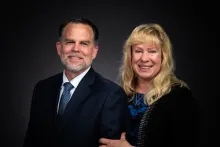
Paul serves as Pastor for the United Church of God congregations in Spokane, Kennewick and Kettle Falls, Washington, and Lewiston, Idaho.
Paul grew up in the Church of God from a young age. He attended Ambassador College in Big Sandy, Texas from 1991-93. He and his wife, Darla, were married in 1994 and have two children, all residing in Spokane.
After college, Paul started a landscape maintenance business, which he and Darla ran for 22 years. He served as the Assistant Pastor of his current congregations for six years before becoming the Pastor in January of 2018.
Paul’s hobbies include backpacking, camping and social events with his family and friends. He assists Darla in her business of raising and training Icelandic horses at their ranch. Mowing the field on his tractor is a favorite pastime.
Paul also serves as Senior Pastor for the English-speaking congregations in West Africa, making 3-4 trips a year to visit brethren in Nigeria and Ghana.

