
David Mills
This transcript was generated by AI and may contain errors. It is provided to assist those who may not be able to listen to the message.
As we approach the Passover and Feast of Unleavened Bread each spring, we, of course, must speak about certain doctrines that would be meet in due season, about Jesus Christ and His sacrifice, about our sins and the need for a Savior, and about God's deep love for us as revealed in the Passover.
Today I would like for us to examine topics that are related to the Passover and the Feast of Unleavened Bread, two especially related, and that would be repentance and baptism. Both of these are directly related to the Passover and the Feast of Unleavened Bread. And both are very important and very necessary. We won't get anywhere without these two, repentance and baptism.
Let's first of all see a few verses about the importance of repentance. Turn over please to Luke 13. How important is repentance?
Jesus here is going to tell us. Give us the answer. Luke 13, verse 1.
Think about that. That was a grisly thing. Pilate had mangled the blood of the Galileans with their sacrifices. What a grisly thing. Jesus, though, took that and went with it to teach something about repentance. Do you suppose that these Galileans were worse sinners than all the other Galileans because they suffered such things? I tell you no. But unless you repent, you will all likewise perish.
Brethren, unless we repent, then we will perish. That's very clear, isn't it? Unless we change, unless we understand and follow through on repentance, then we will perish. He gave another example in verse 4 of those 18 on whom the tower in Siloam fell and killed them.
You know, they just happened to be in the wrong place at the wrong time. They were in the path of that tower. It fell and it killed them. Do you think that they were worse sinners than all other men who dwell in Jerusalem? I tell you no. They weren't worse. Wrong place at the wrong time. And he went on to say, unless you repent, you will all likewise perish.
You know, we could say today that those thousands who died in the Twin Towers 9-11 crash, were they worse than all others? No. Wrong place at the wrong time. Some weren't killed because for some reason or the other, they didn't show up to work that morning. They just got lucky. But Jesus brings out here in Luke 13, 1-5, the importance of repentance. Absolutely necessary or we will perish. What about baptism? Well, over in Acts 2, in verse 38, we see that baptism is commanded.
And baptism is absolutely necessary. Repentance and baptism are mentioned in this verse. In Acts 2, in verse 38, Peter said to them, Repent and let every one of you be baptized in the name of Jesus Christ for the remission of sins. And you shall receive the gift of the Holy Spirit.
So we must repent. We must be baptized. Today, we're going to study God's Word and understand about repentance and baptism. First of all, look at repentance. What does it mean to repent? What is a real and godly repentance? And what is one that is not acceptable? There is a repentance that would not be acceptable, would not be a godly kind of repentance, not one unto salvation. Well, first of all, let's consider this. How is it that a person is able to repent? I mean a godly kind of repentance unto salvation, one that is acceptable to God.
Does he choose it for himself? Many people believe, and I hope that's not any of us, many people believe that they have the option of choosing God's way and to repent. They can choose God's way and repent if they want to. I think the world in general feels that way. But that's not what the Bible teaches. Let's turn to John 6, verse 44. A person cannot just choose repentance for himself. We want to read several verses that show that God has His hand in making repentance possible. In John 6, verse 44, Jesus said, No one can come to Me unless the Father who sent Me draws him.
So no one can come to Jesus Christ, who is our Savior. No one can come to be forgiven of their sins unless God, first of all, has drawn them, opened their minds, and begun to draw them to the truth. In Acts 2, the latter part of that chapter, it says that God is the one that added to the church daily.
God is the one that adds to the church. So a person is not really correct to say, Well, I joined the church. We should not use that expression. We were added to the church. We responded to a calling from God, inviting us to be a part of the church. But it is God who does draw and does call a person and adds a person to His church. It is God who grants repentance. Let's look over in Acts 11 and verse 18. Acts 11 and verse 18. This is where Peter had to defend his going to the Gentiles, to Cornelius, the household of Cornelius, in chapter 10.
Well, in verse 18, after defending what he had done, and when they heard the rest of the story, verse 18, when they heard these things, they became silent, and they glorified God, saying, Then God has also granted to the Gentiles repentance to life. Who is it that grants repentance to life, to salvation? It is God. In Romans chapter 2 and verse 4, we read, So this is the goodness of God that leads a person to repentance. We see then that God is the one who does the calling. He's the one who draws a person to the truth. When God draws a person to the truth, that person feels led.
It's like metal being drawn to a magnet. You put a magnet close enough to metal, and that metal will begin to find its way to the magnet. And so when God puts his truth close to us that way, his spirit opens our hearts and minds, and we begin to be drawn to it. We begin to comprehend it and to understand it.
Because when God draws someone, he opens their mind to understanding. And so a person feels compelled. He feels led. And he feels drawn. John 6 and verse 44, the word drone means drone, and it's a good word as far as God's calling. A person feels drawn to the truth.
So we're not here because we chose it. We did have to participate and make a choice, alright, God first of all chose to open our hearts and minds and draw us. We may not be here because we wanted to. There may be some that fought against the truth at first until they began to understand it and then gave in when they saw it was true.
We're not here because we're so good that God had no choice but to call us. We were such good humans. God just had to call us. No, that's not why we're here. We're not here because we're so smart. We're such a scholar that God just had to open our hearts and minds because we're so smart. You know, we meet people at times who say that they indicate from the way they say it that they feel they found the truth for themselves.
But the truth is that God found them. It's not that we selected God first, but He first selected us and we responded to His calling. Jesus told His disciples, you've not chosen Me. Understand, you've not chosen Me, but I have chosen you that you should go out and bear fruit. So we're here because God chose us.
He wanted us to be a part of His church today. He called us. His goodness led us to repentance. How does God draw a person? How does He lead one to repentance? It's His goodness that leads us to repentance. He's the one that grants repentance to life. How does God do that? He does that by beginning to show a person the truth. And according to the Scriptures, the truth is right here in God's Word, the Bible. This is the truth. God begins to show a person the truth, and the truth is so different than what we have been taught.
For example, one truth that a person comes to understand sooner or later is that the Ten Commandments are not done away. They are laws that are very much in force, not only in the letter of the law, but also the Spirit of the law. In fact, the New Testament puts a stronger and more binding keeping of God's commandments than in the Old Testament. We must keep God's commandments in spirit and in truth, from the heart and with the help of God's Holy Spirit.
As a part of those Ten Commandments, we come to the Sabbath day. That certainly draws a line, doesn't it? A difference with what we always thought. Sunday, verse 7 of the week. So God begins to lead a person by showing him the truth in the Bible. He begins to show a person the true gospel. Before, in the world, the true gospel may be going up to heaven.
At the time one dies, if he's a good person, his immortal soul goes up to heaven at the time he dies. We discover the truth. There is no immortal soul. And there is no going to heaven either, either after one dies or later on. So God begins to show a person the true gospel. Let's turn to Mark 1, verse 14. In many cases, a person may not have heard about the kingdom of God, or certainly not have heard very much about it. And if he heard anything about it, that was not the truth.
Sometimes people think the church is the kingdom of God. Well, the true gospel is the kingdom of God, but it's not the church. The church is an aspect of it. It prepares people for that kingdom. But it's not the actual kingdom itself. It has the laws, though, and it has the approach and the attitude and all of that of the kingdom. It's a training ground for the kingdom of God. The church plays a vital role as far as the kingdom of God, but it's not actually the kingdom itself. In Mark 1, verse 14, after John was put in prison, Jesus came to Galilee. And here's the message Jesus came preaching. Preach in the gospel of the kingdom of God and say, in the time it is fulfilled. And the kingdom of God is at hand. Repent and believe the gospel. How does God lead one to repentance? He leads a person to see in the Bible the truth. A person begins to understand about the kingdom of God, the message that Jesus brought. He begins to understand the laws of that kingdom, the Ten Commandments and the other laws and statutes of Almighty God. He begins to understand the Sabbath and the Holy Days. I guess we could summarize that a person begins to understand what is in our booklet, The Fundamental Beliefs of the United Church of God. This is one booklet that I ask all of those who are counseling for baptism to read. Why is that? Are these the teachings of a church that has come up with its own doctrines and ideas as to what we should believe?
No, these are 20 fundamental teachings, beliefs, doctrines of the Bible. A person can look up verses and understand each one of them. I sat down at the time of counseling for baptism. I did with the one we just had recently. I sat down and discussed each of these 20 fundamental beliefs.
We take at least 15 to 30 minutes to go over them in the counseling. God the Father, Jesus Christ, and the Holy Spirit. I asked the person, do you understand the Holy Spirit is actually not a person? There's not a trinity. The Bible doesn't use that word trinity. The teaching of the trinity is not in the Bible. The Holy Spirit is God is Spirit. God the Father and Jesus Christ are both spirit beings.
The Holy Spirit proceeds out from these two spirit beings and actually empowers us. God's Spirit actually goes out and working you high from God's Spirit. It kind of goes out from Him. It's a power and force that goes out from Him throughout the universe and sustains the universe. God the Father, Jesus Christ, and the Holy Spirit. Very important to understand that. Very different than what the world believes.
Number two, the Word of God. The Bible is the Word of God. We believe it's inspired in the original languages of the Hebrew and the Greek languages. It is the inspired Word of Almighty God. And we strive to live by it. It is our guidebook. It tells us what we are to believe and how we are to conduct our lives and what we should set our minds on. The Word of God, the Bible. Number three is Satan the Devil. We need to understand there is an adversary. God didn't make a devil, but He made a spirit being, an archangel who rebelled against God and was able to persuade others. So there are fallen angels described in the Bible. And they are still around today. They have not been put away. And we need to be aware that they are around. And we need to resist the evil influences of Satan and his demons.
Number four is humanity. God has a great purpose for man, but man does not have an immortal soul. He is just a physical existence, temporary. Mr. Armstrong often said a physio-chemical existence kind of wound up like a clock. Oh, maybe good for 70 years, 7 decades, maybe 80 years, 8 decades, maybe 90 years, 9 decades. But that's not good enough. No matter how good life is, it's not good enough. God has something greater in mind for humanity. And so number four begins to get into that. God has a great purpose for mankind. Number five in the fundamental beliefs is sin and God's law. We believe that God's law plays a large role in our salvation. That it's God's way of life, it's the way that will work, it's the only way that will work, the keeping of God's Ten Commandments and the other laws of God. So the breaking of God's law would be sin. That's what brings on the death penalty. And mankind has gone that way. We need to understand all about sin and God's law. Number six is the sacrifice of Jesus Christ. Well, that's the Passover. And it's through the sacrifice of Jesus Christ that we may be forgiven our sins. Because we have brought that penalty upon ourselves, each and every one of us. This time of the year we should even focus on that more than other times of the year as we approach the Passover. We should examine ourselves how we view our sins and how we view the need for the sacrifice of Jesus Christ. And it should draw us closer to God. And we should feel our hearts and minds. And there should be some emotional feeling behind it. It's not just a head knowledge of the sacrifice of Christ, but a heart knowledge that we deeply appreciate our God and Jesus Christ. And we can have the death penalty taken off of us, off of our shoulders. Number seven, the seventh fundamental belief, is three days and three nights. What's that one doing in here? Very few churches would have a fundamental belief by this title, three days and three nights. Well, Matthew 12 and verse 40, Jesus gave this as the only sign to the Pharisees who were seeking for a sign of His Messiah's ship. That He would be three days and three nights. And we don't get three days and three nights that Jesus was in the grave from a Friday crucifixion to a Sunday morning resurrection.
And so the Passover that year, 31 A.D., was on a Wednesday. That's the day Christ died. And so Jesus was put in the tomb just before sunset on Wednesday, resurrected three days and three nights later around, just before sunset on the Sabbath. So three days and three nights, it's very important that we understand that one.
The next one is repentance. And that's the one we're discussing today. It's a gift that God grants through His goodness. And we're going to get into more detail on what it means in just a moment. The next one is what are baptism? We'll be discussing that one as well. Then after that, the Sabbath day.
Every person seeking baptism needs to certainly understand that fourth commandment of God's laws, the Sabbath day, and to be keeping it week by week, to commit His life to keeping the Sabbath.
Then, number 11, the Passover. Of course, that comes up in one month. And that is closely connected, of course, with the one previously, the sacrifice of Jesus Christ. You know, we have two about the sacrifice of Christ. Essentially, then, we have the sacrifice of Jesus Christ, and we have the Passover. Those are essentially the same. And they focus on how we may have our sins forgiven of the sacrifice of Christ. The next one is the festivals of God, the seven annual Holy Days in the Bible.
The person seeking baptism needs to understand those seven Holy Days. We don't keep Christmas and Easter, but we do keep the Holy Days of God, as listed in the Bible, in the Old Testament, and also observed by Jesus and the New Testament Church. The seven Holy Days of God. Number 13 is God's food laws, cleaning and uncleaning meats. We don't just eat any old kind of meat. The Bible does have animals that are called clean and animals that are called unclean.
And we find this throughout the Bible. There's New Testament proof and also proof for our time. But God's people should not be eating the unclean meats. Number 14 is military service and war. What about that one? We don't believe that a Christian should be bearing weapons, bearing arms, killing other people. Jesus never did that. Instead, Jesus let himself be put to death. And the early church also did not get involved in military service or war. In every instance, Jesus and the early church, instead of harming others, allowed themselves to be persecuted, beaten, or harmed.
So military service and war, God's people do not get involved in killing other people and carrying weapons that would destroy other people. Promises to Abraham, they're spiritual and national. We need to understand that. Spiritual promises through Christ, the descendant of Abraham, and also national promises upon the two sons of Joseph that have a direct bearing on our world today that we need to understand. We cannot really understand prophecy without understanding the national promises to Abraham. We have a whole booklet on it, the United States and Britain and Bible Prophecy.
16. God's Purpose for Mankind. That gets back to humanity, connects him with humanity quite a bit, but God's purpose is for all of mankind to be brought into his eternal spirit family and actually to dwell as his sons at the level that God exists, the God level, at that level of spirit life. 17. The Church. The person has to know that this is indeed the Church of God. The United Church of God does not claim that all Christians are in our fellowship, in our scattered condition today.
But we certainly do believe that we are a part of the Church of God. The Church that Jesus said he would build, and that we follow the same practices and the same teachings and the same way of life, the same doctrines as Jesus and the early Church. So a person needs to be firm on that. Tithing. We do believe in tithing, that the first 10% of our income does go to God, and we also save 10% for keeping God's Holy Days as instructed in the Bible.
The resurrections. There are three general resurrections of mankind. One when Christ returns for the dead in Christ. Those who will reign with Christ. Those being prepared to reign with Christ will be in that first resurrection. The second resurrection for the masses of humanity, a physical resurrection after the 1,000 years for all of mankind, who have never understood God's great plan of salvation. And finally, there will be a third resurrection for the wicked, and that will be the time of the lake of fire.
Those who simply will not change, who will not get in harmony with what God has in mind. And then finally, the last fundamental belief is Jesus Christ's return. And that's a good one to end on because that's actually what we are preparing for now. That's the message we proclaim out into the world.
Christ is going to come and rescue us from the mess that we are in. And I think we all agree that this world is truly in a mess, and our own country is in a mess. So Jesus Christ is going to return. That is the good news. He is going to set up God's kingdom on this earth, and we have a chance to reign with Him and teach people God's way.
So these fundamental beliefs, all these are biblical truths that God is going to draw a person to. A person being drawn to God's church today is going to understand these basic fundamental teachings of the Bible. I also bring out things like a person is not going to be addicted to cigarettes.
If he is, he is going to be putting that away as a fruit of repentance. He is not going to be addicted to illegal drugs and things of that type. And in every way we'll be coming out of the ways of this world and getting in harmony with God's holy and righteous ways. So that's how God leads a person to repentance. The goodness of God leads a person to the truth.
Leads a person to the understanding of the truth. And with this truth, we have something a way of life we can live by. And we also have something we can look forward to. God's kingdom, something that is real and that does give hope. So that's how God leads a person. That's how He led you. You begin to understand truth from the Bible at some point. God began to draw you like metal to a magnet. He began to open your mind and you were drawn to the truth.
It varies from person to person just where it began. Sometimes it's with something like the Sabbath. Sometimes it's something like not going to heaven. Instead, God's kingdom will be set up on the earth. It varies from person to person where it starts. But in the end, it has to all come together with understanding the basic fundamental teachings of the Bible. Well, what is real repentance?
Let's get into that area of repentance. What is real repentance? You know, real repentance has to be based upon the truth. It has to be based upon this knowledge. The knowledge of the truth cannot be based upon falsehoods. The truth is in God's Word, the Bible. And a real repentance has to be based upon, then, what we read in the Bible. We have to live by the words of the Bible, then, not by human tradition, not by what man assumes or thinks or teaches by way of human tradition or custom.
Instead, we come to believe what God says. It means to change, then, our outlook. I mean, you think about this. This is just totally what I believe now. The way of life I've lived since my beginning around 16 or 17 years of age. The things I believe and the way of life that I live is totally different than the way I came up with earlier. Just totally different. When the church on Sunday kept Christmas Easter, I found the most Easter eggs on an Easter egg hunt.
I was one of the three wise men in a Christmas play. I was very much a part of the world. Very much. And so were most of us here, I'm sure. So we turn from that. It's just a total change from the way of life of this world. There's a godly sorrow that we come to have for our sins and the ways that we have been deceived. Let's go to 2 Corinthians 7. We come to have a godly sorrow toward our past.
And I'm sure that I, as well as you, there are things in our past we just as soon not discuss with anyone, any human being, except God. He's not a human being. We know we can discuss those things with God. But there are things in everyone's life that he's done, knowing better. And we come to have sorrow for that. There are things we did in ignorance, not knowing better. We have a sorrow there as well. And it's a godly sorrow. Well, in 2 Corinthians 7, we have some discussion on godly sorrow versus an ungodly type of sorrow. What is the difference between a godly sorrow and one that is not godly? Well, 2 Corinthians 7, verses 9 and 10 will help us.
Now, I rejoice not that you were made sorry. This is 2 Corinthians 7, verse 9. I rejoice not that you were made sorry, but that your sorrow led to repentance. That's the kind of sorrow that God wants us to have. That we do have a sorrow that leads us to repentance. For you were made sorry in a godly manner, that you might suffer loss from us in nothing. God's ministers, if we make anybody feel sorry, it's not something that we desire, just making you feel sorry. But if you sorrow in a godly way, then that is great. That's good. It's necessary. Verse 10 goes on to say, For godly sorrow produces repentance to salvation, not to be regretted. We won't ever regret a godly sorrow that produces repentance to salvation. But it goes on to say that the sorrow of the world produces death. There's a sorrow in the world that will not lead to salvation then, but to death. Do you understand the difference? The sorrow of the world that produces death would be a temporary... Let me give you a couple of illustrations of what that would mean. There may be more. A temporary remorse. For example, the old drunk that gets drunk on Saturday night, and he wakes up on Sunday morning, and his head is hurting, and he's had a rough night. Maybe he temporarily says, Well, I'm not going to do that anymore. But maybe a couple of Saturday nights later, maybe he does miss one or two. A few Saturday nights later, he's back down there again, getting drunk. Well, that's not godly sorrow, is it? Temporary sorrow is not godly sorrow. Another example of that would be an old drunk. Let's take the same drunk who beats his wife, and gets drunk, beats his wife, curses, and he finally comes to himself, and he says, Boy, I'm going to change. And he joins AA, and he quits drinking, and he stops beating his wife, starts treating her right, and maybe stops smoking, and cleans himself up, becomes a good respectable man in the community, and starts going to church every Sunday morning. Is that a godly sorrow unto salvation? No. No, it's not, because he doesn't understand the Sabbath. Has he repented to some good in his life, and for his family? Yes, he has. But it's still not a godly sorrow that leads to salvation. A person has to, first of all, have the truth. In this latter example, the person made a change for the good, but it's not a godly repentance, unless it's based upon the truth. So there's a sorrow of the world that will not do it. A person might be better for making some of those changes, will be better, but it's still not a godly repentance to salvation. Brother, we need to understand also that repentance is not human goodness.
It's not out of the goodness of our heart we change. Out of the goodness of our heart, we begin to turn to God in His ways. A very basic part of repentance is coming to see that actually there's not any goodness in our heart. There's no goodness that impresses God at all. Go to Jeremiah 17 in verse 9. Godly repentance is not out of our human goodness, and that is very important that we understand. Jeremiah 17 in verse 9, The heart is deceitful above all things. The human heart. Deceitful above all things. It will pull the wool over your eyes. Your nature and my nature will cause us to deceive ourselves and kid ourselves.
The heart is deceitful above all things and desperately wicked. Who can know it? Well, verse 10 says, I, the Lord, search the heart. I test the mind to give every man according to his ways and according to the fruit of his doings. God does test to see what is at the deepest level of our hearts and minds. So repentance is not out of the goodness of our human heart. In Romans chapter 8 and verse 7.
And as we are turning there then, it has been said that we not only repent of what we have done and believed in the past, but we actually repent of what we have been. We are sorry for the type of person that we have been. That we have been deceitful.
We have gone our own way. We've done many things that we knew should not be done. In Romans chapter 8 and verse 7, it says, The carnal mind, the word carnal is just fleshly, that's all it means. The fleshly mind is enmity against God. It is not subject to the law of God, nor indeed can be. So we still fight against that fleshly mind.
It's not subject to God's law, nor can be. So our repentance does not come out of human goodness or out of something that is deep within us. One minister many years ago said that he felt he was going to be a future minister. He was actually in a seminary, training to be a minister in the future. But he said, my job as a minister is that there is a spark of divinity in every human heart.
And my job is to bring out that spark of divinity, to bring out the goodness in that human being. Well, there is potential for goodness, but there is not really a spark of divinity in a human heart. Paul said in Romans 7 that there is in me, that is in my flesh, dwells no good things. So we have to come to say that the goodness is going to have to come from without.
It's going to have to come from God. So the job of God's true ministers is to teach, then, that there is no goodness that impresses God in the human heart. And that the goodness has to come from without. It has to come from God's Spirit. Once we repent and have that kind of attitude, and it's God, then, that makes even that possible, gives us knowledge, makes repentance possible.
It's God that does that. It's not something that we're able to do. We just can't make ourselves somehow have a repentant heart. But God is able to soften our heart and grant the gift of repentance through His goodness. And then a person can have God's Spirit after baptism, and there is something good. And it comes from God.
You know, real repentance, when we see our human state, then, that the natural human mind is deceitful above all things and desperately wicked, and the carnal mind is an enmity against God and His law. When we see that, it knocks us down. There's no high horse that we can be on and say, well, I had some goodness in me that God wanted to bring to the surface. No, that's not the right way of looking at it. It's not biblical. God sees there is a potential there, but the goodness itself is not.
God wants to put the goodness there through His Spirit. You know, Job had to come to see that for himself. Job was a good man. He sacrificed animals when he thought his children may have sinned. He wasn't sure they had. He was so righteous, he said, well, they threw a party last night. They may have sinned. I think I'll sacrifice. He did some sacrificing of all the many animals that he had.
So Job was a good man. He was respected. He was known. People saw Job. They probably said good things about him. He was a good man. He was a good neighbor, a good man. There's no doubt about that. But Job had a problem. He didn't see that human goodness does not impress God.
It's not what God is looking for. Job had to come to see that. And he writes about it in Job 42. Let's read that about what Job came to see. And you know something we have to come to see, too, brethren. There's not deep in us some kind of goodness that God is trying to bring out of us as human beings. In Job 42, in verse 2, Job said, I know... Finally, Job was humbled. I know that you can do everything and that no purpose, King James says, no thought can be withheld from you.
You asked, Who is this who hides counsel without knowledge? Job says, It's me. I uttered what I did not understand. Things too wonderful for me, which I did not know. Job had said many things that he didn't really understand what he was saying. Verse 4, Listen, please, and let me speak. You said, I will question you and you shall answer me. Verse 5, I've heard of you by the hearing of the ear, but now my eye sees you. Therefore, I abhor myself and repent in dust and ashes. So Job came to really see himself in his human state. He had been full of vanity. He had been full of self. And he saw himself and he repented.
You know, brethren, sometimes we don't see ourselves the way Job saw himself at the time of baptism. We see ourselves to a certain extent. Sometimes we have to grow some spiritually and have more of God's spirit. And as we go through life, God will bring us eventually to see ourselves through the same way as Job saw himself. This process of conversion that we're in, God will knock us down. And we're not going to end up with human vanity and self.
We'll end up like Job did. Humble, meek, looking to God, not himself. Looking to God's goodness, not his own goodness. We counsel one man in Lakeland, Florida many years ago who was full of self and vanity. He just reaped with self all he had done. And what a good person he had been to everybody. Well, the minister told him, Your problem, sir, is vanity. That's pretty straight from the shoulder statement for a minister to make. Your problem, sir, is vanity.
And he said, vanity? Why, I've never had any vanity. This man didn't see himself. He didn't continue in God's church either very long. You know, the best side of us humanly is put in a good perspective in Isaiah 64. The best side, Isaiah chapter 64. And so this thing of repentance knocks us down, knocks us off the high horse, helps us to see ourselves as we really are. There's not anything there to be greatly impressed by.
You know, many people have done good things. I know I knew one family who said that they liked to take a young person and take him out to the Grand Canyon. They lived in the eastern part of the country. Take him out to the Grand Canyon. Maybe Carl's Bad Caverns or Yellowstone. And be out there for two or three weeks and show this young person things he would never otherwise be able to see. These would be children of unfortunate families. And he said, it makes us feel so good to do that. That's very noble in many ways. But that can, and I think in this case did, come out of human goodness.
There's human goodness, but it's not to be confused with God's goodness. In Isaiah 64 and verse 6, But we are all like an unclean thing. We have to come to see that. We're all like an unclean thing. And all our righteousnesses are like filthy rags. Brethren, we need to really comprehend that. All of our righteousnesses, all of our best deeds at the human level, is taking somebody out to the Grand Canyon who otherwise would never be able to go.
That's certainly a very good deed. But all of our righteousnesses are like filthy rags. We all fade as a leaf, and our iniquities, like the wind, have taken us away. So, all of our righteousnesses would be the better side of us, wouldn't it? That's not the worst side that we all have. We all have a worse side, don't we? When you lose your temper, maybe you say things you regret.
We all have a worse side, but all of our righteousnesses, the best side, very best, like filthy rags. I talked to one old man down in Jacksonville, Florida many years ago, and he wanted to be baptized. So we went over many things about baptism, all the fundamental basic teachings of the Bible.
And I came to some of this, you come to see yourself, and come to see the human nature side of us. And so I asked him how he felt about his past way of life.
And he said, oh, pretty good, pretty good. I always treated my neighbor right, pretty good. Well, I didn't feel that he really saw himself like he needed to. So I asked him, we went over some of these verses, Jeremiah 17.9, Romans 8.7, and Isaiah 64.6, filthy rags. And I said, you know, sir, I'd like for you to read these verses and pray about them and think about that, because you didn't need to come to see that the best side of a human being is like filthy rags in God's sight.
Well, he came back about a month later, and he was kind of a lively type old man. He said, I want to be baptized. And I said, well, what kind of person were you in the past? And he said, filthy rags. And so we found some water and baptized him right away. He continued in God's church up until the time he died. Brother, repentance is from the inside out. That's what our booklet says, the road to eternal life.
I also not only have a person to read the fundamental beliefs of the United Church of God, but also the road to eternal life. This booklet discusses repentance and baptism. Stay in the course once we get started. But this booklet has a section saying that repentance is from the inside out, the deepest level of our hearts and minds. God begins to change us and begins to transform us. So we have to see how wrong we have been. You know, a person may have been sincere in his past, but yet wrong in the way he was living his life.
A person can be sincere, but yet wrong. And God wants us to be sincere and right. Repentance is coming to say, I was wrong. Those three words are three of the most difficult words for us human beings. Very difficult when there's a marriage disagreement, for example, or some other friction in human relationships to say, I was wrong. They're difficult words for me to say. Many times people try to polish them and apologize. One man was recently, one of the leading men in finance recently, was accused of apologizing without apologizing.
Many times people try to cover it up. Instead of just coming right out and saying, I was wrong. I admit it. I accept it. I was wrong. Repentance is forsaking, then, ourselves and our ways, setting our focus on God's kingdom 100%. Repentance requires a total commitment.
Turn to Matthew 13. A total commitment to the things we discussed and the fundamental beliefs. A total commitment to what the Scriptures strive to live by every word in the Scriptures, as Jesus said. In Matthew 13, brethren, this thing of eternal life is not just as easy as falling off a log. Just come down the aisle and give your heart to the Lord. The soft music is playing.
Now's the moment. This world has that type of ultracall approach. We don't. We never have an ultracall. We encourage people to count the cost. We'll get to that in just a moment. And be willing to commit all. Matthew 13 and verse 44. Matthew 13 and verse 44, the kingdom of heaven is like treasure hidden in a field, which a man found and hid, and for joy over it he goes and sells all that he has and buys that field. How much does he sell? Everything. Everything. That's the level of commitment that is required of us. Everything.
And in verse 44, again, the kingdom of heaven is like a merchant seeking beautiful pearls, who, when he had found one pearl of great price, went and sold all that he had and bought it. When a person is repentant, the kingdom of God is that pearl of great price, and he sells everything in his life for it. When someone understands at that level, he is ready to be baptized, when he's ready to make that kind of commitment.
Yes, repentance and baptism requires a total commitment. I can see already that I have spent far more time on repentance than baptism, so I'm going to skip over some things about baptism and get back to that later. But let's continue with this thought of total commitment. Please turn over to Luke chapter 14 and verse 25. Luke chapter 14 and verse 25.
This thing of eternal life, this thing of repenting, is a pretty hard bargain in some ways when you think about it. It's a total commitment, selling everything. In Luke chapter 14 and verse 25, great multitudes followed Jesus and he turned and said to them, Boy, what a hard bargain this is! Let's read it carefully. Verse 26, If anyone comes to me and does not hate his father and mother, wife and children, brothers and sisters, yes, in his own life also, he cannot be my disciple. In effect, Jesus said, you want to be a Christian?
You want to be a part of the church? Are you willing to hate your own father and mother, wife and children, brothers and sisters, your own life also? Otherwise, unless you are, you're not able to be a Christian. You can't be a Christian. You can't be a part of the church. Verse 27, Whoever does not bear his cross and come after me cannot be my disciple. Yes, there will be burdens to bear.
It may be our life. It may be for many Christians down through the ages it has been. And he went on to say in verse 28, Which of you, intended to build a tower, does not sit down first and count the cost, whether he has enough to finish it? Lest after he's laid the foundation, not able to finish, people mock, and say this man began to build and was not able to finish. And so verse 33, he summed up this section by saying, So likewise, whoever of you does not forsake all that he has, cannot be my disciple. So brethren, there has to be a total surrender of our will and our way.
As described in Revelation 12, we must love not our lives unto death. We're not in it to save our physical life. We're going to discuss this more next time. This is going to be a part one of two, I guess. We'll get more into baptism perhaps next time. I'd like to say that repentance and baptism bring us to the season that we are now entering. Repentance and baptism bring us to the Passover and to the blood of Jesus Christ.
It is at the time of repentance and baptism that our sins are blotted out. And our sins are blotted out by the sacrifice of Jesus Christ. We really need to focus on that at this time. Let's go over to Romans chapter 3. I'm just going to read another two or three verses, and we must wind down pretty quickly. In Romans chapter 3, and let's read verses 19 and 20. As far as repentance and baptism bringing us to the Passover, to the sacrifice of Christ, we need to think about this between now and the Passover, one month away.
Romans chapter 3 and verse 19. Now we know that whatever the law says, it says to those who are under the law. And notice that every mouth may be stopped, and all the world may become guilty before God. For thus, each and every one of us, each of us have sinned. Each of us has broken God's laws.
Each of us, at the time of repentance and baptism, the way of life we had lived before, had brought the death penalty upon us. And our mouth was stopped. You might say we stood at the Supreme Court of Heaven before God, guilty, ready to have the death penalty pronounced upon us. And our mouth was stopped. There was no help, no way, except for the way that God has provided, except the Passover. Verse 21 goes on to discuss that. Now the righteousness of God, apart from the law, is revealed, being witnessed by the law and the prophets.
Even the righteousness of God that is through faith in Jesus Christ, in His sacrifice, to all and on all who believe, there is no difference. For all have sinned and fall short of the glory of God. But being freely, or justified freely, by His grace through the redemption that is in Christ Jesus, whom God set forth to be a propitiation by His blood through faith, to demonstrate His righteousness, because in His forbearance, God had passed over the sins that were previously committed.
Yes, it's time to think about repentance and baptism. This is meat-induced season today. It's time to think about the Passover. Because, you know, repentance and baptism, what if a person is baptized in the summertime? He still looks to what? The Passover pictures. He looks to the sacrifice of Jesus Christ. That's the only way He can be forgiven, the sacrifice of Jesus Christ.
That sacrifice is able then to remove the death penalty from us. I would urge us all then, in the days ahead, to be reading our Holy Day booklet, the Passover chapter, also the chapter on the Feast of Unleavened Bread. Also, it would be good to read the booklets referred to and have copies of them. Again, I'd like to remind all of our young people, we encourage you to have your own copies.
I've had some of the young people say, I'm building my library of church booklets. Well, do! Get your own copy, and you'll be able to mark them, and they'll be yours. We want you to have them. Fundamental beliefs of the United Church of God, the road to eternal life, as far as repentance and baptism and receiving God's Holy Spirit, this one also transforming your life, the process of conversion.
It'd be very good for all of us to do some reviewing of material in these booklets between now and the spring Holy Days. As we approach the Holy Days this spring, let's be sure that we do connect repentance and baptism with the Passover and with the Feast of Unleavened Bread, because they very much are connected. Let's read one final verse in Acts 4, verse 12. Acts 4, verse 12. As we approach this Passover season, then let us keep this verse very much in the forefront of our minds. It is a key verse in the Bible, Acts 4, 12, committed to memory. It says, talking about the stone that was rejected is talking about Jesus Christ of Nazareth. And in verse 12, it says, Nor is there salvation in any other. For there is no other name under heaven, given among men, by which we must be saved. There's no other name. There's no other way we stand before the Supreme Court of Heaven, before God. Guilty. Our mouth is stopped. But through the sacrifice of Christ, there is forgiveness, and there is salvation. So the very center of repentance and baptism in the Passover is our Father and the sacrifice that He and Christ have made. Let's do some meditating about Acts 4, verse 12, in the days ahead, between now and Passover. Also meditate, and I aim to have some sermons also, about that strange man who walked on the earth 2,000 years ago, Jesus Christ. Misunderstood then, still misunderstood today. Let's be thinking about that strange man, Jesus Christ, the only name under heaven given among men, by which we must be saved.
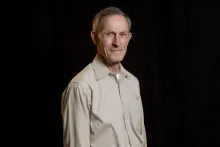
David Mills was born near Wallace, North Carolina, in 1939, where he grew up on a family farm. After high school he attended Ambassador College in Pasadena, California, and he graduated in 1962.
Since that time he has served as a minister of the Church in Washington, Florida, North Carolina, South Carolina, Oregon, West Virginia, and Virginia. He and his wife, Sandy, have been married since 1965 and they now live in Georgia.
David retired from the full-time ministry in 2015.
