
Robin S Webber
This transcript was generated by AI and may contain errors. It is provided to assist those who may not be able to listen to the message.
Well, I do want to build upon coming off of the General Conference of Elders and address what was spoken about there, and then develop it perhaps at a different and a higher level as we move forward not only here in Redlands, but also throughout our circuit and hopefully through the United Church of God as a whole. The theme of this year's General Conference was creating an environment for growth. And I think it's a very worthwhile theme, and it's not one that's just going to come and go.
I think the thought moving forward is that this is actually going to be a theme that is going to be moving down through the year. Sometimes we've had themes in 2006, 2008, and 1998. It's kind of a one-year theme, and you kind of move on. But when you think about creating an environment for growth, this is what is set before all of us and what God would desire individually, as Christians, as collectively, as members of the body of Christ.
And as an organization entitled The United Church of God, which is an instrument within that body. I'd like to mention a few things about it, lest it become misconstrued what we are talking about when it comes to creating an environment for growth. We're not talking about necessarily new programs or gimmicks or systematic techniques or something that perhaps we've never done. Yes, there'll be this program or that program. We're not simply talking about more activity for activity's sake or busy work, more reports to a home office or more phone calls to the pastor.
We're talking about something that is very special and wonderful. And that's why I'm so pleased that I'm able to bring you this message today, because the title of this message is creating a spiritual environment for growth. Creating a spiritual environment for growth. Because, after all, when we read the Scriptures, we recognize that only God adds to the church. That's God's call. Now, we have to be disciples. We have to be fishermen of men. We do have to have an atmosphere of which you've often heard me say that we have open doors, open Bibles, and open hearts.
And that is all well and good. But again, it is God that adds to the church. And the growing of the church that we're talking about is the growing of our own individual hearts and a collective offering before God as a congregation and as an instrument within the body of Christ. And that is what I'd like to talk to you about. Why do I mention that? And why do I say that the title of this message is creating a spiritual environment for growth?
Let's understand the environment that we're talking about. I'm going to bring it down to a common denominator in a second. Let's understand. This has happened before. Creating an environment for growth of and by itself is as old as the beginning of time. Say, how can you say that, Mr. Weber? Well, I'm going to tell you how. And that is, just go to the Garden of Eden. The Garden of Eden was an environment for growth. It was created as an environment for growth. And God put Adam and Eve in this wondrous oasis, as it were, with trees, with abundance.
It said that they could have everything that they wanted to have save one thing. But we know the rest of the story. Thus, we understand something. Creating an environment for growth is not that which is on the exterior. Godliness does not work from the outside in. It is something that is in the heart. It is in the inner man, and it is in the inner woman. Creating a spiritual environment for growth, if we just leave it at the outside environment, you and I will fail as individuals, as a congregation, and as a church.
What we're really talking about when we're discussing creating an environment for spiritual growth is the culture of the heart. The culture of the heart. And it's very interesting that God speaks to this, if you'll join me, over in Ezekiel 36. In Ezekiel 36, discussing a time when God would begin a spiritual creation within man. We kind of find this over in Ezekiel. Not kind of, we do. Ezekiel 36. Join me if you would there, please. In Ezekiel 36, let's notice verse 26. I will give you a new heart and put a new spirit within you. And I will take that heart of stone out of your flesh and give you a heart of flesh.
And I will put my spirit within you and cause you to walk in my statutes, and you will keep my judgments and do them. So we recognize that what God said he would do is that we give us a new spirit and he would give us a new heart. Now, this is very important when you recognize creating a spiritual environment for growth. Who is creating it? It's not something that you and I do, even by ourselves. It's apart from us. And yet we cooperate with it. Join me if you would, could we?
Let's turn to Psalm 104, verse 30. In Psalm 104, verse 30. And let's look at here. It says, You send forth your spirit. So God, being spirit and being on his throne, nonetheless, also sends forth his spirit. And they are created. And God is still in the business of creation. That's even what the Sabbath day is about.
God did not stop working. After six days, what he did was he stopped his, as it were, his physical labor, dealing with the physical creation. And the Seventh-day Sabbath reminds us that God is still performing a work in us that is yet to be, not only for us, it's a spiritual work. And to recognize, when you think about it, that at Eden there was a physical creation, and it was indeed made out of the dust. God is now creating a spiritual creation, a spiritual body, after the life-giving spirit of that second Adam, Jesus Christ.
And thus we recognize, if you'll join me in Romans 8 and verse 14, as we build upon this, in Romans 8 and verse 14, again, speaking of the spirit. Because this is going to play a very powerful point in this discussion. It's not by our might, it's not by our power that we create a spiritual environment for growth.
In Romans 8 and verse 14, again, let's notice, for as many as are led by the Spirit of God, these are the sons of God.
So what we're being led to understand and to develop, again, individually as Christians, collectively as members of the body of Christ, and selectively as an instrument in that body of Christ, called the United Church of God, is to create a spiritual environment for growth.
And I'd like to talk about that a little bit today, and it's important to recognize what we're talking about.
Let's discuss for a moment how important it is to create a spiritual environment and to understand what is upon us.
Let us speak bluntly about Christianity over the last 2,000 years.
It has not always been a pretty picture. We have a marvelous Savior. We have an incredible revelation.
We've been given something wonderful. It's called a gift. It's called salvation. It's called the gift of the Holy Spirit.
It's called the opportunity to have a transformed life. Sounds very inviting, doesn't it?
And many, many people have desired that. And yet, we've also recognized that self has gotten in the way.
It's not just something that's happened recently, and you maybe are calling back of this or calling back at that or thinking about this situation in our lifetime.
This has been happening for 2,000 years. In fact, it began right at the table of the New Testament Passover on that night in which Jesus Christ, our Savior, was betrayed.
That we had men falling apart. We had men putting self on the table rather than love.
We had men trying to divide up as to how the kingdom would be after Jesus went through his experience.
People were wanting to be in charge. People were wanting to be important. People were not wanting to lay aside themselves.
They were thinking very much of themselves as they thought that Messiah was bringing the kingdom.
And when you bring a kingdom, there is what? Positions. And they were at one another.
I know that Jesus on that night was creating a spiritual environment for growth, but his disciples did not get it.
They were not humble.
Let's take this a step forward and recognize the challenge that was upon the Apostle Paul as he traveled from the Holy Land to Antioch to Asia Minor, later to Greece, later on to other parts of the world.
He came to recognize something that perhaps others, because of a lack of personal experience that he had and the exposure he had to so many, is simply this.
That God was calling all sorts of people all around the world. All around the world with diverse backgrounds, different languages.
In the world of 50 or 60 AD, the world was already beginning to divide between the Latin tongue in the West and the Greek tongue in the East.
We had the Greek, we had the Jew. We had the slave, we had the free.
You say, how big was slavery? One out of four people in the Roman Empire is thought to have been a slave.
We had men, we had women.
Barbarian, we had Greek.
And yet God was reaching out and calling so many different people from many different backgrounds that this would, of and by itself, not be the way to start a company with that much diversity.
And we know that it pulled, and we know that it tugged, and we know that there were challenges. We knew that there were some that did not want others into, quote-unquote, what God was doing through Jesus Christ.
We recognize that there was this collision course of self in so many ways between the vegetable eaters and the meat eaters, the married and the single, the Greek and the Jew, the barbarian and the Scythian, and we can go on and on and on and on.
And to recognize, again, that this was not necessarily of and by itself humanly destined to continue.
But we do know what Jesus said in the book of Matthew, that he said that my church will prevail, and even the gates of hell will not be able to stand up against it.
How is that? How does that occur? How are you and I able to, by the help of God's Spirit, to create a spiritual environment, underlined with the culture of heart, to produce growth? Are we left without a roadmap? Because we recognize that in this room alone, as I look around, that we have people that have been in this way of life for 60 years, some longer. We have some that have been here for six months, six years. We have people that are from the high desert. We have people from the low desert. We probably have people from the mid desert. Tell me where that is.
We have people from the San Bernardino Mountains. We have people from suburbia. We have people from the ranch land. We have people of different races, different genders, different economic backgrounds. Do I dare go on? We even have people that have different interests as they read the Bible. We have people, yes, in this room, that have different understandings of different items that are in the Bible. Therefore, how would we as a congregation here, or in San Diego, and or in Los Angeles and Bakersfield, how do we create a spiritual environment for growth?
It starts with the culture of the heart. I'm here to encourage you today that Paul, a traveler of the ancient world, that probably bumped into as many diverse people as anybody could through God's inspiration, lays that out for us. Before I go to that verse, join me if you would, in 1 Corinthians 10. In 1 Corinthians 10, let's pick up the thought here.
In 1 Corinthians 10, let's pick up the thought if we could in verse 17. Now, breaking into context, this is Paul discussing the New Testament Passover. He's discussing a principle that comes out of partaking of that bread, which we partake of in renewal of the covenant. But there's something very profound here. Let's notice what it says.
For we, collectively, for we, though many, are one bread and one body, for we all partake of that one bread. We, being many, are one bread and one body. And it's not only what we partake upon, but it's what we center on the rest of the year and the rest of our life. Are you with me so far? And to recognize, if we want to look at our differences and those things that separate us, we cannot create a spiritual environment for growth.
But if we look at that, which we have in common, that God holds up as the trunk of the tree of commonality, we can create that spiritual environment for growth. I've often quoted an old German proverb. I'd like to share it with you. The first speaker comes from German heritage. The second speaker comes from German heritage.
So we will share it. And that is... Are you ready for it? It's very simple. The main thing is that the main thing always remains the main thing. Say, wow, how profound. Sounds like there's a lot of means in that. Yes, let me repeat that one more time. The main thing is that the main thing always remains the main thing. Are you ready to hear about what the main thing is and the roadmap forward in your life, my life, our congregation, our circuit, the United Church of God, as to the roadmap of what that main thing is and how God's Spirit in us can create a spiritual environment for growth.
Let's turn to Ephesians 4, because that's what we're going to center on for the remainder of the message. In Ephesians 4, again remembering this background that the Apostle Paul had and the number of people that he'd come into contact with, different walks, different languages. You say different languages, different dialects. How many languages did Paul speak? Most likely he spoke Hebrew, he spoke Aramaic, he spoke Greek, he probably also spoke a local dialect out of Cilicia.
Where's that? That's where Tarsus is. Cilicia. So he had a lot rattling around in that brain of his, right? And yet, God's inspiration said, this is what you need to center on if you're going to continue to allow my work to be in you individually. And yes, my work in you collectively as a congregation or an instrument within the body of Christ. And so let's take a look at this in Ephesians 4. I therefore, the prisoner of the Lord, beseech you to walk worthy of the calling with which you were called.
Now, a couple thoughts here as we begin. We're only going to go through six verses, so don't worry about this. It's not going to be long. We're just going to go through these six verses. And what we're going to do in this is we're going to focus on each and every one of these verses. But notice what it says just in the beginning, I therefore the prisoner of the Lord. What's fascinating about the book of Ephesians? Are you with me out there?
The fascinating about this statement is this. The Apostle Paul never said that he was the prisoner of Rome. He did not look at his life as being man-made or man-hindered. He says, I am the Lord's prisoner. As a Christian, what occurs in my life is for a purpose. That God is working his work in me.
And I am not chained by man, but this is for a purpose to glorify God. Beyond that point, notice what he says. I beseech you. I urge you. Urge is what is used in another trance. I urge you to walk worthy of the calling which you were called. Today on this Sabbath day, we need to be reminded that we didn't join the body of Christ. We didn't join ourselves to the Ecclesia. God called us. God always brings it back that he started it.
The communication came from him to us as the Spirit began to guide us. It's not, well, I'm looking for a church. I want to find somebody that agrees with me. I thought of all of this. So often when we open up the Scriptures, you know that your two eyes, if you do have two eyes, your two eyes, I didn't say anybody has three eyes, but in another congregation I know a man that has one eye, so I have to be careful about that, is that it's not, well, how often have we turned to Scripture and we see something very clearly, and yet somebody else doesn't see it clearly?
And we know how often have we done this? It's right here! And I'm sure some of you, early on, were even more animated than that. It's right here! And as years go along, though, we can dispel the miracle that God worked in our mind. No, it's a calling, which you were called. But what is the calling about? What is the overall calling about? What is the book of Ephesians about? Because this speaks to creating a spiritual environment for growth. This gives us the goal. This gives us the target. Join me if you would in Ephesians 1. Because we're going to kind of come up to the specific purpose reason of why this book was written and what the calling is and what is the destination and the manner of the walk.
It comes back here to Ephesians 1, verse 7. To Him we have redemption through His blood, the forgiveness of sins, according to the riches of His grace, which He made to abound towards us in all wisdom and prudence. Having made known to us, as it says in the Greek, the Mysterion, or the mystery, or the revelation of His will, His will, His purpose, what God hath wrought according to His good pleasure.
So this isn't just about purpose. God has joy in what He is doing, which He purposed in Himself. It wasn't your idea. It wasn't my idea. We would have done it completely different because we're in this sphere of the creation. He's uncreated. That in the dispensation of the fullness of the times, He might gather together in one all things in Christ, both which are in heaven and which are on earth in Him.
That's it. That's the big plan. That's the revelation. Paul most likely did have a special vision about this. It might have occurred those years that he was a way that he speaks about. After Jerusalem, John does not seem to be the only person that had a revelation from Christ. Somehow, God opened up the mind of Paul. It's as if he looked through time and he saw that the purpose and the plan of God was to bring this disparity of Greek and Jew, man and woman, slave and free. All that has occurred since, that all was moving towards this oneness, this unity before the Father.
And it went through the doorway, the connector of Christ, the great Redeemer, the great Reconciler. God the Father's assigned individual to bring things together in what? Oneness through Christ.
That's the revelation. Pretty clear here. That God is in the purpose of creating a way back to Eden. That which was rejected by humanity at the beginning. And that a door might open. And that, once again, humanity might experience that creation, that spiritual environment, that gives the ultimate growth through the Tree of Life. Now, how does that affect you and me? How can we individually, are you with me? As an individual witness. Not necessarily knocking on doors, as was mentioned in the first message, but as people come into contact with us, neighbors, family, employers, employees, schoolmates, brethren in our congregation, brethren that are in other places at this time, that when they come into contact with us, do they see an individual that is bringing people together? Or separating people by what they speak about and what they focus on? What is our witness? You see, at the end of the day, when you look at Ephesians, it is about reconciliation, of a creation away from the Creator. And how can we point to the great reconciler? How do we even dare point to the great reconciler if we ourselves are not reconciled one to another? Our witness is shallow, and our words are cheap. This is the culture of the heart that I speak about. The culture of the heart that God wants to fill with His Spirit and with His ways. And the culture that is met out then here in Ephesians 4. Let's go through it. It's going to be very simple. I'll try not to spend too much time on any one point, because this message is not the end of the story, but the beginning of your further study, and inculcating these words. We're going to look at five specific steps of being able to walk worthy of the calling, which you were called, and we're going to look at seven focal points that draw us together as one body. That ties us, brethren, so tight.
That whoever comes through this door, or bumps into your life at home, or bumps into your life at work, will know that there's something unique, and that they have somehow entered a spiritual environment for growth. Notice what it says here. There's just five key steps that it begins with. It says, to walk worthy of the calling, which you were called. Let's notice what it says.
In the New King James English, it says, with all lowliness. Other translations call it humility. Let's put down number one. The first step is humility. Now, you say, I have heard so many sermons on humility. I hope Weber doesn't spend too much time on this, because I think I have it down. At nighttime, I say, God, thank you for allowing me to be so humble. If you have given that prayer, you need to go back to work because you're not too humble.
But what we don't recognize here, especially with the Greek background, is that the word humble, or the virtue of humility, was looked down in the Greek world. It was thought of being something not to be. It was basically speaking of an individual that was cringing, less than worthy, servile, and slavish. And yet, through the word of God and the Spirit of God, God took that which was rejected by the world of antiquity. I want to share something with you. It was the very first step on the walk that we must be humble. You say, what is humility? Humility is having an accurate measurement of yourself in relationship to Jesus Christ and to the will of God. Being humble means you look at yourself square in the mirror, and you see what you are of and by yourself.
We are basically a bag of dust on two legs. I know you've never thought of yourself that way. Just think of it. Some of you ladies that change your sweepers at home. You know how much dust and how much whatever is in it. I don't know. You all try to run a clean home, but you live in Riverside County or San Bernardino County. There's a lot of dust out here. And you know how full that sweep is. Just think of yourself as that bag of dust with two little legs underneath. I never thought of myself that way. That's what we are. Dust to dust and ashes to ashes. We're made out of dirt. And yet, we have this picture of ourselves. We have to have an accurate picture of ourselves. And God gives that to us as He begins to work with us, because it's only to the humble that He gives grace. And then, as we begin to experience that grace, we line ourselves up next to the example of Jesus Christ. And we find that there is a beauty in Him that makes all of us look ugly. And we say we want to be like Him. And then we come to recognize that God has a will and God has a purpose. And we align ourselves and we surrender to that will. And indeed, we become humble. The first point I want to give you under humility is this. It's going to be very important as we build a point five. Humility merits the death of self. Self-will.
How different from this narcissistic world that we live in today, where everybody is taking what? With their little cameras? Selfies. Now, don't go out of here and feel bad if you take a picture of yourself. But I'm saying there's a culture. There's a focus. Let's see where this leads then as we move forward. So you recognize that what the world rejected, God put first on the step to have an accurate measurement of yourself. What does God say that my ways are not your ways and my thoughts are not your thoughts? Let's look at the next one. Gentleness. Gentleness. In other translations, that can be referred to as meekness. That means to the term here, gentleness or meekness, when you ascribe it and you get down into all of the Greek, is simply this. It's a person that has a balance of doing the right thing at the right time and the right way and is measured. Is yielded. Is yielded. Now, let me come back a second. You might want to jot this down. It's an individual that does the right thing at the right time and the right way, but I'm going to add one more. That's about the culture of the heart with the right motives. Very important to understand the right motives. A lot of people do things because they're working off of their past, their family genes, what they think they ought to do. They're working off of, I'll scratch their back if they scratch my back. This is completely different. This gentleness or this meekness that is being spoken about, this praeos, as it says in the Greek, was used at times in speaking of domesticated animals. It's spoken of in extra-biblical literature as speaking to the war horses that were on the chariots of Pharaoh. They were called to be meek. You say, how can a war horse be meek that's pulling a chariot into battle? What it's speaking about is that that war horse was tied to the reins of the master charioteer. As the charioteer let out, it felt that rein and it let out. Then when that rein came back in or moved to the left or moved to the right, there was this response from a higher source.
That's what we did when we recalled and accepted that calling, that we said that we were going to die to self and thus strive to express humility. We said that we would be gentle or we would be meek. Let's take it a little bit further here. It says, with long suffering, and I'm really glad that Mr. Willing brought this up, long suffering. That means to suffer. I know this sounds elementary to suffer long. Sometimes we like to measure our suffering. God, I'm willing to suffer. And then when we think we've suffered enough, then we say, times up! You know, it's like we're normally patient till we're impatient. Times up! What is being spoken about here, and I'll share this thought with you, is that it was often related to, in days of old, in the Greek language, speaking of their most unfavored people, the Romans. It was a term that was often used in the Greek, dealing with the Roman army. Most of us often think that Rome lasted for 700 years because they were the best warriors. They were not the best warriors, always, but they were the most adaptable warriors and learned from the battles that they fought.
The one thing that allowed the Romans to proceed was simply this. They would lose battle after battle after battle after battle, but they refused to win, lose the war. You don't believe me? Just ask Hannibal. When you think of the great battles that were on the Italian peninsula of Cana, when you think of Lake Trasimen, where the Romans would lose 40,000 men, they would lose 50,000 men, and Hannibal and the Punic forces were on that peninsula for 20 years, but the gates of Rome never opened up to Hannibal. Ultimately, Hannibal was defeated in his neighborhood and not on the Italian peninsula.
We think of, again, the example of King Pyrus of Epictetus, one of the great Greek kings at around 200 B.C. or so. He won a war on the Italian peninsula, and he said, you know, with one more victory like this, I don't know what I'm going to do. That's where the term comes, Pyrrhic victory, or Pyrrhic victory, that you can win a battle, but you know that ultimately you're going to lose the war. The Romans had a grit. They had a purpose. They had a devotion to the Republic, and to recognize that no matter what came, they were going to hold on. That's the long suffering we have, because we have the vision of Ephesians 1, that ultimately, if not in our day and in our time, that God the Father, through Jesus Christ, is going to bring everything into oneness, and to recognize that there is a kingdom, and that there is salvation, and beyond that salvation there is reward, and that some of the things, as Mr. Willing mentioned in his fine first message, there are things that are happening in our life, and they seem to go on and on. God is working with us. You say, but God, don't you realize the bell rang, class is over, I've got the lesson. That's what you think. God has more homework for you to understand. And therefore, we recognize that establishing or creating an environment for spiritual growth takes long suffering. And notice what it says here, the fourth step, then, is bearing with one another in love. To bear means you're actually carrying somebody else, not just yourself. We're not just simply called for personal salvation. It's not just about me, but that we're willing to be a servant to others. Again, it's very interesting, much like the word humility, that the early church had to go searching for a word that would describe the love that is spoken about here. It's not philia. It's not brotherly affection. It's not eros or erotic or romantic affection. It was not stoage, which is family affection. There wasn't really a word they had to...are you with me? They had to really stretch, almost coin a phrase. Because why? Because it's not of this world, what was being spoken about. It was unearthly, because this love was not about feelings. This love of and by itself was not about emotions. It was about will. The will of God. The purpose of God. The action of God. Even without response at the time, for it says in Romans 5, verse 8 through 10, that God loved us while we were yet in sin. Thus we look here and we say, we're to bear with one another in love. Now, what is very important then, as we wrap up these first five steps, is simply this. It says, endeavoring. Doesn't mean we've done it. It doesn't mean that we're there. I think all of us...can I speak as a friend? I think all of us echo the words of the Apostle Paul in Philippians 3, where it says, you know, I have not obtained yet, but nevertheless I press forward with these aspects of humility, of meekness, of long-suffering, of love. Endeavoring to keep, notice, the bond, endeavoring to keep the unity of the Spirit, not Robin Webber, not Brenda, not Dennis, not Larry, not Ken, but endeavoring to keep the unity of the Spirit. And notice what it says in the bond of peace. Now, very important, and that is simply this. Peace is not possible at all without the first four steps. Why is that? Those first four steps, dealing with humility, dealing with meekness, dealing with long-suffering, and dealing with love, are all predicated on one vital factor. I'd like to share it with you.
The death of self. Each of those factors of and by themselves are underlined with one factor, and that is the death of self in relationship to Christ then being able to live in us.
Thus, peace is a byproduct of all of that. The Scriptures speak of a peace that Jesus Christ said that He would leave with us out of John 14. The Apostle Paul in his words says that there is a peace that passes understanding. That means a peace that is better than the facts that are before us.
That takes faith. That takes responding to the calling. That takes the lead of the Spirit.
I recognize what I'm talking about is not easy stuff. God knows that. Christ knows that.
Yet, the words of the Apostle Paul in Romans 8 says that there is nothing that can separate us from that love of Jesus Christ.
Now, with that thought, then, we focus that there is not only that which we put away, which is self. God does not operate in a vacuum.
As we die to self, we recognize, as it says in Galatians 2, verse 20, that, nevertheless, not I, but Christ in me, who lives in me and dwells in me, that things begin to happen.
Now, I want to go one step further when it comes to creating a spiritual environment for growth.
Let's go back to this point of recognizing the diversity of the body of Christ in the first century AD, and the diversity that is in this room.
The diversity.
Men and women.
Ages.
Languages.
Races.
Places of origin.
Economic status.
Do you want me to go on another hour? I think we've got the point.
God knew this, and he spoke to us through the words of the Apostle Paul.
And even at times, things that we look at the Bible, and perhaps to a degree, might have a different thought on things.
What keeps us together as a body?
What keeps us together, creating a spiritual environment for growth, first and foremost for ourselves, and then for others that come into our midst?
It's spoken very clearly here, and there are just seven key steps. It's going to go very quickly. Be assured.
Let's notice what it says.
Notice the number.
And the number does not center on three or four or five. The number... It's like a...
Just like the blacksmith pounding out the metal on an anvil. There's a rhythm. There's a rhythm.
And the rhythm of the unity before the Father in Christ is about one.
One. Let's notice what it says here.
There is one body.
That's a spiritual body.
That's a spiritual creation.
As it says in Ephesians 1-20-22, it says that Jesus is the head of the church, and He is the head of the body.
I want to assure you as your pastor and as a fellow Christian, I believe that with all of my heart and all of my soul. That's the only thing that gives me breath and gives me hope for the ministry and the pastorship I've had these many years.
While I respect men, while I strive to honor men, as you know I have, I firmly believe and I look at Jesus Christ, being our heavenly Apostle. He is the head of the church. He is the head of the body. But how can that head perform its will if the body is divided? How can the church perform that will if the body is divided? You know, the arm going off here, then the arm going off here, then my leg going over here across the left leg. And wonder if the body is doing all of its own thing. The body has got to follow what the head is doing. Now, you and I can move away from this room and we can talk about men all day long. And I realize at times, I as a person and the personality might be talked about at a dinner table. And I'm accustomed to that all these years, nearly over 35-37 years in the ministry. I realize at times that people will talk about Robin Webber at a table. Please have at it and that's good. But you can talk about me and or I can serve you up a better plate. You can talk about Jesus Christ and you can talk about God the Father and what they're doing in your life. Because after all, there is one body. And when we have that focus point and we focus on what God is doing, rather than simply what a man and or men and or women in their relationship in the church are doing, if we will rise to the level of what we focus on. And there is one body, one body that has one head. Notice what it says, point number two, one spirit. The word spirit there is numa, which means breath. There is one breath that moves through that body. And we know that the Holy Spirit, as we think of Pentecost coming up, speaks of spirit, speaks of numa, speaks of breath.
And a body cannot live without breath emanating through every element of that body. As our own mission statement states in the United Church of God, we are a church that is led by that breath, led by that spirit.
Those disciples that tarried in Jerusalem, to use the Old English word, and waited. They waited, and they waited. But you know what? Their wait was with expectation.
The one thing that created an environment for spiritual growth was expectation. Because Jesus, before He left, said to His followers and those that were dear to Him, I'm going to go, but I'm going to send you another comforter. I'm going to send you another, I'm going to send you a helper. And they realized that the rabbi, the master, had said, God is going to send them something. There was such an expectation. And that is where the body of Christ needs to be today, that we need to be an expectant people, just like Peter and Bartholomew, and John, and all of them, to be expectant.
That God has given us a great promise. And that that breath has to flow through the entire body. It can't be short-circuited, because it's not by our might, it's not by our power, but it's by your Spirit, as it says in Zechariah 4 and verse 6. Just as you were called in one hope of your calling, point 3, a hope of your calling. What is that hope? When I say, what is the hope of my calling?
The hope of my calling is that I have been redeemed, but that I myself have not been redeemed to God alone, but that God has a purpose, has a plan, and has revealed it in the Bible, that it is that no person, no person should be separated from Him. That's His desire. The Bible speaks to me of universal opportunity, that every knee, and there is a choice, that every knee might bow, but God is going to allow that environment to occur in the future, to where He's going to reach out to everybody.
Redemption is the hope. Number four, one Lord. One Lord. Not two Lords, not three Lords, not four Lords. One of the great anthems of the early church was simply this, Jesus Christ is Lord, and that every knee might bow to Jesus Christ. That word, kyrios, in the Greek language, spoke of the Master-Servant relationship. It also spoke of the term that was used for Caesar. King. It speaks of a surrender. It speaks of a death of self and surrendering to wherever God, through His Son, might lead us.
It speaks of one faith. Point number five. One faith. Faith in what? Early on, the term faith was not so much a rolodex of doctrine, but it was faith that God had met His promise, sent a Redeemer kinsman, as we discussed a couple weeks ago, with the story of Ruth, and that God sent His Son into this world that none should perish.
Now, once you understand that, then you begin doing what the King prescribes in the book, and you follow through. You don't separate the book, you take the book, you take the Constitution of the King, and all that is in it, and you begin to live it. But again, it's the death of self, and the surrender to one Lord. One baptism. One baptism. Most of us in this room have been baptized, have we not? All of us made a confession before God, with a witness, whether it was one or others listening on, that Jesus Christ, that we have accepted Him, we have accepted that sacrifice, that gift of the Father.
We have repented of our sins, and we've made that confession that we broke God's holy righteous law. We did! Not just everybody else pointing at everybody else, but we did. And that, not only repented of our sins, but what we are apart from God. We made that confession. Then notice what it says here at the end, point number seven, focal point. That brings us together. One God, and Father of all, who is above all, and through all, and in you all. It's very interesting when you look at verse six, focal point number seven. Speaking of one Father. It's very interesting, God could have said, I am omnipotent, I am omnipresent, I am omniscient, I am all of this, and I am all of that.
The way that God inspires Paul to introduce Him, those things that tie you and me together, He starts with God's love. We have one Father. Why is that so important? Think of the children of Israel when they went to meet Joseph, Viceroy of Egypt. They didn't know it was him. And if there were ever twelve rascals, if there were ever a dirty dozen, if there was ever a family that was Borgia-like, because after all they sold one of their siblings into slavery, and yet when they came before this man that they did not recognize, as bad as they were, they were horrible.
All you have to do is read the book of Genesis. They were a crew, a motley crew. I'm not talking about the rock and roll group. What did they say? The first introduction that they gave to Joseph was this. We have a Father. Did you know that? There was a bond. As diverse as they were, there was a bond. That's why the inspiration of the Bible says, notice again what it says, One God and Father of all, my Father, your Father, and a Father that's going to be to many, many people yet to come, who is above all, that speaks to his sovereignty, and through all, that speaks of his omnipresence, and in you all, recognizing that God has not just simply wound up the world and to let it to go, but he has a purpose and he has a plan.
I want to share something with you as we, as a congregation, move forward off of this general conference, and we say, how can you and I create a spiritual environment for growth? I suggest it's right here. We don't have to come up with a new plan. We don't have to come up with gimmicks. We have to come up with surrendering ourselves. Teddy Roosevelt, a great president, once had a line. He says, when a man's fight starts with himself, he has started a fight that's worth having.
Members of the Church of God need to start not looking at everybody else and all around the world. We need to look at ourselves, and we need to ask ourselves, are we allowing God's Spirit to create a spiritual environment of growth in us? We want to grow, not only spiritually. I would like to see this room filled up. But as we go to Pentecost, let's understand something. And this is what I want to leave you with. As I've shared these five steps of a walk that is worthy, and the seven focal points that we need to be talking about is this. I submit this to you as we conclude. On that day of Pentecost, 31 A.D., a man got up of Galilee, and 3,000 people came to God through Christ that day and were baptized. I have a question for you. May I? Was it the Scripture that he quoted? Was that alone what drew those people? What do you think drew those people? Is it what he said or what they saw on stage? Transformed lives. Talk is cheap. Knowledge is of no use unless put into action. I submit to you that Peter spoke to those men that day that know that they had blown it. He spoke as one dead man to other dead men. He knew that he was dead in his sins. He knew that he had blown it. He knew that he had denied the Lord three times. So he had a relatability to those people that when they say, Oh, no, what have we done? What shall we do? And then one of the greatest lines out of the entire Bible. When there was utter hopelessness, when there was no path forward, God inspired Peter and said, Repent, be baptized, and receive the gift of the Holy Spirit. Brethren, when a man's fight begins with himself, he started a good fight, and God's Spirit will lead us through that to the victory. If we want to grow in Redlands, if we want to grow as the United Church of God spiritually, and that we can be a witness to this world, we need to look at Ephesians 4 with new eyes, with open eyes, that will create not only a language, but an accent, and an impact upon this world that will be irresistible to those that God is calling. Let's take this home. Let's take it to heart. Let's think upon it.
When we speak and come together with one another, let's allow this to be our topics. Let this be our language. When everything else seems to be pulling us apart, just as this world is being pulled apart today, let's remember we have more in common spiritually than we have in difference. That is the lesson we learn from God through the Apostle Paul.
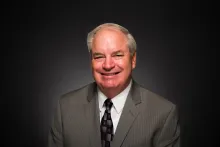
Robin Webber was born in Chicago, Illinois, in 1951, but has lived most of his life in California. He has been a part of the Church of God community since 1963. He attended Ambassador College in Pasadena from 1969-1973. He majored in theology and history.
Mr. Webber's interest remains in the study of history, socio-economics and literature. Over the years, he has offered his services to museums as a docent to share his enthusiasm and passions regarding these areas of expertise.
When time permits, he loves to go mountain biking on nearby ranch land and meet his wife as she hikes toward him.
