
Robin S Webber
This transcript was generated by AI and may contain errors. It is provided to assist those who may not be able to listen to the message.
I want to say thank you very much to the Hymn Choir, beautiful hymn. I know we're always very grateful to all of our musicians that make the Sabbath day even more special with the gift that God has given them. As I mentioned during the announcements here in the United Church of God Los Angeles, we are in the midst of a series entitled, God's Will for the Body of Christ. Join me if you would. Let's open up our Bibles on the Sabbath day and turn with me, if you would, to Ephesians 1. And again, let's notice what that will is.
In Ephesians 1 and verse 9, we are reminded, and it is revealed what the will is, that having made known to us the mystery of His will, according to His good pleasure which He purposed in Himself, that in the dispensation of the fullness of times, that He might gather together in one all things in Christ, both which are in heaven and which are in earth in Him.
Thus, the will of God is declared. We've been going through a number of Sabbaths together and discussing this will as we go through Ephesians 1, and Ephesians 2, and Ephesians 3. And now we come to Ephesians 4. And Ephesians 4 is a transitional chapter in understanding what the will of God is for the body of Christ. Because in Ephesians 1, and 2, and 3, it is actually an exposition, which is of the eternal purpose of God, which is mind expanding, and the truths that are revealed are incredible.
And thus, we remember hearing Paul's words of praise and adoration and exhortation, that you and I might be able to understand them. But now we come to Ephesians 4, and it is a different form of exhortation. A little bit like what Mr. Josephic was mentioning in the first message, that it goes from simply praising and adoring what God is doing, to now where God is going to, in His love, meddle with us a little bit, and remind us because of what He has done for us, therefore, what we are in turn to do for Him.
Ephesians 1 and 3 simply tells us what God has done and is doing. Ephesians 4 now tells us what we must be for Him, and likewise, what we must do. Because with awesome privilege comes awesome responsibility. Now, when I say the word awesome, please don't get too scared, because we are not alone in the awesome. And that's where God and Jesus Christ and His Spirit help us.
Because when Jesus Christ came to this earth, He lifted the bars so very, very high, that it could not be lifted any higher, because we can't simply do it as human beings. But that's why we have a Father above. That's why we have an older brother at His right hand. And that's why God has given us the Holy Spirit. Last time I was with you, we discussed about all of us coming underneath the name of God Almighty, God the Father.
A name that is an umbrella over all of us, this body of Christ, these people that He has called down through the ages to be members of His Kingdom, to be citizens of heaven. To, in that sense, be family. And not only that, to be living and breathing timber and stones within a holy spiritual temple that He is developing. The whole book of Ephesians is about that new society, that new creation that God is developing.
And the new society has new standards. And that's what I'd like to get across to you today. The new society that you and I have been invited into has new standards.
And those new standards are not human. Those new standards are not natural. But nonetheless, our loving Father above gives us standards to be a part of that society. Standards that move us from simply information and even inspiration to transformation. And that's what we're going to be talking about today. Transformation. As was mentioned earlier by Mr. Josephic, sometimes we have messages that talk about others or nations past or present or in the future.
And talking about this and talking about that as an almanac of information. But Christianity is not just about information. And it's not just simply about inspiration for a day or for an hour. Christianity at its base is about our transformation. Utilizing these new standards as you and I have been given the privilege by none other than God Almighty, God the Father by His calling, to be a part of a sacred society.
And thus, that is the title of this particular message today within this series. And that is simply this, a walk worthy of our calling. A walk worthy of our calling. And that's what we're going to move into. We're going to go through the first part of Ephesians 4.
And as we do, there are three elements that I want to share with you for you to look at. I'm going to bring them up front and then we're going to kind of move through them. But I'd like you to know what I'm going to be moving you through. Number one, we are going to see that as members of this new society and these new standards, the first standard is to pursue unity. To pursue unity with diligence. The second standard is to accept grace and gifts humbly. And the third standard is to grow in loving service to the body.
Simply three. We'll see how far we get today. And if not, I'll be back in two weeks and we will start right where I left off. Notice Ephesians 4 verse 1. I, and if you haven't been here, the I is none other than the apostle Paul. I, therefore, the prisoner of the Lord beseech you to walk worthy of the calling with which you were called. Did you notice the word right there? Therefore, therefore is the word that follows three chapters of exploring and God's self-declaration of exposing of what He is doing and desiring for humanity. And he lays it all out that all realms in heaven and in earth, Jew and Gentile, all that are might be brought before Him in acceptance through Jesus Christ. Those that had been bitter, those that had been far apart, those that were alienated, those that had no hope. This is the grand theme of Ephesians 1 through 3 and of what God is doing. Now Paul is going to say, by the way, with all of this said and done, therefore, now we pivot from what God is performing to what He desires us to accomplish on His behalf. I, therefore, which is the key word between the first three chapters and the rest of Ephesians, the prisoner of the Lord beseech you to walk worthy of the calling which you were called. Very interesting that you hear Paul who's practicing what he's preaching. Even while he is in prison, he knows that God, who is transcendent, is His Lord and is His master, that He is not lost, that God is not throwing away the keys, that Paul is there for a purpose, that in a Christian's life nothing is done by accident but by design. God knows exactly where He is. I am the prisoner of the Lord. He repeats the same phraseology that he used in Ephesians 3, verse 1, where he again said that he was a prisoner. He was never a prisoner of Caesar. He was not a prisoner of Rome. He was in God's service. He was in God's hands.
I, the prisoner of the Lord, beseech you. I implore you. I exhort you. I long that you might remember to walk worthy of the calling with which you were called. Please notice double emphasis on the word calling. And that's the first major item that I'd like to bring to your attention. And that is simply this. It's a calling. It's not a finding. I often have bumped into people, and I know what they mean. They perhaps don't have the language or they haven't come to the understanding, but somehow they think that somehow they finally have joined, quote unquote, a group, joined, quote unquote, a church that they can get along with or believes like they do. And I understand where they are at to a degree, but let's understand something. All of us that are in this room today, we are part of a calling, not a finding. God started the initiative. The calling comes from Him. And for His inexplicable sovereign reasons, He's reached down into our lives to love us, to work with us, to be patient with us, to groom us, to bring us along in this way.
As we respond to this calling, Paul says we are to walk worthy of such a calling. It's a theme that, if you'll come back with me in Ephesians 2, let's notice this for a moment. In Ephesians 2, he reminded the Gentiles that in Ephesians 2 and verse 2, in which you once walked according to the course of this world.
You practiced worldliness. You practiced a way of life apart from God. Of course, by the end of chapter 2 and in verse 10, we find other language where it mentions of a new walk and a different walk. A walk is biblical language for a lifestyle, for the way of life that you are invested in and how you are living. It's not talking about it.
A lot of people talk a good talk. Christianity is not about talking, it is about walking in a way. It is about responding to the Master's call when he says, follow me. And we hand over our past. We hand over our present. We hand over our future. We hand over all the keys in our pocket, even the one that's in our wall in case we get locked out of our car.
We hand over that key and we say, you're sovereign, you are Lord, and I've given my life to you. And I'm going to walk differently. I'm going to turn around. I was going this way, but now with not this finding, but this calling from above, I'm now going to begin to walk a new walk.
I'm going to become a member of a new society. I've been invited to be a citizen of the kingdom. I've been invited to be a member of the family of God. I've been invited to be a part of this spiritual temple that is being built down here below to glorify God. When we enter that new society, there are obligations. As with any society, any group that we enter, there are obligations. To not follow them is to discredit us and also to harm others because Christianity is never just simply about us, it's about others. Now we notice something that begins to happen. We begin to talk about something about what those obligations are that there might be that unity, that we might be worthy of your calling.
How can I be worthy before God Almighty? Because in a sense, I can't work my way up to salvation. I can't earn salvation as was brought out in the Bible class. But how do I respond? How do I live a life of return to God of what I can give Him so that He might be glorified? And that if Jesus is the head of the body, then what I do as the arms of the body, the legs of the body, the eyes of the body, the heart of the body, my living sacrifice of the body, how can it be pleasing to this God whose will is that all things that are both in heaven and earth come before Him in acceptance through Jesus Christ?
Good question. The answer is right here. Here is how we walk worthy of the calling. And we'll notice that we're going to look at certain qualities of members of the new society that represent and reflect that our walk matches Jesus Christ and that Christ is our head, that we have given Him our heart, that we have given Him our arms, that our feet are made and created to do His errands, and that we are going to serve Him.
Notice what it says. With all lowliness and gentleness, with long suffering, bearing with one another in love and endeavoring to keep the unity of the Spirit and the bond of peace. If we are to walk worthy of the calling, we have five stepping stones here that we need to discuss for a few minutes. Walking worthy, the Greek root of that word worthy is the same in play as worship.
It is to walk worthy. Worthyness means that you are creating a value or a weight commensurate with what you are receiving. How then do we create a life weight and a life sacrifice to give to this incredible God who has called us into a new society and to live a new walk? Number one, humility. And or as my new King James says, all lowliness. Let's talk about lowliness or humility for a moment. It's very interesting that we as Christians, people that read the book, people that come to church, we've heard about humility.
We can't hear about it enough. But it's a term that we're used to. But it's very interesting that it was a term that was not used much in the Hellenistic world. This was an unknown and unrewarded virtue in the Greek world. In fact, you can go to the commentaries. It was actually despised of the Hellenistic community. They loathed lowliness. They loathed humility. Isn't it fascinating that this is the first step, the foundational step, in walking the walk worthy of our calling? Lowliness, humility.
Let's talk about it for a moment. What is humility? Humility is seeing ourselves for what we are, apart from God. There's a measurement. Humility is seeing what we are, apart from God. The last chapter, the last time I was with you, Paul said that I am less than the least of all. His less was below less. Have you ever tried to go, have you ever tried to subtract zero from zero? But that's what Paul was saying in a lowly state of heart and mind, and to recognize that.
He is basically saying the best that I can do is boast of my zeroness.
When's the last time you heard that on talk radio?
When's that last time you heard that on the networks?
When is the last time you heard that on the shows that you fill yourself with at night time?
That are not walking this walk? That are not talking this talk?
And yet we feel that we can then walk this walk when we've been exposed to the will of God, and the love of God, and the sacrifice of God, and yet we want to imbibe of those that are not lowly, and those that are not humble.
Loneliness, the opposite thereof, is pride. Let's talk about that for a moment.
Pride. A Christian must recognize that pride is not always simply around the corner, but it's inside of us. It's inside of us. It was inside of caribs.
It was inside of covenant people of old, covenant people of the last 2,000 years.
Pride is something that is within all of us that we need to tackle.
See, what Paul understood is that God had commissioned him to go to the Gentiles, as well as the Jews of the diaspora, and that all of these people were going to kind of come together. And first of all, they were going to be family, like us, and friends. And they were going to get along because they'd been invited into this new society. But Paul knew, give it a year, give it a decade, that that jungle weed of pride would grow up somewhere and might divide families, might divide a church, might divide a congregation, might thwart individuals' witness of who their master really is.
And thus he said, if we're going to walk worthy of this calling, we must be transformed.
Humility is the death of pride.
Humility comes by having an awareness of who and what God is doing, and a focus on Jesus Christ, who is the ultimate person of humility that ever walked in the flesh.
And that awareness of God and that focus on Jesus Christ then allows us to accurately see ourselves.
I want to share something with you. May we talk?
May we meddle?
Pride destroys people.
Pride destroys marriages.
Pride destroys families.
Pride can destroy congregations and half.
Pride can destroy entire churches, organizations.
But I'm here to tell you that pride will never destroy the body of Christ.
Because God loves those that are truly aware of their calling and walking worthy of it, and following the life of Jesus Christ on lowliness and humbleness. Notice what it says here with all lowliness. Now the second step, gentleness.
He says that if you're going to walk worthy of your calling, there's going to be gentleness involved.
Gentleness means to be teachable. It means to be yielding.
One who is trained and broken, domesticated.
Not by man, but by God's Word and by God's Scripture.
That when you read God's Word, it convicts you.
And it changes your course, whether it's in Genesis or Deuteronomy, or even in Chronicles, which can sometimes seem a little boring with all those names. And yet there are action items in there that when we read it, we say, well, I didn't see that before. I've never known that before. And that convicts me. That changes my gait. That changes my step. That alters my walk.
Pharaoh's horses of old were called meek. Have you ever thought of war horses being meek?
Meek does not mean weak.
Gentle does not mean weak.
The war horses of Pharaoh were under the control of the charioteer. They were yielded. They were trained. They were educated in a way. You and I, they're not as horses, thank you. But as those made in God's image and likeness, and now have God's Spirit, are convicted by the training of God's Spirit and God's Scripture as they guide us and lead us and move us.
A person that is gentle is a person that has self-control.
But it's not really self-control, is it? It's God-control.
Because God's Spirit and the Scriptures, inspired of God, are directing and molding and shaping and transforming us. It's like this Bible. This Bible right here, you can look at it. This is a vision test. Can you see it, Larry? Okay, you failed. Okay, good. Just joking. But, you know, we can just look at the Bible as a bunch of words, or we can look at it as a tool of transformation. And we are the target.
I have found that over the years, that there are many people that come and fill pews just like this. And where they come to our seminars, they come to our open houses, you call it, whatever you want to over the 40 or 50 years that we've been involved into it. There's a lot of people that come to seek information. They come, they go.
There are some that will come, and but for a moment say, oh, wow, that's fantastic. And they are inspired.
But, you know, the heart of the flame, the quicker it burns out.
Then there are those that are lowly, that are humble, that are gentle, that feel the pressure of the Spirit, feel the caress of the Scripture, and respond to it. And they begin to change their lives as much as Saul did when he became Paul, and got up out of that dust, and began to recognize that God was working with them. Are you such a person? I don't think that Paul was God's favorite. I think God continues to do that. Oh, maybe not as dramatically as Paul. Not all of us are going to fall off of a donkey.
But all of us have to take a fall before we rise. God has to get our attention one way or the other to move us from this walk to another walk. Let's look at another verse here, or another step, third step. It says, not only that we are to be lowly, not only are we to be gentle, but we are to be long suffering.
Now, let's understand the context of what Paul's talking about. He's saying to be... Remember what I said last time? Christianity is not just about being an individual.
Christianity is not just simply about personal salvation.
Notice what I said, not only about, because we are called individually by God. And it is about a salvation, and you are a person.
But then God takes that individuality, and He places it within a mosaic.
Of cultures, and peoples, and genders, and backgrounds. And all of a sudden, Christianity, that seemed to be a little bit easier, now becomes what we might call a contact sport. Paul recognized that this is what was going to happen, that the body of Christ was going to come together in different places, in different houses, in different halls. And you know what? People that didn't know one another, and people that looked to sconce at one another, and people that bumped into one another, and people that seemed to be untrustworthy, and unloving.
And notice what he says, as members of the body of Christ, walk worthy of this calling that we must be, we must be long suffering.
One word for long suffering is this. We are to be persistent.
This term, long suffering, in the Greek, actually was often used regarding the Roman army. You may not be aware, but the Romans lost a lot of battles along the way.
The Romans lost many, many battles over the centuries, even though they were the greatest army on earth until this present age. But the Romans rarely lost a war.
If you don't think so, ask somebody named Hannibal.
For 20 years, Hannibal and the Punic forces went up and down Italy and devastated Roman armies and pillaged cities, but they never took Rome.
And the Romans would lose 50,000 to 60,000 people at given battles, like at Cana or Lake Casta Mion, different battles that were in history. But they always came back. They were persistent. They were, here's the word, they were stubborn.
And that is what God is telling you and me as Christians. We need to have the same persistency as a spiritual army performing God's will in our life.
To be persistent.
To be stubborn.
To know that the victory is won.
That Christ, the captain of our salvation, is in charge. Only the details have to be worked out down here below, with faith and confidence. And not only in our own plight, but the reality here. Remember, he's talking about a body, not just individuals, is that you and I need to be persistent with one another and not give up on one another.
We are to be persistent with the other members of the body of Christ.
And not write them off at the first strikeout.
Recognizing that God may be doing something that you and I simply do not understand at this moment.
Notice then what it says. The force that bearing with one another in love.
Bearing with one another in love. Now we go from head knowledge to actuality.
We've gone from mental passiveness to where we are now in the game. And it says bearing with one another in love. There can be no thought other than this is centering on the cross. And bearing of a cross. Bearing of one another's weights in the body of Christ.
Bearing with love.
We go from approach to an activity.
It's very interesting that when you look at the Greek language, and we all understand how rich that language is, there are many, many different words for love. Philia, talking about brotherly love. Eros, talking about romantic love. We have Storzo, which talks about family love. But it's very interesting as the New Testament was being developed that they had to read you back for a word that was very rarely used or even perhaps unknown to that time. And that was a love called agape. Agape, which you and I commonly consider godly love. Why do we consider the love that is mentioned here in the Greek language as godly love? I'll tell you why.
Because it does not speak to emotion.
But a sense of will.
Seeking the best. Seeking the good for others. Without any given return.
You and I grew up in a world where we say, hey, Robert, tell you what, you scratch my back? I'll scratch your back. How's that, buddy? Sounds good to me. Right here in the soft spot.
We're used to always doing something with just a little shoestring. Am I talking to the right crowd?
Or is your pastor the most human person here? I'm not sure. Okay. But, you know, we have a little string, you know? We roll it out, but, you know, we want something a little bit coming back our way.
You're all looking at me in doubt and a horrifying that your pastor would ever have a string. I'm sorry. I'm human, and confession is good for the soul. But I want to be like this. That's what I want to be.
That's what Paul encourages us to be. He wants us to walk this walk, bearing one another's crosses, bearing one another's burdens.
You know, you can have all the knowledge in the world. You can define what the future is going to be like. You can figure out all the nations of the world and their identities in the Bible and their identities in the future. And I have been there, and I've done that. And I've also been a, obviously, a member of our prophecy magazine in the future. So please understand, I believe in prophecy. But remember what Paul says in 1 Corinthians 13, even though I have all knowledge, and even though I have all of this information, if I do not have love, I am like a tinkling cymbal.
I'm just like a doorbell that's not even working.
I'm nothing.
Where are we today, brethren, in 2012?
Are we just simply stuck on information?
Do we get tit-lated every third week by, quote-unquote, a sermon that we agree with and get a little inspired? Or are we in the constant state of transformation, walking a walk worthy of our calling? Notice what it says here. With all this bearing in love, we come to the last part where it says this, verse 3, Endeavoring to keep the unity of the Spirit in the bond of peace.
The fifth stepping stone of walking this walk that is worthy of our calling.
Notice what it says. It is so profound. Let's just look at it here for a moment. Call in one hope of your calling. No, excuse me, endeavoring to keep the unity of the Spirit in the bond of peace. Allow me to use two words to maybe make it even more cogent. You might want to jot these down.
God is calling us to sacred oneness.
Sacred oneness.
Mr. Josephic made a comment here about we come, we go, we hear something, we don't jot down a note. We get in the rhythm of going to church, singing a song, hearing a prayer, saying amen, going to this church, being a member of the United Church of God, being a member of this church, being a member of people that do this or have these distinctions or have this doctrine. That's well, that's good. That's all right. But we lose, we really lose, brethren, if we don't understand what you and I are being called to, and it is a calling, that you and I are being called to sacred oneness, a seamlessness that comes through the sacrifice of Christ, the acceptance of the Father, and by the guidance of the Spirit, that you and I lay down ourself.
And you see, this sacred oneness that is talking about endeavoring to keep the bonds of unity by the Spirit is saved for last because it takes all the other four steps to get there.
Number five is only made possible by moving through those first four stepping stones.
What do all of these stepping stones have in common? You say, I don't know, Mr. Weber. Let me know. I'll let you know. Each of these stepping stones has one thing in common. They are about the obliteration of self.
They are about the obliteration of self, the death of pride, a pride that is not just simply around the corner but is endemic to human nature, pride that is in me as a man, pride that is in me as an American, pride that is in me just simply as an id, as an individual, pride that wants to create a wall around me and protect myself and make sure that the moat out there in front of those walls is full of water and that, yes, the alligators are alive and well and hungry, pride that keeps people away from me, pride that keeps me away from people, pride that keeps me away from being transformed to being an agent and a reflection of what Jesus Christ is all about. How is this walk different than the walk that you and I were rescued from? Think about it this way. Have you ever considered, just think about it, if God had been a man, if God had been a man, been like us, we would have all been obliterated a long time ago. But join me if you would in Romans 2 and verse 4. Romans 2 and verse 4, where it describes God Almighty. Or do you despise the riches of His goodness? Notice, His forbearance and long suffering, not knowing that the goodness of God leads you to repentance.
Many of us can talk about the Seventh-day Sabbath. Many of us can talk about the seven festivals that occur during the course of the year. Many of us can talk about tithing. Many of us can talk about this. Many of us can talk about that. Many of us can talk about this. And all of us have. We even did in our Bible study today in a very rightful sense. Please don't misunderstand. But I have a question for you. Are you long suffering?
And how forbearing are we with one another?
Forbearing and long suffering with people that we don't understand, with people who don't think like us, with our mates. Here we go, Knut, for meddling.
How forbearing and how long suffering are we with that gal that we were crazy about 10 or 20 years ago and couldn't wait to get to the altar with?
How forbearing and long suffering are we with the teenager, the child or the grandchild that God has blessed us with?
How forbearing are we with our aging parents? How long suffering are we with our brethren?
With people that are in this room? People that have issues with one another? Issues that perhaps have been there for weeks, if not months, if not years?
And we come every week and we go every week. We come, we hear, we listen, we go.
And we're in a rhythm like a parrot. And we can parrot the talk, but we can't walk the walk. The walk tells us that we are to be humble, that we are to be gentle, lowly, long suffering, forbearing. At all costs mean putting ourselves aside and sacrificing ourselves, dying daily. We hear this. It's information. It can even inspire us for a moment, but then we go back and we lull and we list and we go back to exactly where we were.
You know it and I know it and we wait for some perfect moment. We wait for lightning to crash or to thunder. We wait for the sun to rise in the west and not the east. That'll be a sure sign. Now we can get along. Now is the time. Now is the moment to walk the walk worthy of not our finding but God's graciousness. While we were gone for just three or four days, the man across the street died. I thought he was an old guy. I found out he was only four years older than I was.
I discovered when I heard that I'm an old guy. He was 64. I thought he looked like he was 74. That must mean I look 70. Don't agree too quickly. He doesn't have a chance. He was a delightful neighbor. Always I smiled at him. He smiled at me. We waved like neighbors. He's dead.
His time for the moment is on the shelf.
What are you and what am I waiting for to walk worthy of this walk? We can't do it by ourselves. Remember what I said earlier? Jesus set the bar so high in the Sermon on the Mount that no human being can obtain it. Not at all. But he did in the flesh. And he sent his Spirit. He sent God's Spirit that we might have this. I want to just share a little bit more of a section here with you. No way are we going to get to verse 13. Don't worry. We're not going to go that far. But I want to share something else that I think is pertinent to walking worthy of this walk that God has given us. And I want to touch on this. Notice what it says. Because here in verses 4-6, we're given qualities and virtues of seeing how God sees things.
You ever ask, how does God look down from his sovereign heights? And what does he see through his divine spectacles? How does he look at the body of Christ? What verses 4-6 tell us is that he looks down and sees what we have in common, not what we have apart, not what we have indifference. I would suggest that this is how to walk. Notice what it says here. Verse 4. And the reason why I'm bringing this up, friends, is that there's something about human nature that when we look at somebody, we're not going to walk in. We start looking for what is different about them, rather than what we have in common.
And what a different world we would have from Washington, D.C. to the United Nations, to Los Angeles, to the United Church of God Los Angeles. If we looked at what we had in common, rather than what we had different. What a difference that there would be in the Church of God community. If we looked at what we had in common, rather than what we had indifference.
You know it. I know it. You know what I'm talking about. Let's see what God says about it. Let's see what God is talking about. Paul reminds us that there is one body, one Spirit, just as you were called in one hope of your calling, one Lord, one faith, one baptism, one God, and Father of all, who is above all and through all, and in you all. We're going to finish with that thought in just a few minutes. Did you notice that God didn't in any way, at any time, inspire the term to, to be used in these scriptures? I have a feeling that one is his favorite number. When we understand how God understands things, then we can endeavor to keep the unity of the Spirit in the bond of peace.
He says that, number one, that there is one body, one body. He's speaking about the spiritual organism of the body of Christ, not defined by organization or by address, but by followers of Jesus Christ. Christ is the head. Christ knows who are his, that the Father has given him. Christ is the head. A brain cannot send one message to a fractured body because then there is confusion. How can we understand who and what that one body is and if you and I are part of it? Such a body will have a common love for Jesus Christ. Why do I say that? Because then they will understand who God the Father loves. Because God the Father says, He is my beloved. They will have a common love for Jesus Christ.
Those that are in one body will not be looking at others apart, but will recognize that they stand in that same pool of blood at the foot of the cross at Golgotha and that they were drowning in their own sins until they were invited to step into that pool of blood and are recognized by being in that common pool of blood. Therefore, Jesus Christ is Savior, Messiah, high priest, elder brother, and if He's Canute's elder brother and He's my elder brother and Paul's elder brother, then we are brothers and we then are one body. People that are one body will not only be in that pool of blood, but they will figuratively be also at the foot or at the base, the entrance of a tomb with a stone rolled back. For they will realize that they not only have been forgiven of their sins by being in that pool of blood shut at the cross, but they will recognize that they can live a life of hope, a life where there is light not only at the end of the tunnel, but in a grave, in a grave that had a stone that was supposed to be too heavy to be rolled away, and yet was rolled away not by man, but by God. And when we understand that we stand, all of us stand in that pool of blood at the foot of that cross, and that we also are at the entrance of that tomb figuratively, and have seen that light shown forth, we become one body. And then I suggest how inconsequential our issues are with one another. Things that we fret about, things that we wonder about, allow our minds to wander, allow our emotions to wander, allow things to come between us that have been called to walk worthy of this calling. There is one body, there is one spirit, one spirit. The Greek word there is numa, it means breath. There can be no living church if there is no breath, if there is no spirit, if there is no hope of promise, of sealant, if there is no expectancy that God remains actively involved with the church. Remember how we talked about the church last time, this body of Christ, that what you and I are doing as we are doing this body of Christ as we are humble, as we are lowly of mind, as we are gentle, as we are forebearing, as we seek to hold the bonds of peace, that the angels look down. And the angels themselves begin to understand what God had in store from the beginning. They're looking down, not into lives that are simply informed, not only into lives that are momentarily inspired, but lives that are transformed in the image of Jesus Christ.
And they are astonished, and they give God praise and glory.
One spirit. One thing about that spirit, which is holy, is that it is a spirit of expectancy.
What did you expect today when you came to church? What was your expectancy level as we invoked in our minds that God had set his name here, that God was in the midst of us, that he had called us to assembly, that we were going to read from his holy word.
What were you expecting? Or are we just hoping to get through it today?
Like a teenager. But sometimes we're just recycled teenagers, and we come to church to either get through it or to be amused. Brethren, we're not up here performing. We're talking about matters that are about your personal salvation, and to walk worthy of that calling that is before you. It says here that we have one Lord. One Lord. The term there in the Greek can be used dually, both as a Lord as far as an emperor or a Lord as a master. It's saying that in one sense that we have one sovereign.
We have one Lord. We have one that is known as Jesus Christ.
That was a great theme. That was the great creed of the early church. Jesus is Lord.
Easy to say.
But you and I have not just simply been called to confession, but profession by walking a walk. That's the challenge of authentic Christianity. Anybody can mow the phrase.
Anybody can write it down for a moment. The challenging part is walking it day by day and event by event. And all of these things are going to come to us on Monday and Tuesday and Wednesday. Things that we've been talking about today, like being lowly and humble and gentle.
It doesn't happen overnight. Do you know how it happens? Good question. It happens person by person, event by event, activity by activity. And have you ever noticed it's not on your time schedule? You can't plan the moment when you not only confess, but by profess by your actions that you really believe that Jesus Christ is the Lord of your life. To be a witness to your mate, to be a witness to your teenage child or grandchild, to be a witness to your boss. One Lord, one hope. We have one hope. What is that hope? Your hope might be as good as mine. I'll tell you what I look at the hope is. My hope is that God's kingdom comes and that his will be done on earth as it is in heaven. That is, I think, all of our Christian hope. That's what we're looking for. A world that is redeemed to God through Jesus Christ. And while we all come from different backgrounds, we even have, we even allow Texans in this room. Uh-oh, just joking. Sorry. While we all come from different backgrounds, we all desire one outcome. We all have one hope that the kingdom of God is established on this earth. We have one faith. Notice what it says, one faith. One faith.
One faith. Faith that cannot merely be construed by just simply a rolodex of doctrine, but belief and confidence in what God is doing through Jesus Christ. How many of us today out there, and I'm saying this, I hope to convict you, but to encourage you. Because even Christians at times believe that God has gone to sleep at the switch. That God wound us up 15 or 20 or 30 years ago.
But God, where are you now when I need you the most in my marriage? When I need you the most on my job? When I need you the most in my health? When I need you the most in this strained relationship?
That is odorous and stinky and dying. Where are you, God? Where are you?
One faith.
That God the Father didn't forget His Son in the grave, then He is not going to forget the grave that you've dug for yourself. And that He will assist you by the example of Jesus Christ and by the power of His Spirit. One faith that's demonstrated by a way of life. A way of life of what? Of lowliness, of gentleness, of long suffering, of bearing with one another in love, and endeavoring to keep the unity of the Spirit in the bond of peace. And as we do that, then we read the rest of the book and yes, we will understand how Jesus lived and how Jesus taught and His practices. And then therefore mirror them in our life. Be it the Seventh-Day Sabbath, be it the festivals, be it tithing, be it this, be it that. But the faith that's being talked about here at this moment is a faith that God's promises are true. One baptism, one initiation into this new society with the new values that we've been talking about today. All of us went through that common birth canal of being in that pool and with that minister asking us, have you repented of your sins? And have you accepted Jesus Christ as your personal Lord and as your personal Savior? And then you went down into that pool and then you came up in a sense of resurrection into a newness of life. And you received the laying on of hands and you received that gift of the Spirit, that sealant of covenant, that promise of expectancy. All of us that are baptized have been through that. Do we remember that? That is to bond us, that is to seal us, that is to keep this mosaic together. This is our commonality in the Spirit. This is the commonality that God the Father binds us with, glues us with, and his Spirit calls us to remembrance of these major items rather than all of our differences. Allow me to conclude with this.
Paul leaves the best for last. One God and Father of all, who is above all, and through all, and in you all. All. Fathers and mothers are neat, aren't they? They really are. And they only come to us one in a lifetime. Thinking about the family across the street, a couple boys are over there by boys are 35 or 40. But they don't have their father this Saturday. And that patriarch, just like a matriarch, bonds a family together. You know how it is when fathers and mothers die if we're not careful, the family kind of goes its way? Brothers and sisters don't call one another quite as much, or they don't gather around together at family outings. That's why Paul said that this unique new creation called the Society of God, called the Body of Christ, has one Father, Abba, Father, that draws us together. And he says that he is, notice as we look at the language that he ends with here, he is above all. He is transcendent. He is above all. And through all. His activity by the Spirit is in each and every one of us if we will look for it and esteem it and pray for it. As Paul prayed for us in Ephesians 1, as Paul prayed for us in Ephesians 3, that we might be enlightened. And notice what it says here, and in you all. Thus, I conclude with the best news today that I can give you concerning God's will for the Body of Christ. And it is for you to go out this week and remember the stepping stones of our walk before God and those elements that God looks at in a way that we don't look at human beings. And to conclude with this thought, we have one God, one Father of all. Don't have a different Father. And we're not a lesser child. God does not have grandchildren. Last time I looked in the Bible, it only says we are all the children of God. He is transcendent. He is active. And notice what it says at last, and in you all. Transcendent, He is active, and He is personal in each of us. Let's consider these words as we go out.
Let's consider that you and I, until I have an opportunity to come back again in two weeks to share more with you, that we as members of the Body of Christ, remember that we have been called sacred oneness, not only with God Almighty, but with one another. Let's go out and meet the opportunity to reflect and to represent not the image of our former walk, but the walk that Jesus Christ set before us, and lovingly turned around and said, follow me. I look forward to seeing you during the fellowship hour. God's blessings be on each and every one of you, and we look forward to seeing you after services.
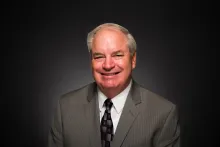
Robin Webber was born in Chicago, Illinois, in 1951, but has lived most of his life in California. He has been a part of the Church of God community since 1963. He attended Ambassador College in Pasadena from 1969-1973. He majored in theology and history.
Mr. Webber's interest remains in the study of history, socio-economics and literature. Over the years, he has offered his services to museums as a docent to share his enthusiasm and passions regarding these areas of expertise.
When time permits, he loves to go mountain biking on nearby ranch land and meet his wife as she hikes toward him.
