
Robin S Webber
This transcript was generated by AI and may contain errors. It is provided to assist those who may not be able to listen to the message.
The title of my message is simply the Stepping into a New Year with Raw Christianity 101. Stepping into a New Year with Raw Christianity 101. Now, the title of the message that I'm sharing with you today is purposely designed to capture your attention. When I talk about raw Christianity, what does that mean? That was to get your attention, and I hope that it did. What am I talking about? I'm talking about what is what—the big what—what is the essence of Christianity stripped to the bare bone? Stripped to that bare bone, and what are we called to experience? We have a calling, okay, but what are we called to experience? Because the calling that God has given us is to be up close and personal with Him, with Christ, and—this can be the rub—also with one another. And it's not a calling that we respond to, but we also have our own personal role in daily practicing what they give us to learn on this spiritual journey that you and I have been called to to become complete in Christ. Now, again, to begin with, let's anchor ourselves in Scripture. That's what we do in the Church of God community. That's what the disciples of Jesus Christ do. We anchor ourselves in Scripture, and if you would join me in our anchor Scripture, that Scripture, which is the keynote of these two messages that I'm giving you, join me, if you would, in John 14. And again, allow me to refresh you. This is given by Jesus Christ on the last night of His earthly existence, and we pick up the thought here in John 17. And if you'll join me, please, in verse 20, it says, Jesus speaking as He's coming to a conclusion. He's most likely lifting up—you see my hands? He's actually, as a Jew would do at that time, and as the rabbi, He would be lifting up His hands towards heaven. And He is in an intimate conversation with His Father, our Father, and He says this, I do not pray for these alone, but also for those who will believe in Me through their Word. So Jesus is looking beyond the four walls of that upper room in Jerusalem. He's thinking about you, and He's thinking about me that would come to Him and His Father through the Word and the witness that those men in that room would ultimately give. That they—that means you, that means me—that they all may be one, as you, Father, are in me, and I in you. And they also may be one in us that the world may believe that you sent Me. Now notice that the world might believe that you sent Me. There's something happening here that maybe we've never seen before. And the glory with which you gave Me, I have given them, that they may be one just as we are one. And I in them, and you in Me—a lot of pronouns going back and forth, but they're all kind of coming together here—I in them, and you in Me—that they may be made perfect and one. Again, notice that the world, the world may know that you have sent Me and have loved them as you have loved Me.
Father, I desire that they also whom you gave Me may be with Me where I am, that they may be hold by glory, which you have given Me, for you loved Me before the foundation of the world. He begins to conclude, O righteous Father, the world has not known you, but I have known you, and these have known that you sent Me. Now, if we back up here a second, notice I'm going to read verse 25 out of the New Living Translation. O righteous Father, the world does not know you, but I do, and these disciples know that you have sent Me. I've revealed you to them, and I will continue to do so, that your love for Me will be in them, and I will be in them. What are we talking about here? Maybe you've never thought of three before, but the aspect of our greatest witness, our greatest witness, that there's a God above that sent His only begotten Son to this earth, whose name was Jesus born in Bethlehem, raised in Nazareth, that the unity that they have above, and the unity that we have down here below, not only with God, not only with the Christ, but with one another, would be a witness, a living testimony. Are you with me? A living testimony that Jesus is the one. He is Messiah. He is the answer that God had in store for humanity, and it is that seamless unity. I'm going to throw out some words to you that I might want to jot down for a moment, because this is where we're going in 2021. This is the assignment. I didn't give it. God gave it. He's desiring this seamless unity. Let's use another phrase, this sacred oneness that He wants us to experience. Seamless unity, sacred oneness, and that's more than just making a New Year's resolution. Resolution is a noun.
What we're going to be talking about here, and God kind of lays the path in front of us, we're talking about real resolve. Resolve is a verb. When you have resolve, you resolve to do something with all of your heart and all of your mind and all of your soul, and it will take everything and God's grace to boost you along to be able to have that which is spoken about here, and to rise to what God has called us to do, and that is to that which we are called to. Let's talk about that for a moment, because at times it seems okay. I hear you, Robin. Great. But what happens is, as we move out of our rooms here listening to Zoom this afternoon, then we bump into people, we bump into situations, we bump into the unknown, and it can begin to unravel. So we need to know what's going on here, because when we look at it, let's be clear what God is doing here, what he's called us to, what this discipleship, what this calling is about. God is calling us to do something incredible, and I'm so excited about sharing it with you. Okay, join me if you would in 2 Corinthians 5-17. Join me there for just a second, please. 2 Corinthians 5, and we pick up the thought here in verse 17.
And here we're the Corinthians, and you know, we think of the Corinthians with all of their different factions that had fractured their community. There was a division in the church, and then Paul's writing back, he's writing another letter to them to encourage them, and he says, therefore, verse 17, if anyone is in Christ, he is a new creation. Wow! New creation! Old things have passed away. Behold, all things have become new. Now, when the Bible in the Greek here uses new, it's not like new and improved. Okay, are you with me? It's not just patching yourself up. God is talking about something completely different. He's talking about—and it's incredible just to talk about, but it is God's reality to us—he's making a new creation, not new as new and improved, but something totally new. And when we respond to the call of the Father, and we come to him through Jesus Christ, through that life and that death and that resurrection and that ascension and that glorification and heaven, that exaltation, and we come through that name to the Father, he begins to create something new, a new way of being a man, a new way of being a woman, a new way of being a human being, a new creation. When God taps our heart and begins knocking on our door, humanly speaking, he's coming in, and he's not saying that, you know, I want your frame. I want to kind of patch you up. I'm going to repair you, because that's somehow how people that practice Christianity come about in the relationship with God. They think that, you know, God's just in the repair business. God's not in the repair business. What he wants is your sight, S-I-T-E. He wants where you are, and what he's going to do, your building is going to come down voluntarily on your part, and that can be a process, too. And he's going to build a new building. He's going to build a new site. Sometimes as Christians, we think just like we try to fix something up on our desk, you know, we get some staples, we get a stapler, we get some scotch tape, we get a paper clip, we get some glue, and we think we're going to be okay. No, God wants our sight, because he's building something new, and he's building something special. I want to share that with you in Ephesians 2.13, just to lay the foundation here before we get to going. In Ephesians 2 in verse 13, join me if you would there, because God tells us what he is doing. This is so exciting and so incredible. It says here, but now in Christ Jesus, you who once were afar off have been brought near by the blood of Christ, okay, by the blood of Christ. For he himself is our peace, who has made both one, and has broken down the middle wall of separation, having abolished in his flesh the enmity that is in the law of commandments contained in ordinances, so as to create. There's a creation going on. It didn't end at Eden. The creation is noticed continuing in himself. One new man from the two, thus making peace. We're beginning to see this sacred oneness. We're beginning to see this seamless unity, which above all needs to be our goal with all of our resolve in experiencing and practicing and revealing to the world around us that they might know that God sent Christ.
His final prayer, his final hope as the Son of Man. Notice what it says here.
And that he might reconcile them both to God and one body through the cross, therefore putting to death the enmity. And he came and he preached peace to you who were far off and in those who were near. For through him we both have access by one Spirit. That's going to be important to the Father. Now, verse 19, now therefore you are no longer strangers and foreigners, but fellow citizens with the saints, but fellow citizens with the saints and members of the household of God.
Having been built on the foundation of the apostles and the prophets, Jesus Christ himself being the chief cornerstone, God's building something. And it's not an old shack. It's not a Roman ruin. It's not of this world. He's building something. And Christ is the foundation in whom the whole building, being fitly framed together, fitly framed together. Notice, grows into a holy temple in the Lord. He takes that which is living, flesh and blood, combined with his spirit, his heart, his mind, which he gives us as we accept the new covenant and come under it. And he's building with living timber, with living stones, with living, pulsating hearts, bent towards him, in whom you are being built together. Oh, look, oh, look, I mean, you're using them too, but they're different than I am. But God in his largesse and his great love pulls people from around the world, every group of people, and people that, you know what? It's his call, not yours. That's what we're going to be talking here about a little bit, in whom you are being built together for a dwelling place of God in the Spirit. Two key phrases that I really want as your pastor to embed deeply in your heart this year is sacred oneness and seamless unity. You know, the world that we live in today, we think, you know, it's always the challenge that, you know, somehow that it's worse than it's ever been before. You know, it's worse than it's ever before, and it's only happy to us. Paul was dealing with a cosmopolitan world, and he recognized that we were going to have to have a focus of bringing us together, because so often, as was mentioned in the first message, we worry rather than giving our worries to God and allowing him to work with us. And so Paul saw this. Here he's in prison, and sometimes you can see things clear in prison as you begin to turn over to Ephesians 4, if you will for a moment. I'll just make a comment as you're going over to Ephesians 4, that he could see things clearly. And he wanted the church then to have a focus where they could all come together and understand what God was doing.
And we notice in Ephesians 4, it says here, verse 1, I therefore the prisoner of the Lord beseech you to walk worthy of the calling which you were called—double emphasis—the calling which you were called. There is a calling from God, and you have been called with that calling. And he says, with all lowliness and gentleness, with long suffering, bearing with one another in love, endeavoring to keep the unity of the Spirit in the bond of peace.
So he starts clearing the ground as it were, and the ground is our heart. He's clearing the ground, and he's trying to put some spiritual nutrients in there that are going to be different than are in our human nature. He says that we're going to need to have humility, we're going to have to have lowliness, we're going to have to have gentleness, there's going to have to be a certain kind of moderation. There's going to have to be long suffering, long suffering, and bearing with one another in love. And that is not human, of and by itself. Humanity can go the other direction. So this is the ground clearing. This is what Christ is. He's the foundation, and he was all of this, as we discussed last time, and you can listen to. Now he's about to build, but let me quote again, Barkley, just to cut to the quick here, about these groundbreaking, softening elements of what's going on here. Because in verse 3 it says, in endeavoring to keep the unity of the Spirit in the bond that is the unity of peace. Barkley says this, these four great—Barclay, out of his commentary and Ephesians says, these four great virtues of the Christian life—humility, gentleness, patience, and love—issue in the fifth. You don't get the fifth without moving through the process. Nothing's going to grow unless we're using the nutrients that God is telling us of where he wants us to absorb and to be like. And he says this, it is Paul's advice and urgent request that the people of who he is writing should preserve the sacred oneness which should characterize the true church. Now the church there, again, let's remember, is in Greek, it's ecclesia.
The church is not a corporate development. It's a spiritual, it's a spiritual organism known but to God. It is the disciples of Jesus Christ that he has rendered to his father above, the ecclesia, the called-out ones, the separated ones. That is the true church, and those that are true to the calling that we've surrendered ourselves to God the Father and Jesus Christ. Allow me just to go another paragraph, then, with William Barclay, which is stunning, is stunning, and I hope you will be stunned so much that you will perchance be willing to change your life after you hear this, and to recognize that maybe you've just been using the scotch tape, the staples, the paper clips, and the glue. That's not what God is about. God is about total transformation inside out. He says, peace may be defined as right relationships between man and man. This oneness, this peace. These right relationships can be preserved only in one way.
Every one of the four great Christian virtues depends upon—are you ready?—the obliteration of self, the obliteration. Let it sink in, please, dear brethren. And I'm just speaking to myself. I see myself, so there's a mirror. I'm talking to moi. I'm talking to myself. So long as self is at the center of things, the oneness can never fully exist. The sacred oneness, the seamless unity, cannot be as long as self is in the game. In a society where self-predominates, men cannot be other than a disintegrated collection of individualists and warring units. But when self dies and Christ springs to life within our hearts, then comes the peace.
Then goes the worry that Brandon spoke about in the first message, the oneness, which is the great hallmark of the true church. So with all of that said, we're going to move right into the second part now to keep going here, because Paul continues with what binds us together beginning in verse 4 through verse 6. So we're just going to be focusing on these verses now, and it's important because so often, as human beings, we see our differences. We see the others. We see how things can't come together.
This has been the history of Christianity for 2,000 years.
Since Jesus said, who do you say that I am?
Christianity at large, century by century, millennia by millennia, has fractured. Fractured.
And I'm just going to speak to you quite personally. We can say, well, that might be the but not us, those that have the revelation of God as we understand the Bible, and as God has come to us with our distinct beliefs and our calling and our walking out of the world and doing this and doing that and doing this and doing that.
Dear brethren, this is Robin speaking to you. What is good for the goose is good for the gander. We can so often see challenges on the outside and not recognize that our own history as the Church of God has fractured from time to time, as men do not incorporate what I've talked about so far and self and self-importance and worrying about others rather than creating that sacred oneness, that seamless unity. So I'm talking to us today. The world will deal with the world.
Those that call themselves Christians in other faith communities, God will have to work with them. I'm talking to you today so that we can work with everybody, so that we can be workers for God, Almighty, and Jesus Christ, that we can have that seamless unity, that sacred oneness, and if nobody else that is listening to this message today allows us to sink in, I'm speaking to you directly, personally, individually, because we have an individual responsibility. If nobody else heeds the call of what Paul is talking about, so often we often get off on the twigs and we get off on the small branches. What I'm sharing with you, dear brethren, is the trunk of the tree, where we can major in the majors rather than major in the minors, because if you just are going to major in the minors, you're not going to go anywhere. You're going to worry about everything. God's not called us to worry. Worry is not a responsibility that God has given us. That's homegrown and earthbound. But if you'll just hear me a little bit, we're going to recognize what God has called us to. We notice here, then, we're going to move down to the second portion, and again, what is my point? What is my SPS? Moving into a new year, a new year with raw Christianity 101, and that is exactly what God wants us to do. He wants us to rejoice in what unites us. Do you hear me, please? Are you listening there in Nevada? Are you hearing me in Arizona?
Am I loud enough here in California? Or wherever you are. He wants us to rejoice in what unites us, not what separates us. If we're only always going to look for the differences, good luck.
Because it will be about luck. It won't be about blessings, because God wants to bless us, but He will only bless us when we see our unity and what unites us, rather than what divides us. Just like the proverbial glass of water, is it half full or is it half empty? Or is any water at all? That's the ultimate pessimist.
This is what unites us. And He lays down through the Apostle Paul's seven big ones, to bind us together, to enable us to bind together, just like those apostles were in Acts 2, when it says they were in one accord and in one place. You want to be like the early apostles? You want to be like that group that was in that upper room that day? And in that day, they were one. For the moment, and their human nature would come back at them, we're still going to be there, but they were with one accord in one place. And that's my appeal to you through the Scriptures today. So Paul lays down seven big ones here. Ones. One this, one that, one this, one that, of what unites us. Not two, not three, not four. He keeps on going down one, one, one, one, and he comes up with seven, which is interesting, which we think of that creation week of seven. It's a number of completion. So here's what I want to look at right now. We're going to speed up here. We're going to look at these. And I hope that you'll develop this. I'm just, this is like a toothpick going into your heart right now, just to see where you're at, where I'm at. This is not the end of the study of this. This is just a perque to do your own study on all of these seven items I'm going to give you. Here, number one, it says, notice what it says here. And this, this is, this is the cure. This is the, the bridge towards sacred oneness. Number one, he says, there is one body. He says there is one body. God is not divided. And the, the spiritual body of Christ, which is an organism that moves beyond walls, which moves upon organizational boundaries, which moves beyond corporate entities, God knows who are His. Those that love the Christ love Jesus. And as it says in Revelation, keep His commandments. That's who we report to. That is our Lord, and that is our King. And it says there's one body. Join me if you would, Romans, real quick. I'm going to just give you a couple verses for each one to intrigue you to, to help you to move towards the sacred oneness. And in Hebrews 12, and picking up the thought in verse one, I beseech you therefore, brethren, by the mercies of God, that you present your bodies a living sacrifice. Your bodies get rid of self.
In a sense, it's a religious four-letter word, self. Get rid of self. Be a living sacrifice, wholly and acceptable to God, which is your reasonable service. After all, because of what God has done through Jesus Christ and what Jesus Christ did for us to lay down his life.
And do not be conformed. Don't go there. Don't get in concrete like that. But be transformed by the renewing of your mind that you may prove what is that good and acceptable and perfect will of God. And I'll say a part of that is when you understand this seamless unity that he desires, and the needles of oneness that I'm offering you through the words of the Apostle Paul, you are going to be wholly and acceptable. For I say through the grace given to me, to everyone who is among you, not to think of himself more highly than he ought to think. Hello! Is anybody out there? Don't think higher than yourself. I bump into those kind of people every day, and I bump into myself. And God says, lower the volume of self.
Dwell on what I'm doing, not on what you're doing. More highly than he ought to think, but to think soberly, measured. That's where the word sober comes from. As God has dealt to each one a measure of faith. For as we have many members in one body, many members, it's diverse, it's multitudinous, it's like a jigsaw puzzle. It's not just blah, there's individuality, and there is absolutely diversity. We being many are one body in Christ and individually members of one another, and yet there is that oneness that God desires. Join me over in 1 Corinthians 10 real quickly. 1 Corinthians 10. Moving along. Are you with me? Good. Let's turn those pages together.
I can hear them turning over there in Nevada. Thank you very much. In 1 Corinthians 10.14, let's notice what it says here. Therefore, my beloved, flee from idolatry. I speak to wise men, judge for yourselves what I say.
We don't have idols in our country, at least, here in the United States or in Western civilization, like days of yore or even over in parts of Southeast Asia or in India. We don't have idols that are shaped. But just think this through. Self is also an idol that God has asked us to push over and to get out of our lives. So just kind of keep that thought in mind for a moment. I speak as to wise men, judge for yourselves what I say. The couple blessing, which we bless, is that not the communion of the blood of Christ. That communion is a word which means fellowship. It means intimacy of the highest, deepest, most connective level, seamless as it were.
The fellowship of the blood of Christ, the bread which we break, is it not the communion of, notice, the body of Christ, for we though many are one bread and one body, for we all partake of that one bread. Dear brethren, as our nation is fracturing and will continue to fracture, I don't think I have to be a prophet on this one. And we pray that we can stay the course right now as much as possible in preaching the gospel of Jesus Christ and the kingdom of God. And the churches of God, when you look at Revelation 2 and 3, can only be affected at times by that which is going around them.
The culture seeps in. As the world divides, the body of Christ needs to maintain its unity. Absolutely! Goal number one. The spiritual oneness that is being talked about here is maintained not by chained conformity. God doesn't want us all to look alike. He doesn't want us to all speak alike. He doesn't want robots. The unity that is spoken here is not conformity for conformity's sake, but it's a diverse people understanding that spiritual oneness, that unity, it's organic in nature. And to understand something, the unity that is spoken here about being one by stay with me now is we have to understand where the connection is. Our connection at the beginning is not with one another.
It's not Robin over here necessarily even with my wife, Susan. Okay? And I do like being connected with Susan. But anyway, I'm saying our connection goes by the main connector. Our unity with one another in the body of Christ can only be as we are connected to the head of that body, which is Jesus Christ. Unless we are connected to the main connector, we cannot be connected to one another.
When we, our focus is not the focus that God has set before us who is the head of the body, Jesus Christ, Ephesians 2. We become disconnected. That is why it is so important that in the United Church of God, we preach the good news of the gospel of Jesus Christ and the kingdom of God. But Jesus Christ is front-loaded.
He is the connector. He is the connection that the Father has given us to connect with Him above the Father and to connect with one another. So the first connection that we have to have in the body is to be connected to the head. And then as we are connected to the head, then we can begin to be connected with one another. Because in that sense, we do not create unity. The unity comes from Christ. Christ is the unifier. It's through Him that that piece is made, as we talked about earlier, or read earlier, He is the common center. I just want you to think about this for a moment before we move to the next point.
Consider for a moment that no brain can work through a body that is fragmented. It just can't. A brain cannot work through a body that is fragmented. Because when the body is fragmented, it's confused, and things are going to happen. That body must be centered on Him. So we need to understand that.
Very important. Let's go to point number two, Ephesians 4. And we find that after number one, it says there is one body. It says there is one spirit. Let's talk about that for a moment. Join me if you would, just a few pages over, and Philippians. Come with me, please. I invite you to turn those pages, and let's look at it.
Let's eyeball it together. Therefore, verse one, Philippians, therefore if there is any consolation in Christ, the connector, if any comfort of love, if any notice fellowship of the Spirit, canoea, canoea, that intimacy, that seamlessness, if there's any fellowship of the Spirit, if any affection and mercy, it says fulfill my joy. The Scriptures speak of a fellowship, a connection of the Spirit. Now, is that what you're thinking about? When we are walking and talking and moving through our day, and also coming together on this Zoom cast, or when we meet together in church, of what we have in common or what we have differently? God says there is one body.
Do you believe that with all of your faith, all your heart? Do you understand that God is doing something incredible new? He's creating a new community, the body of Christ. Is that front and center in your mind as we approach the day and as we move into crowds, and even as we move into disappointment or concern, that there's one body?
God is our Father. Christ is the connector. Or do we look at everything that we have differently? If we just always look at people with everything that is different, we're not going to be able to be a witness that God the Father sent Jesus of Nazareth to this earth.
That was Jesus' hope that night that he prayed to his Father, that we might be different, that we might be one in the sacred oneness with the Father and the Son like this, then we come up by their invitation and we're one.
It's very interesting that the word there, when Paul says one Spirit, the word is numa, and in the Greek that can mean either spirit and or breath. Spirit and nor breath. Just think this through. If there's no breath moving through a body, if there's no breath, this numa, this Spirit, let's just call it oxygen, as it were. The body is dead, and the vitalizing breath of the body of Christ is the Spirit of Christ in us. And there can be no receiving of that—hear me, please—and there can be no receiving of that Spirit unless we wait upon God, upon the Lord, let him take the lead, and follow that Spirit.
That means we have to be flattened with that human spirit that is in us. You remember days of old when we were kids, and you know, you take a plastic pool out, you know, a little circular pool. When we were growing up, a little circular pool, and you tried to start, and you had to lift, you know, what happens? You'd lift it up because, oh, it's going to be this high. And so you'd lift it up, and you try to start pumping. You know, you start, here's my pump over here, and you start, and you think, does it work when the plastic pool was lifted up? The air wasn't working. The only way that the air could circulate through that pool is when it was flattened. Just straight flattened out like—there's my hands—flattened out like that. But we think humanly that we have to be lifted up. You have to say, here I am, look at me. And God says, flatten yourself, and let my spirit come in, and let my spirit fill you up. It's not going to be high and mighty and lifted up with pride. It's going to be flat like a pancake. Maybe flatter. And let me do the breathing by my spirit. Interesting. Interesting. And John 20—I want to show you something here. In John 20, the Gospel thereof. Stay with me. In John 20—okay, see where I'm at. John 20.
John 20. Are you with me? Good. More comments. John 20. Notice what it says here in verse 21. This is when Jesus entered that room, and he says, so Jesus said to them again—he enters the room, he comes in, and Jesus said to them, in peace to you, as the Father has sent me, I also send you. And when he had said this, he breathed on them. Remember, numa can mean spirit and a rep. He breathed on them. Notice that. He breathed on them, and said to them, receive the Holy Spirit.
There'd be a difference. There'd be a contrast. When we recognize that we have been called to be one body—not by our doing, but by God's doing, by His grace, not because of who we are, but what He is—and then He gives us that one spirit. That spirit brings life. That spirit builds up and lifts. Jesus breathed on them. My question is simply this. As we are with our mates, as we are with our children, as we are with our neighbors, as we are with our co-workers, as we are with when we come together—can—with church members, when we come together with strangers, whoever they might be, what we bring to those people, and as we breathe on them, as it were, to use that analogy, is it God's breath, or is it bad breath? Is it self-breath, or is it holy breath? Is it motivated by God, or is it motivated by self? And is there that contrast that we can be a witness that they might not even know all of what's inside of us, but they see a difference? They see a difference. They see a difference. That's what we're talking about—the difference that you and I can make by understanding our role in the body and understanding the Spirit of God. Very important.
Point number three—we find it there in Ephesians again—it says, One hope of your calling. No matter all of our differences, no matter where we hail from, no matter what our last name is, whether it's Chinese, Cambodian, Irish, Lithuanian, Swahili, wherever we're from, no matter our differences, we all move forward with one hope of your calling. One hope of your calling. Romans 15-13, Tran, if you would.
In Romans 15-13, let's notice where hope comes from. In Romans 15 verse 13, Now may the God of hope fill you with all joy and peace, believing that you may abound in hope by the power of that Spirit, that one Spirit. See how these are all interconnected? God is—notice, God is hope. He didn't create hope. He is hope. It is the very—it's in his uncreated DNA. It just is. That's how he starts. No, excuse me, I have to back it. It doesn't start. It is. It's a better phrase when you understand God. He's hope. It just comes from him, and he wants us to have that same hope. And that's something no matter if you're in Arizona, Nevada, California, you're listening in from the East Coast, we are to have that one hope of your calling. That is so important. You know, hope is so important that Paul listed as the big three. There is faith, there is hope, and there is love. And love being the greatest, but hope is number two in that threesome in 1 Corinthians 13. Join me if you will in Colossians 1.19. This is such an exciting verse. I'm just going to lay this one out on you. Okay, are you with me? Colossians 1. Let's go to verse 17. I'm going to back to 17. And he is before all things, and in him all things consist, speaking of the Christ. You have to understand who the pronouns are here. And he is the head of the body. We've discussed that. The church discussed that. Who is the beginning, the firstborn from the dead, that in all things he may have the preeminence. For please the Father that in him, speaking of Jesus, all the fullness should dwell. And now notice verse 20, and by him to reconcile all things to himself, speaking of the Father, by him, speaking of Christ, whether things on earth or things in heaven having made peace, seamlessness, through the blood of his cross. And you who were once alienated, foreigners, strangers, and enemies in your mind by wicked works, yet now he has reconciled.
That's our hope. And there's a hope beyond this life. I've noticed even with the challenges that we're facing in this nation, we're facing with the COVID pandemic, and Christians do need to abide by the rules and the guidelines that are given. But I've noticed that there's not the same dread, there's not the same fear amongst Christians in general as there are with people that are apart from God. Because if you're apart from God and you just believe this is the only time that you're ever going to live, you get triple nervous. Now, I'm going to say this, I'm going to say this, now I can be looking for the right word. I need to be discerning. I need to go by the guidelines right now. But you know what? I know that this life is not an end in itself, and that there is life. I'm just going through this. I'm just passing through. God's calling you, and He's calling me to greater glory, without one body, without one spirit, without one hope. And we have the hope that even those that have died through this pandemic, maybe family members that do not know the Father, do not know the Son, have not given their life over to something that is greater and bigger and more wonderful than we could ever be in this flesh, that God is not done with them. That is our great hope. Are you with me? And we share that together in common. Yes, we do. That great hope where Israel and Ezekiel 37, we are without hope.
And God said, I'm going to breathe into those bones.
And Israel does not have a monopoly on God's attention. It's a model. And that hope, and that spread of the gospel, that good news, that all is going to be reconciled through Christ, that the grave is not a dead end. It is but a comma to the sentence that goes on as God raises humanity, all of those that are made in His image and in His likeness, and removes that veil and allows us to see Him for who He is. We have one hope. That's what binds us together. That's what our ministers need to be talking about. That's what our brethren need to be talking about together when we're together, is the great hope that God has given us. We have, as it says here through Paul, we have one Lord. Number four. One Lord. Join me if you wouldn't, Philippians 2 verse 13. Philippians 2.13.
I'm just going to give you a verse here.
It seems as if there were a creed, this might have been the creed of the early church, and especially for those that were being baptized. In Philippians 2, notice what it says here.
Verse 10. I'll go to verse 10. That at the name of Jesus, every knee should bow of those in heaven and those on earth and those things on the earth, and that every tongue should confess that Jesus Christ is Lord. Kyrios in the Greek. He is not—he is the master. He is sovereign. He is king. He is Lord, the Lord Jesus Christ. And it's him that God has placed over his entire body, those that are being called of the Father. One Lord. The Lord Jesus Christ. He is the king.
But he's unlike any other king because he is Lord, he is Jesus, and with Jesus comes the hope of salvation. That's what Yeshua Joshua means, and he is the Christ. He is the one that was anointed, and he was the one that was chosen by God to come down to this earth and be our peace and be our bridge back to Eden, back to that which mankind refused, and also the bridge and the stairway by his name to heaven. Under no other name under heaven by which one might be saved. Acts 4.13. One Lord. Do we think about that consciously, or are we just seeing the person in front of us? Are we seeing our differences, or are we using that diversity to all worship together the king that God the Father has placed over the head that he has placed over us? That's important.
And to recognize that when we say that he is Lord, the word kurios, he's master, that means we're, get ready for this, we're owned by God. That's what we did at baptism. We handed the key of our life over to him, and rather than becoming slaves, remaining as slaves of sin, we became slaves of righteousness, but to a good master. A good master. That's our Lord.
That's your Lord. Where are we so far? One body, one spirit, one hope, one Lord. We also have, number five, one faith. One faith. Faith again that Jesus Christ was sent by God. No, sometimes people, when they ask, what is your faith, and what do you believe in? And sometimes I know some of our people say, well, we do this, and we do that, and we do this, and we do that, and we do that, you know, we do the do that. But faith, stay with me a second, okay? Faith, ultimately, is what it says in John 3 16.
And that it really is, and it really happened. For God so loved the world that He gave His only begotten Son, that whosoever should believe on Him should not perish but be saved. For God did not send His Son into the world to condemn the world, but that the world through Him might be saved. Isn't that what Jesus was talking about that night?
Isn't that what faith is? That no matter what happens in our life, that we know that God has knocked on our door, Christ has knocked on our door, and revealed this? I feel so blessed, don't you, that we know that in this universe we are not alone, that if there were no other individual on earth, that God has called us, that He's with us, and that we have that faith of what Jesus said before He departed on His ascension. Lo, I shall be with you always, even to the end of the age. Faith. Faith, hope, love. 1 Corinthians 13. 13. I realize that faith can be shattered. I realize that we can lose hope. That's why I'm giving you the ladders, the steps of the ladder that lead back to sacred oneness and seamless unity with God, with Christ, together, you together with them, because that's where the connection is, and then together with the rest of Christ, through the body of Christ. Number six, we're going to wrap up rather quickly. Number six, one baptism. We were all baptized in a way. Join me if you read in Romans 6. I'm just going to read through this. Romans 6. Are you with me? We're almost done. We're getting connected here, okay? Romans 6. Verse 3, or do you not know that as many of you as were baptized, immersed, baptism in the Greek, immersed into Jesus Christ, were baptized into his death?
Therefore, we were buried with him through baptism into death, that just as Christ was raised from the dead by the glory of the Father, even so, we should also walk in newness of life. For if we have been united together, oh, such powerful words, but they've got to be more than words. They've got to be in our spiritual tissue and resonating in our hearts. For if we have been united together in the likeness of his death, certainly we shall be like him in the likeness of his resurrection, the unity that all of us have had through baptism.
In 1 Corinthians 10, it says about following the rock and following the one that later won would become Jesus Christ, and they were all baptized unto Moses in the Red Sea as they went to the promised land. Today, we have all been baptized in the same manner, the same manner by that greater Moses, that second Moses, leading us to more than the promised land, but to the kingdom of God, ultimately spiritually. We've all gone through this. His blood covered us all, and we were buried in the water as a type of death and raised in a type of resurrection as the minister brought us up. We all said that we have sinned before God, and we've said that we have accepted Jesus Christ as our Lord and Master. That's what we need to focus on, not our differences.
It is having these that Paul shared with us that will bring us together. Incredible! No matter who we are, no matter Jew or Gentile, no matter slave or master, as it was said, no longer man or woman, but all one body, unto the praise of God the Father through Jesus Christ. Let's go to point number seven and conclude. Notice what it says here, one God and Father of all. One God and Father of all. Join me through to Mark 12. We're going to conclude with this. Wrap it up. Mark 12, Second Gospel. It's on page 1169 in my Bible. I go to Mark rather than Matthew because I think it's very telling as a Jew of that time, son of man. He starts out with the Shema, Jesus answered saying, the first of all commandments is, Hear, O Israel, the Lord our God, the Lord is one, and you will love the Lord your God, with all of your heart, with all of your soul, with all of your mind, and with all of your strength. This is the first commandment, and the second is likened unto it. You shall love your neighbor as yourself, and there is no other commandment greater than these. The greatest commandment is to love God. Hear, O Israel, the Lord your God, the Lord is one. And ultimately, as the scriptures tell us, that God the Father is over all.
We need to remember that. We need to remember that Jesus, when he taught his disciples, they came and said, well, how should we pray? What's the first thing he said? He said, like this, Our Father, which art in heaven.
Our, not just mine, don't pray, Jesus Father, which art in heaven. He included us in that. He said, our Father, our Father. Connection, our Father, our Father.
He didn't say, pray to the sovereign God. He didn't say, pray to the King above the kings. He didn't, the way he wanted us to communicate was simply this, our Father.
It's something that's beautiful. Do we remember that when we're wanting to pull the plug on our fellow members within the body of Christ? Rather than connecting by recognizing we have one Father.
You know, ancient Israel, the 12 patriarchs of Israel, when they went to Egypt during the famine, and they introduced themselves to the viceroy of Egypt, the second guy in charge, who they didn't realize was their father. You know, and you talk about the Dirty Dozen, they were a group. But when they came together and they introduced themselves, what was their introduction? Their introduction was simply this. They said, we have a Father.
No matter how they felt about one another, there was this bond that connected them deeply. You see, that's why I can call you my brother. That's why I can call you my sister in Christ, because we all have a common Father.
So often, our minds go off on our differences rather than what we have in common.
And this Father, as Paul goes on to say, is above us all, and He's through us all, and He's in us all. The Spirit of the Father literally dwells within us the presence of God.
You can look at that in Romans 8, 9-11. He resides in us. That's why we're His child.
And He will never leave us, and He won't forsake us. And He always waits on that patio of return just like that Father, the prodigal son, waits. He's always the God of return. And maybe you've wandered off, and maybe you're worried, as we heard in the first message, and maybe you're looking at everything with a wrong spiritual vision, whether you're looking at the world, or maybe you're looking at other members of the body of Christ, and you're looking at what divides us, and you're wanting to go the way of the world and have a hyphen between all of us.
God has not called the body of Christ to be hyphenated.
He's called us to be holy and to be one body.
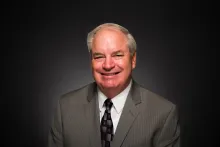
Robin Webber was born in Chicago, Illinois, in 1951, but has lived most of his life in California. He has been a part of the Church of God community since 1963. He attended Ambassador College in Pasadena from 1969-1973. He majored in theology and history.
Mr. Webber's interest remains in the study of history, socio-economics and literature. Over the years, he has offered his services to museums as a docent to share his enthusiasm and passions regarding these areas of expertise.
When time permits, he loves to go mountain biking on nearby ranch land and meet his wife as she hikes toward him.
