

Robin S Webber
This transcript was generated by AI and may contain errors. It is provided to assist those who may not be able to listen to the message.
Well, thank you, folks. I saw that instrument that Mr. King was using there. I've always wanted to use that. It's always something I wanted to do in church. I figure if I keep on coming to church one day, I'll be able to master that. Thank you. Every little bit blends to the song. Join me if you would, brethren. Let's go right to the Scripture today to anchor ourselves into what God would have us to learn on the Sabbath day. Join me, if you would, in Exodus 20. As we turn to Exodus 20, we realize that we are turning to the Ten Commandments. I'd like to focus our attention on just the first three and be able to read them and then consider. God spoke all of these words, saying, I am the Lord your God who brought you out of the land of Egypt and out of the house of bondage. God begins the commandments by taking the people back and reminding them of where they were before He began to intervene in their life and to lead them. He says, you shall have no other gods before Me. You shall not make for yourself a carved image or any likeness of anything that is in heaven above or that is in the earth beneath or that is in the water under the earth. And you shall not bow down to them nor serve them. For I, the Lord your God, am a jealous God, visiting the iniquity of the fathers upon the children, under the third and the fourth generations of those that hate Me. But showing mercy to the thousands, to those who love Me, and keep My commandments. Verse 7, You shall not take the name of the Lord your God in vain, for the Lord will not hold Him guiltless who takes His name in vain. The first three commandments are laid before us. We are told that we are to worship God only. We are told that we are not to have graven images or substitutes on behalf or in place of Him who is holy. Thirdly, we are told not to take His name in vain. With all that said, and perhaps we have memorized these words before, whether in short form or long form, until we put them into the oven of life, they are but theory. They are but a recipe. They are but words. I would like to make these words, these commandments, real to us today. I have a very basic question that I want to ask you, going back over these three commandments for a moment, and then attaching a story to it to make it real and relevant to all of us. We know, as people, that we come together in church and that we are to worship God and we are to put Him first and foremost, for after all, that is what the book tells us to do.
But I have a question for you, friends.
Who do we really worship and who do we spend more time on?
God and or our fears and our worries?
Where do we put our devotion?
Where do we put our time?
And where do we put our attention?
It's very human to have fears.
It's very natural to have worries.
But did you realize that fear and worries can actually take the place of God Almighty if we don't pay attention to it, if we don't mind the details, and if we're not careful that even as Christians, and we call ourselves Christians, that we can actually be practicing a substitute religion with the twin idols of worry and fear.
It says in the second commandment that we are not to make idols. We're not to craft and mold and shape them and carve them.
To take items that we focus on and to make them tangible so that we can hold onto them, so that we can carry them, so that they can be portable, so that wherever we are, that they will always be present.
With that thought in mind, have you ever considered that we can shape and craft and mold and tender and embellish and feed our worries and our fears as much as making an idol to Buddha or Zorister or to some ancient god out of Central America or South America?
So often we can look at the second commandment and think that we're doing okay because, well, you know, I don't have an idol out in my garden. I don't have any statuary in my bedroom. I have not bent the knee or bowed the heart to some piece of wood of recent date, and so therefore I'm keeping the second commandment. But did you realize, friends, that if we're not careful, if we're not cautious, we can actually craft and mold and shape and work on our fears and our worries as much as a carpenter spends all day out in his shop creating some item?
Let's look at the third commandment where it says simply this, You shall not take the name of the Lord your God in vain. God has given each and every one of us a name, and we're not to take it for naught. So often people make the mistake that somehow this is just what we call the swear commandment, that we can't couple God's name with a naughty word.
And therefore, if we don't do that, we're just doing okay. I think if we simply limit it to that, we don't understand the full embrace of what the commandment brings to us. In times of antiquity, a name was everything.
It spoke of the wholeness of He who gave you the name. It spoke of His identity, His nature, and His attributes. It was not just spoken as an epithet or as a signature. In the world of your, a name was to embrace you.
A name was to be something that stilled you. When we look at the third commandment, it says, You shall not take the name of the Lord your God in vain, for naught, for nothing. As it's just something that you can throw away when you bump into your fears and into your worries. How do we bring these three commandments together, and how do we make them relevant to you today? Before me, probably, is about, I would guess, today, and I'm not a good counter like Mr. Smith is, but I'm suggesting there's about 68 people out there today.
I'm not sure how they do, Mr. Smith. Don't know yet. Okay, he's the counter. Okay. I used to be an insurance inspector, so I'm a pretty good being counter. Let me know later, okay? But we've got 68 people out here. We have 68 lives. We have people that are people, are human beings. We have our fears. We have our worries. May I say, we have our doubts. That's why God gives us stories in the Bible about a real God dealing with real problems, with real challenges.
And I'd like to share a story today that brings all of these three commandments to the fore. It's a timeless story. It's as old as time, but its timeliness is now for you and I to go through. Would you please turn to 1 Samuel 17?
1 Samuel 17. It is the story of Israel leaning over the Valley of Decision, as to whether or not they would make God number one in their life, or that they would continue to worship the twin idols of fear and of worry. 1 Samuel 17 will pick up the story in verse 1. This will be my text for today. Now the Philistines gathered their armies together to battle, and were gathered at Sukkoth, which belongs to Judah.
And they encamped between Sukkoth and Aziran in... I can't quite read this today. I'm sorry. I've got to get my bitter glasses on here. Pardon me. If I put these on, I can't see you, but then I can see the words.
I'm sorry. Oh, that's much better. No more fear, no more worry. And Saul and the men of Israel were gathered together, and they camped in the Valley of Elah, and drew up in battle array against the Philistines. And the Philistines stood on the mountain side, and Israel stood on a mountain on the other side, with a valley between them. We might say that this is the Valley of Decision that we're all going to look into for a few minutes in the course of this message.
I again ask you a question so that we can relate to this story. What is your Valley of Decision right now in your life, where you are on the edge, and you are looking in? Where you know you have to go in, and you have to apply yourself, and you have to allow the Lord Jesus Christ to rule in your life. But at this point, you simply remain on the ledge and on the edge, rather than getting into the fight that God has called you to deal with.
I would suggest today, as I look at each and every one of you, and as you in turn look at me, each and every one of us have a Valley of Decision of how we will apply ourselves when we understand the first, the second, and the third commandment.
And a champion went out from the camp of the Philistines named Goliath from Gath, and his height was six cubits and a span. And he had a bronze helmet on his head, and he was armed with a coat of mail, and the weight of the coat was 5,000 shekels of bronze. And he had bronze armor on his legs and a bronze javelin between his shoulders.
And now the staff of his spear was like a weaver's beam, and an iron spearhead weighed 600 shekels, and a shield-bearer went before him. And then he stood, and he cried out to the armies of Israel, Why have you come out to line up for battle? Why are you even in the game? Am I not a Philistine and you the servants of Saul? Choose a man for yourself and let him come down to me.
And if he is able to fight me and kill me, then we will be your servants. But if I prevail against him and kill him, then you shall be our servants and serve us. And the Philistine said, I defy the armies of Israel this day, give me a man that we might fight together. And when Saul and all of Israel heard these words, not the words that were given from Sinai, that you shall have no other gods before me, you shall not make any graven images, and you shall not take my name in vain.
But when they heard these words, not from the Shekinah on high on the mountain that came down in the voice of God, but from this Philistine notice, they were dismayed and they were greatly afraid. When we review the first 11 verses here for a moment, it's interesting what we take away from this. Goliath is now dead. I don't want to break the story to you, but he did die in case you didn't know that.
He is dead. But giants remain in the land. All of us in this room, not a person to spare, we all have a valley of decision. We all have a giant in front of us. You name your giant. Maybe it's not named Goliath. I find oftentimes that people get hunkered down into what is a cubit? Or how many pounds did his armor really weigh?
Or what about this and what about that? Was he nine feet tall? Was he nine and a half feet tall? I am six foot one inch tall. I have not yet begun to shrink. That may be next year. But I do understand this.
Anybody over six one is a giant compared to me. They're bigger. I don't need to worry about that. Because what happens in understanding the story of David and Goliath is simply this. It's not the size of the giant that is in front of you, but the size of the heart that is inside of you that will change the story as it goes along, as you walk into the valley of decision. So often we look at the size of the challenges that are before us. And we are challenged. We do put other gods before us. And we try to feed those gods. We try to work with them. And God says, don't worry about that.
Read this story and understand the hope and the encouragement that comes out of it. They were dismayed and they were greatly afraid. What is interesting is simply this. Verse 11 runs counter to the instruction of God. Did you realize, friends, and I'm here to remind you on this day, no matter what your valley of decision is, no matter what your giant is, that Scripture tells 350 times. Now, if God says something once, that's pretty important. But 350 times. Do not be afraid. Why is that? Because you and I worship the only God, the one that has delivered us.
The one that cannot be bound in image. And the one that has placed His name on us. Now, David was the son of that Ephatite of Bethlehem Judah, whose name was Jesse and had eight sons. And the man was old, advanced in years in the days of Saul. The three oldest sons of Jesse had gone to follow Saul to the battle. The names of his three sons who went to battle were Eliab, the first born, next came Abinadab, and the third, Shema.
David was the youngest, and the three oldest followed Saul. But David occasionally went and returned from Saul to feed his father's sheep at Bethlehem. Now, notice verse 16. And the Philistine drew near and presented himself forty days. Forty days. Morning and evening. The voice that would not go away. Now, I know sometimes when we can look at the story of David and Goliath, we can say, If only I had been there, this would not have taken forty days. No, me and John Wayne.
We would have handled the whole thing by night time. Especially the Duke. I have a question for you, and you alone can answer it, friends. What giant are you wrestling with? What valley of decision have you not chosen a course of action yet that extends and expands beyond forty days?
Worries and fears that you wake up with in the morning, and worries and fears that you take home at night with you. And may I say, in every minute in between. Because either God dominates your life, and or fears and worry and doubt dominate your life. And sometimes what we do with our fears and worries and doubts, because somehow we feel that we've been left out of the loop of opportunity, we feed them.
We take those doubts, we take those worries, and we feed them. We feed them maybe with food to comfort us. We feed them with drink to comfort us. We feed them with sexual addiction to comfort us. We feed them by blowing our money on all sorts of items, thinking that life is but in the minute.
And we've got to grab a hold of it right now. And we feed those worries, and we feed those doubts, and we feed that worry as much as people of yesteryear went before their idols and put things down before their idols to feed them. And we get involved in all of that activity of propping up our fears, propping up our doubts, rather than dealing with them.
So let's not be too hard on the Israelites. Let's recognize that we are them left apart from our God. Then Jesse said to his son David, Take now for your brothers an eighth of the dried grain in these ten loaves and run to your brother at the camp. And carry these ten cheeses to the captain of their thousand, and see how your brothers fare and bring back news of them. When I read this this morning, I was going over it, and carried ten cheeses to the captain of their thousand.
I thought, oh, here's like a student taking an apple to the teacher. Make sure the big guy's taken care of, too. Something about human nature never changed. Now Saul and they and all the men of Israel were in the valley of Elah, fighting with the Philistines. So David rose early in the morning, left his sheep with the keeper, and took the things, and when as Jesse had commanded him, and he came to the camp, as the army was going out to the fight, and shouting for the battle, for Israel and the Philistines had drawn up in battle aray.
Army against army. I read this this morning, and I was going through this, and I read the words that they went out to the fight, and they were shouting for the battle. They were taunting one another, and oftentimes what people would say is that they would bring in the name of their gods. They would say, on the other side, they would be bringing out the name of the Philistine gods, whether it be Dagon, or whether it be Baal, or somebody else, and they'd be rattling that name around.
And on the other side, the Israelites might be shouting, Jehovah, our banner, our guide, our warrior, the captain of our... Whatever was going on, they were doing that. But they were just talking in the air. But Israel was not going into the valley of decision. That's throughout the word Elah. That's not in our language. But each and every one of us have a decision to make, as to whether or not we're going to allow God to rule our life, or to allow our fears, and our worries, and our doubts, and our own self-made giants, and those giants that have been foisted on us by the actions of others to dominate our life.
So here were the Israelites, you know, shouting and proclaiming this name. Their time has come and gone, but I thought, how often, and what is the Abonition of Jesus when He said that, you will say, Lord, Lord, and you will call out my name, but when that day comes, I will not recognize you. Worshiping God is more than just proclaiming His name. It's living in faith that He will never leave us nor forsake us, but show us that sure way.
For Israel and the Philistines had drawn up in battle a right army against army. Now, it's very interesting, and I'll share a little bit of history with you, because so often what happens is we think Army A and Army B get together, they look at one another, they kind of like Braveheart. Anybody seen the movie Braveheart? Now we know what you're watching. Okay. Seen Braveheart, and there's the English Normans, and there's the Scottish dudes and the kilts. That is when they did wear them.
And what would happen is we'd often think that they would gather together, and they'd look at one another and kind of rabble the swords. But oftentimes, going back in antiquity, actually, armies would face off one another for days and days and days. So this is not too uncertain from the mold of old. They would actually come out in the morning, and they would stand out in the sun all day long.
And there would be probing. When you had thousands of men, the army might stretch for maybe a mile or two miles down the line. And there would be a constant chanting, and there would be a constant going back and forth. There would be an intimidation of voice or an intimidation of movement, just continually probing to see where the other side is.
Isn't that a little bit like what Satan the Devil does with us, is the line that goes about probing, seeing our weak spots, seeing where we're soft, seeing where maybe we're not on guard, day after day, night after night, coming at us, coming at us, coming at us, until it seems like he can go in for a knockout blow. The probing is very interesting. And David left his supplies in the hand of the supply keeper, ran to the army, and came and greeted his brothers.
Then as he talked with them, there was the champion, the Philistines of Gath, Goliath by name, coming up from the armies of the Philistines. And he spoke according to the same words, so David heard them. And all of the men of Israel, when they saw the man, fled from him, and they were dreadfully afraid. 350 times in Scripture, my brethren, God says, do not be afraid. The first commandment, that great commandment, says, I am the Lord your God, which brought you out of the land of Egypt.
You are a delivered people. I, the great God, am on your side. Here it is interesting. Here was Israel. They were a covenant people of old. We are a covenant people of the Spirit today. And yet they were afraid. They were living their life being a covenant people, but living as if they were on their own. May I ask you a question, please? Is there something wrong with this picture? Is there something wrong with your picture, perhaps today, to recognize that we are people of the covenant?
The Lord our God rescued us more than simply from the banks of the Nile, but from the slavery of sin and has given us a new life in Christ, given us a new name in Him, given us a new banner in Christ, not to turn our back to be afraid as we look into the valleys of life. So the men of Israel said, Have you not seen this man who has come up? Surely he has come up to defy Israel, and it shall be that the man who kills him, the king will enrich with great riches, will give him his daughter and give his false exemption from taxes.
And since, excuse me, in Israel, they said, Just look at him! Goliath had this wow factor about him. It'd be kind of looking like looking at Shaq today, the basketball player. When you see Shaq, you just say, Wow! I've never seen anybody so big. He can even bring down the rim. He can bring down the whole thing. You might say that, and I think Shaq is a little bit more lovable than Goliath was, because after all, he did play for the Lakers at one time. But the Philistines were just simply on sensory overload. Then David spoke to the man who stood by him, saying, What shall be done for the man who kills this Philistine and takes away the reproach from Israel?
For who is this uncircumcised Philistine that he should defy the armies of the living God? And the people answered him, and this man was saying, So it shall be done for the man who kills him. Here's what I'd like to share with you today. If you have not taken a note today, I'd like to share this with you. If you're a student of the Scripture, if you want your life to change, please write this down. David, as a man after God's own heart, had a tremendous desire. His life was filled with desire to serve God. Beyond that, he was able to spiritually identify and delineate the situation.
He took the black and the white of it, the A and the B and the C of it, and was able to look into that through the fog of the senses, the size of the issue before him, remember his calling, remember the covenant stature of the people that he came from. He said, I do not just worship the God that is in print, I worship the living God.
I worship the God that made the universe. I worship the God that made Yosemite with his finger. I worship the God that created the Grand Canyon. I worship the God that can take the ruins in a man's heart and transform them. And then that man can take himself out of the ruins and change his life through transformation. You see, the Israelites of old were just simply into information. They could recite, I'm sure as good Israelites, the first three commandments. But it was not transforming them into facing the Valley of Decision. David brought it down to a common denominator. God is beautiful, God is wonderful, God is clean, God is holy.
This Philistine is a Gentile. He confronts all that is godliness, and I worship the true God. I have a question for you. How are you doing in your Valley of Decision? Are you just simply muddled with the facts and the sensory overload that's happening down here below?
Do you just see the armor that's coming at you? Do you just see the size of the problem that's at you?
Or do we see our wonderful Heavenly Father and His Christ, ready to help us in whatever we are going through on this day and in this moment, when perhaps we feel that we are all alone and that we are abandoned, that God has a story that He wants to work out in you as much as David and Goliath. Eliele Abba's brother heard when he spoke to the men, and Eliele Abba's anger was aroused against David. He said, Why did you come down here? And with whom have you left those few sheep in the wilderness? I know your pride and the insolence of your heart, for you have come down to see the battle. David said, What have I done now? Is there not a cause? You see, David spoke of God. And sometimes people just want to stay in their problems. They want to say, No, you don't know how tough life is. You don't realize that for 40 days, in 40 ways, this dude down there in the valley keeps on challenging us. Oh, life is so horrible. Life is so awful. There's just no way out of this. Why did God call me? Now! Now, I know you have never talked to anybody and had that conversation with anybody, have you? Am I talking to the right group? Have you ever just sat down with people that tell their story rather than God's story in them? And then we wonder why we are not transforming ourselves as individuals before the Father and Christ? Now, please understand, I think there's a time to tell the story. Your story. My story. Because we are in this human condition. But have you ever run into somebody that doesn't really want to change? What happens? Can I tell you something and see if your story is like my story? Have you ever noticed that our fears and our doubts and our worries kind of become like friends? Yeah. We become secure in our insecurity. We get so used to talking about our problems and feeding our problems and dealing with them that what would happen if they weren't around? What would we talk about? What would happen if I couldn't complain about my life? Because after all, that's the only fun I get. Have you ever run into something? Maybe it's you. I don't know. Look in the mirror. Have you ever just run into people that just complain about their life? I'm watching your eyes. Maybe you're the only one that is in the human condition or what? Maybe that's why God called me to be a pastor because I'm so very human. But have been blessed by His grace to understand that He's my champion. He pulled me up out of the quicksand of my own life and has given me a strength that is not my own. He has helped me, by His grace, to correct my life story, to move through my many valleys of decision. To recognize that as I feed on the life of Christ, more than feed on my own doubts and worries and woes and problems, that my life might be able to glorify Him rather than just testify of my humanity. Where is your life right now? Is your life one that glorifies God or is it one that just testifies of your own humanity? These are very big questions, brethren. These are the questions that will answer what Chris brought out when God does bless us with additional people and brings people into our midst, that they are not just simply coming into a church to see and seek information, but that they will be wowed and they will be encouraged by transformation, by lives that speak more about God and about Christ and about the Kingdom to come than the woes in their own life and the valley of decision that people never choose to enter. Let's continue with the story here.
You know what? I put on the wrong glasses. That's why they call me Four Eyes, Four Lenses. Let's finish this up here. Here, David does something that throws everybody... Oh, you talked about God. And, you know, sometimes when you talk about God, people just want to give you a brush back. All of a sudden, he's called Insulin, Know-It-All, what are you doing here? You know, when he put his thumb on the line of gold, all of a sudden it was too much, and so he's ridiculed. And David said, what have I done now? Is there not a cause? And then he turned from him to another and said the same thing, and these people answered him as the first ones did. Oh, here's David, goody two shoes. Mr. God Boy, the Shepherd. What is very interesting when you look at this, and maybe you've never delved enough into the story, David's story never changed. He said, are you kidding me? This guy, he's a Philistine. He's uncircumcised, and he's defying the armies of living God. David didn't just say, oh, boy, I'm glad he got that out of me. One for the gipper. I did my thing today. No, the next audience he was in, he said the exact same thing. His story did not change from moment to moment to audience to audience. He was consumed with worshiping God and keeping the first commandment. You shall have no other gods before me. You see, unwittingly, the Israelites had bowed to Goliath. They had bowed to their fears and their doubts. And that's why God gives us the story of David and Goliath, even to those that are under the New Covenant, to consider for a moment, who are we worshiping? What are we doing with the Spirit and the energy that God has given us? Then David said to Saul, let no man's heart fail because of him. Your servant will go down and fight with his Philistine. And Saul said to David, you're not able to go against his Philistine to fight with him, for you are a youth, and he is a man of war from his youth. But David said to Saul, your servant used to keep his father's sheep. And when a lion or a bear came and took a lamb out of the flock, I went out after it and struck it and delivered the lamb from its mouth. And when it rose against me, I caught it by its beard. I love this story. Just grab the sucker. By the beard. Caught it by the beard. Struck it and I killed it. Your servant has killed both the lion and the bear. And this uncircumcised Philistine will be like one of them, saying he has to fight the armies of the living God. David's desire, friends, was fueled by remembering what God had done for him. That's why the first commandment of God is so significant in Exodus 20.
It says, I am the Lord your God, which has brought you out of the land of Egypt. So often when you learn it short form, you shall have no other gods before me. But the whole commandment takes us back to what God had done for us before. So that we're not just simply in the moment, on our job, in our marriage, in our interpersonal relationships, at school, with issues that confront members in the same congregation. So often we get just trapped in the moment and we think this will never go away, because we don't remember that God has delivered us before.
Each and every one of us, and I am here to remind you today, as the servant of God, and every one of us have been delivered in our lives. And it's not just past tense. That's why it's so beautiful that when you see the terminology that David uses, that I worship the living God. So often we just focus on our living problems, our living worries, our ever-present doubts. And David says, God is not an artifact. He is not fossilized simply in the sands of Sinai.
He is alive. He is eternal. He is my God. He rescued my ancestors. He is so vast that he asked me not to encapsulate him into wood or into ivory or into gold or to try to imprison him into my own doubts and worries and fears. He is boundless. He is eternal. And I bear his name.
And this Gentile down there in that valley does not. And so it says, he's defied the armies. More of where David said, The Lord has delivered me from the pall, the lion, and from the bear, and he will deliver me from the Philistine. And Saul said to David, Go, and the Lord be with you. So Saul clothed David with his armor and put on a bronze helmet on his head, and he also clothed him with a coat of mail.
And David fastened his sword to his arm and tried to walk, for he had nested them. And David said to Saul, I can't walk with these, for I have not tested them. So David took them off. David didn't need the things of this world. He needed to have the heart and the mind of God. So often, friends, if I can make a comment, we take all that the world has to offer for education, for help, to cure the anxiety.
Read this, read that, take this, take that, get into this part of pop psychology here and there. Books have their part. Please understand. Suzy and I read as many books, and many of you know that, as anybody around. If you've ever seen Suzy's library, you know. Books have a place. They can be a part of the armor. Things of this world can have a place, but they will never, never, ever substitute for the size of your heart that bows to God and allows Him to be your ruler.
David just said, this isn't me. This isn't what I'm about. The armor is not going to save me. The size of my heart before God and acknowledging Him as the living God and allow Him to be a part of the equation is what's going to save me.
Then he took his staff in his hand, and he chose for himself five smooth stones from the brook, and put them in a shepherd's basket, bag, in a pouch that he had, and his sling was in his hand, and he drew near to the Philistine. Very interesting that David took five stones. Now, I recognize that sometimes people say, well, did you realize that Goliath had five brothers that were coming over the hill? But I don't think that was the issue.
I think David had a bottom-line discernment of God doing his part and He doing His part. David was going to give it as all whatever it took. Did you realize today, as you face your valley of decision, that God has also given you five stones? Not the armor of this world, but the armor of Scripture? That God gives us the ability to utilize the first stone of prayer? Did you realize that prayer is a stone that you can use to overcome your giant that is in front of you?
God has given us the second stone of Bible study to scan the Scriptures, to understand the power and the wisdom of Christ. Not only the written Word, but the living Word. The third stone that God has given us is He's given us the stone of meditation. To be able to stop, to think, who are we worshipping? What is our life about? How do I apply these Scriptures? He's given us the fourth stone of fasting, of humbling ourselves, of saying, God, I need your answer. I need your ways. He's given us the fifth stone that when there's a need to go to a wise brother, to go to an elder in the church, to go to a minister, to go to a brother in the Lord that is closer than your own brother, or a sister in the Lord that is closer than your own sister.
Where there's wise counsel. We have all of this to avail ourselves in our valley of decision as we ponder as far as walking in. So the Philistine came and began drawing near to David and the man who bore the shield. And when the Philistine looked about and saw David, he had stained him for he was only a youth, ruddy and good-looking. So the Philistine said to David, Am I a dog that you come to me with sticks?
And the Philistine cursed David by his gods. And the Philistine said to David, Come to me, and I will give you flesh to the birds of the air and the beast of the field. And then David said to the Philistine, You come to me with a sword and with a spear and with a javelin, but I come to you in the name of the Lord of Host, the God of the armies of Israel, whom you have defied.
Notice that when God is in place, the confidence that now engenders, this day the Lord will deliver you into my hand. And I will strike and I will take your head from you. And this day I will give the carcass of the camp of the Philistines to the birds of the air and the wild beasts to the earth, that all the earth may know that there is a God in Israel.
Wow! This was not about David.
This was about glorifying God and pointing to God as His deliverer.
Where are you in your valley of decision right now? What ledge are we leaning over? What army are we facing?
Maybe we're facing ourselves. Maybe we're facing family members. Maybe we're facing neighbors. Maybe we're facing employers.
Maybe some of you are facing one another.
How much are we bringing God into the picture?
How much are we planting Christ right in the midst of whatever we are going through?
And saying, this is not about me, but that I, as much of the struggle as this is going to be, this is to glorify God.
This is to allow others to know that my life is not lived for naught, but there is a purpose that is being worked out in me.
You know, that message when people come into our church and our congregation and you share the stories of God, that He is working out on you, is so much more powerful than hearing some facts on a telecast or on some television.
Now, as all of you know, I'm very, very supportive of our media program. That's not what I'm saying.
You know, I've been a prime proponent of having a media program, but that's media and that's information.
The real deal is to run into people like you and me that have been called, that are in the process of salvation, that have faced valleys of decision, and that God's story is bigger than our own story, that it's not our victory, it is His victory. It is not our strength, it is His strength.
It is not our knowledge, it is His knowledge. It is not our earthly wisdom, it is the wisdom of Christ, as is brought out in 1 Corinthians.
What I'm trying to share with all of you on this Sabbath morning is we're not alone. We need to bring God into the equation.
And they'll all know this. So it was when the Philistine arose and came and drew near to meet David, that David hurried and ran toward the army to meet the Philistine.
You know, so often we see the story... Have you ever thought of this? Just interesting. We're going to conclude in a moment because the head's going to come off here in a second. I've got to go to the end of the story.
So often, I've thought of this and sometimes you've seen it in the movies that, you know, it's kind of like this.
If you were nine feet tall, you'd kind of be like this too. You know, just kind of... Here's David kind of going out.
Okay, here's one for the gift. You know, not at all.
Notice the enthusiasm here. It says that he hurried and David was on the run.
Picture the young man of 18 or 19, however old he was, moving towards that which stood between him and God, dealing with the fears and the doubts and the worries of his people, being a champion, running, hurrying.
I have a question for you as we begin to conclude. Are you in flight mode? Or are you in fight mode for God? Because his name is on us.
It's he that we worship, First Commandment. It's he that is molding us and we not to be molding our doubts and our fears and our worries moment by moment and doubt by doubt.
It's his name, that Third Commandment that's on us.
Then David put his hand in the bag and took out a stone and slung it and struck the Philistine in the forehead so that the stone came into the forehead and he fell on his face to the earth. So David prevailed over the Philistine with a sling and a stone and struck the Philistine and killed him.
But there was no sword in the hand of David and therefore David ran and stood over the Philistine and took his sword, drew it out of its sheath and killed him and cut off his head.
And when the Philistines saw that their champion was dead, they fled.
Now the men of Israel and Judah arose and shouted and pursued the Philistines as far as the entrance of the valley.
Things to learn from here.
David had desire.
David had discernment of what God could do and his part in it.
He picked up those five stones.
And David was decisive.
The difficulty that some of us have in our lives today, and I only tell you this as a spiritual friend, is that some of us are afraid to close the deal.
Because we've lived with our worries and our doubts and our problems so long that we say, well, what would we do? What did David do when he hit Goliath in the head and he embedded in his head and he went down?
Did he say, oh no, what have I done?
The Society for the Prevention of Cruelty to Giants is going to come after me.
We've lived with him for so long, forty days and forty nights.
And after all, he probably didn't know what he was doing. He had his own personal issues that Goliath brought in.
Can we say that we need to come to abhor evil as much as God does and allow him to close the deal through us by his spirit, by his might, by his power?
Brethren, let's remember the lesson of today. The lesson is simply this.
I am the Lord your God, which brought you out of the land of Egypt, out of the house of bondage.
You shall have no other gods before me.
You shall not make any graven images unto you, or any likeness of anything that is in heaven above the earth below, or the sea beneath the earth.
And you shall not take the name of the Lord your God, the living God in vain.
If you forget what those commandments were about sometime, and you can't memorize them, just go to 1 Samuel 17 and see how they play out in real life with real people, with real problems, with real giants, with a God that is greater than all.
It's been a delight being with all of you. We'll look forward to seeing you for a little bit before I have to go off and pick up Susie and get up to Redlands.
I want to say, too, that we're delighted to be able to have Elena with us today. She is back, so I hope that all of us will give her a big, big welcome.
I'm glad to have one of our own back with us.
May God's blessings be on each and every one of you this week. Let us remember that we walk, we talk, we live before the living God.
Let's be as if we truly believe it.
Exodus:20:1-7 These 3 commandments are, of course, much more than words.
Who do we realy worship and spend more time and devote attention to? God? Or our fears and worries?
If we're not careful, we can make fear and worry an idol of a false religion. We can embrace and cherish these fears, which violates the 2nd commandment.
The 3rd commandment is about much more than avoidance of cursing. The Name is about the nature, attributes and character of God.
1 Samuel 17
v3 Valley of decision. What is my valley of decision, where I am on the edge looking in?
1 Sam:17:4-11 Israel feared at the words of Goliath, not the words of God. Giants remain in the land -- we all have a giant in front of us.
It's not the size of the giant in front of you but the size of the heart you face it with.
v 11 runs counter to the instruction of God.
No matter what, 350 times in the scriptures do we see "Do not be afraid".
v16 what fears do we continue with (40 days?). We can feed them as much as idol worshippers feed their idols.
So, let's recognize we are like the Israelite army.
Jesus, "Lord, Lord" but we must do more than proclaim His name, we must live in faith.
Armies commonly line up and probe, push, come at each other without necessarily fighting. Similar to Satan with us.
Israel was a covenant people acting as if they were on their own. What of us?
David, as a man after God's own heart, had a tremendous desire to serve God; looked at the problem before him and put his problems in light of God.
The commandments must transform us.
How is each of us doing in our valley of decision?
God has a story He wants to work out in us as much as He did with David.
Some like to dwell in their problems -- "Life is awful." Some don't like to change; they befriend their problems; cherish their fears -- "What would I do with myself if they were gone?"
David was ridiculed after invoking God (v26), but David was consumed with worshipping God and keeping the first commandment.
Unwittingly, Israel had bowed to Goliath, to their fears and doubts.
What are we donig with the life and energy God has given us?
David acknowledges God again (v 36, 37). This is why the first commandment is so important; it reminds us how God brought Israel out -- He can deliver us, too.
Each of us has been and is being delivered.
v39 David didn't need the things of this world. Books have their place but will never substitute for the size of our heart that bows to God and let's Him be our ruler.
5 stones show that David would do all he could, depending on God to do His part.
God has given us 5 stones to face our fears with:
1) Prayer, 2) Bible study, 3) meditation, 4) fasting, 5) wise counsel. God gives the confidence (v 45-47). This is not about David, but about God (v 46). How much are we planting Christ right in the middle of our life?
v48 David ran toward that which stood between him and God. Which way do we run? Fight or flight our fears?
David was decisive.
The problems we have is some of us are afraid to close the deal. David went and cut off Goliath's head.
We close the deal by God's might.
The lesson? Commandments 1-3. If we ever forget what these commandments are about, go to 1 Samuel 17 to see real people with real problems and how God delivers.
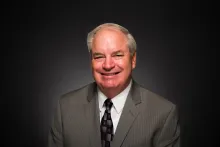
Robin Webber was born in Chicago, Illinois, in 1951, but has lived most of his life in California. He has been a part of the Church of God community since 1963. He attended Ambassador College in Pasadena from 1969-1973. He majored in theology and history.
Mr. Webber's interest remains in the study of history, socio-economics and literature. Over the years, he has offered his services to museums as a docent to share his enthusiasm and passions regarding these areas of expertise.
When time permits, he loves to go mountain biking on nearby ranch land and meet his wife as she hikes toward him.
