

Robin S Webber
This transcript was generated by AI and may contain errors. It is provided to assist those who may not be able to listen to the message.
When I was a boy, probably one of the first things that I learned when I went to church was from my Sunday school teacher. Different church, different time, different day. And that was my mother. My mother was actually our Sunday school teacher, and she would drill all of us in learning a very, very famous psalm out of the Old Testament.
Out of the book of Psalms, a psalm of David. And, you know, it's amazing when you're young what sticks in your mind and that you hold the rest of your life.
I've often, sometimes at nighttime when I'm not able to sleep, you know, none of you are having that problem as you're all getting younger. And I'll just go over it again and again to give me peace of mind and to give me peace of assurance.
I like to share it with you, and I learned it. And if you'll remember back in the early sixties, the old King James Bible was still very much extant. So that's more or less how I remembered. I could speak it in just modern day English, but to be very frank, I really love the Elizabethan tongue as well, which has a certain majesty to it. I think most of us do know that, that, you know, the goes like this. The Lord is my shepherd and I shall not want. He maketh me to lie down in green pastures.
He leadeth me beside the still waters. He restoreth my soul. He leads me in the paths of righteousness, even for his own name's sake. Yea, though I walk through the valley of the shadow of death, I shall fear no evil, for thou art with me. Thy rod, thy staff, they comfort me. Thou preparest a table before me in the presence of mine enemies. Thou anointest my head with oil. My cup runneth over. Surely goodness and mercy shall follow me all the days of my life, and I shall dwell in the house of the Lord.
This is Psalm 23, again written by David at some stage of his life, based upon his own personal experiences. This is the Psalm to the, do I dare say, to the great shepherd of Israel, God Almighty Himself.
And it speaks to the Israel of God today. It speaks to the body of Christ. It speaks to us as those that are individually called out to come to Him that He might be our God and that we might be His people. This Psalm is very interesting. If I can bring you into this message more and more, and it is simply this.
This Psalm not only extols God Almighty, but speaks to our calling. It speaks to our role before Him. And not only that, but our witness to others. I've never thought, wondered if you've thought that about, you know, breaking this Psalm down. It extols God, but it speaks to our calling dynamically and our role before Him, and also before others. It's very interesting. Let's open up, if you would please, to Psalm 23. I'd like to share a thought with you on this. In Psalm 23, and you know, we read in English, and again, we have to sometimes get back to the original roots. What did it mean to the people that it was first written for, or what did it mean to the author?
And you see, the Lord is my shepherd, and I shall not want. The term there for Lord and or God is this, Jehovah Jerah. Jehovah-Jerah. J-R-E-H. And it's very interesting what that means to the person that wrote this, and to all of us to incorporate today in our lives, it means that the Lord God will provide. Thinking of what I just spoke to all of you that's in the substance, the context of this Psalm. The Lord God will provide. This was David writing, and of course, David was familiar in that sense with those that had preceded him.
And again, this phraseology goes right back to the book of Genesis. As I was mentioning the other night in our first class, that Genesis basically lays all the rhythm for the rest of Scripture. And it's all here in Genesis, but it's the story of Isaac and Abraham going up that mountain.
And remember when Isaac's looking around, he's not a dumb kid. He's looking around, and all of a sudden he says, Dad, I thought we were going to sacrifice. And he's not saying anything. Are you with me?
And of course, then it's the famous line that Abraham uses, the Lord will provide.
The Lord will provide. After that, when they come down the mountain, he names it. He doesn't name that mountain Mount Palomar or Mount Baldy or Mount San Gorgonio or Mount San Jacinto or even Mount Everest. He calls it the mountain where God will provide. That's what we're going to be talking about today as we begin to flesh out not only the 23rd Psalm, but more behind that.
How does such beautiful prose, and it is gorgeous prose. Sorry, kind of in the Elizabethan tongue. It just kind of lifts it up more. How does such beautiful prose work in real time?
God deals. God is a real God. He deals with real people. He deals with them in a real time that his very real purpose for his covenant people that we just sang about in the song service comes to for as he wants. So how does he deal with that? How does he deal with the real challenges? How does he deal with it in your time? How does he deal with it in my time with the valleys that are set before us? Remember when I just recited the 23rd Psalm? Yea, though I'm in the valley of what? The shadow of death. And sometimes some of the decisions that before us are about as scary as death. Some of you in this room and some of you that are listening today or down through time are having a big decision as to how you enter the valley of decision that lies before you.
And that valley can seem wide. That valley can seem deep. And it seems like it might be the valley of no return until we begin to recognize that we are not alone. So the goal of this message is simply this. I want to move beyond the prose, which is beautiful. What's happening here? The title of my message is simply this, if you'd like to jot it down and to follow through. Experiencing Psalm 23. Experiencing Psalm 23 in real time. That's the short version. You could also put comma, my time. Very important. So we're going to take a look at this. And the way we're going to do this is if you would turn please to 1 Samuel. 1 Samuel. And we're going to pick up a story here. And what we're going to do, we talked a little bit the other night in our class, we talked about expository and or exegetical teaching. And for you, the students, your own personal study. And that's what we're going to do. We're just going to read from the scripture to begin with. We're going to go through the story from beginning to end. I'm simply going to read through the scripture. I'm going to give you some highlights as we go along. Because then at the very end, I'm going to give you... Jim gave you four points. I'm going to give you seven. But they're going to be short. And we're going to get out of here on time. Deal? So we're set to go.
What we're going to do now here is we're going to go to the story that is set before us. And that's the story of David. So what we're going to do is we're going to go again, like I said, we're going to go right into the scripture and we're going to read it exegetically, which means we're going to draw out of the scripture and we're going to move forward. Let's realize just a little capsule of 1 Samuel 16. Oftentimes, because we have not read the whole story and gotten the context, David has already become familiarized with King Saul, King of Israel, the first king.
And you'll find that actually in chapter 16. Saul was a gentleman that was moody, despondent, depressed. And most of us know the story that they wanted to calm down the king. And so they needed to find somebody nearby that could what? That could play some music. That could be a songster.
That could bring the king down to relax. And so that's kind of how the association with David and with the king was. Now, the king might not have known David at that point at first, just as a young man that came in from the local village to play for him. And you know what? It seemed to work. And we're going to go back to that story later. Then, very interesting, and this is why we need to go through the Bible again and again. And it's very interesting. Maybe something you ever never knew about is that because we realized the story that we're about to go into, David would not wear the armor into the valley. We're all familiar with that. But did you realize that he was the armor bearer for Saul? See, that's why I have to keep on going back and back to read the story. So, there was an association. And like many people in those days and down through the ages, they would be on the battle line, then they would go back to the front, they go to their home, there was either a harvest or there was a flock to take care of. So, David was kind of going back and forth, just like we do in California, back and forth to work, except he probably had an easier path than we do on our freeways. But then comes the story with all of that behind just a little bit, because we're going to draw upon it later. Very, very important point. We come to chapter 17, and notice the word that is used. Remember the other night when we were talking in the class about the power of the small words? Small words that are sometimes just two letters or three letters. Now. See, that sets the stage. Whenever you see these small words, it's like a doorbell. It's an alarm. Now. What's happening in the now? Because in our lives, things can seem to be going really well, and everything is fine, and everything is great. And then all of a sudden, something comes our way, or you run into something and become aware. And then each and every one of us here in this room have what? Now moments. And it's not so much the now, but what are we going to do with the now that comes our way as we move into the what? The Valley of Decision.
So now the Philistines gathered their armies together to battle and were gathered at Sohcoth, which belongs to Judah. And they encamped between Sohcoth and Azakah in F.S. Damim. And Saul and the men of Israel were gathered together, and they encamped in the Valley of Elah, that famous phrase. That's maybe one that you might want to underline. That's big-time verse. Valley of Elah, and drew up in battle array against the Philistines. Now let's understand the tribes of Israel, and to their west in particular, were Canaanite tribes and the tribes of the Philistines.
They not only had all the ites, the Hittites, the Azizites, this ites, that ite, but they also had the Philistines, of which was their major enemy as we move into the 10th century BC. So they draw up for battle. And this is enormous, and we're going to kind of break down a little bit about battles and how they run. And the Philistines stood on a mountain on one side, and Israel stood on a mountain on the other side. Now notice, with a valley between them, and a champion went out from the camp of the Philistines, named Goliath from Gath, whose height was six cupids and a span.
And he had a bronze helmet on his head, and he was armed with a coat of mail, and the weight of the coat was 5,000 shekels of bronze. And he had bronze armor on his legs, and a bronze javelin between his shoulders. Now the staff of the spear was like a weaver's beam, and his iron spearhead weighed 600 shekels, and his shield-bearer went out before him. And then he stood and cried out to the armies of Israel and said to them, Why have you come out to line up for battle? Am I not a Philistine? And you the servants of Saul? Choose a man for yourselves, and let him come down to me. And if he is able to fight with me and kill me, then we will be your servants. But if I prevail against him and kill him, then, then you shall be our servants and serve us. And the Philistine said, I defy the armies of Israel this day. Give me a man that we may fight together. So let's talk about this a little bit. Just break it down to where we're at. We've covered a length of Scripture.
What we recognize here is that this is basically what you call a trial by combat. This is not new.
It was not singular. This was often done between armies. Rather than thousands of men dying, they would each pick a champion, and the champion would go out and do battle. You might be familiar with this, especially if you've ever read the Iliad. You say, well, what is that? Of course, that's the story of Homer's story about the fall of Troy that the Greeks brought about in the Trojan horse. And there's a very famous battle scene in that between the champion of Greece, the Greeks, and the champion of the Trojans. The champion of the Trojans was Hector, who was the prince of Troy.
Of course, when you had Achilles, who was somewhat of almost a demigod in his own right, but the champion, and of course, in the story, Hector dies. So this was not new. This is how things used to happen here. We recognize a few things here. Sometimes people say, well, how tall was how tall was Goliath? I'm sure you've had that kind of go through your mind a little bit.
There's different sources. And by the way, I don't know. I was not to fly on the wall. I'm not that old for any of you that are watching on the screen. There are two kind of different sources. Number one would be that measured in one way out of older Hebrew scripture would be about nine feet, nine inches tall. That's a whale of a man. Later on in the Septuagint, the Greek, the Hebrew brought into Greek, and also some of the Dead Sea Scrolls when you compile them together, it's thought that Goliath would have been six foot nine. Now, can I tell you something? Before you shake, okay, this is not the interactive part of church, is simply this. Having been a small forward in college playing basketball, I used to have to guard people that were six six and six nine. Ray Kwasanki, remember Ray? Not too good. Not too easy. Sometimes you meet, sometimes people that are, I used to be six one, I'm shrinking. But anyway, that is that when you sometimes you just come up against a guy that's six three, six four, and he said it's not just he's six three or six four, he's not like Ray Bolger, you know, the scarecrow. This guy, some of these guys are thick like let's put it this way. When I was six one, anything over that even six two was a giant to me. Okay, so let's just keep that. Not only that, this was a man that was trained in war. He was a Rambo. He was a one man wrecking machine. This is what he did for his trade.
This is what he did for his trade. Skip, you were a school teacher. Jim, you were a insurance inspector. Others of you have all had your different trades. David deals with computers and fixes them. This guy's trade was to kill the enemy of his people. And he was good at it.
And the Israelites, again, here are these two armies standing across this valley looking at one another, which was common, and they would be shouting at one another. Anytime you see battles, they didn't just go there and be quiet. They were trying to alpha male the other side down by yelling and screaming and taunting and declaring their gods and this and that. And this was a part of what we call the psychological warfare.
And so here we have this story. And to recognize that, so Israel is listening to this.
And notice two thoughts here. Verse 8, very important in what we're going to talk about.
Goliath calls him, Am I not a Philistine? And notice now, and you might want to jot this down coming back, servants of Saul.
Servants of Saul. Later on, he again says, I defy the armies of Israel.
This is going to come to play when the man that actually walks down into the valley and does slay the giant, his vocabulary, his attention, and his focus is completely different than Goliath, taunting the Israelites, and how the Israelites themselves as a whole receive it.
And the Philo- Okay, so he dealt with that. So he gives this defiant message. And when Saul and all Israel heard these words of the Philistine, they were dismayed and greatly afraid. That means terrified. Now David was the son of the Ephratite of Bethlehem, Judah, whose name was Jesse and who had eight sons. And the man was old, advanced in years, and in the days of Saul. And the three old sons of Jesse, the older sons, had gone to follow Saul to the battle. And the names of these three sons who went to the battle were Eliab, the first born next to him, Abinadab, and the third was Shema. David was the youngest, and the three oldest followed Saul. But now notice, but David occasionally went and returned from Saul because he was the guy playing the songs at nighttime to put Saul asleep, make him calm, go to sleep now, big guy. Because remember, here's another important part, the giant is defying Israel from the valley floor saying, Come down and fight me.
Who was the tallest man in Israel? Who was the tallest man in Israel?
Saul was. Remember, Saul was heads and shoulders above all the rest of Israel.
Interesting. Okay.
But, and the Philistine drew near, and notice what it says, and presented himself for 40 days, 40 days, morning and evening. Okay. Here's the PowerPoint. Let's all look up here a second.
Israel on this ridge. Philistines on this ridge. Valley of Elah in between them. The big guy goes down and taunts and humiliates and challenges Israel for how many? 40 days. Not only that, but added up. He went down to the valley, how often? Twice a day. 80 times.
He sends out the same taunt to the army of Israel. The army of Saul. The army of Israel.
Just to give you a hint, whose army were they? We're going to talk about that in a moment.
And then Jesse said to his son, David, take now for your brother. So he's going to take him down goodies. I just want to kind of move really quickly into this. And so now notice verse 20.
He brings some goodies to his brothers to keep them going. Verse 20. So David rose early in the morning, left a sheep with a keeper, and took the things that went as Jesse had commanded them. And he came to the camp as the army was going out to the fight. Not to fight, but to the fight. A little bit different here. To the fight. And shouting for the battle. So they're marching to the rim every day. Are you with me? They're lined up. They're shouting at one another.
But nothing's happening. Kind of reminds me of the Civil War with Abraham Lincoln. McClellan, who was kind of the dandy of all the generals and the Union forces. Oh, could he do a military parade? Oh, did he have plans? But he never got them done. So finally, what did Lincoln say?
Lincoln said, there's that guy out west. I hear he's got a problem with liquor. Or that's at least what he was advised. And yet Lincoln said, at least he'll fight. Bring him east. The rest is history in the Civil War. Ulysses S. Grant. Soldiers are not paid to march. They're paid to fight. And so we take a look at this and then we recognize what happens. Then, so he comes up here. He brought in some ply and was greeting his brothers. Now notice verse 23. Everything's about to change. So now we're going to go forward. Then as he talked to them, there was the champion. There was that champion, the Philistine of Gath. Goliath by name, coming up from the armies of the Philistines. And he spoke according to the same words. Every day, the same words twice a day. Eighty times. Forty days. What's forty? What's the number of forty mean in the Bible? It's a time of testing. And so far, Israel isn't going anywhere. Because they won't go face that giant. Let's understand. Let's remember again. Giants have a very definite place in the Bible as far as frosting the people of God. We think of Genesis 6 where it talks about there were giants in the land in those days that were trying to wreak havoc. We think of even the example of Israel entering into, remember, into the promised land. I want you to think about this for a moment. I've seen about this this morning. Goliath is challenging them for forty days, and they're not going anywhere yet, right? Because Israel would not face the Canaanites because what?
There are giants in the land. Therefore, because they did not have that faith that God was going ahead of them, they had to wonder what? Forty years. Forty is a very important number in the Scriptures. So now let's notice what happens here. So, in all the men of Israel, when they saw the man fled from him and were dreadfully afraid, they're running to the rear.
So the men of Israel said, have you seen? And then, you know, they're kind of going by, you know, here's David, he's kind of coming to watch at the rim, and they're all going this way, you know.
And then they say, so have you seen this man who has come up? Surely he has come to defy Israel.
And it shall be that the man who kills him, the king will enrich with great riches, will give him his daughter, and he can give his father's house, an exemption from taxes in Israel.
Now, here we go. First big words out of David.
Then David spoke to the men who stood by him. He manned up. He covenanted a person up here.
What shall be done for the man who kills this Philistine and takes away this reproach from Israel? For who is this uncircumcised Philistine that he should defy the armies of the living God?
Boy, we need to milk this one. All it's worth is verse. Notice, this comes out from this young man.
Number one, he says this, what's going to be done with this guy?
Number two, we have been embarrassed. We've been slammed.
We've been made a mockery. This reproach that is upon us.
Who is this guy? Uncircumcised. He has not had that aspect of circumcision that sets apart the people of God in that time and that age. That he should defy the army's notice of the living God. Here we go. A point that we're going to come at the end. Before this Goliath is saying what to the Israelites? Oh, you're the army of what? Israel. Oh, you're the army of what? Saul.
There's something missing here. God's not in the equation.
The vocabulary is being accepted from a pagan to this covenant people of God, and they don't have an answer for it. And they've listened long enough that they feel like they're just working for Saul and just one more army there in the Middle East. And the people answered him, and this man is saying, so shall it be done for the man who kills him. Now, everybody got on him. His brothers said, oh, who are you, smarty pants? You're coming along and you what do you want? You want the king's daughter? Do you want the riches? You know, go home and find your mother and go go home and find your father. Jesse, go go go back back to Bethlehem. You know, you're just a prideful young man. Verse 29, and David said, what have I done now? Is there not a cause?
Then he turned from him to another and said the same thing, and these people answered him, as did the first ones. The bottom line, this verse is telling us this this is such a good story to get into. He didn't just say it once about this uncircumcised Philistine, about this man that defies the armies of the living God. This is a great theme that comes down through Scripture. Ends up in the book of Revelation about the living God and to wake up up today, whatever valley of decision that we're looking down into and have not yet gone down to deal battle with the Lord at her side, that you and I worship, not a dead God, not one out of iron, not one out of gold, not one out of pearls, not one out of you name it, but one that is alive, that is our champion and is the head of our covenant relationship with him, who knows exactly where we are. See, this reminds me of coming up to Pentecost. Remember when Peter got on a roll on that first Pentecost and he's talking and somebody said, what? They said, who does he think he is and what's going on? You know, it's only nine o'clock in the morning and are these guys drunk? What's going on? See, wherever God is, Satan is never too far behind and he wanted to toss cold water on David. Shut up, kid. Go home. Go find your mother. Go deal with your dad's sheep. He came back again and again. He was convicted. He was convinced. He was firm. He knew who was the Lord and who was the head of his life, this Jehovah-Jirah and that God would provide. So let's go a little bit further now. Then David said to Saul, let no man here. No, excuse me. Then David said to Saul, let no man here fail because of him. I couldn't read my writing. Then David said to Saul, let no man's heart fall because of him. Fail because of him. Your servant will go and fight with this Philistine.
And Saul said to David, you are not able to go against this Philistine to fight him for you are a youth and he is a man of war from his youth. Verse 34, remember small words, how important they are in the Bible. But this is it. This is going to set the next chapter. But for Noah, but for Barnabas. And now we find another but that sticks out here to capture our attention. But David said to Saul, your servant used to keep his father's sheep and when a lion or bear came and took a lamb out of the flock, I went out after it. I went... That's very interesting. He didn't wait for him. He... Because this is going to set up what he's going to do later down in the valley. Notice, I went out after it. I didn't flee just like my older brothers and their companions did.
I went forward. I took the action and struck it and delivered the lamb from its mouth. And when it arose against me, I caught it by its... That had to be something. I want to see that in the kingdom. I want to see that video where David grabs the beard. That's got to be great, great story. I caught it by its beard and struck and killed it. I killed it. I said, oh no, what have I done? Maybe the pet society will get after me. You know, what have I done to this lion or to this bear? No, he killed it. See where this is going. And notice, your servant has killed both the lion and the bear, and this uncircumcised Philistine will be like one of them seeing he has what? He's defied the armies of the living God. Here's one thing I want to encourage you, my dear brethren, and those that are listening. Grab a hold of that title. Grab a hold of that reality. We worship a living God. He's not an artifact. He's not a myth.
He is. And He's ours, and He wants us to be His. Moreover, David said, the Lord who delivered me from the paw of the lion and from the paw of the bear, He will deliver me from the hand of the Philistine. And Saul said to David, go, and the Lord be with you. Now, it continues then, the story of how, you know, Saul said, okay, if you're going to go, I want you to use my armor.
Now, remember, most of you probably didn't realize, and I didn't...
Jim, honesty. I didn't ever pick up that story that David had been Saul's arbor bear.
He had been Saul's armor bear. So he knew about armor.
He was acquainted with armor.
And so, but he put it on.
He put it on, and he just said, you know, this is not working.
This just is not me. This is not how I deal with it.
So notice in verse 40, he took them off. Verse 30, then there's those words then, so, but, now. Those are exciting words. It sets up the rest of the story. Then he took his staff in his hand, but it wasn't just going to be his staff. It was going to be God's staff. He was going to give it to God. Remember, goes into the valley. He says, I go into the valley of death. Your rod and your staff. They're not going to be just his instruments. They're going to be God's instruments for his purpose. Then he took his staff in his hand, and he chose for himself five smooth stones from the brook, put them in a shepherd's bag, in a pouch, which he had, and his sling was in his hand, and he drew near to the Philistine.
Now here's a guy that's probably 19, 20, 21 years of age. Everybody else is safely up on the cliff.
He's down with Rambo. He's down with Goliath, Gath. And notice what it does. He draws near. So the Philistine came and began drawing near to David. Uh-oh. And the man who bore the shield went before him. And when the Philistine looked about and saw David, he distanced himself, for he was only a youth, ruddy and good-looking. Verse 43. So the Philistine said to David, am I a dog? Now you have to understand that in Middle Eastern parlance, and you'll still see it today, a dog is a very... it's a raunchy term that they use in the Middle East. A dog is not a good word. You don't want to use dog.
Dog is an absolute insult that you come to me with sticks, and the Philistine cursed David. Notice, cursed David by his gods. And the Philistine said to David, come to me, and I will give your flesh to the birds of the air and the beast of the field. Then David said to the Philistine, you come to me with a sword, with a spear, and with a javelin. But I come to you. Yeah, I am the vehicle. I am coming to you in the name of the Lord of Host, the God of the armies. Not Saul's army, the God of the armies of Israel, whom you have defied. This day, says the Lord, this day the Lord will deliver you in my hand, and I will strike you and take your head from you. And this day I will give the carcass of the camp of the Philistines to the birds of the air and the wild beast of the field, and that all the earth may know that there is a God. There is a God in Israel. I tell you, brother, I read this, and I have, Susie's been helping me with this this year, mentioned, I'm trying to change up my vocabulary as a person. And after 70 years, it's kind of hard. It's hard to teach new tricks. But God wants me to because it's got to be in our heart, because our words, how we project ourselves, is either projecting ourself or projecting God, which is going to go into your point, Jim, on humility. So then notice what it says here, that there is a God in Israel. And that's why God put Israel, 250 years before this or whatever, he put them in the midst of Canaan, which was like a little Egypt. It was like Egypt on steroids with idols here and idols there, here and idol there and idol everywhere and idol, idol. And he put them in the middle of that. He didn't put them in the North Pole. He didn't put them in the South Pole. He put them in the middle of paganism that the nations might know when you go through Deuteronomy, you might want to jot this down. Deuteronomy 4, Deuteronomy 6, he put them in the middle of that society so that the nations might come to know who are these people that have such laws and who is it that they worship?
What God is theirs that has brought them forward, put them in the middle of us, in the society that works? Who are they? But if you never show up like the Israelites up on the rim, there is no witness. Making, not making a decision is a decision. Then all this assembly shall know that the Lord does save, does not save with sword and spear for the battle. Notice, the battle is the Lord's. That living God, that living God, that living God that keeps on coming out in the verbiage here. It's God's battle. I'm just His instrument. So, these words, so it was when the Philistine arose and came and drew near to meet David, that David hurried and ran toward the army to meet the Philistine. Now he's walking towards him. Now he's in full glide. I'll share something just history. David was not simply the only person that ever did a sling. Slings were very much a part of ancient armies, even down to the time of Alexander the Great. There would be hundreds of slingers in an army. They were like the rockets of that day, and they were good, and the metals that they used as far as normally beyond rocks were like lead and metal. And so, if you have 300 slingers all of a sudden, you know sometimes you see the old-fashioned movies where the arrows are coming in. Well, they did that with slingers. Many armies had slingers, but you don't... David is the army. It's come down to one that gets it, to be a witness, to be a witness. Remember 23rd Psalm? It's not only about God, but our part in it, and what we do in response to that covenant relationship.
So it was when the Philistine rose. I mentioned that he ran towards that. Then David put his hand in his bag and took out a stone, and he slung it and struck the Philistine in his forehead so that the stone sank into his forehead. Very graphic. That was the force of the slings back in those days. And he fell on his face. So David prevailed over the Philistine with a sling and a stone and struck the Philistine and killed him. But there was no sword in the hand of David, because remember, he didn't bring a sword. Therefore, David ran and stood over the Philistine and said, Oh no, what have I done? No. He took his sword, drew it out of its sheath, killed him, cut off his head with it. And when the Philistine saw that their champion was dead, they fled. Job died. And because of the example of that one young man, it gave encouragement to all the people around. There was his witness to Goliath as to who he was actually coming up against. Not a kid, down in the valley, but the living God of Israel. Witness. And it was a witness to his own people.
And sometimes when we witness to others and have God use us, it spreads a wave of encouragement to others to rise and to do. Okay, here's the story. Now we're going to go back very quickly.
We're going to make some summations here for you.
Here we go. There it is. Let me just give you some summations here.
Number one. I'm going to tell you what I'm going to do. I'm going to send my notes out to you, okay? Because I'm only covering about half of them, so we'll do this. Okay, I'm going to give them out to you. Just listen for right now. Just listen for right now rather than writing. Seven points. Number one. It's never the size of the job.
Gigantic or tiny, but it's the size of our heart. It's the size of our heart. That makes a difference.
We need to be prepared to flex and grow it.
David was, in Acts 13, 22, he's called a man after God's own heart.
That's the New Testament account. When Samuel was dealing with Saul, he mentioned to Saul that he is seeking out a man that will have a heart. And this is even before the story about Koliath.
Let's talk about a heart for a moment. A heart. Like any muscle, and the heart is a muscle, that muscle development and muscle strength comes from outside stress and pressure.
To exercise it. To come up against a weight that might be greater than you're used to.
In other words, you could do barbells the rest of your life. And, you know, five pounds here and five pounds there. That's if any exercise is good.
But you're not really going to go too far ever if you just keep on doing five pound barbells. That'll be it. Our hearts have got to be exercised. I want to share with you today a very personal thought and encouragement and a realization. God wants us to exercise the heart that he has given us. In Ezekiel 36, 25, it says that he's given us a new heart, a new heart. But that heart has got to develop with the help of God. And to recognize that the reason why it needs to be exercised is because it's under pressure.
It's under pressure that we grow. The pressure of, you know, I'll say this. Let's say I'm on the rim. I'm over here. I don't know if that camera's going anywhere, but I'm looking down into the valley of Elah right here. But I can watch up here and I can pray all day long, but God wants me down there. I'm not going to grow up here. I start growing by asking God what to do, but I grow further by recognizing he wants me to whatever that decision is in my life and or in your life to grow and develop. See, we've got to recognize that God is not calling us to be with him in that wonderful spot that is mentioned in Revelation 3, 11, and 12, where it says we are going to be with him. There's going to be no going out. There's going to be no coming in, but we don't just get there on our good looks, which leaves me out immediately. We get there to realize that as it says in Malachi, God is calling jewels. He's not calling trinkets. He's not calling something that you get at the 90. I can't say that. They don't exist anymore. They're like Goliath. They've gone out of business. I think the dollar store bought the 99. I heard that. The dollar store bought the 99 cent store because they had one more cent, which is probably more now because of inflation. But anyway, long story short, what is a diamond? A diamond is nothing else but coal under pressure. It's coal under pressure. The first point is simply this. It's never the size of the job or the size of what's before us as we go into that, but it's the size of our heart. God doesn't want our brain. Our brain's going to be going to the grave. You know, not resurrecting our brain.
He wants our heart. He wants a heart like David. David, who with all of his problems, you know, you heard that thought, how could David, after everything that's written about him, how could he be a man after God's own heart? But you know what? The difference between David and others, he never, like Abraham, never worshiped other gods. He was human. He was human. We learn from his faults and we learn from the things when he was spot on. Number two, David was not swayed by the crowd. David was not swayed by the crowd, but by God's calling. He was open. He made himself available. He was willing. He fulfilled what Isaiah would say 300 years later, when in the book of Isaiah, Isaiah 6 and verse 8, it says, whom then shall I sin before me? And then the answer came back.
Me.
Isaiah. Whom then shall I sin before me? That's not the first time that God has asked that in human history or history of biblical characters. And maybe he's asking you and me on this day, on this Sabbath, or what that valley of Allah looks like when we go home tonight or during this week or challenges. I just kind of, I'm kind of like at the Grand Canyon. I really kind of just like being on the rim and looking down, you know, it saves a lot of exercise. I'm too young to die.
Some of us, if not all of us, need to get off the rim that we've been on too long and make a determination that we are in the body of the living God.
You think of the crowds, just jot this down. Think of Noah, but for Noah.
Just his family and just frankly, you know, just a few of them within that family. Wasn't the crowd around? They drowned. Noah. What about Joshua and Caleb? Oh, there are giants in the land. They were two out of twelve that said, let's go up.
This is God's promise to us. Let's take it. What about Moses and Aaron? When the crowd with Korah and Dathan and the other gentlemen, the crowd and the plague came upon Israel and the two men stood, as it says in Scripture, they stood between life and death as people were dropping in those crowds, but they knew who they served and they served them with all of their heart and all of their might and all of their soul. What about Daniel? What about Michelle? Hananiah? Azariah? While everybody else was bowing down, they stood up.
You know, it's one thing to stand up. Are you with me?
It's another thing to keep on standing. A lot of people, good hearted, they'll take. They took a stand. It's one thing to take a stand. It's another thing to keep on standing when everybody else goes another way.
We need to think about the heavenly crowd. I'm going to take one verse here. Let's go to Hebrews 12.22. Here's the crowd we need to be mindful of, Hebrews 12.22.
Hebrews 12.22. Just talking about coming up against Mount Zion. But you have come to Mount Zion into the city of... Oh! What is the adjective?
You've come to the city of the living God. Hmm.
The heavenly Jerusalem to an innumerable company of angels, to the general assembly, and the church of the firstborn who are registered in heaven, to God the judge of all the spirits and of just men made perfect. That's the crowd we need to keep our eyes on.
Oftentimes when I'm writing people anymore, I'll just, as I sign off, I'll just say, keep on looking, looking up in all caps. You look around, you'll shrink, you'll join the Israelites up on the rim. God wants us to stand tall as witnesses of Him as men and women in Christ.
Point three. David never felt alone. David never felt alone.
Armies normally went into battle with a flag or with a banner.
David never felt alone. God was his banner. He just carried God's flag. God was his banner. There's a term called Jehovah Nisei. The Lord is my banner. The Lord is my banner.
David never felt that he was alone. You know, it's very interesting. I picked this up many, many years ago at Ambassador College. It might have been Dick Pluchet for those of you that knew Dick a little bit. He was our teacher at the time. And we're going through the epistles of Paul. You might want to jot down Romans 8, 31. It says, if God be for us, who can be against us?
When you break that down into an equation, it's simply this. God plus me equals majority.
God plus me equals majority. This the living God. Point number four. David was humble.
To this man will I look. Even him that is of a contrite spirit trembles at my word.
I've made everything else in the heavens, but this just really rocks me. Okay. This is the one that I look to. And he was humble. How do we know he was humble? Because words speak of what's in your heart. He never talked about himself. It was living God, living God, living God. God will do this. God will do this. He had to take a breath sometimes and mention himself, but by and large, it was an avalanche of what God was doing. It was miniscule as far as how he inserted himself into it. I say this to all of us. When we have that mindset, when we do that, the sky is the limit. David was humble. He knew that he bore God's name. He bore that flag. He bore that name.
When God told Moses to tell Aaron how to bless Israel, he said, you'll say this, the Lord be with you, the Lord be with you, the Lord be with you, the Lord be with you, and he says, and I will put my name on them. Do you let them know in that blessing, I will put my name on them. I will put my name on them. I have a question for you. We that are fellow servants, and those have been bought and paid for by the blood of Jesus Christ, and that we are servants of the Father. Doulos, actually bond servants, even in that sense, slaves as it goes further.
Who owns us? God or ourselves? Our words and our vocabulary will tell God.
Number five, David understood God's role in his role. Let's understand that God doesn't work in a vacuum. God will do only what he can do, but he will ask us to do what we can do. Remember that where he goes down to that brook in the valley of Elah, and he picks up what? He picks up five stones.
Why? Why? Well, number one, Goliath was not going to die of a heart attack looking at this kid.
But David picked that up because if the first stone missed, guess what he was going to do with the second stone? He was going to keep on firing and firing. And even if he missed all with all five, nobody probably do, stomp on the giant's toe, take the sling and strangle him. I don't know.
But he was going to bring that dude down. That's how we need to be. God will always do what only he can do, but ask us to do something in turn and to recognize how this works. Israel at the Red Sea, God told Moses two things. Tell the people to stand still.
So they had to stand. So the people had to follow and do something. They had to what?
Stand still. That's hard when Pharaoh and the chariots and the guys are coming over the hill.
Then God, which only God can do, he opens the scene. What's he say? Now walk. Stand still.
Now walk. And that's something that we have to kind of recognize as the Israel of God. Sometimes God's going to tell us, be patient, stand still. But sometimes you're going to have to get off your dock and you're going to have to walk in faith and move forward and do something. You think about, again, as we go through this, Israel in the manna. God provided the manna, but was it delivered door to door, tent to tent? No. They had to go out and pick it up. You go again, you think of Naaman the Syrian. Remember he was complaining, oh, aren't there any good rivers in Syria for those gigantic mountains that they have that with fresh snow and melt that I can go and I can be washed and I can be made clean? And God said, no. You go to that mud puddle called the Jordan. That's where it's going to happen. And nothing was going to happen until Naaman did that, and he did do that.
See, God healed him, but he asked the Syrian to do something. Let's take it a little bit further again. You think of Jesus Christ and with the healings that he did, think of the man, the blind man. What he asked the blind man to do. Can you know me a little spit the doodle and a little clay?
Then what he asked him to do? Help me. Somebody out here. Pardon? Very good spring. You get an A.
Okay. Yeah. Now go down the pool of Seliom and wash yourself.
Eyes. Now, Jesus could have just done that, but he continues to do that down to our day. He will always do in your lives what only God can do and open up the red seas in your life. But he's going to ask you to walk down into that valley of Ilah because you serve the living God and you are disciple of his son. And this is how it works. You can even think of the 5,000 people that were up on the hill feeding the fish and the bread. What a meal. But then during that time, he asked the disciples who were going to say, oh, there's not enough bread around here. But what he did, he gave him two tasks. He said, number one, go down and put the people in order. Set them up.
Number two, after they had been fed 5,000 people, thank you. Then he said, you take your baskets now and pick up the leftovers. Point. Point. You were doubtful. Let's understand what has God been prompting us to do by his Spirit and word that we have not done our part.
God is willing to open up the heavens, willing to open miracles. But he asked us to put our toe in the water and then let him allow us to walk across. Next point. Point six, never underestimate what you are going through today that is preparing you for tomorrow. Never underestimate what God is allowing you to have experienced in your life, your full life, perhaps, preparing you for tomorrow.
Remember that we had the story of David in the wilderness, a good shepherd, a good man.
He took the lion. He took the bear. It was in training. He realized that God had given it to him and in that it was not one plus one equals two, lion and bear dead. It was one plus one equals three equals majority. Romans 8, 31. If God be for us, who can be against us? And he gave the battle to the Lord. Once we get into that point of giving the battle to the Lord, it becomes a habit.
It becomes a way of life and it's a it's given God glory and witness. It's witnessing to fellow brethren. It's witnessing to this world. Last but not least, David was a finisher. He did the job.
He cut off the head. He didn't say, what have I done? Or enough already. Who did David model? It was his great great great great great great great great grandson, something like that, Jesus, who on the cross, who on the cross, one of the last things he said was, it is done. It is finished. And before his father and for us, he died for a few days that we might live forever with our father. I hope in the course of this message that I've been able to allow you to understand how you and I today can tackle our valleys of decision. The valley of Ephla that is before us, that we will now be able to leave this room today and be able to experience Psalm 23 before the living God, a real God, a real Savior, in real time with success in which we're able then to not boast in ourselves, but boast in Christ and give God glory with the giants that are before us, that he is so ready to partner with us and deal with.
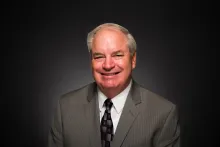
Robin Webber was born in Chicago, Illinois, in 1951, but has lived most of his life in California. He has been a part of the Church of God community since 1963. He attended Ambassador College in Pasadena from 1969-1973. He majored in theology and history.
Mr. Webber's interest remains in the study of history, socio-economics and literature. Over the years, he has offered his services to museums as a docent to share his enthusiasm and passions regarding these areas of expertise.
When time permits, he loves to go mountain biking on nearby ranch land and meet his wife as she hikes toward him.
