


David Mills
This transcript was generated by AI and may contain errors. It is provided to assist those who may not be able to listen to the message.
The Passover, brethren, is just a month away, Sunday night, March 24. It is time to begin examining ourselves, to search our hearts and minds, and see our need for the Passover. Because we do sin, even though we would like not to, but in word, attitude, or sometimes in deeds, we still fall short. And John said in 1 John 1 that if we say we have no sin, we lie, and the truth is not in us. The truth is that we do yet fall short. We do sin, and we need God's mercy and forgiveness. We're going to be having a lot of sermons in the weeks ahead about the Passover and also about the Feast of Unleavened Bread. In the next five weeks, our messages will focus toward the Passover and the Feast of Unleavened Bread. And it will be spiritual meat in due season. At first, it may seem that today's sermon does not connect with the Passover, and yet it does. And as we go along, I think you will see that it very much ties in with the Passover. The question I would like for us to ask and to answer this afternoon, what is the way to peace? Do you know? Don't be too sure that you understand the fallness of the answer to this question. What is the way to peace? We know in the world there is war and strife. We read about it every day. We hear about it every day. We see it often on our television screen. Thankfully, and aren't we thankful? There's not all-out war, like World War II, between 1939 and 1945 and World War I. What was that? About 1914-18. Thankfully, we don't have all-out world war. But we still have much bloodshed that is going on daily. There's a lot of lack of peace in the world. There's strife and fighting. Of course, there's no lack of peace in Washington and our government. Oh yes, the politicians are fighting it out. And what about our families? Well, there's fussing and fighting going on. Heated arguments take place, often leading to divorce. Many, many people divorce each other in our country. But I want to ask about us. What about your life? Are you at peace in your life, with yourself and with others? Or does your life quite often have frustration? Even fussing and fighting? Discontent? Restlessness? Is there guilt from things that maybe you've done in the past? Or maybe shortcomings that keep coming back to haunt you? Because all of us do have our shortcomings. Maybe you have a hot temper and you lost it again. Or whatever your shortcomings may be. Again, we want to ask ourselves this afternoon how we're doing as far as finding the way to peace in our own lives. What is the way to peace? What's the way to peace among nations, where nations could really cooperate, really work together? What's the way for peace for us as individuals? Today we're going to discover that way. It's a real and genuine and lasting peace that cannot be taken away from you or me. But before we discover that way to lasting peace, let's first admit that we humans do not really know the way to peace.
Let's read some verses out of Isaiah chapter 59. Beginning in verse 1. Isaiah 59 and verse 1.
So that he will not hear. Brethren, sin separates us from God. That's serious. In verse 3. Your hands are defiled with blood. Your fingers with iniquity. Your lips have spoken lies. Your tongue has muttered perversity. No one calls for justice, nor does any plea for truth. They trust in empty words and speak lies. Oh, we see so much of this, don't we, in the news today and around us in our society. They conceive evil and bring forth iniquity. They hatch viper's eggs and weave the spider's web. He who eats of their eggs dies, and from that which is crushed, a viper breaks out. Their webs will not become garments, nor will they cover themselves with their works. Their works are works of iniquity, and the act of violence is in their hands. Their feet run to evil. They make haste to shed innocent blood. Their thoughts are thoughts of iniquity. Wasting and destruction are in their paths. We see that all around us today. In verse 8, the way of peace. That's what we're talking about this afternoon. The way of peace they have not known. Isn't that sad? Mankind doesn't really know the way to peace. You and I of ourselves, just of ourselves humanly, do not know the way to peace. The way of peace they have not known, and there is no justice in their ways. They have made themselves crooked paths. Whoever takes that way shall not know peace.
That explains why the world is not able to solve its problems. And why we have so much friction, so much strife, and war, and bloodshed. Man simply doesn't know the way to real peace. We know how to look out for number one. We know how to, many times using hurtful words, get our own way. We know how to gossip, fuss, fight, envy, and hate. We know how to be deceitful. By the way to peace, we humans just don't seem to know. And so ahead of us now is a time when the world is going to see more war than it's ever seen before. We're going to see the culmination of going the way that leads to the opposite direction of peace. Let's go to Isaiah 33. We would have to say that, I think, many in our nation, in our history, we've tried to find a way to peace. The United States, looking out for a world policeman, in a sense, has tried to produce safety for commerce and business, and cooperation between nations. But let's notice a verse here that is certainly going to be fulfilled in the days ahead at the end of this age. Jesus said man would be ready to destroy himself, except the days were cut short. He said that in Matthew 24. In Isaiah 33, in verse 7, surely their valiant ones shall cry outside. The ambassadors of peace shall weep bitterly. Yes, those who have tried to bring about peace will be disappointed and weep bitterly. Highways will lie waste, the way fairy man will cease, and he's broken the covenant, and he's despised the cities. The earth mourns and languishes. We're going to come to a time of trouble like the world has never seen. We're going to have more lack of peace than we've ever had in the days ahead. But then, the good news, we'll skip on to that very quickly, is that Jesus Christ is going to return, and he's going to bring peace. An abundance of peace, it says. Let's read that verse. It's a beautiful verse in Jeremiah 33. Jesus Christ is going to return. He's going to bring an abundance of peace. That's what we need. That's what the earth really needs, an abundance of peace. And it's coming at the return of Jesus Christ. That's the message we preach, that an abundance of peace is coming when Christ returns. Jeremiah 33, verse 3, Call to me, and I will answer you. When we cry out to God, and with all of our hearts, he will answer. And show you great and mighty things which you do not know. And skipping on down to verse 6, Behold, I will bring it health and healing. I will heal them, and reveal to them the abundance of peace and truth. He's directing this especially toward Israel. In Judah, verse 7, I will cause the captives of Judah and the captives of Israel to return. And we will rebuild those places, as at the first I will cleanse them from all their iniquity, by which they have sinned against me. And I will pardon their iniquities, by which they have sinned and by which they have transgressed against me. So God is going to bring an abundance of peace, and show man, all of mankind, the way to peace. Well, let's get to the way to peace. What is the way to peace? Both between nations, as well as for individuals. Jesus said in John 14, in verse 6, I am the way, the truth, and the life. So we're going to see that the way to peace is through Jesus Christ. Even when Jesus was born, at that time, let's turn to Luke, chapter 2, At that time, it was announced by the angels that it would be through Jesus Christ that mankind would be able to realize the way to peace. And there is no other way. When Jesus said in John 14 that he was the way, the truth, and the life, there's no other way, or truth, or life, than through Jesus Christ.
In Luke, chapter 2, in verse 7, Jesus Christ was born, wrapped in swaddling cloths and laid in this manger. And in verse 8, there were in the same country shepherds, watching their flocks by night. By that we know it wasn't in December, but more likely like September, in the full Holy Day season.
Behold, an angel of God stood before these shepherds, and the glory of the Lord shone around them. They were greatly afraid. The angel said, Do not be afraid, for behold, I bring you good news, good tidings of great joy, which will be to all people. For there is born to you this day in the city of David a Savior, who is Christ the Lord. And this is the sign. You will find a babe wrapped in swaddling cloths, lying in a manger. And suddenly there was with the angel a multitude of heavenly hosts, praising God and saying, Glory to God in the highest, and on earth peace, good will toward men. God, in sending Jesus Christ to be born as a human being, and later to die for mankind, was sending away for mankind to have peace. Peace with God, peace with himself, and peace with one another. Peace on earth, peace and good will toward men. So it is through Jesus Christ that we are going to be able to discover the way to peace. Let's go back to a couple of verses to show that we must go through Jesus Christ for real, lasting inner peace. In Isaiah chapter 9 and verses 6 and 7, Isaiah chapter 9 verses 6 and 7, To us a child is born, and to us a son is given. The government shall be upon his shoulder. How few people in this world today realize Jesus Christ is going to have the government upon his shoulder. All those responsibilities of governing and leading and watching out for the people, for the welfare of the people, will fall upon the shoulders of Jesus Christ. But his shoulders are well able to handle the job. His name shall be called Wonderful, Counselor, Mighty God, Everlasting Father, Prince of Peace. Jesus Christ is the Prince of Peace. If we are to discover the way to peace, then we must go through the Prince of Peace, Jesus Christ. He is the way and the truth and the life. Through him there can and will be peace on earth. Even now there is peace on earth and good will toward men in the hearts of a few. Those that God is calling discover the way to peace now. And then when Christ returns, the rest of mankind will then discover at last the way to peace. They will be brought to the Prince of Peace. Let's go to Hebrews chapter 7. We have some more interesting verses on Jesus Christ being the one through whom we must go to discover the way to peace. Hebrews chapter 7 and verses 1 and 2.
For this Melchizedek, King of Salem, we remember reading that story that is referred to here in Genesis chapter 14. This Melchizedek, King of Salem, priest of the Most High God. We know that this was the one who became Jesus Christ later and was born as a human being. So this is going to very much relate to the one to the Prince of Peace. This Melchizedek, King of Salem, priest of the Most High God, met Abraham, returning from the slaughter of the kings and blessed him. To whom also Abraham gave a tenth part of all, first being translated King of Righteousness. Do you know that Melchizedek, what it means, King of Righteousness.
So the one that met Abraham was the King of Righteousness. Jesus Christ is the King of Righteousness. And he will lead us in the way of righteousness. And by the way, I don't know if I'll remember to quote this verse. It's not in my notes. But one verse brings out that all those that love God's law, that is the way to peace. Great peace have they that love God's law, and nothing shall offend them. So Jesus Christ, the King of Righteousness, will lead in the way of God's law. So Melchizedek, King of Righteousness. And then also, King of Salem, and the word Salem means peace, King of Peace. So Jesus Christ is the King of Righteousness, and he is also the King of Peace. True peace, then, can only come one way to us, humans, through Jesus Christ. It's the only way. He is the way to peace. That's true whether we look at it from the standpoint of nations or individuals. The very message that we, the United Church of God, preach, and that the Church has preached down through the years, is a message of peace through Jesus Christ.
Peace on earth, good will to men. That's central to the message that we preach. Yes, peace on earth and good will to word mankind from our Heavenly Father. Turn, please, back to Acts 10, verse 34. Acts 10, verse 34. Peter opened his mouth and said, In truth I perceive that God shows no partiality, but in every nation whoever fears Him and works righteousness is accepted by Him. This is the chapter where the sheep was let down three times. God is showing Peter that he is calling the Gentiles to be a part of his church.
Peter said that God certainly does show no partiality from every nation than whoever fears God and works righteousness is accepted by God. In verse 36, the Word which God sent to the children of Israel, preaching peace through Jesus Christ, He is Lord of all. Brethren, we continue to preach that same gospel that Jesus preached. He came preaching peace, peace on earth, good will to word men.
God views all of mankind. He loves mankind. He wants every human being to be a part of his family. He wants every human being to discover the way to peace that we're talking about today. We continue to proclaim that message as the church has done down through the centuries.
Every human being, I believe, I don't think there would be any exception to this, every human being wants peace. He wants a life where he is content, where he is at rest. He doesn't want strife and fighting and bickering and arguing and always being upset. No, we all desire peace, don't we? There's only one way that we can have this peace.
The real and deep and permanent lasting peace deep inside that is through Jesus Christ, the Prince of Peace and the King of Peace as well. In Romans chapter 3, let's notice that this peace on earth takes care of those sins and mistakes that we have made. It also takes care of our shortcomings that we have where we still fall short, where we still sin.
But we don't want to sin. I believe that every one of us who is a member of the church would like to not sin, wouldn't you? Wouldn't you like to not sin, not have any evil thoughts, any wrong attitudes, any wrong deeds? We don't like that. But we do sin, we do fall short. God has provided the way, peace on earth, goodwill toward men, a way to have peace with God, a way for the wall of separation between us and God to be removed.
It is through the blood of Christ. We read about that here in Romans chapter 3, beginning in verse 10, there's none righteous, no not one. You know, that's the beginning of the way to peace is to come to see that. Come to see that we don't, that we need God's mercy, that we are sinners, and like the public, and just openly admitted, instead of trying to be self-righteous like the public, like the tax collector, like the public, and I mean, or the...
And so we want to be like the one that was repentant and humbled himself before God, because we all have sinned. There's none righteous, no not one. There's none that understands, none that seeks after God. And going on down there in verse 16, destruction and misery are in their ways. And the way of peace, notice, they have not known. Now, mankind has not been able to discover that way to peace. And in verse 19, we know that whatever the law says, it says to those who are under the law, that every mouth may be stopped and all the world may become guilty before God.
We all do stand guilty before God. In verse 23, all have sinned and fall short of the glory of God, being justified freely by His grace through the redemption that is in Christ Jesus. And that peace on earth and goodwill toward men is pointed out in God's forgiveness, then, through Christ. Verse 25, whom God, this would be the Father, set forth to be a propitiation by His blood, through faith to demonstrate His righteousness, because in His forbearance, God had passed over the sins that were previously committed.
So God then wants us to, first of all, have peace with God. There was a wall of separation between us and God because of our sins. And He wants to remove that wall of separation. And He wants us to have peace with God. Once we come face to face with the truth that we are a sinner, then we come to the sacrifice of Christ for forgiveness. In other words, we come to the Passover. There is a connection between the Passover and peace. We're going to see that as we go through the sermon, because the first area where we must make peace is with God.
Let's read Romans 5 and verse 1. Romans 5 and verse 1. Therefore, having been justified by faith, we have peace with God and hell through that one that He sent to the earth, that brought peace on earth and good will toward men through our Lord Jesus Christ. So the place we begin to discover the way to peace is when we repent of our sins and we come to the sacrifice of Christ. And we humbly recognize our need to be forgiven, our need for reconciliation. And so we establish peace with God. And we humble ourselves before Him. And we let Him know that we repent of our sins. We let Him know, too, that we determine in the future to not sin. We want to keep His holy and righteous laws and commandments. And so we establish peace with God. So the way to peace begins with peace with God through the sacrifice of Jesus Christ. We recognize that our human nature must be changed, that there must be a transformation. And we have a booklet, Transforming Your Life, the Process of Conversion. We see our sinful nature and we do repent. We ask God's merciful forgiveness and change. You know, this has knocked us down to a state no longer with pride but with lowliness of mind. This process of repentance or conversion or the beginning of transformation knocks us down. But it's the way to real peace. It humbles us. We're on our knees before God.
But we're on the way to understanding and discovering the way to peace.
It's only in the blood of Christ and God's loving forgiveness that we can begin to discover real inner peace. This inner peace results from humble acknowledgement of our need for forgiveness and cleansing. Let's read from Colossians 1, beginning in verse 12.
Colossians 1, verse 12.
How wonderful that is! Those who are called to the Church of God are delivered from the power of darkness in this world and translated into the kingdom of the Son of His love. Translation to the kingdom of God. In whom we have redemption through His blood, the forgiveness of sins. That's all part of that beginning to discover the way to peace. He is the image of the invisible God, the firstborn over all the creation. For by Him all things were created that are in heaven and that are on earth, visible and invisible. Whether thrones or dominions or principalities or powers, all things were created through Him and for Him. He is before all things, and in Him all things consist. He is the head of the body of the Church. He's talking about Christ. He's the head of the Church. Who is the beginning, the firstborn from the dead? That in all things He may have the preeminence. For it please the Father that in Him all the fullness should dwell. And by Him to reconcile all things to Himself, by Him whether things on earth or things in heaven, having made peace through the blood of His cross. When God then through an angel announced peace on earth, good will to reward men, He was referring to how Jesus Christ would bring mankind to discover the way to peace through the blood of Christ. Bring the mankind in a humble, repentant state of mind, would then begin to discover peace with God, and go on to discover peace with fellow man.
Having made peace through the blood of His cross, and you who once were alienated, and enemies in your mind by wicked works, yet now He has reconciled. We were enemies, enemies of God. Now we've been brought to have a relationship of peace. We've made peace with God. That's where the way to peace must begin. When we have peace with God, guess what? We have the foundation for then going on to have peace with ourselves, and peace with fellow man. Let's read another passage in Ephesians 2. Ephesians 2. This is a passage that many people in the world misunderstand. It's one of those portions of Scripture that people twist. As Peter said, Paul's writings were twisted. This is one of those portions that is twisted.
In Ephesians 2, verse 11, Therefore, remember that you, who is Paul writing to the apostle to the Gentiles, you, once Gentiles in the flesh, who are called uncircumcision by what is called the circumcision, made in the flesh by hands. What does that mean? It means the Gentiles were called uncircumcised people by the Jews who were circumcised. In verse 12, so this passage, understanding that it's talking about those who were uncircumcised and those who were circumcised, is very important in understanding this passage. Verse 12, At that time you were without Christ, the Gentiles were without Christ, being aliens from the Commonwealth of Israel and strangers from the covenants of promise, having no hope and without God in the world. He's describing the Gentile nations who were just really basically on the outside, no hope without God. But notice now, in Christ Jesus, you who once were far off have been made near by the blood of Christ. So these Gentiles can have peace with God. That's what it's leading up to. Verse 14, For He Himself is our peace. Jesus Christ, He's our peace, both the circumcision and the uncircumcision. Jesus Christ is the Prince of Peace. He's the King of Peace. He is our peace. Who has made both one? Both who? Both circumcision and uncircumcision. He's made the Gentiles and the Jews one. And has broken down the middle wall of division between us. What's that? Physical circumcision has been broken down. That divided the Gentiles and the Jews. That's been broken down. Verse 15, Having abolished in His flesh the enmity, that is the law of commandments. Here's the portion often twisted. People use this to say the Ten Commandments are done away. It's not even talking about the Ten Commandments. It's talking about circumcision versus uncircumcision. Having abolished in His flesh the enmity, that is the law of commandments contained in ordinances. What Christ has made unnecessary is circumcision. It's no longer necessary to be circumcised in the flesh, but in the heart. So as to create in Himself one new man from the two, two who, Jews and Gentiles, circumcised and uncircumcised, to create one then people, one church. Not based upon physical circumcision at all, but circumcision of the heart. To create one new man from the two, thus making peace. So it brings out that to Jews and Gentiles, all nations, Paul goes on to say, you know, bond or free, whatever social level it might be, male or female, doesn't matter. The outward physical things, circumcised or uncircumcised, what matters is the circumcision of the heart.
And that makes peace in that we are all together as one. Verse 16, that he might reconcile them both, both the Gentiles and the Jews, the uncircumcised and circumcised, to God in one body, in one church, through the cross, thereby put into death the enmity.
And he came and preached peace to you, you who, you Gentiles, who were far off, and to those who were near. That would be those who were far off would appear to be the Gentiles, and those who were near would appear to be the Jews. Anyway, peace has been preached through Jesus Christ, the Prince of Peace. See, the way to peace focuses on Jesus Christ. And verse 18 goes on to say, For through him, through Christ, we both have access by one Spirit to the Father. We both then can discover the way to peace, real peace, through Jesus Christ. Doesn't matter whether we're Gentile or Israelite, bond or free, male or female, rich or poor. It doesn't matter. The way to peace then begins with coming to understand the truth of the Bible. It begins when one has knowledge that leads him to repentance, where he humbles himself and drops down upon his knees with a broken heart and repents before God, and then comes to the Passover, to the sacrifice of the Prince of Peace, is baptized and receives God's Holy Spirit. And he's on his way to word, then growing and overcoming and learning more about this way to peace. That's where it all begins, though, with repentance and baptism. This peace, the way to peace that we're talking about, is a marvelous and dynamic thing. When we are at peace with God through the sacrifice of Christ, then we begin to have something that we never had before, an inner peace. Now we have a peace that is within. We have repented. We've stopped fighting God, and we're not fighting fellow man either. Even if someone is our enemy, we're not fighting fellow man. We're praying for fellow man. If he's an enemy, as Jesus instructed, striving to live by the Scriptures. So when we have this peace with God through Christ, then suddenly we have something we never had before. It's an inner peace, and also a peace with fellow man. It's a new way of thinking. It's a wonderful way of life.
What if the whole world began to have this kind of thinking? Humble itself. What if every person on the earth, every person in every nation, could humble himself and come to the Prince of Peace and the King of Peace? Be reconciled with God. Humble himself and realize his own sins and shortcomings and begin to want to work on them and to overcome them and to live the way of righteousness.
Why? The way of peace would then spread right on through all nations and every individual. This peace is a wonderful thing. It is marvelous and dynamic. Let's go to Ephesians 4. It's put here in some very beautiful language. In Ephesians 4 and verse 4.
I'm sorry, not Ephesians, Philippians. Let's go to Philippians. That's near Ephesians, but go one book further forward. Philippians 4 and in verse 4. Rejoice in the Lord always. Again, I say rejoice. God does want us to rejoice, doesn't he? Let your gentleness be known to all men. The Lord is at hand. Be anxious for nothing.
We don't need to worry about things. Put them in God's hands. He can take care of them very easily. But in everything by prayer and supplication with thanksgiving, let your requests be made known to God. Verse 7, if we have this trust to word God, we don't worry about things. We've made our peace with God. It goes on to say, The peace of God, which surpasses all understanding, will guard your hearts and minds through Christ Jesus.
Don't you want this kind of peace? The peace that passes all understanding. I do, and I know that you do as well. There's only one way, and that is from God, through and by Jesus Christ. Let's go to John 14. Jesus said He left peace. He was leaving it. He didn't...it's here. It's available for those who are called to understanding at this time. John 14 and verse 27, on that night before He died, Jesus told His disciples, Peace I leave with you. My peace I give to you.
Not as the world gives do I give to you. Let not your heart be troubled, neither let it be afraid. So Jesus Christ was reassuring His disciples that He was leaving peace with them. So that peace is available. It's now on the earth. It's in the hearts of those, in fact, who are reconciled at peace with God. In John 16 and verse 33, John 16 and verse 33, These things I have spoken to you, that in me you may have peace. All these things He had been telling them, He was telling them, so they could have peace.
In the world you will have tribulation. Be of good cheer, I have overcome the world. But in spite of that tribulation, that doesn't mean that we lose our peace. Not at all. That peace is a deep inner peace that cannot be taken away from us. It's a real and deep inner peace. Think about it. In reading all of these verses, if we don't have this peace in our lives, if there's still a lot of discontent, dissatisfaction, a lot of friction, restlessness, if there's strife, then something must not be quite right.
Something is wrong. It simply means we're not really coming to the Prince of Peace in the way that we should. Because He's left the peace here, He promised it, He said He would leave it with His disciples. We just aren't coming to the Prince of Peace in order to have the peace of God. Those who do not come to the Prince of Peace, of course, are not going to find or discover the way to real peace.
They will be discontent and restless. They'll be fighting themselves and everybody else. Those who go another way just cannot know the way of peace. There's only this one way. Isaiah 48. Let's read a couple of verses here in Isaiah. Again, it points out that man of himself just doesn't know the way to peace.
And this wicked world will never be able to discover of itself the way to peace. God does have a plan to show the way to peace to the world at the coming of Christ. But He's showing it to His church today. And those who have a heart and mind to do so are willing to humble, repent, draw close to God, and walk with God, then they can discover the way to enter peace here and now.
Isaiah 48, verse 22, There is no peace, says the Lord, for the wicked. Those who go another way than God's way, there's no peace for them. Isaiah 57. Isaiah 57, verse 19, I create the fruit of the lips, peace, peace, to Him who is far off, and to Him who is near, says the Lord. And I will heal Him. God wants mankind to have peace. He wants us to be happy, full, content. He does not want us to be unhappy.
He wants us to have peace, to have rest. In verse 20, But the wicked are like the troubled sea. Just think of choppy waters, of big waves crashing into the shoreline. The wicked are like the troubled sea, when it cannot rest, whose waters cast up mire and dirt. There is no peace, says my God, for the wicked.
But you know, the righteous do discover the way to peace with God. They find that it's through humbling themselves and determining to obey God's laws and commandments. They confess their sins, and they seek forgiveness through the sacrifice of the Prince of Peace. And they come to have inner peace that passes all understanding. How about you?
Have you discovered that deep inner peace that passes all understanding? You should. If you have repented and been baptized, your sins have been forgiven. One verse, they've been removed as far as the east is from the west. You have atonement with God, and you have peace with God. But sometimes we still hold on to our sins and feel guilty about our sins. Maybe even sometimes shortcomings. Sometimes we do yet fall short. But there, what do we do?
We can drop to our knees, and we can maintain our peace with God by repenting and asking His forgiveness. But we have to let go of the past. If there's any guilt complex or guilt that remains from things we did long ago, then we can forget those things that are behind. Just as Paul did. Let's turn to Philippians. Once again, Philippians 3 and verse 8. We have to let go of the past. We can't keep harboring and thinking about the shortcomings. The past is past. We cannot go back and change it. We can only repent and ask God's forgiveness of things we have done.
Then he washes those sins away. He cleanses us of sins of the past. Philippians 3 and verse 8. But indeed I also count all things lost, for the excellence of the knowledge of Christ Jesus, my Lord. For whom I have suffered the loss of all things and count them as rubbish that I may gain Christ. Skipping on down to verse 13. Verse 12, brother. Not that I have already attained or am already perfected. That's where we are. We're not yet perfected. But he says, I press on that I may lay hold of that for which Christ Jesus has also laid hold of me.
Brethren, I do not count myself to have apprehended. But one thing I do. Let's make sure we do this one thing. Forgetting those things which are behind and reaching forward to those things which are before. I press toward the goal for the prize of the upper call of God in Christ Jesus. Let's then leave those sins and things, mistakes we have made in the past, those sins of the past. Let them go. They have been taken away from us as far as the east is from the west.
So let them go. Through the Passover, through the Prince of Peace, we are totally forgiven, not partially. There's total forgiveness and cleansing. That paves the way for real and lasting inner peace. With ourselves, with God, with ourselves, and also with fellow men. Let's go to Matthew 11. So if we have heavy burdens that we still try to carry around, let's leave them in God's hands. We've all heard that. When we pray, take our burdens, give them to God, and leave them there. Get up and carry on without trying to carry the burden yourself.
Matthew 11 and verse 28. Come to me, all you who labor and are heavy laden, and I will give you rest. So we don't need to carry those heavy burdens. We don't need to have any guilt complexes.
We simply need to repent and ask God's forgiveness and get up and carry on. Jesus says, I will give you rest. Take my yoke upon you and learn from me. For I am gentle and lowly in heart, and you will find rest for your souls. You will find peace. Notice it does require a lowly, humble heart. You'll find rest for your souls, for my yoke is easy and my burden is light. Just think of this.
When someone is burdened or heavy laden or feels guilty, often he will lash out at others. When someone is ill toward others, what does that mean? It means he does not really have inner peace himself. He is lashing out at others and hurting them. If we try to carry our burden, that will be what happens. We will actually turn out to be not content, not at peace. We will actually do harm in our relationships toward others.
Christ says that we should come to him and he will give us rest. He will give us that deep and lasting inner peace. He is the king of peace. He has it to give to us. He said, my peace, I leave with you. So if there is any lack of happiness, if there is any frustration, then there is strife and conflict in our life. Remember that the peace that passes all understanding is available.
What about marriage problems? Often friction and problems can develop in a marriage. People can fuss and fight with each other. One counseling I had many, many years ago in a totally different part of the country than here. One couple was fussing and fighting all the time. There was no peace in their marriage. They told me that on their way to church they would fuss and fight and argue every mile of the way. Unfortunately, it was about 60 miles they drove to church.
Then they said, we come inside and we would talk and fellowship with people and smile at them and be friendly. We would go back to our car and we would fuss and fight every mile of the 60-mile trip back home. There was no peace in their marriage. What about you and your mate? Do you argue and fuss? Maybe there are others you don't get along with. Is there friction, envy, angry words? Just don't forget that through Christ it is possible to have peace with God and with yourself and with others. One Proverb says that those who live God's way, a righteous person, is even at peace with his enemies.
Because in our minds we really don't have any enemies. We are praying for our enemies. We are at peace with them on our side, even if they are not at peace with us on their side. So through Christ and through God's Spirit working in us, we come to have that kind of peace in our lives. In conclusion, brethren, God wants us to discover the way to peace. As we can see, the way to peace at its beginning, and maybe on through as well, is connected with the Passover.
In reconciliation with our Father through the sacrifice of Christ. God our Father wants us to have peace that passes all understanding. He wants the world to have that peace. And he has a plan to bring the whole world to the Passover and to discover the way to peace. As we approach the Passover this year, let's realize that God has shown us the way to peace now. He's brought us to the Prince of Peace. To have this deep inner peace, we must constantly be repentant in heart, humble and lowly in spirit, realizing our need for God's mercy and forgiveness.
What a wonderful world when all humanity has this kind of heart and finds peace through the Prince of Peace. And may we come to the Prince of Peace today and find the inner peace that passes all understanding.
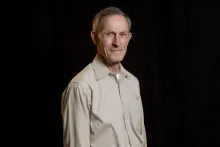
David Mills was born near Wallace, North Carolina, in 1939, where he grew up on a family farm. After high school he attended Ambassador College in Pasadena, California, and he graduated in 1962.
Since that time he has served as a minister of the Church in Washington, Florida, North Carolina, South Carolina, Oregon, West Virginia, and Virginia. He and his wife, Sandy, have been married since 1965 and they now live in Georgia.
David retired from the full-time ministry in 2015.
