

Robin S Webber
This transcript was generated by AI and may contain errors. It is provided to assist those who may not be able to listen to the message.
In all seriousness, and we are in a serious encounter as we come to the Feast of Tabernacles, even though it is laced with joy and rejoicing, we are to be here about our Father's business. And I really appreciated the two messages that preceded me this afternoon. I want to build upon them. Mr. McNeely spoke about being about our Father's business, and that's why we have been called. And that is our calling to understand that, and then to act upon that fully.
And as Ward brought out is that there is a certainty to God's discussion with us, and God's calling, and how He intervenes, and how He interrupts our lives. And so today we are, this afternoon, we're going to talk about being about our Father's business, and that you and I, by this afternoon, by the end of this message, will have a certainty as to what that is. I don't want anybody to go out uncertain about what you and I have been called to.
We ask why, and that's a good question. Because you and I are not just simply being called for personal salvation. We're being groomed, and we are being trained now to be a kingdom of priests under the great Heavenly High Priest. And as He comes not only as our Savior, and not only as the King of the wonderful world tomorrow, but a high priest, and there's going to be teaching, and there's going to be instruction, and we cannot teach what we have not experienced. It cannot be taught what we have not been able ourselves to go through.
And so you and I, as He that preceded us, the One, we are learning to be spirits of experience with the assignment that God has given us down here below. So are you ready for the rest of the message? Here we go. I'd like to share a story, and it is true if you've ever been to Milano, Milan, Italy.
And the Cathedral of Milan features a remarkable entrance in which you pass through three doors in succession into the main sanctuary. And each door, as you come up to it and pass under it, it has an inscription above the arch and above the door. As you come up to the first door, it's very interesting, and it's stone etched in stone above that door, there's a wreath of roses. And underneath that wreath of roses it says simply this, all which pleases, all that pleases, is but for a moment. And you go underneath the arch and you proceed. As you come up to the second door, as the passage continues, you come up to the second door, and above the door is etched across, is etched across, denoting suffering.
And with the engraving, all which troubles is but for a moment. But there's one door left. You proceed down the passageway, then you come to the third door that's going to lead into the sanctuary.
And it simply says this. Are you with me? It says this. That only is important, which is eternal. That only is important, which is eternal. I want you to think what I just shared with you as we move forward in this message. Our pilgrimage walk towards the Kingdom, being prepared for us, through the various chapters of life, is very much like those three doors, those three arches, and what is inscribed above them.
When heeding the call of the greatest pilgrim who has ever lived and lives for you and me, and you say, well, who's that, Mr. Weber? And I will tell you that. Thank you for asking that. The greatest pilgrim that ever lived is Jesus Christ, Jesus Christ who made a pilgrimage away from his home in heaven, and came to this earth and lived amongst us, dwelt amongst us, tabernacled amongst us, and then went back to heaven.
It is the greatest pilgrim that ever lived. And we learned from him, and we followed that call. The first thing that Jesus ever says to the disciples is, follow me. And as we go through the pilgrimage, and it is a pilgrimage in this world, the last thing, he always comes back to us. He will always reach out to us. And he'll say, at the end, just as he did Peter, don't worry, Peter, don't worry about the other guy.
Just listen to me. You, you, follow me. So we need to understand these passages that we're going through, these chapters of life, the Christian experience that we're being groomed and trained in, to be able to follow the greatest pilgrim that ever lived. Which begs, then, the question from each of us, do we and our Heavenly Father, as were to be about his business, do we see eye to eye and heart to heart as to what is essentially important?
Or do we simply get stuck in the moment? All that pleases us but for a moment. Are we eye to eye and heart to heart with God Almighty today? Are we where he wants us to be? Am I where he wants us to be? Simply put, then, what is to beg and to borrow upon what Ward brought out? Simply this. What is absolutely fundamental in God's eyes for us as a pilgrim, for him, and a disciple of Jesus Christ? What is fundamental in his eyes? To serve him now? To assist Jesus Christ in the wonderful world tomorrow that oftentimes we call the Millennium, and then to exist and to experience them throughout all eternity.
That's what I'd like to talk to you about today. As we navigate through the passages of this life for now, we're at a festival that focuses on temporary dwellings. The very festival that we're experiencing for seven days is branded as about temporary dwellings. Such a festival that focuses on temporary dwellings reminds us of two things.
Allow me to share them with you. You might want to jot down a note on this. Two things that we take away from temporary dwellings. Number one, our physical life is temporary. Our physical life, as it says in the Psalms, that if somebody lives three, score, and ten, but if by reason of heart they live four, score. Everything goes the way of the dinosaur. Woolworth Market did. Remember Woolworth? Anybody been to a Woolworth's Five and Dime recently? Everything goes the way of the dinosaur.
Sears is about to go the way of the dinosaur. All things go the way of the dinosaur. Let me share in a biblical thought this. You might want to jot down 2 Peter 1, verse 10 through 14. Simply put, the Apostle Peter, as a senior citizen in God's service, said that, simply this, that he was in a tent. He looked at his physical flesh and blood being simply a tent, a temporary dwelling that he was ready to put off shortly.
Now he said, well, Mr. Weber, can we go home? We already know about the 3 score and 10 and the 4 score stuff. Let me take you a step further. Are you with me? Ready to travel with me to the next point? Here we go. It's simply this. We also need to realize that, again, this festival with the focus of temporary dwellings reminds us, and here it goes, friends, that God dwells and or tabernacles only so long in these human tents. Our human tents only last so long, and we only get to exist and experience God and Jesus Christ living in this tabernacle, living in this temple that they've established on two legs for only so long.
To be able to experience Him, to be able to exist in Him, to be able to exercise His Spirit. Now, with that understanding, what resides within us? What does reside within us as we walk through the passages of life? Bottom line, I'd like to share something about Succot and about dwellings and about tabernacles, which are very interchangeable. We talk about temporary dwellings. But God Almighty, our Heavenly Father, did not send His Son to this earth to die for you and for me, simply to be a part of a timeshare plan in your life.
God does not want to be a timeshare. He does not simply want a house. He wants you to be home. A home. You know, there's a difference between a house. A house is something that you can buy. A house is something that will come and go. But a home is about a relationship of love, of memories, of longings, of togetherness, and of relationships.
That's God's design on our tabernacle, to be within us and to stay. Christ has gone to prepare a place for you and me. But as the Chief Shepherd and as the Father's Chief Minister, He continues to prepare us for that Kingdom now. And so thinking then, I'd like you to turn to Revelation 14, our first scripture, I'd like you to turn to Revelation 14, because this will address the title of my message.
And it is simply this. This is towards the end of humankind, towards the end of human history. Witnesses have gone out since righteous able's blood has cried out from the soil. An Enoch, an Abram, and the prophets of old, and Jesus Christ, and His ministers these last two thousand years. But we kind of know the trajectory of world history. There's even the two witnesses that will one day be. But then the final witnesses comes from heaven in Revelation 14.6. So never worry, okay?
Don't worry about the two witnesses. They have their part. But God is finally going to make a tremendous contrast between Babylon below and heaven above. And He says this in Revelation 14, Then I saw another angel flying in the midst of heaven having the everlasting gospel to preach to those who dwell on the earth, to every nation, tongue, and peoples. This means all tribes, all nations. And this language is used.
This is speaking of that which we might call biblically Gentiles. Saying with a loud voice, Fear God, give glory to Him, and for the hour of His judgment has come, and worship Him who made heaven and earth the sea and all things. This is the final witness. God, before He declares judgment in the day of the Lord, not the tribulation, the tribulation is the time of Satan's wrath. This is when God makes judgment upon the world at that time, and He declares this. It's a witness. So with that thought, then, God tells us loud and clear to inform and to encourage us how to move through the passages of life, the chapters of life, in order to sustain and to expand our call to a pilgrimage of witness.
I want you to put that down for a second. This is a classroom. I'm an old teacher. We have a pilgrimage of witness. It's not a pilgrimage of silence and muffled tones. We have a pilgrimage of witness to demonstrate and to share and to grow in. So we look at this and to understand simply this, then, that what we're going to do, I'd like to give you the title of this message, and it's simply this, dwelling within the everlasting gospel.
Dwelling, tabernacling, existing within the everlasting gospel. This is the GPS. We know that as a church, we preach the gospel of Jesus Christ and the kingdom of God, both the King and the kingdom, both He that personified the kingdom and the fruition of that kingdom yet to come, of which in part we are now experiencing during the Feast of Tabernacles.
So we take a look at that. But what is it? What is our witness? And do I dare say something? May I? Not only are witness to those around, but are witness to God Almighty. God likes to be witness to, are you with me? That we get it. That we have embraced it. That He knows that we understand the calling of firstfruits that He has visited upon us. So let's understand the importance of these four components of the everlasting gospel.
I'm going to, do I dare say, share them with you and to be bold enough to say I'm going to confront you with them, because they come from the Christ. And when you come up against Jesus Christ, you have got to make a decision. You have got to make a decision when He knocks on your door, whether or not you'll open that door or not. And even if you put Him to the side and say, well, I'm not ready right now, that is still a decision.
No decision is a decision. And He wants you and I today more than ever to make a decision that we will be representatives and witnesses of the everlasting gospel. So let's take a look at this. Let's unpack it, as we say today, a very common phrase, to unpack these four components one by one so that we will not be surprised. And I want to share something with you. Let's begin now during this festival. Yesterday is gone. Tomorrow has not arrived. Remember what I shared with you this morning, that we worship a God of interruptions. He not only interrupts human history, He interrupts our personal history. He doesn't only interrupt us when we are first baptized, but He continues to interrupt us out of His love and out of His concern for you and for me to be a part of His family throughout eternity.
Number one, here we go, out of Revelation 14. The first component that we want to unpack is simply this, to fear God. Let's talk about that for a moment. To fear God. What does that mean? It is noteworthy, very noteworthy, fearing God is the first to be mentioned as the foundational element of the Good News. That's what the Gospel is, translated out of the Greek.
The first element of the Good News that is endless in scope, to fear God. You say, listen, Weber, are you trying to wake me up in the afternoon? Fear? Do I have to fear God? Great! You say, I have enough trouble with my shadow. I have enough trouble with being in the dark at night. And you're telling me the first thing that I've got to understand about the everlasting Gospel is to fear God.
Does that mean that I'm going to have to be constantly vigilant? Does that mean I'm going to have to be uptight all the time? Does that mean that God's going to have a gotcha moment for me? And that's it? Over and out. Thank you, buddy, and goodbye. We're not talking about that. Or is God expressing something far grander and so extremely positive that draws us together with Him, not out of dread, but out of desire? Interesting. If you put those two words side by side, if you're taking notes, fear and desire, then write down dread. And by the end, by the time we get done with this point, you can cross out. You can put a line through dread. Let's talk about this from it. Let's go to Proverbs 9. How important is the fear of the Eternal? Proverbs 9. Join me if you would there real quickly. Proverbs 9.
In Proverbs 9, verse 10. Just allow this to fall upon you. The fear of the Lord is the beginning of wisdom, and the knowledge of the Holy One is understanding. For by Me your days will be multiplied, and the years of your life will be added to you. The fear of the Lord is the beginning of understanding. We need to break that apart. What is God really telling us about this? Let's consider that the Greek word is phobia. It comes from the Greek word phobia.
We talk about people having phobias. There are bugs in the air that don't really exist, but they are buzzing around their head. They have a little phobia going on. When you think of phobia, our minds normally convey fear of, but it can equally be rendered as reverence. That denotes a feeling or attitude of respect, of love, of awe, of esteem, of veneration.
Here is my favorite. I love sharing this with people. Breathless adoration. You are just in awe of our Maker. Not only a Maker, but one who puts this handle on him, our Heavenly Father. Amazingly, when properly understood, it leaves us with the impression of moving towards something, rather than running away from something. Moving towards God, rather than running away. Vine's commentary, the Greek word phobus, can also mean this.
It's a reverential fear that creates, stay with me, a constant carefulness. Now, let's understand something. Join me if you would in Philippians 2 as we break this down. Let's unpack it. Philippians 2. Now, if you can't find Philippians, it's on page 1349 in my Bible, okay? But in Philippians 2, in verse 12, notice what it says here. Therefore, my beloved, as you have always obeyed, not as in my presence only, but now much more in my absence, work out your own salvation.
Notice with fear and trembling. Is that what it's talking about? Let's talk about that for a moment. What Paul is really discussing here, when you take the topsoil away and get down to the heart of the matter, it comes from a sense of our inability, our powerlessness in our own human beings, to deal with life triumphantly, to master and to be victorious over our nature of and by ourselves. It's a reality check. What Paul is saying here, it's a reality check to you and to me, and he was one of us. And thus, it's not a fear that drives us into hiding, but drives us into ever seeking God's answers and His comfort, of which otherwise we cannot live life effectively.
I see Susie out here, and it just came to my mind. That word, victor, which comes out of the Latin victor, I always think of, and I know that Erica Schmidt knows the cemetery in Santa Ana, where Corey Tinboom is buried, that great Dutch lady that rescued the Jews during World War II and later on became an evangelist. We went looking for her tombstone one time. We were up in that cemetery for another ceremony. He said, we know that she's buried here. So we're looking around. This is what Susie and I do.
We go into a graveyard. So if you see these two people, you know it's Susie and me. And we're looking around. And you think there'd be a monument to this incredible Dutch woman that saved so many Jews and was actually sent into the concentration camp herself.
So we're looking around and looking around. And then we just came to a tombstone flat on the ground because of the cemetery endowment. And it had three words, just Corey Tinboom, how we spell that in Dutch. And it just had three words. I'm going to share those words with you. Christ is victor. Christ is my champion. Christ has overcome. Christ has been triumphant in his ministry to you and me when he was in this earth.
This is the sense of what is being talked about here. Let me take it a step further. Additionally, it comes with the thought of a horror, horror or a fear, even a trembling of grieving God. Work out your own salvation with fear and trembling, of grieving God unnecessarily. When we truly love someone, we're not afraid of what they might do to us. We're afraid of what we might do to them. So it is with us and with God. And thus, the Christian's greatest fear is of crucifying our Lord, our Lord, all over again, needlessly. The same one that is that door that God beckons us towards, that portal that we move to God the Father through eternity, that we would not want to ever disappoint.
We don't want to needlessly harm him. What does this mean by all of us? Where do we take this fear of God? God desires for us to be in awe of our relationship with him that he desired from the very beginning. He wants that relationship with us that when he made Adam and he made Eve later out of Adam, and they were before him, and he looked at them, and they looked at him, and they were together.
He wanted to begin a love affair with them. He wanted them to see him. He wanted to walk, and he wanted to talk. He wanted to be intimate. He wanted a relationship with them.
He wanted them that when they looked up, and they got up on their legs for the very first time, and they looked at their Father, that they knew that they were loved, that they were special. That they that had been not now were, and that this God would be able to walk and to talk with them. That he would be their God, and that the two of them might be his people. That's what God wants. God wants our all. Join me if you would in Mark 12. How does this work? No, when we're called into this way of life, we come to all sorts of new understandings about the great truths and the fundamental truths of the Scripture. Sometimes our Church of God members will say, well, what do you believe in? Well, we believe in this and this and this and this and this and this. We've all heard it. We've probably all done it one time or another. We can run down fundamental beliefs or this. I didn't run them over. I said run down the fundamentals of belief. And that's what we think that we've given our witness. This is not the witness. That is a part of the witness, but that's not the engine. I'm going to share the engine with you right now as to how we fear God. It's found here in Mark 12 and verse 31. Notice what it says here. And it's coming off verse 29 where the man says, well, what is the great commandment? Now listen, And Jesus answered him, and he answers here in Mark, or Mark is fuller than it is in Matthew. This is the first of all of the commandments. Hear, O Israel, the Shema. Hear, O Israel, the Lord your God. The Lord your God is one. And you shall love him with all of your heart, all of your mind, and all of your soul. And the second is like and done to it, and you shall love the Lord your God. And the second is like and done to it, you shall love your neighbor as yourself. And there is no other commandment greater than these.
That's our witness that as we go through the passages of life, that we will put aside the kingdom of stuff, the kingdom of Babylon, the treasures of this world, and put first things first. Recognizing that all that pleases, passes, even these wonderful flowers that are up here this afternoon, are going to wilt, are going to perish. And yet, sometimes we just treasure the temporary, rather than recognizing that we're being called into eternity. We are in training to serve Jesus Christ in the millennium, and we've got to right now, dear brethren, dear friends, you're our family. We're all family. We all have different mothers, but we have the same Heavenly Father that we have got to learn to put first things first, with all of your heart, and all of your mind, and all of your soul. Now, we can't do this by ourselves, so God helps kill 36. Notice what God does, not because of who we are, but because of who He is, and His gift of grace. He is the engine. He starts to work in us. It's not by our works. Our works do not obtain salvation. Our works will be rewarded as we lean forward. God, the Father, and Jesus, He is leaning forward. Notice what it says here in Ezekiel 36. Starting in verse... my eyes have to fall on it here. Ezekiel 36. My eyes have to fall on it here a second. Ah, yeah. Notice what it says here in verse 24. For I will take you from among the nations. Now, this is speaking of Israel as a whole, but dear friends, are you with me? Let's understand something, that we are the Israel of God. There is the covenant people of physical Israel, but God also has a covenant with spiritual Israel. So, while physical Israel is a model of this prophecy, we are the fulfillment of it. As Paul says in Galatians 6, 16, we are the Israel of God. Notice what he says here. For I will take you from among the nations, gather you out of all countries, and bring you into your own land. Then I will sprinkle water on you, and you shall be clean, and I will cleanse you from all your filthiness and from all your idols. He had to kind of wash us up in baptism. And I will give you a new heart. Not you, not me, but I will give you a new heart. I will put a new spirit within you. I will take the heart of stone out of your flesh, and I will give you a heart of flesh. And I will put my spirit within you and cause you to walk in my statutes, and you will keep my judgments and do them. And then you shall dwell in the land that I gave your fathers. You shall be my people, and I will be your God. We are doing more than ancient Israel of tabernacling towards the promised land of milk and honey. You and I, by God's grace and by His intervention and His interruption in our life, are being offered the promised land of eternity. That we cross over more than simply a gulf of water of the Red Sea or even the Jordan River. That you and I are being called to eternity with God Almighty and to be His assistance in guiding and leading other people during the millennium. And even now as a witness to others of what fills our tabernacle inside. What's inside of this flesh and blood tabernacle? Interesting.
How will God know that we fear Him? He will know that when we make a list of our priorities, that God is not only number one on the list of our priorities. Are you with me? But He is at the center of number two, and number three, and number four, and number five.
It is His mind, His Spirit, that we are in awe of, that we are in reverential fear of, that we respect and live our lives by. There is the kingdom of heaven, and there is the kingdom of stuff. God gives us this practice every year through the Feast of Tabernacles to recognize the temporary, to get rid of it. And to recognize that not everything that pleases is going to be forever. It is by temporary. Let's go to point number two. Point number two tells us that number one, fear God, number two, and glorify God. Allow me to talk about that. What does it mean for you and me in the 21st century to glorify God? We are all familiar with the Lord's Prayer. The Lord's Prayer at the end says, I learned Old King James English from that issue. For thine is the kingdom and the power and the glory. I like glory. But what does glory mean? I'm going to share a little bit different spin on glory for you this afternoon. What does that mean? Because, you see, God is more than words. He's action. Talk is cheap. Praise no matter how sincere is passing. We can praise God and be very sincere. But, you know, you look at the word sincere, just look at the first syllable, and we might have problems.
We can sincerely praise God in the moment when everything especially is going very, very well. Well, glorifying God when life is good is nice. But it's when we submit our will to His and surrender our little God, little G-O-D, of self and serve His eternal purposes that glory is displayed. It is then that we become that living sacrifice. Not a dead duck, not a dead duck, but a living sacrifice that is holy and acceptable. What do I mean by this? Show me if you would in John 17. And I hope you'll listen to me here for a moment as we go through glory. In John 17, on that last night of Jesus' life, He's praying to the Father in front of His disciples and for we that are disciples today. And Jesus spoke these words and lifted up His eyes to heaven and probably had His arms up because that's how a Jew spoke. And He most likely lifted His hands up to His Father, reaching up and said, simply, simply, this Father, the hour has come. Glorify Your Son that Your Son may also glorify You, and as You have given Him authority over all flesh, that He may should give eternal life to as many as You have given Him. And this is eternal life, that they may know You, the only true God and Jesus Christ whom You have sent. Let's talk about this for a moment. God gives glory and we return that glory. It was like a circle with God the Father and His Son Jesus Christ. When Paul and the other writers of the Scriptures talk about glory, and especially in this instance, Jesus knew what He was going to be going through the next day. What He was talking about was this, that Your Son also may glorify You. What was He talking about? He was talking about what He was going to have to go through the next day. And that was the glory. He had been sent to this earth for one purpose. It says in Revelation 13, 8, that from the foundation of the world, that He was to be slain for you and me as a sacrifice. He knew what was coming the next day, but this was to be His glory. Remember what it said in that second arch? That which troubles is but for a moment. And Jesus knew that He was going to be troubled. He knew He was going to be hung up to dry. He was going to be nailed to a piece of wood for you and for me. And yet He is praising the Father and saying that, I'm returning glory to you. Why would He say that? What He bore on that altar of Golgotha, and as He was nailed to that cross, was His glory, the glory of Christ. Because He was never, ever more majestic than in His death. It is in His death, even more than in His living, that we are drawn to Him. And that we are saved in that sense through that sacrifice, the Lamb of God. It was majestic what He went through. Was it troubling? Was it horrible?
When you went up against Pax Romano, and we talk about the Roman Peace, the way they held it was through Roman brutality. That was the other end. And they made an example of the Son of God. Made Him carry that cross beam through Jerusalem after they mangled Him all night long. And then to put Him into that ground, nail Him to that cross beam.
And yet, Jesus is saying, this is glory to you. He finished the job. He did what He was asked to do. And in all of this, as it says in Hebrews 12.1, that He fixed His eyes ahead. And for the joy that was set before Him, He endured the cross.
You and I are to, at times, express glory to God, not only at picnic time through life, but through life's challenges.
Doesn't anybody like disappointment? And we have been very disappointed this year, many times over. Does God interrupt our lives and ask things of us or take people from us that we love and that are dear, and we don't understand the moment as much as Job did not understand the moment? Yes, He does. But Job never cursed God. He and God were kind of in this exploration game of what is man and what is God. And there was going to be some things that Job was never going to know in this lifetime.
God has called you, me, to glory and to glorify Him and to have faith in Him.
That second arch said, all that troubles is passing. I've talked about this before, perhaps in the same room, but I know Daris is out here, others, Fred, other ministers that are out here.
Either on the day that they're dying, the day before they're dying, or right while they're dying and holding their hand.
And all that troubles is passing. Probably one of the most incredible moments I ever had in my life was with a lady up in Delano at a community hospital. She'd been very faithful, very supportive of Susan, me up in the Bakersfield area. And I went in to see her. She was an older lady, as I always say. Randy, you'll know who I'm talking about. We call her an old okey. And when you're in Central Valley, okey is not a pejorative, is it, Randy? I mean, a lot of people are from Oklahoma, Texas, and Arkansas, and they all call themselves okeys. I once told people that we were in Oklahoma, I said, I've already pastored a church from Oklahoma. And they looked at me, really? I said, yeah, Bakersfield. Because there were so many. And this is just a salt of the earth kind of person. And she couldn't breathe. She could not breathe. And I'm sure Daris and others have had this experience, Fred, over the years. She could not breathe. She said, I can't breathe, Mr. Weber. And I said, I know. And I may not be here when that big trouble comes, but I just want you to understand. You're going to have to get through it for just a few minutes. Just hold on, and you look beyond what you are going through and to recognize that on the other side of that river, on the other side of that moment, there is going to be the kingdom of God, and there will be no more pain. There will be no more suffering because of what Christ has done for us.
And you know that. And you today know that.
Christ is so excited on that last night of his life. He said, thank you, God, that there are those that are in this room that believe that you sent me. That's our ultimate witness, that the makers of heaven and earth, the great God Almighty, sent Jesus of Nazareth, his Son, that we might have life and one day be with him forever and to give him glory, to finish the job that God has given you and me. Can you make that commitment today? Can you be strong? Can you allow God to interrupt your life and to recognize that glory is not always when things are happening? Good, good, good, good, good, good, good, good. But to recognize that at times we learn obedience from the things that we suffer just as Jesus Christ did. I'd like to share a thought with you. You've probably heard it from me over the years or read articles that I've written. Here's the bottom line. Before we bear a crown, we must bear a cross. That's the deal that we make with God. Before we bear a crown, we must bear a cross. Let's go to point number three here. Point number three. I've got to find my glasses. Here they are. Number three.
The hour of his judgment has come. The hour of his judgment has come. Let's talk about judgment for a moment. It's kind of interesting. A number of the messages, henceforth, are going to be on judgment. Now, don't get scared. I remember that song out of the 60s. Some of the baby boomers remember this. The court's in session. The court's in session. Here come the judge. Here come the judge. Now you know what kind of music I was listening to when I was 16. And he's up there on stage. You've got to be kidding. Well, if God can talk through a donkey, this isn't half bad. Here we go. The hour of his judgment has come.
God will forever be the only arbiter of who is to inhabit eternity with him. God is the only arbiter. He's the judge. And his judgments are not merely theological theory, but they are decisive in nature. God is a judge. And judgment ultimately is going to come through his ancient Jesus Christ, as we'll discuss in a moment. And the difference in those judgments is the difference between life and death. I remember years ago, as a young boy hearing a gentleman in Pasadena turning to Romans 6.23.
Join me if you want to for a moment. There is a certainty. In Romans 6.23, notice what it says here. For the wages of sin is death, but the gift, eternal life is a gift. But the gift of God is eternal life in Christ Jesus our Lord. Life or death? Now, let's talk about that for a moment. That can be a little spooky. Can there be a third choice? No, there's two choices. There's not option three or four. Let's discuss that. We have to know what kind of judgment in the judge that we're coming up against.
Turn to me if you would. Would you please? In John 5.25. In John 5.25, notice what it says here. Most assuredly, I say to you, the hour is coming, and now is when the dead will hear the voice, the voice, the voice of the Son of God, and those who will live. For as the Father is life in Himself, so He has granted the Son to have life in Himself, and has given Him, speaking of the Son, God knows where the pronouns are going, Him the authority to execute judgment also because He is the Son of Man.
I want to share something with you. When you say judgment, you can say, what's judgment? That's kind of fun to do. Okay. Judgment. The judgment is given to Christ. I have a question for you, my dear friends, my family members in the body of Christ. Judgment is given to Christ. Who better to judge us than He who was judged harshly under man and without justice?
I believe that, and it's just a hunch that I have. Don't take this to the bank. But I believe even in heaven above right now, in that eternity that He experiences, that the holes are still in His hands. It is only in His hands that the holes of salvation are wrought and can be seen, and that the light comes through those holes as to what His judgment is like.
In other words, we could not appear before any more understanding, bench, or judge. Couldn't ever. And one that loves us so much that He gave His life for us. Now, let's talk about another aspect about this. Right now, we're going through the Supreme Court, and they're talking about predisposed judicial philosophies. I'd have praised anybody who's heard us who came up to the Supreme Court, predisposed judicial philosophy.
What is God the Father's predisposed judicial philosophy? Shout down 2 Peter 3 and verse 9 and look at it tonight. It is God's desire. It is God's will. The Father that we have given our life to, that none, none should perish, and as Garris brought out this morning, or maybe it was Ward, that it is God's desire that everything in creation, as it says in Ephesians 1, might be reconciled, might come through that passage, might enter through that door and get stuck in Christ, and then live for the Father.
That's God's will. That's God's will. It's a gospel of life. It's good news that we can revere God, that we can glorify God, and yet also then recognize that He is indeed that righteous judge.
He gives us incredible judgment. It's called grace. And grace is better than justice, because receiving justice is what we deserve. Receiving grace is experiencing what we don't deserve, and can never warrant by what we might perform, but rather what God is doing in us as we strive to yield His ways. He's the engine. He's the one that begins His work in us. He is the motivator. We didn't find Him. He found us in our weakness. He found us in our sin and gave us His Son. And thus it is He that is the engine. We put away our toy engines. That's us, our little gods, little self. We say, I no longer want to be the kingdom and the kingdom of self. I want to be a full citizen in the kingdom of God. Let's take it a step further and conclude. Point number four. It says in Revelation 14, 6-7, number one, fear God. Number two, glorify God. Number three, get ready for judgment. Number four, worship God. I really look forward to sharing this point with you if you'll just stay with me for a moment. A.J. Tozer, who was a religionist and an author at the first part of the 20th century, wrote this. Worship is the missing jewel. Worship is the missing jewel of the church. Worship. As I said earlier, God made man to love and to be loved. A circular relationship.
Forever. And I know that Daris and myself are going to be looking forward to bringing those messages to you on the eighth day.
Worship, out of the Greek, is a word called proskun. P-R-O-S-K-U-N. It means to kiss and or to kiss the hand. It means to reverently show affection in return to a God who always wants to be in our sight, always wants to be a part of our life. Remember, if you've only been given God your house as a timeshare, He's calling you during this feast. To hand over the papers to your temporary dwelling and say, God, it is yours. I want my vessel. I want this tent to be your home. I want to be one-on-one with you. I'm not just going to seek pleasure. And I know that there is something between Beyond Troubles. And only that which is important is eternal. How often does it seem that the urgent pushes away that which is necessary in the kingdom of stuff and in the kingdom of self? When we look at this relationship, allow me to share something with you. May I? When we talk about worship, we talk about that great pilgrim, that second great pilgrim, a brahm. A man that was called out of Ur and said, you will come out of that repository of all civilization and you will follow me with a compass that I alone know, but yet you will follow me wherever I ask you to go. It's very interesting that in the Jeremiah Study Bible, we learn the legacy of that spiritual pilgrim. It's called Picture This. It's called the It's been said that for a brahm, the symbol of his life was a tent. Are you with me? The symbol of his life was a tent. Okay. But then it continues, but the secret of his life, the secret of his life was an altar. The secret of his life was an altar. Wherever you went, you can go through the book of Genesis. God said, okay, pull up the stake. Time to go. Next lesson, next chapter, next passage. And his family go with him. He plopped the tent down and lo and behold, he'd create an altar. You see, what we need to understand here as we begin to conclude is that God has elected to put his altar in us. He says that we are the temple of God.
1 Corinthians 3. 1 Corinthians 6. We're the temple of God. And that term temple is naos, n-a-o-s. It means literally the Holy of Holies that God is no longer bound by a building, but he is working with a fleshly temple. And it says that our heart, then, is his altar. This is where we give him sacrifice. This is where we give him praise. It says that he has called us in 1 Peter 2 to be a chosen nation, a royal priesthood, to bring forth praises to him. How do we praise God? We praise God by being in awe of him, of being in fear of him, of being reverential with him, of being careful with what he's given to us. We glorify God, but even through our trials and even through our sufferings, we glorify him knowing that we are not walking alone. We worship God and we praise God by recognizing that our life is before him, and in praise to him say, Thank you, Father, and thank you, Christ, that you are righteous judge and that I can come to you, and I can know that you want the best for me. You don't want to extinguish me. You don't want to penalize me. You want to treasure me. You want me to be a part of your family forever. Solomon, long ago, almost 3,000 years ago, in Chronicles, said that no building can contain God. How do you put God into a cubicle? How do we box God in? How do we, if we have been boxing God in, how do we get out of that? Let me just share a quick thought. There's a challenge for every Christian that is simply this. We need to stop. I do mean stop, and I'm starting with this student on stage. We need to stop making God into our image, and we need to allow God to make us into His image. To let go, to let God, and to recognize two chapters. 42 chapters. Job 42 and verse 5. I've heard of you by the hearing of the air, but now my eye sees you. It took 42 chapters. Sometimes I think it's taken me 69 chapters. But God is patient. Consider this, that true worship is loving and serving God on the altar of our hearts, not for what He might do, but for what He has done. So often we wonder what God has done next, or will do next, on our wish list of life as we go through these arches and these passages. And we say, well God, you've done this for me in the past, but how about one more time? You've got one more pitch in you. True worship to God is to recognize that God has done everything already by giving us His Son, Jesus Christ. And reconciling to us, and that that door to Him is open, and that we can boldly come before that throne of grace and mercy, and cross the sea of crystal, and see the rainbow behind the throne, and say, our Father.
You know, sometimes we're at an airport, and somebody says, what are you doing? And we say, well, we're waiting for the jet to arrive. My question simply is this. What are you really waiting for? Are you with me? Are you waiting for the jet to arrive? Are you waiting for somebody special to step off the jet that you love? The jet is just a vehicle. The treasure is what is inside. As we can continue to experience this piece of Tabernacle, that remains my question with you. What are you longing for? What are you hoping for? Who are you waiting for? The Kingdom of God is not theory. The Kingdom of God is not theory. It's personified. And the Father that said, as Jesus Himself said, is simply this. God so loved the world that He gave His only begotten Son, that whosoever should believe in Him, should not perish, but have life evermore. For God did not send His Son into this world to condemn the world, but to save the world.
Is it any wonder, then, why we love God the Father and why we love Jesus Christ? As we move through this piece of Tabernacle 2020, dear friends, and as we continue to pass through the passages of life that will come because the feast is more than an event. It's an experience preparing us for what's coming up after the feast, preparing us for the wonderful world tomorrow, and to be able to experience and exist with God Almighty and Jesus Christ forever. Remember that the GPS is set before us always on our pilgrimage, and it is to dwell within the ramifications of that everlasting Gospel. Number one is to fear God. Number two is to glorify God. Number three is to recognize that His and His alone, which is His alone righteous judgment, is upon you and me. And because of all of us, then, we kiss His hand. We kiss His life. We allow His life to continue to bloom and to grow on us, not as a silent witness, but to truly glorify God in spirit and in truth.
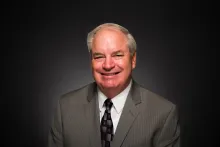
Robin Webber was born in Chicago, Illinois, in 1951, but has lived most of his life in California. He has been a part of the Church of God community since 1963. He attended Ambassador College in Pasadena from 1969-1973. He majored in theology and history.
Mr. Webber's interest remains in the study of history, socio-economics and literature. Over the years, he has offered his services to museums as a docent to share his enthusiasm and passions regarding these areas of expertise.
When time permits, he loves to go mountain biking on nearby ranch land and meet his wife as she hikes toward him.
