
Robin S Webber
This transcript was generated by AI and may contain errors. It is provided to assist those who may not be able to listen to the message.
The title of my message is simply this, A Spiritual Pilgrim's Legacy. A Spiritual Pilgrim's Legacy.
In addressing that, I'd like to quote from a Christian author and writer, A.J. Tozer, lived about 80-90 years ago. And Mr. Tozer, in speaking of worship, mentioned this, worship is the missing jewel of the church. Worship is the missing jewel, something very precious, something very valuable and beautiful. It's the missing jewel of the church. Now, when we think of the church, we might think of an organization. We might think of, in a sense, a building that we go to church. Rather than recognizing that the biblical concept is that the people of God, the ecclesia, as it says in the Greek, the ones that are separated and called out are the church. And it is to that church that I would like to address this message today about the spiritual pilgrims' legacy. Because when we mention church is one thing. The spiritual pilgrims' legacy, if you'd like to jot down a word to keep you with me in the course of this message, is simply this. We're talking about a way of life, a way of life that we've been called to. Interestingly, that in the book of Acts, I think it's 9, 10, or 11 times, that the people that were disciples of Jesus Christ early on were people that were in what they called the way. So that's kind of where I'm going with this message today for you and for me as spiritual pilgrims. Jesus gave the—and I do say the definition of ultimate worship in John 4. If you would join me over there, please. Let's all open our Bibles together on God's Holy Sabbath Day with God's Holy Word, and notice the words of Jesus who defines what the worship that God seeks after and is looking for is all about. It says here, then the woman said in verse 19, sir, I perceive that you're a prophet. Our fathers worshiped on this mountain, and you Jews say that in Jerusalem is the place where one ought to worship. Jesus said to her, woman, believe me, the hour is coming when you will neither on this mountain nor in Jerusalem worship the Father. You worship what you do not know. We know what we worship for salvation is of the Jews. But now he goes further, and he says this, but the hour is coming, and now is when the true worshipers will worship the Father in Spirit and truth. For the Father is seeking such to worship Him. We're not only seeking after God. He's seeking something very, very special in us. God is Spirit, and those who worship Him must worship Him in Spirit and in truth. Interesting. This sounded revolutionary in its day and may also be revolutionary in our ears. I know it was revolutionary when I first heard as an 11-12-year-old boy that the church is not a building, that those are being called of G-d. They are the church.
They are the building. They are the development that God is interested in.
In one sense, it was revolutionary to this woman. It's revolutionary to people over the last 2,000 years. It's like they look at Jesus' definition, but it's frankly as old as time. It's what God has always desired. Why is that? Let's rewind the clock for a moment and start at the very beginning to understand the words that Jesus shared with the Samaritan woman and with you and me today. Let's go back to the very beginning. Let's go back to Genesis. I'm going to paraphrase to a little bit here about the story. Let's, number one, remember what the Apostle John records in his epistle, that God is love. He didn't create love. God is love. It's him. It's his very essence and his very being. From that love, he made man. He made man to be a direct object of that love and, in turn, for man to love in return. The Bible is predicated basically on what we might call a love story. I think out of the 60s, those of us that are a little bit older remember the story, the love story that came out in the 1960s, a very famous and very romantic movie, but we're talking about a spiritual romance here.
God made man to love him in return. The term there that I want to focus on is the one that Jesus was to worship. That phraseology to worship comes from the Greek prosgoon. That's simply meant to literally kiss the hand in reverence, in adoration, in devotion, in a loving response, an action-based, an action-reaction based upon what the God of this universe had fostered and directed towards Adam and Eve. And for you and for me today, when God made that first man, and that first man opened his eyes, God looked into those eyes, and that man looked into God's eyes, and that's exactly what God wanted. That's what he envisioned. He envisioned just an intimate relationship, seamless, close, sacred, developing, tied together, no matter whether he would be present in the garden or in his absence, as we find later on in the story when God, for the moment, seemingly—because we know God is limitless—but seemingly in the man's eyes and in the woman's eyes was away. Because God wanted that man to worship him and to adore him and to respect him and to love him and give him his all, not only when he was just right in front of his face, but always. But we know the rest of the story, and we know what happened. It's very noteworthy to consider one of the great imaginary depictions of that physical creation. We've all seen it in history books, school books. We think of that great portrait of Michelangelo, where God is reaching out with full force and with full extension. The God of the universe bearded in that image, but he's reaching out with all of his energy and all of his dynamism. There is such strength that is in that picture as he reaches to the creation, as he reaches to Adam. There's a finger that is just simply pointing and reaching out and wanting to touch this beloved creation. But it's very interesting that when you see the rest of the picture and you look down at Adam, there's just kind of a hand that's kind of like this. It's just about a limp hand.
It does not have direction. It does not have strength. It does not have force in itself.
And when you think about that picture, maybe next time you see it in a history book or an art book, well, we know the rest of the story. It's history. Any detailed story of one man that would ultimately reach out and hold and touch the hand of God and keep on holding, it comes on further on down human history. And it's not fleshed out and it's not exemplified until the man named Abram. You might want to jot that down if you're taking that note. That was Abraham's first name. It was Abram. And that's where we're going to be focusing today on this spirit-led human, this spirit-led man that we've come to be known as the father of the faithful. He was faithful to the creation that God desired of that worship, of that worship, of that intimacy that God was desiring. Join me if you would in Galatians 3 just to back up what I said about the father of the faithful so that we have a scripture that we can anchor that on. Galatians 3, join me if you would. If you haven't opened up your Bible yet, I'm going to keep on inviting you, because this is where the power of God comes from, is His scriptures. In Galatians 3—let's take a look here—it says this. It says in Galatians 3, and picking up the story in verse 26, For you are all sons of God through faith in Christ Jesus. For as many of you as were baptized into Christ have put on Christ. So we're baptized, yes, into Christ, and then put Him on. And with that, then we become one family. There's neither Jew nor Greek. There's neither slave nor free. There is neither male nor female. For you are all one in Christ Jesus. And if you are Christ, then you are Abraham's seed. This is where the concept or the construct of that title, Father of the Faithful, comes from. Then you are Abraham's seed, and errors according to the promise with the calling comes a promise. So let's understand that.
With that state of sin, it's here with a brahm that we discover what I call the twofold legacy of a spiritual pilgrim. What may we learn from this one man, the Father of the Faithful? Now, as I state that, we don't want to build up anybody too tall, too big, other than God, because God alone and Jesus Christ are perfect. But He's given us these individuals that have gone before us, these spiritual pilgrims to learn lessons from. So I just want to say He was a man, absolutely, but He was used of God. So again, allow me to repeat where I'm going so you'll know exactly where I'm taking you by the end of this message. That is simply the full title of the message now is a spiritual pilgrim's legacy. Semicolon. Tense and altar. It's a twofold element that we're going to be discussing.
The two working parts of this legacy are given definition in the Jeremiah study Bible, which is an excellent commentary, and it's under the heading called Picture This, Abraham's Tense and Altars. And I'm just going to read a little bit of this. Just stay with me. I'll try to make it interesting as we go along, but it is just so literally profound that I want to share it with you. It's been said for a brahm, later renamed Abraham, that the symbol of his life was a tent. But, but the secret of his life was an altar. The symbol of his life was a tent, but the secret of his life was an altar. What's that all about? With that said, number one, let's consider the tent which spoke to his pilgrimage of the fact that he never owned the land.
There were time in Abram's life that he moved from place to place. There was also long periods where he lived in tents in the region of Hebron and also Beersheba. But, and here's the key point, but rarely do we read of Abraham's living for a time in any city. Save Genesis 20 and verse 2, and I'll let you look that up as homework. Let's understand what's talking about living in a tent and knowing the story a little bit to the degree that we do about Abram and the call of God. Here was the call of God, whether it was to that pilgrim back around 18-1900 BC, or to we that are in the 21st century. I'll just make it real simple, okay? Simply this. Get up, get out, and get going.
Have you heard that call this week from God? Get up, get out, get going as we've been prompted by God's Holy Spirit, or we've read something in the scriptures, or we've been challenged by our mate to consider something above and beyond the paradigm, as Jim mentioned, that we are familiar with. To get up, to get out, to get going. How often did that occur in Abram's life where, you know, Sarah thought she was going to stick around for a while on that sand dune, and all of a sudden she looked at Abram and oh no. I think God spoke to him again, and she got her handmaiden together, even before Abram came to her and said, it's time to get up and to get out and to get going. And we're going to talk about that later on in the message. The second facet, the second working piece of this spiritual pilgrim is the altar. The altar speaks of his fellowship with God, for it was the focal point of his worship, the altar. Listen to this, please, carefully, and again this comes out in the Jeremiah study Bible. As God confirmed—that means shaped or formed— gave life to his commandments, Abram confirmed, in turn, his faith by worshiping and building an altar. They both confirmed. God confirmed his commandments to this man that would later on become father of the faithful, of whom seed we are, and Abram would confirm by worshiping that same God and building an altar. In addition, then, in that worship—here me, please—was his witness. It's interesting that both words begin with W, if you just kind of think that in mind for a moment. His worship was his witness. When he built an altar, he was not worshiping on the altars of the people around him. Didn't say, I'm going to go look for the local church, the local temple, and I will worship the one true living God on their altar. It was separated. It was built by him. For he was the man that was worshiping, adoring, giving reverential adoration to the one true living God. Now, that's amazing because, again, let's understand that Abram came out of a family that worshiped idols, and yet here was the man that worshiped the one true living God. And one other step beyond that, and as we will read later, when he called on the name of the Lord, when he called on the name of the Lord, it was more than prayer. Abram proclaimed those promises that God had given them in the name of that Lord, testifying of his faith in the living God to the people that were watching him, knowing that he was not worshiping on one of their altars, but that direct, seamless, united, sacred worship that God had desired from Eden.
Now, again, first, let's consider the symbolic nature of the tent first.
Tent appears in the Bible in different forms. You might want to jot this down as students of the scriptures. The words that are used both in the Old Testament, the New Testament, either for tabernacle or in the New Testament for tabernacle, here's a few words you can jot down just to stay with me. That is tents, because the tent was the symbol of Abram's legacy. It's a spiritual pilgrim. A tent, you can jot down. A tent, you can jot down. Well-laying, you can also jot down tabernacle. Let's understand who was somebody very specific that we follow that pitched to tent. Join me if you would, in John 1-14. Come with me, please. John 1-14. Come right through the screen with me here as I'm speaking to you in Zoom. John 1-14. Maybe you've never noticed this before, but speaking of the one that was the Word, that was God, that was with God, etc., etc., but then we dropped down to John 1-14, which makes Jesus incredibly special and unique. It says, And the Word became flesh and dwelt among us, and we beheld his glory, the glory of the only begotten of the Father, full of grace and truth. The Word there in John 1-14, which is dwelt, you can say that he actually pitched his tent, as it were. He pitched his tent. He came, he who is uncreated, and dwelt in this fleshly tent, which was temporary. And he was, in that sense, a pilgrim, as he went up and down through Judea, through Samaria, through Judah itself, but more so that he actually tinted as being one with us and setting that example. Again, a tent-like existence of any life, and in particular the Spirit of life within a temporary frame, is mentioned again by one of his disciples. Join me if you would, please. Join me if you would in 2 Peter 1-14. Let's just see where this is going, okay? 2 Peter 1, the 2nd Epistle of Peter 1, verse 14. Just jumping into the thought here. Now again, remember Jesus had been Peter's rabbi.
And when you had a rabbi, you not only wanted to hear what he said, but you wanted to get into his skin. You wanted to get into his heart. You wanted to deeply become intimate with him and be like him, to get beyond the thoughts. But what was the motivation? What was the motor that was turning his life? Notice what it says here. Knowing that shortly I must put off my tent, just as our Lord Jesus has shown me. Peter recognized that his life, being a human being, for disappointed that an all-man wants to die, was temporary. It was a journey. It was a wandering on this earth.
And also, as a disciple of Christ and a child of the Father, and being a spirit, not a human being, having that spirit within this fleshly tent was for the moment also going to be temporary. We only had so much time to be holy as God is holy. Now this same Peter that said that he had to put off this tent speaks in 1 Peter now with that thought. Join me if you would for a moment in 1 Peter 2 so we can create some symmetry here in 1 Peter 2 and verse 9, this classic statement about what God is calling us to.
Jim, in the first message, spoke about a calling, but you are a chosen generation, a royal priesthood, a holy nation, his own special people, that you may proclaim the praises of him who called you out of darkness into his marvelous life, who once were not a people but are now the people of God, who had not obtained mercy, but now have obtained mercy. Okay, so far so good. Beloved, I beg you as sojourners and pilgrims, there's the word, pilgrims abstain from fleshly lust, which war against the soul.
Goes on to say, don't be like the people of this world. Your conduct is to be different, and our conduct is to be different. We are to have that legacy that's been passed down to us, to be a spirit, that individual, that understands the twofold element of that legacy handed down by the Father, the faithful. Number one, that tents were a symbol of what he was doing.
And number two, that the altar, though, was the secret. That which was in the tent that we'll be talking about in a few minutes. Let me just talk about a pilgrim from, what is a pilgrim? In America, we're very familiar with the pilgrims. That separatist group of Puritans, they were different than even their Puritan brethren. They were a separatist group beyond that, and they came, and they came across the ocean. All of us are reminded of that every year during Thanksgiving time.
But what is interesting about this, the true definition of a pilgrim is simply this. A pilgrim is one who's on a journey towards a specific destination and or a shrine. And once he settles and puts down roots, anchors in to this earth and this world below, the pilgrimage is over. We're still on a journey. We're still headed out. We're still following along Father Abraham with a spiritual altar that we'll conclude with this afternoon.
Let's go to that pilgrim again back in 1800-1900 BC. Let's look at Genesis 12 and verse 1. Join me if you would, please. Genesis 12 verse 1. We pick up the story here. Notice what it says. Now the Lord had said to Abram, Get out of your country from your family and from your father's house to a land I will show you, and I will make you a great nation, and I will bless you, and make your name great, and you shall be a blessing. And he is a blessing. I think we need to really thank God for the incredible example of what Abram did.
He was a human being. He did other things in the story that we could comment on, but this is what he did as an example for us. And God says, And I will bless those who bless you, and I will curse you, who curse you. And in you, in you all the families of the earth shall be blessed. And we find that in Galatians 3, that ultimate blessing.
Let's go back for a moment to Genesis 12 verse 1 at the top of this. Now the Lord had said to Abram, Get out of your country from your family and from your father's house. Notice verse 4 then, So Abram departed as the Lord had spoken to him. It's interesting that I'd like to share with you here for just a second a little bit out of Thomas Cahill's book called The Gift of the Jews, 1998 page 63 about verse 4. So Abram departed as the Lord had spoken to him.
Mr. Cahill says this, These words, Abram departed, captures the whole experience. It says, So Abram went, Two of the boldest words in all of literature, They signal a complete departure from everything that has gone before him in the long evolution of culture and sensibility out of Samur, civilized repository for the predictable, Comes a man who doesn't know where he is going, But goes forth into the unknown wilderness under the prompting of his God. Skipping down a little bit later, out of mortal imagination comes a dream of something new, something better, something yet to happen, something in the future.
In the river valleys of civilization, whether it be the Nile, whether it be Mesopotamia, the land of the two rivers, whether it be the Indus, River Valley of Pakistan, India, whether it be along the Yangtze or the Yellow, those great river valleys where everybody was beginning to collect themselves about 2000 BC, and just think of the traffic coming into town as it were. And here's one family, one family alone, that has taken up the challenge to get up, to get out, to get going. To leave that which seems so permanent, and what everybody else is doing to heed the Word of God, to take up anchor and throw that anchor away, and to follow God wherever He is leading us. Is that speaking to you today? Is that speaking to us about the calling that God has given us, and maybe where you've been this last year, last two years, maybe all your life as you've been on this spiritual journey. And it's challenging, and it's difficult, but I will say something to you to encourage you. It's worth every step. It's worth everything that you have left behind to seek after the kingdom of God, and to stay unrooted, to stay unanchored from this world. I'd like to share something else to bring it up to date. We're talking about 2000, 1900 BC. I want to talk about the last century. There's the story told of an American tourist who visited the 19th century Polish rabbi, and the Polish rabbi's name was Jafat Haim, a good Jewish name. And the tourist, when he came to seek after the rabbi to see what makes him tick, he was astonished once that the rabbi let him into his home that it was simply one room, and it was filled with books. Just look behind me right now. I do, Susan, I do live in more than one room, but just this one room of the rabbi was filled with books, plus one table, and one bench. And the tourist asked, Rabbi, where is your furniture? And the rabbi came back, very Jewish in nature as a rabbi, putting out an answer, framed in a question, well, where is yours?
Replied the rabbi, and the tourist said, starting late, he said, mine? And he asked the puzzled American, and he asked, and then the puzzled American simply said, but I'm a visitor here, and I'm only passing through. The rabbi just had a slight grin and said, so am I.
Brethren, I'm here to tell you today as the minister of Jesus Christ that we're just passing through, that God has called us to be a pilgrim, and to understand the power of the emblems of the tent and the altar. So with that said, let's consider the aspect now of the altar, because we've talked about the tent some. Yes, God's word states we're pilgrims and strangers here. That is the tent that we sojourn, that we don't put down deep roots. But we are also to be in fellowship with the Lord by way of worship, which represents the altar. That was the secret, not so secret later on, of what made Abram Abram. And we like Abram, and like Sarai, are to be witnesses of the reality of the one true living God. Abram's focal point was to worship God. His wheels, his way of traveling, if you think about this, was the tent. But don't confuse them. Now both are essential. His wheels were the tent. That was his covering as he rested from spot to spot. But, but, but, but, but his engine, not his wheels, but his engine, that which was under the hood, as it were, that was his worship. That was the altar. And God is much more concerned at the end of the day. And this is where, when you think of the first message, of recognizing that as pilgrims, that we can be deceived. We can be deceived just as much as our, our parents were in Eden. And so we need to recognize that we can have a tent covering, but what, what our motor is, what our motivation is, is our worship, is our seamless contact with God. How much more so during this past year with Zoom and with COVID and being separated from going to one spot to quote-unquote worship together, as if worship is merely an event rather than an existence which takes up every moment of the day.
And to recognize why we long to be together with one another, to recognize that we're always together with God. And there's that altar that we can come and worship before Him. And I'll explain that a little bit later. Let's look at, for a moment, of Abraham staking a tent and building an altar. I'm going to go through this rather quickly, but let's just go to Genesis 12. Are you with me? Here we go. Genesis 12 and verse, and let's pick up the thought here in Genesis 12 and verse 18. Amex, not 18. Pardon me. Let's go back a second. Genesis 12, 8 through 9. This is after that God had proclaimed those promises to Him. And He moved from there to the mountain east of Bethel, and notice He pitched His tent with Bethel on the west and Ai on the east. So we're always thinking about Abraham pitching a tent, but then notice, and there He built an altar to the Lord and called on the name of the Lord. It's not enough to build an altar. It's who you're addressing. And He called upon. He had that confidence. He had that knowing.
That God was listening. Tent and altar. Again, join me now as we go to chapter 13 and verse 4.
Now, in between these two verses that I'm asking you to look at, Abraham and family have gone to Egypt. They're now black, but look what He does the first thing back.
And it says here that, to the place of the altar which He had made there at first, and there again Abraham called on the name of the Lord. Not somebody else's altar, not a pagan altar, not an altar that anybody else built other than himself, as a work and as an act of faith towards God. Join me if you would then, Genesis 13 and verse 18. This is after more has gone on with Lot and Lot settling towards Sodom and Gomorrah. But then notice what it says in Genesis 13 and verse 18. This is after where He counts all of the stars and God gives His promises. And then Abram moved his tent. There's the tent. Okay, the tent. Wherever the tent was, something's about to follow. Are you with me? And went and dwelt by the parabenth trees of Mamre, which are in Hebron, and built an altar there to the Lord.
It's not only our way of traveling in a tent, but it's what's underneath that tent. It's what comes next, which is the ultimate. The tent is only a bridge to the ultimate. You open the hood, you open the tent to see what God's doing on the inside. Genesis 22 and verse 9. Turn to there, please. This is a story of many years later, after Abram and Sarai had waited and waited and waited for the son of promise Isaac, and then God tells Abram to take Isaac up and sacrifice him. Let's notice Genesis 22 and verse 9, right into the story. Then came they to the place of which God had told him, and Abraham built an altar there and placed the wood in order.
And he bound Isaac his son and laid him on the altar upon the wood. What's this all about? Let's define the moment. Number one, Abram, now Abraham, had obeyed God.
He went out as a pilgrim again and took the son of promise with him, typifying something that would later on happen in about 1800 years after that, as you know. Now, even when Abraham didn't fully understand what was going on, as much as you and me, he built an altar. He did what God said to do. He did what God said to do. God has called us to worship him in times when we don't even understand what may be going on, but our faith and our confidence is in God and his Christ above. That they have not called us accidentally, but for a purpose that moves beyond the moment, and where Jesus said, I will never leave you nor forsake you. How was he able to get into that? What was going on? Join me real quickly over in Hebrews 11. Okay? Hebrews 11. Join me there, please. In Hebrews 11—and let's pick up the thought—this is what was also going on underneath the tent. Because of the altar that Abraham later Abraham had built again and again, and we pick up the story here, and it's unbelievable. In Hebrews 11, the chapter of faith, by faith Abraham, when he was tested, offered up Isaac, and he who had received the promises of, offered up only his only begotten son, of whom it was said, and Isaac your seed shall be called, concluding that God was able to raise him up even from the dead from which he had also received him in a figurative sense. He realized that he had been called to worship the one true living God who is true to his promises, and that when he would go to the altar, go to the altar, as God was his witness and as Abram and Sarai were the witnesses to the world around them, that God was true to his promises. What are you and I going through right now that doesn't—what's going on? You know, I don't know if I signed up for this, or I didn't know this was a part of the calling. Hello? Anybody else up there? Let's take encouragement, that even when we don't understand what's going on, that God is going to direct us, that pilgrimage that we are on, that is temporary, and we only have so much time to even exercise God's Holy Spirit in this physical tent to his glory, to his honor. And it becomes even more glorious and more honorable when we give it to him when we don't know what's going on. Allow me to share another story about another pilgrim, and that's Noah. Have you ever thought about Noah? Let's talk about him for a moment.
Noah, who's called to be a pilgrim when he's 480 years of age—it's never too late to be a pilgrim.
God came to him. He's 480 years of age, and he was given a lot of instructions about what he was to build. He was to build this boat that we call the Ark. Now, here's one thing I want to share with you. You might want to chop this down. You can go through all those instructions in Genesis 6. God is a God of detail. There was no sail, there was no rudder, and there was no anchor. No sail, no rudder, no anchor.
Is that sinking in? I'm just going to—this is called pause.
No sail, no rudder, no anchor. He recognized that he had turned his life over to God, that God would lead, that God would direct. That's kind of interesting when you go to Genesis 6-7 and you understand about how they built the Ark. The pitch, the very word pitch that they pitched the inside with, is the word kippur, means covering. It was that pitch that held off divine judgment that was being exercised on the rest of the world. Of course, we actually understand later on then what that pitch would represent would be the saving, covering blood of Jesus Christ, the ultimate heavenly pitch. Yet here was Abraham. You just think about it for a moment. It's kind of an incredible story that here's the image of Abraham. Abraham floating around, and then God closed the door of the Ark. He was a floating pilgrim. We often think of pilgrims going through deserts or sands or over rivers. This was what we call a floating pilgrim. One other thing that I like to share about our floating pilgrim is simply this. There's a fascinating scripture I'd like us all to be able to turn to, and it's over in Genesis 8. Verse 20, let's understand that this pilgrimage on water had now landed on earth, and they were coming off the mountains of Ararat. The animals were coming out of the Ark. God was still there, and in that sense Noah was still his pilgrim, but now they've reached a destination. In that sense, the Ark had in a sense been Noah's wooden tent on his pilgrimage. But then now, just like a brawn would do later on when his time would come, notice what it says in Genesis 8 and verse 20. It's there that we find something so encouraging. Then Noah built an altar to the Lord and took up every clean animal and every clean bird and offered burnt offerings on the altar. As we go on to Genesis 9, we'll recognize what is called the Noatian Covenant, one that has similarities to Adam, where Adam was given dominion over the entire earth and all of the animals. But there's a big difference. Let's think this through for a moment. Let's notice it. Adam, who was given so much by God, never built an altar. Never. Not written, not known. But this man of God, one of the preachers of righteousness who had been on that floating tent, not knowing where he was going, but trusted God.
When he landed, destination found. The first thing he did was he built an altar.
Isn't that incredible? Encouraging? How about you? How about me?
Question I want to share with you before we go to the next section, and that is simply this. Sometimes we feel that we have a tent or we have an altar established and we create that altar and we worship God when we're first called, or maybe when we're young. In looking at all of this, I've kind of thought again about the aspect that, you know, I think about my background and my lifetime on the pilgrimage that Suze and I have been on, and to recognize that I need to focus more on that altar every day of my life, to give God glory. To give God glory, to give honor, to give worship. And it's really easy to be able to build an altar when everything's going okay and you know what's happening. It's much more challenging when you give your life over to God and say, okay, I don't have a rudder of my own. I don't have a sail of my own. I don't have an anchor of my own. I'm a pilgrim, and I put my life into your hands. God, you help me. A Brahmin without a GPS into the wilderness. Noah floated on water without a GPS.
Let's talk about a GPS today where everything's kind of mapped out to us by some little voice coming to us off our dashboard in a car. And it's very diplomatic of our life today. We want everything to be spelled out for us. We want it spelled out now. We don't want mishaps. We don't have to think. There's no strain getting from point A to point B, but God created strain. As was mentioned in the first message, that created strain that we might give up our own lives and give our lives to Him and say, Father above, Christ above, you be our guide, you be our Father, you be our shepherd, you be like that pillar of fire in the wilderness, you be like that cloud in the wilderness. Your Spirit be the one that is out ahead of us, guiding and leading us, not leading from behind, but in front of us that we'll follow as spiritual pilgrims. Our Western mind gets into conflict with that versus thinking of how the Eastern mind would have thought about that, of the patience that is required of a spiritual pilgrim. We think of the Israelites 40 years in the wilderness.
Even 40 years in the wilderness, all those centuries of crying out to God in Egypt to be delivered from slavery, much less later on in the wilderness. We think of a Brahmin Sarai waiting for a year and decades for Isaac. We think of the Jews in Babylon for 70 years. We can also think of that 400-year period between Malachi and John the Baptist. We can also think of the 2000 years since that time of waiting for that Second Coming. And there's a very important point in all of that, in being a spiritual pilgrim. Join me if you would in Psalms 27. Psalms 27. Let's pick up the thought of who could in verse 14.
Wait on the Lord. Be of good courage. And he shall strengthen your heart. Wait, I say, on the Lord. Wait on the Lord. Wait on the Lord. Be of good courage. And he shall strengthen your heart. Wait, I say, on the Lord. Wait on the name of the Lord. Just like that initial spiritual pilgrim did. We simply have to wait, and we have to leave some things to God if we are going to worship him. Very important.
Now, let me share a thought here with you. With all that shared at this point, let's consider the concept of boxing God in versus Jesus' words in John.
Let's think about that for a moment. Because as human beings, we want everything tight. We want everything right in our hands. And we can make the human mistake, even as Christians, even as spiritual pilgrims, of making God over into our image and into our convenience, rather than allowing God to make us over into his image by creating circumstances that are going to needfully develop faith. A couple of thoughts about worship and about altars. Here we go. Think about the original Oedipus, what we call the tabernacle, the one that was in the wilderness later on in Shiloh. The tabernacle was made of curtains. It was not made of stone.
Why was that? Because Israel had temporary dwellings. They were only at one spot so long the tabernacle had to be portable. Because wherever God went, Israel was to take along. The ark itself, the ark of the covenant, the one that was on the poles, was also portable. It was also portable. God was on the move. He's always wanted his people to be on the move towards the kingdom of God and not be tied down to this world. And interesting when you think about it. Not only that, but the tabernacle itself was set in the midst.
The altar that was before the tabernacle. The tabernacle was set in the midst of the congregation. All the different tribes of Israel gathered around it. But it was right in their midst. It was a seamless community with God in the middle. And the altar right there in the midst of them. Ancient Israel did not have to climb up to an acropolis. It did not have to climb up on high on the mountain top like the Greeks did with the temple of Athena in Athens. It was right there with them. It was all level. It was all seamless. But then God would say, it's time. Enough. Let's get up, let's get out, and let's get going. Everything flowed from that tabernacle, and everything flowed out to that from that tabernacle. To have that adoring, seamless worship between God and His chosen people. Just if you wouldn't second Samuel. And second Samuel.
Pick up the card here. Second Samuel. That's what it says here. Second Samuel 5.
Second Samuel 7. Here we go. Second Samuel 7. Verse 5. And this is a conversation that God is having with David. Go and tell my servant David, thus says the Lord, would you build a house for me to dwell in? For I have not dwelled in a house since the time that I brought the children of Israel up from Egypt, even to this day, but have moved about in a tent and in a tabernacle. Wherever I have moved about with all the children of Israel, have I ever spoken a word to anyone from the tribes of Israel, whom I commanded to shepherd my Israel, saying, Why have you not built me a house of cedar?
God was challenging David to think, Do you really want to be like all the rest of the nations? Do you want me to be in a box? Because that's what people do. I'll be very honest. As was brought out by Jim in the first message, we get into a paradigm, we create a box, and then as we think we're doing God a favor, we can put him in a box. That's what the whole story of Job is about. Job, unbox me. There's things that you're never going to quite know about me because I'm everywhere. I can't be boxed. Interesting. What does this bring about to you and me regarding the aspect of boxing in God? Because pilgrims, even sincere pilgrims, can do that, and that creates a tangent off the pilgrimage. What God was really talking about here was the challenge of temple worship. There's a difference between from being owned by God, from being owned by God, because David, not knowing, was leading them down a path where they would now own him. They would put him in a box. They would put him in stone. They would put him in marble. They would put him in cedar. They would move from journeying with him. They now would journey to him as everybody came up to Jerusalem. As God became immovably housed, that spirituality, that worship that a brahman had, where he would set up his own altar, became localized, and life became disconnected from worship. Life became disconnected from worship, and there came as a tragic result the glorification of that means—the temple, the temple, the temple—rather than the means to the end which was worshiping God. That temple became like a tree in front of the forest of eternity, of where God and the Word, the Christ, exist. And if we're not careful, things can come between us and God. It can crowd out that tent. It can thwart that altar that God desires in each and every one of us. Was it elegant? Solomon's temple, Herod's temple, etc., etc., absolutely. It was elegant. Absolutely. But it was there in a box that worship became distorted. The book of the law was lost. The sacrificial system became corrupted. The priests became politicized, either in ancient Israel or during the time of the Romans. It's here that the glory of God, the Shekinah, departed, and the people became lost.
Permanence. Permanence other than God the Father and Jesus Christ in front of us.
And their holy, righteous law in spirit and in truth. And their guiding lead is what is to be permanent. Our faith in God that we may call upon the name of the Lord. Psalm 119 verse 54.
As we begin to conclude, notice what it says here. David speaking. David did a lot of wandering. David did a lot of things correct. There are other things that, well, we learn from. But notice what it says here.
Your statutes have been my songs in the house of my pilgrimage. I remember your name in the night, O Lord, and I keep your law. This has become mine because I kept your precepts.
The house of our pilgrimage. What I want to conclude with here is simply a couple simple points.
Is to recognize that we also have a house of pilgrimage.
Paul says in the book of Corinthians, 1 Corinthians 3, 16 through 17, that we are the temple of God.
We are that naos. We are that holy of holies that God has placed his essence in in our heart and in our framework. In this temporary tent, he has chosen to create an altar of where he and Jesus Christ exist in us. That we might worship them in thought, word, deed, and action. But all our thoughts and words and deeds and actions are based upon the engine of our life, which is to worship God. As Jesus said in the book of Mark, Harrow Israel, the Lord your God, the Lord your God is one.
And you shall love the Lord your God with all of your heart and all of your mind and all of your soul. And you shall love your neighbor as yourself. That's what God's looking for. That's what God has called us to. To have faith and to have confidence in him, just like that initial spiritual pilgrim, Jesus Christ, who tinted with us and said, not my will, but your will be done. And then to that man that the word of old called upon and said, you know what, it's time to depart. And so he got up, he got out, he got going. Maybe we forgot that part in our pilgrimage that God's going to continue to knock on our door or open up the lid of our tent, as it were, and say, I've got another word for you, Robin. I've got another word for you, Susan. I've got another word for you, Paul. I've got another word for you, Roland. And Roland's there, another word for you, Diane. It's time to get up. It's time to get out. It's going to, time to get going. You know, when Jesus Christ comes back to this earth, he's not going to be looking for something permanent, like a building, like an organization.
He's not going to be looking for a dwelling. He's not going to be looking for a house to live in.
Jesus Christ comes back, the Father's going to sing Christ out. You know what Christ is going to be looking for? He's going to be looking for a home. There's a big difference between a house and a home. A house is built out of the wood and stucco. A home is constructed and developed from time to time with a heart. As we continue on our own spiritual legacy, a legacy that is framed by a two-part element of tense and altar, let's continue, wherever we are, whoever we are, to worship our God and to follow our God wherever he leads, and let's first and foremost, as spiritual pilgrims, know that our home is with God.
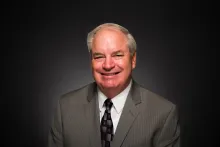
Robin Webber was born in Chicago, Illinois, in 1951, but has lived most of his life in California. He has been a part of the Church of God community since 1963. He attended Ambassador College in Pasadena from 1969-1973. He majored in theology and history.
Mr. Webber's interest remains in the study of history, socio-economics and literature. Over the years, he has offered his services to museums as a docent to share his enthusiasm and passions regarding these areas of expertise.
When time permits, he loves to go mountain biking on nearby ranch land and meet his wife as she hikes toward him.
