
Don Ward
This transcript was generated by AI and may contain errors. It is provided to assist those who may not be able to listen to the message.
The title of the sermon today is a four-letter word. It is one of the most positive motivating forces in the universe. This word stems from a five-letter word. This four-letter word is one of the key elements of salvation. Without this four-letter word abiding in you, you won't make it into God's kingdom. One of the twelve apostles is called the apostle of this four-letter word. It's not the apostle of John. The apostle of John is called the apostle of love. Some of the highlights of the life of this man should provide you with clues necessary to identify this four-letter word. How would you feel if you lived your life knowing that no matter how you lived your life, your death would be through crucifixion? Even though you were very zealous for God, quick to defend Jesus Christ, even though you were the instrument used by God to explain how to receive the gift of the Holy Spirit on the day of Pentecost, even though you were the instrument used to show the Gentiles that they too should also receive the Holy Spirit, even though through you great miracles were done, even though through you a deceitful man and woman fell dead at your feet as a witness to the church to show through whom God was working, even though you had done all these things, God would permit you to live your life knowing that the end would come through crucifixion. If you would please turn to John 21, and this man is identified. I'm sure most of you already know who this man is. In John 21 and verse 12, this is one of the occasions in which Jesus Christ appeared to his disciples after his resurrection. Jesus said unto them, Come and dine, and none of the disciples dared ask him who he was, knowing that it was the Lord. Jesus then came, took bread, and gave it to them, and fished likewise. And this is now the third time that Jesus showed himself to his disciples after that he was risen from the dead.
So when they had dined, Jesus said to Simon Peter, Simon, son of Jonah, Do you love me more than these? And he said unto him, Yes, Lord, you know that I love you. He said unto him, Feed my lambs. And then Christ asked this question to Peter two more times. And Peter became increasingly exasperated at this, but the message, of course, was to Peter, You are to feed my lambs, my little ones, and then my sheep. And some commentators look at this and say maybe it's the various levels within the body of Christ. My lambs, my sheep, my sheep. Then in verse 18, Christ says unto Peter, Verily, verily, I say unto you, When you were young, you girded yourself, and walked where you wanted. But when you were old, you shall stretch forth your hands, and another shall gird you and carry you where you don't want to go. This spoke he signifying by what death he should glorify God. And when he had spoken this, he said unto him, Follow me. So Peter was used in so many powerful ways during Christ's earthly ministry and even after Christ descended back to heaven. But Jesus Christ told him face to face, the way that you're going to get out of this life is through crucifixion. So the Apostle Peter lived his life knowing that the only way that he was going to get out of this world was through crucifixion. Now let's go to 2 Peter chapter 1 later on in the life of Peter. And apparently at this juncture, he is nearing the end of his life. In 2 Peter chapter 1 verse 12, he writes this epistle, Wherefore I will not be negligent to put you always in remembrance of these things, though you know them, and be established in the present truth. Yes, I think it is fitting as long as I am in this tabernacle or this body to stir you up by putting you in remembrance, knowing that shortly I must put off this my tabernacle even as our Lord Jesus Christ has shown me. So Peter, towards the end of his life, he said, look, I know how I'm going to die, but until my very last dying breath, I am going to continue to preach the Word of God to try to stir you up, to put you into remembrance of the things that we ought to be doing. And you know the average tenure of people in the Church of God, baptized members, the average baptized member has been in the Church 30-plus years.
So as you sit here today, how many sermons have you heard? Well, if you average hearing 50 a year, 30 times 50, you've heard 1,500 sermons. You probably heard 750 to 2,000 Bible studies, and all of your personal Bible study, and all of your conversation, and so on. So we have heard so much, and yet at the same time, we all need to be reminded.
Now, what does the life of the Apostle Peter dramatically show us? You know, so much talk through the years for decades in the Church, not so much in recent times, centered on, well, you've got to qualify to go to a place of safety. You've got to qualify to go to a place of safety. The indication being, well, this is just about as important as being in the Kingdom of God. And you need to be alive, I guess the message is, when Christ returns. Now, don't get me wrong.
I would like to go to a place of safety, and I would like to be alive when Christ comes again. I would like to be spared much of the suffering that lies ahead for this world. But we look at the life of the Apostle Peter. To me, it dramatically shows us that God has called us to eternal life, and not to just physical salvation. Peter is the Apostle of Hope, yet he knew exactly how he was going to live. This shows us that his hope was not set on this world. Now, the Greek word that is translated Hope is spelled in many places in the New Testament. If you would now, turn to 1 Peter 1.
Just back a few pages. We'll highlight just a few verses here, where Peter speaks of this hope that we've been called to. In 1 Peter 1 and verse 3, He blessed be the God and Father of our Lord Jesus Christ, which according to his abundant mercy has begotten us again unto a living hope by the resurrection of Jesus Christ from the dead. This word Hope, spelled E-L-P-I-S, E-L-P-I-S, pronounced El Paise, means expectation. Expectation of good, joyful and confident expectation of eternal salvation. To me, I would say, in other words, it is to earnestly expect that the object of expectation will come to pass.
The object of expectation will come to pass. Peter writes that we have been begotten to a living hope by the resurrection of Jesus Christ from the dead. Christ lives, and he sits on the right hand of the Father making intercession for us. In Hebrews 7.25 it says that he ever lives to make intercession for us. According to the will of the Father, he intercedes for us. Of course, I interrupted my paraphrase of Hebrews 7.25.
Let me paraphrase it all the way correctly. That he ever lives to make intercession for us, therefore he is able to save us to the uttermost. So what is this living hope about? Verse 4. To an inheritance incorruptible, undefiled, that fades not away, reserved in heaven for you, who are kept by the power of God. People talk about trying to hedge against inflation or deflation or recession, depression. People talk about trying to be ready for various things.
And then oftentimes our preparation, and I'm not saying you shouldn't prepare, but you know in this world that all kinds of things can happen. You can gain it, you can lose it. But what is kept here in store for us is kept by the power of God. No man can take it from us. There is no way, no innuendo, no assault, no accusation. No anything can take it from you. What God has reserved for you. Only you can take it from you. Obviously, human beings can discourage you. They can do all kinds of things to you.
But only you can let it get to you so it's taken away from you. You know what it says in Revelation chapter 3, Let no man take your crown, so who are kept by the power of God through faith and the salvation, ready to be revealed in the last time.
Wherein you greatly rejoice, though now for a season, if need be, you are in heaviness through manifold trials. Almost every day the ministry and the church receives a list from the home office of people to pray for. There are brethren all over the world who are suffering unbelievable trials in the health sense. We just heard about some of them here in the announcements today. There are people all over the world who are suffering all kinds of trials in different ways.
I'm sure there's not a person sitting here today who has not had a great trial within the past year or two, and probably in a great trial now. I know that my wife and I, we just sometimes, sometimes I just pray, please, not another trial right now. Please give us a little rest, just a little rest for a little season. You see there, you have a combination almost like a contradiction here, wherein you greatly rejoice. What is rejoicing about? That you have an incorruptible inheritance that no one can take from you, no matter what happens in this world.
But, as he says here, for a season, it may be really tough going. Verse 7, that the trial of your faith, being much more precious than a goal that perishes, though it be tried with fire, might be found under praise and honor and glory at the appearing of Jesus Christ. And then, in verse 13, in view of all these things, wherefore, gird up the loins of your mind, be sober, and hope to the end, for the grace that is to be brought unto you at the revelation of Jesus Christ.
So, brethren, we need to gird up our minds, and hope to the end. Now, we continue in verse 19 with regard to who has made this possible. I really want to emphasize one of the verses here about hope and in whom our hope should be. In 1 Peter 1, 18, For as much as you know that you were not redeemed with corruptible things, a silver and gold from your vain conduct, received by tradition from your fathers, but with the precious blood of Christ, as of a Lamb without blemish, without spot, who verily was ordained before the foundation of the world, but was made manifest in these last times for you.
So, Jesus Christ was foreordained before the foundation of the world. That word foreordained is prokonosko in the Greek. It literally means foreknown. The God and Jesus Christ had a great plan of salvation, even before the foundation of the world. Revelation 13, 8 says that Jesus Christ, or the Lamb slain from the foundation of the world. Jesus Christ, who was willing to give up His glory and come to this earth and humble Himself as a man, and to die for us, as you read in Philippians 2, verses 6 through 9.
So, verse 21, Who by Him do believe in God that raised Him up from the dead and gave Him glory, that your faith and hope might be in God? As brethren, we have a sure foundation, a sure hope. Now, let's turn to 1 Thessalonians 5, verse 8, and get a biblical definition of hope, as Paul gives it here, in 1 Thessalonians 5, verse 8.
But let us, who are of the day, be sober, putting on the breastplate of faith and love, and for an helmet the hope of salvation. You notice it's interesting here that you have these three together, faith, love, and hope. In 1 Corinthians 13, 13, Paul writes, now buys these three faith, hope, and love. So what is, when you talk about the helmet of salvation, what does that mean in everyday language? One of the things that I emphasize time after time after time through the years that I taught classes at Ambassador and gave forums and sermons and all of that, so that for some students, when they write me, there's one young man who writes me occasionally now, and he always closes his letters with, keep the big picture burning brightly.
Hope is about, see, the helmet of salvation. Hope is that which permeates your whole being. You wear a helmet on your head to protect your head, and it's all over your head. So if you're filled with hope, you have hope of that salvation that Peter writes about, that we just read about. It's the big picture burning brightly of what lies before us, and no matter what happens in my life, I always go back to that anchor, that big picture burning brightly in my mind and in my heart of what we've been called to, and get the priorities straightened out.
Faith and hope are handmaidens of victory and overcoming.
As we'll see in just a moment, that hope actually springs from faith. You would now turn to 1 John 5 and verse 4. 1 John 5 verse 4.
Here John, who is the apostle of love, writes of faith. 1 John 5, 4, For whosoever is begotten of God overcomes the world, and this is the victory that overcomes the world, even our faith.
So John writes that faith helps us to overcome the world. And then, if you would turn to Romans chapter 8, Paul writes about hope as it's one of the key elements of salvation. In Romans chapter 8, notice what Paul says about hope. John says that we overcome through faith. Paul here is even going to make the statement that we are saved by hope. There are two or three things that Paul talks about. He talks about we're saved by grace through faith. He talks about us being saved by faith.
He talks about us being saved by hope. And you have to put all of these together. And one of the things we're going to show is that faith is a springboard. Springing from faith is hope. And then the outcome is the love of God shed abroad in our hearts.
In Romans chapter 8 and verse 23, For not only they, but ourselves also, which have the first fruits of the Spirit, even we ourselves, grown within ourselves, waiting for the sonship.
And the sonship is not adopted, brethren. We are not adopted.
Now, adopted children have the privilege and rights of their parents, and they have that privilege as adopted children. But sons come out of the very essence and being of their parents. We are begotten of the essence and being the Holy Spirit of God.
And we are sons of God. The Greek word here is huio-theseia. It literally means sonship. Waiting for the sonship to know the redemption of our body, for we are saved by hope.
But hope that is not seen is not hope. For what a man sees, why is he yet hope for?
But if we hope for that, we see not. Then do we with patience wait for it. Brethren, I cannot yet see the kingdom of God in the literal physical sense. I cannot see the Holy Spirit in the literal sense. I can discern it. I know it's there. You know, it says in Hebrews 11 that Abraham looked for a city which has foundations whose builder and maker is God. So hope is a bit in the abstract, I suppose you could say. Yet at the same time, we're going to see that hope has a sure foundation along with faith. I said earlier, faith is a springboard to all things spiritual. Maybe it doesn't say it just that way. But faith is a springboard to all things spiritual, including hope. If you would now, let's turn to Hebrews 11. We call it the faith chapter.
I'm here at ABC right now teaching a class called Fundamentals of Theology, which I taught for years at Ambassador. One of the things that I do, two basic questions up front in this course, I hold up the Bible and say, what is the theme of this book? Then I ask the question after we talk about the theme of this book. The theme of this book is the kingdom of God, the family of God, that God is bringing sons and daughters to glory in his family. That's the theme, Genesis to Revelation. Then what is the first article of faith? The answer is given in Hebrews 11.6.
But without faith, it is impossible to please him. For he that comes to God must believe that he is. So the beginning point is to believe that God exists, that he is, and that he is a rewarder of them that diligently seek him. You see, there are two elements here. To believe in God's existence and also to believe that if you are faithful, that he will reward you. And once again, I go back to that helmet of salvation, that big picture burning brightly in your minds and hearts. Now the the definition of faith that we quote so often, Hebrews 11.1, let's read it. Now faith is the substance of things hoped for.
Now this word substance is this Greek word that we heard a good bit about in the early 90s, where one was trying to get us to believe that the nature of God consisted of three hypostasis of God. We're talking about that right now in fundamentals at ABC.
Now God is not three hypostasis or three persons. God is God and Christ is Christ and they have the same essence, the Spirit of God. God is Spirit. There is one Spirit. But this word here is hypostasis. The literal meaning of hypostasis is something like ground of being or substance. Now faith is the substance of things hoped for. So what is the thing that you hope for most of all? And it could also have another meaning as well. The substance of things hoped for.
You have a sheer foundation to base your hope on. You have the Word of God.
That can serve as our ground of being as well.
Faith is the substance of things hoped for, the evidence of things not seen. Of course, the Spirit of God that moves to bring things to pass. Faith has at least three dimensions.
One is the abstract having to do with what one believes in his mind.
You know, in surveys in America today, they say that 90% of Americans believe in the existence of God.
Yet, fewer and fewer Americans attend church. And of course, one of the sermons I've given in recent times is, if you believe in God, then what? But belief in God is a starting point. However, you know it says in James 2.19 that the devils believe and tremble. So you have to have, obviously, more than just believe, but you have to start with, as we read in Hebrews 11.6, to believe that God exists. Then another dimension is a concrete basis for that faith. What is the substance or ground of being for your faith? Well, you know, as a child, you begin to learn certain things. You learn about, don't touch the hot stove, and you have faith, belief, you have substance, you have experience to show you that if you touch the hot stove, you get burned. You have faith or substance to show you that if you get on a chair, jump off, you're going to fall. You get on the housetop, you're going to fall. The law of gravity. And you begin to believe that certain things will happen as a result of certain actions. And you have absolute faith, confidence, trust. You know that's going to happen. We have the absolute sure word of prophecy, as Peter calls it, inspired by God. God who cannot lie has promised. So we have a concrete basis for our faith.
We also have life's experience in which God has done so many marvelous things for each one of us.
You know, time after time in Israel's experience, one of the things that God would do in his sentence, the Scriptures, would remind Israel, while you remember when I brought the plagues on Egypt, you remember how opened the Red Sea? You remember how you crossed over Jordan dry? You remember how it fed you with man in the wilderness? You remember you remember how it gave you the victory and deliverance? And so we should have, and I'm sure you do, you have those infallible proofs in your own life experience, which should strengthen your faith. So we have faith in the sense of believing, we have faith, we have the concrete basis for our belief. And then the third aspect is our response. Do we believe it to the point that we obey it? So the third aspect is obedience. Faith without works is dead.
In John 6.63, we have the infallible Word of God, where God says, maybe I should read, maybe we should stop off in Titus chapter 1 and read those verses and not just refer to them. Titus chapter 1, these are really powerful verses here.
Also, it emphasizes once again what are the four-letter words we're emphasizing today.
In Titus chapter 1 verse 1, Paul, a servant of God and an apostle of Jesus Christ according to the faith of God's elect and the acknowledging of the truth, which is after godliness, in hope of eternal life. See, that's that helmet, that big picture. It's always there. In hope of eternal life, which God that cannot lie promised before the world began, the world there being the cosmos, the orderly arrangement of the material world before the world began. But hath in due times manifested his word through preaching, which is committed unto me according to the commandment of God our Savior. So we have God's infallible Word in his promise. Now, in John 6.63, I guess this is in my top five of the scriptures I emphasize continually.
John 6.63. It is the Spirit that quickens, the flesh profits nothing, the words that I speak unto you, they are spirit and they are life. So here we see that Jesus Christ equates the Word of God with spiritual life. You see, in this chapter, he's telling them that he's the true bread of life that came down from heaven and that they are to eat and drink of him, to take on his character and his being. Of course, this is in keeping with, man shall not live by bread alone, but by every word that proceeds out of the mouth of God. Now, let's go to John 16 and get a little bit clearer picture exactly how faith, the origin and development of faith and hope in our lives. In John 16, of course, John 13, 14, 15, 16, 17, we read it Passover time, and Christ is the spokesman here through these passages. There's a little bit of dialogue back in 2, but mainly he's speaking. And here Christ is speaking concerning him going away and then what he's going to do.
Nevertheless, I tell you the truth. It is expedient for you that I go away, for if I go not away, the comforter will not come unto you.
We know the comforter is the Holy Spirit. John 14, 26 says that the comforter is the Holy Spirit. The comforter, the Holy Spirit, will not come unto you, but if I depart, I will send him unto you.
Of course, Greek follows the rules of grammar, and comforter is masculine, so it is correct to refer it to the comforter as him, but when spirit is used, it is neuter and it's it. We know that it's not a person. Verse 8, I'm just going to reuse it, and when it has come, it will reprove.
And the word reprove here means, it's a lancho, E-L-E-N-C-H-O, and the Greek, it means to convict. When it has come, the Holy Spirit, it will convict the world of sin, and of righteousness, and of judgment. Now, how does this take place? First of all, in the material physical world, you become convicted of certain things. That this thing is right. That it is right for parents to provide for their children. It is right for the father to provide for the family.
It says in the Bible that if one doesn't provide for his own, he's worse than infidel and deny the faith. It is right to do the things that are contained in the Ten Commandments.
But that has to do with spiritual things. You know, in the physical realm, we become convicted of many things that govern our lives. Back in the Middle Ages, the Renaissance period, there were men who came to see, after the invention of the telescope, that the earth was not the center of the universe. Aristotle had taught that the earth was the center of the universe, and then the Catholic Church adopted that position. They were hauled before the papal courts, and accused of being a heretic, if you taught against that concept.
Galileo and others began to peer up into the heavens. They came to see that the earth is not the center of the universe, that in fact the earth is going around the sun, and the moon is revolving around the earth, and they were hauled in.
Galileo, at the last minute, recanted, but some say, under his breath, he still held to the truth. But I guess you'd say he saved his skin on that day. Others were burned at the stake for their belief. During the American Revolution, we had people stand up in the famous words of Patrick Henry. He says, I know not what course others may take, but as for me, give me liberty or give me death. So people have been convicted of all kinds of things that were not necessarily in the spiritual realm. They were in the physical realm or in the political realm.
Now, spiritual faith and that which stems from God, as we see here, that conviction comes from God's Spirit, and God's Spirit works in conjunction with the Word of God. Remember John 663? The words I speak, they are spirit and they are life. So if you are on the the desert island, the proverbial desert island in the middle of the Pacific, and you have never heard the Word of God preached, it is possible. I'm sure there was a voice that called out to the Apostle Paul as he was on the road to Damascus to persecute Christians that called out to him. But that seldom happens. A supernatural calling in that sense. Christ commissioned the church, and one of the great reasons why there is a church and why the church, quote, is organized, has to do with taking this gospel to the world. And Christ commissioned the church to take the gospel. And we'll see that just a little bit more clearly in just a moment.
So Christ says, I'm going to send you the Holy Spirit, and the Holy Spirit will convict you of sin. It's only through the Spirit and Word of God that you're going to be convicted in the spiritual sense, and this conviction lays a weight on your mind and heart that you should do something about it. He says in verse 9 of sin, because they believe not on me, of righteousness, because I go to my Father, and you see me no more, of judgment because the prince of this world is judged. See, the Word of God, Paul says, I would not have known sin unless the commandment said, thou shall not commit adultery, I believe that's Romans 7, 3, or 4, of righteousness. The Word of God shows us the path to righteousness, and the Word of God shows us what true judgment is all about. Paul goes on to write, I have yet many things to say unto you, but you cannot bear them now.
Howbeit, when the Spirit of truth is come, it will guide you unto all truth, for it shall not speak of itself, but whatsoever it shall hear, that shall it speak, and it will show you things to come.
Well, the Spirit of God works in concert with and agreement with the Word of God. Now, if you notice Romans 10 and verse 14, where Paul makes it clear here, as I was talking about the purpose of the church and the preaching of the Word, there are people today living in China, Mongolia, even though the Bible has been translated and sent to every part of the world, but for sure, there are billions of people who have really never heard the true gospel preached. How important is it? In Romans 10 and 14, how then shall they call on him in whom they have not believed? How shall they believe in him of whom they have not heard? How shall they hear without a preacher? And how shall they preach except they be sent? As it is written, how beautiful are the feet of them that preach the gospel of peace and bring glad tidings of good things.
But they have not all obeyed the gospel, for Isaiah said, Lord, who hath believed our report.
Remember those three aspects I said, that faith consists of the abstract of belief, the concrete basis for it, the conviction by the Word and Spirit of God, and then the response, the obedience. Then verse 17 says, faith comes by hearing and hearing by the Word of God.
So obviously, one of the ways to increase your faith is to fill yourself with the Word of God.
If faith begins to waver in your life, I can almost assure you that it's because you are not filling yourself with the Word of God. Notice Matthew 23, 23, that three things here, you notice spring from faith.
I mean, I'm sorry, I misworded that. The three things here spring from the law of God. In Matthew 23, 23, 23, 23. One, who you scribes, Pharisees, hypocrites, for you pay tithes of men, anise, and coming, have omitted the weightier matters of the law, judgment, mercy, and faith.
These ought not to be done, and not to leave the other done.
Stimming from the law of God. How do I know that I'm a sinner? Because I look in the Bible, I read it, and through the Word of God and the Spirit of God, I am convicted. That judges me.
After the Word of God judges me, I also need to judge myself and cry out and say, as the publican did, have mercy on me, O God, a sinner. Whereas the Pharisee prays himself. So, judgment stems from the law of God, and then mercy. After you judge yourself, you cry out for God's mercy. He says he's willing and just to forgive you.
And then he asks you to go walk in faith. And stemming from faith is hope.
Why do I have hope? Because I have faith in him who has promised.
I know and I know that I know that he who has promised is faithful. Therefore, I have hope in this eternal life. And that big picture burns brightly in my mind. And it can burn brightly in all our minds and hearts. This world is in desperate need of hope.
This world needs the gospel of the kingdom of God preached. You know, as you look at the televangelists of the day and what they write, you surf the internet and all of that, there are a lot of voices out there crying about the end time. The tribulation is near, the return of Christ is near, the rapture as they call it.
But there is no one that I know of that understands and knows what we are called to in the ultimate sense. That we're called to be sons and daughters of God and live on the God plane with God and Christ in eternity in the family of God. They do not understand it. Some ways, somehow, I hope that we can bring this in such a powerful way to the fore, to the attention of the world, that God does use it to call. This world is in desperate need of hope.
As one looks around the world today, going from east to west, North Korea is playing high stakes game with their nuclear program, saying, yeah, we got the bomb, and what's more, we're going to build some more. We're not going to stop.
China is asserting herself determined to supplant the U.S. and become the world's greatest superpower.
India and Pakistan continue to rattle their sabers at each other. Russia continues her quest to regain her former influence and power on the world scene. Iran continues its fanaticism under Ayatollah Khomeini. As you may have seen in recent days, the young people in Iran have marched into Tehran, the capital, and they are demonstrating rioting against Ayatollah Khomeini and the very strict clerical kind of government. It's a religious government. Church and state are combined, as it were. Last night, the clerics retaliated against these students and went into dormitories and beat them up and all kinds of things. I don't know how many they killed. Iraq is still in shambles. As you read in recent days, we have now determined that we've got to go out and quell the rebellion that is rising up those who still support Hussein. The Israelis and the Palestinians continue to kill each other. Soon after the roadmap to peace was released, a roadmap that was supported by the European Union, the United Nations, Russia, and the United States immediately, especially Hamas, began its suicide bombings again.
And in the past few days, 60 people are dead.
That's jointly from both sides. Syria and Egypt continue to be havens for terrorist groups.
Africa is ravaged by disease, drought, and tribal warfare. In the Congo, in recent years, about the past three years, some 3 million people have been slaughtered. Recently, the Pygmies petitioned the United Nations to protect them against cannibalism because the two warring factions are eating the Pygmies. Unbelievable! This is the 21st century. You know, we used to go to movies way back in the sea, Tarzan and Jane, and see these people with these skulls.
That's not real. They didn't really do that, did they? Well, they're doing it now, in the 21st century. They believe that they can gain some kind of supernatural power by eating human flesh, though they view the Pygmies as subhuman. Imagine that.
They view them subhuman, so they eat them. I wonder who is subhuman.
Of course, you've heard about the terrorist attacks in Morocco, Saudi Arabia, the great earthquake in Algeria. You know, this world is in desperate need of hope and help. The United States is plagued with a set of domestic problems that are staggering. The economy continues to struggle, crime, drugs, weird, aberrant behavior in almost every city, village, and town, coupled with what we are facing on the international scene. One of the principal reasons, once again, that God, through Christ, raised up the church is to take this message of hope to the world. The New Testament focuses on Jesus Christ, how he brought a message of hope to a lost and dying world.
In addition to the work of Christ, there are five other principal personalities and leaders in the New Testament. Just think about it a minute. Who would be, in addition to Christ, who lived a life of hope and brought a message of hope to this world? Who would be the top five personalities, in addition to Christ, that you would list? Well, here are my five top personalities, in addition to Christ. John the Baptist, who was a forerunner of Christ.
The Apostle Peter, the Apostle to the circumcision. The Apostle John, the Apostle of love.
Peter wrote two epistles, John three epistles, and the Gospel of John.
The Apostle Paul, the Apostle to the uncirconsision. He wrote 14 epistles.
And the Apostle James, the large brother. He wrote the book of James. So he got these five men. So what happened to them as they lived their life of faith? John the Baptist, he finally faced Herod. He said, Herod is unlawful for you to have your brother's wife.
So in revenge, Herodias asked her daughter to ask for the head of John the Baptist on a charger, and Herod delivered it. You take the Apostle Peter. We know, according to the Scriptures, that he was crucified. According to tradition, the Apostle John was boiled in a hot pot of boiling oil.
The Apostle Paul met his death in Rome, and the Apostle James, he was the resident pastor in Jerusalem.
The Apostle James was known for his great piety, his holiness.
Some say, according to tradition, that his knees were calloused because he spent so much time on his knees praying. He preached a powerful sermon, and this is in Eusebius's book. He preached a powerful sermon one time, and after that sermon, similar to what happened to Stephen in Acts 7, they rushed upon him, clubbed him, and stoned him to death.
Each one of these men left an indelible stamp on the early church and continued to do so to this very day.
Each one of these men are examples of faith, hope, and courage.
Yet all of these men, with the exception of James, were imprisoned at one time, and then all of them, including James, were martyred.
In their writings, we see three abiding things.
Paul and James focus on faith. Peter focuses on hope, and John focuses on love.
If you would now turn to Ephesians 6, one of the principal weapons of our warfare for defeating Satan, faith and hope.
In Ephesians chapter 6, you know, you read Ephesians chapter 6 starting along about verse 10. We'll start somewhere along in there. 10, I guess.
The great watchword in the world today, the great watchword of all words, is peace.
What you heard in the sermonette, great wonderful words in that sermonette.
The world talks about peace, searches for peace. It is the watchword.
In spite of all the violence and recent days in the Middle East, once again today, representatives from the Palestinian group and Israelis are meeting with, quote, high-level security talks, Israel promising to quell their revenge for three days.
And it doesn't matter who is, you know, they think if Arafat is removed, that this Abbas will be able to maybe bring peace. They're not going to bring peace because the way of peace, they don't know.
Behind all of this turmoil in the world is this being Satan the devil who walks about as a roaring lion seeking whom he may destroy.
And he has an insatiable quest to be worshipped. And eventually, he's going to sow to see the nations of the world as you read in Revelation 13 that they will worship him.
All of those whose names are not written in the Lamb's Book of Life.
Ephesians 6, 10, Finally, my brethren, be strong in the Lord in the power of his might, put on the whole armor of God, that ye may be able to stand against the wiles of the devil, for we wrestle not against flesh and blood, but against principalities, against powers, against the rulers of the darkness of this world, against spiritual wickedness in high places, wherefore, taking to you the whole armor of God, that ye may be able to withstand in the evil day, and having done all to stand, stand. That's the way I would punctuate it.
Of course, somebody else punctuated this hundreds of years ago, and I think my punctuation is better here.
Having done all to stand, stand. You might recall the sermonette that Mr. von Valkum gave at the GCE, where he talked about this verse as standing there in calm resolve in the face of the charging lion, and that was the best way to resist the lion, because if you ran at that particular time, he would surely get you.
We have the weapons, spiritual weapons, to defeat Satan, the roaring lion.
Therefore, having your loins gird about with truth, and having on the breastplate of righteousness, that means that you're responding to God's law, His Word, and your feet shod with the preparation of the gospel of peace, which means that you're willing to take this message of hope and peace to the world. That's what that's about. Remember that Paul says, how shall they hear without a preacher, and how shall they preach unless he be sent? Above all, taking the shield of faith, wherewith you shall be able to quench all the fiery darts of the wicked. How will that quench all the fiery darts of the wicked? Because if you have that shield up, any of Satan's darts that he tries to lodge in your mind, you can always go back to the big picture. What is this life all about?
Well, I have this trial, I have this difficulty, I have all these things to face. How am I going to face them? And sometimes you can begin to think, well, maybe it's just not worth it. And maybe, maybe, and you begin to doubt. And all the various enemies of faith that you could list begin to flood in. But if you have that shield of faith, knowing and know that you know, all of these things will be fired in, but they will not find hold in your mind. You know, Paul writes in 2 Corinthians 10 about casting out vain imaginations. Everything that exalts itself against the knowledge of God. So above all, taking the shield of faith whereby you should be able to quench all the fiery darts of the wicked and take the helmet of salvation, that big picture burning brightly of what it's all about, and the sword of the spirit, the word of God, praying always with all prayer and supplication in all spirit and watching thereunto with all perseverance and supplication.
The outcome of all of this, of living the life of faith and hope, is beautifully summarized in Romans, beginning in chapter 4, verse 17.
Romans chapter 4, verse 17. The Apostle Peter emphasized hope. The Apostle Paul, as we read, said we're saved by hope. We read the definition of faith. Faith is the substance of things hoped for, the evidence of things not seen. We have talked about how the word of God and the spirit of God convicts you of certain spiritual things, and that you respond to those things, and you have faith in action. You know, faith is one of those things in which it is a gift of the spirit and a fruit of the spirit. It's the only thing that is a gift of the spirit and a fruit of the spirit. It's like a reciprocal, that as you respond to God, he adds to your faith.
But if you don't respond to that conviction, you quench the spirit and your faith weakens.
Notice this example. He uses the example of the Father of the Faithful, Romans 4, 17. As it is written, I have made you a father of many nations before him whom he believed, even in God, who quickens the dead, makes them alive, and calls those things which be not as though they were. And of course, that's speaking of Abraham when he was asked to go sacrifice Isaac.
And in Abraham's mind, Isaac was as good as dead, but as good as alive in resurrection. He received him from a figure showing his faith.
And then this example, who against hope, this goes back to the birth of Isaac, who against hope believed in hope. What do you mean against hope? In the human sense, it was impossible for Sarah and Abraham to have a child. They were both too old.
But God had promised, so Abraham believed in hope because he had faith.
In simplest terms, faith means to believe God, do what he says. Believe God, do what he says.
That he might become the father of many nations, according to that which was spoken, so shall your seed be, and being not weak in faith, see, he believed God and he was ready to do what he said.
He considered not his own body now dead when he was about 100 years old, neither yet the deadness of Sarah's womb. He staggered not at the promise of God through unbelief, but was strong in faith, giving glory to God, and being fully persuaded that what he had promised, he was able also to perform.
You see, on the way to this, finally Abraham and Sarah having a child, Abraham had his doubts too, and so did Sarah. And along the way, you know, they had a child.
That is, Abraham fathered a child through Sarah's handmaiden, Hagar, which is the type of the Old Covenant. That's after the flesh, not of faith. But Abraham persisted, and so did Sarah.
And eventually, notice again 21, being persuaded that what he had promised, he was able to perform, and therefore it was imputed to him for righteousness.
By imputed, it literally means reckoned to his account.
Now, it was not written for his sake alone that it was reckoned to his account, but for us also, to whom it shall be reckoned, if we believe on him that raised up Jesus, our Lord, from the dead, who was delivered for our offenses, was raised again for our justification.
Therefore, being justified by faith, we have peace with God through our Lord Jesus Christ, by whom also we have access by faith into this grace wherein we stand and rejoice in hope of the glory of God. Now, the next three verses, Paul gives a succinct summary. It's like a little formula of going all the way from beginning faith to the outcome. Remember, abides these three verses. Faith, hope, love. The greatest of these is love. Faith and hope are springboards, and if you live the life of faith and hope, the outcome is going to be what we see here.
Verse 3, not only so, we glory in tribulation also, knowing that tribulation works patience.
Remember, the apostle Peter says, now for a season you're in manifold trials.
Heaven is. Tribulation works patience. This word patience doesn't mean just to lie down and do nothing. In fact, James writes, let patience have its perfect work. See, if you let patience have her perfect work, and during that time there is no doubt, then God knows and knows that he knows where you stand. He says, tribulation works patience, and patience experience. This word experience in the Greek is dokime, not a real good translation here. Dokime has to do with proof and testing. Patience experience. In other words, there are trials, there are difficulties, proof and testing that come out of these trials, and God wants to know and know that he knows that you place no greater affection for anything than you do his kingdom, his character. And hope makes us not ashamed. Hope makes us not ashamed. You know, sometimes I think about my family, especially in my early days in the church, where as many of you did, you gave up a lot to be in the church. Then maybe your family would visit you, and they just sort of shake your head and say, you know, look what he had going, and look where he is now. Or you look at the various trials that may come your way. Perhaps your children didn't turn out exactly the way that you thought they would, the way that you had hoped for. Or maybe even your marriage ends in divorce, or whatever the trials may be. Or maybe you were plagued by some awful, dreaded disease and pain.
And on the one hand, people could shake their finger at you, especially family and friends, or not believers, and say, look what his religion, well, look what their religion brought them.
But then you say, hope. Big picture burning brightly. What's out there? The Kingdom of God.
Sons and daughters with God and Christ on the God plane, willing and reigning with him for eternity. And hope makes you not ashamed. And notice further, and hope makes you not ashamed because the love of God is shed abroad in our hearts by the Holy Spirit, which is given unto us. And the outcome is becoming love as God is love.
And that's what it's all about. It's one of the main things we need to emphasize in the Church today, as Paul writes in 1 Corinthians 13. Though I speak with the tongues of angels and have not love, I become as sounding brass in a tinkling cymbal. And though I have all faith that I could remove mountains, and though I understand all mysteries and prophecies, and have not charity, it profits me nothing. And though I give my body to be burned, have not charity, it profits me nothing. You see, through going through all of the various things that we go through, these three verses here summarize sort of life.
The tribulation, the patience, the testing, the hope, and the outcome, the love of God, shed abroad in our hearts by the Holy Spirit, which is given unto us, and God creates within us His holy righteous character. So, brethren, let's fan the flames of hope and keep the big picture burning brightly.
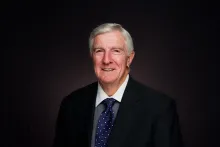
Before his retirement in 2021, Dr. Donald Ward pastored churches in Texas and Louisiana, and taught at Ambassador Bible College in Cincinnati, Ohio. He has also served as chairman of the Council of Elders of the United Church of God. He holds a BS degree; a BA in theology; a MS degree; a doctor’s degree in education from East Texas State University; and has completed 18 hours of graduate theology from SMU.
