
Don Ward
We'll title it Feast Fever, or A Feast State of Mind. Do you have Feast fever? Are you in a Feast state of mind?
Day before yesterday, you and I heard two sermonettes and two sermons on the Feast of Trumpets. Now, I wonder if any of us could name one thing that we changed in our lives, as a result of hearing those messages. I wonder if we could explain one new understanding that we gleaned from those messages?
So, have you, or I, reflected at all on any of those messages? Of course, I gave one of them and I did a lot of reflecting, especially before giving it. But, generally speaking – you can ask most speakers – that the message is first and foremost to themselves. So have you reflected on any of the messages? And you might ask, “What is the point of these questions?” The point is, why are we attending Sabbath services? Why are we going to the Feast? Is it for physical reasons? Is it because it's what we do? Is it because family is there? Is it because friends and neighbors are going? We're there. They're there. Or, is it first and foremost for spiritual reasons?
Of course, we could always say, “I'm going because God commands us to go to the Feast – the place where He places His name.” But to go and not take heed and listen to the messages – the spiritual food that has been prepared for us – is to miss the purpose – is to miss what God is expecting from each one of us. God expects us to go with a perfectly teachable heart, with anticipation of gleaning more spiritual understanding and more wisdom and help with regard to fighting the spiritual battles that lie before us. We should ask ourselves, especially at this critical, crucial time in human history, “Am I seeking first the Kingdom of God and His righteousness? Is that my first priority? Or, am I going through the motions?” We should ask ourselves that question.
As Paul writes to Timothy, in 2 Timothy, chapter 3, verse 5:
2 Timothy 3:5 – Having a form of godliness, but denying the power thereof. I've mentioned this scripture several times within the last year or two.
Are we going to the Feast just because everyone else is? Or, are you going with the right mindset and for the right reasons? Of course, there is nothing wrong with having a good time at the Feast. And it talks about, in Deuteronomy, that you shall eat and drink before the Lord whatsoever your heart desires. It's a time in which many can do what they're not able to do during the rest of the year – that is to feast before the Eternal both physically and spiritually.
So many people in the past would go to the Feast – this is back in the days of Worldwide especially – they were anticipating visits from one or both Armstrongs and some of the other evangelists and what are they going to tell us new? Where do we stand in prophecy? And what is about to happen on the world scene? And here we are…. Mr. Armstrong died in 1986 – so 14 and 17, 31 years ago – and the last time he spoke at the Feast, I remember very clearly. We were in Eugene, Oregon that year for the Feast. It was 1985 and he was – you could tell he was – in a very weakened condition. But so many people in the past would go to the Feast anticipating hearing something new – that kind of thing – especially about prophecy. I guess you would call this the itching ear syndrome. “I want to know something the world doesn't know.” Do we have an insight into prophecy that the rest of the world doesn't have? Nearly all of us, to one degree or another, have been on a knowledge trip, instead of a conversion trip, from time to time. No one is perfectly on the road all the time, but we're striving to be seeking first the Kingdom of God and His righteousness first and foremost all of the time.
The apostle Paul writes in 1 Corinthians 8:1:
1 Corinthians 8:1 – Knowledge puffs up but charity edifies.
We believe that some knowledge of future events, obviously, are going to happen. And we have the broad framework of prophecy. Many details are yet to be understood, but do we believe that some knowledge of future events will somehow insure our entrance into the Kingdom of God? I hasten to add that we are commanded to watch and pray. That's one of the reasons I started some…about 20 years ago, in Ruston, producing this little news item every Sabbath and briefly going over it, because a lot of people really don't keep up with what's happening in the world. They don't have time and they don't have the resources oftentimes to do it. Of course, the world has changed dramatically in the past 20 years, and everybody that has access to the internet can go to the various websites and glean this information for themselves. So we are commanded to watch and pray always, that you might be accounted worthy to escape those things which are coming upon the earth. (Luke 21:36) And we're admonished to have our lamps filled with oil and have on a wedding garment. You know the story there, where guests were invited to the wedding ceremony, and there came in one who had not on a wedding garment, and he was unceremoniously removed.
Yes, we do have some understanding of prophecy in the times in which we live. But what would you say is the main thing that the Church of God understands that no other church understands? What would you say that it is? Well, there are several facets to it. Who is God? What is God? What is His purpose? We understand God is not a trinity – that God's great purpose is to bring sons and daughters to glory in His family, and they are going to be radiant spirit beings in the Kingdom of God. They're going to be on the God plane – heirs of God and joint-heirs with Jesus Christ. That's Romans 8:17.
And we know about man. What is man? Who is man? What is man? What is his purpose? Created in the image of God out of the dust of the ground, but with the great potential of becoming a son, a daughter, of God in the family of God. In short, we know when God created us. We know why we were born. And we know the path to eternal life. See, that's another thing that really the churches of the world don't really understand. The so-called great crusades, that have been led by the name brand evangelists that have come and gone for the past hundred or so years – you think of Billy Graham and many others – in which it is: “Believe on the Lord tonight, accept Jesus Christ as your savior tonight. All you have to do is to accept Him to be saved.” Short-cut Christianity, as they call it.
That – having to do with the great questions of life, why we're here, how we might attain unto eternal life. See a great summary of attaining unto eternal life is given in Hebrews, chapter 6 – those seven great doctrines - repentance from dead works, faith in God, baptism, laying on of hands, resurrection and judgment. Let us go on to perfection. Going on to perfection cuts through all those first six. We have to repent. We have to have faith in God. We have to be baptized. We have to have the laying on of hands. We are to live the resurrected life now. We are being judged now. Judgment is now on the house of God. We are to go on to perfection now. Matthew 5:48 says:
Matthew 5:48 – Become you therefore perfect, even as your Father which is in heaven is perfect.
So it is that core – that trunk of the tree – that you've heard that expression so often – from the one that I mentioned earlier – the trunk of the tree – the core teaching, clinging to the vine. The trunk of the tree.
I did a Google search recently using the revived Roman Empire. It returned 99,400 hits. I did a Bing search and it returned 476,000 hits for revived Roman Empire. I did a Google search using the words Pope false prophet. It returned 139,000 hits. I did a Bing search on the same topic – Pope false prophet. It returned 564,000 hits. I did respective searches, with two search engines, with the key words EU Beast, and received 2,780,000 hits on Google and 1,950,000 hits on Bing. Now, all of these hits are not prophetically oriented, but thousands are. Now what is the point? The point here is, that just about every Christian denomination, and, for that matter, virtually every major religious organization in the world, is looking for some sort of messiah deliverer to come. The Buddhists are looking for the Fifth Buddha. The Hindus are looking for Krishna. The Muslims are looking for the Twelfth Imam. The Jews are looking for the first coming of Messiah. The New Agers are looking for Maitreya – and virtually all of the various strains in between. The peoples of the world know that these are very trying times and we are on the precipice of who knows what. Well, we know what to a large degree.
Now obviously, I'm not saying that these other denominations are more accurate than we are, but oftentimes, many of them are more bold and to the point than we are. If you want to talk about this – talk about prophecy. I believe that God has shown us a lot of things in the past twenty-five years, but have the lessons gone right over our heads?
I'd like to mention some of those lessons that I believe God has been trying to teach us. I believe He has surely shown us that we cannot enter the Kingdom of God by just following a man. What man today would you follow? Hopefully, zero – as far as following a man. “Put your trust not in the son of men, with whom there is no help.” All of our strength comes from God. He has shown us that salvation is an individual and personal responsibility. You are personally standing before the judgment seat of Christ every day. There is an old song that we used to sing – I haven't heard it in years and years – “You've got to walk the lonesome valley. You've got to walk it by yourself, no one else can walk it for you.”
God has tried to show us that we, individually and personally, are standing before the judgment seat of Christ on a daily basis. He's tried to show us that we must work out our salvation with fear and trembling. That's a quote from Philippians. He's tried to show us that we must search the scriptures daily whether these things be true. And He has tried to show us that Christianity is far more important than Churchianity.
Instead of heading the lessons, many search for excuses to quit, and to say, “Well, if the church is going to be like this or that, I'm out of here.” “If he or she is going to be in charge of this or that, I've had it with that.” And so it goes. But the tragic, sad truth is that virtually all that leave churchianity also leave God. People say, “Well I've had it with organized religion.” Well, last night I got a call from – just out of the blue – from someone in the Midwest I hadn't heard from in thirty years. In fact, I tried to dig up in my memory, who is this? Of course, he introduced himself. He said “I was a student at Ambassador thirty years ago. I got to thinking about you tonight. I thought I'll just Google his name and find a phone number and there it was, so I called you. I wanted to tell you that, after thirty years of struggle, God is calling me back. He's calling me back.” He said, “Some of the anger that I had, I no longer have.” He said, “I'm no longer mad at you.” I said, “Why were you mad at me in the first place? I never did anything to you.” He said, “I know. But you were a part of a, you were part of the leadership. You were there. It was like you were symbolic of all that was there” – wherever there is. Of course, he was at the college. And he talked about…he gave high praise to his wife, who had remained faithful through all of it, and was helping him on his journey back. And for so many, of course, we're hoping that they find their way back. That they do – something happens in their consciousness – that they do pick up the phone, and they call whomever, and they try to find their way back. And I tried to encourage him to start…just go to a United service. Go to church. See what it's like. But as I said, sadly for many, after they say, “Well, I'm through with organized religion,” and some try to keep the Sabbath on their own, they try to keep the Feast days on their own, and they wind up eventually drifting away and doing nothing.
We have used the word church so much that it becomes to some more important in the minds of some than our relationship with God. And so, in our Sabbath school program, and our teen program, and our programs for the youth we are emphasizing relationship with God. Whatever else we might be doing, it's this relationship with God. We heard a sermonette on covenants. And see, baptism is a covenant. It is a covenant of sacrifice.
If you would, turn to Psalm 50. I hope you've remembered everything that I've said and have perfect memory. I told my wife I'm going to be talking about thirty minutes – not a Bible will be open, not a pen will be raised. But let's turn to Psalm 50.
Psalm 50:1-5 – The mighty God, even the Lord, hath spoken, and called the earth from the rising of the sun unto the going down thereof. Out of Zion, the perfection of beauty, God hath shined. Remember about Zion in the sermon on Trumpets? You've come to the church of the living God – to the Mt. Zion. Out of Zion, the perfection of beauty, God hath shined. Our God shall come, and shall not keep silence. A fire shall devour before him, and it shall be very tempestuous round about him. No doubt it's talking about the second coming. He shall call to the heavens from above, and to the earth, that he may judge his people. Gather my saints together unto me – those that have made a covenant with me by sacrifice.
So we have entered into that covenant of sacrifice. It's a covenant with God and Christ, and it's a covenant with each member of the Body of Christ, because we are members one of another. That's what Romans 12:5 says – that we are members one of another. In 1 Corinthians 12:25, 26, 27 – along in there – says that we should have the same love, care, and concern for one another.
So this about relationship – about keeping our covenant promise with God – it's with God first and foremost. It's not with the church organization per se, but church organization is necessary. Do you want a disorganized church? I don't think so. Do you think you can go it alone – by yourself? So from cradle to grave, we need to be emphasizing this relationship with God.
Let's look at Ecclesiastes – forward a few pages – chapter 11, Ecclesiastes. This admonishment – all this – you say, “Well, what does this have to do with Feast fever? Well, everything. Everything, because we're talking about why are we going, why are we here, what is the purpose of all of this.? In Ecclesiastes, chapter 11, and verse 9:
Ecclesiastes 11:9 – Rejoice, O young man, in thy youth, and let thy heart cheer thee in the days of thy youth, and walk in the ways of thine heart, and in the sight of thine eyes. But know thou, that for all these things God will bring thee into judgment. I remember talking with a young man who was a very outstanding young man. Of course he did a lot of things in the church in Houston, about the time this split was going on – back 20 years or so ago. In fact, this split was the one most recent – about 7 years ago. I said, “Just remember this one thing. Right now, you might think that you have the upper hand. But I'll tell you one thing – just remember this: for all these things, God will bring you into judgment.” It's written. It's true. It's going to happen. It's going to happen for every one of us, regardless of who we are, where we are, what we are. It will happen. But know you, that for all these things God will bring you into judgment. Therefore remove sorrow from your heart, and put away evil from thy flesh, for childhood and youth are vanity. And that word vanity means temporary. It's here just for a short time. It's like a flash and it's gone. The young want to be older, and the older want to be younger.
Ecclesiastes 12:1 – Remember now your Creator in the days of your youth, while the evil days come not, while the years draw neigh, when you shall say, “I have no pleasure in them.” See, “growing old is not for sissies,” I heard someone say. It is for the tough. And you have to live until you die. And, if you live long enough, you're going to get old.
To some degree we are all, or have been – and hopefully we are waking up – but to some degree, we've all been dull of hearing. It is similar to what Paul wrote to the Hebrews. Let's go to Hebrews 5. And you consider Hebrews – the epistle to the Hebrews. See, the New Covenant church – Church of God – began on Pentecost, 31 AD. And Paul – most people believe that Paul is writing this – of course, some think somebody else wrote it. But I believe Paul wrote it – that it is his epistle to the Hebrews. He's probably writing this somewhere around the 60's AD. And so the church is now like thirty-something years old, if you want to count it that way – from the day of Pentecost 31, AD. Some of you have been in the Church a lot longer than that – almost double that. What is it that you haven't heard? Well, you’ve probably heard most everything. But Peter said, in 2 Peter 1, “I will not be negligent to put you in remembrance of these things.” And it's good for all of us, from time to time, to have a wake-up call. And the Feast season is really a time for a wake-up call. In Hebrews, chapter 5, and verse 12:
Hebrews 5:12-14 – For when for the time ye ought to be teachers, ye have need that one teach you again which be the first principles of the oracles of God, and are become such as have need of milk, and not of strong meat. For every one that uses milk is unskillful in the word of righteousness – for he is a babe. But strong meat belongs to them that are of full age – they're going on to perfection, they're going on to maturity – even those who by reason of use have their senses exercised to discern both good and evil. They're not still hung up back there in the first principles of the do's and don'ts. They know what to do. They've gone over it many times. They are actually living, as best they can, by every word that proceeds out of the mouth of God.
And I've already quoted chapter 6, verse 1 – let's read it. So in view of that – in view of what we've just read here:
Hebrews 6:1-2 – Therefore – therefore, or in view of what we just read – leaving the principles of the doctrine of Christ – things that we already know – let us go on unto perfection, not laying again the foundation of repentance from dead works, and of faith toward God, of the doctrine of baptisms, and of laying on of hands, and of resurrection of the dead, and of eternal judgment. And a lot of people skip this: let us go on to perfection – let us go on to perfection – verse 1 – not laying again…. So going on to perfection, of course, cuts through all of this. You have to have all six of those in place and be practicing those.
When I say that we are dull of hearing, I mean the kind of hearing that results in action. And that action might be prayer. It might be Bible study, it might be any number of things that we know that we ought to do. It might be our approach to Sabbath services. It might be our approach to the Feast.
Let's look at James, chapter 2. In James, chapter 2, we see this admonition eloquently stated, far better than I can do. In James, chapter 2, verse 17:
James 2:17-21 – Even so faith, if it hath not works, is dead, being alone. So it requires more than just the abstract dimension of you believe. “I believe. I believe.” “What do you believe?” “Well, I believe such and such.” But if no action is taken in it, it is dead, in the spiritual sense. Yes, a man may say you have faith and I have works, show me your faith without your works – in other words, just saying, “I believe” – a and that's, basically, where Christianity is come to in the nominal world – and I will show you my faith by my works. You believe there is one God. You do well. The devils also believe, and tremble. The devil believes in God. As the demons asked Christ as He approached them, “Are you come to torment us before the time?” But wilt thou know, O vain man, that faith without works is dead? Was not Abraham our father justified by works – or better translation, though the Greek word is ergon, which is usually translated work – but Abraham was justified by obedience when he had offered Isaac his son upon the altar? You know, as they went to the place where Abraham was going to sacrifice Isaac, he had the two people along with him. They had wood, they had to build a fire, and various accoutrements for the sacrifice. And Isaac was immediately going along, and he said, “Hey, where's the sacrifice?” And Abraham said, “The Lord will provide a lamb.” And you know the story. At the last moment, just as Abraham was about to bring down the knife on Isaac's throat, his hand was stayed, and they saw a lamb – a ram – caught in the thicket. And see, today, Jesus Christ is that Lamb of God, which takes away the sins of the world. He is our sacrifice.
The Feast should be a great turning point in our lives. What I have talked about so far here has to do with mental set. It has to do with state of mind. It has to do with preparing mentally, spiritually, psychologically, and, of course, physical goes along with it. But first and foremost: Seek you first the Kingdom of God and His righteousness.
So, why are we going to the Feast? Well, we always turn – and we turned here on Trumpets, during the offertory – let's go there again. Deuteronomy 16, and verse 13. We hear some of these scriptures over and over again, but sometimes, we hear a scripture, and if we really focus, it rings a bell that has not been rung in the past, and we say, “Ah, I never thought about it that way before.” See, that's what I'm continually looking for – some deeper insight, some deeper meaning – understanding, not just glossing over.
Deuteronomy 16:13-14 – Thou shalt observe the feast of tabernacles seven days, after that thou hast gathered in thy corn and thy wine. And thou shalt rejoice in thy feast, you, and your son, and your daughter – so you see, it's a family affair – and your manservant – the whole household – your maidservant, and the Levite, the stranger, and the fatherless, and the widow, that are within thy gates. In this survey that we did to the membership – and we covered it in the last Council meeting – one of the things that was noted, that a lot of people – well, I say a lot of people – at least, some – felt left out at the Feast, because maybe they are a widow. Maybe they're a widow indeed, or maybe they are a spiritual widow, or maybe they are married to an unconverted mate. And you could go on with the various ways that people can be there without friends and neighbors and support, and hopefully, we can look for those people and make them feel a part.
Continue in verse 15:
V-15-17 – Seven days shall you keep a solemn feast unto the Lord thy God in the place which the Lord shall choose, because the Lord thy God shall bless thee in all thine increase, and in all the works of thine hands. Therefore, you shall surely rejoice. Now our rejoicing, as we'll read a little bit later, is way beyond the physical rejoicing that Israel could experience during the Feast. They had bountiful crops, and their animals did well, and their agricultural products were good, and they were prosperous and that kind of thing. We are all, been blessed with all spiritual blessings in heavenly places, as it talks about in Ephesians 1. I plan to read that a little later. Seven days shalt thou keep a solemn feast unto the Lord thy God in the place which the Lord shall choose, because the Lord thy God shall bless thee in all thine increase, and in all the works of thine hands. Therefore thou shalt surely rejoice. Three times in a year shall all thy males appear before the Lord thy God in the place which he shall choose; in the feast of unleavened bread, and in the feast of weeks, and in the feast of tabernacles: and they shall not appear before the Lord empty. Every man shall give as he is able, according to the blessings of the Lord thy God which he hath given thee. Has God given you more spiritual blessings this year? Have you gleaned more insight into the word of God than you had last year? Do you understand things more clearly? Are you seeking and searching for those blessings?
Continuing here in this chapter. No I want another chapter. Fourteen. Let's go back to Deuteronomy 14, and verse 19. I want to start in 22.
Deuteronomy 14:22-23 – You shalt truly tithe all the increase of thy seed, that the field brings forth year by year. And thou shalt eat before the Lord thy God, in the place which he shall choose to place his name there, the tithe of thy corn, of thy wine, and of thine oil, and the firstlings of thy herds and of thy flocks, that thou may learn to fear the Lord thy God always. And of course, people talk about, “Well, we don't want that fear religion.” Well, the kind of fear that we need is that of understanding who God is, what God is, what is His purpose – that we owe our very existence to Him, that He is a merciful, loving, Creator God. But at the same time, He does have the power of life and death. Let's quote Matthew 10:28, which says:
Matthew 10:28 – And fear not them which kill the body, but are not able to kill the soul: but rather fear him which is able to destroy both soul and body in gehenna fire. See, that healthy fear of God.
Now what has happened in our world that is so sad and tragic is, that is that Nietzsche's neologism – that everything is not worth it – nothingness – has taken root and people don't care. I mean they don't care whether they live or they die. Suicide is rampant among those under thirty years of age. In fact, sitting there with Nick Holcomb, his son is attending a funeral of one of his classmates, in Tyler – that committed suicide this week. Teenager, junior in high school. The kind of healthy fear. Of course, many factors enter in to why a person loses touch with reality and takes their own life. But people come to the point that it just doesn't seem worth it. And they don't care. There's the kind of don't care hopelessness. And apparently this young person had, as opposed to this “I don't care,” it's the philosophy of eat, drink, be merry, tomorrow we might die. This is it. “There is no life hereafter, so I might as well, burn the midnight oil, burn the candle at both ends – eat, drink and be merry – do my own thing.” Life is so precious. I hope we realize that.
God has removed the scales from our eyes and called us into His marvelous light – enabled us to sit in heavenly places – not just sit and enjoy a meal, in which we fare sumptuously on whatever it might be, from a juicy steak to succulent seafood. I guess there's succulent seafood. When I think of succulent seafood, I think of oysters, and we can't eat those. But let's go to Ephesians 1. I don't think I could eat a raw oyster without being forced. In Ephesians, chapter 1, and verse 1:
Ephesians 1:1-3 – Paul, an apostle of Jesus Christ by the will of God, to the saints which are at Ephesus, and to the faithful in Christ Jesus: Grace be to you, and peace, from God our Father, and from the Lord Jesus Christ. Blessed be the God and Father of our Lord Jesus Christ, who hath blessed us with all spiritual blessings in heavenly places in Christ. See, that is the rejoicing.
Hopefully, none of us lament, and say, “Oh! Why did God have to call me now?” This is one of the most exciting times in all human history to be called, because this generation…and, of course, you can have at any one time, even in our family, with Wanda and I, we now have four generations. We have ourselves. We have our daughters. We have our grandchildren, and we have our great-grandchildren. And many of you have that. You have four generations that you care about – love deeply. Some may have five, I don't know if they do or not. But to be called at this time, to be challenged in the way that we are, to have the opportunity to stand in the gap in these tough trying times – what a privilege that is! You're going to be rewarded for standing in the gap, if you do it.
We are to offer up the spiritual sacrifices, because we have been blessed with all – what does it say here? - with all spiritual blessings in heavenly places in Christ. So look at Hebrews 13, and verse 14. Here are some of the things that we are going to do and learn at the Feast. We're going to offer up spiritual sacrifices. Of course, we are to offer up spiritual sacrifices every day. Pray without ceasing. Go with a prayer on your lips. It's one of the things that I had…my relationship with my mother, who was a very religious person. And she taught my brother and I well. We grew up in the Baptist Church and we thought that was the church, founded by John the Baptist. And of those churches, that I knew about, it seemed I would rather be in that. But I read the Bible from the time…I memorized scripture from the time I was six years old, for sure. And I began to see things that were not being taught – even approached the ministry a few times with them. And of course, they had no answer for them – for those questions. And some of that was just observations of questions that you might ask. And one of the things that – of course, I've said this before – she did finally say, “Well, son, if I could find a Baptist Church that went to church on Saturday I'd go to it.” And another thing she said was, “I go with a prayer on my lips” – a prayer on my lips – the spiritual sacrifice.
So, we're in Hebrews 13, hopefully, verse 14:
Hebrews 13:14-16 – For here have we no continuing city, but we seek one to come. By him therefore let us offer the sacrifice of praise to God continually – that is, the fruit of our lips giving thanks to his name. But to do good and to communicate forget not, for with such sacrifices God is well pleased. God is well pleased with such sacrifices – that we offer up our petitions of prayer before Him – spiritual sacrifices.
Look at 1 Peter 2 – just forward a few pages there. 1 Peter, chapter 2, and verse 4 – we are commanded to offer spiritual sacrifices.
1 Peter 2:4-6. To whom coming, as unto a living stone – that living stone, Jesus Christ – disallowed indeed of men, but chosen of God, and precious, you also, as living stones, are built up a spiritual house – using the analogy of building – a physical building – and a spiritual house with stones, Jesus Christ, the Chief cornerstone – the head of it. …you also, as living stones, are built up a spiritual house, an holy priesthood, to offer up spiritual sacrifices, acceptable to God by Jesus Christ. Wherefore also it is contained in the scripture – this is quoting Isaiah 28:16 – Behold, I lay in Zion – in a church – a chief cornerstone, elect, precious. And he that believes on him shall not be confounded. Yes, we are to offer spiritual sacrifices – the fruit of our lips.
What is a greatest sacrifice that you could bring before God? What is the greatest sacrifice, symbolically, you could take – well, it's literal as well – to the Feast? Well, let's look at Psalm 51. Psalm 51 is oftentimes times called David's repentance psalm after the incident with Bathsheba and the killing of Uriah. In Psalm 51, and verse 16:
Psalm 51:16-17 – For you desire not sacrifice – else would I give it – that is, physical things sacrificed. “The blood of bulls and goats, my soul shall have no pleasure in them.” That's what the scripture says. “The blood of bulls and goats, my soul will have no pleasure in it.” That's what God says. What does He want? For you desire not sacrifice – else would I give it. You delight not in burnt offering. The sacrifices of God are a broken spirit. A broken and a contrite heart, O God, thou wilt not despise. So that's what God wants from us.
Look at Isaiah 66:2. And it's when we can come to this point that God can really work with us and teach us. In Isaiah 66:2:
Isaiah 66:2. For all those things has my hand made, and all those things have been, says the Lord: but to this man will I look, even to him that is poor and of a contrite spirit, and trembles at my word. That's the sacrifice that God wants and that's the person to whom God will look. The state of mind that is described there would result in a perfectly teachable heart. So you want to go to the Feast, and you want to come to Sabbath services, with a perfectly teachable heart.
Look at James chapter 2. No, it's chapter 1. And look at this…right after Hebrews. We've been there once. In James, chapter 1, and verse 19:
James 1:19-21 – Wherefore, my beloved brethren, let every man be swift to hear, slow to speak, slow to wrath. For the wrath of man works not the righteousness of God. Wherefore lay apart all filthiness and superfluity of naughtiness, and receive with meekness – this word that is translated meekness, in the Greek, is prautes – P-R-A-U-T-E-S. And it means – it's really not translatable – difficult to translate that into English – it means a perfectly teachable heart. Receive with a perfectly teachable heart. See that heart – that sacrifice of Psalm 51 – that heart described in Isaiah 66:2 – receive with meekness the engrafted word, which is able to save your souls – your life essence.
The Day of Atonement, which is rapidly approaching, next Sabbath, sets the stage for a humble, teachable heart and mind. See, all that Satan has to offer is physical. On the Day of Atonement, you deny all physical. You deny all physical, and what you have is the spiritual food. And it seems like on the Day of Atonement, there is sort of like a peace that just settles over your being – that all is well. And you begin to experience a foretaste of the peace of God. And we want the peace of God. So the Day of Atonement sets the stage for a humble, teachable heart and mind. We're going up to the Feast to sit at God's feet and be taught. Well, we would say, “Oh, God is going to be there?” God is going to be there?” This is the word of God. This is the word of God.
What's going to happen? What is God going to teach us in the Millennium at the Feast of Tabernacles? Well, the Bible tells us very clearly, and it was the memory scripture for today. Let's go back there and read it again – in Isaiah, chapter 2. We're going to sit at the feet of God. God is going to use the ministry to teach us. Now one of the problems that so many people have is, they get hung up with the messenger. “Oh, I don't like him. I don't like his personality. He thinks…blah blah blah.” Well, is he teaching the word of God? Is he true to the Word of God? There is no human messenger that is perfect. He ain't been invented yet. There is no human messenger that is perfect. But, as we shall read in a moment, the word of God is perfect. In Isaiah, chapter 2, and verse 1:
Isaiah 2:1-4 – The word that Isaiah the son of Amoz saw concerning Judah and Jerusalem. And it shall come to pass in the last days, that the mountain of the Lord's house shall be established in the top of the mountains – the kingdoms of this world are going to become the kingdoms of God and His Christ. He's going to rule then – and shall be exalted above the hills. And all the – smaller nations and all nations – shall flow unto it. And many people shall go and say, “Come ye, and let us go up to the mountain of the Lord, to the house of the God of Jacob, and he will teach us of his ways, and we will walk in his paths. For out of Zion shall go forth the law, and the word of the Eternal from Jerusalem. What are you going to be taught? The word of God. And hopefully, that's what we are being taught. And he shall judge among the nations, and shall rebuke many people – see what a day this is going to be! In today's world, all the nations, including the little small nations like North Korea and others you could name, scrambling for all the weapons they could get. As it says in Joel 3, “Let the weak say, ‘I am strong. Here I am. I have 25 million people that are starving to death, but I've got the H-bomb. If you don't bow to me, I'm going to zonk you out there.’” That's going to be done away with! And he shall judge among the nations, and shall rebuke many people. And they shall beat their swords into plowshares, and their spears into pruninghooks. Nation shall not lift up sword against nation, neither shall they learn war any more.
And so this Feast of Tabernacles, that you hear so often, pictures the time of God's government ruling and reigning over the earth, and it's not going to be business as usual. We're going to be taught of God – to be fed spiritually, to worship God and rejoice before Him. Can there be any greater opportunity than to be taught of God? We're going to the Feast to learn God's great faithfulness. In Titus, it says, “God who has promised – God who cannot lie has promised….” It's a time to review those precious promises, and to look at that time in which the knowledge of God shall fill the nations as sand fills the seashore. And we're going to be comforted – the Great God of comfort. And we're going to offer thanksgiving for His mercy. And we're going to focus on God's immutable spiritual law.
Now, let's look at that verse that I mentioned earlier in Psalm 19, and verse 7. Yes, the messengers that stand before you – anyplace you want to go, any person you want to name – none are perfect. You can find flaws in all of them. You may not identify with their personality. In fact, you may think whatever you may think, but human beings are flawed, but Psalm 19:7:
Psalm 19:7-10 – The law of the Eternal is perfect. Are we preaching the word of God? This says, “It's perfect.” The law of the Lord is perfect, converting the soul. The testimony of the Lord is sure, making wise the simple. See, you know, and whether you have a college education, a high school education, grammar school or less, you can understand things that the high, the mighty, the so-called noble of this world do not understand – the truth of God. The statutes of the Lord are right, rejoicing the heart. The commandment of the Lord is pure, enlightening the eyes. The fear of the Lord is clean, enduring for ever. The judgments of the Lord are true and righteous altogether.. More to be desired are they than gold, yea, than much fine gold – sweeter also than honey and the honeycomb. That Psalm 19 is a marvelous, marvelous psalm.
And of course, we're familiar with Romans, chapter 7, verse 14, which says:
Romans 7:14 – …the law is spiritual. It is perfect. And that which is spiritual and perfect is not done away with.
So we're going to the Feast to close the gap between what we know and what we do, which is, historically, the weakness of all peoples, from the Garden of Eden to the present time – closing the gap between what we know and what we do. Adam and Eve were not so successful. But we are going to be successful. We're going to be priests and teachers. Today, you may not be in a teaching position. You may not be in the ministry. Your reward may be higher than mine. Your reward in the Kingdom of God? Who knows what it's going to be. You are going to be a priest and a teacher, if you make it, if I make it. We're going to be priests and teachers. We're going to be called ministers.
Look at Isaiah 61 – the Beauty for Ashes chapter – one way we can name it. In Isaiah 61, just briefly here, in verse 3:
Isaiah 61:3-6 – …to appoint unto them that mourn in Zion – that is, in the church it's going to be a time of mourning just before Christ returns – to give unto them beauty for ashes, the oil of joy for mourning, the garment of praise for the spirit of heaviness – that they might be called trees of righteousness – the planting of the LORD – that he might be glorified. And they shall build the old wastes. They shall raise up the former desolations, and they shall repair the waste cities – the desolations of many generations. And strangers shall stand and feed your flocks, and the sons of the alien shall be your plowmen and your vine dressers. But ye shall be named the Priests of the Lord. Men shall call you the Ministers of our God. You shall eat the riches of the Gentiles, and in their glory shall ye boast yourselves. Yes, we are going to be kings and priests. We're going to be teachers. So we are going to the Feast to learn how to be teachers. We're going to learn how to be ambassadors for Christ and ministers of reconciliation. We're going to learn the more excellent way. What is the more excellent way? The more excellent way is to become love as God is love.
Do you remember those first three verses of 1 Corinthians 13?
1 Corinthians 13:1-3 – Though I speak with the tongues of men and angels and have not charity, I become as a tinkling cymbal. And though I understand all mysteries, and have the gift of prophecy, have faith that I can move mountains, and have not charity, profits me nothing. And though I give my body to be burned and have not charity, it profits me nothing. So we're going to learn. That's what Paul calls the more excellent way – to become as God is.
So brethren, we have the wonderful opportunity. We have the knowledge. We have all the equipment that's necessary. Do we have the will? Do we have the will – the stick-to-it-iveness – the perseverance?
So I hope as we go to the Feast this year, we will keep these things in mind, we will review them, we will think about them. The purpose of the Feasts were ordained for spiritual purposes – to show God's awesome love and mercy for humankind through His great plan of salvation.
And my Feast poem:
We are going to God's Feast in 2017 to learn to fear God and rejoice.
With our hearts void of leaven and to praise Him with one voice.
We're going to worship the Eternal King who feeds the sheep of His flock.
Our sacrifices of thanks and offerings we bring as we drink of the living rock.
We're going to feast on the word of God so we can relieve the world of sorrow.
With the Gospel of peace we are thoroughly shod as we experience a foretaste of the wonderful world tomorrow.
So come let us be glad and rejoice and let our spirits soar
As we enjoy the good things of our choice, let us ever be mindful that we are Christ's ambassadors.
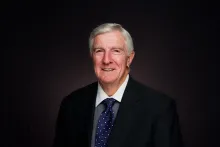
Before his retirement in 2021, Dr. Donald Ward pastored churches in Texas and Louisiana, and taught at Ambassador Bible College in Cincinnati, Ohio. He has also served as chairman of the Council of Elders of the United Church of God. He holds a BS degree; a BA in theology; a MS degree; a doctor’s degree in education from East Texas State University; and has completed 18 hours of graduate theology from SMU.
