

Don Ward
This transcript was generated by AI and may contain errors. It is provided to assist those who may not be able to listen to the message.
The title today is, So You're Going to the Feast. So you're going to the feast. And my question is, why are you going to the feast? We can always say that we're going because God commands us to go, and thus, that is the case, he does. But to go and not take heed and listen with purpose is not what God is expecting. God expects us to go with a perfectly teachable heart, with great expectation and anticipation that we are going to be fed spiritually, and that we're going to do our part in that process of being fed. So we should ask ourselves, especially at this critical crucial juncture in human history, am I seeking first the kingdom of God and His righteousness, or am I just going through the motions? These are serious times in which we live, and it is amazing how here that we are able to maintain to a large degree what we might call, in quotes, a normal way of life in view of all the things that are going on in this world. So are you going to the feast just because everybody else is going?
It seems that we had Hawaii fever here in this congregation. So this couple says they're going to Hawaii, and then, oh, if you're going to Hawaii, I guess I'm going too. So we wind up with seven or eight couples going to, and their children going to Hawaii. Of course, with some of them, it's a long overdue thing and for many different reasons. So Hawaii, if you ever have a chance to go there for the feast, it is a wonderful opportunity and a great feast site.
So many people in the past, and I don't think it's so much in the recent times, they would go to the feast with anticipation of hearing some new thing about prophecy. What do the ministers think about the end times in which we're living? Is there going to be some new truths to reveal what... but that is sort of worn off in recent times. He used to be at the feast after a sermon. The minister, after the closing prayer, he would sort of be mobbed, as it were. Now no one pays him any attention at all, and I guess that might be good. I guess you could call this the itching ear syndrome to hear something new. Some people want to know something about the future. There's just something about wanting to know what the future holds. But nearly all of us, to one degree or another, have been on a knowledge trip versus a conversion trip for a long time, and hopefully we're beginning to get our focus where it ought to be, and that is on what do I need to do, seek the kingdom of God first in His righteousness, and all these things will be added to you. The apostle Paul writes in 1 Corinthians 8 and verse 1, knowledge puffs up, but charity edifies. And we will come later to 1 Corinthians 13 and expound on that more about knowledge versus becoming. God is more interested in what you're becoming than what you know, and God is more interested in what you're becoming than what you do.
Do you believe that knowledge of future events would somehow ensure your entrance into the kingdom of God? Well, we'll also see that in 1 Corinthians 13, though I understand all mysteries, how the gift of prophecy. We'll see more about that. The church, through the years, thought it had a leg up on everybody else when it came to understanding prophecy. And in some ways, the church does understand a lot about prophecy. But is that the most important thing? The most important thing that the church of God understands is that the rest of the religious professing world does not understand. One is who and what is God, what is His purpose, and who He is, what He is, and what is His purpose. And corollary to that is who is man, what is man, what is His purpose. In other words, to understand why we were born, why you are here on the earth, why you draw breath, to understand that, and then to understand going hand in glove with that, to send a grace to understand that God is not a trinity. God is Spirit. Jesus Christ is Spirit. And we have that Spirit essence within us. And upon resurrection, we will be on that plane of existence that God and Christ are. By the same Spirit that He raised Jesus from the dead, He will also raise our bodies from the dead. And if it's the same Spirit that raised Jesus from the dead, the same Spirit dwells in you, you could be nothing less than on that plane in resurrection.
And in Hebrews chapter 2, verses 10 and 11, we're all of one. And Hebrews 2, 11 says that He's not ashamed to call us brethren. So we are, and now I'm going to quote Romans 8, 17, that we are heirs of God, heirs of God, and joint heirs with Jesus Christ. If we're a joint heir, we inherit what He inherits. And He has already been resurrected from the dead, and now sits at the right hand of the Father in the heavenlies. So to know that and to know the conversion process, yes, it is through faith. Yes, grace is involved. Faith is involved, but there are conditions. There are conditions to being recipients of God's grace. And one of the main ones, of course, is repentance and faith in the sacrifice of Christ. That is the core. That is what we understand that the rest of the world doesn't understand.
I did a Google search some time back. I used the term Revive Roman Empire, and it returned 99,400 hits.
And some search engines would bring up a lot more than that. I did a Bing search with that same Revive Roman Empire, and it turned up 476,000 hits, almost a half million. I did a Google search on the Pope as False Prophet, and it returned 139,000 hits.
I did a Bing search on Pope as False Prophet, and it did 564,000 hits, over a half million.
I did respective searches with two search engines with the keywords EU, European Union as the Beast, and received 2,780,000 hits.
Now, all of these hits are not prophetically oriented, but most of them are. The point is that just about every Christian denomination on earth, except the Catholics. Now, the Catholics claim to be Christian, but the Catholics are not looking for the return of Jesus Christ. You won't hear them preaching about the return of Jesus Christ, because they believe that the Catholic Church is the kingdom of God on earth, and the great goal is to go to heaven and be partakers of the beatific vision, whatever that is. It's a very nebulous, mystical, kind of creepy kind of thing, and just looking at that person who waddles around in that white robe gives me the everlasting creeps. So, the truth is no mere mortal knows exactly how the end times will unfold. Now, there are many signs given, and we have heard sermons on Matthew 24 and Matthew 25.
And even though we've heard all of those sermons, and we have been talking about Jesus Christ is going to come, and it may be soon, and all of that, dating back when Mr. Armstrong first started this, crying aloud about this in circle 1930. So, that's 85 years, and we're still here. But with all of these warnings, five of the ten virgins that are listed in Matthew 25 are not ready. They're asleep. The oil has gone out of their lamps or is going out to the point that they're not able to make it in. The door is closed when they come back.
Now, I believe that God has shown us a lot of things during the past 25 years, but have these lessons gone right over our heads. I want to talk a little bit about that.
What has God shown us? He's shown us that I, you cannot enter the kingdom by following a man.
He's tried to show us that we are individually and personally standing before the judgment seat of Christ on a daily basis. It says that clearly in Romans. He's tried to show us that we have to work out our salvation with fear and trembling. Once again, an individual and personal matter.
He's tried to show us that Christianity is far more important than Churchianity. Some people think, well, I just got to do everything in the Church and just focus on the Church and Church activity and that kind of thing. And their spiritual life really goes lacking in prayer, study, and all the things they need to be doing. Instead of heeding the lessons, many look for excuses to quit and say, if this is the way the Church is, I don't want to have anything to do with it. But tragically, and the sad truth is that they not only leave Churchianity, they leave God.
And some continue in the Church and Churchianity, but in their hearts, God in His Word does not play a prominent role in their lives. So once again, refer to the five virgins. 50% are not really ready when the bridegroom comes. Behold, the cry at midnight. The bridegroom is here.
And some continue in the Church and Churchianity.
And you need to, of course, have your heart in doing what you need to do and serving. But more importantly is, what is your relationship with God and each member of the Body of Christ?
And we need to ask ourselves, have we become dull of hearing as we enter this most important festival season? I'm not saying it's more important than Passover. I'm talking about most important in the sense of what we are facing in the world. Let's look at Isaiah 66, verse 2. Isaiah 66 and verse 2.
Isaiah has a lot to say about the millennium and about the Church. We don't spend nearly enough time with Isaiah. In Isaiah 66, let's read verse 1. I don't know, what did I say? Isaiah 66 and verse 1. Thus says the Lord, that heaven is my throne and the earth is my footstool. Where is the house that you build unto me? Of course, it says in the book of Acts, in other places, that God no longer dwells in houses made by hands.
His Spirit is in us. And where is the place of my rest? For all those things that my hand made and all these things have been says the Eternal. But to this man will I look, even to him that is poor and of a contrite spirit and trembles at my word.
And so, does the Word of God really mean anything? I have seen at the feast, and I think more of this was in the times past. We used to have the feast out here on the campus of Big Sandy. We have 10,000 or more people.
And as you're up there speaking, you look back in the back, you would think that people are at the fair somewhere. As they're walking back into, walking back into, and you wonder what's happening, what's going on, where are they going?
So we need to be ready to hear. This feast, and once again I mention in view of everything that's going on in this world, could and should be a great turning point in our lives if we have ears to hear. So why are you going to the feast? Let's go to Deuteronomy. Deuteronomy chapter 16. We've tried to set the stage here about, you know what's going on in the world. If you've had on the news at any time or looked at any kind of news source, even if you are just sort of vaguely aware, you know that we're living in critical, crucial times.
But what does God say about, why should you go to the feast? So we're looking at Deuteronomy 16, and we want verse 13. You shall observe the Feast of Tabernacles seven days. After that, after that you have gathered in your wheat or your food and your wince. And you shall rejoice. So that's one of the main reasons why you're to go to the feast. You shall rejoice in your feast. You and your son, your daughter, the maidservant, the manservant, the Levite, the stranger, the fatherless, and the widow that are within your gate. Seven days shall you keep a solemn feast unto your God in the place where the Lord shall choose, because the Lord your God shall bless you in all your increase and in all your works of your hands.
Therefore you shall surely rejoice. So it's a command to go to the feast and rejoice. Now look back at chapter 14. And here we want to read verse 23. Deuteronomy 14 verse 23. And you shall eat before the eternal your God in the place which he shall choose to place his name there, the tithe of your corn, of your wine, your oil, the firstlings of your herds, of your flocks, that you may learn to fear the eternal your God always, with reverence, with awe, with respect.
It's like people don't realize that the reason why they draw breath is because that God so loved the world that then we could go even before he gave his only begotten Son that he created humans in the first place. Humanity exists because God is love and he wants to share who he is and what he is in a family relationship. And that should spark such awe, reverence, respect for the Creator.
You couldn't even describe it. But people go along, and now we've got the most visible religious leader in the world saying that evolution is a fact and God is not a wizard. No, God's not a wizard, but God is our Creator. And he created humankind in his image and his likeness, created he, them, male and female, created he, them, the ordained marriage, family. And we could just go on and on following that line, how ridiculous it is for a religious leader to make such a statement with regard to the creation.
So God tells us that the two main reasons for attending one is to rejoice, a command, and that we learn to fear him. So why are you there to rejoice? Why are we here to rejoice? Why are we going to rejoice? The Feast of Tabernacles is a feast of end-gathering. The harvest is gathered. You're there to thank God for calling you and giving you the understanding, too, of the great questions of life. And once again, those things that the Church of God understands, and I know no other place other than the Church of God that understands, God is not a Trinity.
God is our Creator. That the purpose of God is to bring sons and daughters to glory in his family. And that the road to salvation is through repentance and faith in Jesus Christ. The law of God is not done away with. What will you go to repent of? On the day of Pentecost, after Peter preached, they said, And Peter said, Repent, and be baptized in the name of Jesus, and you shall receive the gift of the Holy Spirit.
So receiving the gift of the Holy Spirit is dependent upon repentance. It's also, this aspect is not in that particular verse, but it is in other places. Faith in the sacrifice of Christ, he died in our stead. And to be baptized, to go under the water, bury the old man, and to keep the old man buried forever. So we're going to thank him. That's part of the rejoicing. Now notice in that, in ancient Israel, they went and rejoiced.
The physical harvest was over, and they had hopefully been blessed. Some years they may have had drought, they may have had famine. I'm sure they did from time to time. But look at Ephesians chapter 1 with regard to us in the spiritual sense, with regard to what do you rejoice about, and why do you rejoice? This is Ephesians chapter 1, verse 3.
Now that word blessed is an interesting word. In the Greek it's makarios, M-A-K-A-R-I-O-S. And it means, sometimes it's translated happy, sometimes it's translated blessed.
Blessed be the God and Father of our Lord Jesus Christ, who has blessed us, who has blessed us with all spiritual blessings. So they went to the feast in ancient times, rejoicing in the physical blessings to a large degree that they had received. Now we go in rejoicing with all the spiritual blessings that we have been presented with and given in heavenly places in Christ. According as He has chosen us and Him before the foundation of the world, that's a very sobering Scripture there, God is not predestined as Calvinistic Presbyterianism used to teach, I guess they still do, that God is predestined only certain humans on the face of the earth to be saved, to be inheritors of salvation.
God has predestined when you are called, according He has chosen us and Him before the foundation of the world, that we should be holy without blame before Him and love, having predestinated us unto the sonship, O King James says, adoption, it's sonship, because we are the same essence. In resurrection, we are the same essence as God the Father and Jesus Christ. That's a very important point to note. Having predestinated us unto the sonship, Huiotheseia, having predestinated us unto the adoption of children, sonship instead of adoption, sonship of children by Jesus Christ to Himself.
So we're going to the feast to rejoice, and we're going to learn. We're going to be taught of God. How do we learn? Now, a lot of the people that be attending the feast, and maybe some of you, you've been in the church 50 years. Who's going to teach you anything? Can you learn anything else? Oh, yeah, there's so much to learn. Even the Apostle Paul says we see through a glass dimly, darkly, and he had been taught by Christ for three or three and a half years in the desert. Can we learn anything else? Are we eager to learn? Is it like the first day of school? All eager to learn?
So we're there to be taught of God. We're going to sit at the feet of God in the figurative sense. Now, notice Isaiah, once again, chapter 2. One of the great...to me, this verse 4 is my favorite of all, having been in education all my life. This is my favorite of all the millennial scriptures, verse 4, but we'll read into it from verse 1. Isaiah 2 and verse 1. The word that Isaiah the son of Amazah saw concerning Judah and Jerusalem, it shall come to pass in the last days. Now, when you see that, that's a prophetic utterance. It shall come to pass in the last days. That means that period of time emerging from this present evil age into the millennium. It shall come to pass in the last days that the mountain of the Lord's house shall be established in the top of the mountains. Mountains symbolically represent nations. And shall be exalted above the hills, all nations, great and small. And all nations shall flow into it, the mountain of the Lord, the government of God. And many people shall go and say, come and let us go up to the mountain of the Lord, to the house of the God of Jacob. And He will teach us of His ways, and we will walk in His paths, for out of Zion shall go forth the law and the word of the Eternal from Jerusalem. So, just imagine what the Feast of Tabernacles is going to be like in the world tomorrow with those who are able to go to Jerusalem. And I would imagine there would be some kind of, quote, cybercast for the whole world. At that time, we basically have cybercasts, and right now, I mean, I know that there are probably, we, I'm in communication quite often with a young man while he's in his forties in Germany, who writes me, and he tunes in to our cybercast. I had a call this morning, the lady in Ohio wanted the address to tune in. There are people around the world, even right here from this little location, can tune in anywhere in the world if they have a computer or a smartphone to the services. So we're going to be taught of God. You notice also in Isaiah chapter 30, one of the things that, I remember when I first started teaching, at one time, this is among other subjects you would teach as well, but at one time I taught junior high math. And we had this one little boy who, he just never wanted to pay attention. So one of the lines that I gave him, I said, you may not work school, but you're going to play school as long as you're in this class. And that's the way it's going to be in the millennium. You may not get it, and you know some won't, because after the millennium, when Satan is released, a lot of deception takes place. But you look at Isaiah chapter 30, verse 19, verse 19, and you hear a word behind you saying, this is, you may not be really with it, but you're going to make like you're with it, a word behind you saying, this is the way walk you in it when you turn to the right hand and when you turn to the left. And so that's going to be quite a time to be able to go to school, as it were, and to be taught of God.
We're also going to the feast to offer up spiritual sacrifices. One of the main spiritual sacrifices that we can offer up, of course, is the fruit of our lips through prayer and communication. Look at Hebrews 13.
You know, in the age of, quote, telecommunications and satellite communications, we actually have less face-to-face communications and even voice-to-voice. I mean, these people are texting. I can't stand it. The...you're at a red light and everybody goes, well, why is the car in front of me going, well, it's because they're texting. In Hebrews chapter 13, we'll start in 15.
By him, therefore, let us offer the sacrifice of praise to God continually. So God counts praise as a sacrifice. You can praise God in song. You can praise God in prayer.
That is, the fruit of our lips, giving thanks to his name. But to do good and to communicate, forget not. For with such sacrifice as God is well pleased. So one of the things that you do, of course, in ancient times, they offered animal sacrifices. Today you don't offer animal sacrifices, but here's one of the main sacrifices that you offer. Now look at 1 Peter chapter 2. Forward a few pages. 1 Peter chapter 2. And here we see this term, spiritual sacrifices. 1 Peter chapter 2 verse 4.
So they offered animal sacrifices. You offer spiritual sacrifices. And one of them is to praise God, the fruit of your lips. And in rejoicing, that's a part of rejoicing and giving thanks. Wherefore also it is contained in the Scripture, Behold, I lay in Zion, a chief cornerstone, elect precious, and that he that believes on him shall not be confounded. Now Zion, what does Zion symbolize? I'm going to be giving a Bible study at the feast entitled, Zion Past, Present, Future. Turn back now to Hebrews chapter 12. What does Zion symbolize? I lay in Zion a chief cornerstone, and that cornerstone, of course, is Jesus Christ. Look at Hebrews chapter 12 and verse 22. But you are come unto Mount Zion, not the physical mountain. There's a physical mountain in the environs of Jerusalem. It's just southwest of the Temple Mount. You are come unto Mount Zion, unto the city of the living God, the heavenly Jerusalem, to innumerable company of angels, to the general assembly and church of the firstborn, which are written in heaven, and to God, the judge of all, and to the spirits of just men, made perfect. See, the prayers of the saints will be emptied out before the pouring out of the trumpet plagues, and the prayers waft up before the nostrils of God as sweet incense. Another reason that you go to the feast and you observe the Sabbath and you do many of the things you do about learning, we are going to learn God's great mercy and faithfulness. There's no end to God's mercy and faithfulness. I want us to go to Lamentations. Jeremiah Lamentations. That's how you can find it easily. Right after Jeremiah is the book of Lamentations. Of course, Jeremiah was a lot calling him the prophet of doom and gloom, and he was accused of being a traitor and all of that, but God told him what to do. He told Judah not to resist the Babylonians to submit, and everything would go much better with them, but they didn't listen. They accused him of being a traitor, put him in the pit, and all of that.
In Lamentations 3, verse 22, It is of the Lord's mercies that we're not consumed. Now, if any of us were to get, quote, justice, that is, if the wages of sin is death, we'd all be executed. It is of the Lord's mercies that we're not consumed, because his compassion fails not. They are new every morning. Great is your faithfulness. And you've heard that song. The Eternal is my portion, says my soul. Therefore will I hope in him. The Eternal is good unto them that wait for him to the soul that seeks him. It is good that a man should both hope and quietly wait for the salvation of the Lord. So, God's great mercies and his great faithfulness. Then we go to Titus. This is a verse we should always keep in mind, no matter what the situation or the circumstances are. We want chapter 1 of Titus. Chapter 1 of Titus. You've got the two Timothys, then you have Titus. In Titus chapter 1, verse 1, Paul, a servant of God and an apostle of Jesus Christ, according to the faith of God's elect, the acknowledging of the truth, which is after godliness, in hope of eternal life, which God that cannot lie promise before the world began. Eternal life, God that cannot lie. But hath in due times manifested his word through preaching, which is committed unto me according to the commandment of God our Savior. God who cannot lie has promised. We already turned to Isaiah chapter 2, verse 4, which says that his word will go forth out of Zion and the law from Jerusalem. Let's just talk about the law for just a moment here. I want us to go to Romans chapter 7.
In Romans chapter 7, as I mentioned the things that we really understand, the nature of God, God is not a trinity, God is not a closed Godhead, but we have an opportunity to be in the family of God. We know what God is. God is spirit. Who is God? He's our Father. He's our Creator. His purpose with regard to us is to bring us into his family. Man is made of the dust of the ground, subject to sin and death, but man can be an inheritor of eternal life. In Romans chapter 7, and I've mentioned this, we understand this about the nature of God, what the human purpose is, and this path to salvation. It involves repenting of breaking God's immutable spiritual law. So let's read a little bit about that.
We just started verse 7, Romans 7. What shall we say then? Is the law sin? It's almost like you hear some of these preachers preaching that it's like the law is sin.
Is the law sin? God forbid. No, I had not known sin, but by the law, for I had not known lest, except the law had said, You shall not covet. But sin taking occasion by the commandment, how to sin take occasion, it is when you break the law. The definition, the Bible definition of sin, and it's one of the three definitions that you can say where it says is sin. When I was living in Houston, I had these young Mormons. They were in their white shirts and black ties and black pants and had their Book of Mormon, and they were going up and down in the subdivision. And they came to the door, and I went out and greeted them on the porch. And I said, You know, I'm going to listen to you, boys, if you can give me the Bible definition of sin. And they hemmed and they hawed, and they said, It's this and it's that. And I said, But I want the Scripture that says, The blank is sin. The blank blank. And of course, they couldn't do it. It's in 1 John 3, 4 that sin is a transgression of the law.
And the wages of sin, of course, is death. But here we continue. But sin, taking occasion by the commandment, wrought in me all manner of concupiscence. For without the law sin was dead.
For I was alive without the law once, but when the commandment came, sin revived and I died. Why did it? Because the wages of sin is death. Now, there have been, over the course of human history, how many millions of people that have died that knew nothing of the law of God?
Are they doomed forever?
Well, where there is no law, the penalty is not executed in the final sense. For I was alive without the law once, but when the commandment came, sin revived and I died. And the commandment, which was ordained to life, see, the commandment helped sustain life.
I found to be unto death. The law does not give life. The law does not give life, but the law helps to sustain life. See, life comes from God, not from the law. For sin, taking occasion by the commandment, deceived me, and by it slew me. Sin slew him, not the law. Wherefore, he concludes, wherefore the law is holy, holy things have God's active presence within them, the commandment holy, and just and good, was that which is good made death to me? No, it wasn't the law, but sin, that it might appear sin working death in me by that which is good, that which is good is the law, that sin by the commandment might become exceeding sinful. For we know that the law is spiritual, but I am carnal sold under sin. So to go around talking about, we could look at, well, let's go there. Psalm 19.
How could anyone go around and view the plain words in Scripture with regard to the law of God? The law of God is perfect. The law of God is spiritual. If it's perfect, if it's spiritual, what can you do with it? Can you improve God's perfection?
This is Psalm 19.7. The law of God is perfect. Converting the soul, the testimony of the Lord is sure, making wise the simple. The statues of the Lord are right, rejoicing the heart, the commandment of the Lord is pure, enlightening the eyes.
Now we could now go to, I mean, we have knowledge upon knowledge upon knowledge in the Church of God. You look at our list of booklets. We have two dozen or more, however many booklets, scores of articles, videos, tapes, and on and on it goes. I mean, we are not lacking knowledge. But in a lot of cases, we are lacking the drive, the desire, the zeal, the commitment that is needed.
And we have a gap. It probably applies to everybody in here. I know it does to me. We have a gap between what we know and what we do. And every year at the feast, I say, we are here to close the gap between what we know and what we do. To close the gap between what we know and what we do. And what we do. So we're going to the feast, or we're here to close the gap between what we know and what we know, what we do.
Look at James 1, verse 22. James 1, verse 22. Most of you, I would imagine, could quote this verse. Let's turn to it. We could just quote it, but let's turn to it and read it.
And James 1, verse 22. But be you doers of the word, and not heresonly deceiving your own selves. If you just go and listen. You know, I notice when you... I notice a lot of people don't even... well, one, some don't even take their Bibles. Two, a lot don't turn to the Scriptures. And more don't take any notes whatsoever.
And some people just write down the Scripture. What you're looking for is that increased understanding. Something that will... you want to look deeper into. You want to study. You want to investigate. You want to explore. You want to know more about it.
Be you doers of the word, and not heresonly deceiving your own selves. For if any be a hearer of the word, and not a doer, he's liken to a man, beholding his natural face in a glass. For he beholds himself, goes his way, and straightway forgets what manner of man he was.
Now you look at James chapter 4. James chapter 4. See, closing the gap between what we know and what we do. And here, this one is pretty sobering. James chapter 4. We'll start in 15. For that you ought to say, if the Lord will, we shall live and do this or that. But now you rejoice in your boastings, and all such rejoicing is evil. Therefore, to him that knows to do good, see, you have the knowledge, and does it not? To him it is sin. And here's where most of the sin, I would say, probably lies in the Church of God. Right here.
For me, and probably for you.
Therefore, to him that knows to do good, and does it not, this is called a sin of omission. To him it is sin. Of course, we hammer a lot on Ten Commandments, and obviously the Ten Commandments are very important. The sins of commission, but the sins of omission. And I think we tend to almost forget this, and it's good to be reminded of it. If we make it into the kingdom of God, we're going to be kings and priests. And one of the things that we're going to do as a king and as a priest, we're going to be teachers. And let's look at Isaiah 61 concerning this. To be a teacher, I've often said before you are a teacher, you need to be a student. And hopefully we're all students now, and we're learning how to teach, how we would like to be taught, and trying to glean everything that we possibly can with regard to teaching. In Isaiah 61, the first verse and a clause of the second verse is what Jesus Christ read after he was baptized and went back to Nazareth. After Christ was baptized, he went back to Nazareth, and on the Sabbath he went into the synagogue, and he went over and he picked up the scrolls, and he turned to this verse in the book of Isaiah, and he read it, and he sat down.
The Spirit of the Lord is upon me because the Lord hath anointed me to preach good tidings unto the meek. He has sent me to bind up the brokenhearted, to proclaim liberty to the captives, and the opening of the prison to them that are bound. See, the great restoration that is going to take place, this will be part of my sermon on the first Holy Day, the great restoration that's going to take place that really matters is the spiritual restoration.
Of course, the physical will be nice, and you'll need a lot of physical restoration, but the greatest restoration will be spiritual, the captives who are spiritually captive, and the opening of the prison of them that are bound to proclaim the acceptable year of the Lord. Now, that's where Christ stopped that Sabbath when he read from Isaiah. Now, the rest of it is future. And the day of vengeance of our God. So the day of vengeance is when God directly intervenes the day of the Lord, and to comfort all that mourn to a point unto them that mourn in Zion. Now, there may be some in Zion, the physical literal place, but those who mourn in Zion, the church, to give them beauty for ashes, the oil of joy for mourning, the garment of praise for the Spirit of Heaveness, that they might be called trees of righteousness, the planting of the Lord, that he might be glorified. And they shall build the old ways. They shall raise up the former desolations. They shall repair the waste cities, the desolations of many generations. And strangers shall stand and feed your flocks, and the sons of the aliens shall be your plowmen and your vine dressers. And you shall be named the priest of the Eternal. Men shall call you the ministers of our God. You shall eat the riches of the nations, and in their glory shall you boast yourselves.
So are we learning to be teachers.
To be taught, we must be weaned from the milk and drawn from the breast. Weaned from the milk and drawn from the breast. We're not still hung up on the little do's and don'ts. We have mastered that. We're doing that.
We're going on to perfection. Now look at Isaiah 29, in conjunction with this.
It's Isaiah 28, I said 29. Isaiah 28 and verse 9. And Isaiah 28 verse 9.
Whom shall ye teach knowledge? Here's a requirement. Are we going to learn? Are we going to rejoice? Are we going to learn? Are we going to be a teacher? Whom shall ye teach knowledge? And whom shall ye make to understand doctrine or the teaching? Them that are weaned from the milk, using the analogy of a baby, them that are weaned from the milk and drawn from the breast, for precept must be upon precept, precept upon precept, line upon line, here a little and there a little. Line upon line, line upon line, here a little, there a little. And one of the things about Scripture is, it is indeed like to some degree a jigsaw puzzle. And you have to be able to synthesize and put it together so that this point agrees with this point, and it's like a beautiful tapestry, a beautiful hand-woven rug that presents this whole pattern and picture. Now, continuing with this thought of whom shall he teach, go to Hebrews 5.
This is a little more explicit with regard to whom shall he teach knowledge. See, Paul wrote the book of Hebrews, realizing that, understanding that, the temple wasn't always going to be there. The temple worship was going to cease. And what would they do? You see, the Gospel started in Jerusalem. The day of Pentecost, well, we back up a little the day that Christ ascended. In Acts chapter 1, they asked, Lord, will you restore the kingdom to Israel at this time? And he said, it's not in my hands to know the exact day and hour. But he said, this Gospel of the kingdom must be preached starting in Jerusalem to Samaria and to the outermost parts of the world.
So, they were the first, Jerusalem. They were the first, the Hebrews, Jerusalem.
But Paul knew the temple wasn't always going to be there, so the book of Hebrews was written, a comparison and contrast between the Old Covenant and the New Covenant. There was a temple, the Old Covenant. Today, the Church of God is the temple.
There were sacrifices under the Old Covenant. Today, we offer spiritual sacrifices, as we've already noted. There was, in addition to the sacrifices, the promises. The promises then, basically physical blessing. Now, eternal life. There was a priesthood, the Levitical priesthood. Today, the priesthood of Melchizedek. And it just goes on and on with how superior the spiritual side is in comparison to the physical. So in Hebrews 5, verse 11, "...of whom we have many things to say, speaking of Melchizedek, high priest, and hard to be uttered, seeing your delive hearing, for when for the time you ought to be teachers." For those who have been at the Church 50 years, I would say you're ready to teach, right?
You have need that one teach you again, which be the first principles of the oracles of God. Now, hopefully that doesn't apply to us, and are become such as need of milk and not of strong meat. Remember, whom shall he teach? Those who are weaned from the milk and drawn from the breast. For everyone that uses milk is unskillful in the word of righteousness, for he is a babe.
But strong meat belongs to them that are of full age or going on to maturity. Even those who by reason of use, in other words, reason of use means they're practicing what they know to do.
Who by reason of use have their senses exercised to discern both good and evil. They're doing what they know to do, as we've already mentioned. So if you want to be taught and have deeper and greater understanding, then that is essential. Therefore, in view of that, leaving the principles of the doctrine of Christ, in other words, these six basic foundational building points, let us go on to perfection.
Perfection cuts across all six of these. And the six are the foundation of repentance, faith toward God, doctrine of baptisms, laying on of hands, resurrection of judgment. And this we will do. Do what? Go on to perfection.
God permitting. So, to go on to perfection, to go to the feast with this perfectly teachable attitude. In listening to a sermon, focus more on the message than on the messenger. All human messengers are flawed. There are no perfect human messengers. And you might say, well, I remember way back when blah, blah, blah, he did such and such. I passed right by him. He didn't even speak to me. Whatever. Dumb thing you want to come up with.
You see, all messengers are flawed, but the Word of God is not flawed. It is perfect. So don't fall into the trap of the Corinthians. Let's look at 2 Corinthians chapter 10. See, this is one of the dumb falls of so many people, is they get hung up on a messenger, on a minister, and they miss it. In 2 Corinthians 10. 2 Corinthians 10 verse 7. Do you look on things after the outward appearance? If any man trusts himself that he is Christ, let him of himself think this again. That as he is Christ, even so are we Christ.
Of course, you had false teachers in Corinth who were trying to set themselves up above Paul. Many were very critical of Paul. Now, there came to Corinth during the early years when Paul was raising up the church there, a man named Apollos. Apollos was evidently a handsome man, eloquent in speech, and all of that. And Paul was not handsome, apparently, and not eloquent in speech. But he was the master teacher.
Paul had a very difficult time with the Corinthians. For though I should boast somewhat more of our authority, Paul could lay the Apostle trip on him if he really wanted to, but he didn't. Which the Lord had given us for edification, building up and not for your destruction, I should not be ashamed. That I may not seem as I would terrify you by letters.
For his letters, they say, are weighty and powerful, but his bodily presence is weak and his speech contemptible. What a messenger that is! Who's going to listen to him? Now we pick it up again in verse 12. For we dare not make ourselves of the number or compare ourselves with some that commend themselves, but they measuring themselves by themselves. Well, there's a presidential candidate right now named Trump, who has trumped all of that.
And comparing themselves among themselves are not wise. You know, I'm the greatest. But we will not boast of things without our measure. But according to the measure of the rule which God has distributed to us, a measure to reach even unto you. For we stretch not ourselves beyond our measure as though we reach not unto you, for we are come as far as to you also in preaching the gospel of Christ. Not boasting of things without our measure, that is, of other men's labors, but having hope when your faith is increased that we shall be enlarged by you according to the rule abundantly to preach the gospel in the regions beyond you and not to boast in another man's line of things made ready to our hand.
But he that glories, let him glory in the Lord. Now this verse 18 is, I guess you could say, the real kicker. For not he that commends himself is approved, but whom the Lord commends. So that's what God thinks of us. That's what's important. Now in 1 Corinthians 13, and here we get to the nitty-gritty and perhaps the greatest point we can make here today, we are going to learn the more excellent way. We are going to learn the most excellent way. You know, the last part of 1 Corinthians 12, verse 31 says, But covet earnestly the best gifts, spiritual gifts, and yet I show unto you a more excellent way.
This is in the highest superlative sense, this surpassing all other ways. And these first three verses of 1 Corinthians 13, if mastered, would make all the difference. Though I speak with the tongues of men and of angels, I have not agape, spiritual love. See, God is love, and we are to become love as God is love.
So it wouldn't be doing violence to say, Though I speak with the tongues of men and of angels, and have not love, if I am not becoming as God is, I am become as sounding brass or a tinkling cymbal. And though I have the gift of prophecy and understand all mysteries and all knowledge, I know the exact day, hour in which Jesus Christ is going to return.
That knowledge in and of itself will not save you. What could it help you do? It could, should motivate you to say, Hey, I've got to get my house in order, but just that knowledge will not save you.
And though I have all faith so that I can remove mountains, just that knowledge, and even the ability to do it, you're going to pick up 155, Highway 155, and lay it over 80 out here, east of town. You got that kind of faith, that kind of power? Well, let's say you did. That wouldn't save you. Though I could remove mountains and have not, if I'm not becoming as God is, I am nothing. And though I bestow all my goods to feed the poor, you talk about one of the big things about this pope. Oh, we love this pope because he's for those who are down and out and all of that. And the Bible is replete with taking care of the poor, that's for sure.
And though I give my body to be burned and have not charity, if I'm not becoming as God is, it profits me nothing. So you can do all of these things, have all of this knowledge, but if that bottom line is not there, then it is to no avail.
The whole creation yearns for the manifestation of the sons of God, and we have an opportunity to participate with God and Christ, the angels, and the wonderful world tomorrow, so we're going to the feast. So I hope we're going to the feast to show forth the virtues of Him who has called you out of darkness into His marvelous light.
And I hope you're going to the feast for the right reasons. One of the two main purposes given in Deuteronomy, to rejoice and to learn to fear the eternal. Every year at the feast, I close the opening night message, and this to some degree is your opening night message. With a poem, I just doctor it up to make it fifth of the year.
And so we will close with this today.
We're going to God's feast in 2015 to learn to fear God and rejoice, leaving the cares of the world seen to praise Him with one voice.
We're going to worship the eternal King who feeds the sheep of His flock, our sacrifices of thanks and offerings we bring as we drink of the living rock. We're going to the feast to feast on the Word of God so we can relieve the world of sorrow. With the gospel of peace, we're thoroughly shod as we experience a foretaste of the wonderful world tomorrow. So come, let us be glad and rejoice, and let our spirits soar. As we enjoy the good things of our choice, let us ever be mindful that we're Christ ambassadors. Hope you have a great feast!
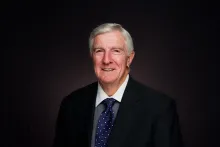
Before his retirement in 2021, Dr. Donald Ward pastored churches in Texas and Louisiana, and taught at Ambassador Bible College in Cincinnati, Ohio. He has also served as chairman of the Council of Elders of the United Church of God. He holds a BS degree; a BA in theology; a MS degree; a doctor’s degree in education from East Texas State University; and has completed 18 hours of graduate theology from SMU.
