
Don Ward
This transcript was generated by AI and may contain errors. It is provided to assist those who may not be able to listen to the message.
There's a song that says, I'm in a Texas state of mind. But today, what I want to ask you is, are you in a feast state of mind? So you're going to the feast. Are you in a feast state of mind? Last Sabbath, you heard two sermons on the Feast of Trumpets. And I wonder if any of us could name one thing that we have changed in our lives during the week as a result of those two sermons. I wonder if we could name or explain at least one new understanding that we glean from those sermons. You might ask, well, what's the point? Well, there are many points, but I'm just going to emphasize one. The point is that we are going to a feast. The feast is commanded in the Bible. And are we going to the feast for physical or spiritual reasons? We can always puff out our chests and say, oh, I'm going because God commands me to go. And indeed, He does. But to go and not take heed and listen with purpose is not what God is expecting. God expects us to go with a perfectly teachable heart. We should ask ourselves, especially at this critical crucial juncture in human history, am I seeking first the kingdom of God and His righteousness? Is that what I'm doing? Is that why I'm going? Or are we just going through the motions? Are you going to the feast just because everyone else is going? That's our culture. That's what we do. That's where our friends will be. That's where our family will be. Or are you going with the right mindset and for the right reasons? Of course, there's nothing wrong with going to the feast. It talks about eating and drinking.
Having fun, as it were, to rejoice and all of that. Nothing wrong with that, as long as it doesn't take precedence over the spiritual reasons for going. So many people in the past would go to the feast in anticipation of hearing some new thing about prophecy. And of course, Mr. Armstrong, or both Armstrong's back in those days, would try to make several feast sites. And then people would hear oftentimes of feast sites, the evangelists that they seldom would hear or see. And they would wonder, well, what do what does headquarters think? What do the ministers think about the times in which we are living? I guess you could call that the itching ear syndrome. And I want to know something that the world doesn't know. Nearly all of us, to one degree or another, have been on a knowledge trip versus a conversion trip for a long time. Hopefully we are changing that in the church and our approach to some degree. The Apostle Paul writes in 1 Corinthians 8, verse 1, Knowledge puffs up, but charity edifies. The Greek word for charity, agape, spiritual love, knowledge puffs up, but charity edifies. For a long time, church members thought that some knowledge of future events would somehow ensure their entrance into the kingdom of God. We have a leg up, as it were, on prophecy. And in some ways, I guess you would say that we do. But what the church of God understands that the other churches don't understand is the conversion process. To really understand the conversion process, you have to understand who God is, what God is, and what is His purpose. And of course, when these doctrinal changes begin to take place, first beginning sort of as a bolt out of the blue in February of 1993, a paper released about the nature of God. And there was already sort of a warm-up booklet before that, titled God Is. In addition to knowing who God is, what God is, and what is His purpose, you have to know who man is, what man is, and what is His purpose. Basically, the world of religion doesn't know that. They view God as a closed trinity. They view man as having an immortal soul, and that he will either spend eternity – you don't spend it, you are there in eternity – either in heaven or in hell, burning forever and ever. So you need to understand the conversion process and to become converted. As Christ says in Matthew 18, unless you become His little children and become converted, I say unto you, you shall not enter into the kingdom of God. That's Matthew 18 verses 1-3, paraphrased. I did a Google search this morning using the term, Revive Roman Empire. It returned 99,400 hits. I did a Bing search on Revive Roman Empire. It returned 476,000 hits.
I did a Google search using the words, Pope False Prophet. It returned 139,000 hits. I did a Bing search. It returned 564,000 hits. I did respective searches with the two search engines with the keywords, EU Beast. And on Google, I received 2,780,000 hits. On Bing, the keywords, EU Beast, returned 1,950,000 hits. So, do you think the world knows a little bit about that subject? Is that where it really is?
Now, all of these hits are not prophetically oriented, especially the last one, EU Beast. But thousands are. The point here is that just about every Christian denomination on earth is writing about the times in which we're living. That we are living, most especially, fundamental Christians believe in times. And many of them are writing in far greater detail than we write. I'm not saying they're always accurate, but oftentimes more bold and to the point than we are. So, you know, you're reminded, let's turn to 1 Corinthians.
And one of the main reasons why we're going to the feast, and to be in a feast state of mind, is to hunger and thirst after the knowledge of how to become as God is. And if that is not what we are doing, it's all in vain. I don't care. I mean, this is the Word of God. In 1 Corinthians 13, 1, Though I speak with the tongues of men and of angels, and have not charity, agape, becoming as God is, God is love, I am become as sounding brass or tinkling cymbal. And though I have the gift of prophecy, and everybody really wants that, but most people think that the gift of prophecy mainly has to do with foretelling, that is foretelling the future as opposed to fourth telling, expounding, explaining what the Bible really says and what it's really all about. Though I have the gift of prophecy, understand all the mysteries and all knowledge, and though I have all faith, so that I could remove mountains and have not charity, I am nothing. And though I bestow all my goods to feed the poor, and though I give my body to be burned, and have not charity, it profits me nothing.
I believe that God has shown us a lot of things in the past 25 years. You take 1986, you subtract it from 2009. That's 25 years.
He's shown us that you or I cannot enter the kingdom of God by just following a man. The man everybody thought, maybe they were going to ride into the kingdom on his coattails, he's dead, and another one came along who said he was going to walk in steps of the aforementioned, and he is dead. God has tried to show us that we individually and personally stand before the judgment seat of Christ on a daily basis.
You're not going to stand there for me, and I'm not going to stand there for you, and neither is any other person going to stand there for you. He's tried to show us that we must work out our own salvation with fear and trembling. He's tried to show us that we must search the scriptures daily whether these things be true, and as you've heard so often in the Church of God, but we still, I believe, don't really do it. Don't believe me, believe the Bible. Really search it out. Know and know that you know. And some of the more complex things have to do with prophecy. Many people have not really searched out. They just, well, that's what the Church says, and that must be true. God has tried to show us that Christianity is far more important than Churchianity. We can do all the things mentioned here in 1 Corinthians, the first three verses, and miss out according to what the Apostle Paul says if we're not becoming as God is. Now, instead of heeding the lessons, many look for excuses to quit and say, if this is the way the Church is, I don't want to have anything to do with it. And, of course, young people are very susceptible to that line, because this is not what everybody else is doing. There will be very few people outside of the Jewish community, and many of the Jews don't keep the Day of Atonement, even though it's the most sacred day in their calendar. But even most of the even those that are secular usually keep Yom Kippur. The tragic sad truth is that not only do those who are looking for the loose brick leave churchianity and say, oh well, if that's the way the Church is, what you need to understand is, how is God? If that is the way God is, how is God? Is our commitment to God and the truth, or is it to something else?
Kingdoms may rise and wane, and you know the song, but the Word of God will never fail, and the Word of God never passes away. How could it? Christ said, the words I speak, they are spirit and they are life. We call it the words of life. They are spiritual.
And some continue in the Church and churchianity, but in their heart, God and His Word does not play a permanent role in their lives. They're going through the form. It's what everybody else is doing, and it's my culture. It's my lifestyle. It's what I do.
And to some degree, then I include myself, and from time to time, as today, I try to wake myself up. We're about to keep a very somber, solemn, holy day, a day of fasting.
To some degree, we're all dull of hearing, making too many assumptions about what we know and don't know. I mean the kind of hearing that results in action. Let's notice Isaiah 66 in verse 2. Isaiah 66 in verse 2.
I want to read verse 1. Thus says the Lord, the heaven is my throne, the earth is my footstool. Where is the house that you build unto me, and where is the place of my rest? Because God doesn't dwell in buildings made by hands today.
Those who have God's Spirit, they are the temple of God. 1 Corinthians 3 16. Where all those things have mine hand made, and all these things have been, says the Eternal. But to this man will I look? And I can ask myself, is God looking to me because I'm this way? And is he looking to you because you are this way? To this man will I look even to him that is poor and of a contrite spirit and trembles at my word? That's who God is looking to.
This feast, festival season, could be a great turning point in our lives if we have ears to hear the messages to the seven churches. So why are you going to the feast? Let's notice now Deuteronomy 16. This was referenced a few times on the Feast of Trumpets. It was referenced today in the sermonette. Deuteronomy 16 and verse 13. You shall observe the feast of tabernacles, after that you have gathered in your corn and your wine. You shall rejoice in your feast, you and your son, your daughter, your manservant, maidservant, the Levite stranger, fatherless widow, all that are within your gates. Seven days shall you keep a solemn feast unto the eternal your God in the place which the Lord shall choose. The eighth day is a separate feast that we have traditionally called and still call it the last great day, though the last day of the Feast of Tabernacles is technically, and we have a study paper on this which you probably not read, technically that's the last great day, but we still use the terminology. I guess I don't know if it's on the member website or not, it's on the ministerial website title, Last Great Day. In the place which the Lord shall choose, because the Lord your God shall bless in all your increase and in all your works of your hands, therefore you shall surely rejoice. Three times shall your males appear before the eternal in the place that he chooses, and they are not to appear empty. They'll be giving an offering. See, under the Old Covenant, even the only the males were required to go to the feast. Females were not required, and to a large degree, not encouraged. And I don't know exactly when this took place. I know when the Jews returned from Babylon, the Babylonian captivity, and they had already begun during that period of time in Babylonian captivity to build synagogues throughout the Roman Empire or Babylonian Empire at that time, which became Roman later, to build the synagogues. And in those synagogues, the men and the women were separated. There was a partition. Today, that partition in the Orthodox synagogues is opac glass so that you cannot see through and see the opposite sex. So we can ask again, are we there to rejoice? Now, why is it a time of rejoicing? The Feast of Tabernacles is a feast of in-gathering. The harvest is gathered, as you saw here in verse 13.
Harvest is gathered. The crops are in. You have the most money you've had all year, at least in ancient Israel. You may not literally have it. These are tough times. And we're there to thank God for his blessing, his care, his protection through the year. But for us, more importantly, he has removed the scales from our eyes and called us into his marvelous light and enabled us to sit in heavenly places. Notice Ephesians 1. Do you know the Bible says that we sit in heavenly places? You say, well, it's figurative language, but as we heard, our guest might remember the sermon I gave atonement a year ago, not this past atonement, that we can now live in the Holy of Holies every day, 24 hours a day, seven days a week.
In Ephesians 1, verse 3, Blessed be the God and Father of our Lord Jesus Christ, who have blessed us with all spiritual blessings. And that's the main thing to rejoice over.
With all spiritual blessings in heavenly places in Christ.
You know, they can take from us. They can take all the wealth. They can take your houses. They can take your land. They can take your car, the furniture. They can take all your material goods. That they cannot take unless you allow spiritual blessings that God has given you, because they are written on your mind and your heart, and you have that treasure, the greatest treasure, the very spirit and essence of God living within you.
So we're going there to rejoice and count our blessings, and we're going to be taught of God to be spiritually fed, and to worship and rejoice before Him. God counts praise and worship as a sacrifice. Let's notice Hebrews chapter 13. Hebrews chapter 13, verse 14. See, a big part of worship, and I think people don't in some ways really understand the word worship today. Worship has to do with having reverence, all respect, giving due recognition, adoration to the one who has made life possible. In Hebrews 13, verse 15, by Him, therefore, let us offer the sacrifice of praise to God continually. So God counts this praise as worship as a sacrifice. That is, the fruit of our lips giving thanks to His name. But to do good and to communicate, forget not, for with such sacrifices, God is well pleased. In 1 Timothy 2, verse 4, back a little bit, 1 Timothy 2, verse 4.
1 Timothy 2, verse 4.
Actually, once again, a lot of people get aggravated with me for this, but I want to start in verse 1. I exhort, therefore, that first of all, supplications, prayers, intercessions, and giving thanks be made for all men, for kings, and for all that are in authority, that we may lead a quiet and peaceful life in all godliness and honesty.
For this is good and acceptable in the sight of God our Savior, who will have all men to be saved and come into the knowledge of the truth. For there is one God and one mediator between God and men, the man Christ Jesus. See, we can come before that throne to that mediator at any time and offer up our spiritual sacrifices. Go into the feast, and it takes a lot of sacrifice, oftentimes, for a lot of people to get to the feast. A lot of people make great sacrifices to get there, and God is well aware of the sacrifices that they make. Another thing, another reason why we go to the feast is to learn God's great faithfulness. Let's go to Titus chapter 1, Titus chapter 1 and verse 1. Paul, a servant of God and an apostle of Jesus Christ, according to the faith of God's elect and acknowledging of the truth, which is after godliness, in hope of eternal life, which God that cannot lie promised before the world began. When did God promise the hope of eternal life? Well, Jesus Christ was slain from the foundation of the world. Another place in Timothy it says, before the world began. In hope of eternal life, which God that cannot lie promised before the world began, but hath in due times manifested his word through preaching, which is committed unto me according to the commandment of our God and Savior. God who cannot lie, he is faithful, who has promised. So we're going there to learn God's great faithfulness. We're going there to be comforted by God in 2 Corinthians chapter 1 beginning in verse 3. This is one of my favorite scriptures in the whole Bible. There have been nights in which I go to bed and focus on these three or four passages here. And, you know, just in this prayer that you might be praying at that time, you ask God that he would wrap his arms around you and comfort you. There's a great comfort in being in the presence and fellowship of God's people. In 2 Corinthians chapter 1 verse 3, Blessed be God, even the Father of our Lord Jesus Christ, the Father of mercies, and the God of all comfort.
It says in the Psalms, mother and father may forsake me, and everybody else may forsake you or me, but God will never leave you nor forsake you. That's a promise if you remain faithful.
The God of all comfort, who comforts us in all our tribulation, that we may be able to comfort them which are in any trouble by the comfort wherewith we ourselves are comforted of God. We come to understand God's comfort, and as we come to understand that, we can also help others and help them be comforted.
Or as the sufferings of Christ abound in us, so our consolation also abounds by Christ. And whether we be afflicted, it is for your consolation and salvation which is effectual in the enduring of the same sufferings which we also suffer, or whether we be comforted, it is for your consolation and salvation. Of course, the Corinthians were pretty mean-spirited at the time with the Apostle Paul, and he had to write to them at times in very strong language. Now let's go to Lamentations. Here we see that it says that in verse 3, once again, blessed be God, even the Father of our Lord Jesus Christ, the Father of mercies, and the God of all comfort. In Lamentations chapter 3, here's another place that in the wee hours of the night, maybe you're hurting, maybe it's physically, and maybe you're hurting emotionally, spiritually, psychologically. However you want to phrase it, you're in distress.
Here's a great place to focus. See, Lamentations is written on the heels of the destruction of Jerusalem and the temple. Lamentations chapter 3 verse 17.
And you have removed my soul far off from peace, I forgot prosperity, and I said my strength and my hope is perished from the eternal. Remembering my affliction and my misery, the wormwood and the gall, my soul has them stilled in remembrance and is humbled in me. This I recall to my mind, therefore have I hope. It is of the Lord's mercies that we're not consumed. You know, it says one place in the Psalms, if we all got judgment, no person would be able to stand before God. You see, if it's not for God's mercy, all of us are going to die. Because the wages of sin is death. It is of the Lord's mercies that we're not consumed because his compassion fails not. Sometimes we think maybe that they do. They are new every morning. Great is your faithfulness. There have been many a time that I've gone to bed with a heavy heart and a heavy head and heavy everything else body, sometimes on a Friday night, and think, how in the world can I give a sermon tomorrow? Or in the many years at the college with so many different things on your plate, you wonder, how will I face tomorrow? And you get out the next morning and it's like something changed overnight. Yes, I can do that. I can do that. And it happens so often, I know with me, they are new every morning. Great is your faithfulness. The Lord is my portion, says my soul. Therefore, will I hope in him. The Lord is good unto them that wait for him to the soul that seeks him. It is good that a man should both hope and quietly wait for the deliverance salvation of the Lord. It is good for a man that he bear the yoke in his youth. I would encourage you to read Lamentations, especially chapter 3, maybe this coming week in preparation for the feast. You know, we're going to the feast to sit, as it were, at God's feet. Oh, you say, oh, those ministers there, they are supposed to be God's representatives. We sing the hymn. God speaks to us by his great hand where lived.
And I wonder, do we really understand it? Do we really mean it at times? Do we want to focus on the messenger? Well, I know him. Well, I knew him back in college, or I knew him when he was just a little wet behind the ears child there in the local congregation. Here he is at the Feast of Tabernacles, and he's giving a sermon. I wonder what's happened. So focus on the message and not on the messenger. In Isaiah 2, verse 1, there's almost invariably, when you go to the feast, I'll have a little more in the sermon today, I guess, to say about teaching and being taught. But one of the great things that the whole world, as you heard in the sermonette, will be having the privilege to participate in in the future will be the Feast of Tabernacles.
It's a great educational experience. It was a great educational experience. The three feast seasons in ancient Israel was a time of great teaching.
They didn't worry so much about services starting at 10 or 10 30 and being over in time to do everything you wanted to do in the afternoon, because there wasn't much else to do in the afternoon.
Maybe go rope a few more goats or something like that.
In Isaiah 2, verse 1, the word that Isaiah the son of Amaz saw concerning Judah and Jerusalem, it shall come to pass in the last days that the mountain of the Lord's house shall be established in the top of the mountains and shall be exalted above the hills in all nations, Jew, Gentile, all kindreds, races, and tongues.
All nations shall flow unto it. Many people shall go and say, come and let us go up to the mountain of the Lord, to the house of the God of Jacob, and He will teach us His ways. Of course, hopefully we will be there and we will be some of those teachers. And we will walk in His paths, for out of Zion, remember Zion symbolizes the church. Zion is also a literal place. For out of Zion shall go forth the law and the word of the Lord from Jerusalem. He shall judge among the nations, shall rebuke many people, they shall beat their swords into plowshares, their spears into pruning hooks.
Nation shall not lift up sword against nation, neither shall they learn war anymore. Back in the early days of the United Nations, they had a statue in the plaza, UN headquarters in New York City, of a man beating a sword into a plowshare. But with the advent of Islam and some of the other religions, they've taken that statue down and they have hidden it away in another place. I don't know if the public even has access to this statue anymore. You know, some of the arguments, let's go to Romans chapter 7 now. And going there with this, for out of Zion shall go forth the law. How ridiculous can any argument be concerning the law and grace, as it were, about the law of God done away with?
We just all know Christ does it all. We keep it in our hearts however you want to explain it. You have to have a basis for government. There has to be a basis. I heard some of the arguments in talk radio yesterday about how do you judge morality? How can an atheist be moral? Of course, they say they can. Well, what is their standard?
They say, well, it's through experience and through human reasoning. But actually, if they have morals, that experience in human reasoning also agrees with the Bible, i.e., you don't kill, you don't steal, and you could name all the commandments. In Romans 7 verse 10, The wages of sin is death. Therefore, the law is holy, the commandment holy, and just and good. Anything that is holy has God's active presence in it. The law is holy, the commandment holy, and just and good. Was then that which is good made death unto me?
No, it wasn't the fact that God says, you shall not kill. It was the fact that you would break the commandment. Maybe it was, you shall have no other gods before me. So was it that which was then that which is good made death unto me? God forbid. But sin, that is breaking the commandment, that it might appear sin, working death in me by that which is good, and that sin by the commandment might become exceeding sinful.
For we know, we know, how many people really know? We know that the law is spiritual, but I am carnal, sold, understand. What is the greatest weakness of the church over the last 80 years? It is my greatest weakness, and I venture to say it is yours. What is that greatest weakness? The gap between what we know and what we do. The gap between what we know and what we do.
So are we going to the feast to close the gap between knowledge and action, or are we going to hear what you think might be some new thing? In James chapter 1 verse 22, James chapter 1, James 1 verse 22, Could be you doers of the word, and not hearers only, deceiving your own selves. For if any be a hearer of the word, and not a doer, he is like a young man beholding his natural face in a glass.
For he beholds himself, goes his way straightway, forgets what manner of man he was, but whoso looks into the perfect law of liberty, and continues therein, he being not a forgetful hearer, but a doer of the work, this man shall be blessed in his deed. So, closing that gap between what we know and what we do. If we make it into the kingdom of God, we will be kings and priests, as I've already alluded to. One of the principal duties of a priest is to teach. Let's notice now Isaiah chapter 61. Isaiah 61.
Isaiah 61 is the first few verses here. In fact, it's the first verse and part of the second one. When Jesus returned to Nazareth after having been baptized in the River Jordan by John, went back to Nazareth to the synagogue on the Sabbath, picked up the scroll, and he read from Isaiah 61. The Spirit of the Lord is upon me, because the Lord hath anointed me to preach good tidings unto the meek. He sent me to bind up the brokenhearted to proclaim liberty to the captives, and the opening of the prison to them that are bound, to proclaim the acceptable year of the Lord. Now, after Christ had read that much, he sat down, because that was his mission during his first Advent here, his earthly mission on earth. Now, this is yet to come, and the day of vengeance of our God to comfort all that more. Well, vengeance and mourning don't seem to go together, but God is going to take vengeance upon those who are persecuting His people to appoint unto them that mourn in Zion, what is Zion? To give unto them beauty for ashes, the oil of joy for mourning, the garment of praise for the Spirit of heaviness, that they may be called trees of righteousness, the planting of the Lord, that He might be glorified. Trees of righteousness. Remember Mr. Smith's sermon about the trees. It should be like a river, like a tree that's planted by the river. He called trees of righteousness, the planting of the Lord, that He might be glorified. They shall build the old waste. They shall raise up the former desolations. They shall repair the waste cities, desolations of many generations. And strangers shall stand and feed your flocks, and the sons of the aliens shall be your plowmen and your vine dressers. But you shall be named the priest of the Eternal. Men shall call you the ministers of our God, and you shall eat the riches of the nations, and in their glory shall you boast yourselves.
In order to teach, in order to be taught, to be taught, you have to be weaned from the milk and drawn from the breast. And I wonder how many of us really understand what that means. In Isaiah 28 verse 9, are these words that I just paraphrased. Let's notice those. Isaiah 28 verse 9. . . . Whom shall ye teach knowledge? Oh, I'm going to learn. I'm going to be taught.
When I go to teach at ABC, I have each student stand, introduce themselves, where you're from, and so on. And why are you here? Inverably, almost 100% will say, I'm here to be taught God's way. I'm here to learn. I'm sure we must say that when we come to Sabbath services or go to the feast. Whom shall ye teach knowledge? Are there any requirements? And whom shall ye make to understand doctrine or the teaching? Them that are weaned from the milk and drawn from the breast. Precept must be upon precept, precept upon precept, line upon line, line upon line, here little, there little. Now, what does that mean? Now, let's go to Hebrews 5. In Hebrews chapter 5, Paul, in writing to the Hebrews, probably in the late 50s, early 60s AD, it's difficult to know exactly the timeline here, probably in the more in the mid 60s.
You know, Paul was taken to Rome and eventually martyred. The temple, Jerusalem and the temple, were destroyed by the Romans in 70 AD. And he's writing to the Hebrews to prepare them for the destruction of Jerusalem and the temple and the Levitical priesthood. In fact, he tells him that the Levitical priesthood has already been replaced by the priesthood of Melchizedek. The church began in Jerusalem with the Hebrews, 31 AD. So the church here is, I would say, at least 30 years old, maybe a little older, I guess possibly a little younger, but I doubt it. I think it's more like mid 60s.
In Hebrews 5 verse 11, of whom we have many things to say, speaking of the high priest after the order of Melchizedek, and hard to be uttered, seeing you are dull of hearing.
For when for the time you ought to be teachers, you have need that one teach you again, which be the first principles of the oracles of God, and are become such as have need of milk and not of strong milk, meat. See, you're not weaned from the breast and drawn from the milk, or weaned from the milk and drawn from the breast, or reversed it, but strong meat, I'm sorry, verse 13, for everyone that uses milk, one that is not weaned from the milk and drawn from the breast, everyone that uses milk is unskillful in the word of righteousness. Now righteousness, Psalm 119 verse 172, is defined all your commandments are righteousness. So they're unskilled in what way with the commandments with righteousness. Well, it's simple. They're not keeping them. For everyone that uses milk is unskillful in the word of righteousness, for he is a babe. But strong meat belongs to them that are of full age, some translations say, going on to maturity, even those who by reason of use, in other words, they are keeping the commandments, they are obeying the commandments. Therefore, they can be taught knowledge they are not dull of hearing. Whom will he teach knowledge?
Those who are weaned from the milk and drawn from the breast. What does that mean? Having your senses exercise to discern both good and evil. They're not still hung up on, can we do this and can we do that? You know. You know and know that you know what the word of God says.
As I've already mentioned, you know, when you go to the feast, don't fall into the trap of focusing on the messenger and not on the message. You know, if it is the truth, it is the truth. Let's notice in conjunction with this 2 Corinthians 10 and verse 7. 2 Corinthians 10 and verse 7. 2 Corinthians took Paul to task for not collecting tithes. They also took him to task for several things. You know, he had written this strong letter of 1 Corinthians where he told them to just fellowship the incestuous fornicator. 2 Corinthians, he's telling them to accept him back again. They also criticized him, as I said, not collecting tithes. And for dealing with them, he thought, they thought in some ways harshly. So they said, look, here's a little tip squeak. Paul apparently was very attractive, didn't have great stature physically. Some say he really needed strong eyeglasses or whatever, couldn't really see. He was not a great speaker. And so, but he writes these really strong letters.
So Paul writes in 2 Corinthians 10 and 7. Do we look on things after the outward appearance? If any man trusts himself that he is Christ, let him of himself think this again, that as he is Christ, even so are we Christ. For though I should boast somewhat more of our authority, which the eternal given us for edification, not for your destruction, I should not be ashamed that I may not seem as if I would terrify you by letters. For his letters say they are weighty and powerful, but his bodily presence is weak and his speech contemptible. Who do he think he is? He's the one who brought them the gospel in the first place, as he writes about him fathering them in the gospel. So let such a one think that such as we are in word by letters when we are absent, such will we be also indeed when we're present. He said, well, if you think I can't stand face to face with you and I have to speak in a letter, you got another thought coming.
For we dare not make ourselves of the number or compare ourselves with some that commend themselves but they measuring themselves by themselves and comparing themselves among themselves are not wise. But we will not boast of things without our measure, but according to the measure of the rule which God has distributed to us, a measure to reach even unto you. For we stretch not ourselves beyond our measure as though we reach not unto you, for we are come as far as you also in preaching the gospel of Christ.
So don't let the messenger stand in your way.
As we've already mentioned, we are going to learn or hopefully we'll learn at the feast the more excellent way. And that the more excellent way is that way that we read in the first four verses of 1 Corinthians 13. Let's go back there and get this transition in our mind so we really know. See, 1 Corinthians 13 is one of the most often quoted verses are referred to verses in the whole Bible. It's called the Love chapter. It's an inset chapter.
In 1 Corinthians 12, Paul is admonishing them concerning spiritual gifts. The Corinthians were really hung up on spiritual gifts, especially speaking another language. That was the real sign of spirituality. And so Paul explains spiritual gifts. Then after that, he comes to verse 31. 1 Corinthians 12, 31. But covet earnestly, desire earnestly the best gifts, and yet I show you a more excellent way, a way that far surpasses the other way. And that is the way described in 1 Corinthians 13, the way of becoming as God is, and God is love. Notice verse 13. I don't guess I will ever forget verse 13. I had the opportunity to serve as class president of my high school class three years in a row. In our senior year, we come to the time of class motto. What's going to be the class motto? And I don't know how it is exactly how it came to be, but by unanimous consent, as they say, we all wanted 1 Corinthians 13, 13, but our sponsor, the class sponsor, didn't. She was some kind of... we were out in the country. We were just country hicks. But she was from the city, population 25,000. She was from the city. She was a highbrow episcopalian. Why would any class want a Bible verse to be their class motto? Paul writes, now abides faith, hope, and charity, these three. But the greatest of these is charity.
As you have heard me say, at least I hope you remember this, Hebrews 11.6, that the first article of faith is to believe that God exists. For those who would come to God must, first of all, believe that He is and a rewarder of them that diligently seek Him.
Faith means to believe God and to do what He says. So, in a sense, all things spiritual stem from, proceed from faith, believing God, doing what He says. So, why do I have hope? Now abides these three, faith, hope, charity. Why do I have hope? Because I believe God, and we have read from Titus chapter 1, God who has promise and cannot lie. So, I have a sure foundation to base my faith on. It is sure as the Word of God.
So, hope is an extension of faith. I have hope because God has promise, and love is the outcome of faith and hope. If I live by faith and hope, God is going to shed abroad in my heart the fruits of the Spirit of God.
So, brethren, as we go to the feast this year, I hope that we will keep some of these things in mind. Many of these things will be expounded upon during the time of the feast. It's a wonderful time. It's a time like no other time for God's people. We live in a world—let's read this verse, Romans 8 and verse 18—a world that has lost its way, and that is a gross understatement. It's more than lost its way. It is in a state of chaos and confusion as we have never seen before. All there have been great wars before, and there have been all kinds of things, but there's never been such a division, such a flux, such a difference of opinion with regard to everything under the sun that you want to name as we see today. And more and more, the media encourages it. You write us. You tell us your opinion. What is your opinion? We want to hear from you. We want to create as much confusion and chaos out there as we possibly can. They're pretty successful. Some way I read in the Bible that God is not the author of confusion. That's Tower of Babel stuff. Romans 8 and 18, I reckon that the sufferings of this present time are not worthy to be compared with the glory which shall be revealed in us. For the great expectation of the creation waits for the manifestation of the sons of God.
For the creation was made subject to vanity. That is, I want my thing now. It's the now generation. It just lasts a short time. Not willingly, but by reason of Him who has subjected the same in hope. Because the creation itself also shall be delivered from the bondage of corruption into the glorious liberty of the children of God. So, going to celebrate a time in which this great liberty, that great jubilee trumpet, you know, the jubilee year was celebrated, that 50th year of liberation was celebrated on the day of atonement. On the day of that day of atonement when the great liberation trumpet sounds and Satan is bound, then on the heels of that, thrones are cast, and you become a king and priest in the kingdom of God, ruling and reigning forever.
Brethren, I hope we all keep this vision burning brightly in our minds.
Every year that I did the opening night of the feast, I wrote a little poem several years ago. Each year I adapted a little bit to the year. So, I'm going to close with this, which summarizes much of what I've said here today.
We're going to God's feast in 09 to learn to fear God and rejoice, leaving the cares of this world behind to praise Him with one voice. We're going to worship the eternal King who feeds the sheep of His flock, our sacrifices of thanks and offerings we bring as we drink of the living rock. We're going to feast on the Word of God so we can relieve the world of sorrow with the gospel of peace we're thoroughly shod as we experience a foretaste of the wonderful world tomorrow. So come and let us be glad and rejoice and let our spirits soar as we enjoy the good things of our choice. Let us ever be mindful that we are Christ ambassadors. I hope you have a great feast of atonement, a great feast of tabernacles, wherever your journeys may take you. We hope to see you back here on that Sabbath after the feast.
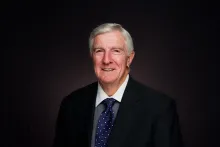
Before his retirement in 2021, Dr. Donald Ward pastored churches in Texas and Louisiana, and taught at Ambassador Bible College in Cincinnati, Ohio. He has also served as chairman of the Council of Elders of the United Church of God. He holds a BS degree; a BA in theology; a MS degree; a doctor’s degree in education from East Texas State University; and has completed 18 hours of graduate theology from SMU.

