

Robin S Webber
This transcript was generated by AI and may contain errors. It is provided to assist those who may not be able to listen to the message.
To begin the message, I'd like to dwell on a thought for a second and maybe move you forward to see where we're headed. That is that oftentimes we define and we share ourselves, and I'll say this kindly, but realistically, seeing Jim, we're supposed to be real. And that is simply this, that we tend to at times define ourselves. And we're not the first to do this, but others have done it down through the ages.
We define ourselves and we share ourselves by what we do. And the focus there is on what we do. Oftentimes people will say, well, what are you about? What is your church about? And the way that we'll almost immediately, thinking we're doing the person a favor, which to a degree is true, but will basically say that we keep or we observe the Sabbath and or we keep and we observe the Holy Days. We keep and we observe the biblical food laws. And if they're still listening, is there anything else you want to note that what we do?
But I want to move from the word of do of what we do. And here's our focus, especially as we're moving towards the New Testament Passover. It is simply this is what are we becoming? What are we becoming? So often we we focus on what's happening down here below rather than actually what God is transforming in us. To be that kingdom of priests that Jim talked about earlier, as he brings the wonderful world tomorrow, that will be the kind of kingdom of priests that will not only be able to teach what to do, but also to teach and to preach and to help mold under Jesus Christ what we are to become.
As we approach the New Testament Passover, we are reminded, we are renewed, and restored regarding the interruption of the divine. Let's think about that just for a second. And I'm going to make a comment just so you'll follow with me, because I don't want to be up here for so many minutes and you go away and wonder whatever I was talking about.
Today is going to be, the key word is going to be interruption. It's going to be interruption. And are you, as a follower of Jesus Christ and the child of the Father, are you ready, are you willing to be interrupted in your life? Sometimes you will think, well, I remember being interrupted in 1962, or I remember being interrupted in 1975, or I remember being interrupted in 1995, or I remember being interrupted last year.
The Christian life is always subject to interruption by the divine. Let's just think about that for a moment, that God Himself interrupted into time and space, made time and space, and He interrupted into the darkness that was in that world, and He said, let there be light. Later on, as He called to Him a people who were not a people, who were experiencing a living death in slavery, He interrupted human history, He interrupted the greatest empire that had yet been, especially in the western tier of the globe, He interrupted a people who were the living death, He gave them life.
And then out of that, He drew them out. That's what the whole term of Exodus means. He drew them out. And so it's important that we go back for a moment and we think about that initial Passover experience, that He interrupted Egypt and caused the firstborn of Egypt to die. And yet He passed over the children of Israel, as He had promised. And then He drew them out. That's what Exodus means. He drew them out of Exodus. He prepared a journey for them in the wilderness.
And there was a promised land that they would ultimately enter. That was the initial Passover. The Bible is always basically the Passover experience down through the ages of God drawing out a people, of liberating them, of transforming them, of bringing them to Him and offering the land of promise. Whether it be that which is in the way of the sea, or in the future as the kingdom of God comes to this earth. He also again interrupted human history when He sent the one that was the Word that came and became God incarnate, God in the flesh, Jesus of Nazareth.
And nothing has been the same ever since, either for the entire world and for we that have ultimately been called by God to be His children and to be disciples of Jesus Christ. Interruption is the key word. Now I'm going to bring you to an interruption that I'm inviting you. And it's not really my party to invite you to because God the Father and Jesus Christ invite each of us to be a part of this interruption.
Join me if you would, as we're still in the introduction, moving to point here in a moment. Join me if you would in Matthew 6. Matthew 6, and this is called the Lord's Prayer. Now the Lord's Prayer is very important because back in that rabbinical society and in Judaism there would be rabbis and they would have disciples. And the rabbis would each, and they would probably all basically conjoin somewhere down the line. We weren't dealing with two religions, but they would offer a prayer that was what they were about.
And what they were teaching. What they were hoping that these disciples, and when you were a disciple you gave yourself lock, stock, and barrel just as we see that the twelve dead. They didn't just come along for the ride, they were on the ride. And so the disciples said, teach us to pray. We find this over in Luke actually. Teach us to pray, just like John taught his disciples. And let's never underestimate, I'll make a comment here, let's never underestimate the power of these words and what they bring to us.
This is a model, this is a beginning, we can build upon this ourselves, but this is the core of Jesus' teaching.
We pause, oh, we're included in this, as we forgive our debtors and do not lead us into temptation, but deliver us from the evil one. For yours is the kingdom and the power and the glory forever. Amen. All of us know this. We know these words, probably since we were children. We can quote it, we can say it in our sleep. I say it sometimes, frankly, to go to sleep at night when I can't sleep, when my spirit is restless. And I will often either go through the 23rd Psalm or I'll go through the Lord's Prayer to be at peace in the dark and in the middle of the night. But some of us can be in the dark during the daylight portion, and we can be in the dark from what God is wanting for each and every one of us to be able to do on His behalf. We notice something very powerful here. If we go back to verse 12, and it says this, And forgive us our debts, and, or forgive us our sins, as we forgive our debtors. What are we learning here? What is Jesus saying? Jesus is basically saying in all of us that having our sins forgiven by God above is conditional. It is transactional. It moves me on simply our Father, our Mediator, Jesus the Christ, and ourselves. There are other parties that are involved. You say, well, Robin, what do you mean by that? Let's go down to verse 14. But there's that little word. Little words usually have big meanings coming up right behind them. But if you do not forgive men, their trespasses neither will your Father forgive your trespasses. Now, what we're going to find in the course of this message is simply this. Notice again back at the beginning of the Lord's Prayer. Verse 9, Our Father in heaven, how will it be your name? Your kingdom come, your will be done, on earth as it is in heaven. How is that made possible? Is that simply talking about when Jesus comes back? When the kingdom of God is set up for eternity later on? Or is that right now? And do you and I, men and women in this way of life, have an opportunity to bring that kingdom experience to others by forgiving others? Forgiving others and crossing that bridge. Now, what I'm going to be talking about today is going to be humanly scary. Humanly scary. What God asked us to do does not come naturally, but this is what our God would ask us to do. I would like this message. This message is one that I often give a week before the New Testament Passover or on that night, that before we take the bread and before we take the wine, that if you have something against someone, you're going to have to deal with it and to be in that spirit. But I'm moving it up. Why am I moving it up? Because it requires what we're going to be talking about today, it requires forethought. To forgive others that have trespassed against you, that have done something wrong against you, that have maybe even perchance, perhaps, really damaged your life for one reason or another and or are right now.
Approaching the New Testament Passover, we are partaking of Jesus' sacrifice by symbol. The wine, the bread. What is the bread? It is about the substance of all that Jesus was. It was His substance. It was His manner of living. It was His manner of preaching. It was His manner of teaching. It was His manner of restoring people's relationship with our Father. The wine, representing His blood, represents His sacrifice. All of these things come into play. As we know that in the Gospels, it says, as He took the bread, as He took the wine, He said, Do this in remembrance of Me. Now, when He says, Do this, partake of the bread, partake of the wine, do this in remembrance of Me, that also means to remember the words that He told you and me to walk by. As we follow that invitation to follow Him, do this in remembrance of Me. I want you to remember that, because you're going to be dealing with some tough stuff in the next few minutes. And to recognize that we are not alone. And that when we do what Jesus asked us to do, we're going to need to remember. You know, sometimes help kids when they're young, they're whistling in the dark. Maybe you're still doing that. Maybe you're just a recycled teenager, and it's dark out, and you're whistling. Just to kind of hear a sound and make you feel like you've got somebody with you. Oh, that's me. That's what Jesus says. Do this in remembrance of Me. And remembrance is to know who He is, what He is, what He did, and how we are to respond the same way. Very important.
The title of my message is simply this, this afternoon, to each and every one of you. And as we're talking, we're just sharing, and I want you to recognize that I'm applying all of this to myself. I'm applying this to this human condition. Even as we are led by the Spirit of God, we're still human beings. And some of the things that we're going to be talking about are, again, I'll just say, humanly tough to be able to do. The title of my message is simply this, forgiveness for Me and Thee. We've often heard that phrase, Me and Thee. This is going to be called, forgiveness for Me and Thee. And much of this message, just to let you know, will be just simply reading Scripture. There's no way of beating God's voice, speaking to us through those that established it in Scripture. To be established by His words, not mine. This is not about Robin Weber. This is what we said that we would do when we went underneath the water, rose in resurrection type in a new life, a new creation, and said that I will accept Jesus Christ as my Lord and my Savior and the one that I'm going to follow. And so we're going to take a look at this and recognize what's important. Let's take a look here as we go further. Let's go to Matthew right here across the way. Is it Matthew that I want? Give me just a second here. Let me find it. Oh, let's go to Matthew 18. Matthew 18.
These are the words of Jesus in Matthew 18.
Then Peter came to Him and said, Lord, how shall my brother sin against me? And I forgive him up to seven times. Peter was kind of proud of himself. He thought he was stretching the odds because normally the Pharisees would say up to three times. He's going seven. Do I hear eight? No. But notice that Jesus said to him, I do not say to you up to seven times, but up to seventy times seven. And therefore the kingdom of heaven is like a certain king who wanted to settle accounts with his servants. And when he had begun to settle accounts, one was brought to him who owed him ten thousand talents. That's a lot of bucks, as we would say today. But as he was not able to pay, his pastor commanded that he be sold with his wife and children, and all that he had, and that payment be made. And the servant therefore fell down before him, saying, Master, have patience with me, and I will pay you all. And then the master of that servant was moved with compassion, and released him, and forgave him the debt. But that servant went out. There's that word, but. It's going to lead to something every time you see the word but. Usually, but is kind of the pendulum between good and bad. Let's see what happens here. But that servant went out and found one of his fellow servants, who owed him a hundred denarii, and he laid hands on him, very graphic, and took him by the throat, extremely graphic, saying, Pay me what you owe me. So his fellow servant fell down at his feet and begged him, saying, Have patience with me, and I will pay you all. And he would not, but went and threw him into prison till he should pay the debt. So when his fellow servants saw what had been done, they were very grieved, and came and told their master all that had been done. Now verse 32, And then his master, after he had called him, said to him, You wicked servant, I forgave you all that debt because you begged me. Should you not also have compassion on your fellow servant, just as I had pity on you? And his master was angry, and delivered him up to the torchwares, until he should pay all that was due to him. Verse 35, So my Heavenly Father also will do to you if each of you from his heart does not forgive his brothers his trespasses. When we've had somebody trespass against us, it's not easy to restore relationships and or have mercy on others, of which we've had mercy placed upon us. And this is where the true transformation comes. And understand that. Turning back here a second.
Join me if you would in Matthew 5.20. Allow me to again read the words, and let's allow them to sink in. For I say to you that unless your, Jim, righteousness, as you mentioned in your first message, unless your righteousness exceeds the righteousness of the scribes and the Pharisees, you will be no means entered to the kingdom of heaven. You have heard that it was said to those of old, you shall not murder, and whoever murders will be in danger of the judgment. But I say unto you, and Jesus is using the first person here, the authority that is invested in him by the Father as the Son of God. But I say unto you that whoever is angry with his brother without a cause, shall be in danger of the judgment. And whatever he says to his brother, Rachas, shall be in danger of the counsel, but whoever says you fool shall be in danger of hellfire. Now notice verse 23. And this is the moment where we want to spend some time. Powerful words. Therefore, and on this day, brethren, and those that are listening, these are the words, this is the love of Jesus speaking to each and every one of us, and the instructions.
Not showing up for church on the Sabbath, not preparing for the Holy Days in some resort setting somewhere in the United States, not of what we're doing, but what we are becoming against our own human nature. This is the tough stuff. This is the real stuff. This is the becoming. And here is the interruption. Therefore, if you bring your gift to the altar, and remember that your brother has something against you, leave your gift! I wasn't planning to leave my gift. I was going to go through the paces. I was going to do kind of just the religious thing. But as they say today, there's some issues between me and another person. Leave your gift. Drop it. Don't go any further. Leave it before the altar. And you go your way, and first be reconciled to your brother, and then come and offer your gift. Just a question. So often we say, the Ten Commandments say, do this, do that, thou shalt, thou shalt, thou shalt, thou shalt. Right? Kind of the rhythm of thou shalt. Thou shalt have no other gods before me. Remember the Sabbath day to keep you up. Okay. And that's wonderful. And that is important. That's a part of the Constitution of God's kingdom that he wants us to abide by, that brings us together under him. But what about this? This goes below our surface, into our lives, into our hearts. And my question for all of you right now is simply this. And only you can answer it. And only I can answer for myself. And if not now, perhaps yet ahead, beyond this New Testament Passover, is there something that you have not resolved in your life with another person? And gone to them. And shared yourself. And we're going to be talking about how to do that. Because there is a set of spiritual skill sets to do that too. Have you? Do you have bitterness? Do you have anger? Do you have issues? Do you have ill will towards someone that has not been resolved as we come to the New Testament Passover? Are you completely in the right and they're completely in the wrong? And waiting on them might be somebody in this room. Let's get up close and personal. Maybe somebody here in this room that you pass on the way and don't speak. It may be somebody at home. It may be a marital issue. It may be a work issue. And here you are, the one that quote-unquote is the Christian. It may be a school issue. It may be a neighborhood issue. Trying to give you a target rich environment to think about. Because this is what Jesus is stating right after he's given this model prayer of talking about what the kingdom ought to be like and to pray for and to allow God's will to be on earth as it is in heaven. Have you thought of yourself as being a vessel and as an instrument of God's will to bring that about in your world, in his world, in your life, which you've handed over to God? Interesting. Just a thought. This servant that we talked about a few minutes before, who had shown incredible mercy, didn't know how to extend it. Interesting. Turn, if you would, in Luke 23, 34, and let's allow Jesus Christ to speak to us directly.
Luke 23, verse 34. Excuse me, Luke 23, 24. Pardon me. Just going up here a second. Yeah, that's not what I want. Excuse me.
Oh, that's why. It was in one chapter. Okay. Rewind. Luke 23. And picking up the thought in verse 34. I take you to the altar of Golgotha, in which our Savior was sacrificed as the Lamb of God for you and for me. And words matter. Words count. And these were one of the things, the seven sayings that he said on that time. And notice verse 34. Father, forgive them, for they know not what they do.
Now, I just want to kind of give you kind of a word picture of what's happening here for a second. I don't want to be too graphic. But to recognize that you think about it for a second, the worst thing that Jesus ever did in his life was be perfect. Think that one through for a second.
The worst thing that he ever did was just simply be perfect. As Jim was mentioning earlier, he lived a life without sin. His ministry was to know that your Father above who has sent me loves you, and as he loves you to love one another. It's kind of almost that simple, kind of like 1 John that we were going through the other night. Here is a young Jewish man in his prime, physically, 33 years of age, beaten to a pulp that whole evening before, both by the Jew and later the Gentile, given up by his own people, and then led on a death march to a mound outside of the Holy City, and then nailed.
Nailed. Nailed. Left hand. Excuse me. Left wrist. Right wrist. Feet. And then he is stuck on a piece of wood and nailed to it like an animal. Probably wasn't there, I wasn't to find the wall, but probably stark naked. Humiliated. The way that the Roman peace, Pax Romana, was kept intact, the peace was kept intact by utter Roman brutality. It is their brutality that kept the Roman peace going. You dare not go up against Rome, because that will be your example. This is what will happen to you, and everybody, you don't have to kill a thousand people, you just have to kill one. Then everybody comes into ob innocence. He didn't have to do that. He did not have to leave heaven above. He did not need to leave the uncreated existence that God the Father and He Himself as the Word had always been. But he came down, out of sheer love. Our example, it would be kind of interesting that people say, well, what is your church about? What is your... because you are the church. You're the church. The church comes from Ecclesia. That's the word that talks about separated ones. The church is not necessarily an organization. The body of Christ is a spiritual organism of which members that have been separated by God to be like Him and to become like Him through the example of Jesus Christ can come into the unity of the Spirit and make a difference. We that have this wonderful way of life that involves honoring God on the Sabbath day, of honoring Him on the Holy Days, of doing this and doing that and showing up. It's more than showing up and doing. It's becoming. And this is the raw essence of what God wants us to get down to. If people were to ask you, well, what kind of a person... if people were to ask me, and I'm just sharing some personal thoughts here, if people were to ask me, Robin, how would you like to be defined in this life? And I'm not saying... Susan's watching. I'm not saying I'm there yet. I'm like the Apostle Paul. I have not yet apprehended. But that which is, I strive for towards that upward call. I would hope to God, and I say that. My hope is to God. That's not just a euphemism. It would be that I would be known as a loving and a forgiving individual. A loving and a forgiving individual, because that is exactly what God, the Father, and Jesus Christ are to us. They are love. God is love. We'll be getting to that here in the Bible study or two with Jim. God is love. There's the transformation, because as human beings, we're pretty self-centered. Love is outflowing. The acape love of God is outflowing, an outgoing concern away from self. It starts with God, as we're going to look at here in a second. I'd like you to join me, if you would, in Colossians 86. That would be fun to turn to. Join me, if you would, in Psalms 86 and verse 5. Let's describe the God that we worship. And this kind of puts it all into play. In Psalms 86 and verse 5.
This verse is always fascinating to me. What makes God good? What makes Him a good God? He's ready to forgive. The picture is simply this. This is the PowerPoint, if you want to look up here for a moment, because I don't have mechanical power. God is like this. He is on the edge. He's poised. He is ready to forgive. His energy, His being, as it were, He is waiting to send forth from Himself. That's what love is. Without return. And to give. And what Jesus is saying in Matthew 5 is we need to be that way. We need to be a forgiving people. Because when you're not a forgiving person, you're not just putting... The other person is already in jail in your mind, but you're putting yourself in jail. You're closing the slammer on you, and you're saying, I'm not going to go any further. Christians always go first. That's what a Christian does. Because that's what God did with us. He went first. Join me, if you would, in Colossians 3. In Colossians 3...
In Colossians 3... And let's pick up the thought here, if we could, in verse 12. Therefore, as the elect of God, holy. Holy. How are we to be holy? God says, be holy as I am holy. And beloved, put on tender mercies, kindness, humility, meekness, long suffering. Notice verse 13. Bearing with one another, and forgiving one another. If anyone has a complaint against another, even as Christ forgave you. Going back to that parable of the unforgiving servant. As Christ forgave you, so you also must. Must? Did that... Excuse me. Did he say maybe? Just comment. Did he say maybe?
Uh-oh. Now we're meddling. Now we're going deep. No option here. It says, you must do. But above all these things, put on love, which is the bond of perfection, and let the peace of God rule in your hearts, to which also you were called in one body, and be thankful. You know, when you think of forgiveness, you think of Jesus on the cross. And Jesus saying, Father, forgive them for what they are doing. They do not know what they are doing. You say, well, that was Jesus. How am I supposed to follow? Well, you know, in the book of Acts, you have the story of the deacon Stephen. And the aspect of being stoned. And what did he do? The two things that he did in this turn of life, Stephen, in that account, did two things. Number one, he said, Father, forgive them for they know not what they do. See, Jesus Christ was the Son of God. Stephen, in that sense, was the disciple of Christ, modeling what he did. Because of the forgiveness that came his way through Jesus Christ, he did the same for others. Two things he did. I said, Father, forgive them. He's being stoned. Has anybody here ever been stoned? And then, number two, and then he committed himself into God's hands. And even as those rocks were racking his body, I would suggest that there was a peace that surpasses all understanding that came upon him. To be a human example, yes, Jesus is the Son of Man. Yes, Jesus was the Son of God. Yes, he was God incarnate. And what a wonderful, incredible example he set. But to think of people like you and me, like Stephen, and going through that. And to recognize that perhaps even Paul, known then as Saul, was in the crowd and watching all of that. And how later on he would build upon that. Interesting.
Join me if you would in Ephesians, speaking of Paul, in Ephesians 4. And let's pick up the thought if he could in verse 29. Allow the words of the Scriptures to convict us. Let no corrupt word proceed out of your mouth, but what is good for necessary edification, that it may impart grace to the hearers. Favor to the hearers. And do not grieve the Holy Spirit of God, by whom you were sealed to the day of redemption. Let all bitterness, wrath, anger, clamor, and evil speaking be put away from you with all malice. And be kind to one another. Be kind to one another. Tender-hearted. Forgiving one another, even as God and Christ forgave you. Here's the bottom line. I could read three more Scriptures. I hope I haven't confused you. And it's simply this. God goes first. His Son goes with Him first. And we are to follow. That's it. This is not a hard spiritual equation. By God's grace, His favor, moving into our life when we did not realize it. And giving us His blessing, giving us His calling, giving us His Son, the way that He did. He didn't have to do that. God and the Word are life inherent. They can be happy by themselves. They are all in all. And yet they reached out and developed this creation, starting with Adam and Eve. And it went off track right from the beginning. But that's when, from the beginning, the play of sacrifice came about. And it said that by the seed of the woman, that there would be a reconciliation. There could be a return to Eden. There could be a return to relationship. Can you imagine the beauty of Eden at the very beginning when God made Adam, and He shaped him, and He molded him? And those eyes of Adam opened up, and the first thing you saw was God's eyes looking at him.
That was it. And the beauty and the wonderment of that. That's what God is moving us back to, is Eden. That is, again, that land of promise. There's been a lot of sidetracking over all of these years, but that's only what we're headed for. When you look at Revelation 22, that is the eternal Garden of Eden. But we've got to recognize something. We've got to practice what we preach. We've got to uphold the example of Jesus Christ in us, who forgave us. And because He forgave us, we are to forgive others. What part of this equation don't we understand? But also to recognize we can't do it by ourselves. It's not in our human spirit of and by itself, but God says, I will give you my spirit.
I will grant you what you can't do by yourself. So let me just summarize this message. We're going to wind up here in just several minutes. I'm going to give you just three standards. We're going to plant the flag, and plant the flag, and we're going to plant the flag, so you'll be able to rally around these points. Three quick points. Are you ready? Not rally around the boys, but rally around the Word of God. Number one, forgiveness is a mark of the Christian life. Forgiveness is a mark of the Christian life, not only on you, as one now sanctified through the blood of the Lamb, but on your forgiveness towards others.
It is not just simply forgiveness for me, but for Thee. It's that simple. It's that simple. It's the title of the message. The story of Scripture, the fullness of reading the Word of God, and having His love penetrate us. Penetrate us, and then to share that with others. If we love someone the way Christ loves us, we will be willing to forgive them. If we have experienced God's grace, which each and every one of us has, we will want to pass it on to others.
Isn't it nice that maybe you've been given a blessing, maybe it was a bonus, or maybe it was whatever, and then you're able to just pass those resources on to somebody else as a gift? What about forgiveness?
Sometimes it's been so long that we forgot that we were forgiven, not because of who we are, but because of who God is, and because of what His Son did.
We are subjects of God's grace. And what is grace? Grace is undeserved favor. Grace is undeserved favor.
We are, as the saints of God, not simply to, you know, when we think about it, what do we do? When people call to me on the phone or write an email and I get on the phone with them, they say, well, what are you about? I'll say, well, number one, we believe in grace. That's the first thing I'll talk about. We believe in grace.
We have been favored by God and not deserving. And then I'll move into the commandments. No amount of commandment-keeping merits salvation. That doesn't mean that we don't keep the commandments. But no amount of commandment-keeping of and by itself merits salvation.
We are saved by grace. And grace is the gift of God. You say, well, whoever, where did you get that? Ephesians 2, 8-10. Just write it down. It's a gift. But because we have been gifted by God and called to be a part of this new creation, therefore we abide by this constitution of how God knows how humans are best to operate and how to have relationship with Him. By observing the Sabbath, to recognize that it's a sign between me and Thee, to abide in the Holy Days, which are all grace-filled when you think about it from beginning to end, the New Testament Passover, to where God is going to usher us into eternity in what we experience and learn about on the eighth day. And not only for us, have we ever thought what a beauty it is that it's not just about me, it's not just about you, it's about God is going to open this up to all humanity that missed it to begin with.
And He's going to forgive them as they acknowledge Him and as they come to hear the name of Jesus Christ, He will forgive them. And He's going to graft them into this family of God. But right now, as Jim was mentioning, we're firstfruits. And it is that better resurrection, not by looking at us, but looking at what God has done to interrupt our lives, that we might, in the millennium and beyond, be able to interrupt in the lives of others. But practice makes perfect, and we're supposed to be doing that now. We're supposed to be doing that in this human form rather than a glorified form as this realm of priest, kingdom of priest in the millennium.
The tough work is now. That's what's set before us. I'm going to ask you again a question, simply this. I hope that this message has interrupted your life, and it was meant to be. It was designed to be. I hope it was inspired to be. Who do you have ought against? Who have you put in prison? And they don't even know they're in prison, but that you have not forgiven them. That you've distanced yourself from them. That you have anger towards them.
Paul's words, God's words through Paul, says, be kind, be loving.
Point number two. Forgiveness is contrary to the pattern of this world. It is diametrically opposite. Jesus said, a new commandment I am going to give, that you love one another as I have loved you. It wasn't simply out of Leviticus, that it says, do unto others as you have, do unto you. In other words, I'll scratch your back if you scratch my back. Christianity is not about back-scratching. It's not about feelings. It's about tough, hard, God-designed, God-given homework and hard work for those that want to truly be like Him and not just talk the talk but walk the walk. Point number three. Forgiveness is an act of the will. Forgiveness is an act of the will.
Forgiveness, which is, in a part, loving, is not about feelings. If you find it challenging to cross this divide, think about it. Because you know that there's probably something that is going to be tough, it's going to be a little spooky. But here's what I want to share with you, and view that around the webcast. Sometimes God wants us to act in faith, and maybe we don't feel like forgiving somebody. But remember this. God will always ask you to do what you can do, and then He'll do what only He can do. I think of that story of the Jordan River. Remember when the first generation went through the Red Sea, so the second generation had to let you know a little bit about how God opens up water as they were about to go into the land. And what happened was, and again, they were the called people, they were the Israel then, were the Israel of God today. And so He said, okay, you're going to cross the river, and it's the spring season, just like right now, you know, we have the same climate as there, and He said, so you're going to walk through the river. So the Jordan was running pretty full. It wasn't summertime, it was towards the Passover. And so He said, here's what you're going to do. You're a high priest. Those that are leaders, those that are priests, they get to go first. That's what leaders do. So they're going to have to walk into the water. So there they are. They have the whole parade. There's the priest, there's the Ark of the Covenant, there's all the leaders. And they have to walk into the water like this. They're going into the Jordan. They have to step in.
Guess what? The water hasn't divided yet. It's still, they're like going into the pool. You know how that works? Going into the water. They, in a sense, had to have faith and confidence that God was going to open up the avenue to get from one side to the other. They walked into that water, and the river divided. Sometimes God will have His servants walk on water, when you think of Peter. And sometimes you have to walk into the water as a statement of faith. And then they'll know that God will now do what only He can do and to heal hearts. That's very important.
I want to share one last thought about this, and I'll conclude. Sometimes not all relationships are going to come back together as they first started in this lifetime. So we need to consider that for a second. In all that I'm saying, if there's a situation that is wrongful and hurtful, and is coming at you again and again and again and again, that doesn't mean just to jump into the water. That's not what we're talking about. But to understand that your anger can be removed from that person. I remember many years ago when I was in Pasadena, and we had a lot of people in Pasadena, so I had a lot of... Sometimes my office was like a relationship hospital when we had so many people. And sometimes people would say, well, what do you suggest to do, Mr. Weber? And they would tell me the situation, and it was, do I dare say, challenging? And I said, I would just tell them this, it may not always be that this relationship will go back to exactly where you left it.
But here's what I'm encouraging you. Don't have hate in your heart. Don't allow anger to settle in your heart.
Take your darts down from the dartboard with your face on it. But what you want to do is start. And what you want to do is maybe just write a letter. Just a letter. And I'm talking to you about this, too. Just write a letter. And maybe that relationship is going to have to be ultimately healed in the kingdom that is yet to come. But to just write a brief letter and say, I'll do a Dear John letter. Dear John, I want you to know that things have not worked out the way that I would hope that they might. It could be a Dear Jane letter, too. I want you to know that I've placed myself in God's hands as I do you, and I want the very best for you. And in some way and in some day, I do hope to meet you in the kingdom of God and renew this.
And you may not feel like writing that letter. You may not feel like writing those five sentences.
But you've put your foot in the water of Jordan by doing that. You've made a start. I had a situation two days ago. Somebody called me. I wanted to deal with somebody and to go to their brother. And sometimes when we want to go to our brother, boy, can we draw circles around and around and around?
Jesus says, he hit the hammer on the nail, and boom! He says, leave your gift at the altar.
And use wisdom, but go to it. Spiritual geometry goes like this. The shortest distance between two dots is a straight line.
And why is it just like ancient Israel? We want to go around and around and around and keep on traveling when we just went to our brother and prayed about it and committed ourselves. And be like a David as we go down into that valley of, here we go, and to recognize that David himself gave the battle to the Lord. It was not going to be by his might nor his power or his good looks, but that Goliath that was in front of him that God was going to deal with. As we come up to the New Testament Passover, and maybe we have, as the kids today say, issues, remember the same God that interrupted the darkness with light. The same God that liberated Israel from Egypt. The same God that sent his son and broke into time and space. Interruption, interruption, and interruption.
You and myself as disciples of Jesus Christ, are we willing and are we ready to sacrifice ourselves and our rightness to incorporate the righteousness of the kingdom of God and to deal with this issue, whatever your issue might be. Leaving our gift at the altar, leaving all of our good intentions at the altar, leaving everything that we've always done every time that we've gone to that altar, but we haven't done the thing that Jesus said. Forgive us our debts as we forgive our debtors.
About four weeks until the New Testament Passover. Time is on our side right now. God is pushing for us if we have this to do. And, as Jesus would say, therefore, let us be about our Father's business.
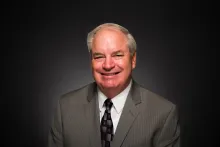
Robin Webber was born in Chicago, Illinois, in 1951, but has lived most of his life in California. He has been a part of the Church of God community since 1963. He attended Ambassador College in Pasadena from 1969-1973. He majored in theology and history.
Mr. Webber's interest remains in the study of history, socio-economics and literature. Over the years, he has offered his services to museums as a docent to share his enthusiasm and passions regarding these areas of expertise.
When time permits, he loves to go mountain biking on nearby ranch land and meet his wife as she hikes toward him.
