

Robin S Webber
This transcript was generated by AI and may contain errors. It is provided to assist those who may not be able to listen to the message.
I'd like to share with you one of the great themes of the Days of Unleavened Bread. And one of the great themes, and I say that plural because there are so many facets of the Days of Unleavened Bread, and we cover them over two high days and year by year, and frankly, we will never get to all of them. But the one that I'd like to share with you today is moving with haste towards God's promises. Moving with haste towards God's promises and purposes is one of the powerful themes of the Days of Unleavened Bread.
I'd like to have you join me if you would. Let's open up our Bibles, and let's turn to the Book of Deuteronomy, Deuteronomy 16. And as we're beginning to turn to Deuteronomy 16, some of you are just awakening to the Scriptures, and I'd like to explain to you for a moment what the purpose of Deuteronomy is. Because some of it seems as if it's a repetition of what might be read in the Book of Exodus or Leviticus.
Let's understand that Deuteronomy is actually out of the Greek, meaning the Second Giving. It's the second time that a lot of this material is being offered to the children of Israel. You say, well, why? It's because Israel had been on the march now for near 40 years. They had been a wandering people, a sojourning people. Now God was going to establish them across river, and they were going to become a settled people.
And when you do that, and after 40 years, there's always the possibility, and the very real human danger, that you will forget why you started the journey. And who is the one that commenced the journey? And who was there at the beginning? And so, that is a lot of why the book of Deuteronomy is written, is to remind the Israelites that they have a God.
And that He began, and He started that journey for them. He made things happen for them. And notice now in verse 3, speaking of this specific time called the Days of Unleavened Bread, you shall eat no leavened bread with it.
Seven days you shall eat unleavened bread with it. That is the bread of affliction. Notice then the parenthetical thought, for you came out of the land of Egypt. Notice. In haste. And that you may remember the day in which you came out of the land of Egypt, and all the days of your life.
The reason why it's called the Days of Unleavened Bread is that when God finally chose the time, when He interrupted human history, His mighty works were so tremendous, and so great, and so awesome. Even as Israel was waiting seemingly for scores, if not hundreds of years for His intervention, when the deliverance came, wow! It was powerful, and it was rapid, and He said, Get up and get going.
And they had to leave Egypt so quickly that it didn't allow the bread to have time to rise. And thus we have the Days of Unleavened Bread. Join me back in Exodus 12, in verse 11, for a second, just to solidify that point on this time period of when Israel was being given the godly exit out of Egypt. In Exodus 12, in verse 11, again, let's notice. And thus, and this was speaking of the Passover service itself, and thus you shall eat it with a belt on your waist, your sandals on your feet, and your staff in your hand.
In other words, be ready to move. And so you shall eat it in haste. And this was speaking of the Passover. It is the Lord's Passover. So when we begin to couple these verses together, we recognize that Israel left Egypt so quickly that the bread did not have time to rise. But in their haste, and in leaving Egypt, there's something that they left behind.
We don't find that necessarily mentioned in the Old Testament. We actually have to go to the New Testament. If you'll come with me now, let's go to the end of the book. Let's go to the book of Acts.
In the book of Acts 7 and verse 38, we move right into the middle of one of the great defenses of the Gospel by the deacon Stephen. And here he's talking to a people that are just not going to budge. They're not going to move. And Stephen likens their attitude to what occurred in yester-age. Verse 38, this is he who was in the congregation in the wilderness with the angel, who spoke to him on Mount Sinai and with our fathers, the one who received the living oracles to give to us. And then notice verse 39, let's focus, whom our fathers would not obey. They rejected and then notice why. And in their hearts, they turned back to Egypt.
In their haste, they left their affections behind. And so their heart turned back to that which God called them out of. And while the slave was taken out of Egypt, Egypt was not taken out of the slave. Now I have a question for you, please. What might we learn from this? Let's first of all appreciate that the people of God from Abraham to the children of Israel to our very moment in time have been exhorted by God always to do three different things. Here we go. Number one, to get up. Number two, to get out. And number three, to get going. Use that English to make a point. To get up, to get out, to get going. That's what the Exodus was about. That's how this whole scenario began. To forsake that which seemingly was real and very familiar and embrace that which seemingly was not familiar and not real. Let's remember that when Israel was called out of Egypt, and we just sang the song that Mr. Berea just let us in, when Israel out of Egypt went, they were leaving monuments. They were leaving pyramids. They were leaving in all sense a very viable, tangible, touchy, real society as they wandered and as they left. And I'm sure as they looked in their rearview mirror, if there were rearview mirrors in that day, there's a big looming object. It's called the pyramid, which is about 450 feet high. It's a 45-story building. God said, go out. I've got a land of milk and honey for you. Get used to it. You'll like it. I'll be your God. You'll be my people.
But to move away with haste, as Israel did, and as God asked us to continue to do during these days of 11 bread, to move away with haste is of no lasting value unless we put on with equal haste the very real promises of God. And that's going to be basically my encouragement as I share the words of God with you this afternoon. And that is to be hasty in our movement towards the promises of God. After all, the thrust of God's covenant with us isn't where we've been, but how we travel. Let's understand something that we all know as Christians that God promises to be inheritors of His kingdom. The kingdom in one sense, though, is not just simply a destination. It is a way of traveling. And the way of traveling that I want to encourage you to consider during these, the days of 11 bread, 2008, is to make haste towards the promises of God. It's interesting when you combine the festivals of Passover and the days of 11 bread together. I shared this with Susan yesterday and said, okay, but I'm going to share it with you anyway because it's kind of a bumper sticker.
It may work for some people, it may not work for others. That's all right. But in thinking about it, in coupling these two festivals together, so often we think of that cry that went up from Moses, I almost said Charlton Heston, that cry that went up from Moses, Pharaoh, let my people go. And to a large extent, that is what the Passover is about. It's about letting my people go. But let's consider that the days of 11 bread, then, are about letting my people grow. Letting my people grow. Let my people go. But once they're gone, what are we to do? We are to grow as a people, especially as we understand that the days of 11 bread are about growing in the example and in the way of Jesus Christ. So we're going to talk about that. As Mr. Gardenhair mentioned, the book of 1 Corinthians is written with the spring festivals in mind. It's used as a backdrop. It's used as a framework. Let's go again to 1 Corinthians 5. You know, there's no such thing as stealing thunder. It's just lightning strikes twice, the same verse. So we're going to go back to 1 Corinthians 5 for a moment. And perhaps this is where God wants us to center on today. 1 Corinthians 5.
Therefore purge out the old leaven that you may be a new lump, since you truly are unleavened. For indeed, Christ our Passover was sacrificed for us. Therefore let us keep the feast not with the old leaven, nor with the leaven of malice and wickedness, but with the unleavened bread of sincerity and truth. Were to be a new lump. And to enable us then to be that new lump, I'd like to focus on one specific and vital ingredient of being a new lump. And I know it's something that I know I need to work on, because it's not the first step with human nature. It only comes through a godly nature and by being led by the Spirit. And again, that is making haste with the promises of God. I have a question for you. How often do you think about all of the promises of God and build your life upon those promises? Have you ever written out all the different promises of God to understand what He wants you to be filled with as He asks you to be on this spiritual journey towards the kingdom of God? Well, we're going to talk about that a little bit. Why did Paul bring this up to the Corinthian church? As Mr. Garnehauer mentioned, they were most interested in congregation. Probably it was right up there with the congregation in Crete. That's a whole other story, another time. Probably the two places that a pastor would not have wanted to go was either Crete and or Corinth. We're dealing with Corinth right now.
The Corinthians were losing their newfound identity in Christ. Well, let's just be frank, they were sliding backwards and Paul had to chide them and he had to instruct them. The good news is it seems as if what Paul encouraged them and instructed them in 1 Corinthians, they really did make a turnaround. That's why we have the book of 2 Corinthians. It's an encouragement and it's a thank you to them for using God's Spirit and truly becoming a new lump. But Paul anchored them in a grand reality that has ageless dimensions. A few chapters over in 1 Corinthians 10. Let's go there for a moment. 1 Corinthians 10. Again, with this theme of the days of unleavened bread, of bringing the Exodus of 3500 years ago up to their time. Then we're going to bring it up to our time. 1 Corinthians 10. Moreover, brethren, verse 1, I do not want you to be unaware that all of our fathers were under the cloud and all passed through the sea and they were all baptized unto Moses, into Moses, in the cloud and in the sea. And all ate the same spiritual drink, food, and all drank the same spiritual drink. For they drank of that spiritual rock that followed them and that rock was Christ. So here we have the direct linkage. And some of you may be hearing this for the very first time, that what we colloquially might call the God of the Old Testament literally was the pre-incarnate Christ. That this was the one that ancient Israel followed. But then notice verse 5, but with most of them God was not well pleased, for their bodies were scattered in the wilderness. What happened here? Why was God not pleased with him? Where, may I ask you, where did the relationship go wrong? What was not understood? Join me if you would in Exodus.
In Exodus. And let's look at chapter 3 again.
And let's pick up the thought in verse 7. And the Lord said, and this is speaking to Moses, I have surely seen the oppression of my people who are in Egypt. I've heard their cry because of their taskmasters, for I know their sorrow.
It's not like God's asleep. He was watching. He was observing. Now he's ready to act in his perfect time. So I've come down to deliver them out of the hand of the Egyptians and to bring them from the land to a good and a large land, to a land flowing with milk and honey, and to the place of the Canaanites and the Hittites, the Amorites, the Pazorites, the Heavites, and the Jebusites. So God was ready to act. The fullness of time had come, and he was ready to interrupt human history. That's a part of what the Days of Unleavened Bread reminds us, is that God is not just simply a first cause. He didn't just wind up the universe and become an absentee cosmic landlord. He chooses when and how to intervene in human history, to interrupt it. That's what the great saving acts of God are about. Think about it. Literally interrupting human history. The Days of Unleavened Bread are also about, are you ready? Interrupting our personal history. The Days of Unleavened Bread are about interrupting our lives. God makes a decision that He wants to have a relationship with us and enters our life by the convicting power and presence of His Spirit to motivate us to be that new lump. Verse 8, God says, "...bring Israel out, they're going to have a land of milk and honey." So that's all that Israel centered on. They thought, wow, we're going to escape slavery and we're going to have a jamboree. We're going to go across river and we're going to be in a land of milk and honey. But notice verse 12. Very important. So He said, God speaking, I will certainly be with you and this shall be a sign to you that I have sent you when you have brought the people out of Egypt. Notice this, verse 12. Very important in the discussion. You shall serve God on this mountain. You shall serve God on this mountain. And this is something that Israel did not incorporate into their framework. They were ready to escape. They were ready to be delivered. They were ready to experience a land of milk and honey, Disneyland on the other side of the Jordan. But they didn't recognize that it was going to be also a responsibility that was laid on them.
And that's very important to understand that. Let's understand as we move into the days of 11 bread, friends, that God has also called us into a land of milk and honey. That's the good news. And it's more than just simply in the Mediterranean basin. God is calling us to the kingdom of God. But it also requires service to Him, allegiance to Him, and in following His way. And what I want to continue to build upon here is that our service to Him, right now, friends, is to respond in haste to the promises that He makes us. Join me if you would in Hebrews 11 and verse 6. Hebrews 11 and verse 6. How important is this? But without faith, it is impossible to please Him. For He who comes to God must believe that He is. And notice what it says, and that He is a rewarder of those who diligently seek Him.
I have a question for you.
And only you can answer it. You don't have to raise your hand. We're not looking for an exclamation, verbal, from anybody. From last Days of 11, Brad, a year ago, till now, as we've been on our spiritual journey, a question. How enriched have you become by the promises of God that are laced throughout the Bible? How much more real have they become to you? Do you lean on them? Do you imbibe of them? Do you embrace them? Do you encourage others with them? We're going to be talking about that in the course of this message. We need to understand that. God promised them a land of milk and honey. So then why did God in a sense become displeased with them? Well, there were a lot of things that were along the way. There were the big armies chasing them. There were ocean barriers. There was a desert environment with potential heat and thirst and hunger. Sometimes we can get hard on people. And I always think about, especially when we used to keep the Feast of Tabernacles out in Palm Springs, and I go down South Palm Canyon. I just try to imagine it without roads. And I try to imagine it without hotels. And I try to imagine it without McDonald's. And I try to imagine it without all the fancy goings on and trappings of Palm Springs. And if you've ever been at the bottom of that side of San Jacinto, you could humanly begin to understand why the Israelites might mumble and grumble and murmur and wonder what in the world and why in the world are we here? Because it seemed like just one big wall to them that they could not penetrate. And beyond all of that, they also had to face themselves.
God's will was made known to them. They were going to have to go through some pretty tough territory. And they had all those walls that were between. And they asked themselves back then, 3,500 years ago, was this a part of the deal? And yes, it was. A part of the deal is that before they got the Promised Land, they had to go through the desert. And they had to believe that God was a rewarder of those that diligently seek Him. It still continues to be that way. God still is a rewarder God still continues to ask those that would follow Jesus Christ to give up that which is familiar with Him. Would you please join me? And let's go to the New Testament. And let's take a peek at Luke 9. In Luke 9. And let's pick up the thought in verse 57. In Luke 9 and verse 57. There were people that were listening to Jesus Christ and thought that maybe He was a a route out of the world in the society and the existence that they were experiencing.
That this rabbi really had a wonderful thought and a wonderful idea and one that was worthy to follow. Then notice what Jesus says here in verse 57. Now it happened as they journeyed on the road. And that's really what Christianity is about. It's a journey on a road. It's a way of traveling that someone said to them, Lord, I will follow you wherever you go. And Jesus said to him, notice, foxes have holes and birds of the air have nest, but the Son of Man has nowhere to lay His head.
Interesting.
Jesus is always honest. And He was realistic about the future of anybody that would follow Him. And He wanted them to count the cost. He didn't want them to be following Him under any false pretense that when they began to follow Him, it was going to be a life-changing journey in every way. And anybody that is truly going to be unleavened and anybody that is going to be a new lump, first of all, has to be willing to give up their future and give it over to God and say, it's yours. Notice verse 58. Then He said to another, follow Me.
But He said, Lord, let me first go and bury my Father. And Jesus said to him, let the dead bury their own dead, but you go and preach the kingdom of God. Now, at face value, you can read that, and that sounds very heartless and very cruel. And it's not really Jesus telling the man to ditch his dad and to somehow dishonor his family. That's not what it's about. What the gentleman in the conveyance of what's going on here is saying, right now, I've got family at home, and I've really got to kind of take care of them. And once their life is done, I'm going to be willing to kind of come back. And then when it's family convenient and humanly convenient, and everything is settled, then I'll follow you.
But what Jesus was telling was simply this, grab the present. If you're going to follow Me, you've got to make haste, and you've got to do it right now. You know, I've found in my own life, I don't know if you're like me, but I think you are a little bit, I've more than more found that God's stopwatch is stopped on now. He wants us to do things now. Now, and now, now. Now, that can be difficult because we all live in Southern California, and we know one of the words that floats around Southern California is, manana. Manana, tomorrow. I'll get to it tomorrow, and we all want to be like, dear Scarlett O'Hara, oh, Rhett, I'm so tired. I've got to think about it tomorrow, because after all, there's always tomorrow. And the clouds part, and the music begins, and it's gone with the wind. But lives can be gone thinking that way as well. God wants us to give us now to Him. He owns the present. Let's go down a little bit further. And Jesus said to him that the dead bury the dead. Verse 61, and another also said, Lord, I will follow you, but let me first go and bid them farewell, who are at my house.
But Jesus said to him, no one having put his hand to the plow, and looking back is fit for the kingdom of God. Now, Jesus had dealt with the future, telling them what it would be like, that there wouldn't be any place for them to place their head. He also said, so look, I also own the present. I need you now. I need you to make haste towards what I'm presenting to you now. And then this last person, he basically says, don't go back. Forget the past. There's nothing back there compared to what I want to give you today.
Guy says, I want to go back and be with my buddies. I want to go back and see my friends. I want to go back to that which is familiar. Like ancient Egypt, my heart is back there with the boys, with the guys, with the buddies. And Jesus is saying, look, I don't want you to return and go back and look at old sunsets. I'm giving you a sunrise, and this is the way and this is the destination that I want you to go. What is this telling us and what does this have to do with the days of 11 bread? God desires us to freely give Him our past, our present, and our future. He's not going to take it from us. When you and I partook of the Passover the other evening, and we partook of the bread, and we partook of the wine, every time that we partook of that bread and partook of the wine, we're basically chiming in with what Peter had to chime in with. It's not just a ritual. It's a declaration on our part. We're saying, as we partake of the bread, which is a symbol, we're recognizing that you are the Christ when we first take that bread and we imbibe of it. That symbol. We're not just saying that Jesus was a good man and that He was just a prophet. We're saying, God Almighty came in the flesh and died for us. And therefore, we covenant with Him. And we're going to give Him our past, we're going to give Him our present, and we're going to give Him our future. And then when we partook of that wine, we were saying, you are the Christ. I'm going to be in covenant with you. I'm in an agreement. I know who I am and I know what you are. And I know that, oh, and by myself there is no worth. But I want to give you my past, my present, and my future. I have a question for you, friends. What part of your life, your heart, have you not given to God Almighty?
I would suggest that some of us have still not given Him our past because we're still going back and going back and going back. Perhaps we haven't fully understood that when Jesus died and what blood does for us, that it not only forgives us of our sins, but the skid marks, the guilt, the conscience, and that that can be erased by the blood of Jesus Christ. Maybe we keep on going back and thinking that somehow kind of forgiven, sort of forgiven, maybe forgiven, not totally forgiven. Maybe we haven't forgiven ourselves. Maybe we haven't given God our past. Maybe we haven't given Him our present. Maybe there are temptations that are out there right now that are drawing upon us right here during this holy week, as it were, the days of Unleavened Bread. And we don't recognize that we need to cling to the promises of God more than to our own human feelings. Maybe we haven't given God our future. Maybe we're scared about where things are going, recognizing that God owns all of those things. Let's appreciate something. God wants us to give Him our past and our present and our future. It's not easy. That's why we need to be filled with the promises of God. If God never said it, it would be easy. Christ didn't say that it would be easy, but we need to understand what God is doing. Join me if you would in Hebrews 3. Hebrews 3. Let's pick up the thought in verse 1. Verse 1.
And let's allow these words just to sink in. Therefore, holy brethren, partakers of the heavenly calling, consider the Apostle and high priest of our confession, Christ Jesus, who was faithful to Him who appointed Him as Moses also was faithful in all of His house. For this one has been counted worthy of more glory than Moses, inasmuch as he who built the house has more honor than the house. Jesus Christ is the greater Moses. Moses was privileged to guide Israel out of Egypt and to move through the Gulf of water from one shore to another to the Promised Land. What we've been experiencing during this time, as we memorialize every year, is that we follow somebody greater than a man. We follow the greater Moses. And the Moses that was prophesied to come, which is Jesus Christ, is one that has led us through more than just simply water, but from death to life. And not only into a Promised Land that's on a globe, but into the Kingdom of God. With that thought, let's move to verse 12. Beware, brethren, lest there be any of you an evil heart of unbelief, not believing that God follows up on His promises, in departing from the living God, but exhort one another daily, while it is called today, lest any of you be hardened through the deceitfulness of sin. That is really an important thought, that we are to exhort one another. And that's kind of, frankly, friends, where my mind and my heart has been for some time now. And I just kind of want to share some thoughts with you here for a moment. That as the body of Christ, on the journey that all of us are going through, we need to really encourage one another with the promises of God.
I know there are time... Can we talk? I've been in conversation sometimes where people are just going on and on and on and on with their story, their story, their story. And then I come back two weeks later. And guess what? They're going on and on and on and on and on. Do I dare say? And on with the same story. And it's their story. And you and I sometimes forget that we've handed over our check, as it were, to God and said, you write your story, you write your signature on all that I've considered valuable. I'm giving you everything that I am.
And during these days of 11 Brad, the only way that I know, friends, that we can truly expand into the new lump that God wants us to be is to make sure God's story is bigger than our story. And that those promises are so real that we make haste. And we leave our story over here, and we make haste, and we get up, get out, and get going towards the promises of God and embrace them. And when we embrace those promises, God is going to come through. And the answers are going to be there. And that is so very important. And I think, more than ever, friends, what we've got to do as a viable spiritual community is, can I just use a phrase, buck up one another, buck up one another with the promises of God.
Share the good news of what God is willing and desirous to do with us, and not simply act like we are down here alone. There is no lonelier creature on God's earth than a Christian that doesn't think about God and His promises. Because either we're going to dwell on the promises of God, or we're going to dwell on our own human premises. And during the days of Unleavened Bread, of all the days of the year, God is saying, I want you to be a new lump. I want you to recognize that I've given you a new identity. I want you to recognize that I've given you a covenant that is ageless, that is eternal, that is a better covenant, and I want you to be a part of my family. But we've got to remind one another about that. And we've got to recognize that it's not only about letting my people go, but that we are to grow. Join me if you would in Colossians 3. In Colossians 3. One of the great lessons, and it's already been alluded to, that during the days of Unleavened Bread, it's not just simply enough to put out, but we also have to put on what God wants us to have with a new identity, through and by and for and with and of Jesus Christ. Come with me if you would to Colossians.
And let's turn to chapter 3.
And let's notice what it says. If you were raised with Christ, seek those things which are above, where Christ is sitting at the right hand of God. Now, this is very important to understand this terminology, especially during the days of Unleavened Bread, because we want to remember that the days of Unleavened Bread are not just simply about putting crumbs out of our house.
The greatest act of God yet to occur occurred during this, the days of Unleavened Bread. And that's something for us to center upon. Let us remember that it is during the days of Unleavened Bread that Jesus Christ rose from the dead. Now, the other evening, we were asked to memorialize properly, rightfully, and biblically so, the memorial, the death of the Son of God. The days of Unleavened Bread, though, are to remind us that Jesus Christ is risen and that He has chosen to reside in us by the Spirit. We're no longer alone. Thus, when we look at chapter 3, if you were raised with Christ, seek those things which are above, where Christ is sitting at the right hand of God. Notice, set your mind on the things above, not on the things that are on the earth. For you died, and your life is hidden with Christ and God. And when Christ, who is our life, appears, then you will also appear with Him in glory. Then notice what says, verse 5, Therefore put to death your members which are on the earth. And notice, God doesn't make any pretense. We don't have to guess what God wants us to make haste from, to depart from, to exit from. Put to death fornication, wrong sexual practices, uncleanliness, passion. Now, there's nothing wrong with being passionate. I think all of us are passionate about God's Word and God's truth, but this is a wrong form of passion, evil desire, and covetousness, which is idolatry, which is one of the great sins of modern-day America. That we live and we spend beyond our means because we covet. And we want that which, frankly, we can't afford. And America is having severe financial problems.
And our people that are but a cut out of the bolt of America, you know it and I know it, have the same kind of difficulties. And we need to look at ourselves and just allow God's Word to look at us and just ask, are we coveting? Are we chewing off more than we can afford? Are we buying beyond our means? God says it's idolatry. And because of these things, the wrath of God is coming upon the sons of disobedience in which you yourselves once walked when you lived in them. But now you yourselves are to notice put off, put out, as it were, the leaven, all these things. Now let's notice this list. We are to put off anger.
I have a question for you. Are you an angry person?
Do you blow your top at the slightest occasion? Do you just look angry? Do you scare the children when you come into a room?
Are you an angry person? I'm not angry. Yes, you are.
Sometimes we don't realize that of how we're coming across to people. God says put away anger, put away wrath. That's deep, vigorous anger, down deep that hasn't escaped. It's just seething down there, ready to come out. He says to put away malice, blasphemy. Notice this verse 8. Put away filthy language out of your mouth.
Do not lie to one another, since you have put off the old man with his deeds.
Put off that old man. Put off that old man. Put out that leaven. Put on the new man who is renewed in knowledge according to the image of Jesus Christ of him who created him, where there is neither Greek nor Jew circumcised nor uncircumcised, barbarian, Scythian, slave nor free, but Christ is all in it all. Therefore, as the elect of God, holy and beloved, notice what it says. Now, put on. Let's remember the days of 11, Brad, are not just simply about putting out, but putting on. Now, why is that so important for us to understand? Allow me to offer you a basic spiritual principle that's important. God does not operate in a vacuum. God does not operate in a vacuum, but I will tell you who does operate in a vacuum, and that's the adversary, Satan. God does not operate in a vacuum.
Therefore, as the elect of God, holy and beloved, put on tender mercies. Let me ask you a question, because this is the homework, the hard work that we need to work on during the days of 11, Brad. You know, a sermon is not the end of the story. It's just simply the beginning of what you're going to do. It says we're to be merciful. Let me just ask you, how merciful are you as an individual? Are you a merciful individual? Do you just love to grant mercy? Be kind, be generous, bestow upon people that which they never thought might be coming your way?
How merciful are you? How kind? Are you a kind individual?
Do people look at your face? Do they listen to your language? Do they watch how you move and how you portray yourself? And do people say, you're kind?
You are a kind individual. You know, when people had the privilege of being by Jesus Christ, I would suggest that they said, there is a kind individual. And that's what we ought to be like. Kind. Humble. You say, well, it's hard to be humble when you're as great as I am.
God says to be humble. Humble is not spelling a word. It's living that out in your heart.
You're to be teachable, to be meek and long suffering and bearing with one another. And forgiving one another. And if anyone has to complain against another, even as Christ forgave you, so also you must do. I have a question for you. Heart work. Not just homework. Heart work.
Is there somebody that we have not forgiven? Now, we should have done this before the Passover.
Why is it so important that we are able and desirous of forgiving people? If we are not willing to forgive others, we do not understand forgiveness. Jesus was willing to say, Father, forgive them for they know not what they do.
That's why it's so important in the Lord's Prayer when it says, forgive your debtors as you are. Because if we are not able to forgive others, then we can't be forgiven because we don't understand forgiveness.
But above all of these things, notice in more homework, we are to, as the San Diego congregation, we are to put on love, which is the bond of perfection. And we are to let the peace of God in your hearts rule our hearts, to which also you were called in one body. And we are to be thankful.
These are the hallmarks of an unleavened existence, a godly life.
In our conversations before and after church and on the phone during the week, is God able to observe that we are at peace with our calling. We're at peace with one another. And if we're not at peace, we are constructing peace by going to our brother, by going to our sister, by getting issues out on the table, by using the biblical construction to make sure the fabric of the church is strong. Notice verse 16, Let the word of Christ dwell in you richly, in all wisdom, teaching and admonishing one another in psalms and hymns and spiritual songs, singing with grace in your hearts to the Lord. And whatever you do in word or do, all in the name of the Lord Jesus and giving thanks to God the Father through him. Again, it's so very important to recognize that during these days of Unleavened Bread, God is asking us to be a thankful, thankful people. In verse 16, Let the word of Christ dwell in you richly, in wisdom and in teaching. And notice this, and admonishing one another in psalms. What are psalms? Psalms are the words and the praises and the promises of God, singing with grace in your hearts to the Lord.
How does this work? And what am I talking about?
I realize that all of us have the challenges that are ahead of us. But I think we need to step it up a notch. I'm just talking to you as a friend, talking to myself.
That I think at times we need to be listening, and then we need to be encouraging people with the promises of God. How does this work? Allow me to share some thoughts with you, because we all go through this at one time or another. And I'm actually going to give you this sheet after services to be able to take home. But I just want to go through some of the promises of God with you. Because so often at times we'll say, well, you know, I know God has called me, but it just looks impossible. And so often we get stuck on the human premise that it's impossible. But God says in Luke 18 and verse 27, I'm going to be handing this out to you, so you don't need to take a lot of good notes right now. But just listen. We say it's impossible. God says all things are possible. As we're encouraging one another daily and weekly, are we reminding people that with God all things are possible? I ask you, are you preparing yourself to do that?
This is a part of the journey. So often we'll say, well, I'm just worn out and I'm tired.
God promises in the book of Matthew, he says, I will give you rest. Do we remind people that when they're beleaguered and when they're troubled and when seemingly things are shattering all around them and, you know, they're irritable?
Do you go to them and do you remind them that we worship a God and we live before a God that says, he will give us rest? Sometimes because of our backgrounds, either with our father or our mother and or our current situation, you know, we just say, well, nobody loves me. Sounds like a good country song with a twang. Nobody loves me.
Do we remind people that God says, I love you? Do we remind people of God's love? Well, that's Weber's job. That's Mr. Smith's job. Mr. Gardenhire has even studied into love. That's his job. No, I'm telling you, it is each and every one of our jobs in conversation when a brother or a sister in Christ is low to remind them of God's great love. After all, isn't that what we just experienced during the Passover? The love of God, that God so loved the world that he gave his only begotten son? That's your job. Can you imagine as the whole body is working together and we are making haste towards the promises of God and we are putting on the promises of God rather than our own story? Brother, I'm going to tell you something. Some of us have been telling our story too long. It reminds me of that old Frank Sinatra song, now over and over I keep going over, you know, it goes on and on, over and over and over and over and over. I'm not saying that to be cruel. We come to services to understand the will of God, and he has granted us a new identity. He's granted us a new story, and he wants us to be reminded of what he's doing. Sometimes people say, but it's all just too difficult. I can't figure things out. God gives us a promise. He says, I will direct your steps. Sometimes we say from our own human premise, well, I can't do it. And no, you can't open by yourself. God says, you can do all things through Christ Jesus. Sometimes we'll say, well, I'm not able. God says, come to me. I'm more than able.
Sometimes you say, well, it's not worth it. God says, it will be worth it. Sometimes we say, well, I can't forgive myself. God says, I know you can't, but I forgive you.
Sometimes we'll say, well, I can't manage. God says, I will supply all of your needs.
Sometimes we're like the cowardly lion in the Wizard of Oz, one of my favorite all-time characters, but he's got to get over it, especially when he's chasing his tail or being chased by his tail. We'll say, well, I'm afraid. God says, I haven't given you a spirit of fear. Sometimes we'll say, well, I'm worried and, well, I get nervous. My granddad was nervous. My stepfather was nervous. It was genetic. No. God says, cast all your cares upon me. Sometimes, me included, I'll say, well, I'm just not smart enough. And God says, I'll give you wisdom. How does God give us wisdom? Paul says that in the book of Corinthians that Jesus is the wisdom of God. You want to be wise?
I do. You want to be wise? Read the Gospels. Reading the Gospels and how Jesus did things, where he got involved, and where he chose not to be involved at times, grants wisdom.
And all of us at one time or another, especially when we're struggling or we feel all alone, we say, I will never leave you or forsake you. That is a promise of God. Now, I have a question just thrown out there for all of you.
Can you—and many of you are doing this already. Please understand. All I'm doing, in a sense, with God's Spirit and talking to friends and brothers and sisters in Christ, can you imagine what it would be like if we claim those promises of God, we make haste towards those promises of God, and we continually remind one another about—are you with me?—the promises of God.
What's going to happen? How often have you and or I—and I stand guilty before you—and I'm the pastor. Confession is good for the soul. How often have we let something go on and on and on? And yes, there's a time to bend the ear.
But we have been remiss in sharing Christian to Christian and heart to heart the promises of God. I want you to think about that for a moment. I want to sink deep. Because can you imagine that as a congregation here in San Diego, as we not only make haste from where God has called us from, but we make haste towards the promises of God, and we do it person to person, person to person, from heart to heart. And we begin filling ourselves with the life of Christ, the new lump, the new identity, the new man, the one who believed in the promises and said, My meat is to do the will of the Father. And he believed in the promises of the Father. And then we activate that in one another, story by story, conversation by conversation, how lives are going to be changed in our midst, in our congregation. We're not responsible for all of the world right now. We're responsible for our community. But when we start claiming and believing in the promises of God, and we speak out on them, and we remind one another of them, no matter what Red Sea is in front of us, no matter what desert is in front of us, no matter what tribe is in front of us, there is always going to be a wall. There is always going to be a obstacle. But during the days of 11 bread of all the times of the year, we are reminded through the resurrection of Jesus Christ that there is no stone too heavy. There is no stone too heavy. There is no wall too thick. That God's will will not be performed and come to you. During the days of 11 bread, friends, we are given a very valuable lesson.
It's called the days of 11 bread because when God intervened in human history, it happened so quickly and so majestically that the bread did not even have time to rise. And thus it was unleavened. How quick are we going to be? As God has interrupted our personal story towards making haste with the promises of God. If you haven't had a title or put a title to this message, if you haven't heard anything that I've said for the last few minutes, it is simply this. The message that I bring to you today and the encouragement that I offer you today is on this the first high day of 11 bread. Make haste towards the promises of God.
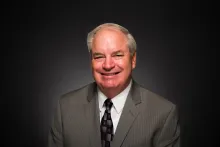
Robin Webber was born in Chicago, Illinois, in 1951, but has lived most of his life in California. He has been a part of the Church of God community since 1963. He attended Ambassador College in Pasadena from 1969-1973. He majored in theology and history.
Mr. Webber's interest remains in the study of history, socio-economics and literature. Over the years, he has offered his services to museums as a docent to share his enthusiasm and passions regarding these areas of expertise.
When time permits, he loves to go mountain biking on nearby ranch land and meet his wife as she hikes toward him.
